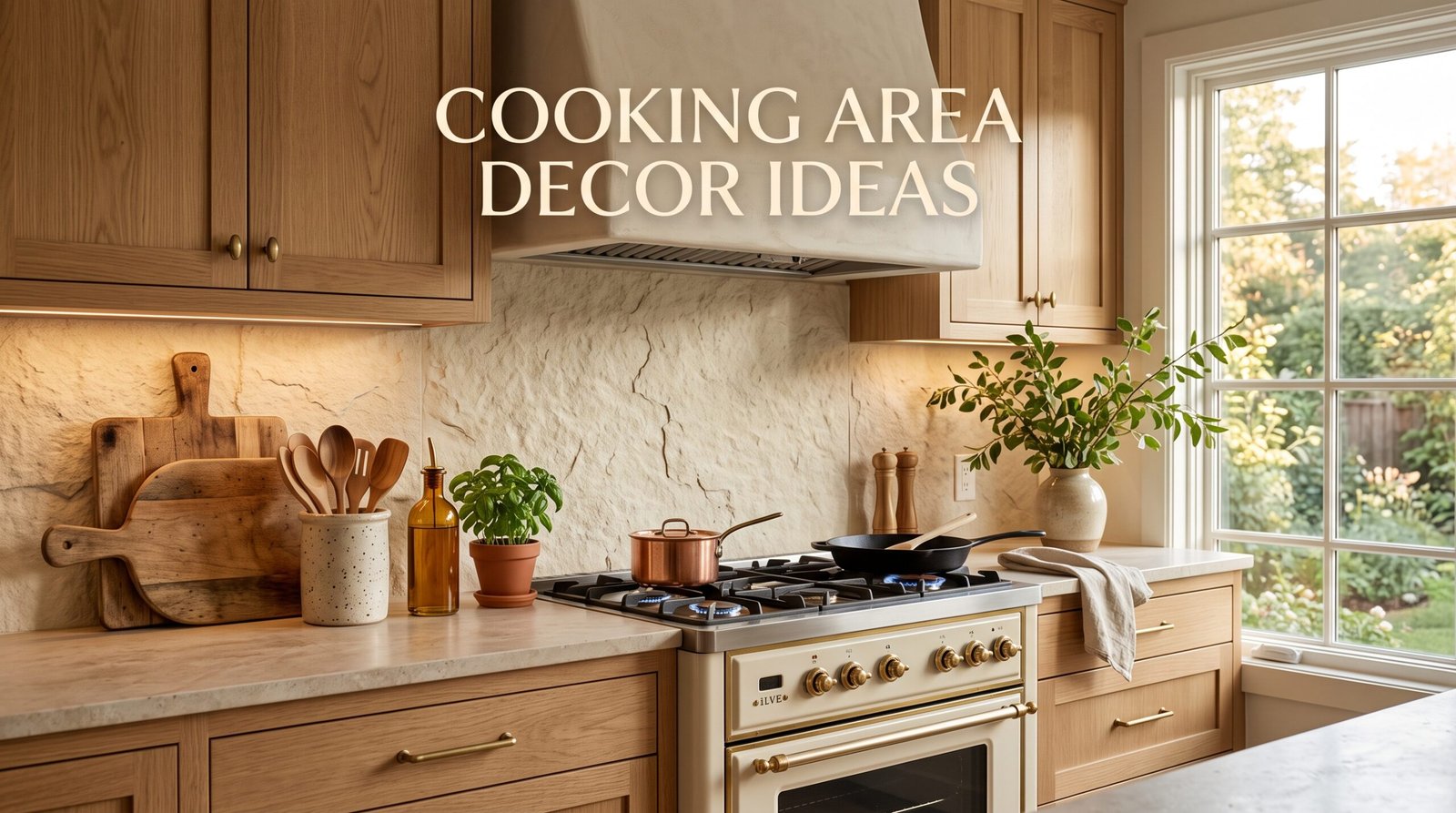
Cooking Area Decor Ideas: 15 Beautiful Ways to Style Your Cooking Space
The best cooking area decor ideas combine beauty with convenience. Instead of filling countertops with unnecessary decorations, focus on objects that either help you cook or naturally belong near the stove. Wooden cutting boards, ceramic utensil holders, spice jars, herbs, attractive cookware, warm lighting, and beautiful oil bottles can all become part of the décor.
Whether you have a spacious cooking zone or a compact apartment setup, these ideas will help you create a cooking area that feels organized, comfortable, and stylish without making it difficult to use.
1. Create a Warm and Organized Stove Area
The stove naturally becomes the visual center of a cooking space. Because so much activity happens here, keeping the surrounding area organized can immediately make the entire room feel more polished.
Start by removing items you rarely use. Instead of keeping every utensil, appliance, and container beside the stove, select only the essentials you reach for regularly. A beautiful ceramic utensil crock filled with wooden spoons and spatulas can provide both storage and decoration.
A small wooden or marble tray can also help organize cooking oils, salt, pepper, and other everyday ingredients. Grouping these objects together makes them appear intentional rather than cluttered.
Consider the materials surrounding your stove as well. Warm wood accessories can soften a white or gray cooking area, while stone, ceramic, and metal details can create a more sophisticated appearance.
Keep decorative accessories slightly away from open flames and hot surfaces. In a cooking zone, safety and easy cleaning should always come before styling.
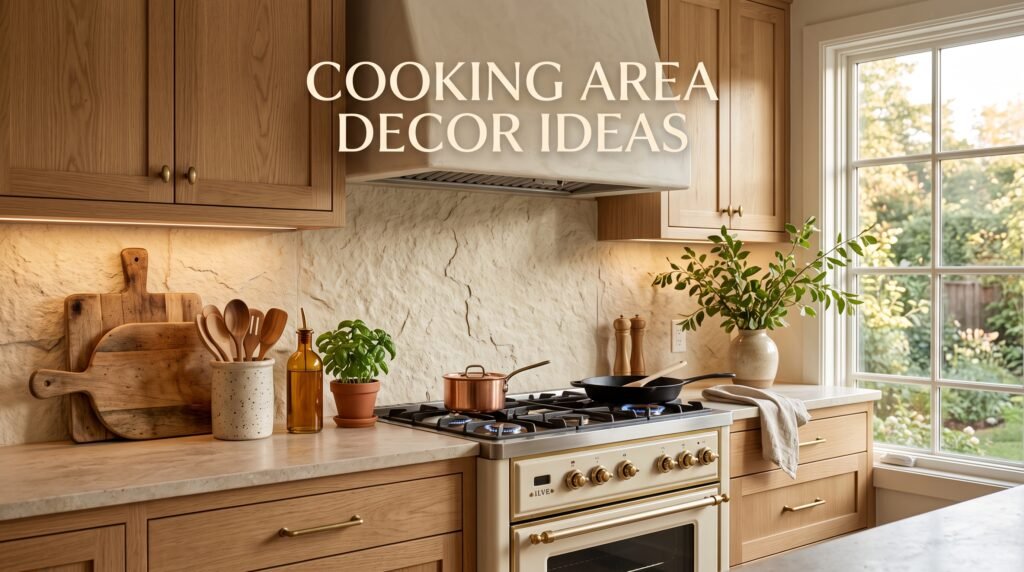
Alt text: Warm modern cooking area decorated with wooden utensils, ceramic accessories, cutting boards, and organized cooking essentials.
2. Decorate With Wooden Cutting Boards
One of the easiest cooking-area decorating tricks is using items you already own. Wooden cutting boards are perfect because they are practical while also bringing natural texture and warmth into the space.
Instead of hiding every cutting board inside a cabinet, lean two or three against the backsplash. Choose different sizes and shapes to create a layered look. A large rectangular board can sit behind a smaller round or handled board.
Wood looks especially beautiful against white, cream, stone, or neutral tile. If your cooking area feels cold because of stainless steel appliances or glossy surfaces, natural wood can make it feel noticeably warmer.
You don’t need every board to match. Slight differences in wood tone can actually make the arrangement more interesting.
For a clean look, avoid displaying too many boards at once. Two or three well-chosen pieces usually create more impact than an overcrowded collection.
Pair them with a ceramic utensil holder or a small container of fresh herbs for an effortless, lived-in look.

Alt text: Layered wooden cutting boards styled against a neutral cooking area backsplash with ceramic utensils and natural accents.
3. Turn Everyday Utensils Into Decor
Cooking utensils don’t always need to disappear inside drawers.
Wooden spoons, whisks, spatulas, and ladles can become decorative elements when displayed neatly. The easiest method is placing your most attractive everyday utensils inside a ceramic or stoneware crock.
Choose a holder that complements the surrounding palette. Cream, off-white, beige, charcoal, or natural stone tones work particularly well because they don’t visually compete with other elements.
You can also use a wall rail with hooks if countertop space is limited. A simple rail can hold frequently used utensils while adding a subtle professional-kitchen feel.
The key is editing.
Don’t display every utensil you own. Choose a small collection that looks cohesive and that you actually use. Mixing wooden utensils with a few stainless steel pieces creates texture without making the arrangement feel chaotic.
This approach also makes cooking more convenient because your essential tools stay within easy reach.
4. Style Cooking Oils and Seasonings Beautifully
Cooking oils, salt, pepper, and seasonings are often left beside the stove simply because they are used frequently. Instead of treating them as visual clutter, make them part of your décor.
Transfer frequently used oil into a beautiful glass or ceramic dispenser. A simple olive oil bottle can instantly make the countertop look more considered.
Place the bottle on a small tray along with salt and pepper containers. Trays are particularly useful because they visually connect several individual objects into one organized arrangement.
Wood, marble, ceramic, or stone trays can all work depending on your interior style.
If you use multiple oils, avoid displaying an entire collection unless you have plenty of space. Keep the everyday options accessible and store specialty bottles elsewhere.
You can apply the same principle to frequently used spices. Matching containers can create a calmer appearance, but labels should remain clear enough that the arrangement stays practical.
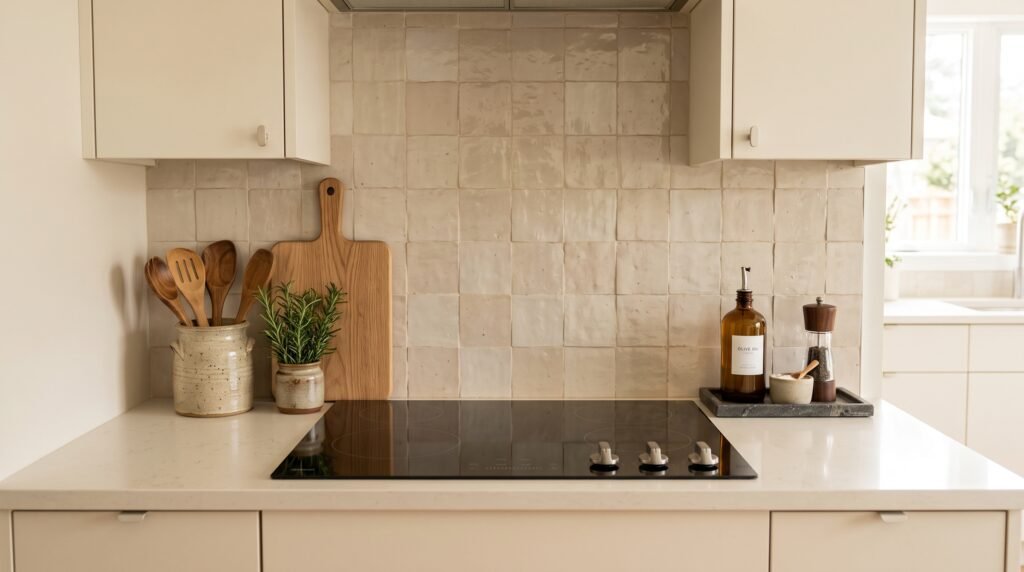
Alt text: Stylish cooking oil and seasoning station arranged on a small tray beside a modern stove.
5. Add Fresh Herbs Near the Cooking Zone
Fresh herbs are one of the few decorations that are genuinely useful in a cooking space.
Small pots of basil, rosemary, mint, thyme, or parsley can introduce natural greenery while keeping fresh ingredients close to where meals are prepared.
If your cooking area receives enough natural light, place a few herb pots near a window or on an adjacent counter. Use simple terracotta, cream ceramic, or stone-style pots to keep the arrangement cohesive.
For smaller spaces, consider a narrow wall-mounted herb shelf away from direct heat. Another option is keeping one or two herbs on a small tray rather than creating a large indoor garden.
Greenery can be especially effective in neutral cooking areas. Against white cabinetry, beige stone, warm wood, or soft gray finishes, fresh green leaves provide a subtle but refreshing contrast.
Just remember that herbs need appropriate light and ventilation. Avoid positioning live plants immediately beside intense heat.
Alt text: Fresh potted herbs decorating a bright cooking area with warm wood and neutral ceramic accessories.
6. Use Open Shelves for Functional Decor
Open shelves can transform everyday cooking essentials into part of the overall design.
The trick is to treat them as functional displays, not as places to put every decorative item you own.
Start with objects that naturally belong in a cooking area. Stack a few everyday bowls, display attractive mugs, arrange glass jars, or place a small collection of plates together.
Then introduce one or two warmer decorative elements. A small plant, framed artwork, ceramic vase, or wooden object can soften the practical items.
Leave some empty space between groups.
Open shelving looks much more sophisticated when the shelves aren’t completely filled. Negative space allows individual objects to stand out and also makes the area easier to clean.
For a cohesive look, repeat materials already used elsewhere. If your cooking area has warm oak cabinetry, for example, wooden shelves can create continuity. Black shelves can add contrast to lighter spaces, while floating cream shelves can almost disappear into a neutral wall.
7. Make Your Backsplash Part of the Decor
You don’t necessarily need countertop decorations to make a cooking area interesting. Sometimes the surfaces themselves can provide enough visual character.
The backsplash is a perfect example.
Classic subway tile creates a clean background, while handmade-look tiles introduce subtle variation. Marble and stone can create a luxurious appearance, and textured neutral tiles can add depth without overwhelming the room.
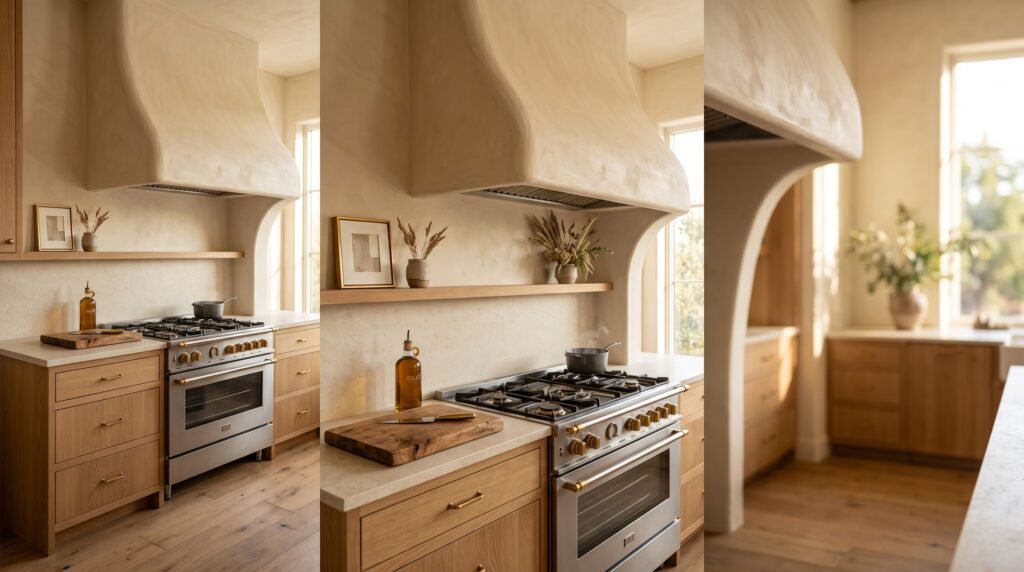
For a warm organic look, consider creamy off-white tiles with slightly irregular surfaces. Their subtle imperfections can make a cooking zone feel less sterile.
If you prefer something dramatic, darker stone or richly colored tile can create a focal point behind the stove.
Whatever material you choose, consider maintenance. Areas around the stove are exposed to oil, steam, and food splashes, so surfaces should be reasonably easy to wipe clean.
A beautiful backsplash can reduce the need for extra décor because it becomes decoration itself.

Alt text: Modern cooking area featuring a textured statement backsplash, warm cabinetry, and minimal countertop styling.
8. Display Beautiful Pots and Pans
Cookware can become an attractive part of cooking-area décor when displayed carefully.
Copper pots, cast-iron pans, stainless steel cookware, and neutral enamel pieces can all add character. If you own cookware that you genuinely love looking at, consider giving it a visible place.
A ceiling-mounted rack can work in larger spaces, while a sturdy wall rail with hooks can be more suitable for compact cooking areas.
You can also display one beautiful pot on an open shelf rather than creating an entire cookware collection.
Consistency helps.
A random assortment of heavily worn cookware can make the space look busy, while a smaller curated selection tends to feel intentional.
This doesn’t mean everything has to be brand new. Well-used copper or cast iron can bring wonderful character to a cooking area.
Just make sure anything mounted above or around your cooking zone is securely installed and positioned safely.
9. Add Warm Under-Cabinet Lighting
Lighting can completely change the atmosphere of a cooking area.
Ceiling lights provide general illumination, but under-cabinet lighting creates a softer layer of light directly over the countertop and backsplash.
This can make stone, tile, wood, and decorative accessories look richer while also improving visibility during food preparation.
Warm or neutral-white lighting generally creates a comfortable residential atmosphere. Extremely cool lighting can sometimes make an otherwise cozy space feel clinical.
If you have open shelves instead of upper cabinets, integrated shelf lighting can create a similar effect.
Lighting is particularly valuable in the evening. A softly illuminated backsplash paired with a small pendant or nearby ambient light can make the cooking zone feel much more inviting than bright overhead lighting alone.
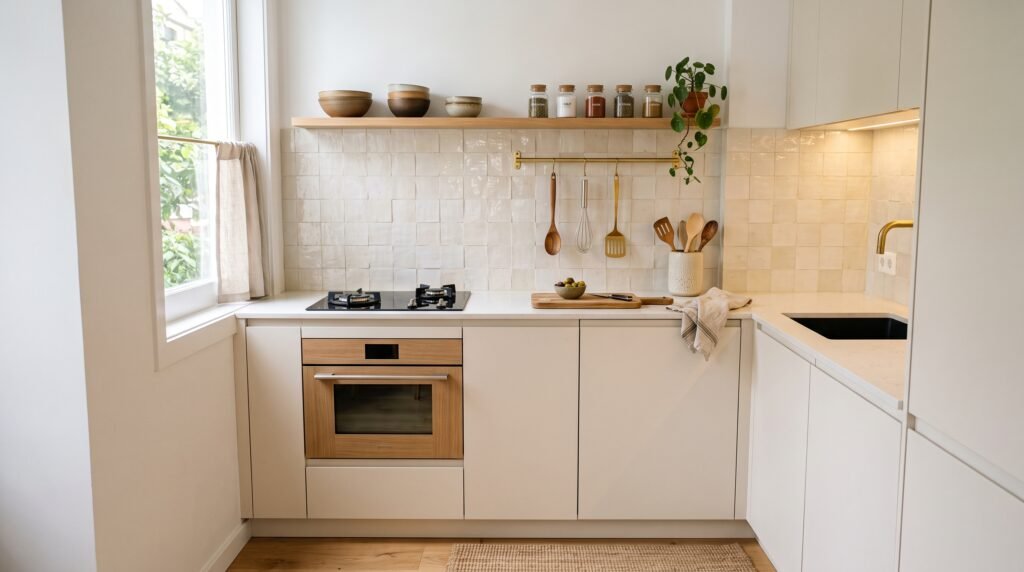
Alt text: Cozy modern cooking area illuminated with warm under-cabinet lighting and styled with minimal natural accessories.
10. Create a Dedicated Spice Display
If you cook frequently, spices can quickly take over cabinets and countertops.
A dedicated spice area solves the organizational problem while adding an attractive detail.
For countertops, use a compact wooden or metal rack that keeps frequently used spices together. Matching glass containers can create a streamlined appearance, especially when paired with clear labels.
If countertop space is limited, consider a shallow wall shelf or an interior cabinet organizer.
You can also create a small spice drawer near the cooking zone. While this isn’t technically visible décor, it contributes to the clean appearance of the overall space by reducing countertop clutter.
When displaying spices openly, protect them from excessive heat and direct sunlight whenever possible. The most practical location isn’t always immediately beside the stove.
11. Introduce Small Artwork
Artwork might not be the first thing you think about when decorating a cooking area, but a small piece can bring personality to an otherwise practical space.
Rather than hanging large artwork near the stove, choose a small framed print for an open shelf or unused section of counter.
Botanical illustrations, vintage food prints, minimalist line drawings, landscapes, and subtle abstract pieces can all work beautifully.
Leaning artwork against the wall creates a relaxed look and makes it easy to move when cleaning.
Keep valuable or delicate artwork away from steam, grease, and water. This is one area where inexpensive prints are often more practical than original pieces.
Choose artwork that complements the palette instead of competing with it. In a warm neutral cooking space, earthy green, muted brown, soft black, or terracotta details can create gentle contrast.
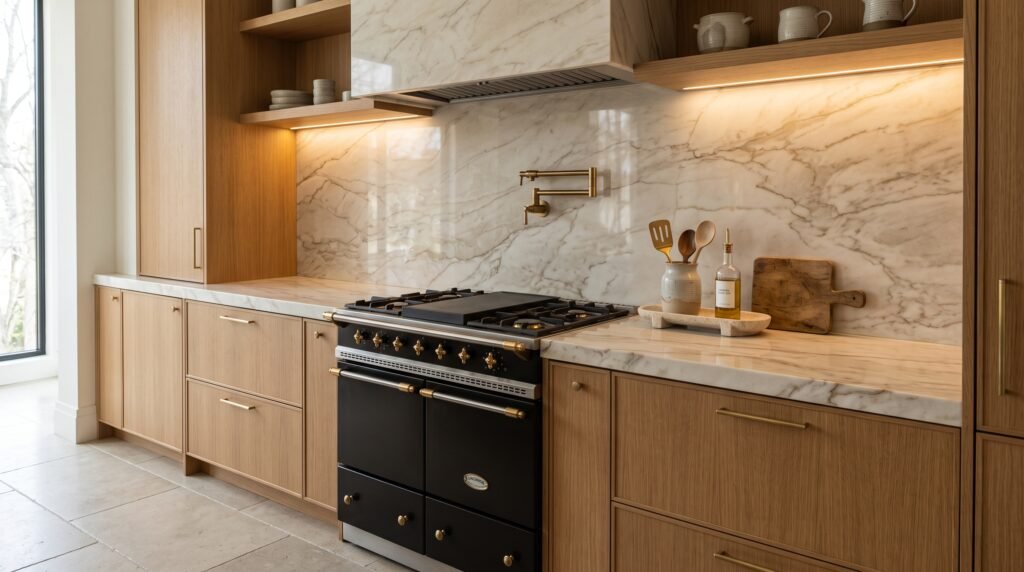
Alt text: Cozy neutral cooking area styled with small framed artwork, wooden cutting boards, ceramic utensils, and warm natural details.
12. Use Decorative Storage Jars
Storage containers are another opportunity to combine function and style.
Glass jars can hold ingredients such as rice, pasta, oats, flour, or dried beans. Ceramic containers can conceal items that aren’t as visually attractive.
However, resist the temptation to fill every available surface with matching jars.
A small group usually looks better.
Three containers in slightly different heights can create an attractive countertop arrangement without occupying too much workspace.
If you decant food, use clear labels so you always know what’s inside. Practicality matters more than achieving a perfectly minimalist photograph.
You can also use containers inside open shelving, where repeated materials and shapes create a sense of order.
13. Bring in Natural Textures
Natural materials can prevent a cooking space from feeling overly hard or sterile.
Wooden cutting boards are one option, but you can go further with woven baskets, linen towels, stone accessories, ceramic containers, and natural-fiber details.
A small woven basket can hold garlic, onions, or clean kitchen linens. A folded linen towel can introduce softness beside stone countertops and metal appliances.
Ceramic pieces provide another layer of texture, particularly handmade designs with subtle imperfections.
Try mixing textures rather than matching everything perfectly.
Smooth stone, rough pottery, warm wood, clear glass, and soft linen can work together beautifully when the overall color palette remains controlled.
This layered approach is especially effective for organic modern, Scandinavian, rustic-modern, Mediterranean, and contemporary interiors.
14. Keep Countertop Styling Minimal
One of the biggest mistakes in cooking-area decorating is using too many accessories.
A cooking counter needs space.
If every corner contains a vase, candle, framed print, appliance, jar, plant, and decorative object, preparing food becomes frustrating.
Instead, create small styling zones.
For example, one side of the stove might have a utensil crock and two cutting boards. The other could contain a tray with cooking oil and salt. That may be all you need.
Leave generous sections of the countertop completely empty.
The empty space is not wasted—it makes the styled sections look more intentional and gives you room to cook.
Before adding a decorative object, ask whether it contributes enough visually to justify occupying valuable worktop space.
Often, removing one or two items improves the design more than adding something new.
15. Create a Cozy Cooking Area With a Cohesive Palette
Finally, think about the cooking area as one complete composition.
A cohesive color palette helps different functional objects feel connected.
Warm white, cream, beige, taupe, natural wood, and muted green create a soft organic look. Black details can introduce definition, while brass or aged metal can provide warmth.
You don’t have to make every object exactly the same color. Instead, repeat a few materials and tones throughout the space.
For example, wooden cutting boards can connect visually with oak cabinets. Cream pottery can complement a warm backsplash. Black hardware can coordinate with a black stove or pendant lights.
The result feels collected rather than overly matched.
Finish with a few details that make the space feel lived in: a linen towel, a bowl of fresh produce, herbs, or a favorite handmade ceramic piece.
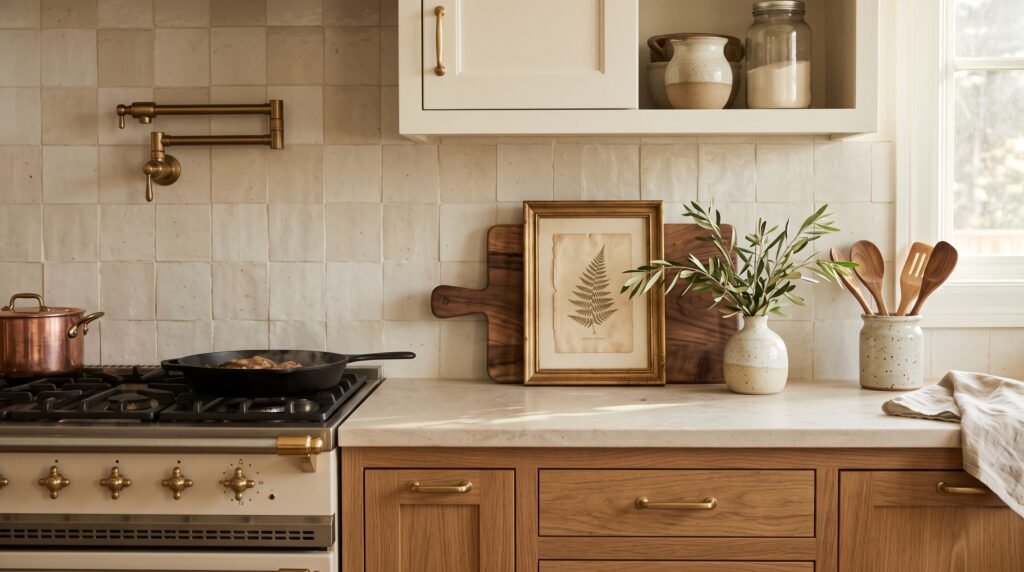
Alt text: Beautiful cozy cooking area with warm neutral colors, wood accents, herbs, ceramic accessories, and organized countertops.
How to Keep Cooking Area Decor Practical
Beautiful cooking spaces still need to work well.
Keep the items you use most frequently within comfortable reach, while storing less-used appliances and tools inside cabinets. Countertops should have enough open space for chopping, mixing, plating, and other everyday tasks.
Decorations should also be easy to move and clean around.
Instead of arranging ten small objects individually, group a few items on a tray. When it’s time to clean the counter, you can move the entire arrangement at once.
Be particularly careful around the stove. Avoid flammable decorations, trailing plants, paper items, fabric, or wooden accessories positioned too close to burners or other high-heat areas.
Good cooking-area décor should make your routine easier—not create obstacles.
Best Colors for a Cozy Cooking Area
Color has a major influence on how a cooking space feels.
For a calm and timeless atmosphere, start with warm neutrals such as creamy white, beige, mushroom, soft taupe, or light gray. These shades create an easy background for wood, stone, greenery, and decorative objects.
Earthy colors can add personality.
Muted olive green pairs beautifully with natural wood. Terracotta introduces warmth, while deep brown can make a light cooking area feel grounded. Charcoal and black work particularly well as smaller accents through hardware, lighting, cookware, or frames.
You can also introduce color through objects that are easy to change.
Kitchen towels, pottery, artwork, bowls, and plants allow you to experiment without committing to permanent finishes.
Small Cooking Area Decor Ideas
Small cooking spaces benefit most from restraint.
Instead of decorating every available surface, concentrate on vertical areas and useful objects. A rail for utensils, narrow spice shelf, attractive backsplash, or small open shelf can provide character without sacrificing preparation space.
Choose accessories that perform more than one function.
A beautiful utensil crock stores tools while adding texture. Cutting boards decorate the backsplash while remaining useful. A small herb pot provides greenery and fresh ingredients.
Avoid oversized countertop decorations.
Keeping sightlines relatively open can make even a compact cooking zone feel calmer and larger.
Good lighting is equally important. Under-cabinet lighting can brighten dark preparation areas without taking up any physical space.
Final Thoughts
The most successful cooking area decor ideas aren’t about filling the space with decorations. They’re about making everyday cooking essentials look beautiful while keeping the area practical.
Start with what you already use: cutting boards, utensils, cookware, spices, cooking oils, herbs, and storage containers. Organize them thoughtfully, introduce a few natural materials, improve the lighting, and remove anything that creates unnecessary clutter.
Small details can have a surprisingly large effect. A wooden board leaning against a beautiful backsplash, a handmade ceramic utensil holder, fresh herbs, or warm under-cabinet lighting can completely change the mood of the cooking zone.
Most importantly, design the area around the way you actually cook.
When functionality comes first and decoration supports it, the result is a cooking space that feels organized, welcoming, personal, and beautiful enough to enjoy every day.