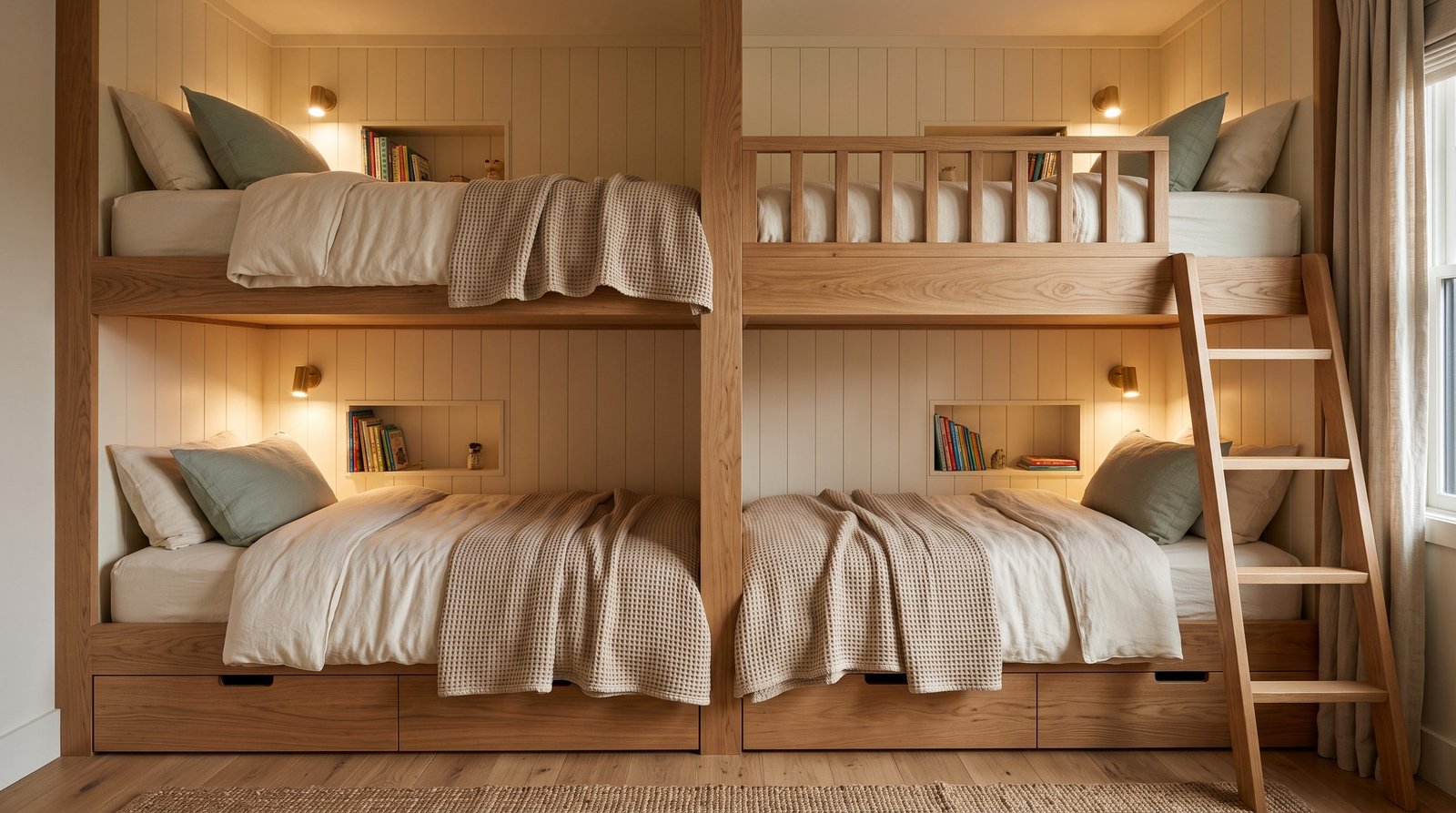
15 Built-In Bunk Bed Ideas for a Stylish, Space-Saving Bedroom
Built-in bunk bed ideas are a wonderful way to make a shared bedroom feel more organized, comfortable, and thoughtfully designed. Whether you are decorating a small children’s room, creating a cozy guest bedroom, or designing a multifunctional space for siblings, built-in bunk beds can offer much more than two sleeping spaces. They can combine sleeping areas, storage, shelving, lighting, and even study desks in one beautiful design.
Unlike freestanding bunk beds, built-in bunk beds are often designed to fit the exact dimensions of a room. This allows you to make better use of awkward corners, narrow walls, alcoves, and unused vertical space. With carefully selected materials, comfortable mattresses, coordinated bedding, and soft lighting, a built-in bunk bed can become an attractive architectural feature rather than simply a practical piece of furniture.
Modern designs also offer plenty of opportunities to personalize a bedroom. Natural oak, painted cabinetry, warm white finishes, muted green accents, and simple Scandinavian details can create a calm, timeless atmosphere. For a more playful bedroom, you can introduce themed sleeping nooks, colorful cushions, decorative wall panels, and charming little reading lights.
In this guide, we will explore 15 built-in bunk bed ideas that balance functionality, safety, and visual appeal. You will discover options for small bedrooms, shared children’s rooms, guest spaces, and contemporary family homes, along with useful planning advice to help you choose a design that works for your lifestyle.
1. Natural Wood Built-In Bunk
Natural Wood Built-In Bunk Bed Ideas
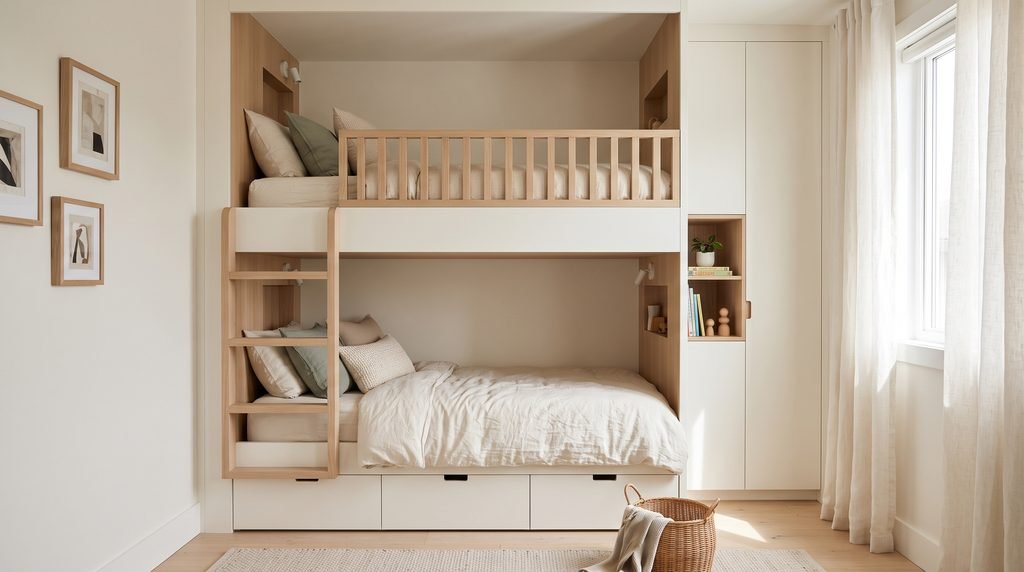
Natural wood built-in bunk beds are an excellent choice for creating a warm, inviting bedroom. Oak, maple, birch, and other light wood finishes bring natural texture into the space while helping the furniture feel timeless rather than overly decorative.
A simple design can feature two stacked beds framed by matching wooden panels, integrated steps, and small storage compartments. Pairing pale timber with cream bedding and soft beige walls creates a relaxed Scandinavian-inspired atmosphere. The result feels sophisticated enough to remain attractive as children grow older.
For a cohesive appearance, consider matching the bunk bed frame with a nearby wardrobe, floating shelves, or a wooden study desk. This creates visual continuity throughout the room without requiring every piece of furniture to look identical.
Natural wood also works beautifully with linen bedding, woven baskets, cotton blankets, and subtle greenery. These materials add softness to the room and prevent the built-in structure from feeling too heavy.
When selecting finishes, consider how much maintenance you want. Some natural wood surfaces show fingerprints and scratches more readily than others, so a durable finish is particularly helpful in a busy children’s bedroom.
Choose a design with rounded edges where appropriate, sturdy fixed guardrails, and a properly designed access ladder or staircase. A beautiful wooden finish should complement the practical requirements of a safe sleeping area.
2. Built-In Bunk Beds for Small Bedrooms
Space-Saving Built-In Bunk Beds for Small Rooms
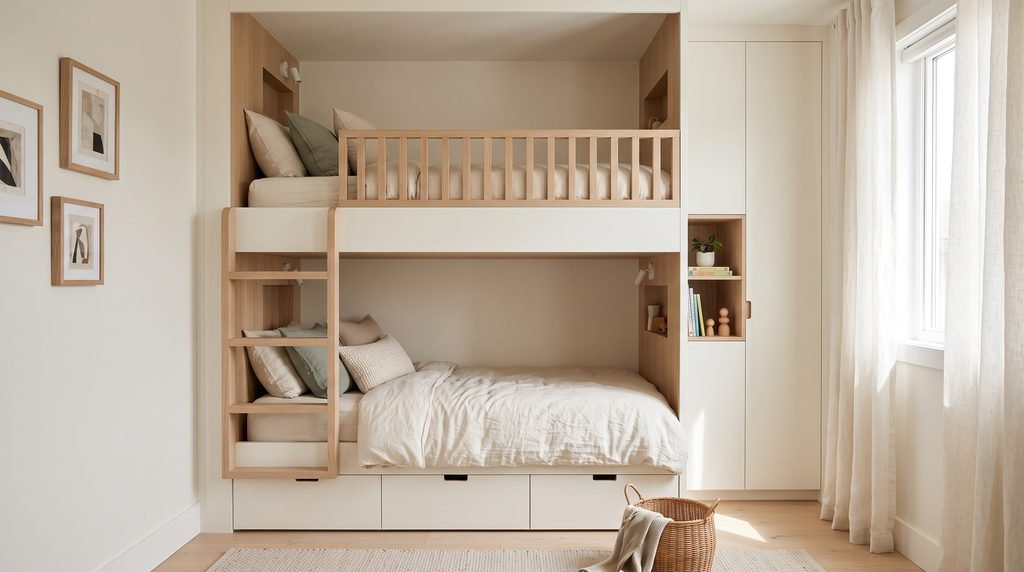
When floor space is limited, built-in bunk beds can help a small bedroom feel more functional without sacrificing comfort. Stacking sleeping spaces vertically allows more room for everyday activities, storage, and movement.
A wall-to-wall bunk arrangement is especially useful in narrow bedrooms. Instead of placing several separate furniture pieces around the room, you can integrate the beds into one carefully planned structure. This can leave more open floor space for a play area, compact desk, or wardrobe.
Light-colored finishes are particularly effective in smaller rooms. White, warm ivory, pale oak, and soft beige reflect available light and help large built-in structures blend with their surroundings. Matching the bed frame to the wall color can also make the design feel less visually bulky.
Storage should be planned carefully. Drawers beneath a lower bunk, cabinets beside the sleeping area, and shelves above a desk can reduce the need for additional furniture. However, keep everyday items within easy reach and avoid placing heavy objects where they could fall onto the beds.
Lighting also makes a difference. Wall-mounted reading lights, concealed illumination in suitable locations, and a central ceiling fixture can help the room feel welcoming without taking up valuable surface space.
Before choosing a layout, measure the room’s width, ceiling height, door swings, windows, and wardrobe access. A compact design should preserve comfortable circulation and adequate headroom rather than simply fitting the maximum amount of furniture into the available area.
3. Built-In Bunk Beds With Storage Draw
Built-In Bunk Beds With Integrated Storage
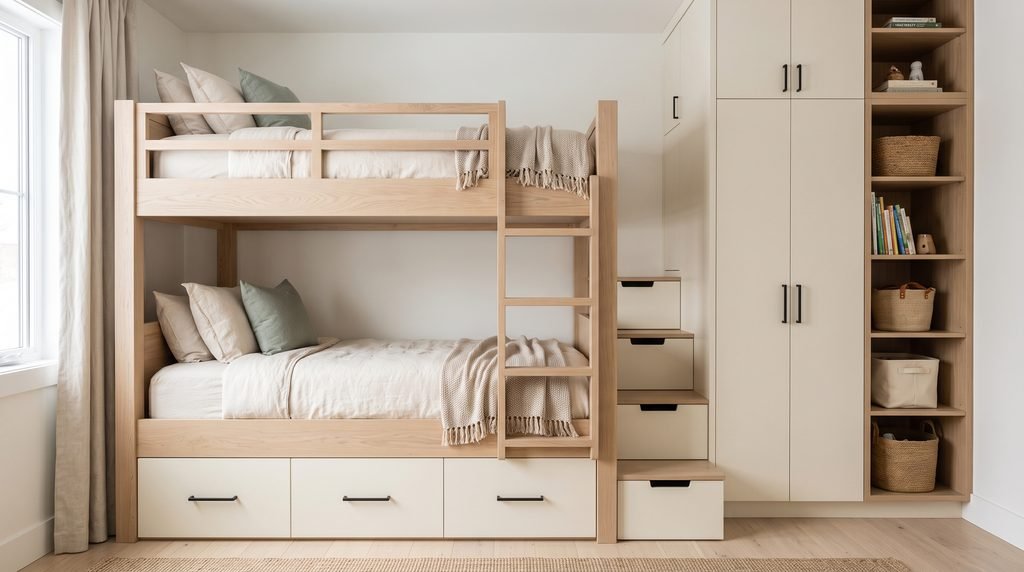
Combining bunk beds with integrated storage is one of the most practical ways to create an organized bedroom. Children often need space for clothing, books, toys, spare bedding, and seasonal belongings. Built-in storage can keep these items accessible without allowing the room to become cluttered.
Deep drawers beneath the lower bunk are useful for extra blankets, sheets, or clothing. If the bed is elevated on a properly engineered platform, the surrounding structure may also accommodate additional compartments. Narrow drawers along the side can store smaller items, while cabinets at the end of the bed may hold larger belongings.
For a refined look, use simple drawer fronts with discreet handles or push-to-open hardware where appropriate. Matching the storage finish to the bunk frame creates a clean, furniture-like appearance. Alternatively, natural wood drawers beneath white cabinetry introduce subtle contrast.
Think about how the storage will be used before deciding on its configuration. Younger children benefit from accessible drawers that are easy to organize, while older children may prefer larger compartments for clothes, sports equipment, or school supplies.
Avoid making the storage so complicated that everyday items become difficult to retrieve. Clear categories, labeled baskets, and a simple organization system help the bedroom remain tidy over time.
Safety is essential when integrating drawers and doors. Make sure the hardware is suitable for the intended use, moving parts do not create dangerous pinch points, and access to the bed’s ladder and sleeping areas remains unobstructed.
A thoughtfully designed storage bunk bed offers both visual simplicity and practical benefits, making it particularly valuable in shared or compact bedrooms.
4. White Built-In Bunk Beds for a Bright Bedroom
Elegant White Built-In Bunk Beds
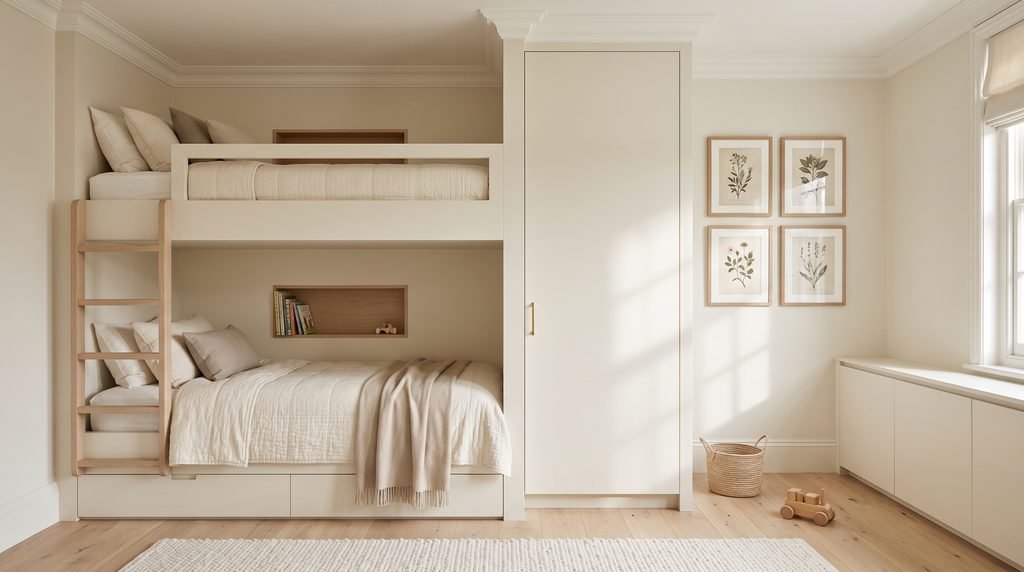
White built-in bunk beds are ideal for creating a bright, airy bedroom with a clean and timeless appearance. Their neutral finish works with many decorating styles, from contemporary minimalism to classic cottage interiors.
A white built-in structure can feature simple rectangular frames, integrated shelving, and matching cabinetry. To prevent the room from feeling too plain, introduce a mixture of textures through quilted bedding, knitted throws, linen cushions, and natural wood accessories.
Warm white is often more inviting than a stark, cool white. Pair it with cream walls, pale oak flooring, and soft neutral fabrics for a gentle, cohesive palette. If you prefer a little contrast, muted sage green, dusty blue, or warm taupe can be introduced through cushions and decorative details.
White cabinetry is also flexible as children’s preferences change. Instead of replacing the entire bed when a child outgrows a particular theme, you can update the bedding, wall art, and accessories.
Lighting helps enhance the finish. Natural daylight can emphasize the room’s clean lines, while warm-toned artificial lighting creates a comfortable atmosphere in the evening.
Choose a durable, washable finish that can withstand the everyday demands of a family bedroom. Matte and satin finishes can both work well, depending on the material and maintenance requirements.
The key is to keep the styling balanced. A white bunk bed can serve as a calm backdrop for colorful books, treasured toys, patterned blankets, or a few carefully chosen decorative pieces.
5. Built-In Bunk Beds With Staircase Storage
Built-In Bunk Beds With Storage Stairs
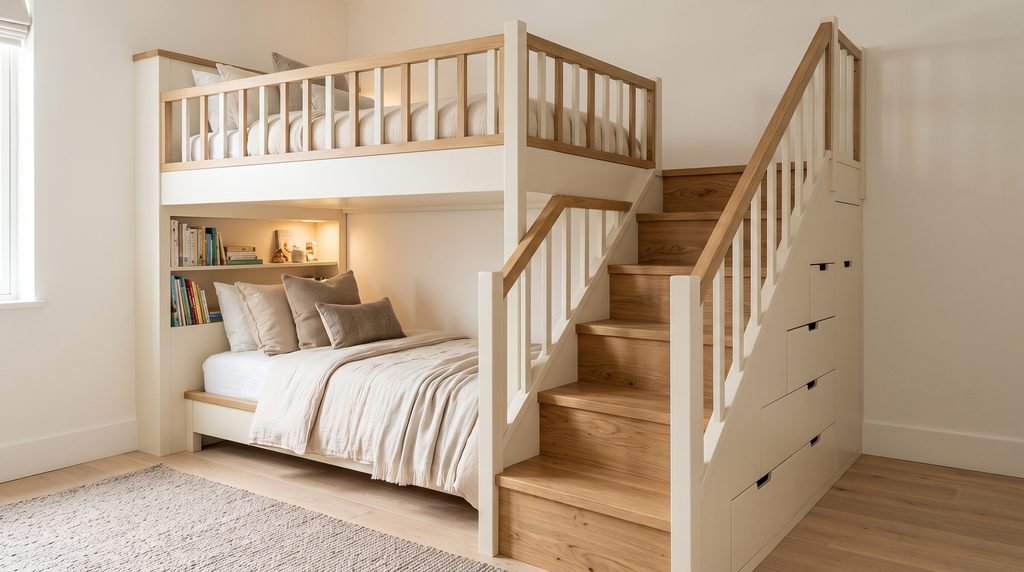
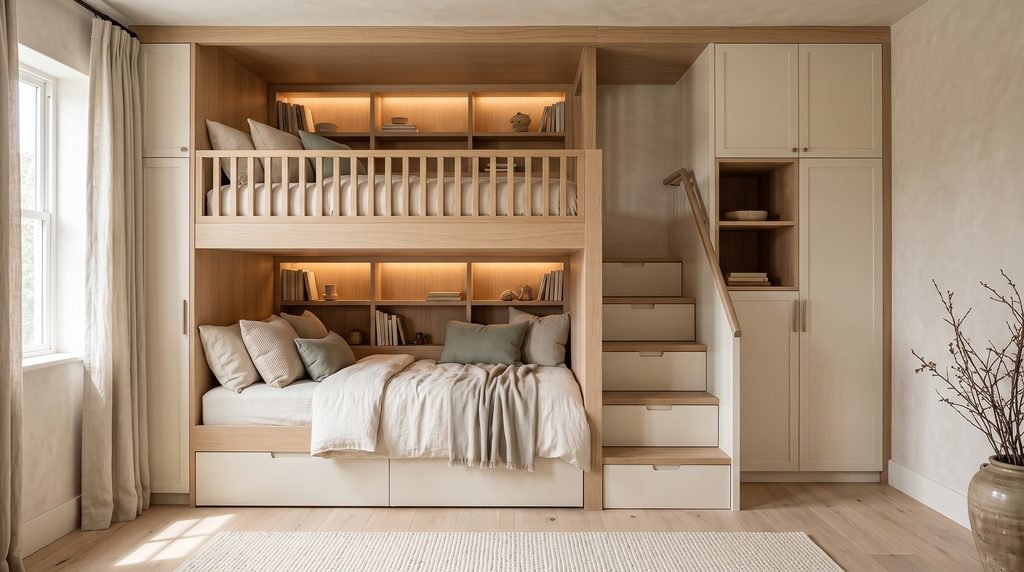
A staircase leading to the upper bunk can give a built-in bed a substantial, furniture-like appearance while providing a convenient alternative to a traditional ladder. When designed correctly, the staircase can also incorporate useful storage.
Each step may contain a drawer or an enclosed compartment for clothing, toys, books, or spare bedding. This makes the structure particularly useful in bedrooms where conventional wardrobes and dressers would take up too much floor space.
For a premium appearance, use matching cabinetry throughout the staircase and bunk frame. Pale oak steps paired with cream drawer fronts create a warm, modern look, while fully painted cabinetry offers a more seamless appearance.
A staircase can also become a visual feature. Simple handrails, clean geometric lines, and carefully proportioned steps help the design feel intentional rather than bulky. The finish should coordinate with the rest of the room so that the structure looks integrated.
However, staircases require thoughtful planning. The available footprint, step dimensions, headroom, handrails, and the intended user’s age must all be considered. Storage drawers should not interfere with safe climbing or create unexpected obstructions.
Upper bunks require suitable guardrails, and the access system must be designed for the intended user. Children should never climb on drawers that are not specifically engineered as steps.
For younger children, a properly designed staircase may be easier to navigate than a vertical ladder, but the suitability of either option depends on the individual design and the child’s abilities.
When space allows, this combination of stairs and storage creates a highly functional sleeping arrangement that looks custom-made for the room.
6. Built-In Bunk Beds With Individual Reading Lights
Cozy Built-In Bunk Beds With Reading Lights
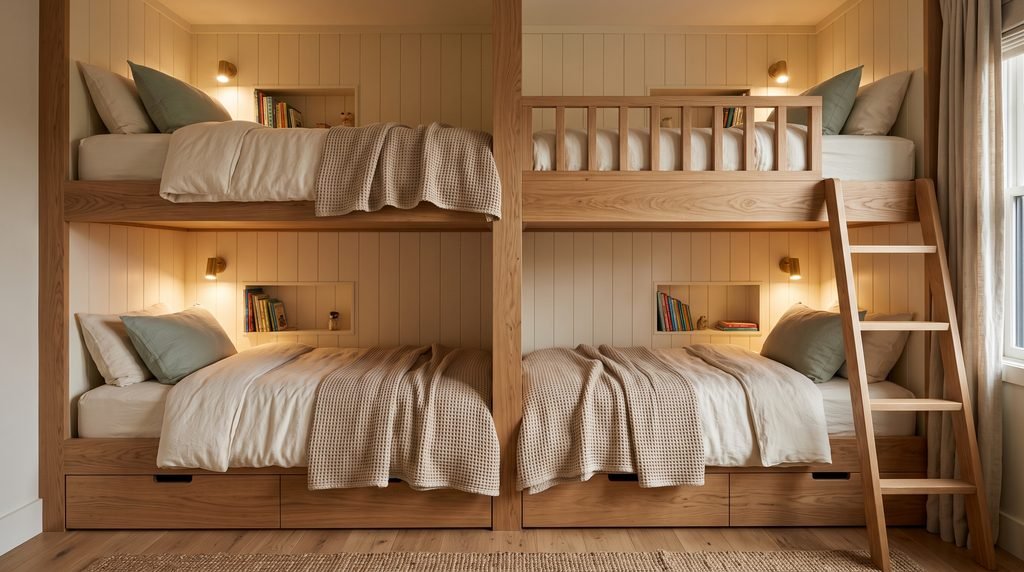
Personal lighting can make each bunk feel like an individual sleeping nook. Instead of relying entirely on the main ceiling light, you can provide a dedicated reading light for each bed.
Wall-mounted fixtures are a popular option because they leave bedside surfaces free for books, water bottles, or small personal belongings. Carefully positioned lights can illuminate reading material without unnecessarily lighting the entire bedroom.
Choose fixtures with an attractive but simple design. Matte white, brushed metal, soft black, or warm brass can complement different interior styles. For a natural look, combine pale timber frames with warm lighting and neutral bedding.
Lighting controls should be easy for the intended user to operate. Where suitable, individual switches let each child control their own light without disturbing a sibling. Dimmable lighting can also help create a more relaxing evening atmosphere.
Safety and installation are especially important around built-in beds. Select fixtures appropriate for the location, keep electrical components and cords away from sleeping areas, and use professional installation when required. Avoid exposed hot bulbs, dangling cords, and fittings that could be struck while climbing.
The surrounding design can reinforce the cozy effect. A small integrated book ledge, soft cushions, and a calm wall color can make each bunk feel like a private retreat.
Keep decorative objects minimal and securely positioned. Shelves above pillows should not hold heavy or fragile items that could fall.
With the right lighting, a simple bunk arrangement becomes more personal, comfortable, and useful for reading before bedtime.
7. Built-In Bunk Beds With a Study Desk
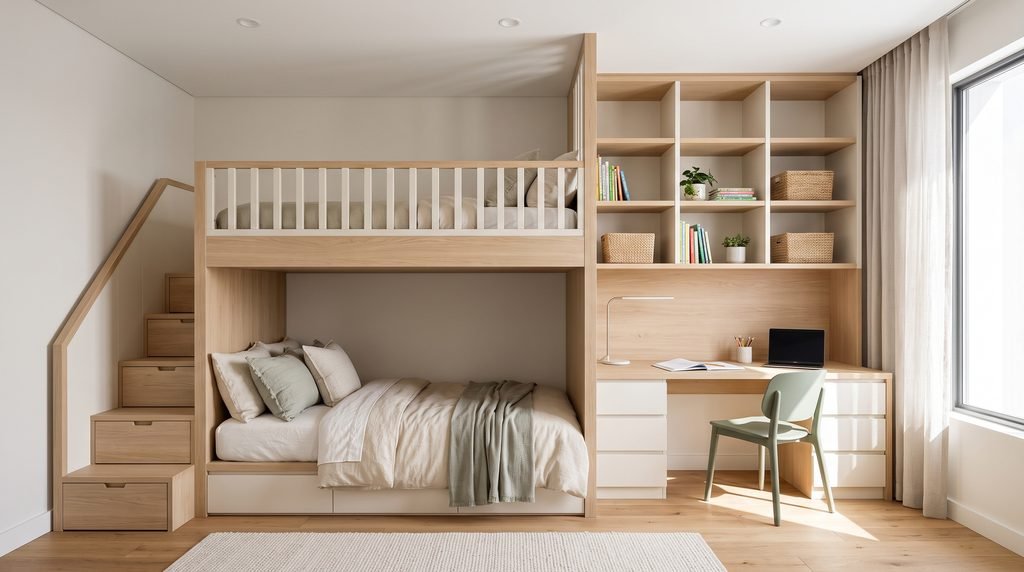
Built-in bunk beds with an integrated study desk are a smart option for school-age children, teenagers, and compact multifunctional bedrooms. By combining sleeping and working areas, the design can reduce the number of separate furniture pieces needed in the room.
One popular layout places a desk beneath an elevated upper bunk, provided the overall dimensions allow sufficient clearance. Another option positions a desk beside the bunk structure, with shelving and cabinets forming a continuous built-in arrangement.
Natural wood paired with white cabinetry creates a versatile contemporary look. A pale desktop, simple task chair, and open shelves provide a practical workspace without making the bedroom feel crowded.
Good lighting is particularly important. Position the desk to make the best use of natural daylight while avoiding uncomfortable glare on screens. Add an appropriate task light for evening study and plan electrical outlets according to local requirements.
Storage can include drawers for stationery, shelves for textbooks, and cabinets for school supplies. Keep frequently used items accessible while reserving higher shelves for belongings that are rarely needed.
The work area should have adequate legroom, a comfortable chair, and sufficient space for the child’s schoolwork or computer. A desk that looks attractive but is too cramped will not serve its purpose well.
If the desk is located below an upper bunk, carefully verify head clearance and ensure the design provides suitable ventilation and lighting. Avoid positioning the workspace where climbing activity could cause objects to fall onto the person using it.
This combination works best when the sleeping area and study area are clearly defined, allowing the room to support both rest and concentration.
8. Built-In Bunk Beds With a Cozy Cabin Theme
Cabin-inspired bunk beds bring a playful, adventurous atmosphere to a children’s bedroom. Their design often includes simple timber framing, pitched-roof details, small windows, or decorative paneling that recalls a miniature woodland cabin.
You can create this look without turning the entire room into a themed playroom. A natural oak frame, cream bedding, sage green accents, and a few woodland illustrations are enough to establish the atmosphere while keeping the design sophisticated.
For a more contemporary approach, use clean lines and restrained architectural details rather than elaborate decorative shapes. A small roof-like frame above the upper bunk can provide the visual suggestion of a cabin while allowing the rest of the room to remain simple.
Layered textiles make the sleeping areas feel comfortable. Cotton bedding, knitted throws, and a few cushions in earthy colors complement the natural materials. Choose fabrics that are easy to wash and suitable for everyday use.
A nearby bookshelf or compact reading nook can reinforce the cabin-inspired theme. Soft woodland artwork and a woven storage basket add personality without creating unnecessary clutter.
It is important to distinguish decorative cabin features from actual structural components. Roof-shaped frames, rails, and panels must not interfere with safe access, ventilation, guardrails, or headroom. Avoid hanging cords, unsecured decorations, and anything that creates a climbing hazard.
This design is especially appealing to children who love imaginative spaces. With neutral colors and durable materials, it can remain attractive even as their interests change.
9. Built-In Bunk Beds for Shared Sibling Bedrooms
A shared bedroom can be both practical and personal when the sleeping arrangement is designed to give each child a sense of ownership. Built-in bunk beds make it possible to combine two beds within a coordinated structure while allowing each sleeper to express an individual style.
Start with a consistent foundation, such as a pale wood frame, white cabinetry, or soft neutral walls. Then introduce small differences through bedding, cushions, artwork, or personal book collections. One child might prefer sage green, while the other chooses muted blue, yet both spaces can still feel harmonious.
Individual reading lights and accessible storage can help each child manage their belongings. A small shelf near each bunk provides a place for a favorite book or a few personal items, provided it is securely installed and does not create a falling-object risk.
If the room is large enough, combine the bunk arrangement with a shared study desk or two compact workstations. A central rug or shared play area can define the open floor space without dividing the room unnecessarily.
Privacy can also be considered through the placement of the bunks. Positioning them against a side wall may create a calmer layout and preserve space in the middle of the room. However, avoid adding curtains or screens that restrict ventilation, interfere with escape, or create entanglement hazards.
The most successful shared bedroom designs balance togetherness with individuality. Each child should have a comfortable sleeping area, practical storage, and enough personal space to feel that the room belongs to them.
10. L-Shaped Built-In Bunk Beds
L-shaped built-in bunk beds provide an alternative to stacking two beds directly above one another. In this arrangement, one bunk sits perpendicular to the other, forming an L-shaped layout that can suit certain corner bedrooms.
The open space created around the beds can provide opportunities for storage, a reading corner, or a compact play area. Depending on the room’s dimensions, the design may also feel less like a single tall block of furniture.
Natural wood and warm white cabinetry work particularly well for this configuration. You can use matching frames for a unified appearance or introduce a subtle difference in color to distinguish each sleeping area.
L-shaped designs can be useful when windows, doors, or existing architectural features make a conventional stacked arrangement difficult. They may also create more flexible access to each bed, although this depends on the exact dimensions and layout.
Before choosing this design, carefully consider circulation around both bunks. The lower bed should not block drawers, wardrobe doors, windows, or access to the room. Ensure that the upper bunk has suitable guardrails and that the ladder or staircase is positioned safely.
The supporting structure must be designed for the loads it will carry. Built-in appearance alone does not guarantee structural strength, so the framing, fixings, and connections require appropriate planning.
An L-shaped bunk bed can be a distinctive and practical solution when its geometry genuinely improves the room rather than simply adding complexity.
11. Built-In Bunk Beds With Open Bookshelves
Open bookshelves can turn a bunk bed into a multifunctional bedroom feature. By integrating bookshelves into the sides or nearby wall of the structure, you can keep reading material accessible while reducing the need for separate bookcases.
A vertical shelving unit beside the bunks can display children’s books, small storage baskets, and a limited selection of decorative objects. Alternatively, narrow book ledges near each sleeping area can provide convenient access to bedtime reading.
For a calm and coordinated design, use the same finish for the shelves and bunk frame. Light oak offers warmth, while painted white shelving creates a clean, understated appearance. A contrasting backing panel can introduce depth without overwhelming the room.
Organize books so that the most frequently used titles are easy to reach. Younger children may benefit from low shelves with covers facing outward, while older children might prefer traditional shelves for larger collections.
Consider the safety implications of every shelf location. Shelves must be securely fixed, and heavy objects should not be positioned above pillows or sleeping areas. Avoid placing shelving where it obstructs the ladder, guardrails, or access to the upper bunk.
If the shelves form part of the bed structure, they should not be treated as climbing equipment unless specifically designed for that purpose. Keep the surrounding arrangement uncluttered so children can move around the sleeping area safely.
When planned thoughtfully, integrated bookshelves encourage reading, improve organization, and give each bunk a more personalized appearance.
12. Modern Minimalist Built-In Bunk Beds
Minimalist built-in bunk beds are ideal for homeowners who prefer simple shapes, uncluttered surfaces, and timeless materials. Rather than relying on decorative details, this style focuses on proportion, finish, and the relationship between the bed and the surrounding architecture.
A streamlined design may feature flush cabinetry, concealed storage, integrated steps, and a limited palette of two or three complementary colors. Warm white, pale oak, and soft beige create a welcoming look without sacrificing simplicity.
Hardware can be kept discreet, and decorative accessories should be chosen carefully. A few cushions, one framed print, and a neatly arranged bookshelf may be more effective than numerous small ornaments.
Minimalist designs are also adaptable. When children grow older, you can change the bedding, artwork, and accessories without having to redesign the entire built-in structure.
The main challenge is ensuring that simplicity does not compromise function. Storage should still be accessible, lighting should be sufficient, and the bed should provide comfortable sleeping dimensions. A beautiful, streamlined structure is not useful if it is difficult to clean or uncomfortable to use.
Choose durable finishes that suit your household’s routine. Easy-to-clean surfaces and well-designed drawers help maintain the neat appearance associated with minimalist interiors.
This approach works especially well in contemporary homes where the bedroom needs to feel calm and organized. By reducing visual clutter, the built-in bunk bed becomes a subtle architectural feature rather than the room’s only focal point.
13. Built-In Bunk Beds With Soft Neutral Bedding
Bedding has a significant influence on the appearance of a built-in bunk bed. Even a relatively simple frame can look polished when the fabrics, colors, and textures are carefully coordinated.
Cream, oatmeal, warm white, muted taupe, and soft gray create a gentle foundation that works with wood, painted cabinetry, and many wall colors. For a little contrast, introduce a muted green blanket, a dusty blue cushion, or a subtle striped duvet cover.
Texture is particularly important in a neutral bedroom. Cotton quilts, linen-look fabrics, knitted throws, and softly textured cushions create depth without requiring bold patterns.
For shared bedrooms, coordinating the bedding rather than making it identical can create a balanced appearance. Each child can choose a slightly different accent color while maintaining a common palette.
Practicality matters just as much as appearance. Select bedding that fits the mattress correctly and can be washed regularly. Avoid excessive pillows, bulky decorative blankets, or loose accessories that may create hazards, especially for younger children.
The upper bunk should have enough room for the sleeper to sit comfortably where the design permits, and bedding should not obstruct guardrails or ladder access.
Seasonal changes can also refresh the bedroom. Lightweight cotton fabrics work well in warmer weather, while additional blankets may be useful during colder months, provided they are appropriate for the sleeper’s age and needs.
Well-chosen bedding softens the architectural lines of a built-in bed and helps the entire room feel more welcoming.
14. Built-In Bunk Beds With a Guest Bedroom Design
Built-in bunk beds are not limited to children’s bedrooms. They can also be a useful solution for guest rooms, holiday homes, vacation properties, and family spaces that need to accommodate several visitors.
A pair of built-in bunks can provide additional sleeping capacity without requiring a large room. Integrated wardrobes, drawers, and shelving can keep guest belongings organized while leaving more floor space available during the day.
For an elegant guest bedroom, choose restrained finishes such as warm oak, ivory cabinetry, and neutral bedding. Simple wall lights and individual shelves add convenience without making the arrangement feel overly child-focused.
Consider the needs of different guests when choosing mattress dimensions, access arrangements, and headroom. A design intended for adults may require more generous sleeping dimensions and stronger structural specifications than one designed for young children.
Privacy and convenience also deserve attention. Individual reading lights, nearby power outlets installed according to local requirements, and accessible luggage storage can make a shared guest room feel more comfortable.
If the room serves several purposes, consider how it will function when no guests are staying. Built-in cupboards and a compact desk can help the space work as a home office, hobby room, or general-purpose room between visits.
Always verify the manufacturer’s or designer’s intended user requirements and applicable safety standards. Not every bunk bed is suitable for adults, and not every guest room can accommodate an upper bunk safely.
With appropriate planning, built-in bunks can transform an occasional guest room into a flexible, welcoming space.
15. Luxury Built-In Bunk Beds With Custom Cabinetry
For a premium bedroom, custom cabinetry can make built-in bunk beds feel like a natural extension of the architecture. Instead of treating the beds as separate furniture, the entire wall can be designed as one coordinated composition.
A luxury arrangement might combine oak veneer, painted cabinets, discreet handles, integrated shelves, and carefully positioned lighting. The design could extend from floor to ceiling, with storage compartments surrounding the sleeping areas and a matching wardrobe nearby.
Color coordination is essential. Warm white and natural wood create a timeless look, while muted olive, mushroom, or deep blue can introduce a richer contemporary character. The most successful palette complements the room’s flooring, wall color, and available daylight.
Custom cabinetry also allows the dimensions to be tailored to the room. This can be especially useful for alcoves, sloping ceilings, or unusual wall widths. However, the design must accommodate appropriate mattress sizes, headroom, ventilation, access, and structural requirements.
Materials should be selected according to their durability and maintenance needs. Cabinet finishes, edge details, and hardware are worth considering carefully because a built-in bed is intended to remain in place for years.
Professional design and installation may be appropriate for complex structures, particularly where the bunks connect to walls, floors, or substantial cabinetry. The appearance of a seamless built-in unit should never take priority over safe construction.
Luxury does not necessarily mean elaborate decoration. Precise proportions, quality materials, thoughtful storage, and comfortable lighting often make a greater difference than ornate details.
A well-designed custom bunk wall can serve as the defining feature of the bedroom while providing lasting everyday functionality.
How to Choose the Right Built-In Bunk Bed Design
With so many possible configurations, choosing the right built-in bunk bed begins with understanding the room and the people who will use it.
Measure the Room Carefully
Record the room’s width, length, ceiling height, window positions, door swings, and any existing architectural features. Measure the available wall space and consider how the beds will affect circulation.
Ceiling height is especially important. Both sleeping levels need appropriate headroom, and the upper bunk must be positioned with enough space for comfortable use while meeting applicable safety requirements.
Do not rely only on the visual proportions shown in inspiration photographs. A design that works in a spacious room may not be suitable for a smaller bedroom.
Prioritize Safety
Bunk beds require more careful planning than ordinary beds. Choose a design that is appropriate for the sleeper’s age and follow the manufacturer’s instructions and applicable safety standards.
The upper bunk should have suitable guardrails, a secure access ladder or staircase, and a properly engineered supporting structure. Check mattress dimensions and maximum permitted mattress thickness so that the guardrails remain effective.
In the United States, the U.S. Consumer Product Safety Commission provides guidance and regulations relevant to bunk bed safety. Requirements can differ by location, so confirm the standards that apply where the bed will be installed.
Avoid positioning beds near ceiling fans, exposed light fittings, windows with hazardous openings, or hanging cords. Keep the access route clear, and do not allow children to jump on or climb the structure.
Plan Storage Around Daily Habits
Think about what needs to be stored in the room and how frequently those items are used. Drawers beneath the lower bed may be best for clothing or spare bedding, while side cabinets can hold books, toys, or school supplies.
If the room is shared, give each child a clearly defined storage area. This makes tidying easier and reduces disagreements over belongings.
Avoid adding so many cabinets and shelves that the sleeping area becomes cramped. The goal is to improve the room’s functionality, not to fill every available surface.
Select Durable Materials
Built-in bunk beds should withstand regular daily use. Choose durable finishes, sturdy hardware, and materials suitable for the intended loads and environment.
Natural wood, quality plywood, and appropriate cabinetry materials can all be useful, depending on the design. Material selection should be based on structural performance and installation requirements, not appearance alone.
For painted finishes, consider how easily marks can be cleaned. For wood, choose a suitable protective finish and follow the manufacturer’s maintenance recommendations.
Create a Comfortable Color Palette
The bunk bed usually occupies a significant portion of the bedroom, so its color influences the entire design. Warm white, cream, light oak, and beige create a calm foundation, while sage green and muted blue provide gentle contrast.
If you prefer a more playful room, introduce stronger colors through replaceable accessories rather than committing every permanent surface to a theme. This makes future updates easier and more affordable.
Make Lighting Part of the Design
Plan general lighting, reading lights, and task lighting together. Each bunk should have appropriate illumination, and a study area may require additional task lighting.
Avoid exposed hot bulbs, loose cords, and poorly positioned fittings. Electrical work should comply with local requirements, and fixtures must be appropriate for their location.
Consider Long-Term Flexibility
Children’s needs change as they grow. A design that works for a young child may eventually need to accommodate a teenager, so consider mattress dimensions, storage capacity, and the possibility of changing the room’s styling.
Neutral finishes and simple cabinetry are often easier to adapt than elaborate themed structures. Flexible storage and replaceable accessories can help the room remain useful for longer.
Common Built-In Bunk Bed Mistakes to Avoid
Even a beautiful design can be disappointing if important practical details are overlooked.
- Ignoring ceiling height: Insufficient headroom can make an upper bunk uncomfortable or unsuitable.
- Overlooking safety requirements: Guardrails, ladders, mattress dimensions, and structural fixings must be appropriate for the design and intended users.
- Adding too much storage: Excessive cabinetry can reduce circulation and make a small bedroom feel cramped.
- Choosing impractical finishes: Delicate surfaces may be difficult to maintain in a busy family home.
- Forgetting lighting: Dark sleeping nooks and poorly illuminated study areas can reduce everyday comfort.
- Blocking windows or doors: Built-in furniture should preserve access, natural light, and any required emergency egress.
- Copying a design without measuring: Online inspiration photos rarely show all the dimensions needed to reproduce a layout safely.
- Ignoring future needs: A bedroom should be adaptable as children’s ages, interests, and storage requirements change.
Taking time to resolve these details before construction can help prevent expensive alterations later.
Final Thoughts
Built-in bunk bed ideas offer an excellent opportunity to create a bedroom that is beautiful, practical, and tailored to everyday life. From natural wood frames and integrated storage drawers to staircase bunks, cozy reading lights, and sophisticated custom cabinetry, there are options for a wide range of room sizes and decorating styles.
The best design is not necessarily the largest or most elaborate. It is the one that makes sensible use of the available space, provides comfortable sleeping areas, supports safe access, and keeps everyday belongings organized.
For a timeless look, consider warm wood, soft neutral bedding, durable finishes, and simple architectural lines. If the room needs to accommodate studying, reading, or visiting guests, integrated desks, shelves, and carefully planned storage can make the built-in structure even more useful.
Most importantly, treat safety and comfort as essential parts of the design rather than finishing touches. Check dimensions, headroom, guardrails, mattress requirements, and structural details before installation.
With thoughtful planning, built-in bunk beds can transform an ordinary bedroom into an inviting, well-organized space that serves the household beautifully for years to come.