21 Floating Wall Shelf Decorating Ideas for a Stylish and Organized Home
Floating wall shelves are a beautiful way to combine practical storage with elegant home decor. Unlike traditional shelves with visible brackets, floating shelves create a clean, streamlined appearance that works in modern apartments, cozy family homes, and sophisticated interiors. They can display favorite books, framed artwork, ceramics, plants, and treasured objects while helping make better use of vertical wall space.
Whether you want to refresh an empty living room wall, organize a bedroom, style a kitchen, or create a charming reading corner, floating shelves offer countless possibilities. The secret is to arrange them thoughtfully, choosing the right materials, colors, spacing, and decorative accessories for your room.
In this guide, you’ll discover 21 floating wall shelf decorating ideas that combine beauty and function, along with practical styling tips to help you create a polished look without making your space feel cluttered.
1. Style Floating Shelves With Neutral Decor
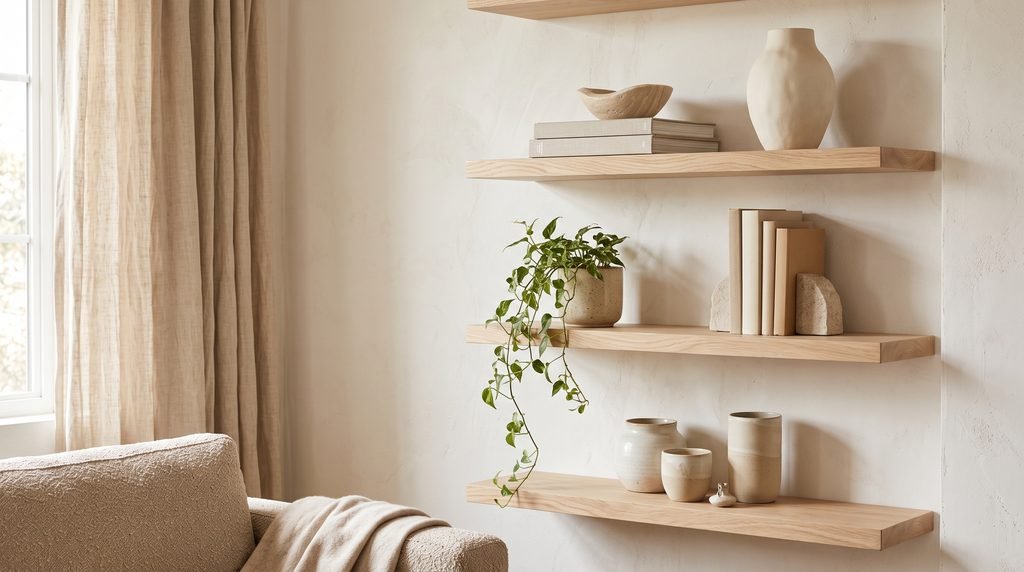
Neutral decor is one of the easiest ways to create an elegant floating shelf display. Combine pale oak shelves with cream ceramics, beige book covers, small sculptural objects, and a touch of greenery. The restrained color palette helps the arrangement feel cohesive and timeless.
Start by choosing a few objects with different heights and shapes. A tall vase can anchor one end of a shelf, while a horizontal stack of books and a small decorative bowl can fill the remaining space. Leave some areas empty so the display feels intentional rather than crowded.
This style works particularly well in living rooms, bedrooms, and open-plan spaces where you want decoration without visual noise.
For an even more coordinated result, repeat one or two materials elsewhere in the room, such as oak, linen, or ceramic. These small connections help the shelves feel like a natural part of the interior.
2. Create a Floating Shelf Gallery Wall
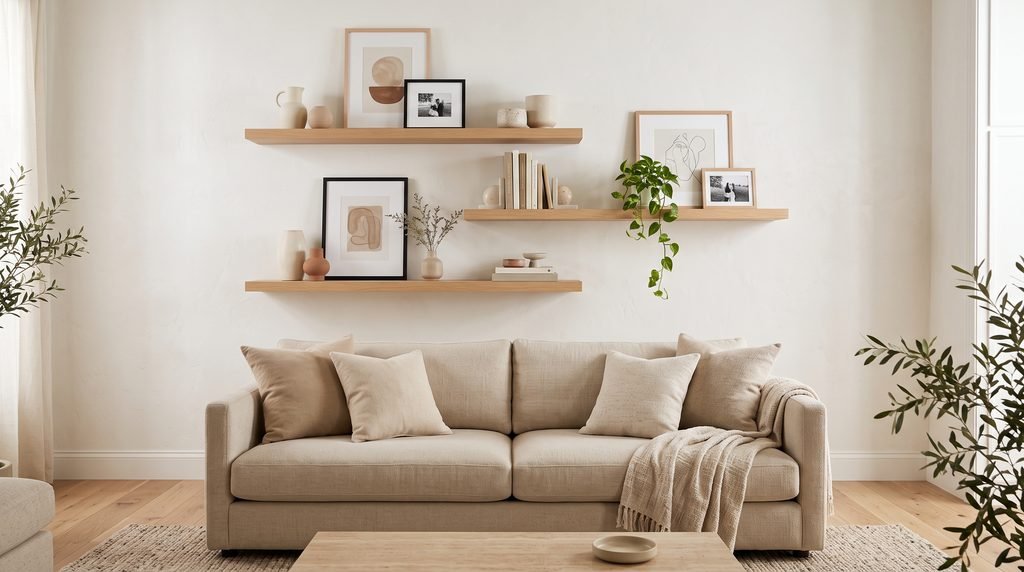
A floating shelf gallery wall gives you the flexibility to display artwork without committing to a fixed arrangement of picture frames. Place two or three shelves at different heights, then combine framed prints, small photographs, and decorative objects.
Choose artwork with complementary colors to maintain a harmonious appearance. Black-and-white prints create a clean contemporary look, while muted landscapes and abstract illustrations suit warm, organic interiors.
The shelves should feel connected rather than randomly scattered. Align some edges or repeat similar spacing to establish a visual rhythm. You can lean lightweight frames against the wall or hang artwork separately behind the shelves, provided everything is securely installed.
This approach is ideal for living rooms, hallways, and home offices where you want a personal display that can be updated over time.
3. Decorate Floating Shelves With Indoor Plants
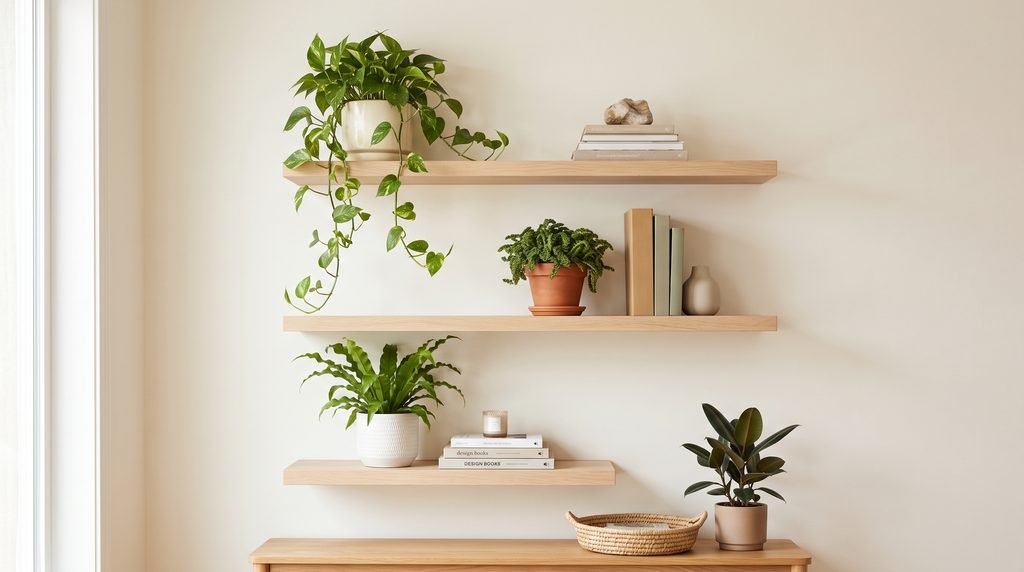
Plants bring color, texture, and life to floating shelves. Trailing varieties can soften straight shelf edges, while compact leafy plants create fresh focal points between books and ceramics.
Choose plants according to the amount of natural light available. Pothos and some philodendrons can adapt to a range of indoor conditions, while many succulents need brighter light. If a shelf receives very little daylight, consider suitable low-light plants or high-quality artificial greenery.
Use planters that complement your interior, such as matte white ceramics, terracotta, or textured stoneware. Mixing two or three planter styles can add interest, but keeping their colors related prevents the display from looking chaotic.
Remember to consider drainage and watering. Use waterproof saucers or suitable liners to protect the shelf from moisture, and avoid placing heavy or frequently watered pots where spills could damage furniture below.
4. Add Warmth With Rustic Wood Floating Shelves
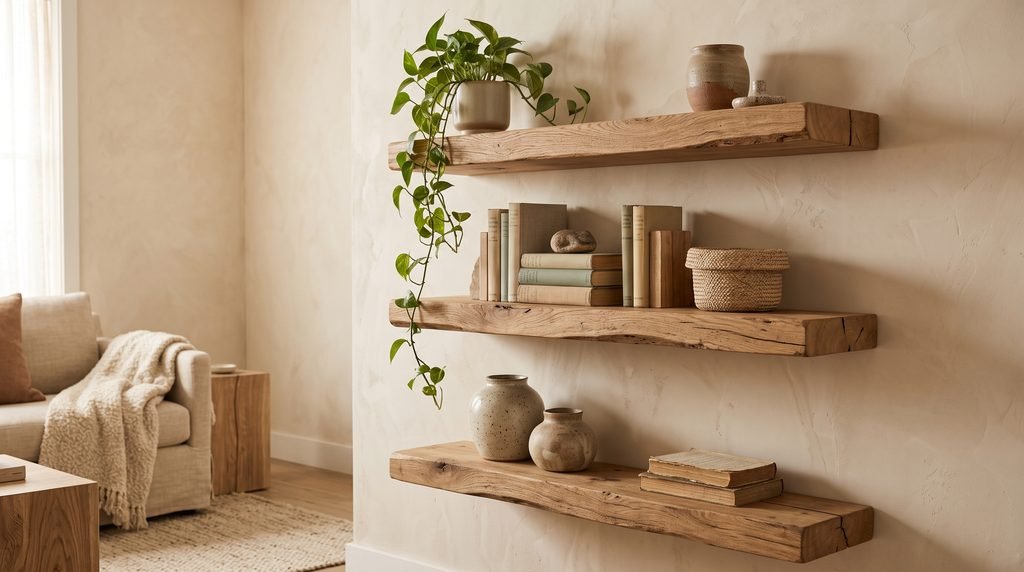
Rustic wood shelves introduce warmth and natural texture to a room. Their grain, knots, and slightly varied tones can make a plain wall feel more inviting, especially when paired with soft fabrics and understated accessories.
For a balanced design, combine the wood with simple ceramics, a few books, and one or two natural elements. Avoid filling every inch with rustic objects; a restrained arrangement allows the wood grain to remain the main feature.
These shelves suit farmhouse interiors, cottage-inspired homes, and organic-modern spaces. In a contemporary room, choose clean-edged timber and pair it with minimalist decor to keep the result refined.
Before installation, confirm that the shelf and its mounting system are appropriate for the expected load. Solid timber can be heavy, so secure mounting is particularly important.
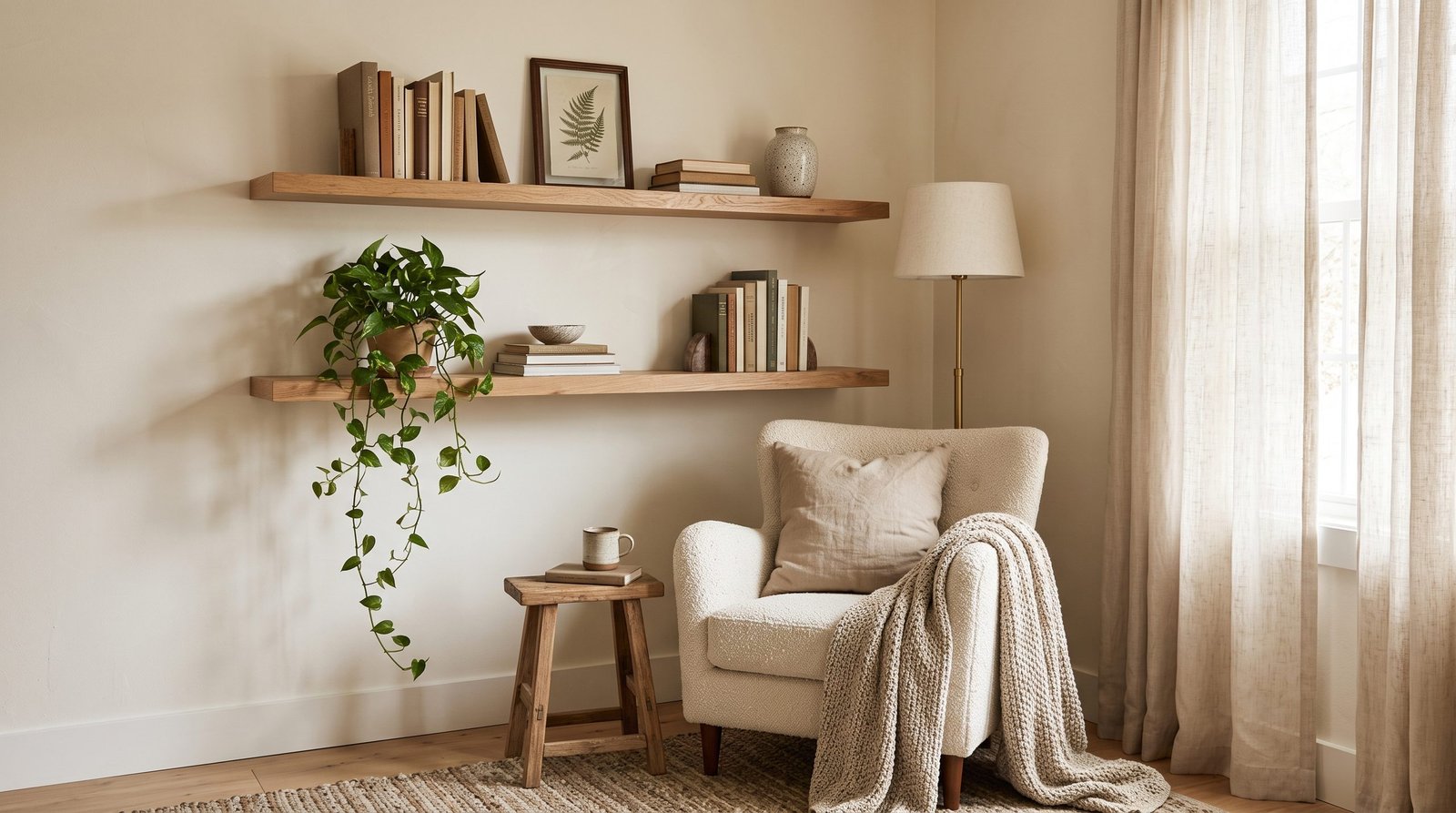
5. Create a Cozy Reading Corner With Floating Shelves
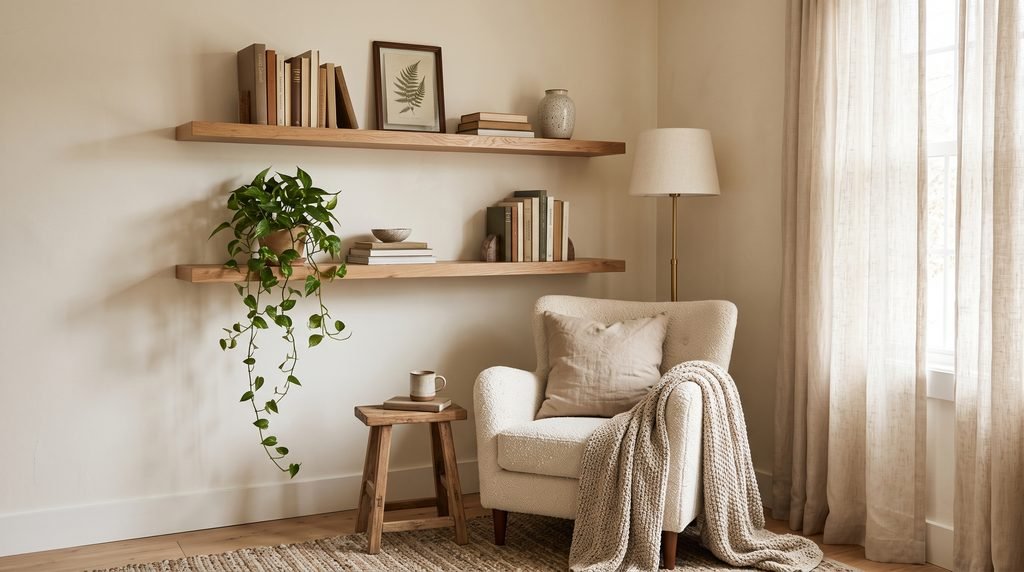
Floating shelves can turn an unused corner into a charming reading nook without requiring a large bookcase. Install two or three shelves near a comfortable chair, then arrange your favorite books, a small framed print, and a few decorative objects within easy reach.
For a cozy atmosphere, choose natural wood shelves and combine them with warm lighting, soft textiles, and a comfortable upholstered chair. A small side table can hold a cup of tea or reading glasses, while a floor lamp provides focused light for evening reading.
Keep the arrangement practical. Place frequently used books on the lowest accessible shelf and reserve higher shelves for decorative objects or books you rarely need. Make sure the shelves are securely mounted and do not obstruct the chair or walking space.
This idea works particularly well in bedrooms, home offices, and quiet corners of living rooms.
6. Use Floating Shelves Above the Sofa
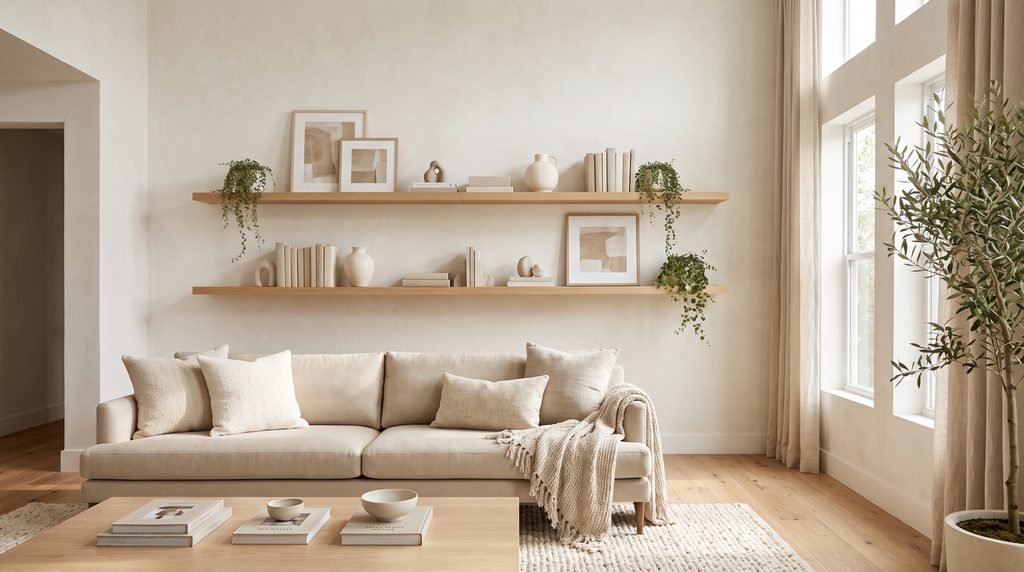
The wall above a sofa is often one of the largest uninterrupted surfaces in a living room. Floating shelves can fill this space with personality while keeping the floor clear.
Try one long shelf for a minimalist look, or arrange two shelves horizontally for a layered display. Add framed artwork, a few books, ceramic vases, and small plants. Vary the heights of your objects so the arrangement feels natural instead of forming a straight row of similar items.
Consider the sofa’s width when choosing the shelf length. A shelf that is too short may look disconnected, while one that extends far beyond the sofa can feel unbalanced. Leave sufficient clearance above the backrest and avoid placing heavy or fragile objects where they could fall onto someone seated below.
For a cohesive interior, coordinate the shelf finish with your coffee table, side tables, or other wood accents.
7. Decorate Kitchen Floating Shelves With Everyday Essentials
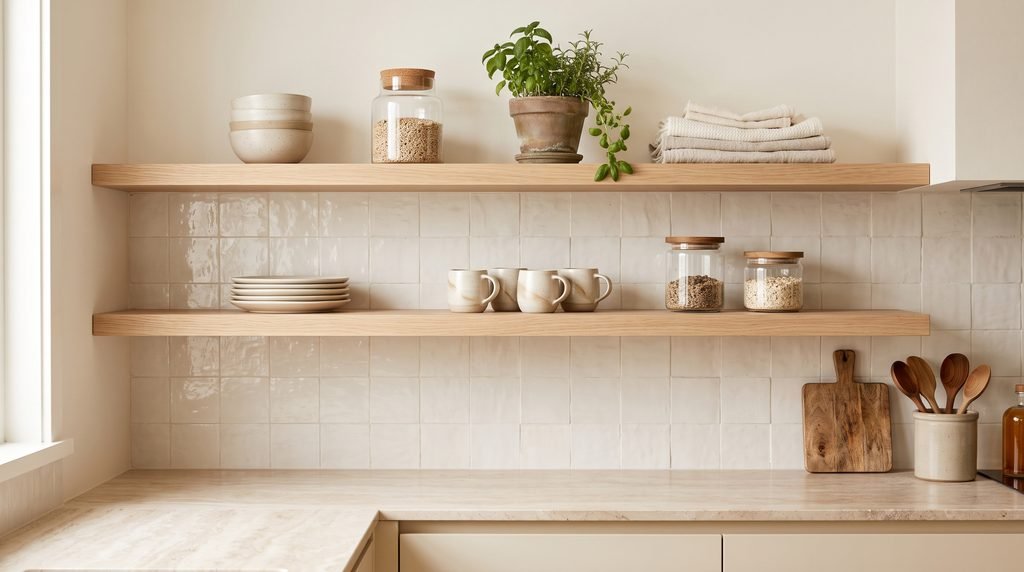
Kitchen floating shelves can make everyday essentials part of the decor. Instead of hiding every dish behind cabinet doors, display a carefully selected collection of plates, bowls, mugs, glass jars, and frequently used items.
Natural wood shelves look beautiful against white tile, warm beige walls, or subtle stone backsplashes. For a coordinated arrangement, choose crockery in a few complementary colors and use matching jars for dry ingredients.
Function should guide the placement. Keep regularly used items within comfortable reach, avoid overcrowding the shelves, and leave adequate space around cooking areas. Grease and moisture can accumulate in kitchens, so display items that are easy to clean and wash dishes before use.
Choose a shelf system with an appropriate load rating and secure mounting. Ceramic dishes can become heavy quickly, especially when grouped together.
This approach is especially useful in small kitchens where open shelving can supplement limited cupboard space.
8. Style Floating Shelves With Books and Ceramics
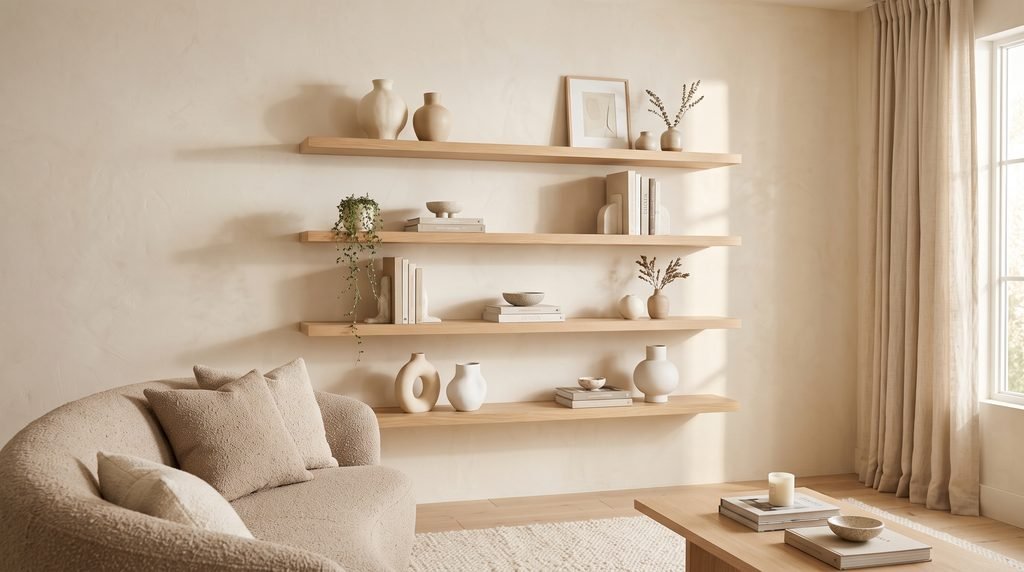
Books and ceramics make a versatile combination because they bring different shapes and textures to a display. Books create horizontal and vertical lines, while pottery introduces curves, subtle color variations, and handcrafted character.
Begin with a small stack of books, then place a ceramic vase or sculptural object beside it. Repeat the combination elsewhere on the shelf using different heights and shapes. You can turn some books upright and stack others horizontally to create a more dynamic arrangement.
For a premium look, choose accessories with related tones rather than identical designs. Ivory pottery, sand-colored books, pale wood, and a muted accent color can make the display feel collected over time.
Avoid lining every object up along the front edge. Moving some pieces slightly backward and leaving space between groups creates depth. Ensure that book stacks and decorative objects are stable, especially on narrow shelves.
9. Add Floating Shelves to the Bedroom
Bedroom floating shelves offer a simple alternative to bulky furniture. Install a shelf beside the bed for books, a small clock, or a decorative object, or place a longer shelf on an empty wall to display framed photographs and personal keepsakes.
Pale wood, painted white, and warm beige finishes work well in restful bedrooms. Keep the display relatively simple so it complements the bedding rather than competing with it.
If you plan to use shelves above the bed, prioritize secure mounting and avoid heavy objects overhead.
10. Create a Bathroom Display With Floating Shelves
Floating shelves can provide useful storage in bathrooms where floor space is limited. Use them to arrange neatly folded towels, small baskets, cotton jars, and attractive toiletry containers.
Choose materials and finishes suitable for the bathroom’s humidity. Moisture-resistant finishes and appropriate mounting hardware help prevent deterioration, particularly near showers and sinks.
Keep frequently used products within easy reach and avoid placing items where they may get splashed repeatedly. A few coordinated containers can make everyday essentials look organized without filling the entire wall.
11. Use Black Floating Shelves for Contrast
Black floating shelves create a bold outline against light-colored walls. They look especially striking with white ceramics, framed monochrome artwork, pale books, and a small amount of greenery.
In modern interiors, a matte-black finish feels understated and architectural. Pair it with oak furniture or warm neutral upholstery to prevent the room from feeling too stark.
Black shelves also work well against darker walls, where they create a subtle, tonal appearance. In either case, choose a finish that complements the room’s other hardware and lighting fixtures.
12. Decorate Floating Shelves in an Entryway
An entryway shelf can hold small everyday essentials while giving guests a welcoming first impression. Style it with a shallow bowl for keys, a small vase, and one framed photograph or piece of artwork.
If the entryway is narrow, select a shelf with a modest depth so it does not obstruct movement. Keep the display simple and avoid storing too many loose items in plain sight.
A floating shelf can also complement a nearby mirror, wall hooks, or a slim console. Repeating finishes across these elements creates a coordinated entrance without requiring much furniture.
13. Choose White Floating Shelves for a Bright Interior
White floating shelves blend beautifully with white or cream walls, creating a light, almost seamless appearance. They are particularly useful in small rooms where dark or bulky shelving might dominate the space.
Style white shelves with a mixture of pale wood, muted ceramics, greenery, and a few books to add contrast. If everything is white, introduce differences in texture to keep the display from feeling flat.
This approach suits Scandinavian interiors, minimalist apartments, and bright contemporary homes. It is also easy to refresh because the neutral shelves work with many different decor styles.
14. Create an Asymmetrical Shelf Arrangement
Asymmetrical floating shelves offer a relaxed alternative to perfectly aligned rows. You might install one long shelf above two shorter shelves, or position separate shelves at staggered heights to create a more artistic wall display.
For a successful arrangement, repeat one or two elements, such as the same wood finish or a consistent color palette. This helps different shelf lengths feel connected.
Before drilling, map the design using painter’s tape. Check that the arrangement works with nearby furniture and that each shelf has enough clearance for its tallest decorative item.
15. Use Floating Shelves to Display Framed Art
Floating shelves are ideal for people who enjoy changing their artwork regularly. Place framed prints along the back of a shelf and layer a few smaller objects in front to create a relaxed gallery-inspired display.
Mix different frame sizes, but keep the artwork connected through a shared color palette or subject. Abstract prints, botanical illustrations, and photography all work well with neutral interiors.
Use stable frames and appropriate ledges or retainers where necessary. Avoid overcrowding the shelf, as too many overlapping frames can make the arrangement look busy.
16. Install Long Floating Shelves for a Seamless Look
A long floating shelf can create a clean horizontal line across a living room, home office, or dining area. It works especially well when you want to emphasize the width of a wall or connect different parts of an open-plan interior.
Choose a finish that coordinates with nearby furniture, and divide the display into a few carefully planned groups. Keep some sections empty to preserve the shelf’s streamlined appearance.
Long shelves require particular attention to mounting and load distribution. Follow the manufacturer’s installation instructions and make sure the wall structure and hardware are suitable for the full length and expected weight.
17. Add Decorative Lighting to Floating Shelves
Lighting can make floating shelves feel more inviting after sunset. Concealed LED strips beneath a shelf can create a soft glow on the wall below, while carefully positioned accent lights can highlight artwork or decorative objects.
Warm-white lighting usually complements wood finishes and neutral interiors. Hide cables where possible, use products suitable for the installation location, and follow electrical safety guidance.
Avoid excessive brightness. The aim is to add a gentle layer of ambient light rather than turn the shelves into a distracting focal point.
18. Decorate Floating Shelves With Personal Collections
Floating shelves can display objects that tell a story about the people who live in a home. Travel souvenirs, handmade pottery, family photographs, small collectibles, and meaningful gifts can make a room feel personal.
Choose a few favorite items instead of displaying everything at once. Group similar objects together and leave room around special pieces so they remain easy to appreciate.
You can refresh the display seasonally or rotate items from storage. This keeps the arrangement interesting without requiring new purchases every time you want a change.
19. Use Floating Shelves in a Home Office
In a home office, floating shelves can keep reference books, notebooks, storage boxes, and selected decorative pieces off the desk. This frees up workspace while creating a more organized backdrop.
Place heavier books on shelves designed to support their weight, and keep essential materials within comfortable reach. Use matching boxes or folders to contain smaller items that might otherwise look messy.
A combination of natural wood, neutral accessories, and one small plant can soften the appearance of a functional workspace without making it feel overly decorated.
20. Create a Small-Space Storage Solution
Floating shelves are especially useful in apartments and compact homes because they use wall space instead of valuable floor area. They can hold lightweight storage baskets, folded linens, books, and everyday essentials when planned for the room’s needs.
In a small room, fewer well-organized shelves often look better than covering every available wall with storage. Keep the color palette consistent and leave some wall space visible.
Measure the area carefully before installation, particularly near doors, windows, and walkways. Always choose hardware suited to the wall type and the weight you intend to store.
21. Create a Luxury Floating Shelf Display
For a high-end look, treat floating shelves as a curated display rather than a place to store every available object. Choose quality-looking materials, such as natural oak or a refined painted finish, and combine a few sculptural pieces with books, ceramics, and subtle greenery.
Vary the height and shape of the objects while maintaining a limited color palette. A tall vase, a short stack of books, and a small decorative bowl can create an attractive composition without requiring a large collection.
The most important detail is restraint. Leave enough empty space for each object to stand out, and make sure the shelves are level, securely installed, and neatly finished.
How to Style Floating Wall Shelves Like a Designer
A beautiful shelf arrangement depends on balance, scale, and thoughtful spacing. These simple principles can help you achieve a more polished result.
- Start with a focal point: Place your largest vase, framed print, or decorative object first.
- Mix different heights: Combine tall objects with shorter pieces and horizontal book stacks.
- Repeat a few colors: Choose two or three main tones that complement your room.
- Leave breathing room: Empty space makes the display feel intentional rather than crowded.
- Balance beauty with function: Keep frequently used items accessible and decorative pieces safely positioned.
- Check the installation: Match the shelf hardware to your wall type and the intended load.
Common Floating Shelf Decorating Mistakes to Avoid
- Overfilling shelves with too many small decorative objects.
- Using shelves that are too shallow or too narrow for the items displayed.
- Mixing too many unrelated colors and finishes.
- Ignoring the relationship between shelf placement and nearby furniture.
- Placing heavy objects on shelves without checking their load rating.
- Using materials that are unsuitable for humid areas.
- Installing multiple shelves without planning consistent spacing.
Final Thoughts
Floating wall shelves offer a simple way to make your home more beautiful, organized, and personal. From neutral living room displays and cozy reading corners to practical kitchen storage and elegant bedroom arrangements, these ideas can suit almost any interior style.
You do not need expensive accessories to create an impressive result. Start with a shelf finish that complements your furniture, select a few meaningful objects, and arrange them with a mixture of heights, textures, and open space. Even a small shelf can become an attractive feature when styled thoughtfully.
For the best results, prioritize secure installation and practical everyday use alongside appearance. With the right combination of materials and accessories, floating shelves can transform an empty wall into a functional and stylish part of your home.