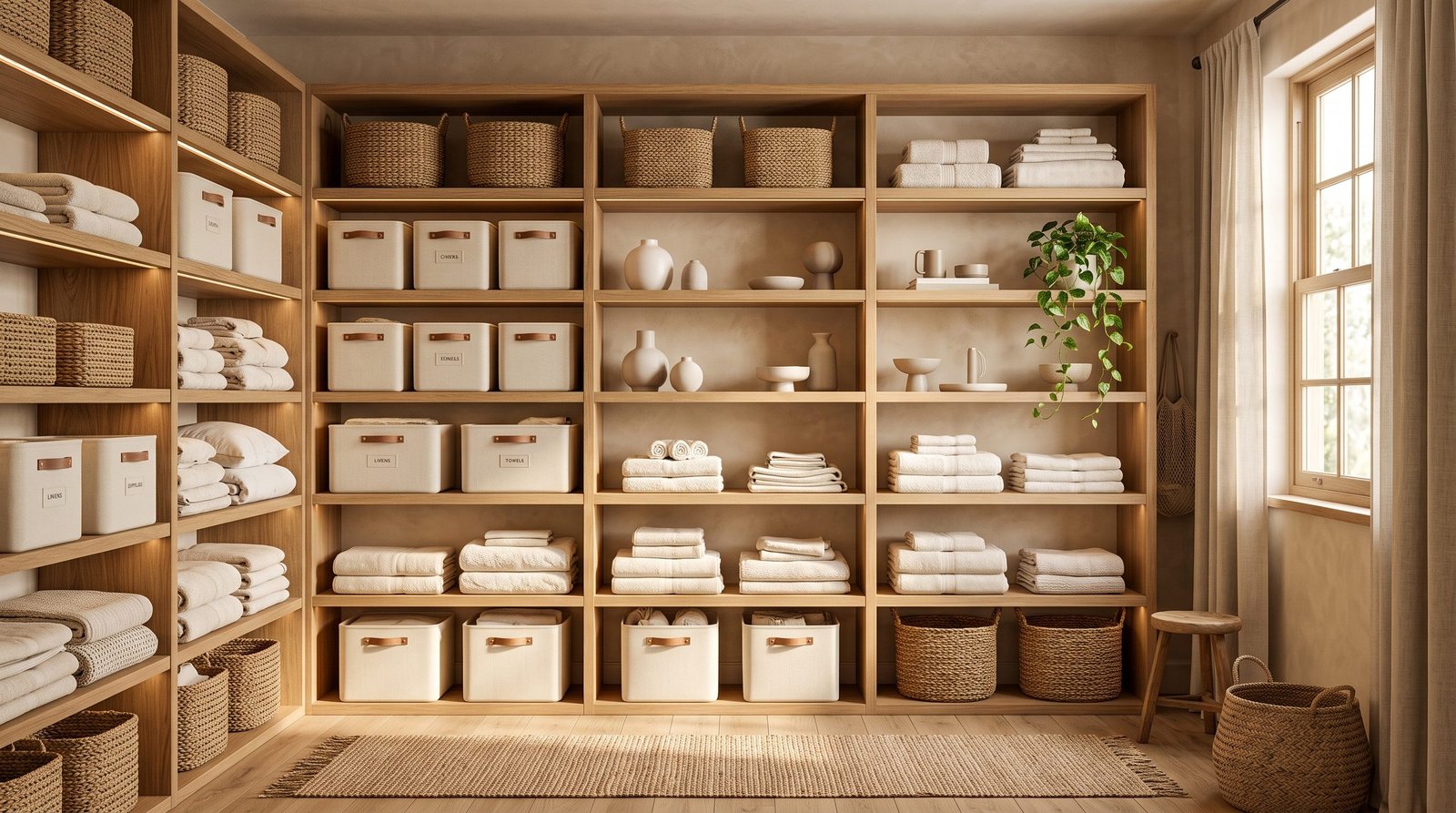
8 Beautiful Store Room Ideas to Create an Organized, Functional, and Stylish Space
A store room is one of the most useful spaces in any home, yet it is often the most overlooked. From extra household supplies and seasonal decorations to cleaning products, luggage, and everyday essentials, a well-designed store room can make your entire home feel more organized.
Whether you have a small storage closet, a dedicated utility room, or a spacious walk-in store room, the right combination of shelving, cabinets, containers, and thoughtful organization can transform it into a practical and attractive space.
The secret is to create a system that works for your lifestyle. Instead of simply hiding everything behind a closed door, consider how often you use each item, how much space it requires, and how easily you can access it.
In this guide, we explore 8 beautiful store room ideas that combine smart storage solutions with modern interior design. From minimalist built-in shelving to space-saving vertical storage, these ideas will help you make the most of every inch while maintaining a clean, Pinterest-worthy aesthetic.
1. Modern Built-In Shelving for a Beautiful Store Room
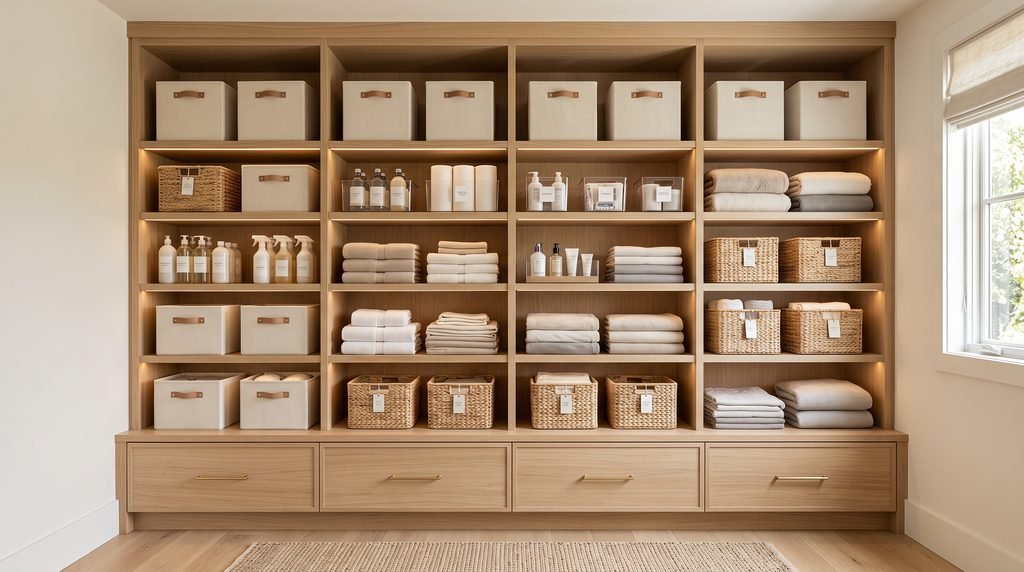
Built-in shelving is one of the most effective ways to transform an ordinary store room into an organized and visually appealing space. Instead of using mismatched cabinets or stacking boxes on the floor, consider installing custom shelves that extend from floor to ceiling.
This approach maximizes storage capacity while giving the room a cohesive, polished appearance.
For a modern organic look, choose light oak or warm natural wood shelving against soft cream or off-white walls. The natural texture of wood creates warmth, while neutral walls prevent the space from feeling cramped.
Arrange your shelves according to the size and frequency of use of your belongings. Everyday household essentials should remain at eye level, while seasonal decorations and rarely used items can occupy the upper shelves.
Lower shelves are ideal for heavier objects such as bulk supplies, storage boxes, and small appliances.
How to style built-in shelves
A beautifully organized store room should balance practicality with visual consistency.
Choose matching storage baskets in natural woven materials, such as rattan or seagrass. Combine these with neutral fabric bins, clear containers, and a few closed storage boxes.
Avoid filling every shelf completely. Leaving a little breathing room makes it easier to remove and return items without disturbing everything around them.
For a refined appearance, use containers in complementary shades of beige, ivory, taupe, and natural brown.
Small printed labels can help you identify the contents of each basket without opening it.
If your budget allows, incorporate a few pull-out drawers or sliding baskets into the lower section of the shelving. These are particularly useful for storing smaller objects that might otherwise disappear behind larger items.
Integrated LED lighting beneath selected shelves can also improve visibility and make the room feel more welcoming.
Design tip: Keep your most frequently used items between waist and shoulder height. This simple arrangement makes your storage system more convenient and comfortable to use.
2. Organized Store Room with Matching Storage Containers
One of the easiest ways to improve a store room is to replace mismatched packaging and random cardboard boxes with a coordinated collection of storage containers.
Matching containers create a sense of order, even when the room contains a wide variety of household items.
You do not need expensive cabinetry to achieve this look. A few sets of durable storage bins can dramatically improve the appearance and functionality of existing shelves.
Start by sorting everything into categories. Group similar items together, such as cleaning supplies, spare toiletries, extra bedding, seasonal decorations, and household tools.
Once you know what needs to be stored, select containers that fit both the items and your shelving dimensions.
Choosing the right containers
Transparent plastic bins are particularly useful for objects you need to identify quickly. They allow you to see the contents without removing the lid.
For items that you prefer to keep out of sight, consider opaque cream or beige storage boxes.
Woven baskets are excellent for lightweight belongings, such as extra towels, reusable shopping bags, and small household accessories.
A combination of these materials creates an attractive balance between visible and concealed storage.
However, aesthetics should never come at the expense of practicality. Choose sturdy containers with comfortable handles, especially for items that you regularly move.
Stackable containers can help maximize vertical space, but avoid creating unstable towers.
Create a simple labeling system
Labels make your store room easier to maintain.
Use short, clear category names such as “Extra Towels,” “Holiday Decor,” “Cleaning Cloths,” or “Spare Supplies.”
If several family members use the room, consistent labels make it easier for everyone to return items to their designated places.
For a premium Pinterest-inspired look, choose minimal black lettering on white or cream labels.
The result is a storage room that feels coordinated without sacrificing everyday functionality.
Design tip: Measure your shelves before purchasing containers. Buying matching boxes that do not fit properly can waste valuable storage space.
3. Small Store Room Ideas for Limited Spaces
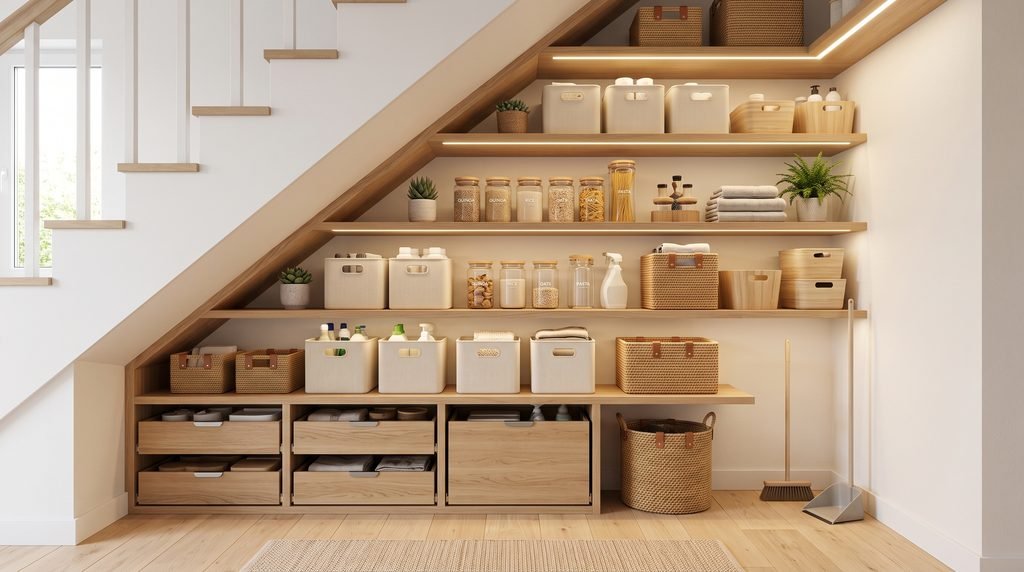
A small store room can be just as useful as a large one when every inch is planned carefully.
Whether you are working with a narrow closet, an under-stair compartment, or a tiny utility space, smart storage solutions can help you accommodate more belongings without making the area feel overcrowded.
The key is to think vertically rather than horizontally.
Instead of spreading items across the floor, install shelving that takes advantage of the available wall height.
Adjustable shelving is particularly useful because it allows you to change the layout as your storage needs evolve.
Use every available corner
Corners are often overlooked in small store rooms.
L-shaped shelves can turn an awkward corner into valuable storage space. For very narrow rooms, consider installing shallow shelving along one wall to maintain a comfortable walkway.
If your store room is beneath a staircase, follow the slope of the ceiling with shelves of varying heights.
Tall sections can accommodate upright objects, while lower sections are suitable for baskets and compact storage boxes.
A small pull-out drawer unit can also make use of an otherwise difficult space.
Make the door work harder
The back of a store room door offers additional storage potential.
Install an over-the-door organizer for lightweight accessories, cleaning cloths, spare bags, or other small essentials.
Slim wall-mounted racks can also hold frequently used items without occupying valuable floor space.
Ensure that door-mounted storage does not interfere with the door’s operation.
Keep the color palette light
Small storage spaces often lack natural light.
Painting the walls warm white, soft beige, or another light neutral shade can make the room feel brighter.
Pair these colors with light wood shelving and simple containers for a clean, airy appearance.
A compact LED ceiling fixture or motion-activated light can make it easier to find items in darker corners.
Design tip: Keep the floor as clear as possible. A visible floor area makes a small store room feel less cluttered and allows easier cleaning.
4. Walk-In Store Room with Floor-to-Ceiling Cabinets
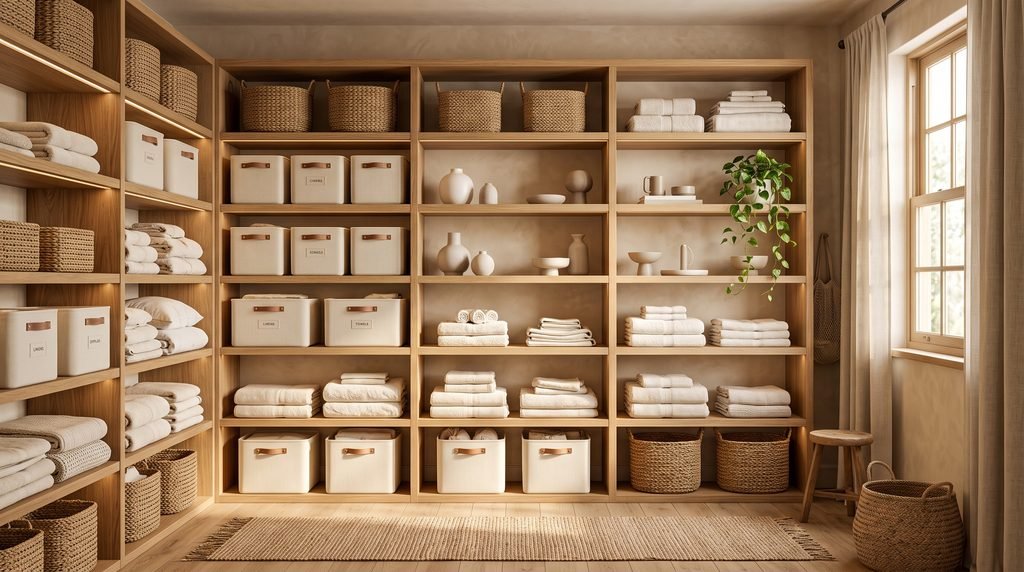
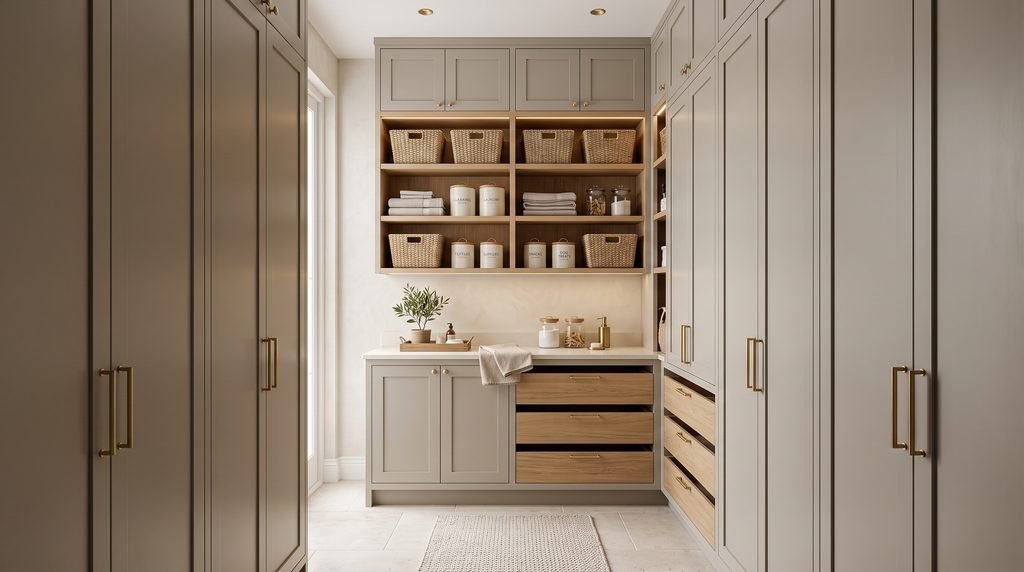
If you have a dedicated room for household storage, consider designing it like a compact walk-in wardrobe.
Floor-to-ceiling cabinets offer a sophisticated way to conceal clutter while providing generous storage capacity.
This approach is especially suitable for modern homes where every room contributes to the overall interior aesthetic.
Choose cabinetry in warm beige, soft greige, cream, or natural oak to create a timeless appearance.
A combination of closed cabinets, open shelves, and pull-out drawers offers flexibility for different types of belongings.
Combine open and closed storage
Closed cabinets are ideal for items that create visual clutter, including spare electronics, cleaning accessories, and miscellaneous household supplies.
Open shelves provide convenient access to frequently used objects.
Consider placing a section of open shelving between two tall cabinets. This arrangement breaks up large expanses of cabinetry and creates a more balanced design.
You can also incorporate deep drawers for folded linens, spare bedding, or smaller household items.
For particularly heavy belongings, use reinforced lower shelves designed for the expected load.
Add a practical countertop
If the room is large enough, include a short countertop along one wall.
A durable laminate, quartz, or sealed wood surface can provide a convenient place to sort supplies, fold linens, or organize storage containers.
Keep the countertop mostly clear so it remains useful.
A small wall-mounted organizer above the counter can hold labels, pens, tape, and other supplies needed for maintaining your storage system.
Choose functional lighting
Even a beautifully designed walk-in store room can become frustrating if the lighting is inadequate.
Install bright, even ceiling lighting that illuminates the entire room.
For deeper cabinets, consider battery-operated or hardwired LED lights that activate when the doors open.
Design tip: Choose cabinet handles that match the rest of your home’s interior. Simple brushed brass, matte black, or understated metal handles can create a cohesive look.
5. Multi-Purpose Store Room with a Utility and Cleaning Station
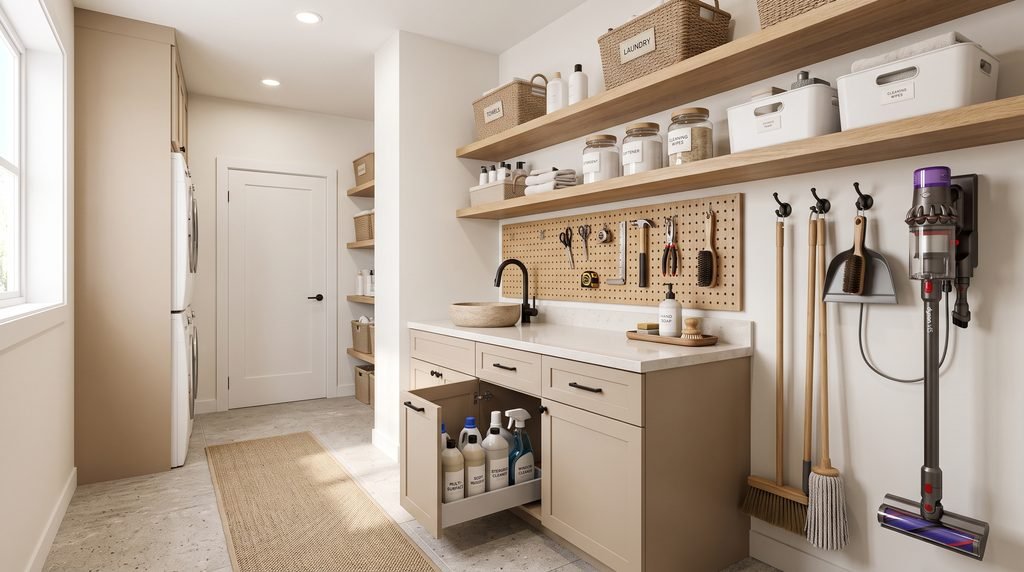
A store room does not have to serve only one purpose. With careful planning, it can become a multifunctional space that accommodates household supplies, cleaning equipment, tools, and other practical essentials.
This type of store room is particularly useful for busy households that need a central location for everyday maintenance items.
Rather than placing everything together, divide the room into dedicated functional zones.
One section might contain cleaning supplies, another could hold household tools, and a third could provide storage for extra linens or seasonal belongings.
Creating clear zones prevents unrelated items from becoming mixed together.
Create a dedicated cleaning station
Install wall-mounted hooks or a slim utility rack for mops, brooms, dusters, and other long-handled cleaning tools.
Keeping these items upright helps free up floor space and makes them easier to access.
If you use a cordless vacuum cleaner, consider creating a designated charging area with a nearby electrical outlet.
Have any new electrical work installed by a qualified professional, and keep charging equipment away from water and combustible materials.
Store cleaning liquids in their original labeled containers, following the manufacturers’ storage instructions. Keep hazardous products secured away from children and pets.
Add a pegboard for small tools
A pegboard is an excellent addition to a multifunctional store room.
It allows you to hang lightweight tools, tape measures, small brushes, and frequently used accessories in an organized arrangement.
Choose a pegboard in white, beige, or natural wood to coordinate with your shelving.
For a more flexible setup, use adjustable hooks and small accessory baskets that can be repositioned as your needs change.
Incorporate a folding or sorting surface
If space allows, install a compact countertop for sorting household supplies.
A wall-mounted folding table can be particularly useful in a narrow room because it provides temporary workspace without permanently occupying the walkway.
You could use this surface for organizing laundry supplies, preparing seasonal decorations, or sorting household essentials.
A small washable floor mat can add comfort, while durable flooring makes routine cleaning easier.
Design tip: Keep the cleaning station separate from food, medicine, and delicate textiles. Proper zoning helps maintain a safer and more hygienic storage environment.
6. Aesthetic Store Room with Warm Wood and Woven Baskets
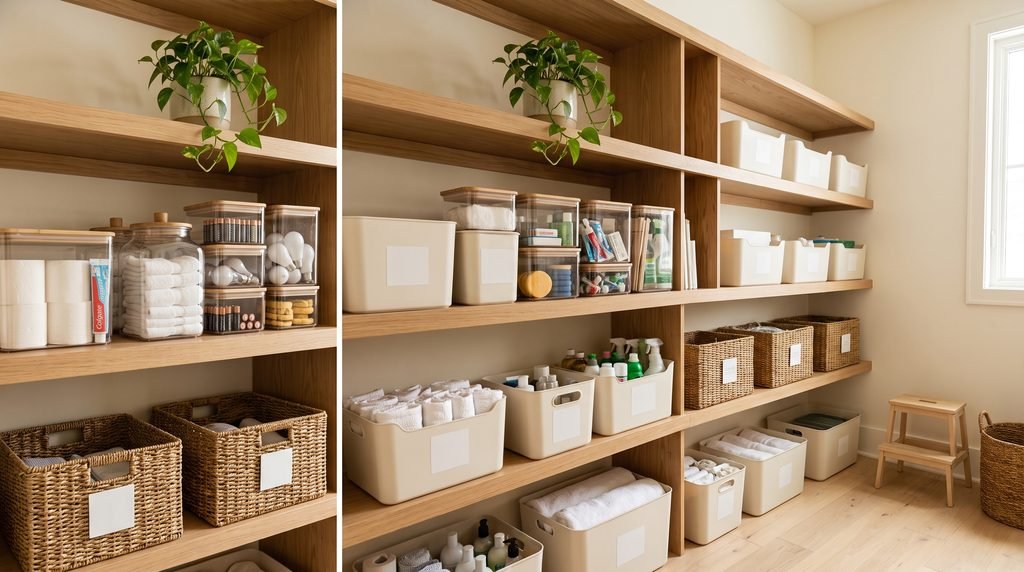
Who says a store room cannot be beautiful?
If you enjoy warm, organic-modern interiors, you can extend the same design style into your storage spaces.
Aesthetic store rooms combine practical organization with natural materials, soft colors, and carefully selected accessories.
The goal is not to make the room look like a showroom. Instead, it is to create a welcoming environment where everyday belongings have a designated place.
Choose a calming neutral palette
Start with warm white or light beige walls.
Natural oak shelving introduces warmth, while cream storage boxes and woven baskets create a coordinated appearance.
For subtle contrast, introduce a few taupe or soft brown containers.
Avoid using too many different colors or patterns, as this can make a compact storage room feel visually busy.
A consistent palette allows the different storage elements to work together.
Introduce natural textures
Woven baskets are one of the simplest ways to soften the appearance of functional shelving.
Use larger baskets for extra towels and lightweight household textiles, and smaller baskets for accessories.
Combine them with sturdy wooden boxes or fabric-lined bins for variety.
A washable woven-look runner can make a walk-in store room feel more comfortable, provided it does not create a tripping hazard or interfere with cabinet doors.
If the room has natural light, a small plant on an otherwise unused shelf can add a fresh touch. Choose a suitable low-maintenance variety and keep it away from items that could be damaged by moisture.
For windowless rooms, focus on beautiful materials and lighting rather than adding plants that cannot thrive.
Keep decorative accessories minimal
A store room should remain functional.
Instead of filling valuable shelf space with decorative objects, choose one or two subtle accessories, such as a small ceramic vessel or a simple framed print.
The natural texture of the baskets and the orderly arrangement of the containers can provide most of the visual interest.
Consider installing warm-toned LED lighting to complement the wood and neutral palette.
Design tip: Repeat the same basket style across several shelves. This creates a cohesive appearance even when the baskets contain completely different items.
7. Vertical Store Room Ideas with Wall-Mounted Storage
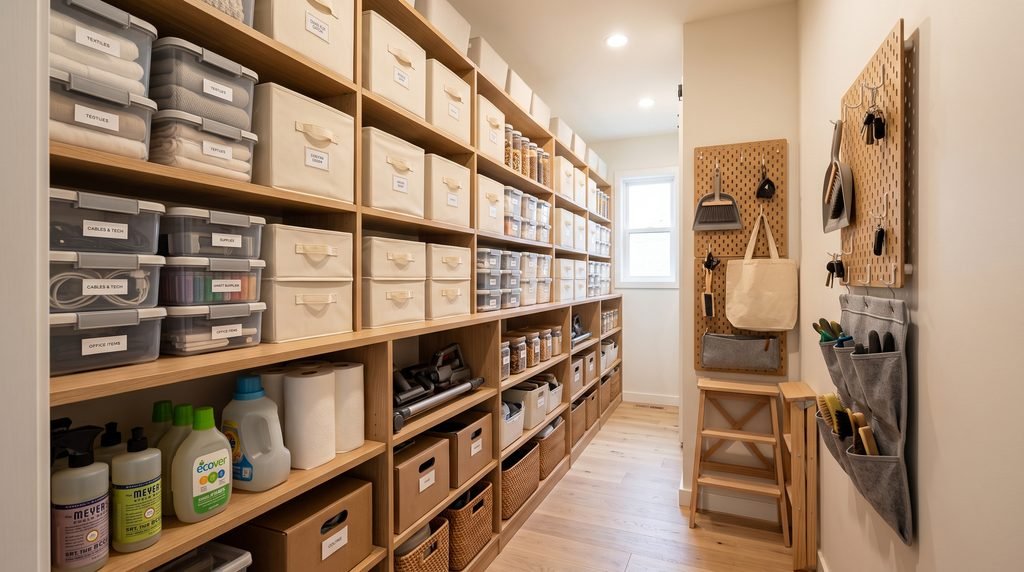
When floor space is limited, the walls become your most valuable storage resource.
Vertical storage allows you to accommodate a large number of items without overcrowding the room.
This approach works particularly well in apartment storage closets, narrow utility rooms, and compact household storage areas.
The most effective vertical systems combine shelves, hooks, wall-mounted organizers, and stackable containers.
Install adjustable wall shelving
Adjustable shelving allows you to customize the height between shelves.
This is particularly helpful when storing objects of different sizes.
For example, you might need a taller section for luggage and large containers, while smaller supplies can be arranged on closely spaced shelves.
Select a shelving system with an appropriate weight rating and secure it to suitable structural supports using the manufacturer’s recommended fixings.
Avoid placing excessively heavy items on high shelves.
Use hooks and hanging organizers
Wall hooks are ideal for reusable bags, lightweight accessories, and certain cleaning tools.
A wall-mounted rail with movable hooks offers greater flexibility because you can rearrange the storage layout whenever necessary.
For smaller objects, consider a hanging organizer with separate compartments.
These are particularly useful for extension cords, spare accessories, and other items that tend to become tangled or misplaced.
Make upper shelves accessible
High shelves are excellent for seasonal items, but they should not become difficult or unsafe to use.
Keep a stable step stool nearby if needed, and avoid placing heavy or frequently used objects above comfortable reaching height.
Choose containers with secure lids and clear labels so you can identify their contents from below.
Leave enough space to remove each container without knocking over neighboring items.
Design tip: Combine shallow shelves for small objects with deeper shelves for bulky supplies. This helps reduce wasted space and prevents smaller belongings from becoming hidden at the back.
8. Smart Store Room Organization for Long-Term Clutter Control
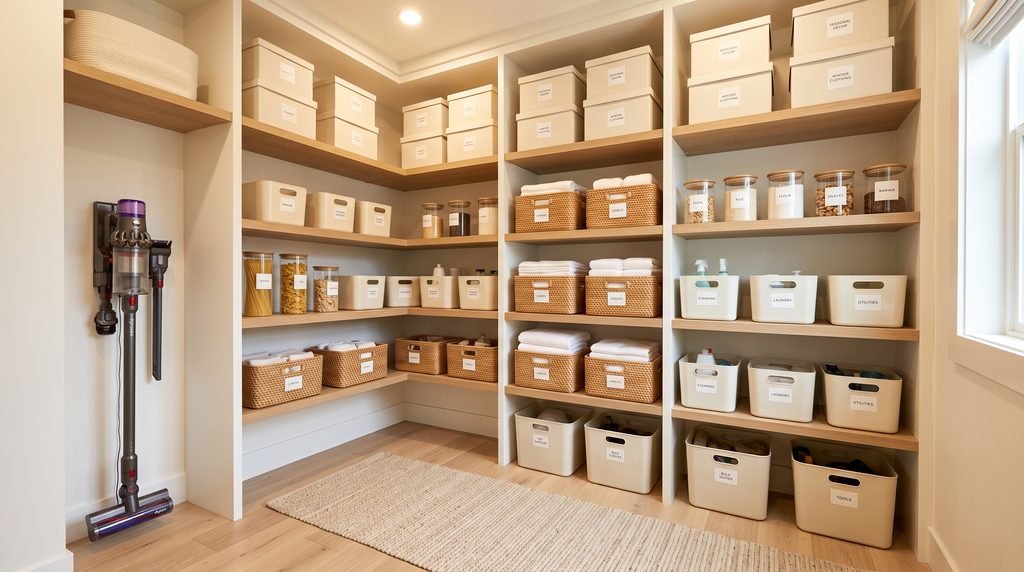
A beautifully organized store room is only successful if it remains easy to maintain.
Even the most attractive shelving system can become cluttered when belongings are returned to random locations.
The solution is to establish a simple organization routine that works for everyone in your household.
Instead of focusing entirely on how the room looks, consider how it functions during everyday use.
Give every category a permanent home
Assign a specific shelf, drawer, or container to each category of belongings.
For example, seasonal decorations could occupy the upper shelves, while spare toiletries and everyday household supplies remain at eye level.
Bulky or heavy items should be stored closer to the floor.
Keep similar objects together so that you do not need to search multiple locations for the same type of item.
Avoid creating a miscellaneous box that gradually becomes a collection of forgotten belongings.
If you need a temporary sorting basket, empty and organize it regularly.
Follow the one-in, one-out approach
Storage rooms often become overcrowded because new items are added without reviewing what is already there.
Before purchasing additional household supplies, check your existing inventory.
When replacing an old object, consider whether the original can be repaired, donated, recycled, or disposed of appropriately.
This approach helps prevent unnecessary duplicates and keeps your available storage capacity under control.
Schedule seasonal organization
Set aside a little time every few months to review your store room.
Check whether stored items are still needed, whether any containers are damaged, and whether frequently used belongings remain accessible.
Seasonal transitions are particularly convenient times to reorganize decorations, bedding, and household supplies.
You do not need to completely redesign the room each time. Small adjustments can make a significant difference.
Keep safety and accessibility in mind
Leave clear access to doors, electrical panels, and any equipment that requires maintenance.
Avoid blocking ventilation openings or storing items directly against equipment that generates heat.
Check stored supplies for leaks, damaged packaging, or signs of moisture.
If your store room is prone to dampness, address the underlying problem before storing delicate textiles, documents, or other moisture-sensitive belongings.
Design tip: Take a photograph of your organized store room and use it as a reference when putting items away. It can help everyone maintain the intended arrangement.
Additional Tips for Designing the Perfect Store Room
Before starting your store room makeover, consider a few practical details that can improve both the appearance and functionality of the space.
Measure before buying. Record the room’s dimensions, including the height, width, and depth of the available shelving areas. Account for doors, windows, outlets, and any obstacles that could affect the layout.
Prioritize durability. Choose materials that can withstand the weight and type of belongings you intend to store. Moisture-resistant finishes and easy-to-clean surfaces are especially helpful in utility spaces.
Plan for future storage needs. Avoid filling every available inch immediately. Leaving some spare capacity allows you to accommodate new household essentials without completely reorganizing the room.
Make maintenance easy. Select containers that are comfortable to handle, use consistent labels, and arrange belongings so they can be returned without moving several other objects.
Remember that the most effective store room is not necessarily the largest or most expensive. A thoughtful layout, appropriate shelving, and a consistent organization system can make even a modest space highly functional.
Final Thoughts
A well-designed store room can make everyday life easier by giving your household essentials a dedicated, organized home.
Whether you prefer modern built-in cabinets, warm wooden shelves, matching storage containers, or space-saving vertical solutions, the best design is one that suits your available space and storage needs.
Start by decluttering, grouping similar items, and identifying the areas where additional storage would be most useful. Then introduce practical shelving, durable containers, and thoughtful details that complement your home’s interior style.
With these eight store room ideas, you can transform an overlooked area into a beautiful, efficient, and easy-to-maintain space.
The ultimate goal is simple: create a store room where everything has its place, everyday essentials are easy to find, and clutter stays under control.