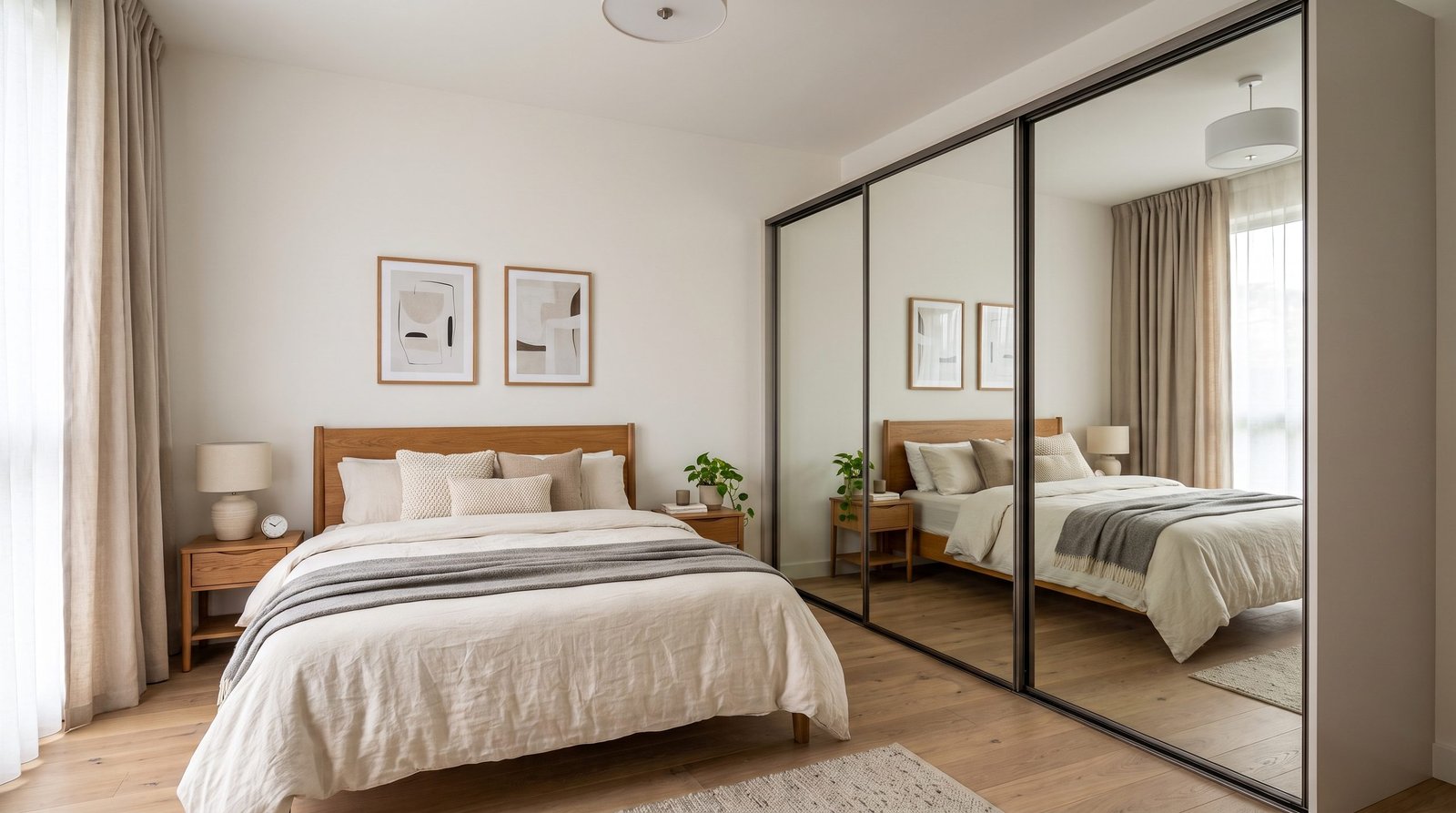
Almirah Design Ideas: 25 Modern, Stylish, and Space-Saving Designs for Every Bedroom
Modern almirahs are available in a variety of materials, finishes, colors, and layouts. From elegant wooden cupboards and contemporary sliding-door wardrobes to mirrored almirahs, built-in storage, and luxurious glass-front designs, each option offers a different combination of beauty and functionality.
The best almirah design depends on your available space, clothing collection, storage requirements, and decorating preferences. A compact room may benefit from a tall almirah with sliding doors, while a larger bedroom might accommodate a floor-to-ceiling wardrobe with drawers and a dressing mirror.
In this guide, you will discover 25 almirah design ideas that combine practical storage with beautiful bedroom interiors. These ideas will help you choose an almirah that complements your home, maximizes available space, and creates a more organized living environment.
1. Modern Wooden Almirah Design
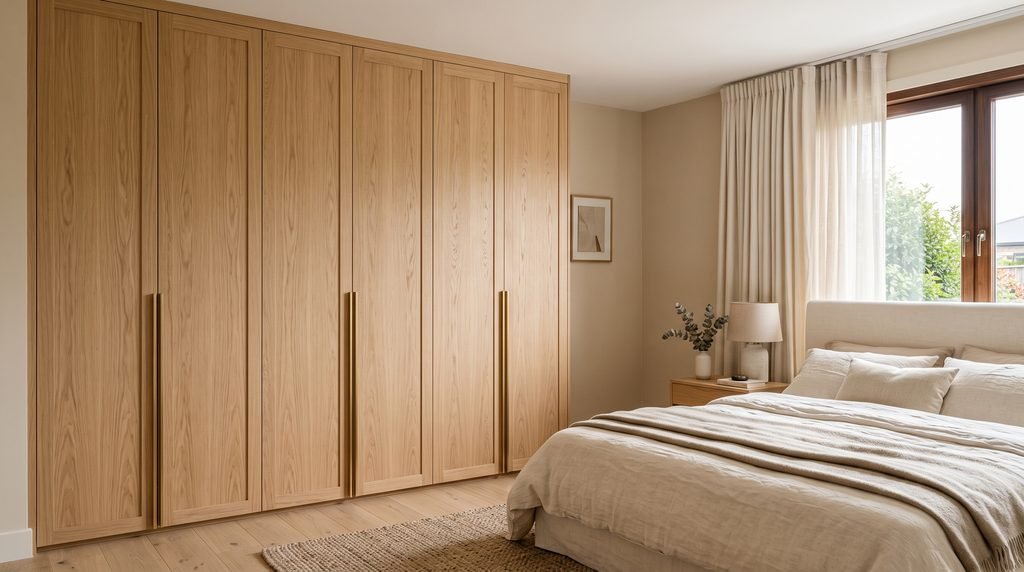
A modern wooden almirah is a timeless choice for bedrooms because it combines natural beauty with practical storage. Wood finishes work with traditional, contemporary, Scandinavian, and minimalist interiors, making them suitable for many different decorating styles.
Light oak creates a fresh and airy appearance, while walnut and darker wood finishes introduce warmth and depth. You can choose a simple two-door almirah for a compact bedroom or a wider multi-door design when more storage is required.
For a contemporary look, choose flat-panel doors with discreet handles. If you prefer a more traditional appearance, consider decorative wooden panels, framed doors, or subtle carved details.
The inside of the almirah is just as important as its exterior. Include hanging rails for shirts and dresses, shelves for folded clothing, and drawers for smaller accessories. A separate upper compartment can hold blankets, bags, and seasonal garments.
Wooden almirahs look particularly attractive when paired with neutral walls, soft bedding, and warm lighting. Matching the wardrobe to a wooden bed frame or bedside table can also create a coordinated bedroom design.
When choosing a wooden finish, consider durability, maintenance, and budget. Solid wood, engineered wood, and wood-finish laminates offer different benefits, so select a material that suits your needs and expected use.
2. Sliding Door Almirah for Small Bedrooms
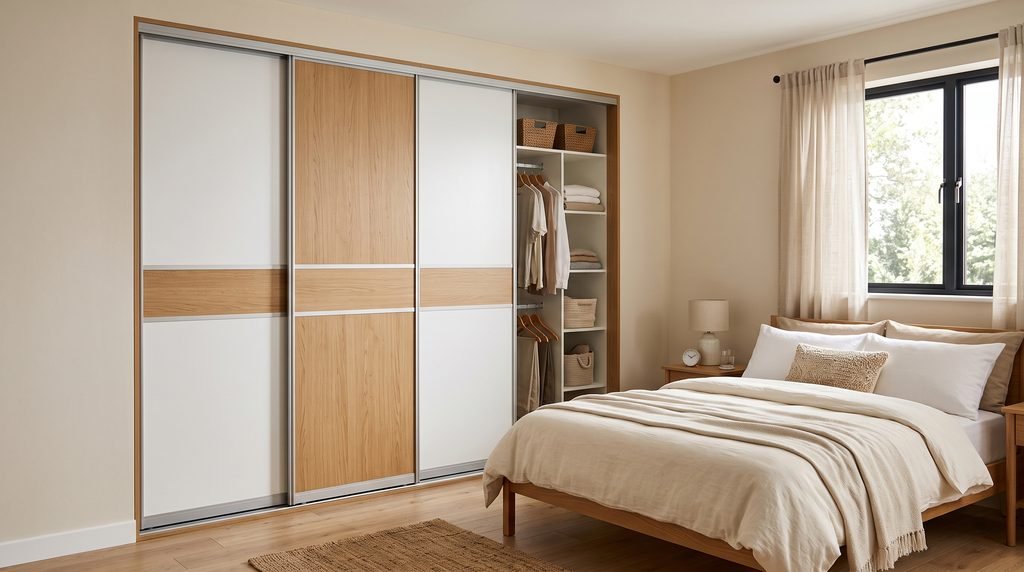
A sliding-door almirah is a practical solution for bedrooms where floor space is limited. Unlike traditional hinged doors, sliding panels move along a track and do not swing outward into the room.
This design is particularly useful when the bed is positioned close to the wardrobe or when a narrow walkway needs to remain clear. It allows you to access your clothing without reserving extra space for opening large doors.
For a bright and modern appearance, consider a combination of white and light wood panels. Mirrored sliding doors are another option because they provide a full-length reflection and can make a compact bedroom feel more open.
Inside the wardrobe, organize the space with hanging rails, shelves, and drawers. Since sliding doors may reveal only part of the interior at a time, grouping clothing by category can make it easier to find what you need.
Before purchasing, check the quality of the track system and ensure that the doors move smoothly. Also measure the available width and height carefully, especially if the almirah will be installed in a tight space.
Sliding-door designs combine a clean appearance with useful space-saving functionality, making them a popular choice for contemporary homes.
3. White Almirah Design for an Elegant Bedroom
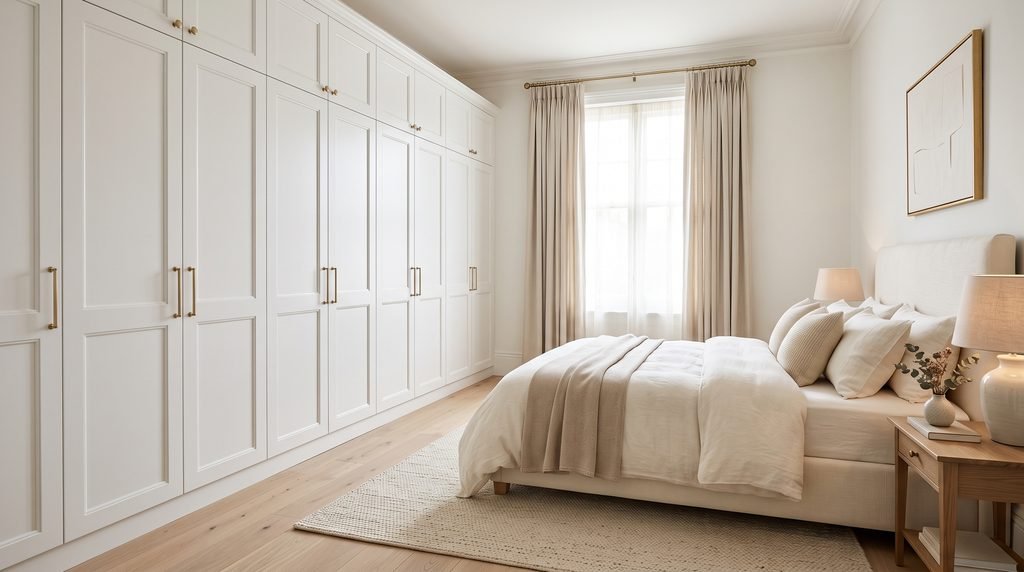
A white almirah can make a bedroom feel brighter, cleaner, and more spacious. Its neutral appearance blends easily with different wall colors, bedding styles, and furniture finishes.
For a classic bedroom, choose white doors with framed panels and elegant metal handles. For a modern interior, flat-front doors and minimal hardware create a more streamlined look.
White wardrobes work beautifully with beige, cream, pale gray, sage green, and soft blue bedroom palettes. You can also introduce warmth through wooden bedside tables, textured curtains, woven baskets, and natural flooring.
A floor-to-ceiling white almirah is particularly useful when you want to maximize vertical storage while maintaining a cohesive appearance. The upper cupboards can hold rarely used belongings, while the lower sections remain accessible for everyday clothing.
To prevent the room from feeling too plain, combine different textures rather than introducing too many colors. A softly upholstered headboard, a patterned rug, or brushed brass handles can add visual interest without overwhelming the design.
White surfaces may show fingerprints and marks, so an easy-to-clean finish is worth considering. With suitable organization and regular maintenance, a white almirah can remain an attractive feature for years.
4. Mirror Almirah Design With Full-Length Panels

A mirror almirah combines clothing storage with a practical dressing feature. Instead of purchasing a separate full-length mirror, you can incorporate reflective panels directly into the wardrobe doors.
This design is especially useful in small bedrooms where wall space is limited. Mirrors reflect light and the surrounding interior, creating a greater sense of depth when positioned thoughtfully.
You can choose an entirely mirrored almirah or combine mirrors with wooden, white, or neutral-colored panels. A half-mirror design can provide a decorative balance while still allowing you to check your outfit from head to toe.
For the best effect, place the almirah where it receives useful natural or artificial light. Keep the surrounding furniture relatively simple so the reflected space does not look overcrowded.
Mirrored wardrobes are available with hinged and sliding doors. Sliding versions are particularly practical in narrow rooms, while hinged designs can offer wider access to the interior.
Remember that mirror surfaces need occasional cleaning to remove fingerprints and smudges. Choose secure, professionally fitted mirror panels and suitable hardware to support safe everyday use.
5. Floor-to-Ceiling Almirah Design
A floor-to-ceiling almirah is ideal for homeowners who want maximum storage without filling the bedroom with multiple pieces of furniture. It uses the full height of the wall and creates a built-in appearance that works particularly well in modern interiors.
The lower section can hold everyday clothing, drawers, and frequently used accessories. Upper compartments provide space for extra bedding, suitcases, winter clothing, and other belongings that do not need to be accessed daily.
For a seamless look, choose wardrobe doors in a color that closely matches the walls. Cream, warm white, and light beige help the almirah blend into the room, while walnut or dark oak creates a stronger visual feature.
You can divide the interior into separate sections for hanging garments, folded clothing, shoes, and accessories. Adjustable shelving is especially useful because it allows you to change the arrangement as your storage needs evolve.
Before installing a tall almirah, measure the ceiling height and account for any uneven surfaces or overhead fittings. Secure the unit appropriately to the wall, particularly in homes with children.
6. Traditional Wooden Almirah With Carved Details
Traditional wooden almirahs bring a sense of craftsmanship and character to a bedroom. Their decorative panels, rich wood tones, and detailed handles suit classic interiors and homes that feature traditional furniture.
Choose a design with subtle carved patterns if you want an elegant appearance without making the room feel overly ornate. Dark walnut, teak-inspired finishes, and medium brown wood can create a warm atmosphere when paired with cream walls and coordinated bedding.
For a more decorative interior, look for framed doors, brass-colored handles, or carefully shaped edges. These details can make the almirah a statement piece rather than simply a storage unit.
Traditional designs can also work in contemporary bedrooms when the rest of the furniture is kept simple. A carved wooden almirah against a neutral wall creates contrast without requiring additional decoration.
Pay attention to the wardrobe’s weight, dimensions, and door clearance before purchasing. Traditional pieces may be heavier or deeper than compact modern alternatives, so check that the bedroom layout can accommodate them comfortably.
7. Two-Door Almirah for a Compact Room
A two-door almirah is a straightforward choice for a small bedroom, guest room, or apartment. Its compact design provides useful storage while leaving more wall space available for a bed, bedside table, or study desk.
Choose a tall model with a combination of hanging space and shelves to make the most of the available interior. A narrow drawer section can store socks, undergarments, belts, and other smaller items.
Light-colored finishes can make a small bedroom feel less crowded. White, cream, light oak, and pale gray are versatile choices, although darker colors can work when balanced with adequate lighting.
For a contemporary appearance, consider plain doors with slim handles. If you need additional functionality, a model with a mirror or a small external shelf may be worth considering.
Before buying, compare the internal dimensions rather than focusing only on the number of doors. A well-designed two-door almirah can be more useful than a larger wardrobe with poorly arranged shelves.
8. Sliding Almirah With a Wooden and Glass Combination
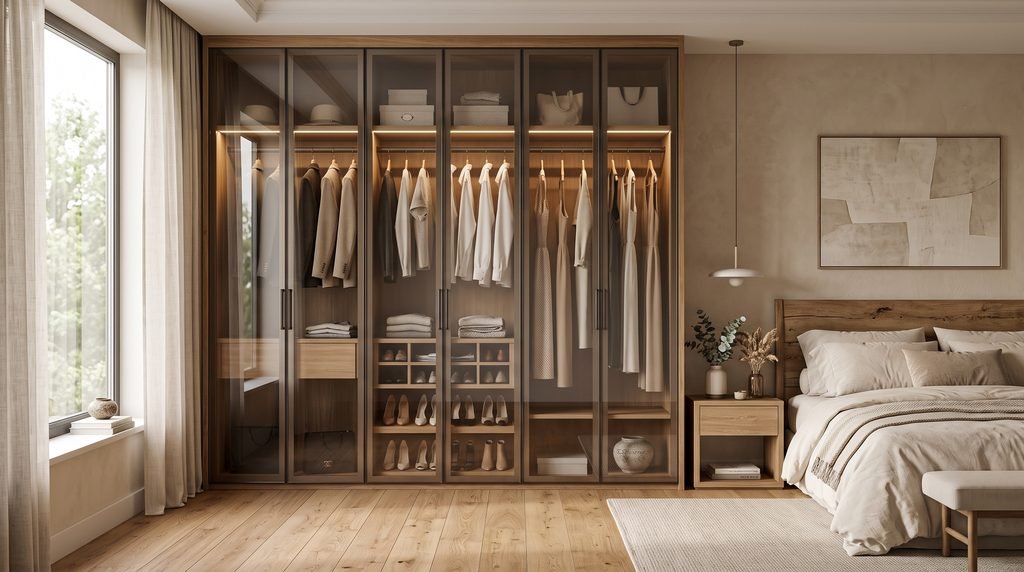
Combining wood and glass creates an almirah that feels modern, decorative, and visually lighter than a wardrobe made entirely from dark solid panels.
Wooden sections introduce warmth, while frosted or lightly tinted glass adds a subtle contemporary finish. This combination works well in bedrooms with neutral walls, wooden flooring, and simple modern furniture.
You can use glass panels on the upper half of the doors and wood on the lower half, or alternate the materials across the wardrobe. Frosted glass offers a degree of visual privacy while allowing the design to feel less heavy.
Inside the almirah, use adjustable shelves, hanging rails, and drawers to keep clothing organized. If the glass reveals the interior, matching hangers and coordinated storage boxes can improve the overall appearance.
Sliding panels are particularly useful in compact bedrooms because they do not require outward door clearance. Choose a sturdy track system and ensure that the panels are easy to move and maintain.
This design is suitable for homeowners who want something more distinctive than a plain wardrobe without introducing complicated decorative details.
9. Corner Almirah Design to Use Unused Space
A corner almirah can make an awkward bedroom layout more functional by turning an underused corner into valuable storage space. It is particularly useful in rooms where a conventional wardrobe would interfere with the bed, window, or doorway.
Depending on the room, the almirah can have an L-shaped configuration or a purpose-built corner unit. Interior shelves and hanging rails should be arranged carefully so that items stored deep inside remain accessible.
Light finishes can help the unit blend into the room, while matching the almirah to nearby furniture creates a coordinated appearance. If the corner is naturally dark, suitable interior lighting can improve visibility.
Before choosing a corner design, measure both adjoining walls and consider the door-opening mechanism. Poorly planned corner units can create inaccessible spaces, so prioritize practical internal access over appearance alone.
10. Almirah With a Built-In Dressing Table
A built-in dressing table makes an almirah more versatile by combining clothing storage and personal grooming in one area. This arrangement is especially useful in bedrooms where there is not enough space for a separate dressing table.
The vanity can be placed at one end of the wardrobe or integrated into a central open section. Add a mirror, a comfortable stool, and drawers for cosmetics, jewelry, and everyday accessories.
For a seamless appearance, match the vanity countertop and cabinet finish to the almirah. A contrasting wooden countertop can also add warmth to white or cream cabinetry.
Lighting near the mirror should illuminate the face evenly. Wall-mounted lights or suitable vanity fixtures can help reduce shadows, while general ceiling lighting keeps the rest of the area visible.
If the bedroom is small, use a compact countertop and a stool that slides underneath. This keeps the walkway clear while making the most of the available wall space.
11. Black Almirah Design for a Contemporary Bedroom
A black almirah can create a bold focal point in a modern bedroom. Matte black, charcoal, and black wood-grain finishes offer different levels of contrast, depending on the surrounding decor.
For a balanced appearance, pair dark cabinetry with warm wood, beige walls, cream bedding, or soft gray textiles. These lighter elements help prevent the wardrobe from making the room feel too heavy.
Slim metal handles or handleless doors maintain a clean, contemporary look. You can also combine black panels with smoked glass or walnut accents for additional depth.
Dark almirahs benefit from thoughtful lighting, especially in rooms with limited natural light. Use well-positioned ceiling fixtures and consider interior wardrobe lights so that clothing remains easy to identify.
This style works particularly well in modern, industrial-inspired, and minimalist bedrooms. In smaller rooms, a black almirah with lighter side panels can provide contrast without dominating the entire wall.
12. Beige Almirah Design for a Soft, Elegant Interior

Beige almirahs are an excellent choice for bedrooms designed around soft, natural colors. Their understated finish complements cream bedding, warm wood furniture, textured curtains, and contemporary neutral interiors.
You can choose a pale sand shade for a bright appearance or a deeper taupe for a richer effect. Matte finishes are especially suitable for a modern look because they keep the design subtle and refined.
Pair beige doors with slim brass handles, discreet dark hardware, or handleless panels, depending on the style you prefer. A floor-to-ceiling beige almirah can also blend into similarly colored walls, creating a calm and cohesive appearance.
Inside the wardrobe, use a mixture of hanging rails, adjustable shelves, and drawers. Matching organizers can help maintain the neat appearance when the doors are opened.
Beige is versatile enough to suit both small and large bedrooms. To avoid a flat appearance, introduce texture through bedding, rugs, wooden furniture, or a softly patterned wall.
13. Almirah With Open Shelves and Closed Cabinets
Combining open shelves with closed cabinets provides a balance between easy access and concealed storage. This arrangement lets you display selected belongings while keeping less attractive or frequently used items hidden.
Open shelves can hold folded sweaters, handbags, decorative boxes, and neatly arranged accessories. Closed compartments are better suited to everyday clothing, spare bedding, and personal belongings that you prefer to keep out of sight.
For a consistent appearance, use the same finish across both sections. Alternatively, contrasting wood shelves against white cabinets can introduce visual interest without making the wardrobe overly decorative.
Open shelving requires regular tidying because the contents remain visible. Use baskets or dividers for smaller items, and avoid overcrowding the shelves.
This design works particularly well for homeowners who want their almirah to function as both storage furniture and a decorative element in the bedroom.
14. Wall-to-Wall Built-In Almirah
A wall-to-wall almirah creates a unified storage area by extending across most or all of one bedroom wall. This design is useful when you have a large clothing collection or want to reduce the need for separate cupboards and storage furniture.
The wardrobe can include several sections with different functions: long hanging space, double hanging rails, shelves, drawers, and upper cabinets. Dividing the interior into practical zones helps prevent one section from becoming overcrowded.
For a modern finish, choose flat-front doors in white, beige, light gray, or wood-effect laminate. Matching the wardrobe color to the walls can make the installation feel like part of the room’s architecture.
A wall-to-wall design can also incorporate a mirror, dressing niche, or open shelving section. These features should be positioned according to the room’s layout rather than added simply for decoration.
Professional measurement is particularly important for built-in wardrobes. Account for skirting boards, electrical outlets, uneven walls, and access to switches before finalizing the design.
15. Almirah With a Loft Storage Section
An almirah with a loft section combines everyday storage with additional space above the main wardrobe. This is particularly useful in homes where separate cupboards for luggage, bedding, and seasonal clothing would occupy too much floor area.
The lower section should hold items you use frequently, including everyday clothing and accessories. The upper loft can store suitcases, spare blankets, winter clothes, and other belongings that are needed only occasionally.
For a cohesive appearance, use matching doors across the wardrobe and loft. A continuous line of cabinetry creates a tidy finish, particularly when the almirah extends toward the ceiling.
You can choose hinged or sliding doors depending on the available space. Ensure that the upper compartments can be accessed safely and that heavy belongings are not stored where they are difficult to retrieve.
This design is especially practical for apartments and family bedrooms where storage needs change throughout the year.
16. Luxury Almirah With Glass Display Cabinets

A luxury almirah with glass display cabinets brings a boutique-inspired appearance to the bedroom. Instead of concealing everything behind solid doors, it allows selected accessories and neatly arranged clothing to become part of the interior design.
Glass-front sections can display handbags, watches, perfumes, folded sweaters, or carefully arranged accessories. Warm LED lighting inside the cabinets highlights the contents and makes it easier to locate specific items.
For a sophisticated look, combine bronze or black frames with walnut, oak, or beige cabinetry. If you prefer a brighter appearance, clear glass paired with white cabinets can keep the design feeling light.
The key is to balance display areas with closed storage. Glass-front cabinets work best when their contents are arranged neatly, while solid doors can conceal laundry, everyday clutter, and less frequently used belongings.
Choose durable glass and suitable fittings, and consider how easily the surfaces can be cleaned. This design can create a premium effect without requiring every section of the wardrobe to use expensive materials.
17. Pastel-Colored Almirah for a Fresh Bedroom
Pastel-colored almirahs offer a gentle way to introduce color into a bedroom without making the space feel overwhelming. Sage green, dusty blue, pale blush, and muted mint are all options for creating a soft, contemporary interior.
A sage green almirah pairs well with cream bedding, natural wood, and warm white walls. Pale blue can create a fresh appearance, while dusty pink adds a subtle decorative touch to a bedroom with neutral furniture.
Choose matte finishes and simple door designs to keep the color looking modern. Decorative handles can be used for a classic appearance, while slim hardware suits a more contemporary style.
Pastel cabinetry is particularly effective when it is coordinated with a few other details in the room, such as cushions, curtains, or artwork. You do not need to match every accessory; a limited color palette usually looks more balanced.
For a long-lasting design, choose a muted shade rather than a very bright color if you expect to keep the almirah for many years.
18. Almirah With a Dedicated Shoe and Bag Section
A wardrobe with a separate shoe and bag section makes it easier to organize accessories alongside clothing. Instead of storing shoes in scattered boxes or placing bags on top of the almirah, you can give each category a defined space.
Adjustable shelves are useful because shoes and bags come in different sizes. Reserve taller compartments for boots or larger handbags, and use smaller shelves for sandals, flats, and compact accessories.
Frequently used items should be placed at a comfortable height, while seasonal footwear can be stored in the upper or lower sections. Protective boxes or dust bags can help preserve items that are used less often.
For a neat appearance, choose matching shelf finishes and organize belongings by category. If the section is open, keep it tidy and allow shoes to dry before putting them away.
A combination of open shelves and closed cabinets gives you quick access to everyday items while concealing less attractive packaging and spare belongings.
19. Space-Saving Almirah With a Mirror and Drawers
A space-saving almirah combines several useful features in one piece of furniture. A mirrored door provides a dressing surface, while built-in drawers create storage for smaller belongings without requiring an additional chest of drawers.
This design is especially helpful in small bedrooms where the bed, wardrobe, and other furniture already occupy much of the available floor area.
Choose a tall wardrobe with a well-planned interior. Hanging rails can hold shirts, dresses, and trousers, while drawers store accessories and folded items. Shelves above the hanging area provide space for seasonal clothing or storage boxes.
Sliding doors can make the design more practical when there is limited clearance in front of the wardrobe. A light wood or white finish can also help the furniture blend into a compact room.
Before buying, check the drawer depth, mirror placement, and internal layout. A multifunctional almirah is useful only when each feature is convenient to access.
20. Two-Tone Almirah Design for a Modern Bedroom

A two-tone almirah adds visual interest by combining two complementary colors or finishes in a single wardrobe. This approach works well when you want something more distinctive than a plain white or wooden cupboard.
One popular combination is cream with natural oak. The cream panels keep the design bright, while the wood introduces warmth. Beige and walnut create a richer appearance, while white and charcoal offer a more contemporary contrast.
You can divide the colors vertically, use a darker finish for the lower cabinets, or create a contrasting central section. The arrangement should complement the proportions of the bedroom rather than make the wardrobe appear visually unbalanced.
Two-tone designs are particularly attractive when the same finishes are repeated in other furniture pieces, such as the bedside tables or bed frame. However, keeping the remaining decor simple allows the almirah to remain the main feature.
For a coordinated result, choose finishes that work with your flooring, wall color, and natural lighting. This makes the wardrobe feel connected to the rest of the bedroom.
21. Handleless Almirah for a Minimalist Interior
A handleless almirah creates a clean, uninterrupted appearance that suits modern and minimalist bedrooms. Push-to-open mechanisms, recessed grips, or integrated channels eliminate the need for traditional external handles.
This design works particularly well with flat-front doors in white, beige, gray, or natural wood finishes. The absence of prominent hardware allows the material and overall shape of the wardrobe to take center stage.
Handleless doors can also be incorporated into floor-to-ceiling cabinetry for a streamlined, built-in appearance. Inside, use practical drawers, hanging rails, and shelves so the simple exterior is supported by efficient storage.
When selecting this design, check the quality of the opening mechanism and consider how easily it can be cleaned. Fingerprints may be more noticeable on some matte or glossy finishes, particularly around frequently opened sections.
22. Glossy Almirah Design for a Bright Bedroom
Glossy almirahs reflect light and can give a bedroom a polished, contemporary appearance. White, cream, and pale gray gloss finishes are especially useful when you want the wardrobe to feel bright and visually prominent.
Pair glossy doors with understated furniture and soft textiles to prevent the room from looking overly reflective. A matte wall finish, wooden bedside table, or textured rug can provide contrast.
Glossy surfaces can show fingerprints and scratches more readily than some matte finishes, so consider the amount of maintenance you are comfortable with. Choose a durable finish suited to regular use.
If you prefer a subtler look, use glossy panels on only part of the almirah and combine them with matte cabinetry or wood-effect finishes.
23. Almirah Design With a Built-In Study Corner
A built-in study corner beside an almirah can make a bedroom more functional, especially in apartments or homes where a separate office is not available.
The desk can be integrated at one end of the wardrobe or positioned between two cabinet sections. Include a comfortable chair, suitable task lighting, and drawers or shelves for books and stationery.
Keep the study area visually coordinated with the almirah by using matching cabinetry or a complementary wood finish. If the room is compact, a narrow desk and wall-mounted shelves can reduce the amount of floor space required.
Make sure that the chair can be pulled out comfortably and that wardrobe doors and drawers remain accessible. The study corner should support everyday work without making the bedroom feel crowded.
24. Almirah Design for a Guest Bedroom
A guest-bedroom almirah should provide useful storage without overwhelming the room. A compact two-door cupboard or a narrow built-in wardrobe can offer enough space for visitors to hang clothes and store a few personal belongings.
Choose a neutral finish that complements the bed, curtains, and other furniture. White, light oak, beige, and soft gray are versatile options for guest rooms with different decorating styles.
Include a hanging rail, a few shelves, and a small drawer if space allows. Leave some sections empty so guests can use them during their stay rather than filling every compartment with household belongings.
A full-length mirror can be a useful addition, particularly when the room does not have a separate dressing area. Simple hardware and an uncluttered exterior help the almirah blend naturally into the guest bedroom.
25. Custom Almirah Design Tailored to Your Needs
A custom almirah allows you to design storage around your room dimensions, clothing collection, and everyday habits. Rather than adapting your belongings to a standard wardrobe, you can choose the layout and features that make the most sense for your home.
Begin by identifying the types of storage you need. Long garments require taller hanging sections, while shirts and trousers can often use double hanging rails. Drawers are helpful for accessories, and adjustable shelves can accommodate folded clothes, bags, and storage boxes.
You can also select the exterior finish, handle style, door mechanism, and mirror placement. For an integrated appearance, match the almirah to the bedroom’s existing materials and color palette.
Custom furniture may require a larger initial budget and careful measurements, but it can make better use of unusual corners, narrow walls, or spaces beneath sloping ceilings. Ask the installer to confirm dimensions, materials, hardware, and internal arrangements before production begins.
The most useful custom design is one that prioritizes accessibility and long-term practicality alongside appearance.
Tips for Choosing the Right Almirah Design
Before purchasing an almirah, consider the following points:
- Measure carefully: Check the available width, height, depth, ceiling clearance, and door-opening space.
- Match your storage needs: Decide how much hanging space, shelving, and drawer storage you require.
- Choose suitable materials: Compare solid wood, engineered wood, and laminate finishes according to your budget and maintenance preferences.
- Consider the bedroom size: Sliding doors and light finishes can be useful in compact rooms, while larger bedrooms may accommodate wider wardrobes.
- Plan the interior: Adjustable shelves, accessory dividers, and separate compartments help keep belongings organized.
- Coordinate the design: Choose colors and materials that complement the bed, flooring, wall paint, and other furniture.
- Check durability and safety: Look for reliable hinges or sliding tracks, secure installation, and suitable anchoring for tall units.
Final Thoughts
The right almirah design can improve both the appearance and functionality of your bedroom. From classic wooden cupboards and elegant white wardrobes to mirrored panels, sliding doors, and custom-built storage, there are plenty of options to suit different spaces and budgets.
If you have a small bedroom, focus on vertical storage, sliding doors, and multifunctional designs. For a spacious room, consider a wall-to-wall almirah, glass display sections, or a built-in dressing table. Neutral colors and natural wood finishes can create a timeless look, while two-tone panels and darker finishes introduce a more contemporary style.
Most importantly, choose an almirah that fits your actual storage needs. A beautiful exterior is valuable, but well-planned shelves, drawers, hanging rails, and easy access will make the wardrobe more useful every day.
With careful planning, an almirah can become an attractive part of your bedroom design while keeping your clothes and personal belongings organized.