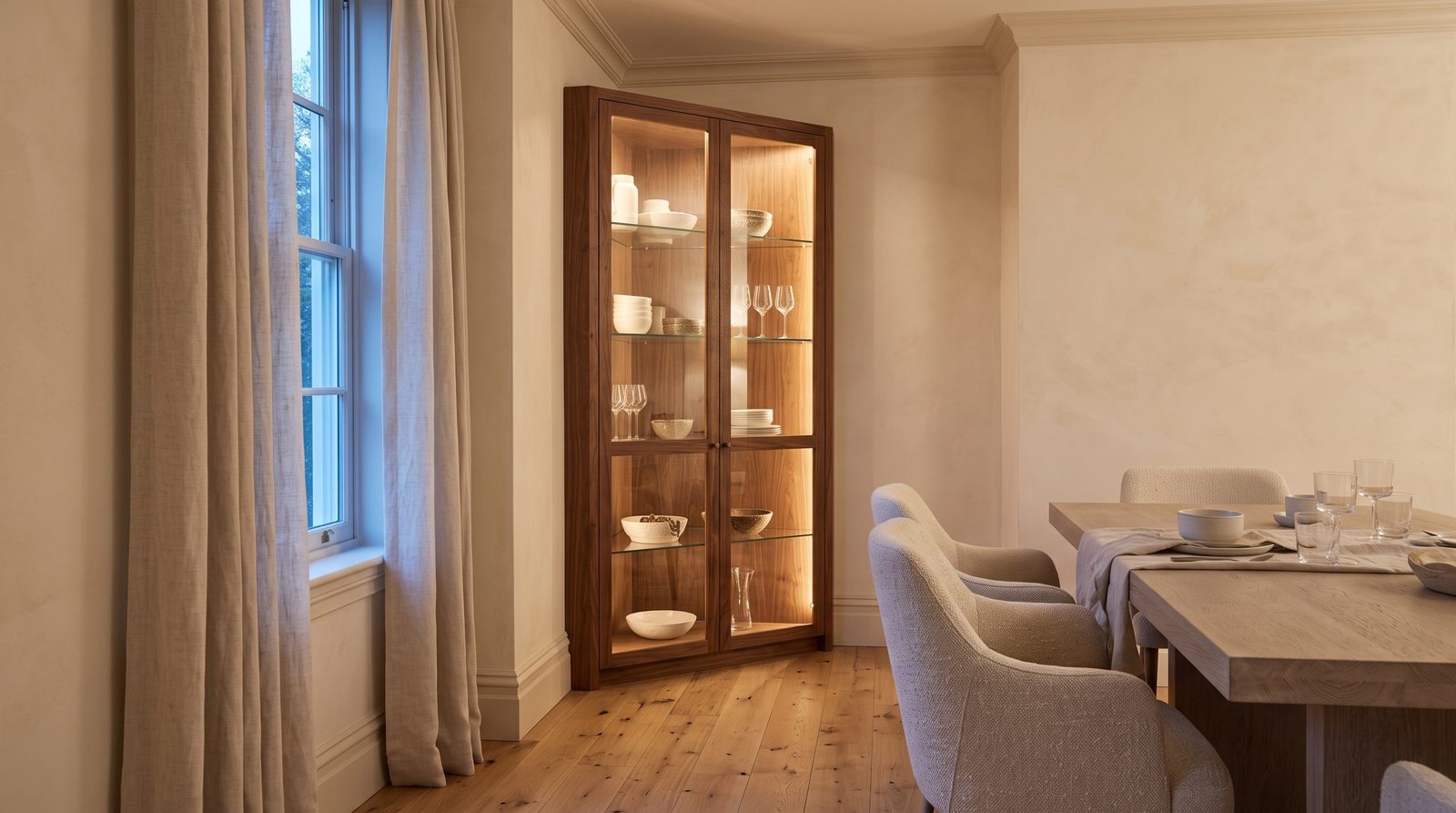
Corner Cabinet Ideas for Awkward Spaces: Smart and Stylish Ways to Use Every Corner
Awkward corners are some of the most overlooked areas in a home. They can be too narrow for standard furniture, too deep to use comfortably, or simply positioned in a way that makes decorating difficult. Yet with the right cabinet design, these forgotten spaces can become some of the most useful and attractive parts of a room.
Corner cabinets offer a practical solution for homes of every size. They can provide hidden storage, display space, organization, and even a strong decorative feature without taking over the room. From slim cabinets tucked into narrow corners to custom built-ins that turn an unused wall junction into a sophisticated storage zone, there are countless ways to make an awkward corner work.
The best corner cabinet ideas do more than fill an empty space. They balance storage needs with the architecture of the room and complement the existing interior style. A beautifully designed cabinet can make a difficult corner feel intentional rather than accidental.
Whether you are decorating a living room, bedroom, kitchen, hallway, dining area, home office, or entryway, these corner cabinet ideas can help you transform unused space into something functional and beautiful.
1. Tall Corner Cabinet for Maximum Vertical Storage
When floor space is limited, going upward is one of the smartest ways to use an awkward corner. A tall corner cabinet can take advantage of the full height of the room while keeping the floor area relatively open.
A floor-to-ceiling cabinet works especially well in narrow living rooms, bedrooms, hallways, and home offices. Instead of allowing the corner to collect unused objects or dust, the cabinet creates a dedicated storage zone.
For a sophisticated look, choose a cabinet finish that coordinates with the room rather than competing with it. Warm wood can bring natural character into a neutral room, while white or soft beige cabinetry can visually blend into the walls.
Closed lower doors are useful for hiding less attractive belongings, while open shelving near the top can display books, ceramics, artwork, or decorative objects.
Tall corner cabinet maximizing vertical storage in an awkward room corner.
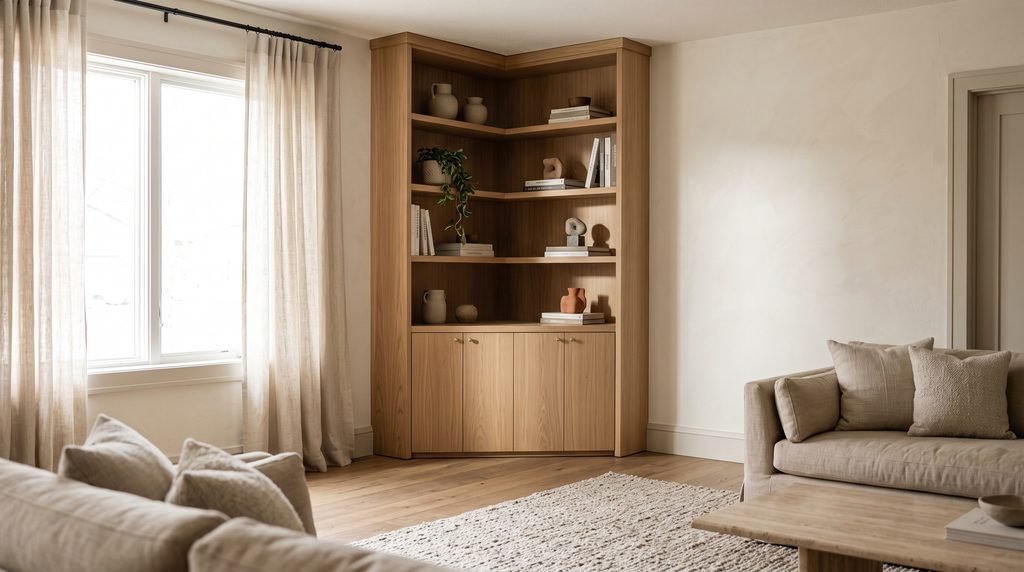
The most successful designs look built into the architecture. If possible, extend the cabinet close to the ceiling and use simple hardware for a clean appearance. Crown molding or matching trim can make a custom cabinet feel like part of the original room.
2. Slim Corner Cabinet for Narrow Spaces
Not every awkward corner can accommodate a large storage unit. In a narrow hallway or small bedroom, a slim corner cabinet can provide useful storage without making the room feel crowded.
Look for a design with a relatively shallow profile and doors that do not require excessive clearance. A narrow cabinet can hold small household items, linens, accessories, books, or everyday essentials.
This idea is particularly useful for corners that sit beside doorways or between two pieces of furniture. Instead of forcing a standard cabinet into the space, a slim custom design can follow the dimensions of the corner.
For small spaces, light-colored cabinetry and minimal hardware can help maintain an airy appearance. A small decorative object or framed artwork on top can make the cabinet feel intentional.
The key is proportion. A corner cabinet should solve the storage problem without becoming another obstacle.
3. Built-In Corner Cabinet with Open Shelving
A built-in corner cabinet can completely transform an awkward architectural area. Rather than appearing as a separate piece of furniture, a built-in design becomes part of the room.
One attractive approach is to combine closed storage at the bottom with open shelves above. This creates a balance between practical organization and decorative display.
The lower section can store items that you want hidden, while the upper shelves can hold books, vases, plants, framed photographs, and other accessories.
Elegant built-in corner cabinet combining closed storage and open display shelves.

For a premium interior, consider matching the cabinet color to the wall. This creates a seamless appearance and allows the objects displayed on the shelves to become the visual focus.
Wood shelving can also introduce warmth against painted walls. In modern interiors, flat-panel doors and simple shelving create a clean architectural effect.
Built-ins are particularly effective when an awkward corner has unusual dimensions because they can be designed specifically around the available space.
4. Corner Cabinet with Glass Doors
Glass-front cabinets are ideal when storage needs to become part of the room’s decoration. Instead of hiding everything behind solid doors, glass allows carefully selected objects to become part of the interior design.
A corner glass cabinet can work beautifully in dining rooms, living rooms, kitchens, and bedrooms. It can display glassware, ceramics, books, collectibles, or decorative accessories.
For a softer and more luxurious appearance, choose lightly framed glass doors with warm interior lighting. Integrated lighting can make the cabinet especially attractive in the evening.
Sophisticated corner cabinet with glass doors displaying ceramics and decorative objects.

If the cabinet is placed in a dining area, it can become a beautiful home for dinnerware and serving pieces. In a living room, it can display books and accessories.
Avoid overcrowding the shelves. A small amount of empty space between objects helps the cabinet look curated rather than cluttered.
5. Corner Cabinet Under the Staircase
The space beneath a staircase is often one of the most challenging areas to furnish. Its changing ceiling height and unusual geometry make conventional furniture difficult to place.
Custom corner cabinetry can turn this difficult zone into valuable storage.
A series of cabinets can follow the angle of the staircase, creating a continuous storage wall. Larger sections can hold household items, while smaller compartments can accommodate shoes, books, accessories, or seasonal belongings.
Custom corner cabinetry built beneath a staircase, following the staircase’s unusual geometry.
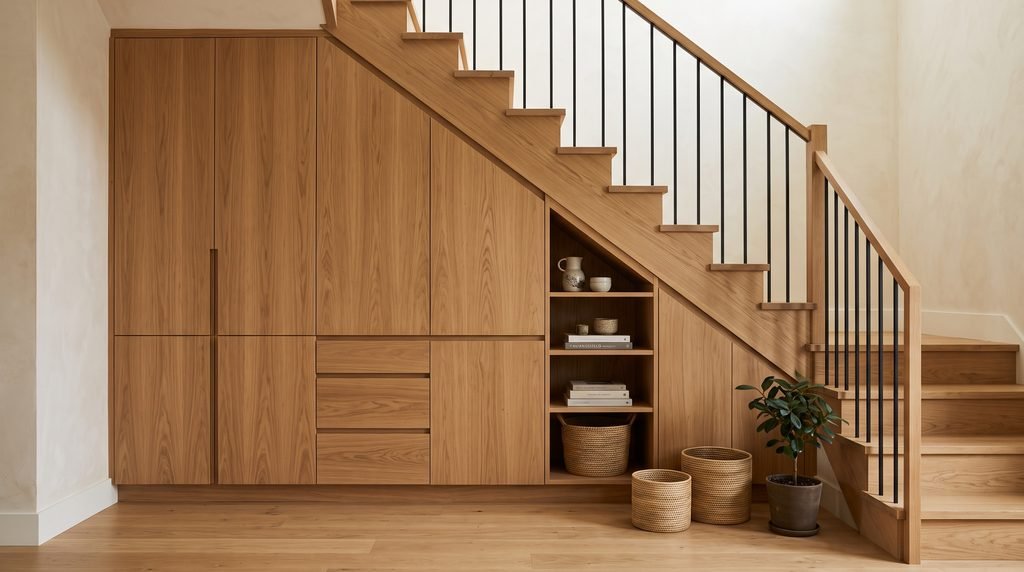
For a modern look, use handleless doors and a single consistent finish. This makes the storage appear architectural instead of bulky.
If the staircase is located near an entryway, the cabinets can also serve as practical organization for bags, shoes, and everyday essentials.
The most important consideration is accessibility. Frequently used belongings should be stored in the easiest-to-reach sections, while less frequently used items can occupy higher or deeper compartments.
6. Corner Cabinet as a Home Bar
An unused corner can become an elegant entertaining area with a compact bar cabinet.
This works particularly well in dining rooms, living rooms, entertainment areas, and open-plan spaces. A corner cabinet can provide storage for glassware, serving accessories, bottles, and bar tools while keeping everything organized behind doors.
For a sophisticated appearance, combine warm wood cabinetry with brass or understated metal hardware. A stone or wood countertop can provide a small preparation surface.
Stylish corner bar cabinet in a sophisticated dining or living area with warm lighting.
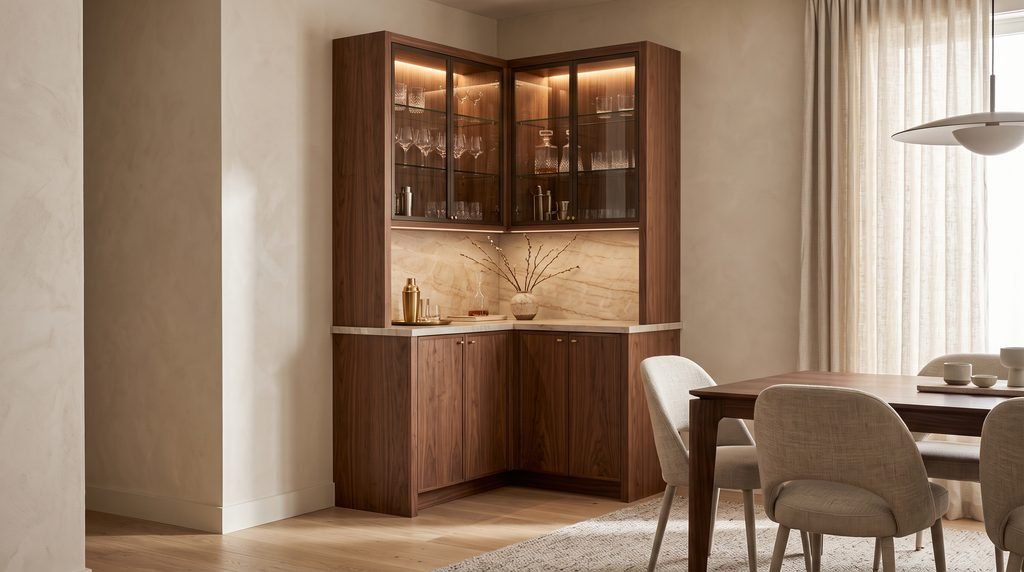
Open shelving can display attractive glassware, while closed cabinets keep less decorative items hidden.
If you want the cabinet to blend into the room, match its finish with nearby furniture. For a stronger statement, use a contrasting material or darker wood.
Even a very small corner can become a useful entertaining station when the storage is designed vertically.
7. Corner Cabinet with a Built-In Desk
Awkward corners can also become compact workspaces. A corner cabinet with an integrated desk is a smart option for small homes where a separate home office is not practical.
The cabinet can provide storage above and beside a small work surface. Shelves can hold books and office supplies, while closed compartments can hide paperwork and equipment.
A fold-down desk is another clever solution. When the workday is finished, the desk can be closed to make the area visually disappear.
Compact corner cabinet with an integrated workspace, shelves, and a small desk in a stylish home.
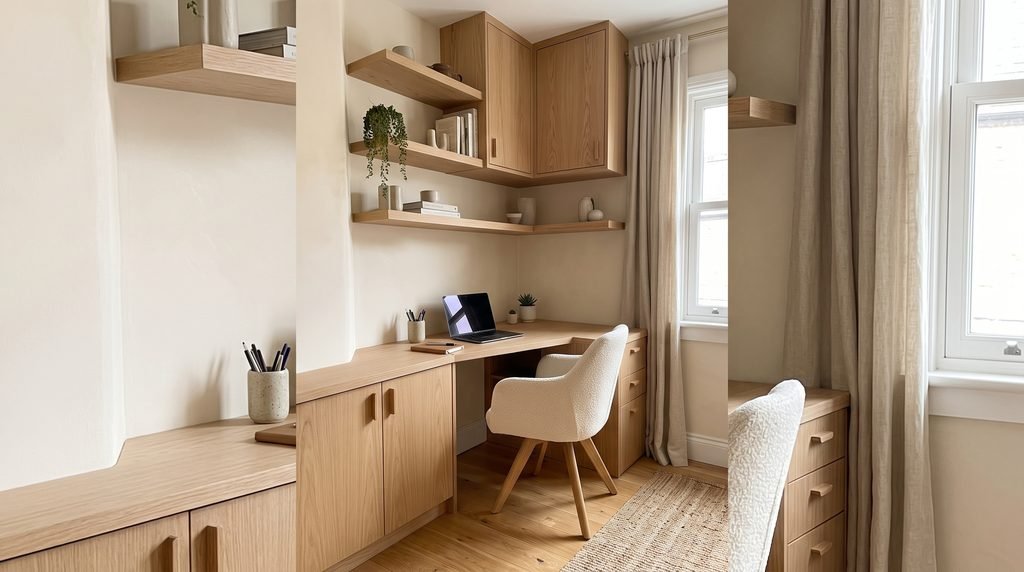
Choose a comfortable working height and make sure there is enough legroom beneath the desk. Cable management is also important. Hidden cable openings can keep chargers and wires from making the corner look messy.
This approach works especially well in bedrooms, hallways, living rooms, and unused corners of larger kitchens.
8. Corner Cabinet with Natural Wood Finish
Natural wood is one of the easiest ways to make a functional corner cabinet feel warm and decorative.
Oak, walnut, ash, and other wood finishes can add texture to neutral interiors. A natural wood cabinet can become a subtle focal point without requiring bright colors or elaborate decoration.
In a minimalist room, choose simple doors with clean lines. In a traditional space, framed doors and classic hardware can give the cabinet a more timeless character.
A wooden corner cabinet also pairs beautifully with natural materials such as linen, stone, rattan, ceramic, and greenery.
Warm natural-wood corner cabinet styled with ceramics, greenery, and neutral accessories.
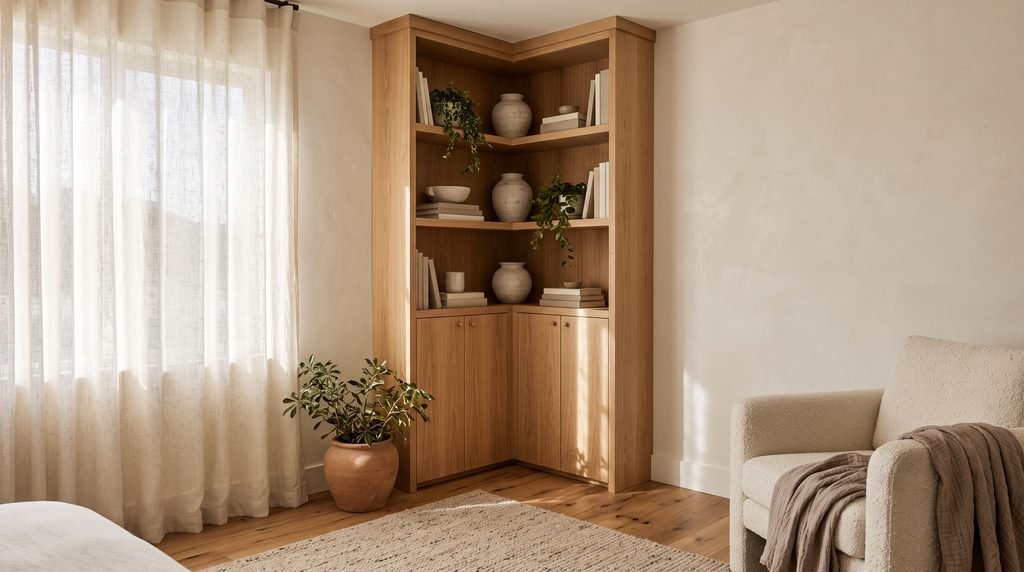
If the room already contains several wood finishes, try to coordinate the tone rather than introducing a completely different color. Consistency will make the room feel more cohesive.
For a contemporary appearance, combine warm wood with cream walls and soft textiles. The result is comfortable, refined, and timeless.
9. Corner Cabinet for the Kitchen
Kitchen corners are notorious for becoming difficult-to-reach storage zones. A well-designed corner cabinet can make these areas significantly more useful.
Traditional corner cabinets can be deep, so interior organization is essential. Pull-out shelves, rotating storage systems, and adjustable shelves can make it easier to access items at the back.
For smaller kitchens, a corner cabinet with open shelving can provide a lighter alternative to a large enclosed unit.
The cabinet can store cookware, appliances, pantry items, or serving dishes depending on its location.
In a modern kitchen, matching the cabinet fronts to the surrounding cabinetry creates a seamless look. If you prefer a more decorative approach, a contrasting wood corner cabinet can add warmth and visual interest.
The goal is not simply to fill the corner but to make every inch accessible.
10. Corner Cabinet for the Dining Room
Dining rooms often have corners that are too small for additional furniture but large enough for useful storage.
A corner cabinet can hold dinnerware, table linens, serving bowls, candles, and entertaining accessories. Glass-front doors can make beautiful pieces visible, while drawers and solid doors provide concealed storage.
A slim cabinet can also provide a convenient serving station during gatherings.
For a classic dining room, consider a warm wood cabinet with traditional detailing. For contemporary interiors, choose a simple cabinet with flat fronts and subtle hardware.
Adding a small lamp, artwork, or ceramic object on top can help connect the cabinet visually to the rest of the room.
11. Corner Cabinet with a Seating Nook
A particularly creative solution is combining cabinetry with a small seating area.
A custom corner unit can include low cabinets beneath a cushioned bench. This creates both storage and seating without requiring separate furniture.
The idea works beautifully in breakfast areas, bedrooms, reading corners, and entryways.
Use drawers or lift-up compartments beneath the seat for blankets, books, shoes, or seasonal belongings.
Above the bench, shelves or cabinets can provide additional storage.
The result is a multifunctional corner that feels comfortable rather than purely utilitarian.
12. Floating Corner Cabinet for a Light Look
If a floor-standing cabinet feels too heavy for your room, consider a floating design.
Wall-mounted corner cabinets leave visible floor space underneath, creating a lighter and more contemporary appearance. This is particularly useful in small rooms where visual openness matters.
A floating cabinet can store decorative objects, books, electronics, or small household items.
For a modern interior, choose a simple rectangular cabinet with handleless doors. Soft neutral finishes help maintain the clean aesthetic.
The empty space underneath can also be used for a small basket, plant, or decorative stool.
13. Corner Cabinet with Mirror Doors
Mirrored doors can make a corner cabinet feel less visually dominant while adding function.
This idea is especially useful in bedrooms, dressing areas, and hallways. The reflective surface can bounce light around the room and create the impression of greater depth.
A mirrored corner cabinet can provide storage for accessories, clothing, linens, or personal items while also serving a practical purpose.
For an elegant result, combine the mirror with a slim wood or metal frame. Avoid excessive ornamentation if the room already contains several decorative elements.
14. Corner Cabinet in a Small Bedroom
Bedrooms often contain awkward corners created by windows, doors, wardrobes, or architectural features.
Instead of leaving the corner unused, a custom cabinet can provide storage for bedding, books, clothing, or accessories.
A narrow floor-to-ceiling unit can work particularly well beside a bed. Open shelves can hold nighttime essentials while closed compartments provide concealed storage.
Another option is a corner wardrobe that uses two adjoining walls. This can provide significantly more storage than a conventional standalone wardrobe while making better use of the room’s geometry.
Keep the finish calm and understated. Soft beige, cream, light oak, or muted gray can help the cabinet blend into a restful bedroom.
15. Corner Cabinet for an Entryway
Entryway corners are often too small for traditional consoles. A compact corner cabinet can provide a similar function while fitting the available footprint.
Use it to store keys, bags, umbrellas, shoes, mail, and everyday accessories.
A small cabinet can also become a decorative feature. Place a mirror or artwork above it and add a small lamp or vase to create a welcoming entry.
For narrow entrances, choose doors that open comfortably without blocking the walking path.
16. Corner Cabinet with Open and Closed Storage
One of the most versatile designs combines open shelving, drawers, and closed cabinets.
This allows different categories of belongings to have different storage solutions. Attractive objects can remain visible, while clutter can disappear behind doors.
A mixed-storage cabinet also creates visual rhythm. Instead of one large uninterrupted block, the combination of shelves and doors gives the furniture more architectural character.
Use baskets or matching storage boxes on open shelves to keep smaller items organized.
17. Custom Cabinet Around an Awkward Window
Sometimes the awkward corner is created by a window that interrupts a wall.
Rather than treating the window as an obstacle, cabinetry can be designed around it.
Low cabinets can run beneath the window while taller sections occupy the adjacent walls. Open shelves can connect the different sections and create a cohesive built-in composition.
This approach is particularly useful in living rooms, bedrooms, and home offices.
The design should always preserve natural light and allow the window to remain functional. Avoid placing tall cabinetry directly in front of windows unless the arrangement has been specifically designed for that purpose.
18. Corner Cabinet with Decorative Lighting
Lighting can completely change the appearance of a corner cabinet.
Integrated LED strips beneath shelves can highlight books, ceramics, artwork, or collectibles. Warm lighting creates a cozy atmosphere and can make a simple cabinet feel much more luxurious.
For glass-door cabinets, interior lighting can turn the furniture into a subtle evening focal point.
Use warm, soft lighting rather than extremely bright illumination. The goal is to highlight the cabinet’s contents while maintaining the atmosphere of the room.
19. Minimalist Corner Cabinet for Modern Homes
Minimalist interiors benefit from cabinetry that disappears visually.
Choose clean lines, flat doors, neutral finishes, and minimal hardware. A cabinet painted the same color as the wall can almost disappear into the background.
This is especially effective when the room already contains strong architectural or decorative elements.
Instead of filling every shelf, leave some areas intentionally empty. Minimalism depends as much on negative space as it does on storage.
20. Make an Awkward Corner Feel Intentional
The most important principle when designing a corner cabinet is to make the corner look deliberate.
Rather than asking, “What cabinet can I fit here?” start by asking, “What does this corner need to do?”
It might need to provide hidden storage, display favorite objects, create a work area, organize an entryway, or simply add warmth to an empty wall.
Measure the available width, depth, and height before selecting a cabinet. Pay attention to doors, windows, electrical outlets, heating elements, and walking paths.
A beautiful cabinet that blocks a doorway or makes furniture difficult to use will quickly become frustrating.
Consider the visual weight as well. In small spaces, floating cabinets, glass doors, light colors, and open shelving can prevent the corner from feeling heavy. In larger rooms, a tall built-in cabinet can provide architectural balance.
How to Choose the Right Corner Cabinet
Before installing a corner cabinet, consider several practical details.
Measure the Corner Carefully
Measure both walls, the available depth, ceiling height, and surrounding clearances. Awkward corners often have irregular dimensions, so accurate measurements are essential.
Think About Accessibility
Deep cabinets can look spacious but may be difficult to use. Consider adjustable shelves, drawers, pull-out systems, or rotating organizers when storing frequently used items.
Match the Interior Style
The cabinet should complement the surrounding room. Natural wood suits warm and organic interiors, painted cabinetry works well in classic and contemporary rooms, and glass can add a lighter decorative touch.
Mix Storage Types
A combination of drawers, shelves, and closed doors is usually more useful than relying on only one storage format.
Use Vertical Space
When floor area is limited, extending cabinetry upward can dramatically increase storage without taking additional floor space.
Keep the Corner Visually Balanced
Avoid making one corner disproportionately heavy unless you intentionally want it to become a focal point.
Final Thoughts
Awkward corners do not have to remain wasted spaces. With thoughtful cabinetry, even the most difficult corner can become useful, organized, and beautiful.
From tall built-ins and slim cabinets to glass-front displays, kitchen storage, compact workstations, bar cabinets, and cozy seating combinations, the right design can transform an overlooked corner into a purposeful part of the home.
The best corner cabinet is not necessarily the largest one. It is the one that fits the architecture, provides the right type of storage, and complements the style of the room.
When choosing your design, focus on proportion, accessibility, materials, and visual balance. A carefully planned cabinet can make a small home feel more organized while adding character to a larger interior.
With the right approach, an awkward corner can become one of the most useful and visually appealing spaces in your home.