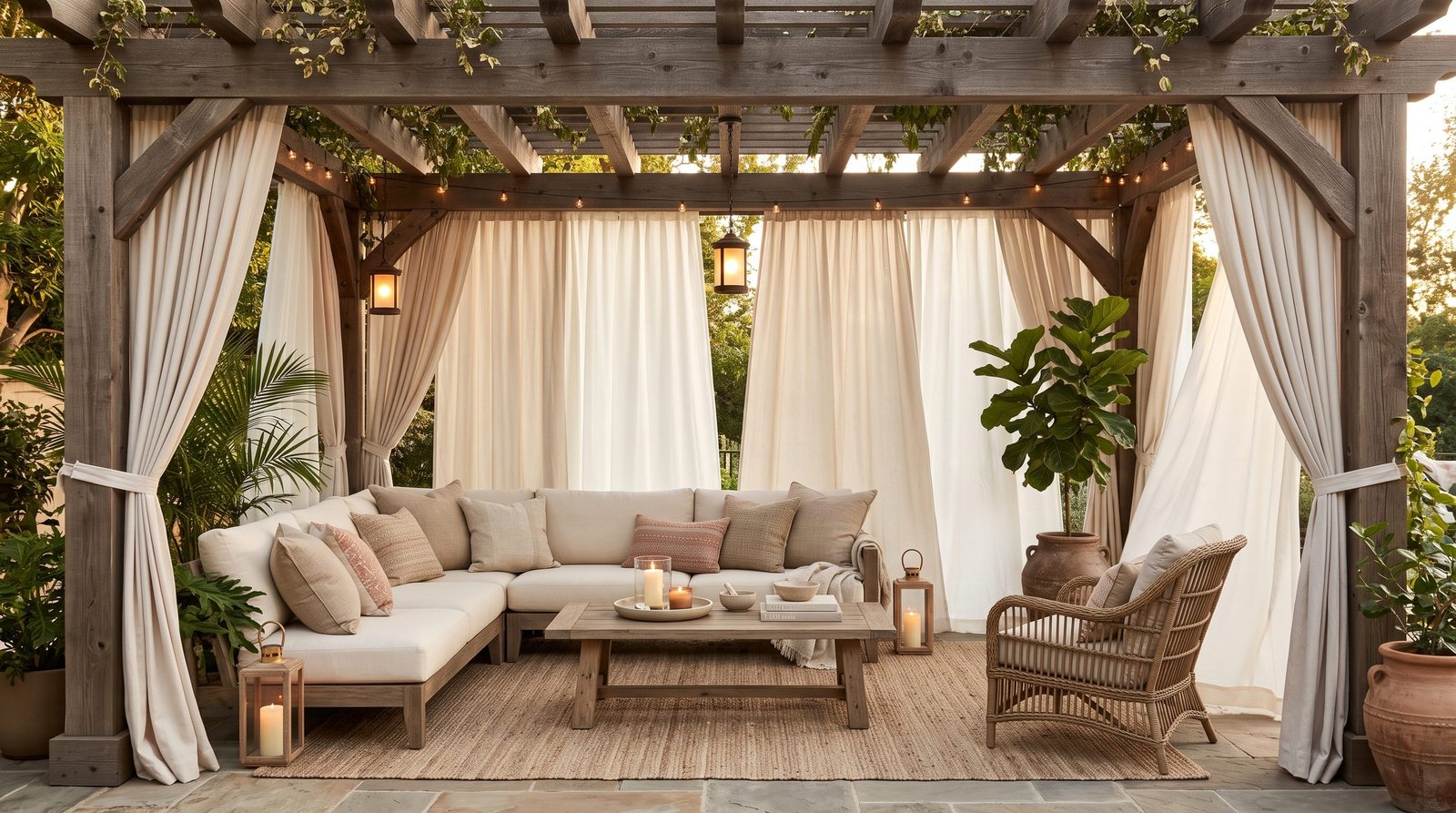
Outdoor Privacy Screen Ideas: Stylish Ways to Create a Private Outdoor Retreat
A beautiful outdoor space should feel comfortable, peaceful, and private. Whether you have a compact balcony, a small patio, a spacious backyard, or a rooftop terrace, privacy can make the difference between a space that feels exposed and one that feels like a true retreat.
Outdoor privacy screens are an easy and versatile way to create that sense of seclusion without completely closing off your garden or patio. They can block unwanted views, define separate zones, soften harsh architectural lines, and add a decorative element to an otherwise plain outdoor area.
The best privacy screens do more than simply hide a neighboring property. They become part of the landscape design. Natural wood panels can introduce warmth, vertical slats can create a contemporary architectural feature, and greenery can soften a screen with a lush, organic appearance. Even a small screen can make a seating area feel more intimate.
There are also many ways to combine privacy with light. A solid wall can provide maximum seclusion, while slatted screens, lattice panels, curtains, trellises, and planted screens can provide privacy without making an outdoor area feel enclosed.
If you’re looking for inspiration, these outdoor privacy screen ideas can help transform an exposed yard, patio, balcony, or terrace into a stylish private retreat.
1. Vertical Wood Slat Privacy Screen
Vertical wood slats are one of the most timeless choices for modern outdoor privacy.
The narrow gaps between the slats allow sunlight and air to pass through while limiting direct views from neighboring properties. This creates privacy without making the outdoor space feel completely closed.
Natural wood works particularly well with greenery, stone, concrete, and neutral outdoor furniture. A warm cedar or oak-toned finish can make a patio feel cozy and inviting, while a darker stain can create a more dramatic contemporary appearance.
Modern outdoor seating area with a vertical natural-wood slat privacy screen.
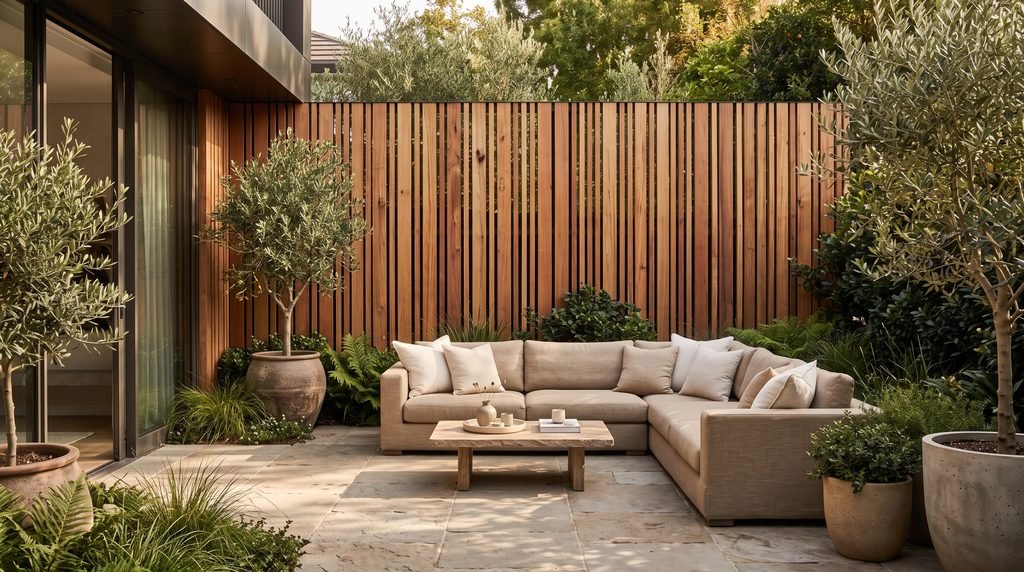
Consider extending the slats slightly above eye level rather than making the entire structure extremely tall. This can provide sufficient privacy while preserving a sense of openness.
Vertical screens are especially attractive behind outdoor sofas, dining areas, hot tubs, and small seating corners.
2. Privacy Screen with Built-In Planters
A privacy screen becomes even more attractive when greenery is integrated into the design.
Built-in planters can be positioned at the base of a wooden, metal, or composite screen. Plants then soften the structure and create a natural transition between the screen and the rest of the garden.
This approach is ideal if you want privacy without the screen looking too architectural.
Tall grasses, climbing plants, shrubs, and leafy greenery can all be used depending on the climate and available sunlight.
Elegant patio privacy screen combined with built-in planters and lush greenery.

For a cohesive look, repeat the same planter material elsewhere in the outdoor space. Stone, concrete, terracotta, or natural wood planters can complement the screen and furniture.
The plants should be selected according to local growing conditions so the privacy planting remains healthy throughout the year.
3. Lattice Privacy Screen with Climbing Plants
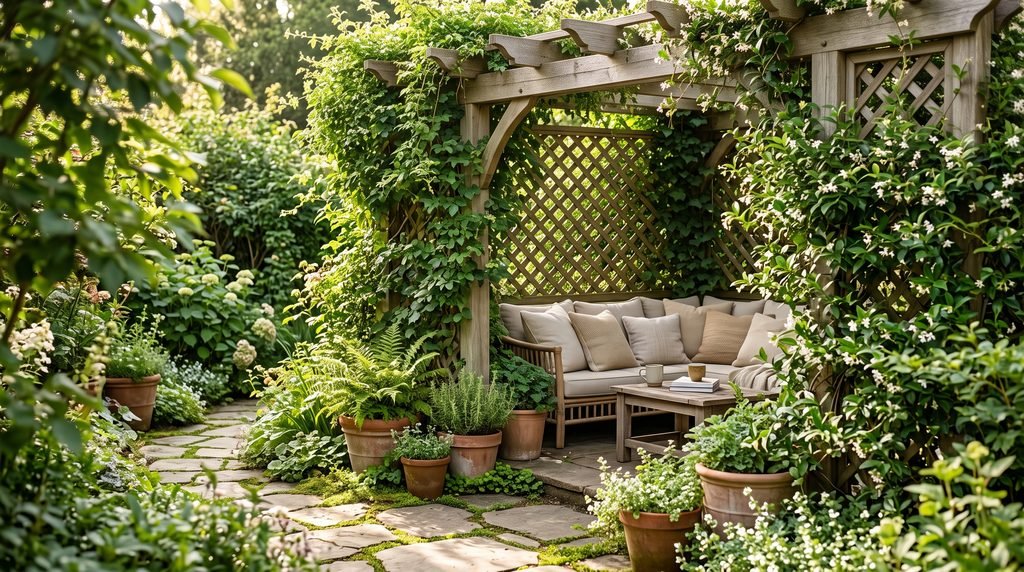
A lattice screen offers a lighter alternative to solid panels.
Its open structure allows climbing plants to grow across the surface, gradually turning the screen into a living green wall. Jasmine, climbing roses, ivy, clematis, and other suitable vines can create a romantic garden atmosphere.
This idea works especially well in cottage-style gardens, patios, courtyards, and terraces.
Charming lattice privacy screen covered partially with lush climbing greenery in a garden seating area.
A lattice panel can also be painted in a color that complements the surrounding architecture. Soft white, muted green, charcoal, or natural wood tones can all work beautifully.
Keep in mind that climbing plants require support and maintenance. The structure should be strong enough to carry the mature plant’s weight.
4. Modern Black Privacy Screen
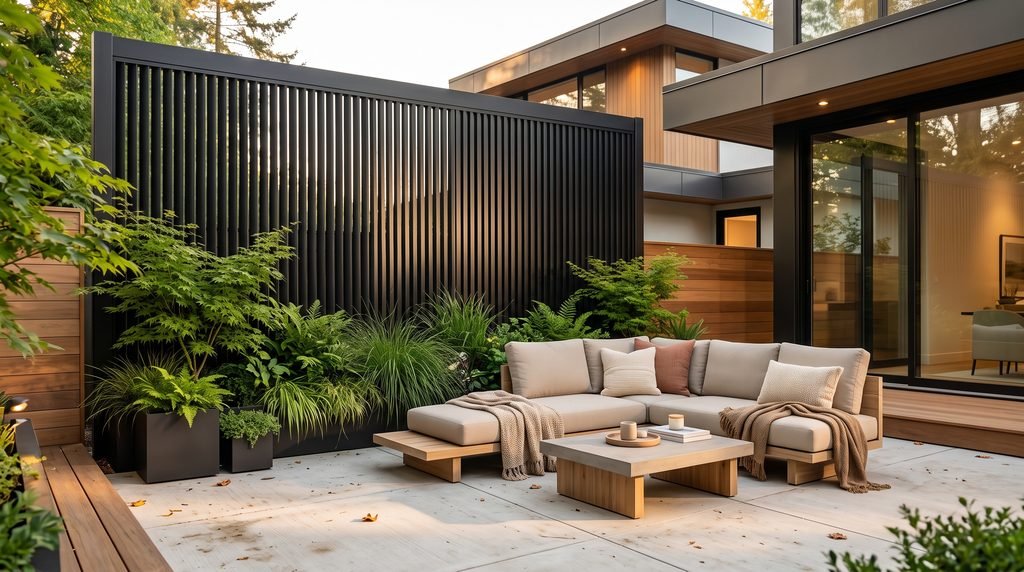
For contemporary homes, a black privacy screen can create a strong architectural statement.
Black metal or powder-coated aluminum panels provide a crisp contrast against green plants and light-colored outdoor furniture.
A perforated or slatted design can maintain airflow and allow filtered sunlight to pass through while still creating visual separation.
Contemporary backyard seating area with a sleek matte-black privacy screen surrounded by greenery.
Pairing black screens with warm wood furniture can prevent the space from feeling too industrial. Add soft cushions, natural textiles, potted plants, and warm outdoor lighting to create balance.
This design is particularly effective in modern patios and minimalist gardens where clean lines are already part of the architecture.
5. Outdoor Privacy Curtains
Curtains are one of the simplest ways to add flexible privacy to an outdoor space.
They work particularly well around pergolas, covered patios, balconies, and outdoor lounges. Curtains can be pulled closed when privacy is needed and opened when you want a more open view.
Choose outdoor-rated fabric designed to withstand moisture and sunlight. Neutral colors such as ivory, beige, taupe, and soft gray create a sophisticated resort-inspired atmosphere.
Cozy covered patio with flowing neutral outdoor privacy curtains surrounding a comfortable seating area.

Long curtains can also soften the hard lines of a pergola or covered structure. When gently moving in the breeze, they create a relaxed and luxurious feeling.
For an elegant outdoor retreat, combine curtains with warm lighting, natural wood furniture, linen-look cushions, and greenery.
6. Bamboo Privacy Screen
Bamboo can create a natural and relaxed outdoor atmosphere while providing effective visual screening.
It works beautifully in gardens, patios, balconies, and poolside spaces. Bamboo panels can be installed against existing fences or used as standalone screens.
The natural texture introduces warmth and helps soften concrete or modern architectural surfaces.
Relaxed backyard lounge featuring a natural bamboo privacy screen with tropical greenery and neutral furniture.
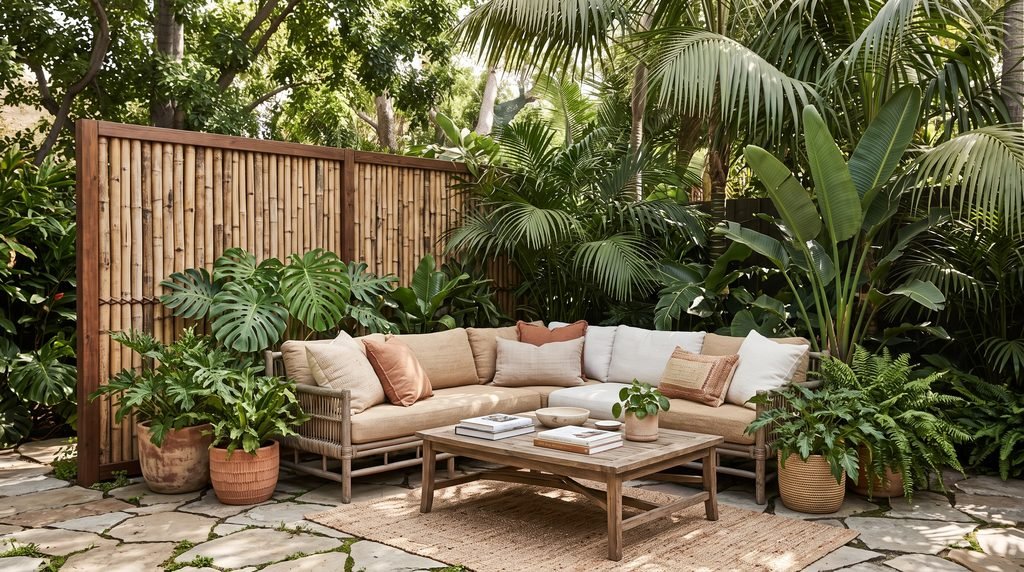
Bamboo can be especially attractive in spaces inspired by tropical, Japanese, bohemian, or organic-modern design.
Choose appropriately treated outdoor materials and install them securely to improve longevity.
7. Decorative Laser-Cut Privacy Screen
Privacy does not have to mean plain panels. Decorative screens with geometric, botanical, or abstract cutout patterns can become a major design feature.
Laser-cut metal or composite panels allow you to introduce artistic patterns while still creating visual separation.
During the day, sunlight can filter through the openings and create interesting shadows. At night, outdoor lighting can make the pattern even more noticeable.
Sophisticated patio with an elegant decorative geometric privacy panel creating patterned light and shadows.
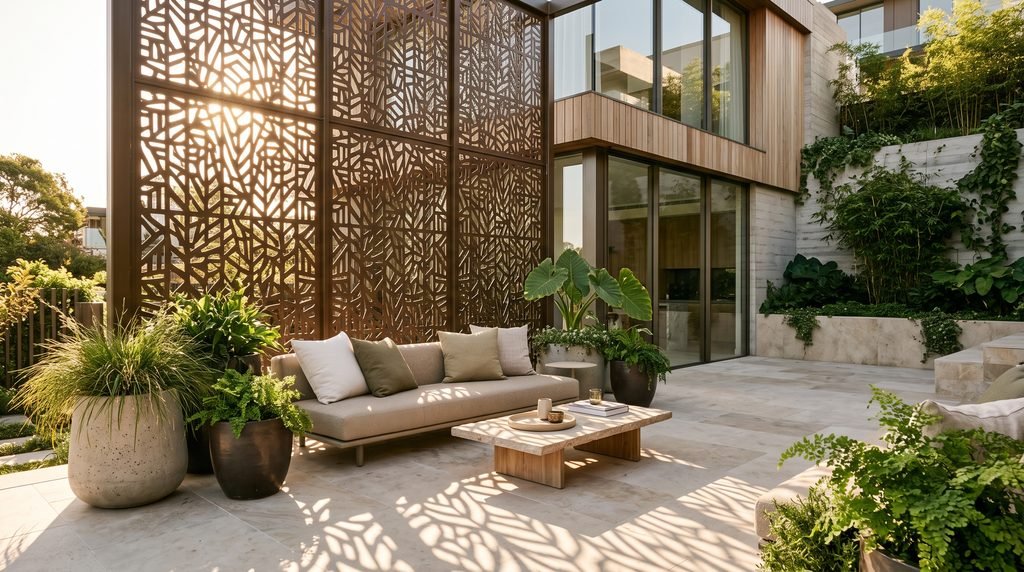
Keep the surrounding furniture relatively simple so the screen remains the focal point.
A decorative panel can also be used to divide a large backyard into different zones without constructing a permanent wall.
8. Living Green Privacy Wall
For homeowners who prefer a natural solution, a living privacy wall can provide both screening and greenery.
Tall plants can be arranged in large planters or planted directly into the ground to create a dense visual barrier.
Evergreen shrubs, ornamental grasses, bamboo varieties, hedges, and other suitable plants can provide varying levels of privacy.
Lush outdoor seating area surrounded by a dense green living privacy wall and elegant neutral furniture.
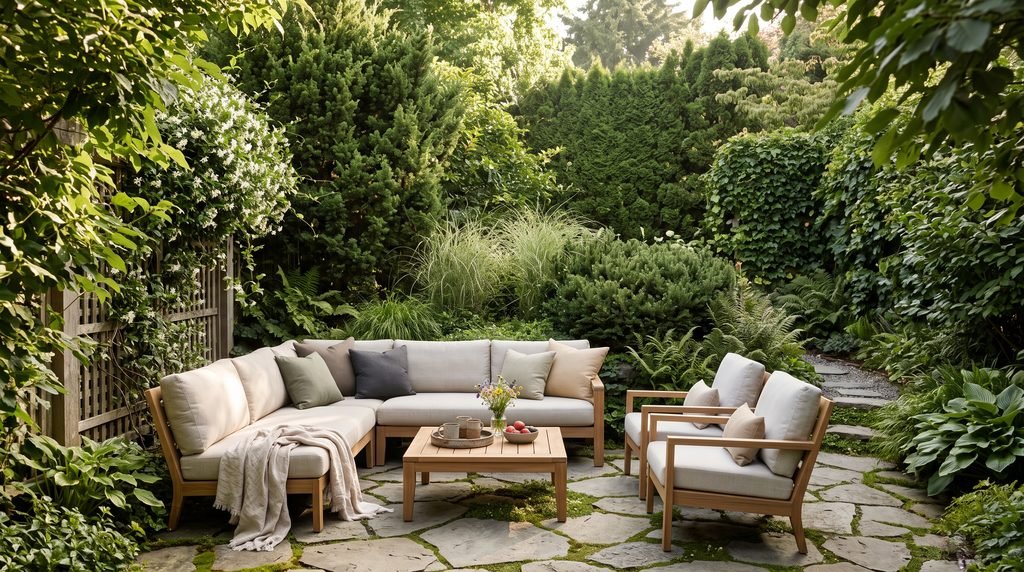
The advantage of a living screen is that it blends naturally into the landscape. Instead of seeing a constructed barrier, you experience a garden environment.
However, plant selection is important. Choose species that suit your climate, available sunlight, soil conditions, and desired maintenance level.
9. Horizontal Wood Privacy Screen
Horizontal boards create a completely different visual effect from vertical slats.
They can make a wall feel wider and are particularly useful behind long patios or seating areas.
A horizontal wood screen can be stained naturally or painted to coordinate with the home’s exterior.
For a contemporary look, use evenly spaced boards with consistent gaps. The result is simple, architectural, and timeless.
Pair the screen with outdoor furniture in neutral colors and add potted plants for softness.
10. Privacy Screen for a Small Balcony
Small balconies can benefit enormously from privacy screens.
Even a narrow screen along one side can make a balcony feel more comfortable and protected. Vertical slats, outdoor curtains, bamboo panels, or artificial greenery can all work depending on the style of the space.
For a small balcony, avoid bulky structures that take up valuable floor area.
Wall-mounted or railing-mounted solutions are often more practical. Add a compact chair, small table, outdoor rug, and potted plant to create a cozy retreat.
The goal is to create privacy without making the balcony feel cramped.
11. Freestanding Privacy Panels
Freestanding screens are ideal for renters or homeowners who want flexibility.
Instead of permanently attaching a screen to the building, you can position freestanding panels wherever privacy is needed.
They can separate an outdoor dining area from a lounge, hide an unattractive utility area, or create a secluded reading corner.
Choose weighted bases or secure the panels properly because outdoor screens can be vulnerable to strong winds.
Several panels can also be arranged at angles to create a more intimate enclosure.
12. Privacy Screen Around an Outdoor Dining Area
Outdoor dining areas often feel exposed, especially when positioned close to a neighboring property.
A privacy screen behind or beside the dining table can create a more intimate atmosphere.
Wood slats, greenery, curtains, or decorative panels can all work. The screen should provide enough separation without blocking natural light.
Add warm string lights or wall-mounted outdoor fixtures to make the dining space inviting after sunset.
A simple screen can turn an ordinary patio table into a restaurant-inspired outdoor dining experience.
13. Privacy Screen Around a Fire Pit
Fire-pit areas are naturally designed for relaxation, conversation, and gathering. A privacy screen can make them feel even more secluded.
Use a partially open design so the area still feels connected to the garden.
Wood slats, stone walls, corten-style metal panels, or greenery can create an attractive backdrop.
Avoid placing flammable materials too close to an open flame and always follow appropriate fire-safety clearances for the specific fire feature.
The screen should enhance the atmosphere without compromising safety.
14. Outdoor Privacy Screen with a Pergola
Combining a pergola with privacy panels can create a sophisticated outdoor room.
The pergola provides overhead definition while side screens provide privacy. Curtains or climbing plants can be added to soften the structure.
This combination works particularly well for outdoor lounges and dining areas.
Use warm wood, neutral upholstery, and layered greenery to create a comfortable extension of the home.
The result can feel almost like an additional room, while remaining completely outdoors.
15. Stone and Wood Privacy Wall
Combining materials can give an outdoor privacy screen a more substantial architectural appearance.
Natural stone paired with warm wood creates a beautiful balance between texture and structure.
The stone section can provide a solid base while wood slats above create filtered privacy.
This design works especially well with modern homes that already use natural stone, concrete, or timber in the architecture.
Repeat the same materials elsewhere in the garden to create visual continuity.
16. Privacy Screen for a Pool Area
Pool areas often require privacy from surrounding properties.
A combination of solid and open screening can create a secluded poolside environment without completely blocking the landscape.
Tall greenery, wood slats, decorative panels, and hedges can all contribute to privacy.
Keep the pool area visually calm by using a restrained material palette.
Neutral stone, warm wood, soft greenery, and comfortable outdoor furniture create a sophisticated resort-like atmosphere.
17. Outdoor Privacy Screen with Integrated Lighting
Lighting can turn a privacy screen into an evening design feature.
Slim LED strips can be integrated between wood slats, while small spotlights can highlight plants or decorative panels.
Warm lighting is generally ideal for creating a cozy outdoor atmosphere.
Avoid excessive brightness. Outdoor lighting should create atmosphere while maintaining comfortable visibility.
18. Privacy Screen as a Garden Divider
Privacy screens can also organize a large garden.
Instead of using a screen only around the perimeter, use one to divide the outdoor space into zones.
For example, a screen can separate a dining area from a lounge, hide a garden storage zone, or create a private reading corner.
This approach makes a large yard feel more structured and purposeful.
Use the same screen material in several locations to create a cohesive landscape design.
19. Minimalist Privacy Screen
Sometimes the simplest design is the most beautiful.
A minimalist privacy screen might consist of evenly spaced vertical timber slats, a smooth painted panel, or a simple metal frame.
The lack of decorative details allows the surrounding architecture and landscape to remain the focus.
This style works particularly well with contemporary homes, neutral furniture, concrete patios, and architectural planting.
20. Privacy Screen with a Cozy Seating Nook
A privacy screen can help create a small outdoor room even when you have limited space.
Place a comfortable bench or compact sofa directly in front of the screen. Add cushions, a small side table, outdoor rug, and several plants.
The screen becomes the backdrop while also creating a feeling of enclosure.
This is an excellent approach for small courtyards, patios, balconies, and unused corners of larger gardens.
How to Choose the Right Outdoor Privacy Screen
Choosing the right screen depends on more than appearance. Think about how much privacy you actually need and how the screen will interact with the surrounding environment.
Consider the Direction of the View
Identify where unwanted views are coming from. You may only need screening on one side rather than around the entire outdoor area.
Think About Sunlight
A solid wall can create shade, while slatted screens allow sunlight to filter through. Consider how much natural light your outdoor space receives before choosing the design.
Allow for Airflow
Outdoor areas need ventilation. Screens with gaps can provide privacy while allowing breezes to pass through.
Choose Weather-Appropriate Materials
Outdoor wood, metal, composite materials, stone, and treated bamboo can all work when properly selected and maintained for the local climate.
Consider Maintenance
Living screens require watering, pruning, and ongoing care. Wood may require periodic sealing or staining. Metal and composite screens can offer lower-maintenance alternatives.
Match the Architecture
A privacy screen should feel connected to the house and garden. Repeat colors and materials from the home’s exterior whenever possible.
Make Your Privacy Screen Beautiful, Not Just Functional
A privacy screen does not have to look like a barrier.
Plants can soften hard edges. Outdoor lighting can add atmosphere. Built-in planters can integrate greenery. Curtains can introduce movement and softness. Decorative panels can turn privacy into art.
Think of the screen as another wall in your outdoor room. Style it accordingly.
A beautiful outdoor space often relies on layers. Start with the privacy structure, then add greenery, furniture, lighting, textiles, and decorative objects.
The result feels much more intentional than simply installing a fence.
Final Thoughts
Outdoor privacy screens can transform an exposed yard, patio, balcony, or terrace into a comfortable private retreat. From warm vertical wood slats and natural bamboo to elegant curtains, living green walls, decorative metal panels, and modern architectural screens, there is a solution for almost every outdoor style.
The best design depends on your space, privacy needs, climate, maintenance preferences, and home’s architecture.
If you want a natural look, combine wood or lattice with greenery. For a contemporary home, consider clean-lined metal or vertical slats. For a softer atmosphere, outdoor curtains can create a relaxed resort feeling.
Most importantly, treat the privacy screen as part of the overall landscape rather than an afterthought. When paired with thoughtful planting, comfortable furniture, and warm lighting, it can become one of the most beautiful features of your outdoor space.
With the right design, privacy does not have to mean isolation. It can create a peaceful, stylish outdoor room where you can relax, entertain, and enjoy your home with greater comfort.