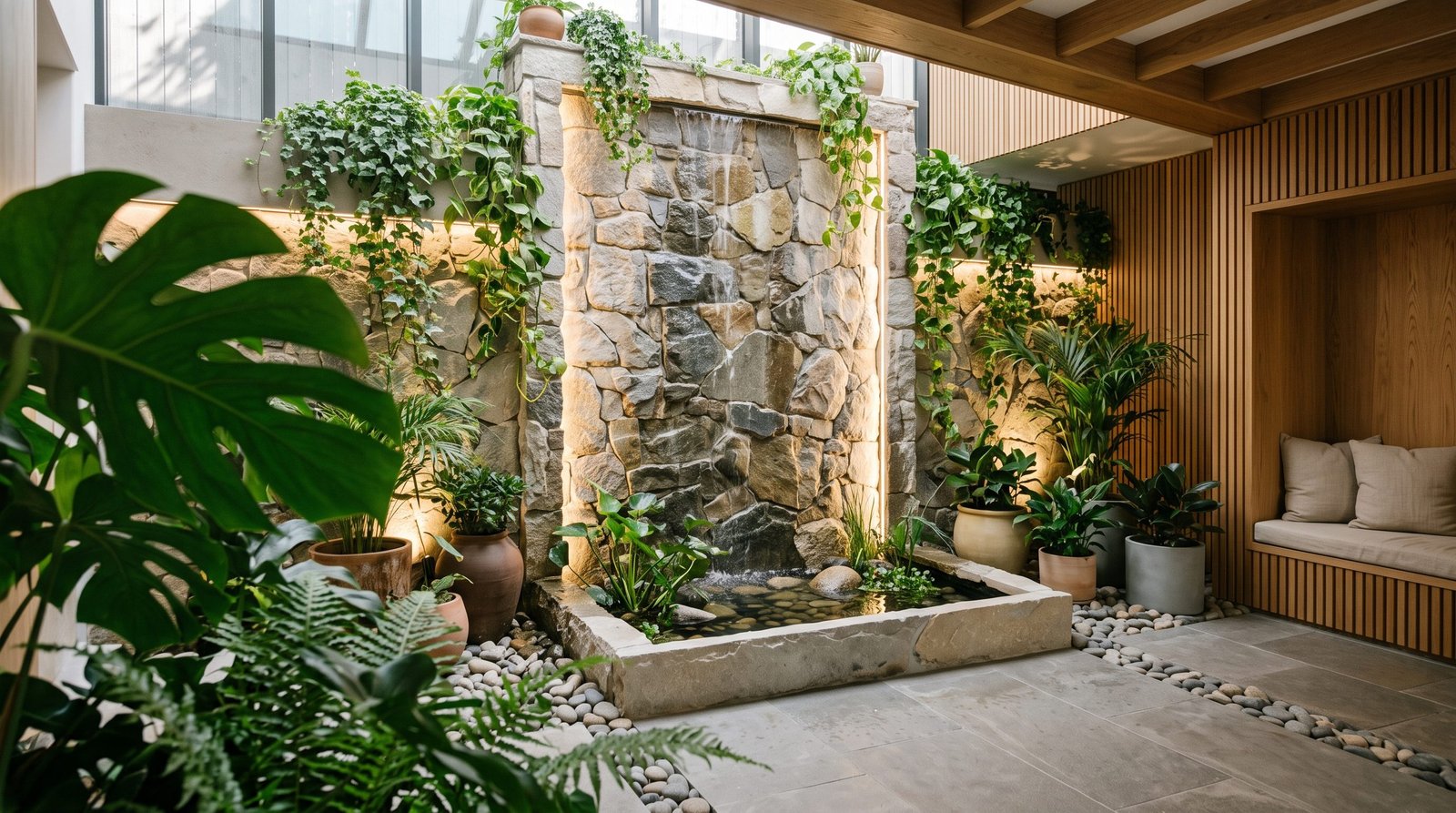
Backlit Fountain Wall Ideas with LED Lighting: 8 Stunning Ways to Transform Your Home
A backlit fountain wall is one of the most beautiful ways to bring elegance, movement, and a calming atmosphere into a modern home. By combining flowing water with carefully positioned LED lighting, you can turn an ordinary wall into a striking architectural feature. Whether you want a luxurious living room centerpiece, a peaceful indoor garden, an impressive entrance, or a relaxing outdoor retreat, a backlit water wall can add visual interest without requiring a large decorative space.
Unlike traditional fountains that occupy the middle of a room or garden, wall-mounted water features use vertical space to create an elegant focal point. The addition of LED lighting makes them even more appealing, highlighting the movement of water, enhancing the texture of stone, and creating a beautiful glow after sunset.
From minimalist glass panels to natural stone walls and dramatic floor-to-ceiling installations, there are countless ways to design a fountain wall that matches your home. The key is choosing the right materials, lighting color, water flow, and surrounding decor.
In this guide, we explore eight inspiring backlit fountain wall ideas with LED lighting, along with practical design tips to help you create a feature that looks beautiful, functions efficiently, and complements your interior or outdoor space.
1. Natural Stone Backlit Fountain Wall for a Luxury Look
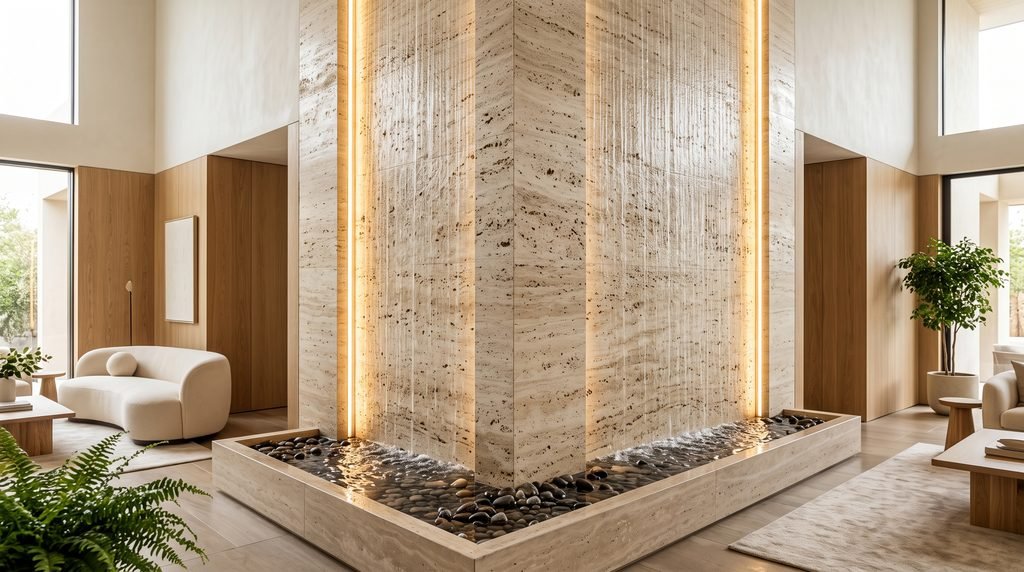
Natural stone is an excellent choice for creating a backlit fountain wall that feels timeless, luxurious, and connected to nature. Materials such as travertine, slate, limestone, and textured granite offer beautiful surfaces that interact with both flowing water and soft illumination. When warm LED lighting shines behind or around the stone, its natural patterns become more noticeable, creating depth and a sophisticated atmosphere.
For a contemporary living room, consider a floor-to-ceiling stone panel with a narrow sheet of water flowing down its surface. Install concealed warm-white LED strips along the sides or behind recessed edges to emphasize the texture without making the lighting source visible. A shallow collection basin at the bottom can complete the design while keeping the overall appearance clean.
Beige travertine works particularly well in warm, neutral interiors, while dark slate creates a dramatic contrast in modern spaces. If your home features oak furniture, cream upholstery, and natural fabrics, a light stone fountain wall can tie the entire room together.
Design tips for a natural stone fountain wall:
- Choose water-resistant stone and a suitable waterproof backing system.
- Use warm-white LEDs for a cozy, inviting glow.
- Keep nearby accessories minimal so the stone remains the main attraction.
- Select a textured finish that creates attractive patterns as water flows over it.
- Include a removable access panel for pump maintenance.
This design is ideal for living rooms, luxury entryways, spa-inspired bathrooms, and covered outdoor lounges. Proper waterproofing is particularly important because natural stone can absorb moisture depending on its composition and finish.
2. Modern Glass Fountain Wall with Blue LED Lighting

A glass fountain wall is perfect for homeowners who prefer a sleek, contemporary aesthetic. Its reflective surface creates a lighter visual effect than many solid stone installations, making it particularly attractive in modern apartments, offices, and compact living areas.
For this design, water travels down a vertical glass panel into a concealed reservoir. LED lighting positioned behind the panel or along its edges highlights the water droplets and creates a luminous appearance. Blue lighting produces a cool, tranquil atmosphere, while neutral white illumination offers a cleaner architectural look.
You can choose clear, frosted, tinted, or textured glass depending on the desired effect. Clear glass creates a sophisticated, almost invisible appearance, while frosted glass diffuses the light and softens the movement of water. Textured glass can introduce additional visual interest without requiring decorative patterns or artwork.
A glass fountain wall looks particularly striking behind a reception desk, beside a staircase, or on a feature wall in an open-plan living room. For a residential setting, consider pairing it with pale flooring, streamlined furniture, and a few green plants to balance the reflective surfaces.
How to make this design successful:
- Use safety-rated glass designed for the intended installation.
- Select waterproof, low-voltage LED lighting suitable for damp environments.
- Avoid excessive brightness that creates glare on reflective surfaces.
- Incorporate a concealed filtration system to help keep the water clear.
- Choose blue LEDs for a cool accent or warm white for a softer appearance.
One important consideration is cleaning. Glass can reveal mineral deposits, fingerprints, and water marks more readily than textured stone. Regular maintenance and suitable water treatment will help preserve its polished appearance.
3. Floor-to-Ceiling Backlit Water Wall in the Living Room
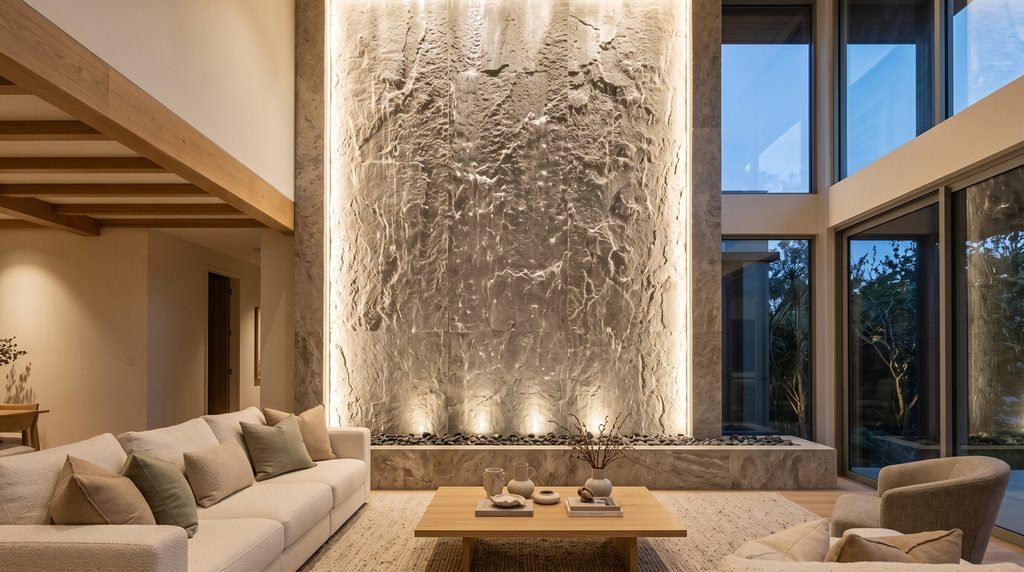
If you want a dramatic centerpiece, a floor-to-ceiling backlit fountain wall can transform your living room into a refined architectural space. Its height draws the eye upward, creates a sense of scale, and introduces movement into an otherwise static interior.
This design works especially well behind a sofa, beside a media wall, or in a double-height living area. A tall stone, glass, or porcelain panel provides the backdrop, while concealed LED strips illuminate the water from the edges or behind selected sections.
For an elegant modern home, choose warm beige stone with soft white lighting. If your living room has a darker color palette, charcoal stone combined with subtle neutral LEDs can produce a more dramatic effect. The lighting should enhance the water rather than compete with other fixtures in the room.
The surrounding furniture also matters. A low-profile sofa, a simple coffee table, and understated decorative accessories allow the fountain wall to remain the primary focal point. Avoid placing delicate electronics or moisture-sensitive artwork immediately beside the feature.
Practical planning considerations:
- Confirm that the floor can support the filled reservoir and equipment.
- Plan waterproofing before installing wall finishes or flooring.
- Use a quiet pump suitable for an indoor living environment.
- Provide accessible plumbing and electrical connections.
- Include ventilation where needed to manage humidity.
For smaller homes, you do not necessarily need a full-height installation. A medium-sized vertical fountain panel can create a similar visual effect while requiring less water, fewer materials, and a smaller reservoir.
The result is a feature that combines decorative lighting, gentle movement, and architectural character in one installation.
4. Backlit Fountain Wall with a Floating Pebble Basin

A fountain wall with a pebble basin combines the soothing appearance of flowing water with the organic texture of natural stones. It is an excellent option for homeowners who want their interiors to feel peaceful, grounded, and inspired by nature.
The wall can feature slate, textured concrete, or a neutral stone panel, while a shallow basin at the bottom collects the water. Smooth river pebbles arranged inside the basin soften the transition between the vertical wall and the floor. Concealed LEDs create a gentle glow that reflects across the water and highlights the stones.
For a Zen-inspired setting, use natural gray pebbles, a charcoal stone backdrop, and warm-white lighting. Add a small indoor tree or leafy plant nearby to reinforce the natural atmosphere. In a minimalist home, keep the basin simple and avoid mixing too many stone colors.
This design is particularly suitable for indoor gardens, meditation corners, covered patios, and quiet lounge areas. It can also work in a spacious entrance where guests are greeted by the subtle sound of flowing water.
Styling ideas to consider:
- Arrange pebbles in a restrained, natural-looking pattern.
- Use concealed lighting beneath the basin’s lip for a floating effect.
- Choose a gentle water flow to avoid splashing onto nearby flooring.
- Add moisture-tolerant plants at a safe distance from electrical components.
- Keep decorative objects away from the water’s collection area.
Although pebbles are a simple decorative addition, they should not obstruct pump intakes or maintenance access. Select smooth stones that are suitable for water features, and make sure the basin can be cleaned easily.
The combination of natural textures and soft illumination makes this design especially appealing for anyone seeking a peaceful, spa-like atmosphere at home.
5. Outdoor Backlit Fountain Wall for a Modern Patio
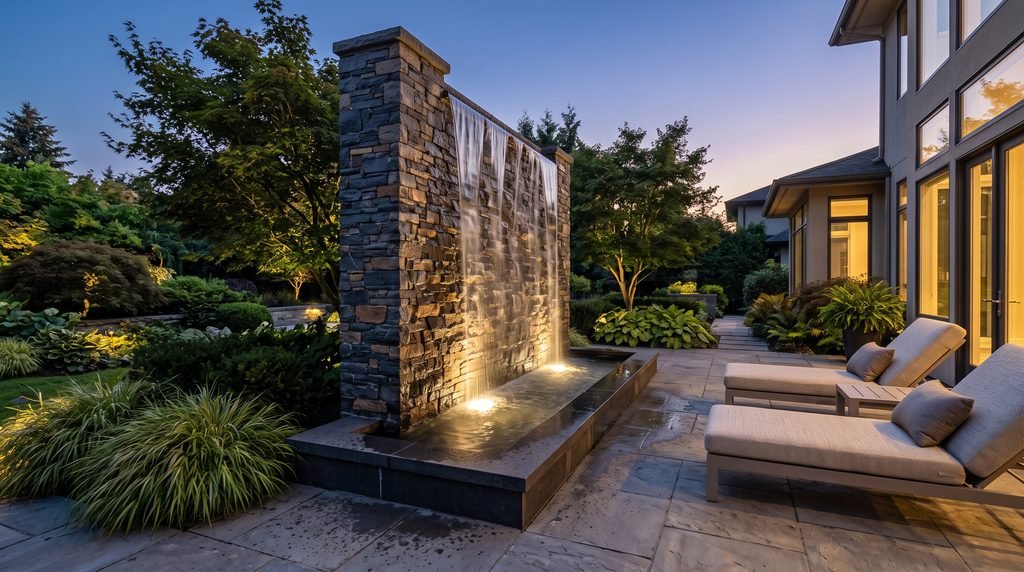
An outdoor backlit fountain wall can turn a patio, courtyard, or garden seating area into a beautiful evening retreat. During daylight, the water feature introduces movement and texture. After sunset, concealed LED lighting transforms it into a glowing architectural centerpiece.
For a modern patio, consider a textured stone wall with water cascading into a narrow basin. Position warm LED strips behind recessed side channels or beneath the top ledge to create a soft halo around the flowing water. The lighting should complement the surrounding landscape rather than overpower it.
Materials should be chosen according to the local climate. Porcelain, suitable natural stone, and exterior-rated metal details can work well when installed correctly. Any exposed lighting, wiring, and pump equipment must be rated for outdoor conditions and protected from water ingress.
Surrounding the fountain with ornamental grasses, evergreen shrubs, or carefully positioned planters can soften its geometric lines. A pair of comfortable outdoor chairs and subtle landscape lighting will help establish a relaxing atmosphere.
Important outdoor design tips:
- Install a stable, waterproof foundation and drainage system.
- Use outdoor-rated LEDs, electrical enclosures, and suitable protective devices.
- Protect the pump and plumbing against weather-related damage.
- Consider splash direction before positioning furniture or walkways.
- Plan access for seasonal cleaning and equipment servicing.
A fountain wall can also provide a visual backdrop for an outdoor dining area. However, its scale should suit the patio. A slim wall feature may be more effective in a small courtyard than an oversized structure that dominates the available space.
With careful placement, an outdoor water wall can extend the visual appeal of your home into the garden and make evening gatherings feel more special.
6. Minimalist Black Fountain Wall with Warm LED Strips

For a bold and sophisticated look, consider a black fountain wall illuminated by warm LED strips. The dark background creates strong contrast with the moving water, allowing highlights and reflections to become the main decorative elements.
Black slate, dark porcelain, or a suitable textured composite panel can provide the backdrop. A narrow strip of warm light along each vertical edge creates a defined silhouette, while concealed lighting near the basin emphasizes the water’s movement. The overall effect is dramatic without needing elaborate ornamentation.
This design works beautifully in contemporary living rooms, modern entryways, home lounges, and covered outdoor entertainment spaces. It is especially effective against light-colored walls or alongside natural oak, cream upholstery, and brushed-metal accents.
For a refined result, keep the surrounding design simple. A single sculptural plant, a streamlined bench, or a small arrangement of neutral accessories is usually enough. Too many decorative elements can distract from the striking contrast between the dark surface and illuminated water.
Ways to elevate the design:
- Choose a matte or lightly textured black finish to control glare.
- Use warm-white LEDs rather than excessively bright lighting.
- Install dimmable lighting where compatible equipment is available.
- Consider a narrow, continuous water sheet for a clean architectural effect.
- Select a basin finish that coordinates with the wall rather than competing with it.
Dark surfaces can make mineral deposits and dust more noticeable, so maintenance should be part of the design plan. Lighting should also be positioned carefully to prevent harsh reflections from nearby windows or glossy furniture.
If you want a fountain wall that feels contemporary, elegant, and slightly dramatic, a black finish with restrained LED illumination is a particularly versatile choice.
7. Indoor Garden Fountain Wall with Soft Green Lighting
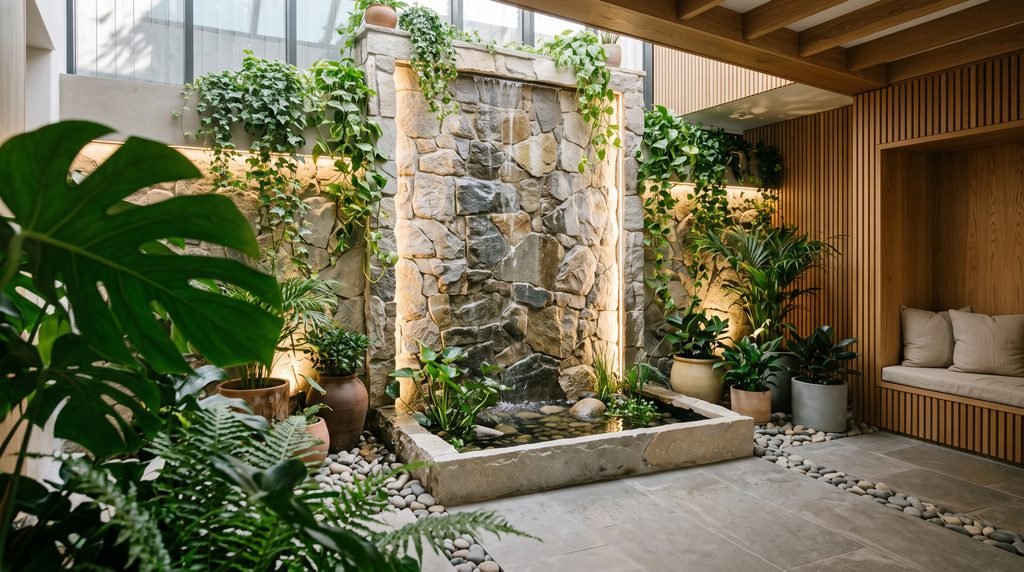
Combining a backlit fountain wall with indoor greenery creates a fresh, nature-inspired feature that brings together water, plants, and architectural materials. This approach is ideal for homeowners who want to create a small indoor garden without filling the entire room with pots and planters.
Start with a stone or textured waterproof panel and a compact water collection basin. Position moisture-tolerant plants nearby, or use a properly designed integrated planting system if you want greenery to form part of the wall itself. Concealed lighting can highlight the flowing water while providing a soft glow around the surrounding foliage.
Warm-white lighting is usually the most versatile choice for residential interiors. If you prefer a green accent, use it sparingly to emphasize selected architectural details rather than bathing the entire room in saturated green light. For plants that require supplemental illumination, use suitable horticultural lighting rather than assuming decorative LEDs will support healthy growth.
This design can work in a sunroom, indoor courtyard, conservatory, or spacious hallway. It also complements natural wood, stone flooring, woven textures, and neutral furniture.
Tips for a balanced indoor garden feature:
- Choose plants according to the available daylight and humidity.
- Keep plant containers separate from electrical components.
- Prevent water from splashing onto walls, flooring, or furniture.
- Use a reliable waterproofing system behind the fountain.
- Maintain sufficient access for cleaning both the basin and planting area.
An integrated green wall requires additional planning because plant roots, irrigation, drainage, and humidity can complicate maintenance. For an easier alternative, place several attractive planters beside the fountain instead of installing living greenery directly into the structure.
The result is a calming focal point that introduces natural textures and gentle movement while keeping the overall room design uncluttered.
8. Backlit Fountain Wall with Color-Changing LED Lighting

If you enjoy flexible lighting and a more expressive design, a color-changing LED fountain wall offers an opportunity to change the atmosphere of a room with a simple adjustment. Depending on the lighting system, you can switch between cool blue, turquoise, purple, soft pink, and warm white to suit different occasions.
A glass panel, dark stone surface, or smooth architectural wall works particularly well with this approach. Concealed LEDs placed behind the panel or around the edges illuminate the flowing water, creating changing reflections across the surface. For everyday use, a soft white setting can keep the fountain elegant and understated, while colored lighting can introduce a more playful mood for gatherings.
In a living room, a gentle blue setting can create a cool contemporary effect. Turquoise may complement a coastal-inspired interior, while purple or pink can add a decorative accent to an entertainment space. For a premium appearance, avoid rapidly changing colors or excessive brightness unless the room is specifically designed for a dramatic lighting display.
How to use color-changing lighting effectively:
- Choose a system with adjustable brightness and reliable color control.
- Check that the LEDs are suitable for the fountain’s wet environment.
- Use slow transitions or a single color for a calmer appearance.
- Make sure the light source is concealed to avoid distracting glare.
- Keep wiring, controllers, and power supplies accessible for maintenance.
Smart lighting can provide additional convenience if the equipment is compatible with your home automation system. However, the fountain pump and lighting should be designed as a coordinated installation, with appropriate electrical protection and clear separation between wet and dry components.
A color-changing fountain wall is particularly suitable for modern lounges, entertainment rooms, contemporary entrances, and covered outdoor seating areas. Its greatest advantage is flexibility: the same feature can feel serene, dramatic, or festive depending on how the lighting is configured.
How to Choose the Best LED Lighting for a Fountain Wall
The right lighting can make the difference between a fountain wall that looks flat and one that feels like a carefully designed architectural feature. Before selecting the LEDs, consider the material, water flow, installation location, and mood you want to create.
Warm white, cool white, or colored LEDs?
Warm-white lighting creates a welcoming glow and works especially well with travertine, beige stone, wood, and neutral interiors. Cool-white lighting produces a crisp, contemporary effect that can suit glass and polished surfaces. Blue and turquoise lighting emphasize the association with water, while RGB systems allow several colors to be selected as desired.
For a timeless residential design, warm white is a strong starting point. Colored LEDs are best treated as an additional option rather than a requirement.
Where should the LEDs be positioned?
LED strips can be concealed along the top, sides, or bottom of the fountain wall. Side lighting highlights vertical movement, while lighting behind translucent panels can create a glowing surface. Under-basin lighting emphasizes the collection area and can make the structure appear lighter.
The correct placement depends on the wall material and how the water travels. Always test the lighting arrangement before final installation where practical.
What about waterproofing and electrical safety?
Fountain walls combine water, electricity, and often stone or glass surfaces, so professional installation is important. Use appropriately rated lighting and electrical equipment, suitable low-voltage systems where specified, and the required protective devices. Electrical work should follow local regulations and be completed by a qualified professional.
The fountain also needs a properly waterproofed substrate, a compatible pump, accessible plumbing, and drainage provisions. These details are essential for preventing leaks and protecting nearby walls and flooring.
Maintenance Tips for a Beautiful Backlit Fountain Wall
Even a well-designed fountain wall requires regular care. Mineral deposits, dust, algae, and debris can affect water clarity and reduce the visual impact of the lighting.
- Clean the surface regularly: Use cleaning products suitable for the particular stone, glass, or other finish.
- Check water levels: Keep the reservoir filled to the manufacturer’s recommended level so the pump does not run dry.
- Inspect the pump: Remove debris and follow the manufacturer’s maintenance schedule.
- Monitor water quality: Use appropriate water treatment and clean the basin as needed.
- Check the lighting: Inspect seals, connections, and illumination for signs of moisture damage or failure.
- Watch for leaks: Address damp patches, unusual water loss, or changes in water flow promptly.
Hard water can leave white mineral deposits on glass and stone. Depending on the installation, filtered or otherwise appropriately treated water may reduce buildup. Always follow the pump and fountain manufacturer’s guidance when selecting water treatments.
For indoor installations, monitor humidity and make sure the room has suitable ventilation. A properly designed fountain should not continually splash water onto surrounding surfaces or create persistent dampness.
Final Thoughts
Backlit fountain wall ideas with LED lighting offer a creative way to combine architecture, water, and illumination in one beautiful feature. From natural stone walls and sleek glass panels to pebble basins, indoor gardens, and color-changing designs, each approach can create a different atmosphere while making vertical space more visually interesting.
The best design depends on your home’s style, the available space, your maintenance preferences, and the mood you want to establish. Warm-white lighting and natural stone can create a timeless, luxurious effect, while glass and cool lighting offer a more contemporary appearance. Outdoor water walls bring elegance to patios and courtyards, and plant-inspired designs introduce a softer, nature-focused character.
Before beginning installation, prioritize waterproofing, safe electrical design, pump accessibility, and proper drainage. These practical details help protect your home and make long-term maintenance easier.
With the right materials, carefully concealed LEDs, and a balanced water flow, a backlit fountain wall can become a distinctive focal point that brings movement, atmosphere, and lasting visual appeal to your home.