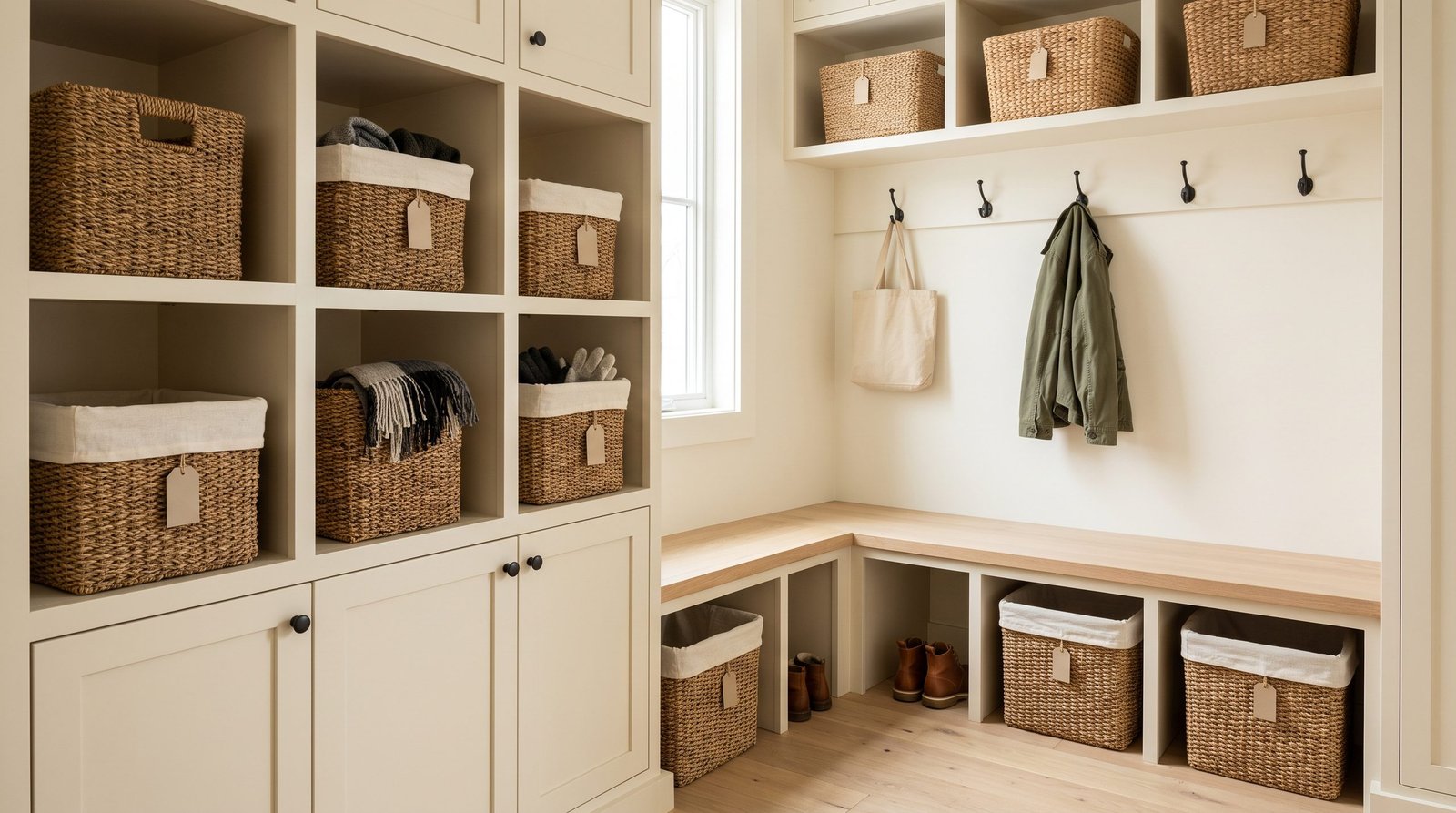
15 Mudroom Organization Ideas for a Stylish, Clutter-Free Home
A well-organized mudroom can make everyday life easier while giving your home a beautiful and welcoming first impression. Whether you have a spacious entryway, a small corner near the back door, or a dedicated mudroom between your garage and kitchen, the right storage solutions can help keep shoes, coats, bags, and outdoor essentials neatly arranged.
Mudrooms are hardworking spaces. They collect everything that comes through the door, from muddy boots and raincoats to school backpacks, shopping bags, pet accessories, and seasonal clothing. Without a practical organization system, even a beautiful home can quickly develop an untidy entrance. Fortunately, you do not need a large room or an expensive renovation to create a functional mudroom.
The secret is to combine attractive design with storage that suits your household’s daily routine. Built-in lockers, wooden benches, wall-mounted hooks, shoe cabinets, woven baskets, and labeled storage containers can all make a difference. When these elements are coordinated with warm colors, natural materials, and thoughtful lighting, your mudroom can feel like a natural extension of the rest of your home.
In this guide, we will explore 15 mudroom organization ideas that balance style, comfort, and functionality. From compact entryway solutions to custom cabinetry and family-friendly storage, these ideas will help you create a tidy, inviting space that works beautifully throughout the year.
1. Create a Mudroom With Built-In Lockers
Stylish Built-In Mudroom Lockers
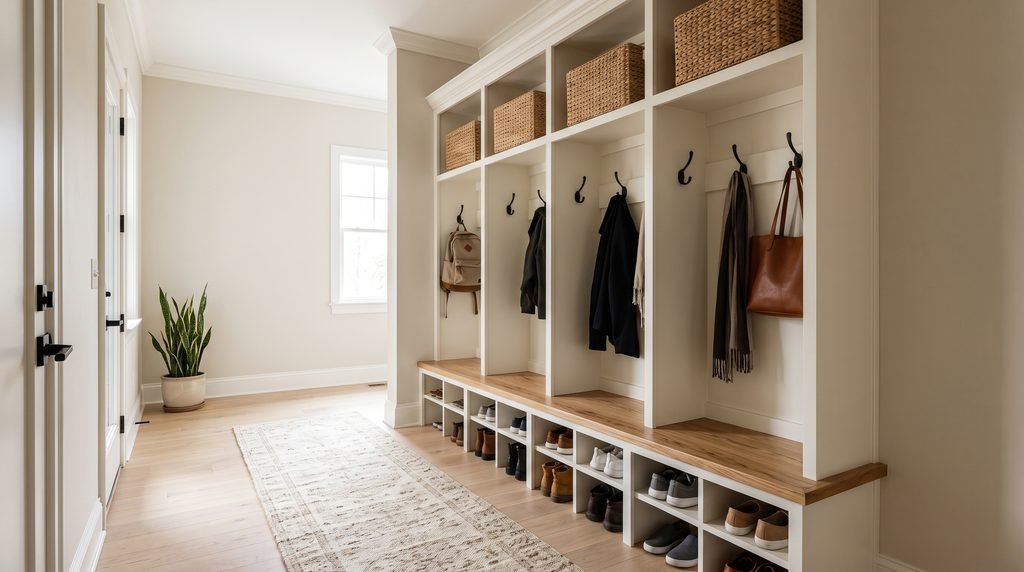
Built-in lockers are one of the most effective ways to organize a busy mudroom. They provide designated storage for coats, bags, shoes, and personal belongings while creating a neat, coordinated appearance. Instead of allowing everyday items to spread across the room, each family member can have an individual storage section.
For a timeless look, consider warm white cabinetry paired with natural oak benches and simple black or brushed-metal hooks. If you prefer a softer, more contemporary atmosphere, muted sage green, warm taupe, or creamy beige cabinetry can add character without overwhelming the space.
Each locker can include an upper shelf for hats and seasonal accessories, a row of hooks for jackets and bags, and a lower compartment for shoes. A small basket inside each section can hold gloves, scarves, and other items that are easily misplaced.
The design should reflect how your household uses the entrance. Children may need lower hooks and easily accessible baskets, while adults may benefit from taller hanging spaces and concealed storage for work bags.
Built-in lockers are especially useful for families because they establish a consistent place for everyday belongings. When everyone knows where their items belong, tidying becomes quicker and the mudroom is less likely to become cluttered.
If custom cabinetry is outside your budget, you can achieve a similar effect with freestanding cubbies, wall hooks, and matching storage baskets. A consistent color palette will help separate pieces look like part of one thoughtful design.
2. Add a Comfortable Mudroom Bench With Shoe Storage
Mudroom Bench With Integrated Shoe Storage
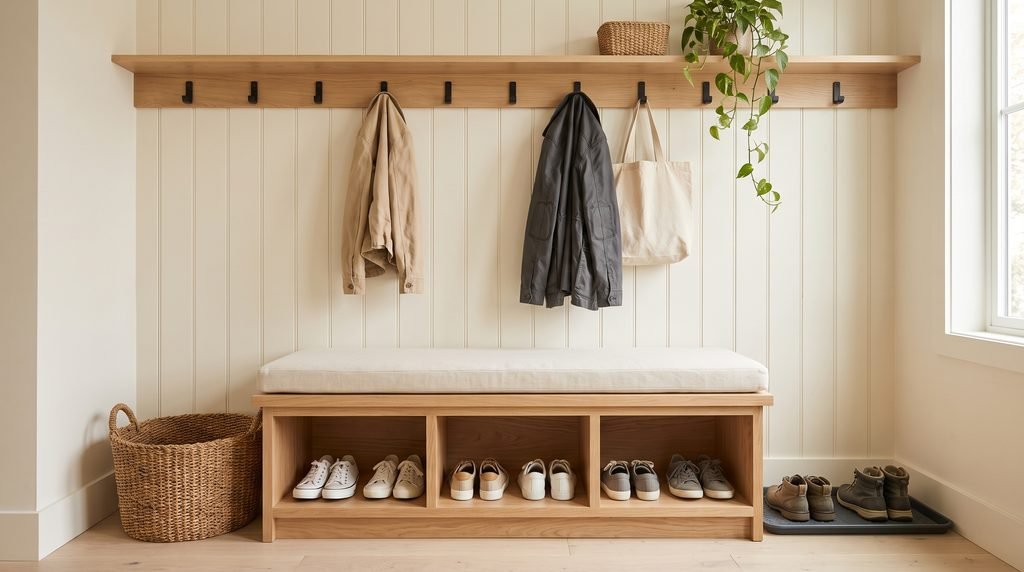
A mudroom bench combines comfort and practicality in one useful feature. It gives everyone a place to sit while putting on or removing shoes, and the area beneath the seat can provide valuable storage for everyday footwear.
Choose a wooden bench for a natural, welcoming appearance, or consider a built-in bench with cabinetry that matches the surrounding walls. A padded seat in a durable neutral fabric can soften the design and make the space more comfortable.
Open shoe compartments beneath the bench work well for frequently worn sneakers, slippers, and casual shoes. For a cleaner appearance, use pull-out drawers or enclosed cabinets to conceal footwear when it is not being used.
The number and size of compartments should reflect the household’s needs. A family with several children may require more storage than a couple living in a small apartment. Leave enough room for shoes to fit comfortably without becoming tightly packed.
Add a few practical accessories, such as a small cushion, a washable runner, and a basket for shoe-care products. Keep decorative items limited so that the bench remains easy to use.
For muddy or wet footwear, use a removable, water-resistant tray rather than placing damp shoes directly on wooden surfaces. Allow wet items to dry properly and choose finishes suitable for the conditions.
A thoughtfully designed bench creates an organized transition between outdoors and indoors while making the daily routine more comfortable.
3. Use Wall-Mounted Hooks for Coats and Bags
Organized Mudroom Wall With Stylish Hooks
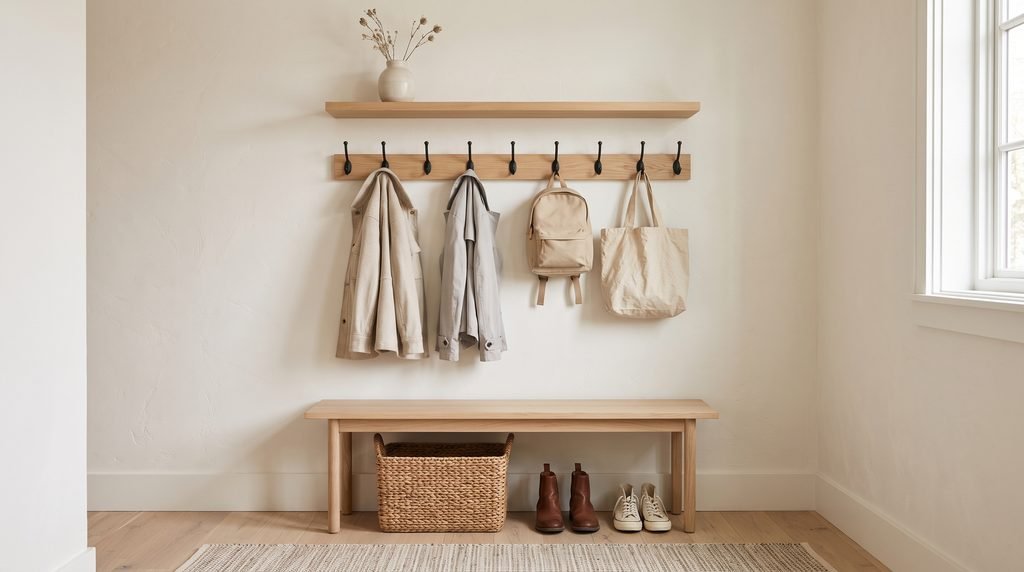
Wall-mounted hooks offer a simple, affordable way to increase mudroom storage without using valuable floor space. They are particularly useful in narrow entryways, small mudrooms, and homes where a full locker system is impractical.
Install a row of hooks along a wall or above a bench to keep jackets, backpacks, handbags, and reusable shopping bags accessible. Wood pegs can complement Scandinavian interiors, while matte black or brushed-brass hooks work well in contemporary spaces.
Think carefully about placement. Everyday items should hang at a convenient height, and children should have lower hooks they can reach independently. Higher hooks can be reserved for adult coats, guest belongings, or seasonal accessories.
Spacing is important because overcrowded hooks make the room look untidy and can cause jackets and bags to overlap. Install enough hooks for the number of people who regularly use the space, with a few extras for visitors.
A wooden backboard or painted panel behind the hooks can make the arrangement look more intentional. For example, a warm oak rail against an ivory wall creates subtle contrast without adding visual clutter.
If you want to store smaller items, combine the hooks with a narrow shelf above them. The shelf can hold hats or lightweight baskets, provided it is securely installed and does not obstruct movement.
Hooks are also easy to update as your needs change. Replacing basic hardware with a more coordinated design can refresh the mudroom without requiring a complete renovation.
4. Organize Shoes With Dedicated Storage Zones
Shoes are among the biggest sources of mudroom clutter, particularly in households where family members wear different footwear for work, school, exercise, and outdoor activities.
Creating dedicated shoe-storage zones helps keep the entrance tidy and prevents footwear from spreading into neighboring rooms. Start by identifying the shoes that are used daily and place them in the most accessible compartments. Seasonal shoes and occasional footwear can be stored higher up or inside a separate cabinet.
Open cubbies provide quick access and encourage family members to return shoes to the correct place. Closed shoe cabinets create a cleaner appearance, especially in an entryway that is visible from the living room or kitchen.
For a practical arrangement, consider separate sections for adult footwear, children’s shoes, outdoor boots, and guest slippers. Use removable trays for muddy shoes and leave sufficient room for larger boots to stand upright.
A narrow vertical shoe cabinet may be useful in a small mudroom where floor space is limited. In a larger room, a combination of open shelving and closed cabinetry can balance convenience with visual simplicity.
Avoid packing shoes too tightly together. Good organization should make it easy to retrieve the right pair without moving several others. Regularly remove footwear that no longer fits or is rarely used.
A well-planned shoe system makes the mudroom easier to clean, improves circulation, and creates a calmer entrance for everyone who comes through the door.
5. Introduce Woven Baskets for Everyday Essentials
Woven Baskets for Mudroom Organization
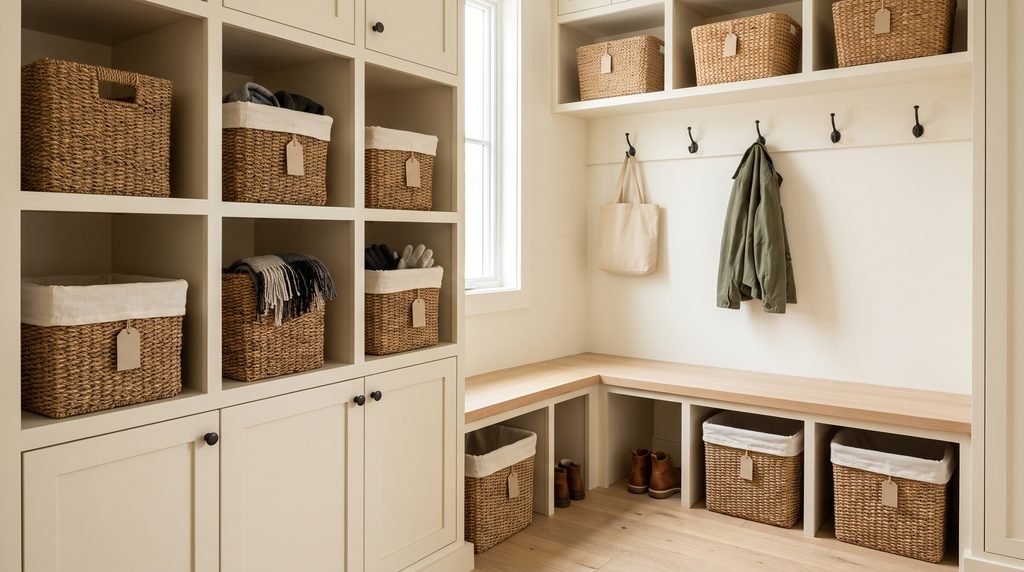
Woven baskets bring warmth and texture to a mudroom while keeping small belongings grouped together. They are ideal for storing gloves, scarves, hats, dog-walking accessories, reusable bags, and other items that might otherwise end up scattered across a bench or shelf.
Natural wicker, seagrass, and other woven finishes pair beautifully with light wood, cream cabinetry, and neutral walls. If your home has a modern interior, choose baskets with simple shapes and consistent colors for a clean, coordinated appearance.
Place baskets inside built-in lockers, on open shelves, beneath a bench, or in lower cubbies. Assigning a specific basket to each category makes it easier to find things when leaving the house.
For family organization, use separate baskets for each person or label them by purpose. Children may find picture labels helpful, while simple written labels can suit a more minimalist design.
Choose baskets that fit the available compartments rather than buying them first and trying to arrange the furniture around them. Sturdy handles are useful when baskets need to be carried between rooms.
Consider the contents before selecting a material. Wet gloves, muddy accessories, and damp pet equipment should not be stored in enclosed natural-fiber baskets before drying. Washable containers or ventilated bins may be more appropriate for these items.
Baskets are an easy way to make open storage feel intentional. They conceal visual clutter without hiding frequently used essentials so completely that they become difficult to access.
6. Make the Most of a Small Mudroom
Small Mudroom Organization With Compact Storage

A small mudroom can still be functional and attractive when every element has a clear purpose. Rather than trying to fit full-size cabinetry into a limited area, focus on slim storage, vertical space, and furniture that performs more than one function.
A narrow bench with shoe storage, a wall-mounted hook rail, and a compact upper shelf can create a useful entry station without overwhelming the room. If floor space is particularly limited, consider a wall-mounted fold-down seat, provided it is securely installed and suitable for the intended use.
Light colors help the space feel open. Warm white walls, pale wood, and a simple neutral runner can create a bright backdrop for practical storage. Mirrors may also help reflect light and make a small entryway feel more spacious.
Vertical organization is especially valuable. Use the wall height for shelves and hooks, keeping everyday items within reach and reserving higher areas for lightweight seasonal belongings. Do not overload shelves or place heavy objects where they could fall.
A narrow cabinet can hide shoes and small accessories, while a single basket beneath the bench can collect items that need to be returned to other rooms. Avoid introducing too many containers, because excessive storage can make a small space feel crowded.
Measure the available width carefully, including the clearance needed to open doors and drawers. The entrance should remain easy to navigate when several people are using it at once.
The best small mudrooms are not those that store the most items. They are the ones that make everyday essentials easy to find while keeping the entrance clear and welcoming.
7. Create a Family Command Center
A mudroom command center helps coordinate the household’s daily schedule while keeping important information near the main entrance. It can combine a calendar, a message board, key storage, mail organization, and a few designated places for everyday essentials.
A compact wall section is often enough. Install a small calendar or noticeboard above a narrow shelf, then add hooks for keys and a tray for outgoing mail. If the mudroom already has built-in cabinetry, one open compartment can serve as the family planning area.
Keep the appearance consistent with the rest of the room. A simple wood-framed board, neutral labels, and coordinated storage accessories create a polished look without making the area feel like an office.
For families with children, the command center can include a weekly schedule, school reminders, activity lists, and a designated place for permission slips. Keep private information and sensitive documents out of public view, particularly if visitors regularly enter through the mudroom.
A small charging station may also be useful for household devices, provided cables are managed safely and the equipment is kept away from wet shoes and damp clothing.
Avoid turning the command center into another cluttered surface. Review papers regularly, remove outdated notices, and keep only the information that is currently useful.
When thoughtfully organized, this small feature can reduce morning confusion and help everyone leave the house with the items they need.
8. Add Upper Cabinets for Seasonal Storage
Mudroom With Upper Cabinets and Organized Shelving

Upper cabinets are an excellent solution for storing items that are needed occasionally but do not need to remain within easy reach. They can help keep a mudroom tidy while freeing lower compartments for daily footwear, bags, and jackets.
Use upper cabinets for seasonal accessories, spare gloves, sun hats, reusable shopping bags, and extra outdoor supplies. If your household experiences significant seasonal changes, dedicate one cabinet to winter accessories and another to warm-weather essentials.
For a cohesive design, match the cabinet fronts to the lower lockers or bench. Warm white and natural wood create a classic combination, while muted olive or soft taupe can give the room a more distinctive appearance.
Open shelving can be mixed with closed cabinets to create visual variety. Display a few attractive baskets on open shelves while keeping less attractive or rarely used items behind doors.
Pay attention to accessibility. Items that are frequently needed should not be stored so high that retrieving them becomes inconvenient or unsafe. Use a suitable step stool when necessary, and avoid placing heavy objects overhead.
Cabinet doors should open without interfering with entrance doors, hanging coats, or other storage elements. Measure carefully before installation, particularly in narrow mudrooms.
Upper storage works best when it complements rather than replaces accessible lower storage. By assigning each area a specific role, you can create an organized system that remains practical throughout the year.
9. Design a Mudroom With a Laundry Area
Combining a mudroom with a laundry area can be useful in homes where the back entrance is also the main route for outdoor clothing, sports equipment, or workwear.
If the available space allows, create separate zones for entry storage and laundry tasks. The mudroom section can hold shoes, coats, and bags, while the laundry area accommodates dirty clothes, cleaning products, and drying equipment.
A built-in countertop above front-loading machines can provide a useful surface for folding laundry. Nearby cabinets can store detergents and cleaning supplies, while a dedicated hamper keeps dirty clothing off the floor.
Choose moisture-resistant finishes and materials suitable for the room’s conditions. Good ventilation is important because wet clothing and laundry equipment can increase humidity. Any plumbing, electrical work, and appliance installation should follow local requirements.
Keep the entrance pathway clear, and avoid placing laundry baskets where they block access to the door or mudroom bench. Separate wet outdoor clothing from clean laundry to maintain a hygienic workflow.
For a polished appearance, coordinate cabinet colors, handles, and storage containers throughout both zones. Warm white cabinetry, pale wood accents, and a simple tiled floor can make the combination feel like one thoughtfully designed room.
A mudroom-laundry combination can be particularly effective in busy households because it creates a convenient place to manage outdoor mess before it spreads throughout the home.
10. Use Durable Flooring and Easy-Clean Surfaces
Mudroom organization is not only about where items are stored. The materials used on floors, walls, and work surfaces also affect how easy the space is to maintain.
Flooring should be appropriate for the amount of moisture, dirt, and foot traffic the entrance receives. Porcelain tile, suitable natural stone, and other durable flooring options can work well when correctly installed and maintained. Choose a finish with appropriate slip resistance for the conditions.
A washable runner can add warmth and help collect everyday dirt, but it should have a suitable non-slip backing and be easy to clean. Place a removable tray near the entrance for wet or muddy shoes.
Wall finishes also matter. Paints and materials that can withstand routine cleaning are particularly helpful near benches, shoe storage, and coat hooks. A protective wall panel behind hanging items can help reduce scuffs.
Select storage materials with the room’s conditions in mind. Damp shoes should be allowed to dry, and wet clothing should not be packed into enclosed cupboards. Proper airflow helps prevent persistent moisture and unpleasant odors.
A practical cleaning routine will keep the room looking attractive. Sweep or vacuum regularly, wipe down high-contact surfaces, and empty shoe trays before dirt accumulates.
Choosing durable materials from the beginning can reduce maintenance and help your mudroom remain attractive even when it is used several times every day.
11. Create a Dedicated Pet Station
For households with dogs or other pets, a designated mudroom pet station can make outdoor routines much easier. It creates a convenient place to store leashes, towels, grooming supplies, and other accessories near the entrance.
A small cabinet or a set of washable bins can hold pet essentials without taking over the entire room. Wall-mounted hooks are useful for leashes and harnesses, while a lower shelf can accommodate towels and grooming products.
If space allows, include a designated area for cleaning muddy paws before pets enter the main living areas. Keep towels easily accessible and use a washable mat that can be cleaned regularly.
Pet food and treats should be stored in secure, suitable containers. Cleaning products and any potentially harmful substances must remain safely out of reach of animals and children.
For a stylish appearance, coordinate the pet station with the surrounding cabinetry. Neutral storage bins, natural wood accents, and a simple wall hook system can blend seamlessly with a premium home interior.
Consider the size and habits of your pet when planning the layout. A large dog may need more floor space, while a small pet’s accessories may fit neatly into a single drawer.
A dedicated pet station prevents outdoor equipment from becoming mixed with school bags and everyday clothing. It also makes it easier to find everything needed before heading outside.
12. Organize Mudroom Storage for Children
Children’s belongings can quickly accumulate near the entrance, especially during the school year. Backpacks, shoes, jackets, lunch bags, and sports equipment all need a designated place if the mudroom is to remain tidy.
The most effective solution is to make the storage simple enough for children to use independently. Low hooks, accessible cubbies, and open baskets allow them to put their belongings away without needing constant assistance.
Assign each child a personal locker or storage section. Use color-coded labels or small name tags to distinguish the spaces, while keeping the overall design coordinated with the rest of the home.
A bench is useful for putting on shoes, and a dedicated backpack hook prevents school bags from being dropped on the floor. A separate basket can hold sports accessories or items that need to be returned to school.
Avoid storing every item in a closed cabinet. If children cannot easily see or reach their everyday belongings, they may be more likely to leave them on the floor.
Create a simple end-of-day routine in which shoes are returned to their compartments, bags are hung up, and wet items are taken to the appropriate drying area. Consistency is often more effective than adding more storage.
A child-friendly mudroom should be durable, easy to clean, and organized around the family’s actual routine. When the system is straightforward, keeping the entrance tidy becomes a shared habit rather than a daily struggle.
13. Add a Charging Drawer and Small Essentials Station
A mudroom can be a convenient place to organize keys, sunglasses, wallets, and other small essentials that people often forget when leaving the house.
A shallow drawer or compact cabinet near the entrance can hold these items in separate compartments. Drawer dividers help prevent small belongings from becoming mixed together, while a small tray provides a place for items that need to be picked up on the way out.
If you want to include device charging, plan the arrangement carefully. A professionally installed charging drawer or cabinet may help conceal cables and reduce surface clutter, but the design must allow the equipment to operate according to the manufacturer’s ventilation and safety requirements.
Keep electronic devices away from damp shoes, wet clothing, and areas where water may collect. Do not charge devices inside enclosed furniture unless the arrangement is specifically suitable for that purpose.
A small shelf or organizer for keys can also be helpful. If several people use the entrance, give each person a consistent place for their everyday essentials.
The goal is to keep frequently used items accessible without turning the entrance into a catch-all surface. Review the drawer periodically and remove receipts, broken accessories, and objects that no longer belong there.
With a little planning, this compact organization station can make busy mornings smoother and reduce the likelihood of leaving important belongings behind.
14. Use Color and Lighting to Make the Mudroom Inviting
A functional mudroom can also be one of the most attractive spaces in your home. The right color palette, lighting, and decorative details can transform a practical entrance into a welcoming transition between outdoors and indoors.
Warm white, cream, beige, pale oak, and soft taupe create a calm foundation that works with many interior styles. Muted sage green or dusty blue can introduce color without making the space feel visually busy.
For a more contemporary look, consider a contrasting wall panel behind the hooks or a painted locker system that stands out gently against neutral walls. Keep the remaining finishes coordinated so that the room feels intentional.
Lighting is equally important. A ceiling fixture provides general illumination, while wall lights or suitable task lighting can brighten darker corners. If the mudroom has limited natural light, use a combination of appropriate light sources to avoid gloomy storage areas.
A mirror can be useful for checking your appearance before leaving the house and may help reflect available light. Choose a position that does not interfere with coat storage or circulation.
Decorative details should remain practical. A small framed print, a simple vase on a secure shelf, or a washable runner can add personality without occupying valuable storage space.
The most inviting mudrooms balance beauty with everyday usability. They feel connected to the rest of the home while being equipped to handle the mess and movement of daily life.
15. Create a Custom Mudroom Wall From Floor to Cei
Floor-to-Ceiling Custom Mudroom Storage Wall
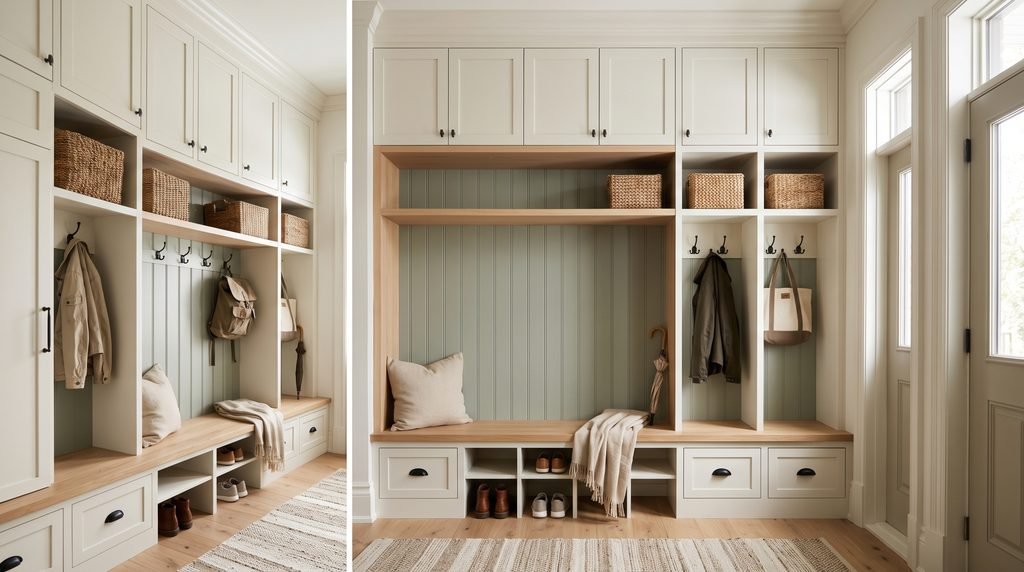
A floor-to-ceiling storage wall can turn an ordinary entrance into a highly organized, architectural feature. By combining benches, lockers, drawers, hooks, and upper cabinets into one coordinated structure, you can create storage that makes full use of the available wall space.
Begin by identifying the main storage requirements. Daily coats and bags need accessible hanging space, shoes need suitable compartments, and seasonal items can be stored in upper cabinets. If the room is shared by several family members, consider dividing the structure into individual sections.
Natural oak combined with warm white cabinetry creates a timeless premium appearance. For a more distinctive design, muted olive, mushroom, or soft charcoal cabinetry can add depth while remaining sophisticated.
Integrated lighting can make the arrangement more inviting and improve visibility in darker compartments. Choose suitable fixtures and ensure any electrical installation is safe and appropriate for the location.
The bench should provide comfortable seating without obstructing the main pathway. Drawers and doors need enough clearance to open, and the overall design should accommodate the dimensions of the entrance, including any nearby windows or door frames.
Custom cabinetry can be expensive, so consider a modular alternative if you are working with a limited budget. Matching cabinets, a separate bench, and a consistent hook rail can create a similar effect at a lower cost.
A carefully planned storage wall is particularly useful for families and homes where the mudroom is the main entry point. It can reduce visual clutter, improve organization, and give the entrance a polished, built-in appearance.
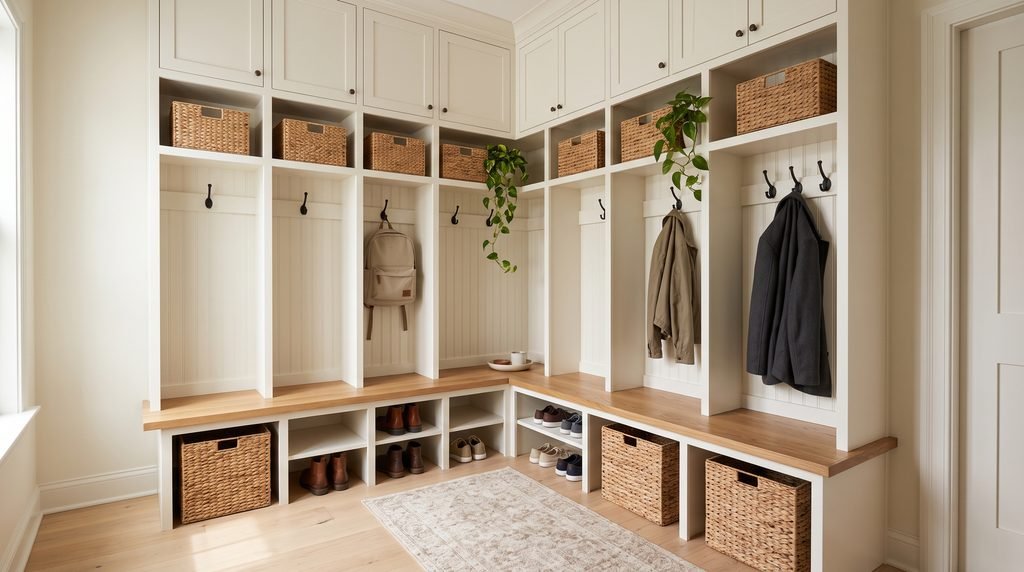
Beautifully Organized Mudroom With Bench, Lockers, Baskets, and Natural Wood
How to Keep Your Mudroom Organized Every Day
Even the best storage system needs a simple maintenance routine. A few consistent habits can prevent clutter from building up and help the room remain attractive.
Give every item a home. Assign specific locations for shoes, coats, bags, keys, and outdoor accessories. Items are easier to put away when their storage location is obvious.
Keep everyday items accessible. Frequently used belongings should be stored at convenient heights. Reserve upper shelves and harder-to-reach cabinets for occasional or seasonal items.
Remove unnecessary belongings regularly. Check for shoes that no longer fit, unused accessories, and damaged items that occupy valuable space.
Deal with wet items promptly. Allow muddy shoes and damp clothing to dry in an appropriate area before placing them in enclosed storage.
Use baskets and trays strategically. These containers are helpful when they group similar belongings, but too many baskets can make a mudroom feel crowded. Choose a small number that serve clear purposes.
Create a quick evening reset. Spend a few minutes returning shoes, hanging coats, and preparing bags for the next day. A short daily routine is usually easier to maintain than an occasional major cleanup.
Adjust storage as your needs change. Seasonal weather, school schedules, and household routines can change the items you need near the entrance. Review the arrangement occasionally and make small adjustments when necessary.
Final Thoughts
Mudroom organization ideas can help transform one of the busiest areas of your home into a practical, attractive, and welcoming space. Whether you prefer built-in lockers, a wooden bench with shoe storage, wall-mounted hooks, woven baskets, or a custom floor-to-ceiling storage wall, the right combination of features can make everyday routines considerably easier.
The best mudroom design begins with understanding how your household uses the entrance. Families may benefit from individual lockers and child-friendly storage, while smaller homes may need slim cabinets, vertical shelves, and multifunctional furniture. Homes with pets or laundry areas may require additional zones for wet clothing, towels, and outdoor accessories.
For a premium Houxii-inspired look, combine warm neutral colors, natural wood, durable finishes, soft lighting, and a few carefully chosen decorative details. Keep the design visually consistent, but prioritize accessible storage and easy cleaning over unnecessary decoration.
Most importantly, make the organization system simple enough to maintain. When every coat, pair of shoes, backpack, and small accessory has a designated place, clutter becomes easier to control.
With thoughtful planning and a few practical changes, even a small entryway can become an organized mudroom that supports your daily routine while adding warmth and style to your home.