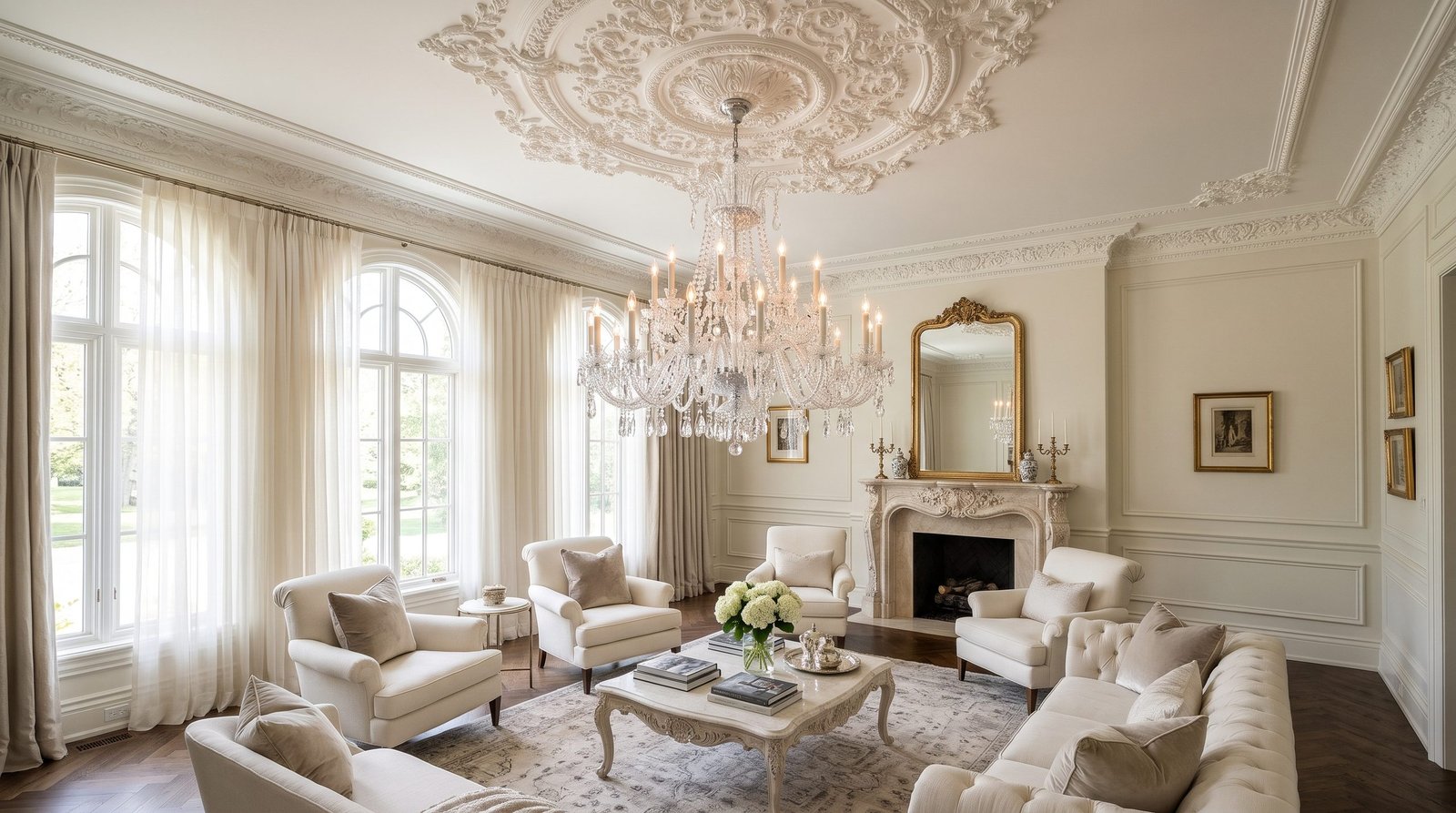
21 Decorative Ceiling Medallion Ideas to Elevate Your Home
A beautiful ceiling can transform the entire atmosphere of a room, and decorative ceiling medallions are one of the most elegant ways to add character overhead. These architectural accents surround a chandelier or ceiling light, drawing attention upward and making a room feel more polished, intentional, and complete.
Traditional ceiling medallions are often associated with grand historic homes, ornate plasterwork, and classic chandeliers. Today, however, they are available in styles that suit almost every interior, from minimalist apartments and Scandinavian living rooms to luxurious bedrooms and modern dining spaces. A simple white medallion can create subtle architectural interest, while a sculptural or intricately patterned design can become a striking focal point.
The best part is that you do not need a large home or an elaborate interior to enjoy this decorative feature. With the right size, finish, and lighting combination, a ceiling medallion can enhance a small bedroom, add elegance to an entryway, or give a dining room a more sophisticated appearance.
In this Houxii guide, we will explore 21 decorative ceiling medallion ideas, practical styling tips, and helpful ways to choose a design that complements your home.
What Is a Decorative Ceiling Medallion?
A decorative ceiling medallion is an architectural ornament installed around a ceiling light, chandelier, or pendant fixture. It is typically circular, although oval, square, and geometric versions are also available. Traditional designs often feature floral motifs, carved details, or raised patterns, while contemporary styles may use smooth surfaces, clean lines, or subtle geometric textures.
Ceiling medallions can be made from materials such as polyurethane, lightweight resin, plaster, wood, or other decorative composites. The appropriate choice depends on the desired appearance, installation requirements, and compatibility with the existing ceiling and light fixture.
Beyond their decorative appeal, medallions can help visually connect a light fixture with the surrounding architecture. They provide a finished transition between the fixture and ceiling, making the overall arrangement appear more deliberate.
Before choosing one, consider three important factors: the ceiling height, the size of the room, and the proportions of the light fixture. A medallion should complement the chandelier rather than overwhelm it.
1. Classic White Ceiling Medallion With a Chandelier
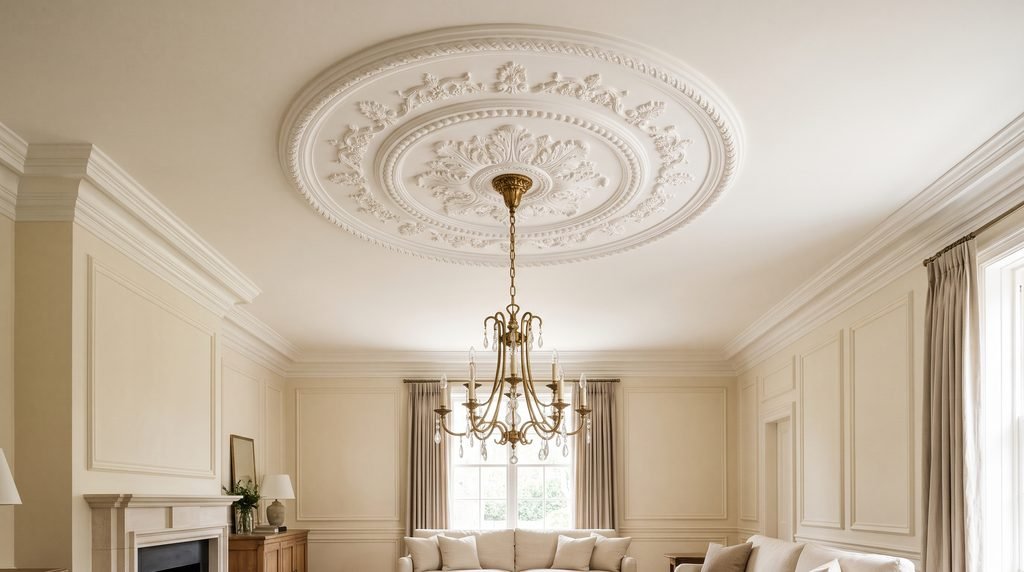
A classic white ceiling medallion is a timeless choice for traditional, transitional, and elegant modern interiors. Its subtle color allows the raised decorative pattern to stand out through shadows rather than strong contrast.
Choose a circular medallion with delicate floral details, concentric rings, or a gently sculpted border. Pair it with a traditional chandelier featuring brass arms, clear glass shades, or crystal accents. The white finish keeps the ceiling bright while allowing the lighting fixture to remain the main focal point.
This combination works particularly well in formal living rooms, dining rooms, and bedrooms with decorative wall molding. It also complements white ceilings, pale walls, and natural wood furniture.
For a cohesive look, repeat a few classic details elsewhere in the room, such as framed artwork, elegant curtains, or refined furniture profiles. Avoid introducing too many ornate elements if you prefer a contemporary atmosphere.
A white medallion is especially versatile because it can remain in place even when you replace the chandelier. Its neutral appearance makes future decorating updates easier.
2. Modern Minimalist Ceiling Medallion
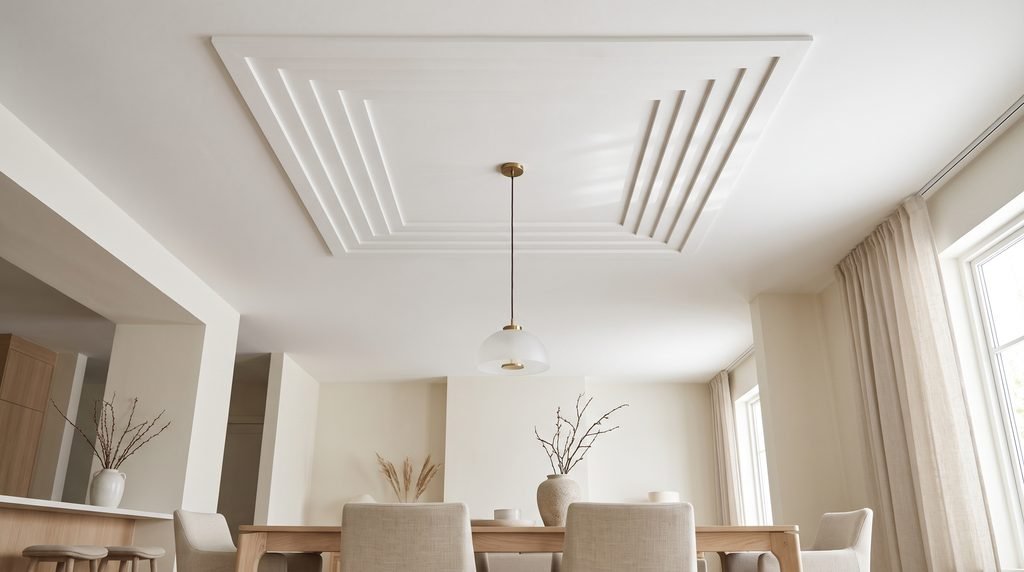
If you love clean interiors, a minimalist ceiling medallion offers architectural interest without unnecessary ornamentation. Instead of intricate flowers or elaborate carvings, this style features smooth surfaces, simple circular shapes, and understated edges.
Choose a shallow-profile medallion in white or a shade that closely matches your ceiling. Pair it with a contemporary pendant, a simple globe light, or a streamlined metal fixture. The combination creates a subtle focal point without distracting from the rest of the room.
Minimalist medallions work especially well in modern apartments, Scandinavian interiors, and organic-modern homes. They complement pale oak flooring, neutral upholstery, simple furniture, and uncluttered spaces.
For the best effect, pay attention to proportions. A medallion that is too large may look out of place above a small pendant, while one that is too small may disappear visually. Measure the fixture and surrounding ceiling area before making a decision.
This style proves that decorative ceiling details do not have to be elaborate to make a room feel thoughtfully designed.
3. Ornate Ceiling Medallion for Traditional Homes
Ornate ceiling medallions bring a sense of history and craftsmanship to traditional interiors. Their raised floral patterns, decorative scrolls, and layered borders create visual depth that pairs beautifully with classic chandeliers.
Consider installing an intricate medallion in a formal dining room, an elegant sitting room, or a bedroom with traditional architectural details. Combine it with a chandelier featuring curved metal arms, glass shades, or crystal elements for a cohesive appearance.
White and ivory are timeless finishes, but a carefully selected antique-gold accent can create a more dramatic effect. If you choose a metallic finish, keep other ceiling details relatively restrained so the arrangement remains elegant.
Ornate medallions look particularly attractive in rooms with high ceilings, decorative wall panels, crown molding, and tall windows. In a smaller room, a simpler version may provide the same traditional charm without making the ceiling feel crowded.
The key is to repeat the room’s architectural language. A highly decorative medallion will feel most natural when its detailing relates to the chandelier, molding, and overall style of the home.
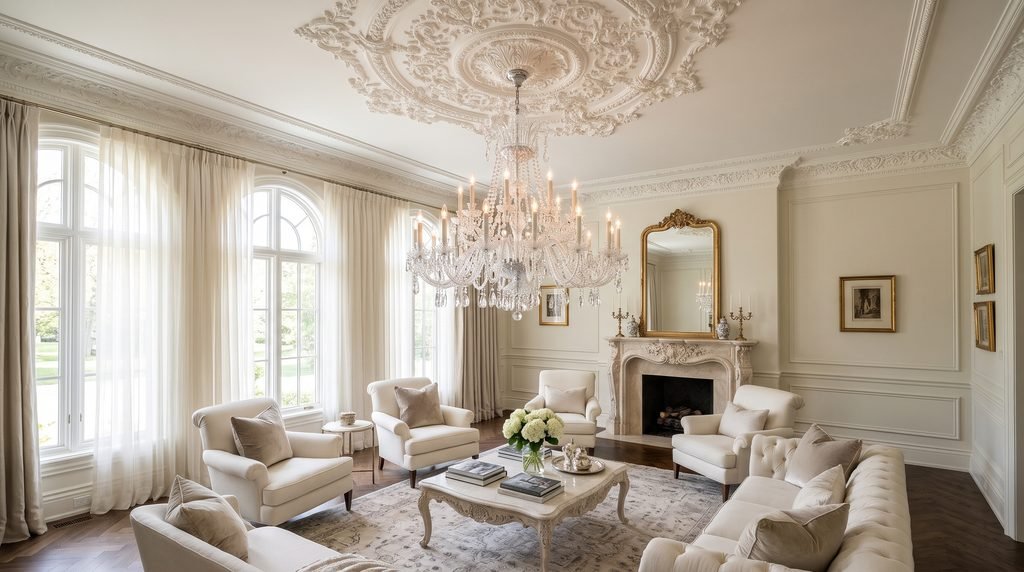
4. Ceiling Medallion With a Crystal Chandelier
A crystal chandelier and decorative ceiling medallion make a beautiful combination when you want your lighting to become a defining feature of the room. The medallion creates a decorative frame overhead, while the chandelier adds sparkle and illumination.
Choose a medallion with a raised border or delicate ornamental pattern that complements the shape of the chandelier. Round designs work well with many traditional fixtures, while larger medallions can support the visual presence of substantial chandeliers in spacious rooms.
This pairing is ideal for formal dining rooms, grand entryways, and elegant living rooms. White ceiling details create a classic appearance, while a warm metallic chandelier finish adds contrast.
Consider the ceiling height when selecting your light fixture. A chandelier needs enough clearance above tables and walkways, and the medallion should be proportioned to the fixture rather than selected independently.
To prevent the room from feeling overly formal, introduce softer elements such as linen curtains, neutral upholstery, and natural wood furniture. This balance allows the ceiling to feel luxurious while the room remains comfortable.
5. Gold-Accent Ceiling Medallion for a Luxurious Interior
A gold-accent ceiling medallion introduces warmth and sophistication without requiring a complete room makeover. Even a small amount of metallic detailing can make a ceiling light feel more decorative and visually connected to the rest of the interior.
One approach is to choose a white medallion with a subtle gold-painted border. Another is to use a plain medallion and coordinate it with a brass chandelier or pendant. The second option offers a more understated look while still creating a luxurious finish.
Gold accents work particularly well in dining rooms, bedrooms, and formal living spaces with cream walls, beige upholstery, marble surfaces, or warm wood finishes.
For a cohesive design, repeat the metallic finish in a few carefully chosen details, such as cabinet handles, picture frames, or a decorative tray. You do not need to use gold everywhere; a small number of related accents will usually feel more refined.
If you prefer a contemporary interior, choose brushed or muted brass rather than highly reflective gold. Softer metallic finishes tend to blend more naturally with modern neutral palettes.
6. Ceiling Medallion for a Modern Dining Room
A dining room is one of the most effective places to introduce a ceiling medallion because the light fixture often serves as the room’s central feature. A medallion helps define the dining area and makes the chandelier or pendant appear more intentional.
For a modern dining room, consider a smooth white medallion paired with a linear pendant, a sculptural chandelier, or a simple cluster of glass globes. This combination introduces architectural detail while preserving the clean lines of contemporary furniture.
In a more transitional space, a medallion with a subtle raised pattern can complement an elegant dining table, upholstered chairs, and understated wall molding.
Think about the relationship between the light fixture and the dining table. The fixture should be centered appropriately over the table, and the medallion should visually support its shape and scale.
Keep the surrounding ceiling relatively uncluttered. When the light fixture and medallion form a clear focal point, the dining room can feel sophisticated without needing excessive decoration.
7. Ceiling Medallion With a Contemporary Globe Pendant
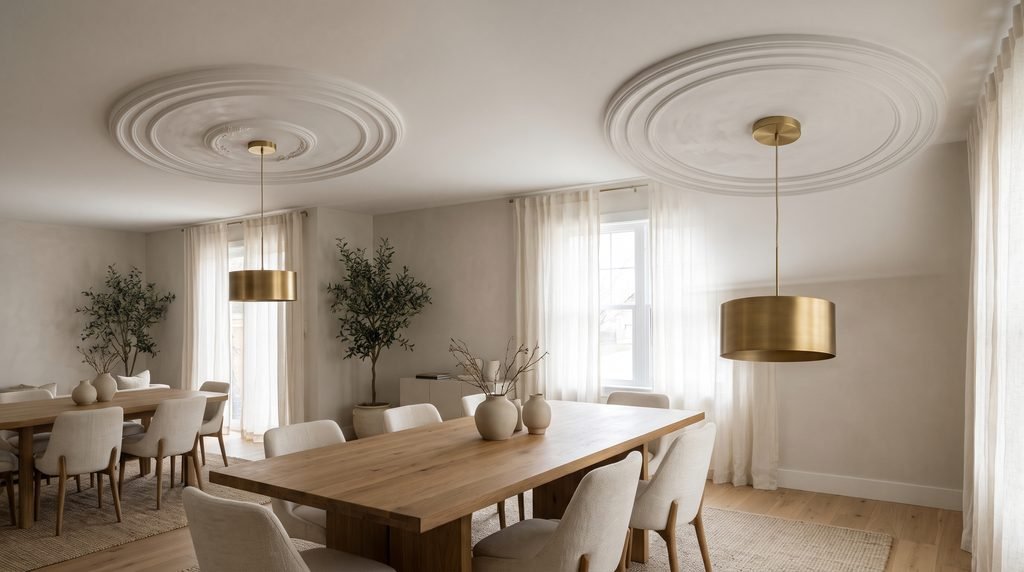
Globe pendants have a soft, rounded silhouette that works beautifully with circular ceiling medallions. The combination creates a sense of visual harmony, especially in interiors where curved furniture and simple geometric shapes are repeated throughout the space.
Choose an opal glass globe for a soft, diffused appearance or clear glass for a lighter, more delicate effect. Pair it with a smooth medallion or one featuring a simple concentric border.
This arrangement suits bedrooms, small dining areas, hallways, and modern living rooms. It can also work well in homes with Scandinavian or organic-modern styling, where simple forms and natural materials play an important role.
Use pale wood, linen, ceramic accessories, and warm neutral colors to reinforce the relaxed aesthetic. A globe pendant can also introduce contrast through its finish: black metal adds definition, while brass brings warmth.
If your room is small, a compact globe and shallow medallion can provide decorative detail without making the ceiling appear busy. Always ensure the chosen pendant provides enough light for its intended use.
8. Large Ceiling Medallion for High Ceilings
High ceilings offer an opportunity to use architectural details on a more generous scale. A large ceiling medallion can help fill the visual space around a substantial chandelier, creating a balanced arrangement that feels appropriate to the room’s proportions.
Consider this design for a spacious living room, a grand entryway, or a formal dining area with tall windows. A broad medallion with layered rings or restrained ornamental detailing can give the ceiling a finished appearance.
The most important consideration is scale. A large medallion should complement both the ceiling dimensions and the light fixture. It should not appear like an isolated decorative disk or overwhelm a relatively small chandelier.
White is a reliable choice because it preserves the brightness of the ceiling and emphasizes the relief through natural shadows. In a traditional interior, a more detailed design can echo existing crown molding or decorative wall panels.
For modern homes with high ceilings, consider a large but simple medallion. Its proportions create impact, while its understated surface keeps the overall design contemporary.
9. Small Ceiling Medallion for Compact Rooms
Small rooms can benefit from decorative ceiling medallions, provided the design remains proportionate. A compact medallion introduces a finished detail around the light fixture without overwhelming the available ceiling space.
Choose a simple circular design for a small bedroom, hallway, reading nook, or apartment dining area. Smooth white finishes and shallow profiles are particularly effective because they maintain a light, uncluttered appearance.
Pair the medallion with a small pendant, a flush-mount light, or a modest chandelier designed for compact interiors. Avoid combining a very elaborate medallion with a tiny fixture unless the surrounding architecture supports the look.
In a small room, visual consistency matters. Match the medallion to the ceiling or use a subtle finish that relates to nearby trim. This allows the detail to enhance the space rather than compete with the walls and furniture.
A carefully chosen small medallion can make a modest room feel more considered, proving that architectural decoration is not reserved for large homes.
10. Square Ceiling Medallion for Geometric Interiors

Although circular medallions are the most familiar, square and geometric designs offer an interesting alternative for contemporary interiors. Their defined edges complement linear furniture, rectangular dining tables, and architectural spaces with strong geometric features.
A square medallion with layered borders can look striking around a modern pendant or a compact chandelier. For a softer interpretation, select a design with rounded corners or a subtle geometric relief.
This style works especially well in modern dining rooms, home offices, and minimalist living spaces. It can also complement interiors featuring square wall panels, grid-pattern windows, or streamlined cabinetry.
Keep the finish simple. White or a shade matching the ceiling allows the shape to stand out through its shadow lines. If you prefer a more dramatic design, a contrasting finish may work, but consider how it will look from different angles across the room.
Before installing a geometric medallion, check that it aligns appropriately with the light fixture and room layout. A carefully centered design can create a pleasing sense of order and balance.
11. Ceiling Medallion With a Black Pendant Light
A black pendant paired with a white ceiling medallion creates a crisp, contemporary contrast. The dark fixture becomes a focal point, while the pale medallion adds a subtle architectural frame.
This combination works well in modern kitchens, dining areas, entryways, and living rooms with black accents. The pendant might feature a simple dome shade, a sculptural metal form, or a cluster of understated black elements.
Choose a medallion with a smooth surface or minimal detailing so it does not compete with the dark fixture. A classic white medallion can also work if the rest of the room includes contemporary architectural elements.
To tie the design together, repeat black in a few smaller details, such as window frames, chair legs, cabinet hardware, or picture frames. Pale wood and warm neutral textiles can soften the contrast.
This approach is ideal for homeowners who want a decorative ceiling feature without committing to a traditional interior. The medallion provides architectural character, while the black pendant keeps the arrangement modern.
12. Painted Ceiling Medallion for a Custom Look
Painting a ceiling medallion offers a creative way to personalize a room. Rather than leaving the ornament white, you can coordinate it with the ceiling, introduce a subtle tonal contrast, or select a color that complements the chandelier.
For a soft and sophisticated appearance, consider muted sage, warm gray, pale beige, or a gentle cream. These colors work well in bedrooms, living rooms, and transitional interiors with natural materials.
A medallion painted the same color as the ceiling creates a subtle, sculptural effect. A slightly contrasting shade can make its decorative relief more visible without appearing overly bold.
Before painting, check the manufacturer’s instructions to confirm that the material accepts the selected paint and primer. Prepare the surface as recommended, and use a finish suitable for the product and ceiling location.
If you want a dramatic result, a deeper color may work in a room with a carefully coordinated palette. However, it is often best to test a small sample first because lighting can change how the color appears throughout the day.
13. Ceiling Medallion in an Elegant Bedroom
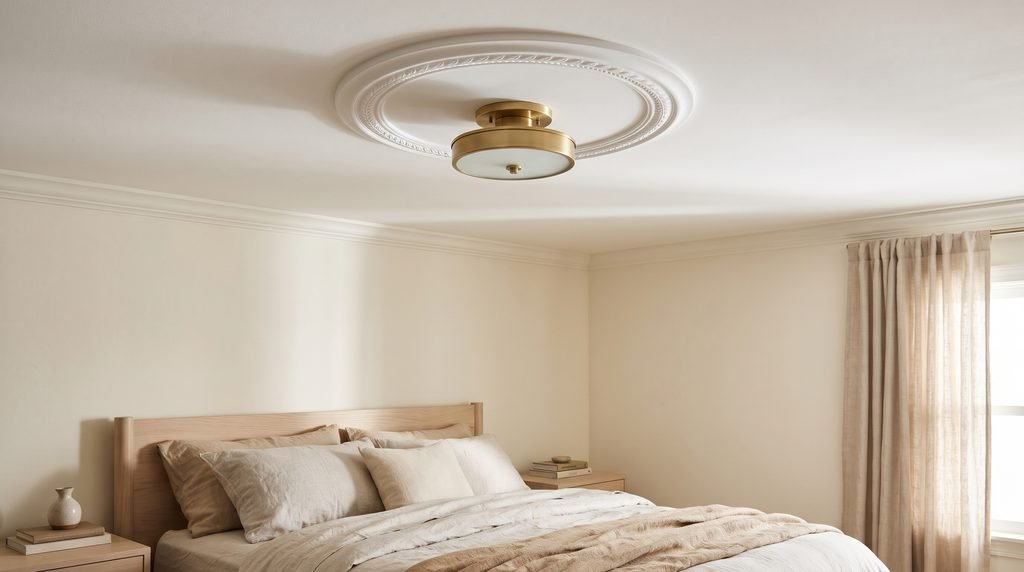
A ceiling medallion can add a refined finishing detail to a bedroom, particularly when the room already features layered textiles, elegant furniture, and a carefully chosen light fixture.
For a classic bedroom, choose a white medallion with subtle floral or concentric detailing. Pair it with a small chandelier or a graceful pendant in brass, bronze, or another finish that complements the furniture.
If your bedroom has a contemporary design, a smooth medallion with a simple globe or sculptural pendant may be a better fit. The result feels decorative without becoming overly formal.
Coordinate the ceiling feature with the room’s overall mood. Cream bedding, natural linen curtains, pale wood furniture, and soft wall colors create a restful setting that allows the medallion to contribute character without dominating the space.
Consider brightness and comfort when choosing the light fixture. A dimmable fixture or layered bedside lighting can help you create a relaxing atmosphere in the evening while keeping the ceiling feature visually appealing.
14. Ceiling Medallion for a Grand Entryway
An entryway creates the first impression of a home, and a decorative ceiling medallion can make this area feel more complete. When paired with an attractive pendant or chandelier, it draws the eye upward and introduces a sense of architectural intention.
In a traditional entryway, choose an ornate medallion with a classic chandelier. In a modern home, a smooth white medallion paired with a sculptural pendant can create a cleaner, more contemporary effect.
The size of the entryway should guide your choice. A tall foyer may accommodate a larger medallion and chandelier, while a narrow hallway usually benefits from a smaller, simpler design.
Use other elements to reinforce the look, such as a slim console table, a mirror, a neutral runner, or a ceramic vase. These details create a welcoming environment without competing with the ceiling.
For safety, make sure the light fixture has appropriate clearance for the space and is installed securely. A beautiful entryway should also remain comfortable to walk through.
15. Layered Ceiling Medallion With Decorative Molding
Layered ceiling medallions have a dimensional appearance created by multiple raised rings, sculpted borders, or intricate relief patterns. When combined with decorative ceiling or wall molding, they can give a room a cohesive architectural style.
This approach is especially effective in formal dining rooms, classic living rooms, and interiors inspired by historic homes. The medallion can become the central detail, while crown molding and wall panels provide supporting visual structure.
To avoid making the room feel overly ornate, keep the colors consistent. White-on-white details create a traditional but airy appearance, while a warm ivory finish can introduce a softer, slightly aged character.
If your home already has decorative wall molding, select a medallion that complements its level of detail. Highly elaborate ornaments may be appropriate in a formal room, whereas simpler layered designs are more versatile.
Consider the ceiling height and fixture size before choosing a large, layered medallion. The overall arrangement should feel balanced rather than crowded.
16. Ceiling Medallion With a Brass Pendant
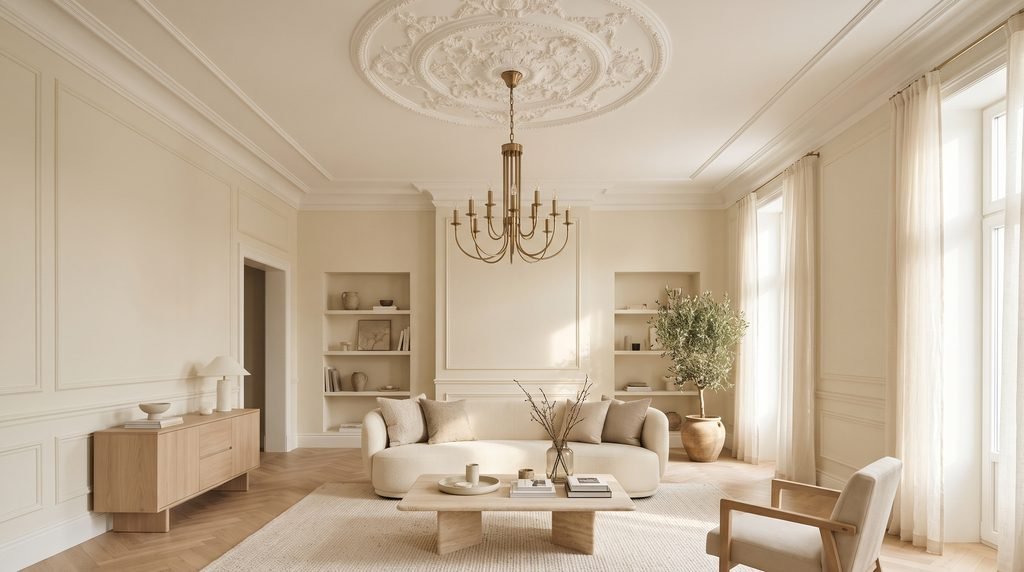
Brass pendant lights offer a warm metallic finish that pairs beautifully with white ceiling medallions. The combination can feel contemporary, transitional, or classic depending on the shape of the pendant and the detailing of the medallion.
For a modern interior, select a simple brass pendant with a rounded or linear form and a shallow medallion. In a more traditional room, a decorative medallion can complement a brass fixture with curved arms or a more elaborate silhouette.
This pairing works particularly well above dining tables, in living rooms, and in bedrooms with warm neutral styling. Brass can also relate to other finishes in the space, including cabinet hardware, furniture details, and picture frames.
Keep the ceiling finish relatively simple if the pendant already has a strong sculptural shape. If the light is understated, a medallion with a little more decorative detail can add visual interest.
A coordinated metallic finish helps the room feel intentional, but exact matching is not essential. Brushed brass, muted gold, and other warm metals can often work together when used thoughtfully.
17. Ceiling Medallion for a Farmhouse Interior
Farmhouse interiors often combine natural materials, practical furniture, and understated traditional details. A decorative ceiling medallion can introduce a little extra architectural character while preserving the relaxed atmosphere of the room.
Choose a simple white medallion with a lightly raised border or a subtle floral pattern. Pair it with a black metal pendant, a rustic-inspired chandelier, or a fixture with warm wood details.
In a farmhouse dining room, this arrangement can complement a natural wood table, upholstered chairs, linen curtains, and neutral wall colors. In a living room, it can create a decorative point above a comfortable seating arrangement.
Avoid choosing a medallion that feels too elaborate for the rest of the space. The best farmhouse interiors balance traditional elements with a casual, comfortable mood.
If you want a modern farmhouse appearance, combine a clean-lined medallion with a black or brass fixture. The result feels fresh and timeless without relying on excessive rustic decoration.
18. Ceiling Medallion With a Flush-Mount Light
You do not need a chandelier to enjoy a decorative ceiling medallion. A flush-mount light can also work well, particularly in rooms with low ceilings where a hanging fixture would be impractical.
Choose a shallow medallion with a simple profile and pair it with a compact flush-mount light. This introduces a decorative ceiling detail while keeping the fixture close to the ceiling.
The combination is suitable for bedrooms, hallways, smaller dining areas, and apartments where ceiling height is limited. A smooth white medallion offers a contemporary appearance, while a subtly patterned design can add a traditional touch.
Check the dimensions of both pieces before installation. The medallion must be compatible with the light fixture and ceiling box, and it should not interfere with the fixture’s mounting or required clearances.
For a cohesive result, keep the ceiling color consistent and choose a light fixture that complements the room’s style. This is a practical way to add architectural interest without sacrificing valuable vertical space.
19. Ceiling Medallion With a Vintage-Inspired Pendant
Vintage-inspired lighting can bring charm and personality to a home, and a decorative ceiling medallion helps complete the look. The combination is particularly attractive when the fixture has traditional proportions, warm metal finishes, or softly shaped glass.
Consider a pendant with an aged brass finish, a milk-glass shade, or a classic silhouette. Pair it with a white medallion featuring gentle ornamental details for a timeless appearance.
This design works well in breakfast nooks, bedrooms, entryways, and living rooms with vintage or transitional decor. Natural wood furniture, textured fabrics, and muted colors help the ceiling feature feel integrated into the room.
You can also use vintage-inspired lighting in a contemporary interior. A simple medallion and a single characterful pendant can create an interesting contrast without making the room feel old-fashioned.
Pay attention to the scale of the fixture and the amount of light it provides. Vintage styling should still meet your practical needs, especially in spaces used for cooking, reading, or other everyday activities.
20. Tone-on-Tone Ceiling Medallion for Subtle Elegance
A tone-on-tone ceiling medallion blends into the ceiling while adding depth through its raised shapes and carefully defined edges. This approach is ideal for people who appreciate architectural detail but prefer a restrained decorating style.
Paint the medallion to match the ceiling or select a finish that is only slightly different in tone. White on white is a classic option, while warm ivory and pale cream can work beautifully in softer interiors.
Pair the medallion with a simple pendant, a refined chandelier, or a contemporary globe fixture. The light should complement the subtle detailing rather than compete with it.
Tone-on-tone styling works well in bedrooms, living rooms, and dining spaces with neutral palettes. It can also be a good solution for homes where strong ceiling contrast would feel distracting.
The beauty of this approach comes from the way light and shadow reveal the ornament. During the day, natural light can emphasize the raised profile, while evening illumination adds another layer of depth.
21. Luxury Ceiling Medallion for a Refined Modern Home
For a luxurious modern interior, choose a ceiling medallion that feels architectural rather than excessively ornate. A large, well-proportioned design with subtle sculptural detailing can add sophistication while keeping the room fresh and contemporary.
Pair it with a refined chandelier or a sculptural pendant in brass, bronze, or a muted metallic finish. Cream walls, natural wood, elegant upholstery, and carefully selected decorative accessories help the ceiling detail feel connected to the rest of the room.
A medallion does not need to be intricately carved to look expensive. Clean edges, balanced proportions, and a high-quality finish can create a sophisticated result in their own right.
Think about the entire room when making your selection. The ceiling medallion should relate to the lighting fixture, ceiling height, and surrounding architecture. If the room already has dramatic artwork or statement furniture, a more restrained medallion may provide the right balance.
The goal is to create a cohesive interior where every element feels considered. A well-chosen medallion can supply that final architectural detail that makes the room feel complete.
How to Choose the Right Ceiling Medallion
Before purchasing a decorative ceiling medallion, consider how it will work with your ceiling, light fixture, and overall interior style.
- Measure the room and fixture: Larger rooms and substantial chandeliers may need larger medallions, while compact spaces usually benefit from simpler designs.
- Match your decorating style: Ornate medallions suit traditional interiors, while smooth and geometric versions complement contemporary homes.
- Choose a suitable material: Polyurethane and other lightweight materials may be easier to handle than heavier plaster or wood designs. Always check product specifications.
- Coordinate the finish: White is versatile, but painted or metallic finishes can create a custom appearance when used thoughtfully.
- Consider ceiling height: Large decorative details can look impressive in high-ceilinged rooms, while shallow profiles are often more suitable for lower ceilings.
- Check installation requirements: Confirm compatibility with the existing electrical box, fixture mounting, and manufacturer’s instructions. Turn off power before electrical work and hire a qualified professional when needed.
- Think about maintenance: Intricate designs may collect more dust than smooth surfaces, so choose a level of detailing that suits your preferences.
The best medallion is one that complements your lighting and architecture instead of competing with them.
Final Thoughts
Decorative ceiling medallions are a timeless way to introduce architectural interest, elevate a lighting fixture, and make a room feel more thoughtfully finished. From traditional floral patterns and ornate chandelier surrounds to minimalist geometric designs and subtle tone-on-tone details, there are options for many different homes and decorating styles.
When choosing a medallion, focus on proportion, finish, ceiling height, and the style of your light fixture. A classic white medallion can add elegance to a traditional dining room, while a smooth contemporary design can bring subtle character to a modern apartment. The most successful designs feel connected to the rest of the room rather than appearing as an isolated decoration.
You can use a ceiling medallion to create a dramatic focal point or add a quiet finishing detail. Either way, careful selection and appropriate installation will help you achieve a beautiful result that lasts.
With the right combination of lighting and architectural detail, your ceiling can become an important part of your home’s design—not just an overlooked surface above the room.