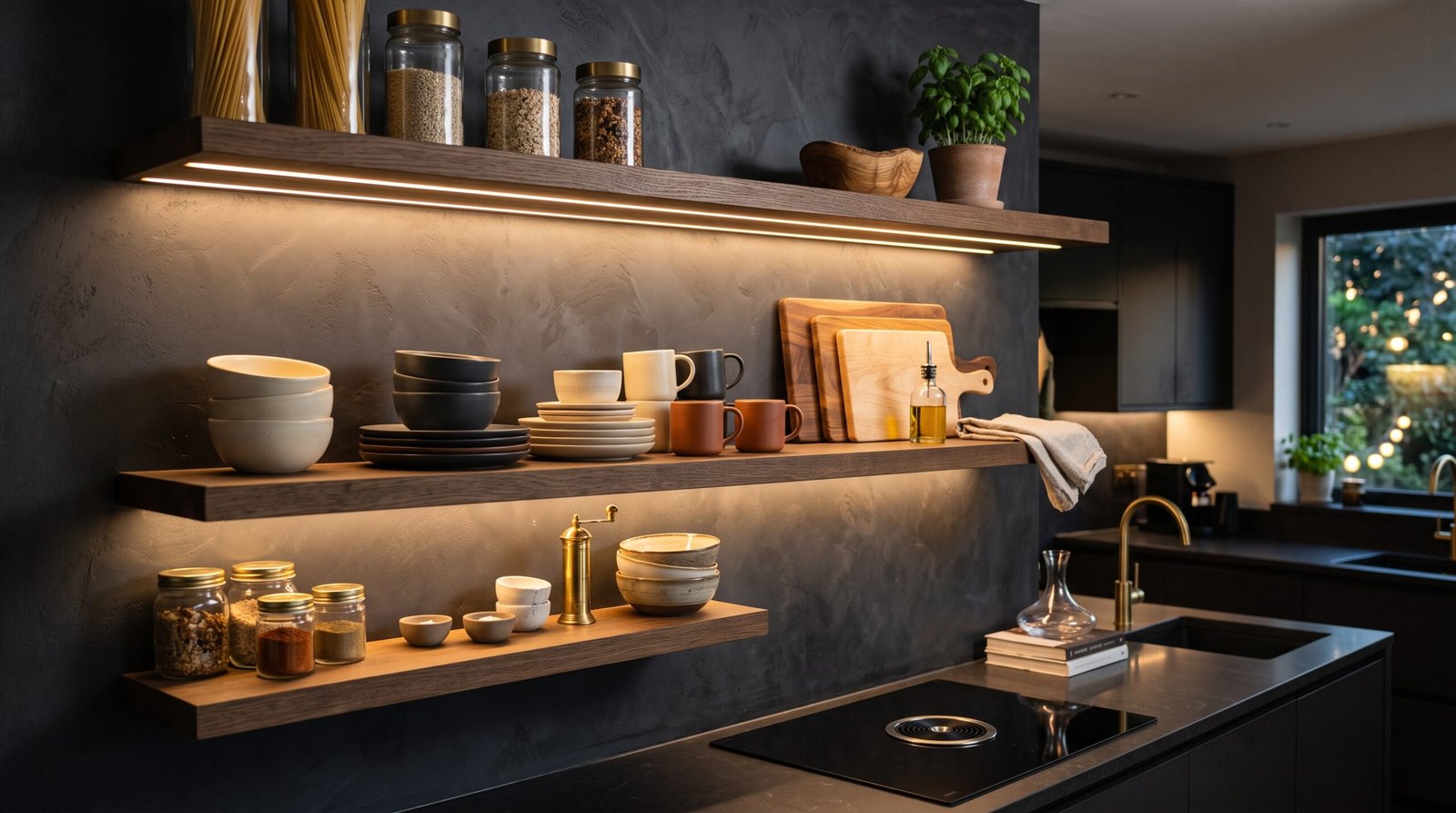
25 Kitchen Shelf Decor Ideas That Make Your Kitchen Look Designer-Styled
Kitchen shelves have evolved far beyond simple storage. Today, they’re a defining design feature that can transform the look and feel of your entire kitchen. Whether you’re working with sleek floating shelves in a modern home, rustic reclaimed wood in a farmhouse kitchen, or compact shelving in a small apartment, the way you style your shelves can make your space feel polished, welcoming, and uniquely yours.
Unlike closed cabinets, open shelving puts your everyday items on display. That means every mug, bowl, cutting board, and decorative accessory contributes to your kitchen’s overall aesthetic. The challenge is finding the right balance between beauty and functionality. Shelves should be practical enough for daily use while still looking intentional and uncluttered.
One of the reasons open shelving has become so popular is its versatility. It works with nearly every interior design style—from Scandinavian minimalism and organic modern to cozy cottagecore and industrial chic. It also gives you the flexibility to update your kitchen throughout the year with seasonal decor, fresh greenery, or new accessories without committing to a full renovation.
In this guide, you’ll discover 25 inspiring kitchen shelf decor ideas that combine smart organization with timeless design. Whether you’re decorating brand-new floating shelves or refreshing existing ones, these ideas will help you create a kitchen that looks professionally styled while remaining practical for everyday living.
Why Kitchen Shelf Decor Matters
Kitchen shelves are often one of the first things people notice when they walk into a kitchen. Well-styled shelves can make a space feel brighter, more spacious, and thoughtfully designed, while cluttered or overcrowded shelves can make even the most beautiful kitchen appear chaotic.
Decorating your shelves isn’t about filling every inch with decorative objects. It’s about creating a balanced display where practical items and decorative accents work together. A stack of ceramic bowls, a wooden cutting board, a small potted herb, and a glass jar of pasta can look just as beautiful as expensive decor when arranged with intention.
Well-designed shelves also encourage better organization. When frequently used items are neatly displayed, they’re easier to access and more likely to stay organized. Instead of hiding everything behind cabinet doors, open shelving motivates you to keep your kitchen tidy because everything is visible.
Another advantage is that shelf styling is one of the most affordable ways to refresh your kitchen. You don’t need a major renovation to create a designer look. Simple changes like replacing mismatched containers with matching glass jars, adding natural wood accents, or introducing a few decorative pieces can dramatically elevate the space.
Before decorating, consider the overall style of your kitchen. If your home features clean lines and neutral colors, choose minimalist accessories and simple ceramics. If your style is more rustic or farmhouse-inspired, incorporate vintage pottery, woven baskets, and warm wood tones. Keeping your shelf decor consistent with the rest of your kitchen creates a cohesive and harmonious look.
1. Style Shelves with Matching Ceramic Dishes
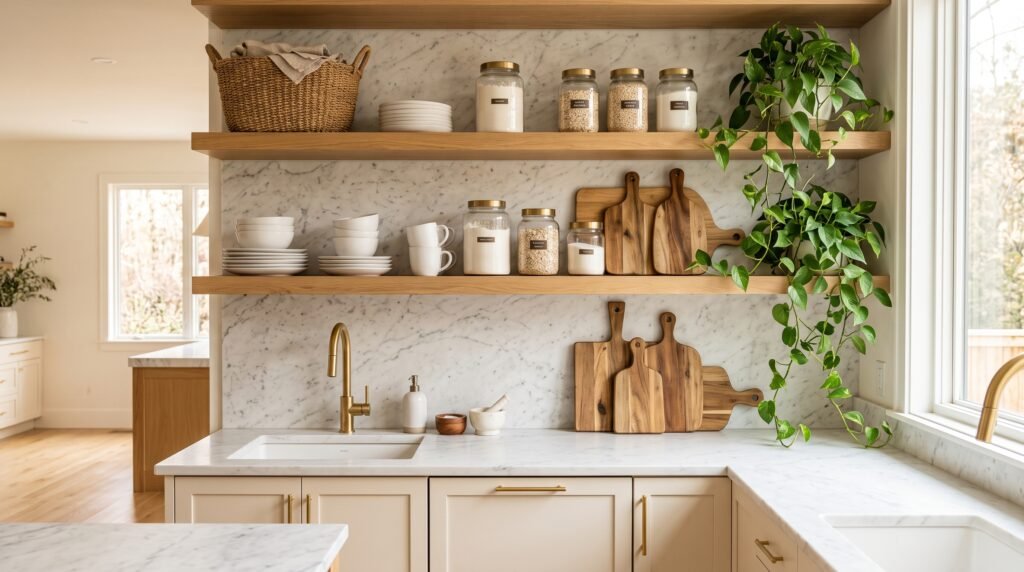
One of the easiest ways to make your kitchen shelves look professionally styled is by displaying matching ceramic dishes. White, cream, or soft beige dinnerware instantly creates a clean and timeless aesthetic that complements almost any kitchen style.
Instead of stacking dishes randomly, arrange them in neat groups. Stack plates from largest to smallest and pair them with matching bowls or mugs nearby. The repetition of similar colors and shapes creates a sense of order that feels calming and sophisticated.
If you enjoy entertaining, displaying your favorite serving platters or handcrafted bowls can also add personality to your shelves. Handmade ceramics with subtle texture bring warmth and character while maintaining a refined appearance.
To avoid visual clutter, leave a small amount of empty space between each grouping. This negative space allows each item to stand out and gives your shelves a curated, magazine-worthy look.
Styling Tip: Stick to one or two ceramic colors for a cohesive display. Mixing too many patterns can make shelves feel busy.
2. Combine Warm Wood with Crisp White Decor
Few design combinations feel as timeless as natural wood paired with crisp white accessories. Warm oak or walnut shelves provide a beautiful contrast against white dishes, creating a balanced look that’s both modern and inviting.
Wood introduces warmth and texture, preventing an all-white kitchen from feeling cold or sterile. Incorporate wooden cutting boards, serving trays, utensils, or pepper mills to echo the tones of your shelves.
Leaning a large wooden cutting board against the backsplash adds height and depth, while smaller boards layered in front create visual interest. Mixing different wood grains also helps the display feel collected rather than overly coordinated.
If your shelves are painted white, adding wood accessories can still achieve the same welcoming effect.
Styling Tip: Use wood in multiple places throughout the display to create a sense of rhythm and continuity.
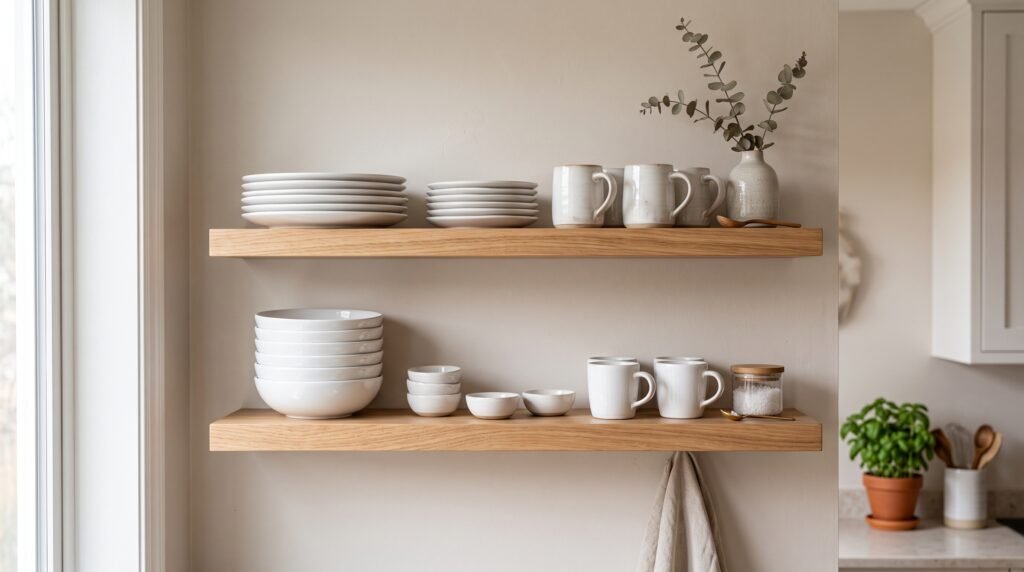
3. Bring Shelves to Life with Greenery
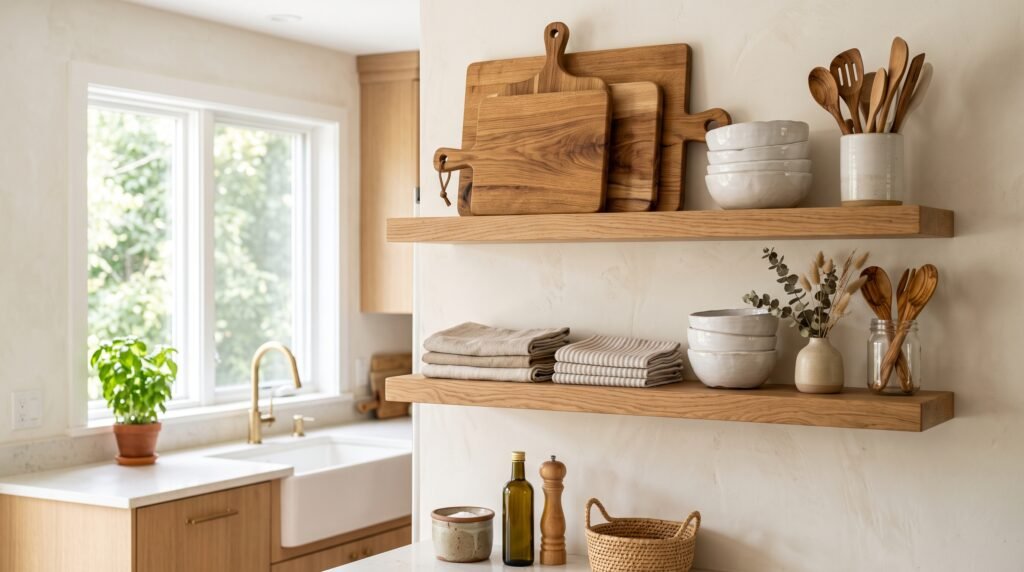
Plants instantly make kitchen shelves feel fresh and inviting. Even a small amount of greenery can soften hard surfaces like tile, stone, and metal while introducing natural color and texture.
Herbs such as basil, rosemary, thyme, or mint are practical choices because they’re both decorative and useful for cooking. Place them in simple ceramic pots or woven baskets to blend seamlessly with your decor.
Trailing plants like pothos, string of pearls, or ivy create beautiful movement as they cascade gently over the edge of a shelf. For kitchens with limited natural light, consider realistic faux greenery that requires no maintenance but still provides visual softness.
Avoid overcrowding shelves with too many plants. One or two carefully placed pieces are often more impactful than several small pots scattered across the display.
Styling Tip: Vary plant heights to add dimension without overwhelming the shelf.
4. Display Wooden Cutting Boards as Decor
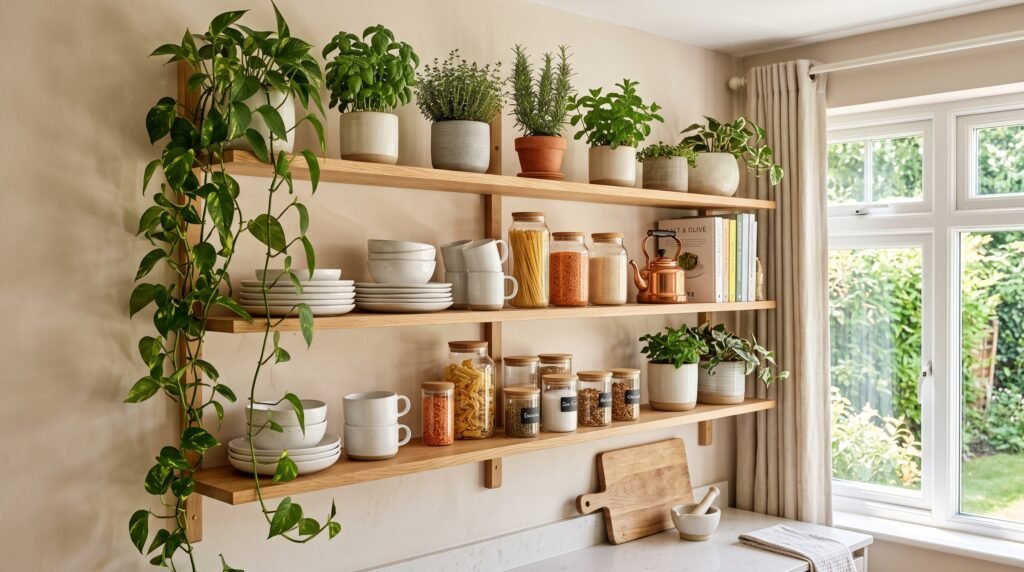
Cutting boards are one of the most versatile decorative items you can use in a kitchen. Instead of hiding them inside a cabinet, display them proudly as part of your shelf styling.
Choose boards in different shapes and sizes—rectangular, paddle-style, or round—to create layered visual interest. Lean larger boards against the wall and position smaller ones slightly in front.
Natural wood tones pair beautifully with ceramic dishes, glass jars, and greenery, making cutting boards an easy way to tie different decorative elements together.
If you enjoy baking, consider displaying a marble pastry board alongside wooden pieces for added texture and sophistication.
Styling Tip: Choose high-quality boards with attractive wood grain to enhance the overall design.
5. Turn Everyday Essentials into Beautiful Decor
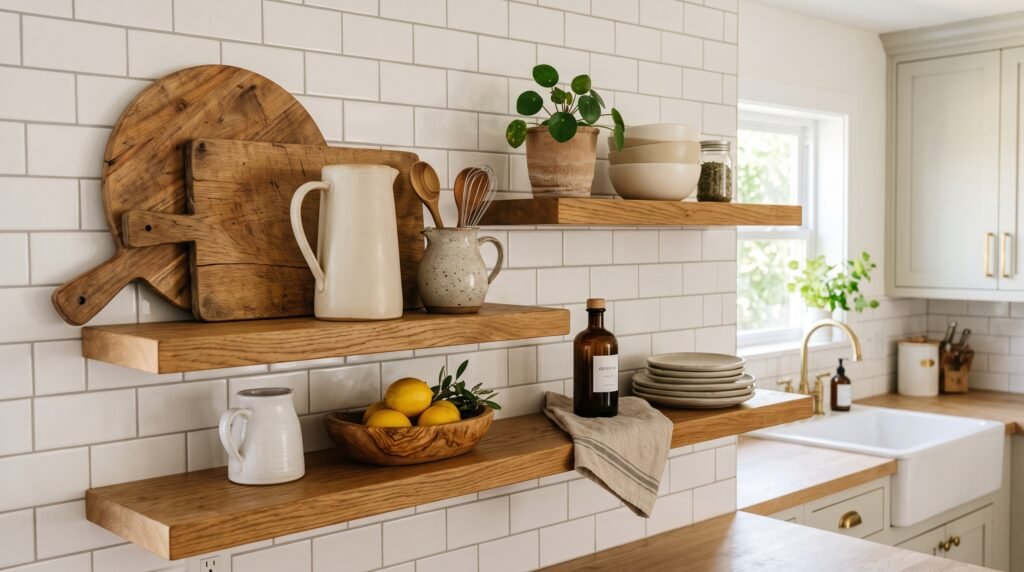
One of the biggest advantages of open shelving is that your everyday kitchen items become part of the decor. Instead of storing frequently used mugs, bowls, or glasses behind cabinet doors, display them in an organized and visually pleasing way.
Arrange mugs by color or material for a cohesive appearance. Stack bowls neatly and align drinking glasses in rows to create structure. Using matching collections helps the shelves feel intentional rather than cluttered.
This approach also makes your kitchen more functional since commonly used items are always within easy reach.
If your existing dishes don’t coordinate, consider gradually replacing them with timeless neutral pieces that work together.
Styling Tip: Limit each shelf to a few categories of items rather than displaying everything at once.
6. Organize Pantry Staples in Glass Storage Jars
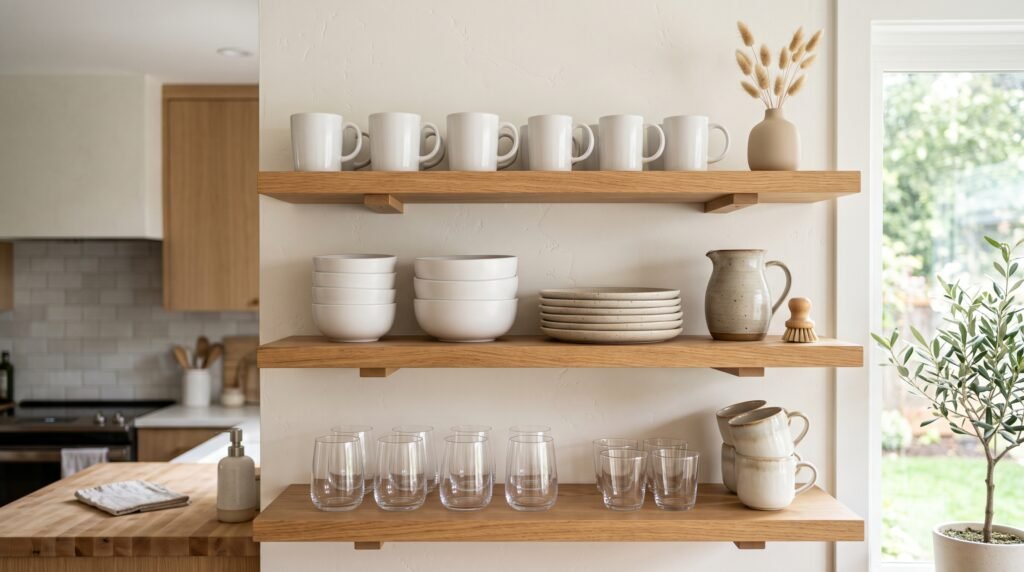
Glass storage jars are both practical and beautiful. Transferring pantry staples like pasta, rice, flour, oats, coffee beans, and sugar into matching containers instantly creates a clean, organized appearance.
Clear jars allow you to see what’s inside while adding subtle texture through the natural colors of the ingredients. Bamboo or wooden lids complement most kitchen styles and introduce warmth to the display.
For an even more polished look, use simple labels with consistent typography. Uniform labeling makes shelves feel organized while helping family members quickly locate ingredients.
Group jars by size or purpose to maintain visual balance.
Styling Tip: Refill containers regularly to keep them looking neat and avoid partially empty jars that can appear messy.
7. Layer Decorative Accessories for Depth
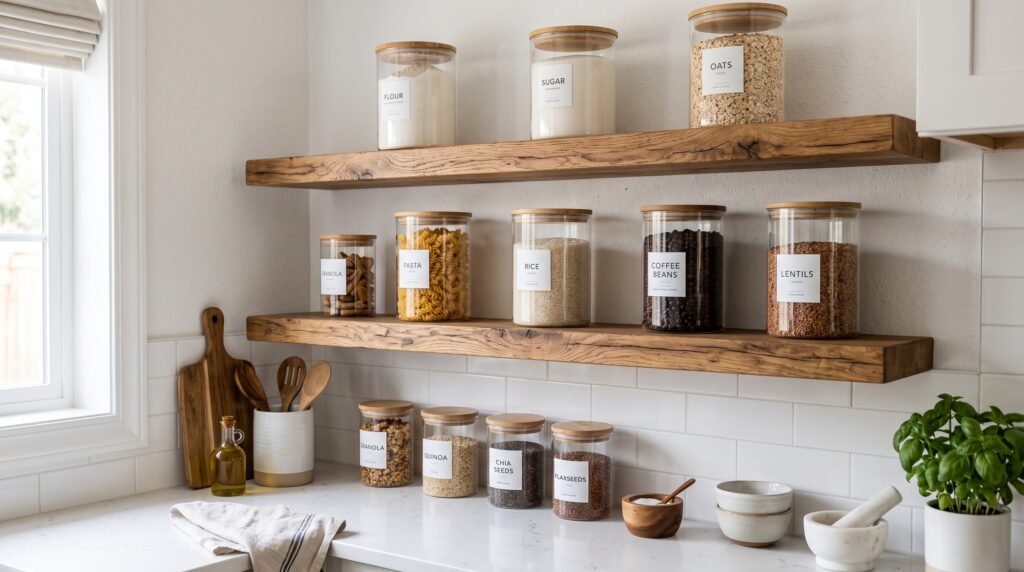
Designer-styled shelves rarely consist of dishes alone. Mixing practical kitchen items with decorative accessories creates depth, personality, and visual interest.
Consider incorporating small framed artwork, ceramic vases, candles, sculptural objects, or decorative bowls alongside functional pieces. The key is choosing accessories that complement your kitchen rather than competing for attention.
Layering is especially effective. Place a framed print behind a vase or position a small decorative object in front of stacked plates to create dimension.
Aim for a balanced mix of materials such as ceramic, glass, wood, and metal to keep the display visually engaging.
Styling Tip: Choose accessories that reflect your personal style while keeping the overall color palette consistent.
8. Create Balance with Varying Heights
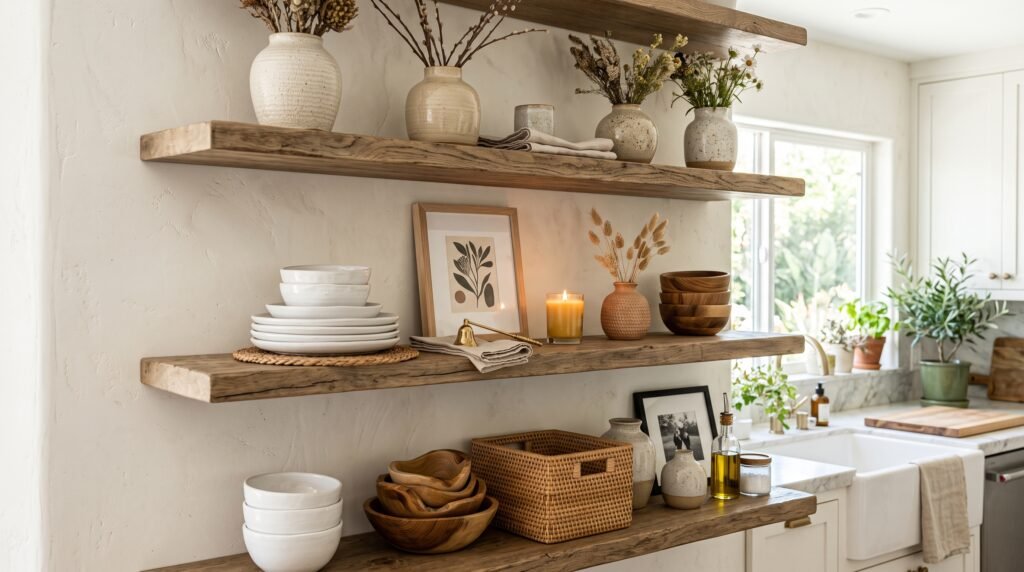
One of the most common shelf-styling mistakes is arranging everything at the same height. When every object is similar in size, shelves can appear flat and uninspiring.
Instead, combine tall items like vases or pitchers with medium-sized jars and shorter bowls or baskets. This variation naturally draws the eye across the display and creates a more dynamic composition.
Think of your shelves as a series of small design vignettes. Each grouping should have a focal point, supporting pieces, and enough empty space to breathe.
Balancing heights doesn’t mean making everything symmetrical. Slight asymmetry often feels more natural and professionally styled.
Styling Tip: Step back and view your shelves from across the room. If one side feels visually heavier, adjust the arrangement until it feels balanced.
9. Stick to a Cohesive Color Palette
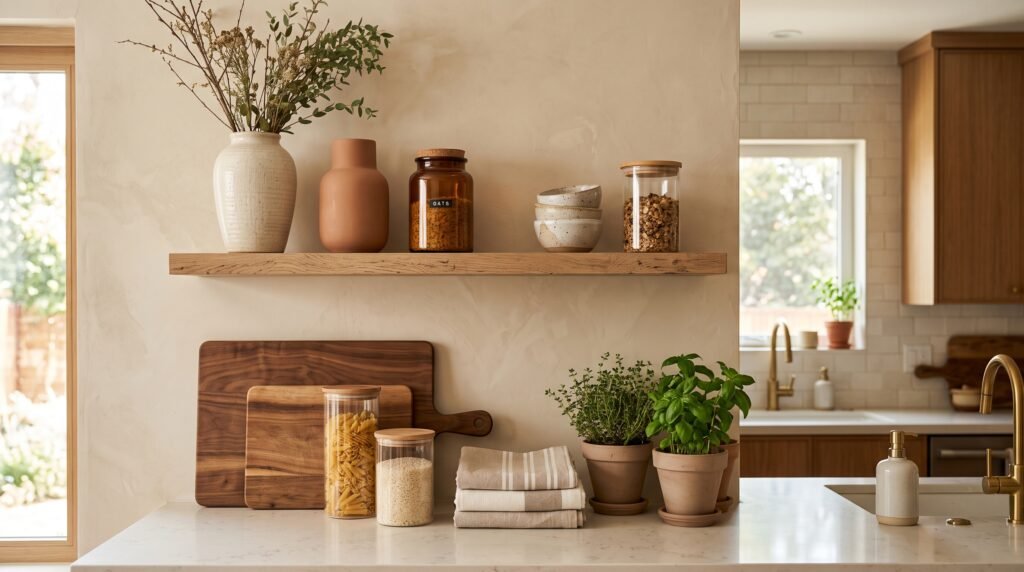
One of the easiest ways to make kitchen shelves look professionally designed is by limiting your color palette. While it can be tempting to display colorful mugs, patterned dishes, and decorative accessories all at once, too many competing colors can make shelves feel cluttered and overwhelming.
Interior designers often choose two or three dominant colors and repeat them throughout the display. For example, a palette of warm white, natural oak, and soft sage green creates a calming, organic look that’s both timeless and versatile. If your kitchen has black hardware, you can introduce subtle black accents through candle holders, utensil crocks, or picture frames to tie everything together.
Neutral tones such as cream, beige, taupe, soft gray, and white are especially popular because they allow natural textures like wood, woven baskets, and greenery to stand out. A restrained palette also makes it easier to refresh your shelves with seasonal decor without creating visual chaos.
Remember that color isn’t limited to decorative objects. Pantry staples in clear jars, wood cutting boards, and leafy plants all contribute to the overall color story.
Styling Tip: Before adding a new decorative piece, ask yourself whether it complements your existing palette. If it doesn’t, consider placing it elsewhere in your home.
10. Add Woven Baskets for Texture and Hidden Storage
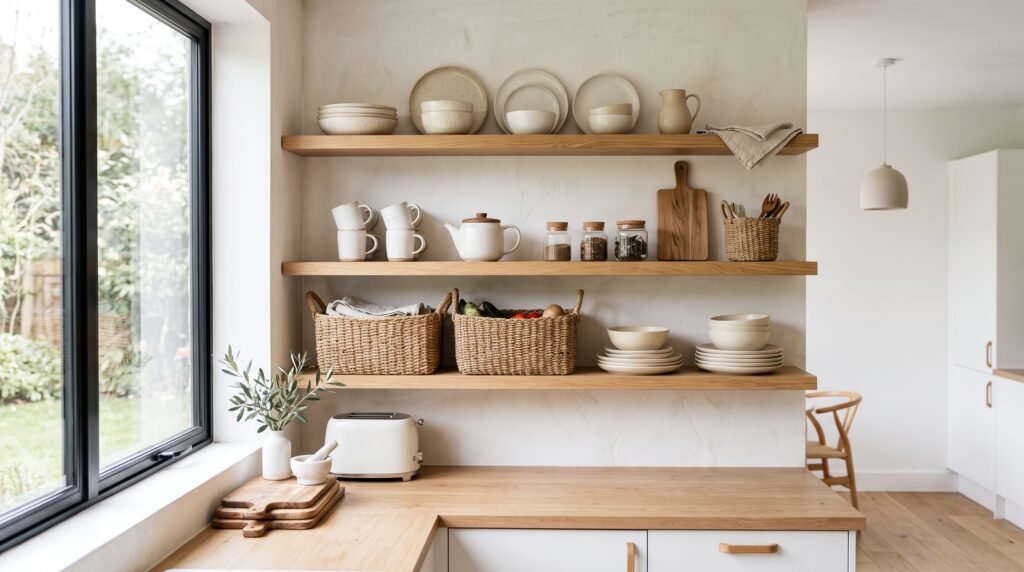
Beautiful shelves aren’t just about displaying pretty objects—they also need to stay functional. Woven baskets are one of the best accessories for combining organization with style.
Small baskets can hold tea bags, snack packets, dish towels, recipe cards, or other kitchen essentials that might otherwise create clutter. Because the contents are hidden, your shelves maintain a clean and polished appearance while still offering practical storage.
Natural materials like seagrass, rattan, wicker, and water hyacinth add warmth and texture that balance the smooth surfaces of ceramic dishes and glass jars. They also work beautifully in farmhouse, coastal, Scandinavian, and organic modern kitchens.
For a cohesive look, choose baskets that share a similar weave, shape, or tone. Mixing too many different basket styles can make the display feel inconsistent.
Styling Tip: Use baskets on the lower shelves for items you reach for often, while reserving upper shelves for decorative displays.
11. Display Beautiful Cookbooks
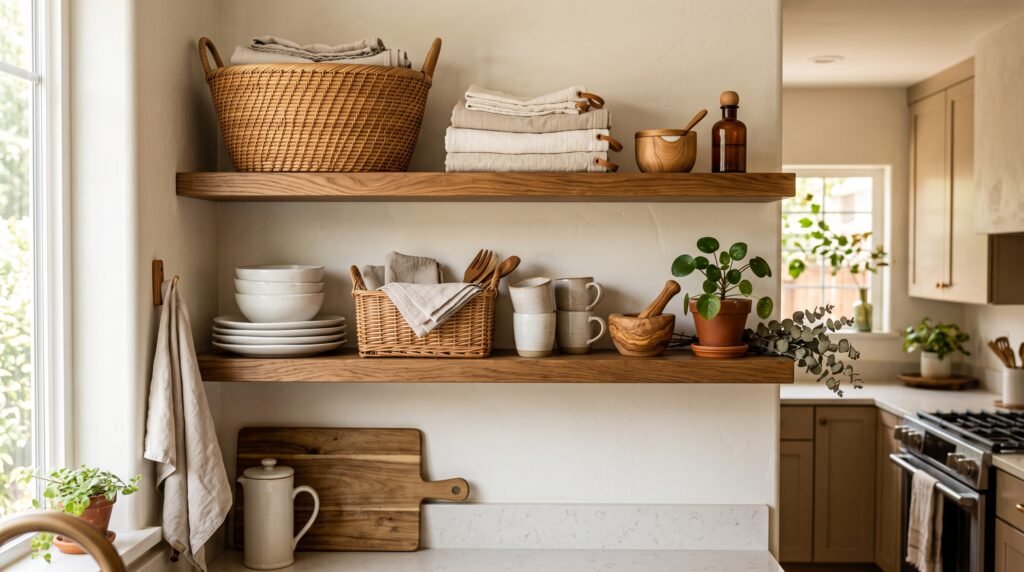
Cookbooks are more than practical references—they’re also beautiful decorative pieces that tell a story about your interests and lifestyle.
Choose books with attractive covers or neutral spines that complement your kitchen’s design. Stack two or three books horizontally and place a small ceramic bowl, candle, or potted plant on top to create a layered arrangement.
Alternatively, stand a few cookbooks upright using decorative bookends or lean them casually against a cutting board for a relaxed, lived-in feel.
Rotating your cookbook selection every few months keeps your shelves looking fresh while inspiring you to try new recipes.
Styling Tip: Avoid overcrowding shelves with too many books. A small, carefully chosen collection looks far more sophisticated than an entire cookbook library.
12. Incorporate Vintage and Handmade Pieces
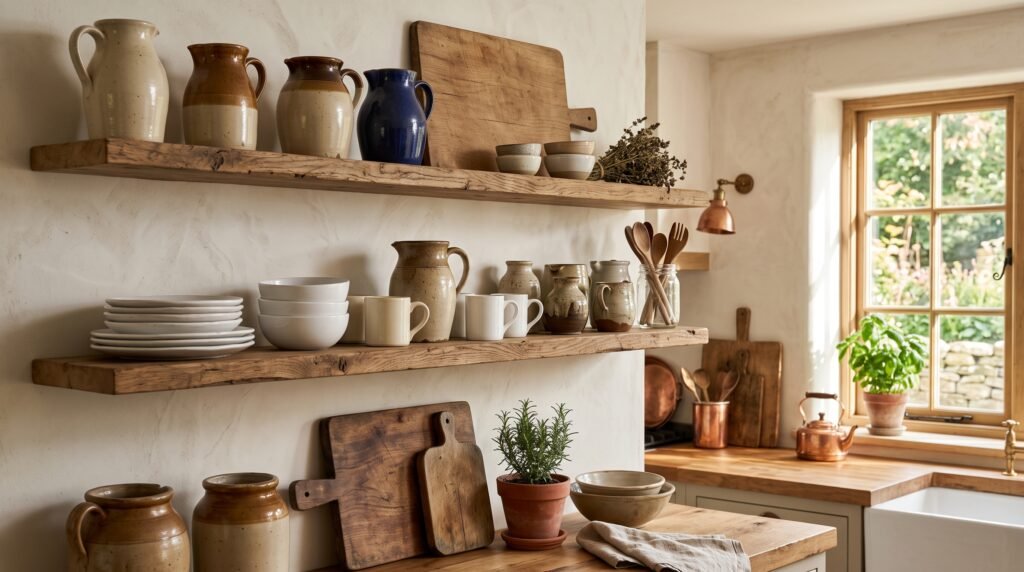
Adding vintage or handcrafted items gives your kitchen shelves character and individuality. While matching accessories create harmony, unique pieces prevent your display from feeling like a showroom.
Consider displaying an antique stoneware crock, a vintage enamel pitcher, handmade pottery, or a handcrafted wooden bowl. These items often feature subtle imperfections that add warmth and authenticity to your space.
Vintage finds from flea markets, antique shops, or family heirlooms make excellent conversation pieces and create a sense of history within your home.
When mixing vintage items with modern decor, aim for balance. One or two statement pieces are usually enough to add charm without overwhelming the display.
Styling Tip: Pair older items with simple modern ceramics to create a timeless blend of old and new.
13. Install Mug Hooks Beneath Floating Shelves
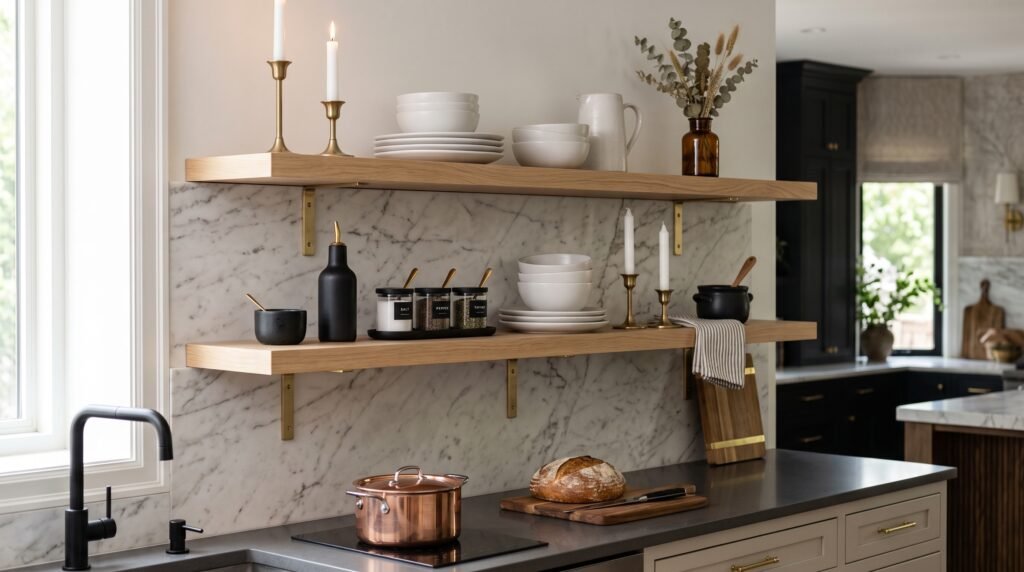
If you’re short on shelf space, consider adding small hooks beneath your floating shelves to display your favorite mugs. This simple addition not only saves valuable shelf space but also creates a cozy café-inspired atmosphere.
Choose mugs that coordinate in color or material for a cohesive display. Handmade ceramic mugs, matte finishes, or classic white designs work particularly well.
Hooks are especially useful near a coffee station, allowing mugs to remain easily accessible while freeing the shelf above for coffee beans, syrups, or decorative accessories.
Besides being practical, hanging mugs add vertical interest and make your kitchen feel thoughtfully designed.
Styling Tip: Leave a little space between hanging mugs so they don’t appear crowded or bump into each other.
14. Introduce Brass or Matte Black Accents
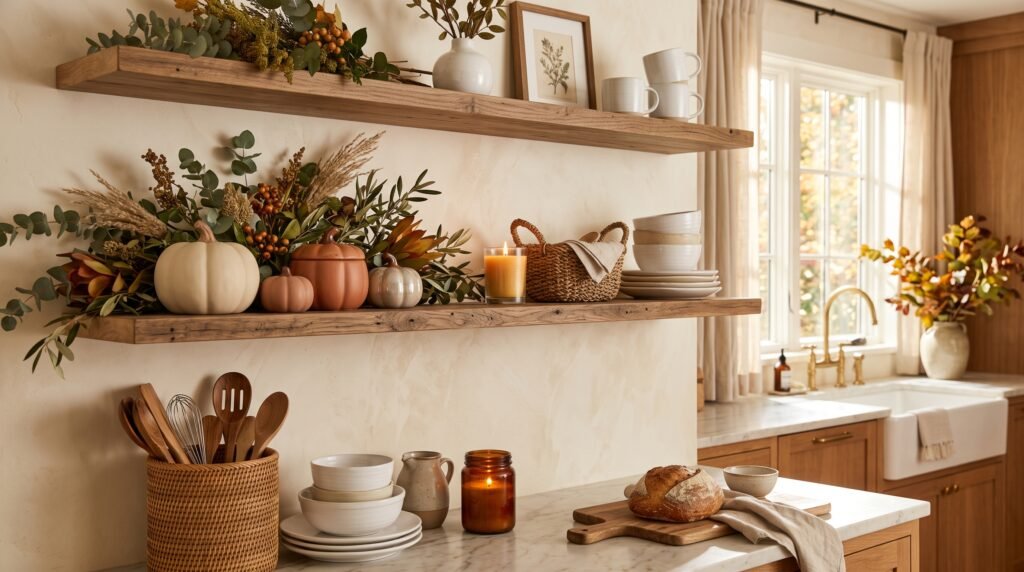
Metallic finishes add sophistication and contrast to kitchen shelf styling. Small touches of brass, bronze, or matte black can instantly elevate an otherwise simple display.
Consider decorative candle holders, metal trays, pepper grinders, utensil holders, or picture frames. These accents create subtle visual interest while complementing cabinet hardware and light fixtures throughout the kitchen.
Brass pairs beautifully with warm wood and creamy neutrals, while matte black works especially well in modern, industrial, and Scandinavian interiors.
The key is moderation. Metallic accents should enhance the overall design rather than dominate it.
Styling Tip: Repeat your chosen metal finish throughout the kitchen to create a cohesive look.
15. Refresh Shelves with Seasonal Decor
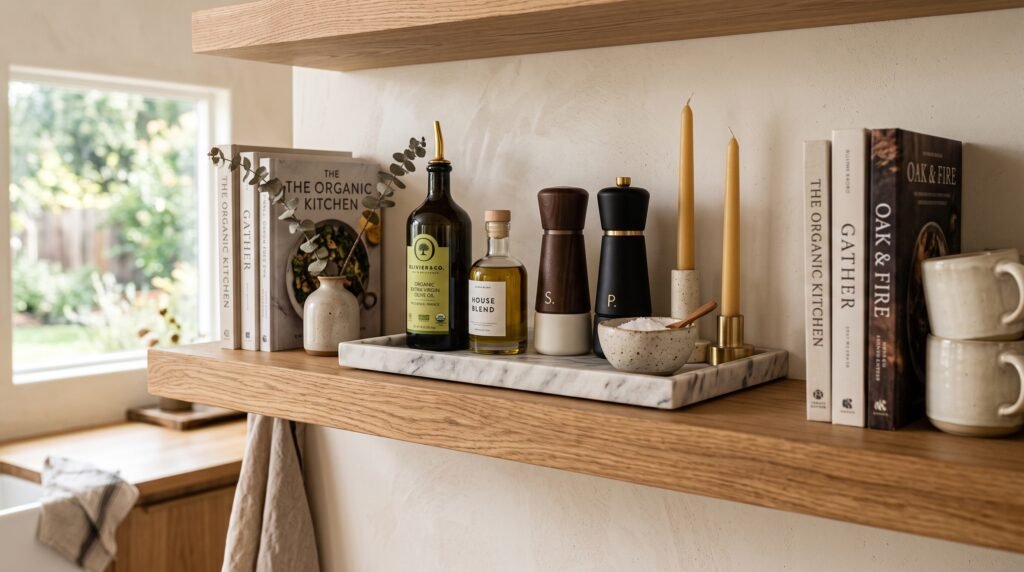
One of the greatest advantages of open shelving is how easy it is to update throughout the year. Small seasonal changes can make your kitchen feel fresh without requiring a complete redesign.
In spring, decorate with fresh flowers, pastel ceramics, and budding branches. Summer shelves look beautiful with citrus bowls, woven trays, and bright greenery. Autumn calls for pumpkins, amber glass, dried wheat, and warm earth tones, while winter is perfect for evergreen branches, candles, and festive accents.
Seasonal decorating doesn’t have to be elaborate. Even replacing a vase of greenery or swapping kitchen towels can create a noticeable difference.
Keeping your everyday items consistent while rotating a few decorative pieces ensures your shelves always feel current without becoming cluttered.
Styling Tip: Store seasonal accessories in labeled bins so you can quickly update your shelves throughout the year.
16. Group Accessories on Decorative Trays
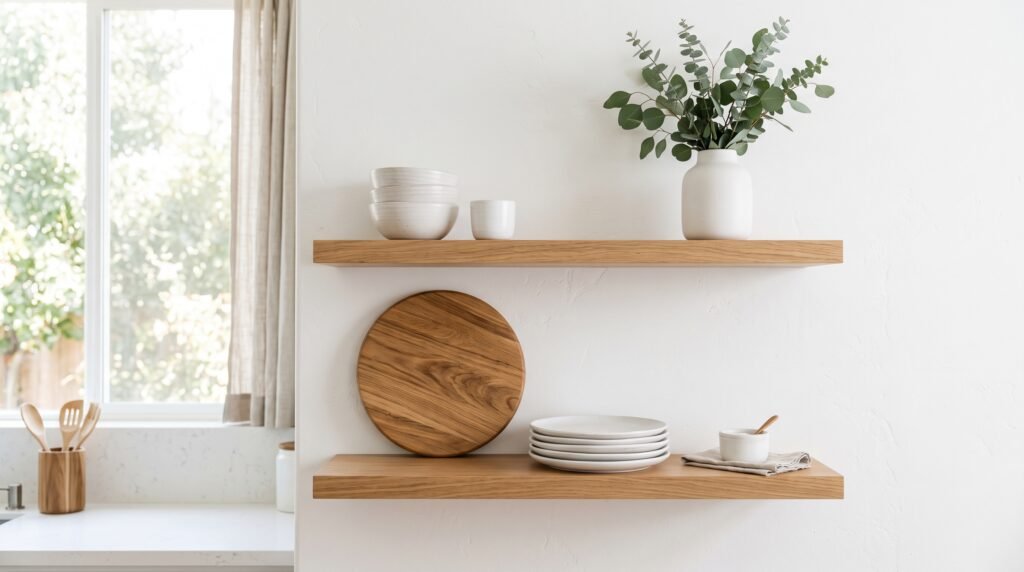
Decorative trays are a designer’s secret weapon for creating organized shelf displays. Instead of scattering small items across a shelf, group them together on a tray to create a single cohesive arrangement.
A tray can hold olive oil bottles, salt and pepper mills, candles, or small decorative objects while visually unifying the collection.
Wood, marble, woven, or metal trays all offer different aesthetic qualities. Choose a material that complements the rest of your kitchen.
Grouping accessories also makes cleaning easier since you can lift the entire tray rather than moving individual items.
Styling Tip: Limit each tray to three to five objects for a balanced, uncluttered arrangement.
17. Embrace Negative Space
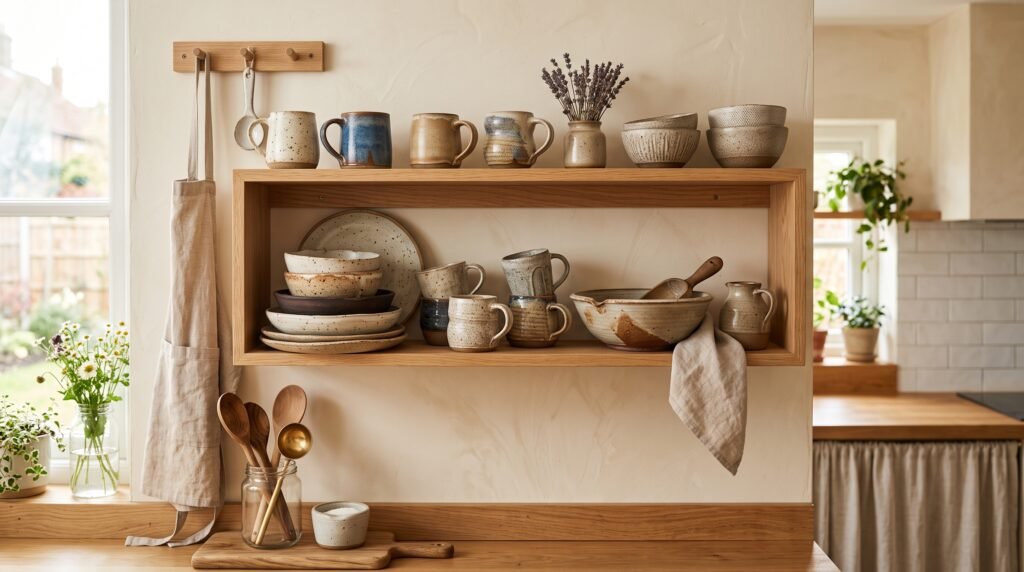
Perhaps the most overlooked principle of shelf styling is the importance of empty space. Many people feel the need to fill every inch of shelving, but professional designers understand that negative space is what allows beautiful objects to stand out.
Leaving small gaps between decorative groupings creates breathing room and gives your shelves a calm, curated appearance. It also prevents the display from feeling visually heavy.
Think of your shelves as an art gallery rather than a storage unit. Every item deserves enough space to be appreciated.
Editing is just as important as decorating. If a shelf begins to feel crowded, remove one or two objects and reassess the arrangement. Often, less truly is more.
Styling Tip: After styling your shelves, take a photo. It’s often easier to spot areas that need simplifying when viewed in a picture rather than in person.
Designer Tips for Styling Kitchen Shelves
While each of the ideas above can stand on its own, combining them thoughtfully is what creates a truly designer-inspired display. Here are a few professional styling principles to keep in mind:
- Follow the Rule of Three: Group decorative objects in sets of three for a balanced, natural look.
- Mix Materials: Combine ceramic, glass, wood, woven textures, and metal to add depth.
- Create Visual Triangles: Arrange items so the eye naturally moves across the shelf.
- Repeat Key Elements: Repeating colors, materials, or shapes creates harmony.
- Style in Layers: Place taller objects at the back and smaller accessories in front to create dimension.
- Edit Regularly: Remove unnecessary items every few months to keep your shelves looking fresh and intentional.
When these principles are combined with the ideas above, your shelves will feel cohesive, elegant, and effortlessly styled.
18. Showcase Handmade Pottery for an Artisan Look
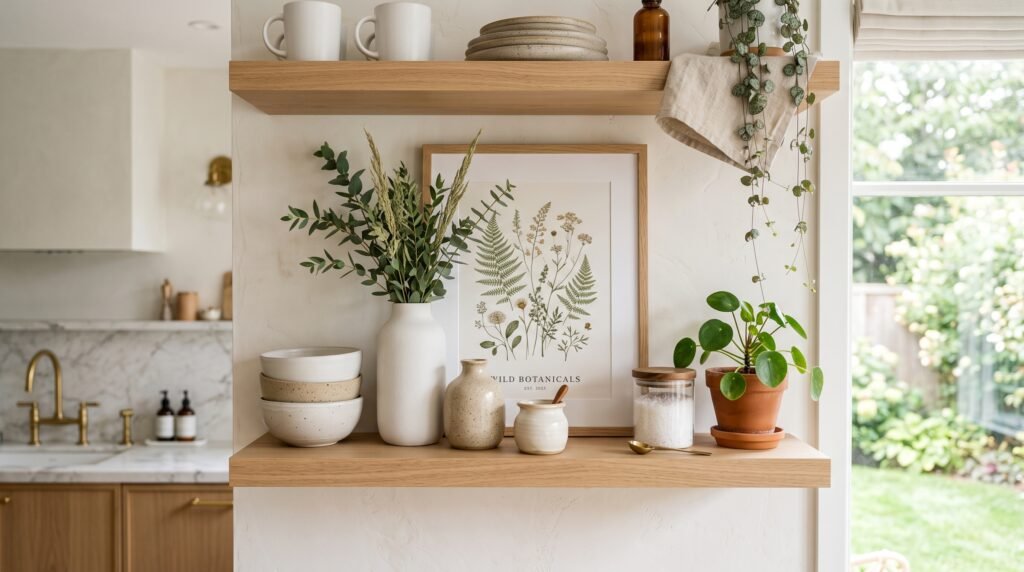
Nothing adds personality to kitchen shelves quite like handmade pottery. Unlike mass-produced dishes, handcrafted ceramics have subtle variations in shape, texture, and glaze that make every piece unique. These imperfections create warmth and authenticity, making your kitchen feel curated rather than staged.
Stoneware bowls, handcrafted mugs, ceramic pitchers, and textured serving platters all make beautiful display pieces. Their earthy finishes work especially well in organic modern, Japandi, farmhouse, and Scandinavian kitchens.
Instead of grouping all pottery together, spread a few handcrafted items across different shelves to create visual rhythm. Pair them with natural materials like linen napkins, woven baskets, and wooden serving boards for a balanced composition.
If you enjoy supporting local artists, purchasing pottery from nearby ceramic studios or craft markets is also a wonderful way to make your kitchen feel more personal.
Styling Tip: Stick to pottery in complementary tones such as ivory, sand, charcoal, or muted sage for a sophisticated and timeless display.
19. Layer Artwork Behind Decorative Accessories
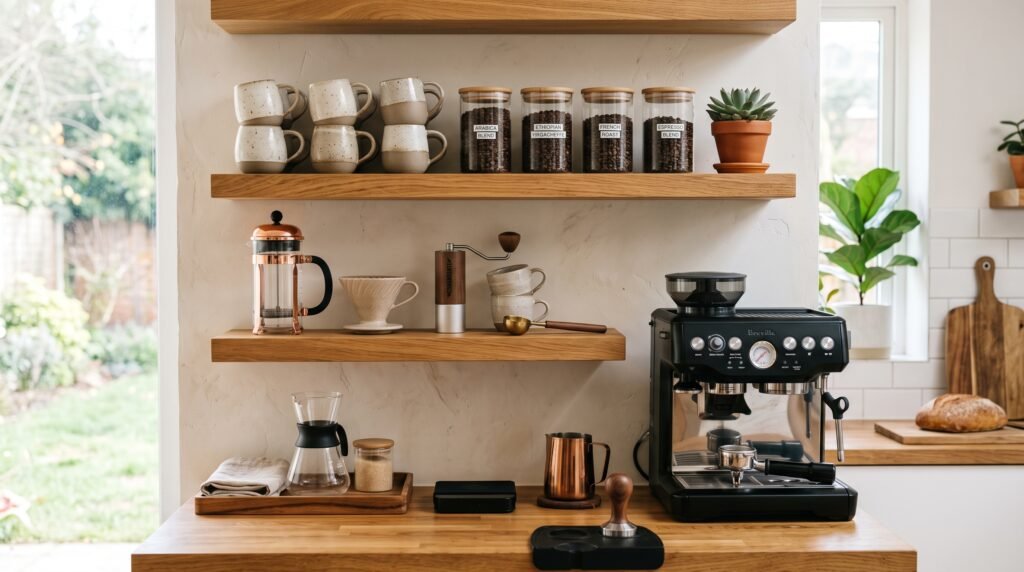
Artwork isn’t just for living rooms and hallways. Small framed prints can make kitchen shelves feel thoughtfully styled while adding personality to the space.
Instead of hanging every piece on the wall, try leaning artwork against the backsplash or wall behind decorative accessories. This layered approach creates depth without requiring additional wall space.
Simple botanical illustrations, vintage food sketches, black-and-white photography, or minimalist abstract prints all work beautifully in kitchens.
Choose frames that complement your overall style. Light oak frames enhance Scandinavian interiors, black frames suit modern kitchens, while antique brass frames add warmth to traditional spaces.
Artwork should support the display rather than dominate it. One carefully chosen print is often enough to elevate an entire shelf.
Styling Tip: Keep artwork slightly larger than the objects placed in front of it so it remains visible and creates depth.
20. Create a Dedicated Coffee Shelf
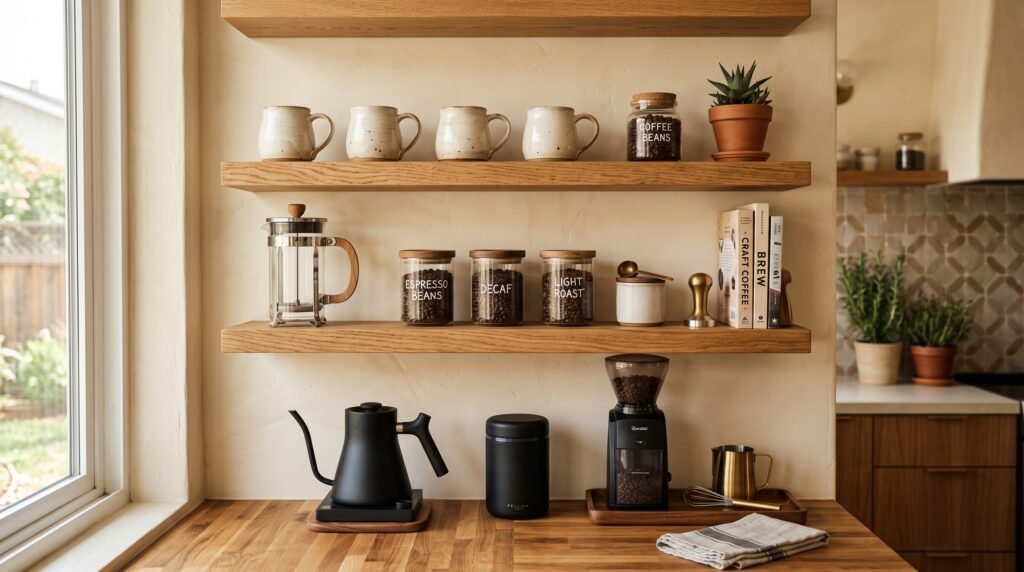
If coffee is part of your daily routine, consider dedicating one shelf to everything you need for your morning ritual. A well-styled coffee shelf is both practical and visually appealing.
Display matching mugs, a French press, pour-over equipment, espresso cups, coffee beans in glass jars, flavored syrups, and a small sugar bowl. Add a tiny plant or candle to soften the arrangement and create a cozy café-inspired atmosphere.
Keeping all coffee essentials together also improves functionality by reducing the time spent searching for supplies.
If your shelves are near your coffee machine, this setup naturally becomes an attractive focal point within the kitchen.
Styling Tip: Use matching containers for coffee beans, sugar, and tea to create a cohesive look.
21. Use Matching Storage Containers
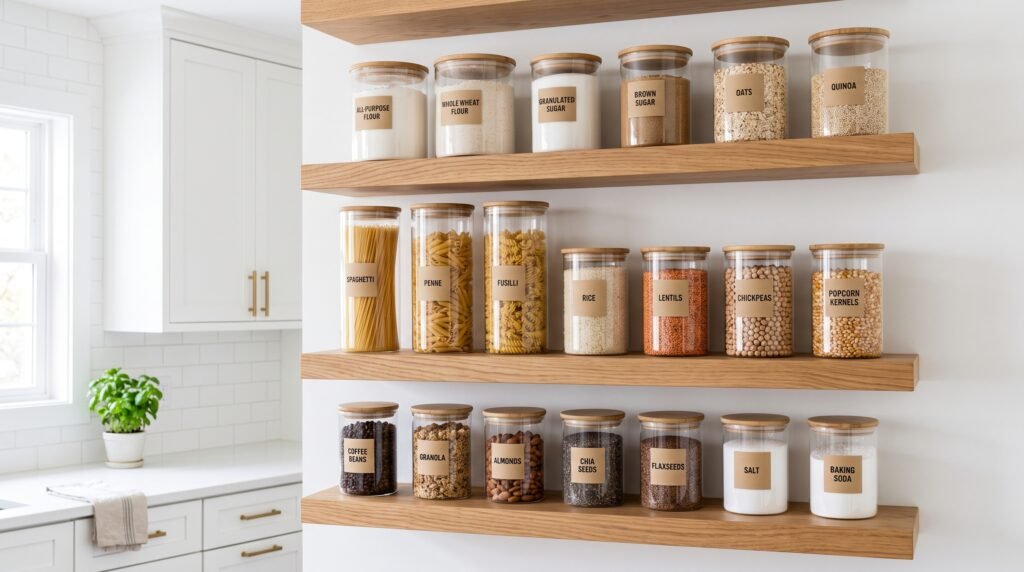
One of the fastest ways to make open shelves appear organized is by replacing original packaging with matching storage containers.
Flour, sugar, pasta, rice, cereal, oats, coffee, tea, and snacks all look more attractive when stored in uniform glass or ceramic canisters.
Consistency is key. Choosing containers of similar height, shape, or lid style creates visual harmony, even when storing different ingredients.
Labels add another layer of organization while making everyday cooking more convenient.
Besides improving aesthetics, airtight containers help preserve freshness and reduce food waste.
Styling Tip: Arrange containers from tallest to shortest for a clean and balanced appearance.
22. Soften the Display with Linen Textiles
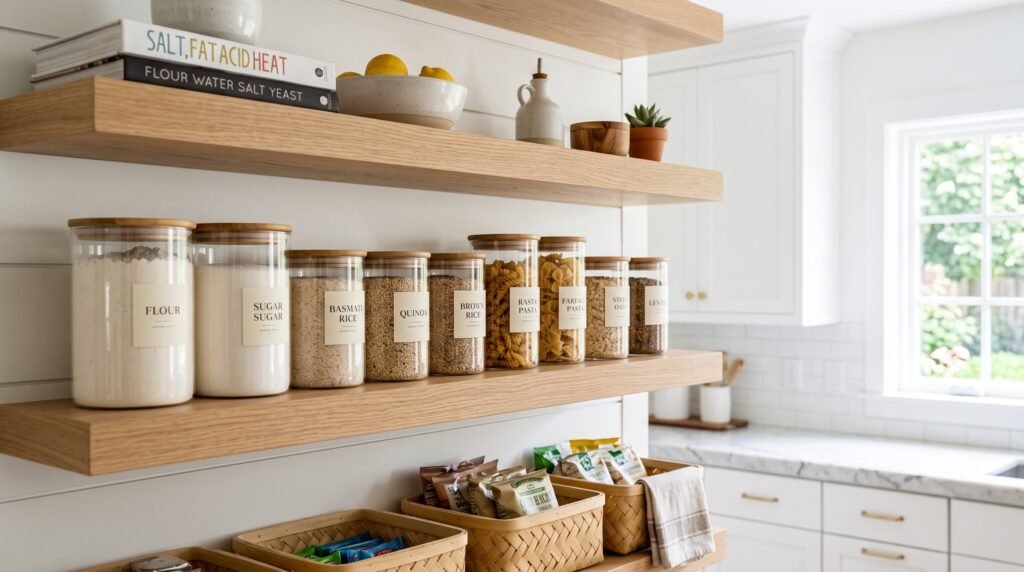
Kitchen shelves often contain hard materials such as glass, ceramic, wood, and metal. Introducing soft textiles creates contrast and makes the space feel more inviting.
Fold linen kitchen towels neatly inside woven baskets, drape a neutral tea towel over a tray, or display cloth napkins inside a ceramic bowl.
Natural fabrics like linen and cotton complement nearly every design style while adding warmth and texture.
Neutral shades such as cream, oatmeal, stone, and light gray maintain a calm, cohesive aesthetic.
Styling Tip: Avoid brightly colored dish towels unless they coordinate with your overall color palette.
23. Add Warm Accent Lighting
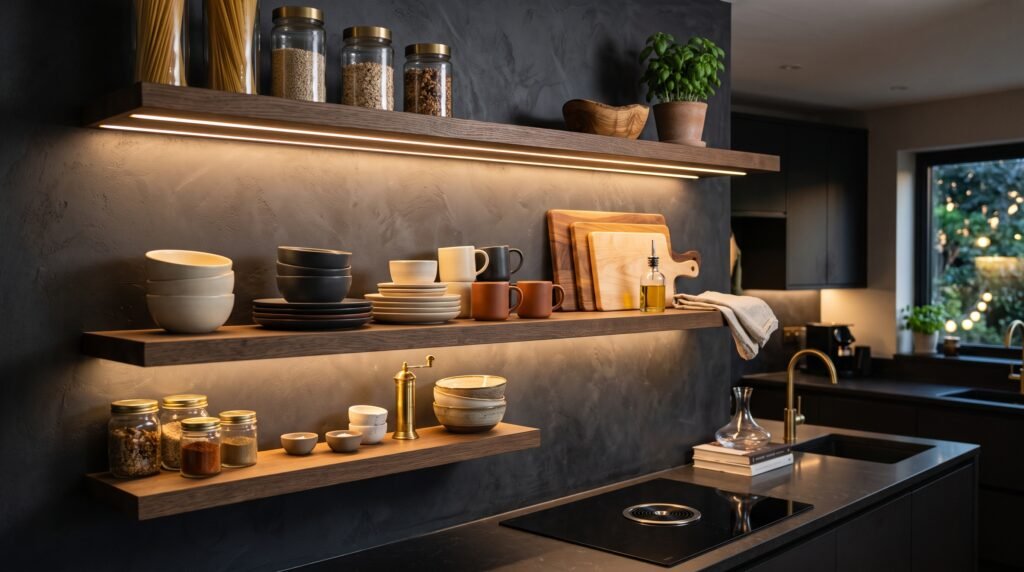
Lighting has a remarkable impact on how your shelves look, especially during the evening.
Installing warm LED strip lights beneath floating shelves highlights decorative objects, enhances textures, and creates a cozy atmosphere after sunset.
Battery-powered puck lights are another excellent option if hardwiring isn’t possible.
Warm white lighting (around 2700K–3000K) produces a welcoming glow that complements natural wood and neutral decor far better than cool blue lighting.
Besides improving aesthetics, shelf lighting also makes it easier to locate everyday items while cooking.
Styling Tip: Conceal light strips beneath the front edge of each shelf for a clean, professional installation.
24. Repeat Colors and Materials Throughout the Display
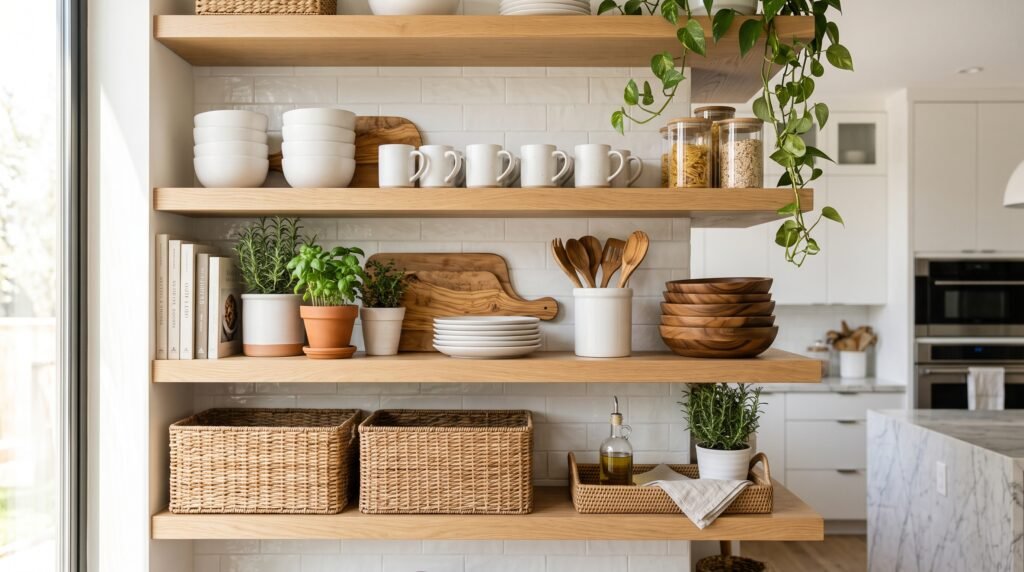
Professional interior designers rely on repetition to create harmony.
Instead of introducing a different material or color on every shelf, repeat key elements throughout the display.
For example:
- Natural oak cutting boards
- White ceramic bowls
- Clear glass jars
- Woven baskets
- Small green plants
- Matte black accents
Repeating these materials creates consistency while allowing each shelf to feel connected to the others.
This principle also applies to shapes. Repeating round bowls, cylindrical jars, or rectangular cutting boards helps unify the overall design.
Styling Tip: Think of your shelves as one complete composition rather than separate individual displays.
25. Remember That Less Is More
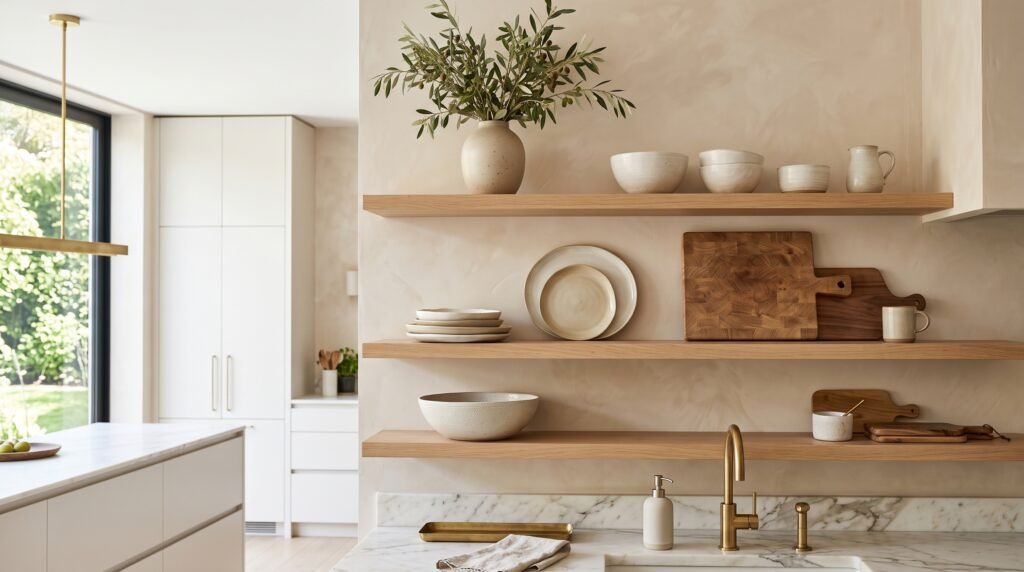
The final—and perhaps most important—idea is learning when to stop decorating.
Many beautifully designed kitchens feature shelves that appear surprisingly simple. Instead of filling every inch with accessories, designers carefully edit their displays until each item has room to shine.
A few thoughtfully chosen objects will always have a greater visual impact than dozens of decorative pieces competing for attention.
Every few months, remove everything from your shelves and restyle them from scratch. This process allows you to evaluate what truly deserves a place in your display.
If an item no longer serves a practical purpose or contributes to the overall design, consider storing it elsewhere.
Remember that beautifully styled shelves should support your daily life, not make it more complicated.
Styling Tip: If you’re unsure whether to add another decorative item, the answer is usually no.
Common Kitchen Shelf Styling Mistakes to Avoid
Even the most beautiful decorative pieces can lose their impact if shelves aren’t styled thoughtfully. Here are some of the most common mistakes homeowners make—and how to avoid them.
1. Overcrowding Every Shelf
The biggest mistake is trying to display everything you own. Open shelves should feel light and airy, not overloaded.
2. Ignoring Functionality
Decorative accessories are wonderful, but your shelves should still be practical. Keep everyday dishes and frequently used items within easy reach.
3. Mixing Too Many Styles
A farmhouse pitcher, industrial metal decor, colorful boho pottery, and ultra-modern glassware may all be beautiful individually, but together they can feel chaotic.
Choose one primary design style and let it guide your selections.
4. Forgetting Height Variation
When every object is roughly the same size, shelves appear flat. Mix tall, medium, and short accessories to create movement.
5. Neglecting Maintenance
Because open shelves are exposed, they naturally collect dust and cooking residue.
Regular cleaning keeps your display looking fresh and inviting.
How to Keep Kitchen Shelves Looking Organized
Once you’ve created a beautiful display, maintaining it is surprisingly simple.
Here are a few habits that make a big difference:
- Dust shelves once a week with a microfiber cloth.
- Wipe glass jars and ceramic dishes regularly to remove fingerprints.
- Return everyday items to their designated places after use.
- Replace wilted plants or dried flowers promptly.
- Refill pantry containers before they become nearly empty.
- Rotate seasonal decor every few months to keep the shelves feeling fresh.
- Edit unnecessary accessories twice a year.
Small maintenance routines prevent shelves from gradually becoming cluttered.
Frequently Asked Questions
Are open kitchen shelves practical?
Yes. Open shelves work best when they hold items you use regularly, such as plates, bowls, mugs, glasses, pantry staples, and cooking essentials. Because everything is easily accessible, daily tasks become more convenient.
How do I decorate kitchen shelves without making them look cluttered?
Choose a consistent color palette, mix functional and decorative items, vary object heights, and leave plenty of empty space between groupings. Editing is just as important as decorating.
What should I display on kitchen shelves?
Popular choices include:
- Ceramic dishes
- Glass storage jars
- Wooden cutting boards
- Small indoor plants
- Handmade pottery
- Cookbooks
- Woven baskets
- Decorative trays
- Candles
- Framed artwork
- Seasonal accents
Which shelf material is best?
Solid wood remains the most popular option because it adds warmth and complements nearly every kitchen style. Oak, walnut, maple, and reclaimed wood are all excellent choices.
How often should I restyle my shelves?
A complete refresh every season is ideal, while smaller updates—such as replacing flowers or rotating decorative accessories—can be done monthly.
Final Thoughts
Open kitchen shelving is much more than a storage solution—it’s an opportunity to express your personal style while making your kitchen more functional and inviting. Whether you prefer a clean Scandinavian aesthetic, a warm farmhouse feel, or a sleek modern look, thoughtfully styled shelves can completely transform the heart of your home.
The secret isn’t owning expensive decor. It’s choosing pieces that work together, embracing natural materials, maintaining a cohesive color palette, and allowing each item enough space to stand out. A few ceramic dishes, handcrafted pottery, warm wood accents, greenery, and organized pantry containers can create a kitchen that feels both elegant and effortless.
As you experiment with these 25 kitchen shelf decor ideas, remember that your shelves should evolve with your lifestyle. Refresh them with the seasons, edit them regularly, and most importantly, enjoy creating a space that is as practical as it is beautiful.
A well-styled kitchen shelf isn’t just something to admire—it’s a reflection of a home that’s organized, welcoming, and designed for everyday living.