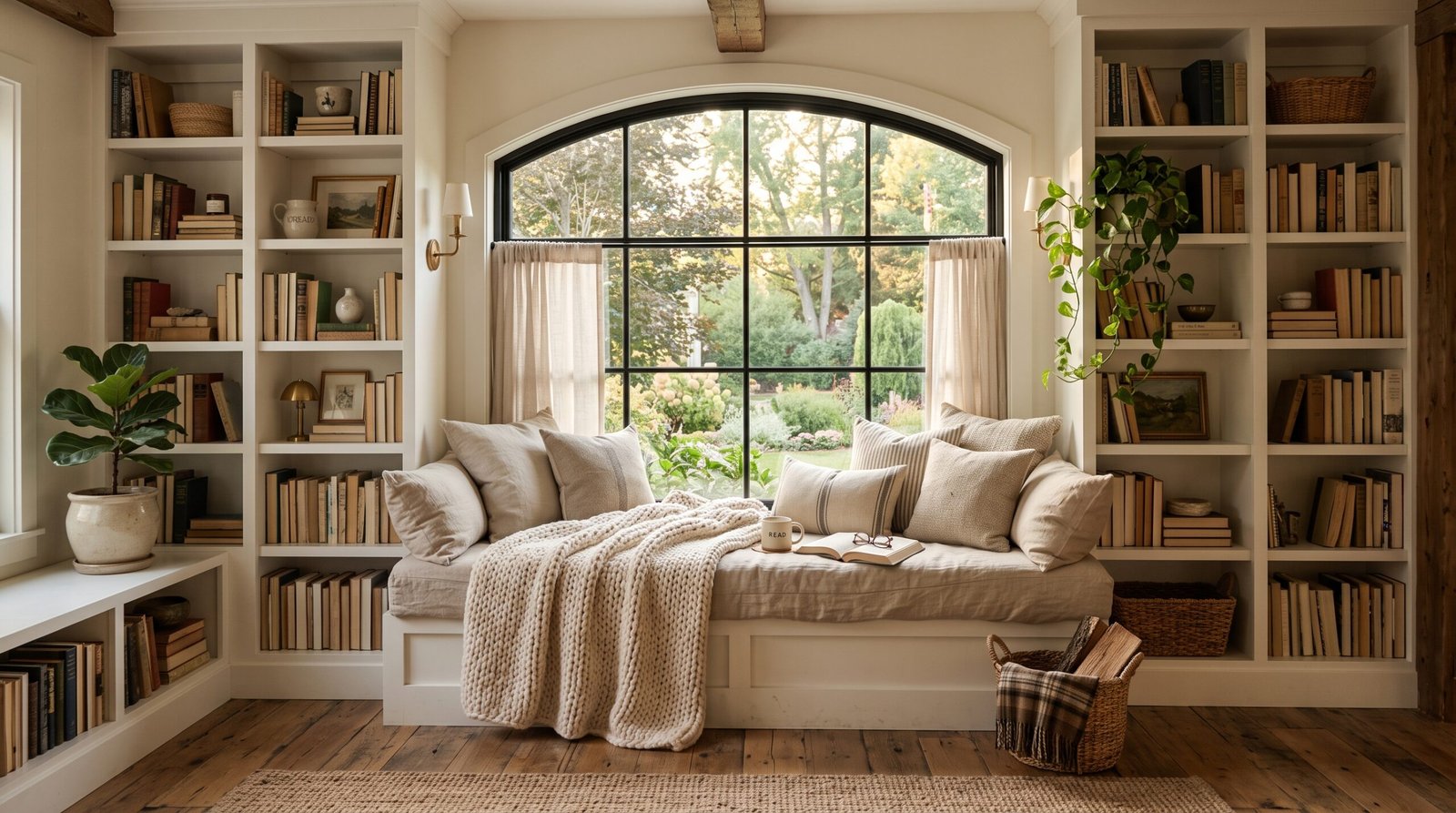
Whether you love getting lost in bestselling novels, collecting beautiful coffee table books, or simply want a peaceful corner to unwind, a thoughtfully designed home library can completely transform your home. Today’s home libraries are no longer reserved for grand mansions with floor-to-ceiling shelves—they’re becoming a popular feature in apartments, family homes, and even small reading nooks.
The best home library combines comfort, personality, and functionality. From custom built-in shelving and cozy window seats to modern minimalist designs and vintage-inspired reading rooms, there are countless ways to create a space that reflects your style while encouraging relaxation and focus.
In this guide, you’ll discover 30 inspiring home library ideas that suit every budget, room size, and decorating style. Whether you’re starting from scratch or upgrading an existing reading corner, these ideas will help you build a library you’ll enjoy for years to come.
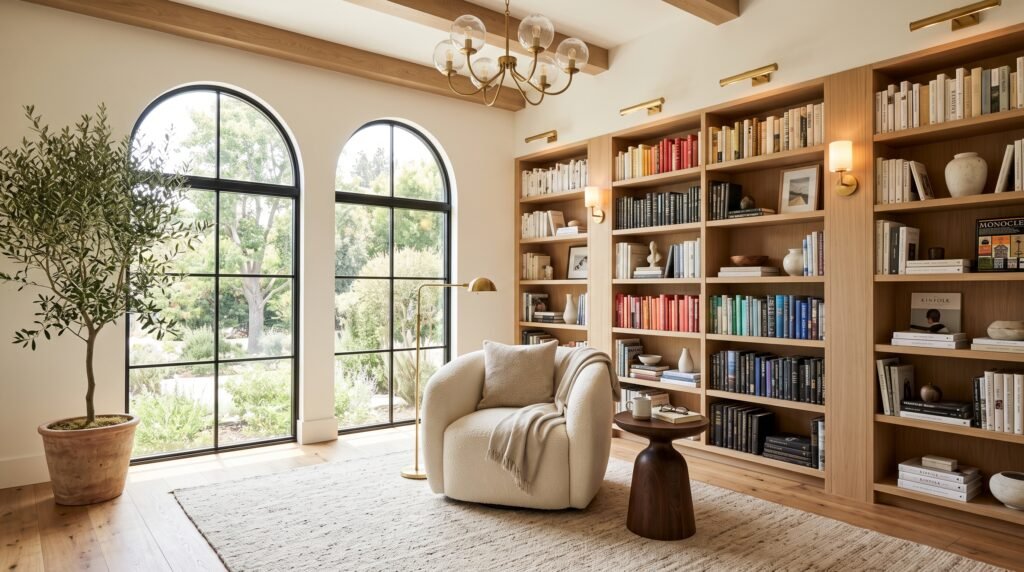
A bright and elegant home library featuring floor-to-ceiling bookshelves, warm oak wood, a comfortable linen armchair, layered lighting, a large area rug, and oversized windows filled with natural light.
Why Every Home Deserves a Library
A home library isn’t just about storing books. It’s about creating a destination inside your home where you can slow down, unplug from technology, and enjoy quiet moments. It can also serve as a stylish focal point, adding warmth, sophistication, and personality to your interior.
Even a single wall of bookshelves paired with comfortable seating can dramatically improve the atmosphere of a room. Libraries also encourage children to read more, provide an ideal workspace for remote professionals, and make excellent conversation spaces when entertaining guests.
1. Install Floor-to-Ceiling Bookshelves
Nothing feels more luxurious than shelves stretching from floor to ceiling. They maximize storage while creating an impressive architectural feature that immediately draws attention.
Choose adjustable shelving to accommodate books of different heights, and mix decorative objects like framed artwork, ceramics, candles, and plants among your books to create visual balance.
Lighter wood tones create a Scandinavian-inspired look, while darker woods like walnut bring timeless elegance.
2. Create a Cozy Reading Corner
You don’t need an entire room to enjoy a home library. A quiet corner can become your favorite retreat with just a few thoughtful additions.
Start with an oversized chair or chaise lounge, add a soft throw blanket, a plush pillow, and a side table for coffee or tea. Finish the space with a floor lamp that provides warm, comfortable lighting for evening reading.
Adding a bookshelf beside your chair keeps your favorite books within easy reach.
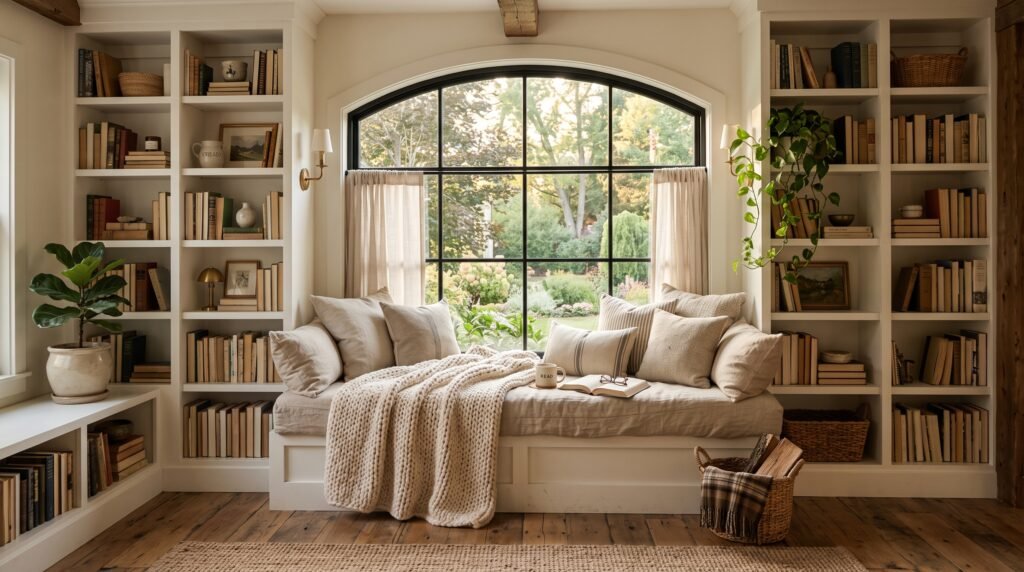
A cozy reading nook with an oversized cream armchair, knit blanket, wooden bookshelf, warm lighting, and indoor plants beside a large window.
3. Add a Sliding Library Ladder
A rolling ladder instantly gives any library a timeless, upscale appearance. Beyond its visual appeal, it also makes reaching higher shelves much easier.
Black metal ladders pair beautifully with modern interiors, while natural wood ladders complement farmhouse, traditional, and rustic homes.
Even in smaller rooms, a compact ladder system creates the feeling of a custom-designed library.
4. Mix Open Shelves with Closed Storage
Books aren’t the only items you’ll want to store. Combining open shelving with cabinets below keeps everyday clutter hidden while displaying your favorite books and decorative pieces.
Closed cabinets work well for:
- Photo albums
- Office supplies
- Children’s toys
- Board games
- Seasonal décor
This combination keeps the room looking organized without sacrificing storage.
5. Build Around Your Windows
Windows naturally create inviting reading spaces. Installing bookshelves around them makes excellent use of wall space while allowing sunlight to brighten the room.
Add a built-in bench beneath the window with comfortable cushions to create a reading nook that’s perfect for lazy afternoons.
White shelving paired with natural oak accents creates a bright, timeless design.
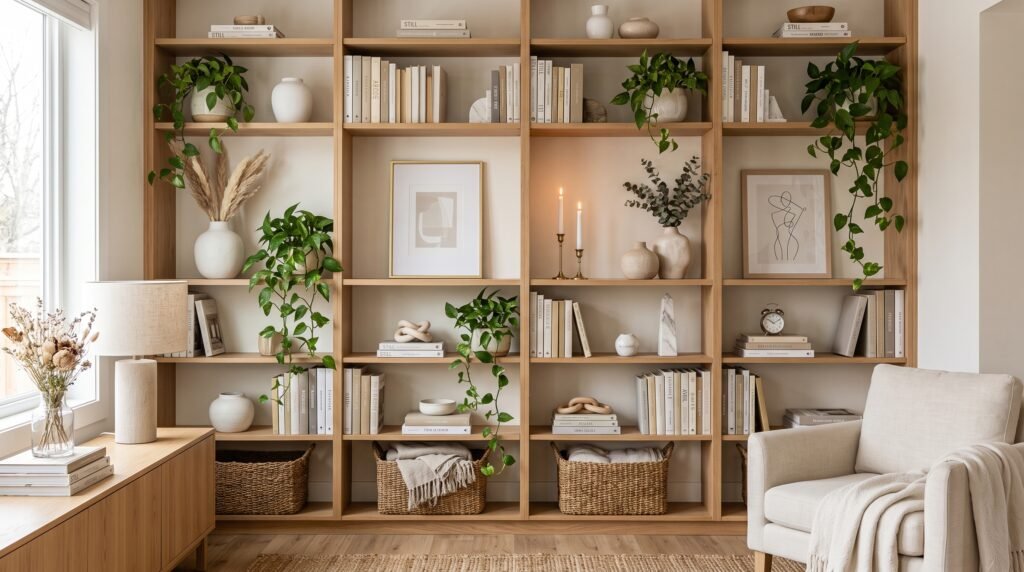
Built-in white bookshelves surrounding a large window with a cushioned window seat, soft pillows, woven baskets, and natural sunlight.
6. Decorate with Layered Lighting
Lighting is one of the most overlooked elements of library design.
Instead of relying on one overhead fixture, layer different light sources throughout the room.
Consider combining:
- Adjustable reading lamps
- Wall sconces
- Picture lights
- Table lamps
- Warm ceiling fixtures
Warm white bulbs create a relaxing atmosphere that’s comfortable for long reading sessions.
7. Organize Books by Color
If you enjoy modern interiors, arranging books by color creates an artistic display that doubles as décor.
Rainbow bookshelves add personality while making your collection visually interesting.
For a more sophisticated appearance, organize books in neutral groups like whites, creams, blacks, and earth tones.
Mix in decorative objects between sections to prevent shelves from looking overcrowded.
8. Include Comfortable Seating for Two
Libraries don’t have to be solitary spaces.
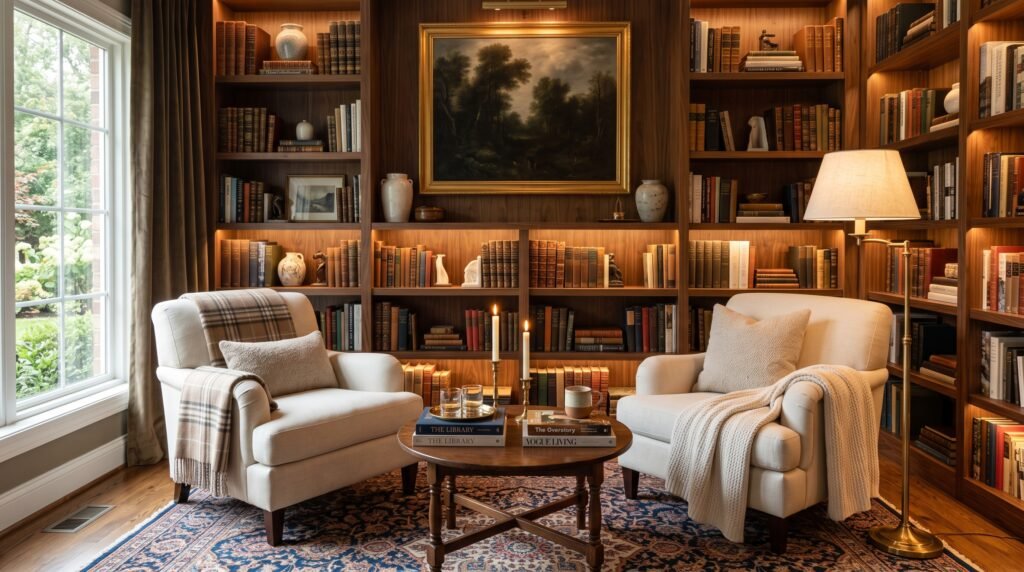
Adding two comfortable chairs encourages conversation and creates the perfect setting for book clubs or relaxing with family.
Matching armchairs with a shared side table provide balance while maintaining a welcoming atmosphere.
A soft area rug underneath ties everything together.
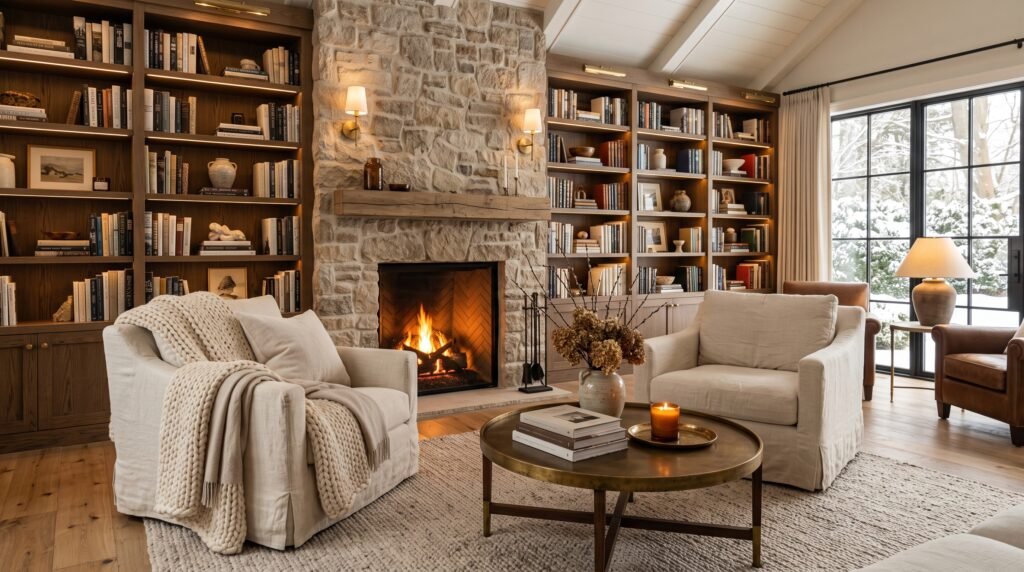
A sophisticated home library featuring two upholstered armchairs, a round wooden table, built-in bookshelves, and warm layered lighting.
9. Incorporate Natural Materials
Natural textures make any reading room feel warmer and more inviting.
Combine materials such as:
- Oak shelving
- Linen upholstery
- Leather chairs
- Woven baskets
- Stone accessories
- Wool rugs
These elements add depth while creating a timeless design that never feels trendy or dated.
Indoor plants also bring freshness and soften rows of books.
10. Display Decorative Objects Alongside Books
Beautiful libraries feel curated rather than overcrowded.
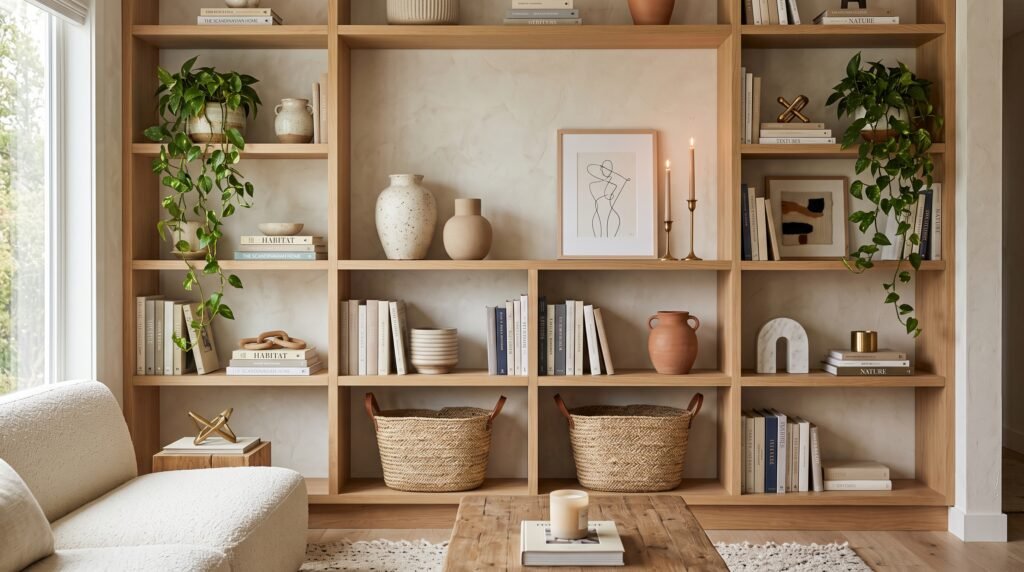
Instead of filling every shelf with books, leave breathing room for decorative accents like:
- Small sculptures
- Framed photographs
- Candlesticks
- Ceramic vases
- Vintage clocks
- Glass objects
- Potted greenery
This layered styling makes shelves feel professionally designed while showcasing your personality.
A beautifully styled bookshelf featuring books mixed with ceramic vases, framed artwork, candles, trailing plants, and decorative accessories in neutral colors.
30 Home Library Ideas: to Create a Cozy Reading Space You’ll Never Want to Leavel
11. Design a Minimalist Home Library
Minimalism doesn’t mean boring—it means intentional. A minimalist home library focuses on clean lines, uncluttered shelves, and a calming color palette that allows your book collection to take center stage.
Start with simple built-in shelves in white, light oak, or matte black. Instead of filling every shelf, leave empty space between book groupings. This creates visual breathing room and makes the library feel more spacious.
Choose furniture with sleek silhouettes, such as a low-profile armchair, a slim side table, and a simple floor lamp. Limit decorative accessories to a few carefully selected pieces like a ceramic vase or framed artwork.
A minimalist library is perfect for modern homes and encourages a peaceful reading experience without visual distractions.
12. Add a Fireplace for Ultimate Comfort
Few things feel as inviting as curling up with a good book beside a warm fireplace. If your home already has a fireplace, consider turning that room into your library.
Arrange bookshelves on either side of the fireplace to create a balanced focal point. Position comfortable seating nearby, along with a soft throw blanket and a small coffee table.
If you don’t have a traditional fireplace, an electric model can provide the same cozy atmosphere while being easier to install.
Natural wood accents, warm lighting, and layered textiles complete the lo
A cozy home library with built-in bookshelves surrounding a modern fireplace, comfortable lounge chairs, warm lighting, wood flooring, and neutral décor.
13. Create a Library in Your Home Office
If you work from home, combining your office and library is a practical way to maximize space.
Install bookshelves behind your desk to keep reference books and decorative items organized while creating an impressive video call background.
Choose ergonomic furniture that supports both work and reading. Add task lighting at the desk and softer lighting in the reading area to create separate zones within the room.
Built-in storage keeps paperwork hidden while allowing books to remain on display.
This combination creates a productive yet relaxing environment.
14. Use Dark Colors for a Dramatic Look
While bright libraries feel airy, darker spaces offer unmatched warmth and sophistication.
Paint walls in charcoal, forest green, navy blue, or deep brown to create an intimate atmosphere. Pair these rich colors with walnut shelving, brass hardware, and leather seating for a timeless appearance.
To keep the room from feeling too dark, add layered lighting, mirrors, and light-colored rugs that reflect natural light.
Dark libraries are ideal for evening reading and create a luxurious, boutique-style ambiance.
15. Install Floating Bookshelves
Floating shelves are perfect for homeowners who prefer a clean and contemporary aesthetic.
Without visible brackets, they appear to “float” on the wall, creating a sleek look that works well in apartments and smaller homes.
Arrange shelves in symmetrical rows or creative layouts, depending on your style. Mix books with small plants, framed prints, and decorative objects for a balanced display.
Floating shelves are also an affordable way to create a library without investing in custom cabinetry.
16. Include a Rolling Book Cart
A rolling book cart adds flexibility and charm to your library.
Use it to display your current reads, magazines, or children’s books. Because it’s portable, you can move it beside your favorite chair or even into another room when needed.
Metal carts suit industrial and modern interiors, while wooden carts complement farmhouse and traditional styles.
It’s also a great solution for renters who want additional storage without permanent shelvin
A modern home library with floating wood shelves, a stylish rolling book cart filled with books, indoor plants, and warm natural lighting.
17. Make Use of Hallways and Unused Walls
Many homes have underutilized spaces that can easily become mini libraries.
Long hallways, stair landings, and empty walls are excellent locations for narrow bookshelves. Built-in shelving that follows the shape of the wall maximizes storage without reducing walking space.
Add wall sconces or picture lights to brighten the shelves and make the area feel intentional rather than overlooked.
This approach transforms transitional spaces into beautiful design features.
18. Add Greenery Throughout the Library
Plants and books are a perfect pairing. Greenery softens hard lines, improves air quality, and makes the room feel alive.
Some excellent low-maintenance options include:
- Snake plants
- ZZ plants
- Pothos
- Philodendrons
- Peace lilies
- Rubber plants
Display plants on shelves, window sills, or in woven baskets on the floor. Hanging plants can also draw the eye upward and make the room feel taller.
Natural elements create a calm environment that’s perfect for reading.
19. Choose Comfortable Layered Textiles
A library should feel warm and welcoming, and textiles play a major role in achieving that goal.
Layer different materials throughout the room, such as:
- Wool area rugs
- Linen curtains
- Velvet cushions
- Chunky knit blankets
- Leather ottomans
These textures not only add visual interest but also improve comfort and absorb sound, making the room quieter and more relaxing.
Neutral colors create a timeless look, while earthy tones add warmth and depth.
20. Personalize Your Library
The most memorable home libraries reflect the personalities of the people who use them.
Display meaningful objects alongside your books, such as:
- Travel souvenirs
- Family photographs
- Vintage finds
- Artwork
- Handmade pottery
- Antique globes
- Framed quotes
- Collectibles
These details transform a beautiful room into one that feels truly personal.
Your home library should tell your story—not just through the books you read, but through the memories and objects you choose to display.
Tips for Keeping Your Home Library Organized
As your collection grows, organization becomes increasingly important. Here are a few habits that keep a library functional:
- Dust shelves regularly to protect books.
- Keep direct sunlight off valuable editions to prevent fading.
- Group books by genre, author, or color—whichever works best for you.
- Leave a little empty space on each shelf to avoid a cluttered look.
- Rotate decorative accessories seasonally to keep the room feeling fresh.
- Use bookends to support heavy books and maintain neat rows.
- Store oversized books horizontally to protect their bindings.
- Donate or recycle books you no longer read to make room for new favorites.
A well-organized library is easier to maintain and more enjoyable to use every day.
21. Create a Library Under the Stairs
The space beneath a staircase often goes unused, making it an ideal location for a compact home library. Built-in shelves can transform this awkward area into a functional storage solution while adding character to your home.
If there’s enough room, add a small bench with cushions to create a cozy reading nook. Include a wall-mounted reading light and a few decorative pillows to make the space feel inviting.
This idea works especially well in smaller homes where maximizing every square foot matters.
22. Add Built-In Cabinets for a Custom Look
Built-in cabinetry instantly gives a home library a polished, high-end appearance. Unlike freestanding bookcases, custom cabinets make better use of available wall space and create a seamless design.
Consider adding lower cabinets with doors to hide office supplies, games, or seasonal décor. Open shelving above keeps books and decorative items on display while maintaining a tidy appearance.
Painting the cabinets the same color as the walls creates a cohesive and elegant finish.
23. Showcase a Collection Beyond Books
A home library doesn’t have to display books alone. Use the shelves to highlight meaningful collections that reflect your personality.
Some popular display items include:
- Vintage cameras
- Vinyl records
- Decorative boxes
- Antique clocks
- Pottery
- Framed family photos
- Travel souvenirs
- Sculptures
- Plants
Combining books with treasured objects gives your library depth and tells a story about your interests.
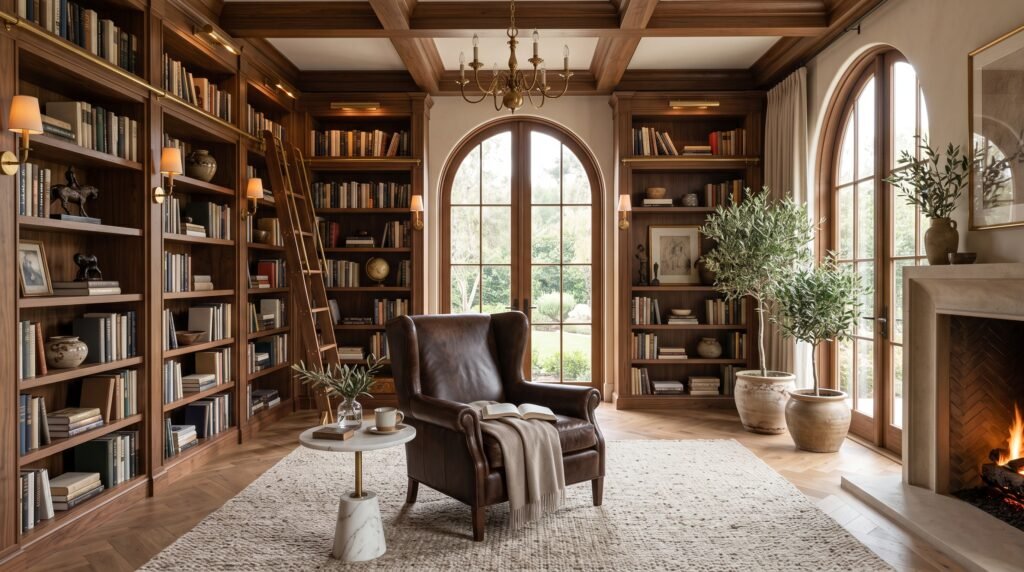
A sophisticated home library with built-in cabinetry, a rolling ladder, books mixed with artwork, indoor plants, decorative ceramics, warm lighting, and a cozy reading chair.
24. Create a Family-Friendly Reading Room
Encouraging children to read starts with creating an inviting environment. Design a family-friendly library by including shelves at different heights so younger readers can easily access their favorite books.
Add colorful storage baskets for toys and picture books, along with soft bean bags or floor cushions for comfortable seating.
A chalkboard wall, educational artwork, or a reading tracker can make the space even more engaging for children while keeping the room stylish enough for adults.
25. Choose Comfortable Seating That Invites Long Reading Sessions
Your seating choice can determine how much time you actually spend in your library. While stylish furniture is important, comfort should always come first.
Look for deep armchairs, recliners, or chaise lounges with supportive cushions. Pair them with an ottoman so you can stretch out while reading.
A nearby side table provides space for coffee, tea, reading glasses, and bookmarks, making your library both beautiful and practical.
26. Use Rugs to Define the Space
Area rugs do much more than add softness underfoot—they help define the reading zone and improve acoustics by reducing echoes.
Choose a rug large enough for the front legs of your furniture to sit on. Wool rugs are durable and naturally soft, while patterned rugs can hide everyday wear.
Neutral rugs complement nearly every decorating style, whereas bold patterns can become a statement piece in a minimalist library.
27. Introduce Artwork That Inspires
Artwork adds personality and visual interest without overwhelming the room.
Consider displaying:
- Framed literary quotes
- Botanical prints
- Abstract paintings
- Black-and-white photography
- Vintage maps
- Landscape artwork
Hang larger pieces above seating areas or lean smaller frames on bookshelves for a casual, layered look.
Choose artwork that complements your color palette and reflects the calming atmosphere of the space.
28. Embrace Seasonal Styling
Refreshing your library throughout the year keeps it feeling new and inviting.
In spring, decorate with fresh flowers and pastel accents. Summer calls for woven textures and light fabrics. During autumn, add warm-toned blankets, candles, and dried foliage. Winter is the perfect season for chunky knit throws, velvet cushions, and soft lighting.
Small seasonal changes can dramatically alter the mood of the room without requiring a complete redesign.
29. Incorporate Smart Technology
Modern home libraries can benefit from subtle technology without sacrificing comfort.
Smart lighting systems allow you to adjust brightness and color temperature depending on the time of day. Voice-controlled assistants can play relaxing background music or audiobooks, while hidden charging stations keep devices powered without creating clutter.
If you enjoy digital reading, include a dedicated charging shelf for your e-reader or tablet.
Technology should enhance the reading experience while remaining discreet.
30. Design a Library That Reflects Your Lifestyle
The most successful home libraries are designed around how you live rather than following trends.
If you work from home, prioritize a functional desk and reference shelving. If you enjoy entertaining, create conversational seating. If reading is your favorite way to relax, invest in luxurious seating and soft lighting.
Remember that your library doesn’t have to be completed all at once. Building it gradually allows you to collect books, furniture, and décor that truly matter to you.
A thoughtfully designed library will continue to evolve over time, becoming one of the most cherished spaces in your home.
Common Home Library Design Mistakes to Avoid
Even the most beautiful spaces can become less functional if a few key details are overlooked. Avoid these common mistakes when designing your library:
- Overcrowding shelves with too many books or decorative accessories.
- Relying on a single overhead light instead of layered lighting.
- Choosing uncomfortable seating that discourages long reading sessions.
- Ignoring storage for items like magazines, office supplies, or electronics.
- Using dark paint in rooms with very little natural light without adding adequate lighting.
- Forgetting to leave empty shelf space for future book additions.
- Neglecting proper ventilation, which helps preserve books over time.
Keeping these points in mind will help you create a library that remains organized, functional, and enjoyable for years.
Final Thoughts
A home library is more than a place to store books—it’s a retreat where you can relax, learn, and recharge. Whether you have an entire room or a simple reading corner, thoughtful design choices can transform the space into one of the most inviting areas of your home.
From floor-to-ceiling bookshelves and cozy reading nooks to built-in cabinetry, layered lighting, and personalized décor, every detail contributes to a library that feels both functional and inspiring. Don’t feel pressured to complete your library all at once. Start with the essentials, add pieces over time, and let your collection grow naturally.
The best home libraries are personal. They reflect your interests, encourage quiet moments, and provide a welcoming escape from everyday life. By combining comfort, organization, and timeless design, you can create a reading space you’ll look forward to enjoying every day.