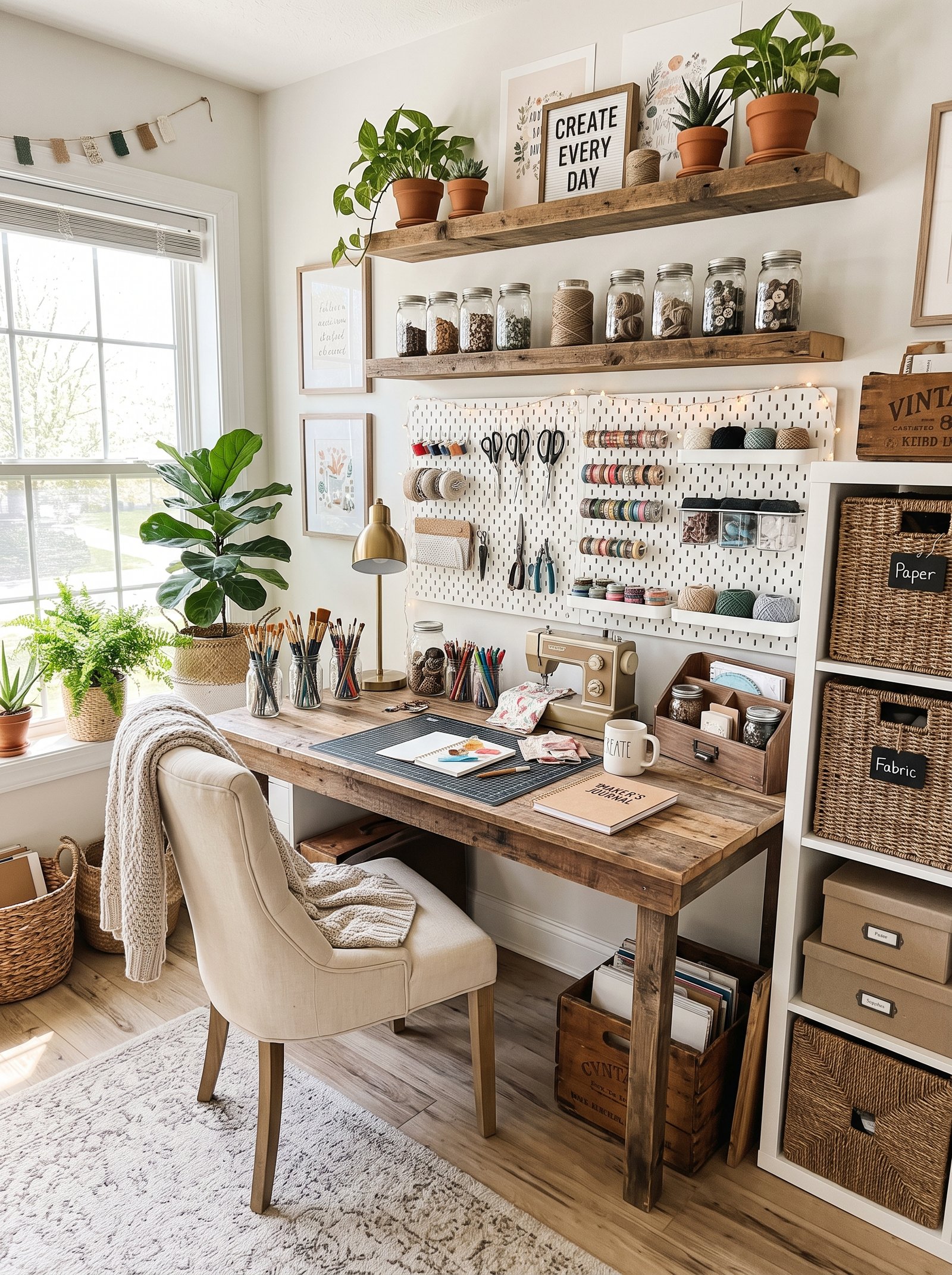
Craft Room Ideas: 25 Creative and Organized Spaces for Every DIY Lover
Whether you love sewing, painting, scrapbooking, knitting, Cricut crafting, or DIY home décor projects, having a dedicated craft room can completely transform your creative experience. Instead of searching for supplies or cleaning up after every project, a well-designed craft room keeps everything organized, accessible, and inspiring.
A beautiful craft room isn’t just about storage—it’s about creating a space where ideas flow naturally. The right combination of furniture, lighting, organization, and décor can make even the smallest room feel like a professional creative studio. From compact corners to luxurious hobby rooms, there are countless ways to design a craft space that matches your style and workflow.
In this guide, you’ll discover the best craft room ideas for every budget and room size. Whether you’re converting a spare bedroom, organizing a small office, or creating a multi-purpose hobby room, these ideas will help you design a practical and Pinterest-worthy space you’ll love spending time in.
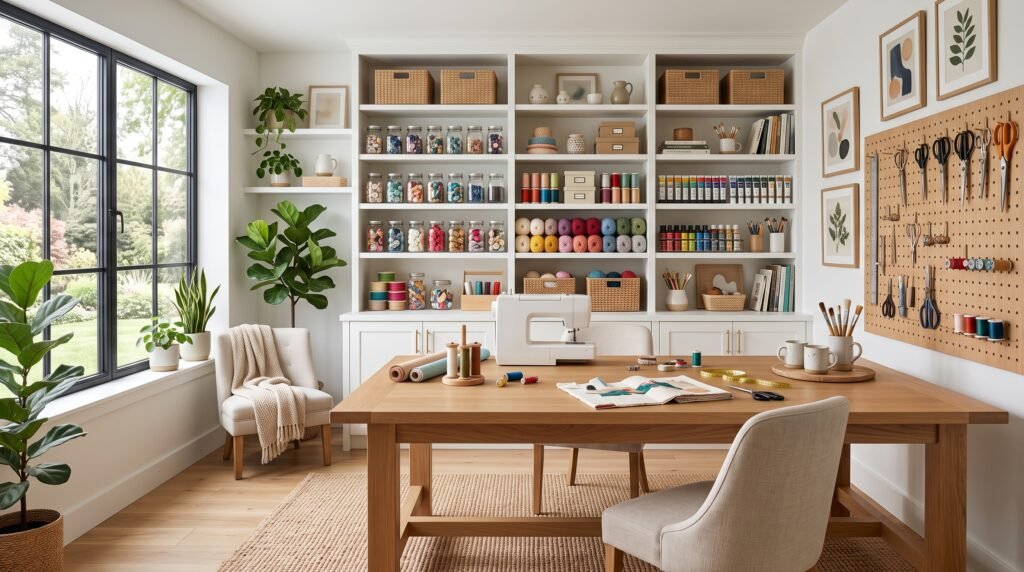
A bright and organized craft room featuring white cabinets, a large wooden worktable, open shelving filled with colorful craft supplies, woven baskets, indoor plants, natural sunlight, and modern minimalist décor.
Why Every Home Needs a Dedicated Craft Room
A dedicated craft room offers much more than extra storage. It creates an environment that encourages creativity while making every project easier to complete.
Instead of packing away supplies after each session, you can leave projects in progress and return whenever inspiration strikes. This saves time, reduces frustration, and allows you to enjoy crafting more often.
Some of the biggest benefits include:
- Better organization
- Faster project setup
- Increased creativity
- Less household clutter
- Improved productivity
- Easier cleaning
- A relaxing personal retreat
Whether your crafting hobby is occasional or part of a small business, investing in an organized workspace makes every creative session more enjoyable.
1. Choose the Right Location
The foundation of every great craft room starts with selecting the right space.
Many homeowners convert:
- Spare bedrooms
- Finished basements
- Guest rooms
- Home offices
- Large closets
- Attics
- Sunrooms
- Unused corners
If space is limited, even a small section of a bedroom can become an efficient crafting area with the right furniture.
Look for a room that offers:
- Plenty of natural light
- Electrical outlets
- Quiet surroundings
- Enough wall space
- Good ventilation
Natural light is especially important for painting, sewing, embroidery, and detailed projects.
2. Invest in a Large Work Surface
Every craft room needs one feature above everything else:
A spacious work table.
Your work surface should provide enough room for:
- Cutting fabric
- Painting
- Cricut projects
- Scrapbooking
- Wrapping gifts
- DIY décor
- Jewelry making
Many professional craft rooms use large island tables because they allow access from every side.
Popular options include:
- Solid wood tables
- Adjustable-height desks
- Folding workstations
- Modular craft tables
- Rolling worktables
If your room is small, choose a folding table that can expand when needed.
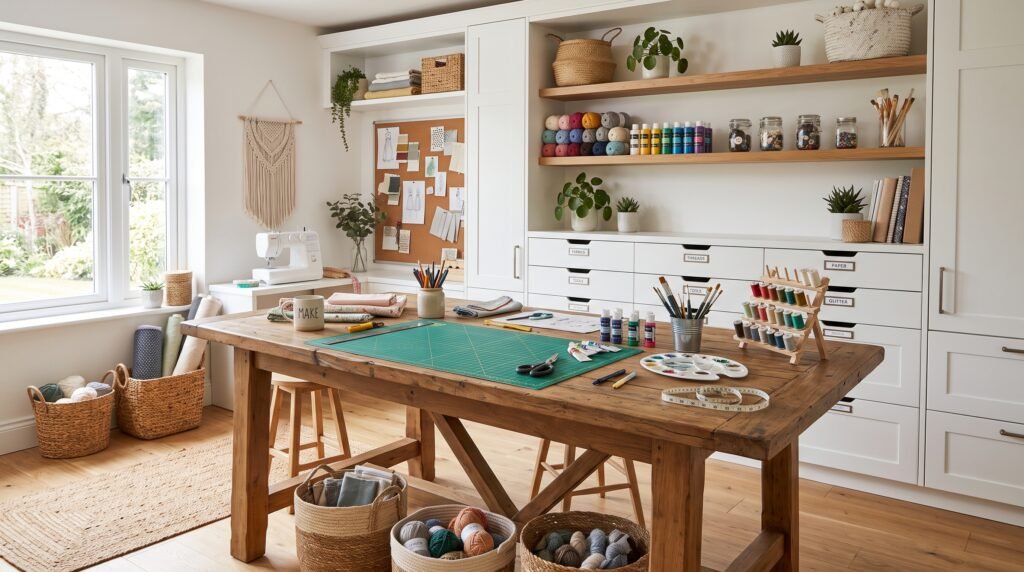
A spacious craft room featuring a large wooden island table surrounded by organized storage cabinets, colorful craft materials, bright natural lighting, modern white shelving, and stylish home décor.
3. Maximize Vertical Storage
One of the biggest mistakes people make is relying only on floor storage.
Walls provide valuable storage space without making the room feel crowded.
Excellent vertical storage ideas include:
Floating Shelves
Floating shelves display supplies while keeping them within easy reach.
Perfect for:
- Paint
- Yarn
- Fabric
- Decorative jars
- Cricut tools
- Plants
- Books
Pegboards
Pegboards remain one of the most popular craft room organization solutions.
You can hang:
- Scissors
- Paint brushes
- Rulers
- Glue guns
- Measuring tape
- Ribbon
- Small baskets
Everything stays visible, organized, and easy to grab.
Wall Cabinets
Closed cabinets hide visual clutter while protecting supplies from dust.
They work especially well for:
- Vinyl rolls
- Fabric
- Paper
- Adhesives
- Paint
4. Organize Supplies by Category
An organized craft room saves hours every month.
Instead of storing everything randomly, divide supplies into categories.
Examples include:
Sewing Supplies
- Thread
- Needles
- Fabric
- Patterns
- Pins
- Measuring tape
Paper Crafts
- Cardstock
- Stickers
- Washi tape
- Punches
- Cutting tools
Painting Supplies
- Acrylic paint
- Watercolors
- Brushes
- Easels
- Palettes
Cricut Supplies
- Vinyl
- Transfer tape
- Cutting mats
- Blades
- Weeding tools
Label each drawer and storage bin so everything has a designated place.
Transparent containers make it easy to identify supplies without opening every box
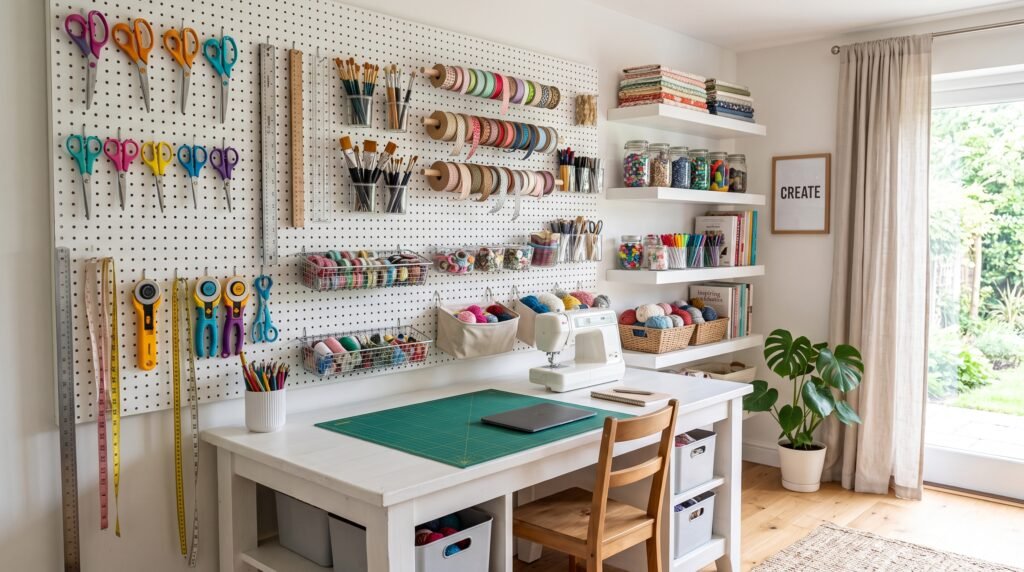
A modern craft room with a large pegboard wall displaying scissors, rulers, ribbons, paint brushes, cutting tools, baskets, and colorful crafting accessories arranged in a clean, organized layout.
5. Use Clear Storage Containers
Clear storage bins are one of the easiest ways to improve organization.
Unlike solid-colored containers, transparent bins let you immediately see what’s inside.
They’re perfect for storing:
- Buttons
- Beads
- Fabric scraps
- Paint
- Glitter
- Ribbon
- Thread
- Sewing accessories
Stackable containers maximize shelf space while keeping everything protected from dust.
For even better organization, add printed labels to each container. Consistent labeling creates a polished look and makes it easier to find exactly what you need during a project.
6. Create a Dedicated Sewing Station
If sewing is one of your favorite hobbies, design a workstation specifically for it.
A dedicated sewing area keeps your machine ready to use without needing to set it up every time.
Your sewing station should include:
- A sturdy sewing table
- Adjustable chair
- Thread rack
- Fabric storage
- Rotary cutting mat
- Ironing board nearby
- Task lighting
Keep frequently used tools like pins, scissors, seam rippers, and measuring tapes within arm’s reach to improve efficiency.
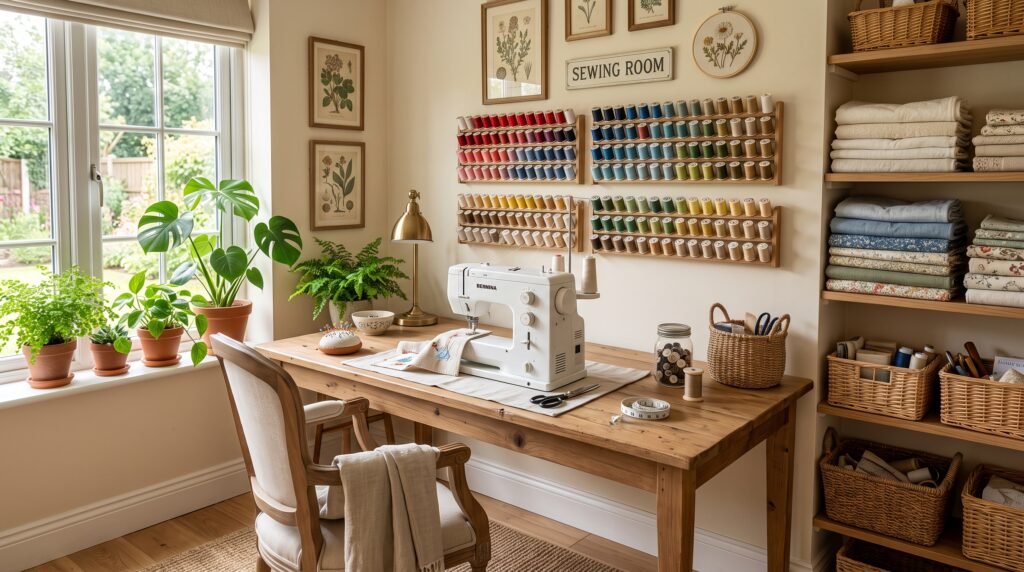
A cozy sewing corner with a white sewing machine on a wooden desk, neatly folded fabrics, wall-mounted thread racks, woven storage baskets, bright natural light, and soft neutral décor.
7. Design the Perfect Cricut Workspace
If you own a Cricut or other cutting machine, creating a dedicated workstation can make your crafting process smoother and more enjoyable. Since these machines often require accessories like cutting mats, vinyl rolls, transfer tape, and specialty tools, keeping everything in one organized area saves time and reduces clutter.
A functional Cricut station should include:
- A spacious desk with enough room for the machine and laptop
- Drawers for storing tools and accessories
- Vertical holders for vinyl rolls
- Nearby power outlets
- Good task lighting
- Open shelves for frequently used materials
Organize vinyl by color and type using labeled bins or wall-mounted racks. Store transfer tape, blades, scoring tools, and weeding tools together so they’re always within reach.
If you frequently work on custom projects, consider using a rolling storage cart that can be moved around your craft room as needed.
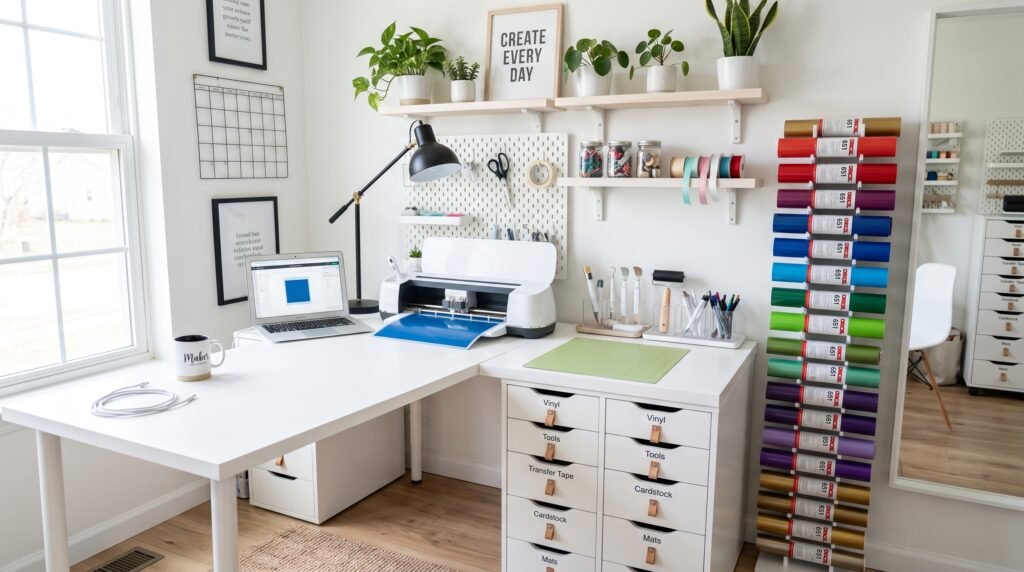
A modern Cricut workspace with a white desk, cutting machine, colorful vinyl rolls stored vertically, labeled drawers, open shelving, indoor plants, and bright natural light in a clean minimalist craft room.
8. Add a Rolling Storage Cart
One of the most versatile additions to any craft room is a rolling storage cart. These compact carts provide flexible storage that can easily be moved wherever you’re working.
Use a rolling cart to organize:
- Paint supplies
- Sewing tools
- Scrapbooking materials
- Cricut accessories
- Adhesives
- Brushes
- Pens and markers
- Hot glue guns
Choose a cart with multiple tiers and clear containers so everything remains visible. You can even dedicate each shelf to a different hobby if you enjoy a variety of crafts.
Rolling carts are especially useful in small craft rooms where permanent storage is limited.
9. Install Open Shelving for Easy Access
Open shelves are both practical and decorative. Instead of hiding supplies behind cabinet doors, display your favorite materials in an organized way that also adds personality to the room.
Arrange shelves with:
- Matching storage bins
- Glass jars filled with buttons or beads
- Decorative baskets
- Small indoor plants
- Craft books
- Finished DIY projects
- Framed artwork
- Color-coordinated supplies
To create a Pinterest-worthy look, group items by color and size while leaving some empty space between objects to avoid a cluttered appearance.
10. Improve Lighting for Better Creativity
Lighting plays a major role in how comfortable and productive your craft room feels.
Whenever possible, position your main worktable near a window to take advantage of natural daylight. Natural light makes it easier to see true colors and reduces eye strain during detailed work.
Layer different types of lighting throughout the room:
Natural Light
Perfect for painting, embroidery, sewing, and paper crafts.
Ceiling Lighting
Bright overhead fixtures ensure the entire room is evenly illuminated.
Task Lamps
Adjustable desk lamps provide focused lighting for detailed projects.
Decorative Lighting
Wall sconces or warm LED strips add a cozy atmosphere while enhancing the room’s style.
Good lighting not only improves your work but also makes the space feel larger and more inviting.
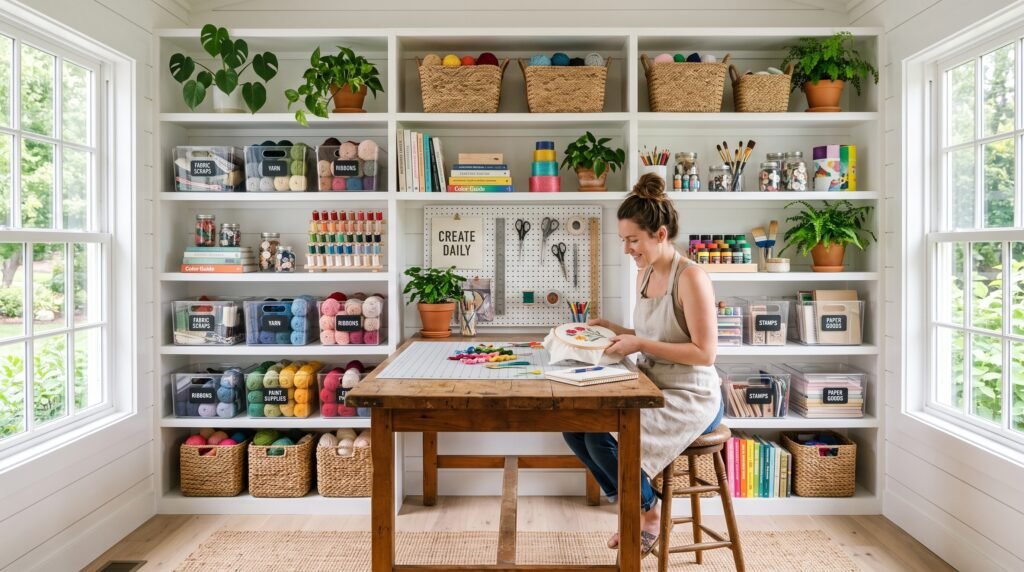
A bright craft room featuring open white shelves, decorative storage baskets, labeled containers, colorful supplies, a large window with natural sunlight, indoor plants, and a spacious wooden worktable.
11. Choose Comfortable Seating
Creative projects often last several hours, making a comfortable chair essential.
Look for a chair that offers:
- Adjustable height
- Lumbar support
- Soft cushioning
- Smooth rolling wheels
- Durable fabric that’s easy to clean
If multiple people use the craft room, consider adding an extra chair or a small bench so friends or family can join in on projects.
Comfortable seating helps prevent back pain and allows you to focus on your creativity instead of discomfort.
12. Keep Frequently Used Tools Within Reach
Efficiency is all about accessibility. Store your most-used tools where you can grab them without interrupting your workflow.
Popular storage ideas include:
- Magnetic strips for scissors
- Small desktop organizers
- Wall-mounted cups for pens and brushes
- Lazy Susan organizers
- Drawer dividers
- Hanging baskets
Keeping essentials nearby reduces unnecessary movement and makes crafting much more enjoyable.
13. Decorate with Inspirational Wall Art
Your craft room should motivate you every time you walk in. Adding decorative elements creates a welcoming atmosphere while reflecting your personality.
Popular décor ideas include:
- Framed inspirational quotes
- DIY artwork
- Pegboard displays
- Floating shelves with plants
- Corkboards for project inspiration
- Vision boards
- Color swatch displays
Mix practical storage with decorative accents to create a room that’s both functional and beautiful.
14. Use Labels Everywhere
One of the simplest organization tips is also one of the most effective: label everything.
Labels help everyone in the household know where supplies belong and make cleanup much easier.
Label:
- Drawers
- Storage bins
- Shelves
- Cabinets
- File folders
- Fabric containers
- Paper organizers
A label maker creates a clean, professional look, but printable labels or handwritten tags can work just as well.
Image 7: Stylish Organized Craft Storage
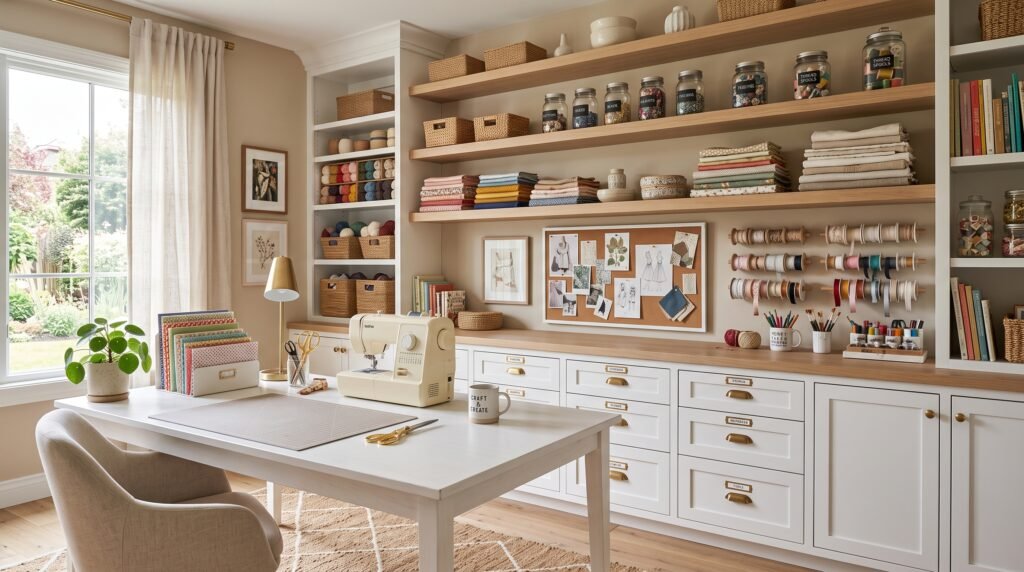
A beautifully organized craft room with labeled drawers, woven baskets, floating shelves, decorative jars, colorful craft supplies, neutral décor, and a bright, inviting workspace.
15. Incorporate Multi-Purpose Furniture
If your craft room also serves as a guest room, office, or hobby space, choose furniture that can perform multiple functions.
Great options include:
- Storage ottomans
- Fold-down desks
- Murphy tables
- Bookshelves with cabinets
- Benches with hidden storage
- Expandable worktables
These pieces maximize functionality without sacrificing style.
A thoughtfully designed multi-purpose room allows you to enjoy crafting while keeping the space flexible for other household needs.
16. Make the Most of a Small Craft Room
Not everyone has an entire spare room to dedicate to crafting, but that doesn’t mean you can’t create a functional and inspiring workspace. With thoughtful planning, even a small room or unused corner can become an efficient craft area.
To maximize a compact space:
- Use vertical storage instead of bulky cabinets.
- Install floating shelves above your desk.
- Choose furniture with built-in storage.
- Add a fold-down or wall-mounted worktable.
- Use stackable clear bins for supplies.
- Keep only your most-used tools within easy reach.
A neutral color palette can also make a small craft room feel larger and brighter. White walls, light wood furniture, and plenty of natural light help create an open, airy atmosphere.
17. Design a Budget-Friendly DIY Craft Room
Creating a beautiful craft room doesn’t have to cost a fortune. Many stylish craft spaces are built using affordable furniture, thrifted finds, and DIY storage solutions.
Budget-friendly ideas include:
- Repurpose an old dining table as a workbench.
- Paint secondhand bookshelves for a fresh look.
- Use mason jars to organize brushes, pens, and buttons.
- Turn wooden crates into wall shelves.
- Install inexpensive pegboards for vertical storage.
- Reuse glass containers for beads, ribbon, and sewing supplies.
Invest in quality pieces only where they matter most, such as a comfortable chair and a sturdy work surface. You can upgrade décor and storage over time as your needs grow.
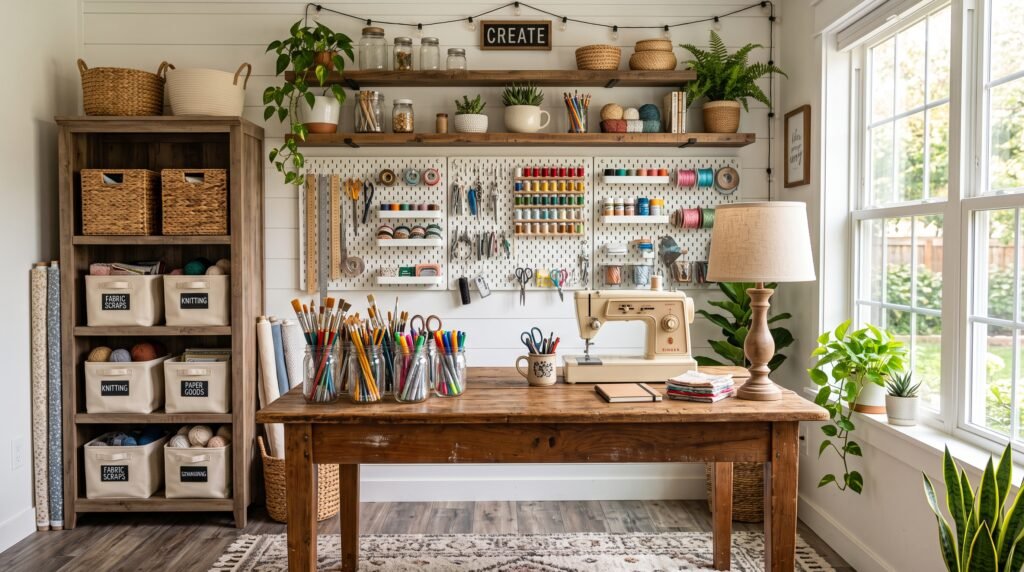
A charming DIY craft room featuring a repurposed wooden desk, floating shelves made from reclaimed wood, pegboard organization, woven baskets, mason jars filled with colorful craft supplies, indoor plants, and bright natural light in a cozy modern farmhouse style.
18. Choose a Color Palette That Inspires Creativity
Color has a significant impact on mood and productivity. The right palette can make your craft room feel calm, energetic, or sophisticated.
White and Natural Wood
A timeless combination that keeps the room feeling clean and spacious.
Soft Pastels
Blush pink, sage green, sky blue, and lavender create a cheerful, creative atmosphere.
Neutral Tones
Beige, cream, gray, and taupe offer a relaxing environment that lets colorful supplies stand out.
Bold Accent Colors
If you love vibrant spaces, add pops of mustard yellow, teal, coral, or navy through décor, storage bins, or artwork.
Choose a palette that reflects your personality while maintaining a clutter-free appearance.
19. Add Personal Touches
Your craft room should feel uniquely yours. Personalizing the space makes it more enjoyable and encourages creativity.
Ideas include:
- Display your finished DIY projects.
- Hang framed artwork or inspirational quotes.
- Add family photos.
- Decorate with houseplants.
- Use decorative storage baskets.
- Include a cozy rug and soft curtains.
- Add scented candles or a diffuser.
These small details help transform a functional workspace into a place you’ll genuinely enjoy spending time.
20. Keep Your Craft Room Organized Long-Term
An organized craft room requires regular maintenance. Without a simple routine, supplies can quickly pile up and make the space feel overwhelming.
Try these habits:
- Return tools to their designated spot after every project.
- Declutter once a month.
- Donate supplies you no longer use.
- Restock essentials before they run out.
- Wipe down work surfaces regularly.
- Empty trash bins after each crafting session.
Spending just 10–15 minutes tidying up after each project keeps your room organized and ready for your next creative idea.
Common Craft Room Mistakes to Avoid
Even beautifully designed craft rooms can become frustrating if common planning mistakes are overlooked.
Avoid these pitfalls:
- Buying storage before sorting supplies.
- Choosing style over functionality.
- Ignoring vertical wall space.
- Working with poor lighting.
- Using unlabeled storage bins.
- Purchasing furniture that’s too large for the room.
- Keeping unnecessary supplies “just in case.”
- Forgetting to leave enough workspace.
Planning your layout before buying furniture will save both money and space.
Frequently Asked Questions
What is the ideal size for a craft room?
There is no perfect size. A small corner with smart storage can work just as well as a large dedicated room. The key is maximizing organization and choosing furniture that fits your available space.
How can I organize lots of craft supplies?
Sort items into categories, store them in clear labeled containers, use vertical shelving, and keep frequently used tools close to your workstation.
What’s the best desk for a craft room?
A large, sturdy table with a smooth surface works best. If space is limited, consider an adjustable or folding craft table.
What lighting is best for crafting?
Natural daylight combined with bright LED overhead lights and an adjustable task lamp provides the best visibility for detailed work.
How do I make my craft room look Pinterest-worthy?
Use matching storage containers, a cohesive color palette, decorative baskets, floating shelves, greenery, and stylish wall décor while keeping surfaces uncluttered.
Final Thoughts
A thoughtfully designed craft room is more than just a place to store supplies—it’s a space that inspires creativity, improves productivity, and makes every project more enjoyable. Whether you’re creating handmade gifts, sewing clothing, painting artwork, or exploring new DIY hobbies, an organized workspace helps you focus on what you love most.
Start with the basics: a spacious work surface, comfortable seating, good lighting, and smart storage. Then personalize the room with colors, décor, and displays that reflect your style. Even the smallest craft room can become a beautiful, functional retreat with the right planning.
Remember that your craft room doesn’t have to be completed all at once. Add storage, furniture, and decorative touches gradually as your needs evolve. Over time, you’ll create a space that supports your creativity and makes every crafting session a pleasure.
With these 25 craft room ideas, you’ll be well on your way to designing a practical, organized, and Pinterest-worthy creative space that you’ll enjoy for years to come.