Sunken Living Room Ideas: 15 Stunning Conversation Pit Designs for a Cozy Modern Home
Modern versions are also very different from the bold, heavily carpeted conversation pits associated with the 1960s and 1970s. Today, designers are pairing lowered seating areas with warm oak, creamy upholstery, natural stone, linen fabrics, sculptural lighting, oversized windows, and soft neutral colors.
Whether you are planning a new home, considering a renovation, or simply collecting inspiration, these sunken living room ideas show just how versatile this architectural feature can be.
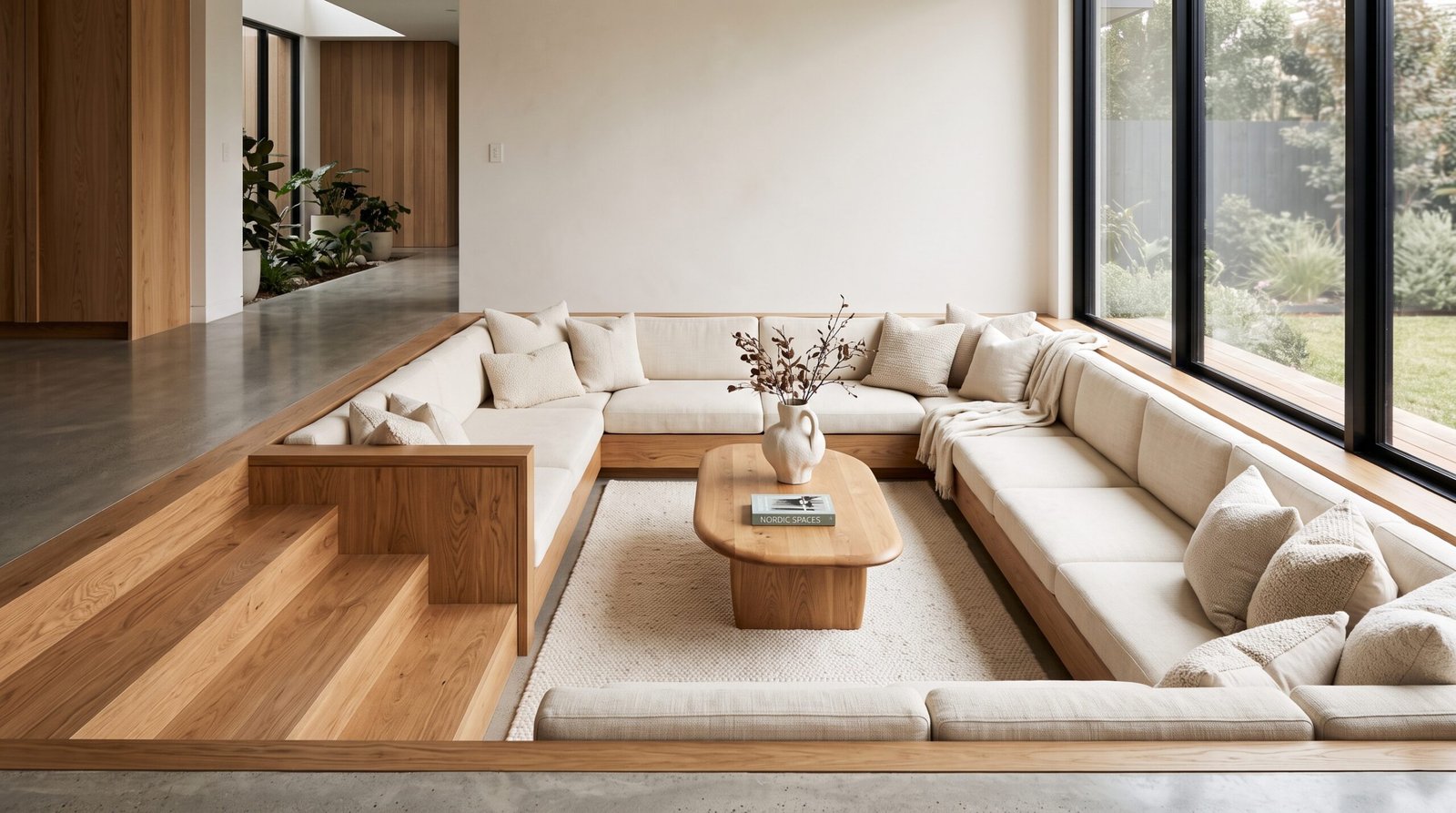
1. Create a Warm Neutral Sunken Living Room
One of the easiest ways to make a conversation pit feel contemporary is to use a warm neutral palette.
Instead of introducing too many competing colors, build the space around shades of cream, oatmeal, beige, taupe, and warm white. These tones allow the unusual architecture of the lowered floor to become the main attraction.
Choose generous upholstered seating around the perimeter of the sunken area. A low-profile sofa with deep cushions can create an especially comfortable atmosphere. Add a large textured rug underneath to visually soften the floor and make the seating zone feel even more inviting.
Natural wood provides an important contrast. A chunky oak coffee table, wooden steps, or slim timber details around the edge of the pit can prevent an all-neutral interior from appearing flat.
Finish the space with linen cushions, a ceramic vase, a few carefully selected books, and subtle greenery.
The result is sophisticated without feeling formal.
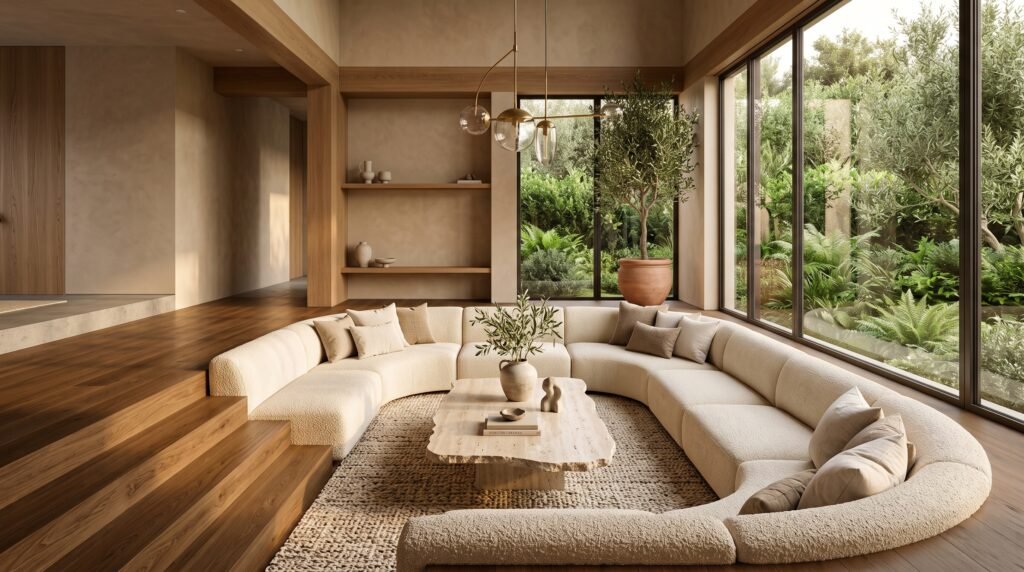
2. Design a Classic Conversation Pit
If you love the nostalgic character of original sunken lounges, take inspiration directly from the classic conversation pit.
The traditional design usually places seating around three or four sides of a lowered square or rectangular area. Everyone faces inward, naturally encouraging conversation.
Rather than recreating a retro interior exactly, borrow the basic layout and modernize the materials.
For example, use creamy boucle or textured linen upholstery instead of brightly colored patterned fabrics. Replace heavy carpeting with pale oak flooring and a soft wool rug. A simple round or square coffee table can occupy the center.
Integrated seating works particularly well because it emphasizes the architectural quality of the space.
Keep the backs relatively low so the pit remains visually connected with the surrounding room. From outside the lowered area, you should still be able to see across the interior.
This creates separation without sacrificing openness.
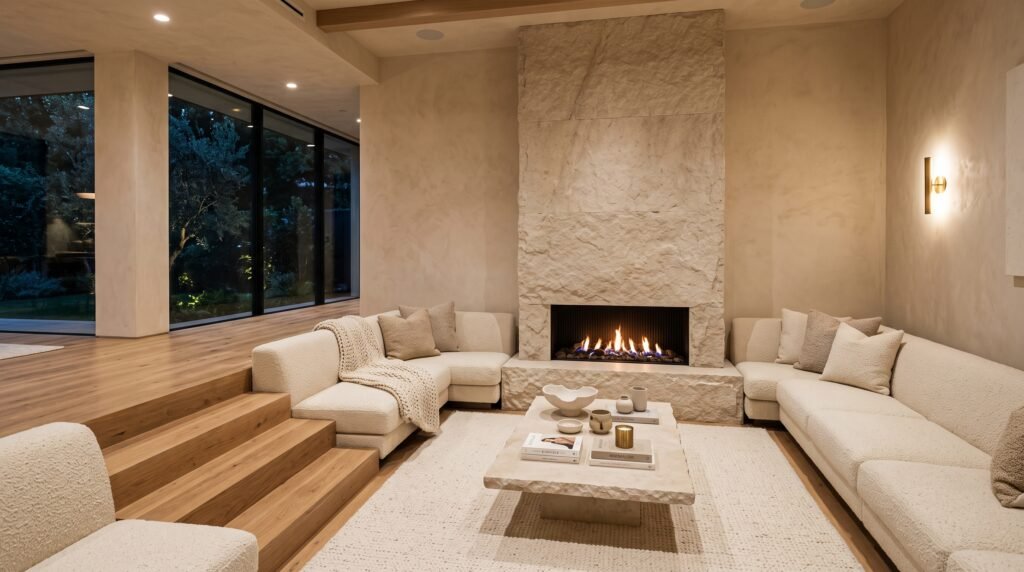
3. Combine a Sunken Lounge With a Fireplace
Few combinations feel more inviting than a conversation pit arranged around a fireplace.
A fireplace naturally creates a focal point, while the lowered seating encourages everyone to gather around it. Together, they can turn a large living room into an intimate retreat.
For a contemporary look, consider a minimalist plaster fireplace with clean architectural lines. Limestone, travertine, or softly veined stone can also introduce subtle texture.
Arrange the seating so the fireplace remains visible from almost every position.
Deep sofas are ideal for relaxed evenings, while a pair of oversized cushions or upholstered benches can provide additional flexibility.
Keep accessories restrained. A few sculptural objects on the mantel, stacked books on the coffee table, and one large vase may be all the decoration you need.
Warm lighting becomes especially important after sunset. Wall sconces, concealed lighting, or a sculptural floor lamp can complement the glow of the fire.
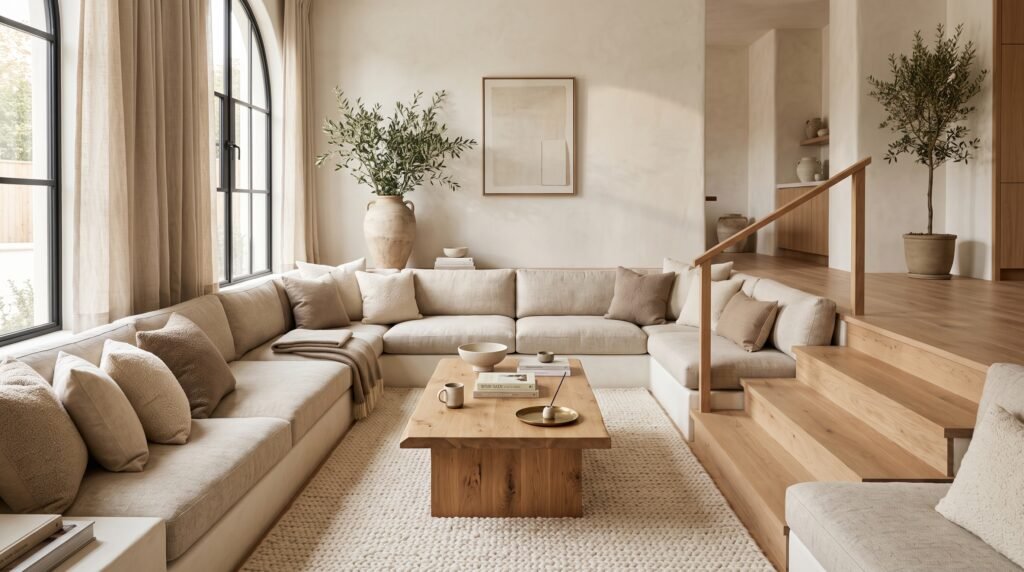
4. Try an Organic Modern Conversation Pit
Organic modern interiors are a natural match for sunken living rooms.
Both styles emphasize relaxed spaces, architectural simplicity, and a strong connection to natural materials.
Start with a palette inspired by nature: warm white, sand, mushroom, soft brown, and muted olive. Use materials such as oak, linen, wool, stone, plaster, and handmade ceramics.
Instead of sharp furniture silhouettes, introduce gentle curves.
A curved sectional following the perimeter of the pit can make the lowered area feel almost cocoon-like. Pair it with an irregular stone or wooden coffee table rather than a perfectly geometric design.
Plants can add another layer of softness. One large indoor tree placed beside the pit often creates more impact than several small plants scattered around the room.
The goal is not to fill every corner.
Allow empty space to remain visible so the architectural shape of the conversation pit has room to breathe.
5. Build a Sunken Living Room Beside Large Windows
Location can completely change the experience of a lowered lounge.
Placing a sunken living room beside floor-to-ceiling windows creates a beautiful connection between the interior and the landscape outside.
Imagine stepping down into a cozy seating area while looking directly toward a garden, forest, courtyard, or mountain view.
Keep furniture low so it does not obstruct the windows. Pale upholstery also helps daylight travel through the room.
If privacy is necessary, use sheer linen curtains rather than heavy drapes. They filter harsh sunlight while maintaining the bright, airy atmosphere.
A low wooden coffee table and a textured rug can complete the arrangement without competing with the scenery.
At night, subtle recessed lighting around the steps can make the architectural change in floor level easier to see while also producing a dramatic floating effect.
6. Add Curved Seating for a Softer Look
Sunken rooms do not need to be square.
Curved conversation pits can feel even more luxurious because their shape naturally draws attention toward the center.
Consider a semicircular or fully rounded seating arrangement with upholstered benches following the shape of the lowered floor.
Curves work particularly well in spacious modern interiors where there is enough room to appreciate the unusual geometry from multiple angles.
Choose a round coffee table to reinforce the layout. Alternatively, an organic-shaped table can introduce subtle asymmetry.
Boucle, brushed cotton, velvet, and textured linen all work beautifully for curved upholstery because they emphasize softness.
You can also repeat the curves elsewhere in the room through rounded pendant lights, arched openings, circular rugs, or sculptural decor.
The result feels intentional rather than gimmicky.
7. Give the Sunken Lounge a Mid-Century Influence
The conversation pit became famous during the mid-century era, so embracing some of its original character can produce a striking interior.
The key is balance.
Rather than turning the room into a complete 1970s recreation, choose a few nostalgic elements and combine them with contemporary finishes.
Warm walnut is an excellent starting point. Use it for the coffee table, shelving, wall panels, or architectural trim.
Then introduce earthy colors such as rust, caramel, olive, ochre, or chocolate brown through cushions and accent upholstery.
A sculptural pendant light can reinforce the vintage influence.
Keep surrounding walls simple and bright so the room still feels current.
You could even use one statement vintage-style chair near the edge of the pit, creating an additional seating layer without overwhelming the design.
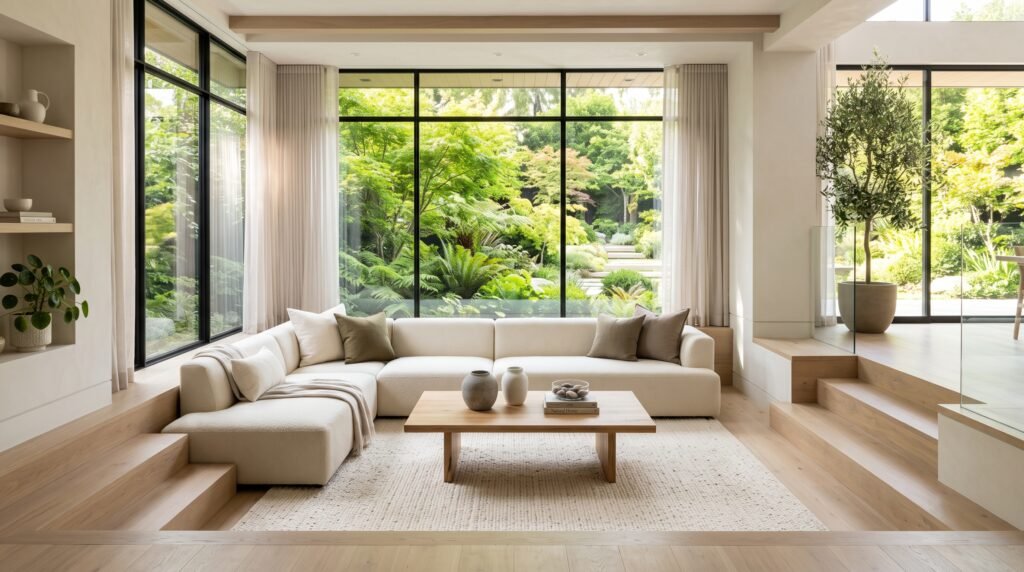
8. Create a Minimalist Sunken Living Room
A conversation pit already provides plenty of visual interest, which means you do not necessarily need much decoration.
In fact, minimalist interiors can showcase sunken architecture exceptionally well.
Begin with clean lines and a limited palette.
Soft white walls, pale oak flooring, cream seating, and one contrasting coffee table may be enough to establish the entire room.
Avoid filling the pit with excessive side tables or accessories. Instead, choose fewer objects with stronger shapes.
A large ceramic vessel, one sculptural lamp, and a carefully selected stack of books can provide personality while preserving the uncluttered aesthetic.
Built-in seating is particularly effective here because it eliminates unnecessary furniture legs and creates a seamless appearance.
Minimalism also helps the difference in floor level become more noticeable. Without visual clutter, your eye immediately recognizes the unusual architecture.
9. Use Wood to Define the Lowered Area
Wood can beautifully highlight the transition between the main floor and the conversation pit.
One approach is to use timber for the steps leading downward while keeping the surrounding flooring relatively simple. Another is to clad the entire sunken floor in warm wood.
Oak is especially suitable for light organic-modern interiors, while walnut creates a richer and more dramatic atmosphere.
You could also wrap the outside edge of the pit with timber, almost like a frame around the seating area.
This works particularly well in open-plan homes because it clearly defines where one functional zone ends and another begins.
Pair warm wood with creamy upholstery to create contrast.
Natural grain adds character without requiring bold patterns or bright colors.
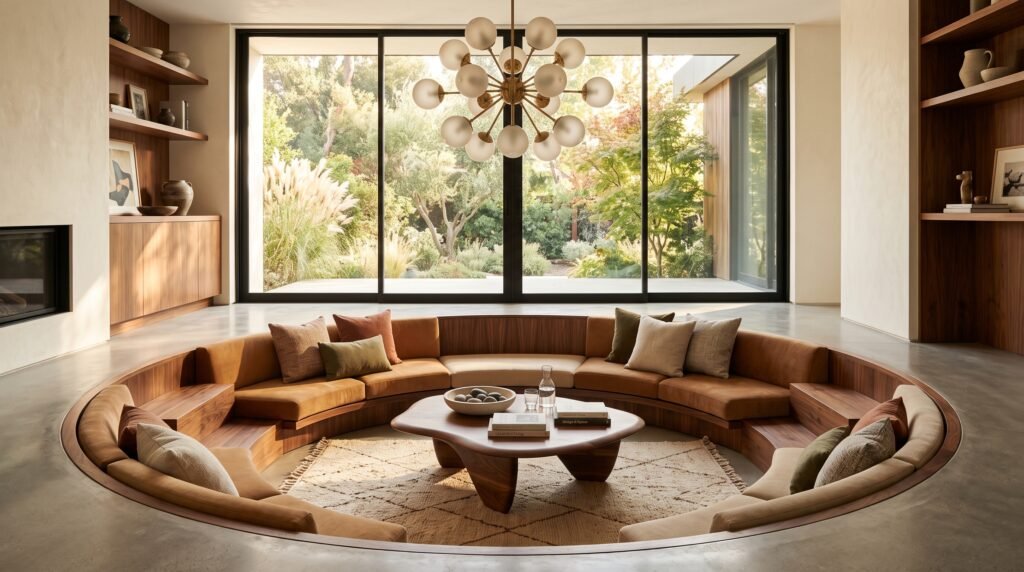
10. Turn a Sunken Lounge Into a Cozy Media Space
Not every conversation pit needs to be designed purely for entertaining.
A lowered living area can also become an exceptionally comfortable place for movie nights.
Position a television or projector screen opposite the main seating. Deep upholstered benches or an oversized sectional can provide enough room for several people to stretch out.
Add plenty of cushions, but keep their palette coordinated to avoid making the room appear cluttered.
Lighting should be layered.
Recessed ceiling lights can provide general illumination, while hidden LED lighting underneath seating edges or along steps creates a softer atmosphere when watching television.
A large ottoman can replace a hard coffee table if maximum comfort is the priority. It can function as a footrest, casual table, or additional seat.
The lowered layout naturally makes the media zone feel separate from the rest of an open-plan home.
11. Create a Luxury Stone Conversation Pit
Natural stone can transform a sunken living room into a dramatic architectural feature.
Travertine is particularly effective because its subtle texture and warm coloring complement neutral interiors beautifully.
Use stone selectively rather than covering every surface.
For example, travertine steps could lead into a cream upholstered conversation pit. A matching stone coffee table can repeat the material in the center.
Limestone and softly veined marble are other possibilities.
Because stone is visually hard and cool, balance it with soft textiles. Deep cushions, wool rugs, boucle upholstery, and linen throws can make the room comfortable rather than austere.
Warm indirect lighting will also bring out the natural variation within the stone.
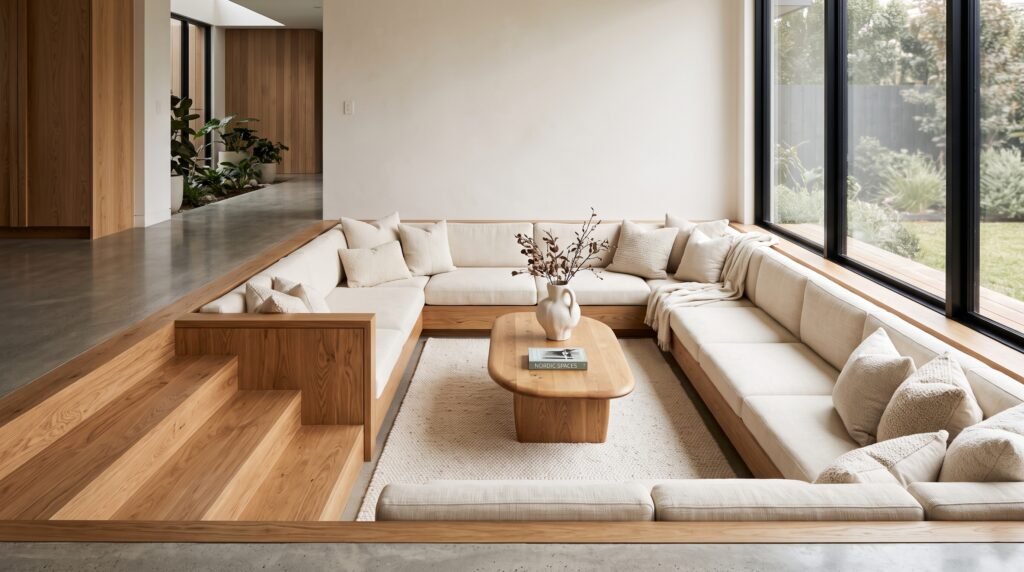
12. Add a Statement Pendant Above the Conversation Pit
The ceiling above a sunken seating area provides an excellent opportunity for dramatic lighting.
A statement pendant immediately draws the eye toward the center of the room and reinforces the conversation pit as a distinct zone.
For minimalist interiors, consider a large paper lantern or sculptural white pendant.
Organic modern spaces can benefit from woven fiber, linen, ceramic, or plaster lighting.
If your home has a high ceiling, use the extra vertical space to your advantage. A long pendant can visually connect the ceiling to the lowered floor, making the entire composition feel more balanced.
Just ensure the fixture is positioned high enough that it does not interrupt views across the room.
Lighting temperature matters too. Warm illumination generally works best because conversation pits are intended to feel intimate and relaxing.
13. Design a Small Sunken Conversation Nook
You do not necessarily need an enormous living room to borrow the sunken-lounge concept.
A smaller recessed nook can create a similar feeling.
Instead of lowering a huge section of flooring, create a compact seating area designed for two to four people.
Built-in benches are useful because they maximize every inch of available space.
Add storage drawers underneath the seats if practical. This allows the nook to serve two purposes without introducing additional cabinets.
A small round table can sit in the center, turning the area into a perfect place for morning coffee, casual conversations, board games, or reading.
Keep the colors light if the nook is compact. Cream upholstery and pale timber will help prevent the lowered area from feeling enclosed.
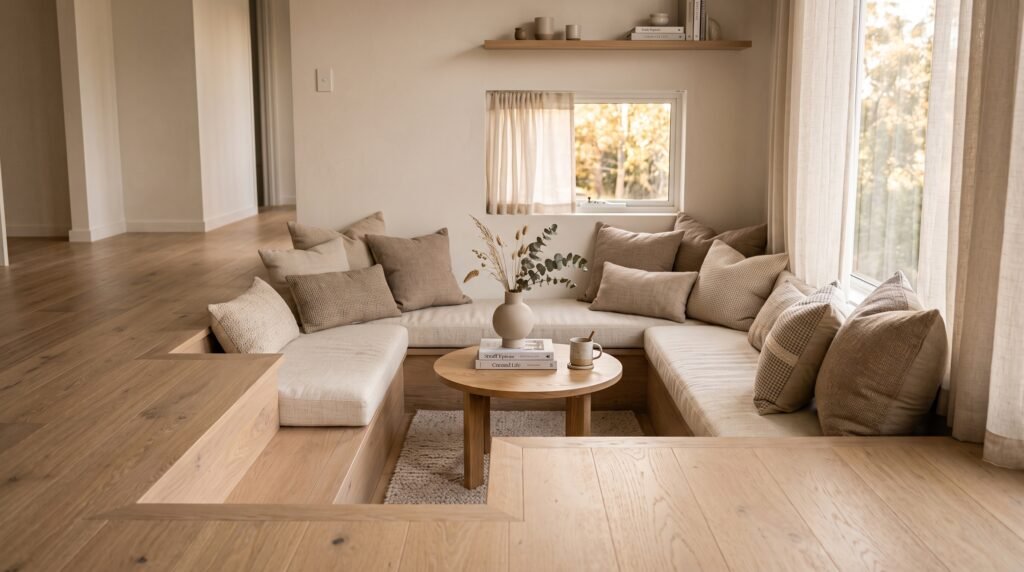
14. Connect the Sunken Living Room to an Open-Plan Interior
One of the greatest benefits of a lowered living room is its ability to divide an open-plan space without walls.
In a large home, the kitchen, dining room, and lounge may all share the same architectural volume. A change in floor height can visually separate the living zone while preserving sightlines.
The dining area might remain at the primary floor level while two or three broad steps descend toward the seating area.
Repeat materials throughout the different zones to maintain continuity.
For instance, the same oak used for dining chairs could appear on the steps or coffee table below.
Similarly, colors from the living-room upholstery can be subtly repeated through artwork or accessories elsewhere.
The goal is to make the pit distinct without making it feel disconnected from the surrounding home.
15. Make the Steps Part of the Design
Steps are not simply a practical necessity in a sunken living room. They can become an important decorative feature.
Wide floating-style steps create a modern architectural effect, while solid timber stairs bring warmth.
You can even design broad platform steps that double as informal seating when entertaining larger groups.
Integrated lighting is worth considering.
Small recessed lights along the side of each step can improve visibility after dark. Hidden lighting beneath the tread can create an elegant glow.
Try to keep the route into and out of the conversation pit obvious and uncluttered.
Avoid placing coffee tables, decorative objects, or loose rugs directly beside the entry steps where they could interfere with movement.
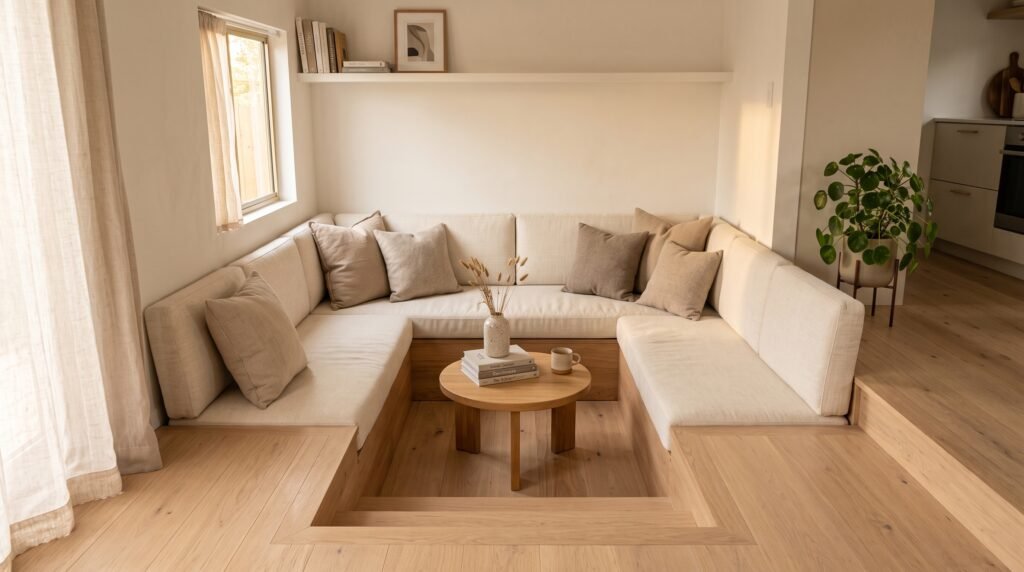
How to Make a Sunken Living Room Feel Modern
The difference between a dated conversation pit and a sophisticated modern one often comes down to materials and styling.
Avoid combining too many obvious retro elements unless you intentionally want a vintage interior. Instead, keep the architecture interesting while simplifying everything around it.
Warm neutral colors are particularly effective because they allow the shape of the pit to take center stage.
Natural materials can also make the design feel timeless. Oak, walnut, travertine, limestone, wool, linen, boucle, and plaster all work beautifully in contemporary sunken spaces.
Furniture should generally remain relatively low. Tall sofas can block sightlines and make the lowered area feel disconnected from the surrounding room.
Finally, resist overdecorating.
The floor transition itself is already a major design feature.
Practical Things to Consider Before Creating a Sunken Living Room
As beautiful as conversation pits can be, they require more planning than a conventional furniture arrangement.
The most important consideration is architecture.
Creating a genuinely lowered floor usually requires structural changes, so it is something to discuss with a qualified architect, structural professional, or contractor before beginning a renovation.
Accessibility should also be considered. Steps can make the area difficult for people with limited mobility, and an open change in floor level may not suit every household.
Clear circulation routes are essential.
The edge of the lowered floor should be easy to recognize, particularly in dim lighting. Thoughtfully positioned lighting around steps and transitions can improve visibility while contributing to the design.
Furniture dimensions matter too.
Measure the depth of the lowered area carefully before ordering built-in sofas or oversized sectionals. There should still be enough room to move comfortably around the central table.
For households with young children or other specific safety needs, the open floor transition deserves particularly careful planning.
Beautiful design should always work with the people actually using the home.
Styling a Conversation Pit
Once the architectural layout is established, styling should reinforce the cozy character of the space.
Start with texture.
Because conversation pits often feature large amounts of upholstery, mixing subtle fabrics prevents the seating from appearing flat. Combine smooth linen with boucle, wool, brushed cotton, or softly woven cushions.
Next, introduce one central focal point.
This could be a sculptural coffee table, fireplace, oversized pendant, or beautiful view through large windows.
You rarely need all four competing for attention.
Add greenery sparingly. A tall olive tree, ficus, or other architectural indoor plant positioned outside the pit can soften the edges without consuming valuable seating space.
Coffee-table styling should remain low so people can comfortably see one another.
Books, shallow ceramic bowls, candles, and small sculptural objects are usually more suitable than tall flower arrangements.
Finally, use warm lighting at several heights.
Combining ceiling lighting with wall sconces, floor lamps, and concealed architectural lighting makes the lounge adaptable throughout the day.
Are Sunken Living Rooms Coming Back?
Sunken living rooms fit naturally with several characteristics popular in contemporary interiors: open-plan architecture, low-profile furniture, curved forms, built-in seating, and spaces designed around comfort.
The renewed interest does not necessarily mean copying conversation pits from decades ago.
Instead, modern designs reinterpret the idea.
A contemporary sunken lounge might feature limestone flooring, an ivory curved sofa, an oak coffee table, and huge glass doors overlooking a garden. Another could combine walnut, rust-colored upholstery, and sculptural lighting for a stronger mid-century influence.
That flexibility is exactly what makes the concept interesting.
The architecture is memorable, but the final style can be completely personal.
Final Thoughts
A sunken living room can transform an ordinary seating arrangement into one of the most memorable spaces in a home.
Whether you prefer a warm neutral conversation pit, an organic-modern lounge surrounded by natural materials, a fireplace-centered retreat, a dramatic curved design, or a nostalgic mid-century interpretation, the lowered floor creates intimacy without completely separating the room.
For modern homes, the most successful designs tend to keep the palette calm and allow architecture, texture, and material to provide interest.
Cream upholstery, warm timber, natural stone, oversized windows, subtle greenery, and carefully layered lighting can turn a conversation pit into a sophisticated retreat rather than a dated novelty.
Most importantly, think beyond appearance. Consider circulation, accessibility, visibility, furniture dimensions, and how the space will actually be used.
When those practical elements work alongside the aesthetics, a sunken living room becomes much more than an unusual design feature.
It becomes the place everyone wants to gather.