18 Bedroom Curtain Ideas to Create a Cozy and Stylish Space
Bedroom curtains can completely change how a room looks and feels. They are not simply pieces of fabric used to cover windows. The right curtains can make a bedroom feel taller, softer, warmer, more private, and considerably more luxurious. They can also control natural light, improve sleep, and bring together colors and textures used throughout the room.
Whether your bedroom is modern, cozy, minimalist, romantic, or inspired by a luxury hotel, there is a curtain style that can complement it beautifully. From dreamy floor-to-ceiling linen panels to practical blackout layers, even a relatively simple window treatment can become an important part of your bedroom design.
The key is choosing curtains according to both function and appearance. A beautiful sheer curtain may create wonderful morning light, for example, but it might not provide enough privacy on its own. Heavy blackout curtains can make sleeping easier, but the wrong fabric or color may visually overwhelm a small bedroom.
Below, you’ll find bedroom curtain ideas that balance beauty, privacy, light control, and comfort.
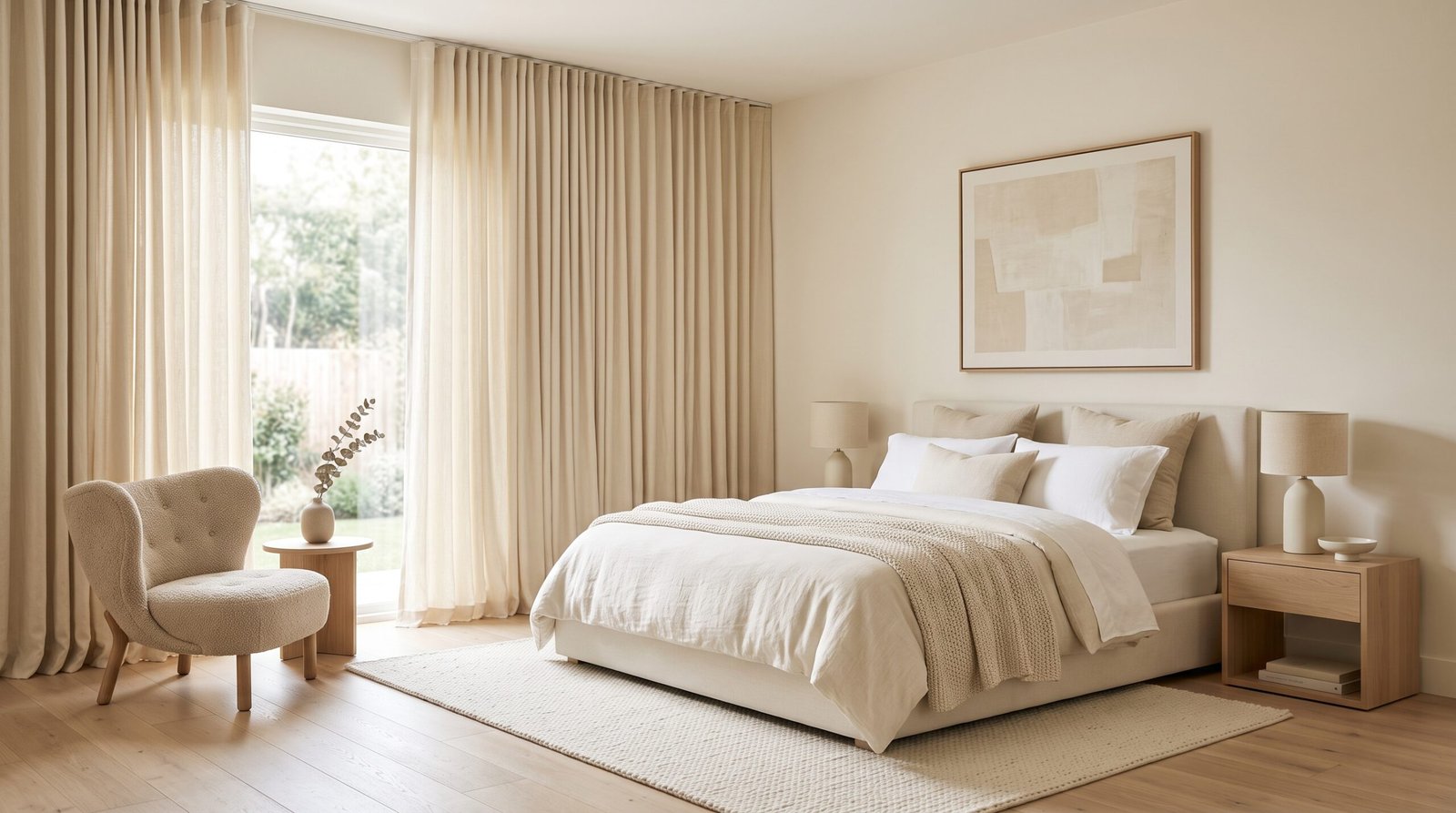
1. Choose Floor-to-Ceiling Curtains for a Luxury Look
One of the easiest ways to make bedroom windows look more impressive is to extend the curtains from near the ceiling all the way to the floor.
Instead of positioning the curtain rod directly above the window frame, install it higher. This creates a strong vertical line that can make the ceiling appear taller and the bedroom feel more spacious.
Long curtains also have an elegant flow that shorter curtains rarely achieve.
For a calm and sophisticated bedroom, consider warm neutral fabrics such as ivory, oatmeal, beige, greige, or soft taupe. Linen and linen-look fabrics work especially well because their subtle texture keeps a neutral room interesting.
Allow the curtains to just touch the floor for a clean contemporary finish. If you prefer a romantic or relaxed appearance, they can gently pool on the floor instead.
2. Layer Sheer and Blackout Curtains
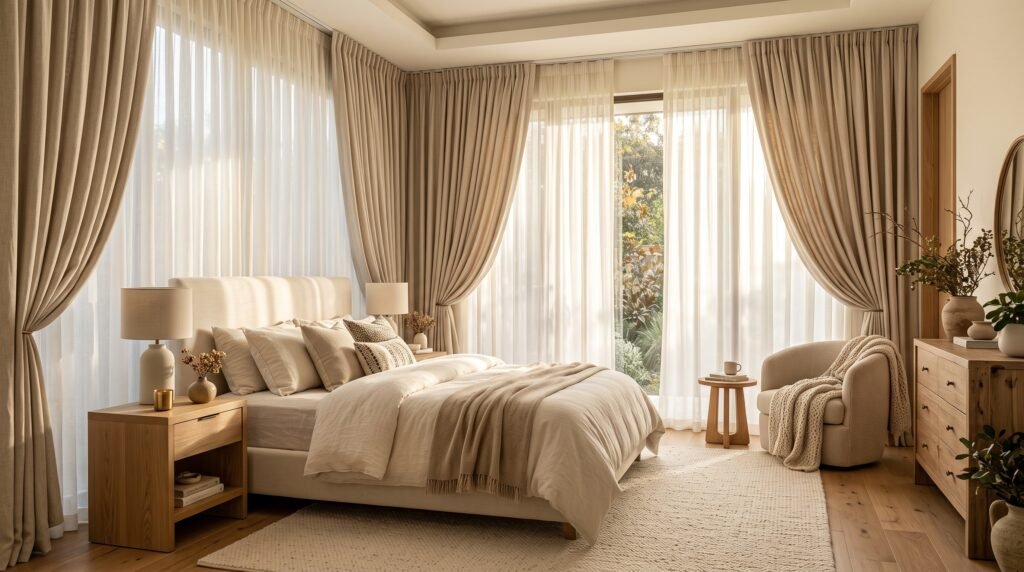
You don’t necessarily have to choose between airy sheers and practical blackout curtains. Layering them gives you the advantages of both.
Install a sheer curtain closest to the window and a heavier curtain in front.
During the daytime, open the heavier panels and allow the sheer curtains to filter sunlight. The bedroom remains bright while gaining a degree of privacy.
At night, close the blackout curtains for a darker and more private sleeping environment.
This layered effect also makes windows appear fuller and more luxurious. It is particularly effective in master bedrooms where you want a polished, hotel-inspired atmosphere.
White or ivory sheers combined with beige, taupe, charcoal, or muted earthy blackout curtains create an especially timeless combination.
3. Bring Natural Texture with Linen Curtains
Linen curtains are perfect for bedrooms designed around relaxed, natural materials.
Unlike perfectly smooth synthetic fabrics, linen has subtle irregularities and texture. Those characteristics help a bedroom feel softer and more lived-in without making it look untidy.
Linen works beautifully with:
- Warm wood furniture
- Boucle chairs
- Woven rugs
- Ceramic lamps
- Neutral bedding
- Rattan details
- Organic-modern decor
Natural beige linen curtains can create a warm earthy atmosphere, while white linen makes the bedroom feel fresh and airy.
If genuine linen doesn’t fit your budget or practical needs, high-quality linen-blend curtains can create a similar appearance while being easier to maintain.
4. Use Blackout Curtains for Better Sleep
Bedroom design isn’t only about appearance. Your curtains should also support the way you use the space.
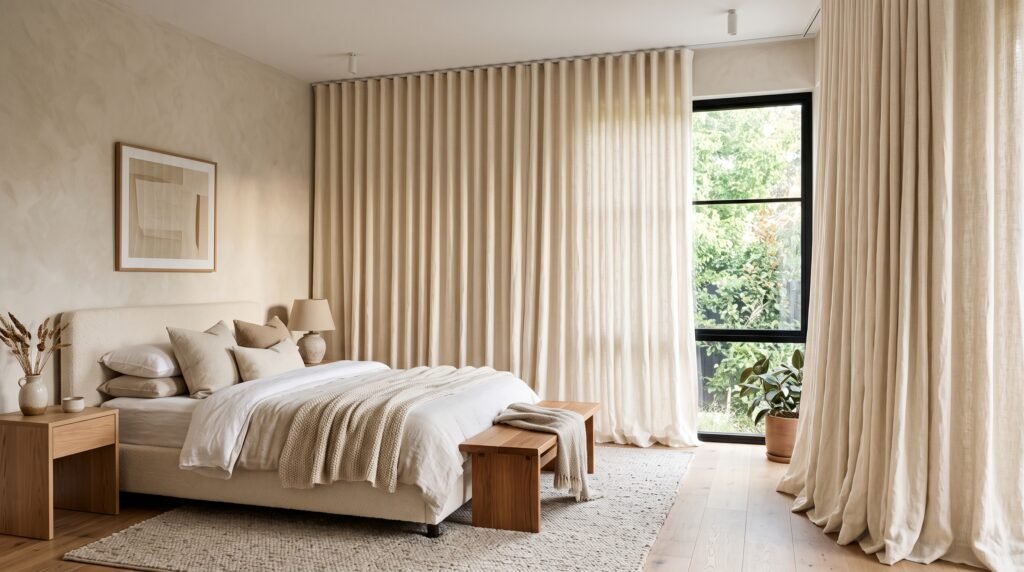
For light sleepers, blackout curtains can be one of the most practical additions to a bedroom.
They are particularly useful for rooms facing streetlights, early morning sunlight, or other sources of unwanted light.
Fortunately, blackout curtains no longer have to look extremely heavy or purely functional. Many modern options come in sophisticated neutral fabrics that resemble ordinary drapery.
Choose cream, taupe, warm gray, muted green, or another shade that complements your bedding and walls.
Layering blackout curtains over sheers also allows you to maintain an airy appearance during the daytime.
5. Try Warm Beige Curtains for a Cozy Bedroom
Beige sometimes gets dismissed as boring, but in a bedroom it can be exceptionally calming.
Warm beige curtains soften the transition between walls, windows, flooring, and furniture. They work especially well in rooms featuring cream bedding, oak furniture, woven textures, and warm lighting.
The trick is using texture.
Rather than choosing completely flat beige fabric, look for woven materials, linen textures, subtle slubs, or gentle tonal variations.
You can then repeat similar warm shades through the rug, throw blanket, cushions, or upholstered furniture.
The finished bedroom feels cohesive without every element needing to be exactly the same color.
6. Create a Romantic Look with Soft Sheer Curtains
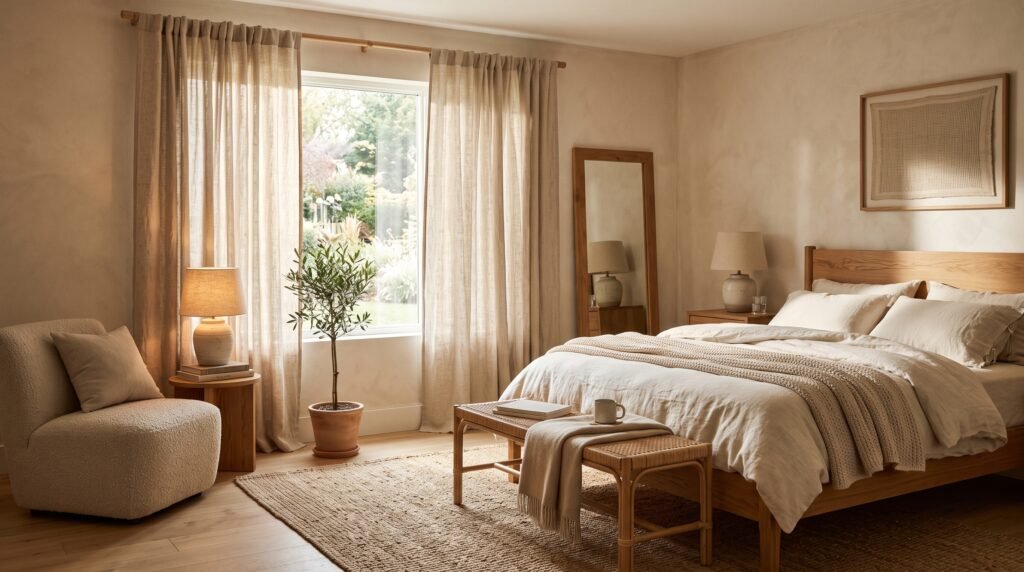
Few window treatments make a bedroom feel as light and dreamy as sheer curtains.
White or ivory sheers diffuse strong sunlight and create a soft glow across the room. This effect works particularly well in bedrooms with light-colored walls and natural materials.
Sheer curtains can suit several aesthetics, including romantic, coastal, Scandinavian, organic-modern, and minimalist bedrooms.
For a more sophisticated result, choose generously sized panels rather than stretching thin pieces of fabric across a wide window.
Full curtains create beautiful folds even when closed.
However, remember that sheers generally provide limited nighttime privacy. If your bedroom window faces neighbors or a busy area, pair them with blackout curtains, blinds, or shades.
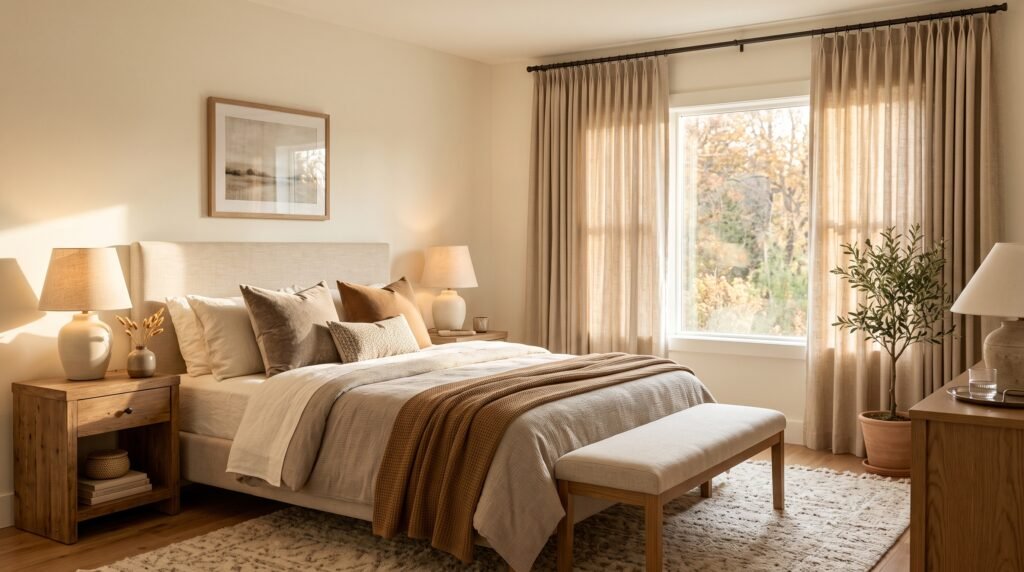
7. Match Curtains with the Bedroom Walls
If you want a quiet, seamless bedroom design, choose curtains close to the color of your walls.
For example, cream walls paired with cream curtains can make the entire room feel softer and more expansive.
The same strategy works with beige, greige, warm white, and muted gray.
Rather than trying to create an exact color match, use slightly different tones and textures. This prevents the design from looking flat.
A warm-white wall could be paired with ivory linen curtains, while greige walls might look beautiful with slightly deeper taupe drapery.
This tonal approach works particularly well in minimalist and luxury bedrooms.
8. Add Drama with Dark Bedroom Curtains
Neutral curtains aren’t your only option.
Dark curtains can create an intimate and sophisticated bedroom, especially in rooms with plenty of natural light.
Consider:
- Charcoal
- Deep brown
- Forest green
- Navy
- Espresso
- Muted black
Dark drapery looks particularly striking against light walls because it frames the window and introduces contrast.
To prevent the bedroom from becoming too visually heavy, balance dark curtains with lighter bedding, rugs, and furniture.
You can also repeat the curtain color in small details such as cushions or artwork to make the choice feel intentional.
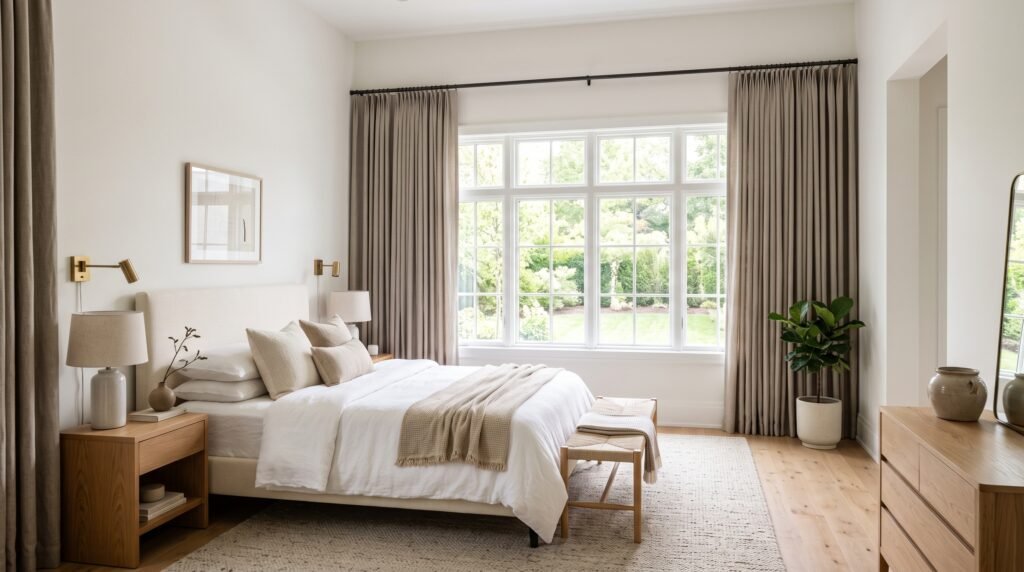
9. Install Curtains Wider Than the Window
One common curtain mistake is installing a rod that is only as wide as the actual window.
Instead, extend the curtain rod beyond both sides of the frame.
When the curtains are open, most of the fabric can sit against the wall instead of covering the glass. This exposes more of the window and allows additional daylight into the bedroom.
It can also make a narrow window appear considerably larger.
For an especially dramatic result, combine this technique with floor-to-ceiling curtains.
The entire wall starts to feel more architectural and intentional.
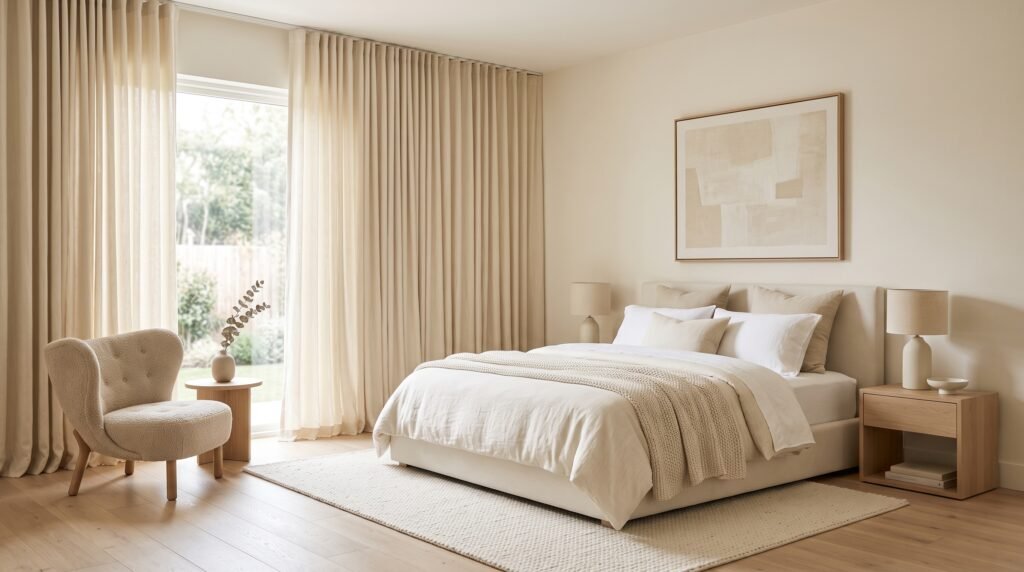
10. Use Ceiling-Mounted Curtain Tracks
Curtain tracks installed directly into the ceiling can give a bedroom an exceptionally clean, contemporary appearance.
Because there is no obvious traditional rod, the curtains seem to fall naturally from the ceiling.
This technique works particularly well in modern, minimalist, and hotel-inspired bedrooms.
It is also useful when you want curtains to cover an entire wall rather than simply framing one window.
Choose full-length fabric with soft folds to maximize the effect.
Ceiling tracks paired with warm-white or beige curtains can turn even a relatively ordinary bedroom window into an elegant design feature.
11. Introduce Subtle Pattern
Solid curtains are easy to style, but a subtle pattern can add personality without overwhelming a restful bedroom.
Instead of bold prints, consider understated designs such as:
- Thin stripes
- Small botanical motifs
- Soft checks
- Tonal geometric patterns
- Delicate block prints
Patterned curtains work especially well when the bedding and walls are relatively simple.
For example, a bedroom with white bedding and warm neutral walls could benefit from curtains featuring a delicate beige botanical design.
Keep the pattern soft enough that it complements the room rather than becoming its only focal point.
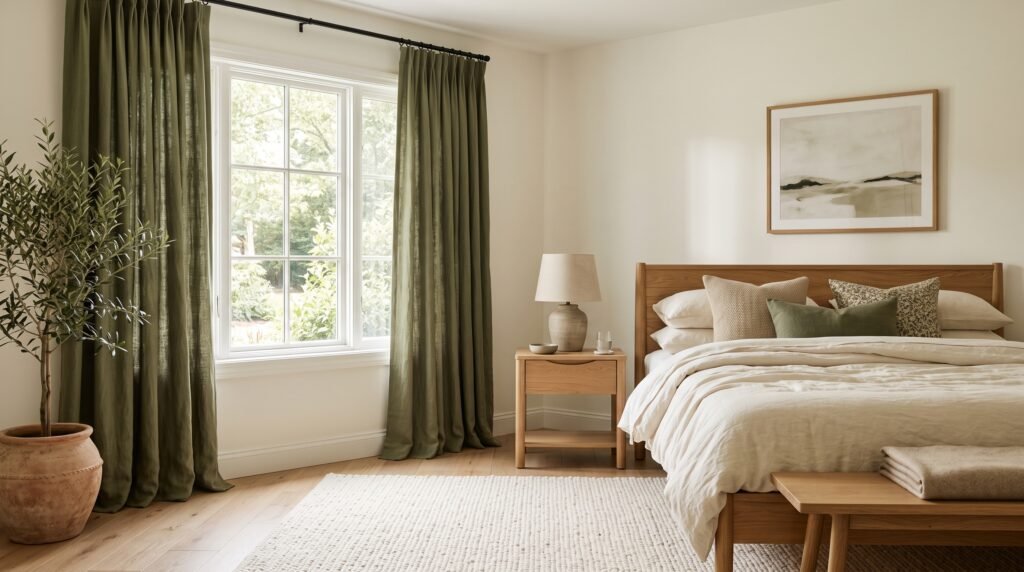
12. Try Olive Green Curtains for an Earthy Bedroom
Muted green is an excellent curtain color for bedrooms because it connects naturally with wood, cream, beige, and other earthy tones.
Olive green in particular can add color without feeling overly bright.
Pair olive curtains with warm white walls, natural oak furniture, cream bedding, and a textured rug for a sophisticated organic look.
Plants can reinforce the natural palette, although you don’t need to fill the room with greenery.
A single olive tree or leafy plant near the window may be enough.
13. Choose Velvet Curtains for Extra Luxury
If linen creates a relaxed atmosphere, velvet creates a richer one.
Velvet curtains have depth and softness that can instantly make a bedroom feel more luxurious. They also work particularly well during colder seasons because of their visually warm appearance.
Consider muted shades rather than extremely bright jewel tones.
Taupe, mushroom, dusty rose, deep green, navy, and warm brown velvet can all look elegant.
Because velvet is visually substantial, keep the surrounding decor relatively balanced.
Simple bedding, understated furniture, and soft lighting allow the curtains to become a sophisticated focal point without making the room feel excessively ornate.
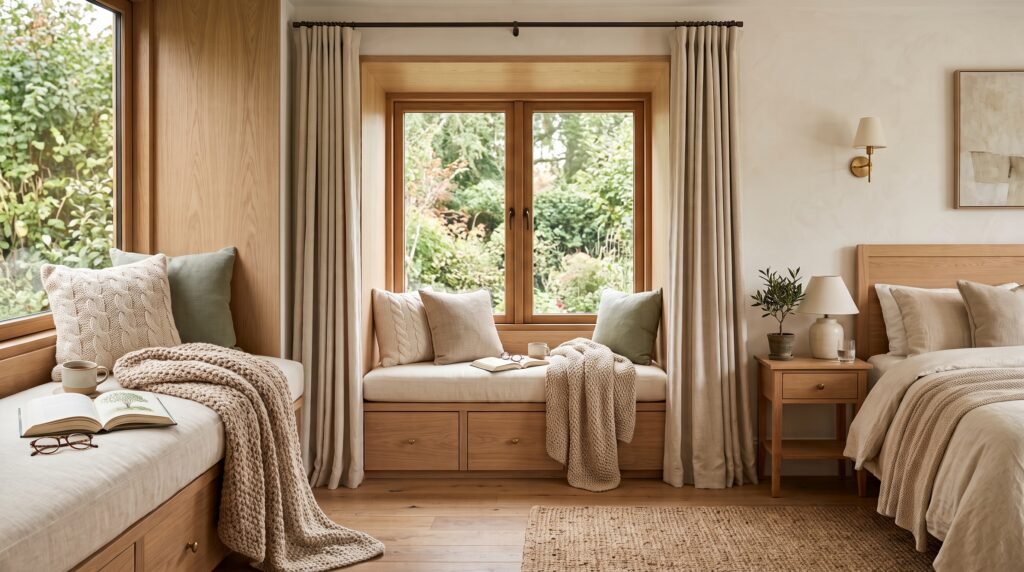
14. Frame a Bedroom Window Seat with Curtains
If your bedroom has a window seat, curtains can make the area feel even more inviting.
Install long curtain panels outside the window-seat area so they frame the entire nook.
During the daytime, tie or pull the curtains back to expose the seat and natural light. At night, closing the curtains makes the nook feel integrated into the bedroom.
Add cushions, a throw blanket, and perhaps a small wall light to turn the window into a comfortable reading corner.
This setup is particularly effective with linen curtains because their relaxed texture complements the cozy nature of the space.
15. Use Soft Pink or Dusty Rose Curtains
For a bedroom that needs subtle warmth, dusty rose curtains can be a beautiful alternative to beige.
Unlike bright pink, muted rose has gray or earthy undertones that make it easier to combine with sophisticated interiors.
Pair it with:
- Warm white walls
- Cream bedding
- Light oak
- Brass details
- Beige rugs
- Soft gray accents
This combination creates a gentle romantic feeling without making the bedroom appear overly themed.
Dusty rose also works particularly well with velvet or linen fabrics.
16. Combine Roman Shades with Curtain Panels
Layering doesn’t always have to mean sheer curtains plus blackout curtains.
Roman shades paired with long curtain panels create a tailored and polished window treatment.
The Roman shade handles everyday light control, while the side panels add softness and height.
Natural woven Roman shades look especially attractive with white, beige, or oatmeal curtains. This combination introduces several textures while maintaining a calm neutral palette.
It is an excellent choice for organic-modern bedrooms, coastal interiors, and transitional spaces.
17. Create a Full Curtain Wall
For maximum impact, consider covering almost the entire window wall with curtains.
Rather than visually highlighting the exact dimensions of the window, install a ceiling track or extra-wide rod across most or all of the wall.
When the curtains are closed, they create one continuous surface of soft fabric.
This approach can:
- Make the bedroom appear wider
- Hide awkwardly positioned windows
- Add softness to large rooms
- Create a luxury hotel atmosphere
- Make small windows feel more substantial
It looks particularly elegant behind a seating area or alongside a bed.
18. Coordinate Curtains with Bedding Without Matching Exactly
Your curtains and bedding should feel connected, but they don’t have to be identical.
In fact, using the exact same fabric and color everywhere can make a bedroom feel overly coordinated.
Instead, create a related palette.
For example, you could combine cream bedding with taupe curtains and then add a taupe throw pillow to connect the two.
Or pair olive curtains with beige bedding and introduce muted green through a small throw or decorative cushion.
Think in terms of repeating undertones rather than matching individual pieces.
This produces a more natural, layered interior.
How to Choose the Right Bedroom Curtains
Before buying curtains simply because you like their appearance, consider how your bedroom actually functions.
Think About Light
If you love waking up to sunlight, lightweight curtains or sheers may be enough.
If you need darkness to sleep comfortably, prioritize blackout lining or layered window treatments.
Consider Privacy
Bedrooms facing neighboring homes generally require more privacy than upper-floor bedrooms facing a private garden.
Sheers may work during the day but often need another layer for nighttime privacy.
Measure Properly
Curtains that are too short or narrow can make an otherwise beautiful room look unfinished.
Whenever possible, hang them high and allow them to reach the floor.
Use enough fabric to create generous folds even when the curtains are closed.
Choose Fabric According to the Mood
Different fabrics create different impressions.
Linen: airy and organic
Cotton: simple and versatile
Velvet: luxurious and dramatic
Sheer voile: soft and romantic
Textured woven fabric: cozy and contemporary
Consider Existing Bedroom Colors
Curtains occupy a surprisingly large visual area.
Look at your walls, flooring, headboard, bedding, and major furniture pieces before choosing their color.
Neutral doesn’t necessarily mean white. Taupe, mushroom, olive, oatmeal, warm gray, and soft brown can all function almost like neutrals in a bedroom.
Bedroom Curtain Styling Mistakes to Avoid
Even beautiful curtains can look wrong when installed poorly.
Avoid curtains that stop awkwardly above the floor unless there is a practical reason for choosing that length.
Don’t use panels that are barely wide enough to cover the window. Fullness is one of the biggest differences between inexpensive-looking and professionally styled curtains.
Also avoid automatically installing the rod directly above the window frame. Moving it higher can dramatically improve the proportions of the room.
Finally, don’t choose curtains based only on appearance. Privacy and light control are particularly important in bedrooms.
Final Thoughts
Bedroom curtains have the ability to change much more than the appearance of a window. They influence light, privacy, proportions, texture, color, and even how comfortable the bedroom feels throughout the day.
For a timeless look, floor-to-ceiling linen curtains in warm neutral shades are difficult to beat. For greater practicality, layer them with blackout curtains or shades. If your bedroom needs more personality, muted green, dusty rose, velvet, or subtle patterned curtains can introduce color without disturbing the restful atmosphere.
Most importantly, treat curtains as part of the overall bedroom design rather than as a final accessory. Hang them generously, pay attention to fabric and length, and coordinate them with the room instead of trying to match everything perfectly.
With the right curtains, even a simple bedroom can feel softer, taller, warmer, and considerably more finished.