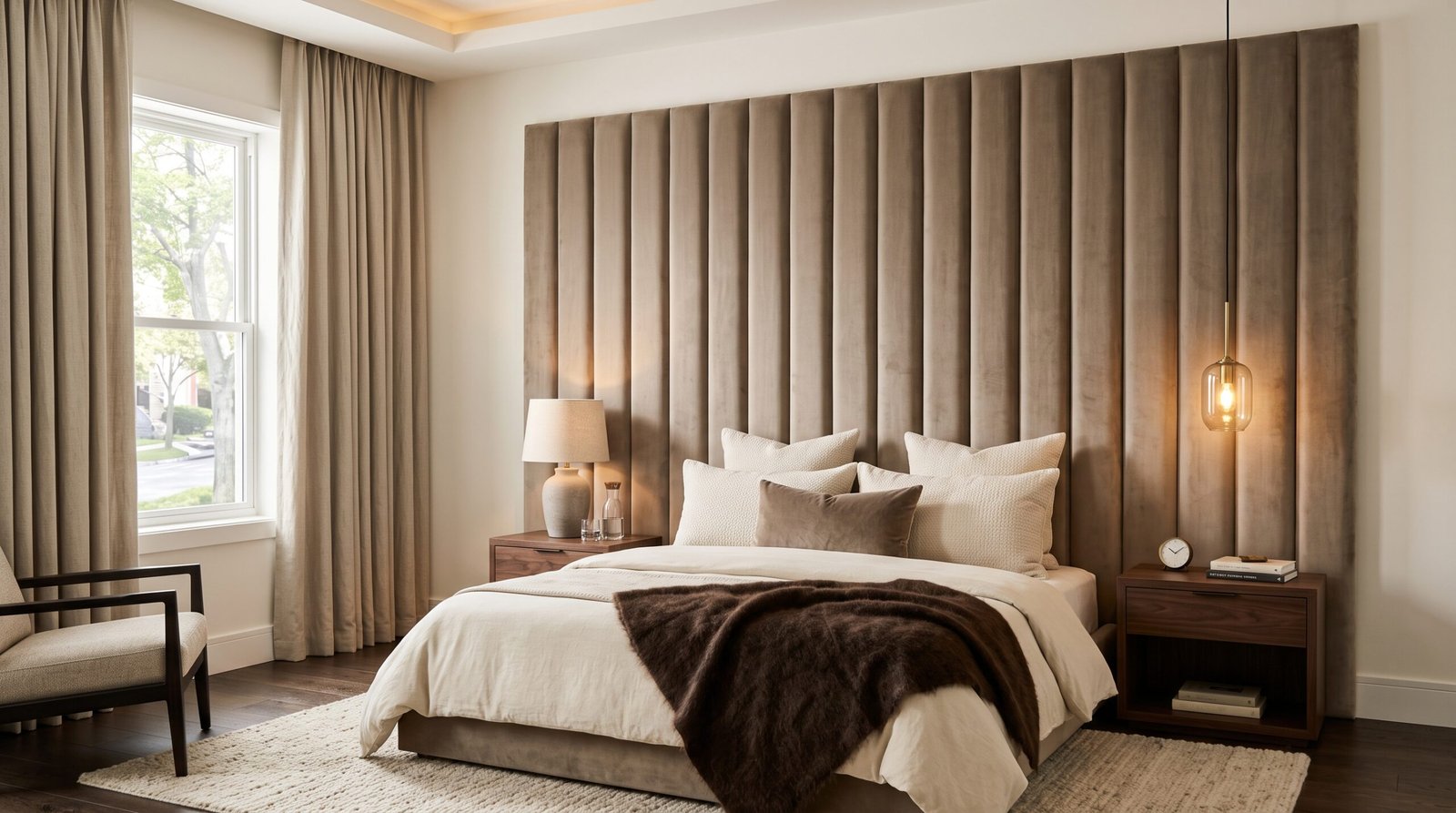
21 Bedroom Headboard Ideas for a Stylish and Cozy Bed
A headboard may seem like a small bedroom detail, but it can completely change how the entire room feels. Because the bed is usually the largest piece of furniture in a bedroom, the design behind it naturally becomes one of the first things you notice. The right headboard can make a simple bedroom feel warmer, more luxurious, more modern, or even more spacious.
Today’s bedroom headboard ideas go far beyond traditional wooden frames. Upholstered panels, curved silhouettes, natural cane, dramatic floor-to-ceiling designs, built-in nightstands, textured fabrics, and architectural wall treatments can all create a beautiful focal point around the bed.
The best part is that you do not necessarily need a huge bedroom or an expensive renovation. Some of the most attractive headboard designs are surprisingly simple. Whether you are decorating a compact bedroom, refreshing a guest room, or designing a luxurious primary suite, there is an option that can work with your space.
Below are 21 bedroom headboard ideas to inspire your next bedroom update.
1. Choose a Soft Upholstered Headboard
An upholstered headboard is one of the easiest ways to make a bedroom instantly feel softer and more inviting. Unlike hard wood or metal, fabric adds visual warmth and creates a comfortable surface behind your pillows.
Neutral upholstery works especially well in calm bedrooms. Think warm beige, oatmeal, ivory, taupe, or soft gray. These colors are easy to coordinate with bedding and allow you to change smaller decorative elements without replacing the headboard.
For an elevated look, choose linen, textured cotton, velvet, or a subtle woven fabric. A lightly padded design with clean edges feels contemporary, while deeper cushioning creates a more luxurious appearance.
Keep the surrounding bedding relatively simple so the different fabric textures can stand out.
2. Make a Statement With an Oversized Headboard
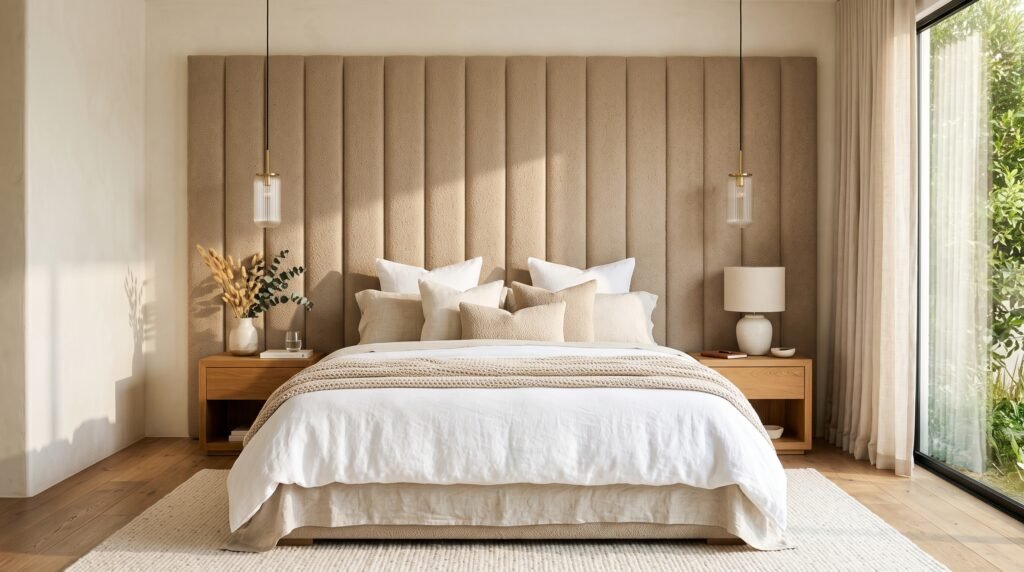
If you want the bed to become the undeniable focal point of the room, consider an oversized headboard.
Instead of stopping at the width of the mattress, an oversized design can extend behind the bedside tables. This creates a broad visual anchor and makes the entire sleeping area feel intentional.
It is particularly effective in larger primary bedrooms where a standard headboard can sometimes appear too small against a wide wall.
Try an upholstered headboard that stretches across most of the wall, then position matching nightstands and lamps in front of it. Keeping the upholstery neutral prevents the large design from becoming overwhelming.
The result can feel similar to a sophisticated boutique hotel bedroom.
3. Add Warmth With a Wooden Headboard
Wooden headboards remain popular because they bring natural warmth into almost any bedroom style.
Light oak works beautifully with Scandinavian and organic-modern interiors, while walnut creates a richer, moodier appearance. Reclaimed or distressed wood can suit rustic bedrooms.
You can also coordinate the wood tone with other pieces in the room. A light oak headboard paired with matching nightstands, for example, creates subtle continuity without requiring every piece of furniture to be identical.
Combine the wood with soft linen bedding, a textured rug, and warm lighting to keep the bedroom feeling comfortable rather than overly structured.
4. Try a Curved Headboard
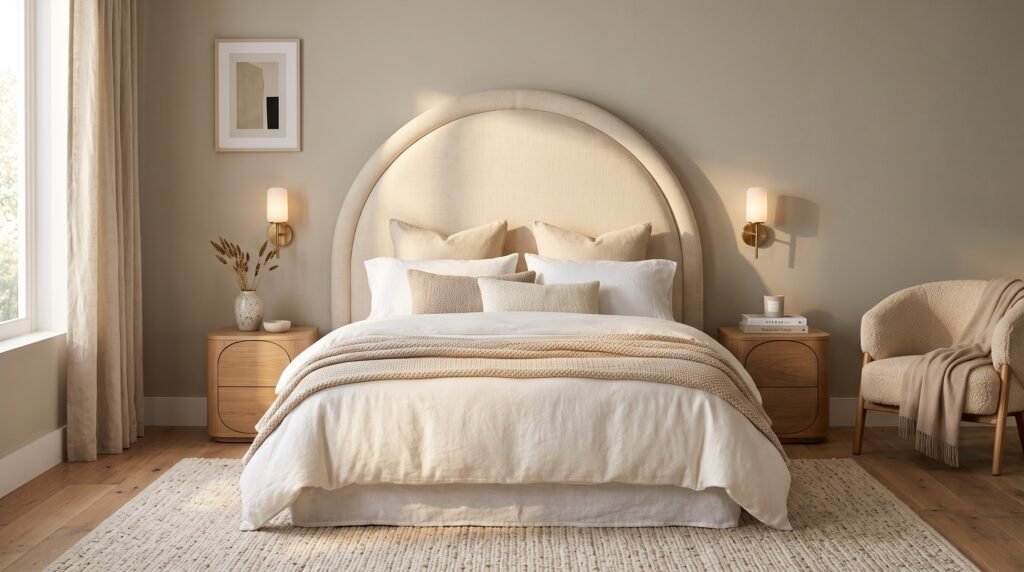
Straight lines dominate most bedrooms—the bed, nightstands, windows, rugs, and dressers are typically rectangular. A curved headboard introduces contrast and instantly softens those hard edges.
An arched headboard is one of the easiest versions to use. It can be upholstered in linen, boucle, velvet, or another soft fabric.
For something more distinctive, consider a scalloped or gently waved silhouette.
Curved headboards are especially attractive in romantic, contemporary, transitional, and organic-modern bedrooms. Keep the rest of the furniture relatively streamlined so the headboard’s shape remains the main visual feature.
5. Create a Modern Wood Slat Headboard
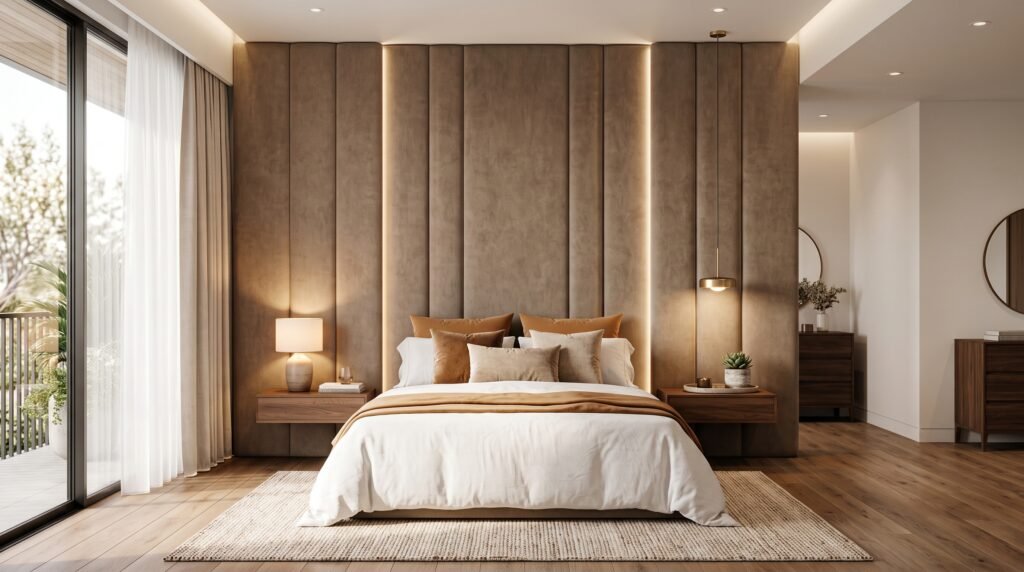
Vertical wood slats can turn the wall behind your bed into an architectural feature.
Rather than using a traditional separate headboard, install narrow wooden slats behind the bed. They can cover only the bed area or continue across a larger portion of the wall.
Vertical slats naturally draw the eye upward, which can make a bedroom ceiling appear taller. They also introduce texture without requiring bold colors or busy patterns.
Warm oak slats look particularly beautiful against cream, greige, or off-white walls.
For a more dramatic effect, integrate subtle lighting between or around the panels. Soft illumination can emphasize the texture in the evening while creating a relaxing bedroom atmosphere.
6. Embrace a Floor-to-Ceiling Headboard
A floor-to-ceiling headboard creates serious visual impact.
Instead of treating the headboard as furniture, this approach turns it into part of the bedroom architecture. Upholstered panels, timber boards, fluted wood, or textured wall panels can extend from behind the bed all the way to the ceiling.
This works particularly well in contemporary bedrooms where you want a clean but luxurious focal point.
Because the design itself is dramatic, the remaining decor can stay minimal. Simple bedside tables, understated lamps, and neutral bedding are often enough.
7. Bring Texture With a Boucle Headboard
Boucle is ideal when you want a neutral bedroom that still feels interesting.
Its looped texture creates dimension without relying on pattern or bright color. Cream and ivory boucle headboards are especially effective in cozy modern bedrooms.
A boucle headboard looks beautiful with crisp cotton sheets, linen duvet covers, chunky throws, and smooth wooden bedside tables. The contrast between rough and smooth materials makes the bedroom feel layered.
If your room already contains many textured fabrics, use boucle more selectively so the overall design does not become visually heavy.
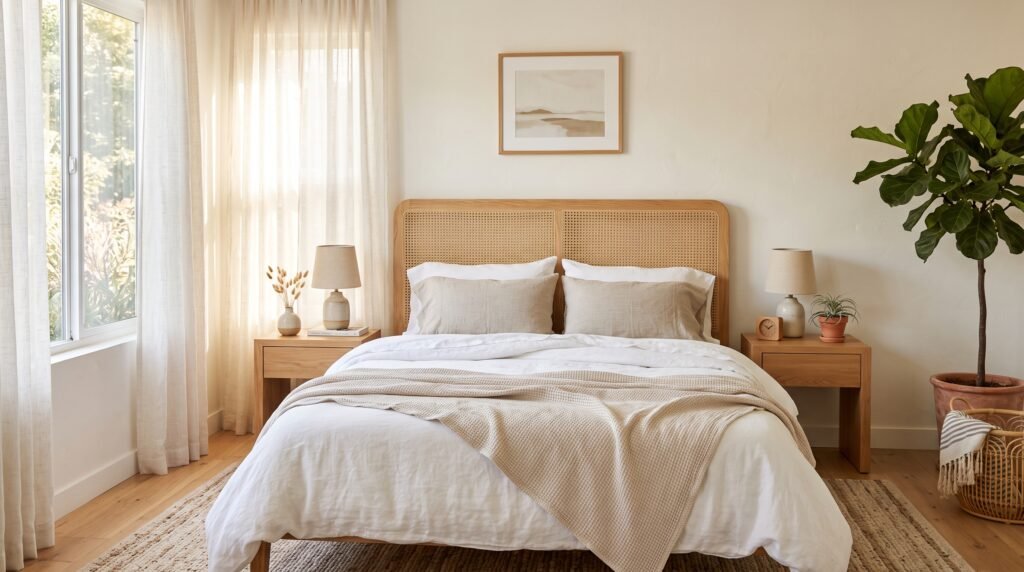
8. Use Cane or Rattan for a Natural Look
For a lighter and more relaxed bedroom, consider a cane or rattan headboard.
These materials introduce natural texture and work especially well in bohemian, coastal, tropical, cottage, and relaxed modern interiors.
A cane headboard can also visually feel lighter than a solid wooden design, making it useful in smaller bedrooms.
Pair it with white or cream bedding, warm wood furniture, woven accessories, and a few plants. You do not need to fill the entire room with rattan; one headboard can provide enough organic texture on its own.
9. Extend the Headboard Behind the Nightstands
One of the biggest bedroom design trends is treating the headboard and bedside area as a single composition.
A wide upholstered or wooden headboard can extend behind both nightstands rather than stopping at the mattress. This makes the bed wall appear broader and more balanced.
Wall-mounted nightstands work particularly well with this arrangement because they keep the floor visually open.
You can then add matching sconces or pendant lights above each bedside table for symmetry.
This approach gives even relatively simple bedrooms a custom-designed appearance.
10. Create a Headboard With Wall Panels
Decorative wall panels can imitate the visual role of a headboard while adding architectural detail.
Picture-frame molding, rectangular panels, fluted surfaces, or simple timber strips can frame the bed beautifully.
Paint the panels the same color as the surrounding wall for a subtle effect. Alternatively, use a slightly deeper shade to create contrast.
Wall-panel headboards work particularly well when you want something elegant but do not want a bulky upholstered headboard taking up additional floor depth.
They can also make inexpensive bedroom furniture look more sophisticated because attention shifts toward the wall treatment.
11. Go Minimal With a Slim Headboard
Not every bedroom needs a dramatic statement piece.
A slim headboard can be perfect for a small bedroom or minimalist interior. Look for a simple upholstered rectangle or narrow wooden panel without decorative carving or heavy framing.
The restrained design keeps the room visually uncluttered.
You can still create interest through bedding. Layer crisp sheets with a textured duvet, a lightweight throw, and a few carefully selected pillows.
A minimalist headboard is particularly useful if you enjoy changing your bedroom decor regularly because its simple design works with many different styles.
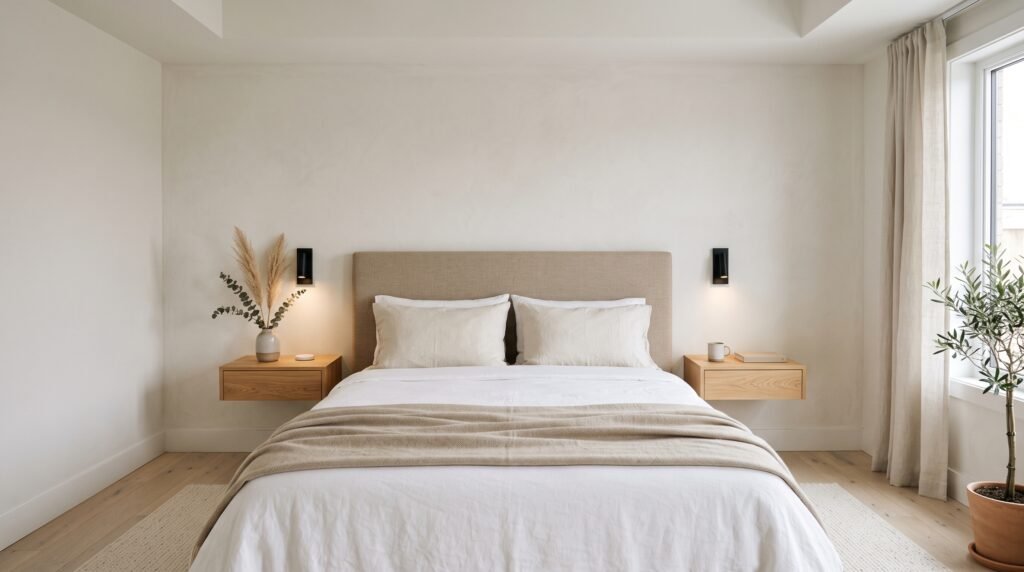
12. Combine the Headboard With Built-In Nightstands
Built-in headboard systems create a polished, cohesive appearance.
Instead of purchasing a headboard and two separate bedside tables, choose or design one continuous unit. Wooden panels can extend behind the bed and transition directly into floating nightstands.
This approach is particularly attractive in modern bedrooms because it eliminates unnecessary visual breaks.
Floating nightstands also leave more visible flooring, which can make the room feel more spacious.
Add wall-mounted sconces to keep the surfaces clear for books, water, or small decorative objects.
13. Add Luxury With a Velvet Headboard
Velvet brings depth and richness to a bedroom.
While neutral velvet can look sophisticated, deeper shades such as olive, navy, chocolate, rust, or muted burgundy can turn the headboard into a stronger focal point.
Because velvet reflects light differently depending on its direction, even a simple headboard can appear dimensional.
Balance a bold velvet headboard with quieter bedding. Cream or white linens can prevent darker upholstery from making the bedroom feel too heavy.
A few metallic or warm wood accents can complete the luxurious effect.
14. Try a Channel-Tufted Headboard
Channel tufting gives upholstered headboards a structured appearance while preserving their softness.
Vertical channels are particularly useful because they visually emphasize ceiling height. Horizontal channels, on the other hand, can make the bed area appear wider.
Choose wide channels for a modern look or narrower channels for more detailed texture.
Neutral beige, taupe, cream, and soft brown are versatile options that can remain stylish even as other bedroom trends change.
15. Create Contrast With a Dark Headboard
A dark headboard can give a light bedroom definition.
Black, charcoal, deep walnut, espresso, and dark olive all work well against lighter walls. The contrast frames the bed and creates a strong visual anchor.
If you are worried about making the room feel dark, keep larger surfaces—such as walls, curtains, rugs, and bedding—lighter.
For example, a deep walnut headboard against a warm white wall can feel dramatic without making the entire room moody.
Repeating the dark tone in one or two small elements, such as lamp bases or picture frames, helps connect the headboard with the rest of the bedroom.
16. Use a Headboard With Built-In Lighting
Integrated lighting combines style with practicality.
Small reading lights can be built directly into wooden or upholstered headboard panels. Another option is concealed LED lighting around the edges of a wall-mounted headboard.
The indirect glow creates a softer evening atmosphere than bright overhead lighting.
This solution is especially useful in bedrooms with limited bedside space because you may not need large table lamps.
Choose warm-toned lighting rather than harsh cool-white illumination to maintain a relaxing atmosphere.
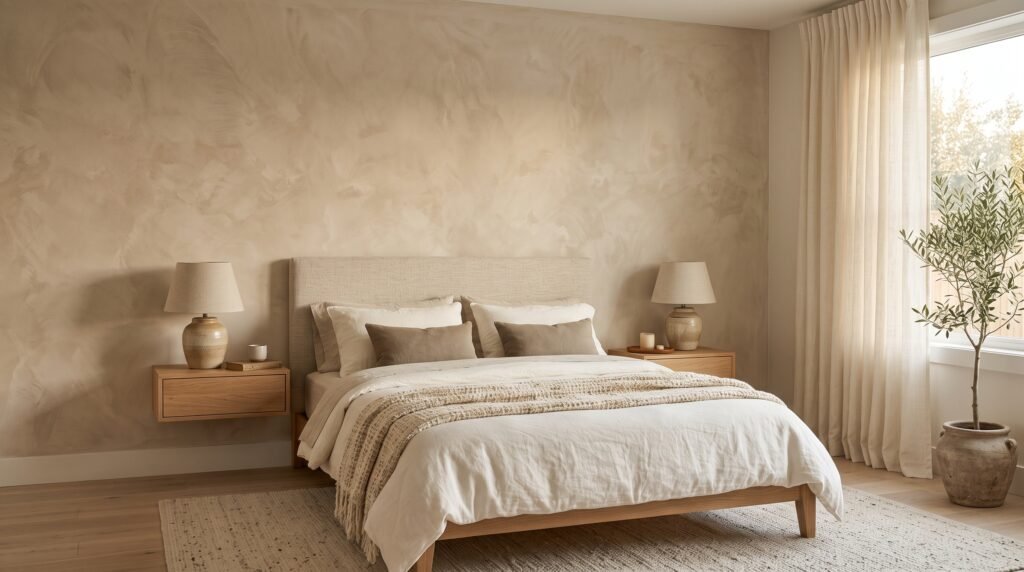
17. Layer a Headboard Against a Textured Wall
Your headboard does not have to do all the decorative work.
Combining a simple headboard with a textured wall can create a more sophisticated composition. Limewash, plaster, subtle wallpaper, wood paneling, or decorative molding can provide a beautiful backdrop.
For example, an oatmeal linen headboard against a warm beige limewash wall creates subtle tonal variation while remaining calm and neutral.
This layered approach is ideal for anyone who loves understated interiors where texture matters more than strong color.
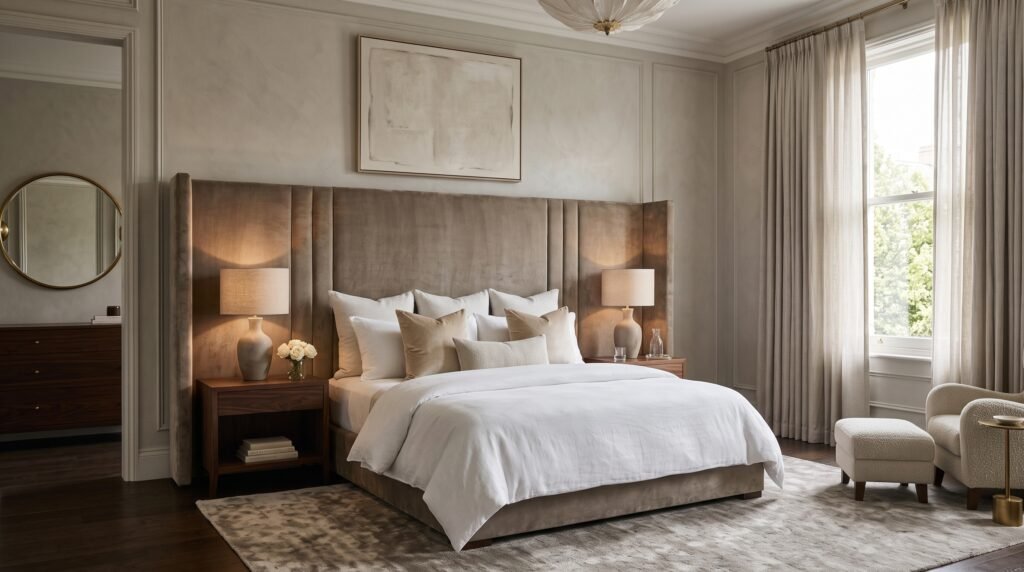
18. Consider a Wingback Headboard
A wingback headboard wraps slightly around the sides of the bed, creating a cozy, enclosed feeling.
Traditionally associated with classic interiors, modern wingback designs are much simpler. Clean lines and neutral upholstery can make them work beautifully in contemporary bedrooms.
The extra depth makes the bed feel substantial, which is particularly useful in a large room.
Because wingback headboards already have a strong shape, avoid overcrowding the bed wall with too many decorative objects.
A pair of simple bedside lamps and understated artwork may be all you need.
19. Match the Headboard to the Wall Color
For a calm, seamless bedroom, choose a headboard close to the color of the wall behind it.
A beige headboard against a warm beige wall, for example, produces a soft monochromatic look. Instead of contrast, the room relies on texture and subtle tonal changes.
This technique can also make a large headboard feel less dominant.
Add visual depth through materials rather than colors: linen curtains, woven rugs, natural wood, boucle seating, ceramic lamps, and layered bedding can keep the room from looking flat.
20. Use an Extra-Tall Headboard
If floor-to-ceiling panels feel too dramatic but a standard headboard feels too ordinary, choose an extra-tall design.
The added height immediately makes the bed look more impressive and draws attention upward.
Tall upholstered headboards are especially effective in rooms with high ceilings. You can choose a completely plain surface for modern simplicity or introduce subtle vertical channels for additional detail.
Keep artwork above an extra-tall headboard minimal—or skip it entirely. The headboard itself can serve as the wall’s main decorative feature.
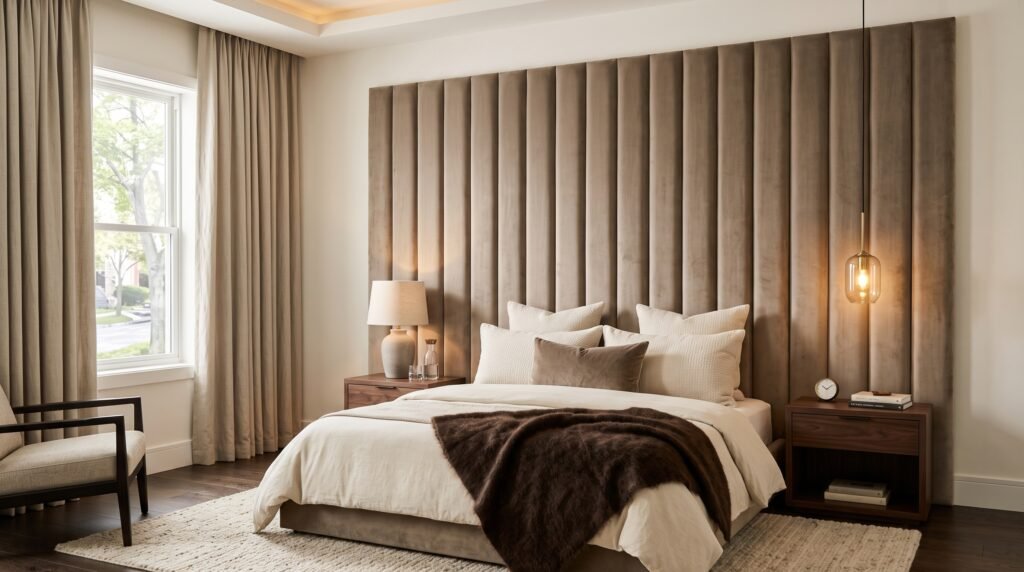
21. Design a Full Headboard Feature Wall
For the most dramatic transformation, treat the entire wall behind the bed as one headboard composition.
Start with a central upholstered section behind the mattress. Add wood, fluted panels, molding, or another textured material around it. Extend the design toward the bedside tables and incorporate sconces, pendants, or concealed lighting.
The result feels less like a piece of furniture and more like custom bedroom architecture.
This approach works particularly well in a primary bedroom where the bed wall deserves to be the main focal point.
You can still maintain a peaceful atmosphere by sticking to a restrained palette of warm beige, cream, natural oak, taupe, or muted brown.
How to Choose the Right Headboard for Your Bedroom
With so many bedroom headboard ideas available, it helps to consider your room before choosing a specific design.
Consider Your Bedroom Size
Scale is one of the most important factors.
In a compact bedroom, an extremely bulky headboard may visually overwhelm the space. Slim upholstered panels, cane designs, or simple wooden headboards can provide definition without adding too much visual weight.
Large bedrooms can handle wider and taller designs. An oversized or floor-to-ceiling headboard can actually make a large empty wall feel more appropriately proportioned.
Think About Comfort
If you frequently sit in bed to read, watch television, or work on a laptop, comfort should be a priority.
A padded upholstered headboard will generally be more comfortable than solid wood, metal, or cane. Look for enough cushioning to support your back without making the design excessively bulky.
Coordinate, Rather Than Perfectly Match
Your headboard does not need to match every piece of bedroom furniture.
In fact, a room often looks more natural when materials coordinate rather than match exactly.
A cream upholstered headboard can work beautifully with oak nightstands, for example. Similarly, a walnut headboard can be paired with lighter furniture if you repeat its darker tone in smaller accents.
Pay Attention to Height
Headboard height influences the perceived proportions of your bedroom.
A tall headboard can emphasize ceiling height and create drama, while a lower headboard often feels relaxed and modern.
Before purchasing, use painter’s tape to mark the proposed dimensions on the wall. This simple trick can help you understand how large the headboard will actually appear in your space.
Styling the Area Around Your Headboard
Once you choose your headboard, consider how the surrounding elements support it.
Start with the nightstands. They do not have to match exactly, but their size should feel balanced with the bed and headboard. Very tiny tables beside a massive headboard can look disproportionate.
Lighting is equally important. Table lamps provide traditional symmetry, while wall sconces and pendants create a cleaner, more contemporary look.
Artwork should depend on the headboard itself. A low, simple headboard may benefit from a large artwork above it. A tall, curved, or heavily textured headboard often looks better without additional wall decoration.
Finally, layer your bedding thoughtfully. Use different textures rather than filling the bed with excessive decorative pillows. Crisp sheets, a soft duvet, two or three accent cushions, and a textured throw can be enough to create a polished appearance.
Final Thoughts
The right headboard can transform a bed from a purely functional piece of furniture into the centerpiece of your bedroom.
For a timeless look, upholstered linen and natural wood are difficult to beat. If you want something more architectural, consider wood slats, wall panels, or a floor-to-ceiling design. Curved, boucle, cane, velvet, and channel-tufted headboards offer even more ways to introduce personality.
Most importantly, choose a headboard that suits the scale and atmosphere of your bedroom rather than simply following a trend.
A beautifully designed bedroom does not need dozens of decorative elements. Sometimes a well-chosen headboard, comfortable bedding, warm lighting, and a few natural textures are enough to make the entire space feel finished, inviting, and thoughtfully designed.