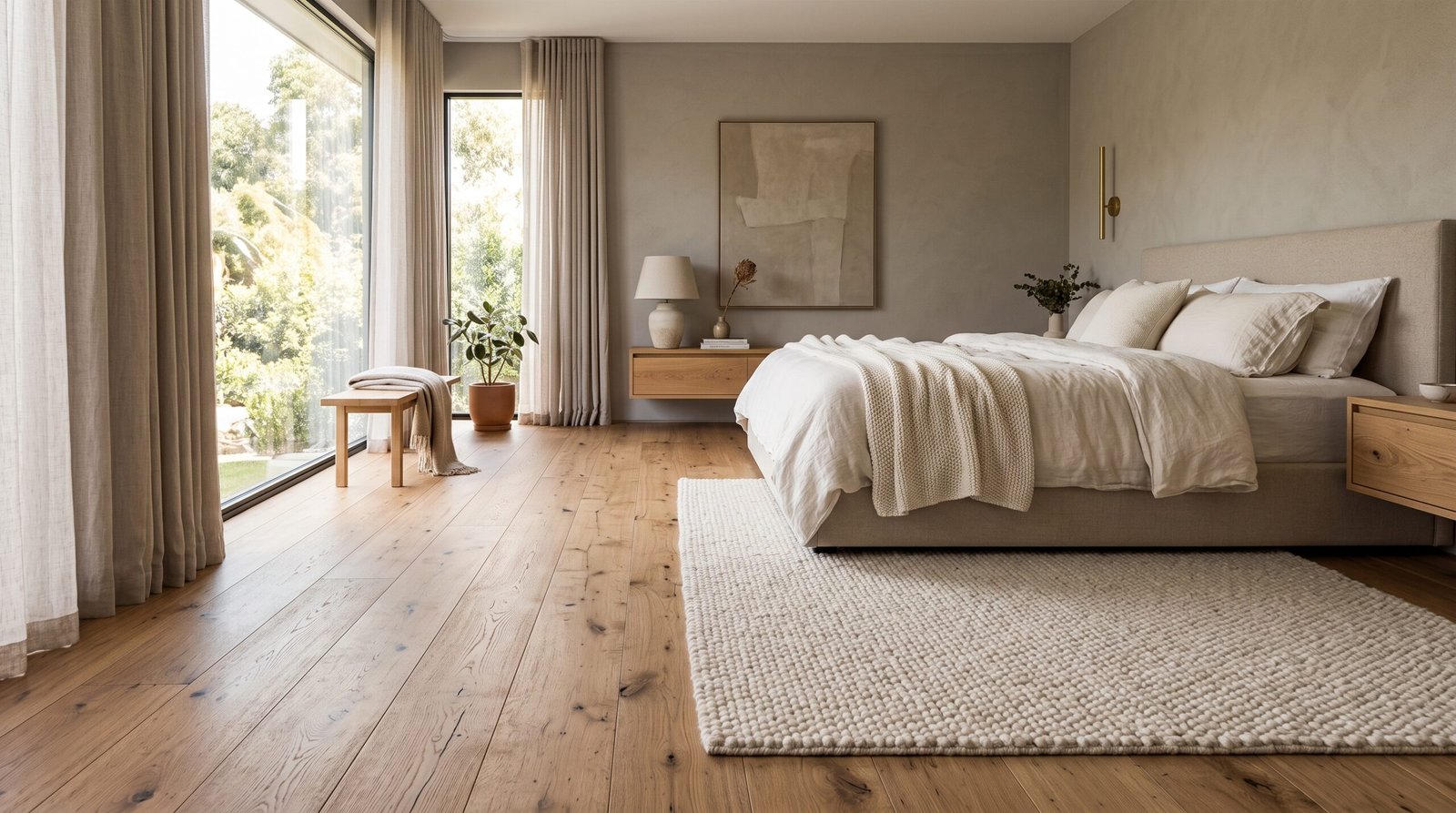
17 Bedroom Floor Ideas to Create a Cozy and Stylish Space
The floor is one of the largest surfaces in a bedroom, yet it often receives less attention than the walls, furniture, or bedding. The right bedroom flooring can completely change how a room feels. Warm wood can make a bedroom feel inviting and timeless, a soft carpet can add comfort underfoot, while a beautiful herringbone pattern can instantly give the space a more sophisticated character.
Modern bedroom floor ideas are also about more than choosing a material. The color, plank direction, texture, finish, and way you layer rugs over the floor can all influence the final look. Even a relatively simple bedroom can feel thoughtfully designed when the flooring works beautifully with the bed, walls, curtains, and surrounding furniture.
Whether you are renovating your entire bedroom or simply looking for inspiration for a future makeover, these bedroom floor ideas offer options for modern, cozy, minimalist, rustic, and luxurious interiors.
1. Choose Warm Oak Flooring for a Timeless Bedroom
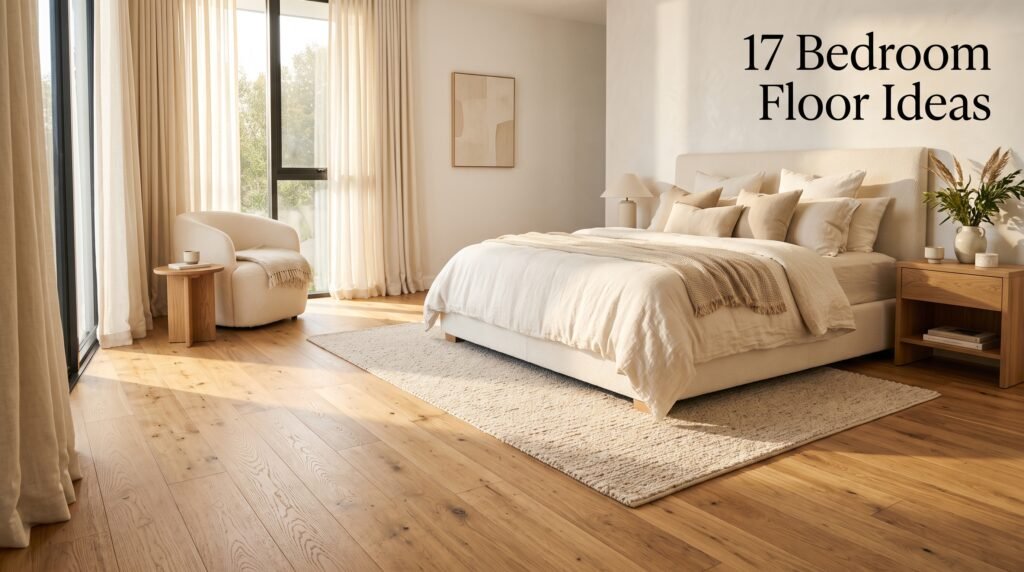
Warm oak flooring is one of the easiest ways to make a bedroom feel welcoming without making the design look overly traditional. Its natural grain introduces subtle texture, while honey and light brown tones bring warmth to otherwise neutral interiors.
This flooring works particularly well in bedrooms decorated with cream, beige, soft white, and taupe. Pair it with an upholstered bed, linen bedding, and warm wooden nightstands to create a calm and cohesive look.
Another advantage of oak-inspired flooring is its versatility. You can use it in a Scandinavian bedroom, an organic modern interior, a farmhouse-inspired room, or even a contemporary space. The furniture and accessories determine the overall style while the floor acts as a timeless foundation.
For an airy appearance, choose lighter oak with a matte or natural-looking finish. If you want a richer and more traditional atmosphere, medium-toned oak can create additional depth.
Keep large sections of the floor visible rather than covering everything with an oversized rug. Allowing the natural wood grain to become part of the room’s design makes the entire bedroom feel warmer.
2. Create Elegance With Herringbone Flooring
Herringbone flooring brings pattern into a bedroom without requiring bright colors or elaborate decoration. Instead of conventional straight planks, the flooring pieces are arranged in an angled repeating pattern.
The result immediately feels more architectural.
Herringbone looks especially beautiful in bedrooms where the rest of the interior is relatively simple. Imagine soft white walls, a cream upholstered bed, minimal nightstands, linen curtains, and a beautiful oak herringbone floor underneath.
Because the flooring itself creates visual movement, you do not need many additional patterns throughout the room.
For a modern interpretation, choose light or medium wood tones with a matte finish. Darker herringbone flooring can create a more dramatic, traditional, or boutique-hotel-inspired bedroom.
You can also use a large neutral rug beneath the bed while leaving enough flooring exposed around its edges for the pattern to remain visible.
3. Brighten the Room With Light Scandinavian Wood
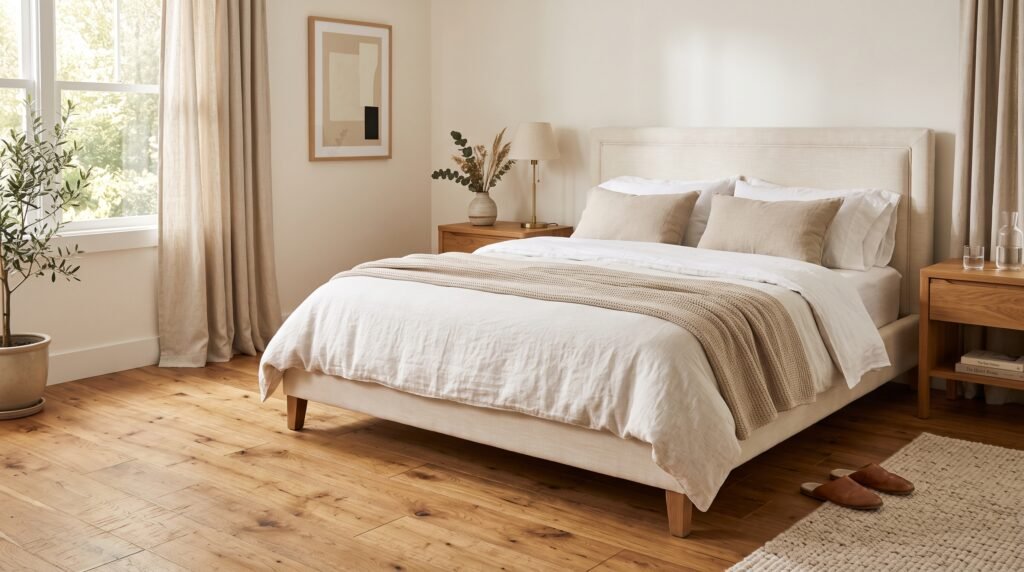
Light wood flooring can make even a relatively small bedroom appear brighter and more spacious. Pale oak, whitewashed wood, and ash-inspired finishes work especially well when you want a clean Scandinavian aesthetic.
Combine the flooring with white or warm off-white walls rather than stark cool gray. Add a simple wooden bed frame, soft linen bedding, a wool rug, and understated furniture.
Natural daylight enhances this type of floor beautifully.
Light-colored flooring is particularly useful for bedrooms with limited windows because it reflects more available light than very dark flooring.
However, avoid making every element in the bedroom equally pale. Introduce contrast through medium-toned wood furniture, black lighting fixtures, muted artwork, or textured fabrics.
A few darker details prevent a light bedroom from looking washed out while preserving the peaceful Scandinavian character.
4. Make a Statement With Dark Wood Flooring
Dark bedroom floors can create a sophisticated and intimate atmosphere.
Walnut-inspired brown, espresso, charcoal-stained wood, and other deep finishes provide dramatic contrast against lighter walls and bedding. This combination works particularly well in larger bedrooms where you want the space to feel cozy rather than expansive.
Try pairing dark flooring with warm white walls and an ivory upholstered bed. Add walnut nightstands, soft beige curtains, and subtle brass or bronze lighting.
The lighter elements prevent the darker floor from overwhelming the space.
You can also embrace a moodier look by combining dark floors with deeper wall colors such as olive, charcoal, muted brown, or navy. In this case, lighter bedding can provide enough contrast to keep the room visually balanced.
Texture becomes particularly important in dark bedrooms. Linen, boucle, wool, woven baskets, and natural wood grain soften the dramatic palette and make the bedroom feel comfortable rather than severe.
5. Add Luxury With Wide-Plank Wood Floors
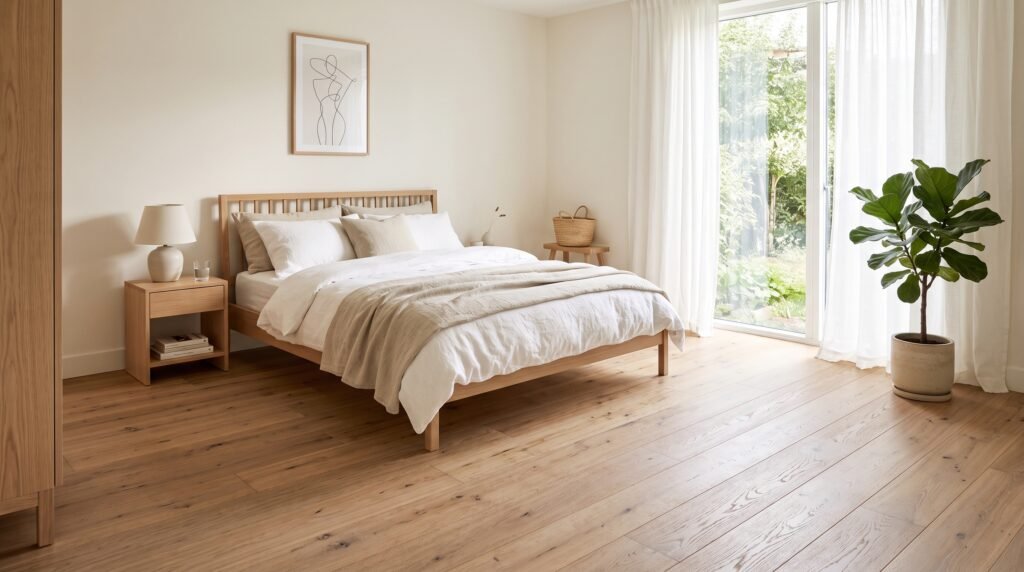
Wide-plank flooring has a clean, high-end appearance that works beautifully in modern bedrooms.
Because there are fewer visible seams across the floor, wider boards allow the natural grain and variation of the material to stand out. They can also make the room feel visually calmer than flooring made from many narrow planks.
Natural oak is particularly effective for this style.
Choose boards with subtle knots and variations if you want an organic appearance. For something more refined, select flooring with a consistent grain and smooth matte finish.
Wide planks can also influence how spacious the room appears. Running the boards along the longest dimension of the bedroom can visually extend the space.
Pair them with understated furniture rather than overly ornate pieces. A low upholstered bed, simple nightstands, linen curtains, and one large area rug can create an elegant bedroom where the floor becomes an important part of the overall composition.
6. Bring Comfort With Soft Bedroom Carpet
Carpet remains one of the most comfortable flooring choices for bedrooms.
Stepping onto a soft surface in the morning creates a noticeably different experience from stepping directly onto tile or hard flooring. Carpet can also reduce sound, which makes it especially useful in upstairs bedrooms or busy households.
Modern carpet does not have to resemble outdated wall-to-wall styles.
Look for subtle textures and sophisticated neutral colors such as oatmeal, warm beige, soft taupe, or muted greige. These shades provide a quiet backdrop for the rest of the bedroom.
Texture can make a significant difference. A slightly looped or woven-looking carpet adds visual interest without introducing an obvious pattern.
If you want your bedroom to feel particularly cozy, combine neutral carpet with an upholstered headboard, layered bedding, and floor-length curtains.
Because carpet already adds softness, you may not need a large decorative rug. Instead, allow the flooring to create a continuous, comfortable foundation throughout the room.
7. Try Painted Wood Floors for a Charming Look
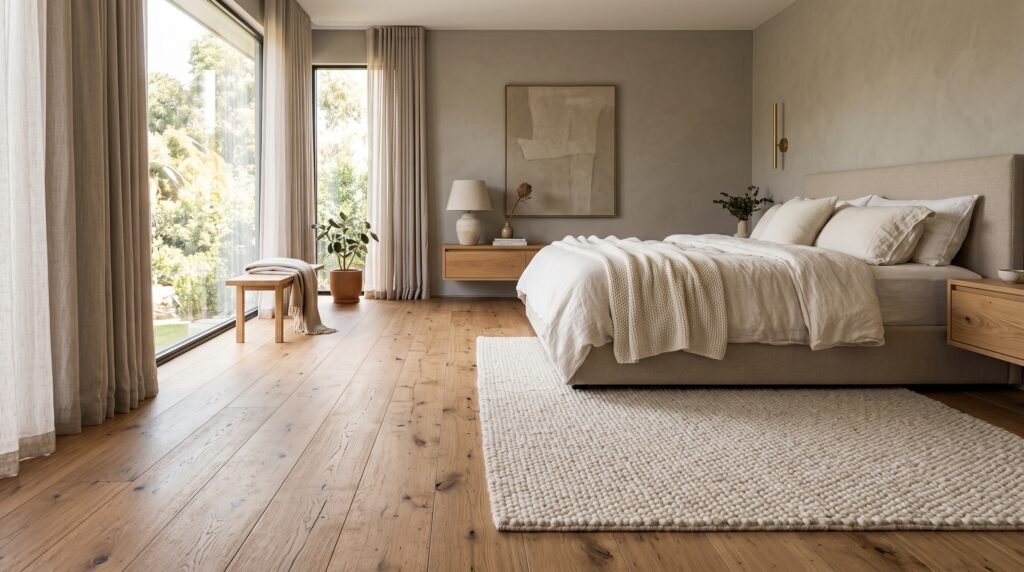
If your bedroom already has older wooden floorboards that are difficult to restore, painting them can create an entirely new look.
Painted flooring works particularly well in cottage, coastal, Scandinavian, and relaxed vintage-inspired bedrooms.
Soft white is a classic choice because it brightens the room and highlights the natural lines between the boards. Warm gray, muted sage, pale blue, and soft beige can also produce beautiful results.
The slightly imperfect character of painted wood is part of its appeal. Small variations and signs of age can make the room feel authentic rather than overly polished.
Pair white painted floors with warm textiles so the bedroom does not become too cold. Natural linen, woven baskets, wooden furniture, and a textured rug can bring warmth back into the palette.
For something more adventurous, painted floors can also incorporate subtle geometric patterns or borders. However, keep the surrounding bedroom relatively simple so the flooring remains intentional rather than overwhelming.
8. Use a Large Area Rug to Define the Bed
You do not necessarily need to replace your existing flooring to transform the bedroom.
A well-chosen area rug can dramatically change its appearance while making the space around the bed softer and more inviting.
For most bedrooms, the rug should extend beyond the sides and foot of the bed. This creates a generous visual frame rather than making the rug appear too small.
Neutral textured rugs are particularly versatile. Wool, flatwoven designs, and subtle vintage-inspired patterns can complement both wood and hard-surface flooring.
The rug color should relate to other elements in the bedroom. A cream rug can connect with light bedding, while a muted taupe design might coordinate with curtains or an upholstered headboard.
Avoid choosing a rug simply because it matches everything perfectly. Slight tonal variation adds dimension and keeps a neutral bedroom interesting.
9. Introduce Character With Chevron Flooring
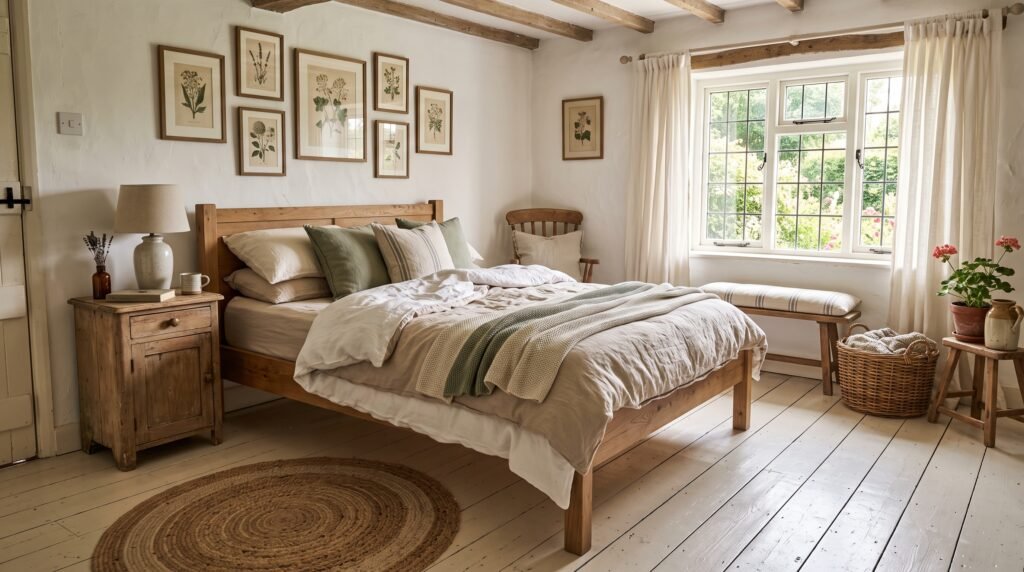
Chevron flooring offers a more structured alternative to traditional straight planks.
Although it is sometimes confused with herringbone, the two patterns are visually different. Chevron boards are cut at angles so their ends meet to form continuous V-shaped lines.
This creates a clean sense of movement across the floor.
Chevron flooring is particularly striking in contemporary and Parisian-inspired bedrooms. Light oak keeps the look subtle and modern, while medium or darker wood creates greater drama.
Because the pattern is already decorative, keep surrounding furniture fairly streamlined.
A simple bed, understated bedding, minimal artwork, and elegant lighting allow the floor to become one of the main design features.
The direction of the chevron pattern can also guide the eye toward an important feature, such as the bed or a large window.
10. Layer Rugs Over Wood Flooring
Layering rugs is a great way to add softness without hiding beautiful bedroom flooring completely.
Start with a larger natural-fiber or neutral rug underneath the bed. Then add a smaller, softer rug in an area where additional comfort is useful, such as beside a chair or near the bed.
The trick is keeping the layers visually connected.
Choose rugs with complementary colors rather than competing patterns. For example, a large natural jute-style rug can work underneath a smaller cream wool rug.
This technique is especially effective in bohemian, organic modern, and relaxed contemporary bedrooms.
Layered rugs also give you flexibility. Unlike permanent flooring changes, rugs can be replaced as your bedroom style evolves.
11. Create an Organic Look With Natural-Style Flooring
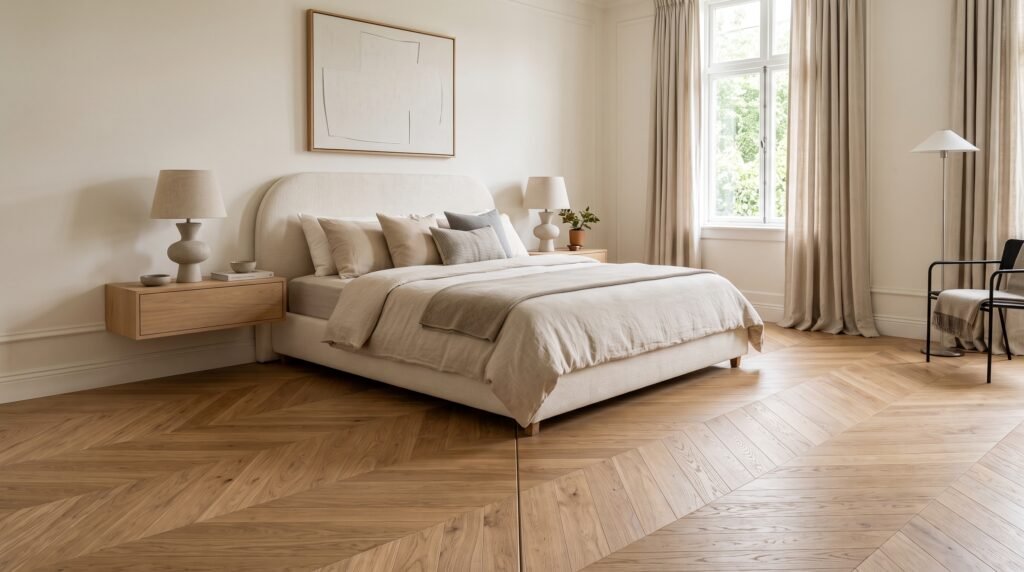
Organic modern bedrooms rely heavily on natural materials and earthy textures, making the flooring especially important.
Choose wood or wood-look flooring with visible grain, subtle imperfections, and warm neutral coloring. The goal is to avoid anything that looks overly glossy or artificial.
Matte finishes generally work best.
Continue the natural feeling through the rest of the room with linen bedding, woven textures, handmade ceramics, warm plaster-like walls, and simple wooden furniture.
A large textured rug beneath the bed can soften the floor while maintaining the earthy aesthetic.
Indoor greenery can also work beautifully against natural flooring. An olive tree or other sculptural plant placed near a window introduces another organic element without requiring excessive decoration.
12. Experiment With Patterned Bedroom Floors
Pattern does not have to be limited to bedding and wallpaper.
A patterned floor can turn an otherwise simple bedroom into something memorable.
Depending on your style, this could mean geometric tiles, patterned wood layouts, painted designs, or decorative floor treatments.
The key is deciding whether the floor will be the primary statement.
If it is, simplify the rest of the bedroom. Use solid bedding, restrained wall colors, and furniture with clean silhouettes.
Repeating one or two colors from the floor elsewhere in the bedroom can also help everything feel connected.
For example, if your patterned flooring includes muted beige and charcoal details, you could repeat beige in the bedding and charcoal in the lighting.
This creates cohesion without making every surface match.
13. Choose Floor-to-Floor Tonal Neutrals
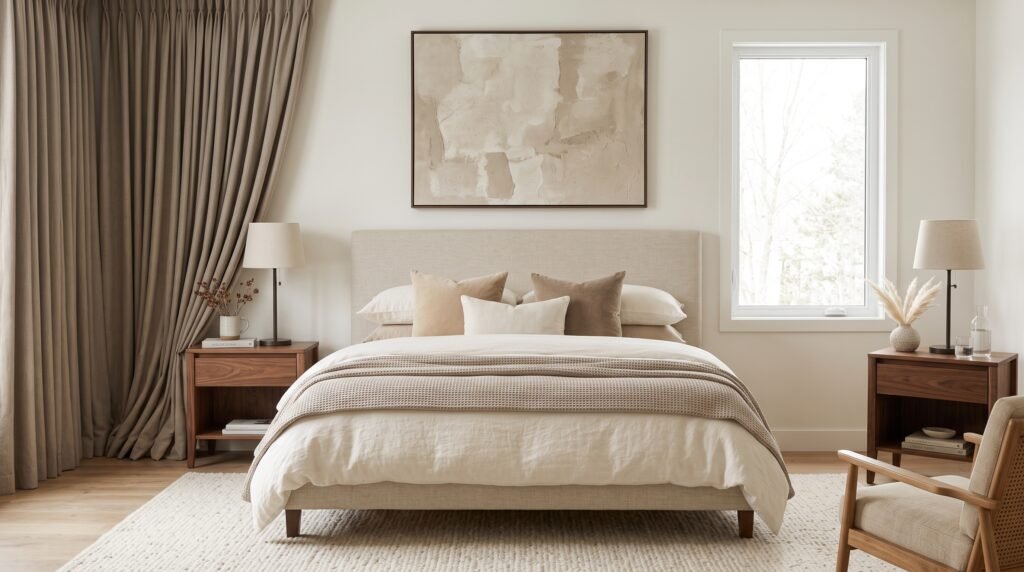
A tonal bedroom uses several variations of similar colors rather than strong contrasts.
Flooring plays a major role in making this approach successful.
Imagine warm beige flooring combined with creamy walls, an oatmeal upholstered bed, ivory bedding, and taupe curtains. The colors remain closely related, but differences in texture prevent the bedroom from feeling flat.
This is where flooring texture becomes particularly valuable.
A subtle wood grain, woven carpet, or textured rug introduces visual variation without disrupting the peaceful color palette.
Tonal bedrooms work especially well when you want a calm, luxurious, hotel-inspired atmosphere.
Add a few natural wood or dark metal accents to provide definition, but avoid introducing too many unrelated colors.
14. Use Flooring to Make a Small Bedroom Look Larger
Flooring can subtly influence how spacious a bedroom appears.
In small rooms, lighter colors generally create a more open appearance. Light oak, pale wood-look flooring, and soft neutral carpet are all strong options.
The direction of floorboards matters as well.
Running planks along the longest dimension of the room can emphasize its length, while continuous flooring without unnecessary transitions creates a cleaner visual flow.
Large-format flooring can also reduce the number of visible lines across the room.
When using rugs, avoid choosing one that is disproportionately small. A tiny rug can visually divide the bedroom into separate sections, making the room feel more cramped.
Instead, choose a rug large enough to anchor the bed and surrounding furniture.
Keeping the flooring palette relatively simple allows the eye to travel across the room without interruption.
15. Create a Cozy Rustic Bedroom With Reclaimed-Look Wood
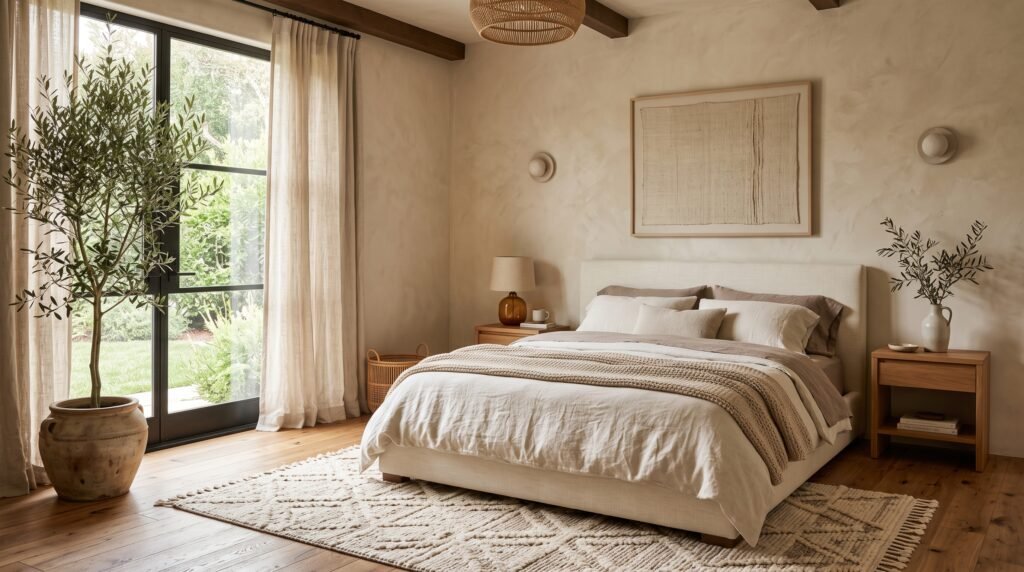
Reclaimed and weathered-look flooring can give a bedroom instant character.
The visible knots, grain variations, and slightly aged tones work particularly well in rustic, farmhouse, cottage, and modern mountain-inspired bedrooms.
However, rustic flooring does not require rustic furniture everywhere.
One of the most attractive combinations is a character-rich floor paired with clean contemporary furniture. A simple upholstered bed against warm white walls allows the flooring to provide texture without making the room feel themed.
Choose warm rather than overly orange wood tones for a more current appearance.
Layer a soft wool rug beneath the bed to balance the rougher visual texture of the flooring.
Natural linen, chunky knit blankets, aged ceramics, and understated wooden nightstands can complete the cozy atmosphere.
16. Match Your Bedroom Floor With the Overall Mood
Instead of choosing flooring in isolation, think about how you want the bedroom to feel.
For a light and peaceful bedroom, pale oak or soft neutral carpet can provide an ideal foundation.
For a luxurious bedroom, consider wide-plank wood, herringbone, or chevron flooring.
For something cozy and intimate, medium to dark wood can introduce warmth and depth.
Organic modern bedrooms often benefit from natural-looking matte wood, while cottage interiors can work beautifully with painted or weathered floorboards.
Create a simple material palette before making your final choice. Place flooring samples alongside wall colors, bedding fabrics, curtain materials, and furniture finishes.
Looking at everything together can reveal undertones that might not be obvious when each item is considered separately.
17. Keep the Bedroom Floor Simple and Let Texture Lead
Sometimes the most successful bedroom floor idea is also the simplest.
You do not need an elaborate pattern or unusual material to create a beautiful room. A straightforward warm wood floor combined with the right textures can look more sophisticated than a highly decorative surface.
Consider a bedroom with natural oak flooring, a large ivory wool rug, a linen upholstered bed, layered neutral bedding, warm wooden nightstands, and floor-length curtains.
Nothing individually demands attention, yet the combination feels rich and inviting.
This approach is particularly useful if you enjoy changing your bedroom decor over time.
Neutral flooring provides flexibility. You can introduce new bedding colors, artwork, rugs, or furniture without worrying that they will clash with a highly distinctive floor.
For a timeless bedroom, prioritize good proportions, natural-looking materials, and finishes that complement the architecture of your home.
How to Choose the Best Flooring for Your Bedroom
Appearance is important, but bedroom flooring also needs to suit your everyday lifestyle.
Start by thinking about comfort. If you prefer something warm and soft underfoot, carpet may be worth considering. If you love the appearance of wood but still want softness, combine hard flooring with a generously sized area rug.
Maintenance is another consideration.
Bedrooms generally experience less moisture and heavy traffic than kitchens, bathrooms, and entryways, giving you greater freedom when selecting materials. However, homes with children or pets may still benefit from durable, easy-to-clean surfaces.
Color should also be considered carefully.
Very dark floors can create beautiful contrast but may make a small or poorly lit bedroom appear more enclosed. Extremely pale floors can brighten the room but may require additional texture to prevent the interior from feeling too stark.
Medium and light warm wood tones are among the most versatile options because they work with many decorating styles.
Finally, consider longevity.
Flooring is usually more difficult and expensive to change than bedding, artwork, or wall paint. If you are making a permanent flooring investment, choosing a relatively timeless material can give you greater flexibility in the future.
How to Style Rugs With Bedroom Flooring
A rug should enhance your flooring rather than completely compete with it.
In rooms with beautiful hardwood floors, position the rug so enough wood remains visible around the perimeter. This creates contrast between the soft textile and hard surface.
Under a bed, larger rugs generally create a more luxurious appearance.
Ideally, you should be able to step onto the rug when getting out of bed rather than directly onto the hard floor.
If your bedroom flooring already includes a strong pattern such as herringbone or chevron, choose a relatively understated rug. A heavily patterned rug placed over an equally decorative floor can make the room visually busy.
With simple straight-plank flooring, however, you have more freedom to introduce subtle patterns through rugs.
Texture is often more important than color.
A thick wool or woven rug can make a neutral bedroom feel significantly more layered without changing the overall palette.
Bedroom Flooring Colors That Work Beautifully
Warm natural wood remains one of the most adaptable choices for bedrooms because it complements both warm and cool decor.
Light oak works beautifully with Scandinavian, coastal, minimalist, and organic modern interiors. Medium oak creates a timeless appearance that can adapt to changing furniture styles.
Dark walnut and espresso tones create stronger contrast and can make larger bedrooms feel more intimate.
For carpet, warm neutrals are generally easier to incorporate than very cool grays. Beige, oatmeal, mushroom, taupe, and soft greige provide a flexible foundation.
If you want something more distinctive, muted earthy shades can also work. Subtle olive, clay, or dusty brown tones can introduce character while remaining relaxing enough for a sleeping space.
Whatever color you choose, compare flooring samples in the actual bedroom at different times of day. Natural and artificial lighting can dramatically change how undertones appear.
Final Thoughts
Bedroom flooring has a much bigger impact on the atmosphere of the room than many people realize.
Warm oak can make a space feel naturally inviting, herringbone and chevron patterns can introduce sophisticated architectural detail, and soft carpet can transform a bedroom into a comfortable retreat. Even existing flooring can be refreshed through painted floorboards, large area rugs, or thoughtful layering.
The best bedroom floor ideas balance appearance with comfort and practicality.
Instead of following a trend simply because it looks beautiful in a photograph, consider how the flooring will work with your room size, natural light, furniture, and everyday lifestyle.
Most importantly, treat your floor as part of the overall bedroom design rather than a background surface.
When the flooring, rugs, furniture, textiles, and colors work together, even a simply decorated bedroom can feel polished, cozy, and thoughtfully designed.