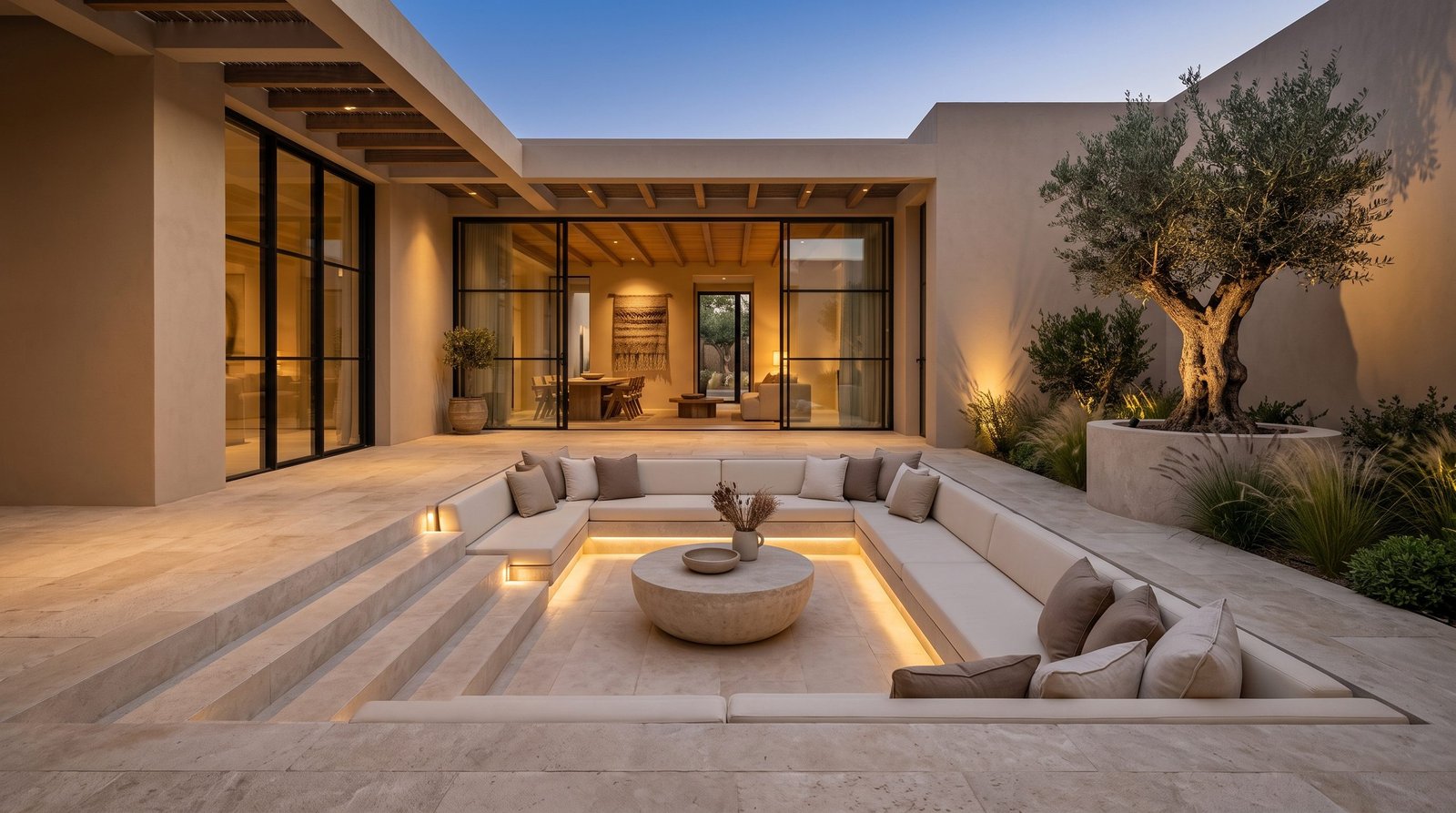
15 Beautiful Courtyard Ideas to Create a Private Outdoor Oasis
A beautiful courtyard can completely transform the atmosphere of your home. Whether you have a compact urban courtyard, a traditional enclosed garden, or a spacious outdoor area surrounded by architectural walls, thoughtful design can turn an overlooked space into a relaxing private retreat.
Unlike an open backyard, a courtyard offers a unique sense of intimacy. Its surrounding walls create opportunities for beautiful landscaping, comfortable seating, decorative lighting, and carefully selected architectural features. With the right combination of natural materials and greenery, even a modest courtyard can feel like a luxurious outdoor living room.
Modern courtyard design is especially appealing because it brings together indoor comfort and outdoor beauty. Cream-colored seating, natural stone flooring, warm wooden details, olive trees, and soft lighting can create an elegant environment that feels both contemporary and timeless.
The best courtyard ideas also consider practical needs. Comfortable furniture, suitable plants, effective drainage, and appropriate shade can make the space enjoyable throughout different seasons.
Whether you prefer Mediterranean charm, minimalist architecture, lush greenery, or a cozy outdoor dining area, there are countless ways to personalize your courtyard.
In this guide, explore 15 beautiful courtyard ideas that will help you create a stylish, functional, and welcoming outdoor oasis.
1. Create a Modern Courtyard with Neutral Natural Materials
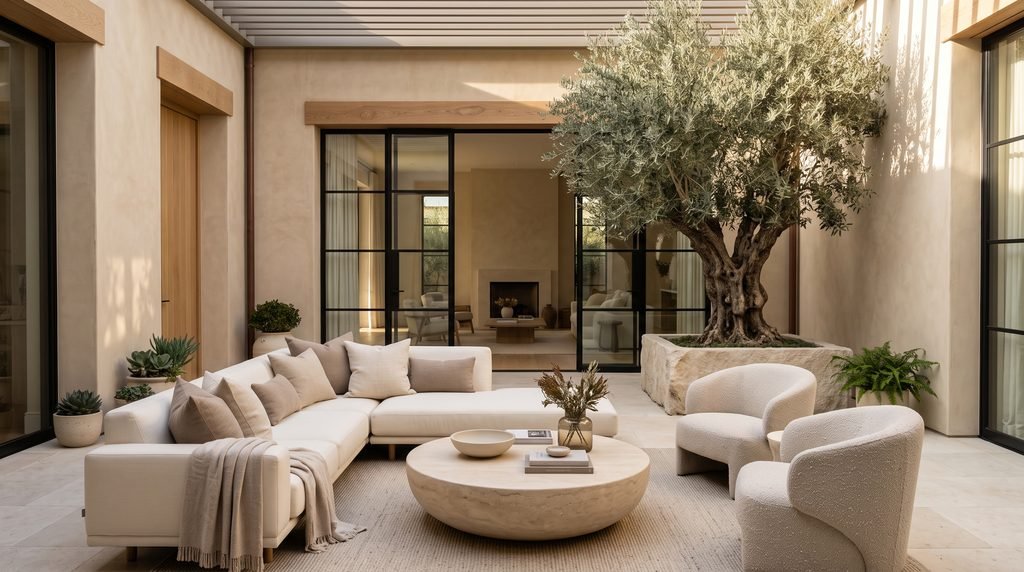
A modern courtyard featuring elegant neutral furniture, natural stone flooring, and sculptural greenery.
A modern courtyard is an excellent choice for homeowners who appreciate clean lines, timeless materials, and an uncluttered atmosphere.
Begin with a neutral color palette featuring cream, warm beige, taupe, and natural wood tones. These colors create a cohesive foundation while allowing greenery and architectural features to stand out.
Large-format limestone or porcelain pavers work beautifully for the flooring. Their continuous appearance helps the courtyard feel spacious and sophisticated.
For the main seating area, choose a low-profile outdoor sectional with weather-resistant cream upholstery. Pair it with a substantial stone coffee table and one or two sculptural lounge chairs.
An oversized planter containing an olive tree can provide a striking focal point without overwhelming the design.
Consider introducing a textured outdoor rug, linen-look cushions, and a few handmade ceramic accessories to soften the contemporary architecture.
The key to achieving an elegant modern courtyard is restraint. Rather than filling every corner, allow enough open space for comfortable movement and visual balance.
Design tip: Coordinate your courtyard flooring with the interior flooring to create a seamless indoor-outdoor connection.
2. Design a Mediterranean-Inspired Courtyard
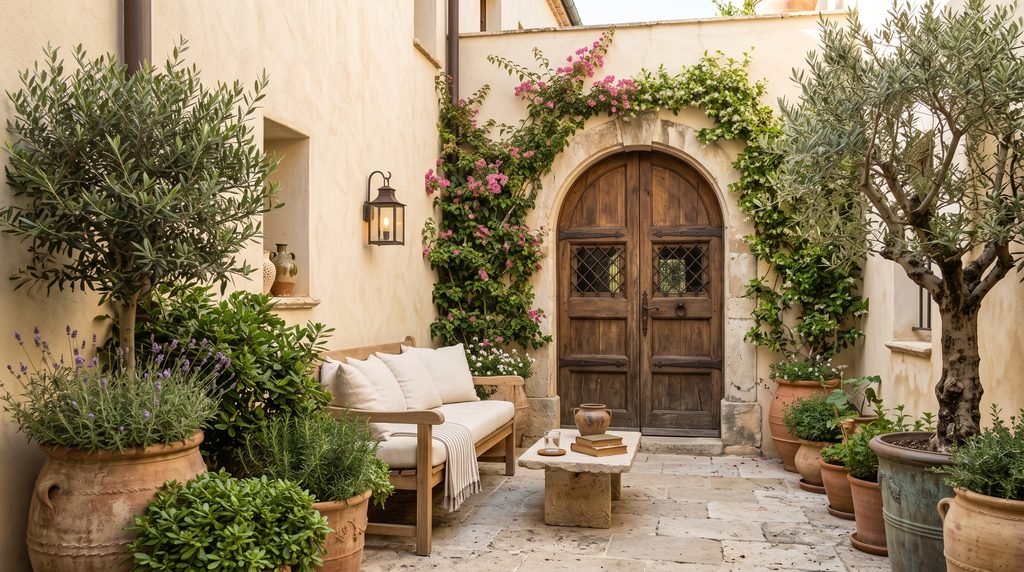
A warm Mediterranean courtyard with terracotta planters, arched architecture, and natural stone.
Mediterranean-inspired courtyards are loved for their warmth, relaxed character, and beautiful connection to nature.
To recreate this atmosphere, start with textured plaster walls in creamy white, sandy beige, or a subtle earthy tone.
Natural stone flooring introduces an authentic foundation, while architectural details such as arched doorways and rustic wooden beams add character.
Terracotta planters are an essential decorative element. Arrange them in different sizes and fill them with olive trees, rosemary, lavender, and other plants suited to your climate.
A simple wooden bench with comfortable neutral cushions creates an inviting place to sit.
For additional charm, introduce wrought-iron lanterns, woven baskets, and handmade pottery. These elements give the courtyard a collected, lived-in appearance.
Climbing greenery can soften surrounding walls and add beautiful natural texture. Where suitable, train climbing plants around an archway or pergola.
Keep the overall design relaxed rather than overly coordinated. Slight variations in materials and finishes help create the timeless atmosphere associated with Mediterranean homes.
Design tip: Combine weathered terracotta with cream plaster and natural wood for an earthy, sophisticated palette.
3. Transform a Small Courtyard into a Cozy Retreat
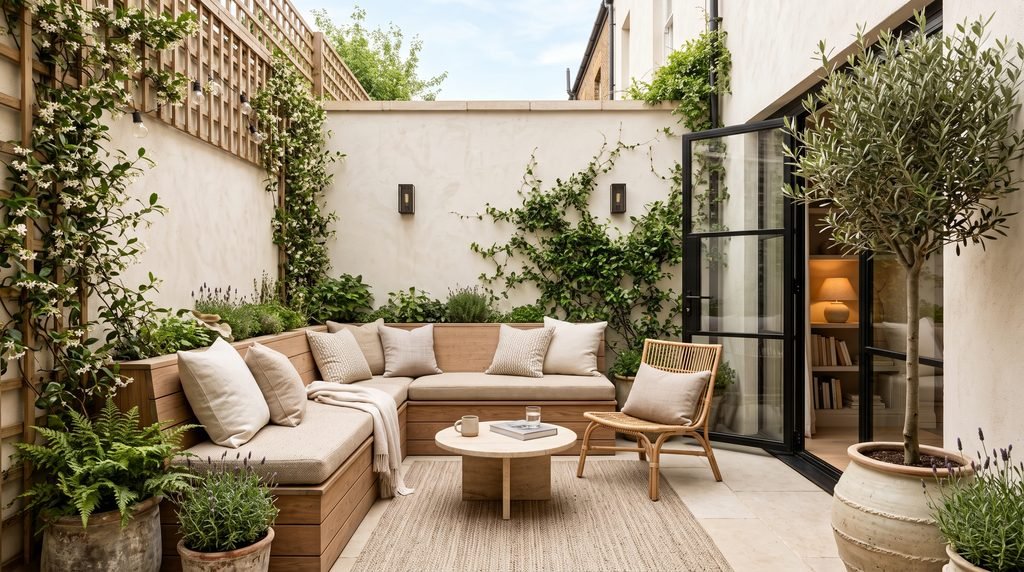
A compact courtyard transformed into a cozy outdoor seating area with space-saving furniture.
A small courtyard can become one of the most inviting areas of your home when every design choice is intentional.
Instead of using oversized furniture, select compact pieces that complement the available space.
A built-in bench positioned along one wall is particularly effective. It provides comfortable seating while leaving the center of the courtyard open.
Add a small round coffee table and one lightweight accent chair to create a practical conversation area.
Vertical gardening is another excellent solution for compact courtyards. Climbing plants, narrow trellises, or wall-mounted planters introduce greenery without occupying valuable floor space.
Light-colored paving and warm off-white walls can help the courtyard appear brighter.
To add visual depth, incorporate a large mirror designed for exterior use in a sheltered location. Position it carefully so it reflects greenery or attractive architectural details rather than direct sunlight.
Finish the space with a few neutral cushions, a small outdoor rug, and warm wall lighting.
Avoid excessive decorative accessories, which can make a compact area feel crowded.
Design tip: Choose furniture with slim frames and rounded edges to maintain an open, comfortable layout.
4. Introduce a Peaceful Courtyard Water Feature
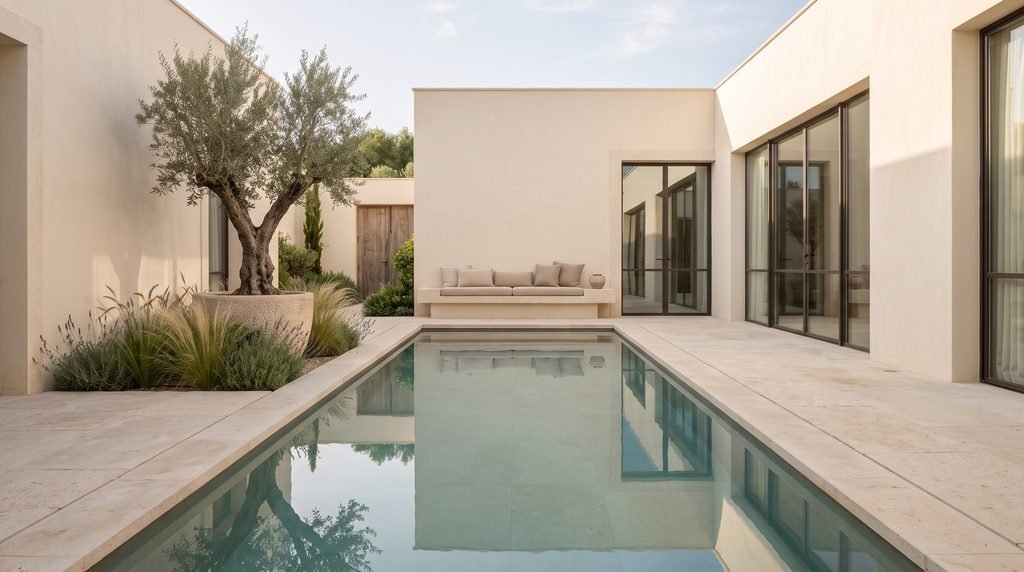
A serene courtyard with a minimalist reflecting pool surrounded by natural stone and greenery.
A water feature can introduce a calming sensory experience to your courtyard.
The gentle movement and sound of water create a peaceful atmosphere, making the space ideal for relaxation.
For a contemporary design, consider a shallow rectangular reflecting pool surrounded by limestone paving.
Still water can mirror the surrounding architecture and greenery, creating visual depth and an elegant focal point.
If your courtyard is smaller, a compact stone fountain or sculptural water bowl may be more appropriate.
Traditional courtyards can benefit from circular fountains, particularly when paired with natural stone and lush planting.
Position comfortable seating nearby so you can enjoy the feature while reading or having morning coffee.
Lighting can also enhance the water feature after sunset. Carefully positioned outdoor-rated fixtures can highlight the movement and reflections of the water.
Before installation, consider drainage, filtration, maintenance access, and appropriate safety measures for children and pets.
Design tip: Keep the surrounding materials simple so the water feature remains the main attraction.
5. Create an Elegant Courtyard Dining Area
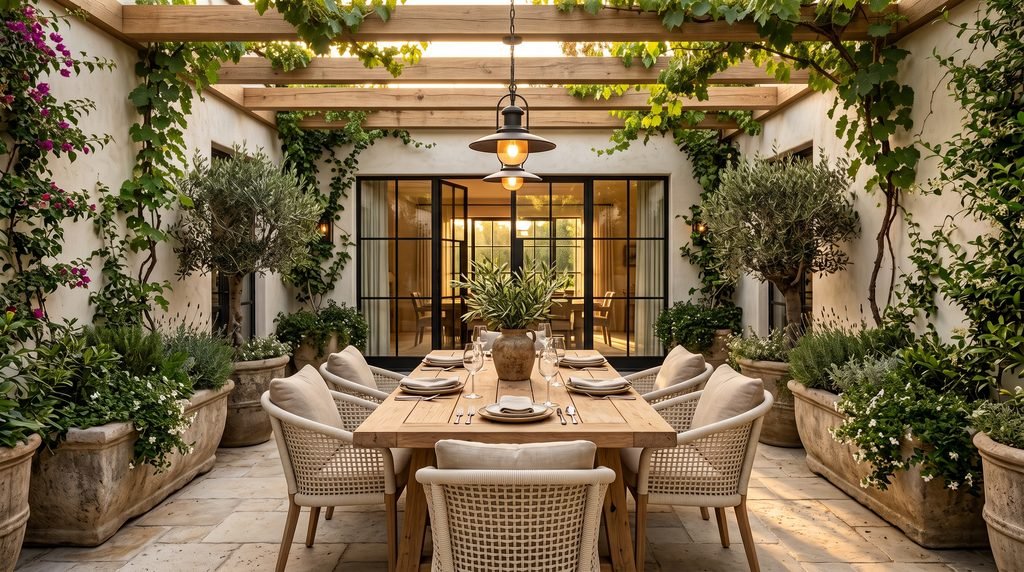
An elegant courtyard dining area with a natural wood table, woven chairs, and lush greenery.
A courtyard dining area can transform ordinary meals into memorable outdoor experiences.
Start by selecting a dining table that fits the proportions of your courtyard.
A rectangular teak table works beautifully in a spacious setting, while a round table can be more practical in a compact courtyard.
Pair the table with comfortable woven chairs featuring weather-resistant cushions.
To create an intimate atmosphere, arrange oversized planters around the perimeter. Olive trees, ornamental grasses, and climbing greenery provide a natural backdrop.
If the courtyard receives strong afternoon sunlight, consider adding a pergola, shade sail, or suitable outdoor umbrella.
For evening entertaining, introduce warm pendant lighting or discreet wall sconces.
A simple table centerpiece featuring a ceramic vase and fresh greenery can complete the arrangement without making it feel overly formal.
If possible, position the dining area near the kitchen or an indoor dining room to make serving and cleanup more convenient.
Design tip: Allow enough clearance behind dining chairs for guests to move comfortably around the table.
6. Design a Lush Green Courtyard Garden
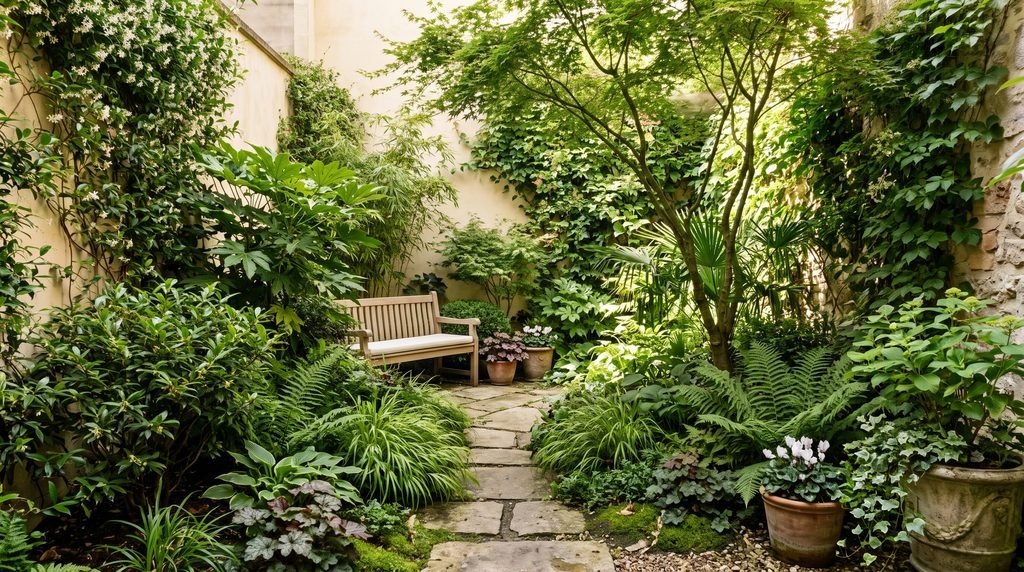
A lush courtyard garden with layered greenery, natural stone pathways, and a peaceful seating corner.
If you love nature, a lush garden courtyard can provide a refreshing escape from everyday surroundings.
The secret to achieving a beautiful garden is to combine plants of different heights, shapes, and textures.
Begin with one or two taller trees or architectural plants to establish structure.
Next, introduce medium-height shrubs and leafy plants around the courtyard’s perimeter.
Complete the arrangement with smaller plants and groundcover to soften the edges.
Ferns, hostas, ornamental grasses, and climbing vines can create beautiful combinations where growing conditions are suitable.
Natural stone stepping paths help guide movement through the garden while maintaining an organic appearance.
A small wooden bench tucked into a planted corner provides a peaceful place to sit and enjoy the greenery.
Before selecting plants, observe how sunlight moves through the courtyard. Enclosed outdoor areas may contain both deeply shaded corners and sunny sections.
Choose plants that suit these different conditions rather than selecting them based on appearance alone.
Design tip: Combine broad leaves, delicate foliage, and upright grasses to create visual interest without relying on colorful flowers.
7. Add a Pergola with Soft Outdoor Curtains
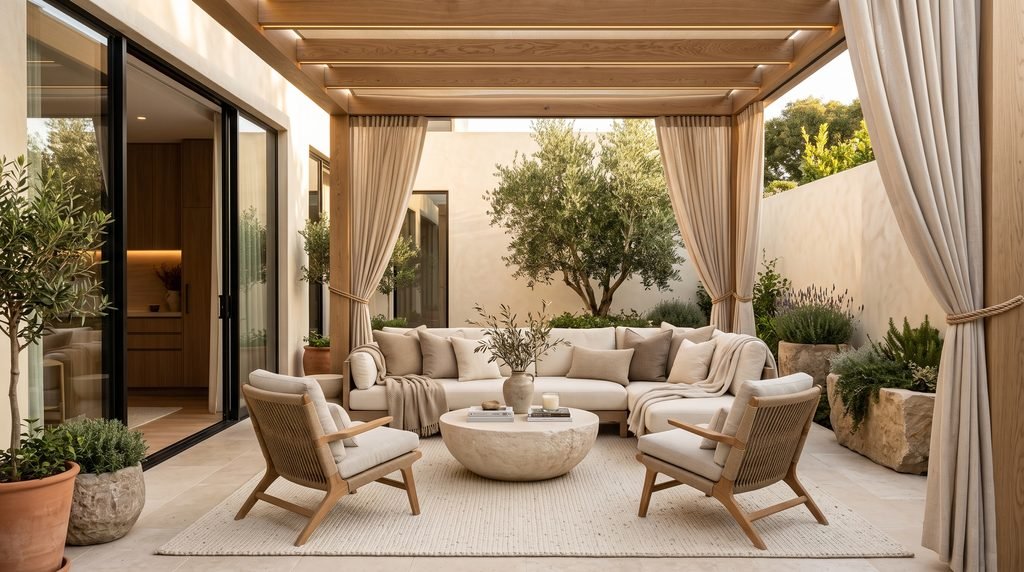
A sophisticated courtyard lounge featuring a wooden pergola, soft curtains, and comfortable neutral seating.
A pergola is a beautiful way to introduce architectural structure and improve comfort in a courtyard.
Natural wood beams add warmth, while the overhead framework defines the seating area.
For a soft and elegant appearance, add outdoor-rated curtains in cream, oatmeal, or warm beige.
These curtains can provide additional privacy and help create an intimate outdoor atmosphere.
Beneath the pergola, arrange a comfortable sectional sofa with two accent chairs and a substantial coffee table.
A textured outdoor rug helps anchor the furniture and makes the courtyard feel like an extension of the living room.
Add oversized planters containing olive trees or other sculptural greenery to complete the arrangement.
For evening use, consider warm integrated lighting or an outdoor-rated pendant fixture.
In windy locations, use suitable curtain tiebacks and ensure the pergola is properly engineered and anchored.
Design tip: Match the pergola’s wood tone with nearby doors, window frames, or interior furniture for a cohesive appearance.
8. Create a Luxury Courtyard with a Sunken Seating Area
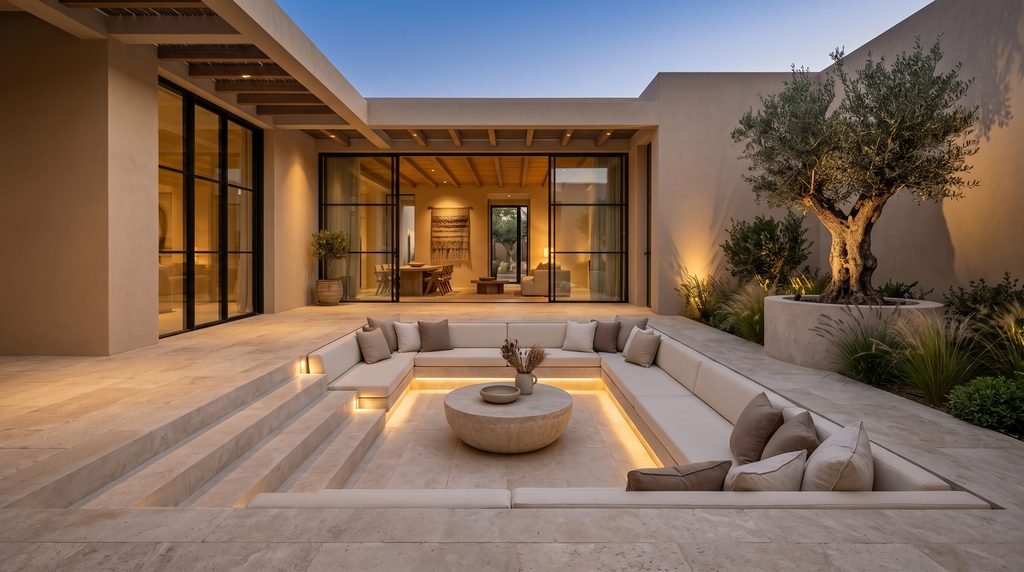
A luxurious courtyard featuring a recessed conversation area, built-in seating, and contemporary stone finishes.
A sunken seating area can make a courtyard feel distinctive and architecturally impressive.
This design is particularly suitable for larger courtyards where there is enough space to accommodate a change in floor level.
Built-in seating can follow the edges of a recessed rectangular or square area.
Comfortable outdoor cushions and layered neutral pillows soften the structure and create a welcoming environment.
A substantial stone coffee table makes an attractive central feature.
Surround the seating area with limestone paving, sculptural plants, and subtle architectural lighting.
For an additional sense of luxury, consider incorporating a professionally installed outdoor fire feature where local regulations and site conditions permit.
Because recessed spaces can collect rainwater, drainage must be carefully planned. Steps should also be safely proportioned and clearly visible.
A sunken courtyard works especially well when the surrounding architecture features clean lines and natural materials.
Design tip: Use consistent flooring throughout the courtyard to visually connect the recessed seating with the surrounding space.
9. Introduce Warm Lighting for a Magical Evening Courtyard
Lighting can completely change how a courtyard looks and feels after sunset.
During the day, natural materials and greenery create the atmosphere. In the evening, carefully positioned lighting highlights these same elements while making the space more comfortable and functional.
Begin with warm wall sconces to illuminate the surrounding architecture.
If the courtyard contains an olive tree or another sculptural plant, position a discreet uplight near its base. This highlights the tree’s natural form and creates attractive shadows against the walls.
Low-level pathway lighting improves visibility around walkways and steps.
For seating areas, consider rechargeable outdoor lamps or lanterns designed for exterior use.
A pergola can also incorporate integrated lighting that softly illuminates the furniture below.
Avoid relying on a single bright overhead fixture. Several smaller light sources generally create a more inviting atmosphere.
For a contemporary courtyard, select simple fixtures in bronze, black, or another finish that complements the architecture.
In a Mediterranean setting, decorative lanterns can introduce additional character.
Choose appropriate exterior-rated fixtures and have permanent electrical installations completed by a qualified professional.
With thoughtful lighting, your courtyard can become a beautiful evening retreat for quiet relaxation or entertaining guests.
10. Design a Japanese-Inspired Zen Courtyard
A Japanese-inspired courtyard offers a peaceful atmosphere through simplicity, balance, and natural materials.
Rather than filling the space with furniture and decorative accessories, focus on a limited number of carefully selected elements.
Gravel, natural stone, timber, and greenery can establish a restrained foundation.
A sculptural tree can become the main focal point. Position it thoughtfully and surround it with rocks or low planting.
A stepping-stone path introduces gentle movement through the space.
For seating, consider a simple wooden bench or a small timber platform.
Avoid combining too many plant varieties or competing colors. A restrained planting palette helps maintain the courtyard’s calm appearance.
If you include a gravel garden, consider its maintenance requirements. Fallen leaves and debris may need to be removed regularly to preserve the intended appearance.
Soft architectural lighting can highlight the main tree or stone arrangement after sunset.
The goal is not to reproduce every element of a traditional Japanese garden but to draw inspiration from its thoughtful composition and connection to nature.
11. Incorporate Built-In Courtyard Seating
Built-in seating is an excellent option for courtyards with limited space or unusual dimensions.
A masonry or timber bench can follow the perimeter wall, providing generous seating while preserving the central floor area.
For a comfortable finish, add custom outdoor cushions in cream, beige, or muted taupe.
Layer a few textured pillows to introduce softness and visual interest.
A compact round coffee table can complete the seating arrangement.
Built-in benches can also incorporate practical storage compartments for gardening supplies or outdoor accessories.
However, storage areas should be designed to manage moisture and protect their contents from weather exposure.
If the courtyard is particularly narrow, consider an L-shaped bench in one corner.
This arrangement creates a defined seating zone without blocking movement through the space.
For a refined appearance, coordinate the bench’s finish with the surrounding walls or flooring.
Built-in seating can also be paired with planters, allowing greenery to frame the arrangement naturally.
The result is a courtyard that feels organized, comfortable, and thoughtfully designed.
12. Use Courtyard Trees as Living Architectural Features
A beautiful tree can give a courtyard a strong sense of identity.
Olive trees are especially attractive in Mediterranean and organic-modern designs because of their sculptural trunks and silvery-green foliage.
Japanese maples can introduce delicate leaves and seasonal color in suitable climates.
In warmer regions, other locally adapted small trees may be more practical.
Before selecting a tree, consider its mature size, root system, sunlight requirements, and proximity to surrounding walls.
A large planter can create an elegant architectural effect, but it must provide sufficient space for root development and appropriate drainage.
For a permanent installation, an in-ground planting bed may offer better long-term growing conditions.
Position the tree where its canopy can develop without interfering with windows, doors, or overhead structures.
Surround it with simple paving and low greenery so its natural form remains visible.
A discreet uplight can turn the tree into a beautiful focal point after sunset.
For a cohesive design, repeat the planter’s material elsewhere in the courtyard.
A single well-positioned tree can be more visually effective than numerous smaller plants competing for attention.
13. Add Character with Beautiful Textured Courtyard Walls
Courtyard walls provide an excellent opportunity to introduce personality and architectural interest.
Unlike an open garden, an enclosed courtyard often has several prominent vertical surfaces.
These walls can become an important part of the overall design.
For a contemporary courtyard, consider warm off-white plaster or a limewash-inspired finish.
The subtle variations in texture create depth without introducing distracting colors.
Natural stone can also be used to create a feature wall.
In Mediterranean-inspired courtyards, slightly irregular plaster surfaces and weathered finishes can add character.
Brick is another attractive option, particularly for rustic or traditional homes.
If you prefer a minimalist appearance, limit the number of competing textures.
One distinctive feature wall may be enough to create visual interest.
Climbing plants can soften the architecture and introduce a natural contrast.
Outdoor wall lighting can further emphasize the texture after sunset.
Before applying decorative finishes, address any existing moisture problems and select materials suitable for exterior exposure.
The right wall treatment can make a courtyard feel complete even when the furniture and accessories are relatively simple.
14. Connect the Courtyard with Your Indoor Living Space
One of the most effective courtyard design ideas is to create a seamless connection between indoor and outdoor areas.
Large glass doors can establish a visual relationship between the living room and courtyard.
When the doors are open, the courtyard can function as an additional living space during comfortable weather.
To strengthen this connection, coordinate the interior flooring with the outdoor paving.
The materials do not need to be identical, but similar colors and textures can create visual continuity.
Repeat a few key materials across both areas, such as warm oak, limestone, and neutral upholstery.
Position outdoor seating so it creates an attractive view from inside the home.
This makes the courtyard enjoyable even when you are not physically using it.
For homes with limited outdoor space, the courtyard can become a valuable extension of the main living area.
Consider shade, privacy, weather protection, and threshold drainage when planning the connection.
A well-designed transition can make both the interior and exterior feel more spacious and cohesive.
15. Finish Your Courtyard with Minimalist Decorative Accessories
The final details can transform a courtyard from a functional outdoor area into a welcoming retreat.
Begin with a few substantial decorative pieces rather than numerous small accessories.
An oversized ceramic planter, a sculptural stone bowl, or a handcrafted lantern can introduce visual interest.
Layer neutral cushions and a textured outdoor rug around the seating area to create warmth.
Choose accessories made from materials suitable for exterior conditions, especially if the courtyard receives strong sunlight or heavy rainfall.
For a sophisticated organic-modern appearance, use a restrained palette of cream, taupe, warm wood, and natural stone.
Greenery provides a refreshing contrast, while subtle black or bronze accents can add definition.
Consider placing a large ceramic vase on a sheltered console table or introducing a small collection of planters in one corner.
Avoid filling every available surface.
Leaving some areas intentionally empty allows individual decorative elements to stand out.
The goal is to create a courtyard that feels personal and comfortable without sacrificing its peaceful atmosphere.
How to Choose the Right Courtyard Design for Your Home
Before beginning your courtyard makeover, consider how you want to use the space.
If relaxation is your priority, comfortable seating, shade, and greenery may be the most important features.
For entertaining, a practical dining arrangement and layered lighting can make the courtyard more functional.
If you prefer a garden-focused design, dedicate more space to planting beds, trees, and pathways.
You should also evaluate the courtyard’s sunlight, drainage, available space, and surrounding architecture.
A small shaded courtyard may benefit from light-colored finishes and shade-tolerant plants, while a sunny courtyard may require a pergola or additional tree cover.
Choose materials that can withstand local weather conditions and establish a realistic maintenance routine.
Finally, create a cohesive design by repeating a limited selection of colors and materials throughout the space.
Final Thoughts
A beautiful courtyard does not have to be large or elaborate. With thoughtful planning, even a modest enclosed outdoor area can become a peaceful retreat.
Whether you love the simplicity of a modern limestone courtyard, the warmth of Mediterranean styling, or the natural beauty of a lush garden, the most successful designs combine comfort with a strong connection to the outdoors.
Start with the essentials: a practical layout, comfortable seating, suitable greenery, and durable materials. Then introduce architectural details, lighting, and decorative accessories that reflect your personal style.
With the right combination of these elements, your courtyard can become one of the most inviting spaces in your home—a private outdoor oasis to enjoy throughout the year.