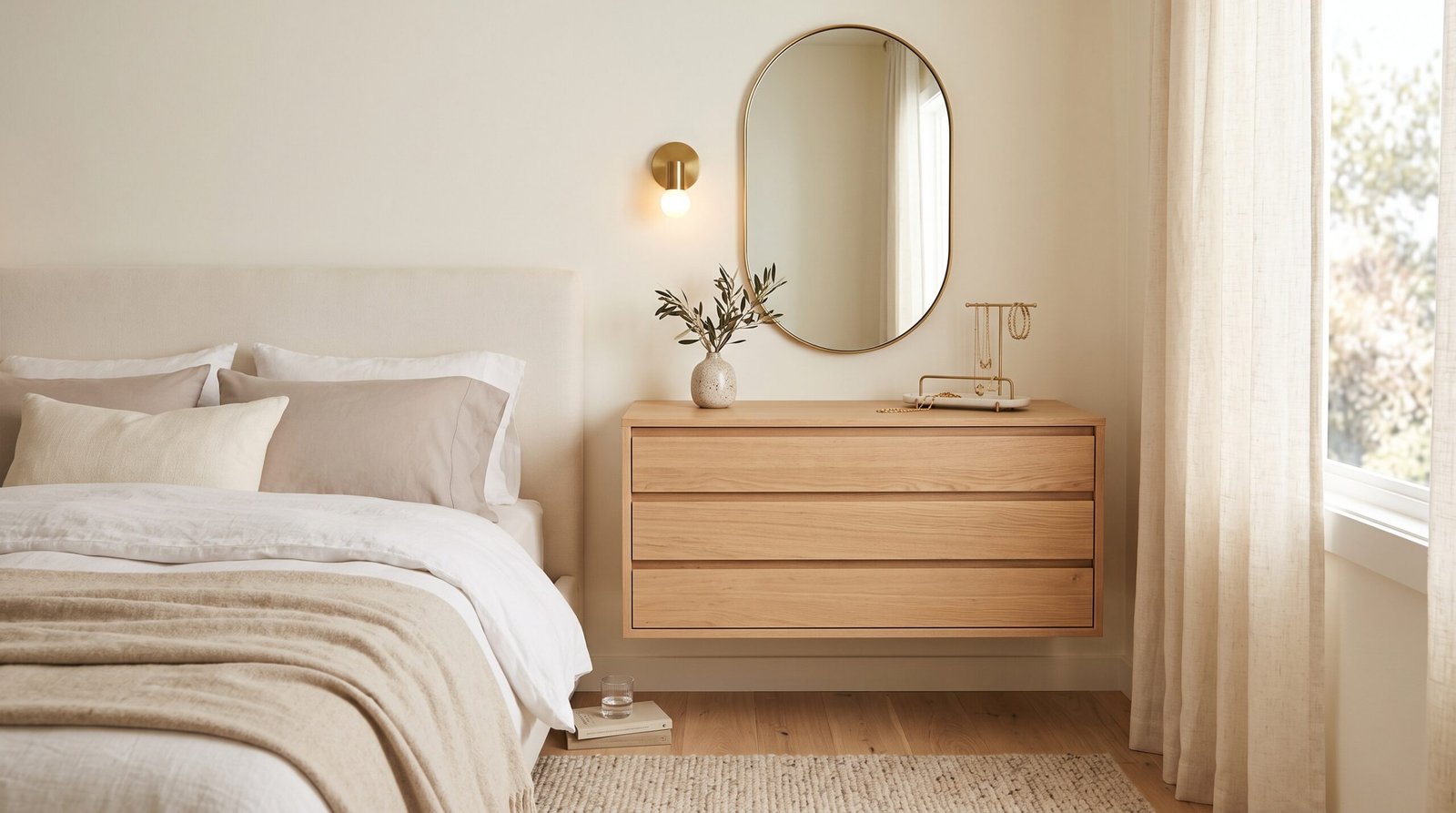
Bedroom Dresser Ideas: 18 Stylish Ways to Add Storage and Style
The best bedroom dresser ideas combine storage, proportion, texture, and thoughtful decoration. You don’t need to fill every inch of the dresser top with accessories. In fact, a few carefully selected pieces—such as a lamp, ceramic vase, framed artwork, decorative tray, or plant—can often create a more polished look.
Whether you’re designing a cozy neutral bedroom, refreshing a small space, or creating a luxurious primary bedroom, these dresser ideas can help you find a style that feels intentional and functional.
1. Choose a Warm Wood Dresser for a Timeless Look
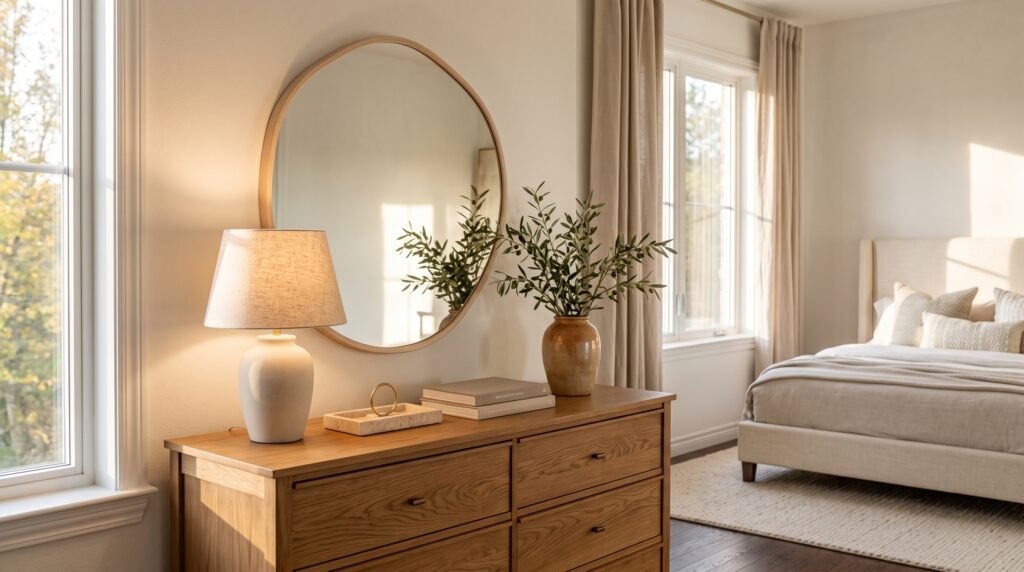
Natural wood is one of the easiest ways to introduce warmth into a bedroom. A dresser made from oak, walnut, pine, or another wood finish can soften a room filled with neutral fabrics and painted surfaces.
For an organic modern bedroom, consider a dresser with simple lines and visible wood grain. Light oak works beautifully with cream walls, beige bedding, linen curtains, and textured rugs. Dark walnut, meanwhile, creates greater contrast and can make a bedroom feel sophisticated.
Keep the styling relatively simple so the wood remains the star. Place a ceramic vase with branches on one side and a small stack of books or a decorative bowl on the other.
A large mirror or understated piece of artwork above the dresser completes the arrangement without overwhelming it.
The result is warm, relaxed, and timeless rather than overly trendy.
2. Style a Dresser With an Oversized Round Mirror
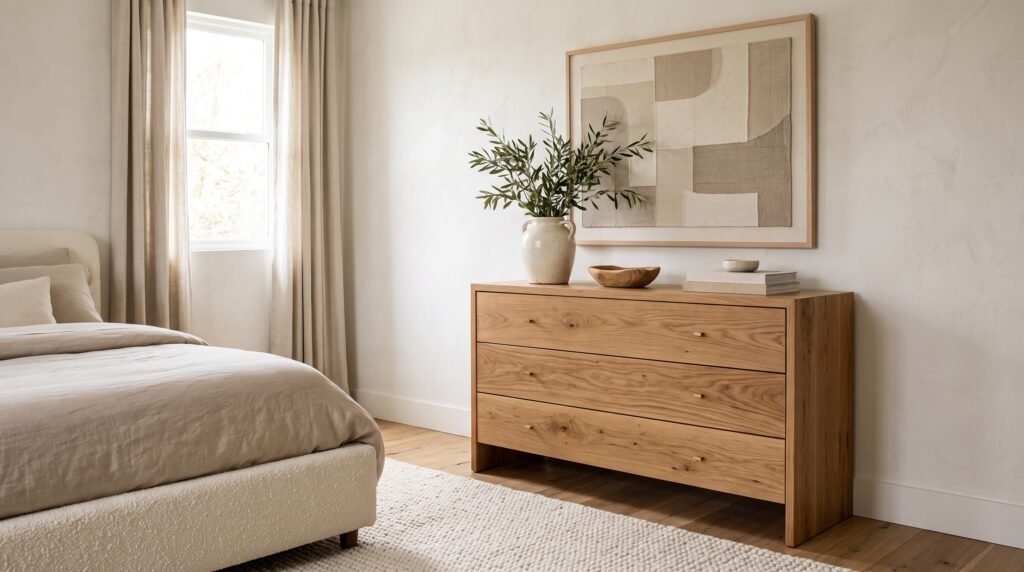
One of the most classic dresser combinations is a beautiful dresser paired with a large round mirror.
The contrast between the rectangular dresser and curved mirror creates visual balance. The mirror can also reflect natural light around the room, making the bedroom appear brighter and more open.
Choose a mirror that is large enough to feel proportional to the dresser. A very small mirror above a wide dresser can look disconnected.
For a modern bedroom, try a thin black or brass frame. For softer organic interiors, a natural wood or frameless mirror works beautifully.
Keep the surface underneath relatively uncluttered. A lamp, small tray, candle, and vase may be all you need.
This arrangement is especially useful when the dresser doubles as a getting-ready station.
3. Create a Minimalist Dresser Display
A dresser doesn’t need dozens of accessories to look finished.
Minimalist styling focuses on negative space and carefully selected objects. Instead of decorating the entire surface, create one or two small arrangements.
For example, place a sculptural table lamp on one end of the dresser. On the opposite side, add a ceramic vase with a few branches. A shallow tray in the center can hold jewelry or everyday essentials.
Use objects with different heights to prevent the arrangement from looking flat.
The key is restraint.
If you add something new, consider removing something else. This simple approach keeps the bedroom feeling calm and makes cleaning considerably easier.
Neutral shades such as ivory, beige, warm white, taupe, and natural wood work particularly well for minimalist dresser styling.
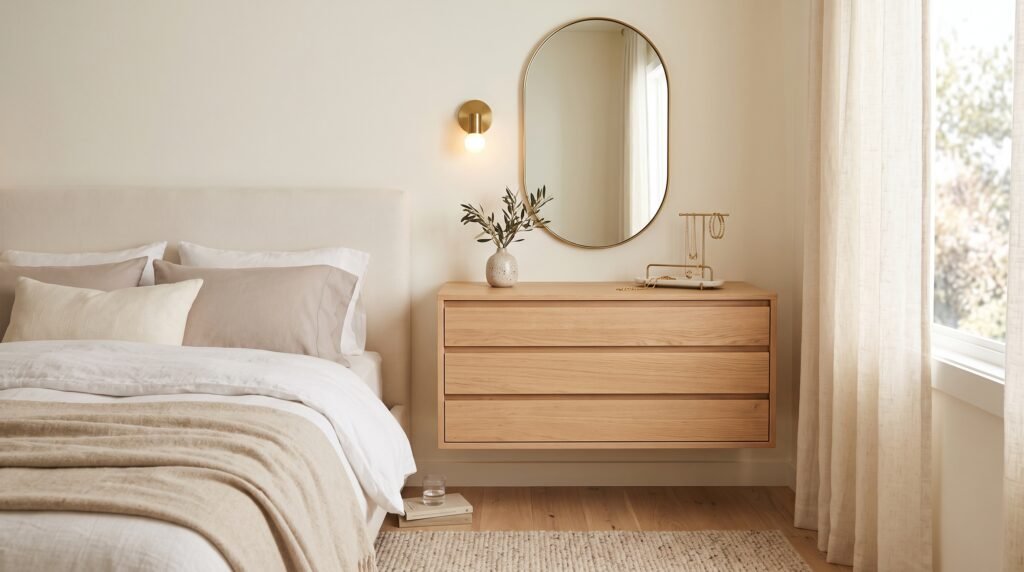
4. Try a Floating Dresser in a Small Bedroom
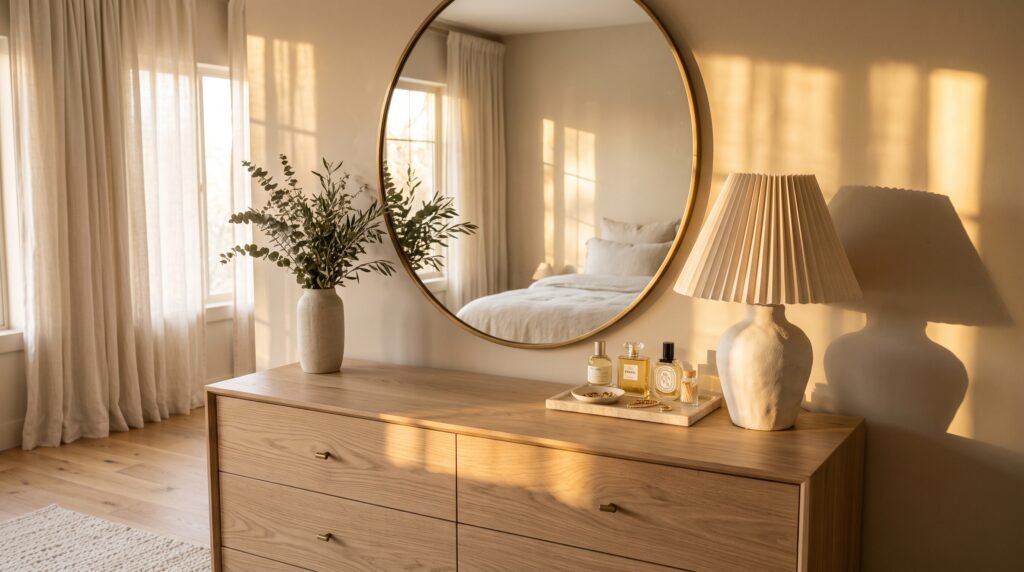
When floor space is limited, a wall-mounted dresser can make a surprising difference.
Floating furniture leaves the floor visible underneath, creating the illusion of a larger room. It also gives the bedroom a clean, contemporary appearance.
A floating dresser can be installed at a comfortable height and paired with drawers for concealed storage. Choose a finish that complements the other furniture in the room.
Light oak works particularly well in small bedrooms because it feels visually lighter than dark, bulky furniture.
You can keep the space underneath completely open or place a small basket there if additional storage is needed.
Add a mirror above the dresser and a small wall sconce nearby to create a compact dressing area without taking up much valuable floor space.
5. Use a Long Low Dresser to Emphasize Width
A long dresser can visually stretch a bedroom and make the wall appear wider.
This works especially well in primary bedrooms with a large empty wall opposite the bed. Rather than filling that space with several smaller pieces of furniture, one substantial dresser can create a cleaner look.
Low-profile dressers also provide plenty of surface space for styling.
Instead of scattering small accessories across the entire top, create a few intentional groups. For example, place a tall lamp at one end, artwork leaning against the wall in the middle, and a decorative bowl or vase toward the other side.
Leave portions of the surface empty.
That negative space makes the dresser look styled rather than cluttered.
6. Decorate the Dresser With Layered Artwork
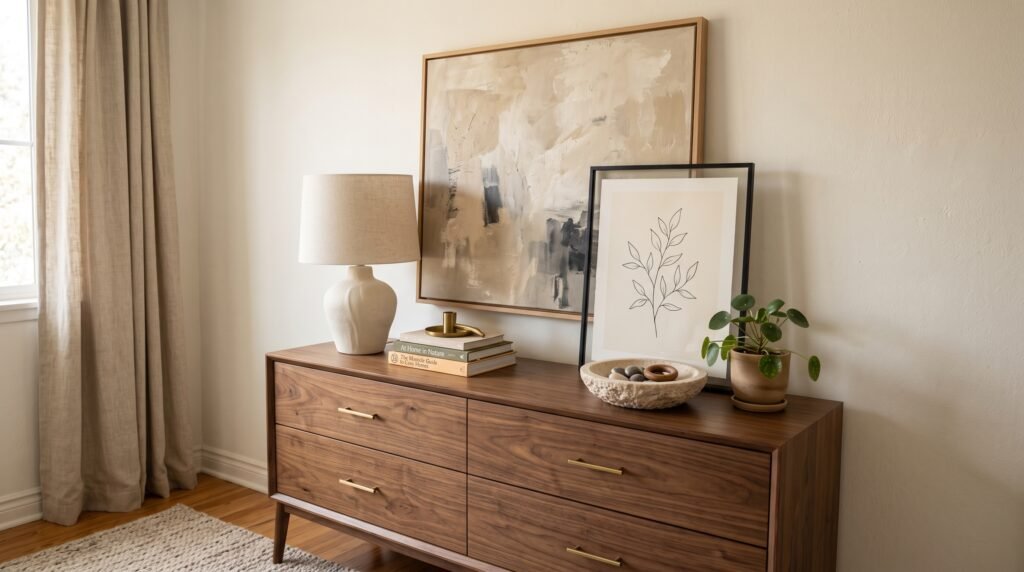
You don’t always need to hang artwork above a dresser.
Leaning framed artwork against the wall creates a more casual, layered look. It also makes it easier to change your bedroom decor without adding new holes to the wall.
Start with one larger frame and position a smaller piece slightly in front of it.
The artwork doesn’t necessarily need bold colors. Soft landscapes, abstract neutral paintings, botanical prints, or minimalist line drawings can complement a relaxing bedroom palette.
Add a lamp or vase beside the frames to create different heights.
This approach works especially well in organic modern, Scandinavian, transitional, and contemporary bedrooms.
For safety, securely anchor large or heavy artwork when needed, particularly in homes with children or pets.
7. Turn Your Dresser Into a Vanity
A bedroom dresser can perform two jobs at once.
If you don’t have room for a separate vanity, transform part of your dresser into a getting-ready area.
Place a mirror above it and keep frequently used items inside an attractive tray or organizer. Perfume bottles, jewelry, skincare products, and small accessories can become part of the display when arranged thoughtfully.
A nearby stool or compact chair can make the setup more functional.
If the dresser is too tall for comfortable seated use, simply treat it as a standing vanity.
Good lighting is important. Position the dresser near a window when possible, or use flattering wall sconces around the mirror.
The goal is to combine practical everyday storage with a polished bedroom aesthetic.
8. Add a Statement Lamp
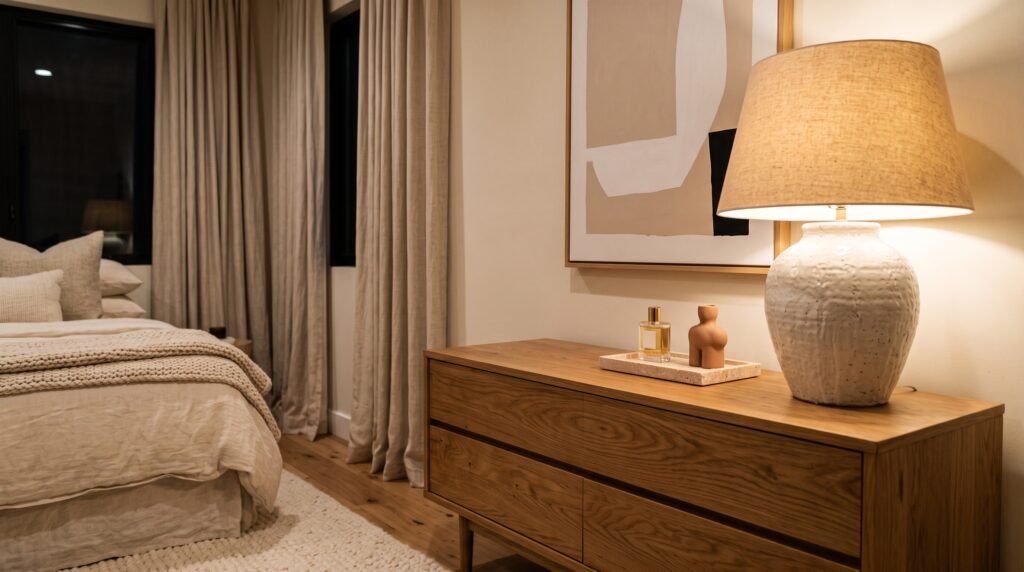
Lighting can completely change the appearance of a dresser.
Instead of relying only on small decorative accessories, use a beautiful table lamp as the main styling element.
A ceramic lamp with a linen shade can bring softness to a neutral bedroom. Sculptural stone, plaster, or textured lamps can add an artisanal quality.
Pay attention to scale. A tiny lamp on a large dresser can disappear visually, while an oversized lamp may dominate the arrangement.
The lampshade should complement the surrounding colors rather than compete with them.
At night, the warm pool of light from a dresser lamp can also make the bedroom feel significantly cozier than bright overhead lighting.
9. Bring Nature In With Greenery
Plants and branches can instantly make dresser styling feel more relaxed.
You don’t need a large indoor plant. A few olive branches, eucalyptus stems, or seasonal greenery in a ceramic vase may be enough.
The irregular organic shapes provide a beautiful contrast to the straight lines of a dresser.
For a larger statement, use tall branches that extend upward toward the artwork or mirror above the dresser.
If maintaining live plants isn’t practical, high-quality faux greenery can create a similar visual effect.
Try to avoid filling the entire dresser with plants. One intentional arrangement generally has more impact than several small pots competing for attention.
10. Choose a Dresser With Fluted or Textured Drawers
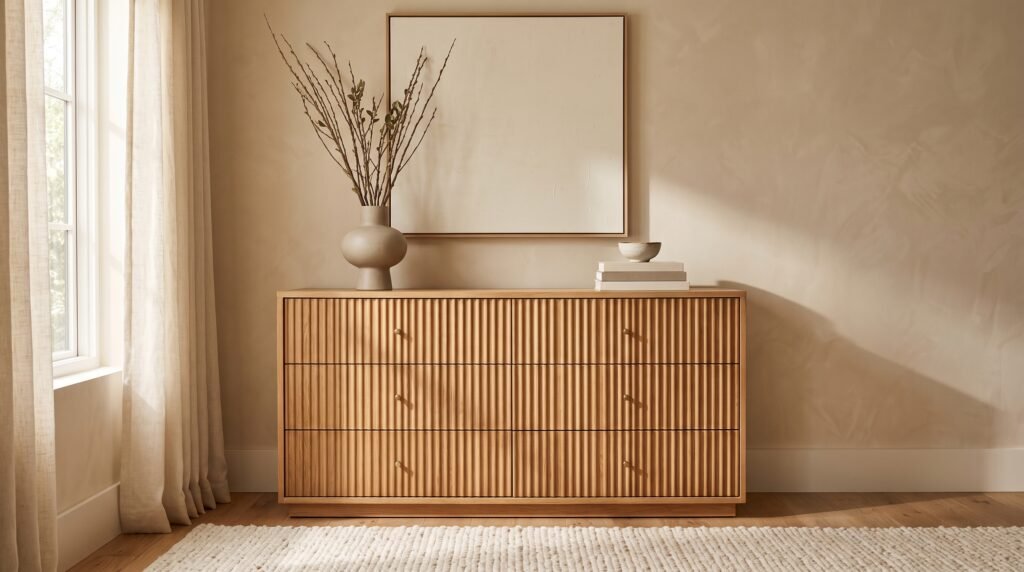
Texture can make even a simple dresser feel distinctive.
Fluted, ribbed, reeded, or carved drawer fronts introduce depth without requiring bold colors or complicated decoration.
A fluted wood dresser works particularly well in neutral bedrooms because shadows across the textured surface naturally create visual interest.
Pair it with simpler accessories so the furniture itself remains the focal point.
A large neutral artwork, sculptural vase, and understated lamp can complement the texture without making the room feel busy.
This type of dresser is especially effective when you want a modern bedroom to feel warmer and less clinical.
11. Create a Built-In Dresser Wall
If you’re renovating a bedroom, built-in storage can create a highly customized appearance.
A built-in dresser can stretch between wardrobes, sit beneath a window, or become part of a full storage wall.
The biggest advantage is efficiency.
Instead of trying to fit freestanding furniture into awkward spaces, built-ins can use nearly every available inch. Deep drawers can store clothing while smaller drawers organize accessories.
For a seamless look, paint the cabinetry the same color as the walls.
Alternatively, introduce warm wood drawer fronts against soft cream or taupe cabinetry.
Finish the design with simple hardware and integrated lighting for a polished, custom feel.
12. Style the Dresser With a Decorative Tray
Small everyday items are often responsible for making dresser tops look cluttered.
A tray solves this problem by visually grouping those items together.
Use a shallow stone, wood, metal, or ceramic tray to hold jewelry, perfume, watches, keys, or other essentials.
Instead of seeing several unrelated objects, the eye sees one organized collection.
Choose a tray that contrasts slightly with the dresser surface. For example, a travertine tray looks beautiful against warm wood, while a dark wood tray can stand out against a cream dresser.
Keep the arrangement practical. Items you use every day should remain easy to reach.
13. Pair a Dark Dresser With Light Bedroom Colors
Not every bedroom needs light furniture.
A dark walnut, espresso, charcoal, or black dresser can add depth to a room dominated by cream and beige tones.
Contrast is particularly useful in neutral interiors because it prevents the room from appearing washed out.
Repeat the darker color elsewhere in small amounts. You might use black picture frames, dark curtain rods, a charcoal throw pillow, or dark bedside lamps.
These subtle connections make the dresser feel intentional rather than isolated.
Keep surrounding fabrics soft and light to maintain balance.
The combination of dark furniture, creamy textiles, natural wood accents, and warm lighting can create a sophisticated hotel-inspired bedroom.
14. Use Matching Dressers for a Symmetrical Bedroom
In a large primary bedroom, matching dressers can create beautiful symmetry.
They might sit on either side of a fireplace, window, doorway, or another architectural feature.
Symmetry naturally creates a sense of order, which can be especially appealing in bedrooms.
You don’t need to style both dressers identically, however.
Use similar visual weight while changing individual accessories. One dresser might feature a lamp and vase while the other includes artwork and a decorative bowl.
Repeating materials or colors will help connect the two arrangements.
This approach also provides significant additional storage without making the room feel random or overcrowded.
15. Make a Vintage Dresser Feel Modern
A vintage dresser can bring personality and history to a bedroom.
Instead of replacing an older wood dresser, consider integrating it into a more contemporary room.
The contrast can be beautiful.
Pair an antique or vintage-inspired dresser with modern artwork, simple bedding, linen curtains, and a contemporary lamp.
If the original wood is attractive, consider preserving it rather than painting it.
Replacing dated hardware can also provide a subtle update. Simple brass, bronze, or matte black pulls may give the dresser a refreshed appearance while respecting its original character.
Mixing old and new pieces prevents a bedroom from feeling like everything was purchased from the same furniture collection.
16. Create a Soft Monochromatic Dresser Area
A dresser doesn’t always need to stand out dramatically.
Sometimes allowing it to blend into the room produces an even more luxurious effect.
Choose a dresser in a shade close to the wall color. For example, pair a warm white dresser with ivory walls or a taupe dresser with soft beige walls.
Then continue similar tones through the accessories.
Cream ceramics, pale stone trays, linen lampshades, and neutral artwork can create subtle layers without introducing strong contrast.
Texture becomes particularly important in monochromatic rooms.
Mix matte paint, natural wood, linen, ceramic, stone, and woven materials so the space still feels dimensional.
17. Add Wall Sconces Above the Dresser
Wall sconces can make a dresser area feel intentionally designed rather than simply furnished.
Place matching sconces on either side of a mirror or large artwork.
This creates symmetry while freeing the dresser surface from table lamps.
It’s particularly useful on narrow dressers where surface space is limited.
Choose sconces that suit the room’s style. Aged brass can introduce warmth, matte black works beautifully in contemporary bedrooms, and fabric shades can create a softer traditional look.
Hardwired sconces provide the cleanest appearance, although plug-in designs can be a more practical option when you’re not renovating.
Warm bulbs help maintain a cozy atmosphere.
18. Keep the Dresser Functional and Clutter-Free
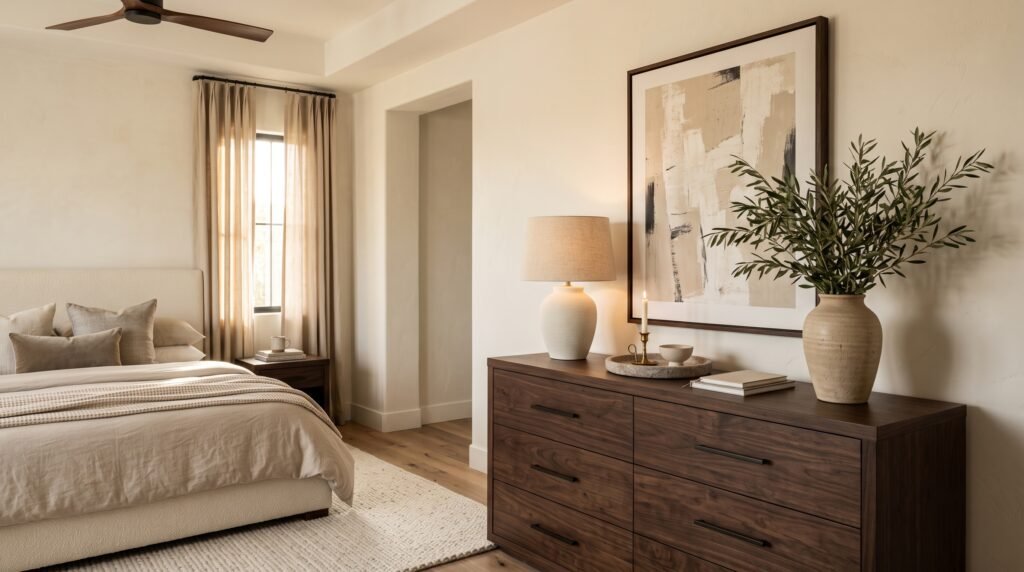
Beautiful styling matters, but a dresser still needs to work for everyday life.
Before decorating the surface, decide what actually needs to stay there.
Move rarely used items into drawers or another storage area. Give everyday essentials specific places so they don’t gradually spread across the dresser.
Drawer dividers can help organize clothing, accessories, jewelry, and smaller belongings.
You can also assign each drawer a specific category instead of mixing unrelated items together.
On the surface, try following a simple rule: one taller element, one practical grouping, and one decorative accent.
For example:
- A tall ceramic lamp
- A tray containing everyday jewelry
- A small vase or decorative object
You don’t have to follow this formula exactly, but it provides an easy starting point.
A dresser that looks beautiful yet remains easy to use will be much easier to maintain over time.
How to Choose the Right Bedroom Dresser
Before choosing a dresser based purely on appearance, consider how it will function in your bedroom.
Measure the Available Space
Measure both the wall and surrounding circulation space.
Remember that drawers need room to open completely. A dresser positioned too close to the bed can make everyday use frustrating.
Consider Height
Tall dressers provide storage while using less floor space, making them useful in smaller bedrooms.
Wide, low dressers create more styling space and can work particularly well underneath mirrors or artwork.
Think About Storage Needs
Consider what you’re actually storing.
Deep drawers are useful for bulky sweaters and clothing, while shallow drawers can make smaller accessories easier to organize.
Coordinate Instead of Matching
Your dresser doesn’t have to perfectly match your bed and nightstands.
In many cases, rooms feel more interesting when furniture pieces coordinate through color, material, or style without belonging to an identical set.
A warm oak dresser, upholstered bed, and painted nightstands can work beautifully together when the overall palette remains cohesive.
How to Style the Top of a Bedroom Dresser
Start with one larger anchor.
This might be a mirror, artwork, lamp, or tall vase.
Next, add smaller objects at different heights. Books can elevate a decorative object, while a tray can organize several tiny items.
Try working with asymmetry.
A tall lamp on one side can be balanced by a medium-height vase and stacked books on the other. Objects don’t have to match in height to feel balanced.
Most importantly, leave some empty space.
A completely covered dresser rarely feels calm. Allowing the surface itself to remain visible makes each decorative object more noticeable.
Best Colors for a Bedroom Dresser
There isn’t one dresser color that works for every bedroom.
Light oak creates warmth while keeping the room airy.
Walnut introduces richness and works beautifully with cream, olive, rust, and beige.
Black adds dramatic contrast and works especially well in modern bedrooms.
Warm white creates a soft, seamless appearance.
Taupe or greige can complement neutral bedrooms while offering slightly more depth than white.
When choosing a color, look at your flooring, bed frame, nightstands, walls, and other large surfaces.
The dresser doesn’t need to match everything, but it should feel connected to at least one or two elements already in the room.
Bedroom Dresser Styling Mistakes to Avoid
One common mistake is choosing a dresser that is too large for the available wall. Even a beautiful piece can make the bedroom feel cramped when its scale is wrong.
Another issue is using accessories that are all the same height. This creates a flat arrangement without a clear focal point.
Too many tiny decorative objects can also create visual clutter. Instead, use fewer, slightly larger pieces.
Don’t automatically center everything either. An asymmetrical arrangement can often feel more relaxed and sophisticated.
Finally, remember functionality. If your styling makes it difficult to open drawers, use your mirror, or place everyday belongings somewhere convenient, simplify the arrangement.
Final Thoughts
The best bedroom dresser ideas balance practical storage with thoughtful design.
A simple wooden dresser can become a beautiful bedroom feature when paired with the right mirror, artwork, lighting, and accessories. Floating dressers can save visual space in small bedrooms, while long low dressers can anchor larger rooms. Textured and fluted designs add character, while vintage pieces introduce a sense of history.
Whatever style you choose, avoid decorating simply for the sake of filling space.
Start with a dresser that suits the proportions of your bedroom and provides enough storage. Then add a few pieces that contribute height, texture, warmth, or personality.
Sometimes a large mirror, a beautiful lamp, a ceramic vase, and a simple tray are all that’s needed.
With the right balance of storage and styling, your bedroom dresser can become one of the most useful—and visually appealing—features in the entire room.