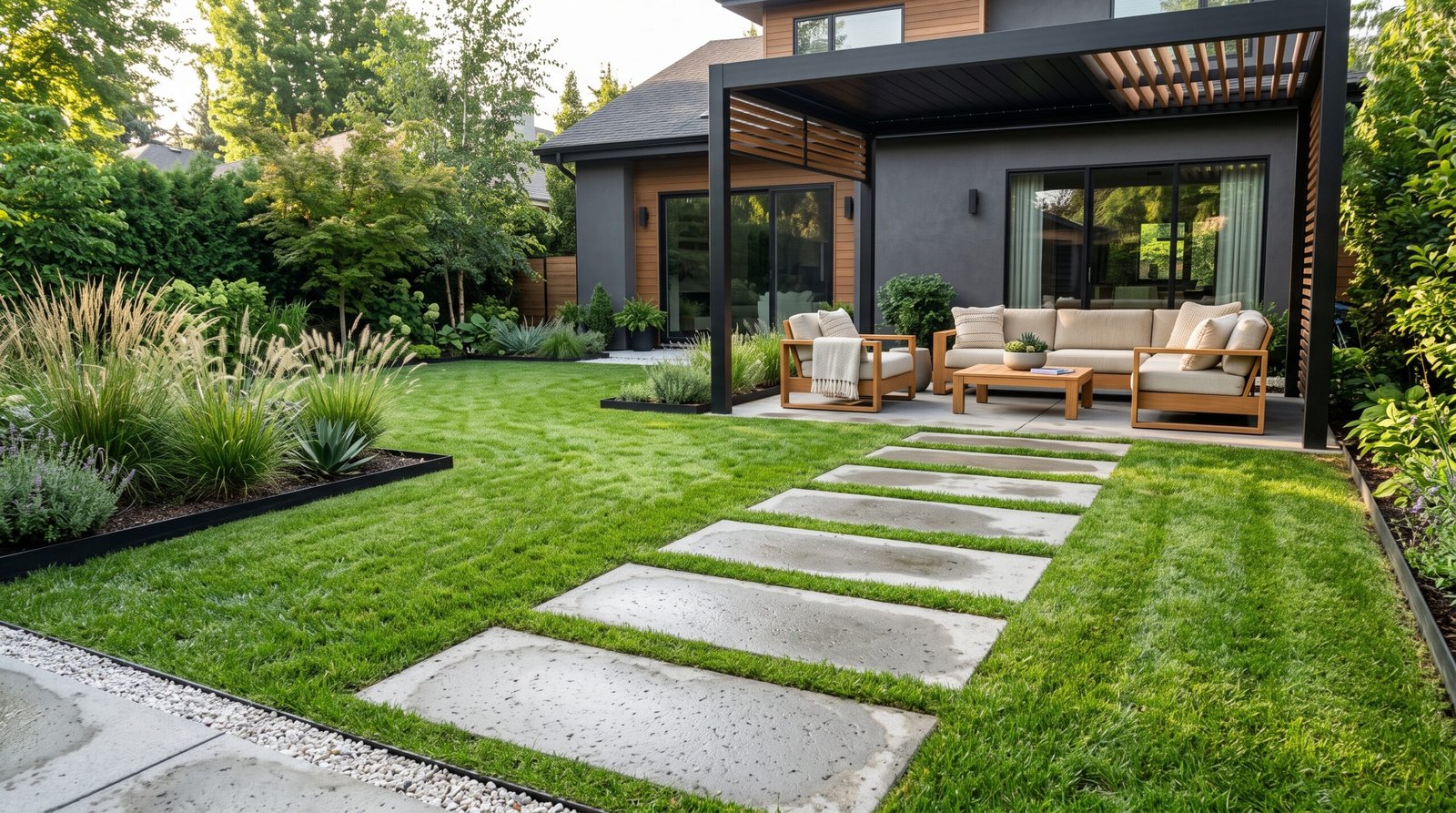
25 Beautiful Stepping Stone Path Ideas to Transform Your Garden
Stepping stone paths are one of the simplest ways to make a garden look professionally designed. They guide visitors through the landscape, protect your lawn from heavy foot traffic, and create visual interest that ties together flower beds, patios, pergolas, vegetable gardens, and outdoor seating areas. Whether your style is modern, cottage-inspired, rustic, or minimalist, the right stepping stone pathway can completely transform your outdoor space without requiring a major renovation.
Unlike traditional concrete walkways, stepping stone paths feel more natural and blend beautifully with surrounding plants. They can wind through colorful flower beds, connect different areas of your yard, or become a striking focal point all on their own. With endless materials, layouts, and planting combinations available, it’s easy to create a pathway that reflects your personal style while improving both functionality and curb appeal.
In this guide, you’ll discover 25 inspiring stepping stone path ideas, practical design tips, the best materials to choose from, common mistakes to avoid, and maintenance advice that will keep your pathway looking beautiful for years.
Why Add a Stepping Stone Path?
Before choosing a design, it’s worth understanding why stepping stone paths remain one of the most popular landscaping features.
A thoughtfully planned pathway does much more than connect two points. It helps organize your landscape, encourages visitors to explore the garden, and protects grass from becoming worn or muddy. Stepping stones also create rhythm and movement within the landscape, making even a small backyard feel larger and more interesting.
Additional benefits include:
- Improves curb appeal instantly
- Reduces soil erosion in high-traffic areas
- Creates safe walking surfaces
- Defines different outdoor zones
- Requires less material than full concrete walkways
- Fits nearly every landscaping style
- Easy to customize with plants, gravel, or lighting
- Budget-friendly compared to paved paths
Whether you’re designing a cozy cottage garden or a sleek contemporary landscape, stepping stones provide the perfect balance between practicality and beauty.
Choosing the Right Material
The material you choose has a significant impact on both appearance and durability.
Natural Flagstone
Flagstone remains one of the most timeless options because every stone has unique shapes and textures. It blends effortlessly with surrounding greenery and develops even more character over time.
Perfect for:
- Cottage gardens
- Woodland landscapes
- Rustic homes
- Natural-style gardens
Concrete Pavers
Modern concrete stepping stones offer clean lines and consistent sizing.
Advantages include:
- Affordable
- Easy installation
- Uniform appearance
- Available in many finishes
- Low maintenance
They’re especially popular in contemporary landscapes.
Slate Stones
Slate provides rich texture with darker colors that contrast beautifully against green lawns and ornamental grasses.
Ideal for:
- Luxury landscapes
- Modern gardens
- Elegant entryways
River Stone Slabs
River stone stepping stones create an organic appearance that pairs beautifully with water features and dry creek beds.
Large Concrete Slabs
Oversized slabs separated by grass or gravel create one of today’s most popular Pinterest-worthy landscaping trends.
They work especially well in minimalist gardens.
Planning Your Pathway
Before installation, spend time planning the route.
Ask yourself:
- Where will people naturally walk?
- Should the path curve or remain straight?
- What focal point does it lead toward?
- Will lighting be added later?
- What plants will border the pathway?
A well-planned path always looks intentional rather than simply filling empty space.
Modern Large Concrete Stepping Stones
A clean backyard featuring oversized rectangular concrete stepping stones floating across lush green grass toward a cozy outdoor seating area surrounded by ornamental grasses.
1. Modern Floating Slab Path
Large rectangular concrete slabs separated by evenly spaced grass create an elegant floating effect.
This style is perfect for:
- Modern homes
- Scandinavian-inspired landscapes
- Minimalist gardens
Use wider slabs to create a luxurious appearance while keeping spacing comfortable for walking.
2. Curved Garden Path
Instead of leading visitors in a straight line, gently curve the pathway around flower beds.
Curves create mystery and make even small gardens feel much larger.
Border the path with:
- Lavender
- Salvia
- Boxwood
- Coneflowers
- Hydrangeas
The soft movement naturally draws attention deeper into the landscape.
3. Gravel and Stepping Stone Combination
One of the easiest upgrades is surrounding stepping stones with decorative gravel.
Popular gravel colors include:
- White marble chips
- Crushed granite
- Pea gravel
- Black lava rock
Besides looking beautiful, gravel improves drainage and suppresses weeds.
Curved Cottage Garden Path
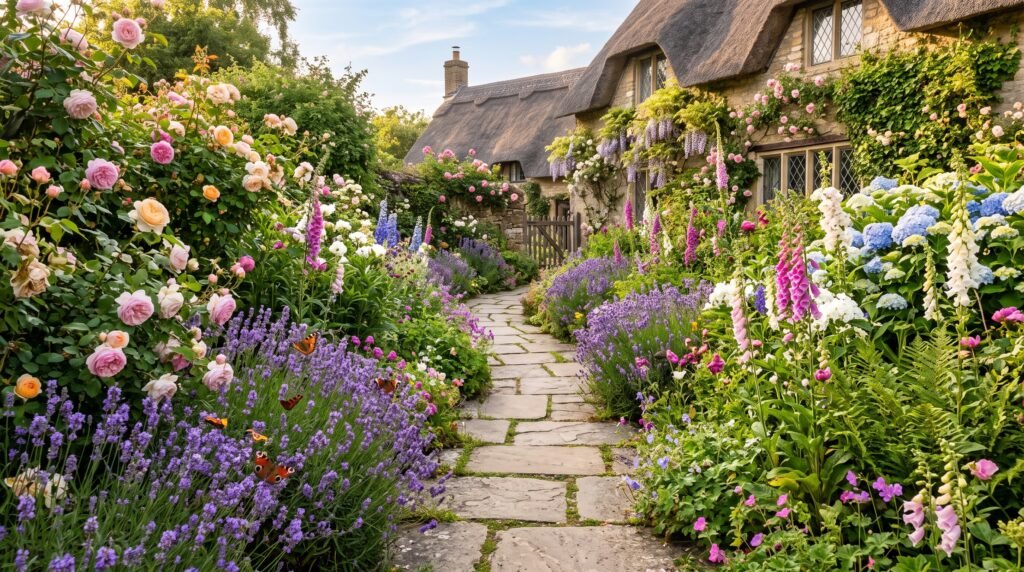
A winding flagstone pathway weaving through colorful cottage flowers with climbing roses, lavender, and lush greenery creating a romantic garden atmosphere.
4. Flagstone Walkway
Flagstone remains a classic because every stone is naturally unique.
Instead of forcing perfect alignment, allow irregular shapes to create an authentic garden feel.
Small patches of moss growing between stones add even more charm.
This design works wonderfully beside:
- Garden arbors
- Pergolas
- Vegetable gardens
- Outdoor dining spaces
5. Japanese-Inspired Stone Path
Japanese gardens emphasize simplicity and tranquility.
Use irregular natural stones surrounded by:
- Moss
- Ferns
- Bamboo
- Small maples
- Smooth gravel
The pathway should encourage slow walking and quiet appreciation of the landscape rather than simply connecting destinations.
6. Woodland Garden Trail
If your property has mature trees, embrace the natural setting.
Use rough-cut stone surrounded by:
- Ferns
- Hostas
- Woodland flowers
- Mulch
- Fallen leaves
This style feels timeless and blends seamlessly into nature.
Gravel and Stone Modern Walkway
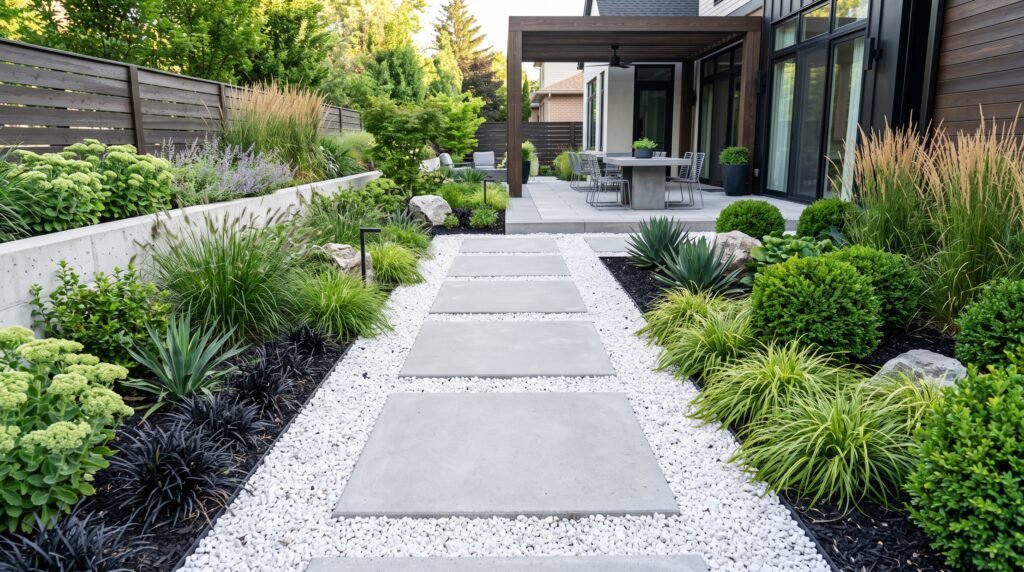
A sleek outdoor pathway featuring square concrete stepping stones surrounded by white decorative gravel with ornamental grasses and minimalist landscaping.
7. Lawn Stepping Stones
One of the simplest projects is installing stepping stones directly into grass.
The stones should sit flush with the lawn surface, allowing the mower to pass over easily.
Benefits include:
- Minimal excavation
- Natural appearance
- Budget friendly
- Easy installation
This approach is ideal for connecting patios, decks, sheds, or garden beds.
8. Mixed Stone Sizes
Rather than using identical stepping stones, combine large and medium pieces for a more natural look.
The variation creates visual rhythm while maintaining comfortable walking distances.
Landscape designers often use this technique to soften formal gardens and make pathways appear as though they’ve always belonged there.
Japanese Zen Garden Path

A peaceful Japanese-inspired stepping stone pathway winding through moss, smooth river rocks, bamboo, and sculptural evergreen shrubs with a serene atmosphere.
9. Stepping Stones with Ground Covers
One of the easiest ways to make a pathway feel lush and established is to replace bare soil between the stones with low-growing ground covers. These living carpets soften hard edges, reduce weeds, and add seasonal color and texture.
Popular options include:
- Creeping thyme
- Irish moss
- Blue star creeper
- Corsican mint
- Creeping Jenny
- Dwarf mondo grass
As these plants spread, they’ll weave around the stones, creating a charming “grown-in” appearance that’s especially beautiful in cottage and English-style gardens.
Choose a ground cover suited to your climate and the amount of sun the area receives. For example, creeping thyme thrives in sunny locations, while Irish moss performs well in cooler, partially shaded spots.
10. Circular Stepping Stones
Who says stepping stones have to be square or irregular? Circular concrete or natural stone discs create a softer, more playful look.
This design works especially well in:
- Family gardens
- Modern landscapes
- Courtyard gardens
- Small side yards
Keep the spacing consistent—typically 18 to 24 inches from the center of one stone to the next—so walking feels comfortable and natural.
For extra impact, surround the circles with fine gravel or lush turf to make each stone stand out.
11. Rustic Stone Path with Mulch
A rustic pathway is perfect for woodland gardens and relaxed outdoor spaces.
Instead of gravel, surround natural stones with shredded bark mulch or wood chips. The warm brown tones contrast beautifully with gray stone while helping retain moisture for nearby plants.
Complement this style with:
- Wooden garden benches
- Birdhouses
- Native wildflowers
- Rustic fencing
- Natural log edging
This combination creates a welcoming, storybook feel that’s both practical and easy to maintain.
Ground Cover Stepping Stone Path
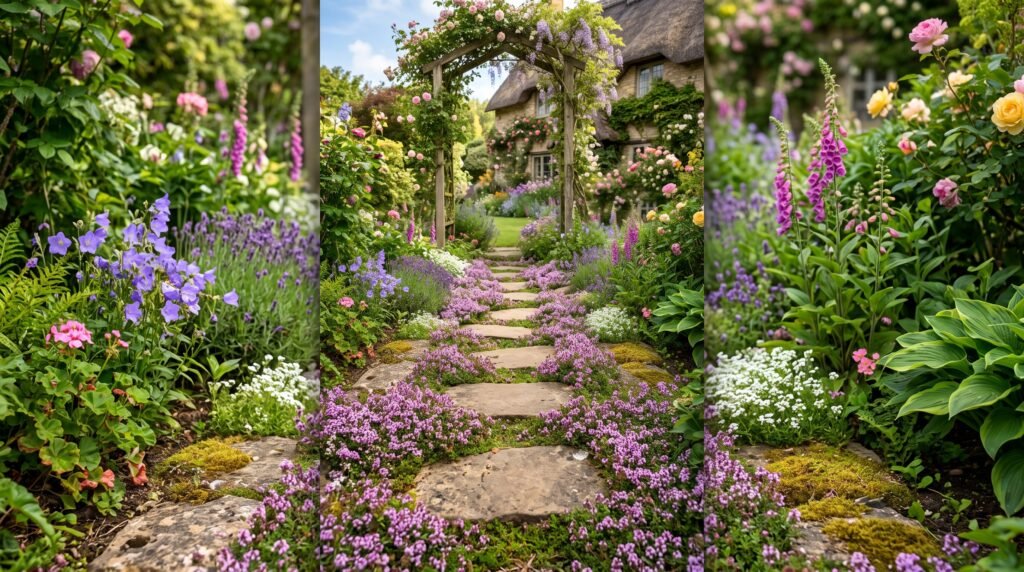
A charming garden pathway with irregular natural stepping stones surrounded by blooming creeping thyme, lush greenery, and colorful cottage flowers under warm morning sunlight.
12. Stepping Stones Through a Flower Garden
A pathway weaving through flower beds encourages visitors to slow down and enjoy the garden from every angle.
Arrange the stones so they gently curve between colorful borders filled with plants such as:
- Coneflowers
- Black-eyed Susans
- Lavender
- Salvia
- Coreopsis
- Roses
- Catmint
Mix plants with different heights, bloom times, and foliage textures to keep the garden interesting throughout the seasons.
Avoid placing tall plants directly against the stones, as they can narrow the walking space and make the path feel cramped.
13. Illuminated Stepping Stone Path
Outdoor lighting transforms a pathway after sunset while improving safety.
Popular lighting choices include:
- Solar stake lights
- Recessed LED path lights
- Lantern-style fixtures
- Low-voltage landscape lights
- Hidden uplights among ornamental grasses
Rather than placing lights directly beside every stone, stagger them along the edges to create a softer, more natural glow.
Warm white lighting enhances the beauty of stone textures without feeling harsh or overly bright.
14. Desert-Inspired Pathway
If you live in a dry climate or want a low-water landscape, create a stepping stone path surrounded by drought-tolerant plants.
Excellent companions include:
- Agave
- Yucca
- Lavender
- Sedum
- Blue fescue
- Decorative gravel
- Boulders
This style requires very little maintenance while offering a clean, architectural appearance that’s perfect for modern homes.
Flower Garden Walkway
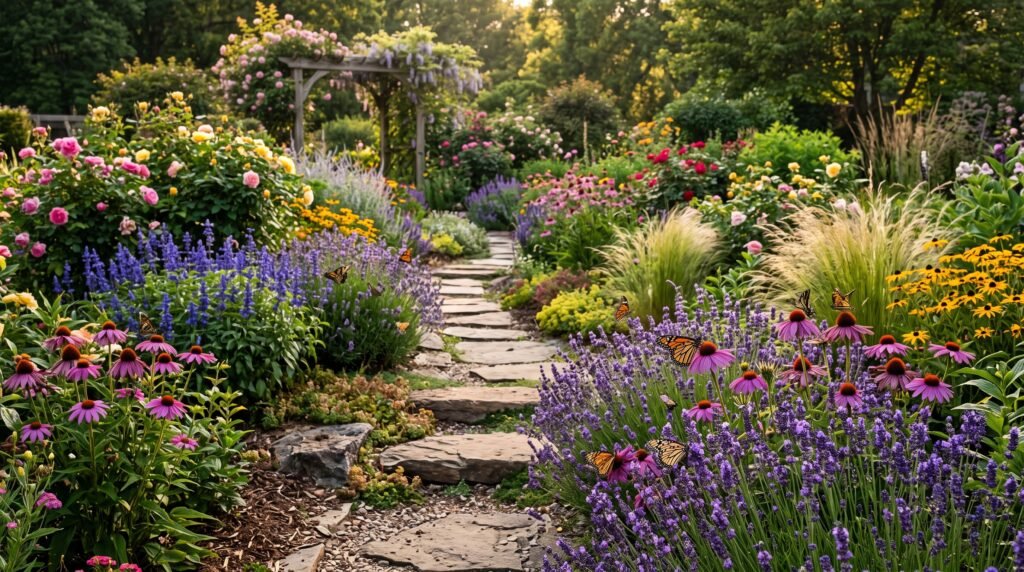
A winding stepping stone path leading through vibrant perennial flower beds filled with lavender, coneflowers, roses, and ornamental grasses in a colorful summer garden.
15. Wide Garden Entrance Path
Make a memorable first impression by using oversized stepping stones leading from the driveway or gate to the front door.
Large-format stones create a luxurious appearance and naturally guide guests toward the entrance.
Frame the pathway with:
- Symmetrical shrubs
- Decorative grasses
- Hydrangeas
- Boxwoods
- Seasonal flowers
Adding landscape lighting and matching planters further enhances the welcoming atmosphere.
16. Stepping Stones Across Gravel Courtyards
For contemporary homes, combine large stepping stones with a courtyard filled with decorative gravel.
This design is:
- Low maintenance
- Excellent for drainage
- Modern and minimalist
- Easy to install
- Highly Pinterest-worthy
Choose contrasting colors—for example, light concrete slabs against dark gravel or charcoal pavers surrounded by white stone chips—for maximum visual impact.
17. Path Leading to a Pergola
A pergola naturally becomes a focal point, and a thoughtfully designed stepping stone path helps draw attention to it.
Consider planting fragrant flowers such as:
- Climbing roses
- Jasmine
- Lavender
- Clematis
Along the route, add decorative planters or garden lanterns to make the journey feel just as enjoyable as the destination.
A path leading to a pergola also creates beautiful photo opportunities and adds depth to your landscape design.
Modern Front Yard Stepping Stone Path
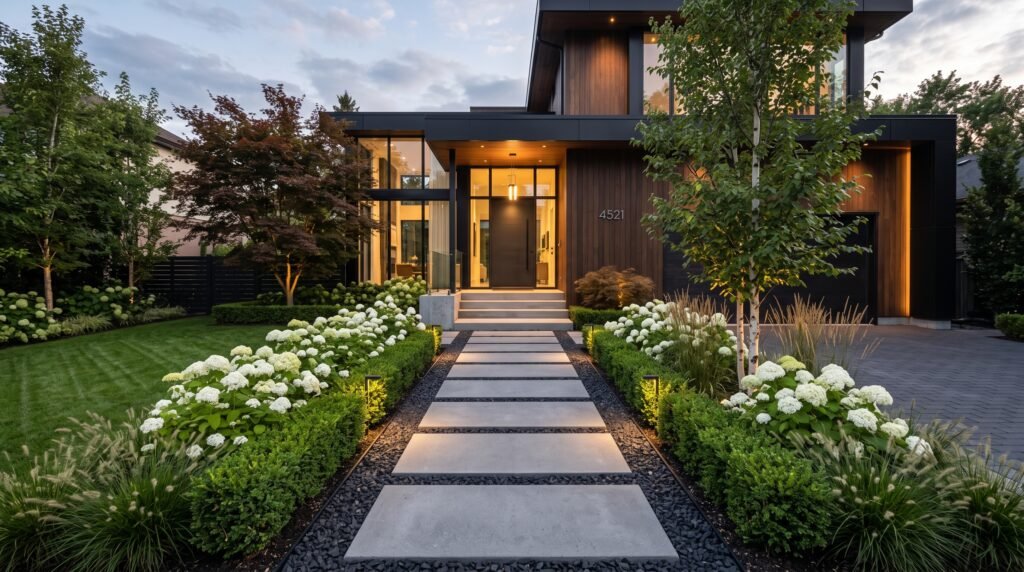
A stylish front yard with oversized rectangular stepping stones leading to a modern home, bordered by ornamental grasses, boxwood shrubs, and warm landscape lighting.
18. Mixed Material Pathway
For a custom look, combine different materials in one pathway.
Popular combinations include:
- Flagstone with pea gravel
- Concrete slabs with river rock
- Slate and decorative mulch
- Natural stone with brick edging
- Concrete pavers with artificial turf
Mixing textures adds visual interest while allowing you to match the pathway to your home’s architecture.
Just be sure to maintain a consistent color palette so the design feels cohesive rather than cluttered.
19. Stepping Stones Around a Water Feature
Guide visitors toward a pond, fountain, or dry creek bed with a winding stone path.
Use natural-looking materials and soften the edges with moisture-loving plants such as:
- Hostas
- Ferns
- Japanese iris
- Astilbe
The combination of stone, water, and greenery creates a peaceful retreat that’s perfect for relaxing outdoors.
20. Family-Friendly Backyard Path
If children frequently use your yard, prioritize safety and comfort.
Choose large, flat stones with textured surfaces to reduce slipping. Keep spacing even and ensure each stone is securely set to prevent rocking.
Border the path with durable plants that can handle occasional foot traffic, and avoid thorny shrubs or plants that may overhang the walkway.
A family-friendly path should be attractive, functional, and easy to navigate in all seasons.
21. Natural Meadow Path
If you love a relaxed, organic landscape, create a stepping stone path that meanders through ornamental grasses and wildflowers. Instead of perfectly trimmed borders, let nature take center stage.
Excellent plant choices include:
- Black-eyed Susans
- Purple coneflowers
- Russian sage
- Feather reed grass
- Little bluestem
- Coreopsis
- Yarrow
This style attracts butterflies, bees, and birds while creating a peaceful, countryside atmosphere. Allow the path to curve gently instead of following a straight line to enhance the natural feel.
22. Stepping Stones with Brick Borders
For a more polished appearance, frame each side of your stepping stone path with brick edging.
Brick borders help:
- Keep gravel or mulch contained
- Prevent lawn from creeping onto the path
- Create clean, defined lines
- Add timeless character
Red brick pairs beautifully with traditional homes, while gray or charcoal bricks complement contemporary landscapes. This combination is especially effective in front yards where curb appeal is a priority.
23. Geometric Contemporary Path
Modern homes often benefit from bold, geometric landscaping. Arrange square or rectangular stepping stones in a perfectly aligned pattern, leaving equal spacing between each piece.
Pair this design with:
- Black decorative gravel
- Architectural plants like agave or yucca
- Linear landscape lighting
- Steel landscape edging
- Minimalist planters
The result is a sleek, high-end look that emphasizes simplicity and symmetry while remaining highly functional.
Meadow Garden Stepping Stone Path
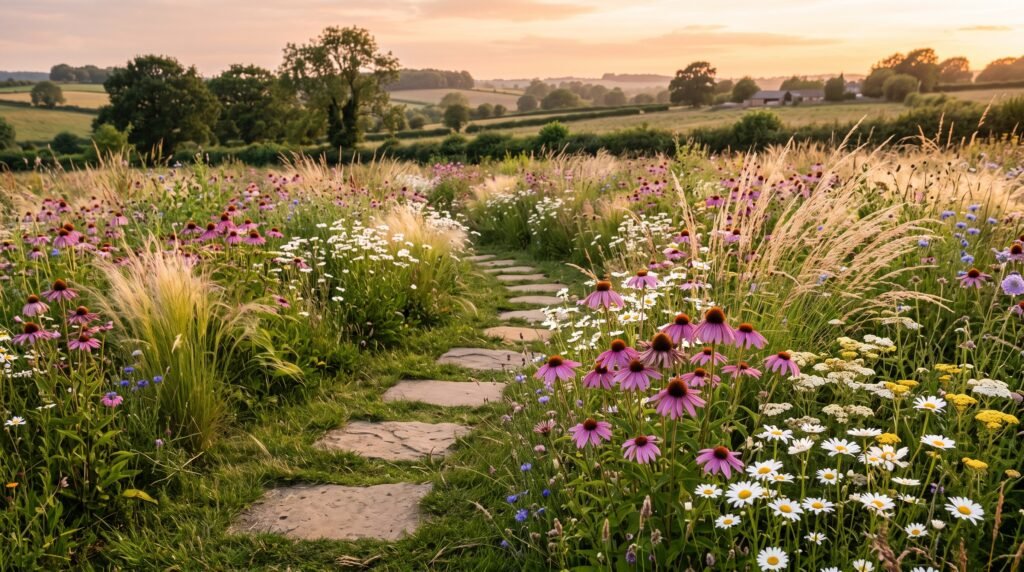
A picturesque stepping stone pathway winding through a meadow-style garden filled with ornamental grasses, wildflowers, purple coneflowers, and golden evening sunlight, creating a peaceful natural landscape.
24. Secret Garden Path
One of the most enchanting landscaping ideas is a pathway that gradually reveals hidden garden spaces.
Imagine stepping stones leading through lush greenery before opening into:
- A quiet reading nook
- A small pergola
- A bubbling fountain
- A fire pit
- A secluded patio
- A hammock under mature trees
To create this magical effect, use taller plants along parts of the path, allowing visitors to discover new views as they walk. Add climbing vines, flowering shrubs, and decorative garden arches to enhance the sense of mystery.
25. Multi-Zone Backyard Connection
In larger landscapes, stepping stone paths can tie together several outdoor living areas into one cohesive design.
For example, a single path might connect:
- The patio
- Outdoor dining space
- Vegetable garden
- Garden shed
- Pergola
- Fire pit
- Lawn
- Water feature
Using the same stone material throughout the property creates visual consistency while making the entire landscape feel thoughtfully planned.
This approach is especially useful for families who frequently entertain outdoors, as it encourages easy movement between different activity zones.
Common Stepping Stone Path Mistakes to Avoid
Even beautiful materials can look disappointing if the pathway isn’t planned properly. Avoid these common mistakes to achieve a professional-looking result.
1. Uneven Stone Heights
Stepping stones should sit level with one another. Uneven stones create tripping hazards and make the path uncomfortable to walk on.
2. Incorrect Spacing
Stones placed too close together feel awkward, while those spaced too far apart force uncomfortable strides.
A comfortable spacing for most adults is approximately 18–24 inches from the center of one stone to the center of the next, though you can adjust slightly based on the stone size and intended users.
3. Ignoring Drainage
Water pooling around stepping stones can lead to muddy surfaces, slippery conditions, and premature shifting.
Use a compacted base of gravel and sand beneath each stone to improve drainage and stability.
4. Choosing Slippery Materials
Highly polished stone may look elegant, but it can become dangerously slippery after rain.
Whenever possible, select textured natural stone or pavers designed for outdoor use.
5. Forgetting Scale
Tiny stepping stones can appear lost in a large yard, while oversized slabs may overwhelm a compact garden.
Choose stones that suit both the size of your landscape and the width of the path.
6. Neglecting the Surroundings
A stepping stone path looks best when it’s integrated with the surrounding landscape.
Enhance the design with:
- Flower borders
- Ornamental grasses
- Decorative gravel
- Ground covers
- Landscape lighting
- Mulch
- Small shrubs
The surrounding planting scheme is just as important as the stones themselves.
Maintenance Tips
One reason stepping stone pathways remain so popular is that they require relatively little upkeep. A few simple tasks each season will keep them looking fresh.
Sweep Regularly
Remove fallen leaves, twigs, and debris to prevent staining and moss buildup.
Pull Weeds Early
If weeds appear between stones, remove them promptly before they spread.
Refresh Gravel or Mulch
Top up decorative gravel or mulch every year or two to maintain a neat appearance.
Clean the Stones
Wash dirt and algae away using a garden hose or a pressure washer on a gentle setting. Avoid harsh chemicals that could damage nearby plants.
Check for Movement
Inspect the path annually. If a stone has shifted due to frost or heavy rain, lift it, level the base, and reset it before the problem worsens.
Trim Nearby Plants
Keep ground covers and shrubs neatly pruned so they frame the pathway rather than obstruct it.
Expert Design Tips
If you want your stepping stone path to look like it was designed by a professional landscape architect, keep these principles in mind:
- Repeat the same stone material throughout the garden for a cohesive design.
- Use curves to create a sense of discovery and make small gardens appear larger.
- Add landscape lighting to enjoy the path after dark.
- Layer plants with varying heights, textures, and bloom times for year-round interest.
- Include focal points such as benches, sculptures, fountains, or pergolas at the end of the path.
- Balance hardscape with soft landscaping so the stones never dominate the garden.
- Choose durable materials that complement your home’s architectural style.
Small details like edging, lighting, and planting often make the biggest difference in the final result.
Frequently Asked Questions
What is the best material for stepping stone paths?
Natural flagstone is a favorite because of its durability and timeless appearance. Concrete pavers are another excellent option if you prefer a clean, modern look and a more budget-friendly price.
How far apart should stepping stones be?
For comfortable walking, most paths use spacing of about 18–24 inches from the center of one stone to the next. Adjust the distance based on the size of the stones and the people who will use the path most often.
Can I install stepping stones myself?
Yes. Many homeowners complete stepping stone projects as a DIY weekend project. Proper preparation—including leveling the ground and creating a compact gravel base—is essential for long-term stability.
What should I plant between stepping stones?
Popular choices include creeping thyme, Irish moss, blue star creeper, dwarf mondo grass, and creeping Jenny. Select plants based on your local climate, sunlight, and maintenance preferences.
Are stepping stone paths expensive?
They are generally more affordable than fully paved walkways because they use less material. Costs vary depending on the type of stone, the size of the project, and whether you install the path yourself or hire a professional.
Conclusion
A well-designed stepping stone path does far more than connect different parts of your yard—it adds structure, beauty, and personality to your landscape. Whether you prefer the clean lines of oversized concrete slabs, the timeless charm of natural flagstone, or a winding path through colorful cottage flowers, the right design can completely transform your outdoor space.
The key is to choose materials that complement your home’s architecture, plan a route that feels natural, and enhance the pathway with thoughtful details such as ground covers, ornamental grasses, lighting, and attractive focal points. With proper installation and minimal maintenance, your stepping stone path will remain a beautiful feature for many years.
Whether you’re refreshing a small backyard or redesigning an entire landscape, these 25 stepping stone path ideas offer plenty of inspiration to create a garden that’s both functional and unforgettable. From welcoming front-yard entrances to peaceful woodland trails and modern minimalist walkways, there’s a style to suit every home and every gardener.