Sunroom Furniture Ideas: 25 Beautiful Ways to Create a Comfortable and Stylish Space
A sunroom is one of the most inviting spaces in a home. Surrounded by windows and filled with natural light, it can feel like a peaceful connection between indoor comfort and the outdoors. But choosing the right furniture for a sunroom can sometimes be challenging. The space needs to look beautiful while remaining comfortable, practical, and suitable for the amount of sunlight it receives.
The best sunroom furniture ideas combine relaxed seating, functional tables, natural materials, and thoughtful layouts. Whether your sunroom is large enough for a complete lounge area or small enough for just two comfortable chairs, the right furniture can transform it into a favorite place to relax.
From cozy rattan sofas and elegant lounge chairs to breakfast tables, daybeds, benches, and compact bistro sets, there are countless ways to furnish a sunroom. You can create a peaceful reading corner, a casual family sitting area, an indoor garden retreat, or even a stylish dining space.
The key is to select furniture according to the size of the room, the amount of natural light, and the way you plan to use the space. A carefully chosen arrangement can make a sunroom feel spacious, welcoming, and connected to the garden outside.
Here are beautiful and practical sunroom furniture ideas to help you create a comfortable and stylish space.
1. Create a Comfortable Rattan Seating Area
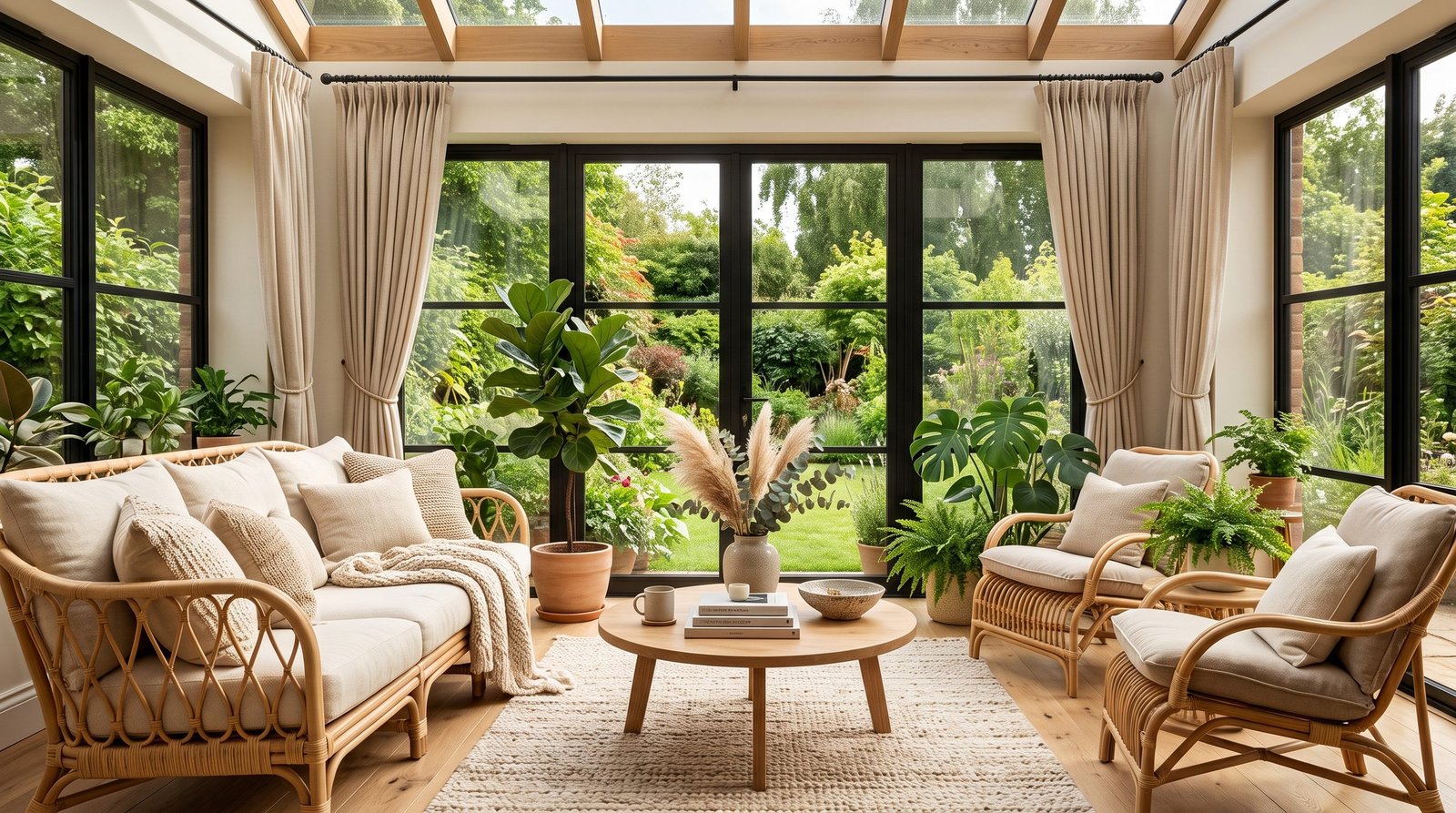
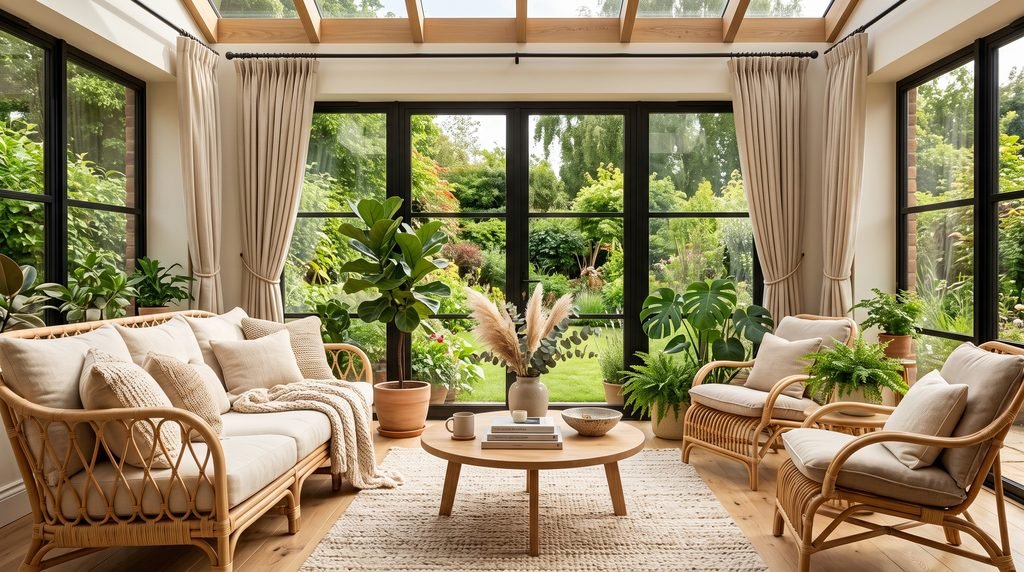
Rattan furniture is one of the most natural choices for a sunroom. Its woven texture works beautifully with large windows, indoor plants, wooden floors, and neutral fabrics. A rattan sofa paired with two matching lounge chairs can instantly create a relaxed conversation area.
Choose cushions in cream, beige, ivory, or soft taupe for a sophisticated appearance. You can add a textured throw and several pillows to make the seating even more inviting.
A light-colored area rug can visually anchor the furniture and define the sitting area. Add a simple wooden or glass coffee table in the center, leaving enough space around the furniture for comfortable movement.
Rattan furniture is especially attractive when the goal is to make the sunroom feel connected to the garden. Natural woven textures soften the abundance of glass and create a warm transition between the interior and exterior.
For a more contemporary look, combine streamlined rattan furniture with modern cushions and a simple coffee table. For a traditional sunroom, choose rounded woven chairs and classic patterns.
Rattan Sunroom Seating
2. Add a Pair of Comfortable Lounge Chairs
You do not always need a large sofa to make a sunroom comfortable. In a smaller space, two attractive lounge chairs can create a simple but sophisticated seating arrangement.
Place the chairs beside a small round table so they face each other slightly. This creates an intimate spot for morning coffee, conversation, or reading.
Upholstered chairs are particularly comfortable when covered in durable neutral fabrics. Bouclé, linen-look upholstery, cotton blends, and performance fabrics can all work beautifully depending on the room’s needs.
Consider chairs with wooden or natural woven frames if you want to emphasize the connection with nature. Alternatively, sculptural upholstered chairs can give the sunroom a more modern appearance.
A small side table between the chairs is enough for books, drinks, or decorative accessories. You can also add a floor lamp if the room is used during the evening.
3. Design a Cozy Sunroom Sofa Layout
A sofa can become the centerpiece of a larger sunroom. Choose a comfortable design that provides enough seating without making the room feel crowded.
A neutral sofa works particularly well because it allows you to change accent colors seasonally. Cream, oatmeal, warm gray, beige, and soft tan are timeless choices.
Place a coffee table in front of the sofa and add one or two accent chairs opposite it. If the room is large, you can use an L-shaped sectional to maximize seating.
Avoid pushing every piece of furniture directly against the walls. Leaving a little breathing room around the furniture often makes the space feel more polished and intentional.
A large area rug can bring the arrangement together. Keep the rug large enough for at least the front legs of the main seating pieces to sit on it.
4. Use a Sunroom Daybed for Ultimate Relaxation
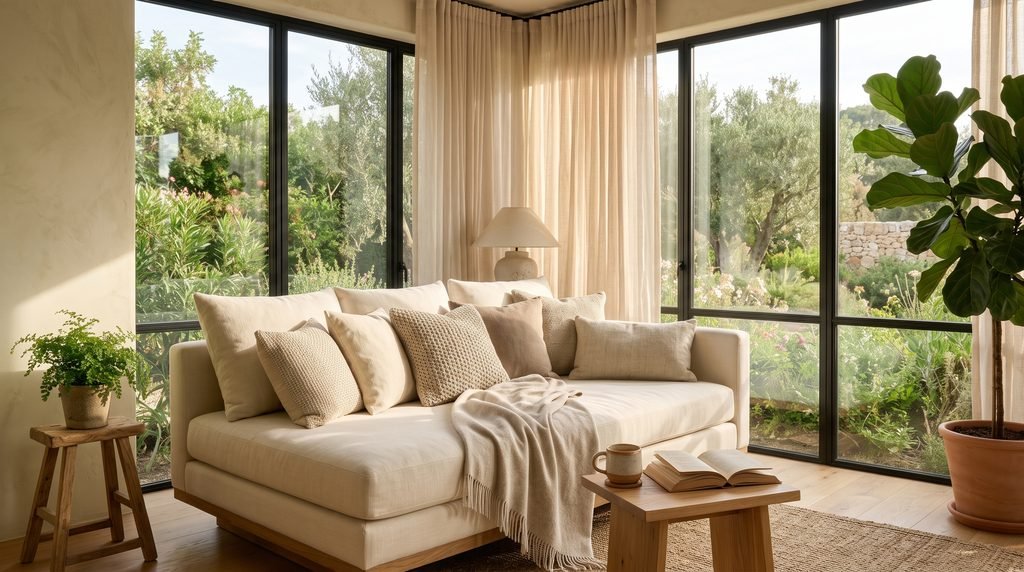
A daybed can turn an ordinary sunroom into a relaxing retreat. Positioned near the windows, a comfortable daybed creates the perfect place for reading, resting, or enjoying a quiet afternoon.
Choose a simple upholstered daybed with plenty of cushions. You can layer pillows in different sizes to create a soft, lounge-like appearance.
For a more natural look, choose a wooden or rattan daybed. Add a thick neutral mattress and lightweight linen cushions.
If your sunroom receives strong direct sunlight, consider placing the daybed slightly away from the glass rather than directly against the window. This can help protect fabrics and create a more comfortable temperature.
A small side table beside the daybed gives you a convenient place for a book, cup of tea, or decorative plant.
Cozy Sunroom Daybed
5. Bring in a Small Round Coffee Table
A coffee table does more than provide a surface for drinks. It can visually organize the entire seating arrangement.
Round coffee tables are particularly useful in sunrooms because their curved shape allows people to move around them easily. This is especially helpful in smaller rooms where square corners can make circulation feel tight.
A natural wood coffee table creates warmth and works beautifully with rattan, linen, and neutral upholstery. A glass-top table can make the space feel more open and visually lightweight.
For a modern sunroom, consider a simple sculptural table with a rounded base. For a rustic space, reclaimed or light-toned wood can add character.
Keep the tabletop relatively simple. A small vase, tray, coffee table book, or ceramic bowl is usually enough.
6. Create a Small Sunroom Dining Area
If your sunroom is located near the kitchen, consider turning part of it into a casual dining area.
A compact round dining table with four chairs can create a beautiful breakfast nook. Natural wood is an excellent choice because it complements greenery and bright natural light.
For a softer appearance, choose upholstered dining chairs. Woven chairs can create a relaxed garden-inspired atmosphere.
A pendant light centered above the table can provide visual definition, although you should avoid blocking important window views.
This arrangement can become a peaceful place for breakfast, weekend brunches, afternoon tea, or casual family meals.
7. Choose a Bistro Table for Small Sunrooms
Small sunrooms do not need large furniture. A petite bistro table with two chairs can provide everything you need.
This arrangement works particularly well near a corner window. It creates a charming place for morning coffee without occupying much floor space.
Choose a round pedestal table when possible because it provides more legroom than a table with four bulky legs.
Pair it with slim chairs, bentwood seating, or compact upholstered chairs. Keep the surrounding area open to maintain a spacious feeling.
Add a small plant or vase to the table, but avoid excessive decoration that could make the tiny space feel cluttered.
8. Add a Built-In Window Bench
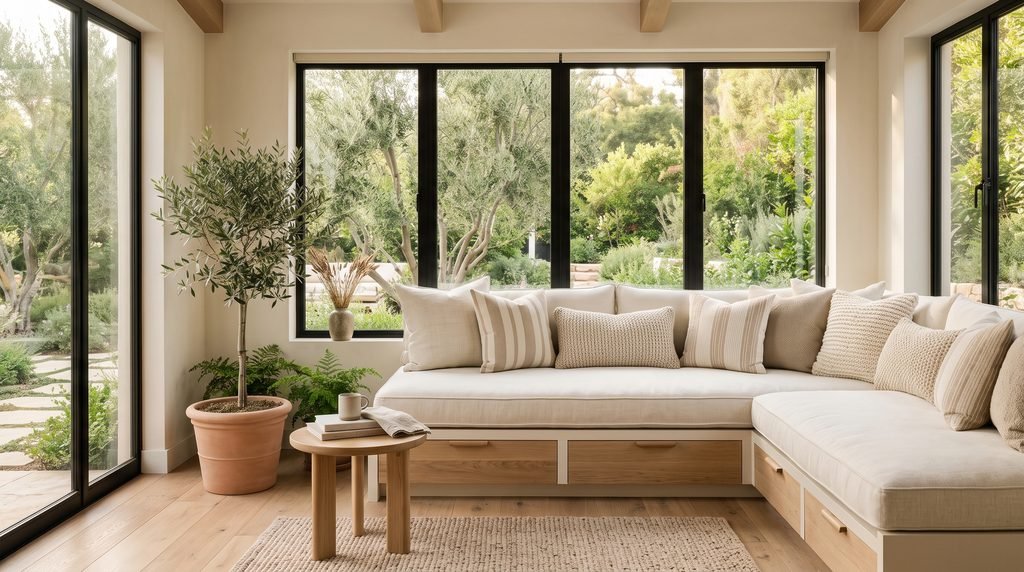
A window bench is one of the most practical furniture solutions for a sunroom. It uses otherwise difficult-to-furnish space while creating comfortable seating.
A built-in bench can be designed with drawers or cabinets underneath for hidden storage. Add a thick cushion and several pillows to make it feel more like a sofa.
This approach works particularly well in sunrooms with low windows. Instead of blocking the windows with tall furniture, the bench follows the architecture of the room.
Use washable or durable upholstery if the space receives heavy use. Neutral fabrics are easy to coordinate with other furniture.
A window bench can also become a beautiful reading spot when paired with a nearby floor lamp and small side table.
Built-In Window Bench
9. Use a Pair of Swivel Chairs
Swivel chairs are especially useful in rooms with extensive windows because they allow you to change your view.
Instead of facing only the center of the room, swivel chairs can turn toward the garden, television, conversation area, or windows.
Choose softly upholstered chairs in beige, ivory, taupe, or light gray. A rounded silhouette can make the room feel more relaxed.
Place two swivel chairs opposite a sofa or beside a small table. Their flexibility makes them useful in multifunctional sunrooms.
10. Add a Natural Wood Console Table
A console table can provide valuable storage and styling space without taking up much room.
Place one behind a sofa or against a wall between windows. Use it to display ceramic vases, books, small lamps, framed artwork, or plants.
Natural oak, walnut, ash, and reclaimed wood can all work well. Choose the finish according to the rest of the room.
A console with drawers is particularly useful for storing small items such as chargers, magazines, candles, or board games.
Keep the styling simple so that the table complements rather than competes with the windows.
11. Choose Woven Accent Chairs
Woven accent chairs can bring texture and visual interest into a sunroom without making it feel heavy.
Look for cane, rattan, wicker, or woven-seat designs. These materials work especially well alongside linen and cotton upholstery.
You can soften a woven chair with a loose cushion or small lumbar pillow. Pair two chairs with a small round table to create a separate conversation area.
This furniture style works particularly well in coastal, organic modern, Scandinavian, farmhouse, and tropical-inspired interiors.
12. Make Space for a Reading Chair
A sunroom naturally lends itself to reading. Create a dedicated reading corner with one comfortable chair, a small side table, and a floor lamp.
Position the chair where it receives plenty of daylight but does not sit directly in intense afternoon sun.
A reclining chair can provide additional comfort. Alternatively, a deep upholstered armchair with a matching footstool can create a luxurious reading retreat.
Add a small basket beside the chair for books and blankets. A nearby plant can complete the cozy arrangement.
13. Add an Ottoman or Pouf
An ottoman can provide flexible seating without taking up the visual space of a traditional chair.
Use one in front of an armchair as a footrest, or choose a larger ottoman that can double as a coffee table when paired with a tray.
Woven ottomans are particularly attractive in relaxed sunrooms. Upholstered versions can introduce a soft accent color.
For maximum flexibility, choose lightweight pieces that can easily be moved when the room needs to accommodate guests.
Relaxed Ottoman Seating

14. Try a Small Sectional Sofa
A sectional can maximize seating in a larger sunroom. An L-shaped design works particularly well when the room has a defined corner.
Choose a low-profile sectional so that it does not compete with the windows.
Cream and beige sectionals create a bright appearance, while light gray or taupe can provide subtle contrast.
Add a mixture of square and lumbar cushions. Avoid overcrowding the sectional with too many pillows because the furniture should remain practical for everyday use.
A large round coffee table can soften the angular shape of an L-shaped sofa.
15. Use a Storage Bench
Furniture with hidden storage is extremely useful in multifunctional sunrooms.
A storage bench can hold blankets, cushions, books, games, or outdoor accessories. It can also provide extra seating when guests arrive.
Place it underneath a window or along an empty wall. Add a comfortable cushion on top and style it with two or three pillows.
Choose a design that matches the existing furniture. A white-painted bench works in traditional interiors, while natural oak or rattan works beautifully in organic modern rooms.
16. Combine Different Seating Styles
Your sunroom does not have to contain a matching furniture set.
Mixing a sofa with different accent chairs can create a more collected and sophisticated appearance. For example, combine a neutral upholstered sofa with two woven chairs and a wooden coffee table.
The key is to repeat materials or colors throughout the room. If your chairs are different, use cushions or accessories that connect their colors.
This approach can make the space feel less like a showroom and more like a thoughtfully designed part of the home.
17. Create a Relaxed Indoor-Outdoor Look
If your sunroom opens directly onto a patio or garden, choose furniture that visually connects the two areas.
Natural wood, rattan, woven textures, linen-look upholstery, and greenery can create continuity.
Keep the color palette simple. Shades of cream, beige, sand, warm brown, and green naturally complement outdoor surroundings.
Large windows already provide visual connection to the garden, so the furniture should support rather than compete with the view.
18. Add a Small Side Table Beside Every Main Seat
Side tables are easy to overlook, but they make a sunroom much more functional.
Every frequently used seat should ideally have somewhere nearby to place a drink, book, phone, or small lamp.
Round wooden tables, nesting tables, slim metal tables, and small pedestal tables are all useful.
If space is limited, nesting tables can provide flexibility. Keep the smallest table tucked underneath the larger one until additional surface space is needed.
19. Choose Furniture with Durable Fabrics
Sunrooms receive significantly more sunlight than many other rooms, so furniture materials deserve careful consideration.
Look for upholstery designed to withstand regular use and, where appropriate, increased exposure to sunlight. Performance fabrics can be especially practical for households with children or pets.
Loose covers are another useful option because they can often be cleaned or replaced more easily.
Before choosing expensive furniture, consider how much direct sunlight reaches the room throughout the day. Strong afternoon sunlight may affect some materials and finishes over time.
Window coverings such as sheer curtains, woven shades, or adjustable blinds can help manage light while maintaining the bright character of the room.
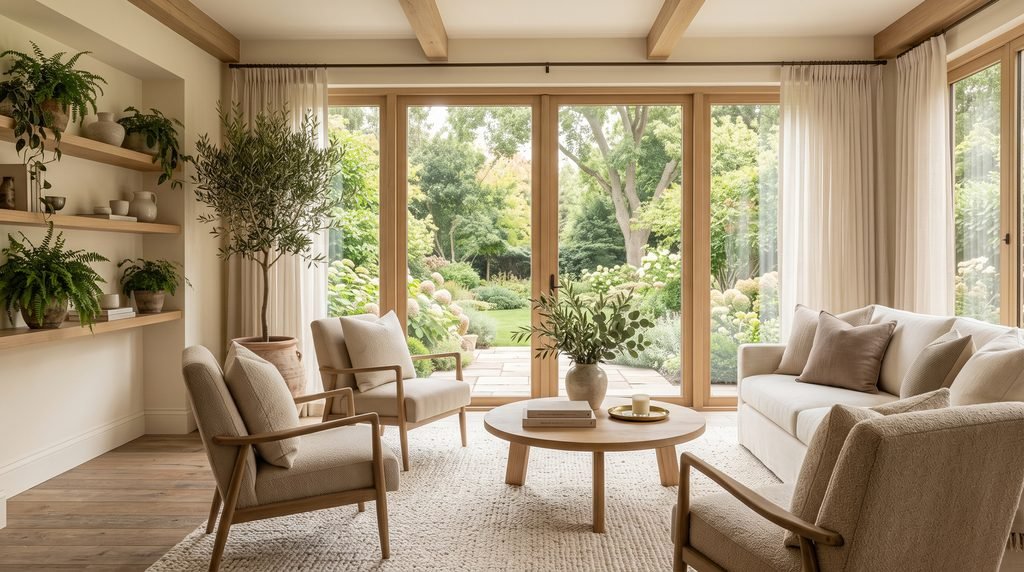
20. Use a Neutral Furniture Palette
Neutral furniture is one of the easiest ways to create a timeless sunroom.
Cream sofas, beige chairs, natural wood tables, woven baskets, and soft gray textiles create a calm backdrop for the changing outdoor scenery.
You can introduce color through pillows, throws, plants, artwork, and flowers.
Green is particularly effective because it echoes the garden outside. Soft blue can create a coastal feeling, while terracotta and warm brown can make the room feel earthy.
The goal is not to make everything identical. Instead, choose a few complementary tones and repeat them throughout the room.
Neutral Sunroom Furniture
21. Add a Small Desk for a Multifunctional Sunroom
A sunroom can also become a beautiful home workspace.
A slim wooden desk positioned near a window can provide a peaceful place for writing, studying, or occasional computer work.
Choose a comfortable chair that can also be used as additional seating when the desk is not in use.
Avoid placing large office furniture directly in front of the main windows. Keeping the views open will preserve the relaxing quality of the room.
A small desk with drawers can also double as a craft or hobby station.
22. Use a Curved Sofa for a Softer Look
Curved furniture can make a sunroom feel especially inviting.
A gently curved sofa creates a softer visual transition between the straight lines of windows and walls. It also encourages conversation because people naturally face toward one another.
Pair it with a round coffee table and curved accent chairs for a cohesive look.
Keep the rest of the room relatively simple so the curved furniture remains the main feature.
23. Add a Comfortable Recliner
For homeowners who want their sunroom to function as a relaxation space, a recliner can be a practical addition.
Modern recliners are available in designs that look more like traditional lounge chairs than bulky living-room furniture.
Choose one in a neutral upholstery and place it near a side table. A reading lamp and small basket can turn the area into a personal relaxation zone.
If the sunroom is shared by several people, consider placing the recliner at the edge of the main seating arrangement so it remains useful without dominating the room.
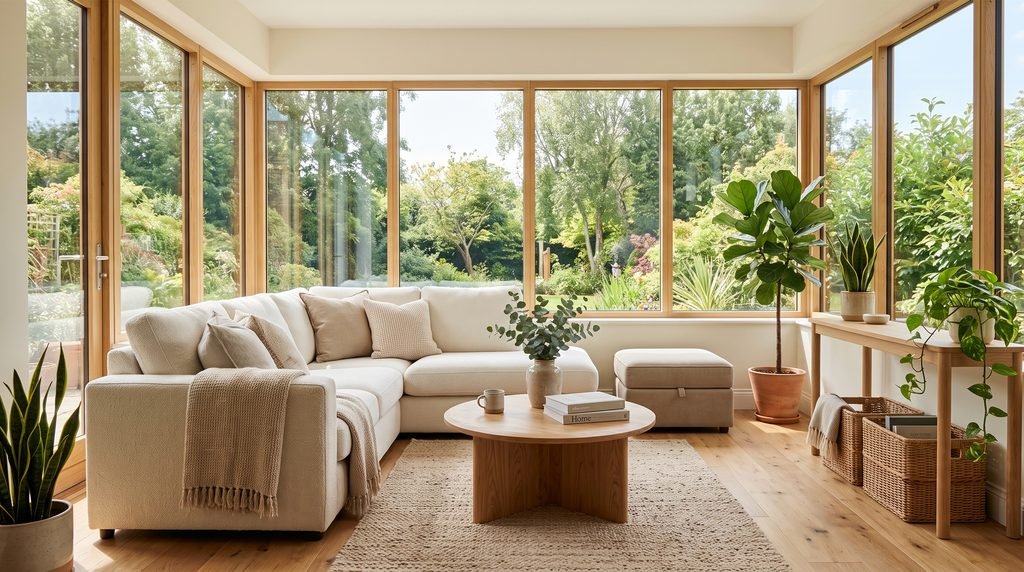
24. Create a Family-Friendly Sunroom
A family sunroom should prioritize comfort, durability, and flexible furniture.
Choose sofas with washable or durable covers, rounded coffee tables, lightweight stools, and baskets for quick storage.
An ottoman can become extra seating when needed. A storage bench can hide blankets and toys. Nesting tables can be moved easily when children need more floor space.
Avoid filling the room with fragile decorative furniture. Instead, allow the architecture and natural light to provide much of the visual interest.
Add a soft rug to define the seating zone and make the room more comfortable for children.
Family-Friendly Sunroom
25. Choose Furniture That Complements the View
One of the biggest advantages of a sunroom is the connection to the outdoors. Furniture should enhance that feature instead of blocking it.
Keep tall cabinets and bulky furniture away from important windows whenever possible.
Low-profile sofas, lounge chairs, benches, and coffee tables allow more of the garden or outdoor scenery to remain visible.
If the sunroom overlooks trees, flowers, or a landscaped yard, use natural colors that complement the view.
The furniture does not need to match the garden exactly. Instead, create a subtle visual relationship through natural materials, earthy colors, and greenery.
How to Arrange Furniture in a Small Sunroom
Small sunrooms require careful furniture selection, but limited space does not mean limited style.
Start with two or three essential pieces instead of trying to fit a complete living-room set.
A loveseat, two small chairs, and a round coffee table can be enough. Alternatively, use a compact bistro table with two chairs if the room is intended for breakfast and coffee.
Choose furniture with visible legs because it allows more floor area to remain visible. This can make the room feel larger.
Avoid oversized sectionals, bulky cabinets, and heavy tables unless the dimensions of the room can comfortably accommodate them.
Mirrors can also help reflect natural light, although they should be positioned thoughtfully so they do not create uncomfortable glare.
How to Arrange Furniture in a Large Sunroom
Large sunrooms offer more flexibility. Instead of filling the entire room with furniture, consider creating separate zones.
One side could contain a sofa and lounge chairs for conversation. Another corner could hold a reading chair and floor lamp. If there is enough room, a small dining table can occupy the remaining area.
Use rugs to visually separate these zones. Each area should have its own purpose while sharing a consistent color palette.
Large rooms can accommodate bigger furniture, but empty space is still important. Do not feel obligated to fill every corner.
Natural Materials in a Sunroom
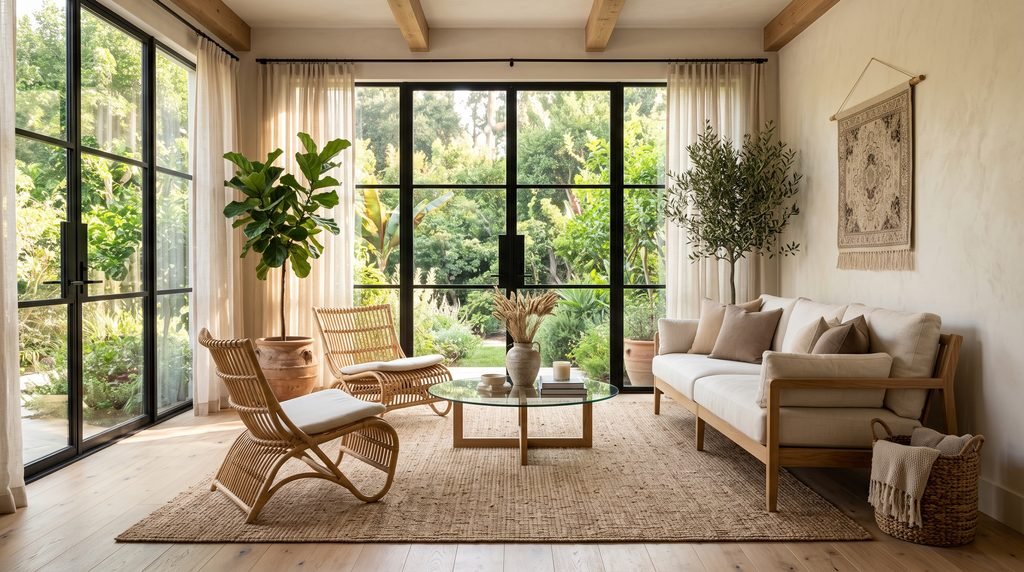
Best Materials for Sunroom Furniture
Natural materials are particularly well suited to sunrooms.
Rattan and Wicker
These woven materials bring texture and a relaxed indoor-outdoor feeling. They work especially well with neutral upholstery and greenery.
Wood
Wood adds warmth and works with almost every interior style. Oak, walnut, ash, and lighter natural finishes can all be attractive choices.
Upholstery
Choose practical fabrics based on how much the room is used and how much sunlight reaches it. Performance fabrics can be useful in high-traffic spaces.
Metal
Metal furniture can provide contrast and a modern appearance. Slim black or brushed metal frames can work particularly well with light upholstery and natural wood.
Glass
Glass-top tables help maintain an open visual feeling. They are especially useful in smaller sunrooms where heavy furniture can make the room feel crowded.
How to Make Sunroom Furniture Feel Cozy
Furniture alone does not create coziness. The finishing details matter just as much.
Layer different textures through cushions, throws, rugs, baskets, and curtains.
Use warm neutrals rather than relying entirely on stark white. Cream, oatmeal, beige, camel, soft brown, and muted green can make the room feel warmer.
Plants are another simple way to add softness. Choose varieties that suit the amount of natural light available in the room.
A floor lamp can provide warmth during the evening, while table lamps can create smaller pools of light around seating areas.
Finally, avoid making the room too perfect. A few books, a folded blanket, a ceramic vase, or a small tray can make the sunroom feel lived-in and inviting.
Common Sunroom Furniture Mistakes to Avoid
One common mistake is choosing furniture without considering the amount of sunlight the room receives. Strong direct sunlight can affect certain fabrics, finishes, and materials over time.
Another mistake is overcrowding the room. Sunrooms already have strong architectural features, particularly windows, so excessive furniture can take away from the sense of openness.
Choosing furniture that is too tall can also block views and make the room feel enclosed.
Another issue is ignoring the room’s primary purpose. A sunroom designed for reading needs different furniture from one intended for family gatherings or dining.
Finally, avoid choosing every item from the same matching collection. Mixing complementary pieces often creates a more natural and personalized result.
8. Finish with a Thoughtful Furniture Layout
The final and perhaps most important part of furnishing a sunroom is arranging everything correctly.
Start by identifying the room’s main purpose. Is it primarily for relaxing, dining, reading, entertaining, or enjoying the garden view?
Once you know the purpose, choose the largest piece of furniture first. This is usually the sofa, sectional, dining table, or daybed.
Then add secondary seating and tables around it.
Keep clear walking paths between doors and important areas. Avoid placing tall furniture where it blocks windows or views.
A successful sunroom layout should feel comfortable rather than overly designed. You should be able to walk through the room naturally, sit down easily, and enjoy the view without furniture becoming an obstacle.
Complete Stylish Sunroom
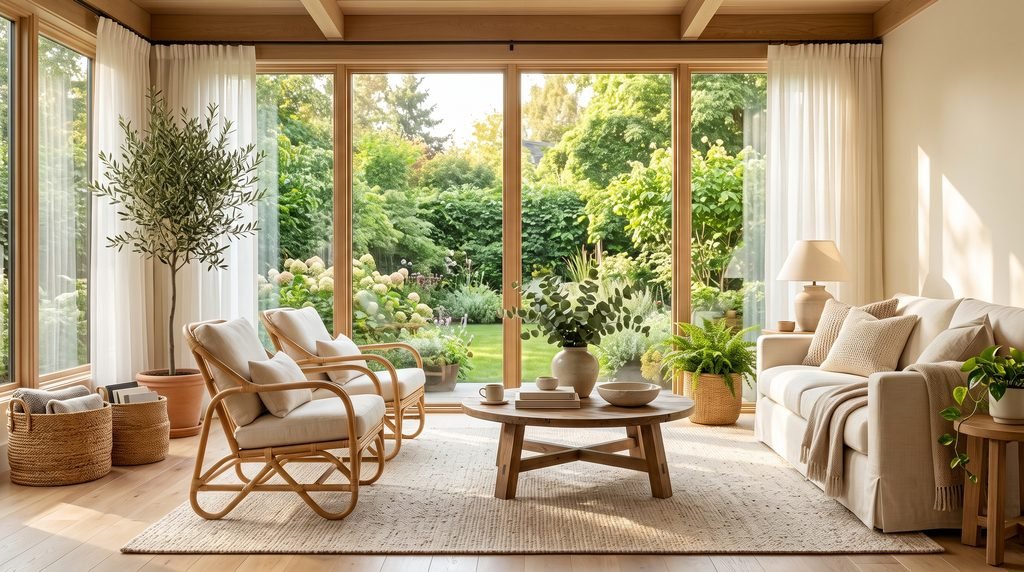
Final Thoughts on Sunroom Furniture Ideas
The right furniture can transform a sunroom from an unused glass-filled space into one of the most enjoyable rooms in the home. Whether you prefer a relaxed rattan seating area, a sophisticated neutral sofa, a cozy daybed, or a small breakfast table, there are plenty of ways to create a comfortable and beautiful arrangement.
Start with the way you want to use the room. From there, select furniture that fits the available space, supports comfortable movement, and complements the natural light.
Natural materials such as wood and rattan are especially effective for creating a connection with the outdoors, while neutral upholstery keeps the room timeless. Comfortable chairs, practical side tables, soft rugs, and carefully selected accessories can make the space feel finished without overwhelming it.
For smaller sunrooms, focus on compact furniture and flexible pieces. For larger rooms, create separate zones for relaxing, reading, dining, or entertaining.
Most importantly, let the windows and outdoor views remain part of the design. A sunroom already has one of the home’s most beautiful features: abundant natural light and a visual connection to nature. The furniture should enhance that experience rather than compete with it.
With thoughtful planning, even a simple combination of a comfortable sofa, natural wood table, woven chair, soft rug, and a few plants can create a warm retreat that feels stylish, practical, and welcoming throughout the year.