Image Placeholder: Modern circular conservation pit surrounded by decorative gravel, native plants, natural stone edging, and a lush green backyard under warm morning sunlight.
Introduction
Water conservation is becoming more important than ever, and homeowners are searching for attractive ways to save rainwater without sacrificing the beauty of their outdoor spaces. One of the smartest landscaping upgrades you can make is installing a conservation pit. Also known as a rainwater harvesting pit, recharge pit, or soak pit, this simple feature collects excess rainwater and allows it to slowly seep back into the ground instead of flowing away.
The best part is that conservation pits no longer have to look like unfinished holes hidden in the yard. Modern landscape design has transformed them into stylish garden features that blend beautifully with lawns, flower beds, patios, and walkways. Whether you have a compact urban backyard or a large countryside garden, there are countless creative ways to incorporate a conservation pit into your outdoor design.
Besides helping the environment, conservation pits reduce flooding, improve groundwater levels, minimize soil erosion, and keep gardens healthier during dry seasons. They are also a practical long-term investment for homeowners who want sustainable landscaping with minimal maintenance.
In this guide, you’ll discover 25 beautiful conservation pit ideas that combine function with style. From natural stone designs and decorative gravel installations to modern minimalist layouts and eco-friendly rain gardens, these ideas will inspire you to build a conservation pit that enhances your landscape while protecting natural resources.
Why Install a Conservation Pit?
Before exploring the design ideas, it’s helpful to understand why these simple structures are becoming popular in modern landscaping.
A well-designed conservation pit can:
- Reduce water runoff during heavy rainfall
- Recharge underground water naturally
- Prevent standing water in gardens
- Minimize soil erosion
- Support healthier plants
- Lower pressure on drainage systems
- Promote eco-friendly landscaping
- Increase the long-term value of your property
The key is designing the pit so it becomes an attractive part of your landscape rather than something you try to hide.
Image Placeholder
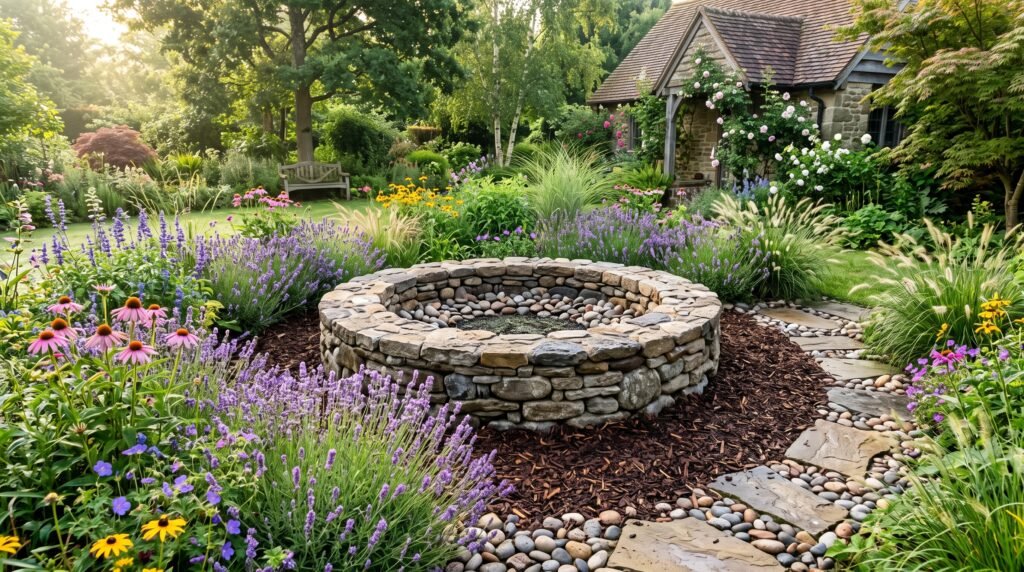
A circular conservation pit built with stacked natural stones, surrounded by ornamental grasses and flowering plants.
1. Build a Rustic Stone Border
Natural stone instantly gives a conservation pit a timeless appearance. Instead of leaving the edges exposed, surround the pit with stacked fieldstone, river rock, or locally sourced stone that blends into the surrounding landscape.
Stone borders also strengthen the edge of the pit, preventing soil from collapsing after heavy rain while creating a polished look that feels intentional rather than purely functional.
Choose irregular stones for a cottage garden or woodland landscape, or use cut stone for a cleaner appearance.
Styling Tips
- Add creeping thyme between stones.
- Surround the area with mulch.
- Plant lavender nearby.
- Use native grasses for movement.
- Add subtle landscape lighting.
2. Blend It Into a Rock Garden
A conservation pit can become the centerpiece of a rock garden filled with drought-resistant plants.
Mix decorative boulders, gravel, succulents, ornamental grasses, and flowering perennials to create a landscape that looks natural while requiring very little maintenance.
The different textures help disguise the functional purpose of the pit while making it an attractive garden destination.
3. Incorporate Native Plants
Native plants naturally tolerate local weather conditions and usually require less watering.
Because conservation pits temporarily collect water after rainfall, moisture-loving native plants thrive around the perimeter while creating a lush, natural appearance.
Excellent choices include:
- Switchgrass
- Black-eyed Susan
- Coneflowers
- Blue Fescue
- Daylilies
- Sedges
- Native ferns
Image Placeholder
A modern conservation pit surrounded by white decorative gravel, black steel edging, stepping stones, and minimalist landscaping.
4. Use Decorative Gravel for a Clean Look
Decorative gravel transforms an ordinary recharge pit into a sophisticated landscape feature.
Instead of exposed soil, cover the surrounding area with attractive gravel such as:
- White marble chips
- River pebbles
- Crushed granite
- Black basalt
- Mixed natural stone
Besides looking elegant, gravel improves drainage while reducing weed growth.
5. Add Modern Metal Edging
Steel edging creates crisp, professional lines around the conservation pit.
Black powder-coated edging contrasts beautifully with light gravel while helping separate planting beds from pathways.
This simple detail instantly gives the installation a high-end landscape design appearance.
6. Create a Minimalist Design
Minimalist gardens rely on simplicity.
Pair the conservation pit with:
- Straight stepping stones
- White gravel
- Low-maintenance shrubs
- Sculptural grasses
- Simple geometric planting beds
The result feels contemporary and organized while still supporting sustainable water management.
7. Add Large Feature Boulders
Strategically placed boulders create visual balance and help disguise the practical purpose of the pit.
Choose rocks of varying sizes to imitate natural landscapes.
Large boulders also prevent accidental foot traffic around the pit while adding texture throughout the garden.
Benefits of Decorative Conservation Pit Designs
Modern conservation pits don’t just improve water management—they also become standout landscape features. Decorative finishes, thoughtful plant choices, and quality materials allow these eco-friendly installations to blend seamlessly into both traditional and contemporary gardens.
Some additional benefits include:
- Improved curb appeal
- Better drainage during storms
- Reduced maintenance compared to exposed soil
- Increased biodiversity through native planting
- A more polished, intentional landscape design
By treating your conservation pit as a design element rather than just a utility feature, you can create a backyard that’s both environmentally responsible and visually appealing.
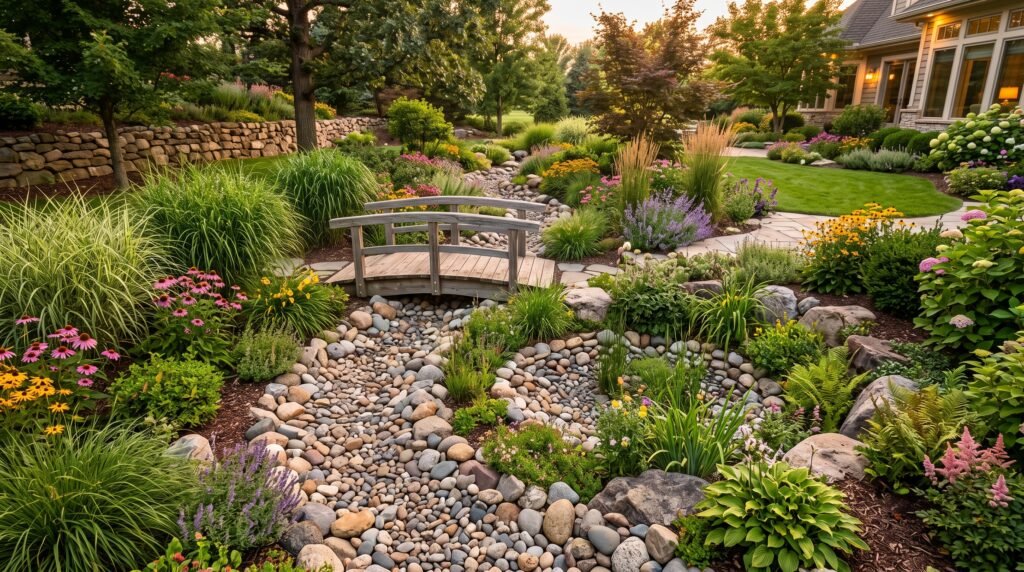
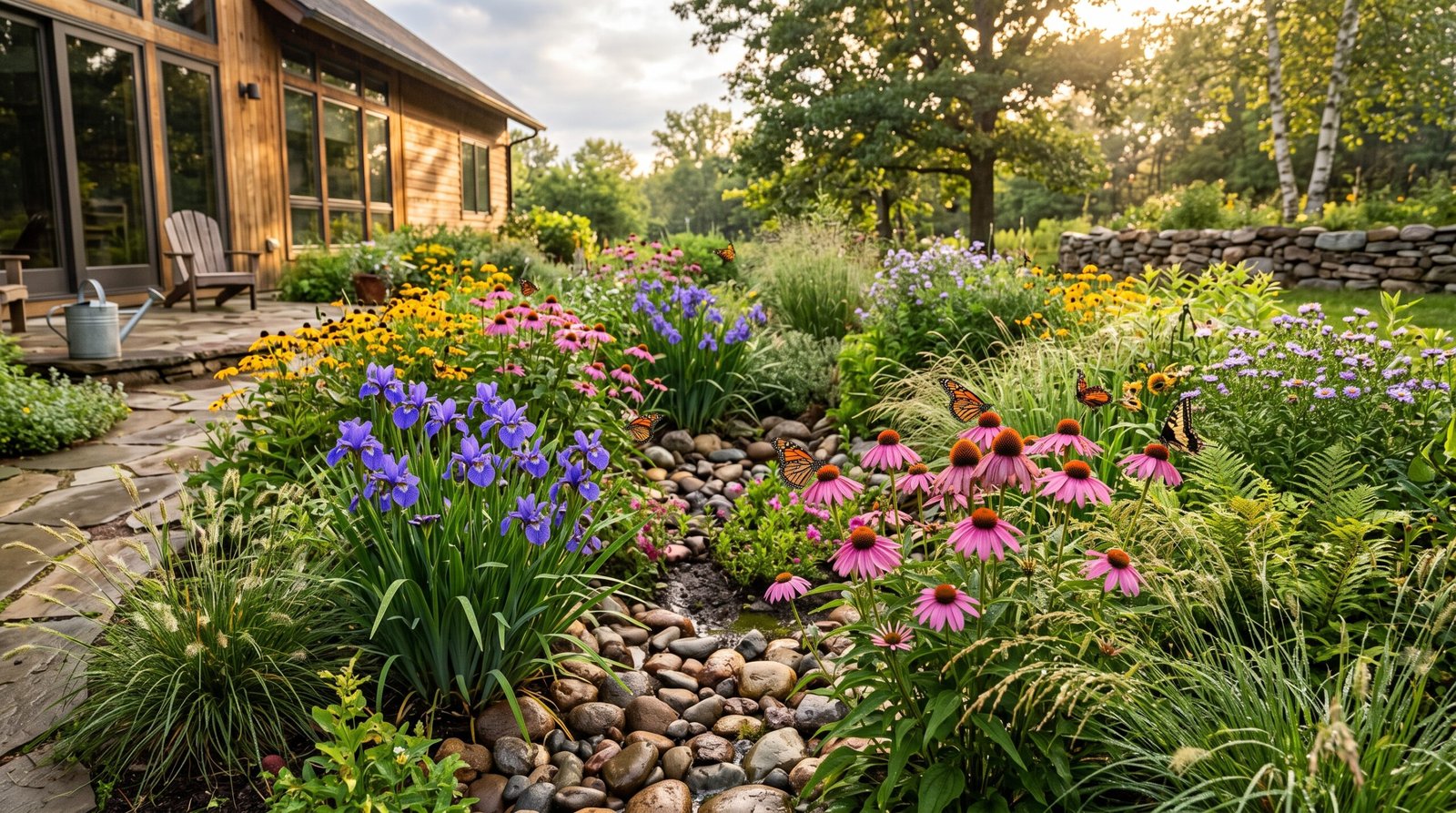
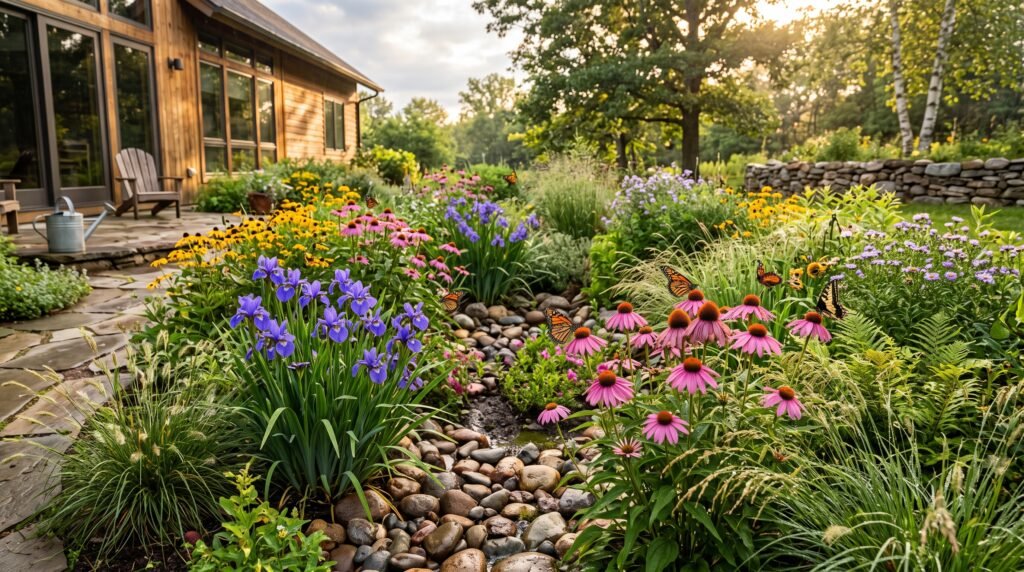
Image Placeholder: A beautifully landscaped rain garden featuring a central conservation pit surrounded by colorful native flowers, ornamental grasses, river rocks, and a winding stone pathway after gentle rainfall.
8. Turn Your Conservation Pit into a Rain Garden
A rain garden is one of the most attractive ways to disguise a conservation pit. Instead of treating it as a hidden drainage feature, design it as a lush planting bed that naturally absorbs and filters rainwater.
Rain gardens are shallow landscaped depressions filled with moisture-loving plants. During heavy rain, water temporarily collects before slowly soaking into the ground, helping recharge groundwater while reducing runoff.
Best Plants for a Rain Garden
Choose plants that tolerate both wet and dry conditions, such as:
- Blue Flag Iris
- Swamp Milkweed
- Purple Coneflower
- Joe Pye Weed
- Black-Eyed Susan
- Sedges
- Switchgrass
Layer taller plants toward the back and shorter varieties along the front to create depth and year-round interest.
Design Tip
Mix colorful flowers with decorative stones and mulch to give your rain garden a polished, intentional look rather than the appearance of a drainage area.
9. Install a Curved Stone Pathway
A gently curving pathway leading toward the conservation pit makes it feel like a destination within your garden.
Natural stepping stones, flagstone, or slate create an organic flow while improving accessibility during wet weather.
To soften the edges, plant creeping thyme or Irish moss between the stones for a lush, cottage-style effect.
10. Add Driftwood and Natural Accents
For a woodland-inspired landscape, incorporate weathered driftwood, logs, and natural branches around the pit.
These elements add texture while providing shelter for beneficial insects and wildlife.
Pair them with ferns, moss, and shade-loving plants to create a peaceful natural retreat.
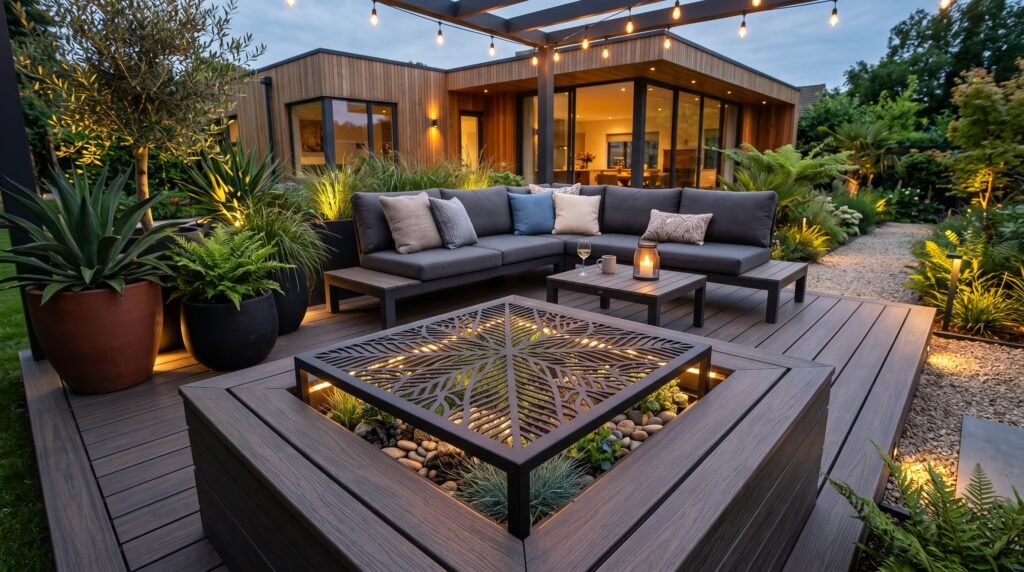
Image Placeholder: A decorative dry creek bed flowing into a circular conservation pit, lined with smooth river rocks, ornamental grasses, and flowering shrubs in a modern backyard.
11. Connect the Pit to a Dry Creek Bed
A dry creek bed is both functional and visually striking.
It channels rainwater toward the conservation pit using a shallow trench lined with decorative river rocks, creating the illusion of a natural stream.
This design works especially well for sloped properties where heavy rain often causes erosion.
Benefits
- Reduces soil erosion
- Directs rainwater efficiently
- Adds natural movement to the landscape
- Creates a premium garden feature
- Requires very little maintenance
12. Mix River Rocks in Different Sizes
Instead of using identical stones, combine several sizes to mimic a real creek.
For example:
- Large boulders for focal points
- Medium river rocks along the edges
- Small pebbles in the center
This layered approach looks more natural while improving drainage.
13. Build a Small Wooden Bridge
If your dry creek bed extends across the garden, install a small wooden footbridge over it.
A cedar or treated timber bridge instantly becomes a charming focal point while providing practical access across the landscape.
It also creates excellent photo opportunities, making your backyard more Pinterest-worthy.
14. Add Landscape Lighting
Outdoor lighting transforms a conservation pit after sunset.
Consider:
- Solar pathway lights
- Warm LED spotlights
- Recessed stone lighting
- Lantern-style fixtures
- Soft uplighting beneath ornamental grasses
Warm lighting highlights textures and creates a cozy atmosphere for evening entertaining.
15. Include Decorative Garden Sculptures
Place subtle garden sculptures nearby to personalize the space.
Popular choices include:
- Stone lanterns
- Bird statues
- Ceramic pots
- Weathered urns
- Modern abstract sculptures
- Wooden art pieces
Avoid overcrowding the area—one or two statement pieces are usually enough.

Image Placeholder: A stylish conservation pit covered with a decorative metal grate surrounded by wooden decking, outdoor seating, potted plants, and modern landscaping.
16. Install a Decorative Metal Cover
Modern conservation pits don’t have to remain open.
Decorative metal grates allow rainwater to pass through while improving safety and adding architectural detail.
Laser-cut steel patterns can complement both traditional and contemporary homes.
Benefits include:
- Improved safety for children and pets
- Cleaner appearance
- Better debris control
- Easier maintenance
- Stylish finish
17. Create an Outdoor Seating Area Nearby
Transform the surrounding space into a relaxing garden retreat.
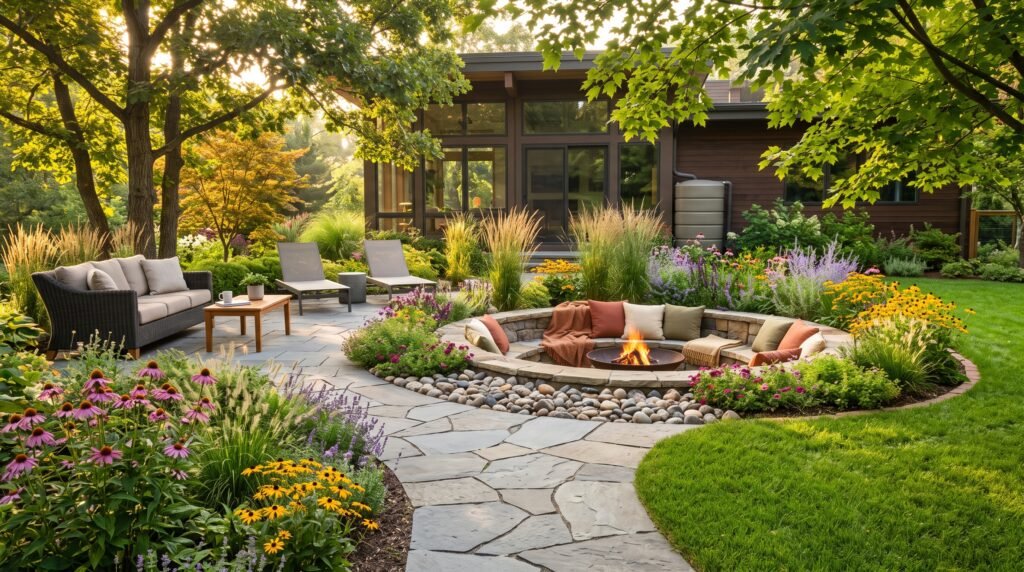
Position a bench or a pair of Adirondack chairs overlooking the landscaped pit.
Add:
- Outdoor cushions
- Decorative planters
- Solar lanterns
- Side tables
- A small fire bowl (away from vegetation)
This turns an eco-friendly feature into an enjoyable outdoor living area.
18. Surround It with Raised Garden Beds
Raised beds naturally frame a conservation pit while making planting easier.
Choose materials such as:
- Cedar timber
- Natural stone
- Brick
- Concrete blocks
- Corten steel
Fill the beds with herbs, flowering perennials, or ornamental grasses for year-round beauty.
19. Incorporate Mulch for a Finished Look
Organic mulch helps retain moisture, suppress weeds, and improve soil quality.
Popular mulch options include:
- Pine bark
- Cedar chips
- Hardwood mulch
- Cocoa shell mulch
- Wood chips
Keep mulch a few inches away from the pit opening to maintain efficient water flow.
20. Design for Every Season
A beautiful conservation pit should look attractive throughout the year.
Spring
- Tulips
- Daffodils
- Fresh green foliage
Summer
- Coneflowers
- Black-eyed Susans
- Ornamental grasses
Autumn
- Colorful shrubs
- Decorative pumpkins
- Golden grasses
Winter
- Evergreen shrubs
- Stone textures
- Frost-covered ornamental grasses
Planning for seasonal interest ensures your conservation pit remains a highlight of the landscape in every season.
Why These Designs Work
The best conservation pit designs combine sustainability with aesthetics. Features like rain gardens, dry creek beds, decorative covers, and seating areas make the pit feel like an intentional part of your landscape rather than a hidden utility.
By blending natural materials, thoughtful planting, and practical design, you can create a space that manages rainwater efficiently while enhancing your backyard’s beauty and value.
Image Placeholder: A square conservation pit with charcoal pavers, black steel edging, white decorative gravel, symmetrical planting beds, and a modern minimalist backyard.
21. Create a Modern Geometric Conservation Pit
If your home has contemporary architecture, a geometric conservation pit can seamlessly complement the clean lines of your outdoor space. Instead of a traditional circular design, consider a square, rectangular, or hexagonal pit framed with concrete pavers or steel edging.
A minimalist layout emphasizes symmetry and structure, making the conservation pit appear as an intentional landscape feature rather than a hidden utility.
Design Elements
- Large-format concrete pavers
- Black steel edging
- White decorative gravel
- Low evergreen shrubs
- Architectural plants like agave or yucca
- Minimal color palette
This style pairs beautifully with modern patios and outdoor living areas.
22. Add Built-In Seating Around the Pit
If space allows, surround the conservation pit with curved or straight built-in benches made from wood, stone, or concrete.
The seating creates a relaxing gathering area while subtly defining the landscape. Pair the benches with potted plants, outdoor cushions, and warm lighting to transform the area into a cozy destination.
This approach works especially well in larger backyards where the conservation pit can become a central design feature.
23. Frame It with Symmetrical Planting
Symmetry instantly creates a polished, high-end look.
Plant matching shrubs, grasses, or flowering perennials on each side of the pit for a balanced appearance.
Great plant combinations include:
- Boxwood + Lavender
- Blue Fescue + White Roses
- Hydrangeas + Ornamental Grass
- Hostas + Ferns (for shaded gardens)
The result feels organized, elegant, and easy to maintain.
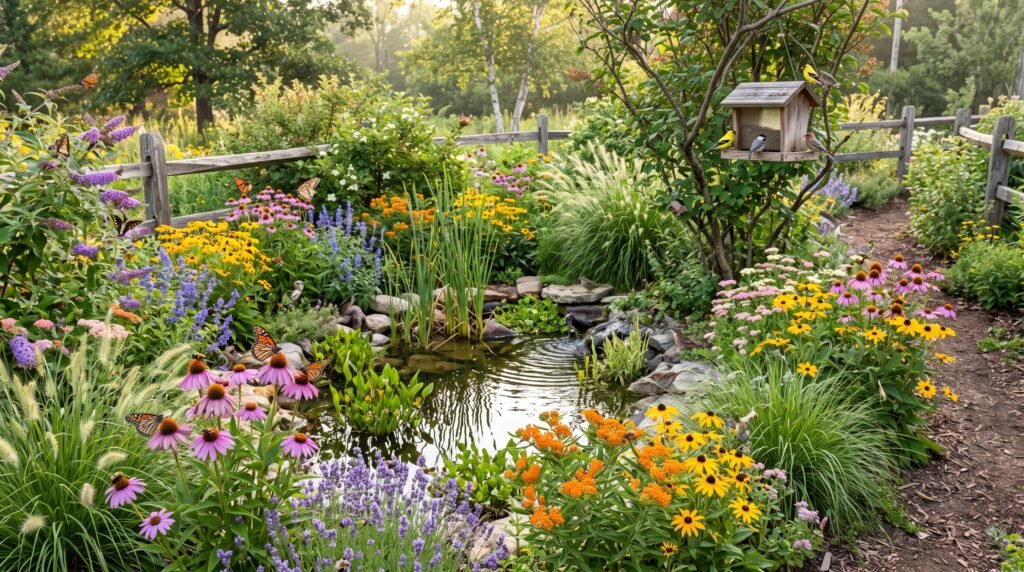
Image Placeholder: A natural conservation pit surrounded by wildflowers, bird feeders, native grasses, butterfly-attracting plants, smooth river rocks, and a rustic wooden fence.
24. Create a Wildlife-Friendly Garden
A conservation pit can do much more than manage rainwater—it can also support local wildlife.
By planting native flowers and shrubs, you create an inviting habitat for birds, butterflies, bees, and beneficial insects. These pollinators improve biodiversity and help surrounding plants thrive.
Plants That Attract Pollinators
- Coneflowers
- Bee Balm
- Lavender
- Milkweed
- Goldenrod
- Black-Eyed Susan
- Salvia
Adding a birdbath or small bee hotel nearby makes the space even more welcoming to wildlife.
25. Incorporate Edible Landscaping
Combine sustainability with productivity by planting edible species around the conservation pit.
Consider:
- Rosemary
- Thyme
- Mint (contained)
- Chives
- Blueberries
- Strawberries
- Fig trees (where climate permits)
These plants benefit from occasional moisture while adding fragrance, color, and fresh ingredients to your garden.
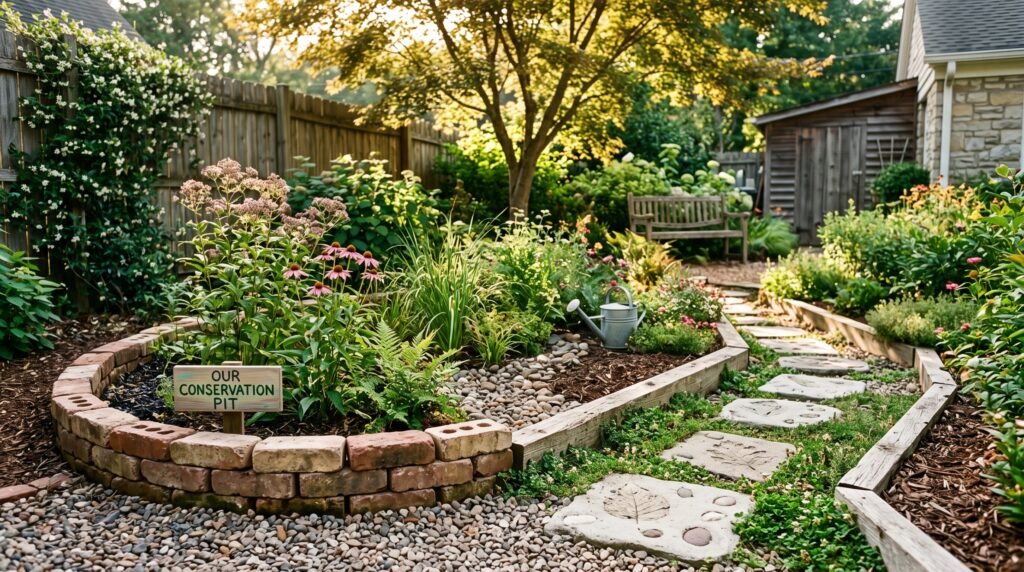
Image Placeholder: A simple DIY conservation pit built with gravel, reclaimed bricks, native plants, and recycled timber edging in a small backyard garden.
Build a Conservation Pit on a Budget
You don’t need an expensive landscape makeover to create an effective conservation pit. Many attractive designs can be built using reclaimed or affordable materials.
Budget-Friendly Materials
- Recycled bricks
- Salvaged stone
- River rocks
- Crushed gravel
- Reclaimed timber
- Native plants
- Mulch
- DIY stepping stones
These materials reduce costs while giving your landscape character and sustainability.
Maintenance Tips for Long-Lasting Performance
A conservation pit requires very little maintenance, but regular care ensures it continues working effectively for years.
Remove Leaves and Debris
Clean the pit after storms to prevent blockages that reduce water infiltration.
Inspect After Heavy Rain
Check for signs of erosion, standing water, or damaged edging and repair them promptly.
Refresh Gravel and Mulch
Replace displaced gravel or worn mulch every year or two to keep the area looking neat and functioning properly.
Prune Surrounding Plants
Trim overgrown shrubs and grasses to maintain airflow and prevent roots from obstructing water flow.
Check Inlet Channels
If gutters or drainage pipes feed into the pit, make sure they remain clear so rainwater can reach the pit efficiently.
Common Mistakes to Avoid
Even a well-designed conservation pit can underperform if basic planning is overlooked.
Choosing the Wrong Location
Avoid placing the pit too close to building foundations, retaining walls, or underground utilities. Maintain a safe distance to protect structures and ensure proper drainage.
Ignoring Soil Conditions
Heavy clay soil drains slowly and may require additional gravel layers or a larger pit to improve infiltration.
Making the Pit Too Small
A pit that is undersized for your roof or garden area can overflow during heavy rain. Size it according to expected runoff.
Using Non-Permeable Materials
Avoid sealing the surrounding area with impermeable concrete that prevents water from reaching the pit. Use permeable pavers or gravel whenever possible.
Neglecting Regular Maintenance
Leaves, sediment, and debris can reduce efficiency over time. A quick seasonal inspection keeps the system working at its best.
Conclusion
A conservation pit is one of the simplest and most effective ways to make your landscape more sustainable while enhancing its beauty. Rather than viewing it as a purely functional feature, today’s homeowners are transforming conservation pits into stylish focal points with natural stone, decorative gravel, rain gardens, dry creek beds, modern geometric layouts, and wildlife-friendly planting.
Whether you’re designing a new backyard or improving an existing garden, these 25 conservation pit ideas prove that eco-friendly solutions can also be visually stunning. By selecting the right materials, incorporating thoughtful landscaping, and performing minimal maintenance, you can create a feature that reduces water runoff, supports groundwater recharge, and adds lasting value to your property.
With careful planning, your conservation pit becomes more than a drainage solution—it becomes an attractive landscape element that reflects your commitment to sustainability and thoughtful outdoor design.
Frequently Asked Questions
1. What is a conservation pit?
A conservation pit is a specially designed pit that collects rainwater and allows it to gradually soak into the ground. It helps recharge groundwater, reduce runoff, and prevent waterlogging.
2. What materials are best for building a conservation pit?
Common materials include gravel, crushed stone, river rocks, perforated pipes, concrete rings, bricks, and natural stone edging. Decorative finishes such as pebbles and mulch can enhance the appearance.
3. How deep should a conservation pit be?
The ideal depth depends on local soil conditions, rainfall, and drainage requirements. Many residential pits range from 3 to 6 feet deep, but it’s best to consult local guidelines or a landscape professional.
4. Can I install a conservation pit in a small backyard?
Yes. Compact conservation pits can be integrated into small gardens using decorative gravel, native plants, and permeable paving without taking up much space.
5. Do conservation pits require regular maintenance?
Maintenance is minimal. Remove debris, inspect after heavy rain, refresh gravel or mulch when needed, and ensure inlet channels remain clear.
6. Can a conservation pit improve my garden?
Absolutely. By increasing soil moisture and supporting groundwater recharge, conservation pits can contribute to healthier plants while reducing erosion and stormwater runoff.