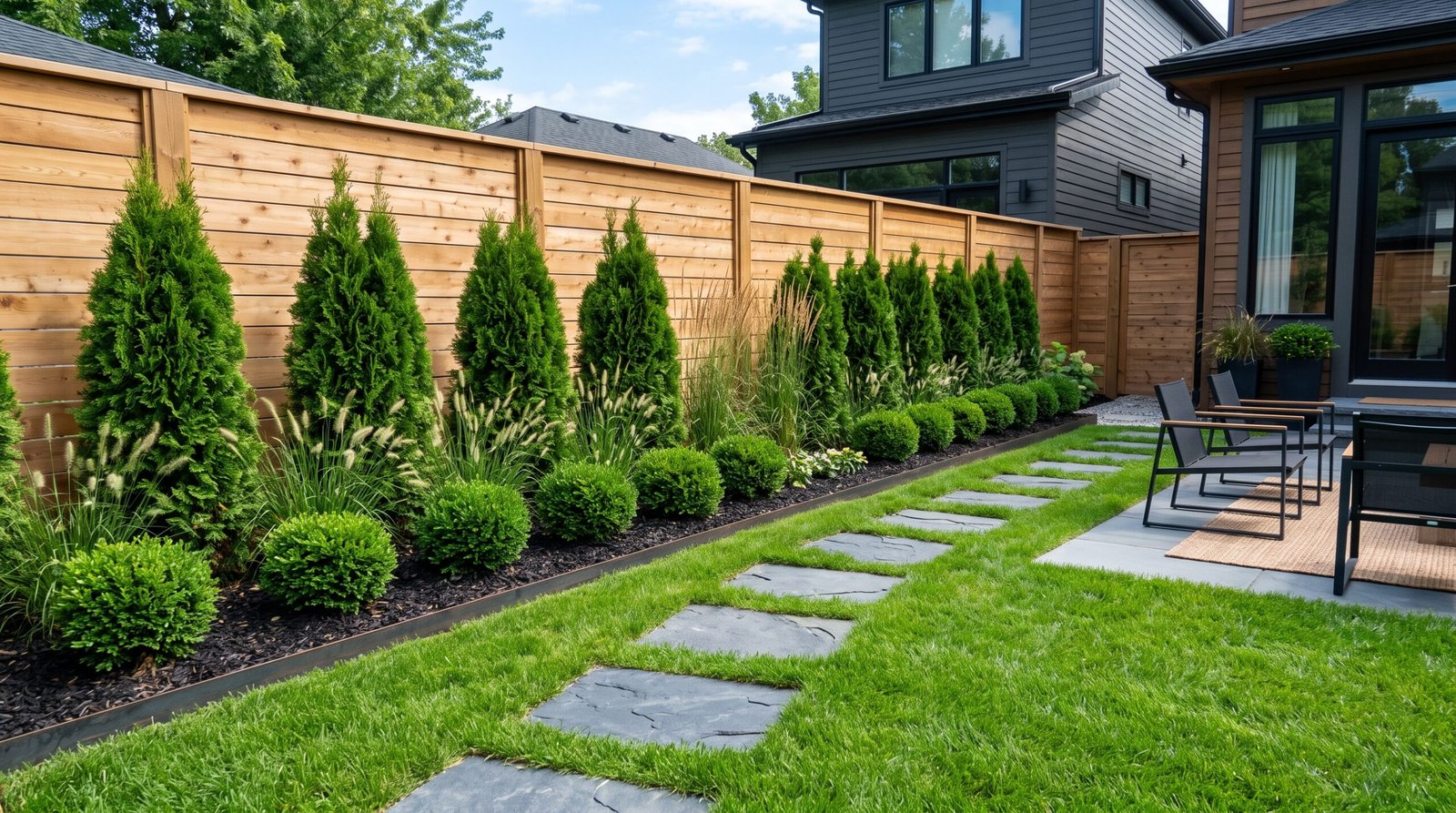
Fence Landscaping Ideas: 25 Beautiful Ways to Transform Your Backyard and Front Yard
A fence does much more than mark the boundary of your property. With thoughtful landscaping, it can become one of the most attractive features in your outdoor space. Whether you have a simple wooden privacy fence, a modern metal fence, or a classic white picket fence, the right combination of plants, flowers, lighting, and decorative elements can completely change its appearance.
Instead of seeing your fence as a plain backdrop, think of it as a canvas. Layered garden beds, colorful blooms, ornamental grasses, climbing vines, and carefully placed lighting can soften harsh lines and create a backyard that feels lush, welcoming, and professionally designed.
The best fence landscaping ideas also improve curb appeal, increase privacy, attract pollinators, and make outdoor living spaces feel more inviting. Whether your style is modern, cottage, farmhouse, tropical, or minimalist, there are endless ways to enhance your fence with landscaping.
In this guide, you’ll discover 25 fence landscaping ideas that work for backyards, side yards, and front gardens. From budget-friendly DIY projects to luxurious landscape designs, these ideas will help you create a fence line you’ll love looking at every day.
Why Landscape Around Your Fence?
Many homeowners install a beautiful fence but leave the surrounding area empty. Landscaping adds life, texture, and color while helping the fence blend naturally into the rest of the yard.
Some of the biggest benefits include:
- Softens the appearance of long fence lines.
- Adds seasonal color and visual interest.
- Improves privacy with layered planting.
- Creates habitat for birds, butterflies, and pollinators.
- Increases curb appeal and property value.
- Helps define outdoor spaces.
- Makes the yard feel larger and more professionally designed.
- Enhances outdoor entertaining areas.
Even a narrow planting bed filled with a mix of shrubs, flowers, and mulch can dramatically improve the overall look of your landscape.
1. Layered Flower Beds Along the Fence
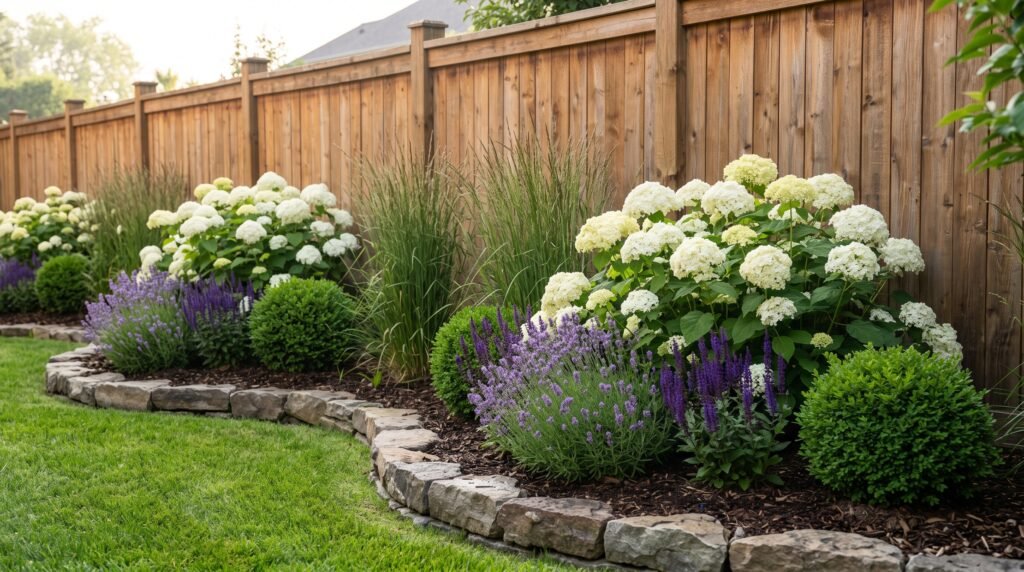
One of the easiest ways to upgrade a fence is by creating layered flower beds. Instead of planting a single row of flowers, combine plants of different heights to create depth and texture.
A simple layout includes:
- Tall shrubs or ornamental grasses closest to the fence.
- Medium-sized flowering plants in the middle.
- Low-growing border flowers or ground cover at the front.
This layered approach hides the base of the fence while creating a lush, full appearance throughout the growing season.
For a timeless look, combine white hydrangeas, purple salvia, lavender, and boxwood shrubs. Add dark mulch to make the flowers stand out and reduce weed growth.
Layered beds work beautifully with wooden, vinyl, and metal fences alike, making them one of the most versatile fence landscaping ideas.
2. Climbing Roses on a Wooden Fence
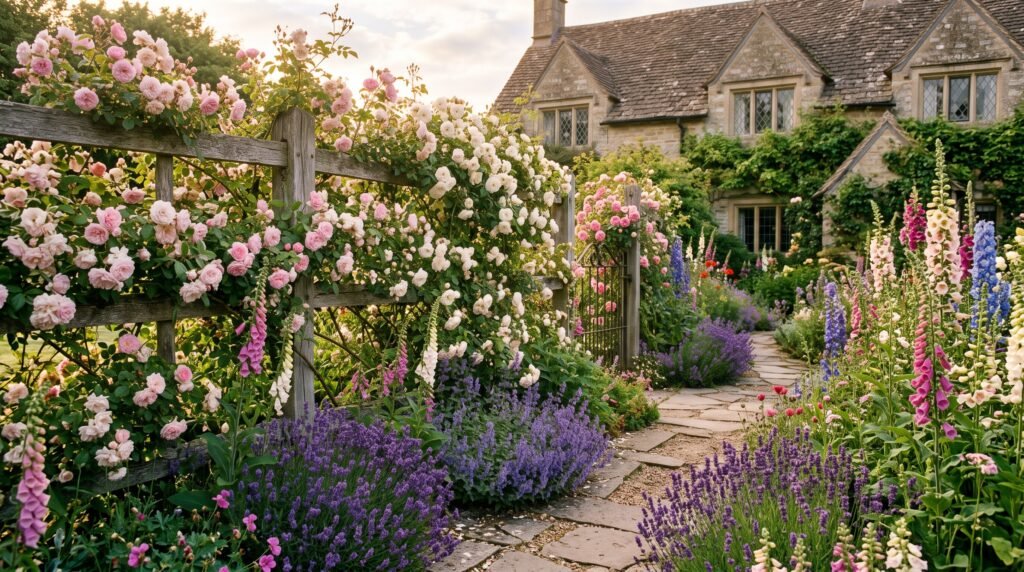
Few landscaping ideas are as romantic as climbing roses covering a fence.
Over time, climbing roses create a spectacular wall of blooms that softens the fence and adds incredible fragrance to your garden.
Popular varieties include:
- New Dawn
- Eden Rose
- Zephirine Drouhin
- Iceberg
- Don Juan
Install simple trellis wires or lattice sections to support healthy growth. Regular pruning encourages more blooms and keeps the plants looking tidy.
Pair climbing roses with lavender and catmint for a classic cottage garden look that attracts bees and butterflies.
This idea works especially well with natural cedar fences and white picket fences.
3. Evergreen Shrub Border
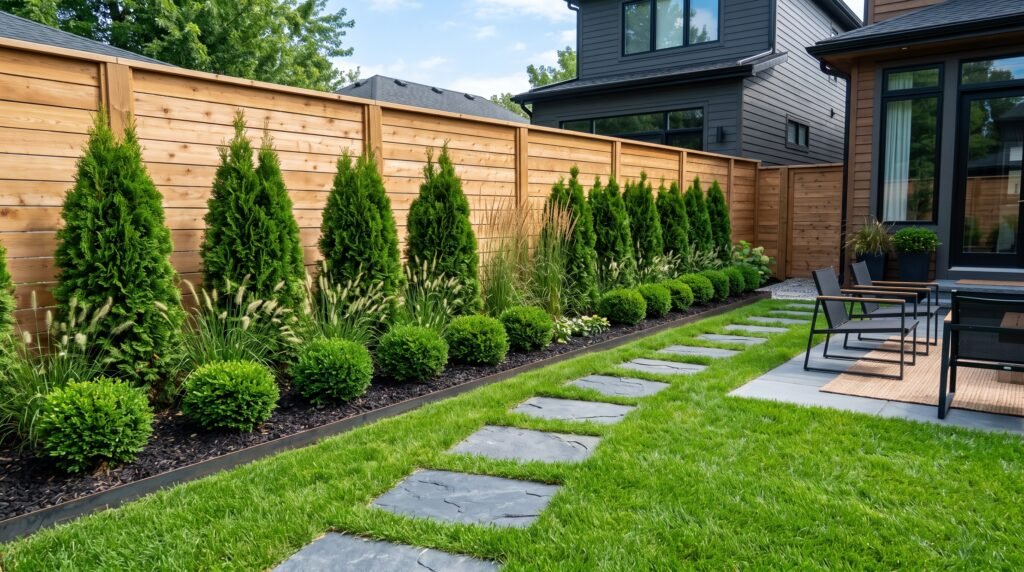
If you’re looking for year-round beauty, evergreen shrubs are an excellent choice.
Unlike seasonal flowers, evergreen plants maintain their structure and color throughout the year, giving your landscape a polished appearance even in winter.
Popular choices include:
- Boxwood
- Arborvitae
- Holly
- Japanese Yew
- Inkberry
Plant shrubs approximately three to four feet apart, depending on the mature size of each variety.
To add seasonal interest, mix in flowering perennials such as coneflowers or black-eyed Susans between the shrubs.
This combination provides both structure and colorful blooms during spring and summer.
4. Decorative Fence Lighting
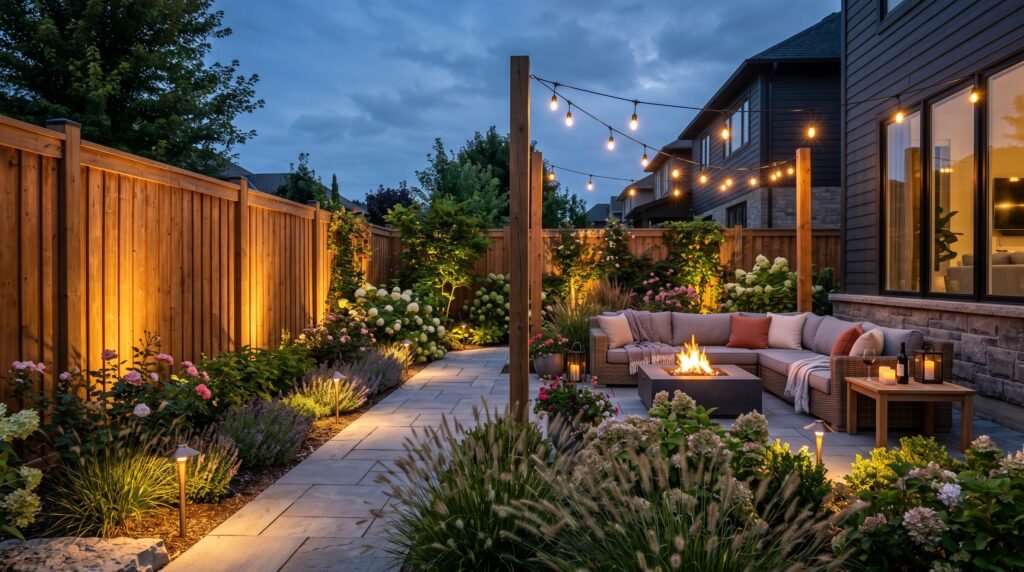
Landscaping isn’t only about plants.
Outdoor lighting can dramatically transform the appearance of your fence after sunset.
Some popular lighting options include:
- Solar post cap lights
- LED uplights
- Wall-mounted sconces
- String lights
- Pathway lighting
- Recessed deck lights
Warm white lighting creates a welcoming atmosphere while highlighting plants and architectural details.
For the most natural effect, position uplights behind shrubs so the light gently washes across the fence.
The result is a layered landscape that looks just as beautiful at night as it does during the day.
5. Mixed Perennial Garden
Perennial gardens provide long-lasting beauty because the plants return every year.
Choose a combination of flowering perennials that bloom at different times to ensure continuous color from spring through fall.
Some excellent choices include:
- Coneflowers
- Daylilies
- Black-Eyed Susans
- Russian Sage
- Coreopsis
- Shasta Daisies
- Bee Balm
Mix foliage textures and bloom colors to create visual contrast.
Plant taller varieties near the fence and shorter varieties toward the front of the bed.
Adding mulch between plants helps retain moisture while giving the entire border a finished appearance.
6. Ornamental Grass Border
Ornamental grasses bring movement, texture, and elegance to fence landscaping.
As the wind blows through the tall blades, your backyard feels more natural and relaxing.
Some of the best ornamental grasses include:
- Fountain Grass
- Feather Reed Grass
- Miscanthus
- Blue Fescue
- Switchgrass
Grasses pair beautifully with flowering perennials and evergreen shrubs.
For modern landscapes, plant grasses in repeating groups to create rhythm along the fence.
Their soft appearance contrasts nicely with the straight lines of wood or metal fencing.
7. Raised Garden Beds Along the Fence
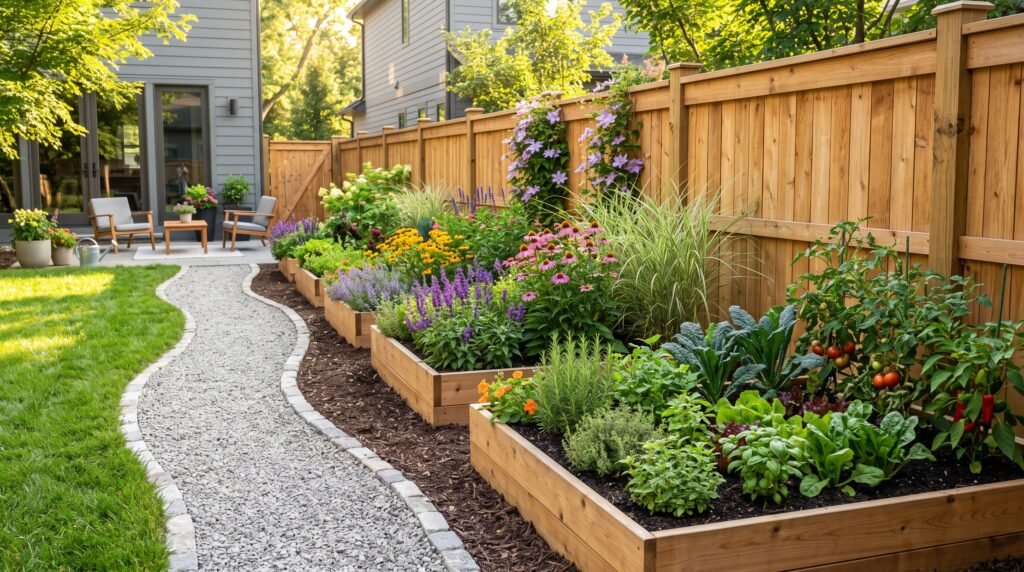
Raised garden beds offer both beauty and practicality.
Instead of planting directly into the ground, build raised beds using cedar, composite lumber, or stone.
These beds improve drainage, reduce weeds, and make gardening easier by raising the soil level.
Fill them with:
- Herbs
- Flowers
- Ornamental grasses
- Small shrubs
- Vegetables
- Pollinator-friendly plants
Raised beds also create a clean architectural border that complements modern and farmhouse landscapes alike.
Adding decorative stone or gravel pathways between the beds makes maintenance even easier while giving your garden a professionally designed appearance.
8. Fence Planters and Hanging Baskets
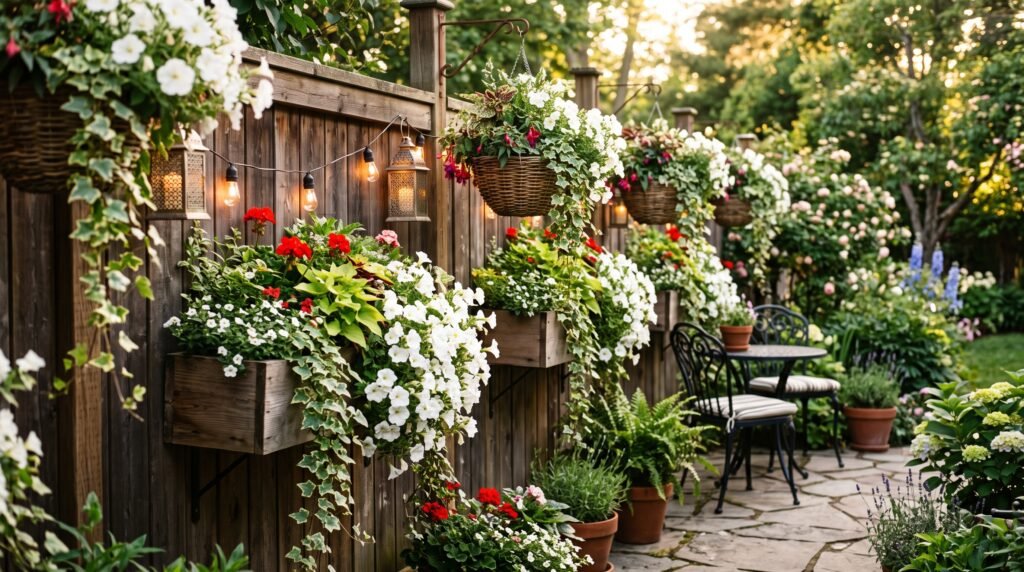
If your yard is small, use the fence itself as a vertical gardening opportunity.
Attach decorative planter boxes, hanging baskets, or wall-mounted pots directly to the fence.
Popular plants include:
- Petunias
- Geraniums
- Ferns
- Ivy
- Pothos
- Sweet Potato Vine
- Calibrachoa
Mix trailing plants with upright flowers to create layers of texture and color.
Wooden planter boxes stained to match your fence create a cohesive look, while black metal planters add a modern touch.
This idea is especially useful for patios, narrow side yards, and compact urban gardens where ground space is limited.
Vertical planters not only maximize planting space but also transform a plain fence into a vibrant living feature that changes with the seasons.
9. Create a Decorative Rock Border
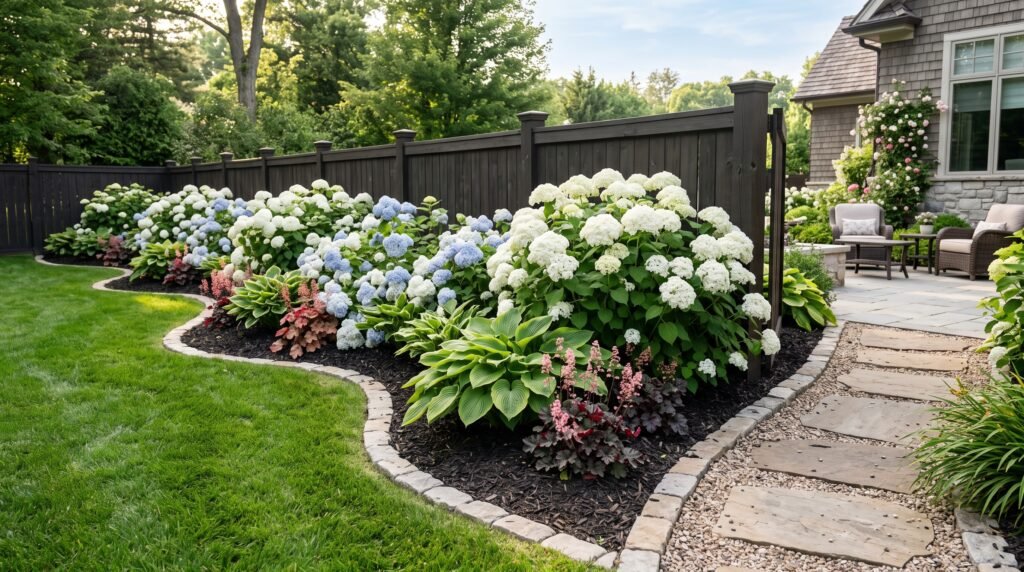
A decorative rock border is a simple yet effective way to give your fence line a polished, low-maintenance look. Rocks define the planting area, help prevent mulch from washing away, and add texture that complements both modern and rustic landscapes.
Popular choices include:
- River rock
- Pea gravel
- Crushed granite
- White marble chips
- Lava rock
For a balanced design, plant drought-tolerant perennials such as lavender, salvia, or yarrow among the rocks. The contrast between soft greenery and natural stone creates a landscape that feels clean and professionally designed.
Rock borders are especially useful in areas with heavy rainfall because they reduce soil erosion while keeping the garden neat.
10. Hydrangea Fence Garden
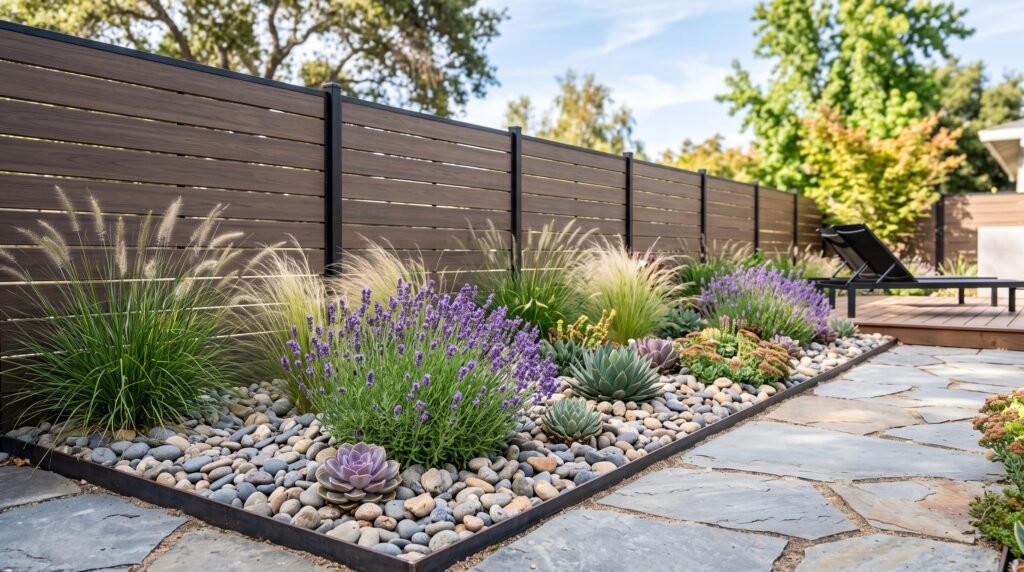
Hydrangeas are one of the most popular shrubs for fence landscaping, and it’s easy to see why. Their large blooms create a luxurious look while softening long stretches of fencing.
Depending on the variety, hydrangeas produce white, pink, blue, or purple flowers that bloom throughout summer.
Some excellent varieties include:
- Limelight Hydrangea
- Annabelle Hydrangea
- Endless Summer
- Little Lime
- Bobo Hydrangea
Plant hydrangeas about three to five feet apart to give them room to mature. Add hostas or coral bells beneath them for attractive foliage that fills the lower part of the garden bed.
The combination creates a layered landscape that looks beautiful from spring through fall.
11. Tropical Fence Landscaping
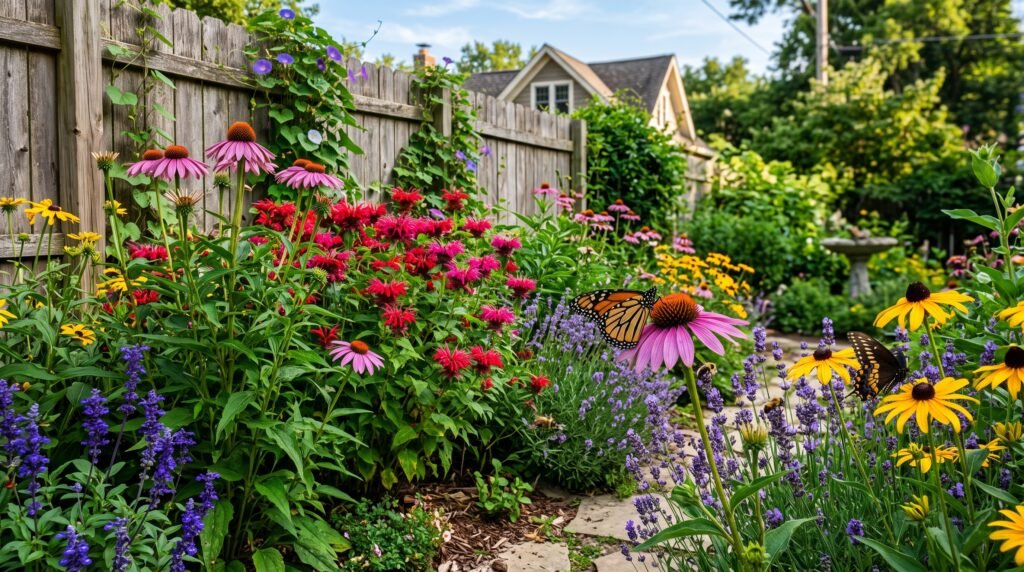
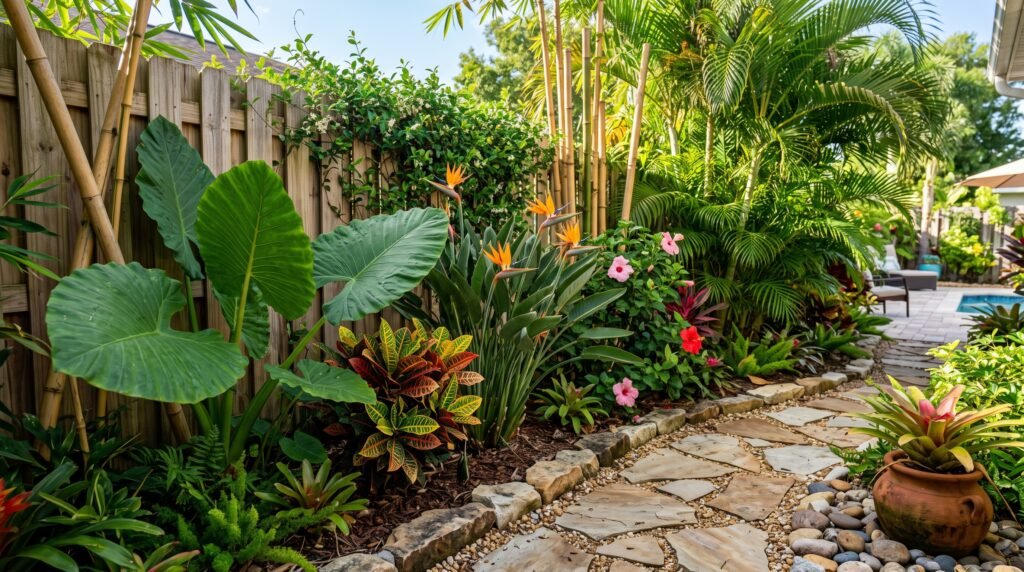
Bring a vacation vibe to your backyard with tropical-inspired fence landscaping.
Layer bold foliage and colorful flowers to create a lush border that feels like a private resort.
Great plant choices include:
- Bird of Paradise
- Elephant Ears
- Cannas
- Hibiscus
- Crotons
- Cordylines
- Palms (where climate allows)
Finish the look with bamboo edging, natural stone, and warm landscape lighting.
If you live in a cooler climate, choose hardy tropical-look plants or grow tender varieties in containers that can be moved indoors during winter.
12. Cottage Garden Fence Border
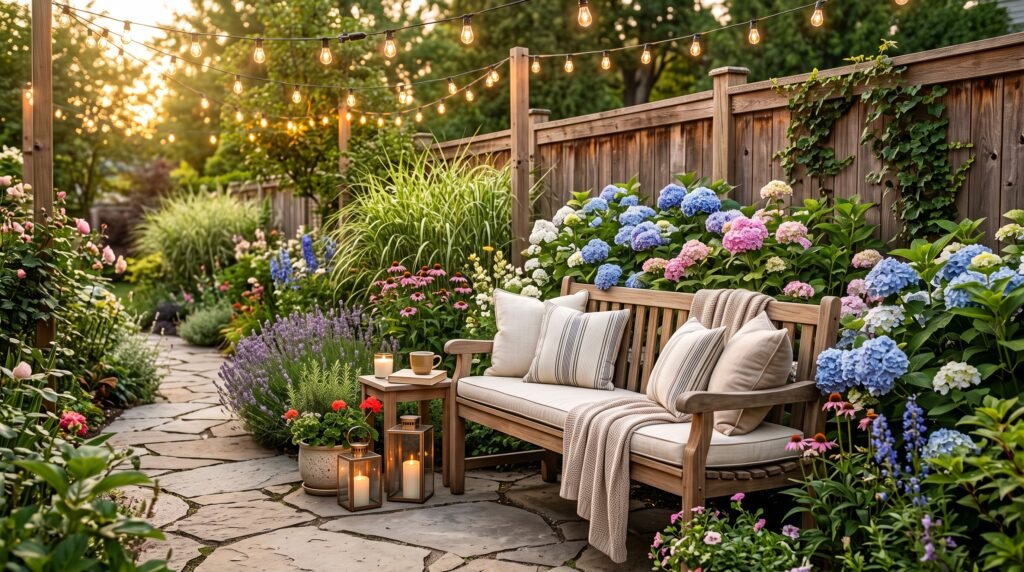
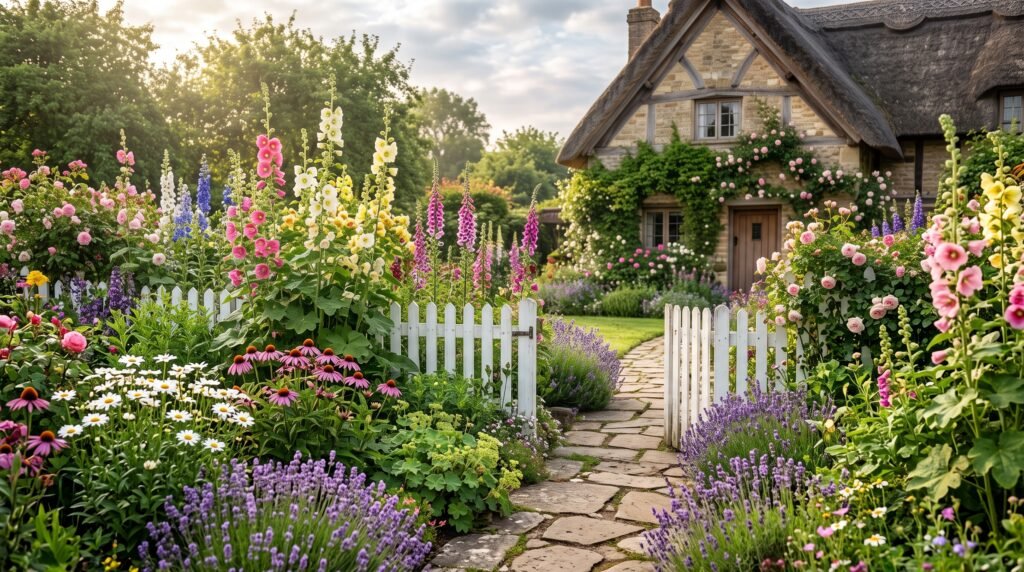
A cottage garden is known for its relaxed, overflowing beauty, making it a perfect companion for a wooden or white picket fence.
Instead of planting in straight rows, allow flowers to mingle naturally for a soft, romantic appearance.
Popular cottage garden plants include:
- Foxgloves
- Delphiniums
- Hollyhocks
- Lavender
- Coneflowers
- Shasta Daisies
- Cosmos
Mix annuals and perennials so the border remains colorful throughout the growing season.
Stone pathways and rustic wooden benches complete the timeless cottage-style look.
13. Modern Minimalist Fence Landscaping
For homeowners who prefer clean lines and simplicity, minimalist landscaping creates a sophisticated outdoor space.
Choose a restrained palette of plants rather than filling every inch with flowers.
Consider using:
- Boxwood spheres
- Ornamental grasses
- White hydrangeas
- Black mulch
- Large concrete planters
- Steel landscape edging
Repeat the same plants at regular intervals along the fence to create rhythm and visual harmony.
This style pairs beautifully with black metal fences, horizontal wood fencing, and contemporary architecture.
14. Native Plant Fence Garden
Native plants are adapted to your local climate, making them easier to maintain while supporting birds, butterflies, and pollinators.
Depending on your region, you might include:
- Black-Eyed Susans
- Purple Coneflowers
- Bee Balm
- Milkweed
- Asters
- Goldenrod
- Native grasses
Because these plants naturally thrive in local conditions, they often require less watering and fewer fertilizers than non-native species.
A native garden creates a beautiful, environmentally friendly landscape that changes naturally with the seasons.
15. Privacy Hedge with Flowering Plants
If your fence already provides privacy, adding a hedge in front of it creates extra depth and a luxurious layered appearance.
Excellent hedge plants include:
- Arborvitae
- Cherry Laurel
- Privet
- Boxwood
- Holly
Soften the greenery by planting flowering perennials such as:
- Salvia
- Catmint
- Daylilies
- Coreopsis
- Lavender
The hedge forms a permanent green backdrop while the flowers provide seasonal bursts of color.
This layered approach also helps reduce noise and creates habitat for wildlife.
16. Succulent and Gravel Garden
For hot, dry climates, a succulent garden along the fence is both stylish and water-efficient.
Combine decorative gravel with plants such as:
- Agave
- Aloe
- Sedum
- Echeveria
- Hens and Chicks
Add large boulders and sculptural driftwood to create visual interest.
Succulent gardens require minimal maintenance while offering year-round texture and architectural beauty.
They’re particularly effective in modern, desert-inspired landscapes.
17. Mixed Materials for a Designer Look
Professional landscape designers often combine different materials to create depth and interest.
Instead of relying only on plants, mix elements such as:
- Natural stone
- Decorative gravel
- Timber edging
- Mulch
- Steel edging
- Ceramic planters
- Landscape boulders
The variety of textures gives your fence line a custom-built appearance while helping define planting areas.
For an elegant finish, repeat colors and materials used elsewhere in your yard so the entire landscape feels cohesive.
18. Install Window Boxes or Fence-Mounted Planters
Adding planter boxes directly to your fence is one of the easiest ways to introduce color without taking up valuable ground space. Fence-mounted planters work well in both large backyards and compact gardens, creating a layered look that immediately draws the eye.
Choose cedar, metal, or composite planter boxes that complement your fence material. Fill them with a mix of trailing plants, upright flowers, and seasonal blooms for a full, vibrant display.
Great plant combinations include:
- White petunias with trailing ivy
- Geraniums and sweet potato vine
- Lavender with rosemary
- Calibrachoa and lobelia
- Ferns with colorful coleus
Refresh the planters each season with new flowers to keep your fence looking lively all year.
19. Add a Garden Path Along the Fence
A thoughtfully designed pathway encourages people to explore the garden while making maintenance easier.
Natural stone, brick pavers, gravel, or stepping stones all create attractive walkways that complement the surrounding plants.
To make the path more inviting:
- Line it with solar pathway lights.
- Plant lavender or ornamental grasses along the edges.
- Add decorative pots at key points.
- Include a small bench or birdbath at the end of the path.
A winding path creates a sense of discovery, while a straight path suits modern landscapes. Either way, the walkway adds structure and makes the fence feel like part of the overall garden design instead of just a boundary.
20. Install Espalier Fruit Trees
Espalier is the art of training fruit trees to grow flat against a fence or trellis. This technique saves space while creating an elegant, architectural feature.
Popular espalier trees include:
- Apple
- Pear
- Fig
- Lemon (in warm climates)
- Peach
Besides looking beautiful, espalier trees produce fresh fruit while allowing sunlight to reach the rest of the garden.
This idea works especially well in narrow side yards or small urban gardens where every square foot matters.
21. Create a Pollinator-Friendly Border
A pollinator garden transforms your fence line into a lively habitat for bees, butterflies, and hummingbirds.
Choose nectar-rich plants that bloom from spring through fall, such as:
- Bee Balm
- Coneflowers
- Lavender
- Salvia
- Blanket Flower
- Black-Eyed Susan
- Milkweed
- Asters
Mix bloom shapes, heights, and colors to create visual variety while supporting different pollinators.
Avoid using chemical pesticides whenever possible to maintain a healthy environment for beneficial insects.
Besides helping local ecosystems, pollinator gardens bring constant movement and color to your backyard.
22. Decorate the Fence with Outdoor Art
Your landscaping doesn’t have to rely solely on plants.
Outdoor wall art can transform a plain fence into a unique focal point.
Ideas include:
- Decorative metal sculptures
- Wooden wall panels
- Outdoor mirrors
- Mosaic artwork
- Vintage garden signs
- Hanging lanterns
- Ceramic wall décor
Position artwork between shrubs or flowering plants so the entire display feels balanced rather than overcrowded.
For evening appeal, illuminate artwork with warm LED spotlights.
23. Add a Water Feature Near the Fence
Nothing makes a garden feel more peaceful than the sound of flowing water.
Place a fountain, waterfall, or bubbling urn near your fence and surround it with lush planting.
Suitable companion plants include:
- Ferns
- Hostas
- Japanese Forest Grass
- Hydrangeas
- Iris
- Astilbe
The movement of water creates a relaxing atmosphere while helping mask traffic noise and neighborhood sounds.
For maximum impact, position seating nearby so you can fully enjoy the tranquil setting.
24. Design a Four-Season Fence Garden
The most beautiful landscapes remain attractive throughout the year.
Instead of focusing only on spring flowers, choose plants that provide interest in every season.
For example:
Spring
- Tulips
- Daffodils
- Hyacinths
Summer
- Hydrangeas
- Coneflowers
- Daylilies
Autumn
- Ornamental grasses
- Sedum
- Japanese Maple foliage
Winter
- Boxwood
- Holly
- Evergreen shrubs
- Red twig dogwood
Adding evergreen plants alongside seasonal flowers ensures your fence never looks empty, even during colder months.
25. Combine Seating with Fence Landscaping
Turn your fence into the backdrop for an outdoor living area by incorporating seating into the landscape.
Place a weather-resistant bench, Adirondack chairs, or a cozy outdoor sofa in front of a beautifully planted border.
Enhance the space with:
- Outdoor rugs
- Throw pillows
- Lanterns
- Fire pit
- Decorative planters
- String lights
This transforms an ordinary fence into a destination where family and friends naturally gather.
The combination of comfortable seating and attractive landscaping makes the backyard feel like an extension of your home.
Best Plants for Fence Landscaping
Choosing the right plants ensures your fence garden remains beautiful throughout the year.
Flowering Perennials
- Coneflower
- Daylily
- Lavender
- Black-Eyed Susan
- Salvia
- Bee Balm
- Shasta Daisy
Evergreen Shrubs
- Boxwood
- Arborvitae
- Holly
- Inkberry
- Japanese Yew
Ornamental Grasses
- Fountain Grass
- Feather Reed Grass
- Miscanthus
- Blue Fescue
- Switchgrass
Climbing Plants
- Climbing Roses
- Jasmine
- Clematis
- Honeysuckle
- Wisteria
Ground Covers
- Creeping Jenny
- Ajuga
- Creeping Thyme
- Sedum
Mixing these plant types creates a balanced landscape with year-round interest, varied textures, and continuous blooms.
Common Fence Landscaping Mistakes to Avoid
Even the best ideas can fall short if a few basic principles are overlooked. Keep these common mistakes in mind:
- Planting too close to the fence: Leave enough room for plants to mature and for fence maintenance.
- Ignoring mature plant size: Small shrubs can become overcrowded over time if spacing isn’t planned.
- Using only one plant type: Combine shrubs, flowers, grasses, and ground covers for a more natural look.
- Overlooking sunlight: Choose plants that match the amount of sun or shade your fence receives.
- Skipping mulch: Mulch conserves moisture, suppresses weeds, and gives the garden a finished appearance.
- Neglecting irrigation: Install drip irrigation or water consistently, especially during the first growing season.
Planning ahead saves time and helps your landscape thrive for years.
Maintenance Tips
A beautiful fence landscape stays attractive with regular care.
- Water newly planted shrubs and flowers consistently until established.
- Refresh mulch once a year to retain moisture and improve appearance.
- Prune shrubs and climbing plants to maintain their shape.
- Remove spent flowers to encourage more blooms.
- Fertilize plants according to their specific needs.
- Inspect the fence annually for loose boards, peeling paint, or signs of rot.
- Keep weeds under control to reduce competition for nutrients.
A few hours of seasonal maintenance will keep your fence border healthy, colorful, and well-maintained.
Frequently Asked Questions
What should I plant along my fence?
A combination of evergreen shrubs, flowering perennials, ornamental grasses, and climbing vines provides year-round color, texture, and privacy.
How wide should a fence garden bed be?
Most fence planting beds are between 3 and 6 feet wide, depending on the mature size of the plants and the available space.
How do I make a wooden fence look more attractive?
Landscape it with layered planting, install climbing vines or planter boxes, add warm outdoor lighting, and incorporate decorative elements such as garden art or benches.
Which plants require the least maintenance?
Boxwood, arborvitae, ornamental grasses, lavender, sedum, and many native plants are known for being relatively low-maintenance once established.
Can I landscape along a vinyl or metal fence?
Absolutely. The same landscaping principles apply regardless of the fence material. Just ensure climbing plants have appropriate supports if they can’t attach directly to the fence.
Conclusion
A fence doesn’t have to be a plain boundary around your property. With thoughtful landscaping, it can become one of the most eye-catching features in your yard. Whether you prefer the timeless beauty of hydrangeas, the relaxed charm of a cottage garden, the clean lines of a modern minimalist border, or the lush appeal of tropical planting, there is a fence landscaping idea for every home and budget.
The key to success is creating layers. Combine evergreen shrubs for year-round structure, flowering perennials for seasonal color, ornamental grasses for movement, and decorative elements such as lighting, pathways, or garden art to add personality. By selecting plants suited to your climate and maintaining them throughout the year, you’ll enjoy a landscape that continues to improve with time.
Start with one section of your fence if you’re working on a budget, then expand as your garden grows. Even small changes—such as adding planter boxes, refreshing mulch, or planting a row of colorful flowers—can make a dramatic difference. With careful planning and creativity, your fence can become a beautiful backdrop that enhances your home’s curb appeal and creates a welcoming outdoor space for years to come.