Indoor Balcony Railing Ideas: 25 Stylish Designs for a Beautiful Interior
An indoor balcony can become one of the most striking architectural features in a home. Whether it overlooks a living room, connects two levels, sits above a staircase, or creates an open view across a double-height space, the railing plays an important role in defining the overall look. The right railing can make an interior feel spacious and contemporary, add warmth to a minimalist home, or introduce an elegant architectural detail without overwhelming the room.
Unlike outdoor balcony railings, indoor designs have a unique opportunity to become part of the home’s interior style. Materials, colors, profiles, lighting, and surrounding furniture can all work together to make the railing feel intentional rather than simply functional.
From sleek glass panels and warm wood slats to black metal frames and modern cable designs, there are countless ways to approach an indoor balcony railing. The best option depends on the architecture of your home, the amount of natural light, your preferred decorating style, and how much visual separation you want between spaces.
If you are designing a new indoor balcony or updating an existing one, these indoor balcony railing ideas can help you create a space that feels stylish, safe, and beautifully connected to the rest of your home.
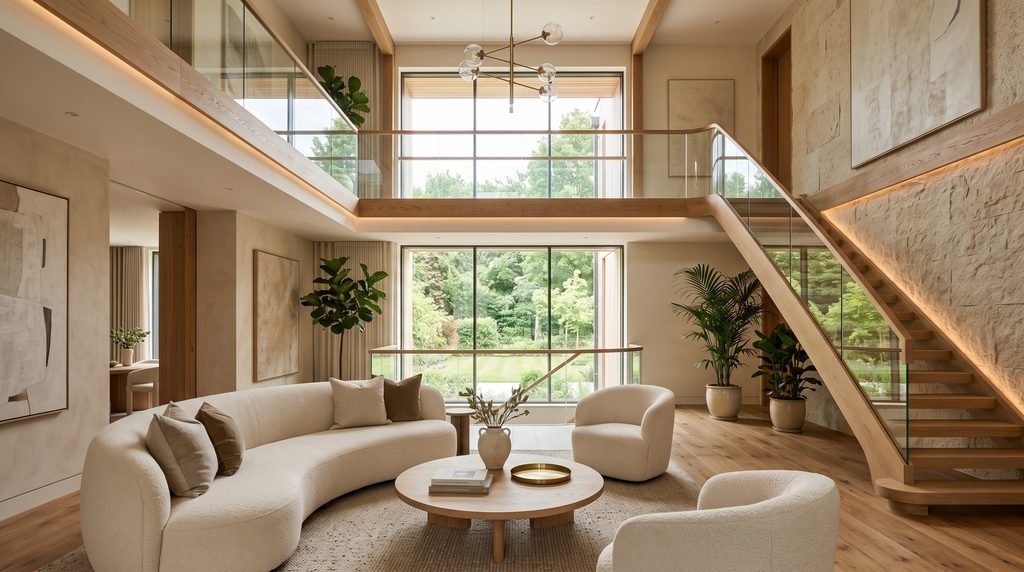
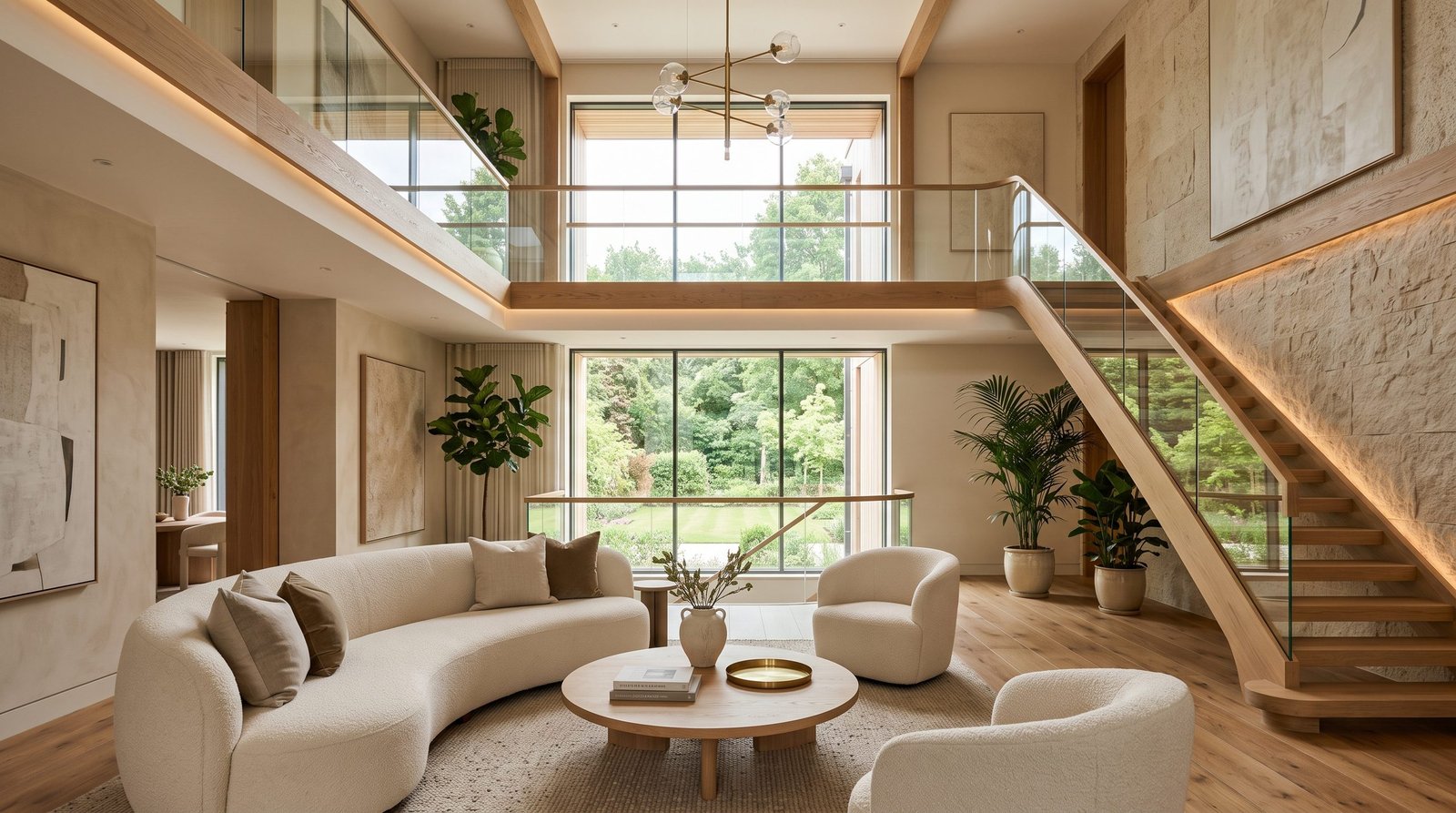
1. Frameless Glass Indoor Balcony Railing
A frameless glass railing is one of the cleanest choices for a contemporary interior. Large transparent panels create a nearly invisible boundary while maintaining an uninterrupted view between levels.
This design works particularly well in homes with double-height living rooms, modern staircases, and open-plan interiors. Because the glass does not visually interrupt the room, it can make a smaller interior feel more spacious.
Pair the railing with pale walls, natural wood flooring, soft furniture, and simple architectural lighting for an elegant modern look. A frameless design can also work beautifully in a luxury interior where the goal is to keep the architecture refined and uncluttered.
When selecting glass, use appropriate safety-rated architectural glass and have the railing professionally designed and installed.
2. Black-Framed Glass Railing
If completely frameless glass feels too minimal, consider a black-framed version. Slim black metal posts or frames create definition around the transparent panels while maintaining the open feeling of glass.
The combination of black and glass is especially effective in contemporary, industrial, and modern farmhouse interiors. Black framing can also connect visually with black window frames, lighting fixtures, cabinet hardware, or furniture legs elsewhere in the room.
For a softer appearance, combine the railing with warm oak flooring and cream-colored furniture. This prevents the black frame from feeling too harsh.
Black-Framed Glass Railing:
A sophisticated double-height living room featuring a slim black-framed glass indoor balcony railing, warm oak flooring, cream furniture, large windows, soft neutral textiles, and elegant contemporary architecture.

3. Warm Wood Slat Railing
Wood brings warmth and texture to an indoor balcony. Instead of using solid panels, consider vertical wooden slats spaced evenly along the railing.
This approach provides a sense of separation while still allowing light and air to move through the space. Natural oak, walnut, ash, and other warm-toned woods can complement a wide range of interiors.
Vertical slats are especially attractive in Scandinavian, Japandi, organic modern, and contemporary homes. They also emphasize vertical height, making them particularly suitable for double-height rooms.
Keep the surrounding decor relatively simple so the wood detailing becomes an architectural feature rather than competing with too many decorative elements.
4. Minimalist White Railing
A white railing can almost disappear into a bright interior. This is a useful choice when you want the architectural shape of the balcony to remain subtle.
A simple white-painted metal railing or a white vertical baluster design can work beautifully with white walls and ceilings. Add pale wood flooring and neutral furniture to create a soft, airy atmosphere.
This style is particularly suitable for coastal-inspired, Scandinavian, minimalist, and classic contemporary interiors.
For additional interest, consider pairing the white railing with a natural wood handrail. The combination gives the design warmth while keeping the overall appearance light.
5. Vertical Metal Balusters
Traditional horizontal railings are not the only option. Vertical metal balusters can provide a more architectural appearance while maintaining an open visual connection between floors.
Slim black balusters are particularly popular in modern interiors because they create a strong geometric rhythm. They can be used around a mezzanine, indoor balcony, staircase landing, or upper-level walkway.
For a softer appearance, choose a warm gray, bronze, or dark brown finish instead of pure black.
The spacing between balusters should be carefully planned according to applicable local building and safety requirements, especially in homes with children or pets.
6. Horizontal Slat Railing
Horizontal slats create a completely different visual effect from vertical ones. They emphasize the width of the balcony and can give a long interior a more balanced appearance.
Wooden horizontal slats work especially well in contemporary homes with long open walls. They can also be used to introduce a subtle mid-century influence.
However, horizontal elements require careful consideration of safety, particularly where children may be present. Choose a design that complies with local railing requirements rather than simply copying a decorative photograph.
For a modern appearance, combine walnut or oak slats with a slim black frame.
7. Cable Railing for a Modern Interior
Cable railing uses thin horizontal metal cables stretched between posts. The result is a lightweight railing that provides safety while keeping the overall design visually open.
Although cable systems are commonly associated with exterior decks, they can also work inside contemporary homes. They are particularly suitable for minimalist interiors where bulky railing components would feel distracting.
Pair stainless steel or dark metal cables with a wood handrail for a warm-modern look. Alternatively, an all-metal version can create a more industrial atmosphere.
Cable tension and installation are important, so this type of railing should be installed by someone familiar with the appropriate structural and safety requirements.
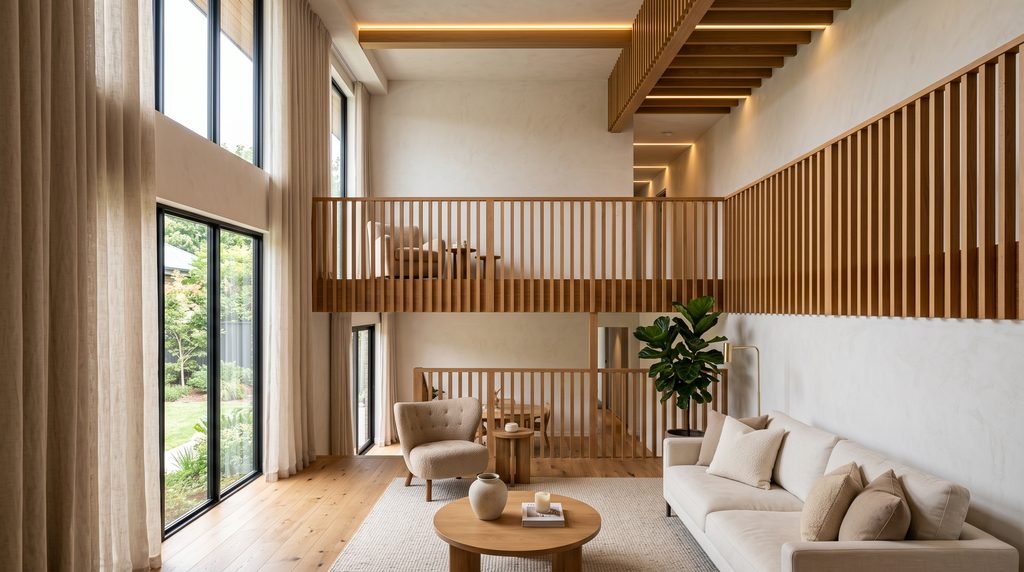
8. Floor-to-Ceiling Vertical Slats
For a dramatic interior, extend wooden slats from the floor or railing base toward the ceiling. Instead of reading as a simple balcony railing, the installation becomes a full architectural screen.
This is particularly effective around a mezzanine overlooking a double-height living room.
Natural wood slats can visually connect the upper and lower levels while providing partial privacy. Depending on spacing, they can either create a relatively open appearance or provide stronger visual separation.
Use warm indirect lighting behind or beside the slats to emphasize their texture after dark.
Floor-to-Ceiling Wood Slats:
A luxurious double-height interior with a floor-to-ceiling vertical wood slat indoor balcony railing, warm oak tones, neutral furnishings, soft architectural lighting, and an elegant modern living room below.
9. Curved Indoor Balcony Railing
Straight lines are not the only possibility. A curved railing can soften a contemporary interior and introduce a sense of movement.
Curved balcony edges can be paired with curved staircases, rounded walls, arched doorways, or circular lighting fixtures. A glass railing is particularly effective for this style because it follows the curve without creating visual heaviness.
For a sophisticated appearance, combine curved glass with a slim brushed metal or dark handrail.
This type of design usually requires careful architectural planning because the curve needs to be coordinated with the balcony structure, glass fabrication, and railing system.
10. Black Metal Grid Railing
A black metal grid creates a bold architectural statement. Instead of individual vertical balusters, a grid pattern can create a strong geometric feature around the upper level.
This style works particularly well in loft-inspired, industrial, and modern interiors. It can also provide a subtle reference to traditional metalwork while looking distinctly contemporary.
To prevent the room from feeling too dark, balance the railing with plenty of natural light, pale walls, warm wood, and soft furnishings.
A black grid railing can also look beautiful against a light staircase wall or neutral plaster background.
11. Glass and Wood Combination
If you like the openness of glass but want more warmth, combine transparent panels with a wooden handrail.
The glass maintains the visual connection between spaces while the wood introduces a tactile, natural element.
Oak is an excellent choice for Scandinavian and Japandi interiors, while walnut creates a richer, more luxurious appearance. The handrail can match the flooring or other woodwork in the room for a cohesive design.
This combination is especially useful when the interior already includes several natural materials.
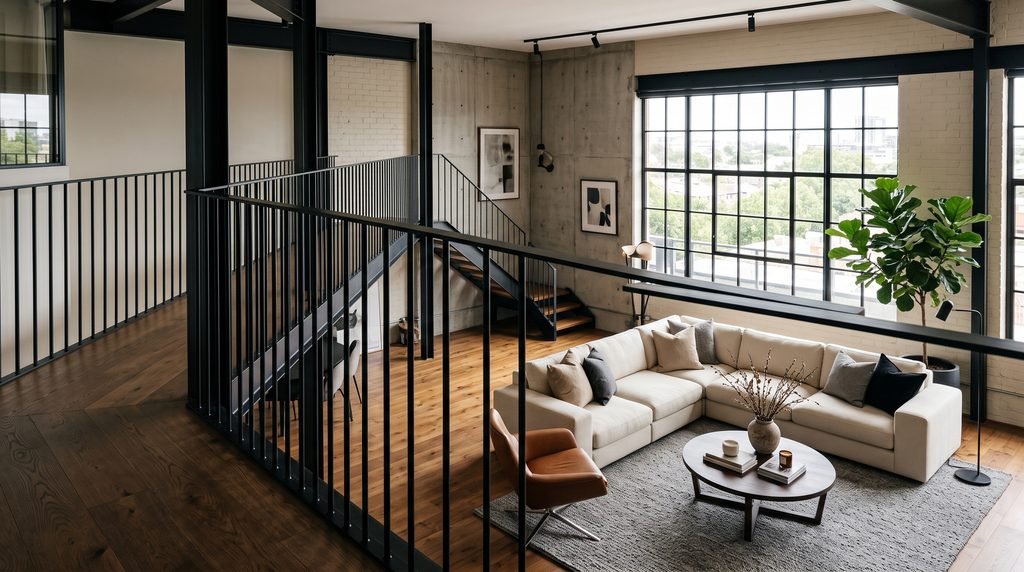
12. Industrial Metal Railing
For an urban or loft-inspired home, consider a simple industrial metal railing. Black steel, dark bronze, or aged metal can create a strong architectural presence.
Pair it with exposed brick, concrete finishes, reclaimed wood, or simple leather furniture for an authentic industrial atmosphere.
If your home is more refined than industrial, use a thinner metal profile and combine it with soft cream textiles and polished wood. This creates a modern interpretation rather than an overly rugged look.
Industrial Metal Railing:
An elegant industrial-style loft interior featuring a slim dark metal indoor balcony railing, exposed architectural details, warm wood flooring, cream seating, large windows, and sophisticated contemporary styling.
13. Railing with Built-In Planters
An indoor balcony railing can also become part of your home’s greenery. Built-in planter boxes can be integrated along the balcony edge to create a soft transition between the railing and the living area.
Trailing plants can spill gently over the edge, while taller plants can provide additional privacy.
Choose plants according to the available indoor light and your ability to maintain them. If natural plants are difficult to care for, high-quality artificial greenery can create a similar visual effect without requiring regular watering.
Keep planters securely integrated into the design so they do not compromise the railing’s structural or safety function.
14. Reeded or Fluted Glass Railing
Clear glass is not the only transparent option. Reeded, fluted, or textured glass can provide visual privacy while allowing light to pass through.
This is particularly useful when an indoor balcony overlooks a private room or when you want to soften the view between levels.
The vertical texture of fluted glass can also complement fluted wall panels, vertical wood slats, and other linear architectural details.
For a sophisticated interior, combine textured glass with brushed brass, matte black, or natural wood framing.
15. Brass Detail Railing
Brass can introduce a subtle touch of luxury without requiring an elaborate design.
A simple glass railing with a brass handrail or brass-colored posts can look elegant in transitional and contemporary interiors. Pair it with warm lighting, cream upholstery, marble surfaces, and natural wood for a refined atmosphere.
If genuine brass is outside your budget, modern metal finishes can provide a similar visual effect. Keep the finish consistent with other metal accents in the room for a coordinated appearance.
16. Railing with a Wooden Handrail
Sometimes the smallest detail makes the greatest difference. A simple railing can become much warmer when finished with a substantial wooden handrail.
This approach works with glass, metal, cable, and vertical baluster systems.
A rounded wood handrail can soften a modern metal frame, while a square-profile handrail creates a more contemporary appearance.
Match the handrail to another wood element in the room whenever possible. Repeating the same material helps the railing feel like part of the interior rather than an isolated feature.
17. Minimalist Cable and Wood Combination
For an interior that sits between rustic and modern, combine thin dark cables with a warm wooden frame.
The cables preserve the open appearance of the balcony while the timber adds warmth.
This style works especially well in homes with exposed beams, wood floors, neutral walls, and simple furniture.
Use the same wood species for the balcony handrail and nearby staircase where possible to create visual continuity.
18. Half-Wall Balcony Railing
A half-height architectural wall can provide a more substantial alternative to an open railing.
This approach is useful when you want additional visual privacy or when the balcony is connected to a traditional interior.
A plastered half-wall can be painted the same color as the surrounding walls, making the balcony feel integrated into the architecture.
For additional character, finish the top with natural wood, stone, or a slim decorative cap.
However, the wall height and construction should be designed according to applicable building regulations rather than purely for appearance.
Half-Wall Balcony Design:
A sophisticated indoor mezzanine with a clean half-wall railing finished in warm white plaster, natural oak flooring, soft beige furniture, large windows, subtle greenery, and modern architectural styling.

19. Railing with Integrated Lighting
Lighting can transform an indoor balcony after sunset.
Instead of relying only on ceiling lights, integrate subtle illumination into the handrail, posts, wall, or floor beneath the railing.
Warm LED lighting can highlight wood slats and architectural textures without making the balcony feel overly bright.
For a minimalist home, concealed strip lighting is particularly effective. The light source remains hidden while the railing itself becomes softly illuminated.
Avoid overly bright or cool lighting if your goal is a warm residential atmosphere.
20. Open Black Baluster and Wood Stair Combination
If your indoor balcony connects directly to a staircase, coordinate the railing systems rather than treating them as separate elements.
For example, black vertical balusters can continue from the staircase around the balcony while the same wood handrail runs throughout the design.
This creates a strong visual connection between floors and makes the architecture feel more intentional.
The approach works beautifully in contemporary farmhouse, modern traditional, Scandinavian, and transitional interiors.
21. White Oak Railing
White oak is an excellent choice when you want a warm but understated railing.
Its light natural color works beautifully with cream walls, beige upholstery, soft gray accents, and plenty of natural light.
A simple white oak slat railing can create a relaxed Scandinavian atmosphere, while a more sculptural oak railing can suit a luxury organic-modern home.
The key is to keep the wood finish natural enough to showcase its grain without making the railing visually heavy.
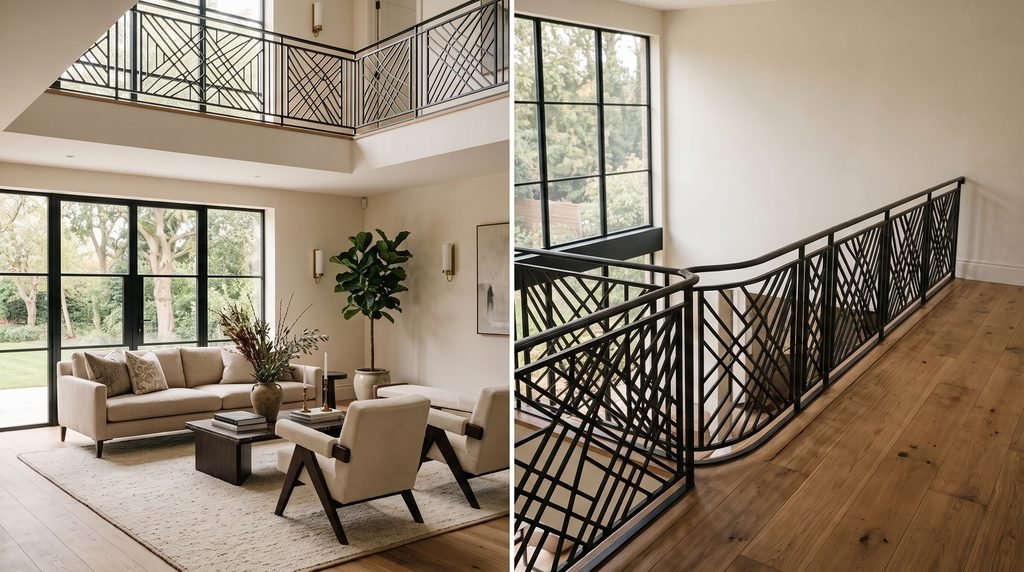
22. Decorative Metal Pattern Railing
For homeowners who want more personality, decorative metal patterns can turn the railing into an artistic architectural feature.
Geometric patterns, organic curves, and simplified botanical motifs can all create visual interest.
Keep the surrounding interior relatively restrained if the railing has a detailed pattern. Too many competing patterns can make the space feel visually busy.
A decorative railing is especially effective in an otherwise minimalist room where it can act as the main architectural statement.
Decorative Metal Pattern:
A refined contemporary interior featuring an artistic dark metal indoor balcony railing with an elegant geometric pattern, neutral walls, warm oak flooring, cream furniture, and soft natural daylight.
23. Railing with Built-In Shelving
If space is limited, consider combining the balcony edge with useful storage.
A carefully designed built-in structure can incorporate bookshelves, decorative niches, or display areas below or beside the railing.
This works particularly well around mezzanine spaces, home libraries, and double-height living rooms.
Display a curated selection of books, ceramics, plants, and small artwork rather than overcrowding every shelf.
The result is a railing that contributes to both the architecture and functionality of the home.
24. Soft Neutral Railing Design
Not every balcony railing needs to make a bold statement. In a neutral interior, a simple railing can blend into the overall palette.
Consider light oak, warm white, pale beige, or soft gray finishes. Pair them with linen curtains, textured upholstery, natural stone, and subtle greenery.
This approach creates an elegant and calming environment while allowing other architectural features to receive attention.
A neutral railing is especially effective in homes where the overall goal is a quiet, timeless aesthetic.
25. Statement Railing for a Double-Height Living Room
A double-height living room provides an opportunity to make the indoor balcony railing a major architectural feature.
Instead of choosing a railing that simply disappears, consider a dramatic combination of materials such as dark metal and warm wood, textured glass and brass, or vertical timber slats.
The railing should still coordinate with the room below. Repeat its materials in furniture, flooring, lighting, or wall details to create a cohesive design.
A statement railing can help visually connect the upper and lower levels while giving the entire room a more finished appearance.
How to Choose the Right Indoor Balcony Railing
Choosing the right design involves more than selecting a material you like. Think about how the railing interacts with the rest of your home’s architecture.
Consider the amount of natural light
If your room is relatively dark, transparent glass can help preserve the flow of light between spaces. Heavy solid railings may make the interior feel more enclosed.
For bright rooms, you have more flexibility and can introduce darker materials or substantial woodwork without making the space feel closed in.
Match the railing to your interior style
A modern glass railing may look out of place in a heavily traditional interior, while ornate metalwork may feel too elaborate in an ultra-minimalist home.
Look at your existing flooring, doors, windows, staircase, furniture, and lighting before deciding on a railing material.
Think about visual openness
If the balcony overlooks an important living area, consider how much of that room you want to see.
Glass provides maximum openness. Vertical slats provide partial separation. A half-wall creates significantly more visual division.
Your preferred balance between openness and privacy should guide the design.
Coordinate materials
Repeating materials throughout the room makes the railing feel intentional.
For example, an oak railing can match oak flooring, cabinetry, or furniture. Black metal can repeat window frames and lighting fixtures. Brass can coordinate with cabinet hardware and decorative accents.
You do not need to match every element exactly, but a consistent material story helps create a polished interior.
Safety Should Come Before Style
An indoor balcony railing is not simply a decorative feature. It is an important safety element, particularly around elevated floors and open staircases.
Railing height, opening sizes, structural strength, glass specifications, anchoring, and handrail requirements can vary according to local building codes and the specific type of installation.
For that reason, decorative inspiration should be treated as a starting point rather than an installation specification.
Before building or replacing an indoor balcony railing, work with a qualified professional who can confirm the appropriate dimensions, materials, structural requirements, and local regulations.
This is especially important for homes with young children, pets, or frequent visitors.
Ways to Make an Indoor Balcony Feel More Beautiful
The railing is only one part of the overall design. Surrounding elements can make a simple railing feel much more sophisticated.
Add warm lighting around the balcony rather than relying exclusively on overhead fixtures. Introduce a few carefully selected plants to soften hard architectural lines. Use a consistent wood tone across the railing, floor, and furniture.
If the balcony overlooks a living room, make sure the furniture arrangement below complements the architecture above. A carefully styled seating area can turn the entire double-height space into a cohesive composition.
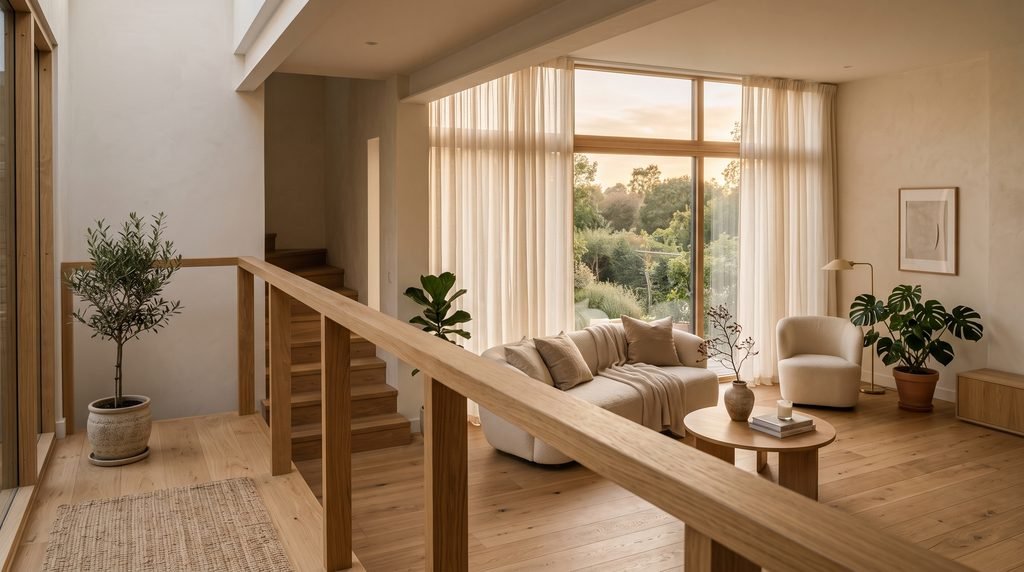
Curtains can also make a difference. Floor-to-ceiling curtains beside large windows can emphasize the height of the room and create a beautiful backdrop for the balcony.
Warm Minimal Balcony:
A serene modern indoor balcony with a warm wood railing, soft beige furnishings, large floor-to-ceiling windows, indoor greenery, linen curtains, natural oak flooring, and gentle evening light.
Small Indoor Balcony Railing Ideas
A small balcony does not require a complicated railing.
In compact interiors, prioritize designs that maintain visual openness. Frameless glass, slim black metal, narrow vertical wood slats, and delicate cable systems can all prevent the balcony from feeling visually heavy.
Avoid excessively thick posts or bulky decorative elements unless they are necessary for the structure.
A small balcony can also benefit from a lighter color palette. White, pale oak, soft gray, and transparent glass help maintain a sense of spaciousness.
Luxury Indoor Balcony Railing Ideas
Luxury does not necessarily mean elaborate decoration. In contemporary interiors, luxury often comes from proportion, craftsmanship, material quality, and restrained detailing.
A floor-to-ceiling glass installation with a slim brass handrail can create a sophisticated appearance. So can a beautifully crafted walnut railing with concealed lighting.
Natural stone, warm wood, brushed metal, textured glass, and carefully designed lighting can all contribute to a high-end interior.
The goal is to create visual harmony rather than simply adding expensive-looking materials.
Indoor Balcony Railing Ideas for a Modern Farmhouse
Modern farmhouse interiors benefit from a balance of traditional warmth and contemporary simplicity.
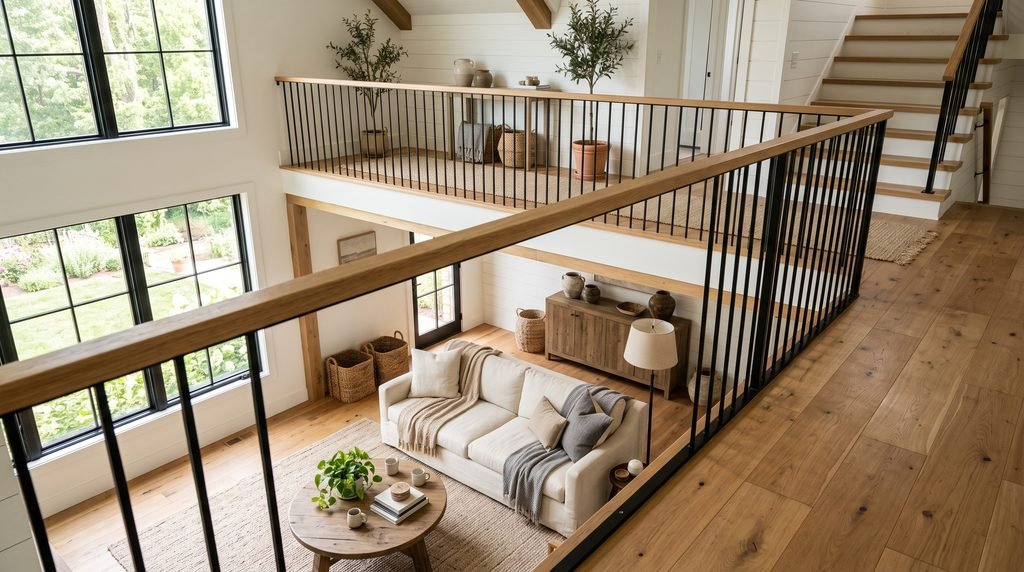
Try black vertical metal balusters combined with a natural wood handrail. This familiar combination feels timeless while still looking modern.
White walls, oak flooring, linen furniture, woven textures, and subtle greenery can complete the look.
Another option is a white railing with a reclaimed or naturally finished wooden handrail for a softer farmhouse aesthetic.
Modern Farmhouse Railing:
A beautiful modern farmhouse interior featuring a black vertical metal indoor balcony railing with a natural oak handrail, white walls, warm wood flooring, linen furniture, woven textures, and subtle greenery.
Indoor Balcony Railing Ideas for Japandi Interiors
Japandi interiors emphasize simplicity, natural materials, clean lines, and a calm atmosphere.
A vertical oak slat railing is particularly well suited to this style. Keep the wood finish natural and avoid excessive ornamentation.
Pair the railing with warm beige walls, low-profile furniture, natural textiles, ceramic accessories, and carefully selected greenery.
The result should feel peaceful rather than overly decorated.
Final Thoughts
Indoor balcony railings can do much more than create a boundary around an elevated space. They can influence how light moves through a room, connect different levels of a home, introduce texture, and become an important architectural feature.
Glass railings are ideal when openness and natural light are priorities. Wood slats add warmth and texture. Black metal creates definition and contrast, while cable systems provide a lightweight contemporary appearance. Textured glass, decorative metal, built-in planters, and integrated lighting offer additional ways to customize the design.
The most successful indoor balcony railing ideas are those that feel connected to the rest of the home. Consider the flooring, staircase, windows, furniture, lighting, and overall color palette before choosing your final design.
Whether you prefer a nearly invisible frameless glass railing, a warm oak slat design, an industrial black metal frame, or a more decorative architectural feature, there is an option that can complement your interior beautifully.
Above all, balance appearance with function. A railing should enhance the architecture while providing the safety and structural performance required for your particular space. With thoughtful planning, even a simple railing can turn an indoor balcony into one of the most memorable details in the home.
Luxury Final Inspiration:
A stunning luxury double-height living room with an elegant indoor balcony featuring a sophisticated glass and warm wood railing, sculptural staircase, cream boucle furniture, natural stone accents, tall indoor plants, floor-to-ceiling windows, and soft golden architectural lighting.