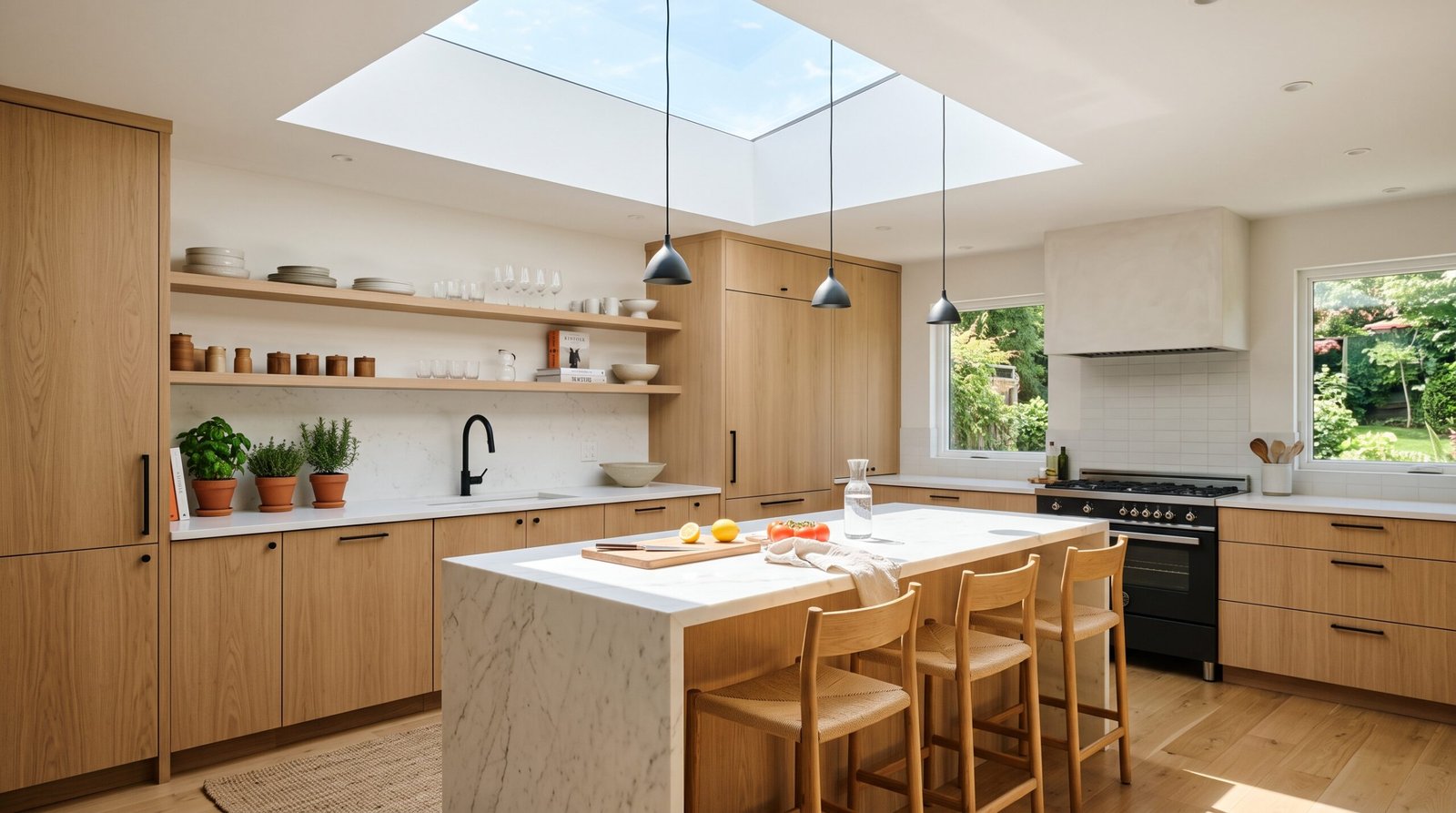
Natural light has the power to transform a home more than almost any other design feature. It makes rooms feel larger, highlights beautiful textures, reduces the need for artificial lighting during the day, and creates a warm, welcoming atmosphere. If you’re looking for a way to brighten dark interiors while adding architectural interest, a skylight may be the perfect solution.
Today’s skylights are far more stylish and energy-efficient than they were years ago. Modern designs offer sleek frames, better insulation, automated ventilation, rain sensors, and UV-protective glazing. Whether you’re renovating an older home or designing a new one, a thoughtfully placed skylight can completely change the look and feel of your living space.
From kitchens and living rooms to bathrooms, bedrooms, hallways, and even home offices, skylights work beautifully in almost every area of the house. They also pair perfectly with today’s most popular interior styles, including Scandinavian, Japandi, Organic Modern, Contemporary, Farmhouse, and Minimalist designs.
In this guide, you’ll discover 25 stunning skylight design ideas that combine beauty with functionality. Whether you’re planning a major renovation or simply collecting inspiration for your dream home, these ideas will help you create brighter, healthier, and more inviting interiors.
Why Skylights Are Worth Considering
Before exploring specific designs, it’s helpful to understand why skylights have become one of the most sought-after architectural features in modern homes.
Increase Natural Light
A skylight allows sunlight to enter from above, illuminating areas that standard windows often can’t reach. This makes rooms appear more spacious, cleaner, and more welcoming throughout the day.
Make Rooms Feel Larger
Natural daylight visually expands interior spaces. Even compact rooms feel more open when sunlight flows in from the ceiling.
Reduce Energy Usage
Because skylights provide daylight during daylight hours, homeowners often rely less on artificial lighting. Energy-efficient glazing can also help regulate indoor temperatures when properly installed.
Improve Ventilation
Operable skylights allow warm air to escape through the roof while drawing cooler air inside through lower windows. This natural airflow can improve indoor comfort during warmer months.
Enhance Home Value
Architectural features like skylights often increase a home’s visual appeal and can make interiors stand out to future buyers.
How to Choose the Right Skylight
Not every skylight works for every room. Consider these factors before choosing a design:
- Fixed skylights for maximum daylight
- Ventilated skylights for kitchens and bathrooms
- Tubular skylights for hallways and closets
- Large architectural skylights for living rooms
- Smart skylights with automatic rain sensors
- Double or triple-glazed glass for improved insulation
- Low-E glass to reduce UV exposure
- Frames that match your home’s architectural style
Planning the right size and placement is just as important as selecting the skylight itself.
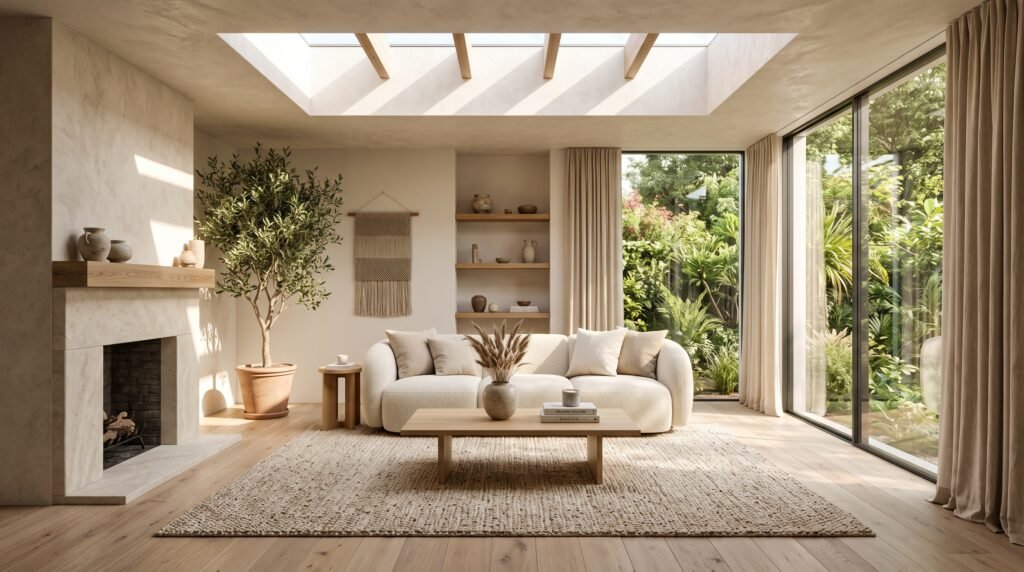
Nothing transforms a living room quite like a large central skylight. Positioned above the main seating area, it fills the room with soft daylight from sunrise to sunset, making the entire space feel open and connected to the outdoors.
This design works particularly well in homes with vaulted or cathedral ceilings where the extra height allows sunlight to spread evenly across the room. Pairing a skylight with neutral walls, light oak flooring, linen curtains, and textured furnishings creates an inviting Organic Modern aesthetic that feels calm and sophisticated.
For even greater impact, combine a skylight with expansive glass doors leading to a patio or garden. The result is a seamless transition between indoor and outdoor living, making the room feel much larger than its actual size.
Decorating beneath a skylight requires careful balance. Avoid bulky furniture directly underneath, as it can visually interrupt the openness. Instead, choose low-profile sofas, natural wood coffee tables, woven rugs, and greenery that thrive in bright spaces.
A statement pendant light installed below the skylight can also create a dramatic focal point for evenings without obstructing natural light during the day.
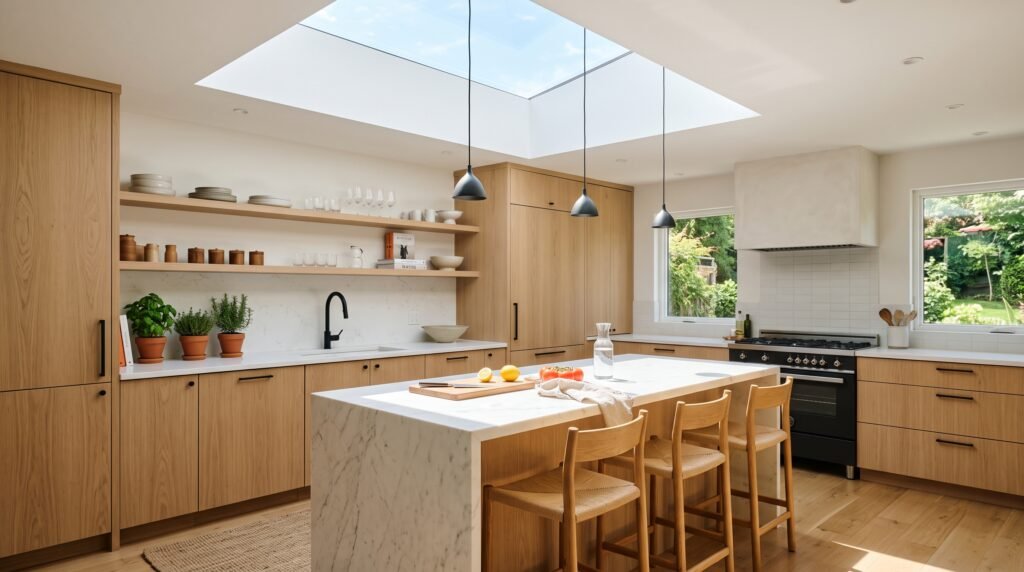
The kitchen is one of the best places to install a skylight. Since this room is often the busiest area of the home, abundant daylight makes cooking, entertaining, and everyday activities more enjoyable.
Positioning a skylight directly above a kitchen island creates a bright workspace while highlighting beautiful countertop materials like marble or quartz. Sunlight reflecting off light-colored cabinetry makes the entire kitchen appear cleaner and more spacious.
Minimalist kitchens especially benefit from skylights because natural light emphasizes clean lines and simple finishes without requiring excessive decorative elements.
If your kitchen has limited exterior walls, a skylight may become the primary source of daylight. Operable models also help remove cooking heat and steam, improving ventilation naturally.
To complete the look, consider matte black fixtures, warm oak accents, open shelving, ceramic accessories, and subtle greenery for a fresh, timeless design.
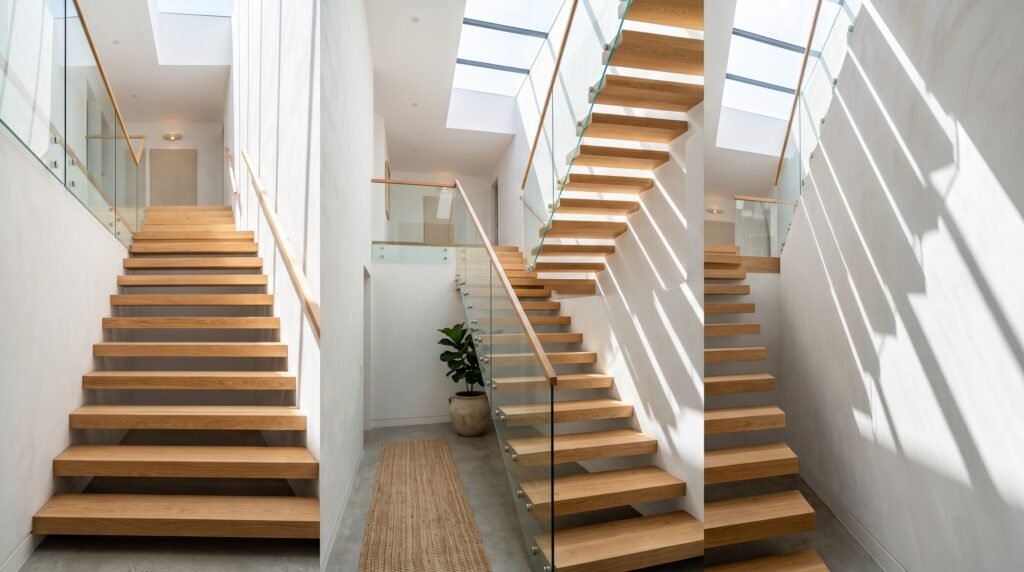
Staircases often become dark transition spaces that receive very little natural light. Installing a skylight overhead instantly changes this overlooked area into an architectural feature.
Sunlight streaming down the staircase creates constantly changing patterns throughout the day, adding movement and visual interest to the home.
This design works beautifully in both traditional and modern houses. Glass railings, floating wooden stairs, and white walls amplify the effect by reflecting daylight throughout the surrounding spaces.
If your staircase connects multiple floors, a skylight can also brighten upper hallways and adjacent rooms simultaneously.
Adding artwork along the stair wall becomes even more effective because natural daylight enhances colors and textures far better than artificial lighting alone.
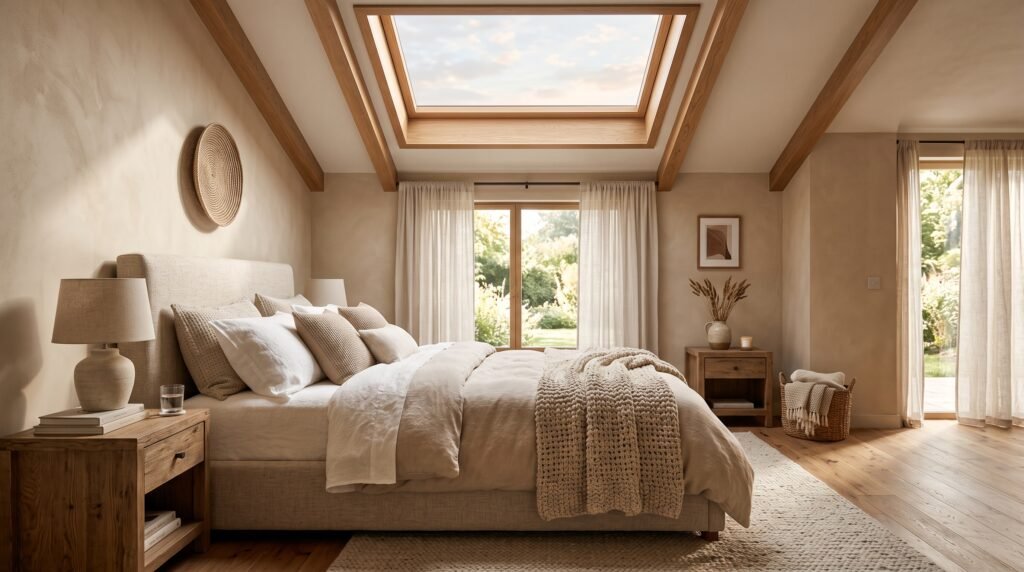
Imagine waking up to soft morning sunlight filtering gently through a skylight above your bed. A bedroom skylight creates a peaceful atmosphere while strengthening the connection between your interior and the changing sky outside.
Many homeowners choose to place skylights above the bed or near a seating area where daylight feels relaxing rather than overwhelming.
Motorized blackout blinds are an excellent addition, allowing you to control brightness for restful sleep while still enjoying natural light during the day.
Soft neutral bedding, textured throws, upholstered headboards, warm wood furniture, and calming earth tones complement this design perfectly.
For an even more luxurious experience, consider installing two symmetrical skylights instead of one. This balanced arrangement creates a boutique hotel feel while distributing daylight more evenly throughout the room.
Beyond aesthetics, increased daylight exposure during the day may also help support healthy circadian rhythms, making the bedroom feel brighter in the morning and more comfortable throughout the seasons.
25 Skylight Design Ideas to Fill Your Home with Natural Light
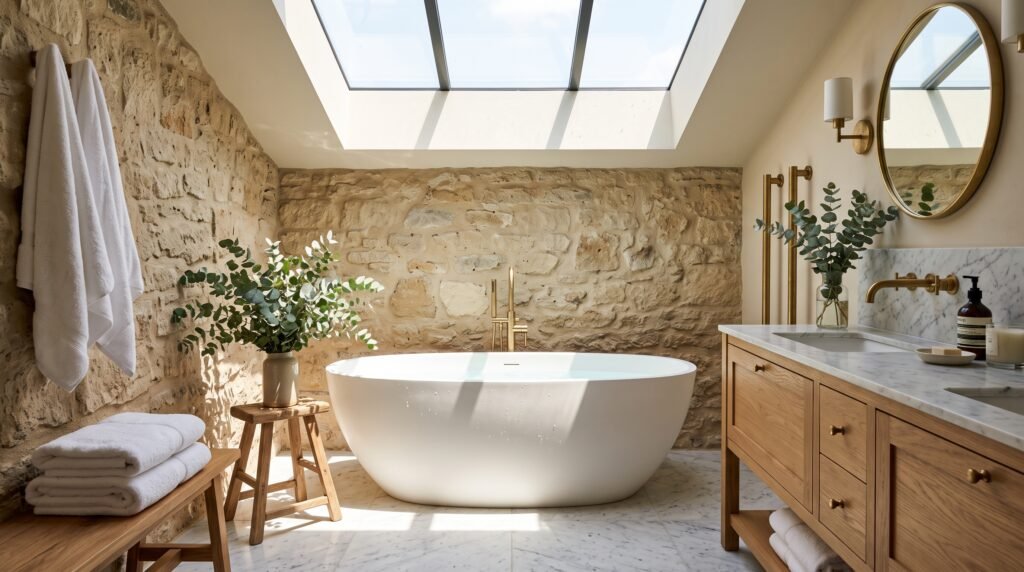
A bathroom skylight is one of the most luxurious additions you can make to your home. Unlike traditional windows, a skylight lets in abundant daylight while maintaining privacy, making it ideal for bathrooms in both urban and suburban settings.
Placing a skylight directly above a freestanding bathtub creates a relaxing spa-like atmosphere. During the day, sunlight reflects beautifully off white tile, polished stone, and glass surfaces, giving the room a bright and refreshing feel. In the evening, you can unwind while enjoying a view of the sky, creating a calming retreat within your own home.
Ventilated skylights are especially practical in bathrooms because they help release humidity and reduce condensation. This extra airflow can help protect paint, mirrors, and finishes from excessive moisture.
To complete the space, choose natural materials such as travertine, marble, light oak vanities, woven storage baskets, fluffy white towels, and indoor plants like ferns or eucalyptus. Matte black or brushed brass fixtures add a sophisticated finishing touch.
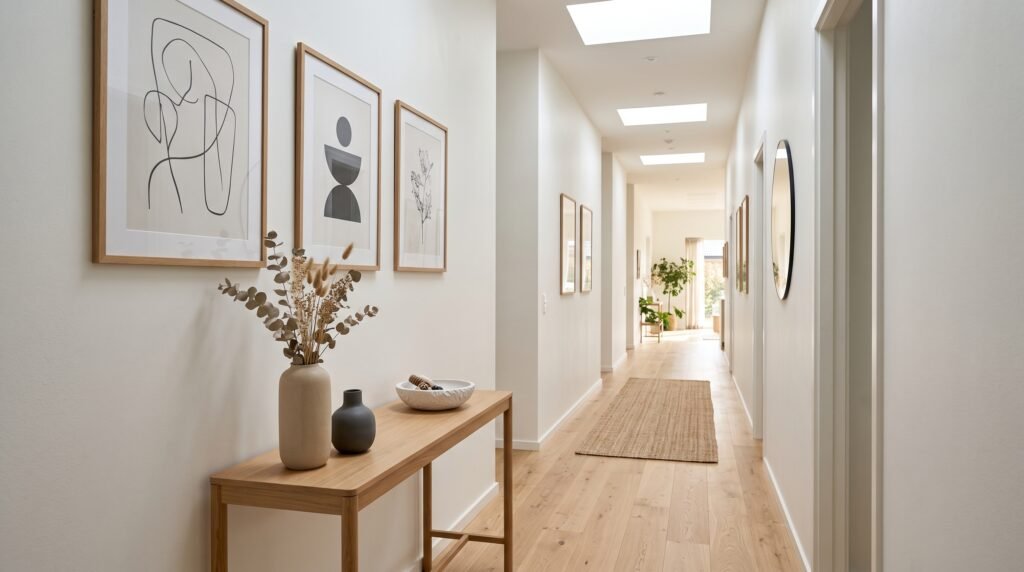
Hallways often receive little or no natural light, leaving them feeling narrow and uninviting. Installing a skylight overhead instantly transforms these transition spaces into bright, welcoming corridors.
A long rectangular skylight works particularly well in extended hallways because it spreads daylight evenly from one end to the other. White ceilings and pale wall colors further amplify the light, making even compact spaces appear larger.
You can enhance the effect by adding artwork, decorative wall molding, or a stylish console table beneath the skylight. The natural light highlights these decorative details throughout the day without relying heavily on artificial lighting.
If your hallway connects several rooms, a strategically placed skylight may also allow daylight to spill into adjacent areas, improving the brightness of the entire floor.
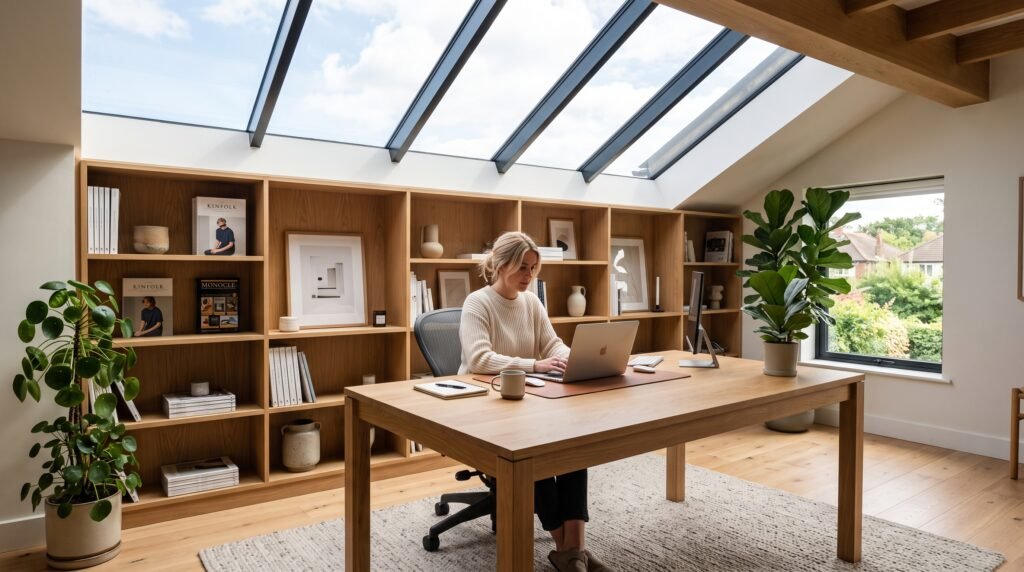
Working from home becomes much more enjoyable in a naturally lit environment. A skylight positioned above or slightly behind your desk provides consistent daylight while reducing dependence on artificial lighting during working hours.
Natural light can help create a more pleasant workspace and makes colors appear more accurate, which is especially valuable for designers, artists, photographers, and creative professionals.
To avoid screen glare, position your desk slightly offset from the skylight rather than directly beneath it. Pair the space with built-in shelving, warm wood furniture, ergonomic seating, and neutral décor for a productive yet comfortable office.
Adding plants beneath the skylight is another excellent idea. Many indoor plants thrive in bright indirect light, bringing freshness and life to the workspace.
A dining room becomes dramatically more inviting when natural light pours in from above. Whether you’re enjoying breakfast with family or hosting dinner guests, a skylight creates an elegant atmosphere throughout the day.
One of the most striking approaches is placing a large skylight directly above the dining table. This naturally draws attention to the center of the room while creating beautiful light patterns that change with the seasons.
For contemporary interiors, combine a skylight with a sculptural pendant light suspended below it. During daylight hours, sunlight becomes the primary focal point, while the pendant provides warmth and ambiance in the evening.
Natural wood dining tables, upholstered chairs, linen table runners, ceramic dinnerware, and fresh flowers complete the timeless look.
9. Loft Skylight Design
Attic conversions and loft spaces often have limited wall space for traditional windows. Skylights solve this challenge by introducing generous amounts of daylight without sacrificing valuable floor area.
Multiple roof windows installed along the roof slope create a bright, airy environment that feels much larger than expected. Bedrooms, creative studios, guest rooms, and reading spaces all benefit from this design.
Exposed wooden beams paired with skylights create a warm architectural contrast, blending rustic character with modern functionality.
Because lofts naturally collect heat, choosing operable skylights allows hot air to escape during summer, improving comfort without relying solely on air conditioning.
10. Skylight Above an Indoor Garden
Indoor gardens have become increasingly popular in modern homes, and skylights provide the perfect growing environment.
Position a skylight above a collection of large potted plants, an interior courtyard, or a living green wall to maximize natural light. Tropical plants, olive trees, fiddle leaf figs, monstera, palms, and ferns flourish when exposed to consistent daylight.
This design creates a calming connection between architecture and nature while adding year-round greenery to the home.
Natural stone flooring, wooden benches, and textured planters complete the serene atmosphere.
11. Open-Concept Skylight
Large open-concept homes often combine the living room, kitchen, and dining space into one continuous area. Installing several aligned skylights across the ceiling distributes daylight evenly throughout the entire space.
Instead of relying on one oversized skylight, multiple smaller units create balanced illumination while adding architectural rhythm to the ceiling.
This approach works particularly well with minimalist interiors that feature neutral palettes, oversized windows, clean cabinetry, and natural materials.
12. Tubular Skylights for Small Spaces
Not every home has room for a traditional skylight, which is where tubular skylights become an excellent alternative.
These compact systems channel sunlight from the roof through a reflective tube, bringing daylight into interior spaces that otherwise have no access to natural light.
They’re perfect for:
- Walk-in closets
- Laundry rooms
- Pantries
- Powder rooms
- Interior corridors
Although much smaller than standard skylights, they can dramatically improve visibility while reducing daytime energy consumption.
Tips for Choosing the Perfect Skylight
Before installation, consider these important design principles:
Match the Skylight Size to the Room
Oversized skylights can make small rooms feel unbalanced, while undersized models may not provide enough daylight. A properly scaled skylight creates harmony within the space.
Consider Sun Orientation
North-facing skylights generally provide soft, consistent light.
East-facing skylights capture beautiful morning sunshine.
South-facing skylights maximize daylight throughout the day.
West-facing skylights create dramatic afternoon light but may increase heat gain during summer.
Invest in Energy-Efficient Glass
Modern Low-E coated glass helps regulate indoor temperatures while protecting furniture and flooring from UV damage.
Double- or triple-glazed units also improve insulation and reduce outside noise.
Think About Automation
Many premium skylights include:
- Rain sensors
- Remote controls
- Smartphone operation
- Automatic ventilation
- Integrated blackout blinds
These features increase convenience while improving overall comfort.
Common Skylight Mistakes to Avoid
Even beautiful skylights require careful planning.
Avoid these common mistakes:
- Installing skylights without considering roof orientation.
- Choosing poor-quality glazing that causes overheating.
- Forgetting ventilation in kitchens and bathrooms.
- Placing furniture where glare becomes uncomfortable.
- Ignoring professional flashing installation, which may lead to leaks.
- Skipping blinds in bedrooms where light control is important.
- Installing oversized skylights in very small rooms.
Proper planning ensures your skylight remains beautiful, efficient, and low-maintenance for years.
25 Skylight Design Ideas to Fill Your Home with Natural Light
13. Skylight Above a Kitchen Island
If your kitchen island is the heart of your home, placing a skylight directly above it creates an impressive focal point. Natural light makes food preparation easier while showcasing the beauty of stone countertops and wood cabinetry. During family gatherings, the island feels brighter and more inviting, becoming the natural place where everyone wants to gather.
14. Double Skylights for Balance
Instead of installing one oversized skylight, consider two identical skylights positioned symmetrically. This layout creates visual balance while distributing sunlight more evenly across the room.
Double skylights work especially well in:
- Large bedrooms
- Living rooms
- Open dining areas
- Great rooms
- Home studios
Their clean, architectural appearance complements both modern and traditional homes.
15. Floor-to-Ceiling Windows with Skylights
Pairing skylights with expansive glass walls creates one of the brightest interiors possible. Daylight enters from above and from the sides, eliminating dark corners and making the home feel connected to nature.
This combination is particularly effective in homes overlooking gardens, forests, mountains, or lakes.
16. Skylight Above a Reading Nook
A cozy reading corner becomes even more enjoyable when illuminated by natural daylight. Position a comfortable chair beneath a skylight, add built-in bookshelves, a soft throw blanket, and a small side table for coffee or tea.
The result is a peaceful retreat that feels bright during the day without relying on artificial lighting.
17. Skylight in a Walk-In Closet
Walk-in closets often depend entirely on artificial light. A skylight instantly improves visibility, making clothing colors appear more accurate and helping the space feel more luxurious.
Combine natural daylight with custom shelving, warm wood cabinetry, full-length mirrors, and soft LED accent lighting for a boutique-inspired dressing room.
18. Skylight Over an Entryway
The entrance to your home creates the first impression for visitors. A skylight above the foyer fills the space with daylight and immediately makes the home feel welcoming.
A dramatic pendant chandelier suspended beneath the skylight adds elegance while maintaining an open, airy feeling.
19. Skylight in a Minimalist Interior
Minimalist homes rely on clean lines and uncluttered spaces. Because decorative elements are intentionally limited, natural light becomes one of the most important design features.
A simple frameless skylight complements minimalist architecture by emphasizing openness rather than decoration.
20. Skylights with Exposed Wood Beams
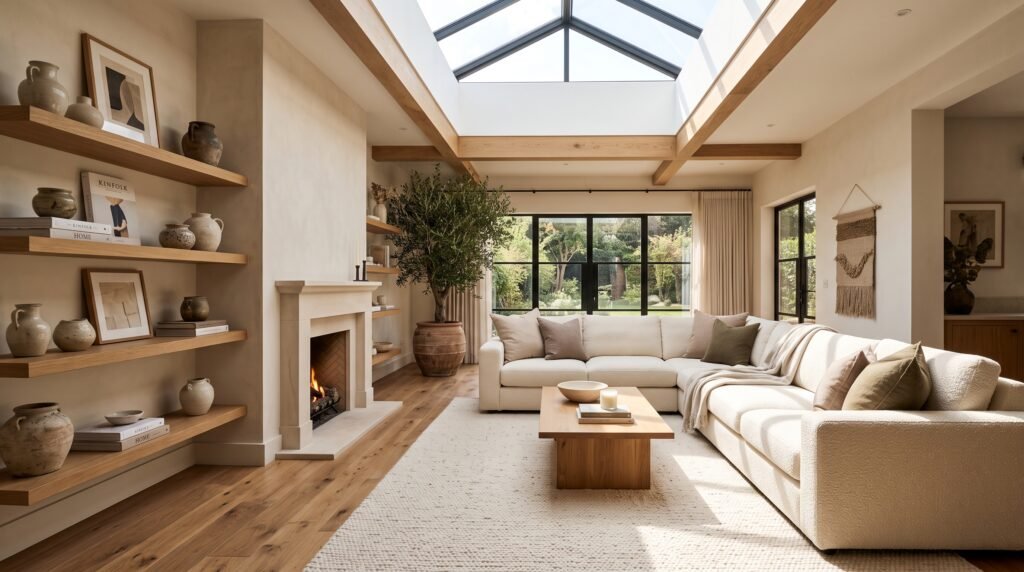
Combining skylights with exposed ceiling beams creates beautiful architectural contrast.
The warmth of natural timber softens the clean glass lines while adding texture and character to the room. This combination works especially well in farmhouse, Scandinavian, rustic-modern, and mountain-inspired homes.
21. Pyramid Skylights for Statement Architecture
For homeowners looking to make a bold design statement, pyramid skylights add sculptural beauty to both traditional and contemporary homes.
Often installed above staircases, atriums, or grand entryways, these skylights become architectural centerpieces while flooding interiors with daylight.
22. Corner Skylight Design
Rather than positioning a skylight in the middle of the ceiling, placing one near a corner creates a more dynamic lighting effect.
Sunlight washes across adjacent walls, highlighting artwork, shelving, or textured finishes while creating interesting shadows throughout the day.
23. Smart Skylight Systems
Technology has transformed modern skylights.
Today’s premium models can automatically:
- Detect rain and close themselves.
- Open for improved ventilation.
- Connect to smart home systems.
- Operate with voice assistants.
- Schedule opening and closing times.
- Control integrated blinds remotely.
These features improve convenience while helping maintain comfortable indoor temperatures.
24. Skylight Above Indoor Courtyards
Homes with interior courtyards can benefit tremendously from overhead glazing.
A large skylight protects the courtyard from weather while still allowing abundant sunlight to nourish plants and brighten surrounding rooms.
This design blurs the line between indoor and outdoor living and creates a striking architectural feature.
25. Custom Architectural Skylights
For luxury homes, custom-designed skylights offer endless creative possibilities.
Architects can design:
- Geometric skylights
- Circular skylights
- Long linear skylights
- Glass roof sections
- Multi-panel skylight systems
- Vaulted glass ceilings
These bespoke installations transform natural light into an essential architectural element, giving the home a unique identity that stands out from standard residential designs.
Maintenance Tips for Long-Lasting Skylights
Like any part of your home, skylights perform best with regular care. Fortunately, modern skylights are relatively low maintenance.
Here are a few simple practices to keep them looking and functioning their best:
- Clean the glass every few months using a non-abrasive cleaner to maximize light transmission.
- Inspect flashing and seals annually, especially after severe weather, to prevent leaks.
- Remove leaves, twigs, and debris from around the exterior frame.
- Test motorized opening mechanisms and rain sensors periodically.
- Replace worn weatherstripping if you notice drafts.
- Keep interior blinds or shades clean to maintain their appearance and operation.
- Schedule professional inspections every few years for hard-to-reach skylights or aging roof systems.
Proper maintenance protects your investment and ensures years of reliable performance.
Frequently Asked Questions
Are skylights energy efficient?
Yes. Modern skylights with Low-E coatings and double- or triple-glazed glass are designed to reduce heat transfer, improve insulation, and help maintain comfortable indoor temperatures throughout the year.
Do skylights make rooms hotter?
Not necessarily. High-quality glazing, proper orientation, and integrated blinds can significantly reduce unwanted heat gain. Choosing the right skylight for your climate is essential.
Which rooms benefit most from skylights?
Living rooms, kitchens, bathrooms, bedrooms, hallways, staircases, home offices, lofts, walk-in closets, and dining rooms are all excellent candidates.
Can skylights be installed in existing homes?
In most cases, yes. A qualified roofing contractor or builder can evaluate your roof structure and recommend the best installation method.
Are vented skylights worth it?
Absolutely. Operable skylights improve airflow, help release warm air, reduce humidity in kitchens and bathrooms, and contribute to a more comfortable indoor environment.
Final Thoughts
A well-designed skylight is much more than a source of natural light—it is an architectural feature that can redefine how your home looks and feels. From creating a bright kitchen and a spa-inspired bathroom to transforming dark hallways and cozy reading nooks, skylights bring warmth, openness, and elegance into every corner of a home.
Whether you’re planning a complete renovation or simply exploring ideas for the future, the right skylight design can make your spaces feel larger, healthier, and more connected to the outdoors. By selecting the right style, glazing, placement, and smart features, you can enjoy beautiful daylight while improving comfort and energy efficiency year-round.
If you’re inspired by these 25 skylight design ideas, start by identifying the rooms in your home that could benefit most from additional daylight. With thoughtful planning and quality installation, a skylight can become one of the most impactful upgrades you’ll ever make—enhancing both your daily living experience and the long-term value of your home.