Introduction
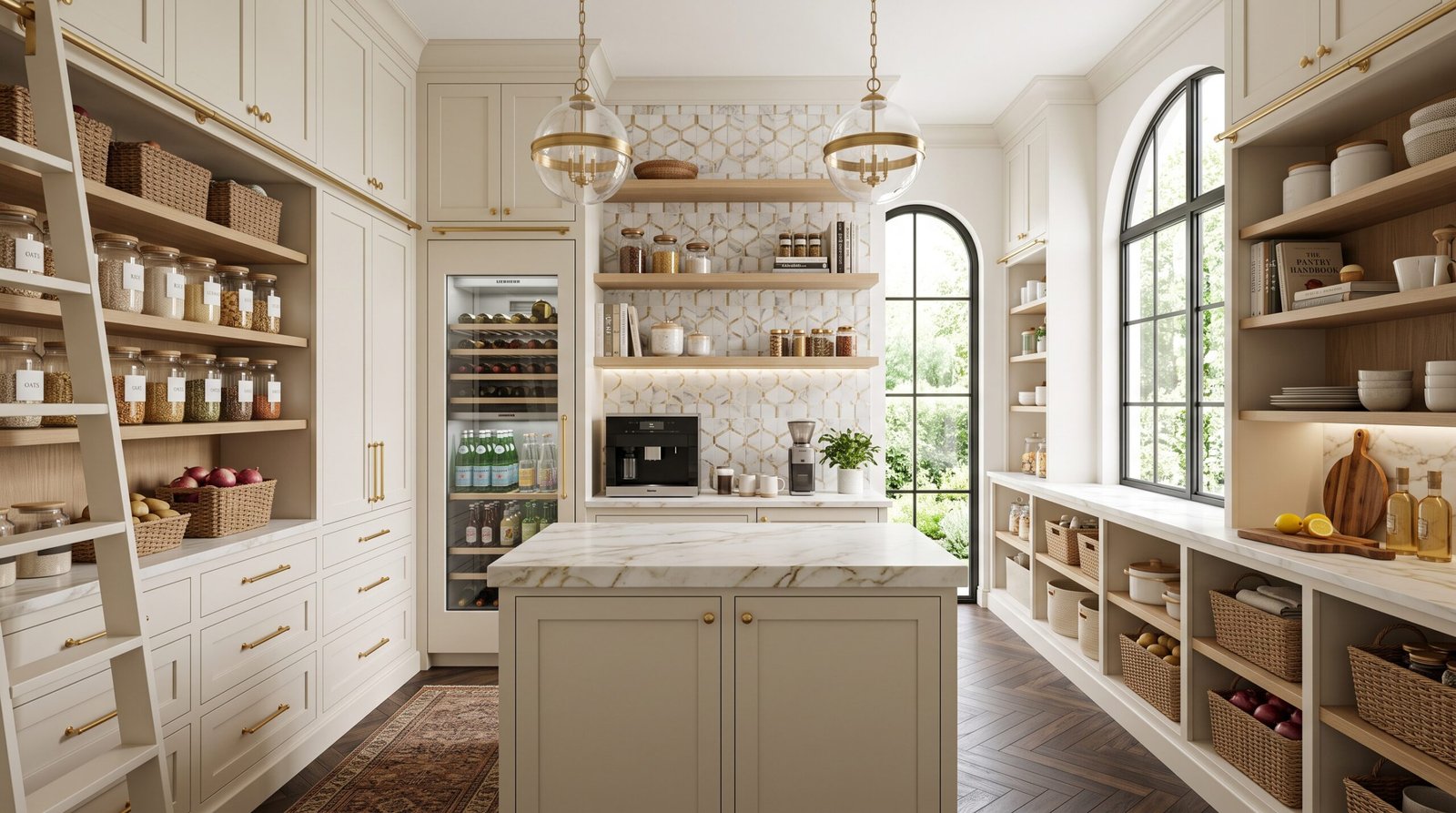
A well-designed walk-in pantry is one of the most valuable spaces in any home. While kitchens often receive the most attention during a renovation, the pantry quietly plays an essential role in keeping everything organized and accessible. A thoughtfully planned pantry provides dedicated storage for groceries, cooking essentials, small appliances, serving dishes, and even cleaning supplies, helping your kitchen stay clean and clutter-free.
Today’s walk-in pantries are much more than simple storage rooms. They have evolved into stylish extensions of the kitchen, featuring custom cabinetry, elegant lighting, natural wood shelving, marble countertops, built-in coffee stations, and beautifully organized containers. Whether your home has a spacious pantry room or a compact storage nook, the right design can make every square foot work harder.
Pinterest and interior designers continue to showcase stunning pantry spaces because homeowners love the combination of beauty and functionality. From cozy farmhouse designs to sleek modern layouts, there are endless ways to create a pantry that reflects your personal style while improving your daily routine.
In this guide, you’ll discover 25 inspiring walk-in pantry ideas that combine smart organization with timeless design. Whether you’re planning a complete renovation or looking for simple upgrades, these ideas will help you create a pantry that’s practical, organized, and beautiful.
Why a Walk-In Pantry Is Worth the Investment
Many homeowners wonder if dedicating extra space to a pantry is worthwhile. The answer is almost always yes. A walk-in pantry offers benefits that extend far beyond storage.
Instead of overcrowding kitchen cabinets with groceries and appliances, a pantry creates a dedicated area where everything has its place. This improves efficiency during meal preparation because ingredients are easier to find and organize.
A pantry also keeps countertops clear by storing bulky appliances like air fryers, mixers, blenders, and coffee machines. This instantly makes the kitchen appear larger, cleaner, and more inviting.
Another advantage is better food management. Clearly organized shelves reduce waste because you can easily see what you already have, preventing duplicate purchases and expired products.
Finally, a beautiful pantry can increase your home’s appeal. Buyers often see a spacious, organized pantry as a premium feature, making it a worthwhile investment for both everyday living and future resale value.
1. Create a Bright Modern Walk-In Pantry
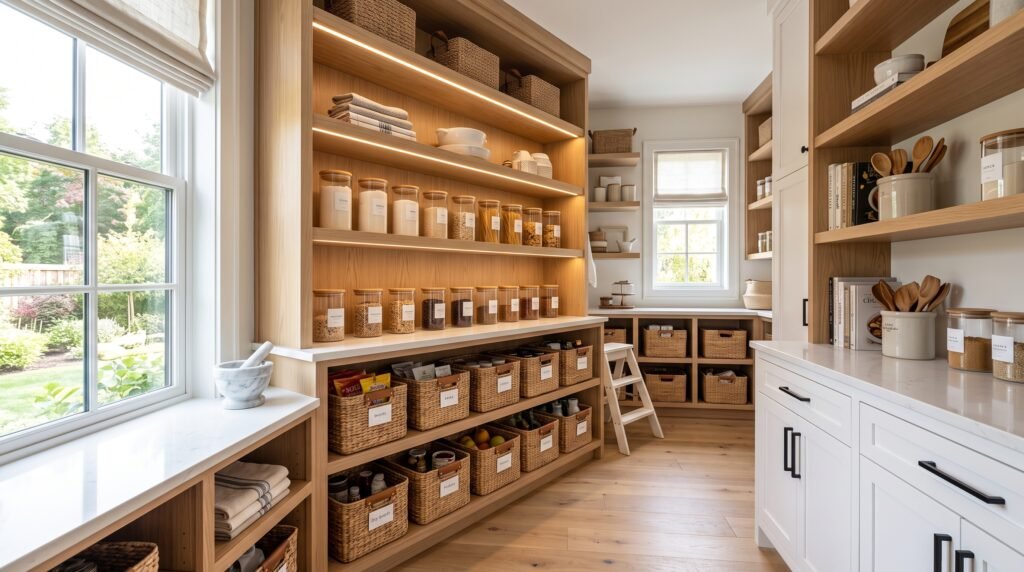
Modern design focuses on clean lines, simple finishes, and clutter-free organization. A modern walk-in pantry should feel open, airy, and easy to maintain.
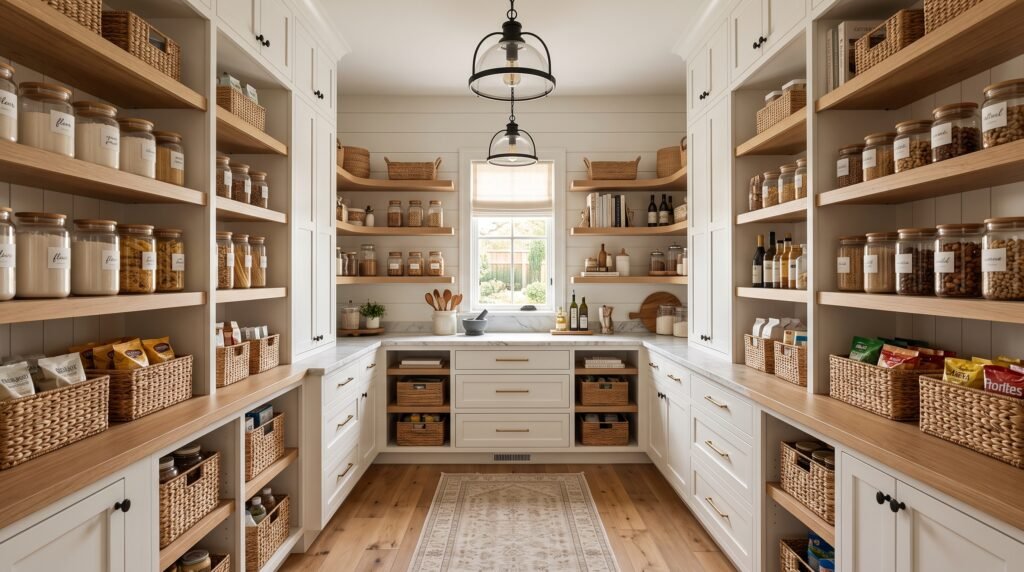
Start with white or light-gray walls to reflect natural light and create a spacious atmosphere. Pair these with white oak shelving or matte white cabinetry for a timeless look. Incorporate clear storage containers so staples like flour, sugar, rice, pasta, and cereal remain visible while keeping shelves neat.
Good lighting is essential in modern spaces. Recessed ceiling lights combined with LED strips beneath shelves illuminate every corner while adding a luxurious touch. Black cabinet handles or brushed brass hardware provide subtle contrast without overwhelming the clean aesthetic.
To complete the design, use matching woven baskets for snacks and pantry essentials. Uniform storage creates visual harmony and makes organization effortless.
A modern pantry is not only beautiful—it also simplifies daily cooking by keeping everything within easy reach.
2. Maximize Every Inch in a Small Walk-In Pantry
A small pantry doesn’t have to feel cramped. Smart planning allows even compact spaces to provide impressive storage.
The key is to think vertically. Install shelves that extend from floor to ceiling to utilize unused wall space. Reserve the highest shelves for seasonal cookware or items used less frequently, while everyday groceries remain at eye level.
Slim pull-out drawers work exceptionally well in narrow pantries because they make it easy to access canned goods, spices, and baking supplies without reaching into deep shelves.
Over-the-door organizers add valuable storage for wraps, foil, cleaning supplies, or spice jars. Corner shelving can also transform awkward spaces into practical storage areas.
Using matching containers and labels reduces visual clutter, making the pantry appear larger than it actually is.
Even a pantry measuring only a few square feet can become highly functional with thoughtful organization and efficient shelving.
3. Design an Elegant Open Shelving Pantry
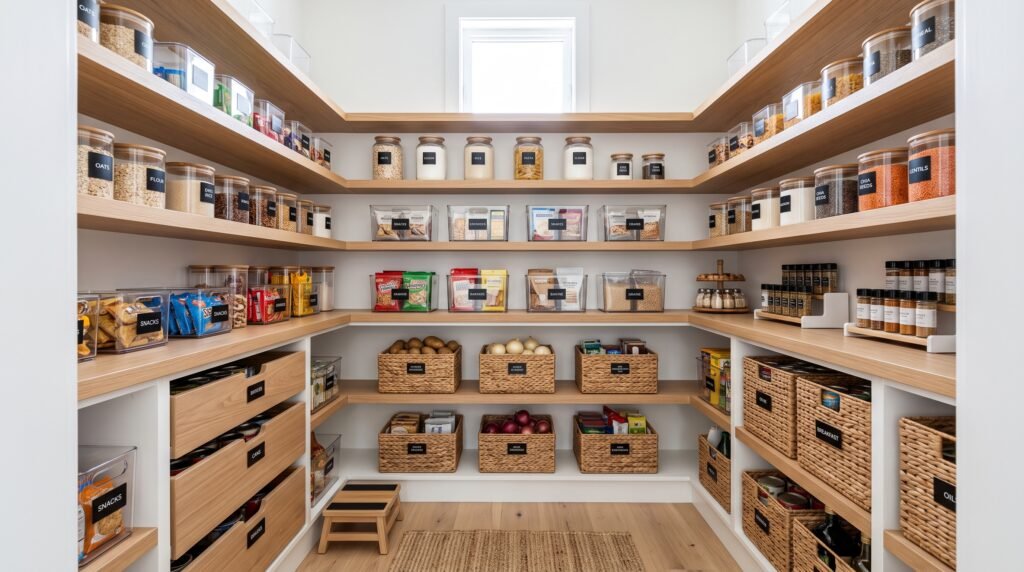
Open shelving continues to dominate both Pinterest and modern interior design because it combines practicality with visual appeal.
Unlike closed cabinets, open shelves allow you to quickly see every ingredient, reducing the time spent searching during meal preparation. They also encourage better organization because everything remains visible.
Natural wood shelves paired with white walls create warmth while maintaining a bright appearance. Glass jars filled with grains, flour, coffee beans, nuts, and spices introduce texture and color, turning everyday pantry items into decorative elements.
Balance functionality with aesthetics by mixing practical storage with decorative accents. Small plants, ceramic bowls, cutting boards, and woven baskets add personality without sacrificing storage space.
To maintain the polished appearance of open shelving, regularly declutter and keep containers consistent in shape and style.
4. Build a Butler-Style Walk-In Pantry
A butler pantry combines storage with additional workspace, making it one of the most practical additions for busy households.
Instead of simply storing food, this type of pantry functions as a secondary kitchen where appliances can remain permanently set up.
Many homeowners include:
- Coffee stations
- Beverage refrigerators
- Microwave ovens
- Toasters
- Stand mixers
- Prep sinks
- Quartz countertops
- Additional cabinetry
By moving these appliances into the pantry, your primary kitchen remains clean and uncluttered.
A butler pantry also creates extra serving space during holidays and family gatherings. Guests enjoy a tidy kitchen while meal preparation continues discreetly behind closed doors.
This design works particularly well in open-concept homes where maintaining clean countertops contributes to a more sophisticated overall appearance.
5. Add Farmhouse Charm to Your Pantry
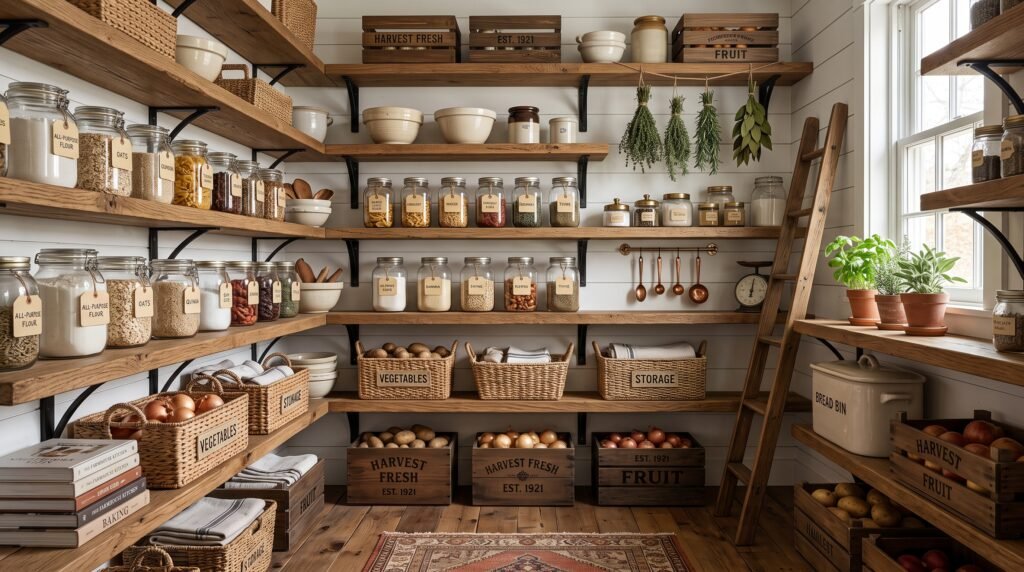
Farmhouse style remains one of the most saved home design trends because it feels warm, welcoming, and timeless.
Start with painted shiplap walls in soft white or cream tones. Install thick wooden shelves supported by black metal brackets to create rustic character.
Store dry goods in large glass jars with wooden lids and organize snacks inside woven baskets labeled with handwritten tags. Vintage-inspired lighting fixtures and antique brass hardware further enhance the farmhouse atmosphere.
Natural textures play an important role. Wooden crates, linen storage bags, ceramic crocks, and reclaimed wood accents create layers of warmth while remaining highly functional.
Fresh greenery, such as eucalyptus stems or small potted herbs, adds life without overwhelming the space.
The result is a pantry that feels cozy, inviting, and perfectly suited to everyday family living.
6. Create a Luxury Walk-In Pantry
Luxury pantries have become increasingly popular because they blend high-end finishes with exceptional functionality.
Custom cabinetry extending from floor to ceiling creates a seamless appearance while maximizing storage. Quartz or marble countertops provide durable workspace for food preparation, coffee making, or entertaining.
Integrated LED lighting highlights decorative shelves and creates a boutique-like atmosphere. Glass cabinet doors showcase beautiful dishware while protecting it from dust.
Premium hardware in brushed brass or matte black adds elegance without feeling excessive.
Many luxury pantries also include wine storage, beverage refrigerators, pull-out drawers, appliance garages, and built-in charging stations.
The goal is to create a pantry that feels every bit as refined as the kitchen itself while making everyday tasks more enjoyable.
7. Divide Your Pantry into Functional Storage Zones
Professional organizers rarely arrange pantries randomly. Instead, they divide the room into clearly defined zones based on how items are used.
For example:
- Baking supplies together
- Breakfast foods together
- Pasta and grains together
- Canned goods together
- Snacks together
- Drinks together
- Spices together
- Cleaning products separately
- Pet food in designated containers
This approach dramatically reduces the time spent searching for ingredients while making grocery shopping more efficient.
Family members also learn where everything belongs, helping maintain organization over the long term.
Grouping similar items creates a pantry that’s easier to use, easier to clean, and much more visually appealing.
8. Use Matching Containers for a Designer Look
One of the simplest upgrades with the biggest impact is replacing original food packaging with coordinated storage containers.
Clear airtight containers keep ingredients fresh while allowing you to quickly identify contents. They also eliminate the visual clutter caused by colorful packaging.
Popular choices include:
- Glass jars
- Acrylic containers
- Stackable bins
- Bamboo-lid canisters
- Woven baskets
- Lazy Susans for oils and condiments
Adding uniform labels completes the organized appearance while making ingredients easy to locate.
Not only does this system look beautiful in photos, but it also helps reduce food waste by allowing you to monitor inventory at a glance.
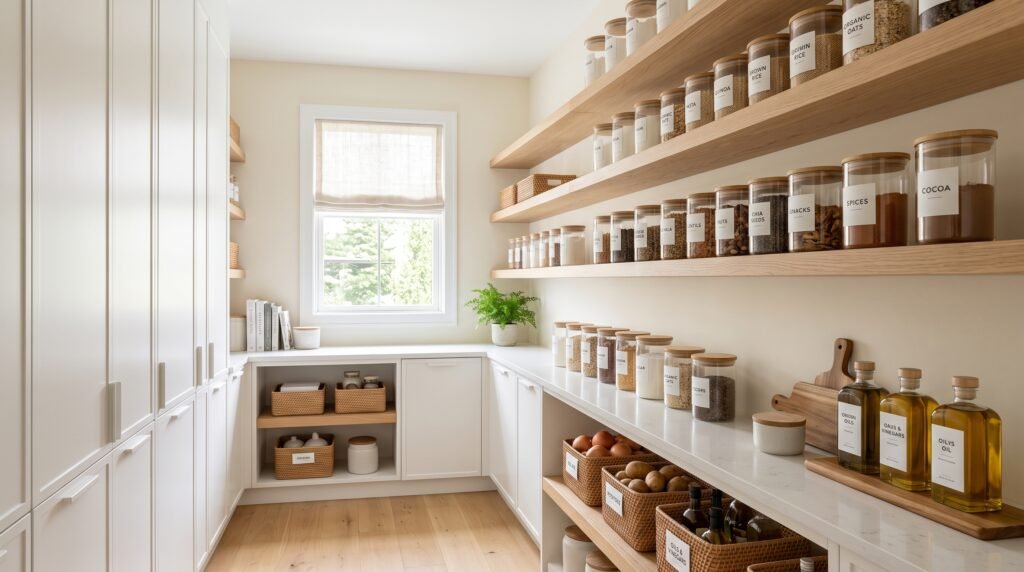
Walk-In Pantry Ideas: 25 Stylish and Functional Designs to Maximize Storage and Elevate Your Kitchen
9. Choose a Timeless Neutral Color Palette
The colors you choose can completely transform the atmosphere of your pantry. While bold colors may be trendy, neutral palettes remain the most popular because they create a bright, clean, and timeless look.
Soft whites, warm creams, light greige, and pale taupe make even a compact pantry feel larger and more open. These shades also reflect both natural and artificial light, making it easier to locate ingredients and supplies.
If you want to add personality without overwhelming the room, consider painting the back wall in a muted sage green or dusty blue while keeping the shelving white. This subtle contrast creates visual interest while maintaining a calm, organized aesthetic.
Natural wood tones also pair beautifully with neutral colors. White oak shelves, walnut accents, and woven storage baskets introduce warmth and texture that prevent the pantry from feeling sterile.
To complete the look, choose matte black, brushed brass, or satin nickel hardware. These finishes complement neutral palettes and add a sophisticated touch that will remain stylish for years.
10. Install Layered Lighting for Better Visibility
Lighting is one of the most overlooked aspects of pantry design, yet it has one of the biggest impacts on both functionality and appearance.
Many older pantries rely on a single ceiling fixture that creates dark corners and shadows. Instead, use a layered lighting approach.
Start with recessed LED ceiling lights for overall illumination. Add under-shelf LED strips to brighten lower shelves and make labels easier to read. Motion-sensor lights are especially convenient because they automatically turn on when you enter with your hands full.
If your pantry includes a countertop or coffee station, consider installing a decorative pendant light. It becomes both a functional light source and an attractive design feature.
Warm white bulbs (around 3000K) create a cozy atmosphere while still providing excellent visibility.
Well-planned lighting not only makes the pantry easier to use but also highlights beautiful shelving, containers, and decorative accents.
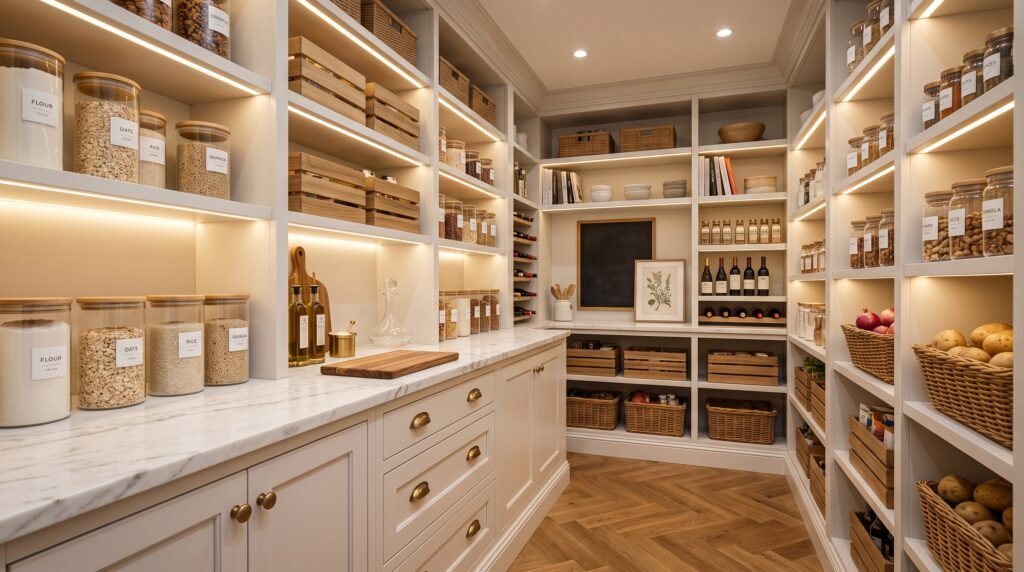
11. Hide Small Appliances for a Clutter-Free Kitchen
Kitchen countertops can quickly become crowded with coffee makers, air fryers, mixers, blenders, and toasters. A walk-in pantry offers the perfect solution by creating a dedicated appliance zone.
Design one section of your pantry with sturdy countertops and electrical outlets so appliances remain plugged in and ready to use.
Popular appliances stored inside pantries include:
- Coffee maker
- Espresso machine
- Air fryer
- Slow cooker
- Toaster
- Blender
- Food processor
- Stand mixer
Many homeowners also install appliance garages—cabinets with retractable doors that hide appliances when they’re not in use.
Keeping bulky appliances inside the pantry creates a cleaner, more spacious kitchen while making everyday cooking more efficient.
12. Select the Perfect Pantry Door
Your pantry door is one of the first design elements people notice, making it an opportunity to add style while maintaining functionality.
Some popular options include:
Glass Doors
Glass doors create an open, airy feeling and allow you to showcase an organized pantry. Frosted glass offers a similar look while concealing minor clutter.
Barn Doors
Sliding barn doors save floor space and add farmhouse or rustic character. Available in wood, painted finishes, or modern black steel, they suit a variety of interior styles.
Pocket Doors
Pocket doors disappear into the wall, making them ideal for smaller kitchens where swing doors would take up valuable space.
French Doors
French doors create an elegant, luxurious entrance to larger pantry rooms and allow plenty of natural light to enter if windows are present.
Choose a style that complements your kitchen while ensuring easy daily access.
13. Add Pull-Out Drawers and Sliding Shelves
Deep shelves often become frustrating because items stored at the back are difficult to reach. Pull-out drawers solve this problem by bringing everything forward with minimal effort.
These drawers work especially well for:
- Canned goods
- Baking ingredients
- Snacks
- Pots and pans
- Cleaning supplies
- Beverage storage
Sliding shelves also improve visibility, making it less likely that food will expire unnoticed.
Soft-close drawer slides add a premium feel while preventing slamming and reducing wear over time.
Although custom pull-out storage costs more initially, many homeowners consider it one of the most worthwhile pantry upgrades because of the convenience it provides.
14. Incorporate Decorative Elements
A pantry should be functional, but that doesn’t mean it has to look plain. Small decorative touches make the space feel intentional and inviting.
Consider adding:
- Small framed artwork
- Wooden cutting boards
- Ceramic bowls
- Decorative trays
- Woven baskets
- Fresh greenery
- Linen storage bags
- Glass vases
The key is balance. Decorative items should complement storage rather than reduce valuable shelf space.
Keeping colors cohesive and using natural materials helps create a magazine-worthy pantry that’s still practical for everyday life.
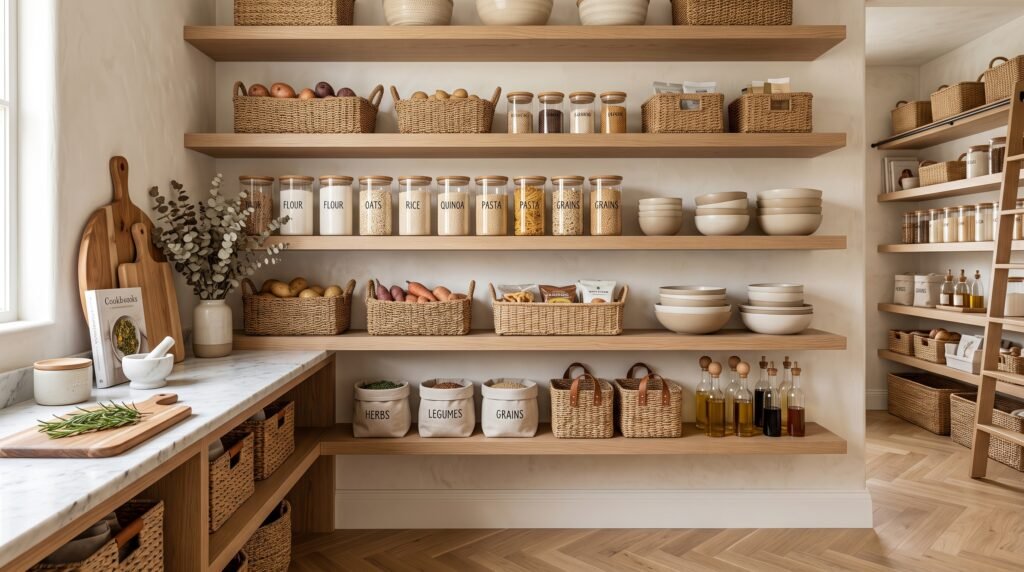
15. Create Dedicated Family Snack Stations
One of the smartest ways to organize a busy household is by creating a dedicated snack station.
Place healthy snacks, granola bars, crackers, dried fruit, and juice boxes in clearly labeled bins on lower shelves where children can reach them independently.
This simple system offers several benefits:
- Encourages independence
- Reduces kitchen mess
- Keeps snacks organized
- Simplifies grocery restocking
- Prevents overcrowded shelves
Using matching baskets or acrylic bins helps maintain a clean appearance while making it easy for everyone to know where snacks belong.
Parents often find that designated snack areas reduce unnecessary searching and make meal planning much easier.
16. Upgrade Your Pantry on a Budget
Creating a beautiful pantry doesn’t always require a complete renovation. Small, affordable improvements can dramatically transform the space.
Budget-friendly upgrades include:
- Painting existing shelves
- Installing peel-and-stick wallpaper
- Replacing cabinet hardware
- Adding LED strip lighting
- Using clear storage containers
- Organizing with woven baskets
- Applying waterproof shelf liners
- Labeling every container
Many of these improvements can be completed over a weekend while giving the pantry a much more polished appearance.
Instead of replacing everything at once, upgrade gradually by focusing on the changes that will have the greatest impact.
17. Choose Durable Shelving Materials
Shelving forms the backbone of every pantry, so selecting the right material is essential.
Solid Wood
Solid wood offers timeless beauty and exceptional durability. White oak, maple, and walnut remain popular choices for luxury pantries.
Plywood
High-quality plywood provides excellent strength at a more affordable price and resists warping better than particle board.
Wire Shelving
Wire shelves improve airflow and are budget-friendly, although they may not provide the same premium appearance.
Metal Shelving
Metal shelves are extremely durable and ideal for storing heavy appliances or bulk groceries.
Choose materials that suit both your budget and the amount of weight your shelves will need to support.
18. Include Luxury Features That Improve Daily Life
Luxury isn’t only about appearance—it’s also about convenience.
If you’re designing a new pantry, consider incorporating premium features that make everyday tasks easier.
Popular additions include:
- Quartz or marble countertops
- Beverage refrigerator
- Prep sink
- Built-in coffee station
- Wine storage
- Ice maker
- Charging drawer
- Hidden trash and recycling bins
- Custom spice storage
- Vertical tray dividers
- Soft-close drawers
- Pull-out produce baskets
These features transform a pantry into a multifunctional space where food preparation, beverage service, and storage all work together seamlessly.
Although some upgrades require a larger investment, they often improve both daily living and long-term home value.
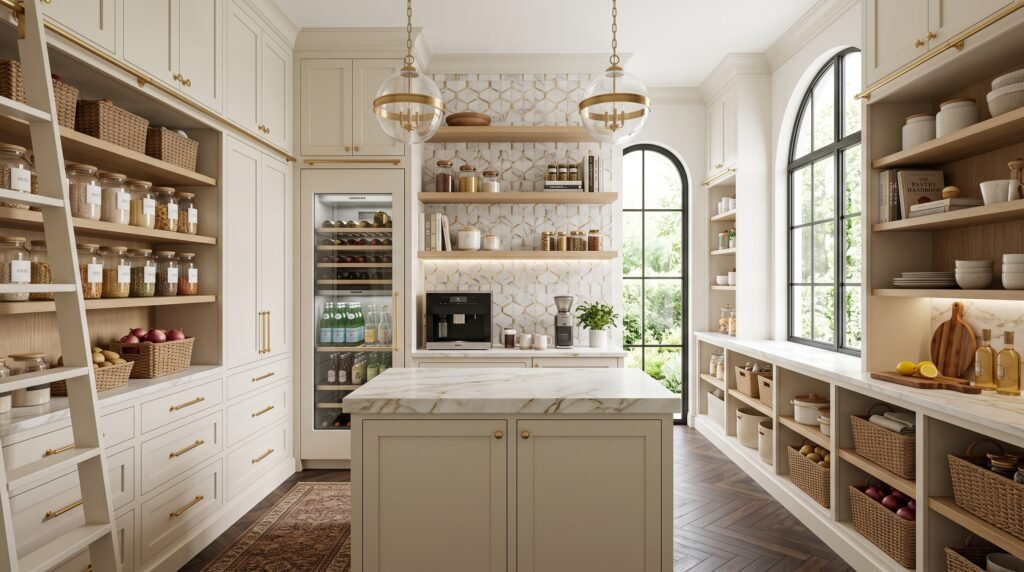
Walk-In Pantry Ideas: 25 Stylish and Functional Designs to Maximize Storage and Elevate Your Kitchen
19. Avoid These Common Pantry Organization Mistakes
Even the most beautiful walk-in pantry can become messy if it isn’t organized properly. Many homeowners invest in custom shelves and attractive containers but overlook simple habits that keep the space functional over time.
One of the biggest mistakes is overcrowding shelves. When every inch is filled, it’s difficult to see what you have, leading to duplicate purchases and expired food. Leave a little breathing room between containers so everything remains easy to access.
Another common issue is mixing unrelated items. Snacks, baking ingredients, canned goods, pet food, and cleaning supplies should each have their own designated areas. Grouping similar items creates a more efficient system and saves time while cooking.
Ignoring expiration dates is another problem. Make it a habit to place newly purchased items behind older ones so the oldest products get used first. This simple “first in, first out” method reduces waste and keeps your pantry stocked with fresh ingredients.
Finally, avoid buying storage containers without measuring your shelves. Oversized bins may waste valuable space, while containers that are too small can create unnecessary clutter. Taking measurements before purchasing organizers ensures every inch of your pantry works efficiently.
A pantry that stays organized isn’t about perfection—it’s about creating systems that are easy for everyone in the household to maintain.
20. Refresh Your Pantry Every Season
Just like closets and garages, your pantry benefits from a seasonal refresh. Setting aside time every three or four months helps maintain organization and prevents unnecessary waste.
Start by removing everything from the shelves. Wipe down surfaces with a mild cleaner and check for crumbs or spills. Cleaning regularly helps keep pests away and ensures your pantry remains hygienic.
Next, inspect expiration dates and donate unopened, non-perishable items you know you won’t use. Rotating products so older items stay at the front prevents food from being forgotten.
This is also a great opportunity to evaluate your storage system. Are labels still accurate? Do baskets need to be rearranged? Have your family’s eating habits changed?
Seasonal updates also allow you to swap out specialty items. During the holidays, baking supplies and serving dishes may deserve prime shelf space. In the summer, you might prioritize grilling seasonings, picnic supplies, and cold beverage storage.
By dedicating just an hour every season, you’ll keep your pantry functional, organized, and enjoyable to use throughout the year.
21. Choose the Best Walk-In Pantry Layout
Every home is different, so selecting the right pantry layout is essential for maximizing storage and efficiency.
Single-Wall Pantry
A single-wall pantry is ideal for smaller homes or narrow spaces. Shelving is installed along one wall, leaving a clear walkway. This layout keeps everything visible and easy to access.
L-Shaped Pantry
An L-shaped design utilizes two connecting walls, creating additional shelving without making the room feel crowded. It works well for medium-sized homes and provides plenty of flexibility.
U-Shaped Pantry
A U-shaped pantry offers storage on three sides, maximizing every inch of available wall space. This layout is perfect for larger families or homeowners who purchase groceries in bulk.
Galley Pantry
Galley-style pantries feature shelves on both sides with a walkway in the center. They offer excellent storage capacity while maintaining an efficient workflow.
Walk-Through Pantry
A growing trend in modern homes is the walk-through pantry that connects the garage to the kitchen. This design makes unloading groceries significantly easier and creates a convenient transition between spaces.
When planning your pantry, think about how you shop, cook, and entertain. The right layout should support your daily routine while allowing room for future storage needs.
22. Add Smart Technology to Your Pantry
Technology is becoming a natural part of modern home design, and walk-in pantries are no exception.
Motion-sensor lighting is one of the simplest upgrades. Lights automatically turn on when you enter the pantry and switch off when you leave, improving convenience while saving energy.
Some homeowners also use smart inventory apps that allow them to scan groceries and track what’s available. These systems make grocery shopping easier by reducing duplicate purchases.
Other helpful upgrades include:
- Smart LED lighting with adjustable brightness
- Temperature and humidity monitors
- Digital shopping lists synced to your phone
- QR code labels for inventory management
- Voice assistant integration for grocery reminders
Although not every pantry needs advanced technology, even one or two smart features can simplify everyday routines and improve organization.
23. Make Your Pantry More Sustainable
Creating an eco-friendly pantry benefits both your home and the environment. Small changes can significantly reduce waste while making your pantry look cleaner and more organized.
Replace disposable packaging with reusable glass jars, stainless steel containers, or BPA-free storage bins. Buying dry goods in bulk also reduces plastic waste and often saves money.
Use woven baskets made from natural materials like seagrass or water hyacinth instead of synthetic organizers whenever possible.
To reduce food waste:
- Plan meals before grocery shopping.
- Rotate older items to the front.
- Store produce properly.
- Label containers with purchase dates.
Installing energy-efficient LED lighting and choosing sustainably sourced wood shelving are additional ways to make your pantry environmentally friendly without sacrificing style.
A sustainable pantry is not only beautiful but also supports healthier shopping and storage habits for years to come.
24. Walk-In Pantry Trends for 2026
Walk-in pantry designs continue to evolve, combining luxury with everyday practicality. Some of the most popular trends this year include:
White Oak Shelving
Natural wood finishes remain incredibly popular because they introduce warmth while complementing modern kitchens.
Hidden Appliance Garages
Keeping coffee makers, toasters, and air fryers behind cabinet doors creates a cleaner, more minimalist appearance.
Built-In Coffee Bars
Many homeowners are transforming part of the pantry into a dedicated coffee or beverage station complete with mugs, syrups, and espresso machines.
Floor-to-Ceiling Storage
Custom shelving that extends to the ceiling maximizes storage while creating a seamless, built-in look.
Soft Neutral Colors
Cream, warm white, mushroom gray, and soft sage continue to dominate Pinterest-inspired interiors.
Mixed Materials
Combining natural wood, stone countertops, metal hardware, and glass containers creates layered visual interest while maintaining timeless appeal.
These trends focus on creating pantries that are as attractive as they are practical, ensuring they remain useful long after design trends change.
25. Personalize Your Pantry to Match Your Lifestyle
The best walk-in pantry isn’t necessarily the largest—it’s the one designed around your family’s unique needs.
If you love baking, dedicate an entire section to flour, sugar, mixing bowls, measuring cups, and baking pans. Install pull-out shelves for heavy stand mixers and include a countertop for preparing ingredients.
Coffee enthusiasts may prefer a complete beverage station with mugs, coffee beans, syrups, and a built-in espresso machine.
Families with young children often benefit from lower snack drawers and clearly labeled baskets that encourage independence.
If you frequently entertain guests, reserve space for serving platters, drink dispensers, wine glasses, and specialty ingredients.
Think about how your household functions every day and customize the pantry to support those routines. A personalized pantry feels more organized because every item has a logical home.
Ultimately, your pantry should make daily life easier while reflecting your personal style.
Frequently Asked Questions
How much space do I need for a walk-in pantry?
A functional walk-in pantry can be as small as 20–25 square feet, while larger homes often include pantries measuring 50–100 square feet or more. The ideal size depends on your storage needs and available space.
What is the best shelving material for a pantry?
Solid wood and high-quality plywood are among the best options because they’re durable, attractive, and capable of supporting heavy grocery items. Adjustable shelving also provides flexibility as your storage needs change.
How can I make a small pantry look bigger?
Use light-colored paint, floor-to-ceiling shelving, clear storage containers, and bright LED lighting. Keeping shelves organized and avoiding overcrowding also helps create a more open appearance.
Should I use open shelves or cabinets?
Open shelving offers better visibility and easier access, making it perfect for frequently used items. Cabinets provide a cleaner appearance by concealing clutter. Many homeowners combine both for the best balance of style and function.
Is a walk-in pantry worth the investment?
Yes. A walk-in pantry improves organization, increases storage capacity, keeps kitchen countertops clutter-free, and may enhance your home’s resale appeal. It’s one of the most practical upgrades for homeowners who enjoy cooking and entertaining.
Final Thoughts
A thoughtfully designed walk-in pantry is far more than a place to store groceries—it’s an extension of your kitchen that enhances organization, efficiency, and everyday living. Whether you prefer a sleek modern design, a cozy farmhouse aesthetic, or a luxurious custom pantry with premium finishes, the right layout can transform how you prepare meals and manage household essentials.
Focus on practical storage solutions such as floor-to-ceiling shelving, labeled containers, dedicated storage zones, and durable materials. Add warm lighting, natural textures, and decorative accents to create a pantry that’s both functional and inviting.
Remember that the best pantry is one tailored to your lifestyle. By designing around your family’s daily habits and storage needs, you’ll create a space that’s easy to maintain, enjoyable to use, and beautiful enough to inspire every time you open the door.
With these 25 Beautiful walk-in pantry ideas, you’re ready to design a pantry that combines timeless style with smart organization—making it one of the hardest-working and most admired spaces in your home.