Indoor Floor-to-Ceiling Shelf Decor Ideas: 8 Stylish Ways to Transform Your Walls
Floor-to-ceiling shelves can completely change the way a room looks and functions. Instead of leaving a large wall empty or filling it with several unrelated pieces of furniture, full-height shelving turns the entire vertical space into something useful, decorative, and visually impressive.
These shelves can hold books, ceramics, artwork, plants, baskets, photographs, and everyday essentials while creating an architectural feature at the same time. They are particularly helpful when you want to maximize storage without sacrificing valuable floor space.
The best part is that floor-to-ceiling shelving isn’t limited to large living rooms or traditional home libraries. It can work around doorways, beside windows, inside narrow corners, in bedrooms, or even along compact walls where ordinary furniture feels bulky.
Whether your style is organic modern, minimalist, Scandinavian, contemporary, or cozy traditional, there is a way to make full-height shelves complement your interior.
Below are 8 indoor floor-to-ceiling shelf decor ideas to help you turn unused walls into beautiful and practical displays.
1. Frame a Doorway with Floor-to-Ceiling Shelves
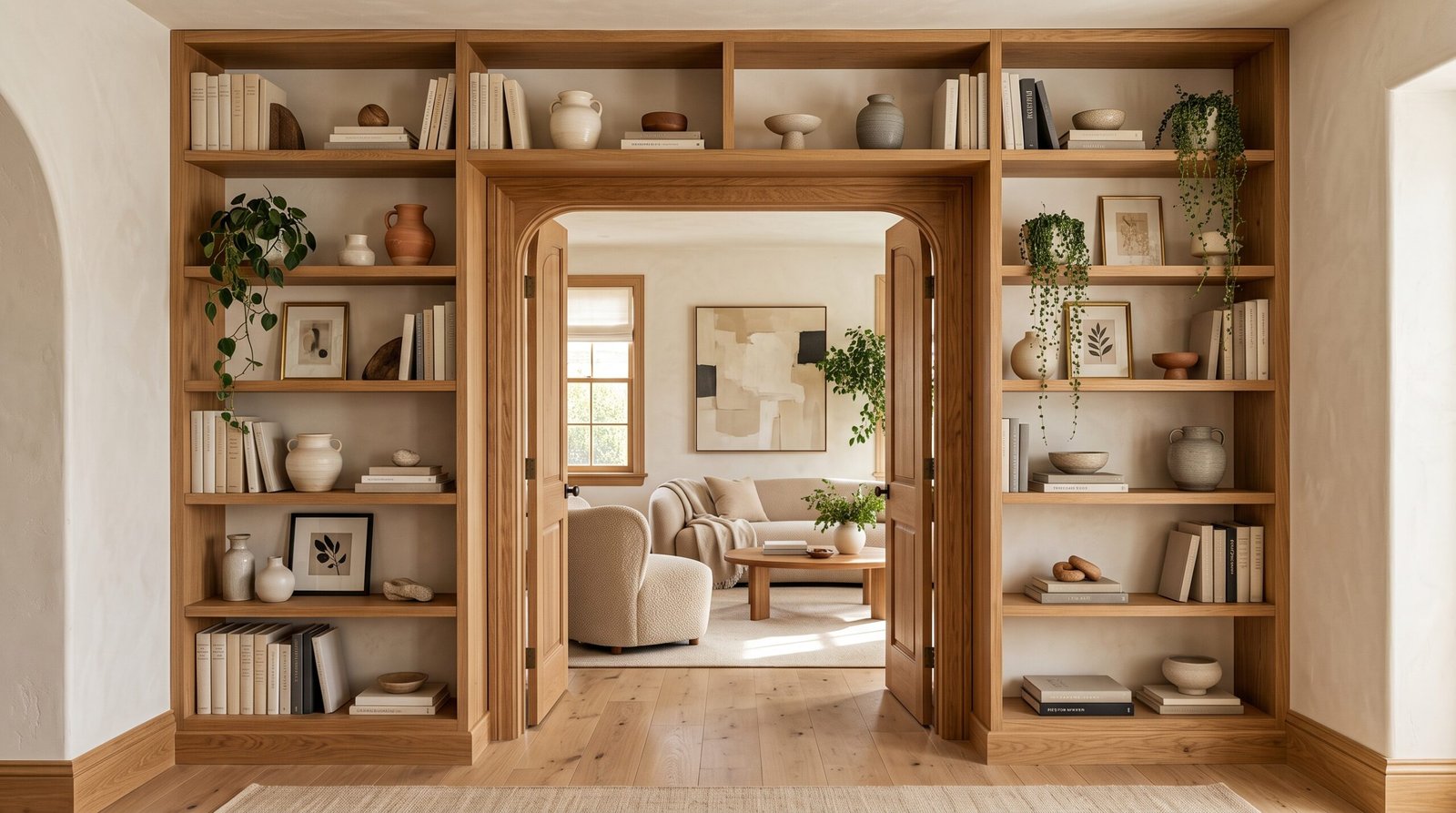
One of the most interesting places to install full-height shelving is around a doorway.
Instead of treating the door as an interruption in the wall, use shelving to incorporate it into a larger built-in feature. Shelves can rise from floor level on both sides of the doorway and continue across the space above it.
[IMAGE 1 – Floor-to-Ceiling Shelves Around a Doorway]
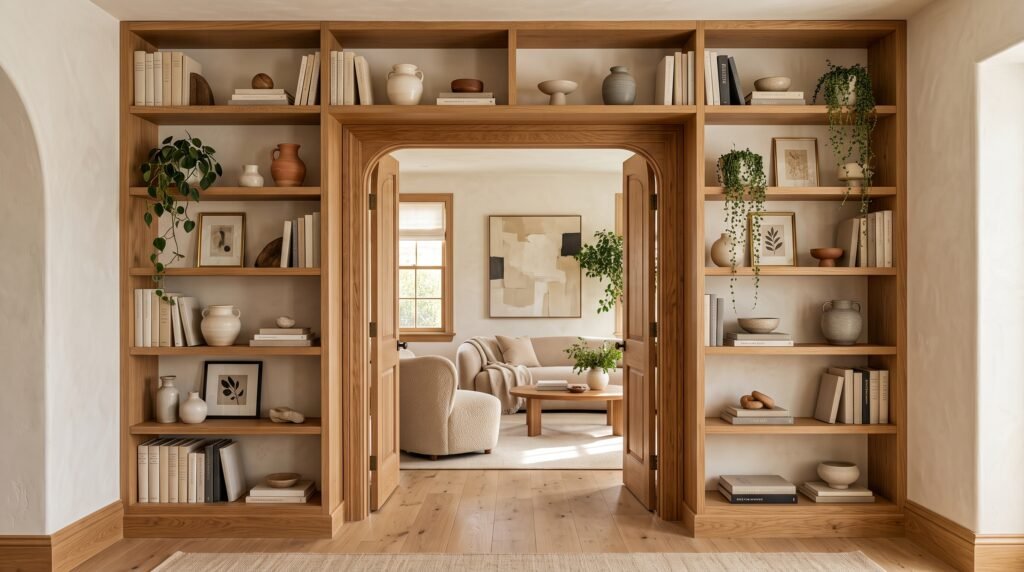
This approach works particularly well in living rooms, home offices, hallways, and rooms with wide openings.
Create an Architectural Feature
Shelving around a doorway instantly makes the wall feel more intentional. Even a standard opening can begin to resemble custom architectural millwork when surrounded by symmetrical shelving.
Painted built-ins can blend seamlessly with the wall, while natural wood shelving creates stronger contrast and warmth.
For a sophisticated organic-modern interior, consider combining warm oak shelves with cream or off-white walls.
Style the Shelves Carefully
Because doorway shelving can become visually dominant, avoid filling every available space.
Try combining:
- Books arranged vertically and horizontally
- Ceramic bowls
- Sculptural objects
- Small framed artwork
- Neutral vases
- Decorative boxes
- A few trailing plants
Leaving some shelves partially empty allows individual pieces to stand out.
Use the Highest Shelves for Display
Items placed above the doorway will naturally be more difficult to reach. Reserve these shelves for decorative objects or books you don’t use regularly.
The lower shelves can hold frequently used books, storage baskets, or household essentials.
The result is a functional storage wall that also creates an impressive focal point.
2. Create a Full-Wall Built-In Shelving Feature
If you have a large blank wall, consider turning the entire surface into built-in shelving.
Full-wall shelving can dramatically increase storage while giving your room a polished, customized appearance.
[IMAGE 2 – Living Room Full-Wall Built-In Shelving]
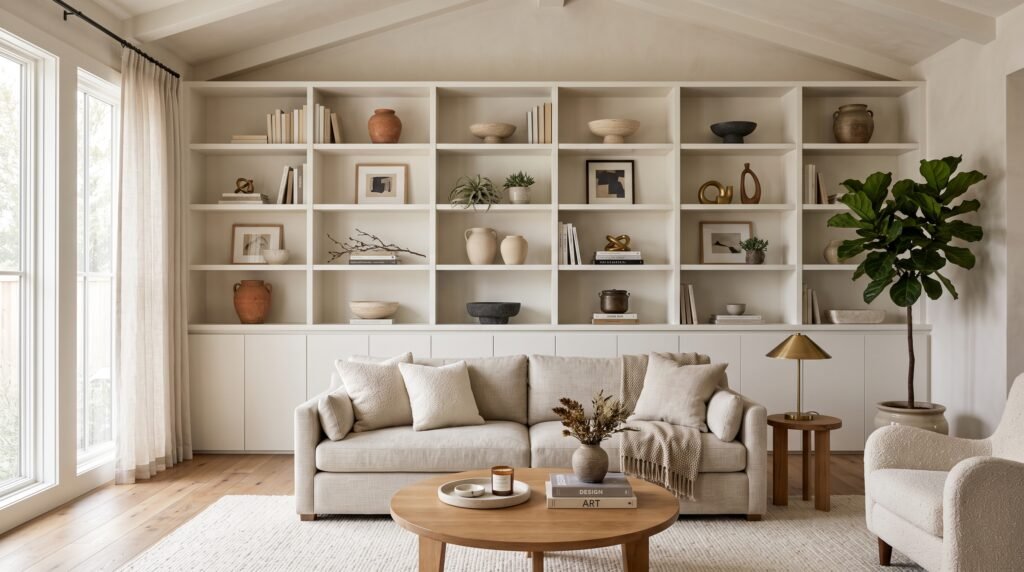
This style is especially effective in living rooms where a large empty wall can otherwise feel difficult to decorate.
Combine Open and Closed Storage
One of the smartest ways to design full-wall shelves is to combine open shelves with closed cabinets.
Use upper shelves for decorative displays while placing cabinets or drawers along the bottom.
Closed storage can hide:
- Electronics
- Chargers
- Toys
- Documents
- Games
- Extra blankets
- Household accessories
This allows the visible shelving to remain calm and organized.
Create a Balanced Display
When decorating a large shelving wall, think about the entire unit rather than styling every shelf individually.
Repeat similar materials throughout the display.
For example, you might use warm wood, cream ceramics, black accents, books, and greenery.
Repeating these elements across different shelves creates visual consistency.
Avoid Perfect Symmetry
Although built-ins often look symmetrical architecturally, the objects displayed inside them don’t need to match perfectly.
A tall vase on one side might be balanced by several stacked books on the opposite side.
Slight variation makes the shelving feel collected and personal rather than overly staged.
3. Use Narrow Floor-to-Ceiling Shelves in Small Spaces
Floor-to-ceiling shelving doesn’t require a huge wall.
In fact, narrow shelving can be particularly useful in small homes and apartments.
[IMAGE 3 – Narrow Floor-to-Ceiling Shelves for Small Spaces]
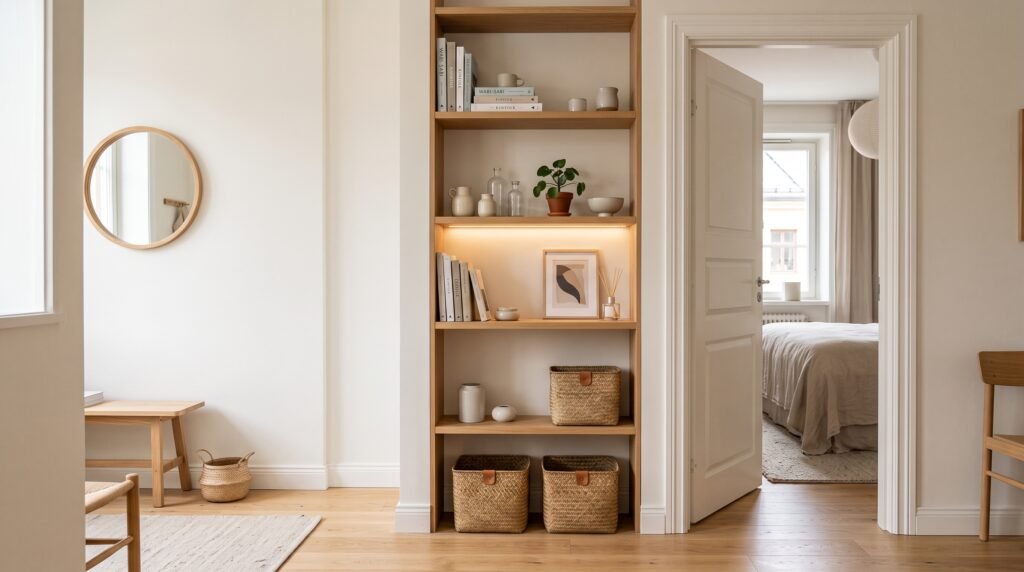
A vertical shelf only a few feet wide can transform an awkward strip of unused wall into valuable storage.
Consider adding narrow shelves:
- Beside a doorway
- Between two windows
- Next to a fireplace
- Beside a wardrobe
- At the end of a hallway
- Between architectural columns
Take Advantage of Vertical Space
Small rooms often have limited floor area but plenty of unused wall height.
Instead of adding another wide cabinet or console, use narrow shelving that extends upward.
The vertical lines can actually make the ceiling appear taller.
Keep the Styling Light
Small shelving units can quickly look crowded.
Use fewer accessories and leave visible space between objects.
Choose light-colored books, pale ceramics, clear glass, and small plants if you want the unit to feel airy.
Large baskets or boxes can be placed on the bottom shelves to provide concealed storage.
Add Integrated Lighting
Small LED strips or discreet shelf lighting can make narrow shelving look much more sophisticated.
Warm illumination highlights decorative objects while creating a cozy atmosphere in the evening.
4. Bring Warmth with Organic Modern Wood Shelving
Natural wood floor-to-ceiling shelving is ideal for anyone who loves organic-modern interiors.
Wood introduces warmth and texture while keeping the space connected to natural materials.
[IMAGE 4 – Organic Modern Wood Floor-to-Ceiling Shelving]
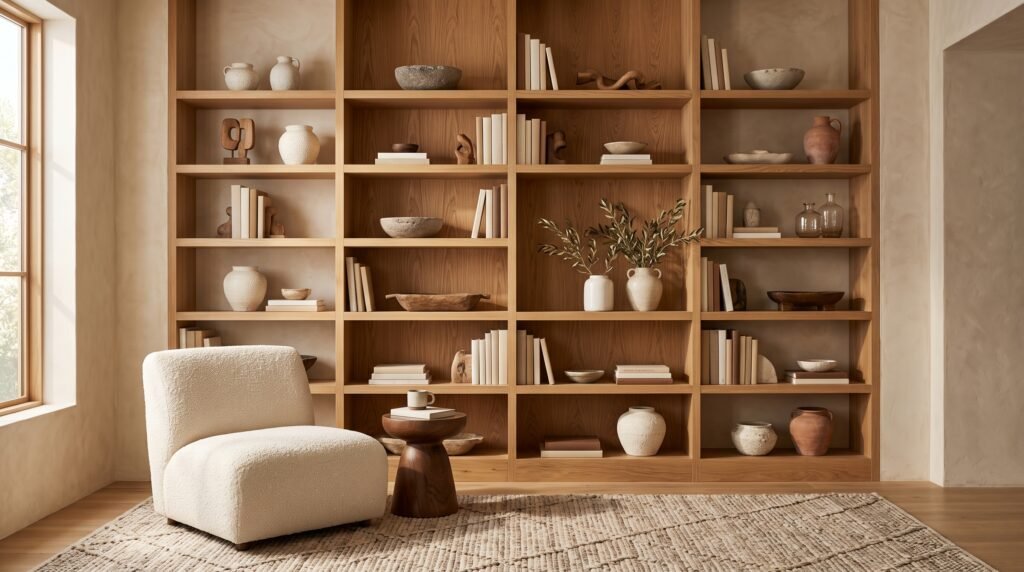
Oak, walnut, ash, and other natural finishes can all work beautifully depending on your preferred color palette.
Pair Wood with Neutral Walls
Warm wood shelving looks particularly beautiful against:
- Warm white
- Ivory
- Soft beige
- Mushroom
- Light greige
- Muted taupe
These subtle wall colors allow the grain and texture of the wood to become the focal point.
Decorate with Natural Materials
Continue the organic theme through your accessories.
Try styling the shelves with handmade ceramics, stone bowls, woven baskets, linen-covered books, wooden sculptures, and glass vessels.
Plants can introduce another natural layer.
An olive branch in a ceramic vase, a small trailing plant, or a sculptural indoor plant can soften the straight architectural lines of the shelves.
Keep the Palette Restrained
Organic-modern interiors usually feel most successful when the color palette remains relatively simple.
Instead of filling shelves with many bright colors, concentrate on variations of cream, brown, beige, black, muted green, and natural wood.
Texture provides the visual interest.
A rough ceramic vessel beside a smooth stone sculpture, for example, can create beautiful contrast without adding bold color.
5. Transform an Empty Corner with Floor-to-Ceiling Shelves
Corners are among the most overlooked areas of a home.
A floor-to-ceiling corner shelving unit can turn an otherwise awkward space into a beautiful feature.
[IMAGE 5 – Floor-to-Ceiling Corner Shelving]
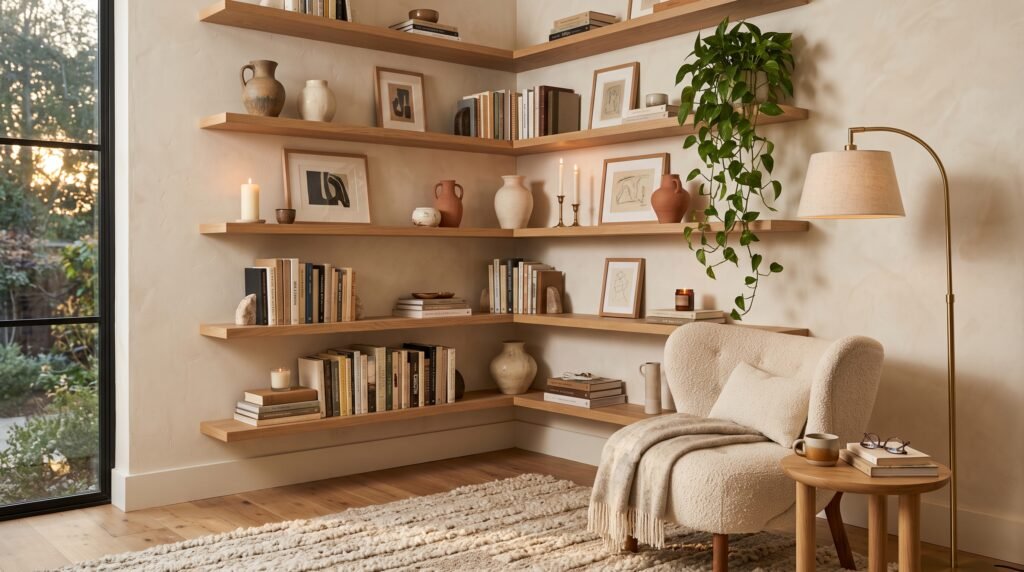
Corner shelves work especially well in smaller living rooms, bedrooms, home offices, and reading spaces.
Choose Between Floating and Built-In Shelves
Floating corner shelves create a light, modern appearance because there are fewer visible supports.
Built-in shelving feels more substantial and architectural.
Your choice should depend on the overall style of the room.
For minimalist interiors, floating wood shelves can look beautiful. For a more traditional or luxurious room, built-in shelves with trim details may feel more appropriate.
Create a Cozy Corner
You can turn corner shelving into part of a larger relaxation area.
Place a comfortable accent chair nearby with a small side table and floor lamp.
The shelving can hold books, candles, ceramics, and artwork.
Suddenly, an unused corner becomes a small reading or relaxation nook.
Use Height Strategically
Place larger objects on lower shelves and smaller decorative pieces higher up.
This gives the shelving visual stability.
You can also position a trailing plant on an upper shelf so that its foliage naturally falls downward, softening the corner.
6. Style Minimalist Shelves with Books and Ceramics
Floor-to-ceiling shelving doesn’t have to be packed with belongings.
Minimalist styling can make a shelving wall feel sophisticated, calm, and intentional.
[IMAGE 6 – Minimalist Floor-to-Ceiling Shelves with Books and Ceramics]
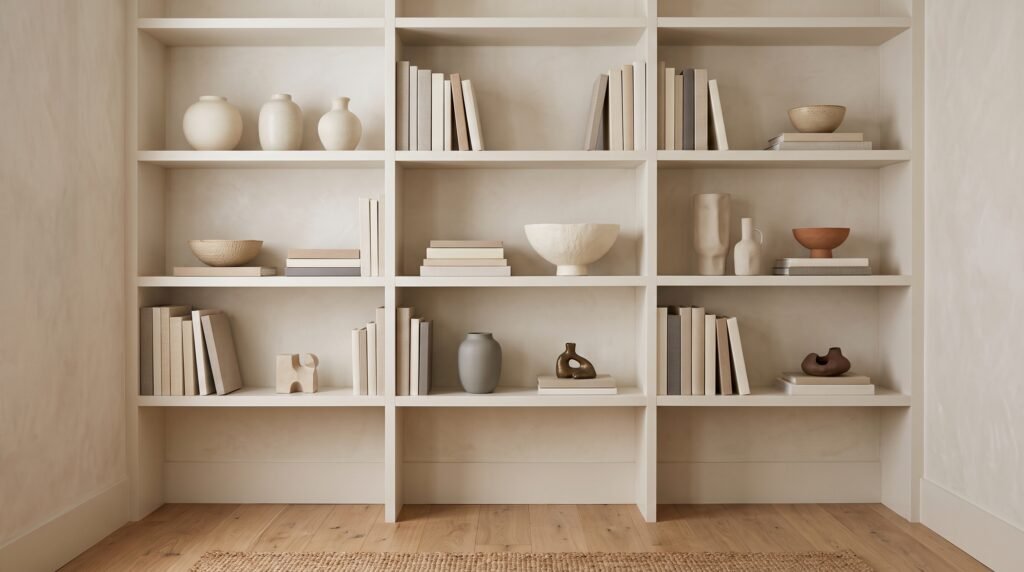
The secret is choosing fewer objects while paying greater attention to shape, scale, and placement.
Start with Books
Books provide an excellent foundation for shelf styling.
Instead of placing every book vertically, experiment with different arrangements.
Create small horizontal stacks and place decorative objects on top.
You can also leave gaps between groups of books.
This creates breathing room and prevents the shelving from looking like a crowded bookstore.
Introduce Sculptural Ceramics
Ceramics are perfect for minimalist shelf styling because their shapes can become decorative features.
Look for pieces such as:
- Rounded vases
- Sculptural bowls
- Handmade pottery
- Tall narrow vessels
- Textured ceramic objects
Neutral colors like ivory, beige, charcoal, and warm brown work particularly well.
Think About Negative Space
One of the most important aspects of minimalist shelf styling is what you don’t display.
An empty section of shelf isn’t wasted space.
It creates visual separation and helps nearby objects receive more attention.
Rather than asking, “What else can I put here?” consider whether the shelf already feels balanced.
7. Build Floor-to-Ceiling Shelves Around a Window
Windows are another excellent architectural feature to incorporate into shelving.
Installing shelves on either side of a window can create an attractive built-in appearance while preserving natural light.
[IMAGE 7 – Floor-to-Ceiling Shelves Around a Window]
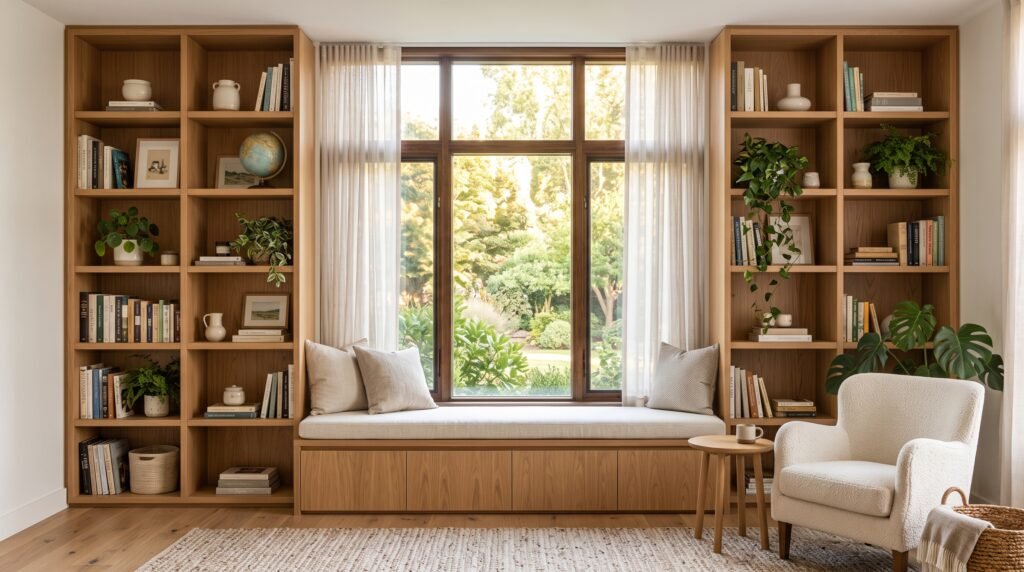
Depending on the room’s layout, shelving can also continue above the window.
Let the Window Become the Centerpiece
Instead of competing with the view, allow the shelving to frame it.
This naturally draws attention toward the window and can make the wall feel more symmetrical.
If there is enough space beneath the window, you might incorporate a low cabinet or bench between the shelving units.
This can provide additional hidden storage.
Keep Window Treatments Simple
When shelves surround a window, complicated curtains can make the area feel crowded.
Simple linen curtains, Roman shades, or streamlined blinds usually work better.
Soft neutral fabrics can add warmth without distracting from the shelving.
Use Plants Near Natural Light
Shelves closest to the window may be excellent places for small indoor plants, depending on their individual light requirements.
Mix greenery with books and ceramics instead of creating an entire shelf filled with plants.
A few carefully positioned plants can add freshness without overwhelming the design.
Make It Feel Custom
Painted shelves that match the surrounding walls can create a seamless built-in effect.
Alternatively, natural wood shelving against light walls can frame the window with warmth and contrast.
Either approach can transform a simple window wall into one of the most attractive features in the room.
8. Combine Open Shelving with Hidden Storage
Beautiful shelving is useful, but not everything in your home needs to be displayed.
That’s why combining floor-to-ceiling open shelving with hidden storage can be one of the most practical solutions.
[IMAGE 8 – Luxury Floor-to-Ceiling Shelving with Hidden Storage]
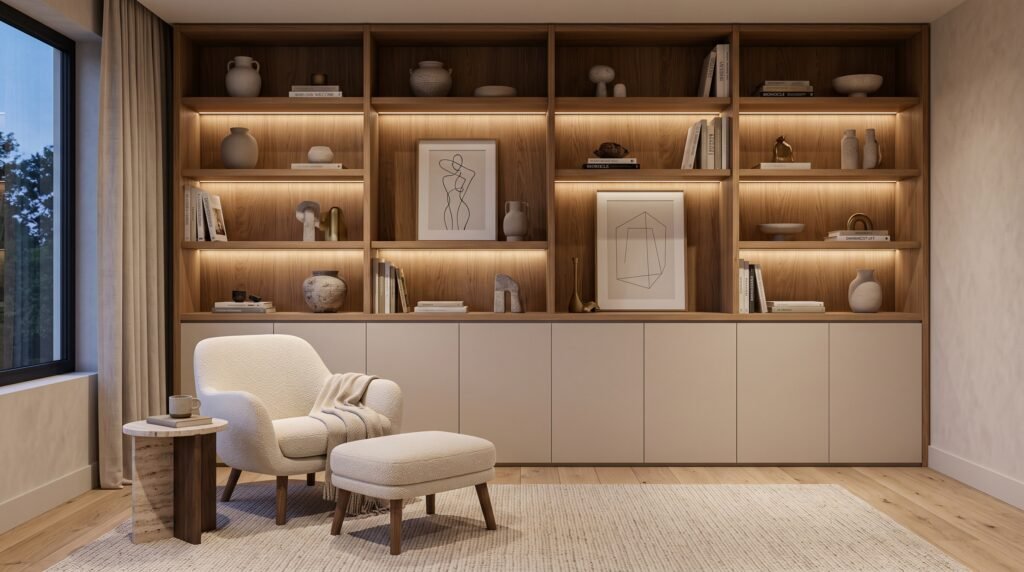
Cabinets along the lower portion of the shelving unit provide a place for everyday clutter while the upper shelves remain available for carefully selected decor.
Hide Everyday Essentials
Lower cabinets can store items that aren’t particularly decorative.
Depending on the room, these might include electronics, paperwork, children’s toys, chargers, extra linens, cleaning supplies, or seasonal accessories.
Keeping these items behind doors makes the entire room feel calmer.
Keep Decorative Items at Eye Level
The most attractive objects should generally appear around eye level.
This is where people naturally notice them first.
Display your favorite artwork, ceramics, books, and sculptures in these areas.
Higher shelves can contain less frequently used books or larger decorative pieces.
Consider Push-to-Open Cabinets
For contemporary interiors, handle-free cabinetry creates a seamless appearance.
Push-to-open doors allow the bottom storage section to visually blend into the shelving.
If you prefer a more traditional look, simple brass, black, or wooden hardware can add character.
Add Subtle Lighting
Integrated lighting can make full-height shelving feel particularly luxurious.
Warm LED strips placed beneath shelves create gentle pools of light and emphasize the objects on display.
Instead of brightly illuminating every shelf, use lighting selectively to create depth.
How to Decorate Floor-to-Ceiling Shelves Without Making Them Look Cluttered
Even beautifully designed shelving can look messy if too many objects are displayed.
The goal is to create layers without filling every inch.
Start with your largest objects first. Place artwork, large vases, baskets, and substantial book collections before adding smaller accessories.
Then gradually introduce smaller pieces.
Step back frequently and look at the shelving from across the room.
If one section feels visually heavy, remove an object or move it somewhere else.
Repeat Colors and Materials
Repeating a small palette throughout the shelves helps create unity.
For example, you might repeat:
- Cream ceramics
- Natural wood
- Black accents
- Greenery
- Neutral book covers
The objects don’t need to match, but they should feel related.
Vary the Height of Objects
Avoid lining up objects of identical height.
Combine tall vases with shorter bowls, horizontal books, framed art, and sculptural accessories.
Different heights create movement across the shelving.
Layer Smaller Artwork
Artwork doesn’t always need to hang on the wall.
Small framed prints or paintings can lean against the back of shelves.
Place a small ceramic piece or stack of books slightly in front to create depth.
How to Make Floor-to-Ceiling Shelves Look Expensive
You don’t necessarily need expensive materials or accessories to create a luxurious shelving display.
A few thoughtful decisions can dramatically improve the overall appearance.
First, keep the design consistent.
Using the same shelf thickness and spacing throughout the installation creates a custom appearance.
Second, avoid excessive decor.
Luxury interiors often feature fewer objects with stronger shapes rather than dozens of small accessories.
Third, consider lighting.
Even simple shelves can look more sophisticated when illuminated with warm integrated lighting.
Finally, pay attention to the surrounding wall.
Shelving painted in the same color as the walls creates a seamless architectural appearance, while natural wood can introduce an upscale custom-built feel.
Best Decor Items for Floor-to-Ceiling Shelves
You don’t need to purchase an entirely new collection of accessories to style your shelving.
Start with meaningful objects you already own.
Books are usually the easiest foundation. Mix decorative books with ones you genuinely enjoy reading.
Add a combination of ceramic vases, bowls, framed photographs, artwork, candles, baskets, small sculptures, and plants.
Natural materials tend to work particularly well because they introduce subtle variations in texture.
Stone, wood, ceramic, glass, linen, and woven fibers can all coexist beautifully within the same display.
Avoid buying many tiny decorative pieces simply to fill empty areas.
A few substantial objects usually create a stronger visual effect.
Choosing the Right Color for Floor-to-Ceiling Shelving
Color can dramatically change the way built-in shelves feel.
Warm White
Warm white shelves blend beautifully into neutral interiors and can help smaller rooms feel open and bright.
Beige or Greige
Soft beige and greige create slightly more depth while maintaining a calm appearance.
These colors pair especially well with organic-modern interiors.
Natural Wood
Wood adds warmth and texture and works beautifully in Scandinavian, Japandi, mid-century, and organic-modern spaces.
Dark Charcoal
Dark shelving can create a dramatic library-inspired look.
It works particularly well in rooms with good natural light.
Matching Wall and Shelf Colors
Painting the shelving and surrounding wall the same color creates a sophisticated built-in effect.
This technique can make even relatively simple shelving appear intentionally designed for the room.
Floor-to-Ceiling Shelving Ideas for Small Rooms
Don’t assume full-height shelving will make a small room feel cramped.
When designed carefully, it can actually make the room feel taller and more organized.
Choose shallow shelving so it doesn’t project too far into the room.
Use lighter finishes if the space receives limited natural light.
Keep decorative objects relatively minimal and use closed cabinets at the bottom for clutter.
Most importantly, take advantage of the entire vertical wall.
Using height reduces the need for several separate storage pieces, helping preserve valuable floor space.
Safety and Practical Considerations
Tall shelving needs to be secure, especially when it holds heavy books or decorative objects.
Floor-to-ceiling units should be properly anchored to wall framing or suitable structural supports. Freestanding tall bookcases should also be secured according to the manufacturer’s instructions to reduce tipping risk.
Keep especially heavy objects on lower shelves rather than near the ceiling.
Frequently used items should remain within comfortable reach.
Reserve the highest shelves for lightweight decor or objects you rarely need.
Also consider shelf depth before construction. Deep shelves may be useful for storage, but excessively deep shelving can make smaller rooms feel enclosed.
Finding the right balance between capacity and visual lightness is important.
Final Thoughts
Floor-to-ceiling shelves offer much more than additional storage. They can turn ordinary walls, unused corners, windows, and doorways into intentional architectural features.
For a dramatic transformation, a full-wall built-in shelving system can become the focal point of a living room. In smaller spaces, narrow vertical shelves take advantage of unused height without consuming too much floor area.
Natural wood shelving is ideal for creating a warm organic-modern atmosphere, while minimalist shelves styled with books and ceramics offer a calmer, more contemporary appearance.
You can also use full-height shelving to frame windows and doorways or combine open displays with lower hidden cabinets for a balance between beauty and practicality.
Whatever design you choose, remember that successful shelf styling isn’t about filling every available space.
Allow some breathing room, repeat a consistent palette, vary the size and height of decorative objects, and mix practical storage with pieces that feel personal.
With thoughtful planning, indoor floor-to-ceiling shelves can transform an empty wall into one of the most beautiful and useful features in your home.