17 Indoor Decorative Screen Ideas That Add Style, Privacy, and Character
From warm wooden slats and woven cane to intricate carved panels and sculptural plaster designs, decorative screens can suit almost every interior style. They are particularly useful in modern homes where open layouts are popular but homeowners still want cozy, clearly defined zones.
A screen can separate a dining area from a living room, create a small entryway inside an open apartment, provide privacy around a bedroom dressing area, or add interest to an otherwise empty wall. Some designs are freestanding and movable, while others become permanent floor-to-ceiling architectural elements.
The best part is that decorative screens do not have to feel heavy. Open patterns, slim frames, pale materials, and carefully spaced slats can preserve the bright, spacious feeling of a room.
If you are looking for an alternative to ordinary partitions, curtains, or solid walls, these indoor decorative screen ideas offer plenty of inspiration.
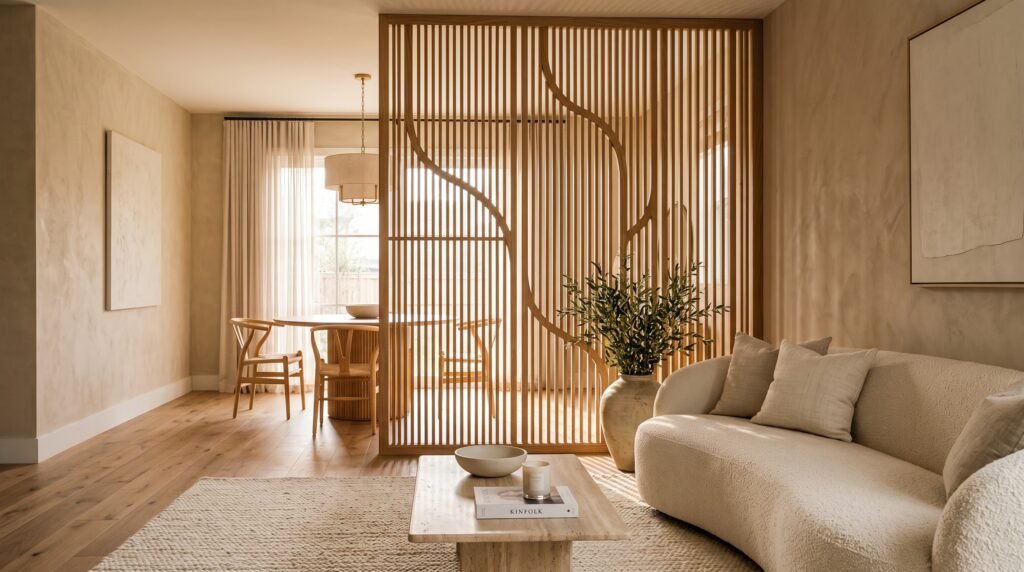
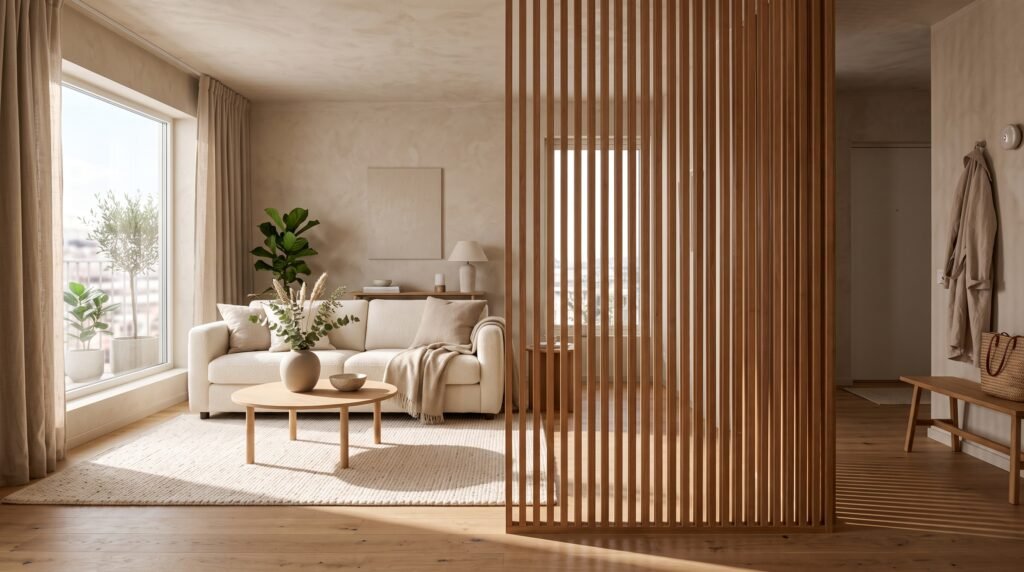
1. Warm Wood Slat Decorative Screen
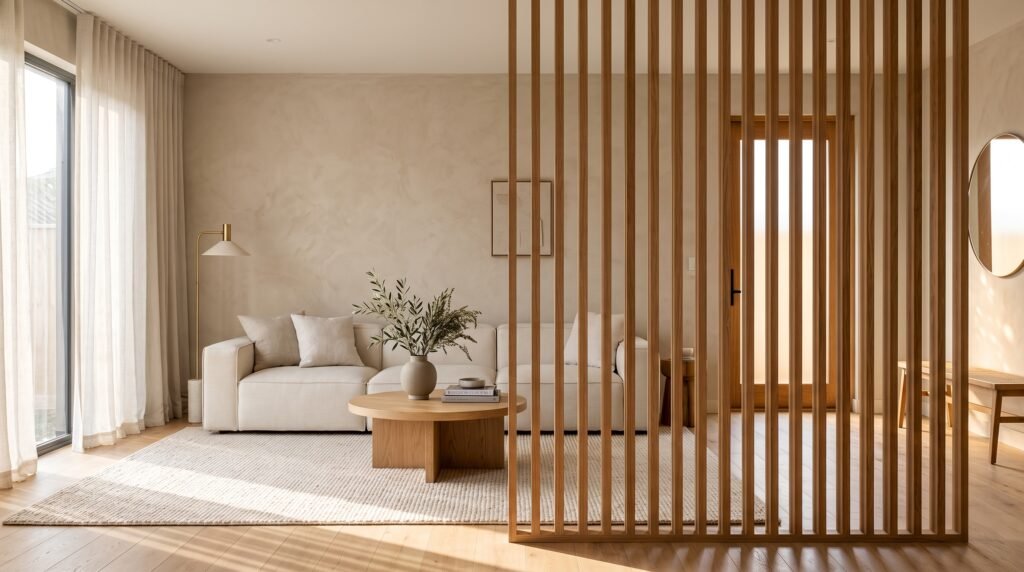
Wood slat screens are one of the easiest ways to introduce architectural character without making an interior feel closed off.
Slim vertical pieces of timber create a subtle visual boundary while leaving enough space between the slats for daylight and sightlines to continue through the room. This makes the design especially useful between living and dining spaces or near an entrance.
Warm oak is particularly effective in neutral interiors because it adds natural color without becoming visually overwhelming. Pair the screen with cream walls, linen upholstery, a textured rug, and simple ceramics for an organic modern look.
Spacing is important. Narrow gaps provide greater privacy, while wider gaps make the screen feel lighter and more decorative.
You can also use the direction of the slats to visually change the room. Floor-to-ceiling vertical lines draw the eye upward, which can make a low ceiling appear taller.
Another advantage is flexibility. A wood slat screen can be designed as a narrow feature beside a staircase or extended across most of a room.
For a sophisticated finish, keep the timber consistent with other wooden details in the space, such as flooring, shelving, furniture, or ceiling beams.
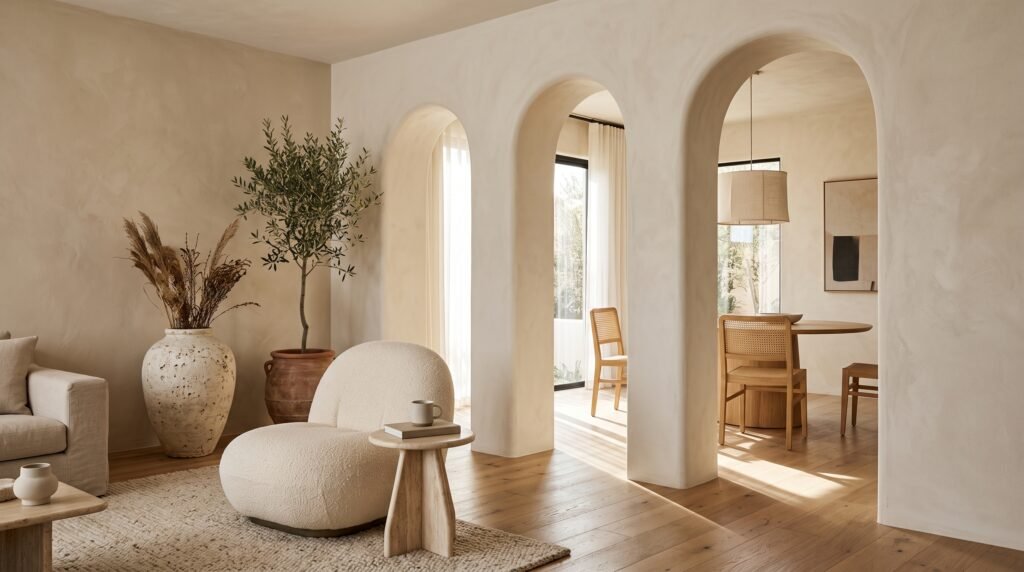
2. Elegant Arched Decorative Screen
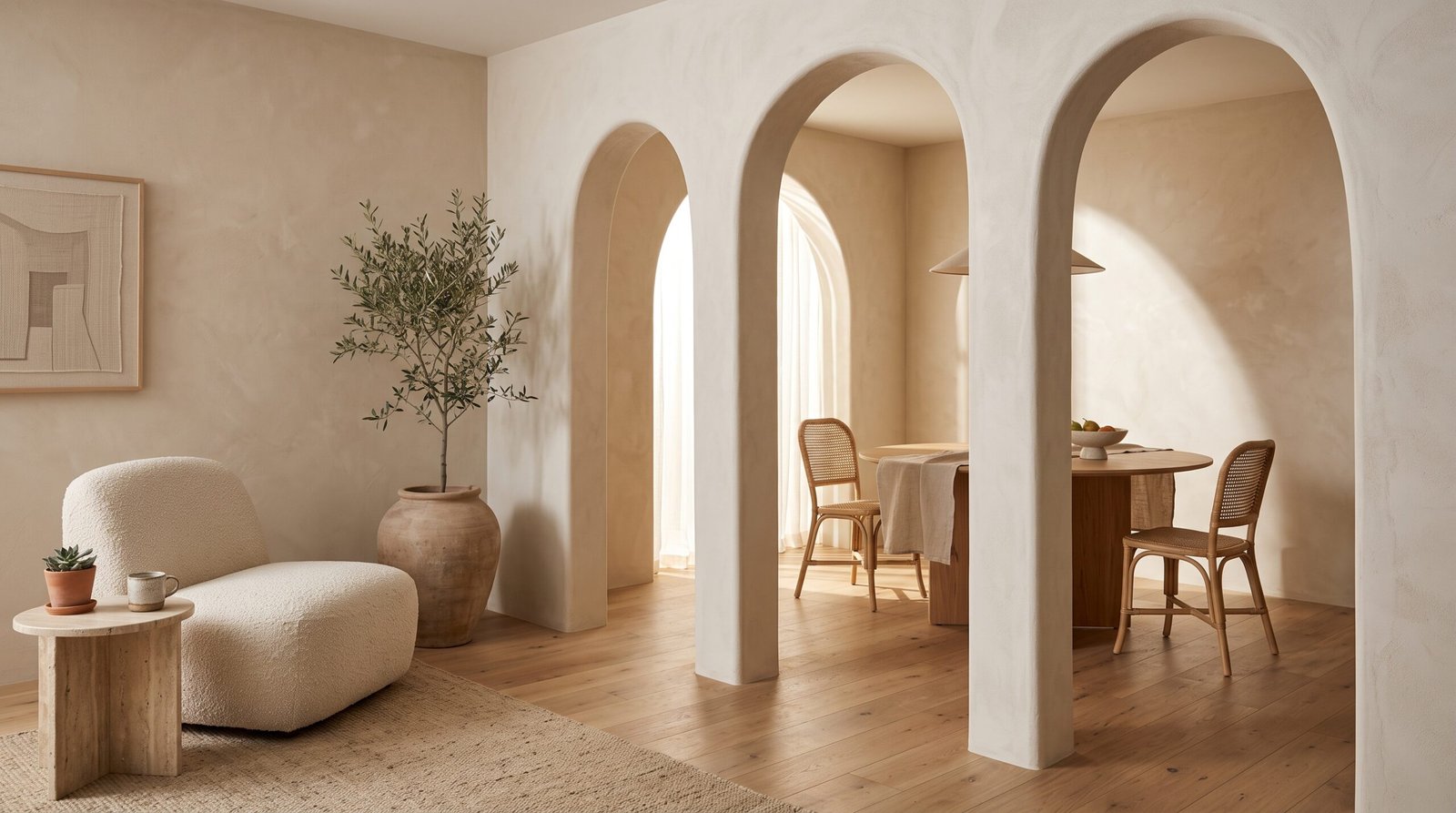
Arches instantly soften an interior.
Instead of choosing a basic rectangular divider, consider incorporating curved openings into a decorative screen. Repeated arches create rhythm and turn a functional partition into a genuine architectural statement.
An arched screen looks particularly beautiful in Mediterranean, organic modern, contemporary, and minimalist homes.
For a subtle result, use the same warm white or cream tone as the surrounding walls. The screen then appears to have been designed as part of the home’s original architecture rather than added afterward.
A plaster-style finish works beautifully for this approach.
Position an arched screen between an entrance and living area, beside a dining space, or between a bedroom and dressing area.
Keep the surrounding décor restrained. A sculptural chair, large ceramic vase, olive tree, and softly textured rug may be all you need.
Curves naturally attract attention, so the screen itself can act as the room’s primary decorative feature.
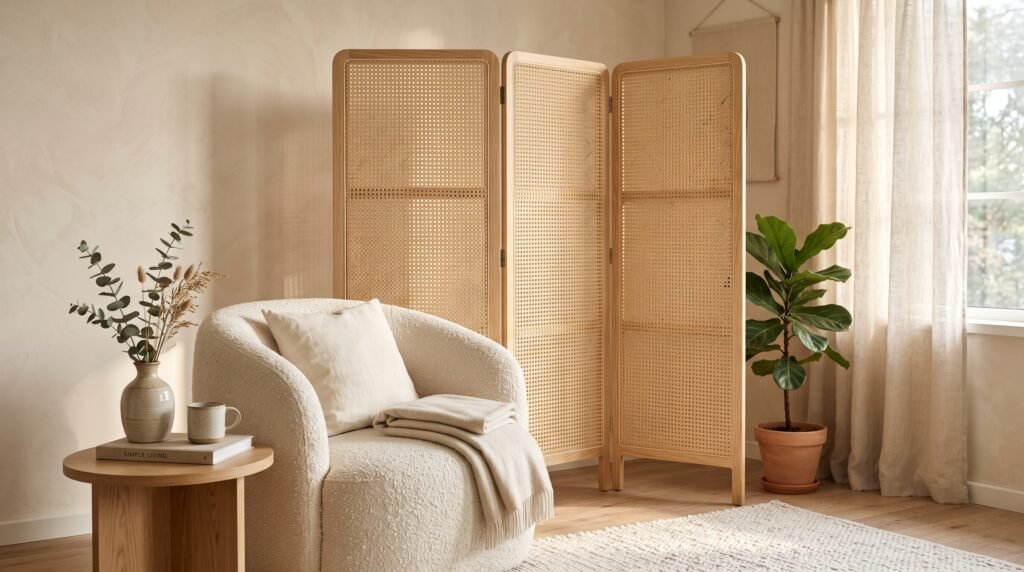
3. Woven Cane and Rattan Screen
Cane brings warmth and texture to an interior while maintaining an airy appearance.
A decorative screen made from woven cane panels framed with natural timber works especially well in relaxed interiors. It complements Scandinavian, coastal, bohemian, Japandi, and organic modern styles.
The woven material filters views rather than completely blocking them. This makes it useful when you want gentle privacy without creating a solid barrier.
Try placing a cane screen behind a reading chair to define a cozy corner. It can also separate a sleeping area in a studio apartment or create a beautiful dressing zone inside a large bedroom.
For a more polished look, choose a screen with a simple oak frame and finely woven cane.
Natural textures work best when layered thoughtfully. Pair cane with linen curtains, wool rugs, handmade ceramics, warm woods, and a few leafy plants.
Avoid adding too many competing patterns around the screen. The woven texture already provides plenty of visual detail.
4. Geometric Metal Decorative Screen
Metal decorative screens can create a completely different mood.
Instead of the softness of timber or cane, metal introduces crisp lines and strong graphic shapes. A slim black or bronze frame with geometric cutouts can become an eye-catching feature in a contemporary home.
These screens work particularly well in open-plan living spaces.
A geometric screen placed between the entrance and living room can provide visual separation while still allowing you to see through to the rest of the home.
For a softer interpretation, consider warm bronze, champagne metal, or brushed brass instead of stark black.
The pattern matters as much as the material. Large geometric openings usually look more contemporary and spacious, while intricate repeating patterns create a more decorative effect.
If the screen itself is visually complex, keep nearby furniture relatively simple.
A neutral sofa, stone side table, understated rug, and minimal accessories allow the metalwork to stand out without making the room feel busy.
5. Decorative Breeze Block Screen
Breeze blocks are no longer limited to outdoor architecture.
Used indoors, decorative blocks can create striking partitions filled with pattern, light, and shadow.
Modern breeze blocks are available in everything from simple geometric shapes to curved floral-inspired patterns. When repeated across a wall, they create an almost sculptural effect.
A pale cream or warm white breeze block screen works especially well in contemporary interiors because it creates texture without introducing a strong competing color.
Consider using one between a hallway and living room or between dining and lounge spaces.
During the day, sunlight passing through the openings creates changing patterns across floors and walls. This makes the partition feel different depending on the time of day.
Breeze block screens tend to have greater visual weight than timber slats or cane, so balance them with softer furnishings.
Linen upholstery, warm wood, textured rugs, and natural greenery can prevent the room from feeling too architectural.
6. Japandi Shoji-Inspired Screen
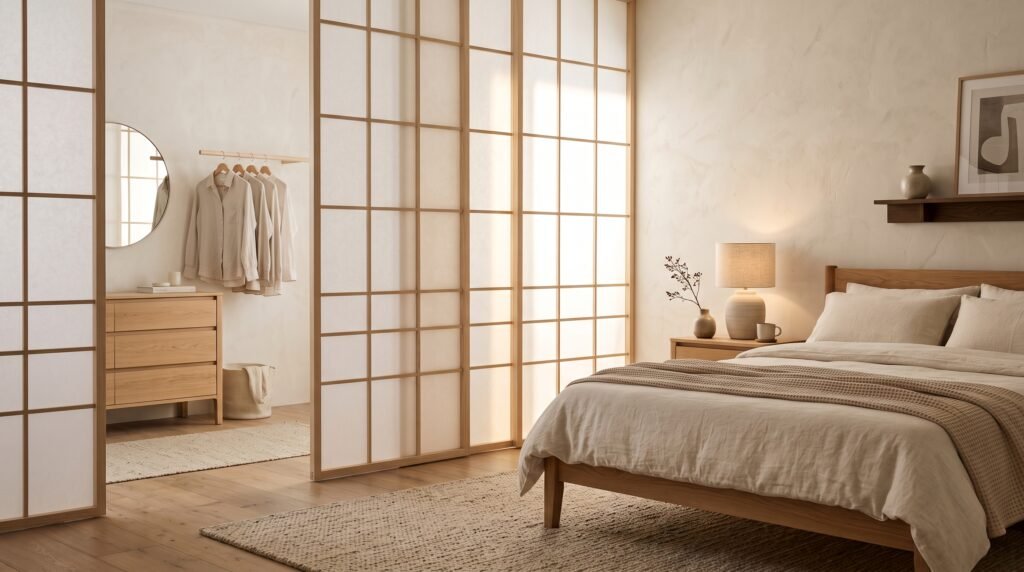
For interiors that favor simplicity, a Shoji-inspired screen can create an exceptionally peaceful atmosphere.
Traditional Japanese Shoji screens use lightweight wooden grids with translucent paper. Modern interpretations can achieve a similar effect with frosted glass, acrylic, fabric, or other translucent panels.
The appeal comes from the balance between privacy and light.
Rather than completely blocking daylight, the translucent surface diffuses it, producing a soft glow.
Choose pale oak or ash timber for a Scandinavian-influenced Japandi aesthetic.
This screen style works beautifully between a bedroom and dressing area, beside a home office, or as a subtle partition within an open living room.
The surrounding décor should feel equally calm. Think low-profile furniture, natural textiles, handmade pottery, warm neutral colors, and very little visual clutter.
The result can feel almost meditative.
7. Sculptural Plaster Decorative Screen
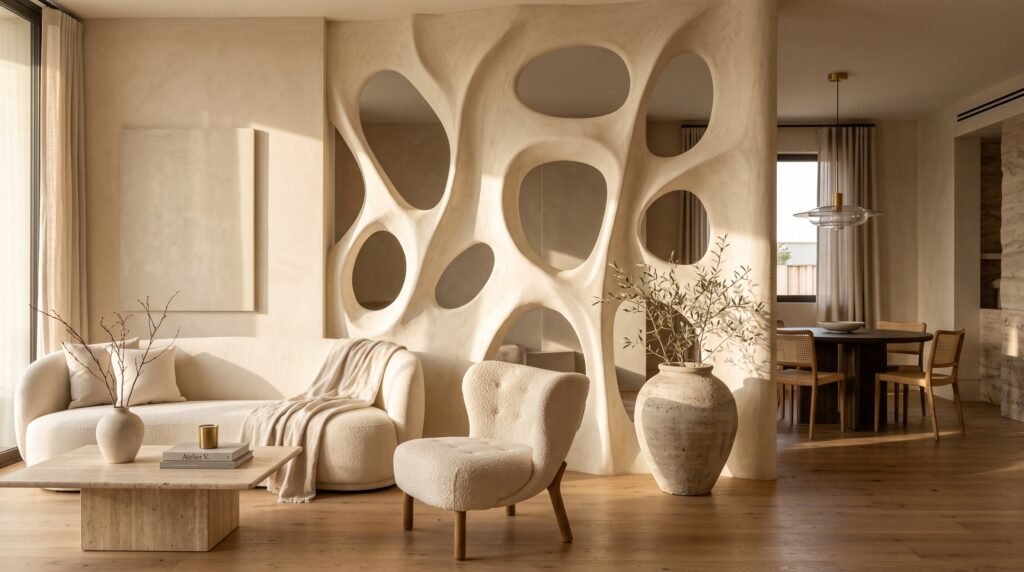
If you want the screen to look more like art than furniture, consider a sculptural plaster design.
These screens can feature irregular openings, rounded forms, soft curves, or repeated abstract shapes.
Rather than disappearing into the background, the screen becomes a focal point.
Warm white, ivory, sand, and limestone-inspired finishes are particularly effective because they emphasize form and shadow.
A sculptural screen can look stunning in a large living room, entrance hall, or open dining space where there is enough distance to appreciate its shape.
Lighting is important with this type of partition.
Natural side lighting emphasizes recessed edges and curves, while subtle evening lighting can create dramatic shadows.
Because the screen already has a strong artistic presence, avoid surrounding it with excessive wall décor.
A few carefully selected pieces of furniture will usually create a more luxurious result.
8. Freestanding Folding Screen
Not every decorative screen needs to become a permanent part of the architecture.
A freestanding folding screen is one of the most flexible options because it can be moved whenever the room’s needs change.
Modern folding screens are available in upholstered fabric, wood, cane, fluted panels, woven fibers, and even sculptural materials.
Use one behind an accent chair to create a reading corner or place it near a bed to separate a dressing space.
It can also hide practical areas such as storage shelves, exercise equipment, or a compact workspace when they are not in use.
For a sophisticated neutral interior, choose a folding screen covered in linen, boucle, or textured woven fabric.
The screen can introduce softness while also helping absorb sound.
Unlike fixed dividers, folding screens also give you an opportunity to experiment. You can move them seasonally or reposition them when rearranging furniture.
9. Floor-to-Ceiling Fluted Wood Screen
Fluted wood offers a more detailed alternative to ordinary wooden slats.
The repeated grooves create subtle shadows that make the surface look richer throughout the day.
A floor-to-ceiling fluted screen can be particularly effective beside an entryway or staircase. It provides separation while maintaining the warmth associated with natural timber.
Light oak creates a Scandinavian feel, while walnut produces a richer and more dramatic appearance.
For modern interiors, avoid excessive ornamentation around the screen. Let the rhythm of the timber provide the decorative detail.
10. Moroccan-Inspired Carved Screen
Intricately carved screens can bring craftsmanship and global character into a room.
Moroccan-inspired patterns often feature repeating geometric or floral forms that look beautiful when light passes through them.
You do not necessarily need to create an entire wall.
A single carved panel positioned inside a simple frame can provide enough detail to transform an empty area.
For contemporary homes, choose a screen in warm white, pale wood, or muted beige rather than a heavily stained finish.
This allows the intricate pattern to feel modern rather than overly traditional.
11. Glass and Metal Decorative Screen
Glass is ideal when separation is needed without sacrificing natural light.
Instead of using a completely transparent glass partition, incorporate fluted, reeded, frosted, or textured glass.
A slim metal frame adds definition while the glass maintains openness.
This combination works beautifully between a hallway and living room, around a home office, or between dining and lounge areas.
Reeded glass is especially useful because it gently obscures the view while allowing plenty of brightness through.
For a softer look, consider bronze or warm metallic framing rather than black.
12. Built-In Screen With Display Shelves
A decorative screen can provide storage as well as separation.
Instead of creating a continuous patterned partition, incorporate open shelves into the design.
Small niches can display ceramics, books, candles, sculptural objects, or trailing greenery.
The trick is avoiding overcrowding.
Leave some shelves empty so light can continue traveling through the screen.
A warm wood structure with cream ceramics can work beautifully in an organic modern home.
This idea is particularly effective between living and dining spaces because the divider becomes useful from both sides.
13. Curved Wood Screen
Straight lines are not the only option for wooden partitions.
A gently curved wood screen can soften the transition between different areas of an open room.
Vertical timber slats are particularly suited to curved layouts because each individual piece can follow the overall shape.
Use a curved screen to partially wrap a reading corner, define an entrance, or guide movement through a large open-plan space.
The combination of natural timber and flowing geometry creates an elegant contemporary look.
14. Ceiling-Hung Decorative Panels
When floor space is limited, suspend decorative panels from the ceiling.
These can be made from wood, metal, woven fiber, or lightweight sculptural materials.
Because the panels stop above the floor, the room retains a greater sense of openness.
Suspended screens can be especially effective behind a sofa or between dining and living zones.
For a cleaner appearance, use several narrow matching panels rather than one oversized piece.
The slight gaps between them keep the composition visually light.
15. Upholstered Decorative Screen
Fabric screens introduce a softness that harder architectural materials cannot provide.
An upholstered screen covered in linen, boucle, wool, or another textured textile can make a bedroom or lounge feel particularly cozy.
Choose a fabric close to the wall color for an understated result.
Cream upholstery against warm white walls creates gentle layering without strong contrast.
This type of screen is particularly useful in bedrooms because the soft surface contributes to a quieter, more comfortable atmosphere.
16. Decorative Screen With Integrated Lighting
Lighting can transform a screen after sunset.
Consider incorporating discreet LED strips, small spotlights, or hidden backlighting into the structure.
A carved screen illuminated from behind can cast beautiful patterned shadows across the surrounding surfaces.
Wood slat partitions can also be paired with concealed warm lighting along the ceiling or floor.
Keep the lighting subtle.
The goal is to highlight the texture and geometry of the screen rather than turn it into an overpowering light feature.
Warm illumination generally works best with natural wood, plaster, cane, and neutral interiors.
17. Plant-Filled Decorative Screen
Plants can soften the architectural quality of a partition.
Create an open timber or metal framework with integrated ledges where small plants can sit at different heights.
Trailing varieties are particularly effective because they gradually weave through the structure.
However, avoid filling every opening with greenery.
The empty spaces are what allow the screen to retain its light, airy character.
Combine a few trailing plants with simple ceramic pots for a more curated appearance.
This idea works especially well in bright living rooms, sunrooms, and indoor garden-inspired spaces.
How to Choose the Right Indoor Decorative Screen
Before selecting a screen, think about what you actually need it to accomplish.
If privacy is the priority, cane, translucent panels, upholstered screens, or closely spaced slats may work best.
If you simply want to visually define two areas, an open wood or metal design can provide enough separation.
Light should also influence your decision.
Rooms with limited windows usually benefit from open or translucent screens. A solid divider could make the darker side of the room feel enclosed.
Material should connect with the rest of the interior.
Wood complements warm and natural homes, metal suits contemporary spaces, cane brings relaxed texture, and plaster works beautifully in organic architectural interiors.
Scale is equally important. A very narrow screen can look accidental in a large room, while an oversized partition may overwhelm a compact apartment.
Try to treat the screen as part of the architecture rather than an isolated decorative object.
Where Can You Use Decorative Screens Indoors?
Decorative screens are surprisingly versatile.
One of the best locations is near the front entrance. Many homes open directly into a living room, which can make the entrance feel undefined. A partial screen creates a subtle foyer without constructing another wall.
They also work beautifully between living and dining areas.
In bedrooms, screens can separate sleeping and dressing zones or conceal an open wardrobe.
Home offices are another practical application. An open screen behind a desk creates a visual boundary while maintaining connection with the rest of the room.
Screens can even be placed beside staircases where they provide an extra architectural layer.
The key is ensuring that the screen improves the flow of the space instead of creating an obstacle.
Styling Tips for Indoor Decorative Screens
Once your screen is installed, resist the urge to decorate every surface around it.
A beautifully designed screen often needs very little additional styling.
Place a sculptural floor lamp nearby, add a ceramic vessel, or introduce one substantial indoor plant.
If the screen is made from wood or cane, repeat those natural tones elsewhere in the room through furniture or accessories.
Lighting can also emphasize the design. Positioning a screen near a window creates natural shadows throughout the day.
In the evening, a warm floor lamp can highlight its texture.
Most importantly, maintain some visual breathing room around the partition. Empty space makes architectural features feel intentional and luxurious.
Final Thoughts
Indoor decorative screens prove that dividing a room does not have to mean building another wall.
A carefully chosen screen can provide privacy, organize an open layout, filter natural light, introduce texture, and become one of the most memorable features in a room.
For a warm contemporary interior, wood slats and fluted timber are excellent choices. Cane screens bring relaxed natural texture, while geometric metal panels provide sharper architectural contrast. Shoji-inspired designs are perfect for calm minimalist spaces, and sculptural plaster screens can become works of art in their own right.
If flexibility matters, a freestanding folding screen may be the simplest solution. For something more permanent, floor-to-ceiling screens can become part of the architecture and dramatically change how a room feels.
Whichever style you choose, pay attention to proportion, light, material, and the amount of privacy required.
The most successful decorative screens do more than separate two spaces. They make both sides of the room feel more intentional, comfortable, and visually interesting.
With options ranging from understated wooden slats to bold sculptural designs, there is an indoor decorative screen solution for almost every home and decorating style.