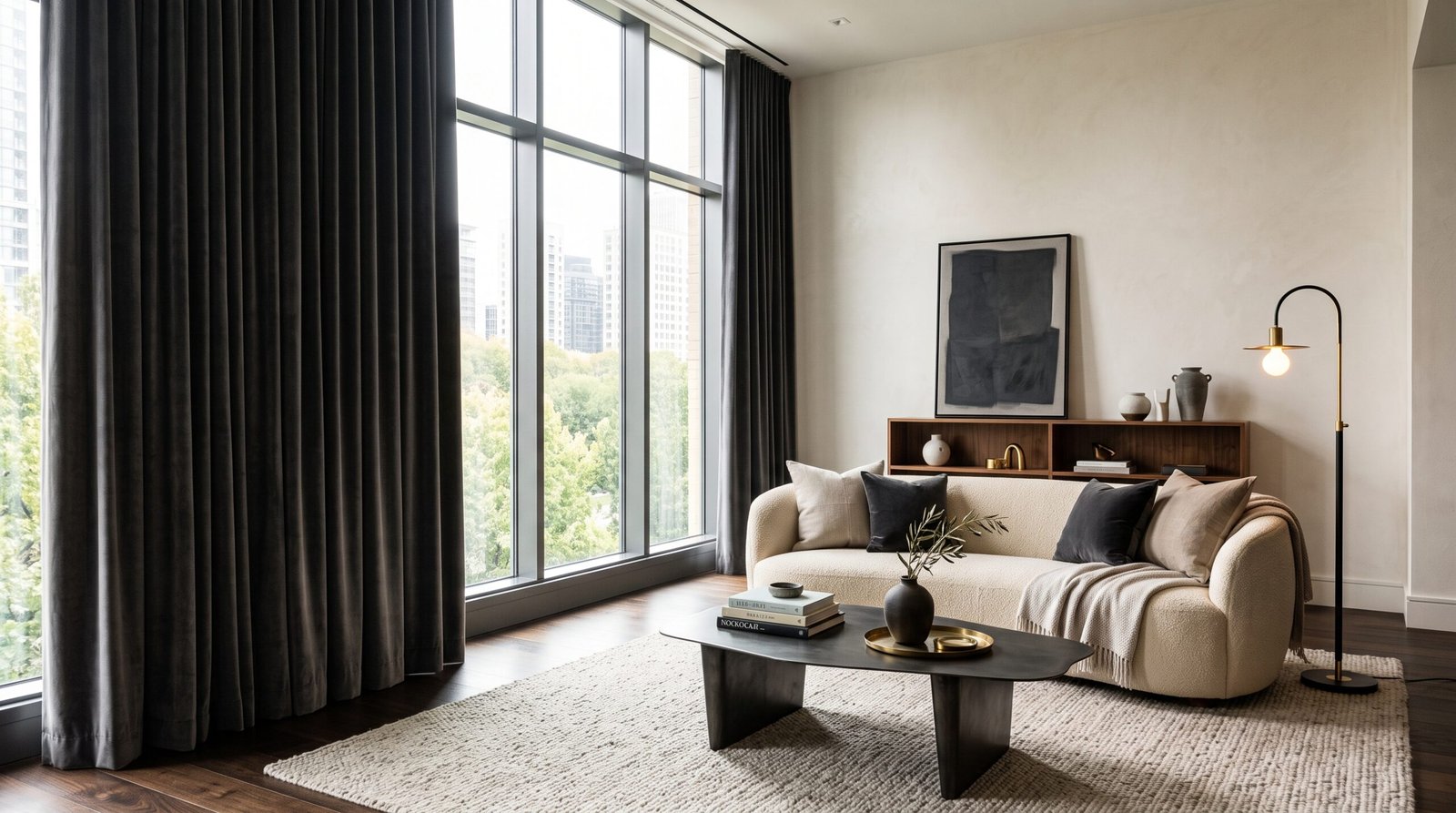
Indoor Floor-to-Ceiling Curtain Ideas: 8 Elegant Ways to Make Your Rooms Look Taller & Luxurious
When curtains begin close to the ceiling and continue all the way to the floor, the eye naturally follows their long vertical lines. This creates the illusion of taller ceilings and larger windows. It is particularly useful in rooms where the ceiling feels low or the windows seem too small for the wall.
Floor-to-ceiling curtains are also incredibly versatile. Soft ivory linen can create a relaxed organic-modern room, while thick velvet drapes can introduce dramatic luxury. Wall-to-wall curtains can make a bedroom feel similar to a boutique hotel, and discreet ceiling tracks can give a modern living room an exceptionally clean finish.
You do not necessarily need enormous windows to use this look either. In fact, extending curtains beyond the actual window can make a modest window appear considerably larger.
Whether you love cozy neutral interiors, Scandinavian simplicity, contemporary luxury, or dramatic modern spaces, these eight floor-to-ceiling curtain ideas offer plenty of inspiration.
1. Soft Floor-to-Ceiling Linen Curtains
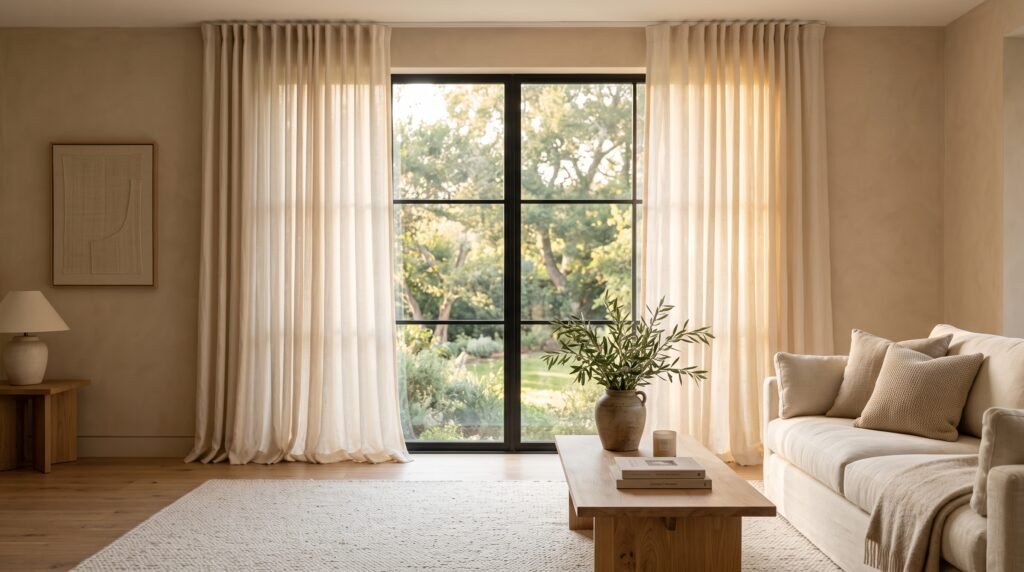
Few curtain styles feel as timeless as long linen curtains.
Linen has a naturally relaxed texture that prevents a room from looking overly formal while still creating an elegant finish. When the fabric extends from near the ceiling to the floor, those subtle folds become beautiful vertical lines throughout the room.
For a calm interior, consider warm white, oatmeal, cream, beige, or light greige linen. These shades work especially well alongside warm wood furniture, textured rugs, ceramic accessories, and natural greenery.
Another advantage of linen is the way it interacts with daylight. Instead of completely blocking sunlight, lightweight linen gently filters it. During the daytime, the room receives a soft glow that can make neutral colors appear warmer and more inviting.
For the most sophisticated result, allow the curtain panels to be generous rather than perfectly flat when closed. Fuller curtains create deeper folds and make the fabric appear more substantial.
The curtain length also matters. Panels that barely touch the floor provide a clean contemporary appearance, while fabric that gently rests on the floor feels slightly softer and more romantic.
Avoid leaving several inches between the bottom of the curtain and the floor. That gap interrupts the long vertical line that makes this design so effective.
Pair floor-to-ceiling linen curtains with simple furniture and let the natural texture of the fabric become part of the decoration.
2. Wall-to-Wall Curtains for a Luxury Hotel Look
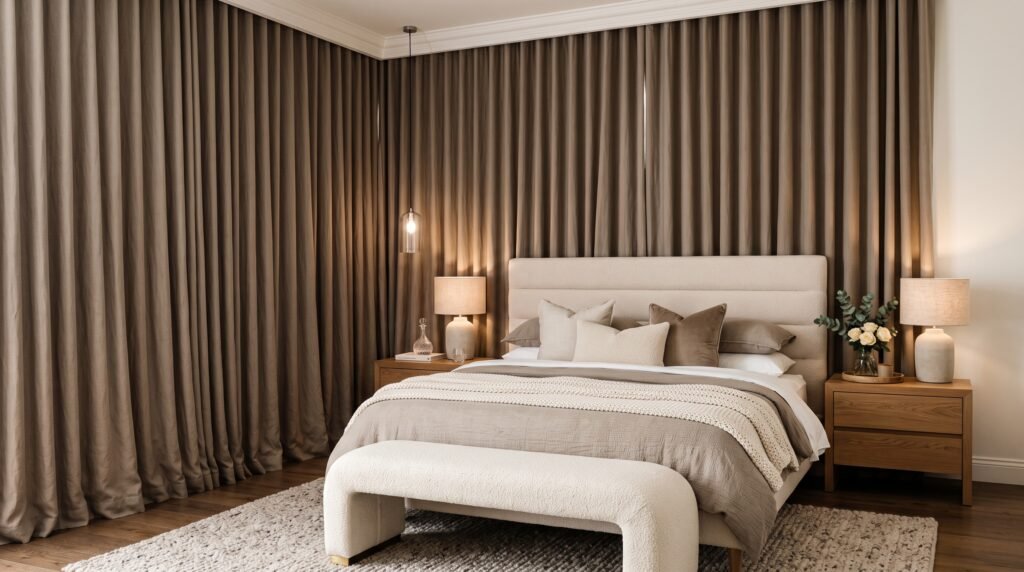
Instead of limiting curtains to the width of your window, consider covering almost the entire wall.
Wall-to-wall curtains create an incredibly luxurious effect because they visually disguise the actual dimensions of the window. When the curtains are closed, the viewer cannot immediately tell where the window begins or ends.
The result is a smooth fabric wall that feels similar to interiors found in sophisticated hotels.
This technique works beautifully behind beds, along living room windows, and across large sliding doors. It can also solve the problem of an awkwardly positioned or undersized window.
Neutral colors usually work best when covering such a large surface. Cream, mushroom, warm gray, beige, and taupe provide visual softness without overwhelming the room.
If you want something slightly more dramatic, dusty olive, deep chocolate, charcoal, or muted blue can create a striking feature wall.
The key is to use enough fabric.
Curtains stretched too tightly across a large wall may look inexpensive. Instead, choose generous panels that maintain beautiful folds even when completely closed.
Wall-to-wall curtains also provide practical benefits. Heavier fabrics can improve privacy and reduce light, making this treatment particularly attractive for bedrooms.
Combine the curtains with warm bedside lighting, upholstered furniture, and layered bedding for an especially cozy hotel-inspired atmosphere.
3. Ceiling-Track Curtains for a Clean Modern Finish
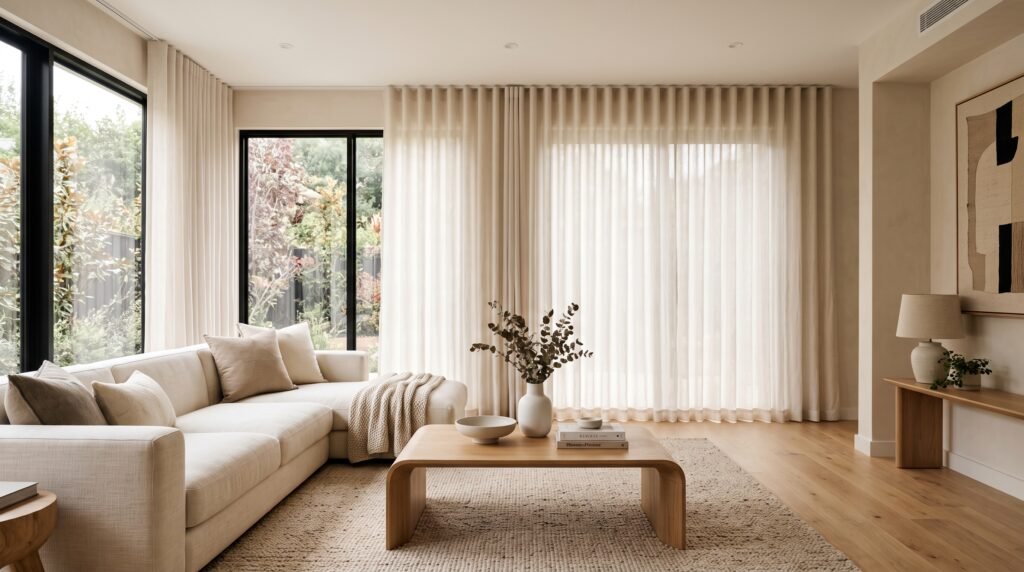
Traditional curtain rods can be decorative, but sometimes the most elegant hardware is the hardware you barely notice.
Ceiling-mounted curtain tracks create an exceptionally streamlined look. Because the track sits directly against or very close to the ceiling, the curtains appear to flow downward naturally from above.
This design is particularly suitable for modern, minimalist, and contemporary interiors.
A recessed track can create an even cleaner appearance. During construction or renovation, the curtain track can be incorporated into a small ceiling recess so that most of the hardware disappears completely.
The result is almost architectural.
Long curtain folds appear to emerge directly from the ceiling, giving the room an elegant custom-designed appearance.
You can recreate a similar effect without major renovation by choosing a slim ceiling-mounted track that closely matches the ceiling.
Keep the curtain heading simple as well. Ripple-fold curtains are particularly effective because they create consistent waves from top to bottom.
The uniform folds introduce texture without visual clutter.
In minimalist rooms, consider soft white or warm greige fabric and allow furniture, artwork, and natural materials to provide the remaining contrast.
This approach proves that curtains do not need elaborate rods or decorative finials to make a statement. Sometimes removing visible hardware makes the fabric itself look considerably more luxurious.
4. Layer Sheer and Blackout Floor-to-Ceiling Curtains
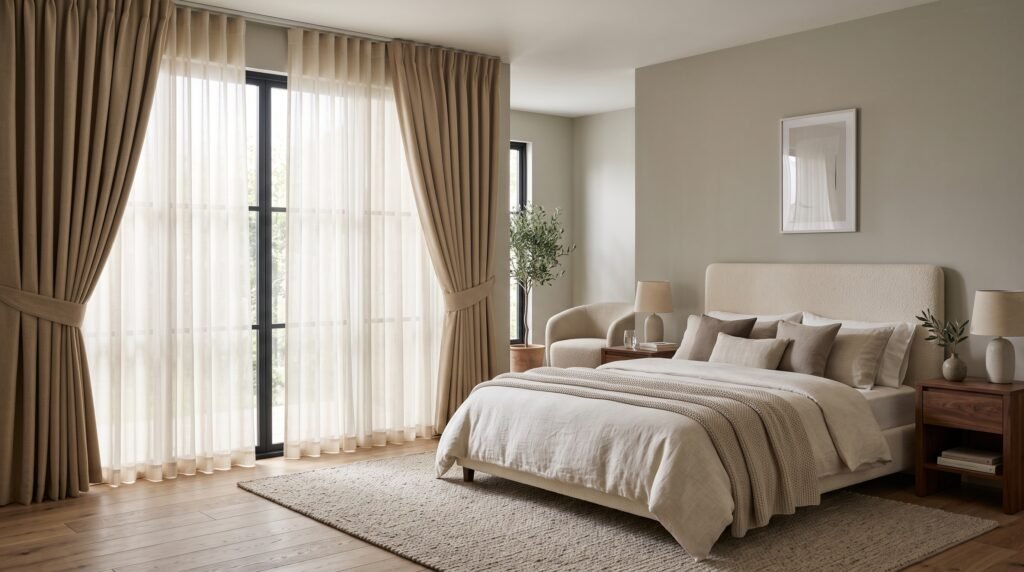
Beautiful interiors need to work during both the daytime and evening.
Layered floor-to-ceiling curtains provide that flexibility.
The most common combination includes lightweight sheer curtains closest to the window and thicker blackout or room-darkening curtains positioned in front.
During the day, you can pull the heavier curtains aside and leave the sheers closed. Natural light continues entering the room while the translucent fabric provides softness and some additional privacy.
At night, close the heavier outer curtains for greater privacy and darkness.
The layering also makes the window treatment look richer. Instead of a single flat layer, you have multiple textures and different levels of transparency.
Try pairing ivory sheers with beige, taupe, mushroom, or warm gray outer curtains for a sophisticated neutral palette.
For stronger contrast, combine white sheers with dark charcoal or chocolate curtains.
Layering is especially useful in bedrooms where controlling light is important. Blackout curtains can make sleeping conditions more comfortable while the daytime sheers prevent the room from feeling closed off.
A double ceiling track is one of the cleanest ways to install this combination.
Make sure both layers reach the floor. Short inner sheers combined with long outer curtains can interrupt the elegant proportions.
When everything begins near the ceiling and ends at the same floor level, the treatment feels cohesive and professionally designed.
5. Warm Neutral Curtains for an Organic Modern Interior
Organic-modern decorating relies heavily on natural colors, tactile materials, and relaxed sophistication.
Floor-to-ceiling curtains fit beautifully into this aesthetic.
Instead of bright white, consider warmer shades inspired by natural materials. Sand, oatmeal, stone, flax, mushroom, soft taupe, and warm beige can introduce subtle depth without making the room feel dark.
These colors coordinate beautifully with oak furniture, travertine, boucle upholstery, woven rugs, ceramics, and indoor trees.
The goal is not to create dramatic contrast. Instead, allow neighboring colors to blend gently.
For example, a warm cream wall could be paired with slightly darker oatmeal curtains. Add an ivory rug, warm oak coffee table, beige sofa, and olive tree.
Although the palette remains neutral, the differences in texture prevent the interior from feeling flat.
Curtains contribute enormously because they cover such a large vertical surface.
Choose fabric with visible natural texture rather than an overly shiny finish. Linen blends, cotton blends, and textured woven fabrics are excellent options.
Soft sunlight passing through these materials highlights their weave and creates subtle shadows within the folds.
Keep curtain hardware understated. A ceiling track or simple rod in a restrained finish allows the fabric and architecture to remain the focus.
This is an especially useful idea if you want your room to feel expensive without relying on bold colors or elaborate decoration.
6. Dramatic Dark Floor-to-Ceiling Drapes
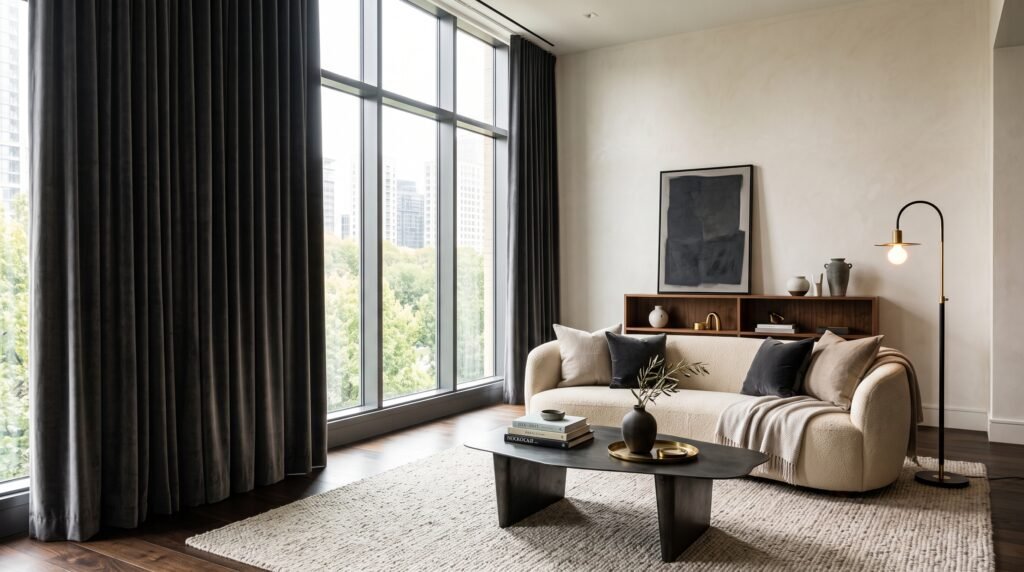
Neutral curtains may dominate modern interiors, but darker drapes can create extraordinary atmosphere.
Deep charcoal, espresso brown, forest green, midnight blue, or even near-black curtains can turn an ordinary window wall into a dramatic focal point.
The trick is balancing their visual weight.
If your curtains are dark, incorporate lighter elements elsewhere. Cream walls, pale upholstery, light rugs, warm wood furniture, and soft lighting can prevent the room from becoming gloomy.
Dark curtains are particularly effective in bedrooms, media rooms, formal dining rooms, and sophisticated living spaces.
They also look beautiful against large windows because daylight creates contrast around the darker fabric.
Texture becomes especially important with deeper colors. Velvet creates a glamorous look, while heavy linen or textured woven fabric feels more contemporary and understated.
For an elevated appearance, extend the curtains all the way from ceiling to floor rather than hanging dark panels directly above the window frame.
This additional height makes the bold color feel deliberate and architectural.
Consider repeating the curtain color subtly elsewhere in the room. A charcoal curtain could coordinate with a dark coffee table, picture frame, or small decorative accessory.
You do not need numerous matching pieces. A few repeated accents are enough to visually connect the design.
7. Floor-to-Ceiling Curtains Around Large Windows and Sliding Doors
b
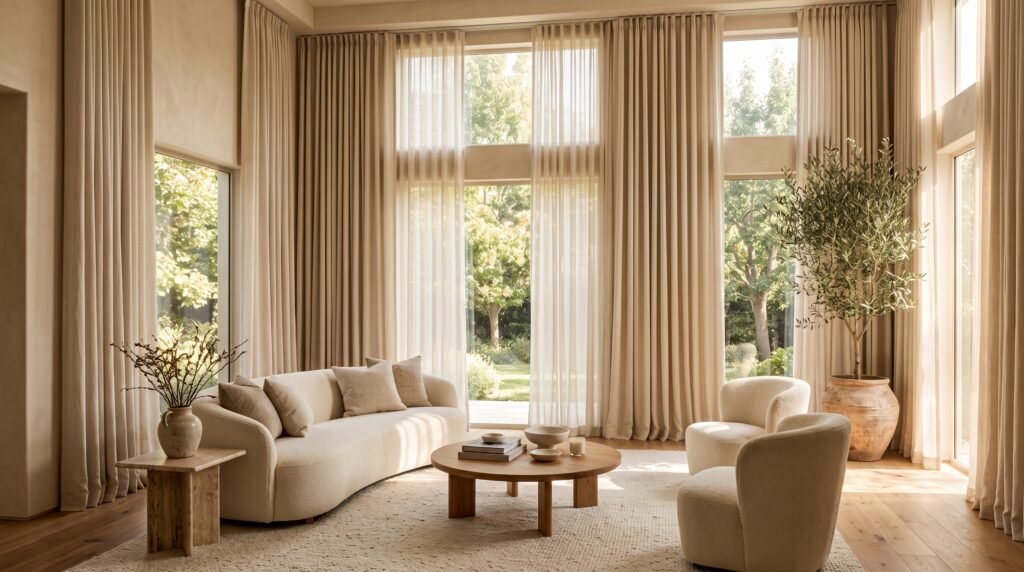
Large windows are beautiful architectural features, but they can sometimes make a room feel exposed or unfinished.
Floor-to-ceiling curtains help frame all that glass while adding warmth.
Rather than covering the entire window during the day, allow generous curtain panels to gather along both sides. The fabric creates a soft border around the outdoor view and introduces texture into an area otherwise dominated by glass.
This works especially well around sliding patio doors and floor-to-ceiling windows.
Mount the curtain track wider than the glass opening whenever possible. Doing so allows most of the fabric to sit beyond the window when open, maximizing natural light.
The additional width also makes the entire window arrangement appear larger.
For rooms overlooking gardens or greenery, neutral linen curtains are particularly attractive because they do not compete with the outdoor scenery.
If the architecture is contemporary, ripple-fold curtains on a ceiling track can complement the clean lines of the windows.
Be mindful of furniture placement. Avoid positioning bulky furniture directly where the curtains need to gather.
Instead, allow some breathing room beside the windows so the fabric can fall naturally.
At night, closing those large curtains can completely change the character of the room. An open, bright daytime space becomes enclosed, warm, and intimate.
That ability to change the mood is one reason curtains remain so valuable even in homes with beautiful modern glazing.
8. Use Floor-to-Ceiling Curtains as a Soft Room Divider
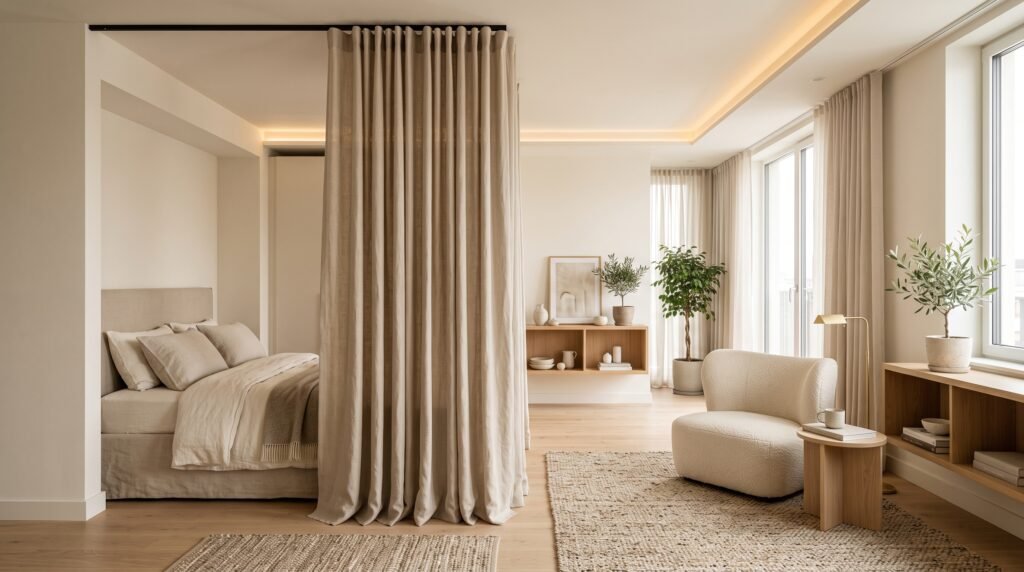
Curtains do not have to be installed against windows.
One of the most creative applications is using floor-to-ceiling fabric as a flexible room divider.
This approach works particularly well in studio apartments, open-plan interiors, bedrooms with dressing areas, home offices, and multifunctional rooms.
Unlike a permanent wall, a curtain divider can disappear whenever you want the space to feel open again.
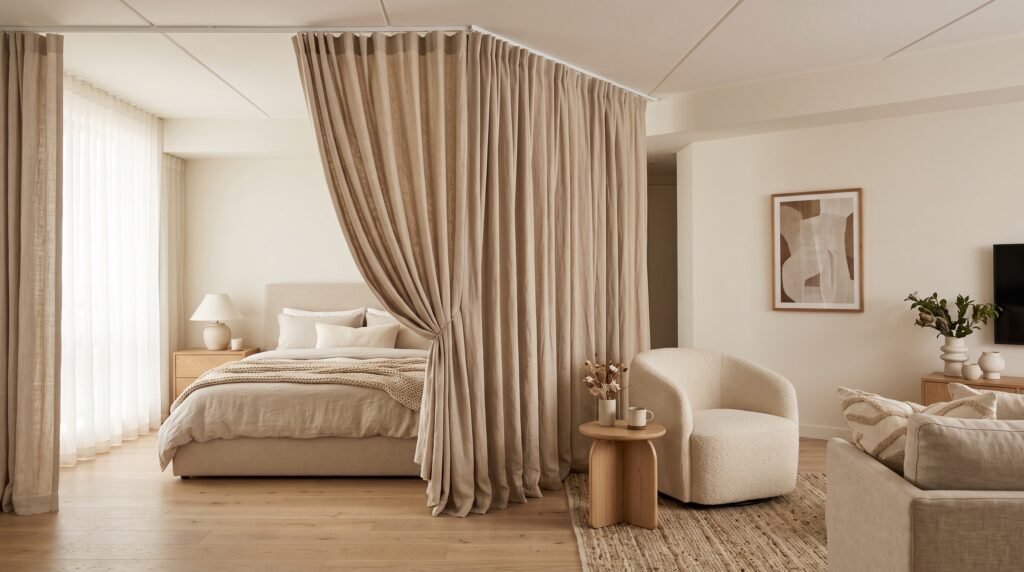
Install a ceiling track across the desired area and hang full-length curtains that reach the floor.
When closed, the fabric establishes a visual boundary. When open, it gathers neatly to one side.
For a light and airy result, choose linen or semi-sheer material. These fabrics define separate areas without making either side feel completely enclosed.
For stronger privacy, use thicker curtains.
Imagine a bedroom where a soft beige curtain separates the sleeping area from a small dressing zone. The fabric hides everyday clutter while adding another luxurious textile layer to the room.
Curtains can also conceal storage areas, wardrobes, laundry zones, or open shelving.
This technique is particularly useful when traditional doors would consume too much floor space.
Keep the curtain color connected to the surrounding palette. If your walls are warm white, oatmeal or light beige fabric can provide just enough contrast while still feeling integrated.
Using curtains architecturally rather than purely as window coverings opens up many creative possibilities for modern interiors.
How High Should Floor-to-Ceiling Curtains Be Hung?
For the strongest visual effect, curtains should begin as close to the ceiling as practical.
Mounting a rod only a few inches above the window frame can visually emphasize the actual size of the window. Raising the curtain toward the ceiling shifts attention upward instead.
This is especially valuable in rooms with standard or relatively low ceiling heights.
Ceiling-mounted tracks provide the most literal floor-to-ceiling effect, but a rod positioned just beneath the ceiling can achieve a similar visual result.
Width matters too.
Extend the curtain hardware beyond the sides of the window so that opened curtains can sit partially outside the glass. This exposes more of the window and creates the illusion that it is wider.
Before purchasing curtains, measure from the final mounting position rather than from the top of the window.
Should Floor-to-Ceiling Curtains Touch the Floor?
Generally, yes.
Curtains that stop noticeably above the floor can look too short and weaken the elongated appearance you are trying to achieve.
For contemporary interiors, curtains that just touch or hover extremely close to the floor create a crisp tailored finish.
A slight break—where a small amount of fabric rests naturally against the floor—creates a softer effect.
More generous pooling can work in romantic or traditional interiors, but it requires additional maintenance and may not be practical in high-traffic spaces.
For most modern homes, a clean floor-length finish is the easiest and most versatile choice.
Choosing the Right Curtain Fabric
The best fabric depends on how much privacy, light control, and visual weight you want.
Sheer linen and lightweight woven fabrics create airy rooms filled with filtered natural light. Medium-weight linen blends provide greater privacy while maintaining a relaxed appearance.
Heavier woven fabrics can make large rooms feel warmer and more substantial.
Velvet introduces significant drama and is especially suitable for luxurious bedrooms or formal interiors.
Before selecting fabric, consider how much wall space the curtains will occupy. A material that looks subtle as a small sample can become visually dominant when installed from ceiling to floor across an entire wall.
Neutral colors and natural textures are therefore particularly versatile for large curtain installations.
Final Thoughts
Floor-to-ceiling curtains demonstrate how dramatically proportion can influence interior design.
Simply raising curtains toward the ceiling and extending them to the floor can make windows appear larger, ceilings feel taller, and rooms look considerably more finished.
For a soft everyday look, long linen curtains remain an excellent choice. Wall-to-wall drapery can create the atmosphere of a luxury hotel, while hidden ceiling tracks offer a cleaner architectural finish. Layering sheer and blackout curtains combines beauty with practical light control.
Warm neutral curtains naturally complement organic-modern homes, whereas dark drapes introduce sophisticated drama. Large windows can be beautifully framed with generous fabric, and ceiling-mounted curtains can even function as flexible room dividers.
The most important principle is consistency: think beyond the dimensions of the window itself.
Allow the curtains to interact with the entire wall.
When fabric begins near the ceiling, falls in generous vertical folds, and finishes cleanly at the floor, even a simple curtain treatment can become one of the most impactful decorative features in the room.