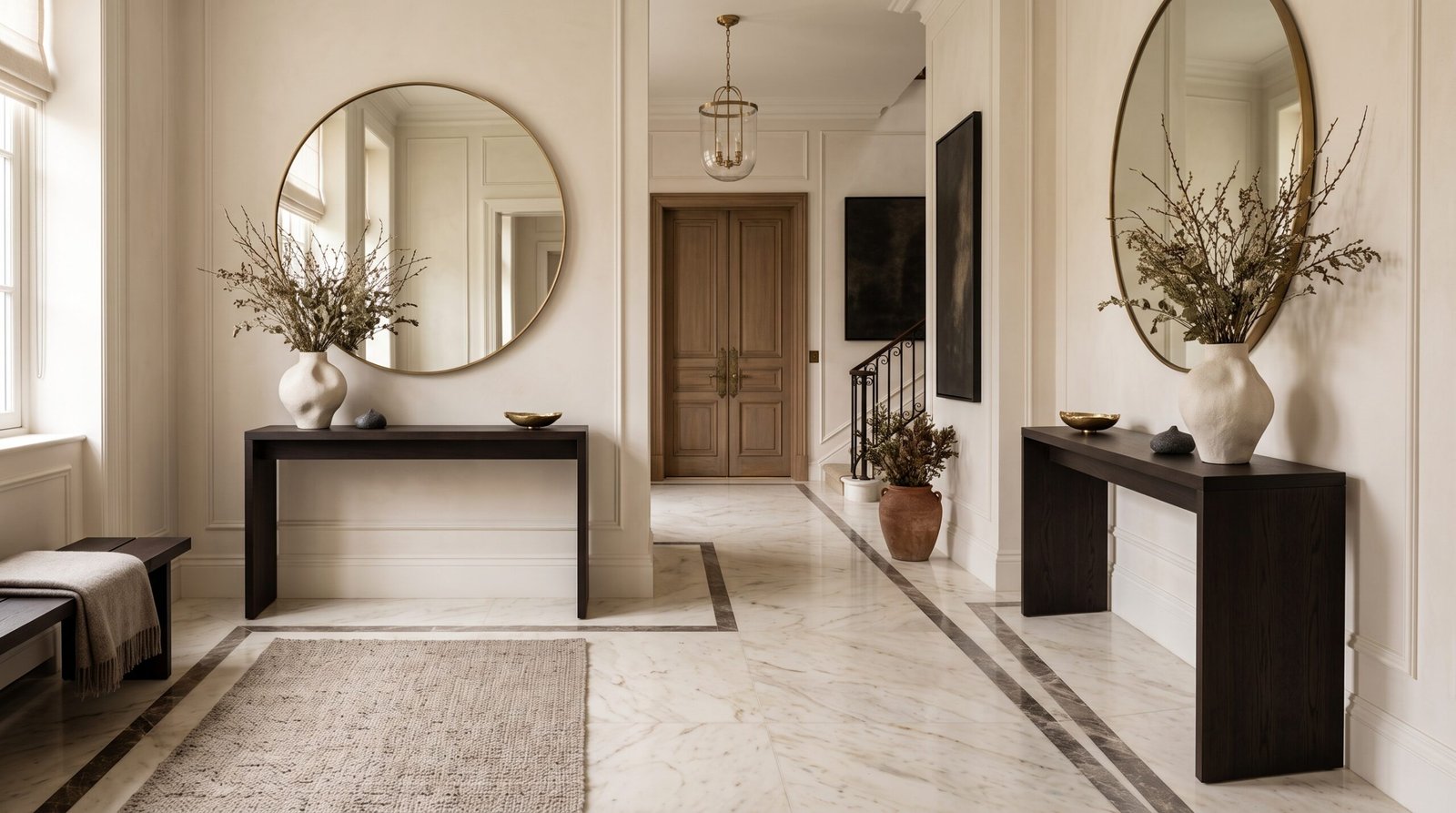
Indoor Floor Inlay Ideas: 8 Beautiful Designs to Make Your Floors Stand Out
From warm wood borders and elegant marble details to contemporary brass lines and artistic stone patterns, floor inlays can work with many interior styles. Some designs make a bold statement as soon as you enter a room, while others are intentionally subtle, adding just enough detail to make a simple floor feel custom.
Another advantage of floor inlays is their versatility. They can define an entryway, highlight a dining area, create a decorative border around a room, or become an artistic focal point in an otherwise minimalist interior.
If you are looking for inspiration, these eight indoor floor inlay ideas show how this architectural detail can transform ordinary flooring into something distinctive and sophisticated.
1. Geometric Wood Floor Inlay
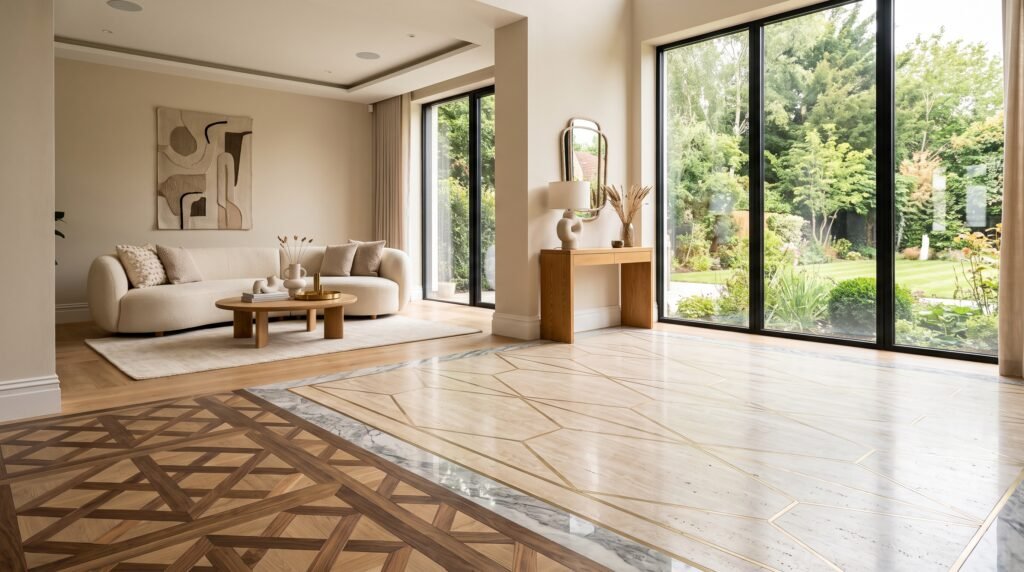
Wood flooring already brings natural warmth to an interior, but adding a geometric inlay can give traditional timber floors a much more customized appearance.
Instead of installing every plank in the same direction, selected pieces of contrasting wood can be arranged into diamonds, squares, angular lines, or other geometric patterns. The result can range from subtle and sophisticated to highly decorative depending on the colors and complexity of the pattern.
A particularly beautiful approach is to use a light oak floor with slightly darker walnut detailing. The contrast does not need to be dramatic. Even a small difference between wood tones can make the pattern visible while maintaining a calm and cohesive appearance.
Geometric inlays can work especially well in entryways, dining rooms, home offices, and formal living spaces. In a large room, a central geometric feature can visually anchor furniture without requiring a rug.
For a modern organic interior, keep the pattern relatively simple. A clean diamond or linear motif surrounded by uninterrupted oak flooring can create interest without competing with furniture.
The surrounding décor can remain understated. Cream walls, warm wooden furniture, linen textiles, sculptural ceramics, and soft lighting complement the craftsmanship of the floor.
Image placement: Show a bright modern living room with a light oak floor featuring a sophisticated darker wood geometric inlay.
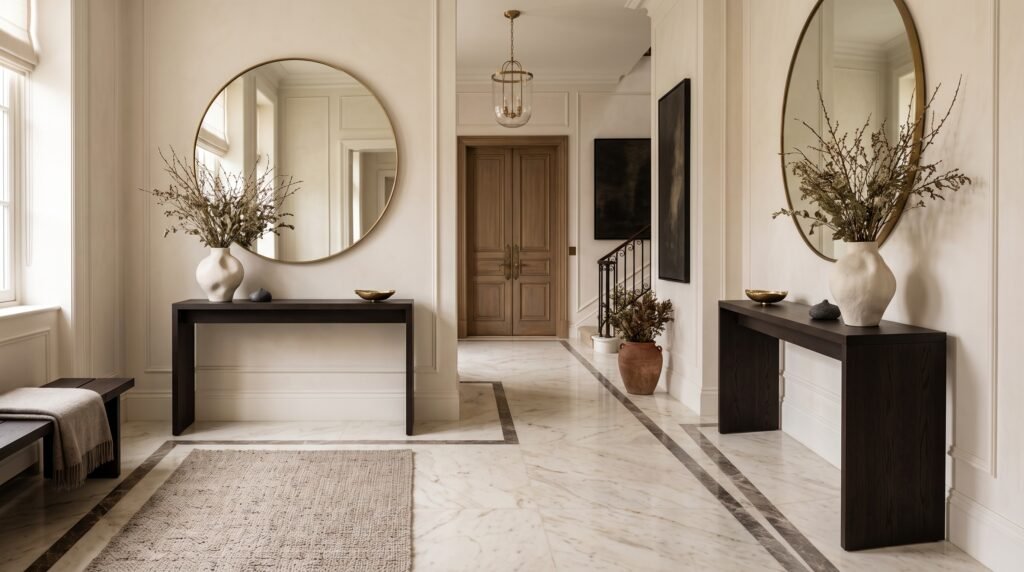
2. Elegant Marble Border Inlay
Marble has a naturally luxurious appearance, and an inlaid border can make a marble or stone floor feel even more intentional.
A border typically follows the perimeter of a room or creates a large rectangular frame within the flooring. Contrasting stone is used to create a clear but elegant separation.
For example, a creamy white marble floor can be framed with a thin charcoal, beige, or warm brown marble border. This simple detail gives the flooring definition without introducing an overly complicated pattern.
Marble border inlays are especially effective in foyers and entry halls because they naturally frame the space. They can also be used in dining rooms, bathrooms, corridors, or formal living areas.
The scale of the border matters. Thin borders generally feel more contemporary, while wider and more detailed borders can create a traditional or classical appearance.
For modern interiors, consider pairing soft ivory stone with a slim taupe or dark gray border. Keep the furniture minimal so the natural veining and clean geometry remain visible.
Large windows and warm natural light can make the variations in marble particularly beautiful.
Image placement: Feature an elegant entryway with creamy marble flooring surrounded by a slim contrasting stone border.
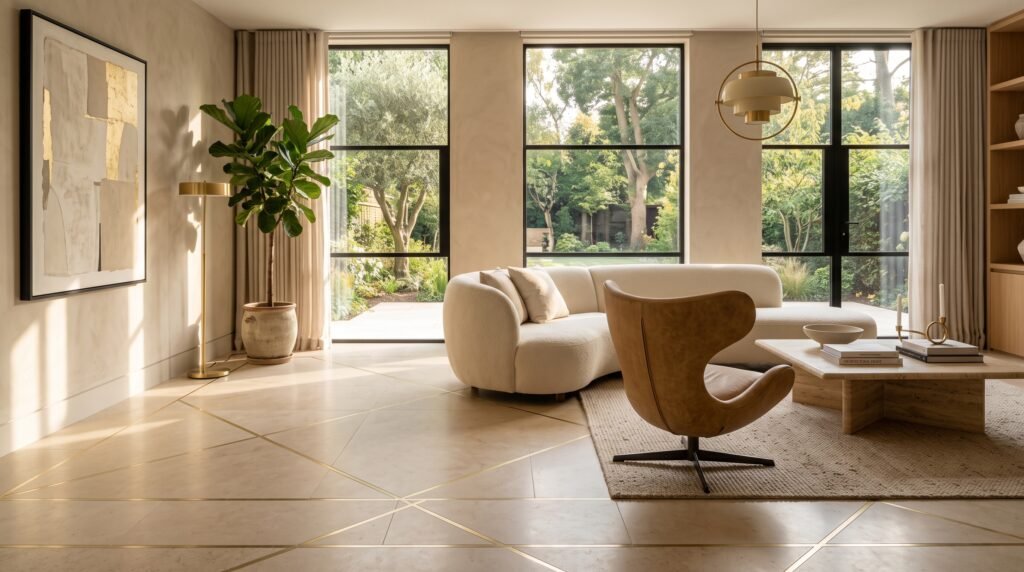
3. Modern Brass Floor Inlay
For a contemporary interpretation of decorative flooring, brass inlays can create an incredibly sophisticated effect.
Thin strips of brass can be inserted between sections of stone, terrazzo, concrete-look tile, or other hard flooring materials. Instead of creating an elaborate traditional pattern, the metallic lines become part of the architecture.
One of the most attractive approaches is to use brass with neutral flooring. Warm beige stone, soft gray concrete, creamy terrazzo, or white marble provides a quiet background that allows the metallic detail to stand out.
Straight brass lines can divide large flooring sections into geometric shapes. Alternatively, curved brass lines can create a softer and more artistic effect.
The metallic accent also works beautifully with other warm details throughout a room. Brass pendant lights, cabinet hardware, table legs, or decorative objects can subtly repeat the finish.
However, restraint is important. The brass floor detail should feel intentional rather than excessive. A few carefully positioned lines are often more effective than covering the entire floor with an intricate metallic pattern.
This type of flooring works particularly well in contemporary entryways, upscale living spaces, dressing rooms, and boutique-inspired interiors.
Image placement: Show a sophisticated contemporary interior with neutral stone flooring crossed by thin polished brass inlay lines.
4. Statement Entryway Medallion Inlay
The entrance of a home offers an ideal location for a decorative floor feature because it creates an immediate focal point.
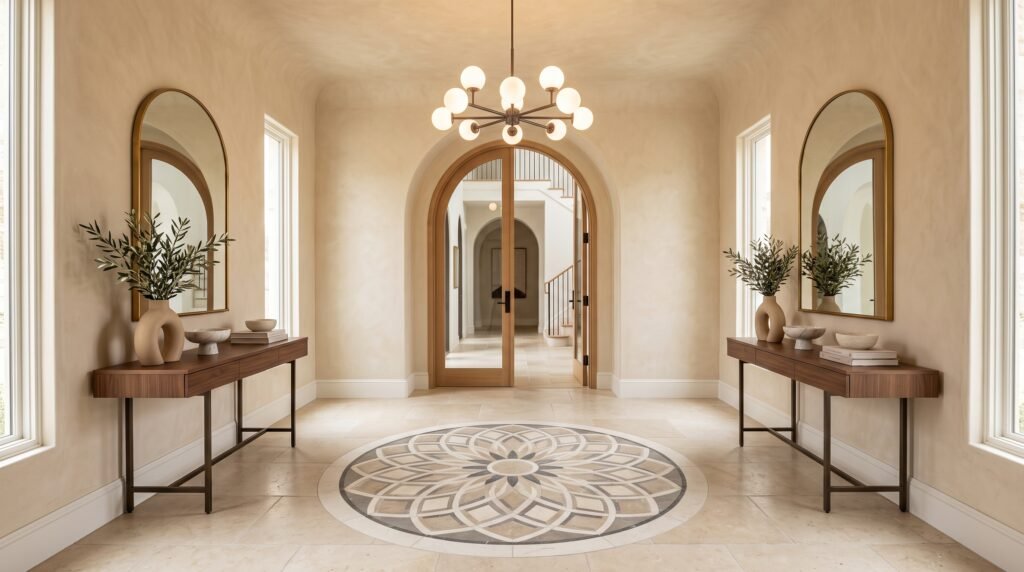
A floor medallion is usually positioned centrally within an entryway. Designs can include circles, stars, compass-inspired patterns, geometric motifs, or abstract shapes created from several complementary materials.
Traditional medallions can be extremely detailed, but modern versions can be much simpler.
For a contemporary home, consider a large circular medallion created from cream, beige, charcoal, and warm gray stone. The restrained color palette keeps the design sophisticated while the shape still creates visual impact.
The surrounding flooring should generally be simpler. If the medallion itself contains several colors or shapes, uninterrupted stone or wood around it gives the feature enough breathing room.
Furniture should also respect the focal point. Instead of placing a large table directly over the design, consider positioning a slim console against the wall or keeping the center of the entryway relatively open.
A pendant light installed above the medallion can further emphasize its placement and create a strong sense of symmetry.
Image placement: Show a spacious neutral entryway with an elegant circular stone medallion centered beneath a statement pendant.
5. Contrasting Wood Border Inlay
Not every floor inlay needs an elaborate pattern. Sometimes a simple border can completely change the appearance of hardwood flooring.
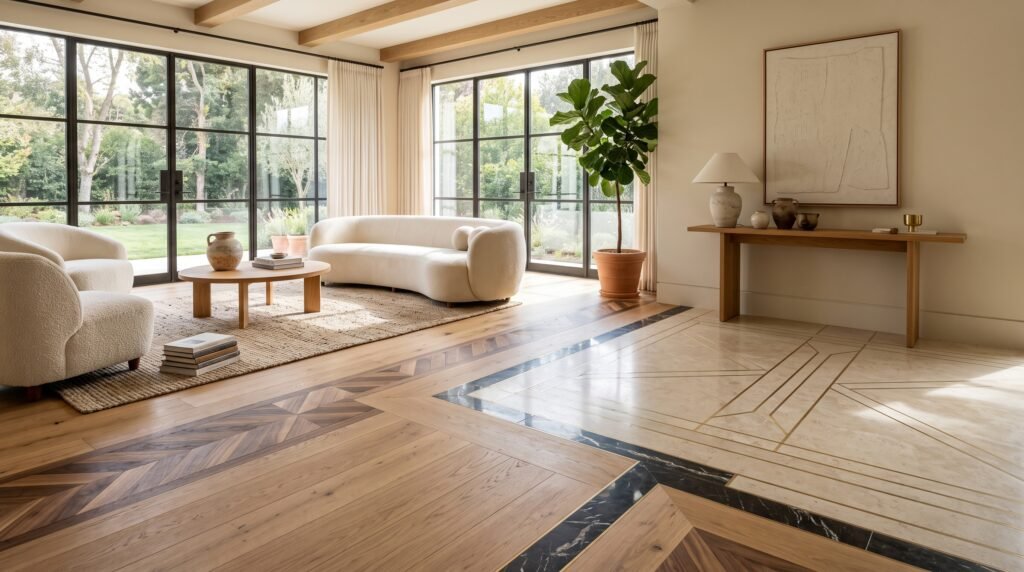
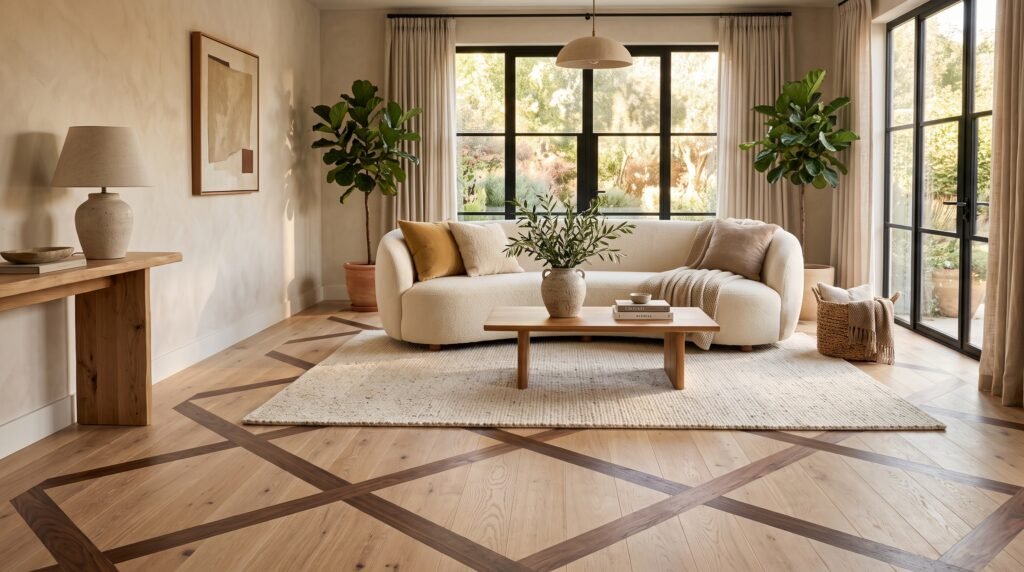
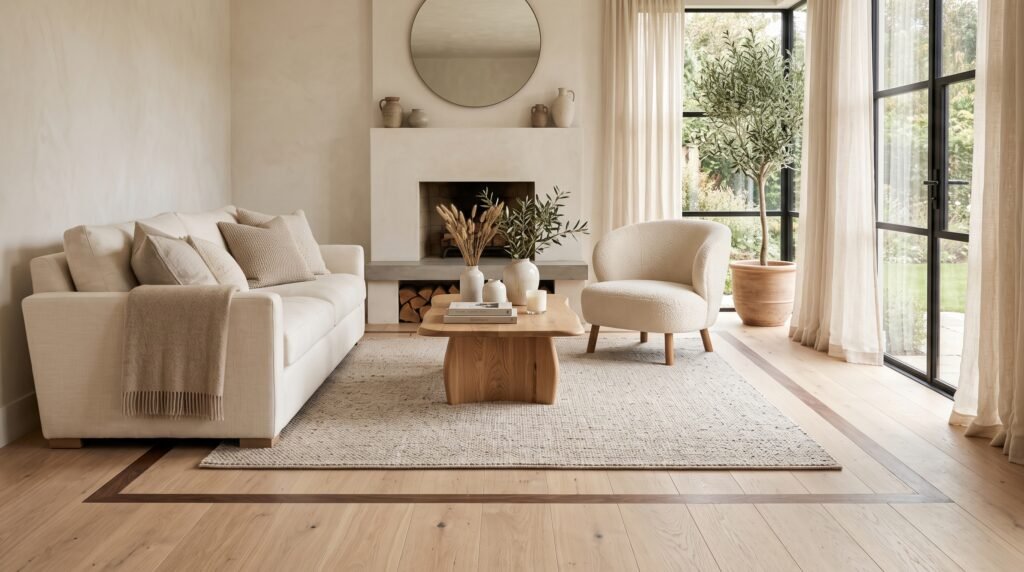
A contrasting wood border creates a visual frame around a room. For example, pale oak planks can be surrounded by a narrow walnut border. The darker line immediately defines the shape of the space and gives otherwise straightforward flooring a bespoke appearance.
This technique can be especially effective in living rooms and dining rooms because the border creates a natural visual zone for furniture.
It can even provide a rug-like framing effect while preserving the clean appearance of exposed hardwood.
For a softer result, choose woods with similar undertones. Light oak paired with medium oak produces gentle contrast, whereas pale maple paired with dark walnut creates a much stronger statement.
You can also use the border to emphasize architectural features. Following the outline of a bay window, fireplace zone, or unusual room shape can turn those structural details into intentional design elements.
Pair the flooring with natural materials such as linen, wool, ceramic, leather, and warm timber. This keeps the room feeling comfortable even though the flooring has a refined architectural quality.
Image placement: Show a warm organic-modern living room with pale oak flooring framed by a narrow dark walnut border.
6. Artistic Terrazzo Floor Inlay
Terrazzo has returned to modern interiors because it combines durability with playful pattern and color.
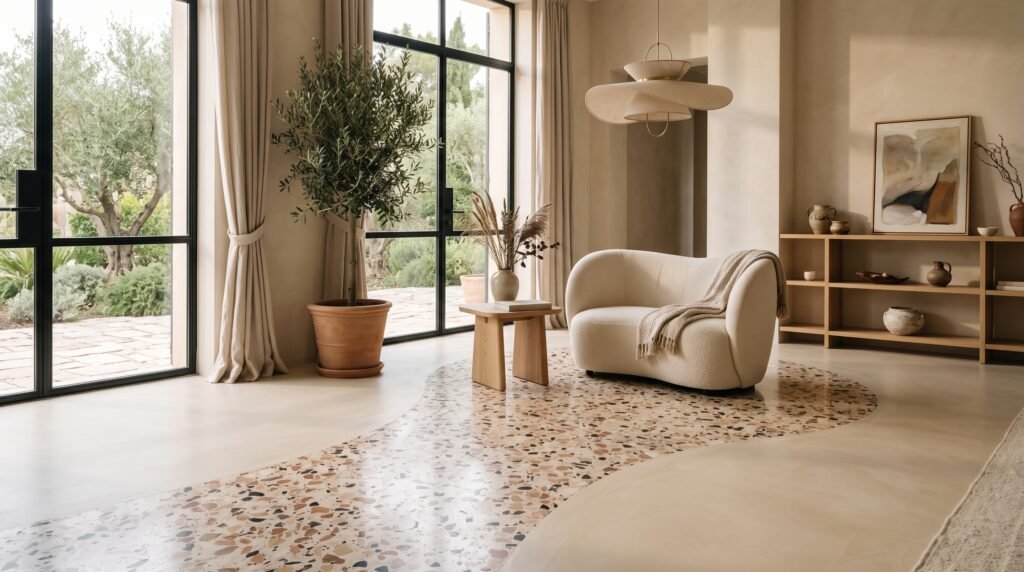
Instead of covering an entire room with one terrazzo finish, designers can use terrazzo as an inlaid feature within another flooring material. This creates a decorative accent while preventing the pattern from overwhelming the space.
One approach is to place a large terrazzo rectangle within a neutral stone floor. Another is to create curved terrazzo sections that flow through a hallway or entryway.
Terrazzo can also be used as a visual zoning technique in open-plan spaces. A terrazzo section beneath a dining table, for instance, can subtly define the dining zone without adding walls or partitions.
For a sophisticated look, choose terrazzo with a restrained palette. Cream, beige, terracotta, taupe, and charcoal fragments can create plenty of texture while remaining easy to coordinate with furniture.
The shape of the inlay can also influence the overall mood. Straight-edged designs feel structured and architectural, while organic curves give the floor a more artistic character.
Simple furniture is often the best companion for decorative terrazzo. Warm wood, boucle upholstery, neutral textiles, and sculptural lighting allow the flooring to become part of the visual story.
Image placement: Show a contemporary interior where a softly patterned terrazzo section is beautifully inset into smooth neutral flooring.
7. Floral Stone Floor Inlay
For homeowners who appreciate craftsmanship and decorative details, floral stone inlays can transform a floor into a genuine piece of art.
These designs use carefully shaped pieces of contrasting stone to create leaves, flowers, vines, and botanical motifs. Depending on the design, the finished effect can range from traditional and ornate to surprisingly modern.
A contemporary floral inlay works best with a limited palette and simplified shapes.
Imagine a creamy stone floor featuring delicate botanical forms in muted green, beige, soft brown, and charcoal. Rather than covering the entire floor, the pattern could occupy one central area or decorate the perimeter.
This makes the technique suitable for sophisticated entry halls, formal sitting rooms, sunrooms, or spaces inspired by Mediterranean and classical architecture.
Because floral flooring is naturally detailed, surrounding décor should usually remain relatively restrained. Neutral walls, simple furniture silhouettes, and a few carefully chosen decorative pieces prevent the room from becoming visually crowded.
Natural sunlight is particularly effective because it reveals subtle variations in the stone.
A floral inlay can also create a connection between indoor and outdoor spaces. Botanical motifs near French doors or garden-facing windows can gently echo the landscape outside.
Image placement: Show an elegant light-filled interior with a refined botanical stone inlay featuring delicate leaves and floral forms.
8. Minimalist Curved Floor Inlay
One of the most contemporary floor inlay ideas moves away from traditional borders and symmetrical patterns altogether.
Instead, a curved line travels naturally through the flooring, separating two complementary materials.
For example, warm oak flooring might transition into cream terrazzo through a smooth organic curve rather than a straight threshold. A thin brass strip could follow the curve, emphasizing the transition.
This approach is particularly suitable for open-plan homes where different functional zones need to feel connected rather than sharply divided.
Imagine a living room with warm oak flooring gradually transitioning into light stone near an entryway. Instead of looking like two separate rooms, the curved boundary creates a fluid relationship between them.
Curved inlays also complement the growing use of rounded furniture, arched openings, sculptural lighting, and organic forms in contemporary interiors.
The key is keeping the overall composition simple. One strong curve is often enough.
Choose materials that coordinate in tone while providing noticeable differences in texture. Pale oak and cream terrazzo, walnut and beige stone, or warm limestone and darker timber can all create sophisticated combinations.
Image placement: Show a premium open-plan interior with warm wood flooring transitioning into cream terrazzo through a flowing curved inlay accented by a fine brass strip.
How to Choose the Right Floor Inlay Design
The best floor inlay should feel connected to the architecture and overall decorating style of your home.
For minimalist interiors, simple borders, narrow metallic strips, and restrained geometric patterns are usually easier to integrate. Traditional or luxurious spaces can support more detailed medallions, marble borders, and botanical stone patterns.
Material is equally important.
Wood inlays create warmth and work beautifully with organic-modern, transitional, Scandinavian, and traditional interiors. Marble and stone provide a more formal appearance, while terrazzo introduces texture and a slightly more playful contemporary character.
Metallic inlays, particularly brass, can add a polished modern detail when used sparingly.
Also think about where you want attention to fall. A central medallion intentionally becomes a focal point, while a narrow perimeter border quietly enhances the architecture.
Using Floor Inlays to Define Spaces
One of the most practical uses of decorative flooring is creating visual boundaries without building physical walls.
This can be particularly useful in open-plan interiors.
A wood border can frame a living area. Terrazzo can identify an entry zone. A marble rectangle can visually anchor a dining table, while a curved transition can separate two functions without making them feel disconnected.
This approach allows flooring to perform some of the work traditionally handled by rugs, partitions, or changes in wall treatment.
For smaller interiors, however, avoid using too many materials. One thoughtfully placed inlay usually feels more spacious and sophisticated than several competing floor patterns.
Keeping Decorative Floors Balanced
Because an inlaid floor already provides pattern and detail, other elements in the room should support rather than compete with it.
If the flooring is intricate, consider using simpler rugs—or leaving the most decorative section uncovered altogether.
Furniture with clean silhouettes can also allow the craftsmanship underneath to remain visible. Neutral upholstery, natural wood, linen curtains, understated wall art, and ceramic accessories create a calm background.
Lighting deserves attention as well. Natural daylight reveals variations in wood and stone, while warm evening lighting can make brass and polished materials feel richer.
Ultimately, the goal is not to make every surface decorative. It is to give the floor enough visual importance that the rest of the room can remain beautifully restrained.
Final Thoughts
Indoor floor inlays prove that flooring does not have to be merely practical. With the right combination of materials, pattern, and placement, the floor itself can become an architectural feature.
A geometric wood inlay brings craftsmanship to hardwood floors, while a marble border introduces understated luxury. Brass details offer a sleek contemporary finish, and an entryway medallion creates an unforgettable first impression.
For something warmer, a contrasting wood border can subtly frame a room. Terrazzo inlays introduce artistic texture, while floral stone patterns celebrate detailed craftsmanship. And for contemporary homes, a curved floor inlay provides a beautiful way to connect different materials and spaces.
The most successful designs do not simply decorate the floor—they complement the architecture around them. By choosing an inlay that suits the scale, materials, and character of your interior, you can turn an overlooked surface into one of the most distinctive details in your home.