Kids Room Ideas: Beautiful, Fun, and Functional Spaces for Every Age
A child’s room should be more than a place to sleep. It can be a little world where children read, play, imagine, create, relax, and grow. The best kids room ideas combine personality with practicality, creating a space that feels playful without becoming chaotic and stylish without feeling too grown-up.
Whether you are designing a room for a toddler, refreshing a space for a school-age child, or creating a room that can adapt as your child gets older, thoughtful planning can make a huge difference. Colors, furniture, lighting, storage, wall decor, textiles, and small decorative details all work together to create a room that feels comfortable and inspiring.
You also do not need a huge room to create something special. Even a small bedroom can become a beautiful children’s space with clever storage, multifunctional furniture, and carefully selected decorative elements.
From cozy reading corners and creative walls to built-in storage and imaginative play areas, these kids room ideas can help you create a room that is both beautiful and genuinely useful.
1. Create a Soft and Playful Neutral Kids Room
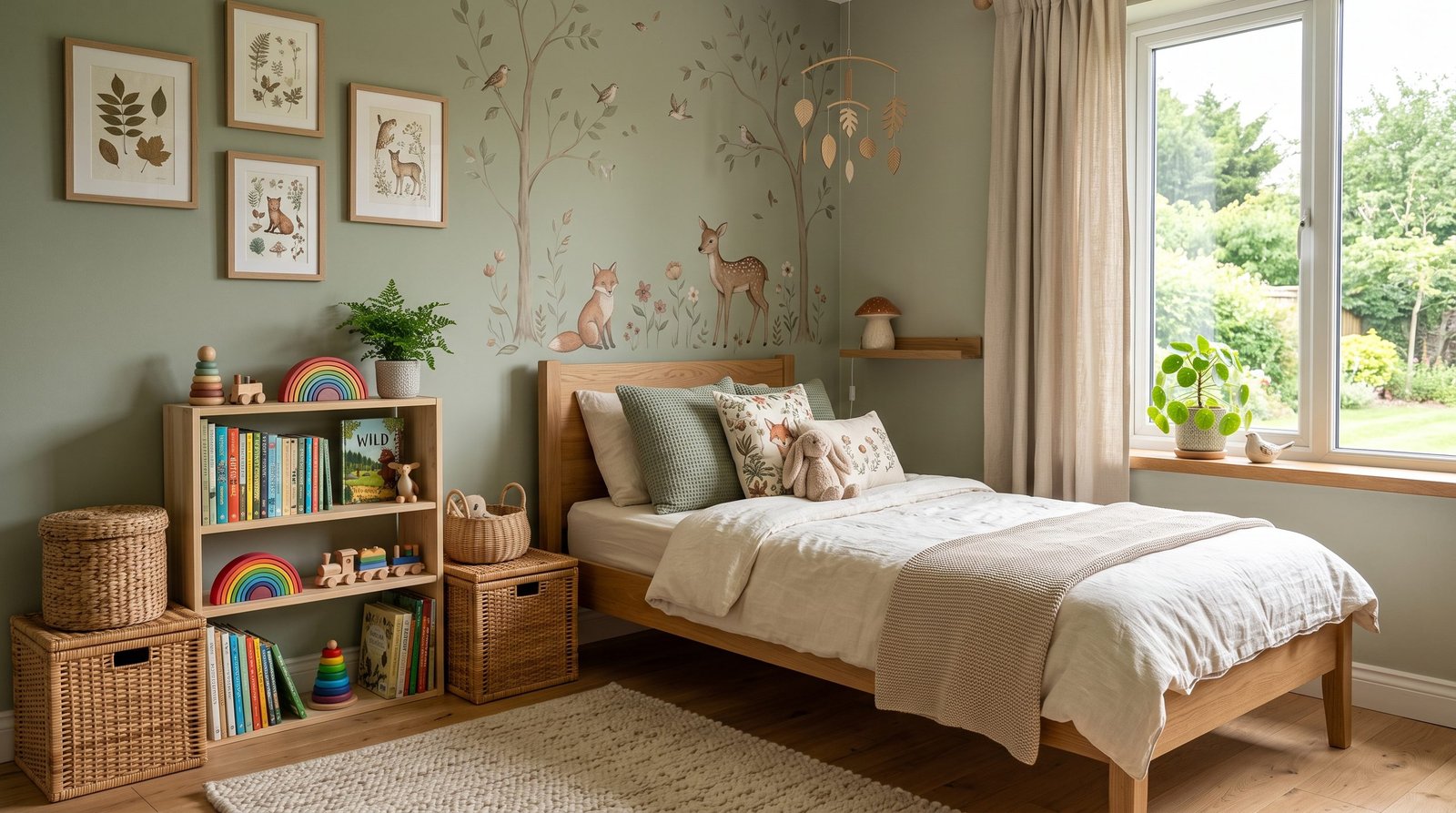
Neutral colors are not limited to adult interiors. A soft palette of cream, beige, warm white, taupe, light wood, and muted green can create an incredibly beautiful kids room while still leaving plenty of space for playful details.
Instead of relying on bright colors everywhere, start with a calm foundation. Choose warm white walls, natural wood furniture, a soft textured rug, and light bedding. Then introduce personality through artwork, cushions, toys, books, and small decorative objects.
Animal illustrations, playful wall prints, woven baskets, and colorful children’s books can add character without overwhelming the room.
A neutral kids room can also be easier to update. As your child grows, you can replace artwork, bedding, and accessories without completely redesigning the room.
Natural materials work particularly well in this style. Wooden shelves, rattan baskets, cotton bedding, linen curtains, and wool or woven rugs create warmth and texture.
The goal is not to make the room look overly sophisticated. It should still feel like a child’s space. A few whimsical elements—such as a cloud-shaped cushion, animal artwork, wooden toys, or a playful pendant light—can keep the atmosphere youthful.

Neutral Kids Room: A warm, neutral children’s bedroom featuring a low wooden bed, cream bedding, soft beige rug, natural wood furniture, playful animal artwork, woven storage baskets, and gentle natural sunlight.
2. Add a Fun Accent Wall
One of the easiest ways to transform a kids room is with an accent wall.
An accent wall gives you an opportunity to introduce color, pattern, or imagination without covering the entire room. Depending on your child’s personality, you could choose anything from soft pastel paint to a dramatic mural.
For younger children, consider simple themes such as clouds, rainbows, stars, mountains, trees, or gentle animal illustrations. Older children may enjoy geometric patterns, abstract shapes, botanical designs, or a subtle world map.
Wallpaper can also create a major visual impact. A woodland pattern can make the room feel connected to nature, while tiny stars can create a dreamy nighttime atmosphere.
If you prefer something easier to change, paint is a practical option. A muted sage green, dusty blue, warm terracotta, pale peach, or soft lavender can add personality while remaining sophisticated.
Another option is a painted geometric wall. Use simple arches, circles, half-moons, or blocks of color to create an artistic focal point.
The accent wall does not need to be behind the bed. You can use it behind a reading nook, play area, desk, or open shelving.
Remember that children’s rooms can change quickly. If you choose a bold permanent treatment, consider selecting a design that can still work as your child grows.
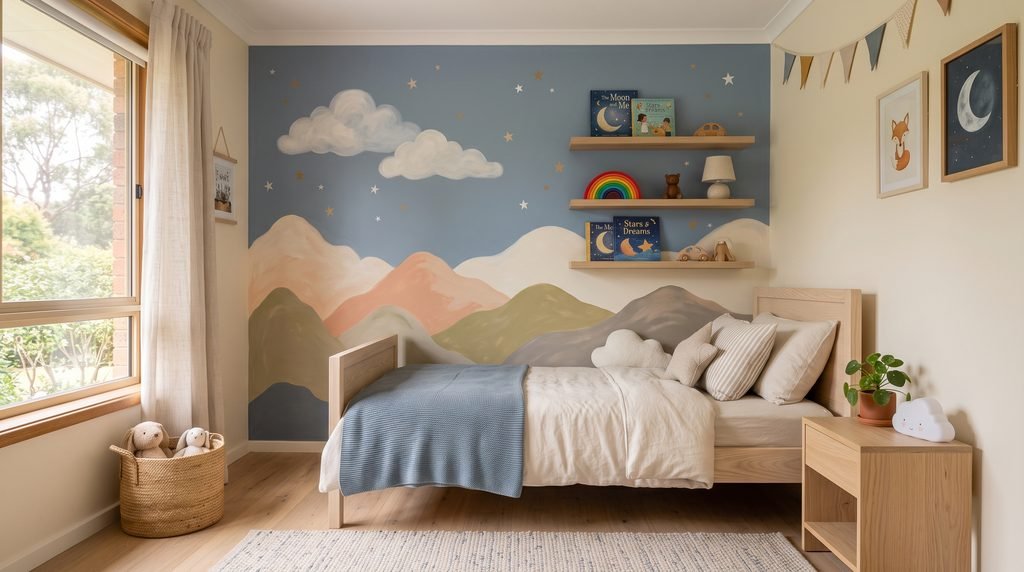
Playful Accent Wall: Stylish kids bedroom with a soft pastel mural featuring simple clouds and mountains, light wooden bed, cozy bedding, floating shelves, plush toys, and warm natural lighting.
3. Design a Cozy Reading Corner
A reading corner can turn an ordinary kids room into a space that encourages quiet time and imagination.
You do not need a large area. A small corner beside a window, next to the bed, or underneath a loft can work beautifully.
Start with comfortable seating. Depending on the available space, you could use a small upholstered chair, floor cushion, beanbag, miniature sofa, or padded bench.
Add a small bookshelf nearby so books are easy for children to reach. Forward-facing shelves are particularly useful for younger children because the covers are visible and easier to choose from.
Soft lighting is another important element. A small floor lamp, wall sconce, or warm table lamp can make the corner feel inviting in the evening.
Layer the space with a soft rug, cushions, and a blanket. A canopy or fabric draped above the reading area can make the corner feel like a special little hideaway.
For a more modern look, keep the palette simple. Natural wood, cream fabric, soft beige, and muted colors can create a peaceful reading environment.
You can also personalize the area with framed artwork, a child’s name sign, or a small collection of favorite books.
The most important feature is accessibility. Books should be positioned at a height children can comfortably reach.
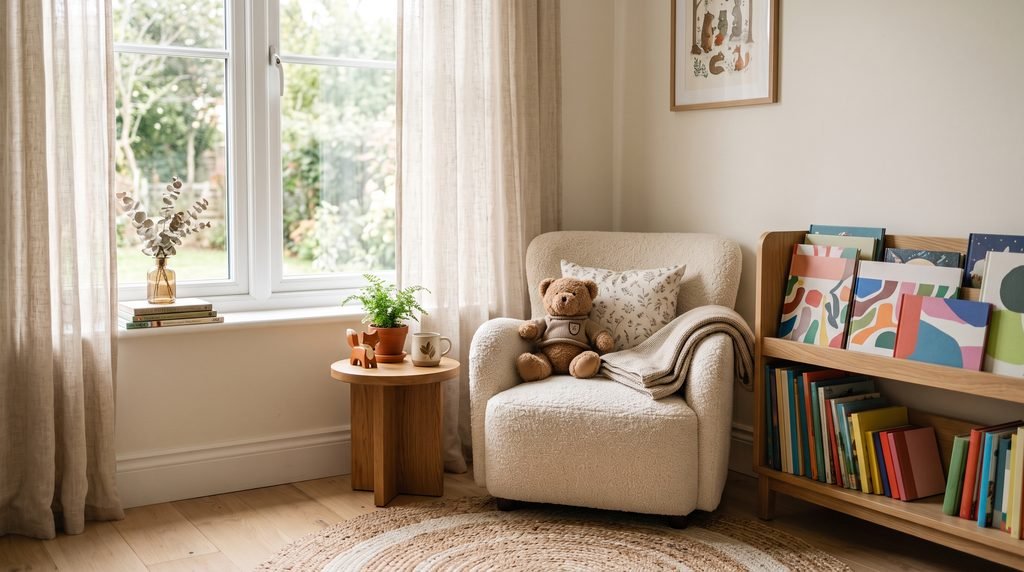
Kids Reading Nook: Cozy children’s reading corner beside a large window, featuring a comfortable boucle chair, low wooden bookshelf filled with colorful books, soft round rug, cushions, plush toy, and warm sunlight.
4. Use Smart Storage Everywhere
Storage is one of the biggest challenges in a kids room. Toys, books, clothing, school supplies, art materials, and small treasures can quickly take over the space.
The solution is not simply adding more storage. It is creating storage that children can actually use.
Low open shelves are excellent for toys and books. Baskets can hide smaller items while keeping the room visually organized.
Under-bed storage is another valuable option. Drawers or rolling boxes underneath the bed can store seasonal clothing, extra bedding, toys, or larger collections.
Wall-mounted shelves can use vertical space without taking up valuable floor area. Pegboards are useful for hanging bags, hats, art supplies, and small accessories.
A built-in wardrobe can provide another opportunity to maximize storage. Add adjustable shelves and drawers so the interior can change as your child’s needs change.
Storage benches are particularly useful because they provide both seating and hidden storage.
You can also introduce labeled baskets or simple picture labels. For younger children, visual labels can help them understand where different toys belong.
The best children’s storage is easy to reach, easy to understand, and easy to put away.
Instead of expecting children to maintain an adult-style perfectly organized room, create systems that make tidying simple.

Smart Kids Room Storage: Organized children’s bedroom with low open shelving, labeled woven baskets, under-bed drawers, wall-mounted shelves, colorful books, neatly arranged toys, and warm wood furniture.
5. Create a Creative Art Wall
Children need opportunities to express themselves, and an art wall can turn their creativity into part of the room’s design.
One simple option is a large framed corkboard or magnetic board where drawings and school projects can be displayed.
Another idea is a gallery-style wall with interchangeable frames. Instead of filling the frames with permanent artwork, use them to display your child’s latest drawings.
For younger children, a chalkboard wall can become a creative focal point. However, if you want a cleaner appearance, consider a framed chalkboard panel instead of painting an entire wall.
A dedicated art station can also be incorporated into the room. A small wooden table with two chairs, organized containers, paper trays, and washable supplies can create a practical creative zone.
Keep art supplies within reach if your child is old enough to use them safely. Use small containers to separate pencils, crayons, markers, brushes, and paper.
A pegboard above the desk can provide additional organization while creating a visually interesting feature.
You can make the area even more inviting with a small pendant light and a washable rug.
The result should feel like a mini creative studio designed specifically for your child.
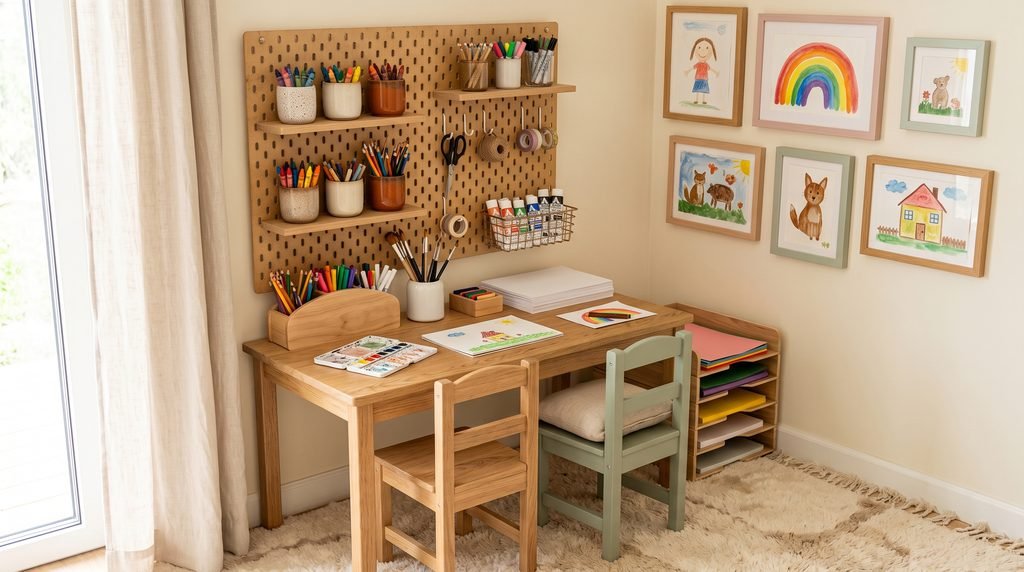
Kids Art Corner: Beautiful children’s creative station with a small natural wood desk, two miniature chairs, framed children’s artwork, pegboard organizer, colorful art supplies, paper storage, and soft daylight.
6. Try a Canopy Bed for a Dreamy Look
A canopy can instantly transform a child’s sleeping area into a magical retreat.
Traditional four-poster beds are one option, but you can achieve a similar effect with a simple fabric canopy suspended above the bed.
Soft cream, white, blush, sage, or dusty blue fabric can create a dreamy atmosphere. For a more playful room, choose a canopy with subtle patterns or small decorative details.
Keep the bedding comfortable and simple so the canopy remains the focal point.
A canopy also works particularly well with fairy lights, although lighting should be installed safely and kept away from areas where children could pull or tangle them.
For younger children, a low floor bed surrounded by soft textiles can create a cozy sleeping environment. Older children may prefer a traditional bed with a more structured canopy.
The surrounding wall can remain relatively simple. A few framed prints, small shelves, or a single piece of artwork can complete the look.
Canopies can also be used without a canopy bed. A fabric canopy suspended from the ceiling above a reading corner can create a small hideaway.
This approach is especially useful in rooms where you want to introduce a whimsical feature without adding bulky furniture.

Dreamy Canopy Kids Bedroom: Elegant children’s bedroom with a simple wooden bed surrounded by a soft cream fabric canopy, layered neutral bedding, textured rug, small bedside table, plush toys, and warm sunlight.
7. Make the Most of a Small Kids Room
Small rooms require thoughtful planning, but limited square footage does not mean limited creativity.
Start by choosing furniture that serves more than one purpose. A bed with drawers underneath can provide valuable storage, while a desk with integrated shelving can reduce the need for additional furniture.
Vertical space is particularly important. Tall shelving, wall hooks, floating shelves, and vertical wardrobes can provide storage without consuming much floor area.
A loft bed can be another practical solution for older children. The area underneath can become a desk, reading nook, play area, or storage zone.
Light colors can make the room feel more open, but you do not need to avoid darker colors entirely. A darker accent wall can create depth when balanced with lighter furniture and textiles.
Mirrors can also visually expand a small room. A child-safe wall mirror can be both decorative and practical.
Keep pathways clear. Children need space to move, play, and access their belongings safely.
Instead of filling every empty corner, allow some open floor area. An uncluttered floor can make even a compact room feel larger.
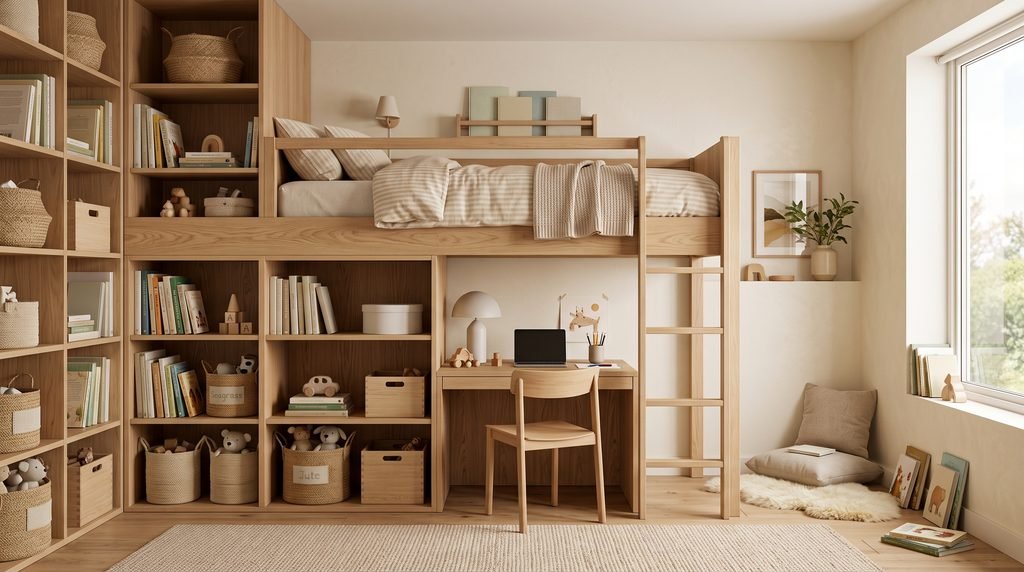
Small Kids Room: Clever compact children’s bedroom with a loft bed, built-in storage, small desk underneath, wall shelves, woven baskets, light neutral walls, and an open play area.
8. Build a Room That Grows With Your Child
One of the smartest kids room ideas is to avoid designing the room around only one age.
Children grow quickly, and their interests can change just as quickly. A room covered entirely in a specific cartoon character may look perfect today but feel outdated a few years later.
Instead, create a flexible foundation.
Choose quality furniture with simple shapes, then add personality through removable elements such as bedding, artwork, cushions, rugs, and accessories.
For example, a neutral wooden bed can work for a toddler, a school-age child, and even a teenager. The surrounding accessories can change over time.
Adjustable shelving is another excellent investment. As children grow, shelves can move to accommodate books, decorations, school materials, or larger belongings.
A desk that starts as an art table can eventually become a homework station.
You can also create a gallery wall with interchangeable prints. Replace childish illustrations with more mature artwork as your child’s preferences develop.
This approach makes the room easier to update and can reduce the need for major renovations.
Think of the room as a flexible framework rather than a finished product.
9. Add a Playful Ceiling Feature
The ceiling is often forgotten when decorating children’s rooms, but it can become a beautiful fifth wall.
A painted ceiling can create an unexpected focal point. Soft blue can suggest a sky, while muted green can bring a natural feeling into the room.
For a more subtle design, use wallpaper on the ceiling with tiny stars, clouds, or abstract patterns.
A statement light fixture can also become a major decorative feature. Look for playful shapes such as clouds, moons, stars, flowers, or simple sculptural forms.
Avoid making the ceiling overly busy if the walls already contain strong patterns.
In a minimalist children’s room, a beautiful pendant light and softly painted ceiling can provide enough visual interest.
The ceiling can also be used to create a magical nighttime atmosphere through carefully planned ambient lighting.
The key is to balance imagination with simplicity.
10. Introduce Nature-Inspired Kids Room Decor
Nature can provide a calming and timeless theme for a children’s room.
Instead of using a highly literal jungle theme, consider bringing nature into the room through materials, colors, artwork, and subtle patterns.
Natural wood furniture, woven baskets, linen curtains, botanical prints, woodland artwork, and earthy textiles can create a warm environment.
Sage green is particularly versatile. It can be paired with cream, warm white, natural oak, beige, or muted terracotta.
A forest-inspired mural can create a dramatic focal point, while smaller botanical prints can achieve a subtler effect.
Animal illustrations are another easy way to introduce nature. Choose simple, artistic prints rather than overly bright cartoon designs if you want the room to remain sophisticated.
If you use real plants, choose child-safe options and place them where they cannot easily be knocked over or accessed by very young children.
Natural textures can be just as important as greenery. Rattan, cane, wood, cotton, wool, and woven materials bring warmth without requiring lots of decoration.
11. Create a Comfortable Homework Zone
As children grow, their room often needs to accommodate schoolwork.
A dedicated homework area does not have to be large. A compact desk against a wall can provide enough space for books, a laptop, notebooks, and stationery.
Choose a comfortable chair and make sure the desk height is appropriate for the child.
Good lighting is especially important. Place the desk near natural light where possible, while also providing a suitable task light for evenings.
Wall shelves above the desk can store books and supplies without taking up desk space.
A pegboard can hold stationery, headphones, small notes, and other everyday items.
Keep the area visually calm. Too many toys immediately around the homework zone can make it harder to create a clear separation between play and study.
A small pinboard can provide space for schedules, artwork, school reminders, or inspirational images.
As children grow, the homework area can evolve into a more mature study space without requiring a complete room makeover.
12. Use Rugs to Define Different Zones
A rug can make a major difference in a kids room.
Beyond adding warmth and softness, a rug can visually define different areas.
A large rug underneath the bed can anchor the sleeping zone, while a smaller washable rug can define a reading or play area.
For children’s rooms, practicality matters. Choose materials that are easy to clean and comfortable underfoot.
Round rugs can soften rooms dominated by rectangular furniture. Rectangular rugs can provide more coverage in larger rooms.
Patterns can also hide everyday marks better than completely plain rugs.
If the rest of the room is neutral, a patterned rug can introduce color. If the walls are already playful, a simple textured rug may create better balance.
Always consider how the rug interacts with doors, drawers, and furniture before choosing its size.
13. Personalize the Room With Small Details
The most memorable kids rooms usually contain details that feel personal.
A child’s name above the bed, framed artwork they created, favorite books, collections, photographs, or handmade objects can make the room feel uniquely theirs.
Personalization does not have to mean adding lots of decorations.
Sometimes one meaningful feature is enough.
You could create a small display shelf for special objects or dedicate one section of the room to rotating artwork.
A pinboard can become a constantly changing collection of drawings, photographs, postcards, and little memories.
Choose a few accessories that reflect your child’s interests rather than decorating every surface.
This keeps the room visually calm while still giving the child a sense of ownership.
14. Layer Warm and Comfortable Lighting
Lighting can completely change the atmosphere of a children’s room.
Start with natural daylight. Keep windows relatively open and use curtains that provide privacy while still allowing soft light into the room.
For general lighting, choose a warm ceiling fixture.
Then add secondary sources such as a bedside lamp, desk light, wall sconce, or reading light.
Nightlights can also provide comfort for younger children. Choose designs with soft illumination rather than extremely bright colors.
A combination of lighting levels allows the room to transition from energetic daytime play to calm evening routines.
Avoid relying on a single bright overhead light.
Layered lighting creates a softer and more comfortable atmosphere.
15. Keep the Room Organized Without Losing Its Personality
A beautiful kids room should not feel like a showroom.
Children need space to play, create, and express themselves, so a little visual mess is inevitable.
The goal is not perfection. The goal is creating systems that make organization easier.
Use baskets for toys, shelves for books, drawers for clothing, and hooks for bags and jackets.
Keep frequently used items accessible and less frequently used belongings higher up.
A simple rule can help: everything should have a home.
At the end of the day, children can return toys to their baskets, books to their shelves, and art supplies to their containers.
This turns organization into part of the room rather than an endless chore.
Final Thoughts
The best kids room ideas balance imagination, comfort, practicality, and personality.
A child’s bedroom should feel playful enough to inspire creativity but organized enough to function every day. It should provide comfortable places to sleep, play, read, learn, and relax.
You can create a beautiful room without filling every corner with decorations. Start with a flexible foundation of quality furniture, comfortable textiles, useful storage, and good lighting. Then introduce personality through artwork, color, books, toys, patterns, and meaningful details.
For small rooms, focus on vertical storage and multifunctional furniture. For larger rooms, consider dividing the space into dedicated zones for sleeping, playing, reading, and studying.
Most importantly, allow the room to evolve. Children’s interests change, and their bedrooms should be able to change with them.
Whether you prefer a soft neutral nursery-inspired room, a colorful creative space, a nature-themed bedroom, a cozy reading retreat, or a multifunctional room for an older child, there are countless ways to make the space feel special.
The most successful children’s rooms are not necessarily the most expensive or elaborate. They are the ones designed around how a child actually lives.
A comfortable bed, accessible storage, a place for books, room to play, good lighting, and a few personal touches can create a space that feels both beautiful and genuinely theirs.
With thoughtful planning, even a simple bedroom can become a little world where children can dream, learn, create, and grow.