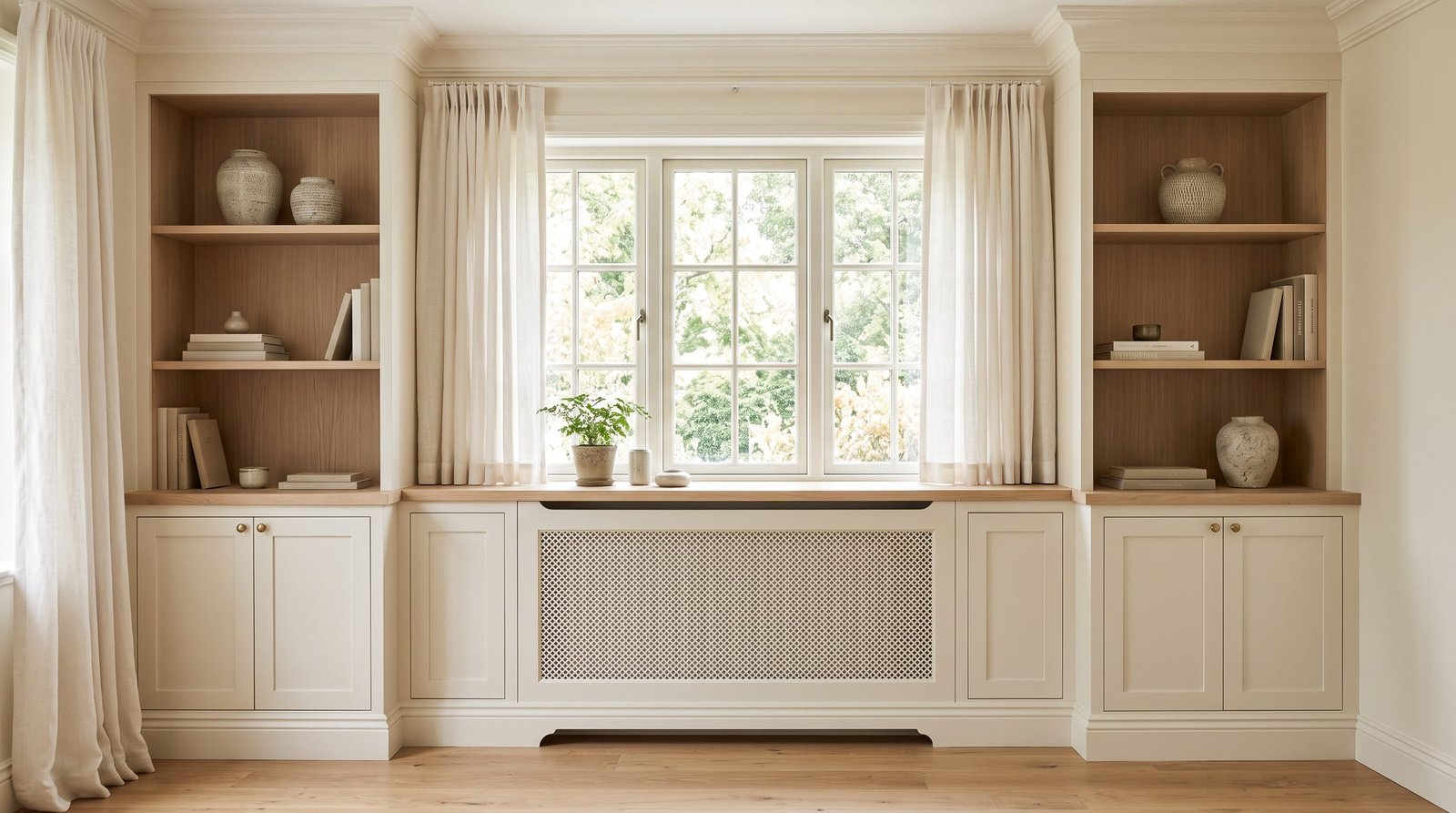
Radiator Cover Ideas: 21 Stylish Ways to Transform Your Home
Radiators are essential for keeping your home warm, especially during colder months, but their appearance does not always match the rest of your interior design. A traditional radiator can look bulky, interrupt an elegant wall, or take attention away from carefully chosen furniture and decorations. The good news is that the right radiator cover can turn this practical heating feature into an attractive part of your home.
Radiator cover ideas range from contemporary wooden slats and minimalist white cabinets to decorative metal screens, built-in shelving, and custom-made furniture. Whether you want to improve a living room, create a more polished hallway, or make a bedroom feel more coordinated, there is a design to suit almost every interior style.
The best radiator covers do more than conceal heating equipment. They can provide a decorative surface, introduce natural textures, add useful storage, and make awkward spaces look more intentional. However, a successful design must also allow heat to circulate safely and provide convenient access to radiator controls.
In this guide, you will discover 21 stylish radiator cover ideas, practical styling tips, material choices, and useful considerations to help you choose a design that looks beautiful without compromising the performance of your heating system.
1. Modern Wooden Slat Radiator Cover
Modern wooden slat radiator cover
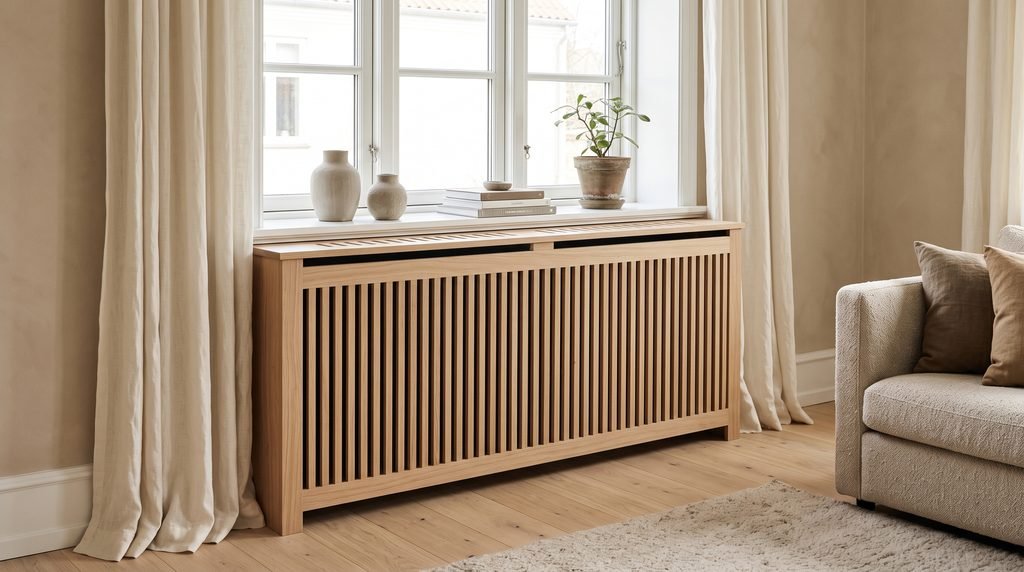
A wooden slat radiator cover is an excellent choice for homeowners who appreciate natural materials and contemporary design. Its clean lines create a refined appearance, while the spaces between the slats allow air to circulate around the radiator when the cover is properly designed.
Light oak is particularly attractive in Scandinavian, Japandi, and organic modern interiors. Its warm undertones complement cream walls, linen curtains, pale flooring, and furniture made from natural wood. Dark walnut, meanwhile, offers a richer appearance that works beautifully in sophisticated living rooms and traditional homes.
For a balanced look, choose a cover with evenly spaced vertical or horizontal slats and a simple rectangular frame. A lightly finished wooden surface keeps the design understated, while rounded edges can soften the overall appearance.
You can style the top with a small ceramic vase, a decorative bowl, or a framed photograph, provided the surface stays within the manufacturer’s temperature recommendations and does not obstruct ventilation. Avoid treating the cover as an ordinary storage cabinet unless it has been designed for that purpose.
Wooden slat radiator covers are particularly suitable for living rooms, dining areas, and bedrooms where warmth, texture, and visual simplicity are important.
2. Classic White Radiator Cover Cabinet
A white radiator cover cabinet is a timeless solution for interiors that need a neat, coordinated appearance. Its light color blends naturally with white skirting boards, pale walls, and traditional architectural details, making the radiator feel like part of the room rather than an unrelated fixture.
This design is especially effective in hallways, formal living rooms, and older properties with decorative wall trim. You can select a simple flat-fronted cabinet for a contemporary home or choose recessed panels and subtle molding for a more traditional interior.
The top provides a clean visual line along the wall, and the cabinet can make a radiator beneath a window look more integrated with the surrounding architecture.
For a modern finish, pair the white cover with a small table lamp, a simple ceramic vase, or understated artwork nearby. If the room already contains plenty of white furniture, introduce contrast through oak flooring, black metal accents, or warm neutral accessories.
Measure the radiator carefully before choosing a cabinet. A cover should not fit so tightly that it restricts airflow, and the design must provide suitable clearance around valves and pipework.
A white radiator cover is a particularly versatile option because it can complement minimalist, cottage, transitional, and classic interior styles without overwhelming the room.
3. Minimalist Radiator Cover With a Floating Shelf
A floating-shelf radiator cover combines a clean decorative surface with a streamlined appearance. Instead of a bulky cabinet with prominent side panels, this style emphasizes a narrow profile and simple geometry.
It works well in contemporary apartments, compact living rooms, and spaces where visual clutter needs to be reduced. A pale wood shelf against a warm white wall creates a subtle contrast, while a painted shelf in the same color as the wall produces a more seamless finish.
Keep the shelf styling simple. One sculptural object, a small framed print, or a lightweight decorative piece is usually more effective than a crowded arrangement of accessories.
The important distinction is that a floating shelf alone does not necessarily make a safe or effective radiator cover. If the radiator requires an enclosure, the design must include a suitable ventilated structure and adequate clearance. A shelf installed too close to the radiator may also affect heat circulation or become unnecessarily hot.
Consider a purpose-built design that combines an open front, ventilation openings, and an integrated top ledge. This offers the visual simplicity of a floating shelf while retaining the practical function of a radiator enclosure.
4. Built-In Radiator Cover With Storage
Built-in radiator cover with surrounding storage
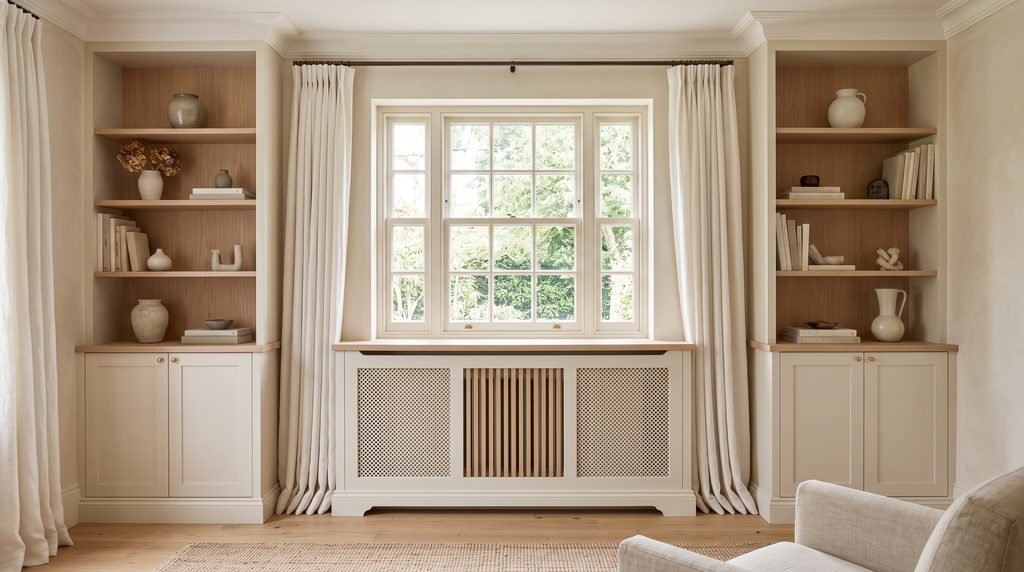
A built-in radiator cover is ideal when you want a radiator to feel like part of a carefully planned interior. Rather than placing a separate cabinet against the wall, you can integrate the enclosure with surrounding joinery, shallow cupboards, or decorative shelving.
This approach works particularly well in larger living rooms, dining rooms, and hallways where a long wall would otherwise look unfinished. Matching the cabinetry to existing bookcases or fitted furniture creates a coordinated appearance.
For example, a radiator positioned beneath a window can sit inside a custom-built enclosure with narrow storage cupboards on either side. In a living room, a similar arrangement can frame a seating area or complement a media unit.
Storage must be planned carefully. Radiators release heat into their surroundings, so items such as paper, candles, electronics, and heat-sensitive belongings should not be placed where they may become too warm. Enclosed cupboards should be designed for their intended use and separated appropriately from the heat source.
Always preserve access to radiator valves and any service points. A removable front panel or accessible side section can make maintenance easier.
Although custom joinery may cost more than a freestanding cover, it offers a polished, integrated result that can make an ordinary wall feel architecturally complete.
5. Decorative Geometric Radiator Cover
Geometric decorative radiator cover
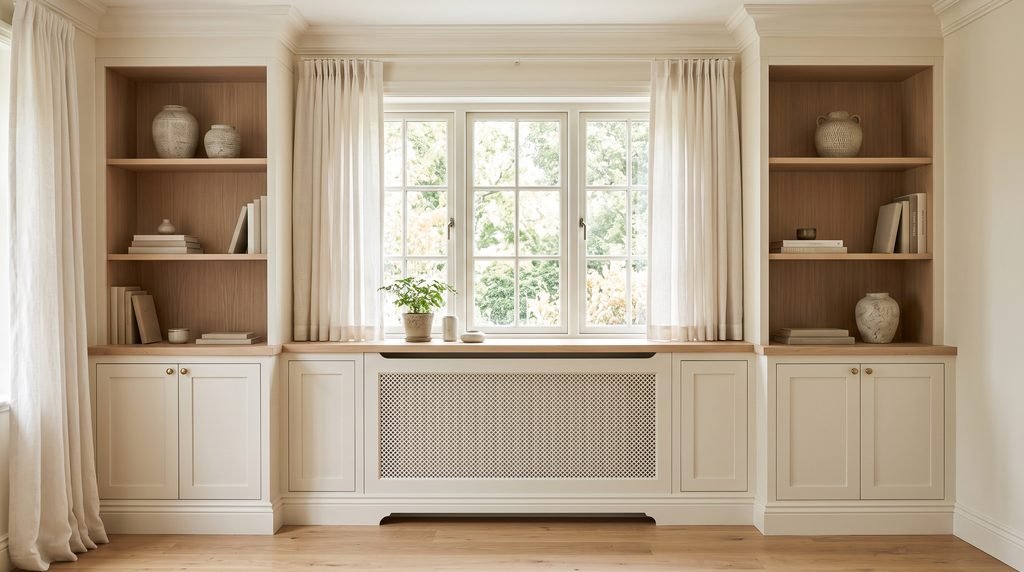
If you want your radiator cover to feel like a decorative feature rather than a practical necessity, consider a geometric front panel. Repeating circles, diamonds, hexagons, and abstract cutout patterns can introduce detail without requiring additional wall art.
A geometric radiator cover looks particularly attractive in contemporary homes with simple furniture and uncluttered walls. The patterned front adds visual interest, while a neutral finish prevents the design from becoming too dominant.
White geometric panels create a soft, architectural appearance. Black or charcoal designs introduce contrast, while muted sage green and warm taupe can coordinate with more colorful interiors.
The pattern also influences the overall character of the room. Rounded cutouts feel softer and more playful, whereas straight lines and angular shapes produce a more structured look.
When selecting a geometric cover, prioritize ventilation and construction quality. Decorative openings must be sufficiently generous and appropriately positioned to support airflow. Avoid choosing a panel based solely on its appearance if the design significantly restricts heat circulation.
For a cohesive finish, repeat the cover’s shape or color elsewhere in the room through a mirror, lamp base, cabinet handles, or picture frames. This small design decision helps the radiator cover feel connected to the overall decorating scheme.
6. Black Metal Radiator Cover
Black metal radiator covers are a striking option for modern, industrial, and contemporary interiors. Their dark finish creates contrast against pale walls, making the radiator area look intentional rather than hidden away.
Choose a perforated metal front, mesh panel, or carefully spaced metal slats to create a balance between visual impact and ventilation. A slim black frame can look especially sophisticated beneath a large window or against a white wall.
This style works well with black window frames, dark lighting fixtures, walnut furniture, and neutral upholstery. In a living room, it can provide a subtle industrial accent without requiring exposed pipes or other industrial details.
For a softer appearance, pair the black cover with warm oak flooring, cream curtains, and textured fabrics. The combination prevents the dark finish from making a smaller room feel too heavy.
Metal can become hot depending on the radiator and heating system, so choose a product designed for radiator use. Check its temperature suitability, protective finish, and installation requirements before purchasing.
A black radiator cover is best when you want a crisp, contemporary detail that adds structure to the room.
7. Traditional Radiator Cover With Decorative Molding
Traditional radiator covers are perfect for homes featuring panelled walls, classic furniture, decorative fireplaces, and period-inspired interiors.
Look for a design with recessed rectangular panels, a shaped top edge, or subtle molding that echoes the architectural details already present in the room. Painted finishes in ivory, warm white, and soft greige are particularly versatile.
In a formal living room, a traditional cover can sit beneath a window between two matching side tables. In a hallway, it can coordinate with a console table and framed artwork to establish a consistent decorative style.
You do not need an ornate design to achieve an elegant result. A simple framed front with narrow trim often looks more refined than heavy decoration.
Consider matching the cover to the room’s existing woodwork rather than introducing a completely different color. This helps the radiator enclosure blend into its surroundings.
As with any enclosed radiator, the front panel, top openings, and overall clearances must be designed to allow effective heat circulation. Decorative molding should never take priority over ventilation or access for servicing.
8. Sage Green Radiator Cover
Sage green radiator cover
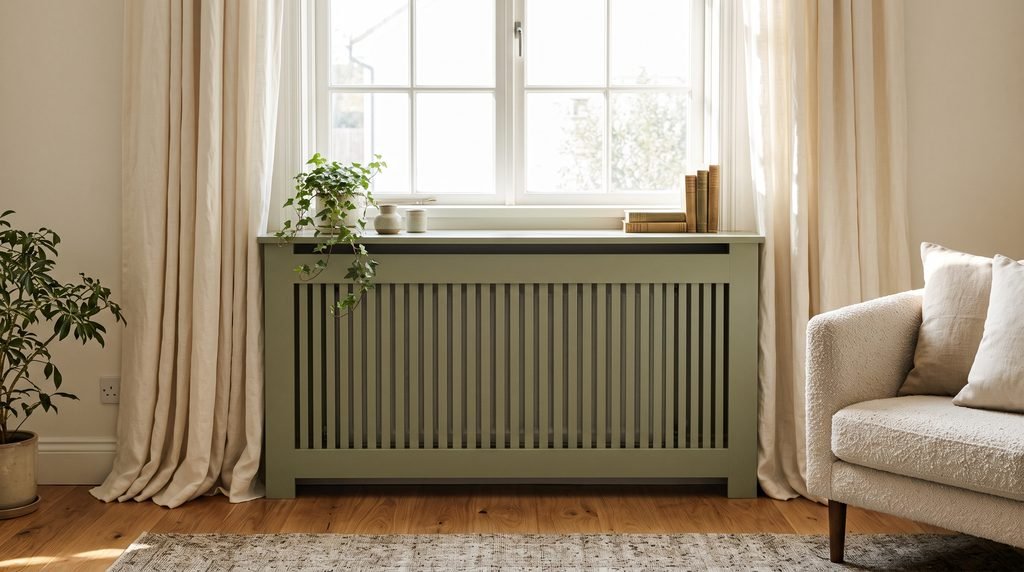
Sage green is an attractive option if you want to introduce color without overwhelming a neutral room. Its muted, natural quality works beautifully with oak furniture, cream upholstery, woven baskets, and leafy houseplants.
A sage green radiator cover can also make a practical heating feature feel like a deliberate part of your color scheme. Instead of trying to disguise the radiator in white, you can use the cover to add a subtle accent.
For a coordinated look, repeat sage green in cushions, artwork, a bedside accessory, or a small decorative object. You can also combine it with warm white walls and natural wood for a relaxed, organic atmosphere.
In a bedroom, a muted green cover beneath the window can complement soft bedding and linen curtains. In a living room, it works particularly well alongside botanical prints and neutral sofas.
If you are painting an existing cover, check that the material and coating are suitable for the intended temperature. Follow the manufacturer’s preparation and curing instructions, and do not paint over ventilation openings or moving components.
Sage green is especially effective in cottage-inspired, Scandinavian, and nature-influenced interiors.
9. Radiator Cover With a Built-In Window Seat
A radiator beneath a window can present an opportunity to create a more inviting seating area. A purpose-designed window seat can visually frame the window while integrating the radiator into the room’s architecture.
The design requires careful planning because the seat, enclosure, and radiator must work together. The radiator must retain sufficient clearance and ventilation, and the seat should not trap heat in a way that reduces heating performance or creates an unsafe surface temperature.
Where appropriate, a specialist can design a ventilated radiator enclosure beneath a separate seating platform. Alternatively, the seating may be positioned adjacent to the radiator rather than directly above it.
For the finished look, choose a neutral upholstered cushion, textured fabric, and a few coordinated pillows. Built-in seating can work especially well in reading corners, bedrooms, and dining nooks.
Avoid using ordinary cushions or upholstered materials directly over a hot radiator without confirming that the configuration is safe. A radiator cover should not automatically be treated as a load-bearing bench.
When properly planned, this arrangement turns an awkward window wall into a purposeful architectural feature.
10. Fluted Panel Radiator Cover
Fluted surfaces are popular in contemporary interiors because they add texture while maintaining a clean, sophisticated appearance. A fluted radiator cover applies this detail to a functional part of the room.
Vertical grooves create a subtle sense of height, while the repeating lines complement curved furniture, rounded mirrors, and contemporary lighting. A natural oak finish feels warm and organic, whereas painted cream produces a more understated luxury look.
For the most cohesive result, coordinate the cover with other fluted elements in the room, such as a sideboard or bedside cabinet. However, avoid repeating the pattern on every surface, as too much texture can make the space feel visually crowded.
The fluted front must be designed specifically for radiator use. Solid decorative panels can restrict airflow, so the grooves should not be assumed to provide sufficient ventilation simply because they create texture.
A well-designed fluted cover is a particularly good choice for homeowners who want their radiator enclosure to resemble custom furniture.
11. Radiator Cover With a Marble-Look Top
A marble-look top can give a radiator enclosure a refined, furniture-like appearance. It works especially well in elegant living rooms, formal hallways, and interiors that combine pale colors with polished metal accents.
You can pair a white cabinet with a surface that resembles white marble and subtle grey veining. For a more dramatic interior, consider a dark stone-inspired finish against warm white walls.
This design creates a useful decorative ledge, but it should not be treated as ordinary countertop space unless the materials and construction are rated for the expected temperatures and load.
Choose a heat-appropriate top and confirm that the cover has been engineered to support it. Avoid placing candles, heat-sensitive ornaments, or delicate objects where rising heat could cause problems.
To complete the look, add a ceramic vase, a small sculptural object, or a framed photograph placed safely away from ventilation openings.
The result is a sophisticated radiator cover that resembles a custom furniture piece rather than a simple utility enclosure.
12. Small Radiator Cover for Compact Rooms
Compact radiator cover for a small room
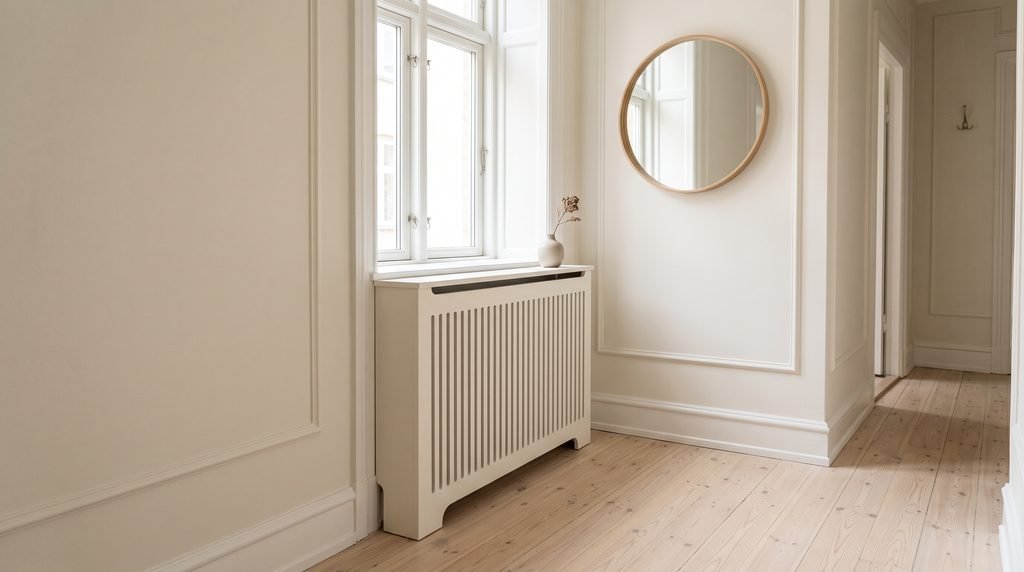
In a small room, the best radiator cover is one that improves the appearance of the radiator without making the space feel crowded.
Choose a slim design with a simple front and minimal side panels. A white, cream, or pale wood finish helps maintain an airy appearance, particularly when the cover sits beneath a window or along a narrow hallway wall.
Measure the available floor space carefully before purchasing. A cover that projects too far into the room can obstruct a walkway, interfere with furniture placement, or make a compact area feel smaller.
Avoid adding bulky decorations to the top. A single small object can provide enough visual interest without creating clutter.
Most importantly, do not select an unusually tight enclosure simply to save space. The radiator still requires the clearances and ventilation specified by its manufacturer.
13. Rustic Farmhouse Radiator Cover
Rustic farmhouse radiator covers introduce warmth, texture, and a relaxed character into the home. They work beautifully with natural wood flooring, linen curtains, vintage-inspired furniture, and muted earthy colors.
A distressed white finish can create a cottage-inspired appearance, while natural pine and oak provide a more organic look. For a farmhouse interior with darker accents, consider a warm brown finish that complements wooden beams or rustic dining furniture.
You can coordinate the cover with a nearby console table or wooden sideboard to create a consistent material palette. A woven basket positioned nearby may also add texture, provided it remains a safe distance from the heat source.
Rustic design does not have to mean rough or heavily distressed. Smooth wood, understated grain, and simple framing often produce a more timeless result.
Check the construction material and finish carefully, particularly if you plan to adapt an existing wooden cabinet. Not every piece of furniture is suitable for enclosing a radiator.
14. Radiator Cover With Open Shelving
Radiator cover with decorative open shelving
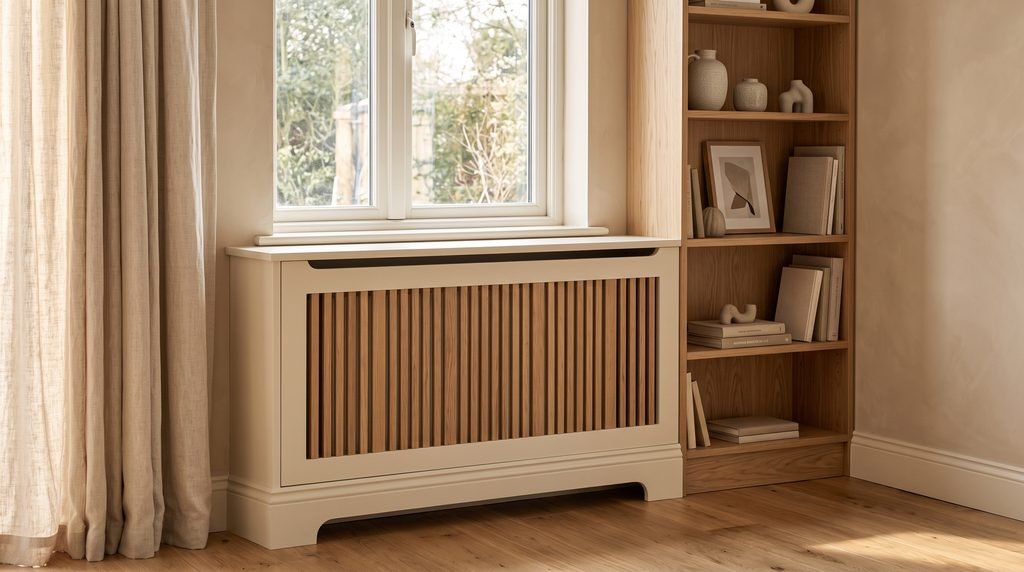
Open shelving can help a radiator enclosure become part of a larger decorative arrangement. Instead of treating the radiator as an isolated feature, you can incorporate it into a carefully planned shelving unit.
This works particularly well beside a reading chair, within a wide hallway, or along a living-room wall with sufficient space for shallow furniture.
Use the shelves for lightweight decorative objects that are appropriate for the location. Ceramic pieces, framed artwork, and selected books can create an attractive display, but books and other heat-sensitive items should be kept away from areas exposed to excessive warmth.
A balanced arrangement is more appealing than filling every shelf. Leave some empty space and mix objects of different heights to create a relaxed, curated appearance.
If the shelving sits immediately beside or above a radiator, ensure that its position does not interfere with airflow. A qualified installer or radiator-cover specialist can help determine the correct layout.
This idea is especially useful when you want your radiator enclosure to feel like an intentional part of the room’s furniture.
15. Arched Radiator Cover Design
Arched furniture details can soften the straight lines commonly found in contemporary interiors. An arched radiator cover introduces a gentle curve that can complement rounded mirrors, curved sofas, and sculptural lighting.
A pale oak or warm white finish keeps the shape understated. If your room has a more traditional character, an arched design with subtle molding can provide a decorative touch without looking overly ornate.
The arch can appear in the top edge, the front panel, or a surrounding frame. The best choice depends on the radiator’s position and the available wall space.
For a coordinated look, repeat the curved shape elsewhere through an arched mirror or a rounded side table. A single repeated form can create a strong visual connection without requiring a complete room makeover.
As with other decorative covers, ensure that the front openings and top ventilation are appropriate for the radiator. The curved design should not compromise maintenance access or heat output.
16. Floor-to-Ceiling Built-In Radiator Wall
A floor-to-ceiling built-in design is best suited to rooms where the radiator sits within a larger architectural composition. Instead of concealing it with a standalone cabinet, the enclosure can be integrated with matching wall panels and carefully planned storage.
For example, a living room might feature a long wall with a radiator enclosure at the bottom, decorative wall panels above, and shallow display shelving to one side. Consistent paint colors help the different elements feel connected.
This is a more involved project than installing a freestanding cover, so accurate measurements and professional planning are particularly important. The design must accommodate the radiator, pipework, valves, and maintenance access.
Avoid enclosing a radiator inside an airtight or poorly ventilated structure. Any cabinetry around the heating system must be designed to allow heat to escape into the room.
When executed well, this approach can make a radiator almost disappear into the architecture while giving the entire wall a more finished appearance.
17. Mirrored Radiator Cover for a Bright Interior
A mirrored radiator cover can introduce a glamorous detail into a hallway, dressing area, or formal living room. Reflective surfaces help distribute light visually and can make a carefully arranged interior feel brighter.
Choose a design with a mirrored front panel or decorative mirrored inserts within a suitable frame. Champagne-colored metal, warm white wood, and subtle brass details can complement the reflective surface.
This style is best used selectively. A mirrored enclosure may look elegant against a plain wall, but too many reflective surfaces can make a room feel busy.
Consider the practical conditions before choosing this option. Mirrors and their backing materials must be suitable for the temperature and installation location, and the complete cover still needs appropriate ventilation.
A mirrored radiator cover is a distinctive choice for homeowners who prefer a polished, decorative interior rather than a purely minimalist design.
18. Two-Tone Radiator Cover
Two-tone radiator cover in a modern interior
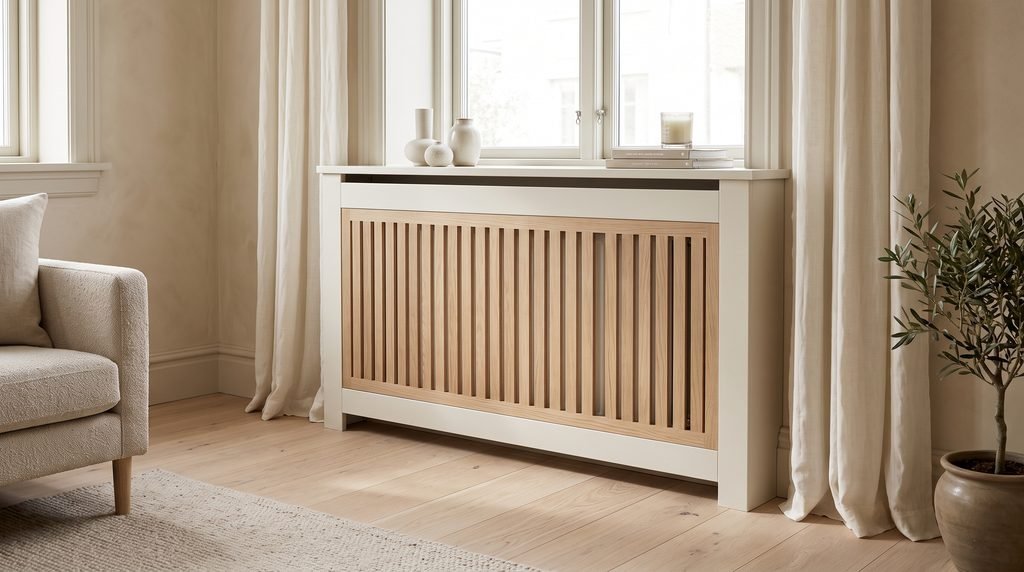
A two-tone radiator cover allows you to combine contrasting finishes without introducing a completely new decorative feature.
One popular combination is natural oak with a warm white frame. The wood introduces texture, while the painted finish keeps the design light and coordinated with the walls. Another option is walnut with a soft beige frame for a richer, more sophisticated appearance.
You can also use a darker front panel with lighter side panels to create a subtle focal point. This works particularly well when the room already contains matching dark accents in its lighting, furniture, or window frames.
Keep the surrounding accessories simple so that the two finishes remain the main feature. A neutral vase or a small piece of artwork can complete the arrangement.
When comparing designs, check that the materials, coatings, and panel construction are suitable for the intended heating application. Visual contrast is valuable, but it should never come at the expense of safe airflow.
19. Radiator Cover in a Hallway
Hallways often contain radiators in awkward positions, particularly beneath windows or along narrow walls. A thoughtfully selected cover can make this area feel more welcoming while creating a cleaner visual line.
A slim white enclosure is a versatile choice for a bright hallway. In a home with oak flooring and natural wood furniture, a light oak slatted cover can provide a more coordinated appearance.
If the hallway has enough space, you can pair the cover with a wall mirror, framed artwork, or a narrow console positioned separately. Avoid overcrowding the area, especially where people need to walk past comfortably.
The cover should not obstruct doors, narrow circulation routes, radiator valves, or cleaning access. In a busy entrance, a durable finish and sturdy construction are especially useful.
A well-chosen hallway radiator cover can make a small but noticeable difference to the first impression your home creates.
20. Bedroom Radiator Cover With a Soft Neutral Finish
A bedroom radiator cover should complement the room’s relaxing atmosphere. Cream, ivory, beige, and pale wood finishes work well because they blend with soft bedding, upholstered furniture, and natural fabrics.
A simple white cover can disappear against a pale wall, while a light oak design introduces warmth beneath the window. If your bedroom features sage green or muted blue accents, you could choose a painted cover that echoes those colors.
Keep decorations minimal and avoid placing bedding, curtains, or other fabrics against the radiator enclosure. Curtains should be arranged so they do not obstruct the radiator’s airflow or create a heat-related hazard.
For a coordinated bedroom, repeat the cover’s finish in a bedside table, picture frame, or other small furniture detail. This helps the room feel thoughtfully designed without adding unnecessary accessories.
21. Custom Radiator Cover With a Decorative Front
Custom radiator cover with an elegant decorative front
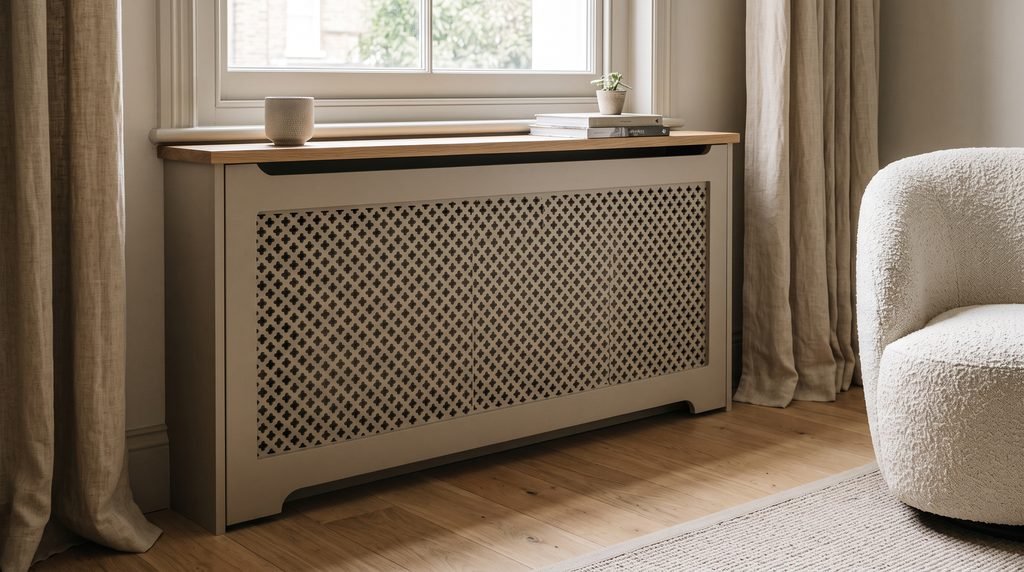
A custom radiator cover is an excellent option when standard designs do not fit your radiator or match your interior.
You can choose the exact dimensions, finish, front pattern, and overall proportions. This makes it easier to coordinate the cover with built-in furniture, unusual wall layouts, or existing architectural details.
For a modern home, consider a simple rectangular frame with a subtle perforated front. For a traditional property, recessed panels and decorative trim may be more suitable. Natural wood can create warmth, while painted finishes allow the enclosure to blend into the wall.
Custom designs are particularly useful for unusually wide radiators, awkward pipework, and installations beneath low windows. However, accurate measurements are essential, and the design must provide adequate clearance, ventilation, and access for maintenance.
Ask the manufacturer or installer to confirm that the finished enclosure is appropriate for your specific radiator. This is especially important if you intend to incorporate a heavy top, shelving, or surrounding cabinetry.
A custom cover may require a larger investment, but it can provide a more integrated result than a standard cabinet.
How to Choose the Right Radiator Cover
Before choosing a style, consider the following practical details.
Measure the radiator carefully. Record its width, height, and depth, including any projecting valves and pipework. Follow the cover manufacturer’s required clearances rather than relying on the radiator’s visible dimensions alone.
Prioritize ventilation. Radiator covers can reduce heat output if they restrict convection or trap warm air. Look for an appropriate combination of front openings and top ventilation, and check whether the design has been tested for your heating system.
Choose suitable materials. Painted MDF, solid wood, metal, and decorative panels can all work when properly designed and installed. Confirm their suitability for the expected temperature, particularly when using adhesives, coatings, mirrored surfaces, or stone-look tops.
Consider access and maintenance. Removable fronts or accessible panels make it easier to reach valves, bleed the radiator, and carry out repairs. Do not permanently seal off essential service points.
Match the cover to your interior. White suits classic and minimalist rooms, natural wood adds warmth, black introduces contrast, and muted green creates a soft accent. Select a finish that complements your existing furniture and wall colors.
Think about safety. Do not assume a radiator cover makes a hot radiator safe to touch or suitable for use as a bench. Follow manufacturer guidance, maintain required clearances, and keep combustible or heat-sensitive materials away from hot surfaces.
Final Thoughts
Radiator covers offer a simple way to make your home feel more coordinated, stylish, and thoughtfully designed. From modern wooden slats and classic white cabinets to sage green finishes, geometric panels, and custom built-in enclosures, there are options for a wide range of interiors and budgets.
The best choice depends on your room’s size, existing decor, radiator position, and practical heating requirements. A slim white cover can keep a small hallway feeling open, while a custom oak enclosure can bring warmth to a contemporary living room. Decorative fronts and two-tone finishes provide opportunities to introduce personality without changing the entire space.
Before making a purchase, prioritize ventilation, appropriate clearances, durable materials, and convenient maintenance access. With these considerations in mind, your radiator cover can become an attractive design feature that balances everyday practicality with the style of your home.