21 Decorative Wall Hook Ideas That Combine Style and Function
Decorative wall hooks are one of the simplest ways to make a home more organized while adding personality to your interior design. Although wall hooks are often treated as small practical accessories, the right design can become a beautiful decorative detail that complements furniture, artwork, lighting, and other elements in a room.
From sculptural brass hooks and natural wooden pegs to modern geometric designs and elegant entryway arrangements, there are countless ways to use wall hooks throughout your home. They can hold coats, handbags, hats, towels, keys, and accessories while helping keep everyday essentials within easy reach.
The best decorative wall hook ideas balance appearance with functionality. A thoughtfully arranged set of hooks can turn an empty hallway wall into a welcoming feature, add useful storage to a small bedroom, or introduce an attractive finishing touch to a bathroom. In compact homes, wall-mounted hooks are especially useful because they take advantage of vertical space without occupying valuable floor area.
Whether your interior style is modern, Scandinavian, farmhouse, minimalist, or traditional, you can find wall hooks that fit your decorating preferences. The key is choosing the right material, shape, placement, and arrangement for the space.
In this guide, we will explore 21 decorative wall hook ideas for different rooms and interior styles, along with practical tips for selecting, arranging, and installing hooks that look beautiful and work well for everyday use.
1. Modern Brass Wall Hooks
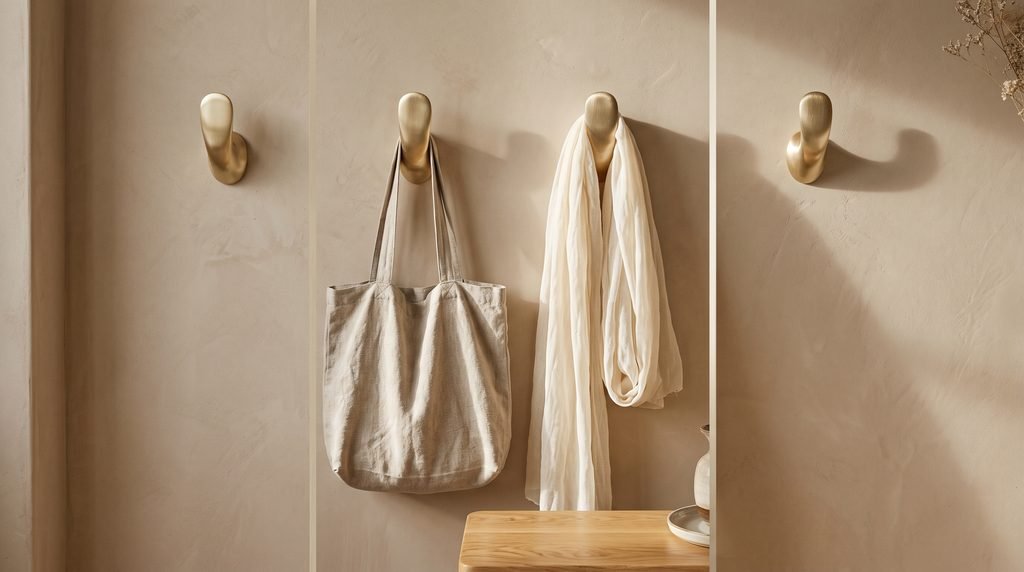
Brass wall hooks are an elegant choice for homeowners who want practical storage with a sophisticated finish. Their warm metallic color adds a subtle glow to an interior, making them particularly attractive in entryways, bedrooms, dressing areas, and hallways.
Brushed brass hooks offer a soft, understated appearance that works well with neutral interiors. Polished brass creates a more glamorous effect, while antique brass introduces a vintage character that complements traditional furniture and warm wood finishes.
One attractive approach is to install a row of matching brass hooks against a cream or beige wall. The repeated metallic shapes create a neat decorative arrangement while providing space for coats, handbags, scarves, or everyday accessories.
Brass hooks also pair beautifully with oak furniture, marble surfaces, linen fabrics, and warm white paint. For a coordinated look, repeat the finish through cabinet handles, mirror frames, or nearby lighting fixtures.
When choosing brass hooks, pay attention to the mounting hardware and weight capacity. Solid-looking decorative hooks are not necessarily suitable for heavy coats or bags, so check the manufacturer’s specifications and install them using appropriate fixings for your wall.
For a premium appearance, keep the surrounding wall relatively uncluttered. A small collection of carefully selected hooks often looks more elegant than a crowded arrangement.
2. Natural Wooden Peg Wall Hooks
Natural wooden peg hooks bring warmth, simplicity, and organic texture into a home. Their clean shapes make them especially suitable for Scandinavian, Japandi, minimalist, and nature-inspired interiors.
Light oak, beech, ash, and walnut each create a slightly different effect. Pale woods help maintain a bright, airy atmosphere, while darker walnut adds contrast and richness against light-colored walls.
You can arrange wooden pegs in a straight horizontal row for a structured look or position them at different heights for a more playful composition. A symmetrical arrangement works particularly well in an entryway, while an irregular pattern can add personality to a child’s room or creative workspace.
Wooden peg hooks are useful for lightweight coats, hats, tote bags, towels, and decorative accessories. They can also be installed inside wardrobes or behind doors to make use of otherwise overlooked spaces.
For a polished result, coordinate the wood tone with nearby furniture or flooring. Matching every wooden item exactly is unnecessary; similar undertones are often enough to create a cohesive design.
Before installation, confirm that the pegs are securely fixed and appropriate for the items they will hold. Decorative wooden pegs vary in strength, and the wall fixing is just as important as the hook itself.
3. Sculptural Wall Hooks for Contemporary Interiors
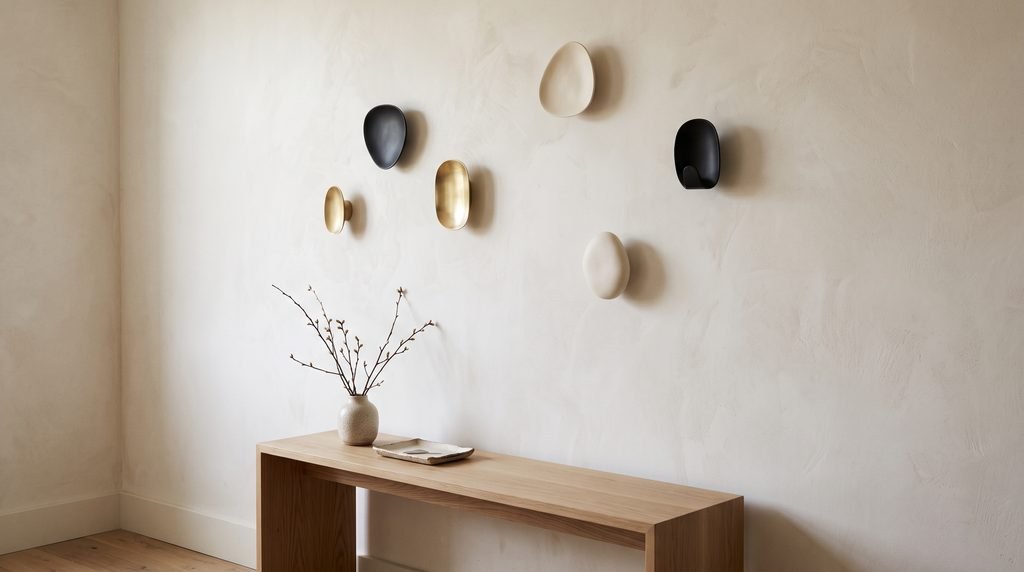
Sculptural wall hooks transform an ordinary storage accessory into a small piece of functional art. Instead of relying on conventional curved hooks, these designs use unexpected shapes, organic forms, and artistic silhouettes.
Some feature rounded pebble-like forms, while others resemble abstract branches, folded metal, or miniature architectural sculptures. Their appearance can be subtle or dramatic depending on the material and scale.
Sculptural hooks work particularly well in contemporary hallways, modern bedrooms, and creative living spaces. A small grouping of three or four coordinated shapes can create an interesting wall display without requiring a large piece of artwork.
Choose matte black for a bold modern contrast, warm white for a discreet appearance, or muted metallic finishes for a more decorative effect. Neutral sculptural hooks can blend into the wall when not in use, allowing their shapes to remain the main feature.
When planning the arrangement, consider both the empty hooks and how they will look when carrying belongings. Hooks that appear beautiful on their own may become visually crowded when several coats or bags hang from them.
Prioritize designs with a suitable projecting shape and a secure mounting system. Artistic appearance should complement the hook’s practical purpose rather than make everyday use difficult.
4. Decorative Entryway Wall Hooks
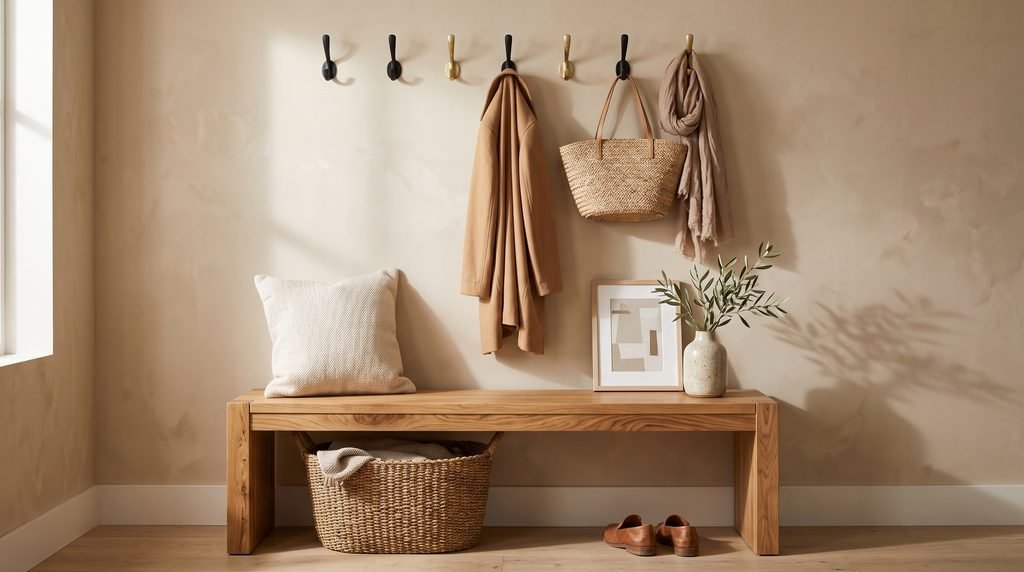
The entryway is one of the most useful places to install decorative wall hooks because it is where many everyday items first enter the home. Coats, handbags, hats, umbrellas, and reusable shopping bags can quickly clutter a hallway if they do not have designated places.
A thoughtfully arranged hook wall makes the entrance feel organized while establishing the decorating style of the home. For a warm, welcoming look, combine wooden hooks with an oak bench, a round mirror, and a woven basket for smaller accessories.
In a modern home, matte black or brushed brass hooks can provide a clean accent against white or beige walls. Traditional interiors may benefit from antique finishes and decorative backplates.
Spacing is important. Leave enough room between hooks so that bulky coats and bags do not overlap excessively. Install the hooks at comfortable heights for the people who will use them, and consider a lower row if children need independent access.
A narrow entryway does not require a large storage system. Even a short row of well-designed hooks can make the space more functional without obstructing the walkway.
For the best result, combine practical storage with only a few decorative details. A small mirror or piece of artwork nearby can complete the arrangement without making the entrance feel crowded.
5. Matte Black Wall Hooks
Matte black wall hooks provide a crisp, contemporary accent that suits many different interior styles. Their understated finish works particularly well against white walls, pale wood, warm beige paint, and textured plaster surfaces.
Simple black hooks are ideal for minimalist homes because their clean silhouettes add structure without introducing unnecessary decoration. They also complement industrial interiors with black window frames, metal furniture, and exposed architectural details.
For a modern entryway, arrange several black hooks in a straight line above a wooden bench. In a bathroom, use a suitable moisture-resistant design for towels and robes. In a bedroom, individual black hooks can hold bags, jackets, or frequently used accessories.
Black hooks can also create an attractive contrast in a light-colored room. Against a warm white wall, the dark shapes become small decorative accents that help connect the room’s other black details.
For a coordinated appearance, repeat the finish in picture frames, cabinet handles, or lighting fixtures. However, there is no need to introduce black everywhere; a few carefully placed accents are usually sufficient.
Choose a durable finish that suits the intended environment, particularly in humid bathrooms or frequently used entryways. Check the weight rating and installation instructions before hanging heavier items.
6. Wall Hooks With a Wooden Backboard
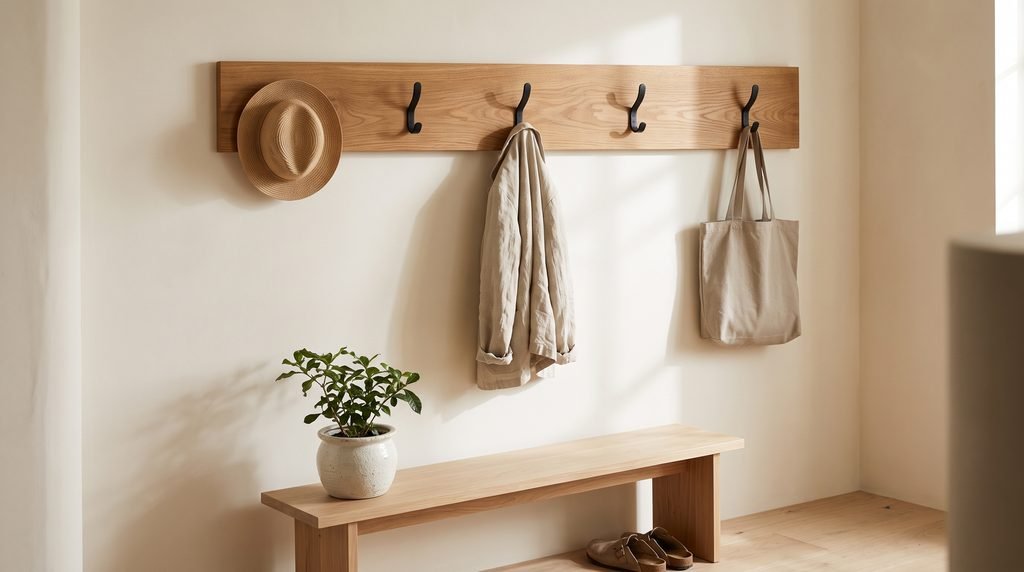
A wall hook rack with a wooden backboard is a practical way to create a more organized and visually complete storage area. Instead of mounting individual hooks directly onto the wall, the backboard brings them together in one coordinated feature.
Natural oak provides a light, contemporary look, while walnut introduces a deeper, more traditional character. A painted white backboard can blend into pale walls, whereas a dark wood finish creates contrast.
This design works particularly well in entryways, mudrooms, utility areas, and family hallways. The backboard distributes the visual arrangement across a wider area and can help protect the wall from marks caused by everyday belongings.
Choose a rack with hooks spaced according to what you plan to hang. Smaller hooks are suitable for keys and lightweight accessories, while larger, securely mounted hooks are more appropriate for coats and bags.
You can style the surrounding area with a narrow bench, a small tray for keys, or a framed print. Keep the arrangement simple so that the wooden rack remains the main feature.
Before installing the rack, confirm that both the backboard and its fixings can support the combined weight of the items. A strong backboard attached with unsuitable wall anchors can still pull away from the wall.
7. Ceramic Wall Hooks for Soft, Artistic Detail
Ceramic wall hooks offer a decorative alternative to metal and wooden designs. Their smooth surfaces, gentle curves, and variety of colors make them ideal for interiors that benefit from subtle detail.
Look for handmade-inspired hooks in ivory, cream, muted blue, sage green, terracotta, or speckled neutral finishes. Small variations in glaze can create an artisanal appearance that feels personal rather than mass-produced.
Ceramic hooks work especially well in bedrooms, bathrooms, dressing areas, and creative spaces. A group of pastel hooks can introduce a soft accent into a child’s room, while sculptural white ceramic hooks can complement a minimalist interior.
Because ceramic can chip or break under impact, consider what you intend to hang on the hooks. Lightweight scarves, small bags, and decorative accessories are generally more appropriate than heavy coats unless the product is specifically rated for heavier loads.
For an attractive display, combine a few ceramic hooks in related colors rather than using too many unrelated shades. Repeating a color from the room’s cushions, artwork, or decorative objects helps the arrangement feel intentional.
Always follow the manufacturer’s installation instructions and avoid placing fragile hooks where doors or bulky belongings may strike them.
8. Decorative Wall Hooks for Small Bedrooms
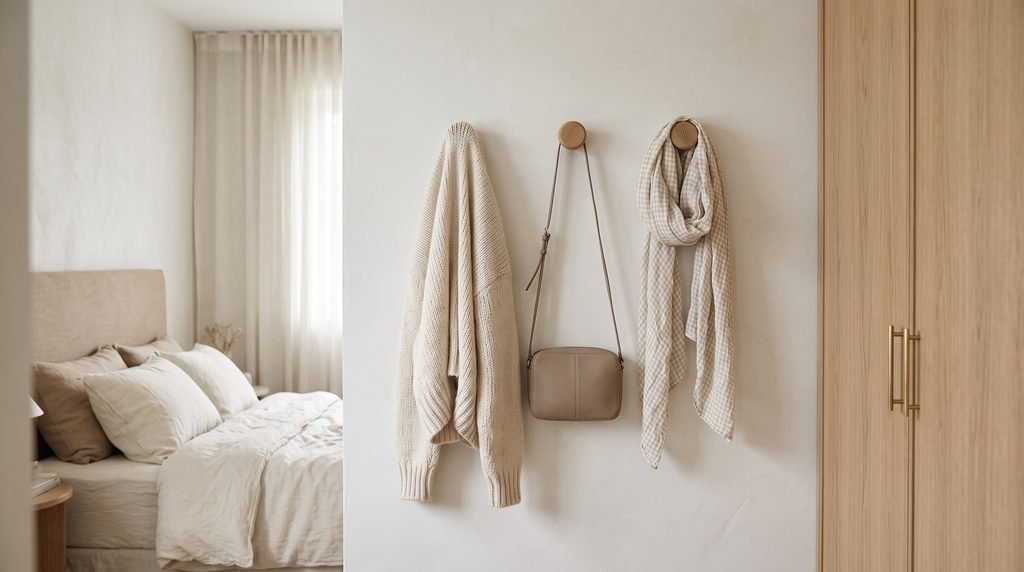
Wall hooks can be especially valuable in small bedrooms where wardrobes, bedside tables, and dressers already occupy much of the available floor space.
Instead of adding another storage cabinet, use a few carefully positioned hooks to keep frequently used items accessible. A hook beside the wardrobe can hold tomorrow’s outfit, while a small group near the bedroom door can accommodate a handbag, lightweight jacket, or scarf.
Wooden pegs work well in calm, natural interiors, while brass hooks introduce a more refined decorative accent. For a modern bedroom, simple matte black hooks can coordinate with dark picture frames or cabinet hardware.
Placement should feel convenient rather than improvised. Install hooks where they can be reached comfortably without interfering with wardrobe doors, curtains, or furniture.
You can also use hooks behind the bedroom door, provided they do not prevent the door from opening fully or damage the wall. Over-door hooks are another option when drilling is not desirable, although their compatibility with the door should be checked.
To maintain a peaceful bedroom atmosphere, avoid allowing hooks to become a permanent pile of clothing. A small number of hooks works best when each has a clear purpose and is used for items you regularly need.
9. Brass and Marble Decorative Wall Hooks
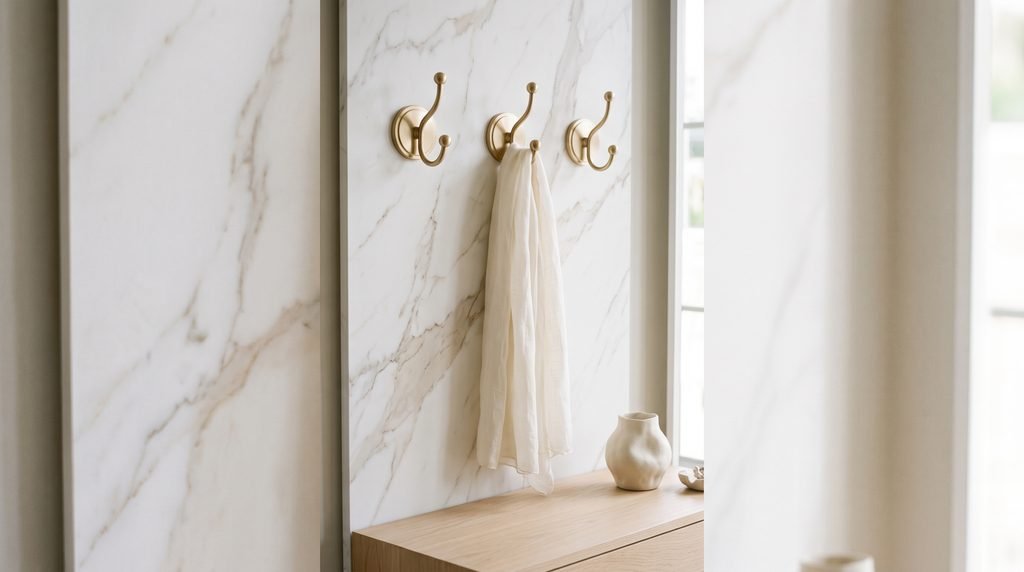
Brass and marble wall hooks combine the warmth of metal with the natural beauty of stone. This pairing creates an elegant decorative accent that works particularly well in luxury-inspired entryways, dressing rooms, and sophisticated bedrooms.
White marble with delicate grey veining offers a classic appearance, while cream or beige stone creates a softer, warmer effect. Pairing either material with brushed brass produces a refined finish that feels decorative without being overly ornate.
These hooks can be installed individually as small wall accents or arranged in a coordinated row above a console table. They are especially attractive against warm white walls, textured plaster, and neutral paint colors.
For a cohesive interior, repeat brass details in mirror frames, cabinet handles, or lighting fixtures. A marble-topped console nearby can reinforce the material combination without requiring every surface to match exactly.
When choosing this style, consider the weight of the complete hook assembly and the suitability of the wall fixings. Stone backplates can be heavier than ordinary hooks, so secure installation is essential. Use them for their intended load rating rather than assuming their luxurious construction automatically makes them suitable for heavy coats.
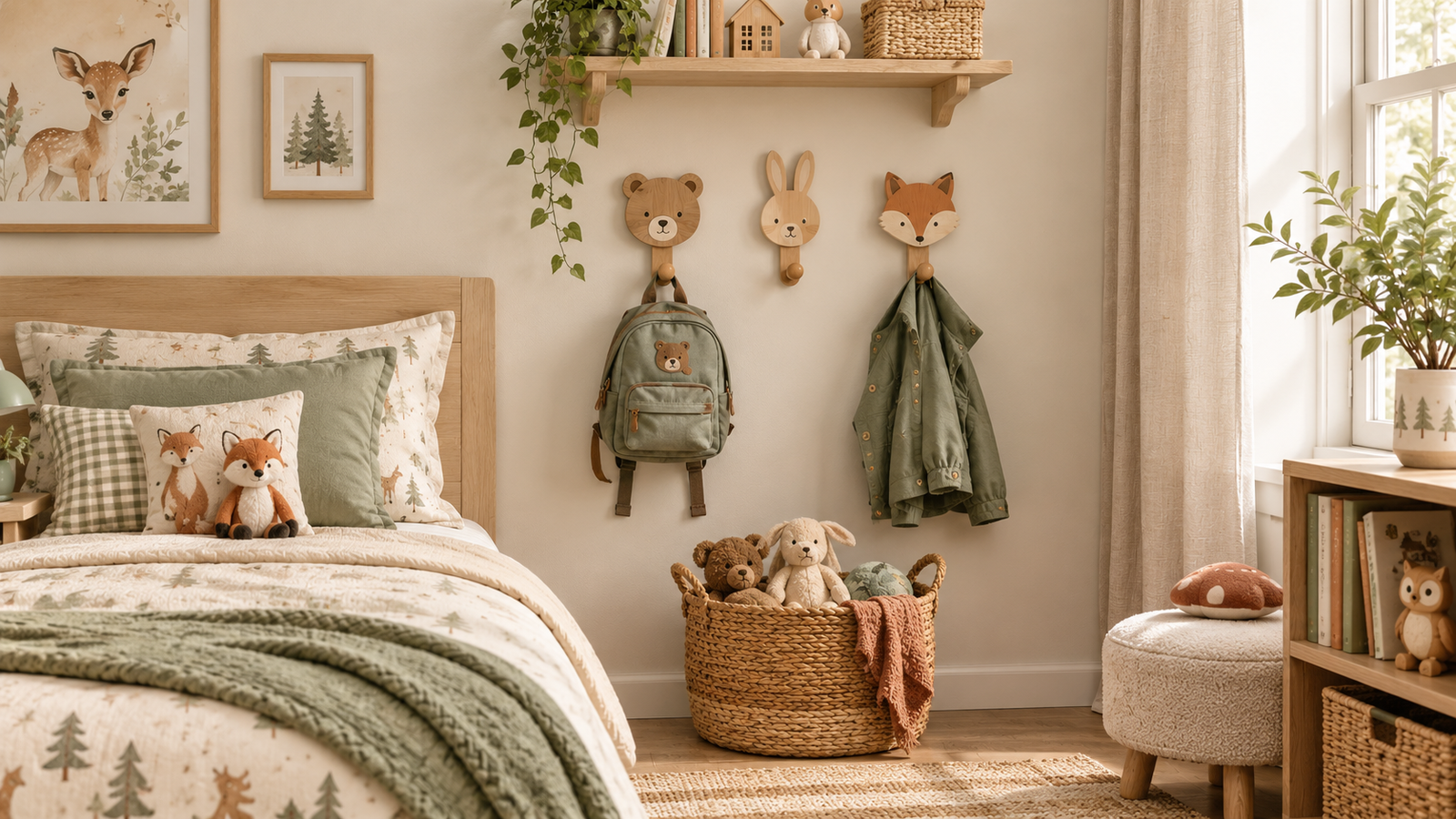
10. Animal-Shaped Wall Hooks for Children’s Rooms
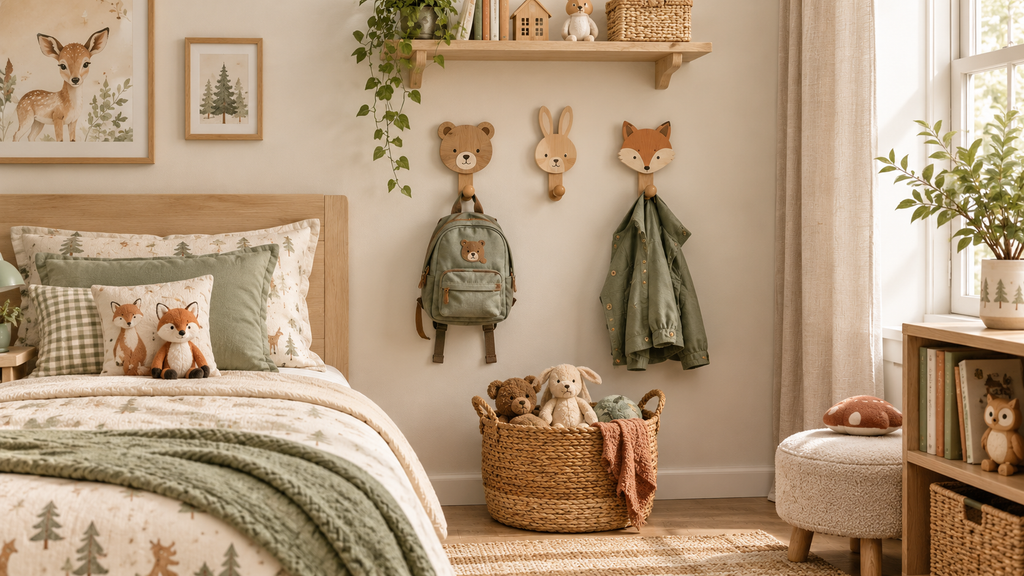
Animal-shaped wall hooks bring a playful touch to children’s bedrooms, nurseries, and family playrooms. Designs inspired by rabbits, bears, birds, foxes, and other friendly animals can make everyday organization more enjoyable.
Choose natural wooden animals for a Scandinavian-inspired nursery, or look for soft pastel colors if the room features a more playful palette. Simple silhouettes often look more timeless than highly detailed designs, allowing the hooks to remain attractive as the child grows.
Arrange the hooks at a height appropriate for the child’s age and reach. They can provide designated places for lightweight backpacks, hats, dressing-up accessories, and small jackets.
A coordinated arrangement can also become part of the wall decoration. For example, animal hooks arranged beneath framed woodland illustrations create a cohesive theme without requiring a large decorative mural.
Safety should be a priority. Choose products with secure mounting, smooth edges, and age-appropriate construction. Avoid small detachable pieces or fragile decorations where young children could access them, and do not place hooks where they create a collision hazard.
With thoughtful placement, animal-shaped hooks can help children develop simple tidying habits while adding charm to their room.
11. Vintage-Inspired Decorative Wall Hooks
Vintage-inspired wall hooks bring character and a sense of history to traditional, cottage, and farmhouse interiors. Their appeal often comes from antique-style finishes, decorative backplates, curved silhouettes, and subtle detailing.
Aged brass, dark bronze, and blackened metal are popular choices because they create a timeless appearance. These finishes pair beautifully with natural wood, painted furniture, patterned wallpaper, and classic architectural features.
In a hallway, a row of vintage hooks can complement a wooden bench and framed botanical prints. In a bedroom, individual hooks can provide convenient storage for robes, scarves, or accessories while reinforcing the room’s traditional character.
You can also combine vintage-style hooks with modern furniture for an interesting contrast. For example, antique brass hooks against a plain cream wall can add personality to an otherwise minimalist entrance.
When selecting vintage-inspired designs, look beyond appearance and check the construction. Some decorative hooks are intended only for lightweight accessories, while others are designed for everyday coats and bags.
Choose a finish that complements the existing metal details in your room, but do not worry about achieving an exact match. Slight variations in tone can make an interior feel more collected and natural.
12. Colorful Decorative Wall Hooks
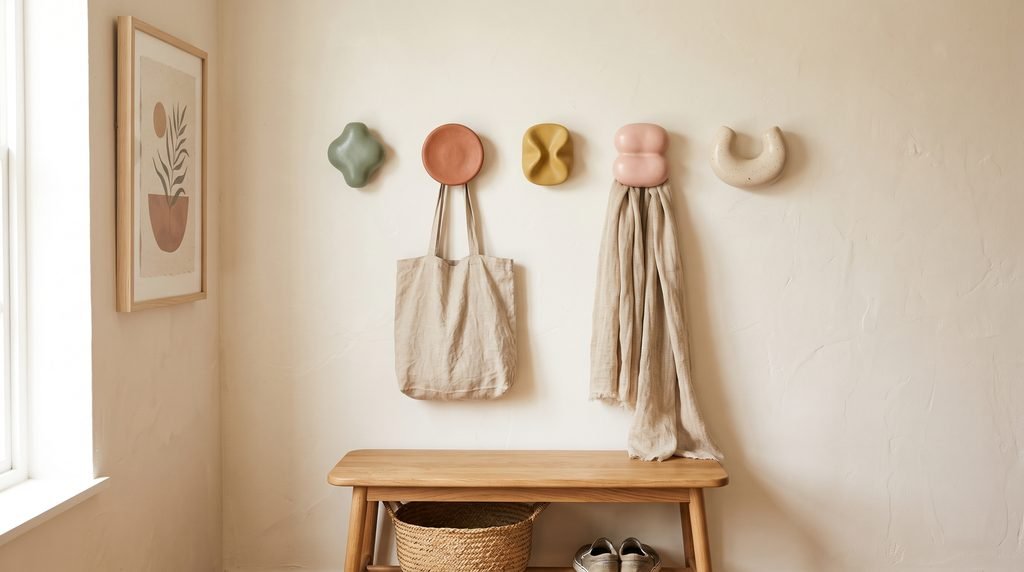
Colorful wall hooks provide an easy way to introduce personality into a neutral room. Rather than changing the wall color or purchasing new furniture, you can use small decorative hooks to create a playful accent.
Muted terracotta, mustard yellow, sage green, dusty blue, and blush pink work particularly well in contemporary interiors. These shades can be combined in a coordinated arrangement or used individually to complement existing decorative details.
Colorful hooks are useful in children’s rooms, creative studios, casual entryways, and utility areas. They can hold lightweight bags, scarves, hats, and accessories while making the wall more visually interesting.
For a balanced result, choose two or three colors that already appear elsewhere in the room. A sage hook can echo a cushion, while terracotta can complement a ceramic vase or artwork.
You can arrange the hooks in a neat row for a more structured appearance or create an informal pattern for a relaxed, artistic look. Make sure the arrangement remains practical, with enough space between hooks for the items you intend to hang.
If you prefer a subtle result, choose hooks in different shades of the same color. This creates variation without making the wall feel overly busy.
13. Minimalist Wall Hooks for a Clean, Modern Look
Minimalist decorative wall hooks are perfect for homeowners who appreciate simple design and uncluttered spaces. Their understated shapes allow them to provide everyday functionality without overwhelming the surrounding decor. Look for hooks with clean lines, smooth finishes, and carefully considered proportions.
Small cylindrical hooks, rounded pegs, and slim metal designs work especially well in modern apartments, Scandinavian interiors, and contemporary homes. Choose white, beige, brushed brass, or matte black to coordinate with existing furniture and hardware.
In an entryway, arrange three or four minimalist hooks in a straight horizontal line to create a practical place for coats, handbags, and lightweight jackets. In a bathroom, use individual hooks for towels and robes. In a bedroom, install a pair beside the wardrobe for frequently worn clothing.
The key to making minimalist hooks look intentional is consistency. Keep the finish and shape similar throughout the room, and allow enough space between each hook so hanging items do not overlap. This creates an organized appearance while making the wall feel thoughtfully designed.
14. Decorative Wall Hooks for Bathrooms
Bathroom walls can benefit from decorative hooks just as much as entryways and bedrooms. They provide convenient storage for towels, bathrobes, washcloths, and small accessories while adding a finishing detail to the room.
For a luxurious bathroom, consider brushed brass hooks against white tile, marble-effect walls, or warm beige paint. Matte black hooks create a sharper contrast in contemporary bathrooms, while natural wooden hooks introduce warmth into neutral spaces.
When choosing bathroom hooks, prioritize moisture-resistant materials. Stainless steel, properly sealed metal, ceramic, and suitable water-resistant finishes are generally more practical than untreated wood or materials that can rust easily. Always check the manufacturer’s recommendations for humid environments.
Placement also matters. Install towel hooks within comfortable reach of the shower or sink, leaving enough space for towels to hang freely and dry properly. For family bathrooms, a row of individual hooks can make it easier for everyone to keep their towels separate.
If your bathroom is small, choose compact hooks rather than a bulky towel rack. A few attractive hooks behind the door or beside the vanity can create useful storage without taking up valuable wall space.
15. Woven and Rope Wall Hooks for Natural Texture
Woven and rope-inspired wall hooks offer a relaxed, organic appearance that works beautifully in coastal, bohemian, rustic, and nature-inspired interiors. These designs often combine natural fibers, wooden elements, and simple metal hardware to create decorative accessories with tactile appeal.
A rope-wrapped hook can soften a plain white wall, while a wooden hook with a woven detail adds character to a hallway or bedroom. These styles are especially effective when paired with linen curtains, rattan baskets, jute rugs, and natural wood furniture.
In an entryway, use rope-inspired hooks for lightweight hats, scarves, and small bags. In a bedroom, they can hold fabric accessories or decorative items. A small group of natural-textured hooks also works well in a reading corner, where they can hold a lightweight throw or tote bag.
Balance is important when incorporating textured hooks into a room. If the space already contains many woven accessories, choose a simpler hook design to prevent the decor from feeling overly busy. In a minimalist interior, however, a single rope or woven hook can introduce just enough texture to make the wall more interesting.
For practical use, check that the actual load-bearing component is secure and that decorative rope or fiber elements are not mistaken for structural support.
16. Wall Hooks With Decorative Backplates
Wall hooks with decorative backplates combine a functional hook with a more substantial visual detail. The backplate can be round, oval, rectangular, floral, or geometrically shaped, giving the accessory the appearance of a miniature piece of wall art.
These hooks are especially useful when you want small decorative details to contribute to the overall design of a room. Antique brass backplates complement traditional interiors, while simple circular or square plates suit modern spaces.
In a hallway, arrange several matching backplate hooks along a narrow wall to create a stylish coat-hanging area. In a bedroom, select elegant designs for handbags, jewelry organizers, or lightweight clothing. In a guest room, decorative hooks offer visitors a convenient place to hang jackets and personal belongings.
The backplate also helps define the hook visually, making it stand out against the wall. Choose a finish that contrasts gently with the paint color or coordinates with nearby hardware, such as cabinet pulls, door handles, or lighting fixtures.
Before purchasing, check the size of the backplate and the projection of the hook. A large design may look attractive online but feel crowded in a narrow hallway. Measure your available wall area and consider the size of the items you intend to hang.
17. Floral and Botanical Wall Hooks
Floral and botanical wall hooks bring a gentle decorative touch to interiors inspired by gardens, nature, and romantic styling. Designs may feature leaves, flowers, branches, or petal-shaped details, making them suitable for bedrooms, dressing areas, craft rooms, and cottage-style homes.
For a subtle look, choose antique brass leaf hooks or small ceramic flowers in muted colors. If you prefer a more playful style, colorful floral hooks can become a charming feature on an otherwise plain wall.
In a bedroom, botanical hooks can hold scarves, light handbags, or necklaces when used with suitable designs. In a dressing room, arrange them beside a mirror to create a practical accessory station. In a garden-inspired reading nook, leaf-shaped hooks can complement botanical prints, indoor plants, and natural textiles.
Color coordination helps floral hooks feel connected to the rest of the decor. Soft green, cream, dusty rose, and warm gold work well in gentle, romantic spaces. Dark bronze and deep green create a richer look that suits traditional interiors.
Avoid overcrowding the wall with too many elaborate shapes. A small group of coordinated botanical hooks usually makes a stronger impression than a large collection of unrelated designs. If the hooks are highly decorative, keep the surrounding wall relatively simple so their details remain visible.
18. Industrial-Style Decorative Wall Hooks
Industrial wall hooks are ideal for interiors that combine exposed materials, strong lines, and practical design. Blackened steel, dark iron, brushed metal, and distressed finishes create a rugged appearance that works well with brick walls, concrete surfaces, reclaimed wood, and modern industrial furniture.
These hooks can be both decorative and hardworking. Sturdy models are useful in mudrooms, garages, utility spaces, and busy entryways where coats, bags, hats, and everyday accessories need a dependable place.
For a more polished industrial look, combine black metal hooks with a warm wooden mounting board. The contrast between the natural grain and dark hardware creates a balanced design that feels both practical and stylish.
In smaller rooms, use industrial hooks selectively. A row of three simple hooks can introduce the style without making the space feel heavy. In a larger mudroom, a longer rail with several hooks can provide organized storage for the whole family.
Always check the manufacturer’s load rating and use appropriate fasteners for the wall type. Heavy coats and backpacks require secure mounting, ideally into wall studs or suitable anchors. Decorative appearance should never come at the expense of safe installation.
19. Color-Coordinated Wall Hooks for a Stylish Feature Wall
Color-coordinated wall hooks can transform a simple storage arrangement into a deliberate design feature. Instead of choosing hooks that disappear into the wall, select colors that complement the room’s palette and create a subtle visual rhythm.
In a neutral home, cream, taupe, muted olive, and terracotta hooks can introduce gentle color without disturbing the calm atmosphere. For a child’s room or creative workspace, brighter shades may bring energy and personality.
One approach is to match the hooks to existing accents, such as cushions, artwork, bedding, or a nearby rug. Another is to choose a slightly contrasting color that makes the hooks stand out against the wall.
You can also mix colors within a coordinated palette. For example, pale beige, soft brown, and muted green can create a natural combination, while navy, white, and brass offer a more tailored appearance.
Plan the arrangement before drilling holes. Mark the intended positions lightly with a pencil, then step back and check the spacing from different angles. For a playful design, vary the colors while keeping the hooks aligned. For a more sophisticated result, use matching hooks in a neat row.
Remember that color is only one part of the design. Choose hooks with suitable dimensions and enough strength for the items they will hold.
20. Decorative Wall Hooks for Mudrooms and Utility Areas
Mudrooms and utility areas need hardworking storage, but they do not have to look purely functional. Decorative wall hooks can make these spaces more organized while giving them a welcoming, finished appearance.
For a family mudroom, install a row of sturdy hooks above a bench or shoe cabinet. Each family member can have a designated hook for a coat, school bag, or everyday accessories. If several people share the space, consistent spacing helps prevent belongings from becoming tangled.
Wooden rails with metal hooks are particularly practical because they combine a warm decorative finish with everyday usability. White-painted hooks can brighten a small utility area, while black or bronze hardware adds contrast against pale walls.
In a laundry room, hooks can hold reusable shopping bags, cleaning cloths, lightweight baskets, or items waiting to be put away. In a garage entry, choose durable hooks suitable for the intended weight and environment.
Consider the entire storage arrangement rather than the hooks alone. A bench, a few labeled baskets, a washable floor runner, and coordinated wall hooks can make a busy entrance easier to maintain.
Keep hooks away from areas where hanging items could obstruct doors, walkways, electrical equipment, or other essential fixtures. A well-planned arrangement should improve movement through the room instead of creating another obstacle.
21. Custom Decorative Wall Hooks for a Personalized Interior
Custom decorative wall hooks allow you to choose the size, material, finish, and arrangement that best suit your home. They are especially useful when standard products do not fit an awkward wall, a narrow alcove, or a specific design theme.
A custom wooden rail can be cut to fit the width of an entryway. Individual ceramic hooks can be arranged around a dressing table, while custom metal hooks can complement unusual cabinet hardware or architectural details.
Personalization does not have to mean an expensive bespoke installation. You can create a distinctive arrangement by combining ready-made hooks with a carefully chosen mounting board, selecting complementary finishes, or arranging different shapes within a consistent color palette.
For example, a pale oak board with simple brass hooks suits a warm contemporary home. A dark stained board with black iron hooks creates a rustic industrial effect. A painted rail with colorful ceramic hooks may work better in a playful family space.
Before beginning a DIY project, consider the wall material, the weight of the items to be stored, and the type of fasteners required. If you are installing hooks into tile, masonry, or another delicate surface, use the appropriate installation method to avoid damage.
The most successful custom designs balance personality with everyday practicality. The hooks should reflect your taste while remaining easy to reach, simple to use, and strong enough for their intended purpose.
Practical Tips for Choosing and Arranging Decorative Wall Hooks
Once you have chosen a style, a few planning decisions can help your wall hooks look better and work more effectively.
Choose the right material. Brass and stainless steel offer a refined appearance, while wood brings warmth and ceramic adds artistic detail. For humid rooms, choose materials and finishes designed for moisture exposure.
Match the hook to its purpose. Lightweight decorative hooks may be suitable for jewelry or small accessories, but heavy coats, backpacks, and equipment require products with appropriate load ratings and secure mounting.
Plan the spacing. Leave enough room between hooks for items to hang without overlapping. The right distance depends on the size of the hooks and the bulk of the belongings they will hold.
Consider wall height. Place frequently used hooks where household members can reach them comfortably. In children’s rooms, install suitable hooks at a child-friendly height while keeping heavier items safely stored.
Coordinate the finish. Repeating a finish found elsewhere in the room helps create a cohesive appearance. Brass hooks can echo lighting or cabinet hardware, while black hooks can complement dark window frames or furniture legs.
Think about the background. Decorative hooks are easier to appreciate when the wall behind them is not overcrowded. A painted accent wall, subtle wallpaper, or simple wood paneling can provide an attractive backdrop.
Use a layout that suits the room. A straight row looks organized and traditional, a staggered arrangement feels more relaxed, and a decorative grouping can turn the hooks into a small wall feature.
Install them securely. Follow the manufacturer’s instructions and use fasteners appropriate for your wall. If you are uncertain about the wall structure or the weight involved, seek professional installation advice.
Final Thoughts
Decorative wall hooks are a small detail that can make a meaningful difference to your home’s appearance and organization. From elegant brass designs and natural wooden pegs to sculptural shapes, colorful ceramics, and rugged industrial hardware, there are options for almost every interior style.
The best choice depends on the room, the items you need to hang, and the atmosphere you want to create. Minimalist hooks can maintain a clean, uncluttered look, while botanical or artistic designs can add personality to an otherwise simple wall. In busy areas such as entryways and mudrooms, sturdy hooks help keep everyday belongings organized and easy to reach.
Start by identifying where you need extra hanging space, then choose a design that complements your existing decor. Pay attention to material, spacing, installation, and weight capacity so your hooks remain useful as well as attractive.
With thoughtful placement and a coordinated finish, decorative wall hooks can turn an ordinary wall into a practical design feature that makes your home feel more organized, welcoming, and complete.