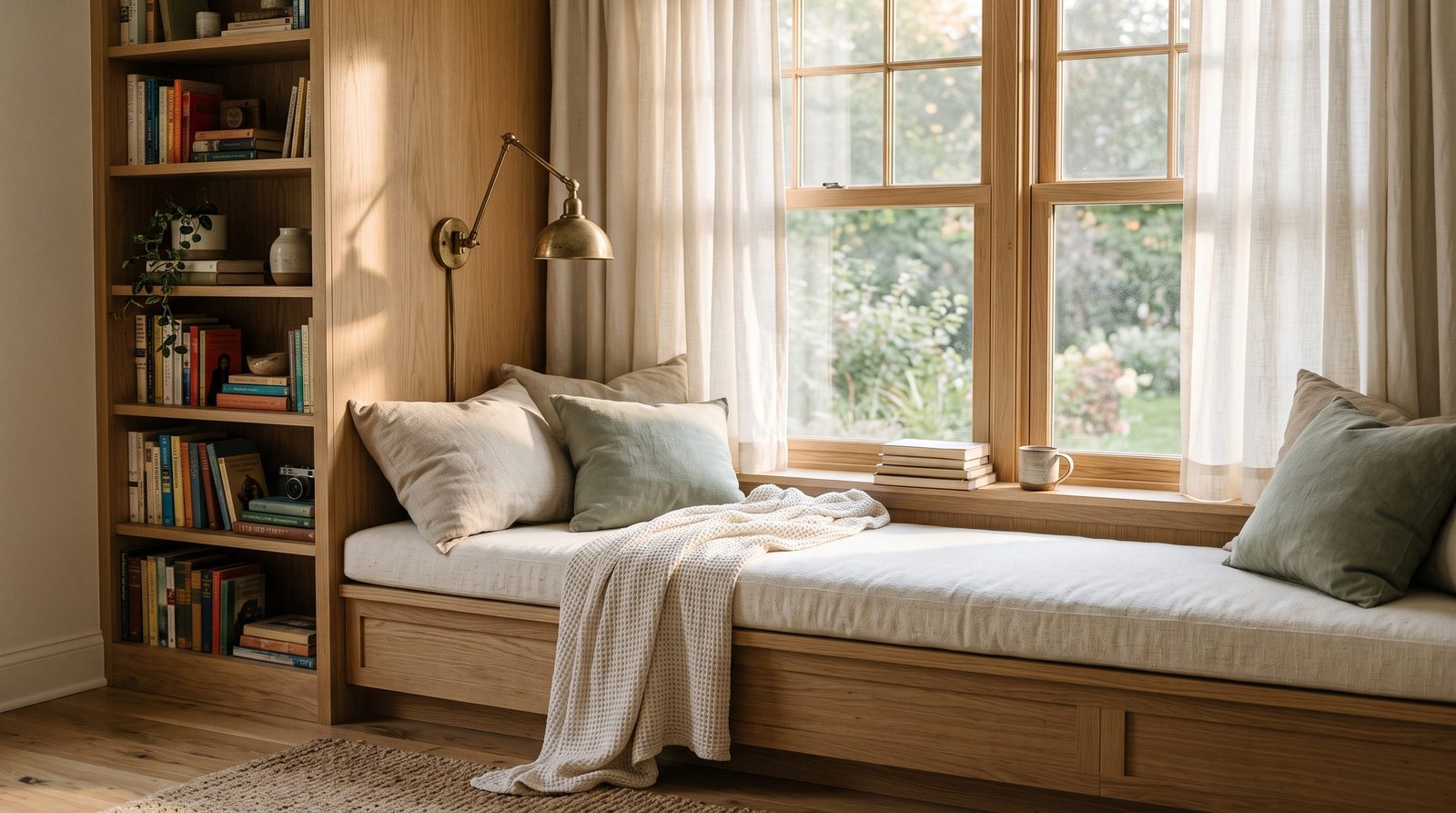
21 Built-In Window Seat Ideas to Create a Cozy and Stylish Home
Built-in window seats are a beautiful way to transform unused window space into a cozy reading nook, a relaxing bedroom corner, or a practical storage area. With comfortable cushions, thoughtfully chosen fabrics, and smart built-in cabinetry, a window seat can become one of the most inviting features in your home.
For Houxii, this article will focus on 21 practical and stylish window seat designs, with 8 image placements throughout the article. The style will follow your premium home decor aesthetic: warm neutrals, natural wood, soft daylight, elegant details, and Pinterest-worthy interiors.
Why Built-In Window Seats Are Worth Considering
A built-in window seat does more than fill an empty space beneath a window. It can provide additional seating, create hidden storage, establish a comfortable reading corner, and make an architectural feature feel intentional. Designers often use window seats to take advantage of bay windows, recessed walls, and areas that might otherwise remain unused.
The secret is to balance appearance with comfort. A beautiful bench needs a supportive cushion, enough depth for its intended use, and a layout that does not interfere with windows, curtains, radiators, or ventilation.
Whether you prefer a classic white bench, a warm oak design, or a luxurious upholstered nook, these ideas will help you find a style that fits your home.
1. Classic White Built-In Window Seat
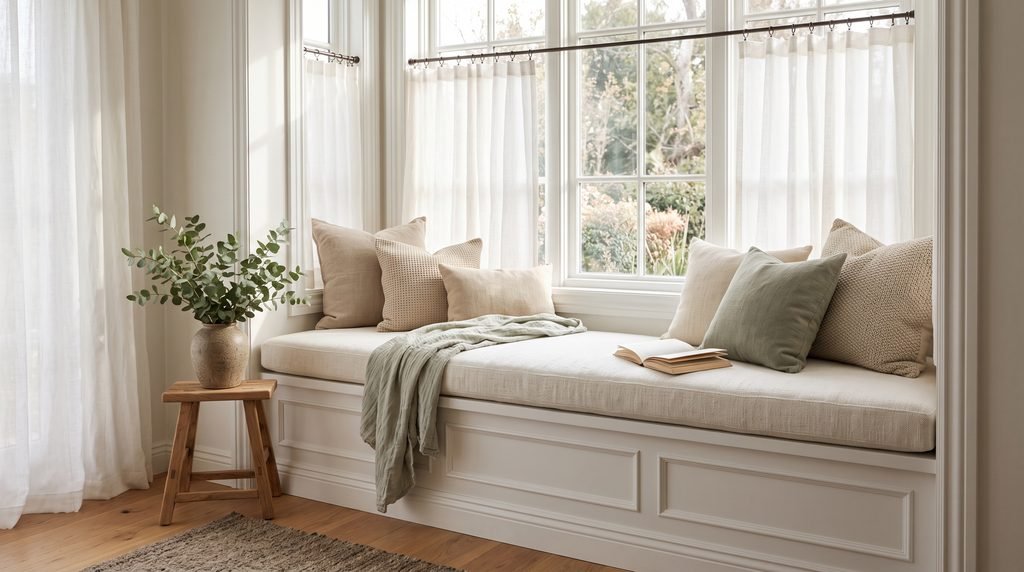
A classic white window seat is a timeless option for homes that favor bright, elegant interiors. White cabinetry blends easily with traditional trim, modern walls, and soft neutral furnishings, making the seat feel like a natural part of the architecture.
Start with a fitted bench beneath the window and finish it with a thick cream cushion. Add two or three pillows in oatmeal, beige, or muted sage to introduce warmth without making the arrangement look busy. Simple paneling on the front of the bench can give it a more traditional character, while flat cabinet fronts create a contemporary finish.
This design works especially well in living rooms, bedrooms, and bay windows where natural light is a major feature. White also helps a small room feel visually open.
For everyday use, select a durable paint finish that can be wiped clean and a removable cushion cover that is easy to maintain. If you need extra storage, incorporate drawers or lift-up compartments beneath the seat.
2. Built-In Window Seat With Hidden Storage
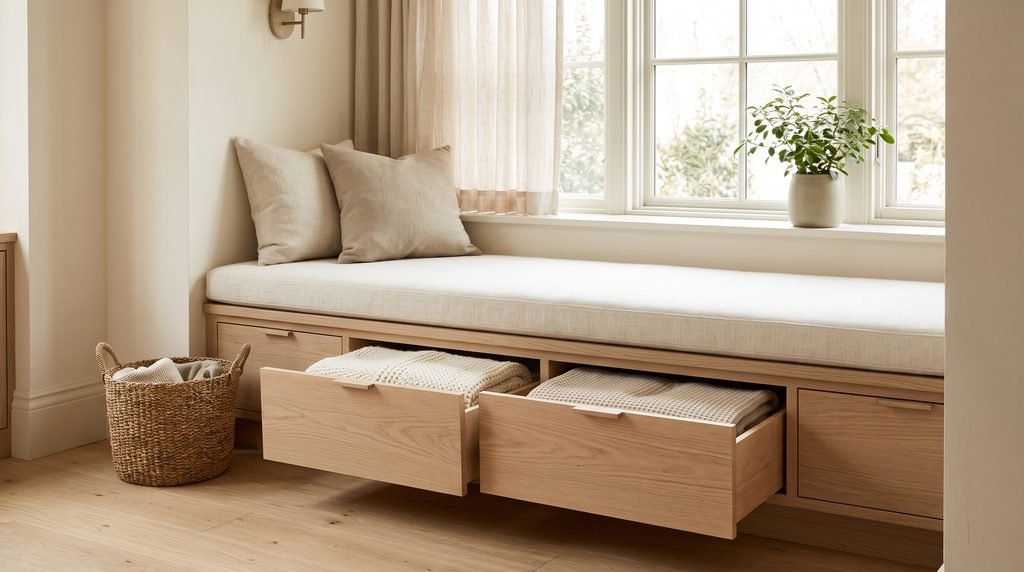
A window seat with hidden storage is one of the most practical designs for a busy home. The space beneath the bench can hold spare blankets, books, board games, seasonal accessories, or children’s toys without adding another piece of furniture.
Choose deep drawers if you want to access individual items frequently. A lift-up lid may work better for bulky blankets or less frequently used belongings. Open cubbies are another option when you want baskets to remain accessible and visible.
For a premium appearance, use pale oak, warm white cabinetry, or a combination of both. Keep the handles simple so the storage does not overwhelm the seat itself.
Inside, use fabric bins or small organizers to prevent everything from becoming mixed together. Measure the items you plan to store before finalizing the compartments.
One important consideration is the area beneath the window. If a radiator, heating outlet, or ventilation opening is present, the design must preserve the airflow and access required for safe operation.
3. Bay Window Seat With Wraparound Cushions
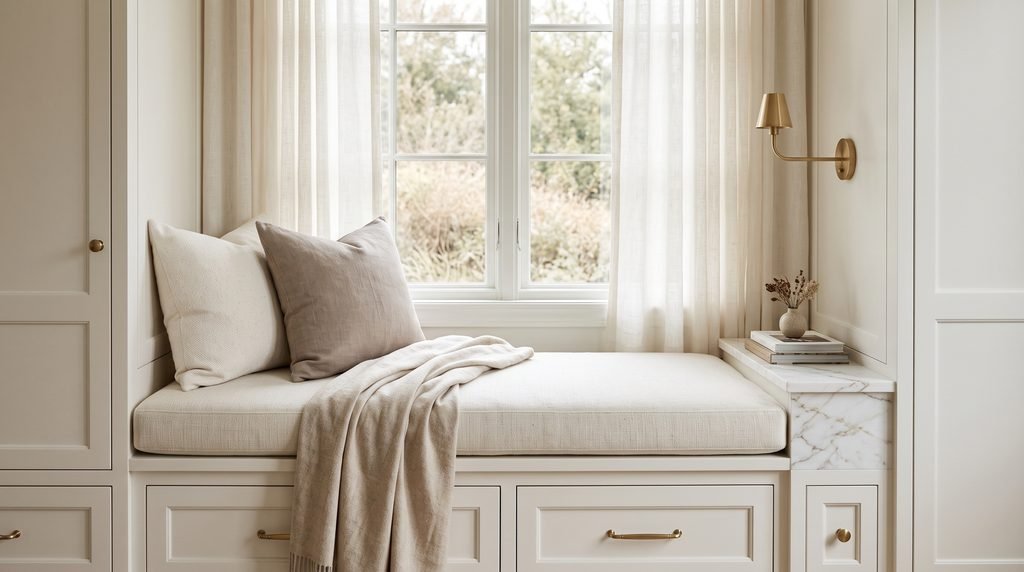
A bay window naturally creates an inviting nook because its angled walls frame the seating area. A custom-built bench can follow the shape of the bay, turning an awkward architectural feature into a comfortable place to relax.
Use a fitted cushion that follows the entire seating surface, then layer supportive back pillows along the window walls. Choose fabrics in complementary shades such as ivory, sand, taupe, and muted green.
For a more tailored look, keep the main cushion in a solid fabric and introduce subtle patterns through the smaller pillows. A slim side table at one end provides a convenient place for a book, cup, or reading glasses.
Measure each section of the bay carefully before ordering cushions or cabinetry. Angled windows rarely have identical dimensions, so a template can help ensure a more accurate fit.
This arrangement is particularly effective in living rooms and primary bedrooms, where the bay window can become a dedicated relaxation area.
4. Cozy Window Seat Reading Nook
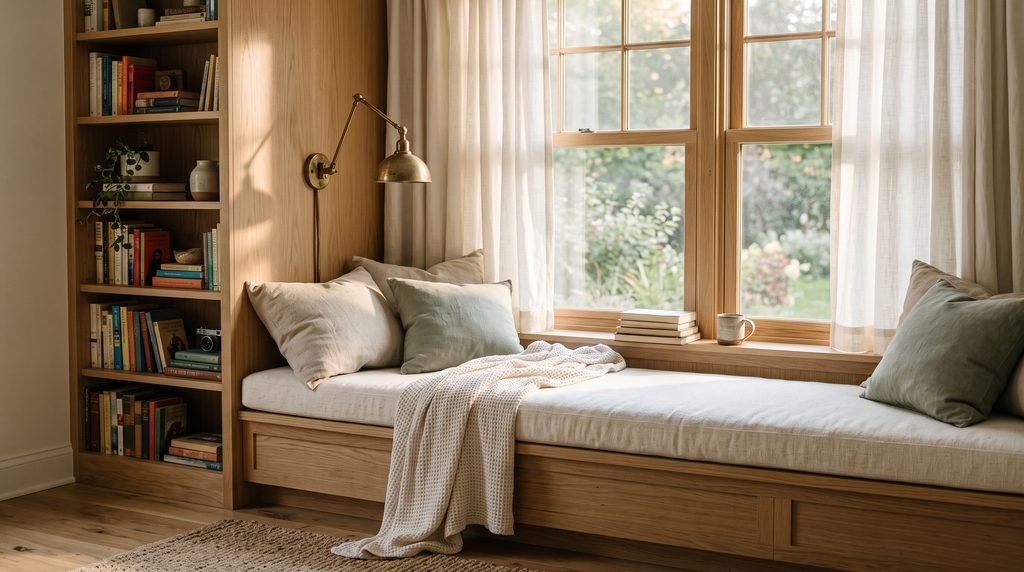
Turn your window seat into a personal reading retreat by combining comfortable seating with thoughtful lighting and accessible book storage.
Begin with a firm, supportive cushion and several pillows that make sitting upright comfortable. Add a small bookshelf beside the window or install narrow shelves around the seating area. A wall-mounted reading light provides illumination after sunset without taking up valuable floor space.
Choose soft fabrics and natural materials to create a relaxing atmosphere. Linen cushions, a lightweight knitted throw, pale wood shelving, and a small ceramic accessory can make the nook feel inviting without cluttering it.
If the window receives strong afternoon sunlight, consider a suitable blind or light-filtering curtain to reduce glare while preserving the connection to the outdoors.
The best reading nook is designed for actual use rather than appearance alone. Keep frequently used books within reach and leave enough room to sit comfortably without moving decorative objects every time you use the seat.
5. Natural Oak Window Seat for Organic Modern Interiors
Natural oak brings warmth and texture to a built-in window seat. Its visible grain creates a beautiful contrast against white walls, cream upholstery, and soft neutral accessories.
For an organic modern look, use an oak-faced bench or cabinetry with clean, understated lines. Top it with a thick ivory cushion and add one or two pillows in muted olive, sand, or warm gray. A small indoor plant nearby can reinforce the connection to nature.
This design is particularly effective in contemporary living rooms, minimalist bedrooms, and homes with other natural wood features. Matching the seat to nearby flooring, shelving, or furniture helps the entire room feel cohesive.
You can choose a light natural finish for a fresh Scandinavian appearance or a medium oak stain for a richer, more traditional effect. Avoid introducing too many competing wood tones in a small area.
If you want to include storage, use discreet drawer fronts that allow the grain to remain the main visual feature.
6. Floor-to-Ceiling Bookshelf Window Seat
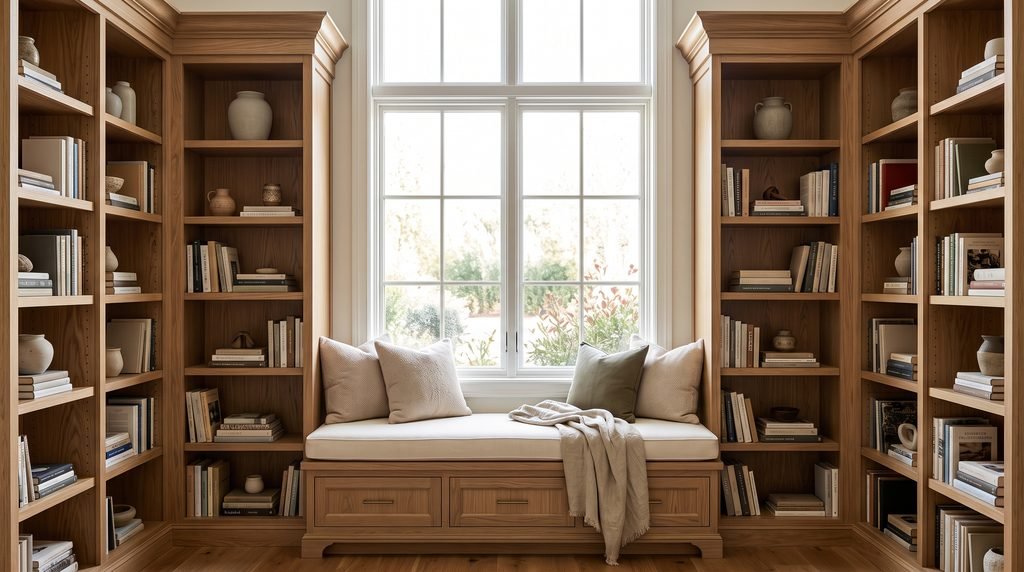
Surrounding a window seat with built-in bookshelves creates a beautiful focal point and makes excellent use of an entire wall. The arrangement combines comfortable seating, book storage, and architectural interest in one coordinated feature.
You can choose white shelving for a bright traditional library or natural oak for a warmer contemporary design. Paint the shelves a muted sage, deep olive, or soft blue if you want a more distinctive appearance.
Keep the seat itself relatively simple so the books and surrounding cabinetry remain balanced. A neutral cushion, a few supportive pillows, and a small reading light are often enough.
Mix books with a limited number of decorative objects, such as ceramic vases or framed photographs. Leaving some shelf space empty prevents the wall from looking overcrowded.
Before planning the layout, check that the shelves will not obstruct window operation or block natural light. Secure tall shelving appropriately, and ensure the seat has enough usable depth for comfortable sitting.
7. Small Window Seat for Compact Homes
You do not need a large bay window to create a beautiful built-in seat. A compact bench beneath an ordinary window can provide a useful place to sit while making a small room feel more purposeful.
Keep the design simple with a shallow cabinet base, a fitted cushion, and a few slim pillows. Pale colors such as ivory, cream, and light beige can help the area feel open. A matching cabinet finish makes the bench look integrated rather than added as an afterthought.
For a small apartment, use the space beneath the seat for shoes, folded linens, or everyday accessories. Drawers may be more convenient than a lift-up lid when the seat is positioned close to other furniture.
Avoid oversized cushions that reduce the usable seating area. Measure the finished depth after allowing for upholstery, and keep nearby walkways clear.
This design is ideal for a bedroom corner, a narrow living room, or a compact home office where every section of the floor plan matters.
8. Upholstered Window Seat With Elegant Textiles
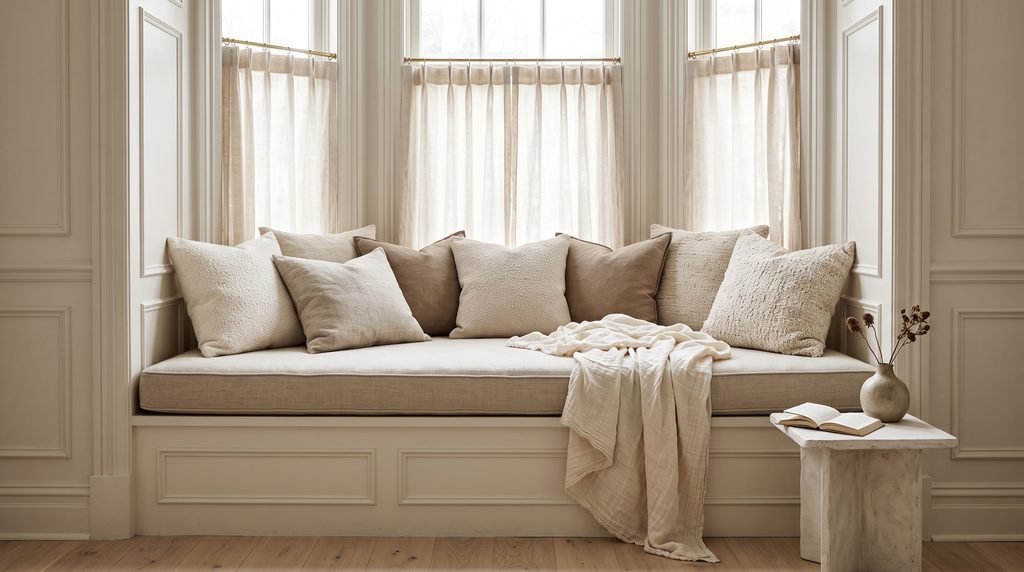
An upholstered window seat introduces softness and a more luxurious finish. Rather than emphasizing the cabinetry, this design makes the cushion and fabric the main attraction.
Choose a durable upholstery fabric in cream, oatmeal, taupe, or muted gray. For a more decorative effect, consider a subtle stripe, a small-scale botanical pattern, or a textured woven material.
Layer pillows in complementary fabrics to create depth. For example, combine a plain linen seat cushion with a nubby cream pillow and a muted olive accent cushion. The different textures make the arrangement feel considered without requiring bold colors.
A tailored cushion with neat edges creates a formal appearance, while a softer cushion with relaxed fabric covers feels more casual and inviting.
If the window seat will receive frequent use, choose removable, washable covers where possible. Upholstery exposed to direct sunlight should also be selected with fading resistance in mind.
9. Bedroom Window Seat With a Relaxing View
A bedroom window seat can become a peaceful spot for enjoying morning light, reading, or taking a quiet break during the day.
For a cohesive design, coordinate the seat cushion with the bedroom’s bedding and curtains. Cream upholstery pairs beautifully with white linen, while muted sage or dusty blue can add a gentle touch of color.
If space allows, include a small built-in drawer beneath the bench for spare pillowcases or light blankets. A simple wall sconce nearby can make the seat useful during the evening as well.
Keep the styling restrained. Two comfortable pillows, a lightweight throw, and a small decorative object are usually enough to make the area feel finished.
Consider privacy before choosing the final arrangement. If the window faces a neighboring property or a busy street, suitable blinds or curtains can help make the seat more comfortable to use throughout the day.
10. Window Seat With a Decorative Backrest
A decorative backrest can make a built-in window seat feel more like a sofa while providing additional support.
Depending on the style of your home, you might choose a padded upholstered backrest, a simple wooden panel, or traditional beadboard detailing. Upholstered backs feel softer and more comfortable, while wood paneling creates a crisp architectural appearance.
Use a fabric that coordinates with the seat cushion and surrounding furnishings. If the room already contains patterned curtains or wallpaper, a solid-colored backrest will usually create a calmer result.
This design is useful when the seat will be occupied for longer periods, especially in a reading nook or family living room. Make sure the backrest does not interfere with window handles, opening mechanisms, or necessary access.
A well-designed backrest can also help visually connect the bench to the surrounding wall, making the entire installation feel custom-made.
11. Farmhouse Window Seat With Rustic Charm
Farmhouse window seats combine comfortable cushions with natural materials and simple architectural details. They work beautifully in cottages, country-inspired homes, and interiors that favor relaxed, welcoming spaces.
Use a painted white or warm cream base with a natural wood top. Alternatively, choose a lightly stained wooden bench and pair it with a soft linen cushion.
For accessories, consider subtle striped pillows, a woven basket, or a textured cotton throw. A restrained combination of cream, beige, muted green, and natural brown keeps the result warm rather than overly themed.
Beadboard paneling on the bench front can add classic farmhouse character, while simple black or aged-brass hardware provides a finishing detail.
Keep rustic elements balanced. A few natural textures usually create a more refined result than filling the entire nook with distressed furniture and country-style accessories.
12. Modern Minimalist Window Seat
A minimalist window seat is ideal for homes where simplicity, natural light, and uncluttered spaces take priority.
Choose a built-in bench with flat cabinet fronts, concealed handles, and a clean rectangular shape. A cushion in warm white or light beige softens the design without distracting from its architectural lines.
Keep accessories to a minimum. One textured pillow, a folded throw, or a small plant nearby can add enough character. If the room has pale wood floors, a matching oak detail on the bench can introduce warmth.
This design works particularly well in contemporary apartments and modern homes with large windows. Its understated appearance also makes it easier to update the room later with new cushions or seasonal accessories.
Pay attention to proportions. The bench should fit naturally beneath the window without appearing too bulky or too shallow. Good measurements and a comfortable cushion are more important than adding unnecessary decorative details.
13. Kitchen Window Seat With a Breakfast Nook
A kitchen window seat can transform a bright corner into a casual breakfast area or a comfortable place to enjoy a cup of tea.
If the available space permits, install a built-in bench beneath the window and pair it with a small dining table. A round or compact rectangular table can work well, depending on the room’s layout. Add one or two chairs opposite the bench to create a practical dining arrangement.
Use easy-to-clean upholstery and durable finishes because kitchen seating may be exposed to food spills and frequent use. A warm wooden bench with a washable cream cushion offers a welcoming appearance without feeling overly formal.
For a coordinated look, repeat a color found in the kitchen cabinets, backsplash, or dining accessories. Muted green, warm oak, and ivory are especially effective in a natural, modern kitchen.
Before building, make sure the seat does not obstruct cabinet doors, appliance access, or movement around the dining table. Leave enough room for people to sit down and get up comfortably.
14. Window Seat With Open Storage Cubbies
Open cubbies beneath a window seat provide accessible storage while adding visual interest to the bench.
Instead of concealing everything behind cabinet doors, divide the base into compartments and use baskets to organize the contents. Woven baskets can soften a contemporary room, while simple fabric bins create a cleaner, more modern appearance.
This option is particularly useful in family rooms and children’s bedrooms, where books, toys, and blankets need to remain easy to reach.
To maintain a tidy appearance, choose baskets of similar sizes and coordinate their colors. Leave a few compartments open for books or folded throws, but avoid filling every space with decorative objects.
Measure the baskets before building the compartments to ensure they fit properly. Also consider how easily each basket can be removed when the seat cushion or nearby furniture is in place.
15. Arched Window Seat With a Custom Fit
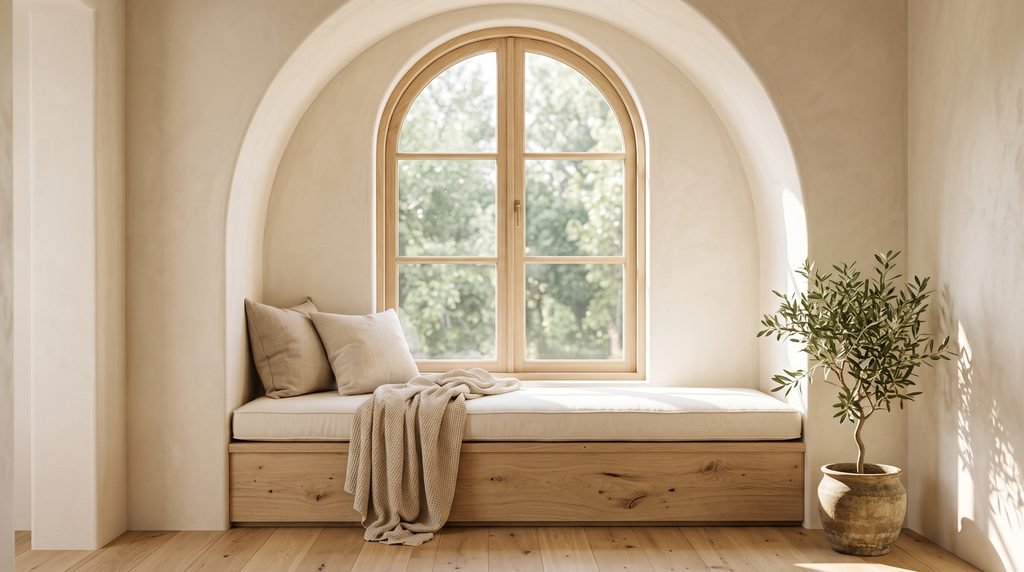
An arched window already has architectural character, and a custom-built seat can make it even more distinctive.
For a sophisticated result, use a simple bench that follows the width of the window while allowing the curved frame to remain the main feature. Cream upholstery, pale wood, and understated pillows complement the softer lines of the architecture.
In a traditional interior, consider paneling or subtle decorative trim on the bench front. In a contemporary home, flat cabinetry and a clean cushion create a more modern finish.
The seat does not need to copy the arch itself. In many cases, a straightforward rectangular bench beneath the curved window creates an attractive contrast between the architectural opening and the furniture.
Take precise measurements before commissioning the bench, particularly if the walls or window reveal are uneven. Ensure the design preserves access to the window and does not interfere with its opening mechanism.
16. Window Seat With a Built-In Side Table
A small built-in side table makes a window seat more useful without requiring a separate piece of furniture.
The table can be incorporated at one end of the bench, creating a convenient surface for a book, reading glasses, a small lamp, or a cup. This is especially helpful in reading nooks and bedroom seating areas.
For a cohesive appearance, use the same material as the bench base or introduce a complementary finish. Pale oak pairs well with cream cabinetry, while a marble-look surface can add a more polished touch.
Keep the table compact enough to preserve the seating area. If the bench is narrow, a slim ledge or small wall-mounted shelf may be a better choice than a bulky integrated table.
Consider how the table will be used before deciding on its height and depth. The goal is to keep everyday items within comfortable reach without making the seat feel cramped.
17. Window Seat With Soft Roman Shades
Window treatments play an important role in the overall appearance of a built-in window seat. Roman shades are a useful choice because they create a neat, tailored finish without requiring long curtains to fall over the bench.
Choose linen-look fabric in ivory, oatmeal, or soft beige for a relaxed appearance. A subtle stripe or muted botanical print can introduce pattern while maintaining a calm atmosphere.
For a more dramatic room, consider a deeper shade that coordinates with the pillows or surrounding cabinetry. Keeping the colors related helps the seat and window treatment feel like part of one design.
Measure carefully to ensure the shade can be raised and lowered without catching on cushions or decorative objects. The installation should also preserve access to the window hardware.
If you prefer curtains, arrange them so they can move freely without covering the seat or interfering with storage access.
18. Children’s Room Window Seat With Toy Storage
A built-in window seat can provide extra seating and toy storage in a child’s bedroom or playroom.
Choose a durable bench with rounded, well-finished edges and compartments designed for easy organization. Baskets beneath the seat can hold soft toys, picture books, and lightweight games.
Use a comfortable cushion with washable fabric and introduce color through a few playful pillows. Soft sage, pale blue, warm cream, and muted yellow can create a cheerful look without overwhelming the room.
Safety should guide the design. Secure the bench properly, use suitable child-safe hardware, and avoid heavy lids that could close unexpectedly. Window locks, guards, and access requirements should also be considered according to the window’s location and local safety guidance.
A low-maintenance design makes it easier for children to use the seat independently while helping the room remain organized.
19. Luxury Window Seat With Marble and Brass Accents
For a more glamorous interior, combine a tailored window seat with carefully chosen marble-look surfaces and brass details.
A cream upholstered cushion paired with warm white cabinetry creates an elegant foundation. Add a small brass reading light, refined hardware, or a slim stone-look side ledge to introduce a subtle sense of luxury.
Keep the decorative palette restrained. Too many metallic accessories can make the nook feel busy, while a few well-chosen details create a more sophisticated effect.
This style works particularly well in formal living rooms, dressing rooms, and primary bedrooms. Coordinate the finishes with nearby lighting, cabinet handles, or other metal accents so the design feels connected to the rest of the home.
Choose durable materials suited to the way the seat will be used. Luxury finishes should enhance the space without making everyday cleaning and maintenance unnecessarily difficult.
20. Attic Window Seat Beneath a Sloped Ceiling
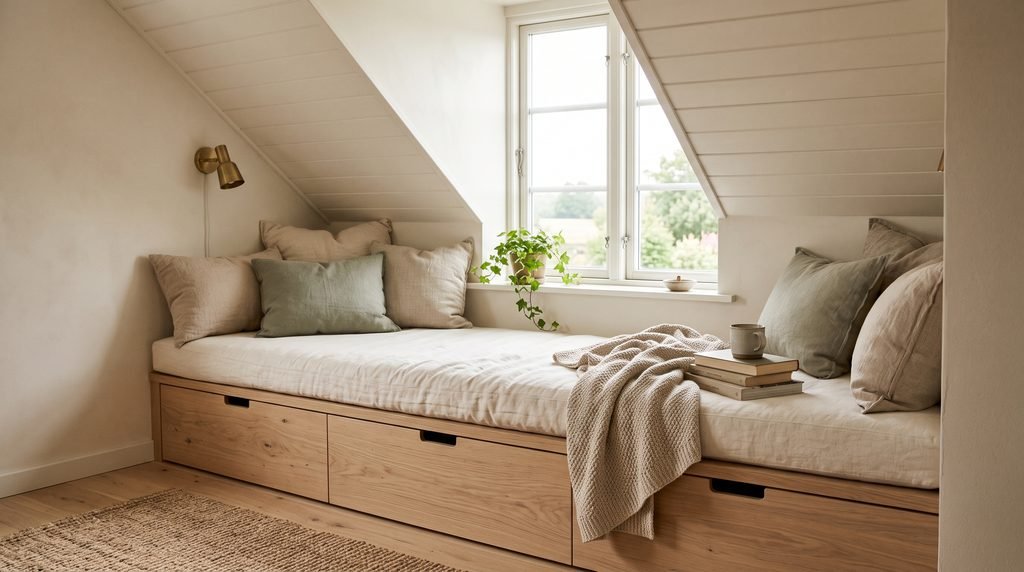
An attic window seat can turn an awkward roofline into one of the home’s most appealing features. Areas beneath sloped ceilings may be difficult to furnish with standard furniture, but a custom bench can make productive use of the available space.
Fit the seat beneath a suitable window and use the lower surrounding areas for drawers or compact storage compartments. A thick cushion and a few soft pillows make the nook comfortable, while warm white paint and pale wood help the attic feel brighter.
Because attic spaces can have unusual dimensions, measure the available height, depth, and width carefully. Ensure the seat does not obstruct the window or reduce access to any required escape opening.
Lighting is equally important. Natural daylight may be sufficient during the day, but a nearby wall light or suitable lamp can make the nook more practical in the evening.
A simple design often works best in an attic. Let the roofline and window provide the architectural interest, then use comfortable textiles to complete the space.
21. Floor-to-Wall Window Seat With a Seamless Built-In Look
For a striking architectural feature, extend the window seat into a larger built-in arrangement that connects with nearby cabinetry, shelving, or wall paneling.
For example, a long bench can run beneath a wide window and continue into a low cabinet at one end. In a larger room, matching shelves above or beside the seat can create a unified wall of storage and seating.
Use a consistent finish throughout the installation. Warm white creates a light, seamless appearance, while natural oak adds texture and warmth. A contrasting cushion can introduce a little color without breaking up the overall design.
This approach is particularly effective in contemporary living rooms, home offices, and large bedrooms where a coordinated built-in feature can replace several separate furniture pieces.
Plan the entire wall before construction begins. Consider electrical outlets, heating, window access, cabinet doors, and the amount of storage actually needed. A successful built-in should feel intentional while remaining practical for everyday life.
Practical Tips for Designing a Comfortable Built-In Window Seat
A beautiful window seat should be as comfortable and functional as it looks. Before choosing a design, consider these important details.
1. Measure the available space carefully. Measure the window width, wall depth, finished seat height, and surrounding clearances. Bay windows and angled recesses may require custom measurements.
2. Prioritize comfortable seating. Choose supportive cushioning and enough usable depth for the way you plan to sit. A reading nook may need more room than a seat used briefly while getting dressed.
3. Select storage that suits your needs. Drawers are convenient for frequently used items, while lift-up lids can accommodate larger belongings. Open cubbies work well with baskets and books.
4. Coordinate colors and materials. Warm white, beige, natural oak, ivory, and muted sage create a cohesive look that complements many interior styles.
5. Plan window treatments early. Make sure curtains and blinds can operate freely without catching on the cushion or blocking access to the window.
6. Check heating and ventilation. Do not enclose radiators or block air vents without a suitable design. Follow the relevant manufacturer’s guidance to maintain safe airflow and efficient operation.
7. Choose durable, easy-care fabrics. Removable cushion covers and hard-wearing upholstery make everyday maintenance easier, particularly in family rooms and kitchens.
8. Make safety a priority. Secure built-in cabinetry properly and preserve access to window handles and any required emergency escape openings. For complex installations, consult a qualified professional.
Final Thoughts
Built-in window seats offer a wonderful combination of comfort, style, and practical storage. Whether you prefer a classic white bench, a natural oak design, a cozy reading nook, or a luxurious upholstered seat, the right arrangement can transform an overlooked window into a memorable feature of your home.
Start with the needs of your space. Consider how you will use the seat, what you want to store beneath it, and how its materials will complement your existing furniture. Then add comfortable cushions, coordinated textiles, and thoughtful lighting to complete the look.
For small homes, a built-in seat with storage can make valuable use of otherwise wasted space. In larger rooms, a window seat surrounded by bookshelves or integrated cabinetry can create a beautiful architectural focal point.
The best window seat is one that looks inviting and feels comfortable enough to use every day. With careful planning and timeless materials, you can create a cozy corner that brings more function, warmth, and personality to your home.