31 Indoor Garden Room Ideas to Create a Lush, Relaxing Green Retreat at Home
Indoor plants have become much more than decorative accents—they’re now an essential part of modern home design. Whether you’re a dedicated plant collector or simply looking to bring more nature indoors, creating a beautiful indoor garden room is one of the best ways to transform your home into a peaceful retreat.
A thoughtfully designed indoor garden room combines style, comfort, and functionality while providing the perfect environment for your favorite plants to thrive. From cozy plant corners and sun-filled reading nooks to luxurious botanical lounges, there are endless ways to design a green sanctuary that reflects your personality.
In this guide, you’ll discover 31 inspiring indoor garden room ideas that work for every home size and decorating style. Whether you have an entire room to dedicate to plants or just a small unused corner, these ideas will help you create a relaxing botanical escape you’ll love spending time in.
Why Create an Indoor Garden Room?
An indoor garden room isn’t just beautiful—it also improves your everyday living experience. Houseplants naturally make interiors feel calmer, fresher, and more welcoming while adding texture, color, and life to every corner.
Benefits include:
- Improves indoor air quality
- Creates a calming atmosphere
- Adds natural beauty throughout the year
- Increases humidity indoors
- Makes your home feel larger and more inviting
- Provides a relaxing hobby
- Creates stunning Pinterest-worthy interiors
Whether your decorating style is modern, Scandinavian, boho, minimalist, or farmhouse, plants effortlessly complement every design aesthetic.
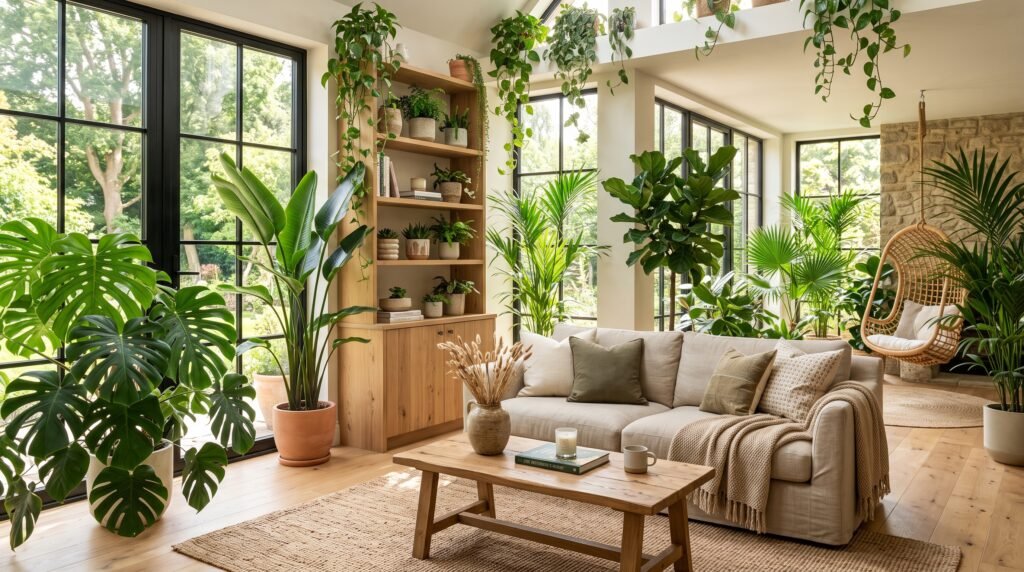
The easiest way to design an indoor garden room is by transforming a naturally bright space into a plant paradise. Rooms with large south-facing or east-facing windows receive plenty of sunlight, making them ideal for growing tropical houseplants.
Instead of overcrowding the room, arrange plants in different heights using plant stands, floating shelves, hanging baskets, and floor planters. This layered approach creates depth while allowing every plant to receive adequate light.
Choose large statement plants like:
- Monstera Deliciosa
- Bird of Paradise
- Rubber Plant
- Fiddle Leaf Fig
- Kentia Palm
Then add smaller plants around them to build visual interest.
Natural wood furniture, woven baskets, linen curtains, and neutral walls allow the greenery to become the focal point of the room.
The result is a fresh, airy retreat that feels connected to nature all year long.
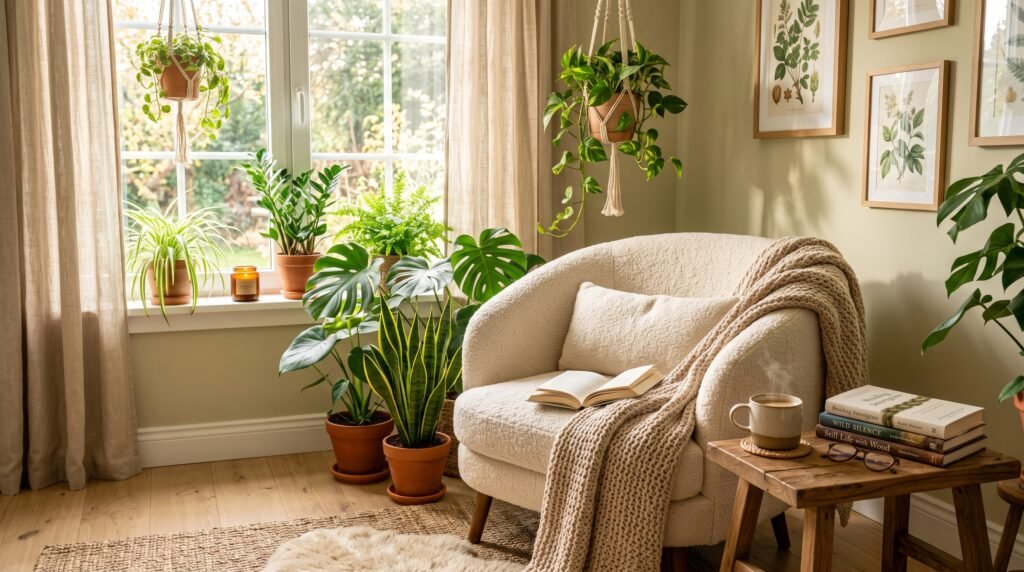
If you don’t have an entire room available, dedicate one peaceful corner to plants and relaxation.
Place a comfortable accent chair beside a sunny window and surround it with greenery to create your own personal botanical escape.
Include:
- Soft knitted throw blankets
- A small wooden side table
- Warm floor lamp
- Woven rug
- Floor plants
- Hanging pothos
- Small bookshelf
Large leafy plants help soften hard corners while trailing plants hanging from shelves create a lush layered appearance.
The goal is creating a quiet space where you can enjoy coffee, read books, meditate, or simply relax after a busy day.
Adding natural textures like jute rugs, rattan furniture, bamboo blinds, and linen cushions makes the space feel even warmer and more inviting
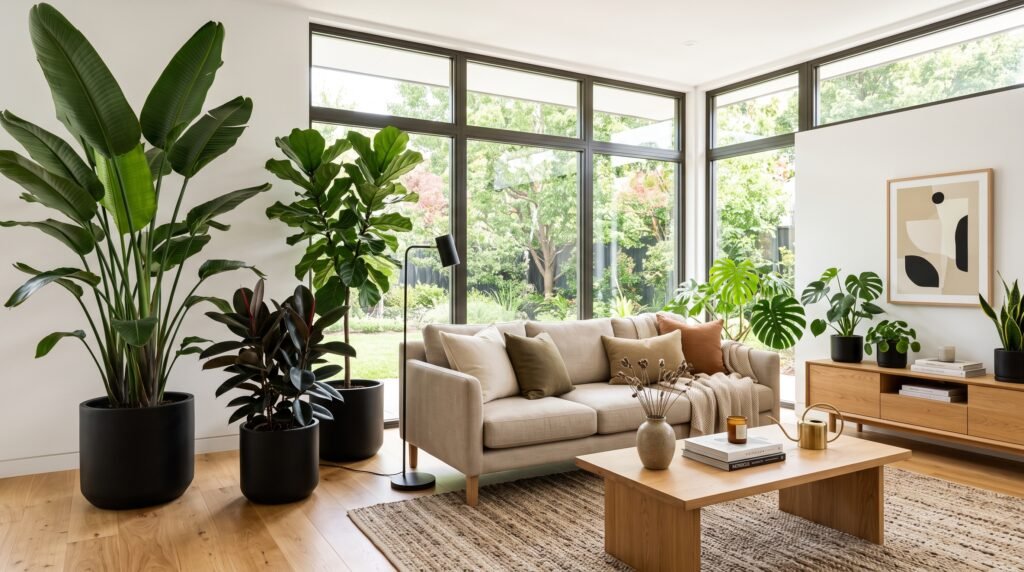
Modern homes benefit from clean lines paired with dramatic greenery.
Instead of filling every inch with plants, choose fewer but larger specimens that create a bold statement.
Popular choices include:
- Olive Trees
- Snake Plants
- Monstera
- ZZ Plants
- Rubber Trees
- Bird of Paradise
Use matte black metal planters, white ceramic pots, concrete containers, and sleek wooden shelving to maintain a modern aesthetic.
Keep accessories minimal.
Allow natural light, open space, and oversized plants to become the stars of the room.
The contrast between simple furniture and vibrant greenery creates a sophisticated designer-inspired look often seen in luxury homes.
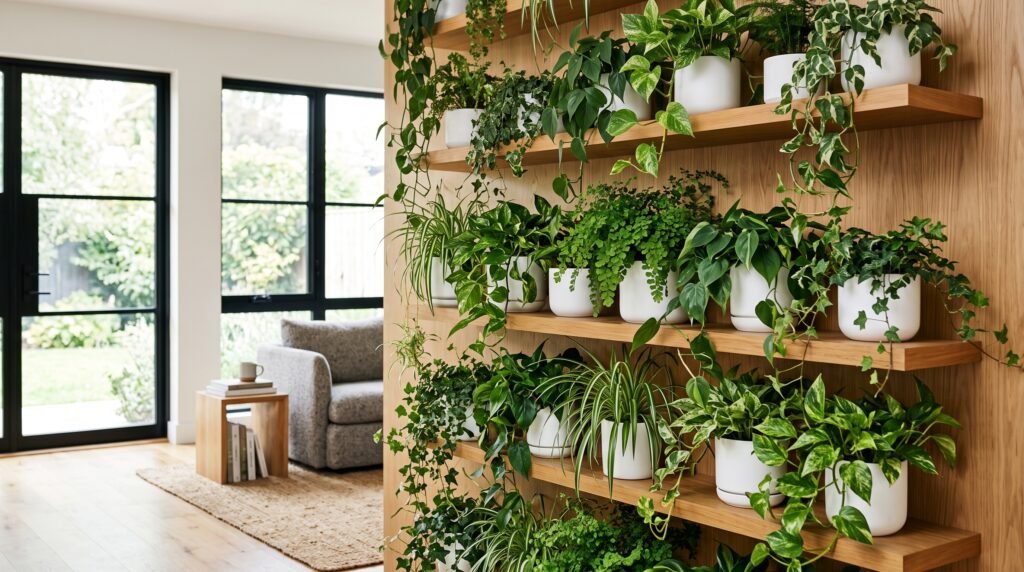
One of the biggest trends in indoor garden room ideas is creating an impressive vertical plant display.
Instead of taking up valuable floor space, install wall-mounted shelving or modular plant systems.
Mix different plant varieties such as:
- Pothos
- Philodendron
- Ferns
- English Ivy
- Spider Plants
- Peperomia
The variation in leaf size, texture, and shades of green creates a rich layered effect.
You can also combine:
- Floating wooden shelves
- Wall-mounted planters
- Pegboard systems
- Vertical trellises
- Hanging baskets
A living plant wall instantly transforms an ordinary room into a lush indoor jungle while maximizing limited square footage.
It also becomes a beautiful focal point that guests immediately notice.
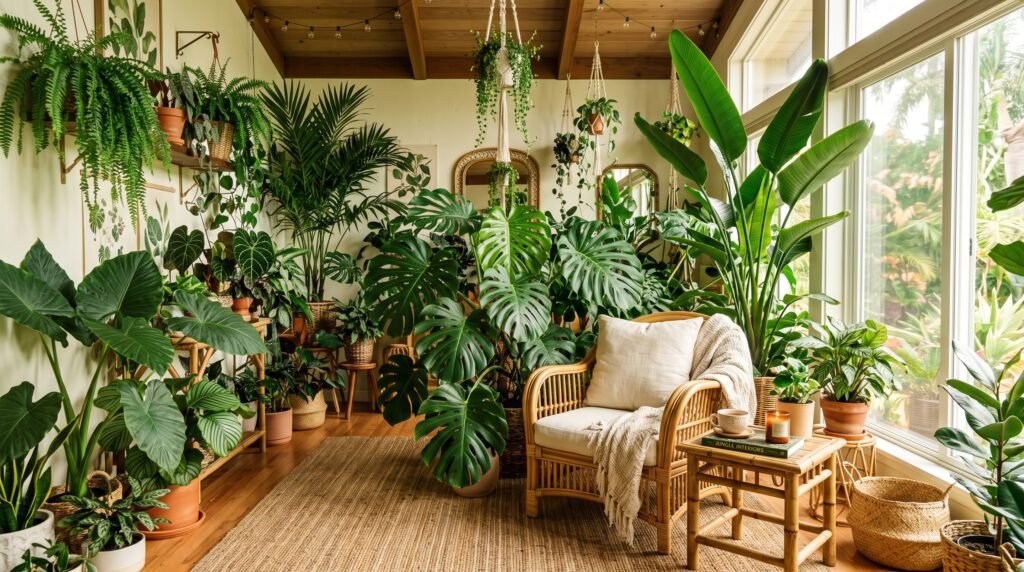
If you’re passionate about houseplants, why not fully embrace the indoor jungle aesthetic?
Instead of carefully spacing every plant, group them together in natural clusters just as they would grow in nature.
Combine a variety of tropical favorites, including:
- Monstera Deliciosa
- Philodendron Birkin
- Alocasia
- Calathea
- Bird of Paradise
- Majesty Palm
- Elephant Ear Plants
- Boston Ferns
Layer plants from floor to ceiling using tall plant stands, hanging baskets, floating shelves, and window ledges. The mix of different heights, leaf shapes, and shades of green creates a rich, immersive environment.
To enhance the tropical feel, add:
- Bamboo furniture
- Rattan chairs
- Natural jute rugs
- Woven baskets
- Linen curtains
- Warm wood finishes
Keeping the color palette neutral allows the greenery to become the room’s main attraction.
An indoor jungle retreat feels vibrant, peaceful, and full of life while providing the perfect place to unwind after a busy day.
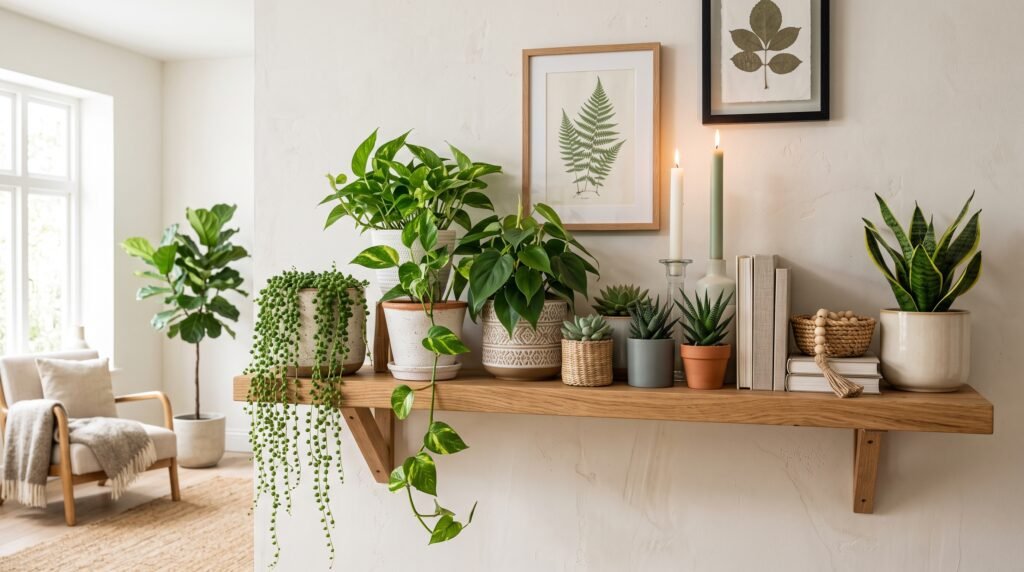
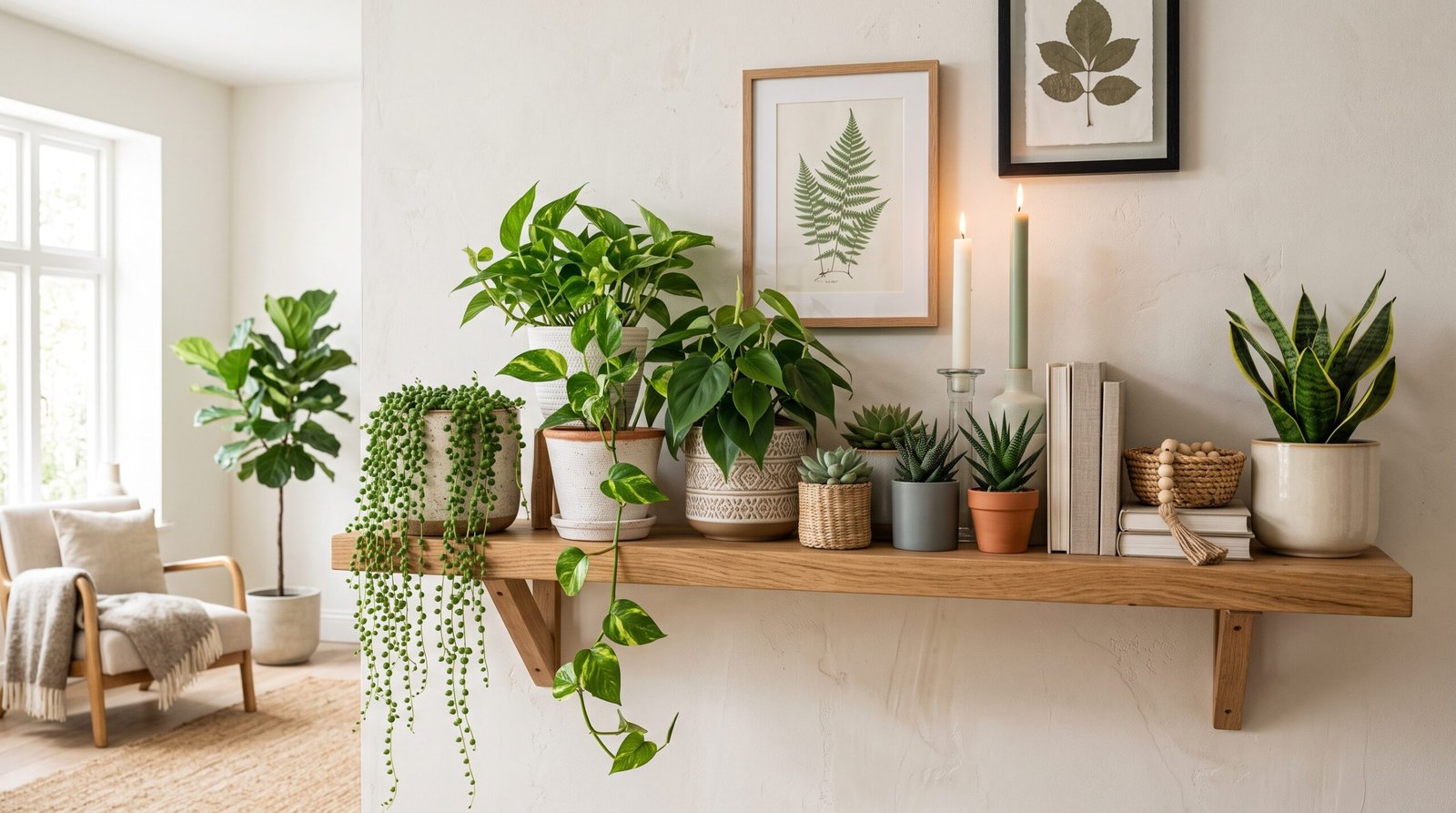
Open shelving isn’t just for books and décor—it can become a stunning display for your indoor garden.
Install floating wooden shelves on a bright wall and arrange plants in varying sizes to create visual balance. Alternate greenery with decorative objects such as candles, ceramic vases, framed artwork, and woven baskets to prevent the shelves from looking cluttered.
Good shelf-friendly plants include:
- Pothos
- String of Pearls
- Spider Plant
- Heartleaf Philodendron
- ZZ Plant
- Succulents
- Cacti
Trailing plants work especially well because they naturally cascade over the shelf edges, adding movement and softness to the display.
For a cohesive look, use matching pots in neutral tones such as white, beige, terracotta, or matte black. This keeps the arrangement polished while letting the plants take center stage.
Open shelving is also a practical solution for small homes, making it easy to display a large collection without sacrificing valuable floor space.
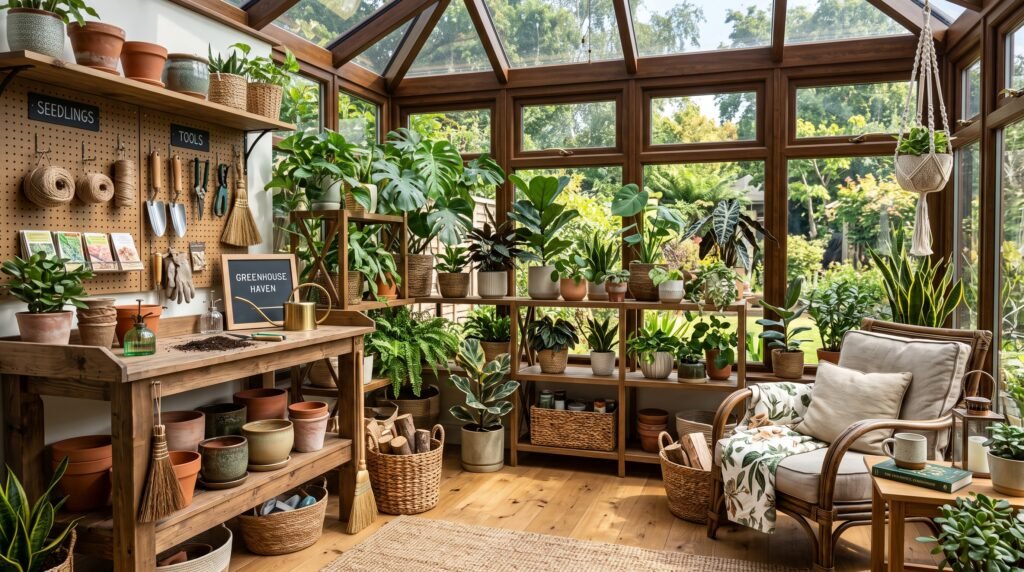
If you have an unused guest room or office, consider transforming it into a dedicated indoor garden sanctuary. This is one of the best indoor garden room ideas for serious plant lovers who want to grow a large collection in one beautiful space.
Start with plenty of natural light. South-facing windows are ideal, but if sunlight is limited, install full-spectrum LED grow lights to keep your plants healthy year-round.
Choose moisture-resistant materials like ceramic tile, sealed wood flooring, or waterproof vinyl plank flooring. These surfaces are easier to clean after watering plants and can handle higher humidity levels.
Include furniture that complements the botanical theme:
- Wooden potting bench
- Comfortable lounge chair
- Small coffee table
- Open shelving
- Rolling plant cart
- Decorative watering cans
Finish the room with woven baskets, linen curtains, and natural wood accents to create a warm greenhouse-inspired atmosphere.
A dedicated plant room becomes more than a display—it becomes a peaceful escape where you can care for your collection, read, relax, or simply enjoy the calming presence of nature.
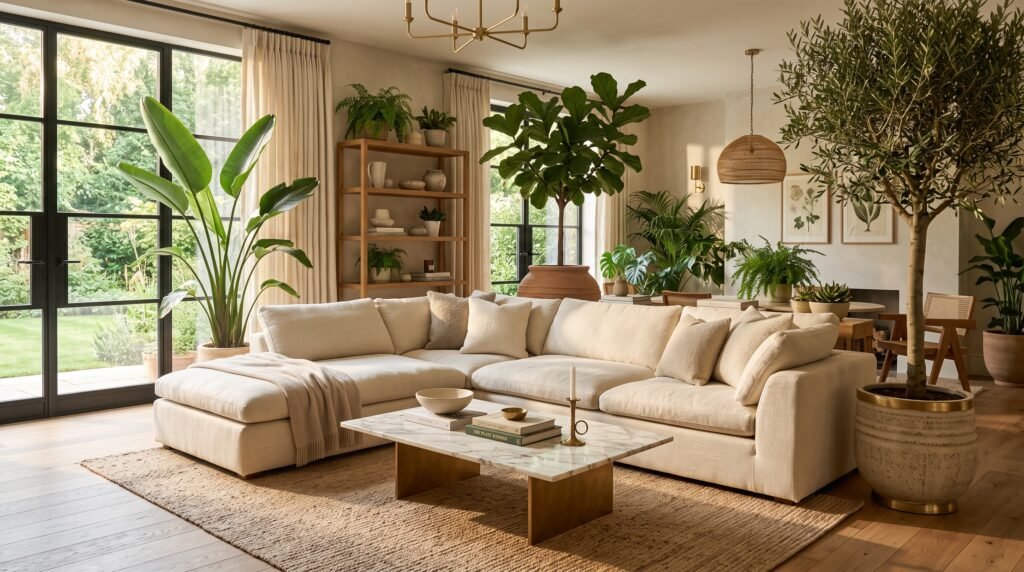
Minimalism and indoor plants work beautifully together. Instead of filling every available space, focus on quality over quantity by selecting a few striking plants that naturally become focal points.
Popular minimalist choices include:
- Fiddle Leaf Fig
- Olive Tree
- Rubber Plant
- Snake Plant
- Bird of Paradise
Keep the room simple with:
- White walls
- Light oak furniture
- Neutral textiles
- Simple ceramic planters
- Clean-lined shelving
Allow generous empty space between plants so each one stands out.
This design approach creates a calm, uncluttered environment where greenery adds softness without overwhelming the room.
Minimalist indoor garden rooms are timeless, elegant, and easy to maintain.
9. Build a Beautiful Plant Display Around Your Windows
Windows are the heart of every indoor garden room. Instead of placing plants randomly throughout the house, create a dedicated window display that maximizes natural light.
Arrange plants in layers:
- Tall floor plants beside the window
- Medium plants on plant stands
- Small pots on the windowsill
- Hanging baskets above the frame
- Trailing vines cascading down shelves
This layered arrangement creates a lush appearance while ensuring each plant receives the light it needs.
Sheer curtains help soften harsh sunlight without blocking it completely, making them perfect for tropical plants that prefer bright, indirect light.
A well-designed window display instantly becomes the focal point of the room.
10. Mix Plants with Natural Wood Furniture
One of the easiest ways to make an indoor garden room feel warm and inviting is by pairing greenery with natural wood.
Choose furniture made from:
- Oak
- Walnut
- Bamboo
- Teak
- Reclaimed wood
Wood adds warmth and texture while complementing the organic beauty of plants.
A wooden bench filled with potted plants, a solid oak bookshelf decorated with trailing vines, or a reclaimed wood coffee table surrounded by greenery creates a balanced and harmonious look.
Natural materials prevent the room from feeling overly modern or sterile, making it feel cozy and welcoming.
11. Add Hanging Plants for Extra Dimension
Many homeowners focus only on floor plants, but hanging plants make an indoor garden room feel fuller and more dynamic.
Install ceiling hooks or wall-mounted brackets and display trailing favorites like:
- Golden Pothos
- String of Hearts
- String of Pearls
- Boston Fern
- English Ivy
Hang them at different heights to create movement and visual interest.
Macramé plant hangers are especially popular because they add texture while complementing boho, Scandinavian, coastal, and farmhouse interiors.
Using vertical space also frees up valuable floor area, making this idea perfect for apartments and smaller homes.
12. Create a Stylish Indoor Herb Garden
An indoor garden room doesn’t have to be purely decorative. You can also grow fresh herbs that are both beautiful and practical.
Set up a sunny shelf or countertop with herbs such as:
- Basil
- Mint
- Rosemary
- Thyme
- Parsley
- Oregano
- Chives
Arrange them in matching ceramic pots with simple labels for a clean and organized look.
Not only do herbs add fresh greenery, but they also provide delicious ingredients for everyday cooking.
An indoor herb garden brings fragrance, color, and functionality to your home while requiring very little space.
13. Incorporate a Water Feature
The soothing sound of flowing water can make your indoor garden room feel even more relaxing.
Consider adding:
- A tabletop fountain
- A small indoor waterfall
- A decorative stone water bowl
- A mini pond with aquatic plants
Pair the water feature with lush greenery, smooth river stones, and warm lighting to create a peaceful spa-like environment.
The combination of plants and gentle water sounds encourages relaxation and helps transform the room into a true wellness retreat.
14. Use Decorative Plant Stands
Instead of placing every plant directly on the floor, elevate your display with decorative plant stands.
Mix different heights and materials such as:
- Black metal stands
- Wooden stools
- Bamboo risers
- Woven baskets with legs
- Ceramic pedestals
This layered approach creates visual balance while ensuring each plant receives enough light.
Plant stands also make cleaning easier and help prevent overcrowding, giving every plant its own space to shine.
15. Choose Statement Planters
The containers you choose are just as important as the plants themselves.
Instead of using random pots, create a cohesive look with coordinated planters in materials like:
- Terracotta
- Matte ceramic
- Concrete
- Stone
- Woven seagrass
- Rattan baskets
Neutral-colored planters allow colorful foliage to stand out while giving the room a polished designer look.
For added interest, combine different shapes and sizes while keeping the color palette consistent.
Beautiful planters instantly elevate the overall appearance of your indoor garden room and make every plant feel like a decorative feature.
16. Create a Luxury Botanical Lounge
Luxury indoor garden rooms focus on comfort just as much as greenery. Instead of simply displaying plants, design a space where you genuinely enjoy spending time.
Start with a comfortable seating area featuring a plush sofa, oversized lounge chair, or cozy daybed. Layer the furniture with linen cushions, knitted throws, and textured rugs in soft neutral colors.
Choose statement plants that instantly capture attention, such as:
- Fiddle Leaf Fig
- Kentia Palm
- Bird of Paradise
- Olive Tree
- Monstera Deliciosa
Complete the room with elegant accessories like marble side tables, brass planters, large mirrors, soft ambient lighting, and natural wood furniture.
A luxury botanical lounge feels like a boutique hotel lobby, offering the perfect balance of sophistication and relaxation.
17. Maximize a Small Indoor Garden Room
You don’t need a large home to enjoy an indoor garden. Even a compact room or unused corner can become a beautiful green retreat with thoughtful planning.
To make the most of a small space:
- Install floating shelves.
- Use tall plant stands instead of wide furniture.
- Hang plants from the ceiling.
- Place mirrors to reflect natural light.
- Choose multi-functional furniture with storage.
Compact plants like Pilea, Peperomia, Succulents, and Snake Plants are ideal because they stay manageable while adding plenty of greenery.
Keeping the floor clear and decorating vertically helps a small room feel open, organized, and inviting.
18. Add Soft Lighting for a Cozy Atmosphere
Lighting can completely transform the mood of your indoor garden room.
During the day, maximize natural sunlight by keeping window treatments light and airy. In the evening, switch to warm lighting that highlights your plants without overpowering the room.
Great lighting options include:
- Warm LED floor lamps
- Table lamps with linen shades
- String lights
- Lanterns
- Wall sconces
- Adjustable grow lights for darker corners
Avoid harsh cool-white lighting, which can make the room feel cold and clinical.
Soft lighting enhances the natural beauty of your plants while creating a relaxing environment for reading, meditating, or enjoying a quiet evening.
19. Bring Nature Indoors with Organic Materials
The best indoor garden rooms combine greenery with natural materials to create a cohesive look.
Consider incorporating:
- Wooden shelving
- Stone planters
- Bamboo blinds
- Woven baskets
- Rattan furniture
- Linen curtains
- Cotton cushions
- Jute rugs
These textures complement your plants and make the room feel grounded and connected to nature.
Avoid using too many glossy or synthetic materials, as they can reduce the warm, organic atmosphere you’re trying to create.
20. Rotate Plants Throughout the Year
An indoor garden room should evolve with the seasons.
Rotate your plant collection every few months to ensure all plants receive balanced light exposure and to refresh the room’s appearance.
In spring and summer, highlight flowering plants and vibrant tropical varieties.
During autumn and winter, focus on evergreen foliage, textured leaves, and cozy decorative accents.
Seasonal updates keep the room feeling fresh without requiring a complete redesign.
Plant Care Tips for a Healthy Indoor Garden Room
Beautiful indoor garden rooms begin with healthy plants. Following a few simple care habits will help your collection thrive.
Water Wisely
Overwatering is one of the most common mistakes. Always check the soil before watering, as different plants have different moisture needs.
Choose the Right Light
Match each plant to its preferred light conditions. Some thrive in bright indirect sunlight, while others tolerate lower light levels.
Increase Humidity
Many tropical plants appreciate higher humidity. Use a humidifier, pebble tray, or group plants together to create a more humid microclimate.
Dust the Leaves
Clean leaves absorb more sunlight and keep plants looking vibrant. Wipe them gently with a damp microfiber cloth every few weeks.
Feed During the Growing Season
Apply a balanced houseplant fertilizer during spring and summer to encourage healthy growth.
Common Indoor Garden Room Mistakes to Avoid
Even experienced plant lovers make mistakes. Avoid these common issues to keep your indoor garden looking its best.
Overcrowding
Too many plants can block airflow and make the room feel cluttered. Leave enough space for each plant to grow.
Ignoring Light Requirements
Placing sun-loving plants in dark corners often leads to weak growth. Research each plant’s needs before deciding where to place it.
Using Pots Without Drainage
Always choose containers with drainage holes or use nursery pots inside decorative planters to prevent root rot.
Forgetting Plant Maintenance
Trim dead leaves, remove yellow foliage, and rotate pots regularly to maintain an attractive display.
Choosing the Wrong Plants
Select varieties that suit your home’s lighting conditions and your maintenance preferences. If you’re new to houseplants, start with low-maintenance options like Snake Plants, ZZ Plants, or Pothos.
Frequently Asked Questions
What is the best room for an indoor garden?
A room with plenty of natural light is ideal. Sunrooms, living rooms with large windows, spare bedrooms, and enclosed patios all make excellent indoor garden spaces.
Which plants are easiest for beginners?
Snake Plants, Pothos, ZZ Plants, Spider Plants, Peace Lilies, and Philodendrons are all beginner-friendly choices that require minimal maintenance.
Can I create an indoor garden without much sunlight?
Yes. Low-light plants such as Snake Plants, ZZ Plants, and Cast Iron Plants grow well in darker spaces. You can also use LED grow lights to supplement natural light.
How many plants should an indoor garden room have?
There’s no perfect number. Start with a few healthy plants and gradually expand your collection while ensuring each one has enough space and light.
What style works best for an indoor garden room?
Modern, Scandinavian, Bohemian, Japandi, Coastal, and Farmhouse interiors all pair beautifully with indoor plants. Choose a style that matches the rest of your home.
Final Thoughts
Creating an indoor garden room is one of the most rewarding ways to bring nature into your home. Whether you have a spacious sunroom or a small apartment corner, adding thoughtfully arranged greenery can transform any space into a calming retreat.
From lush tropical jungles and minimalist botanical spaces to cozy reading nooks and elegant plant displays, these 31 indoor garden room ideas prove that there’s a solution for every lifestyle, budget, and home size.
The key is to start with a few plants you love, choose containers and furniture that complement your décor, and let your collection grow over time. Layer different heights, textures, and shades of green while making the most of natural light to create a room that feels fresh, inviting, and uniquely yours.
With the right combination of healthy plants, beautiful décor, and thoughtful organization, your indoor garden room can become your favorite place to relax, recharge, and reconnect with nature every day.