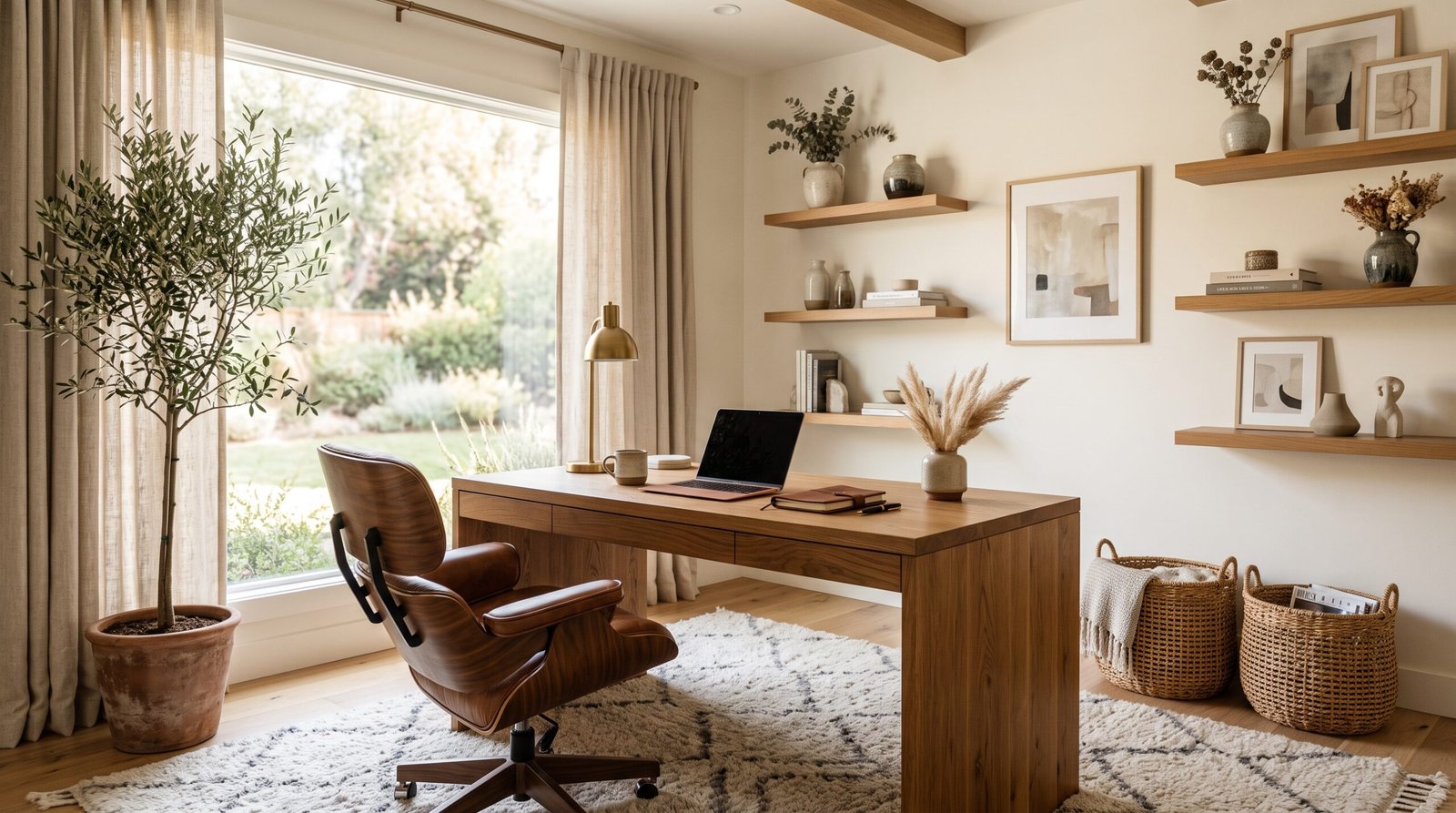
Creating a home office is about much more than finding a place to put your laptop. A thoughtfully designed workspace can improve your focus, boost creativity, increase productivity, and make working from home far more enjoyable. Whether you have a dedicated office room or only a small corner available, the right design choices can transform your workspace into a stylish and functional environment.
Over the past few years, home offices have become one of the most important spaces in modern homes. As remote work, online learning, freelancing, and home businesses continue to grow, homeowners are looking for beautiful office ideas that combine comfort with practicality. The best home office balances aesthetics, organization, lighting, and ergonomic furniture while reflecting your personal style.
In this guide, you’ll discover 27 inspiring home office ideas that work for every budget and home size. From minimalist workspaces to luxurious executive offices, these ideas will help you create a room you’ll actually enjoy spending time in.
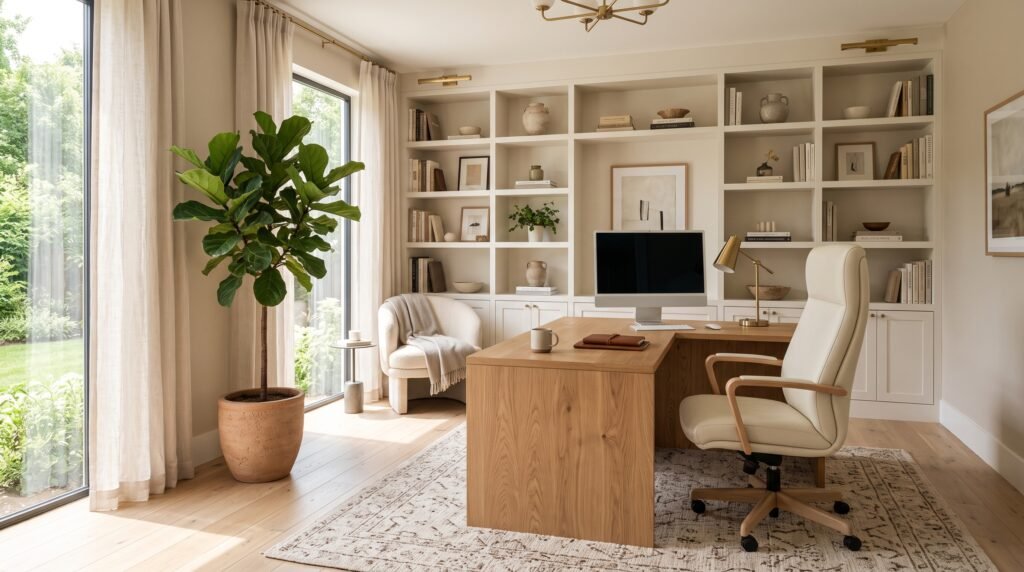
A bright modern home office with a solid oak desk, ergonomic chair, built-in shelving, indoor plants, neutral décor, warm natural lighting, and large windows overlooking a peaceful garden.
Why Your Home Office Design Matters
A well-designed office doesn’t just look good—it helps you perform better every day. An organized workspace reduces distractions, encourages better posture, and creates a healthier work-life balance.
Benefits of a thoughtfully designed home office include:
- Increased productivity
- Better concentration
- Improved posture and comfort
- Reduced stress
- Enhanced creativity
- More professional video meeting backgrounds
- Better organization and storage
Whether you’re working full-time from home or only need a quiet study area, investing in your office is investing in yourself.
1. Design Around Natural Light
Natural light is one of the easiest ways to improve any workspace. Bright sunlight helps reduce eye strain, boosts mood, and creates a welcoming atmosphere that artificial lighting simply can’t match.
Whenever possible, place your desk near a window where daylight can illuminate your workspace without causing glare on your computer screen. North- or east-facing windows often provide the most comfortable light throughout the day.
To maximize natural light:
- Use sheer curtains instead of heavy drapes.
- Keep windows clean and unobstructed.
- Position your monitor perpendicular to the window.
- Add mirrors to reflect daylight deeper into the room.
If your office lacks windows, choose daylight LED bulbs that closely mimic natural sunlight.
2. Choose a Neutral Color Palette
Neutral colors never go out of style and create a calm environment that encourages focus. Shades of white, beige, greige, soft gray, and warm taupe make a room feel larger and brighter while allowing furniture and décor to stand out.
Popular combinations include:
- White walls with oak furniture
- Greige walls with black accents
- Cream walls with walnut wood
- Soft gray paired with brass hardware
Add texture through woven baskets, linen curtains, wool rugs, and wooden shelving rather than relying on bold colors.
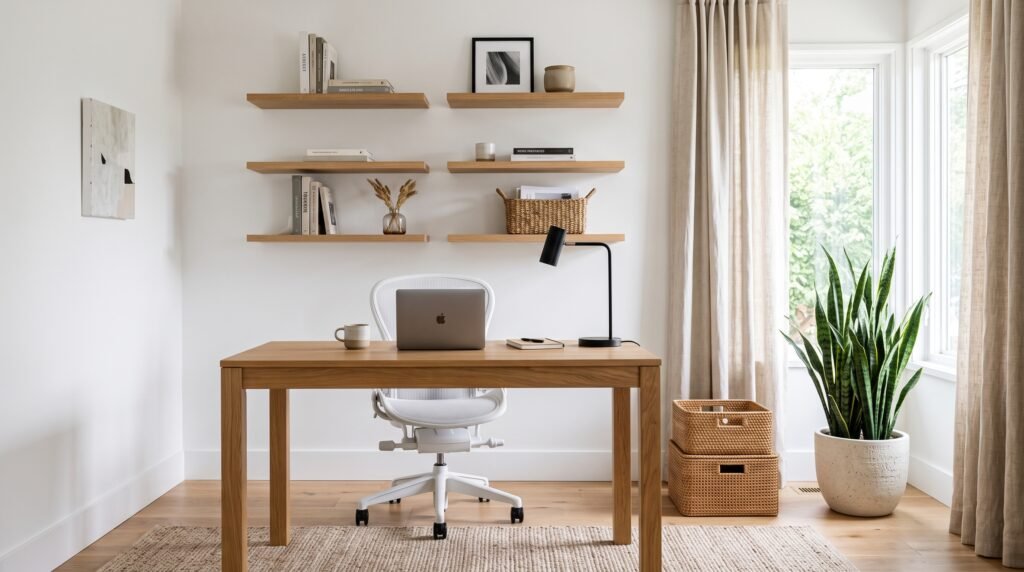
A minimalist home office featuring soft white walls, oak furniture, floating shelves, woven storage baskets, linen curtains, and subtle greenery bathed in natural daylight.
3. Invest in an Ergonomic Chair
Your chair is one of the most important pieces of furniture in your office. Spending long hours sitting in an uncomfortable chair can lead to back pain, neck strain, and fatigue.
Look for a chair with:
- Adjustable height
- Lumbar support
- Breathable material
- Adjustable armrests
- Smooth swivel base
- Comfortable seat cushioning
If you prefer a more decorative look, many modern ergonomic chairs now combine supportive features with elegant designs that fit beautifully into home interiors.
Remember, comfort should always come before appearance.
4. Select the Right Desk Size
Your desk should match both your work style and available space. Choosing a desk that’s too large can overwhelm a small room, while one that’s too small may leave you feeling cramped.
Popular desk options include:
- Compact writing desks for small rooms
- L-shaped desks for multitasking
- Standing desks for better posture
- Built-in desks for custom storage
- Floating desks for apartments
- Executive desks for larger offices
Before purchasing, measure your space carefully and leave enough room for comfortable movement around the desk.
5. Create Smart Storage Solutions
A clutter-free workspace makes it easier to focus and stay organized. Instead of piling papers and office supplies on your desk, incorporate storage that keeps everything within reach while maintaining a clean appearance.
Consider adding:
- Built-in cabinets
- Floating shelves
- Filing drawers
- Decorative baskets
- Storage ottomans
- Rolling carts
- Desktop organizers
Label storage containers and regularly declutter unnecessary items to keep your office efficient.
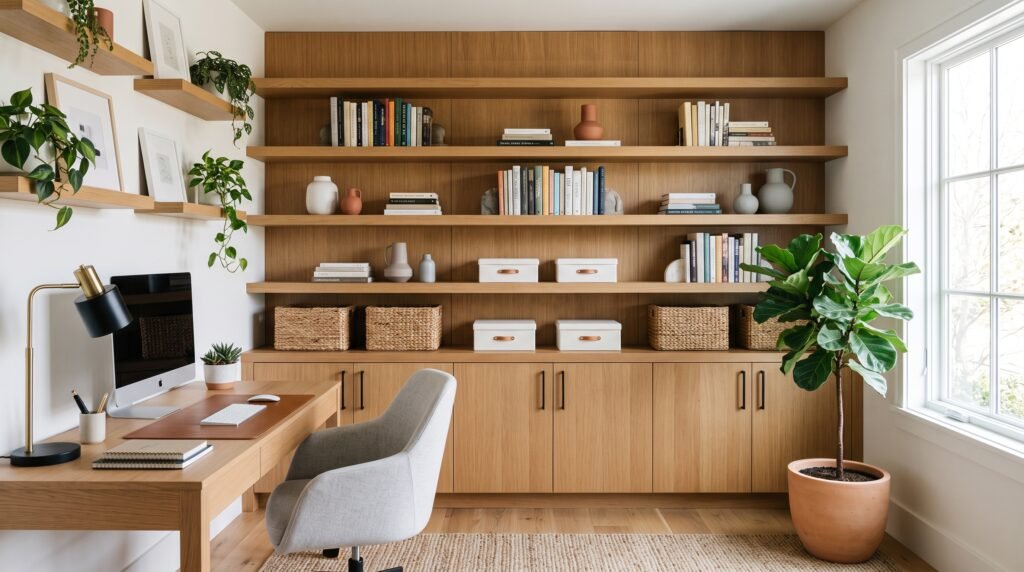
A stylish home office with built-in shelving, decorative storage boxes, books, baskets, wooden cabinets, and neatly arranged office supplies in a modern neutral design.
6. Bring Nature Indoors
Indoor plants instantly make a workspace feel fresher and more inviting. Beyond their visual appeal, plants can improve air quality and create a calming atmosphere that supports concentration.
Excellent choices for home offices include:
- Snake Plant
- ZZ Plant
- Pothos
- Peace Lily
- Rubber Plant
- Monstera
- Fiddle Leaf Fig
Place a tall plant beside your desk or smaller plants on floating shelves for a balanced, natural look.
7. Install Floating Shelves
Floating shelves provide additional storage without taking up valuable floor space. They’re perfect for displaying books, decorative objects, framed artwork, and small plants.
Keep shelves visually balanced by mixing practical and decorative items. Avoid overcrowding, as too many accessories can make the room feel cluttered.
Ideas for shelf styling include:
- Books stacked horizontally and vertically
- Ceramic vases
- Framed family photos
- Small sculptures
- Decorative storage boxes
- Trailing plants
8. Add a Comfortable Area Rug
A rug adds warmth, texture, and comfort while helping define your office space—especially in open-concept homes.
Choose a rug that’s large enough to fit beneath both your desk and chair, allowing the chair to roll smoothly without catching on the edges.
Popular rug styles include:
- Neutral woven rugs
- Vintage-inspired patterns
- Low-pile wool rugs
- Jute rugs
- Geometric modern designs
Besides enhancing comfort, rugs also help absorb sound, creating a quieter workspace.
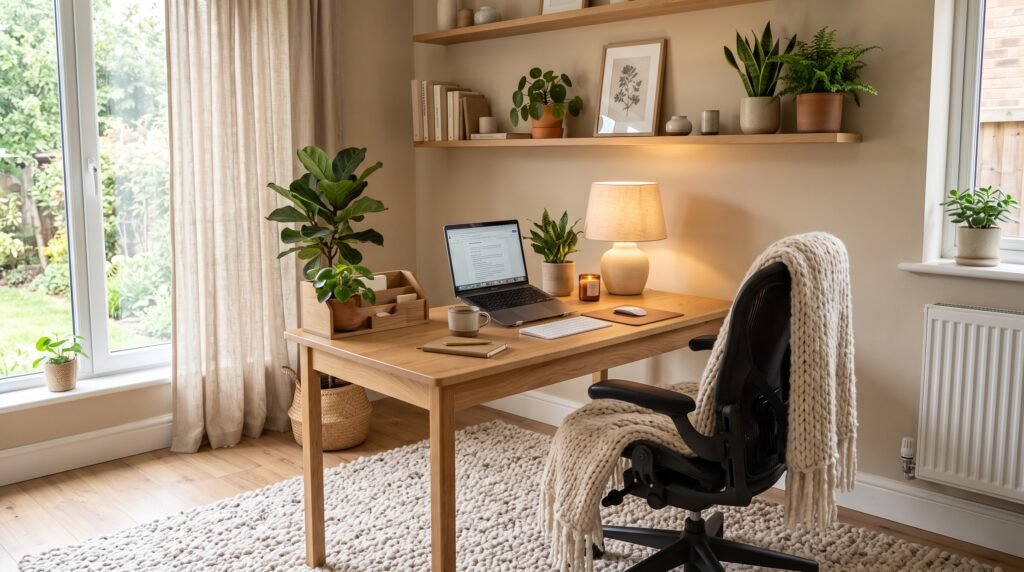
A cozy home office featuring a soft area rug, wooden desk, comfortable ergonomic chair, layered lighting, indoor plants, and warm neutral décor with inviting textures.
9. Make the Most of a Small Home Office
Not everyone has an entire room available for a home office, but that doesn’t mean you can’t create an inspiring workspace. With thoughtful planning, even the smallest corner can become a productive office.
Look around your home for underused areas such as:
- A bedroom corner
- Space beneath the stairs
- An empty hallway nook
- A section of the living room
- A converted closet (often called a “cloffice”)
- An attic corner
Choose compact furniture that fits the available space without making it feel crowded. A floating desk paired with wall-mounted shelves keeps the floor open and creates the illusion of a larger room.
Use light colors, mirrors, and minimal décor to maximize the feeling of openness.
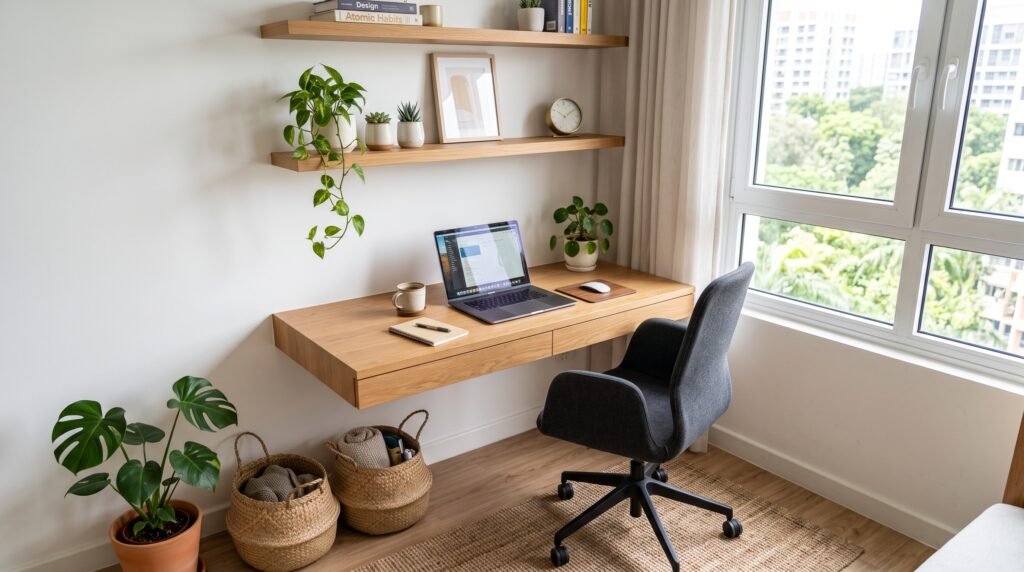
A compact home office in a bright corner featuring a floating desk, white walls, wooden shelves, ergonomic chair, indoor plants, and modern minimalist décor with plenty of natural light.
10. Install Built-In Cabinets
Built-in cabinetry is one of the best investments for a home office. Unlike freestanding furniture, custom cabinets maximize every inch of available space while giving your office a polished, high-end appearance.
Benefits include:
- Hidden storage for paperwork
- Space for office equipment
- Clean and organized appearance
- Increased home value
- Better use of awkward corners
Paint built-in cabinets the same color as your walls for a seamless look, or choose warm wood finishes for added character.
Open shelving above the cabinets provides the perfect place to display books, decorative accessories, and framed artwork.
11. Add Layered Lighting
Lighting plays a major role in both productivity and comfort. Relying on a single ceiling light often creates shadows and eye strain.
Instead, combine several types of lighting:
Ambient Lighting
Provides overall room illumination through ceiling fixtures.
Task Lighting
Desk lamps offer focused light for reading, writing, and computer work.
Accent Lighting
Wall sconces, shelf lighting, or LED strips add warmth and visual interest.
Warm white bulbs create a cozy atmosphere, while daylight bulbs improve visibility during detailed work.
Layered lighting also helps your office feel more inviting during evening hours.
12. Create a Statement Wall
Instead of decorating every wall, choose one feature wall that becomes the focal point of your office.
Popular statement wall ideas include:
- Vertical wood slats
- Board and batten panels
- Decorative wallpaper
- Painted accent walls
- Stone veneer
- Large-scale artwork
Neutral colors remain timeless, while soft greens, navy blues, and warm charcoal shades add sophistication without overwhelming the room.
A statement wall also creates a beautiful background for virtual meetings.
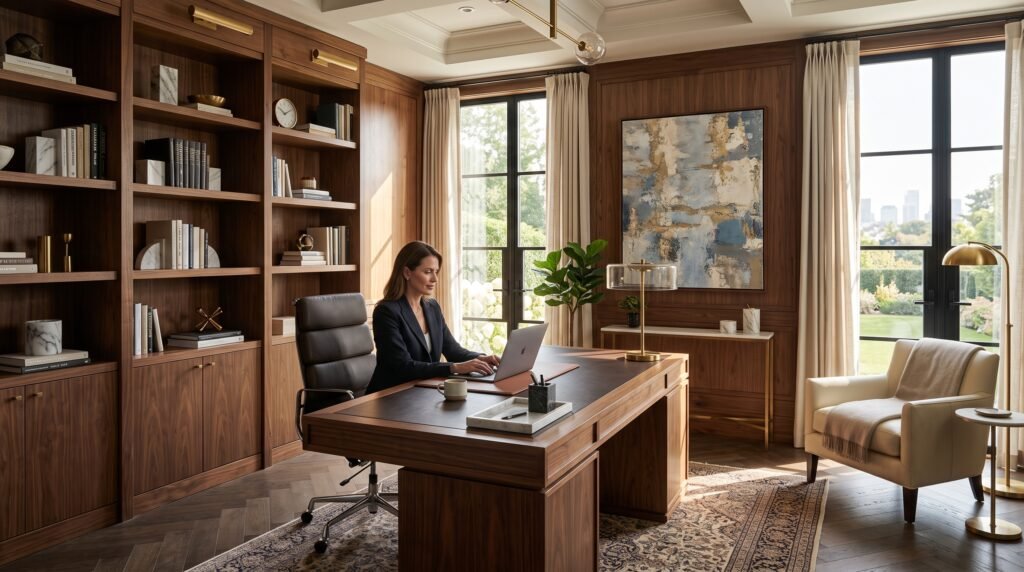
A luxurious home office with custom wood paneling, built-in bookshelves, marble desk accessories, leather chair, elegant lighting, and sophisticated neutral color palette.
13. Incorporate Personal Touches
While functionality is important, your office should also reflect your personality.
Add meaningful décor that inspires you without creating clutter.
Ideas include:
- Family photographs
- Travel souvenirs
- Inspirational books
- Artwork from local artists
- Decorative candles
- Handmade ceramics
- Vintage clocks
- Personal awards or certificates
The key is balance. Too many decorative items can become distracting, while a few carefully selected pieces make the room feel welcoming.
14. Choose Beautiful Window Treatments
Window coverings do more than provide privacy—they also influence the room’s overall atmosphere.
Some of the best options include:
- Linen curtains
- Roman shades
- Bamboo blinds
- Roller shades
- Wooden shutters
Choose treatments that allow natural light to filter through while reducing glare on computer screens.
Neutral fabrics complement almost every decorating style and create a calm, professional appearance.
15. Upgrade Your Desk Accessories
Even small accessories can make a significant difference in how organized your workspace feels.
Consider investing in:
- Wooden monitor stands
- Leather desk pads
- Matching pen holders
- Cable organizers
- Wireless charging stations
- Elegant notebooks
- Minimalist calendars
Keeping accessories coordinated creates a polished, magazine-worthy desk setup while making everyday tasks easier.
16. Add Texture for Warmth
A home office should feel comfortable enough for long work sessions. Layering different textures helps create a cozy and inviting atmosphere.
Introduce texture through:
- Linen curtains
- Wool rugs
- Wooden furniture
- Leather desk chairs
- Woven baskets
- Knit throws
- Velvet cushions
- Ceramic planters
Mixing natural materials adds depth without relying on bold colors.
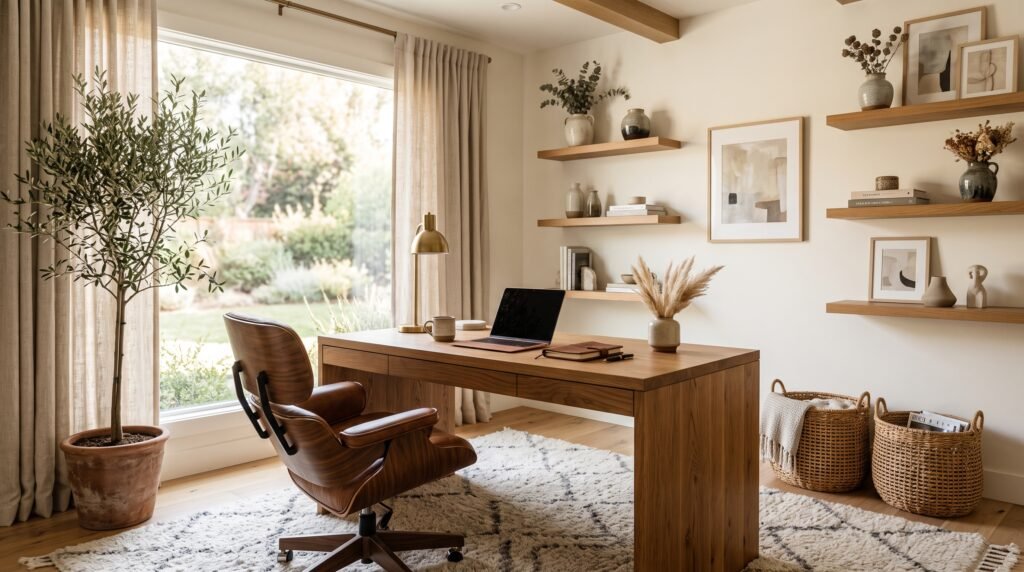
A warm modern home office featuring layered textures with linen curtains, woven baskets, oak desk, leather chair, cozy rug, ceramic décor, and abundant natural lighting.
17. Design an Office That Encourages Focus
Every design choice should support productivity.
Keep your desk free of unnecessary items, leaving space only for essentials such as:
- Laptop or monitor
- Notebook
- Desk lamp
- Water bottle
- Small plant
Hide cables using cable trays or clips, and store paperwork inside drawers instead of leaving it on your desk.
A tidy workspace reduces distractions and helps you stay focused throughout the day.
18. Mix Open and Closed Storage
The most functional offices combine display space with hidden storage.
Use open shelves for:
- Books
- Decorative accessories
- Plants
- Framed artwork
Reserve closed cabinets for:
- Files
- Office supplies
- Electronics
- Printer paper
- Cables
This combination keeps your office looking clean while still showcasing your personal style.
19. Add a Comfortable Reading and Relaxation Corner
If you have enough space, include a small seating area in your home office. Having a dedicated spot to step away from your desk can help you recharge, brainstorm ideas, or read without sitting in front of a screen.
A cozy reading corner doesn’t require much space. All you need is:
- A comfortable accent chair
- A small side table
- A floor lamp
- A soft throw blanket
- One or two decorative pillows
- A small bookshelf or magazine rack
This area can also serve as a welcoming place for informal meetings or phone calls. Choose furniture that complements the rest of your office to maintain a cohesive design.
20. Keep Cables Hidden
Nothing makes a workspace look cluttered faster than tangled cords. Managing cables not only improves the appearance of your office but also makes cleaning easier and reduces tripping hazards.
Simple cable management ideas include:
- Cable trays mounted under the desk
- Adhesive cable clips
- Cord sleeves
- Wireless keyboards and mice
- Charging stations
- Power strips hidden inside cable boxes
When shopping for office furniture, look for desks with built-in cable management holes or channels.
A clean desk with hidden wires instantly creates a more polished and professional look.
21. Decorate with Functional Accessories
Every accessory in your office should serve a purpose while enhancing the overall design.
Useful and stylish accessories include:
- Elegant desk organizers
- Wooden monitor stands
- Leather desk mats
- Ceramic pen holders
- Digital clocks
- Wall calendars
- Decorative bookends
- Minimalist bulletin boards
Choose accessories in similar colors or materials to create a coordinated appearance. Natural wood, matte black, brass, and white finishes work well together in most modern offices.
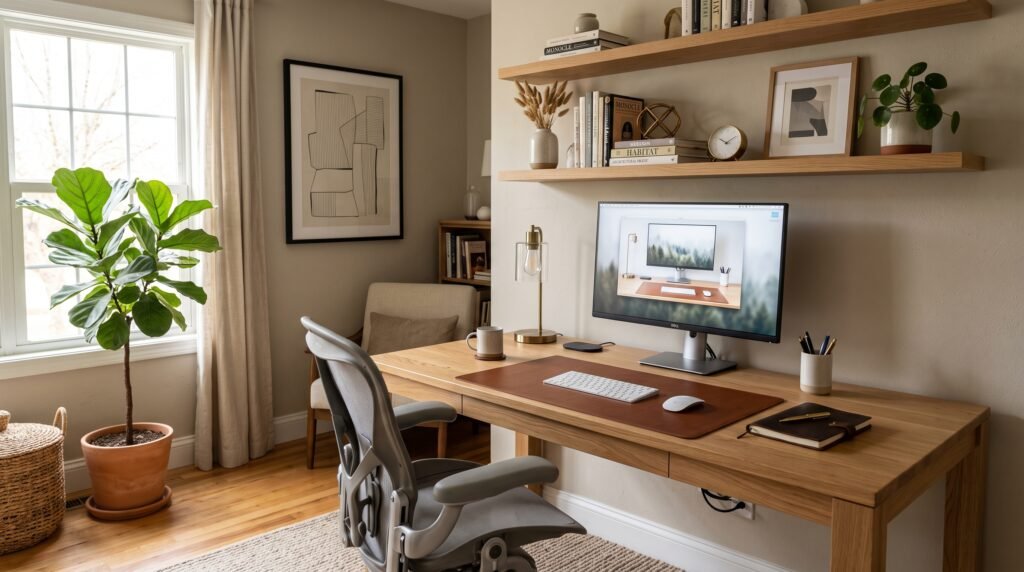
A beautifully styled home office with an oak desk, leather desk pad, wireless accessories, hidden cables, indoor plants, floating shelves, decorative artwork, and warm natural light creating a productive yet cozy workspace.
22. Make Video Calls Look Professional
With remote work becoming more common, your office should look presentable during virtual meetings.
Position your desk so the camera captures an attractive background, such as:
- Built-in bookshelves
- Framed artwork
- Indoor plants
- Neutral wall colors
- Decorative shelving
- Soft lighting
Avoid placing bright windows directly behind you, as this can create harsh backlighting. A simple ring light or adjustable desk lamp can improve your appearance on camera without much effort.
A clean and thoughtfully designed background also leaves a positive impression during professional meetings.
23. Add a Standing Desk Option
Sitting for extended periods can lead to discomfort and fatigue. A height-adjustable standing desk allows you to alternate between sitting and standing throughout the day.
Benefits of a standing desk include:
- Improved posture
- Increased energy
- Reduced back pain
- Better circulation
- Enhanced focus
- Greater flexibility during long work sessions
If a full standing desk isn’t in your budget, consider a desktop converter that can be placed on top of your existing desk.
24. Incorporate Smart Technology
Modern home offices benefit from technology that simplifies daily tasks.
Popular smart office upgrades include:
- Smart lighting
- Voice assistants
- Wireless charging pads
- Smart thermostats
- Noise-canceling speakers
- Automated blinds
- Smart plugs
- Wireless printers
These additions create a more efficient workspace while reducing clutter and improving convenience.
25. Refresh Your Office Seasonally
Just like the rest of your home, your office can benefit from seasonal updates.
Simple changes throughout the year keep the space feeling fresh and inspiring.
Ideas include:
Spring
- Fresh flowers
- Light-colored accessories
- New greenery
Summer
- Bright artwork
- Natural woven textures
- Lightweight curtains
Autumn
- Warm-toned throw blankets
- Wooden accents
- Decorative candles
Winter
- Cozy rugs
- Soft lighting
- Textured pillows
- Evergreen arrangements
These small updates can completely transform the mood of your workspace without requiring a full redesign.
26. Design with Productivity in Mind
A beautiful office should also support your workflow.
Consider creating separate zones for different activities:
- Computer work
- Writing or planning
- Reading
- Storage
- Video conferencing
Keep frequently used items within arm’s reach and organize supplies according to how often they’re used. Small improvements in layout can save time and reduce distractions throughout the day.
Regularly declutter your workspace by removing unnecessary papers, outdated supplies, and items that no longer serve a purpose.
27. Create a Space You’ll Enjoy Every Day
The best home office is one that reflects your personality while helping you stay productive.
Don’t feel pressured to follow every design trend. Instead, combine the ideas that fit your lifestyle, budget, and available space.
Whether you prefer a minimalist Scandinavian office, a cozy farmhouse workspace, or a luxurious executive suite, focus on creating an environment where you feel motivated and comfortable.
When your office is both functional and beautiful, working from home becomes something to look forward to rather than a daily challenge.
Frequently Asked Questions
What is the ideal size for a home office?
A functional home office can be created in as little as 40–60 square feet. Larger rooms offer more flexibility, but even a small corner can become an efficient workspace with smart furniture and storage solutions.
Which colors are best for a home office?
Neutral shades such as white, beige, soft gray, greige, and warm taupe promote focus and create a timeless appearance. Soft greens and muted blues can also add a calming effect.
How can I make a small home office look bigger?
Use light-colored walls, floating furniture, mirrors, open shelving, and plenty of natural light. Keeping clutter to a minimum also helps the space feel larger and more open.
What furniture is essential for a home office?
At a minimum, you’ll need:
- A comfortable desk
- An ergonomic chair
- Good lighting
- Storage solutions
- Reliable internet connection
Additional furniture such as bookshelves, filing cabinets, or seating areas can be added based on your needs.
How do I organize my home office?
Start by decluttering your workspace. Store paperwork in labeled folders, use drawers or baskets for supplies, and keep only daily essentials on your desk. Regular organization prevents clutter from building up over time.
Should I include plants in my home office?
Yes. Indoor plants add color, improve the atmosphere, and make the workspace feel more inviting. Low-maintenance options like snake plants, pothos, and ZZ plants are excellent choices.
Final Thoughts
Designing the perfect home office is about finding the right balance between style, comfort, and functionality. Whether you’re working with a spacious dedicated room or a compact corner, thoughtful design choices can make a remarkable difference in your daily routine.
Focus on quality furniture, ergonomic seating, smart storage, natural lighting, and personal touches that inspire creativity. Neutral color palettes, layered textures, indoor plants, and organized workstations create an environment where productivity comes naturally.
Remember that your home office is an investment in both your work and your well-being. Start with the essentials, personalize the space over time, and create a workspace that motivates you to do your best every day.
By incorporating these 27 home office ideas, you’ll have a workspace that’s not only practical but also beautiful enough to inspire you for years to come.