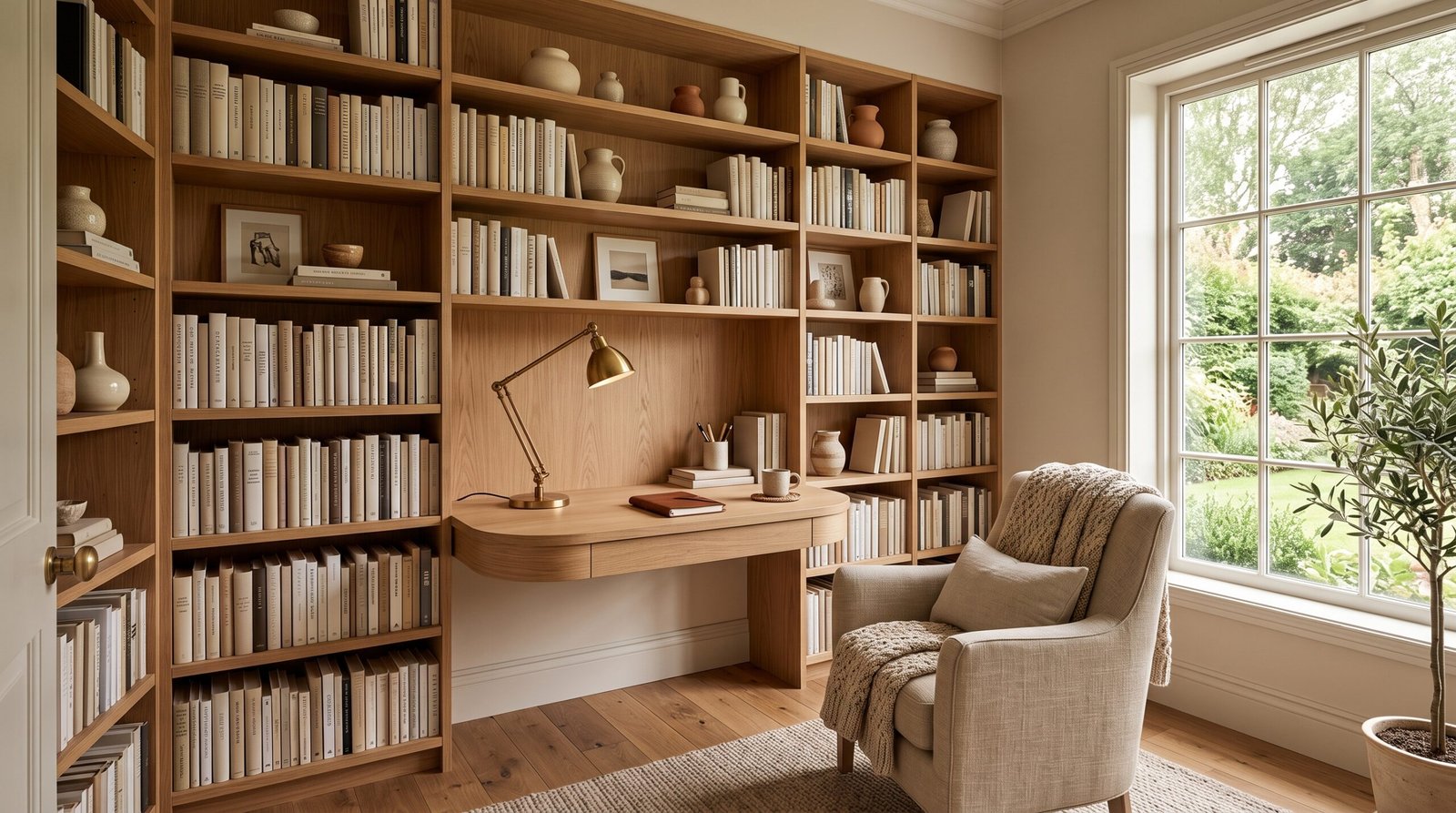
Home Library Ideas: 25 Beautiful Ways to Create Your Dream Reading Space
Creating a home library is about more than storing books. It’s about designing a space where you can relax, learn, unwind, and escape into your favorite stories. Whether you have an entire room dedicated to books or just a cozy corner in your living room, the right design can transform your reading experience and elevate your home’s style.
Modern home libraries are no longer limited to dark wood shelves and traditional furniture. Today’s designs embrace bright natural light, minimalist shelving, cozy seating, multifunctional spaces, and decorative styling that complements contemporary interiors. From compact apartment libraries to luxurious floor-to-ceiling book collections, there are countless ways to personalize your reading retreat.
In this guide, you’ll discover 25 inspiring home library ideas that combine functionality with beautiful interior design. These ideas work for homes of every size and style, helping you create a library that’s as visually appealing as it is practical.
Floor-to-Ceiling Built-In Bookshelves
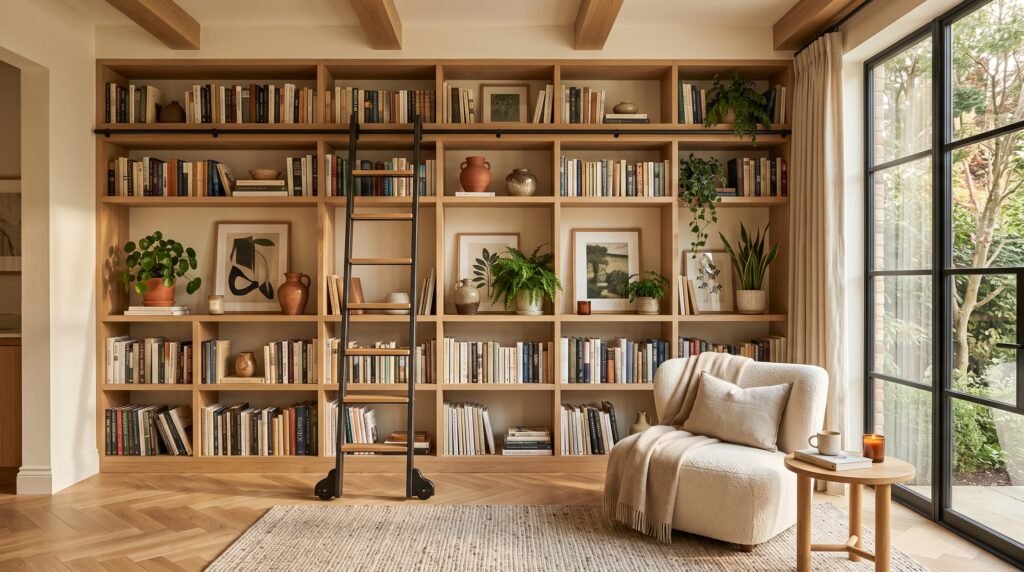
Install Floor-to-Ceiling Bookshelves
Nothing creates the feeling of a true home library quite like floor-to-ceiling bookshelves. This timeless design maximizes storage while adding dramatic architectural character to any room.
Built-in shelving creates a seamless appearance that instantly makes your library feel custom designed. Whether you choose painted white shelving for a modern aesthetic or warm oak for a classic look, full-height bookshelves transform empty walls into stunning focal points.
Besides holding hundreds of books, these shelves provide space for decorative accents such as ceramic vases, framed artwork, candles, and indoor plants. Mixing decorative objects with books prevents shelving from feeling cluttered and adds personality throughout the room.
If your ceilings are particularly high, consider adding a rolling library ladder. Besides making upper shelves accessible, it introduces a luxurious element often seen in historic libraries.
Lighting also plays an important role. Integrated LED strip lights or adjustable picture lights can illuminate shelves while creating a warm evening atmosphere perfect for reading.
Styling Tips
- Organize books by color for a modern aesthetic.
- Leave small open spaces between book collections.
- Display decorative objects in odd-numbered groupings.
- Incorporate greenery for freshness.
- Mix horizontal and vertical book arrangements.
Cozy Reading Chair by the Window
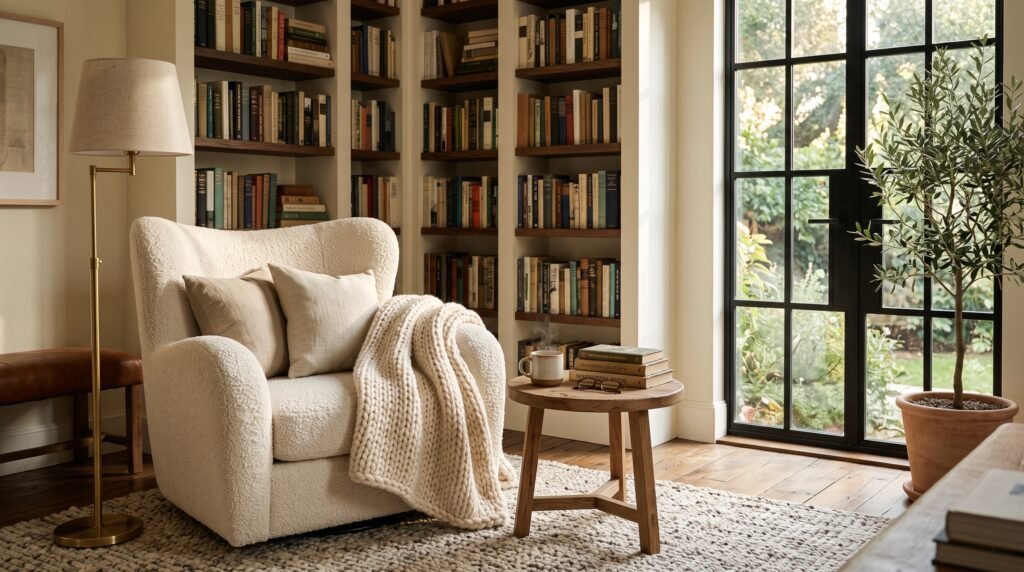
Create a Cozy Reading Nook by a Window
Natural light makes reading more enjoyable while creating an inviting atmosphere throughout the day. Positioning a comfortable chair near a large window instantly transforms an unused corner into your favorite place in the house.
Choose an oversized armchair, boucle accent chair, or upholstered wingback chair that offers excellent back support for long reading sessions. Pair it with a matching ottoman so you can stretch out comfortably with your latest novel.
Layer soft textures to make the nook even more welcoming. Add a chunky knit throw blanket, linen cushions, and a plush area rug beneath the chair to create visual warmth.
Nearby shelving keeps your current books within reach while a small side table provides space for coffee, tea, reading glasses, or a scented candle.
For evening reading, complement daylight with an adjustable floor lamp featuring warm white lighting that reduces eye strain.
Even if you don’t have a dedicated library room, this simple arrangement creates a peaceful reading retreat inside your bedroom, living room, or home office.
Ideas to Include
- Linen curtains that soften natural light.
- Small wooden side table.
- Brass reading lamp.
- Large indoor plant beside the chair.
- Woven storage basket for blankets.
Warm Wood Library with Rolling Ladder
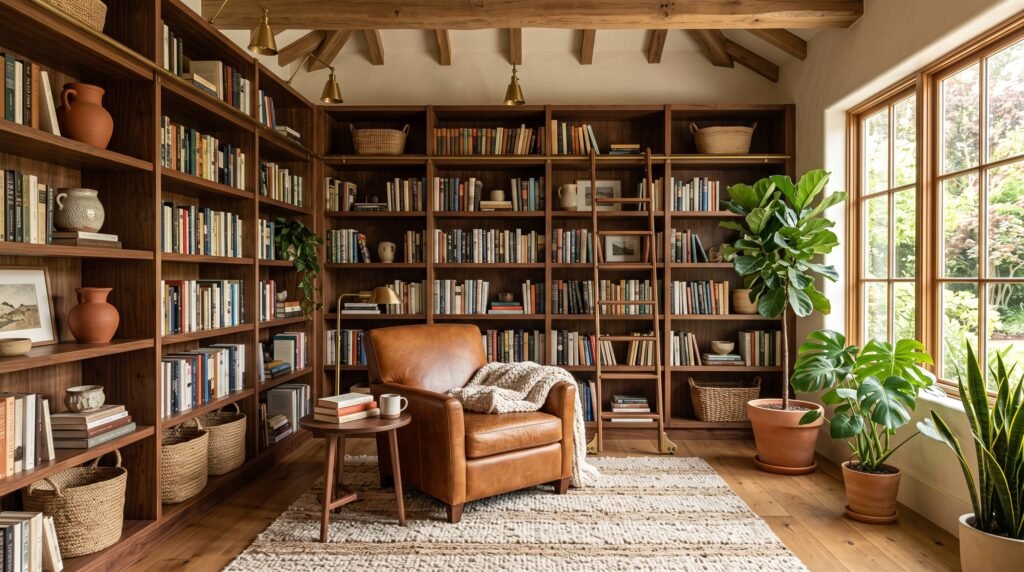
Choose Warm Wood Tones for a Timeless Library
Wood instantly makes a library feel cozy, sophisticated, and welcoming. Whether your style leans modern farmhouse, Scandinavian, traditional, or contemporary, incorporating natural wood helps create a calming environment.
Oak, walnut, maple, and ash are excellent choices for bookshelves, desks, and flooring. Their natural grain adds warmth while complementing neutral color palettes.
A combination of wooden shelving with white walls creates an elegant contrast that keeps the room feeling bright instead of heavy.
You don’t need every piece of furniture to match perfectly. Mixing different wood tones creates depth and gives your library a collected, lived-in appearance.
Accessories like woven baskets, leather bookends, wooden picture frames, and rattan lighting continue the organic theme while keeping the room balanced.
Warm wood pairs beautifully with:
- Cream walls
- Beige upholstery
- Linen curtains
- Black metal lighting
- Brass hardware
- Indoor olive trees
- Natural jute rugs
This combination creates a library that’s equally relaxing during sunny afternoons and cozy winter evenings.
Library Ladder for Style and Function
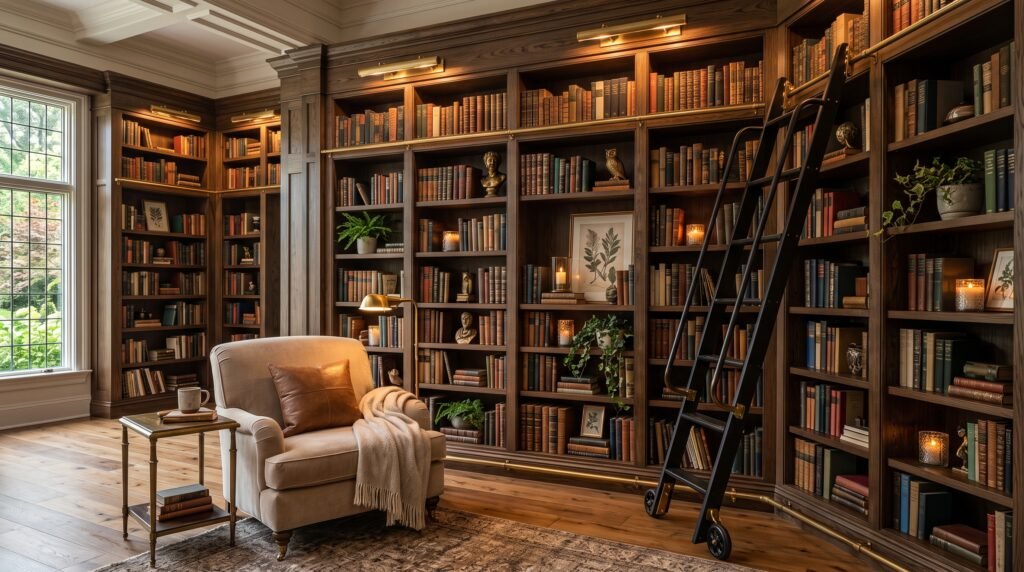
Add a Rolling Library Ladder
Few features feel as iconic as a rolling ladder gliding across tall bookshelves. Even in modern homes, this timeless addition creates an elegant focal point while serving a practical purpose.
Library ladders are especially useful when shelving extends close to the ceiling. Instead of storing rarely used items on upper shelves, you’ll have easy access to every book in your collection.
Choose finishes that complement your shelving:
- Natural oak for Scandinavian interiors.
- Matte black for modern homes.
- Walnut for traditional spaces.
- White painted wood for coastal or minimalist designs.
Safety is equally important. Install quality rolling hardware that moves smoothly along the rail while remaining secure during use.
Beyond functionality, the ladder introduces visual height, making the room appear larger and more luxurious.
Complete the look with decorative lighting above the shelves, comfortable seating below, and carefully styled displays of books mixed with artwork and ceramics.
Library with a Comfortable Sofa
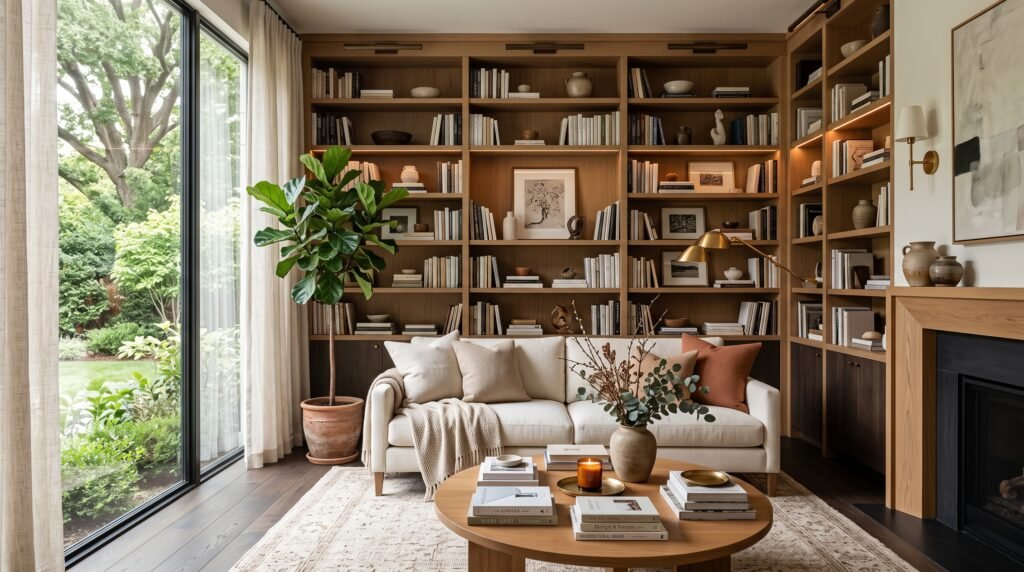
Include Comfortable Seating for Long Reading Sessions
A beautiful library isn’t just about books—it should invite you to stay for hours. While a single reading chair works well in compact spaces, larger home libraries benefit from multiple seating options.
A cozy loveseat or compact sofa creates a welcoming setting for families, book clubs, or quiet afternoons with children. Choose upholstery in neutral shades like ivory, taupe, or soft gray to keep the room feeling calm and timeless.
Arrange seating around a low coffee table where you can place books, beverages, or decorative accessories. Add layered cushions and textured throws to make the space even more inviting.
If space allows, combine different seating styles, such as a sofa paired with an accent chair or two matching armchairs. This creates conversation areas while maintaining the library’s relaxing atmosphere.
Good seating transforms your library from a storage room into one of the most lived-in spaces in your home.
Home Library with a Built-In Reading Desk
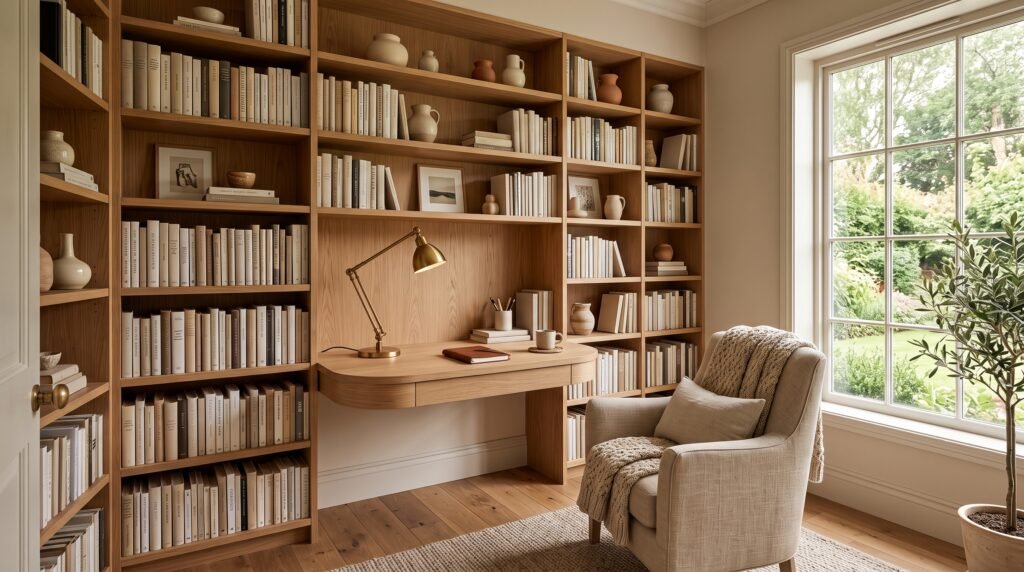
Add a Built-In Reading Desk for a Multi-Functional Space
A home library can be much more than a place to store books. By incorporating a built-in desk, you create a space that’s perfect for reading, studying, writing, working from home, or helping children with homework.
Position the desk beneath a window whenever possible to maximize natural daylight. If your room lacks windows, install layered lighting using a combination of recessed ceiling lights, wall sconces, and an adjustable task lamp to create a bright yet comfortable workspace.
Choose a desk finish that matches your shelving for a cohesive look. Built-in cabinetry on both sides of the desk creates a custom appearance while providing extra storage for office supplies, journals, notebooks, and electronics.
Keep the desktop uncluttered by displaying only a few carefully selected accessories:
- Ceramic pen holder
- Leather desk pad
- Small potted plant
- Framed artwork
- Elegant table lamp
- Decorative book stack
A comfortable ergonomic chair upholstered in linen or boucle fabric makes long reading or work sessions more enjoyable while maintaining the room’s sophisticated aesthetic.
Designer Tip
Install electrical outlets and USB charging ports inside the desk cabinetry so phones, tablets, and laptops remain powered without visible cables disrupting the clean design.
Color-Coordinated Bookshelves
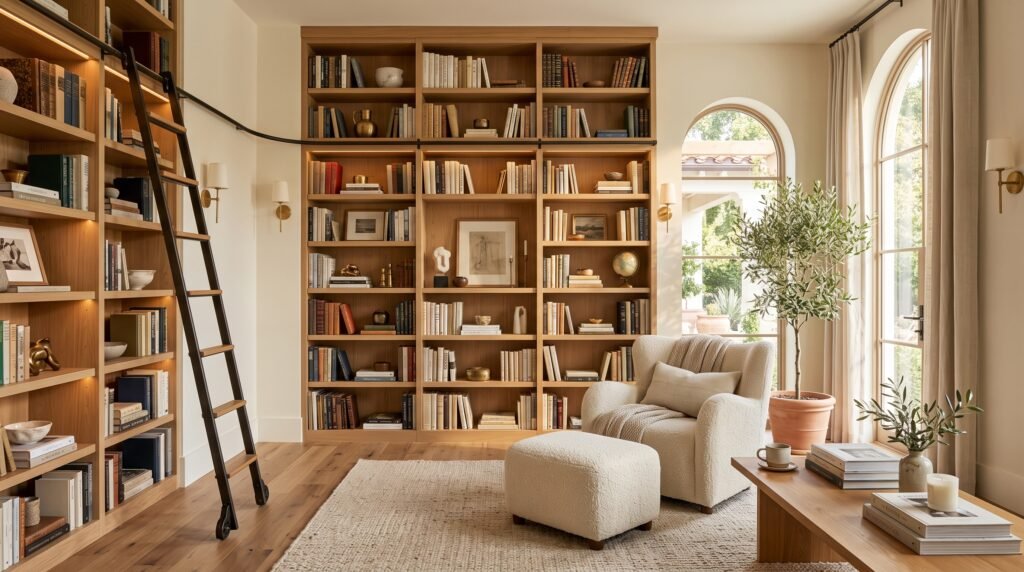
Organize Books by Color for a Modern Look
Traditional libraries usually organize books alphabetically or by genre, but modern interiors often embrace color coordination to create an eye-catching display.
Arranging books by spine color turns your collection into artwork. Soft neutrals, earthy browns, muted greens, blues, and creams work especially well in contemporary interiors because they create a calm, harmonious palette.
This method works best when paired with decorative styling. Instead of filling every shelf completely, leave breathing room between sections and add decorative accents such as:
- Ceramic sculptures
- Glass vases
- Framed family photos
- Small plants
- Brass candle holders
- Woven baskets
- Decorative bowls
Alternating vertical and horizontal stacks adds visual variety while preventing shelves from looking repetitive.
If you have a very large collection, consider organizing only the most visible shelves by color while keeping the remaining books categorized traditionally. This gives you the best of both worlds—easy organization and beautiful styling.
Hidden Library Under the Stairs
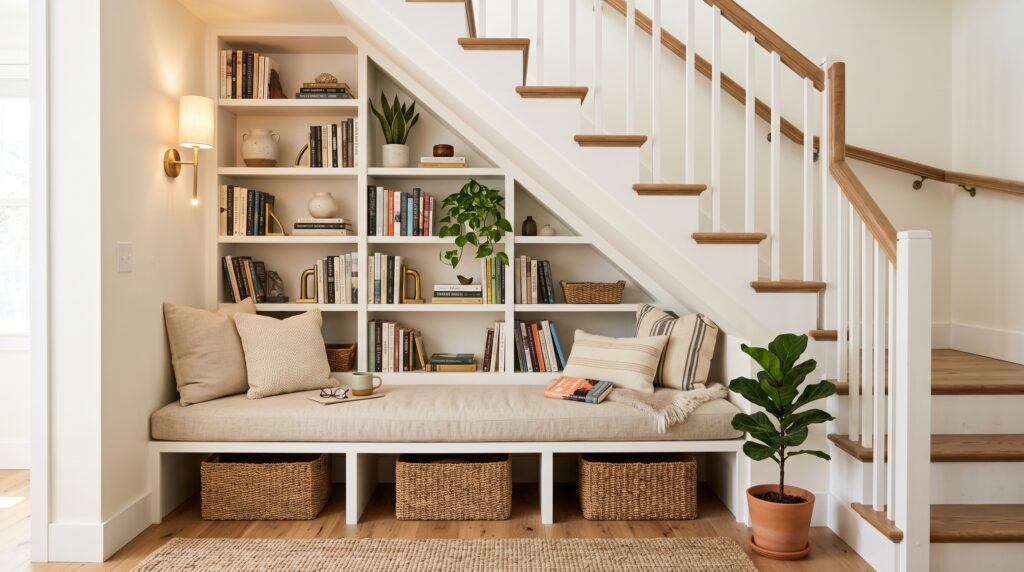
Transform the Space Under the Stairs
One of the most overlooked areas in many homes is the space beneath the staircase. Instead of leaving it unused, convert it into a compact home library that feels both practical and charming.
Built-in shelving can follow the slope of the staircase, making use of every inch while creating a custom architectural feature. Even a small under-stair library can hold dozens of books when designed efficiently.
To make the area feel cozy rather than cramped, include:
- A cushioned built-in bench
- Soft throw pillows
- Warm wall sconces
- Floating shelves
- Hidden storage drawers beneath the bench
- A textured area rug
This design is ideal for families because it creates a quiet reading corner without requiring an entire room. Children especially enjoy these tucked-away spaces, making them more likely to develop a love for books.
For a premium look, paint the shelving the same color as the surrounding walls. This creates a seamless appearance while allowing colorful book spines to become the focal point.
Moody Dark Home Library
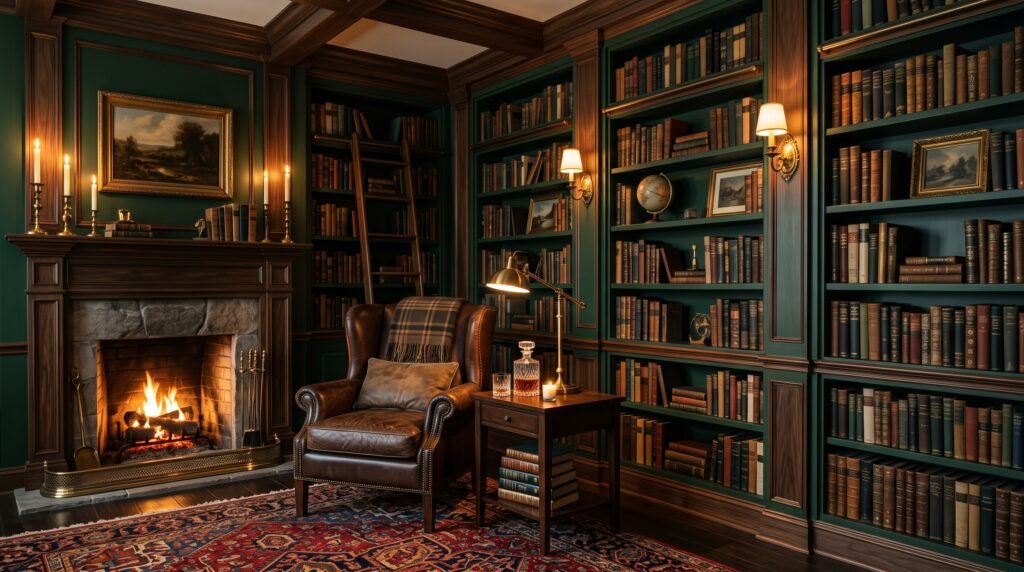
Embrace a Dark and Moody Color Palette
While bright white libraries remain popular, dark interiors have become a major design trend in recent years. Deep charcoal, forest green, navy blue, and rich walnut finishes create a dramatic atmosphere that feels luxurious and timeless.
Dark walls help bookshelves blend into the room, allowing colorful book covers and decorative accessories to stand out beautifully.
Balance darker finishes with warm lighting. Use layered illumination through:
- Brass wall sconces
- Picture lights above shelving
- Warm LED strip lights
- Floor lamps beside reading chairs
- Table lamps with linen shades
Leather seating, velvet cushions, and antique-inspired accessories further enhance the cozy atmosphere.
Large windows prevent dark rooms from feeling enclosed during the day, while heavy linen curtains add softness and improve acoustics.
A moody library is especially appealing if you enjoy reading during rainy afternoons or quiet evenings, creating an intimate retreat away from the rest of the house.
Keep Your Library Minimal Yet Inviting
Minimalist libraries prove that you don’t need hundreds of books or elaborate décor to create a beautiful reading space.
Start with clean-lined shelving in white, light oak, or natural wood. Display only your favorite books alongside a few carefully chosen decorative pieces, allowing each item to stand out without visual clutter.
Stick to a restrained color palette of cream, beige, soft gray, and muted earth tones. This creates a calm environment that encourages focus and relaxation.
Furniture should prioritize comfort without overwhelming the room. A simple upholstered armchair, a slim side table, and a floor lamp are often all you need.
When styling the shelves, remember that empty space is just as important as the objects themselves. Leaving open sections gives the eye a place to rest and makes the room feel airy and sophisticated.
Minimalist home libraries are particularly well suited to apartments, small homes, and modern interiors where every square foot counts.
Design a Family-Friendly Library
A home library can become one of the most loved spaces in the house when it’s designed for every age.
Create lower shelves where children can easily reach their favorite books, while placing collectibles and delicate décor on higher shelves. Add woven baskets or labeled bins to organize picture books, puzzles, and educational games.
Include comfortable floor cushions, bean bags, or a soft reading rug so kids have flexible seating options. Rounded furniture edges and durable, easy-to-clean materials make the space safer and more practical for daily use.
To encourage regular reading, rotate books seasonally or create themed displays based on holidays, nature, or school topics. A small chalkboard or letter board can also add a fun, interactive element.
A family-friendly library doesn’t have to sacrifice style. Neutral furniture, warm wood shelving, and tasteful decorative accents keep the room elegant while remaining welcoming for children.
Style Your Shelves Like an Interior Designer
Beautiful bookshelves rarely consist of books alone. Professional designers use a balanced mix of books, artwork, plants, and sculptural objects to create depth and personality.
A simple guideline is to fill about 70% of each shelf with books and reserve the remaining 30% for decorative accents. This prevents shelves from looking overcrowded while giving every item room to shine.
Mix vertical rows of books with horizontal stacks to introduce variation. Place small objects—such as candles, ceramic vases, framed photos, or decorative boxes—on top of horizontal stacks to create layered displays.
Natural elements like trailing plants, olive branches, or dried florals soften the straight lines of shelving and add freshness to the room. Vary the height and texture of decorative pieces so the arrangement feels collected rather than repetitive.
Finally, step back and assess the overall balance. If one side feels visually heavy, redistribute books or décor until the shelves look harmonious from top to bottom.
Smart Lighting, Finishing Touches & FAQs
Layered Lighting for a Cozy Home Library
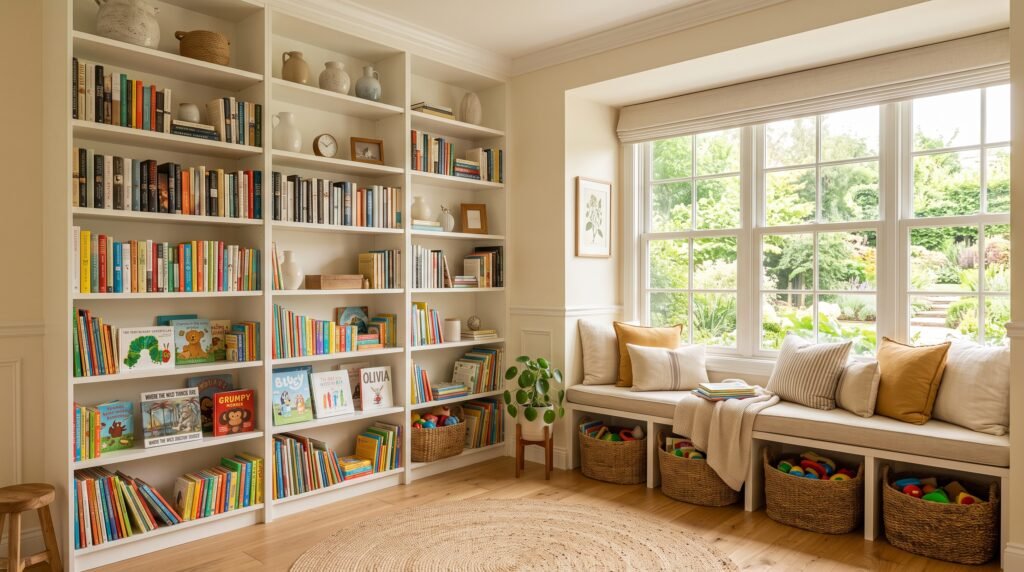
Layer Your Lighting for Comfort and Ambiance
Lighting is one of the most important elements in a home library. It affects not only how well you can read but also the overall mood of the space. A thoughtfully lit library feels warm, welcoming, and comfortable at any time of day.
Instead of relying on a single ceiling fixture, combine multiple light sources to create depth and flexibility.
Ambient Lighting
Ambient lighting provides overall illumination for the room. Recessed ceiling lights, semi-flush fixtures, or elegant chandeliers work well as the primary source of light. Choose warm white bulbs (around 2700K–3000K) to create a relaxing atmosphere that doesn’t feel harsh.
Task Lighting
Every reading chair should have dedicated lighting. Adjustable floor lamps, swing-arm wall sconces, or table lamps allow you to direct light exactly where it’s needed without causing glare on book pages.
Accent Lighting
Accent lighting adds personality and highlights architectural features. LED strips installed beneath shelves or picture lights mounted above bookcases draw attention to your collection while creating a luxurious, layered look.
Adding dimmer switches is another smart upgrade. Bright lighting works well during the day, while softer illumination creates a cozy environment for evening reading.
Choose a Rug That Defines the Space
A rug brings warmth, comfort, and visual balance to your home library. It helps define the seating area, reduces noise, and makes the room feel more inviting.
For larger libraries, choose a rug large enough for at least the front legs of your furniture to rest on it. In smaller reading corners, a compact rug beneath the chair and side table creates a cozy zone without overwhelming the space.
Popular rug styles include:
- Neutral wool rugs
- Textured jute rugs
- Vintage Persian-inspired designs
- Soft geometric patterns
- Low-pile rugs for easy maintenance
Stick with timeless colors such as ivory, beige, taupe, warm gray, or muted earth tones. These shades complement books of every color and create a calm backdrop for the rest of your décor.
If your shelves and furniture already feature bold wood tones or dramatic colors, a simple neutral rug helps keep the room balanced.
Decorate with Thoughtful Accessories
Accessories give your library character and make it feel personal rather than staged. The key is choosing items that reflect your interests while avoiding clutter.
Consider decorating with:
- Framed artwork or photography
- Ceramic vases
- Brass or marble bookends
- Decorative storage boxes
- Candles or diffusers
- Indoor plants
- Sculptural objects
- Antique globes or clocks
- Handmade pottery
Personal items, such as travel souvenirs or family heirlooms, can make the space even more meaningful. Mix old and new pieces to create a collected look that evolves over time.
Remember that not every shelf needs decoration. Leaving some open space keeps the library feeling light and allows your favorite pieces to stand out.
Make the Most of a Small Home Library
You don’t need an entire room to enjoy the benefits of a home library. Even a small apartment can accommodate a stylish reading space with thoughtful planning.
Take advantage of vertical wall space by installing tall shelving units or floating shelves. Narrow bookcases fit comfortably in hallways, bedrooms, or home offices without taking up much floor space.
Multipurpose furniture also helps maximize functionality. Consider:
- Storage benches with hidden compartments
- Window seats with built-in bookshelves
- Ottomans that double as storage
- Slim console tables with shelving
- Ladder-style bookcases
Mirrors can make compact libraries feel larger by reflecting natural light, while light wall colors create an open, airy atmosphere.
The goal is not to fit as many books as possible but to create a comfortable space where you genuinely enjoy spending time.
Keeping Your Home Library Organized
A beautiful library stays beautiful with regular maintenance. Instead of waiting until shelves become overcrowded, spend a few minutes each month refreshing the space.
Simple habits include:
- Dust shelves and books regularly.
- Return books to their designated sections after reading.
- Rotate seasonal décor to keep the shelves looking fresh.
- Donate books you no longer plan to read.
- Keep decorative accessories minimal to avoid visual clutter.
- Water indoor plants consistently and trim any damaged leaves.
- Use baskets or storage boxes to hide miscellaneous items.
Maintaining your library doesn’t require much effort, but these small habits help preserve its inviting appearance throughout the year.
Frequently Asked Questions
How many books do I need for a home library?
There is no minimum number. A thoughtfully curated collection of 30 to 50 books can create a beautiful library when paired with attractive shelving and décor. The focus should be on displaying books you genuinely enjoy and plan to revisit.
What is the best room for a home library?
Living rooms, spare bedrooms, home offices, lofts, and even wide hallways work well. The best location is one that offers a quiet environment, comfortable seating, and good natural or artificial lighting.
How do I make my home library look luxurious?
Use floor-to-ceiling shelving, quality materials such as solid wood, layered lighting, comfortable upholstered seating, and carefully chosen decorative accessories. A cohesive color palette and uncluttered shelves also contribute to a high-end look.
Should books be organized by color or genre?
Both approaches work well. Organizing by genre makes books easier to find, while arranging them by color creates a striking visual display. Many homeowners combine both methods by color-coordinating only the most visible shelves.
What colors work best in a home library?
Neutral shades like white, cream, beige, and soft gray create a bright and timeless feel. If you prefer a dramatic atmosphere, deep navy, forest green, charcoal, or rich brown can make the space feel cozy and sophisticated.
Can I create a home library in a small apartment?
Absolutely. Floating shelves, tall bookcases, under-stair storage, window-seat shelving, and compact reading corners make it possible to enjoy a functional home library even in limited square footage.
Final Thoughts
A thoughtfully designed home library is one of the most rewarding spaces you can add to your home. It encourages relaxation, supports lifelong learning, and provides a peaceful escape from the distractions of everyday life. Whether your style is modern, traditional, minimalist, or rustic, the right combination of shelving, lighting, comfortable seating, and personal décor can transform any area into a welcoming reading retreat.
Start with the space you have, invest in furniture that prioritizes comfort, and build your book collection over time. Remember that the most beautiful libraries aren’t necessarily the largest—they’re the ones that reflect the personality, interests, and lifestyle of the people who use them.
With these 25 home library ideas, you’re well equipped to create a space that is functional, inspiring, and beautiful enough to become one of your favorite rooms in the house.