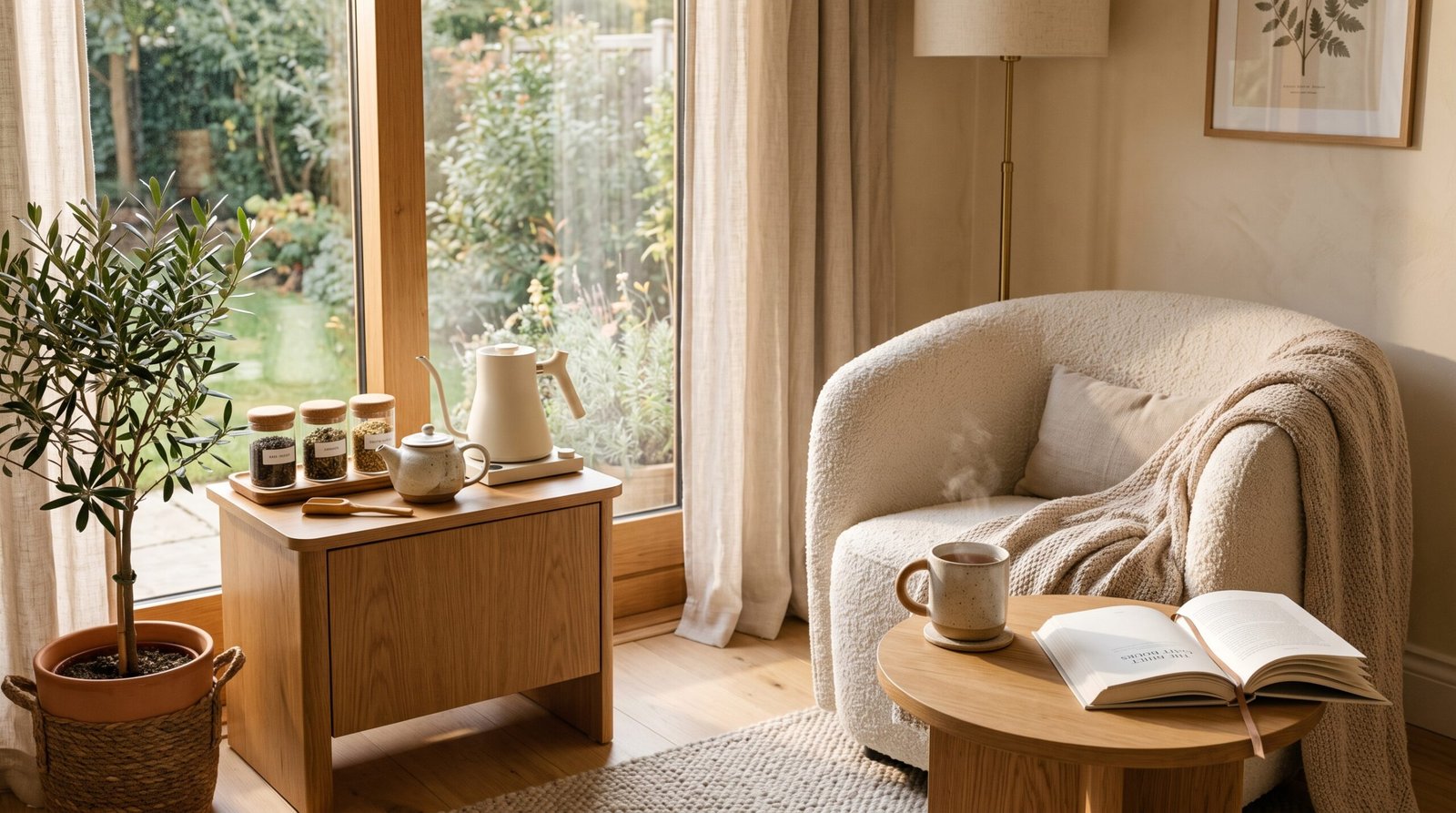
Home Tea Station Ideas: 15 Cozy and Stylish Ways to Create a Tea Corner
There is something wonderfully comforting about making a cup of tea at home. Whether you love a strong morning black tea, soothing herbal blends in the evening, or an elegant afternoon tea ritual, having a dedicated place for your favorite teas can make the experience feel even more special.
That is where a home tea station comes in.
A tea station does not need an entire room or even a large countertop. A small corner of your kitchen, an unused console table, a compact cabinet, or a beautiful bar cart can become a functional tea-making area. The goal is simply to keep your tea essentials organized while creating a space that feels inviting and intentional.
Unlike a typical beverage area filled with appliances, a tea station can also become a beautiful decorative feature. Glass jars filled with loose-leaf tea, ceramic mugs, wooden trays, woven baskets, vintage teapots, and warm lighting can turn an ordinary corner into one of the coziest places in your home.
If you are looking for inspiration, these home tea station ideas range from simple countertop arrangements to elegant built-in tea bars.
1. Create a Simple Countertop Tea Station
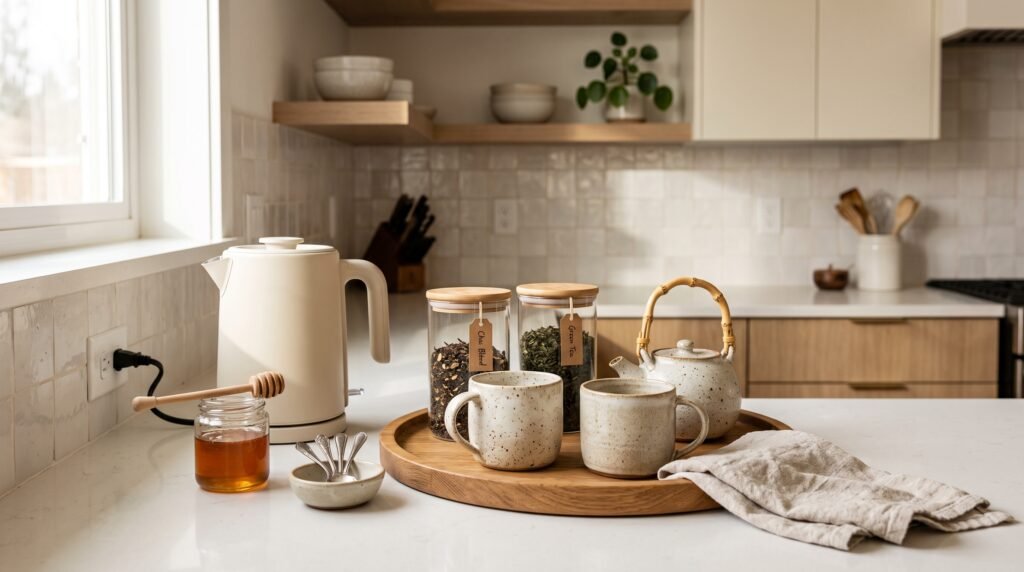
One of the easiest ways to create a tea station is to dedicate a small section of your countertop to tea-making essentials.
You do not need to redesign your kitchen or purchase special furniture. Start with a decorative tray and place your most frequently used items inside it. A kettle, a few favorite mugs, tea canisters, honey, and teaspoons may be all you need.
Using a tray is especially helpful because it visually separates the tea station from the rest of the countertop. Instead of looking like several random objects sitting beside one another, everything becomes part of one intentional arrangement.
Choose a tray that complements the style of your home. A warm wooden tray works beautifully in organic modern, farmhouse, Scandinavian, and neutral interiors. Marble or stone trays can create a more sophisticated appearance, while woven trays introduce natural texture.
Keep everyday tea varieties easily accessible. Frequently used tea bags can be placed inside small ceramic containers or divided wooden boxes.
If you use loose-leaf tea, clear glass jars are both practical and decorative. The different colors and textures of the tea leaves become part of the styling.
Try to avoid overcrowding the countertop. The most attractive tea stations usually include only the essentials, with additional supplies stored inside nearby cabinets.
Styling Tip
Use three different heights when arranging your tea station. For example, place a tall kettle toward the back, medium-sized tea containers in the center, and smaller accessories such as honey jars or teaspoons toward the front.
This simple layering technique makes the arrangement look professionally styled.
Cozy Neutral Countertop Tea Station
2. Turn an Empty Corner Into a Tea Nook
An unused corner can become the perfect home for a dedicated tea nook.
Look around your dining room, kitchen, breakfast area, or even living room. You may discover a small section of wall that currently serves no purpose.
A narrow console table or compact cabinet can instantly transform this space.
Place your kettle and teapot on top while using drawers or cabinets underneath for extra tea, mugs, napkins, and serving accessories.
The wall above the station provides another opportunity for both storage and decoration.
Install one or two floating shelves where you can display attractive mugs, tea tins, small plants, and decorative objects. Keeping the shelves relatively simple will prevent the area from becoming visually cluttered.
A small framed print can also help define the tea corner. Botanical artwork works particularly well because it connects naturally with the herbs and plants used to make tea.
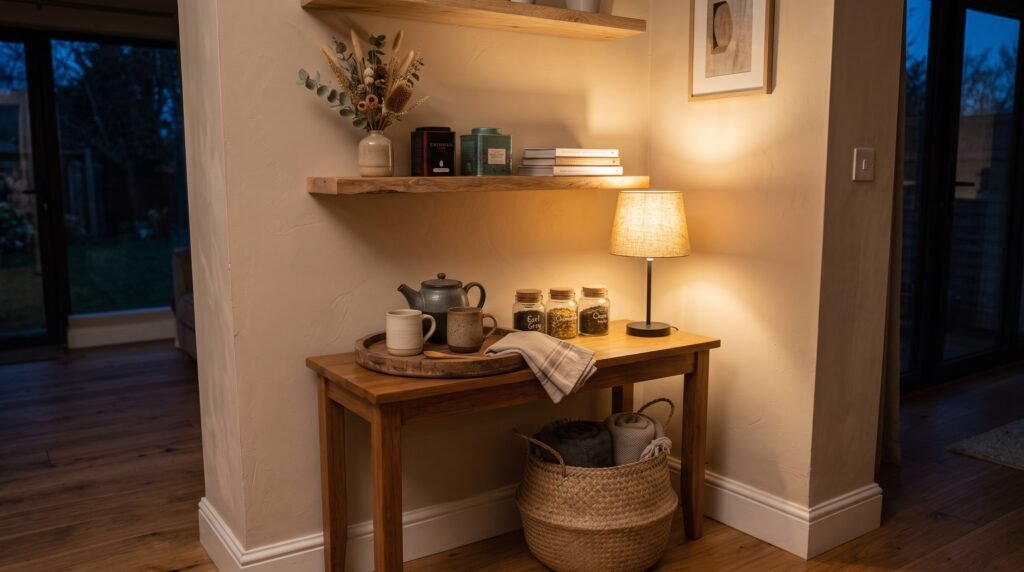
For an especially cozy atmosphere, place a small table lamp on the tea cabinet. Soft lighting makes the station feel warm during early mornings and evenings.
This type of setup works beautifully when you want your tea station to feel like a permanent feature rather than simply another kitchen arrangement.
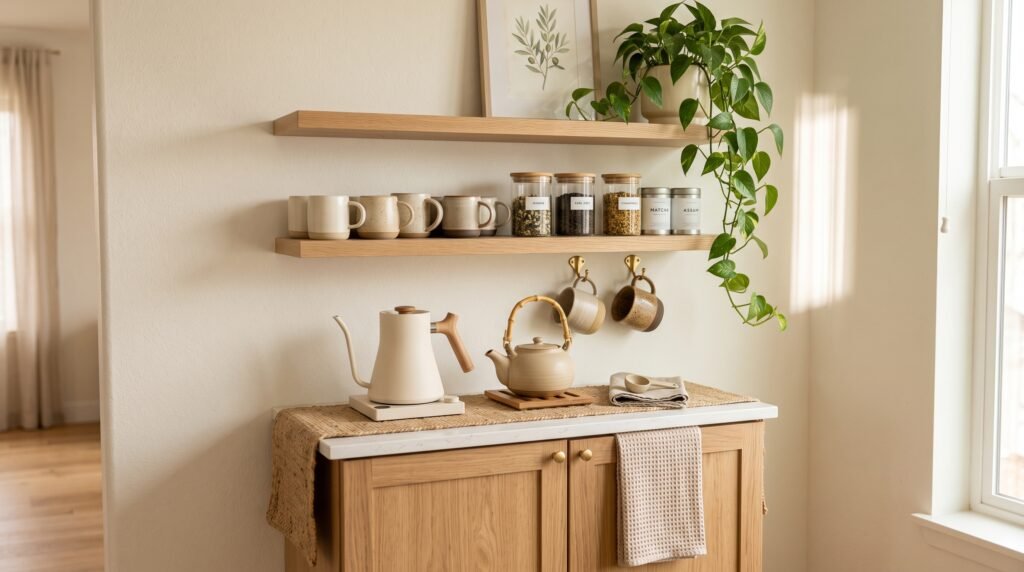
3. Design a Floating Shelf Tea Station
When floor space is limited, look upward.
Floating shelves are one of the best home tea station ideas for apartments and small homes because they provide additional storage without requiring bulky furniture.
Install two or three shelves above a small section of countertop or above a compact cabinet.
The lowest shelf should contain the items you reach for most frequently. Arrange mugs, tea containers, and perhaps a small jar filled with teaspoons.
Higher shelves can be slightly more decorative.
Display an attractive ceramic teapot, a small framed picture, a trailing plant, or a collection of beautiful tea tins.
Wooden floating shelves look particularly inviting because they introduce warmth to the space. Light oak works beautifully with cream walls and white ceramics, while darker walnut shelves can create a richer and more dramatic tea corner.
For a clean and cohesive appearance, avoid filling every inch of the shelves. Leaving some negative space between objects makes the arrangement feel calmer and more intentional.
You can also install small hooks underneath the bottom shelf for hanging mugs. This provides additional storage while adding a charming café-inspired detail.
Floating Shelf Tea Station With Ceramic Mugs
4. Organize Tea in Beautiful Glass Jars
Tea storage does not have to be hidden.
In fact, your tea collection can become one of the most attractive elements of your station.
Loose-leaf teas look particularly beautiful when stored inside matching glass containers. Green tea, chamomile, hibiscus, peppermint, black tea, and dried floral blends all have distinctive colors and textures.
Arrange several jars together on a wooden shelf or tray.
For a polished look, choose containers with matching lids. Bamboo or acacia wood lids are excellent for creating a warm natural aesthetic.
Add simple labels so you can quickly identify each variety.
If you prefer a minimalist style, use small white labels with clean typography. For a more traditional tea-room appearance, handwritten labels can feel charming and personal.
However, remember that many teas maintain their quality better when protected from excessive light. If your tea station receives strong direct sunlight, opaque tea tins or containers stored inside a cabinet may be more practical for long-term storage.
You can still display a few frequently used varieties while keeping the rest protected.
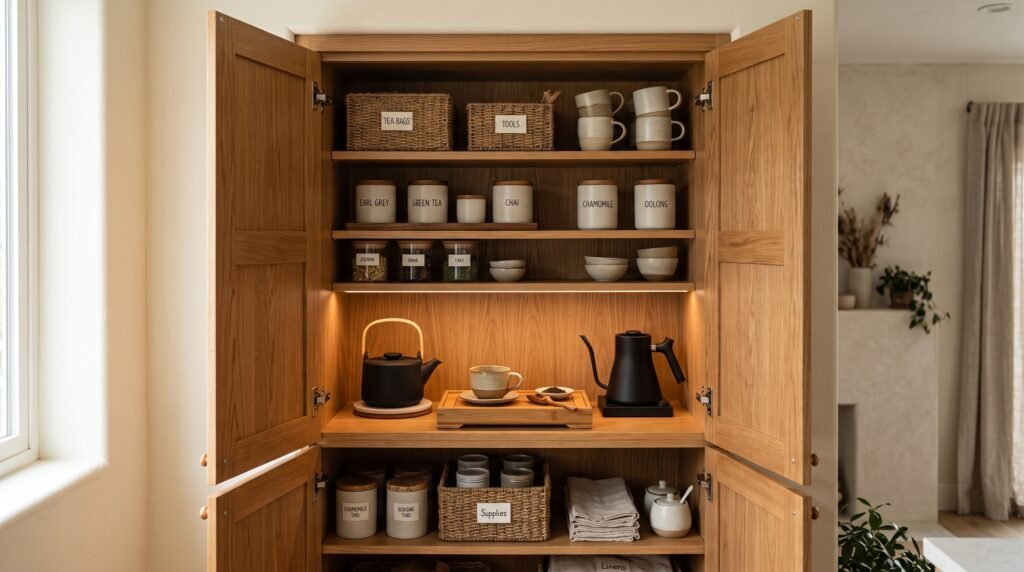
5. Create a Tea Station Inside a Cabinet
Not everyone wants their tea-making supplies permanently displayed.
If you prefer uncluttered countertops, consider creating a hidden tea station inside a cabinet.
Choose a kitchen cabinet located close to an electrical outlet and dedicate one or two shelves entirely to tea supplies.
Use small baskets or organizers to separate different categories.
For example, one container can hold herbal teas, another can contain black and green teas, and another can store sweeteners and accessories.
Mugs can be arranged neatly on the shelf above.
If the cabinet is large enough, your kettle can sit on the countertop directly underneath, allowing the cabinet to function as your tea supply center.
Another option is to transform a freestanding armoire or pantry cabinet into a complete beverage station. The doors can remain closed when the station is not being used, keeping the room looking tidy.
Inside, install shelves for mugs, tea jars, teapots, and serving trays.
Small battery-operated or integrated cabinet lighting can make the interior feel especially elegant.
This idea works particularly well in minimalist homes where maintaining clean visual lines is important.
Hidden Tea Station Inside a Stylish Cabinet
6. Style a Tea Station on a Bar Cart
A bar cart is not only for cocktails.
It can also become a beautiful and flexible tea station.
The biggest advantage of a tea cart is mobility. You can keep it in the kitchen during the week and move it into the living or dining room when entertaining guests.
Use the top level for your prettiest tea-making essentials.
A ceramic teapot, matching cups, a small tea organizer, honey jar, and decorative vase can create an elegant arrangement.
The lower shelf can hold additional supplies such as extra mugs, tea tins, serving plates, napkins, and baskets.
Try grouping smaller objects together instead of spreading them across the entire cart. A decorative tray is useful for keeping tea containers organized.
Adding a small vase filled with eucalyptus, dried flowers, or fresh greenery can soften the practical elements.
If you enjoy afternoon tea, keep a cake stand or serving plate on the lower shelf. When guests arrive, you can easily add biscuits, pastries, sandwiches, or other treats.
Choose the cart itself according to your decorating style.
A black metal cart suits modern interiors, while warm wood works beautifully in organic and Scandinavian spaces. Brass details can create a more glamorous, hotel-inspired tea station.
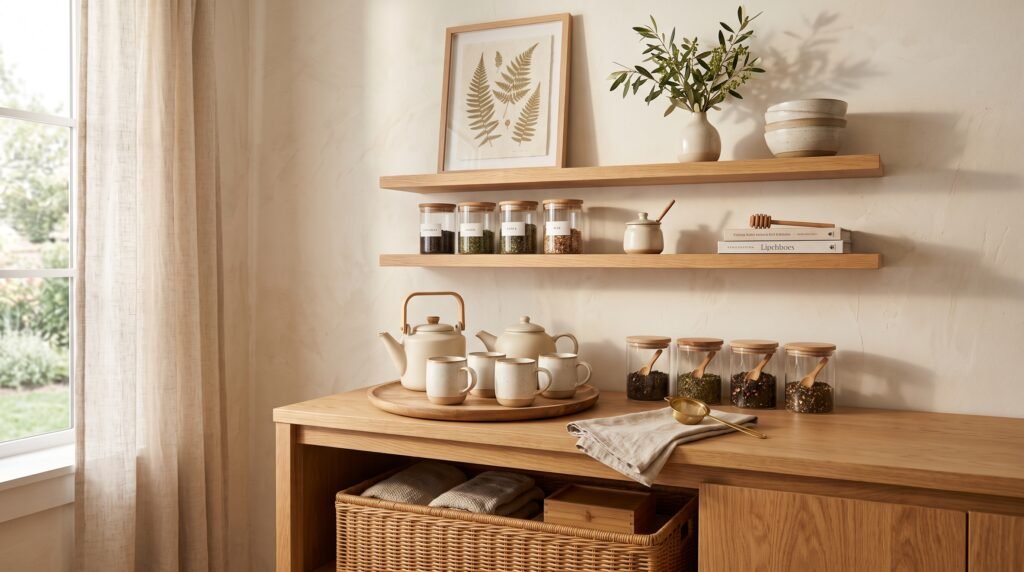
7. Build a Warm Wooden Tea Bar
Natural wood and tea are a perfect combination.
Wood instantly introduces warmth, making a tea station feel cozy rather than purely functional.
Consider using a wooden sideboard, console, or small cabinet as the foundation of your tea bar.
Above it, install matching wood shelves.
Keep the surrounding color palette relatively neutral—cream, warm white, beige, taupe, and muted green work especially well.
Place your kettle on one side of the cabinet and arrange tea supplies on the other.
A large wooden tray can hold ceramic mugs and tea jars, while a smaller bowl can contain tea strainers or individually wrapped tea bags.
Introduce texture with a woven basket underneath the cabinet or on a lower shelf.
A linen tea towel hanging casually from the side can add another soft layer.
Plants also pair beautifully with natural wood. A small potted herb, trailing plant, or simple branch in a ceramic vase can make the tea bar feel fresh and relaxed.
The finished space should feel less like an appliance station and more like a peaceful little ritual corner.
Warm Wooden Home Tea Bar With Natural Styling
8. Create a Minimalist Tea Station
If your home has a clean contemporary aesthetic, your tea station should follow the same approach.
Instead of displaying your entire tea collection, choose only a few carefully selected essentials.
Start with a streamlined electric kettle in a neutral finish.
Add two or three simple ceramic mugs, one tea container, and perhaps a small jar of honey.
Place everything on a stone or wooden tray.
Keep the surrounding countertop almost completely clear.
The simplicity makes each object feel more intentional.
White, cream, black, warm gray, and natural wood are excellent colors for a minimalist tea station.
Storage should be discreet. Keep additional tea bags, mugs, and accessories inside nearby drawers or cabinets.
Drawer organizers are particularly useful for arranging tea bags by flavor while keeping them completely hidden when not in use.
Minimalist does not have to mean cold, however.
A small plant, handmade ceramic mug, or textured linen towel can introduce warmth without adding clutter.
The result is a tea station that feels peaceful, practical, and perfectly integrated into the rest of the room.
9. Design a Vintage-Inspired Tea Station
A vintage-inspired tea station can bring character and charm into your home while making everyday tea time feel a little more special. Instead of relying entirely on modern storage containers and appliances, mix practical pieces with items that have an older, collected appearance.
Start with the furniture.
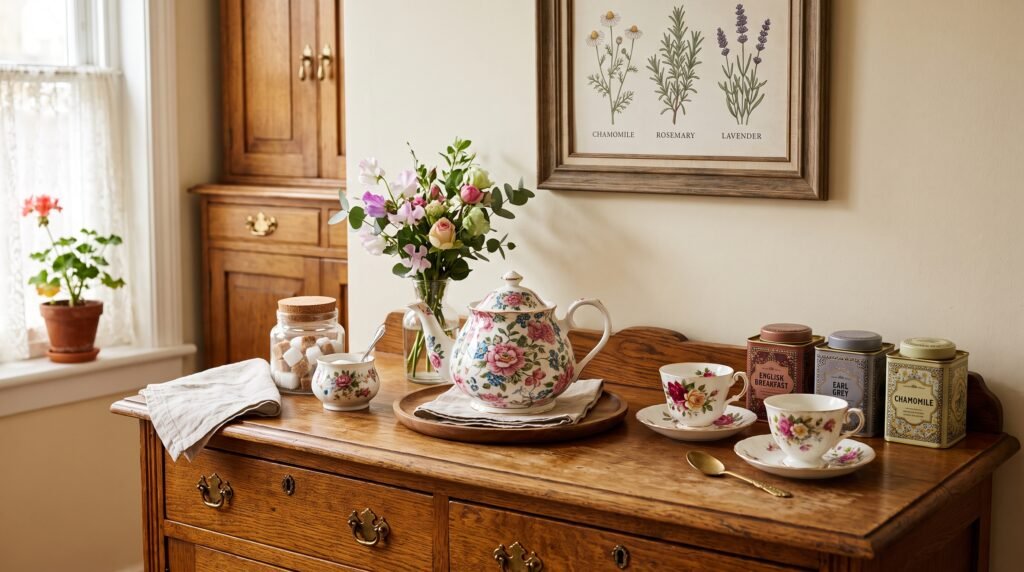
An antique-style sideboard, small wooden dresser, vintage console, or repurposed cabinet can become a beautiful foundation for your tea station. You do not necessarily need a genuine antique. A new piece with warm wood tones, traditional hardware, or slightly distressed detailing can create a similar effect.
Then introduce vintage-inspired tea accessories.
A floral ceramic teapot can become the centerpiece of the arrangement. Pair it with delicate teacups, patterned saucers, decorative tins, and a small sugar bowl.
You can also display several mismatched teacups. Instead of looking uncoordinated, carefully selected cups with complementary colors can make the station feel collected over time.
Glass jars with metal lids are useful for storing loose-leaf tea, sugar cubes, or small biscuits.
For the wall above the station, consider adding botanical artwork, a small vintage mirror, or framed illustrations of herbs and flowers.
If you have open shelves, arrange practical objects alongside decorative pieces. A stack of small plates, an old-fashioned tea tin, and a ceramic vase filled with flowers can create an inviting display.
The key is avoiding excessive decoration.
A vintage tea station should feel charming and layered without becoming crowded. Give each beautiful object enough room to be noticed.
Vintage-Inspired Home Tea Station With Floral Teapot
10. Make a Small-Space Tea Station
You do not need a large kitchen to create a beautiful home tea station.
Even a tiny apartment can accommodate a dedicated tea-making area if you use space carefully.
Start by identifying a narrow section of countertop or an unused corner.
Instead of spreading tea supplies horizontally across the surface, use vertical storage.
A small two-tier organizer can hold tea containers on the upper level and mugs or sweeteners underneath. This keeps everything together while using very little countertop space.
Wall-mounted shelves provide another practical solution.
One narrow floating shelf may be enough to store several mugs and tea containers above your kettle.
You can also use the inside of a cabinet door for lightweight storage. Small organizers can hold individually packaged tea bags or other compact accessories.
Another excellent small-space solution is a narrow rolling cart.
Look for a slim cart that can fit between cabinets or beside a refrigerator. Store extra tea supplies on the lower levels while keeping everyday essentials on top.
When space is limited, choose items that serve multiple purposes.
For example, a beautiful ceramic container can store tea bags while also contributing to the decor. A wooden box with compartments can organize several tea flavors without requiring multiple containers.
Most importantly, keep the collection edited.
Your tea station does not need to display every mug and tea variety you own. Keep your favorites accessible and store backups elsewhere.
A compact tea station often looks more attractive because its small size encourages thoughtful organization.
11. Create an Elegant Luxury Tea Bar
If you want your tea station to become a standout feature, consider creating a more luxurious tea bar.
The difference is often in the materials and presentation rather than the amount of space available.
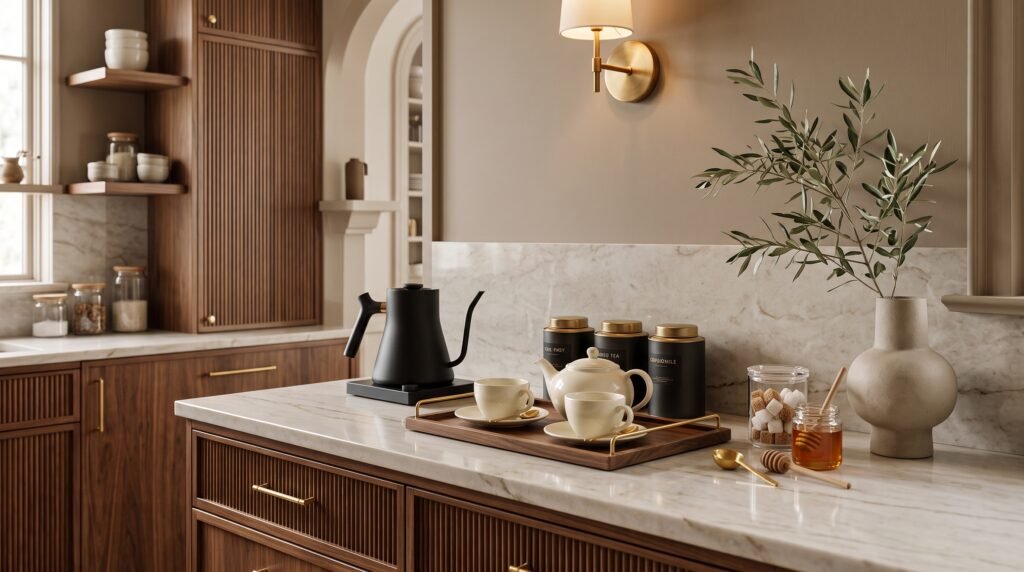
Start with a sophisticated surface such as marble, quartz, stone, or dark wood.
Place your kettle and teapot on a decorative tray with an elevated finish. Marble, brass, mirrored glass, or dark wood can all create a polished appearance.
Choose coordinated accessories instead of a mixture of unrelated pieces.
For example, use matching ceramic tea containers with subtle labels. Keep mugs within the same color palette and select a teapot that complements them.
Glass containers can hold sugar cubes, honey sticks, or small treats.
Lighting also plays an important role.
If your tea station sits beneath cabinets, warm under-cabinet lighting can create a beautiful glow. If it occupies a separate corner, a small decorative lamp or wall sconce can give the area a boutique-hotel atmosphere.
Add one elegant decorative element rather than several small accessories.
A sculptural vase with a simple branch, a beautiful framed print, or a small arrangement of fresh flowers can provide enough visual interest.
For entertaining, keep a serving tray nearby so you can easily carry tea into the living room or dining area.
A luxury tea station should still remain practical. The goal is not to create a display that you are afraid to use. Every beautiful item should contribute to making your daily tea ritual easier and more enjoyable.
Elegant Luxury Tea Bar With Marble and Warm Lighting
12. Add a Tea Organizer Drawer
Sometimes the best tea station storage is completely invisible.
If you have a drawer beneath or beside your kettle, transform it into a dedicated tea organizer.
Drawer organizers with individual compartments are perfect for sorting tea bags.
You can organize them according to type, such as:
- Black tea
- Green tea
- Herbal tea
- Fruit tea
- Chai
- Decaffeinated tea
Keeping different varieties separated makes choosing a tea much easier, especially when you have a large collection.
You can also dedicate a section of the drawer to accessories.
Tea infusers, measuring spoons, honey sticks, small strainers, and reusable tea filters can all remain close to the kettle without cluttering the countertop.
If you prefer loose-leaf tea, shallow airtight containers may work better than individual compartments.
Add simple labels so you can identify each tea quickly.
The biggest advantage of a tea drawer is visual simplicity.
Your countertop can contain only a kettle, teapot, and perhaps a few mugs, while the entire tea collection remains neatly organized underneath.
This is particularly useful for modern and minimalist interiors.
13. Create a Cozy Tea Station With Soft Lighting
Lighting can completely change how a tea station feels.
During the daytime, natural sunlight may provide everything you need. But tea is often enjoyed early in the morning or later in the evening, when softer lighting becomes especially important.
Instead of relying only on bright overhead lights, add a small lamp near your tea station.
A petite table lamp with a fabric shade creates a gentle glow and instantly makes the area feel more inviting.
If counter space is limited, consider a wall-mounted sconce.
Under-shelf lighting can also work beautifully, particularly when your tea station includes floating shelves.
Warm illumination highlighting ceramic mugs, glass jars, and wooden surfaces creates a comfortable café-inspired atmosphere.
You can enhance the effect with natural textures.
Combine soft lighting with wood, woven baskets, linen napkins, ceramic mugs, and warm neutral colors.
A candle can provide additional atmosphere when you are enjoying tea rather than preparing it, but keep open flames safely away from shelves, fabrics, electrical appliances, and other heat-sensitive materials.
The goal is to create a small corner that encourages you to slow down.
Imagine making herbal tea in the evening while the rest of the kitchen lights are dimmed and your tea station is illuminated by one warm lamp. That simple detail can turn an ordinary routine into a relaxing ritual.
Cozy Evening Tea Station With Soft Ambient Lighting
14. Add Natural and Botanical Details
Tea naturally connects with plants, herbs, and flowers, so botanical styling feels especially appropriate for a home tea station.
You do not need to turn the area into an indoor garden.
One or two natural elements are usually enough.
Place a small potted plant beside your tea containers or add fresh greenery to a ceramic vase.
Herbs can be particularly useful.
If your station receives enough natural light, consider growing mint nearby. Fresh mint leaves can be added directly to tea while also bringing color and fragrance into the space.
Other herbs such as lemon balm may also work depending on your growing conditions and preferred tea recipes.
Dried flowers provide another option.
A simple arrangement of dried lavender or other decorative stems can introduce texture without requiring regular maintenance.
Botanical artwork can continue the theme vertically.
Hang a framed herb illustration above the station or lean a small botanical print against the wall behind your tea containers.
Natural materials reinforce the same relaxed aesthetic.
Use wooden trays, bamboo-lid containers, linen towels, woven baskets, and handmade ceramics.
This combination works especially well in organic modern, Scandinavian, cottage, farmhouse, and nature-inspired interiors.
15. Build a Complete Tea and Relaxation Corner
If tea is an important part of your daily routine, consider taking the concept beyond a simple beverage station.
Create an entire tea and relaxation corner.
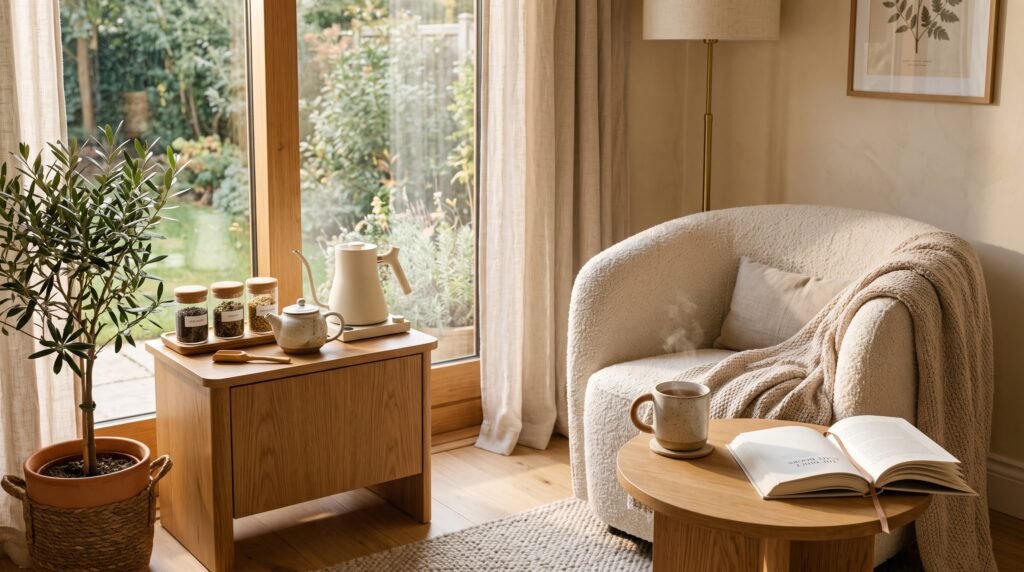
Instead of placing the station in a purely functional area, position it near a comfortable chair or reading nook if your layout allows.
A small console can hold your kettle and tea supplies while a nearby armchair provides somewhere to sit and enjoy your drink.
Add a small side table for your cup.
A comfortable upholstered chair, soft throw blanket, floor lamp, and textured rug can transform the corner into a peaceful retreat.
You could also keep a small collection of books or magazines nearby.
This creates a simple ritual: prepare your favorite tea, choose something to read, and spend a few quiet minutes away from screens and household tasks.
The tea station itself can remain relatively simple.
A wooden console, electric kettle, ceramic teapot, several tea jars, and two favorite mugs may be enough.
Keep additional supplies inside drawers or baskets.
This arrangement works particularly well in a bedroom sitting area, home office, sunroom, conservatory, large living room, or quiet corner near a window.
If possible, position the chair where it receives natural light.
Morning sunlight can make the space feel energizing, while softer afternoon light creates a peaceful place to unwind.
The result is more than an organized beverage station. It becomes a small destination within your home.
Cozy Tea and Reading Corner Near a Window
How to Organize a Home Tea Station
A beautiful tea station should also make preparing tea easier.
Before decorating, think about how you actually make tea every day.
Your most frequently used items should always be easiest to reach.
Keep the kettle close to an electrical outlet and, when practical, relatively close to a water source. Avoid running electrical cords across sinks, stovetops, or busy walkways.
Place everyday tea varieties near the kettle.
Less frequently used teas can be stored on higher shelves, in drawers, or inside cabinets.
Divide your supplies into categories.
Tea itself is the obvious first category, but you may also need dedicated spaces for mugs, teapots, infusers, sweeteners, teaspoons, napkins, and serving accessories.
Containers can prevent small objects from spreading throughout the station.
Use trays for countertop items, baskets for larger supplies, jars for loose ingredients, and drawer dividers for smaller accessories.
Try to keep packaging consistent when possible.
A collection of brightly colored cardboard tea boxes can make a small station feel visually busy. Moving tea bags into a divided organizer or simple containers immediately creates a cleaner appearance.
However, always keep any preparation instructions, ingredients, allergen information, or expiration details you may need from the original packaging.
How to Make a Tea Station Look Stylish
Function should come first, but a few styling principles can make your tea station look considerably more polished.
Choose a Simple Color Palette
Start with two or three main colors.
For a warm organic tea station, you might combine cream, warm wood, and muted green.
For a modern setup, try white, black, and light oak.
A traditional tea corner could use warm wood, soft floral patterns, and antique brass details.
Repeating the same colors throughout the station creates visual harmony.
Mix Different Textures
Even a neutral tea station can look interesting when you combine textures.
Smooth ceramic mugs can sit beside glass tea jars, a wooden tray, woven basket, and linen towel.
The variation prevents the space from appearing flat.
Use Decorative Trays
Trays are one of the simplest styling tools for beverage stations.
They visually group several objects together and make the arrangement look intentional.
Instead of placing a honey jar, sugar bowl, tea container, and spoon directly on the counter, place them together on one attractive tray.
Include Something Living
A small plant, fresh herbs, or flowers can bring freshness to the arrangement.
If caring for plants is not practical, a simple vase filled with long-lasting greenery can create a similar visual effect.
Leave Some Empty Space
Do not feel obligated to fill every shelf.
Empty space is part of good styling.
When objects have room around them, individual pieces become easier to appreciate and the overall station feels calmer.
What Should You Put in a Home Tea Station?
Your exact setup depends on how you enjoy tea, but most stations benefit from a few basic essentials.
Start with a reliable kettle.
Then add your favorite teas, several everyday mugs, teaspoons, and any accessories needed for your preferred brewing method.
Loose-leaf tea drinkers may want an infuser, tea strainer, measuring spoon, and airtight containers.
You may also want sweeteners such as honey or sugar.
If you frequently serve guests, consider keeping a larger teapot, extra cups, napkins, serving trays, and small plates nearby.
Avoid buying accessories simply to fill the station.
The best tea corners reflect the way you genuinely use the space.
Home Tea Station Ideas for Small Homes
Small homes require a slightly different approach.
Instead of trying to recreate a large built-in beverage bar, focus on creating one compact zone.
A countertop tray may be all you need.
If the counter is already crowded, use a narrow wall shelf above it.
A small rolling cart is another excellent choice because it provides several levels of storage within a small footprint.
You can also create a tea station inside an existing cabinet.
The important thing is keeping all tea-related supplies together.
Even if your station occupies only a small section of countertop, having a dedicated location makes the space feel organized and intentional.
Final Thoughts
Creating a beautiful home tea station is not about having the largest tea collection or the most expensive accessories.
It is about designing a small space that makes an everyday ritual easier and more enjoyable.
Your ideal setup might be nothing more than a kettle and several tea jars arranged on a wooden tray. Or you may prefer a complete tea bar with floating shelves, coordinated ceramics, storage drawers, and decorative lighting.
Start with the space you already have.
Look for an unused section of countertop, an empty corner, a small cabinet, or a bar cart that could be repurposed.
Then gather the items you actually use when making tea.
Once the practical essentials are in place, add a few decorative details that make the station feel connected to the rest of your home. Natural wood, ceramic mugs, glass jars, plants, linen, and warm lighting can create an especially inviting atmosphere.
Most importantly, keep the station functional.
Everything should be easy to reach, easy to organize, and easy to put away.
Whether you are making a quick cup before starting your day or settling into a chair with herbal tea and a book in the evening, a thoughtfully designed tea station can turn that simple routine into one of the coziest moments at home.