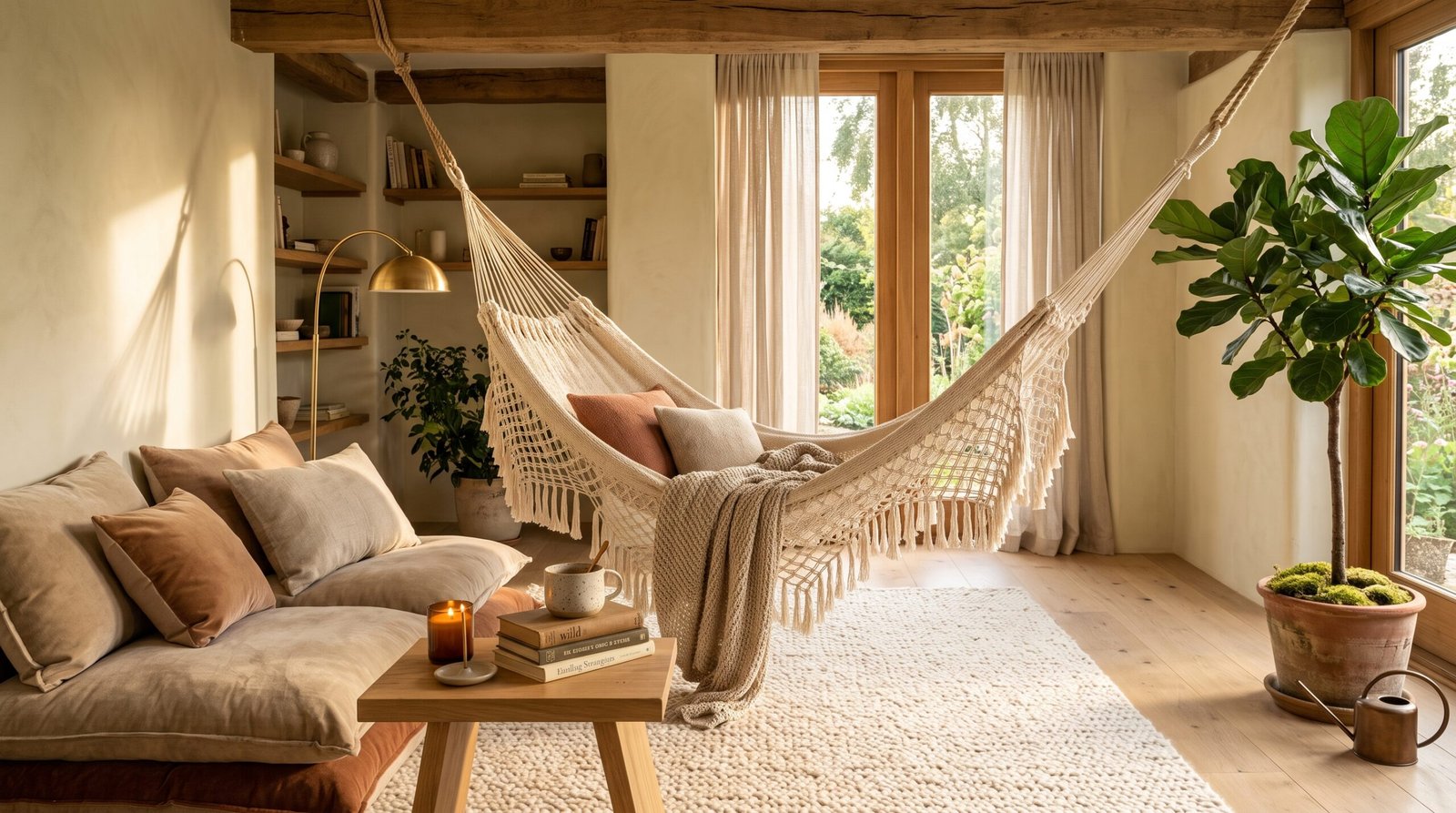
21 Indoor Hammock & Hanging Chair Ideas for a Cozy, Stylish Home
Indoor hammocks and hanging chairs are no longer reserved for bohemian bedrooms or vacation-inspired homes. They have become a stylish way to create comfortable seating, fill an awkward corner, and introduce an unexpected design feature into an interior.
From sculptural rattan hanging chairs to soft fabric hammocks and minimalist suspended seats, there are plenty of ways to bring this relaxed look indoors. A hanging chair can become a peaceful reading spot in a bedroom, while an indoor hammock can transform an unused corner into a cozy retreat. Even smaller homes can embrace the idea with compact designs that add personality without taking up much floor space.
The key is making the feature feel intentional. Materials, placement, surrounding furniture, lighting, and color all determine whether an indoor hammock looks beautifully integrated or simply added as an afterthought.
1. Create a Cozy Living Room Hanging Chair Corner
A quiet corner of the living room is one of the easiest places to introduce a hanging chair.
Choose a woven or upholstered chair that complements your existing furniture rather than competing with it. In a neutral living room, a natural rattan chair can introduce warmth and texture without adding too much visual weight.
Place a small side table nearby for books or drinks and add a textured rug beneath the chair to visually define the area.
Neutral living room corner with a stylish hanging chair
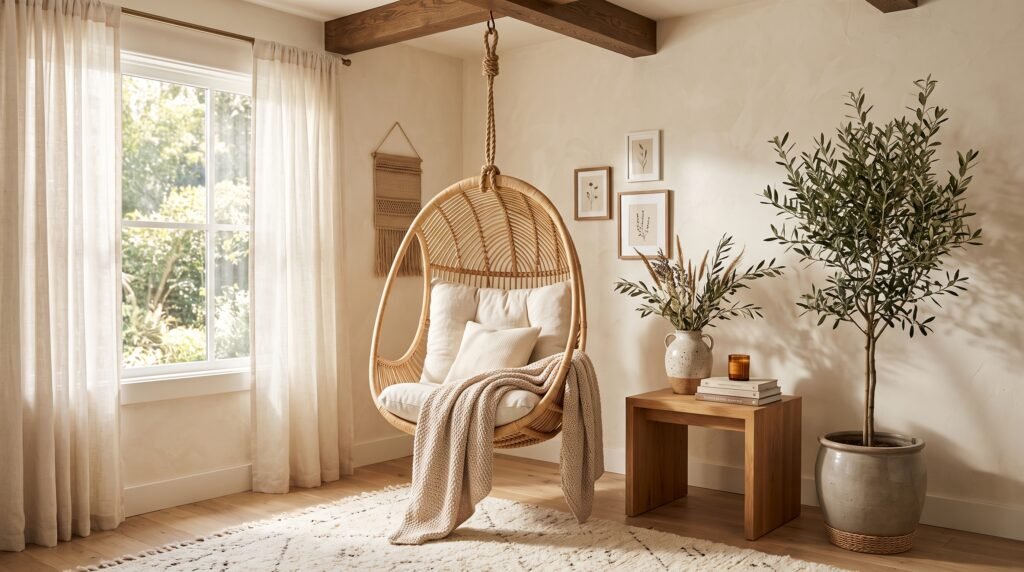
The surrounding space should remain relatively simple. A tall indoor plant, linen curtains, and a soft throw may be all you need to make the corner feel complete.
2. Design a Bedroom Hanging Chair Retreat
A hanging chair can turn an empty bedroom corner into a private relaxation zone.
Instead of filling every available wall with storage or furniture, leave one corner dedicated to comfort. A softly cushioned hanging chair works particularly well beside a bedroom window where natural light makes the space inviting during the day.
Add a small pillow and throw that coordinate with the bedding.
The result should feel connected to the rest of the bedroom rather than like an entirely separate design theme.
3. Hang a Hammock Beside a Large Window
Few locations suit an indoor hammock better than a bright window.
Natural sunlight immediately enhances the relaxed atmosphere associated with hammocks. If you have large windows overlooking a garden, balcony, or attractive view, positioning the hammock nearby can create one of the most peaceful places in the home.
Keep window treatments light and airy.
Sheer linen curtains allow sunlight to filter into the room while maintaining softness and privacy.
Indoor hammock positioned beside a large sunlit window
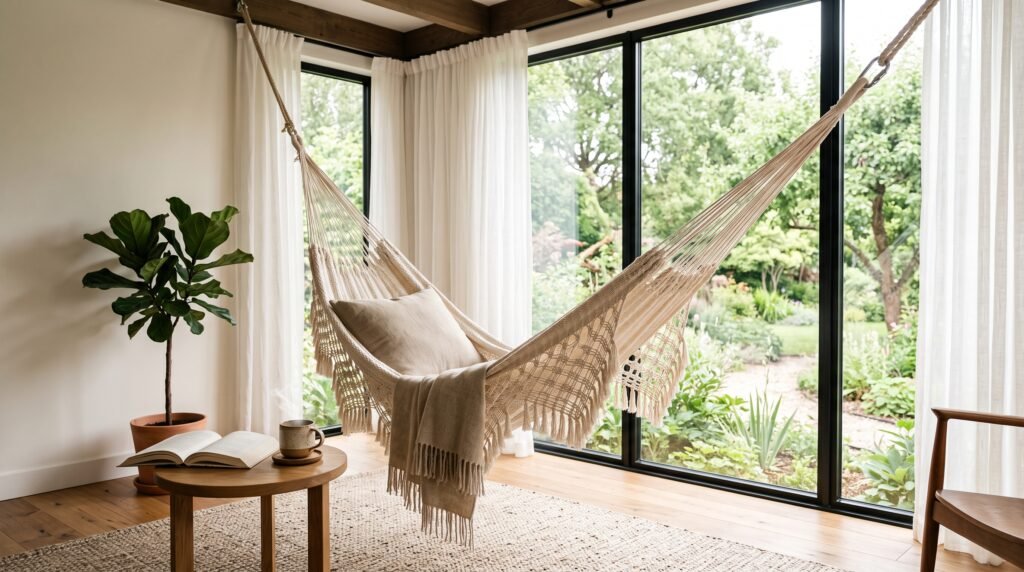
A neutral cotton hammock is particularly effective because it keeps attention on the view rather than overwhelming the room.
4. Try a Sculptural Rattan Hanging Chair
Rattan hanging chairs work beautifully in organic modern, coastal, Scandinavian, and bohemian interiors.
Their woven construction introduces texture while their curved shape adds softness to rooms dominated by straight architectural lines.
For a more sophisticated interpretation, choose a streamlined rattan design rather than an overly decorative chair. Pair it with warm oak furniture, cream upholstery, and natural textiles.
The contrast between woven rattan and smooth fabrics makes the room feel layered without becoming cluttered.
5. Create an Indoor Hammock Reading Nook
A hammock can make an unexpectedly comfortable reading nook.
Choose a quiet section of the home away from heavy traffic. A corner near a bookshelf is ideal because books remain easily accessible while the hammock becomes the natural place to settle down and read.
Add a floor lamp or wall-mounted reading light nearby.
A small rug beneath the hammock can also help visually anchor the area.
Keep accessories minimal so the hammock remains the main feature.
6. Use a Hanging Chair in a Small Bedroom
Small bedrooms often benefit from furniture that doesn’t visually crowd the floor.
A compact hanging chair can sometimes replace a bulky accent chair, particularly when you want occasional seating rather than a large lounge chair.
Choose a light-colored design with an open frame.
Compact hanging chair styled inside a small neutral bedroom
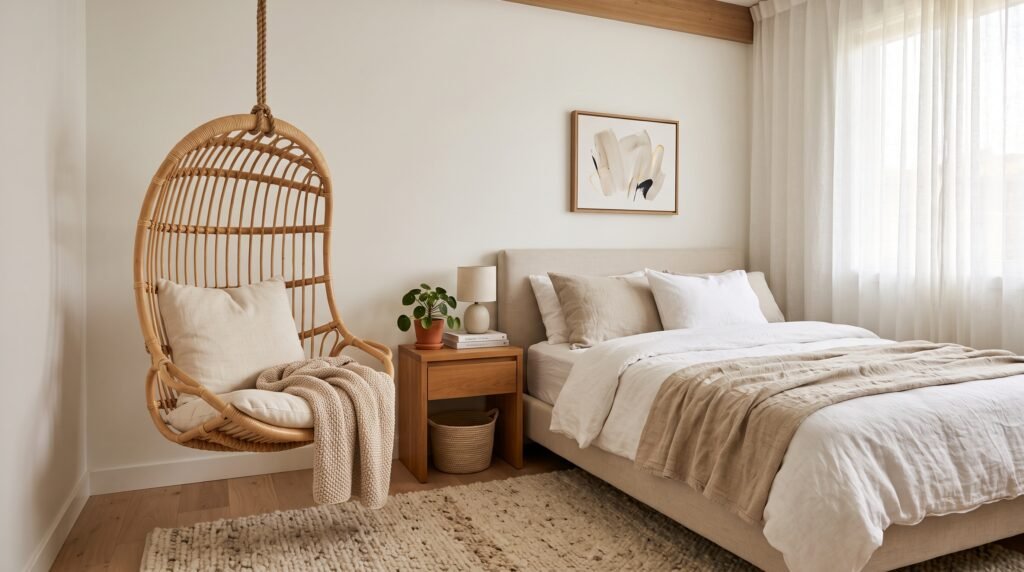
Open woven chairs allow light to pass through them, helping the room maintain an airy appearance.
Keep nearby décor restrained. One small side table or wall-mounted shelf can provide functionality without consuming valuable floor space.
7. Add a Boho-Style Macramé Hanging Chair
Macramé hanging chairs are perfect when you want a softer, handcrafted appearance.
The knotted textile adds visual detail while still maintaining a relaxed atmosphere. These chairs work especially well with neutral walls, natural wood furniture, woven baskets, textured rugs, and indoor greenery.
Avoid adding too many competing bohemian accessories.
Instead, allow the macramé texture to become the focal element and surround it with quieter materials.
A cream or warm ivory chair can look particularly beautiful against beige, taupe, or soft white walls.
8. Style a Hanging Chair with Indoor Plants
Plants and hanging chairs naturally complement each other.
Both bring a relaxed, nature-inspired feeling into a room. Positioning greenery around the chair can make the seating area feel almost like an indoor garden retreat.
Consider one tall floor plant combined with a smaller plant on a side table.
Trailing plants placed on nearby shelving can add another layer without taking up additional floor space.
Hanging chair surrounded by lush indoor plants
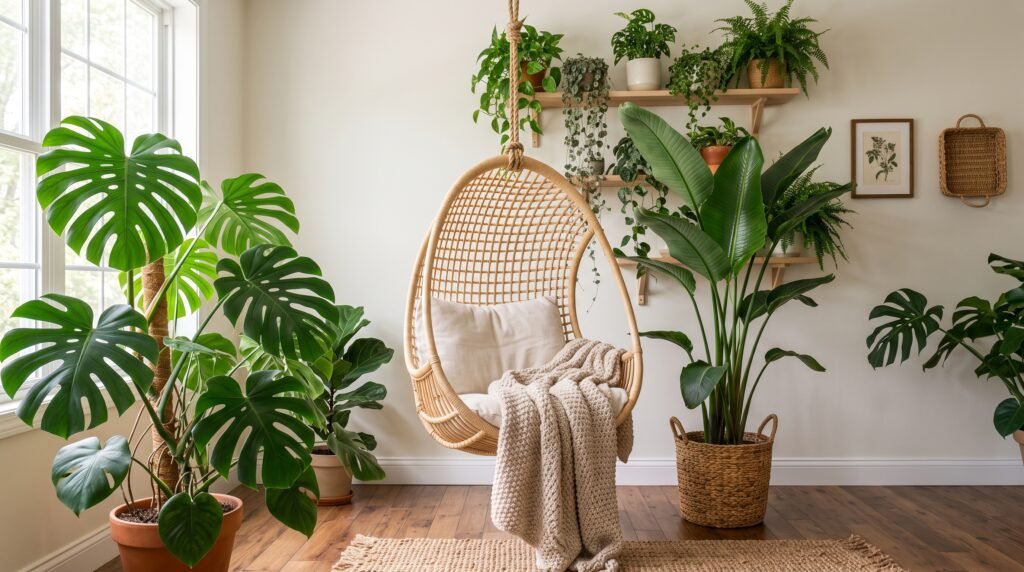
Keep enough empty space around the chair so the arrangement still feels comfortable and practical.
9. Make a Minimalist Hanging Chair Statement
A hanging chair doesn’t automatically need to create a bohemian atmosphere.
In contemporary interiors, choose a simple chair with clean curves and limited detailing. Black, cream, beige, or natural wood tones can make the design feel architectural rather than decorative.
Place the chair against a simple wall and avoid surrounding it with excessive accessories.
One sculptural floor lamp and a subtle rug can be enough.
This approach makes the chair feel like a carefully selected piece of furniture rather than a novelty.
10. Create a Cozy Attic Hammock Space
Attics often contain awkward corners that are difficult to furnish conventionally.
An indoor hammock can take advantage of these unusual layouts while creating a comfortable retreat.
Sloped ceilings, exposed beams, and small windows can actually enhance the cozy atmosphere.
Add floor cushions, warm lighting, and a small rug to soften the space.
If the attic has visible wood beams, the combination of natural architecture and textile seating can feel especially inviting.
11. Bring a Hanging Chair into a Home Office
A home office doesn’t need to contain only a desk and traditional office chair.
If space allows, add a hanging chair to create an alternative place for reading, brainstorming, or taking short breaks.
Position it away from the main work zone so the room has two clearly defined functions.
Stylish home office with a modern hanging chair
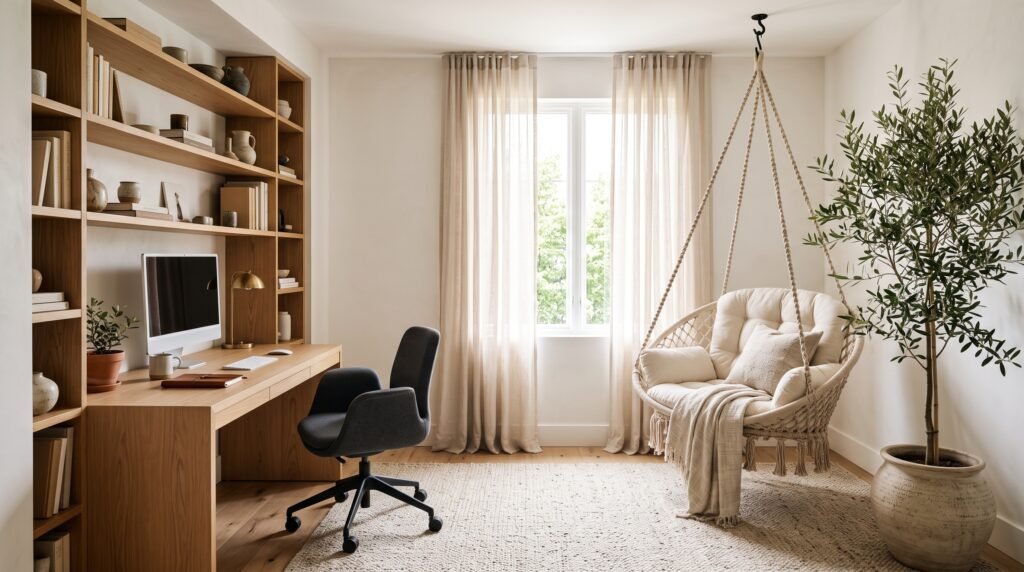
A neutral upholstered or woven design works best for professional-looking spaces.
Add a small side table for notebooks and keep the styling simple.
12. Create a Window Nook with a Hanging Chair
An underused window corner can become one of the most attractive areas of the home with a hanging chair.
Choose a chair that allows you to enjoy the natural light without blocking too much of the window.
A woven egg-shaped chair is particularly effective because its curved frame creates a sense of enclosure while still feeling open.
Add a cushion in a soft neutral shade and place a small textured rug underneath.
The finished nook can become a peaceful place for coffee, reading, or simply enjoying the view.
13. Use a Fabric Hammock for a Softer Look
While woven hanging chairs create structure, fabric hammocks introduce softness.
Cotton and linen-style hammocks work beautifully in relaxed interiors where comfort is the priority.
Choose solid colors instead of busy patterns if you want a more sophisticated appearance.
Cream, oatmeal, beige, muted sage, and warm gray are versatile choices.
Soft cream fabric hammock in an elegant neutral interior
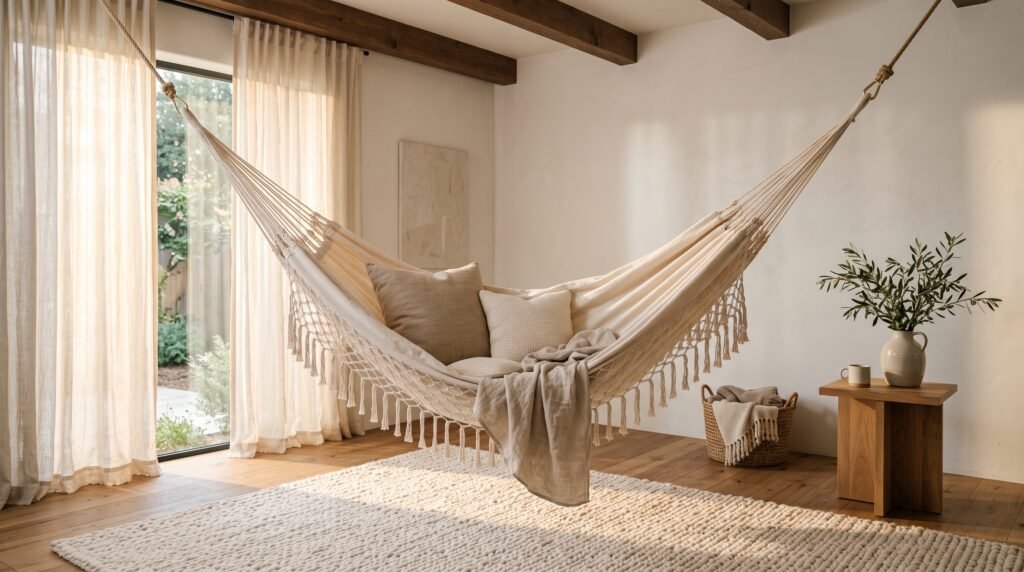
Pair the hammock with natural wood and understated décor for a calm, cohesive result.
14. Add a Hanging Chair to a Sunroom
Sunrooms are almost made for hanging chairs.
Large windows, natural light, and a connection to the outdoors make them ideal places for relaxed suspended seating.
A rattan chair surrounded by greenery can reinforce the indoor-outdoor atmosphere.
Use light fabrics and natural materials throughout the space.
Woven rugs, linen cushions, ceramic planters, and warm wood tables all complement the look.
Rather than filling the room with furniture, leave enough breathing room around the chair to maintain the open feeling that makes sunrooms appealing.
15. Create a Double Hanging Chair Setup
If you have a large room, consider using two hanging chairs instead of one.
A matching pair can create a balanced conversation area while making the design feel more intentional.
Position the chairs side by side or angle them slightly toward one another.
Place a small round table between them to create a functional seating arrangement.
This setup can work particularly well in spacious living rooms, sunrooms, enclosed patios, or large bedroom sitting areas.
Use matching chairs for symmetry, but vary the cushions slightly for a more relaxed appearance.
16. Design a Hanging Chair Corner with Warm Lighting
Lighting can completely change the mood of a hanging chair area.
During the day, natural light may provide everything you need. At night, however, warm ambient lighting can transform the same corner into an intimate retreat.
Use a floor lamp, wall sconce, or nearby pendant rather than harsh overhead lighting.
Cozy hanging chair corner illuminated with warm evening lighting
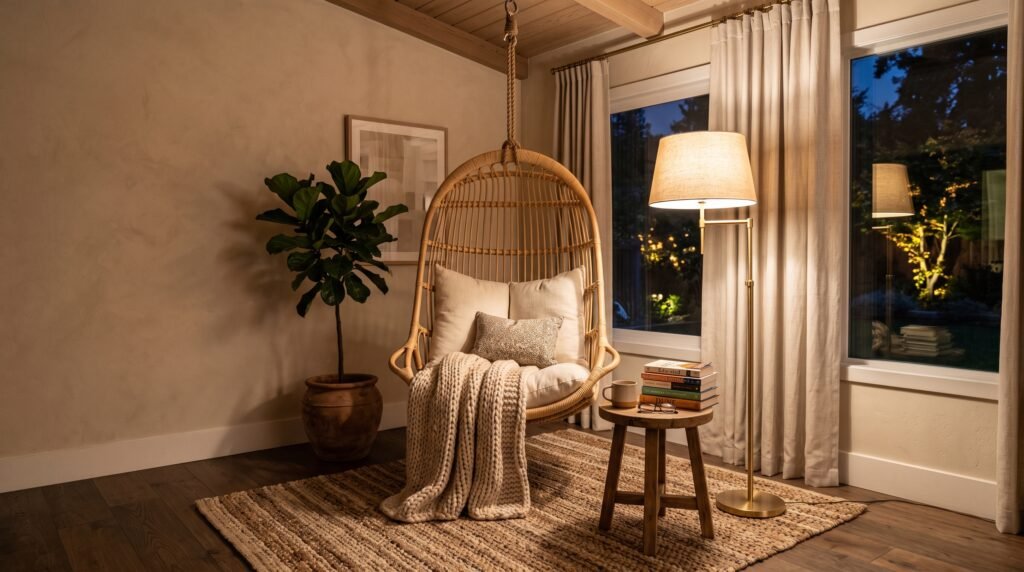
Soft light highlights woven textures beautifully and creates gentle shadows that add depth.
If you plan to use the chair for reading, make sure the lighting is functional as well as atmospheric.
17. Pair a Hanging Chair with a Statement Rug
A rug can help visually anchor furniture that doesn’t actually touch the floor.
Place a textured rug underneath your hanging chair to establish a clear seating zone.
Round rugs are particularly effective because they echo the curved shape of many hanging chairs.
For modern interiors, choose a simple wool or textured neutral rug. For relaxed bohemian spaces, a subtly patterned woven rug can introduce additional character.
Make sure the rug is large enough to feel intentional rather than looking like a small mat placed beneath the chair.
18. Create a Luxury Hanging Chair Moment
Hanging chairs can also work in sophisticated interiors.
The secret is choosing elevated materials and keeping the surrounding décor refined.
Consider an upholstered hanging chair with a sculptural frame rather than traditional macramé.
Pair it with high-quality curtains, a plush rug, elegant side table, and subtle decorative objects.
Luxurious modern interior featuring an elegant hanging chair
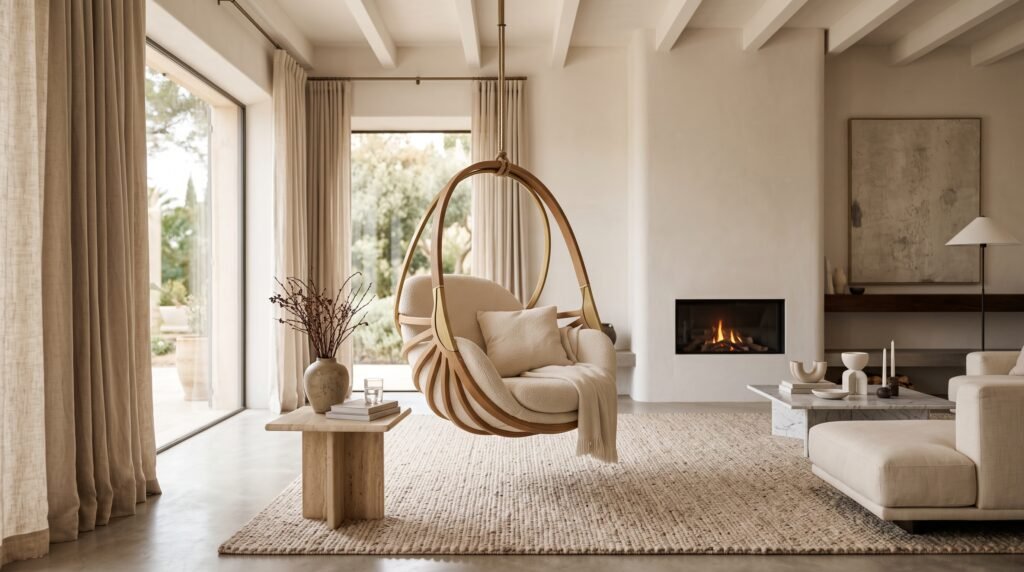
A monochromatic color palette can make the entire setup feel particularly polished.
Instead of relying on lots of decoration, focus on texture and proportion.
19. Style an Indoor Hammock with Earthy Colors
Earth-inspired colors reinforce the natural character of indoor hammocks.
Warm beige, terracotta, muted olive, soft brown, clay, and creamy white can create an inviting palette.
You don’t need to use all of these colors at once.
Start with a neutral hammock and introduce earthy tones through pillows, rugs, pottery, artwork, and plants.
Natural wood furniture provides another warm layer.
The resulting room can feel comfortable and grounded without becoming overly rustic.
20. Turn an Empty Corner into a Relaxation Zone
Many homes contain corners that are too small for substantial furniture but too large to leave completely empty.
A hanging chair can provide the perfect solution.
Instead of trying to create an elaborate arrangement, treat the corner as a miniature relaxation zone.
Add the chair, one small table, a lamp, and perhaps a plant.
Previously empty corner transformed with a hanging chair
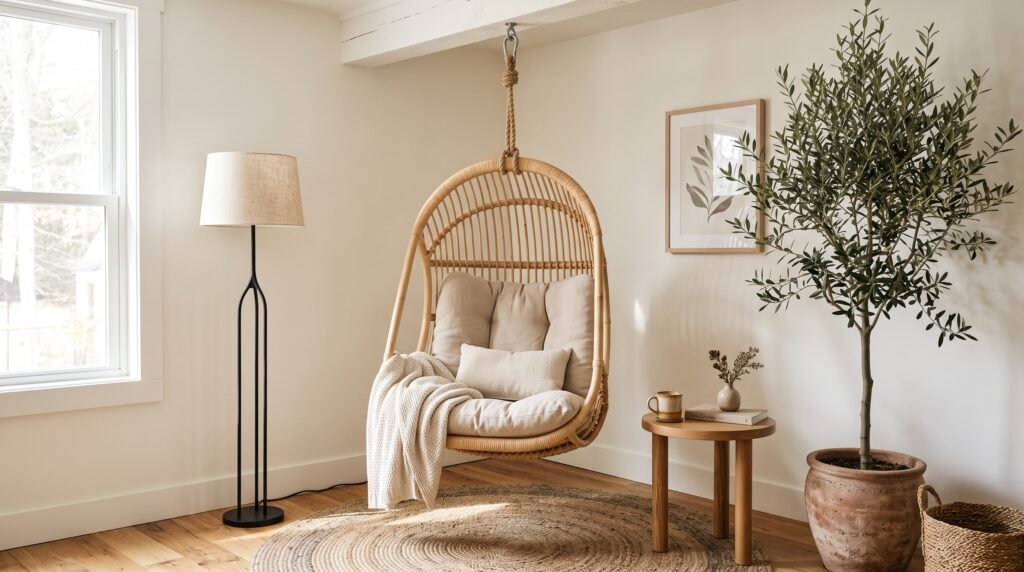
The simplicity is part of the appeal.
Because the chair is suspended, more floor remains visible, which can make the area feel larger than it would with a conventional armchair.
21. Create the Ultimate Indoor Hammock Retreat
For the final idea, combine several elements into one dedicated relaxation space.
Start with a comfortable neutral hammock positioned where the room receives plenty of natural light. Add a large textured rug underneath and layer in a few oversized floor cushions.
Place a small wooden side table nearby for books, candles, or coffee.
Bring in greenery with a tall plant or small indoor tree.
Finish the space with linen curtains and warm ambient lighting.
Ultimate indoor hammock retreat with plants, rug and warm natural light
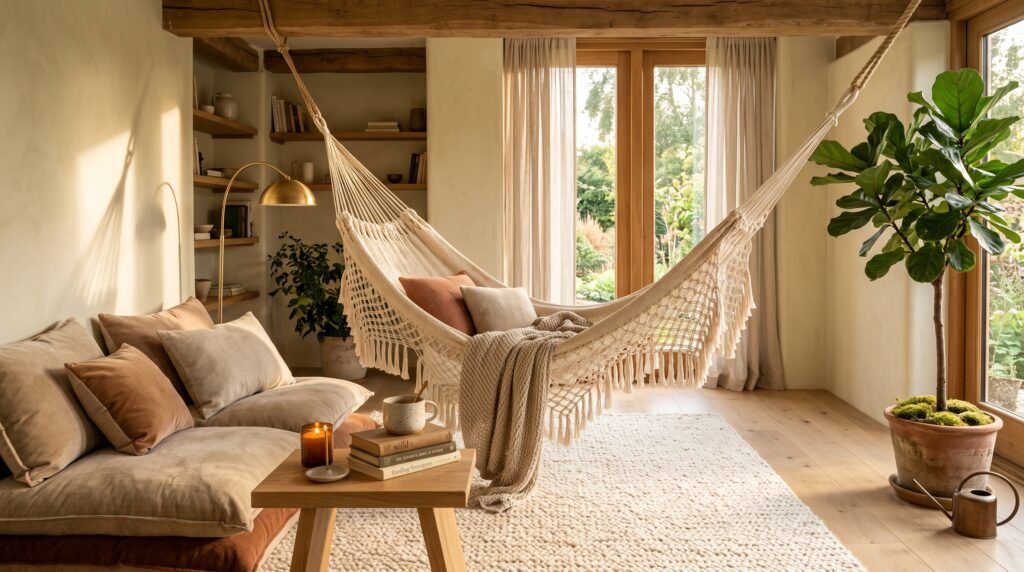
The goal isn’t to fill every available area with décor. Instead, use a limited number of tactile materials to create a space that feels calm and inviting.
A setup like this can become a favorite place for reading, relaxing, listening to music, or simply spending a quiet afternoon at home.
How to Choose the Right Indoor Hanging Chair
Before choosing a hanging chair, think about how you actually plan to use it.
For occasional decorative seating, a sculptural woven chair may be enough. If you expect to spend long periods reading or relaxing, prioritize a deeper seat with supportive cushions.
Scale is equally important.
Large egg chairs can look beautiful in spacious rooms but may overwhelm small bedrooms. Compact open-frame chairs tend to work better where floor and visual space are limited.
Material also influences the overall style.
Rattan creates a natural, organic look. Macramé feels softer and more bohemian. Upholstered designs tend to suit contemporary or luxurious interiors, while simple cotton hammocks create a relaxed vacation-inspired atmosphere.
Color should connect the chair to the rest of the room. Neutral shades are particularly versatile because pillows and throws can easily be changed when you want a different look.
Where Should You Put an Indoor Hammock?
Location can determine whether an indoor hammock becomes a favorite feature or an obstacle.
Look for areas with enough surrounding clearance for comfortable movement. Corners, window areas, bedrooms, sunrooms, attic retreats, and spacious living rooms are common possibilities.
Avoid positioning a hammock directly in a busy walkway.
You should be able to walk around the surrounding area comfortably without constantly navigating around the suspended seating.
Natural light is another advantage.
Hammocks placed near windows often feel more inviting because sunlight reinforces their relaxed character.
However, you may want sheer curtains or blinds if the area receives intense direct sunlight for much of the day.
How to Make a Hanging Chair Look Expensive
A sophisticated hanging chair setup usually depends more on styling than price.
Start with restraint.
Instead of surrounding the chair with many small accessories, choose a few larger, higher-impact pieces. A substantial rug, sculptural lamp, beautiful plant, and quality cushion can create a much stronger impression than numerous decorative objects.
Use a cohesive color palette.
Cream, beige, warm white, walnut, oak, muted green, and soft brown work particularly well with natural hanging chairs.
Texture can then provide variety.
Combine smooth walls with woven seating, soft linen, chunky textiles, ceramics, and natural wood.
Finally, give the chair space.
One of the easiest ways to make an interesting furniture piece look more luxurious is to avoid crowding it.
Safety Matters with Indoor Hanging Chairs and Hammocks
While styling is important, safe installation should always come first.
A hanging chair or hammock creates dynamic loads as a person sits, moves, or swings. It should never be attached to decorative ceiling materials alone.
The mounting point, structural support, hardware, and installation method need to be appropriate for the particular chair, hammock, building structure, and expected load.
Always follow the manufacturer’s installation instructions and weight limits.
If you’re uncertain whether your ceiling, beam, joist, or other structural element can safely support suspended seating, consult a qualified professional before installation.
Freestanding hanging-chair frames are another option for homes where permanent ceiling mounting isn’t appropriate. They also make it easier to reposition the chair later.
Final Thoughts
Indoor hammock and hanging chair ideas offer a creative alternative to conventional accent seating.
They can transform overlooked corners, brighten bedrooms, add personality to living rooms, and create comfortable reading areas without making a home feel overly furnished.
The most successful designs don’t rely on the chair alone. They consider everything around it: natural light, rugs, plants, cushions, curtains, side tables, and the amount of open space surrounding the seating.
For a relaxed organic look, combine woven rattan or cotton with warm wood, linen, greenery, and creamy neutrals. For something more contemporary, choose a streamlined hanging chair with sculptural lines and minimal accessories.
Whether you have a spacious sunroom or one unused bedroom corner, the goal is the same: create a place that makes you want to slow down and stay for a while.
With thoughtful placement and styling, an indoor hammock or hanging chair can become more than an unusual piece of furniture. It can become one of the most memorable—and comfortable—features in your home.