Small Living Room Ideas: 27 Smart Ways to Maximize Style and Space
Small living rooms often get a bad reputation, but limited square footage doesn’t have to limit your creativity. With thoughtful planning, the right furniture, and smart decorating techniques, even the smallest living room can feel open, welcoming, and beautifully designed.
Whether you live in a compact apartment, condo, townhouse, or cozy home, making every inch count is the key to creating a comfortable and functional living space.
In this guide, you’ll discover 27 practical and stylish small living room ideas that help maximize space, improve functionality, and create a home you’ll love spending time in.
Why Small Living Rooms Have Big Design Potential
A smaller living room has several advantages over a larger one.
It requires fewer furnishings, is easier to keep organized, costs less to decorate, and naturally creates a cozy atmosphere perfect for relaxing or entertaining guests.
The challenge isn’t the size—it’s choosing furniture, colors, layouts, and décor that make the room feel larger rather than cramped.
By combining smart design principles with intentional decorating, your small living room can feel just as luxurious as a much larger space.
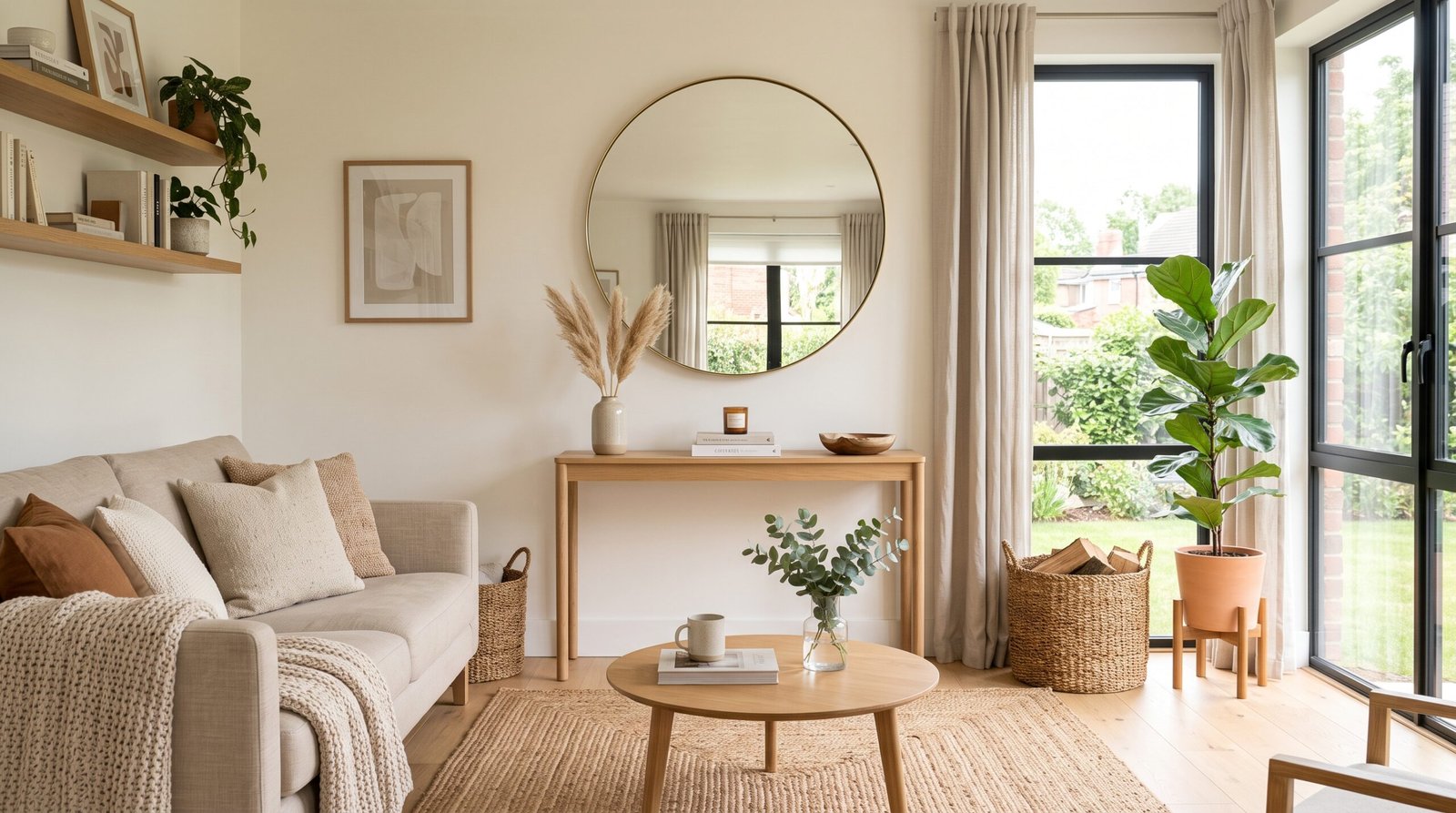
1. Choose a Light Neutral Color Palette
A light color palette is one of the easiest ways to visually expand a room.
Soft whites, warm beiges, creamy ivories, greige, and light taupe reflect natural light throughout the space, making walls appear farther apart.
Instead of using several contrasting colors, keep your palette cohesive.
Great choices include:
- Warm White
- Cream
- Sand Beige
- Soft Gray
- Greige
- Pale Taupe
Layer different shades within the same family to add depth without creating visual clutter.
2. Invest in Multi-Functional Furniture
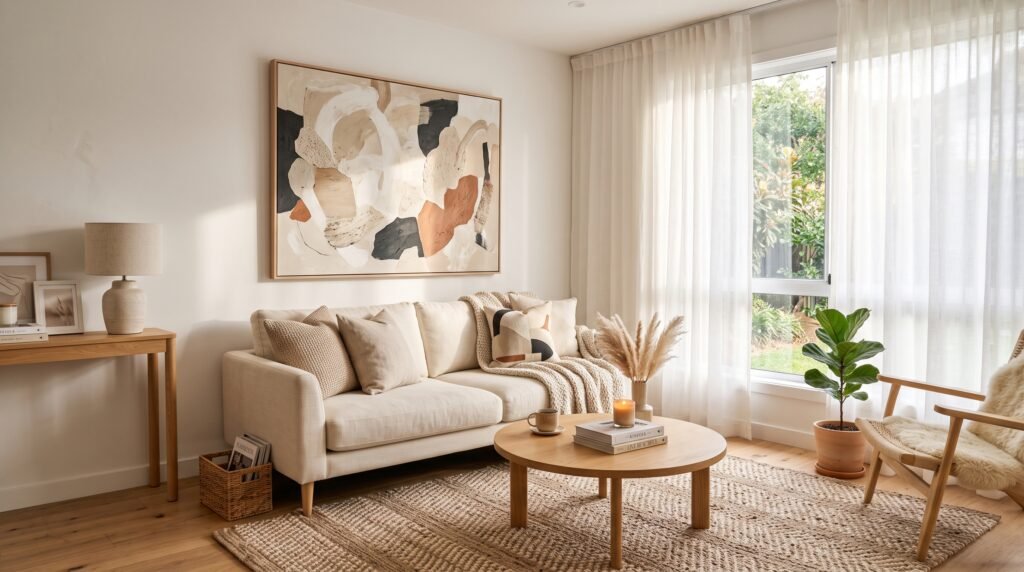
Every piece of furniture should serve more than one purpose whenever possible.
Excellent options include:
- Storage ottomans
- Nesting coffee tables
- Lift-top coffee tables
- Sofa beds
- Benches with hidden storage
- Console tables with drawers
These versatile pieces reduce clutter while helping maximize every square foot.
Instead of filling your room with extra cabinets, let your furniture provide built-in storage.
3. Hang Large Mirrors
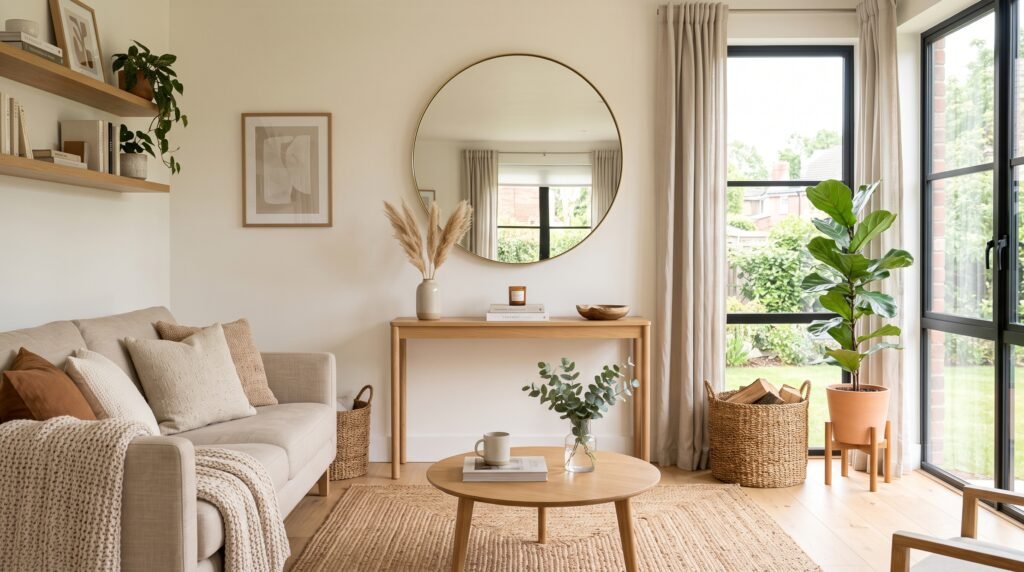
Mirrors instantly make small spaces feel brighter and larger.
A large mirror reflects both natural and artificial light while visually doubling the room.
Popular placements include:
- Above the sofa
- Opposite a window
- Behind a console table
- Leaning against a wall
- Above a fireplace
Choose simple frames that complement your overall interior style.
4. Use Furniture with Exposed Legs
Bulky furniture sitting directly on the floor can make a room feel heavy.
Furniture with visible legs creates an open, airy appearance because more of the floor remains visible.
Look for:
- Mid-century sofas
- Accent chairs
- Coffee tables
- TV consoles
- Side tables
This simple design trick creates the illusion of additional floor space.
5. Float Your Furniture
One of the biggest decorating mistakes is pushing every piece of furniture against the wall.
While it may seem like it creates more room, it often has the opposite effect.
Instead:
- Pull the sofa forward a few inches.
- Position chairs around a rug.
- Create a conversational seating arrangement.
Floating furniture defines the living area and gives the room a more professionally designed appearance.
6. Choose One Large Rug Instead of Several Small Ones
Many homeowners believe multiple rugs make a room feel larger.
In reality, they visually divide the floor.
A large area rug unifies the seating arrangement and creates the illusion of a bigger space.
Ideally, your rug should extend beneath:
- Sofa front legs
- Coffee table
- Accent chairs
This anchors the room and provides visual continuity.
7. Maximize Vertical Space
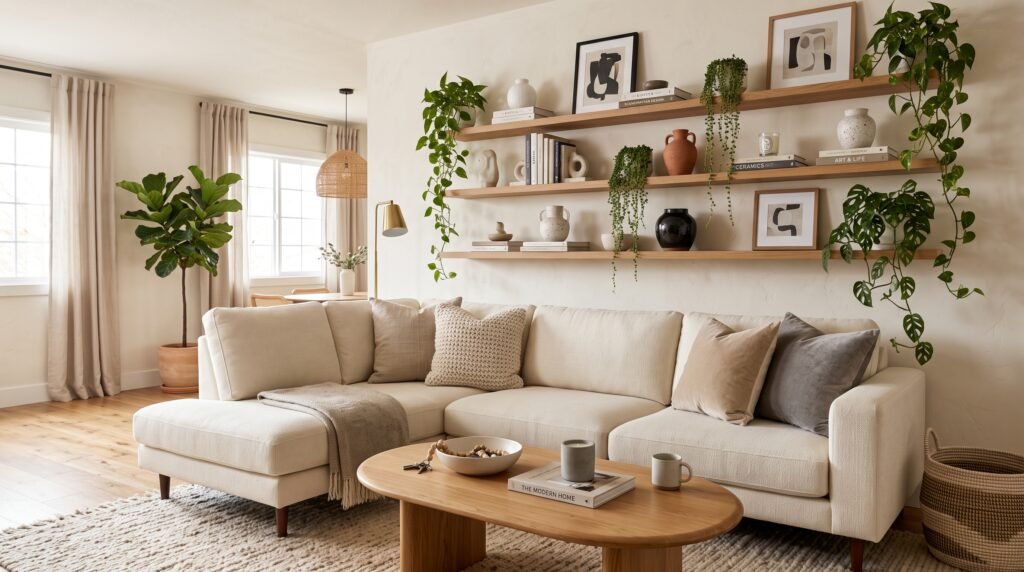
When floor space is limited, think vertically.
Take advantage of your walls by installing:
- Floating shelves
- Tall bookcases
- Wall-mounted cabinets
- Hanging planters
- Vertical artwork
Drawing the eye upward makes ceilings appear taller and the room feel more spacious.
Keep shelves neatly styled with books, plants, baskets, and decorative accessories to avoid a cluttered look.
8. Let Natural Light Be the Star
Natural light is one of the most powerful tools for making a small room feel larger.
Avoid blocking windows with heavy drapes or bulky furniture.
Instead, opt for:
- Sheer linen curtains
- Light-filtering blinds
- Floor-to-ceiling curtain panels
- Neutral window treatments
Hanging curtains closer to the ceiling also creates the illusion of taller walls.
9. Keep Decor Minimal but Intentional
A small living room doesn’t need dozens of decorative objects to feel stylish.
Instead, focus on a few well-chosen pieces that make an impact.
Consider incorporating:
- One oversized artwork above the sofa
- A textured throw blanket
- Two or three decorative pillows
- A ceramic vase
- A small stack of coffee table books
- A healthy indoor plant
Leaving some empty space is just as important as decorating. Negative space allows the room to breathe and prevents it from feeling overcrowded.
QuiStick to a cohesive color palette.
Avoid oversized furniture that overwhelms the room.
Use mirrors to reflect light.
Choose furniture with built-in storage.
Make use of vertical wall space.
Keep accessories simple and purposeful.
Let natural light remain unobstructed.
Select one large rug instead of several smaller ones.
Arrange furniture to encourage conversation rather than lining everything against the walls.
10. Choose Furniture That Fits the Scale of the Room
A common misconception is that small rooms require the smallest furniture available. While oversized pieces can overwhelm a compact space, furniture that is too tiny can make the room feel disconnected and less functional.
Instead, choose pieces that are proportional to your room.
Look for:
- Apartment-size sofas
- Slim-profile armchairs
- Narrow console tables
- Compact nesting side tables
- Round coffee tables for better traffic flow
Measure your room before purchasing furniture to ensure each piece fits comfortably without obstructing walkways.
11. Add Hidden Storage Wherever Possible
Clutter is one of the fastest ways to make a small living room feel even smaller.
Incorporate hidden storage into your design to keep everyday items out of sight while maintaining a clean, organized appearance.
Smart storage ideas include:
- Storage ottomans
- Coffee tables with drawers
- TV stands with cabinets
- Woven baskets under side tables
- Storage benches
- Decorative boxes for shelves
Keeping surfaces clear instantly makes the room feel larger.
12. Create a Focal Point
Every well-designed living room benefits from a clear focal point.
Rather than allowing multiple elements to compete for attention, choose one standout feature that anchors the space.
Popular focal points include:
- Oversized artwork
- A statement mirror
- A fireplace
- Built-in shelving
- A feature wall
- A large window with beautiful natural light
Once your focal point is established, arrange furniture to highlight it.
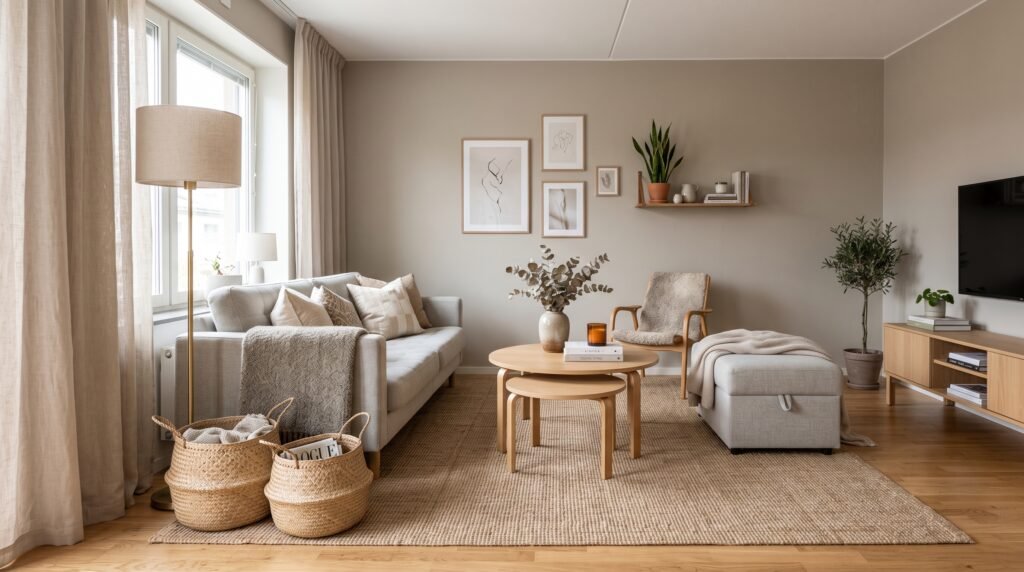
13. Layer Your Lighting
Good lighting transforms the way a room feels.
Instead of relying solely on one ceiling fixture, use multiple light sources to create depth and warmth.
A balanced lighting plan might include:
- Ceiling light
- Floor lamp
- Table lamp
- Wall sconces
- LED shelf lighting
Warm lighting creates a cozy atmosphere while making the room feel more inviting.
14. Decorate with Plants
Indoor plants add life, texture, and color without overwhelming a space.
Choose plants that complement the size of your living room.
Great options include:
- Snake Plant
- ZZ Plant
- Pothos
- Rubber Plant
- Peace Lily
- Olive Tree (for larger corners)
If floor space is limited, use hanging planters or wall-mounted pots.
Plants soften hard lines and create a fresh, welcoming atmosphere.
15. Use Floating Shelves Instead of Bulky Cabinets
Large bookcases can dominate a small living room.
Floating shelves provide valuable storage while maintaining an open, airy appearance.
Style shelves with:
- Books
- Small plants
- Ceramic vases
- Framed photos
- Candles
- Decorative sculptures
Avoid overcrowding the shelves—leave some empty space to keep the display visually balanced.
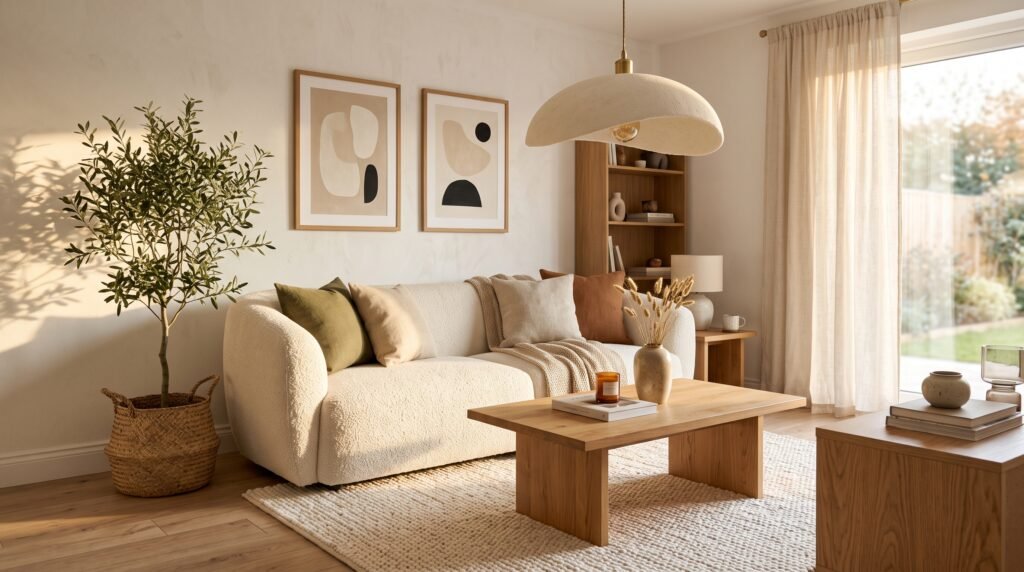
16. Choose Glass or Acrylic Furniture
Transparent furniture creates the illusion of more space because it doesn’t visually block the room.
Consider incorporating:
- Glass coffee tables
- Acrylic side tables
- Glass console tables
- Clear dining chairs (if your living room shares space with the dining area)
These pieces provide function without adding visual weight.
17. Use Vertical Wall Art
Instead of hanging several small frames across a wall, choose taller artwork that naturally draws the eye upward.
Good choices include:
- Vertical abstract paintings
- Botanical prints
- Black-and-white photography
- Oversized canvas art
- Minimalist line art
Position artwork so its center sits roughly at eye level for the best visual balance.
18. Keep Walkways Open
An efficient layout is essential in a small living room.
Leave enough space for comfortable movement between furniture pieces.
As a general guideline:
- Maintain clear pathways around the seating area.
- Avoid placing furniture directly in high-traffic routes.
- Use round or oval tables in tighter spaces to reduce sharp corners.
- Keep entry points unobstructed.
A room with smooth traffic flow feels larger, more comfortable, and easier to use every day.
Design Tips from Interior Designers
Professional designers often rely on a few simple principles when working with compact living rooms:
- Repeat colors throughout the space for a cohesive look.
- Mix textures—such as linen, wood, ceramic, and woven materials—to add interest without clutter.
- Incorporate reflective surfaces like mirrors or glass to enhance light.
- Limit decorative accessories to a curated selection.
- Use one statement piece instead of many small decorative items.
These techniques create a polished, high-end look while preserving openness.
Common Mistakes to Avoid
Even beautifully decorated rooms can feel cramped if a few common mistakes are overlooked.
Avoid:
- Choosing oversized sectionals that dominate the room.
- Blocking windows with tall furniture.
- Using too many bold colors or patterns.
- Filling every wall with artwork.
- Ignoring storage needs.
- Selecting rugs that are too small.
- Overcrowding shelves with decor.
- Leaving poor lighting unaddressed.
By avoiding these pitfalls, you’ll create a space that feels both stylish and spacious
19. Create a Cozy Reading Corner
Even the smallest living room can accommodate a relaxing reading nook with thoughtful planning.
Place a comfortable accent chair near a window and pair it with a slim side table and a floor lamp. Add a soft throw blanket and one decorative pillow to create an inviting space without overwhelming the room.
A reading corner makes your living room feel more functional while adding personality and warmth.
20. Incorporate Natural Materials
Natural textures instantly make a space feel warm and timeless.
Mix materials such as:
- Light oak furniture
- Woven baskets
- Linen curtains
- Cotton throws
- Jute or wool rugs
- Ceramic vases
- Stone accessories
Combining different textures adds visual interest while maintaining a calm, cohesive design.
21. Install Floor-to-Ceiling Curtains
One of the oldest interior design tricks is to hang curtains higher than the window frame.
Mount curtain rods close to the ceiling and let the curtains extend all the way to the floor. This simple adjustment creates the illusion of taller ceilings and larger windows.
Choose light, airy fabrics such as linen or cotton blends to maximize natural light.
22. Display a Few Personal Touches
A well-designed living room should reflect your personality.
Rather than filling every surface with keepsakes, select a few meaningful pieces, such as:
- Family photographs
- Travel souvenirs
- Handmade pottery
- Favorite books
- Framed artwork
- Vintage finds
Curating your décor keeps the room feeling personal without appearing cluttered.
23. Keep Technology Organized
Visible cables and electronics can make even the most stylish living room feel messy.
Improve the overall appearance by:
- Using cable management boxes
- Hiding cords behind furniture
- Mounting the television on the wall
- Choosing a media console with concealed storage
- Storing remotes in decorative trays or baskets
A clean, organized entertainment area contributes to a more spacious feel.
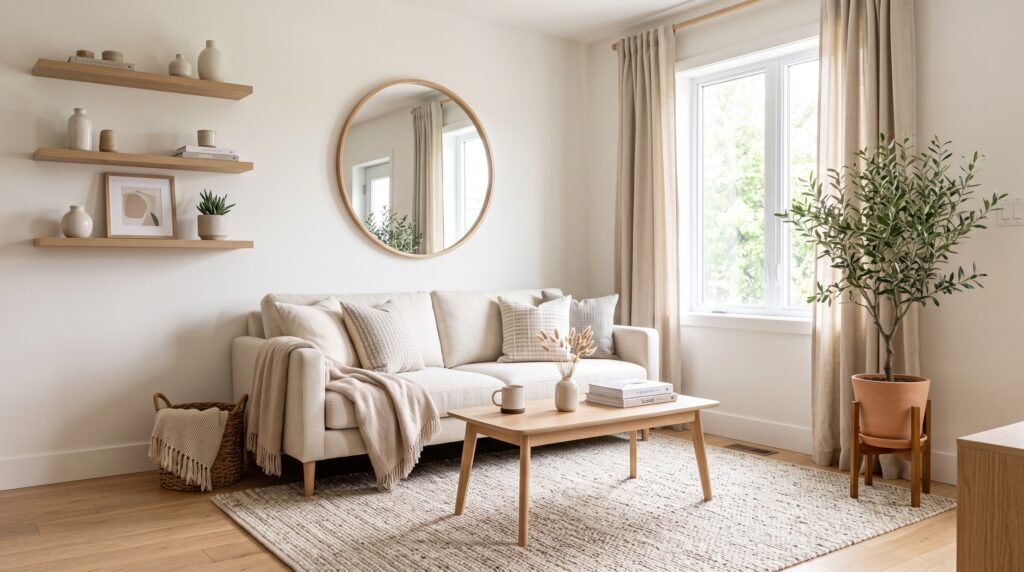
24. Use Statement Lighting
Lighting can serve as both a functional necessity and a design feature.
A single statement fixture can elevate the entire room without taking up valuable floor space.
Consider:
- Modern pendant lights
- Sculptural chandeliers
- Minimalist ceiling fixtures
- Globe lighting
- Contemporary wall sconces
Choose fixtures that complement your overall design style while maintaining appropriate proportions for the room.
25. Add Texture Instead of Excess Color
Rather than introducing numerous bold colors, create depth through texture.
Layer materials such as:
- Bouclé cushions
- Chunky knit throws
- Velvet accent pillows
- Woven baskets
- Ribbed ceramics
- Textured artwork
- Natural wood finishes
A neutral palette enriched with varied textures creates a sophisticated, designer-inspired look.
26. Keep Open Shelving Balanced
Open shelves can make a small living room feel airy, but overfilling them has the opposite effect.
Follow a simple styling formula:
- 40% books
- 30% decorative objects
- 20% greenery
- 10% empty space
Leaving intentional gaps allows each item to stand out while preventing visual clutter.
27. Edit Your Space Regularly
The best-designed small living rooms are intentionally curated.
Every few months, evaluate your space and remove items that no longer serve a purpose or contribute to the overall design.
Ask yourself:
- Do I use this regularly?
- Does it enhance the room?
- Could this be stored elsewhere?
- Is it adding unnecessary clutter?
Regular editing keeps your living room feeling fresh, functional, and spacious.
Frequently Asked Questions
How do I make a small living room look bigger?
Use light-colored walls, maximize natural light, add large mirrors, choose appropriately scaled furniture, and keep clutter to a minimum. These techniques create the illusion of a larger, brighter space.
What color is best for a small living room?
Soft neutrals such as white, cream, beige, greige, and light gray work well because they reflect light and make the room feel more open.
Should I use a large rug in a small living room?
Yes. A rug large enough to sit under the front legs of your seating arrangement helps unify the room and makes it appear more spacious than several smaller rugs.
What type of furniture works best in a small living room?
Look for furniture with slim profiles, exposed legs, built-in storage, and multiple functions. Apartment-sized sofas, nesting tables, and storage ottomans are excellent choices.
Are dark colors suitable for small living rooms?
Dark colors can work when used thoughtfully as accents or feature walls, but lighter palettes generally create a more open and airy feeling.
Final Thoughts
Designing a small living room is all about making intentional choices. By selecting furniture that fits the space, embracing a light and cohesive color palette, maximizing natural light, and incorporating smart storage solutions, you can create a room that feels both stylish and functional.
Remember that a beautifully designed living room isn’t defined by its size but by how well it meets your needs. Focus on quality over quantity, layer textures for warmth, and keep your layout organized to make every square foot count. With these 27 ideas, your small living room can become a comfortable, elegant, and welcoming space you’ll enjoy every day.