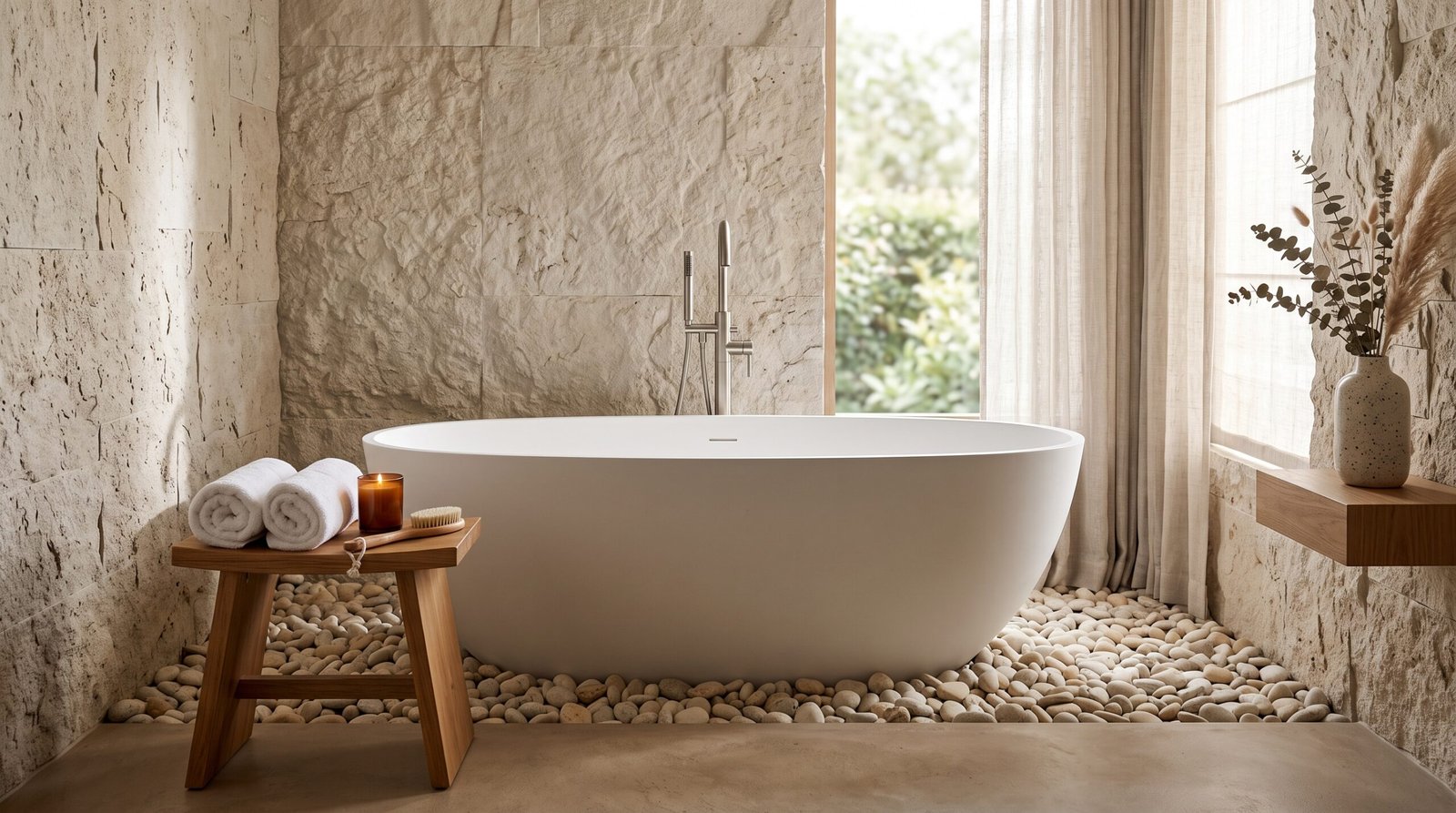
Indoor Pebble Floor Ideas: 10 Stylish Ways to Bring Natural Texture Into Your Home
Indoor pebble floors are especially popular in spaces inspired by spas, tropical resorts, Japanese interiors, and organic modern homes. However, you do not need to cover an entire room with stones to enjoy the look. A small pebble section around a shower, beneath a bathtub, beside an indoor garden, or within an entryway can provide plenty of visual impact.
From smooth river stones in soft beige tones to dramatic black pebbles paired with warm wood, there are many ways to incorporate this natural material into contemporary interiors.
Here are 10 indoor pebble floor ideas to inspire a stylish and relaxing home.
1. Natural Pebble Shower Floor
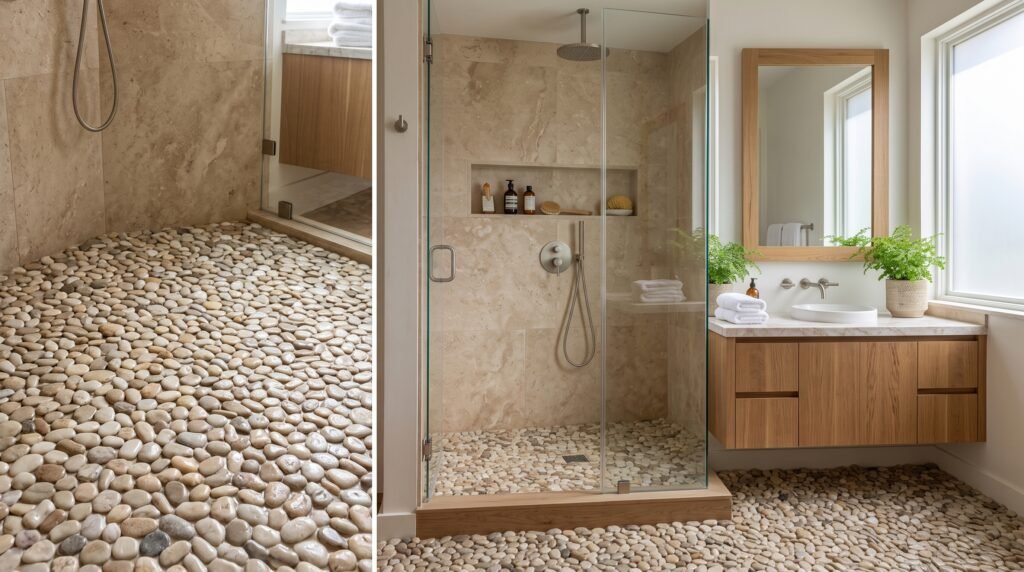
One of the most popular places to introduce pebble flooring is inside a walk-in shower. The naturally irregular shapes of the stones create a surface that instantly makes the bathroom feel more organic.
Smooth river pebbles in beige, cream, taupe, and soft gray work beautifully in bathrooms with a warm neutral color palette. Pair them with large-format stone-look wall tiles to create contrast between the smooth walls and textured floor.
A frameless glass shower enclosure keeps the pebble surface visible rather than hiding it behind a heavy frame or curtain. Warm wooden cabinetry, brushed metal fixtures, and soft towels can complete the spa-inspired appearance.
Pebble shower floors work especially well in bathrooms that already feature natural materials. A wooden vanity, stone basin, linen accessories, and greenery can make the entire room feel connected.
When planning a pebble shower floor, proper installation is particularly important. The shower base needs appropriate waterproofing and drainage, while the stone and grout should be suitable for wet areas.
A luxurious walk-in shower featuring smooth natural river pebbles across the floor, warm stone walls, frameless glass, and minimalist fixtures.
2. Pebble Flooring Around a Freestanding Bathtub
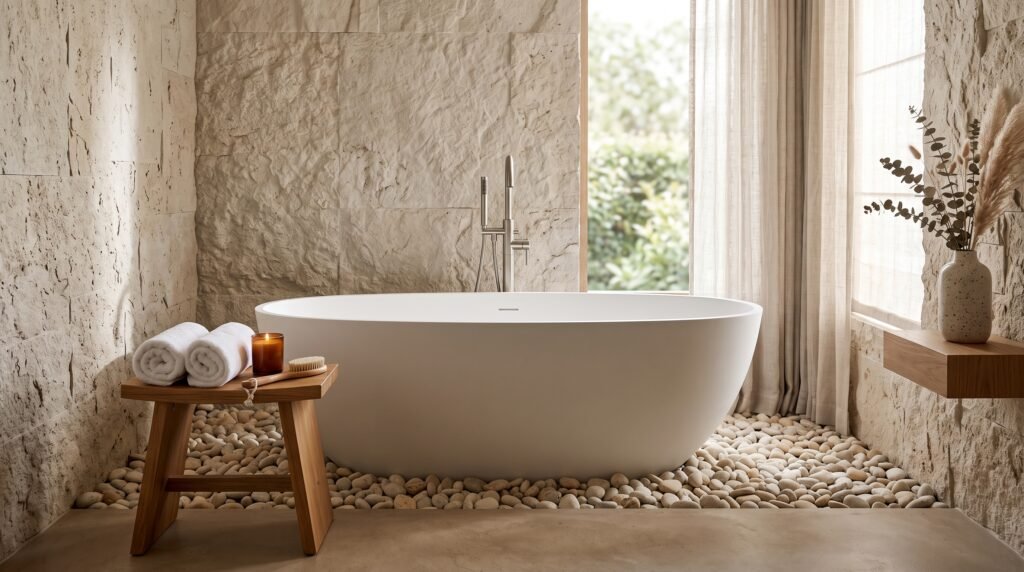
A freestanding bathtub already creates a strong focal point, but surrounding it with pebbles can make the bathing area feel like a private wellness retreat.
Instead of installing pebble flooring throughout the entire bathroom, create a defined stone section directly underneath and around the bathtub. This creates visual separation while allowing the rest of the bathroom to use more conventional flooring.
Soft white, beige, and light gray pebbles pair beautifully with a sculptural white bathtub. Add warm wood nearby through a bath stool, vanity, or floating shelf to prevent the design from feeling too cold.
The combination of water, stone, and wood naturally creates a peaceful atmosphere.
For a more luxurious look, consider subtle lighting around the pebble section. Warm indirect illumination can highlight the texture of the stones in the evening.
A few carefully chosen accessories are enough. Rolled towels, a ceramic vase, candles, and a leafy plant can reinforce the relaxed spa aesthetic without overcrowding the room.
A serene modern bathroom with a sculptural freestanding bathtub surrounded by smooth cream and beige pebbles, warm wood accents, and soft natural lighting.
3. Black Pebble Floor for a Dramatic Modern Look
Pebble flooring does not always need to look rustic or tropical. Dark stones can create a sophisticated contemporary appearance.
Smooth charcoal or black pebbles work particularly well with warm wood, concrete, and light neutral walls. Their dark surface provides strong contrast while maintaining an organic quality.
Consider using black pebble flooring inside a shower with warm gray walls and brushed brass fixtures. The combination feels dramatic without becoming overly decorative.
Dark pebbles can also work as an accent strip instead of covering an entire floor. A narrow pebble section alongside a wall, bathtub, or vanity introduces texture while keeping the overall interior minimal.
Lighting becomes especially important with darker materials. Soft directional lighting can reveal subtle differences in the stones and prevent the surface from appearing flat.
A few green plants can provide another layer of contrast against the charcoal tones.
A contemporary spa bathroom with smooth charcoal-black pebble flooring, warm oak cabinetry, light stone walls, and elegant minimalist fixtures.
4. Indoor Garden Pebble Floor
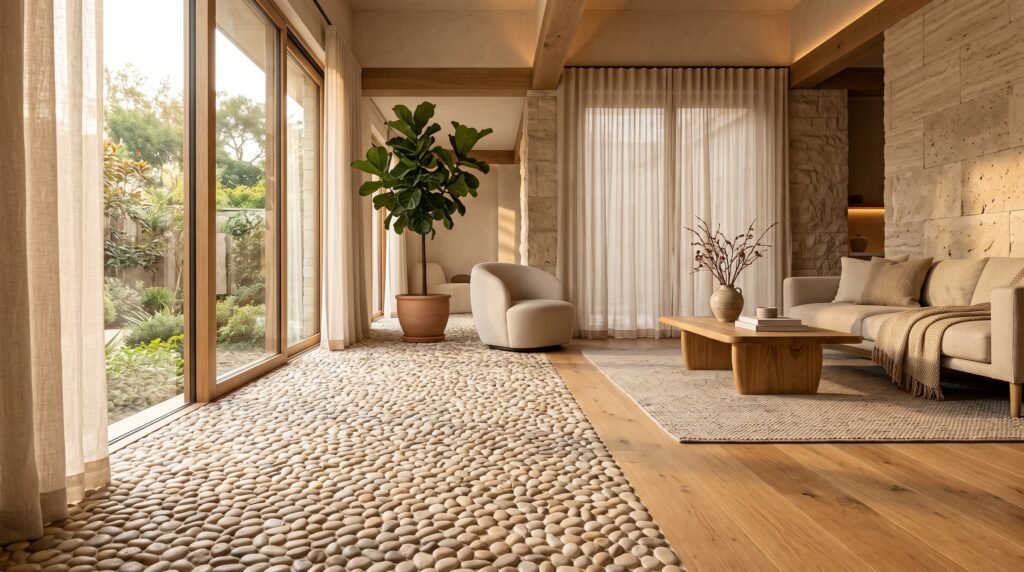
Pebbles are a natural choice for indoor garden spaces because they visually connect plants with the ground.
Instead of placing houseplants randomly around a room, consider creating a dedicated indoor garden zone with a pebble-covered base. Large leafy plants, small trees, and sculptural planters can sit within or beside the stone section.
This idea works particularly well near large windows where plants receive plenty of natural light.
For an organic modern look, choose warm beige or gray river stones and combine them with simple ceramic planters. Avoid using too many different colors or decorative objects. The plants and stones should remain the main focus.
Indoor pebble gardens can be especially effective in open-plan homes because they introduce nature without requiring large furniture or architectural changes.
A narrow pebble garden beside a hallway or living area can also soften spaces dominated by hard surfaces.
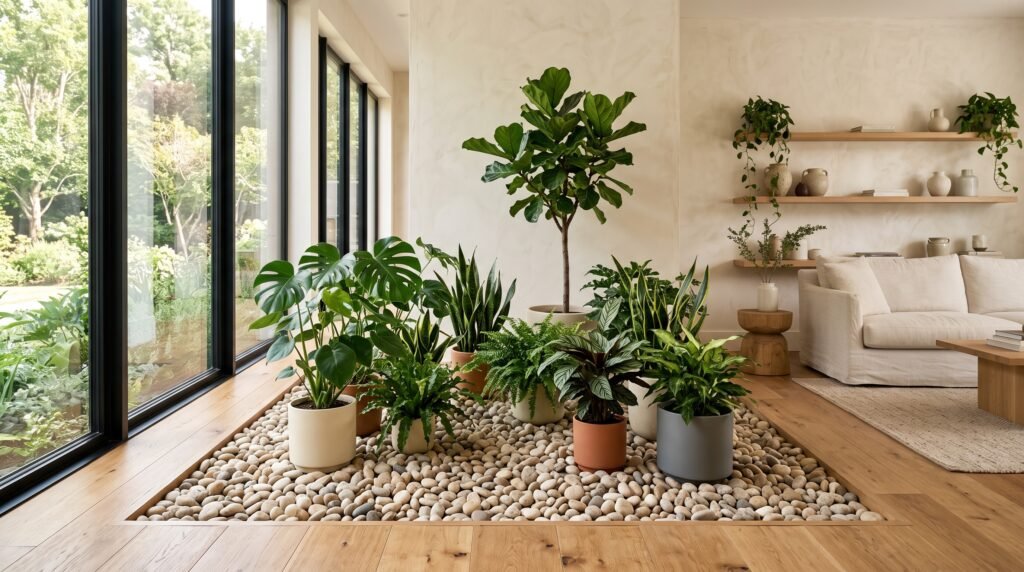
A bright organic modern interior featuring a dedicated indoor garden with smooth river pebbles, lush green plants, warm oak details, and large windows.
5. Pebble Border Along a Hallway
If an entire pebble floor feels too bold, a narrow pebble border can offer a more subtle alternative.
Imagine a clean hallway with large neutral floor tiles and a slim channel of natural pebbles running beside one wall. This simple detail can make the architecture feel much more intentional.
The pebble strip may also be combined with indirect lighting. Small recessed lights or concealed LED illumination can create gentle shadows across the stones.
This approach is particularly effective in minimalist interiors because the decoration comes from texture rather than additional furniture.
Use pebbles that complement the existing flooring rather than creating unnecessary contrast. Warm beige stones pair beautifully with cream porcelain floors, while charcoal pebbles can complement concrete or gray tile.
Keep the border relatively simple. The goal is to introduce an architectural detail rather than create a busy pattern.
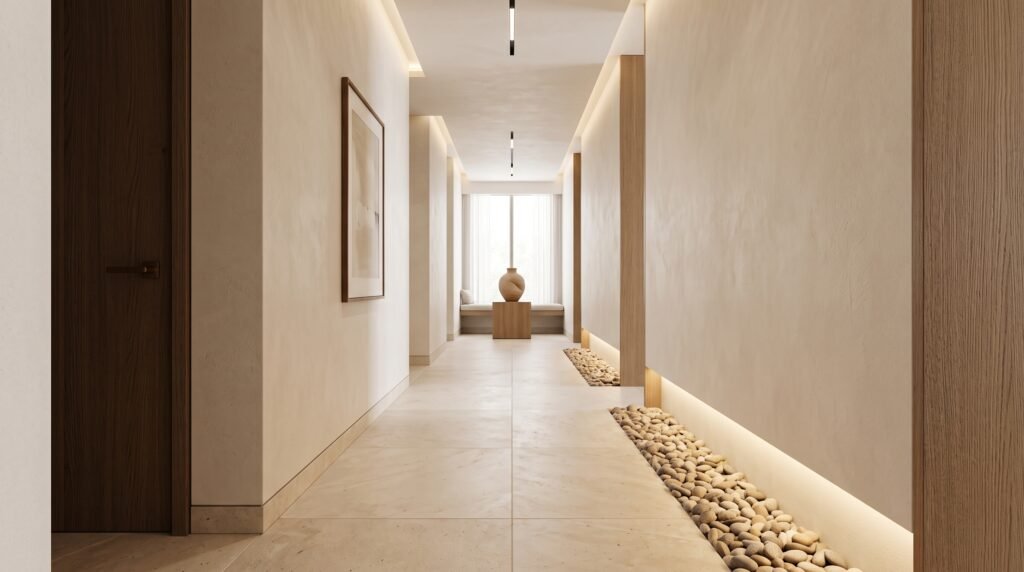
A minimalist hallway with large warm-neutral floor tiles and a narrow river-pebble border illuminated by subtle architectural lighting.
6. Under-Stair Pebble Feature
The empty area beneath a staircase is often difficult to decorate. Furniture may feel awkward, while leaving the space completely empty can make it look unfinished.
A pebble feature can turn this unused area into a sophisticated indoor landscape.
Start with a defined bed of smooth stones underneath the staircase. Add one or two sculptural plants rather than filling the entire area with greenery.
A small indoor tree, snake plant, or architectural foliage can work beautifully against a neutral wall.
For additional visual interest, install subtle spotlights above or beneath the staircase. Light falling across the uneven stones creates beautiful shadows and highlights their texture.
This idea is especially attractive with floating wooden staircases because the natural materials complement each other.
The final result should feel intentionally minimal rather than like a crowded indoor garden.
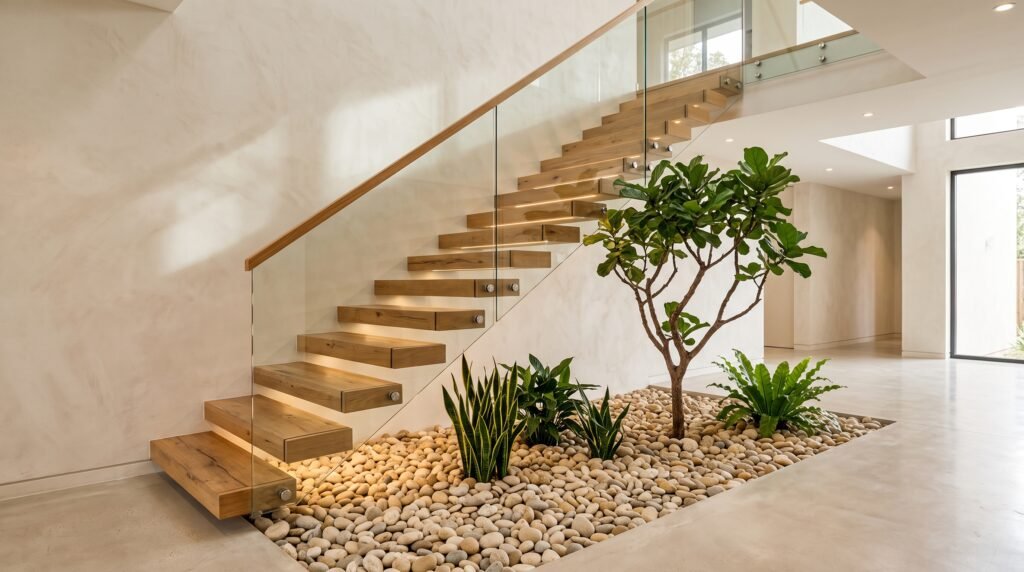
A modern floating staircase above a minimalist pebble garden featuring smooth neutral stones, a sculptural indoor plant, and warm indirect lighting.
7. Japanese-Inspired Pebble Floor
Japanese-inspired interiors often celebrate simplicity, natural materials, and carefully considered empty space. Pebbles fit beautifully within this design philosophy.
Create a small stone section near an entrance, courtyard window, meditation corner, or indoor garden.
Choose pebbles in restrained natural colors such as gray, charcoal, beige, or off-white. Pair them with warm wood flooring, simple plaster walls, and minimal furniture.
Rather than filling the area with decorations, allow the stones themselves to provide visual texture.
A single plant, ceramic vessel, or wooden bench may be enough.
For a more architectural effect, large stepping stones can be positioned within smaller pebbles. This creates the feeling of a garden path while remaining entirely indoors.
Natural daylight is particularly effective in these spaces because changing shadows give the stones a different appearance throughout the day.
A peaceful Japanese-inspired interior with smooth gray pebbles, large stepping stones, warm wood flooring, minimalist plaster walls, and a single sculptural plant.
8. Pebble Entryway Accent
The entrance of a home provides the first impression of the interior, making it an excellent location for an unexpected natural feature.
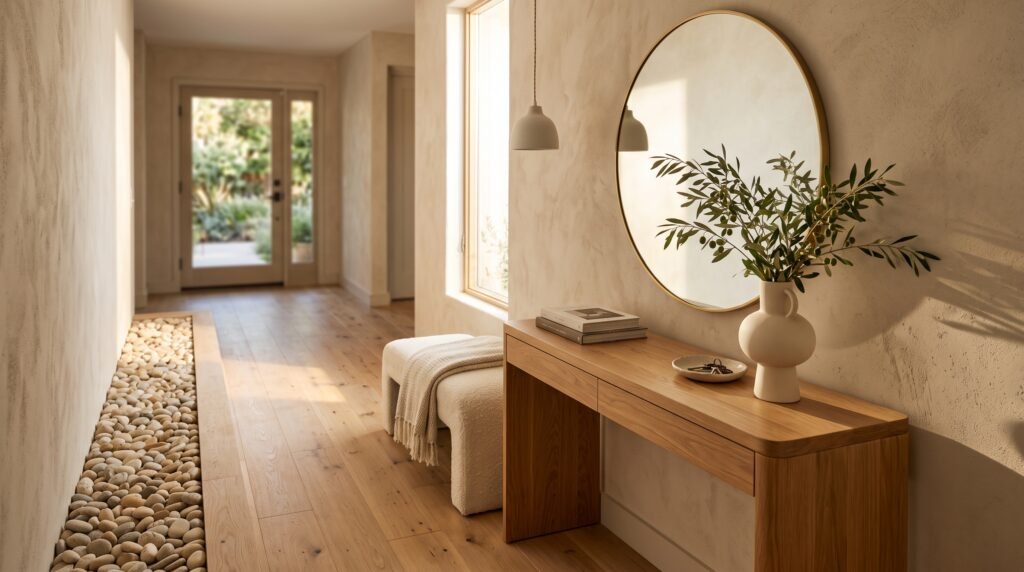
Instead of covering the entire entryway with pebble flooring, create a narrow recessed stone section beside a console table or built-in bench.
This introduces texture while keeping the primary walking surface smooth.
A warm wooden console, oversized mirror, ceramic vase, and simple greenery can complement the stones beautifully.
For a contemporary look, keep the color palette restrained. Beige pebbles with oak furniture and cream walls create a soft organic modern appearance.
Alternatively, charcoal stones combined with dark wood can produce a more dramatic entryway.
Lighting is also important. A pendant or wall light can highlight the stone texture and make the entrance feel welcoming during the evening.
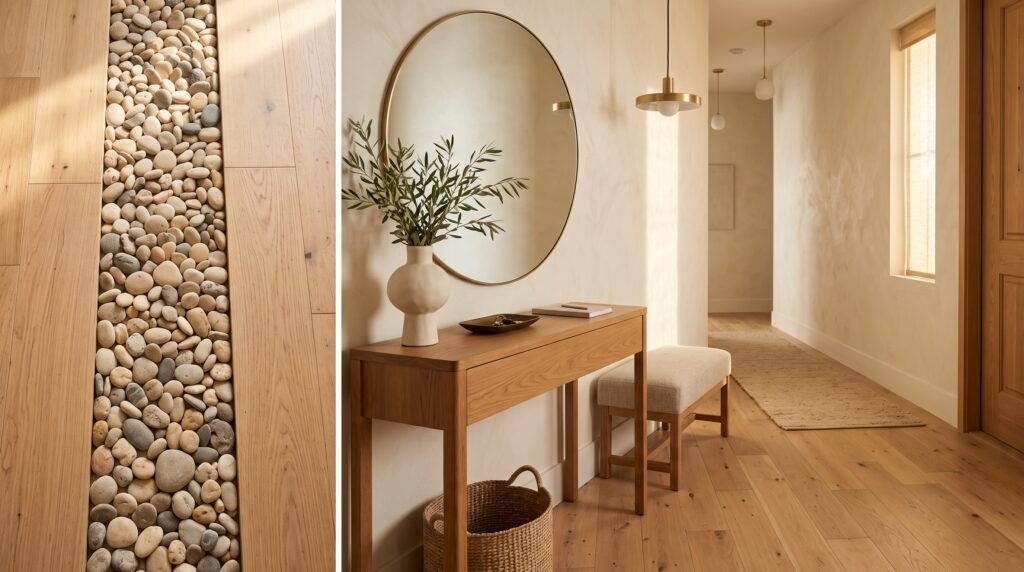
An elegant organic modern entryway featuring a recessed pebble floor accent, warm oak console, oversized mirror, ceramic décor, and soft golden lighting.
9. Pebble Floor Beside Floor-to-Ceiling Windows
Large windows already create a strong connection between indoors and outdoors. Adding a strip of pebbles along the glass can strengthen that relationship.
This idea works beautifully in living rooms, hallways, bedrooms, or indoor garden areas with floor-to-ceiling windows.
Create a narrow stone bed running parallel to the glass. The pebbles can visually continue the landscaping outside, making the boundary between interior and exterior feel softer.
Neutral river stones are usually the easiest option because they complement a wide variety of interiors.
Add a few carefully positioned plants if the space allows, but avoid blocking the view.
During daylight hours, sunlight creates natural highlights and shadows across the uneven stones. In the evening, subtle floor lighting can provide a completely different atmosphere.
This design works particularly well in modern homes where architectural simplicity is important.
10. Pebble and Wood Flooring Combination
Wood and stone are two materials that naturally complement one another.
Wood introduces warmth and softness, while pebble flooring adds texture and an earthy character. Combining the two can create a sophisticated organic interior.
One approach is to install warm oak flooring throughout a room and create a narrow recessed pebble section around the perimeter or beside a feature wall.
Another option is to use pebble flooring as a transition between wood flooring and an indoor garden.
The contrast does not need to be dramatic. Light oak paired with beige river stones creates a subtle, harmonious appearance.
Darker walnut flooring can look beautiful beside charcoal pebbles for a richer, moodier design.
Keep the transition between materials clean and intentional. Straight architectural lines can provide a beautiful contrast to the irregular organic shapes of the stones.
How to Choose Pebbles for Indoor Flooring
The appearance of pebble flooring depends heavily on the type of stone you choose.
For calm, neutral interiors, look for pebbles in shades of cream, beige, taupe, light gray, and soft brown. These colors integrate easily with wood, stone, and neutral wall finishes.
Black or charcoal pebbles are better suited to dramatic contemporary interiors.
Stone size also affects the final appearance. Smaller pebbles create a detailed texture, while larger river stones feel more sculptural.
Smooth stones are generally more comfortable underfoot than rough or sharply textured options. For areas where people regularly walk barefoot, comfort should be considered alongside appearance.
You can also find pebble mosaic sheets designed specifically for flooring. These typically make installation easier because the stones are attached to mesh sheets before being grouted.
What Materials Look Best With Pebble Floors?
Pebble flooring is visually powerful, so the surrounding materials should usually remain relatively simple.
Natural wood is one of the best companions because it adds warmth.
Stone and stone-look porcelain create a sophisticated spa atmosphere.
Plaster or limewash-style walls enhance the organic quality of the design.
Glass works particularly well in bathrooms because it allows pebble surfaces to remain visible.
Concrete can create an attractive contemporary contrast with rounded river stones.
Soft materials such as linen towels, woven baskets, textured rugs, and lightweight curtains can balance the hardness of stone surfaces.
Best Colors for Indoor Pebble Floors
Choosing the right color can completely change the mood of the room.
Cream and Beige Pebbles
These are ideal for warm neutral interiors. They pair beautifully with oak, cream walls, and soft beige textiles.
Gray River Stones
Gray pebbles provide a natural appearance that works with modern, Scandinavian, Japanese-inspired, and spa interiors.
White Pebbles
White stones can create a clean and bright appearance, especially in decorative indoor garden areas. However, they may require more frequent cleaning to maintain their appearance.
Black Pebbles
Black and charcoal stones create a luxurious, dramatic effect. They look especially attractive beside light walls and warm wooden surfaces.
Mixed Natural Pebbles
A blend of beige, gray, brown, and cream can provide a more rustic riverbed appearance. Use mixed colors carefully if the rest of the room already contains several patterns or finishes.
How to Make Pebble Flooring Look Modern
The difference between a sophisticated pebble floor and an overly rustic one often comes down to how the surrounding room is designed.
Keep architectural lines clean.
Use a restrained color palette.
Avoid combining pebble flooring with too many other heavily textured materials.
Choose simple furniture with clean silhouettes.
Use large-format wall tiles or plain plaster walls to contrast with the small irregular stones.
Lighting should also be subtle rather than decorative. Recessed lights, hidden LEDs, and simple pendants allow the natural materials to remain the focus.
Most importantly, use pebbles strategically. A carefully positioned stone section can often create more impact than covering an entire room.
Maintaining Indoor Pebble Flooring
Pebble floors contain more grout lines than conventional large-format tiles, so regular maintenance is important.
Vacuum or sweep loose dirt before cleaning the surface. In wet areas, use cleaning products appropriate for the specific stone and grout used in the installation.
Depending on the material, sealing may help protect both stone and grout from moisture and staining. Always follow the recommendations for the specific pebble product and installation system.
Bathrooms should also have appropriate ventilation to reduce persistent moisture.
For decorative dry pebble beds, maintenance is much easier. Dust and debris can generally be removed with a vacuum using an appropriate attachment.
Final Thoughts
Indoor pebble flooring offers a beautiful way to introduce natural texture, movement, and spa-inspired character into the home. The key is not necessarily using more stone—it is using it in the right place.
A pebble shower floor can make an everyday bathroom feel like a boutique retreat, while a small stone bed beneath a staircase can transform forgotten space into an architectural feature. Pebbles beside large windows can strengthen the connection to nature, and a carefully designed entryway accent can create an impressive first impression.
For a timeless look, combine pebble flooring with warm wood, neutral walls, soft lighting, and restrained décor. Beige and gray river stones are especially versatile, while charcoal pebbles can create a striking contemporary statement.
Whether used across a functional floor or simply as a decorative border, pebbles provide something ordinary tile cannot fully replicate: natural irregularity. Every stone is slightly different, and that variation gives the interior depth and character.
When thoughtfully incorporated, an indoor pebble floor can make a modern home feel calmer, warmer, and beautifully connected to nature.