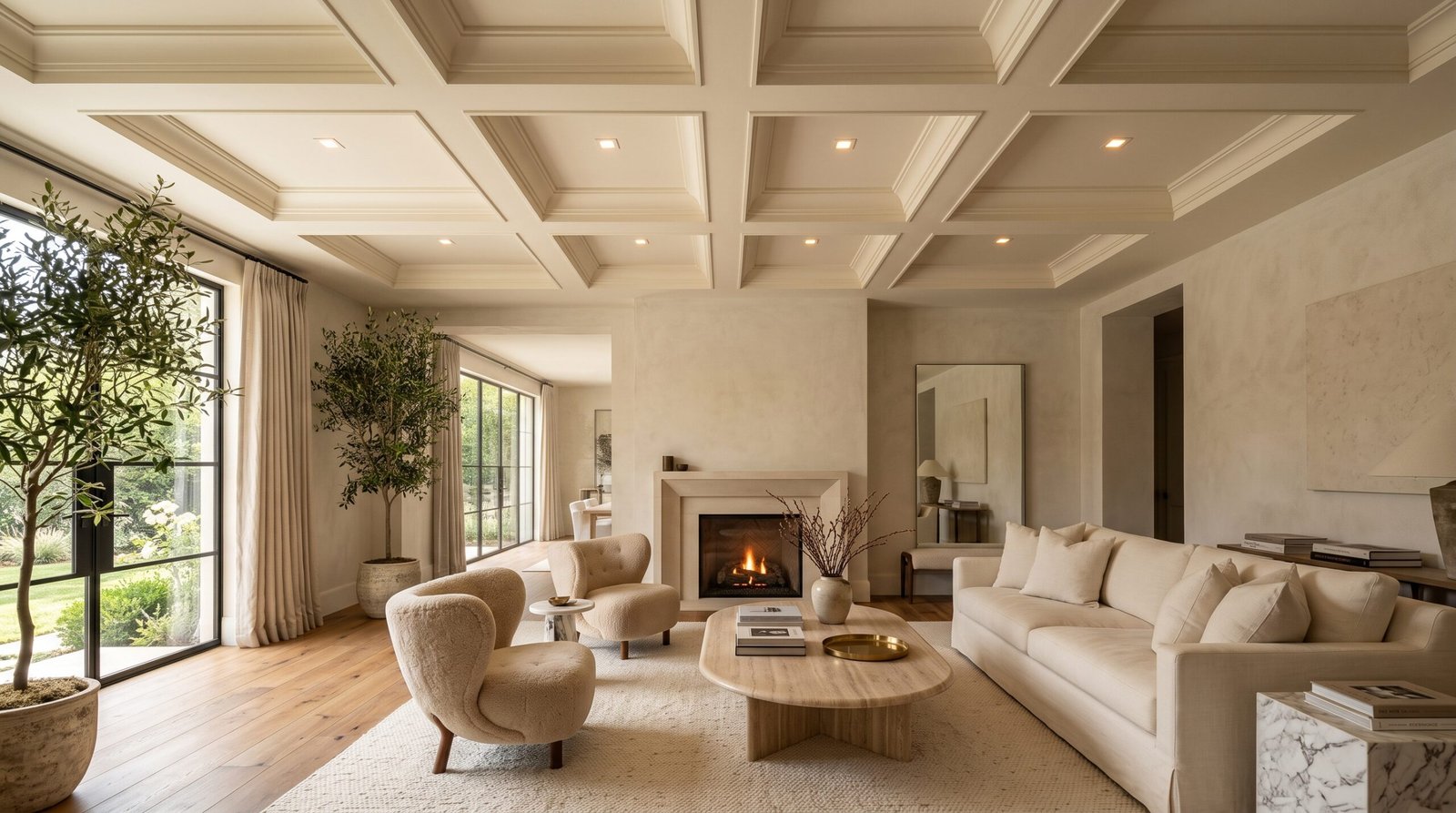
18 Statement Ceiling Ideas to Transform Your Interior
When decorating a home, most attention naturally goes toward walls, flooring, furniture, and accessories. Yet one of the largest visible surfaces in every room is often left almost completely untouched: the ceiling. A thoughtfully designed ceiling can change the entire character of a space, introducing texture, warmth, architectural depth, color, or dramatic visual interest without adding clutter at eye level.
Statement ceilings are particularly effective because they encourage you to look upward. A room that might otherwise feel simple can suddenly appear more intentional and architecturally complete. The effect can range from subtle—a warm limewash finish or shallow tray ceiling—to dramatic, such as sculptural plaster, geometric coffering, or a richly wallpapered surface.
The key is choosing a treatment that complements rather than competes with the rest of the room. Organic-modern interiors may benefit from natural wood slats or textured plaster, while traditional rooms can accommodate elegant coffering. Contemporary homes can experiment with curves, recessed lighting, and architectural ceiling panels.
These 18 statement ceiling ideas offer inspiration for living rooms, bedrooms, dining spaces, entryways, and other interiors while demonstrating how the often-forgotten fifth wall can become one of the most memorable features in your home.
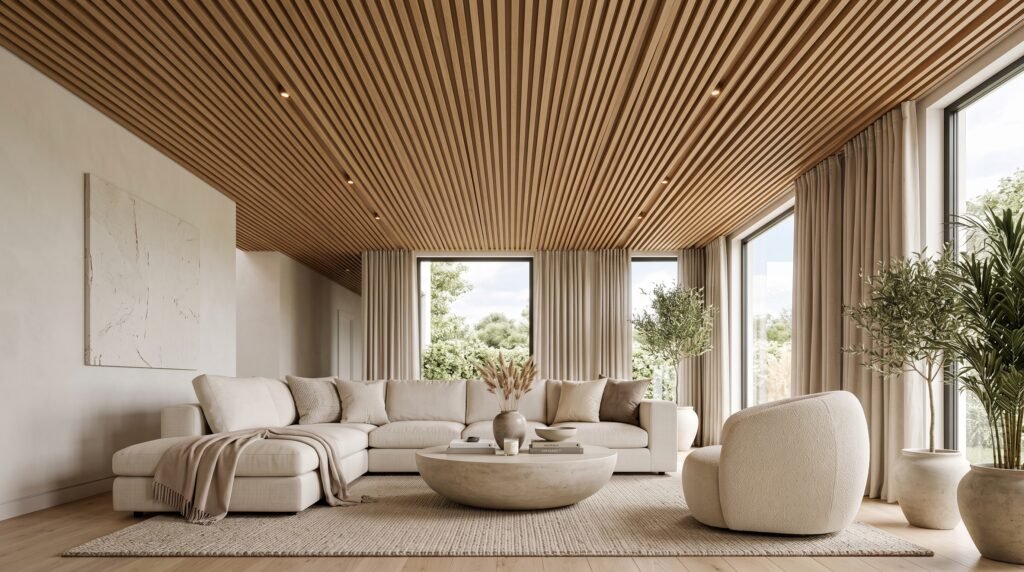
1. Add Warm Wood Slats to the Ceiling
Wood slats are an excellent way to introduce warmth while maintaining clean contemporary lines. Unlike heavy exposed beams, narrow slats create a rhythmic surface that feels refined and modern.
Light oak works particularly well in organic-modern and Scandinavian-inspired rooms. Install slim wooden slats across the ceiling and pair them with warm white walls, cream upholstery, pale stone, and natural textiles.
The linear pattern can also visually guide the eye through a room. In an open-plan living space, running the slats in one direction can emphasize length and create a sense of flow.
Integrated lighting makes the treatment even more sophisticated. Small recessed fixtures positioned between selected slats provide illumination without disrupting the pattern.
Keep the furniture relatively simple so the ceiling remains noticeable without making the entire room feel overly designed.
Modern Light Oak Slatted Statement Ceiling
2. Create a Soft Limewash Ceiling
A statement ceiling does not have to involve complicated construction. Sometimes color and texture alone are enough.
Limewash-inspired finishes provide subtle tonal variation that can make a ceiling feel softer and more atmospheric than conventional flat white paint. Warm beige, sandy taupe, muted greige, and creamy stone shades are especially effective in neutral interiors.
Carry the same finish slightly down the upper walls for an enveloping effect, or contrast it with smooth warm-white walls.
Because the finish has natural visual movement, it responds beautifully to changing daylight. The ceiling can appear softly illuminated in the morning and more textured as shadows develop later in the day.
Pair the treatment with linen curtains, natural wood, handmade ceramics, and softly upholstered furniture for a calm organic atmosphere.
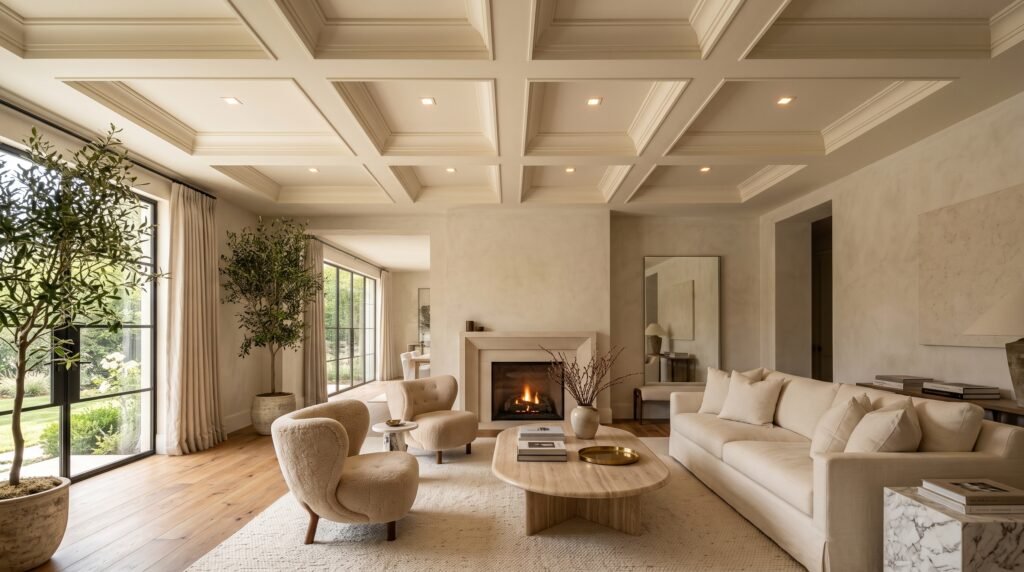
3. Design a Modern Coffered Ceiling
Coffered ceilings have a long architectural history, but contemporary interpretations can look remarkably fresh.
Instead of ornate traditional detailing, choose wide, clean-lined geometric sections with minimal molding. Painting the entire ceiling in one warm neutral shade keeps the design cohesive.
In a spacious living room, large square or rectangular coffers can make the ceiling feel more structured while giving the room architectural character.
A modern coffered ceiling works especially well with symmetrical furniture arrangements. Consider a large cream sofa, sculptural lounge chairs, a substantial stone coffee table, and an oversized textured rug.
Recessed lights can be positioned within the coffers, while a central pendant or chandelier provides a focal point.
Elegant Modern Coffered Living Room Ceiling
4. Use Wallpaper on the Ceiling
Wallpaper is usually reserved for walls, but placing it overhead can create an unexpected decorative moment.
The key is choosing a pattern that works at ceiling scale. Soft botanical designs, subtle geometric patterns, delicate murals, and textured linen-look papers can provide interest without overwhelming the room.
A ceiling wallpaper treatment is particularly beautiful in bedrooms, powder rooms, dressing areas, reading spaces, and dining rooms.
If the wallpaper contains several colors, keep the walls and furniture comparatively restrained. Pull one or two shades from the pattern into cushions, rugs, or curtains to create visual continuity.
For a sophisticated neutral interior, choose wallpaper in beige, cream, muted green, or soft earthy tones rather than extremely high-contrast designs.
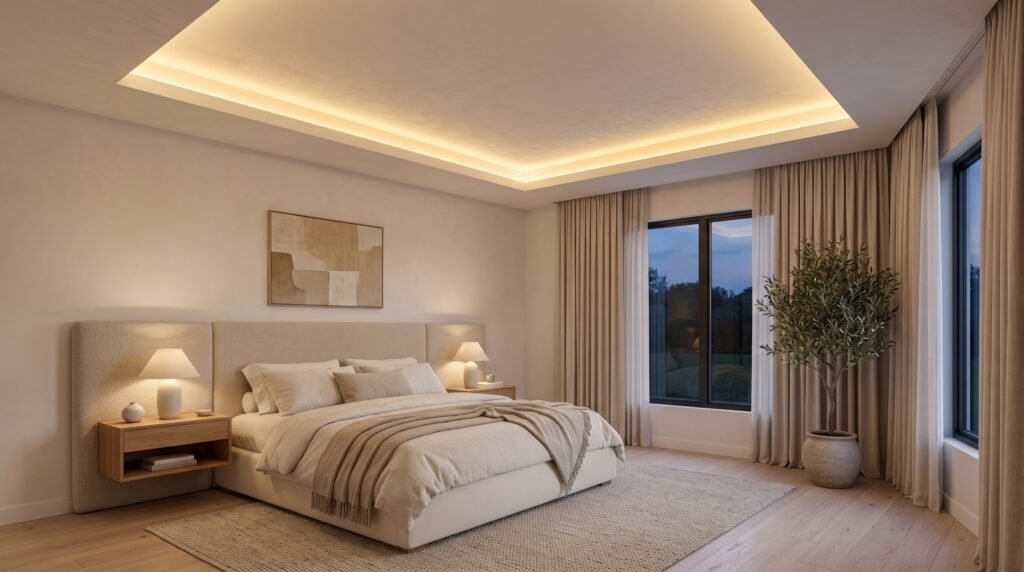
5. Create a Tray Ceiling with Concealed Lighting
Tray ceilings introduce depth by creating a recessed central area or stepped perimeter.
For a contemporary interpretation, keep the architectural lines simple and incorporate concealed LED lighting around the recessed edge. The light source remains hidden while a soft glow washes across the ceiling.
This creates a beautiful atmosphere in bedrooms and living rooms, particularly during the evening.
Warm white lighting tends to complement cream, beige, taupe, and natural wood interiors.
The center of the tray can remain smooth or receive a subtle finish such as limewash, textured plaster, or a slightly deeper paint color.
Avoid filling the ceiling with too many lighting elements. A clean illuminated perimeter often looks more sophisticated than combining multiple decorative fixtures.
Luxury Tray Ceiling with Warm Hidden Lighting
6. Introduce Sculptural Plaster
Sculptural plaster can turn the ceiling into a genuine architectural feature.
Instead of a completely flat surface, consider gentle curves, shallow relief patterns, flowing forms, or softly raised geometric sections. The design does not need to be ornate. In contemporary interiors, restrained forms often create the strongest effect.
Warm off-white plaster is especially effective because the shadows reveal the texture without introducing additional color.
Use indirect lighting to highlight the three-dimensional surface.
This type of ceiling pairs beautifully with curved furniture because the shapes can echo one another. A rounded sofa, sculptural chairs, and organic stone coffee table can create a cohesive composition.
Keep wall decoration minimal so the ceiling has enough visual space to make an impact.
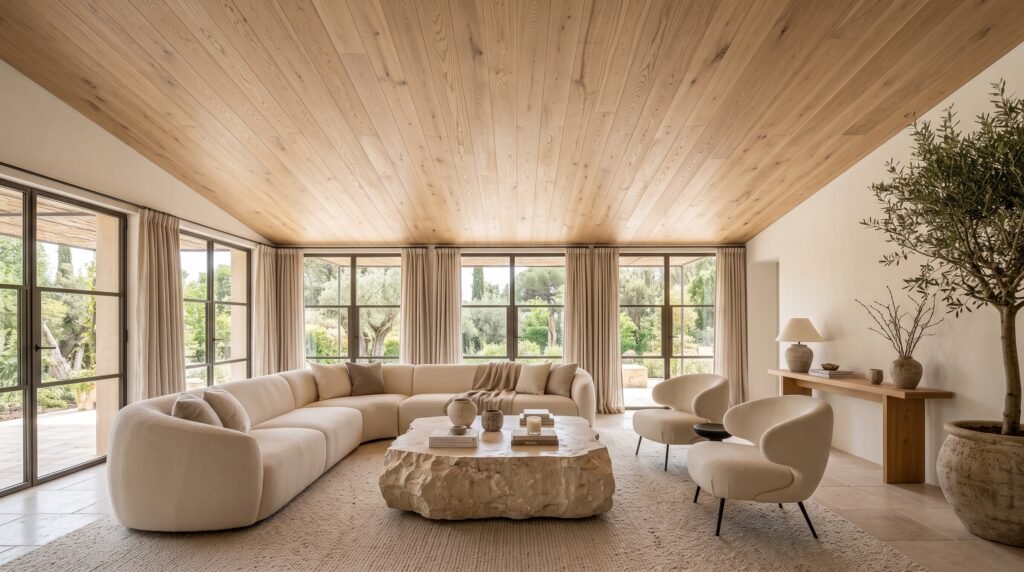
7. Wrap the Ceiling in Natural Wood
For a warmer and more immersive effect, consider covering the entire ceiling in natural wood.
Pale oak can make a contemporary living room feel comfortable and inviting, while medium walnut introduces greater richness and drama.
A wood-clad ceiling works particularly well when the walls remain light. Warm white plaster provides contrast and prevents the room from becoming visually heavy.
Repeat the wood tone selectively elsewhere through a console, coffee table, shelving, or window frames.
Large windows are especially valuable in wood-ceiling rooms because natural daylight reveals grain variation.
For a luxurious organic-modern interior, combine the ceiling with limestone flooring, cream upholstery, linen curtains, and sculptural greenery.
Organic Modern Natural Wood Ceiling
8. Paint the Ceiling a Rich, Moody Color
White is not the only practical ceiling color.
Deep shades such as charcoal, forest green, chocolate brown, muted burgundy, and navy can create an intimate atmosphere when used thoughtfully.
A dark ceiling works particularly well in dining rooms, libraries, bedrooms, and lounges where coziness is desirable.
If you are concerned about the room feeling too dark, maintain lighter walls and flooring. The contrast makes the ceiling feel intentional rather than oppressive.
Another option is color drenching, where the walls and ceiling share the same deep tone. This creates a dramatic enveloping effect that works beautifully in smaller rooms designed for atmosphere.
Warm lamps, brass details, dark wood, and textured textiles can complete the look.
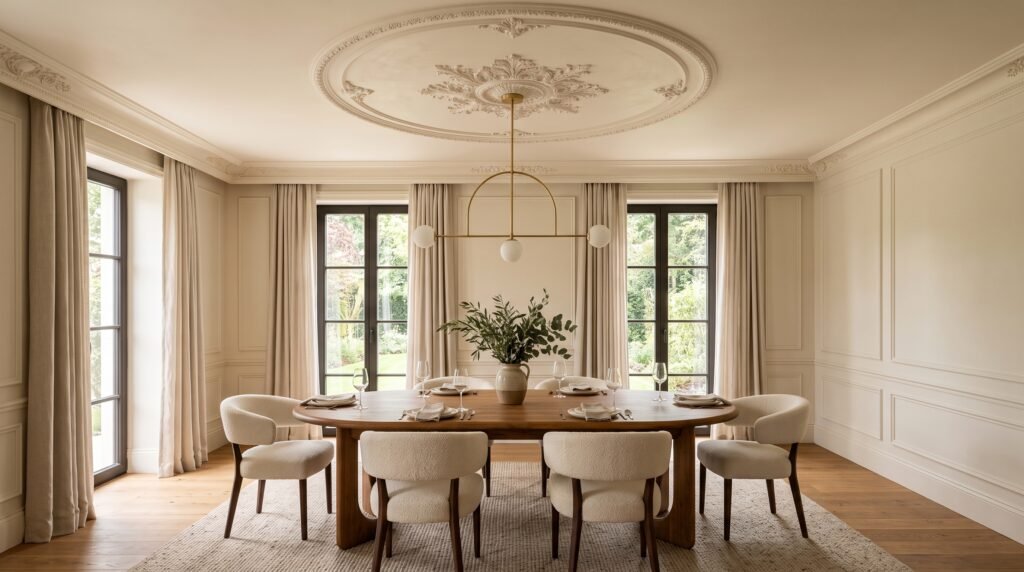
9. Add a Ceiling Medallion with a Modern Light Fixture
Traditional ceiling medallions can feel surprisingly contemporary when paired with modern lighting.
Instead of using an ornate chandelier, combine a decorative plaster medallion with a simple sculptural pendant. The contrast between historical detailing and contemporary form creates visual tension.
For a softer aesthetic, paint the medallion the same shade as the ceiling so the relief is revealed primarily through shadow.
This technique works beautifully above a dining table, in an entry hall, or at the center of a formal living room.
Keep surrounding architectural details restrained if the medallion is elaborate.
Contemporary Ceiling Medallion with Sculptural Pendant
10. Create a Curved Ceiling Detail
Curves have become increasingly prominent in contemporary interiors, and the ceiling provides another opportunity to introduce them.
A softly curved transition between the wall and ceiling eliminates harsh corners and creates a flowing architectural appearance.
You could also create a recessed oval, circular, or gently arched ceiling section.
Indirect lighting can emphasize these curves beautifully. When positioned inside a recessed edge, the illumination makes the architecture appear to float.
Curved ceiling details are especially successful in bedrooms and living rooms with rounded furniture, arched openings, and organic accessories.
Keep the color palette quiet—cream, plaster white, beige, and pale stone—to allow shadow and form to become the decoration.
11. Use Decorative Ceiling Molding
Decorative molding can give a plain ceiling architectural definition without requiring major structural changes.
For a contemporary room, avoid excessively complicated patterns. Large rectangular frames or simple perimeter molding can provide enough interest.
Paint the molding and ceiling the same color for a subtle effect. Alternatively, use a slightly darker ceiling color to emphasize the framed sections.
This treatment works particularly well in rooms where you want a refined European or transitional influence.
Pair it with floor-to-ceiling curtains, elegant upholstered furniture, large-scale artwork, and simple contemporary lighting to prevent the room from feeling overly traditional.
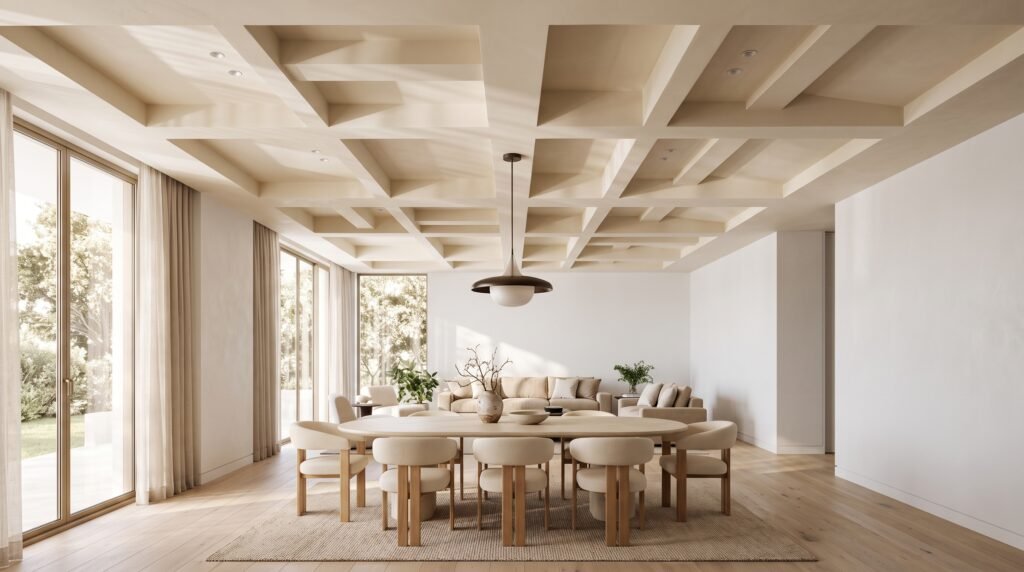
12. Install Geometric Ceiling Panels
Geometric ceiling panels provide a more graphic alternative to conventional coffering.
Large squares, rectangles, hexagonal forms, or linear arrangements can create a sophisticated architectural pattern overhead.
The effect is strongest when the palette remains restrained. Warm white, cream, beige, pale oak, or muted taupe allows the geometry to remain visible without becoming distracting.
In a contemporary dining room, geometric ceiling panels can visually anchor the table beneath them.
Use one statement pendant rather than multiple competing fixtures.
The furniture below should relate to the geometry without copying it exactly. For example, an oval table can provide a beautiful contrast to a rectangular ceiling pattern.
Modern Geometric Panel Statement Ceiling
13. Create a Reflective Ceiling Accent
Reflective surfaces can make a ceiling feel lighter and more expansive.
Rather than covering the entire ceiling in mirror, consider using reflective material within a recessed section. Antiqued mirror, softly reflective metallic finishes, or subtly polished surfaces can create a sophisticated glow.
This approach works especially well in dining rooms, dressing rooms, and glamorous entryways.
The reflection of pendant lights adds another layer of visual interest.
Because reflective materials already attract attention, keep surrounding elements understated. Neutral walls, simple furniture, and limited accessories will prevent the room from feeling overly decorative.
14. Bring Texture Overhead with Woven Materials
Natural woven materials can introduce an unexpected sense of warmth overhead.
Depending on the room and appropriate installation requirements, woven-look panels, cane-inspired inserts, or textured natural-fiber surfaces can create a relaxed atmosphere.
This look works especially well in sunrooms, covered transitional spaces, relaxed bedrooms, and interiors influenced by coastal or organic design.
Pair woven texture with light oak, linen, limestone, and soft cream upholstery.
Because natural woven surfaces contain a lot of detail, avoid using equally busy wall patterns nearby.
The goal is to let the ceiling provide texture while the rest of the space remains calm.
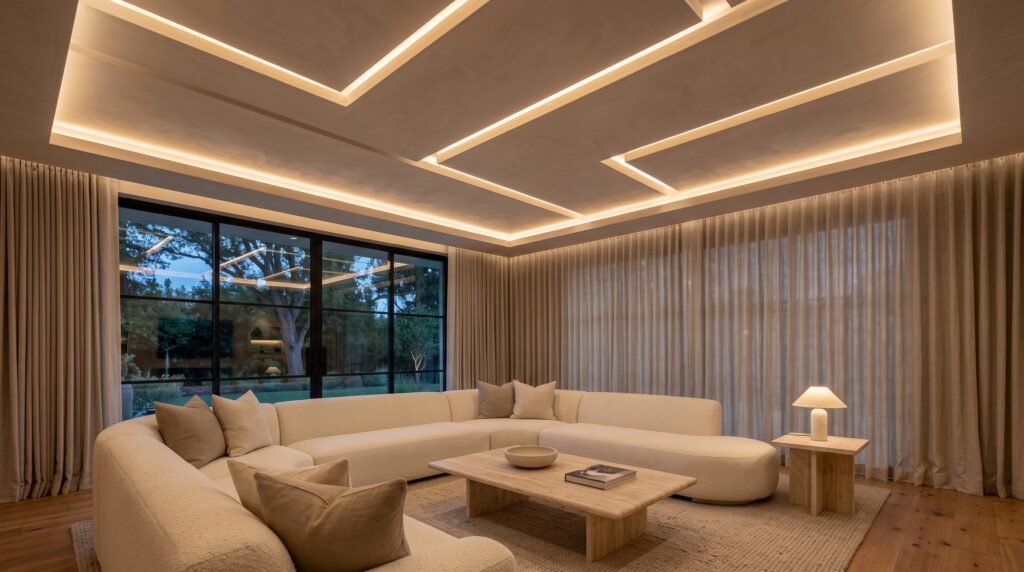
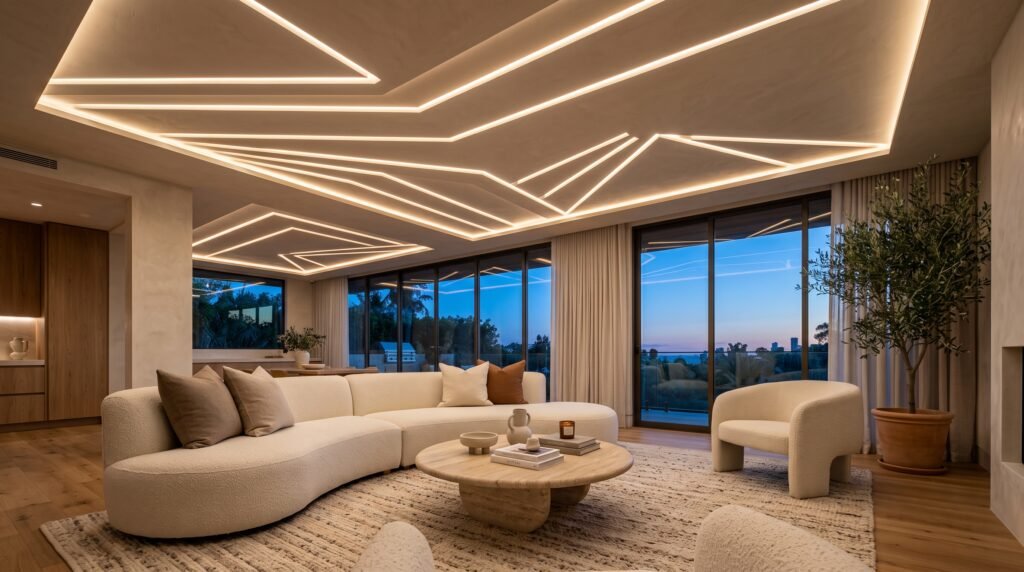
15. Combine Ceiling Texture with Integrated Lighting
Lighting does not have to sit on top of the ceiling design—it can become part of it.
Architectural channels, recessed linear lights, hidden perimeter illumination, and carefully positioned spotlights can emphasize ceiling forms.
For example, linear lighting can run alongside wood slats, while concealed lighting can outline a recessed plaster feature.
The best results often come from lighting that appears integrated rather than added afterward.
Use warm illumination in residential spaces to maintain a comfortable atmosphere.
Dimmer controls are also valuable because the ceiling can look bright and architectural during gatherings, then soft and atmospheric in the evening.
Architectural Statement Ceiling with Integrated Lighting
16. Extend the Ceiling Material Down One Wall
One way to create a dramatic sense of continuity is to take the ceiling material and extend it down a single wall.
For example, pale oak ceiling cladding could continue vertically behind a television or sofa. Textured plaster could flow from overhead onto a feature wall.
This approach visually connects horizontal and vertical surfaces, making the room feel more architecturally considered.
It is especially effective in contemporary open-plan interiors where you want to define one zone without adding partitions.
Keep the transition seamless whenever possible.
Furniture should sit comfortably within the architectural frame rather than blocking it completely.
17. Make the Dining Ceiling the Main Feature
Dining rooms are ideal for statement ceilings because the table naturally establishes a central composition.
A recessed ceiling section can mirror the approximate footprint of the dining table below. Add a sculptural pendant at the center and concealed lighting around the edges.
Another option is a darker painted ceiling that contrasts with light walls and cream upholstered chairs.
Wallpaper, plaster texture, and geometric paneling can also work well.
Whatever treatment you choose, ensure the ceiling and lighting feel connected. A carefully selected pendant can visually bridge the ceiling feature and dining table, producing a cohesive layered composition.
18. Design a Minimalist Plaster Statement Ceiling
Statement does not necessarily mean elaborate.
A minimalist ceiling can become memorable through subtle texture, thoughtful proportions, and beautiful lighting.
Consider a warm plaster finish with a shallow recessed border and softly rounded edges. The architecture may be almost monochromatic, yet changing daylight creates enough shadow to reveal its form.
Pair the ceiling with warm white walls, a low cream sectional, a travertine coffee table, an ivory rug, and one sculptural indoor tree.
The result feels calm rather than decorative.
This approach is particularly suitable for organic-modern interiors where natural materials and understated architectural details are more important than bold patterns.
Minimalist Textured Plaster Statement Ceiling
How to Choose the Right Statement Ceiling
Before selecting a ceiling treatment, consider the room’s size, ceiling height, natural light, existing architecture, and overall decorating style.
Large rooms with generous ceiling heights can usually accommodate stronger treatments such as coffering, wood cladding, geometric panels, and dark colors. Smaller rooms may benefit from more restrained options such as paint, wallpaper, shallow molding, or subtle plaster texture.
Think about how the ceiling will interact with the floor as well. If both surfaces are highly patterned, the room may feel visually busy. A dramatic ceiling often looks strongest above relatively simple flooring.
The same principle applies to walls. When the ceiling contains substantial texture, smooth walls provide visual breathing room.
Most importantly, the treatment should feel connected to the rest of the interior rather than added simply for impact.
Choosing Colors for a Statement Ceiling
Warm neutrals are among the easiest ceiling colors to incorporate into a sophisticated home.
Cream, oatmeal, beige, taupe, warm greige, and muted stone shades add subtle contrast without making a room dramatically darker.
For a stronger statement, consider earthy green, deep brown, charcoal, muted blue, or burgundy.
Remember that ceiling colors can appear darker because they receive light differently from vertical walls. Test samples in the actual room and observe them during different times of day.
When using natural wood overhead, consider its undertone. Warm oak complements cream and beige, while deeper walnut pairs beautifully with richer neutrals and brass accents.
Statement Ceilings in Small Rooms
A common assumption is that statement ceilings only work in large luxury spaces, but smaller rooms can benefit enormously from overhead decoration.
Wallpaper can make a tiny powder room memorable. A painted ceiling can turn a small bedroom into a cozy retreat. Simple molding can make a compact dining area feel more finished.
The trick is choosing the right scale.
In smaller spaces, avoid excessively deep architectural treatments that significantly reduce perceived ceiling height unless the intimate effect is intentional.
Instead, use surface-level details such as paint, wallpaper, shallow molding, or gentle texture.
A small room can actually be an excellent place to experiment because the limited surface area makes bold design choices easier to control.
How Lighting Changes a Statement Ceiling
Lighting should be considered at the beginning of the design process rather than after the ceiling has been completed.
A textured ceiling becomes much more visible when light grazes across its surface. Concealed LEDs can emphasize recessed details, while spotlights can reveal plaster texture or wood grain.
Pendant lights provide another opportunity to reinforce the design.
If the ceiling itself is highly decorative, choose a simpler fixture. If the ceiling treatment is restrained, a sculptural chandelier or pendant can become part of the statement.
Layered lighting generally creates the most flexible result. Combine architectural lighting with decorative fixtures and softer lamps elsewhere in the room.
Common Statement Ceiling Mistakes to Avoid
One of the most common mistakes is trying to incorporate too many ideas simultaneously. Coffering, bold color, elaborate wallpaper, dramatic lighting, and multiple materials rarely need to exist on the same ceiling.
Choose one primary statement and allow supporting details to remain subtle.
Scale is another important consideration. Very small patterns may disappear on a high ceiling, while oversized architectural elements can overwhelm a compact room.
Also consider ceiling height before introducing deep dropped sections or heavy visual materials.
Do not forget practical elements such as ventilation, smoke detectors, sprinklers, ceiling fans, speakers, access panels, and lighting. These should be integrated thoughtfully rather than appearing randomly within the finished design.
For structural additions, electrical modifications, or heavy overhead materials, use appropriate professional installation and follow applicable building and product requirements.
How to Keep a Statement Ceiling Timeless
Trends can provide inspiration, but a ceiling is generally more difficult to change than cushions or artwork.
Natural materials and restrained architectural details tend to have greater longevity. Warm wood, plaster, simple molding, subtle coffering, and thoughtfully integrated lighting can adapt to many decorating styles.
If you want to experiment with something bolder, paint and wallpaper offer easier ways to introduce personality without committing to major construction.
Keep the overall room balanced. A distinctive ceiling does not require equally dramatic walls, floors, and furniture.
Allowing one architectural element to lead often produces a more sophisticated interior.
Final Thoughts
The ceiling deserves much more attention than it usually receives. As the fifth wall of a room, it offers an enormous opportunity to introduce character without taking away valuable floor space.
A light oak slatted ceiling can warm a contemporary living room, while a modern coffered design introduces elegant architectural structure. A tray ceiling with concealed lighting can create a relaxing evening atmosphere, and textured plaster offers a beautifully understated organic finish.
For something bolder, wallpaper, rich paint colors, geometric panels, or reflective accents can transform an ordinary ceiling into an unforgettable focal point.
The most successful statement ceilings are not simply decorative. They work with the room’s proportions, lighting, materials, and furniture to create a unified environment.
Whether your style is organic-modern, minimalist, contemporary, transitional, or quietly luxurious, looking upward may reveal the perfect place for your home’s next major design feature.