Fluted Wall Panel Ideas: 18 Stylish Ways to Add Texture and Architectural Character
Flat walls can make even a beautifully furnished room feel unfinished. One of the easiest ways to introduce architectural character without filling a space with extra furniture or accessories is through fluted wall panels. Their repeated vertical grooves create texture, rhythm, and subtle shadow, turning an ordinary surface into a feature that feels intentionally designed.
Fluted panels have become especially appealing in modern, organic-modern, minimalist, contemporary, and luxury interiors. Depending on the material and finish, they can feel warm and natural, clean and architectural, or dramatically sophisticated. Light oak fluting can soften a neutral living room, while dark walnut creates a moodier atmosphere. Painted panels can blend almost seamlessly into a wall, and stone-inspired fluting can give a room the feeling of a high-end hotel or boutique residence.
Another advantage is versatility. You do not need to cover every wall. A narrow section behind a console, a half-height treatment in a bedroom, or a carefully framed panel behind a television can provide enough texture to transform the room.
Below are 18 fluted wall panel ideas to inspire a stylish interior, from subtle neutral treatments to bold architectural statements.
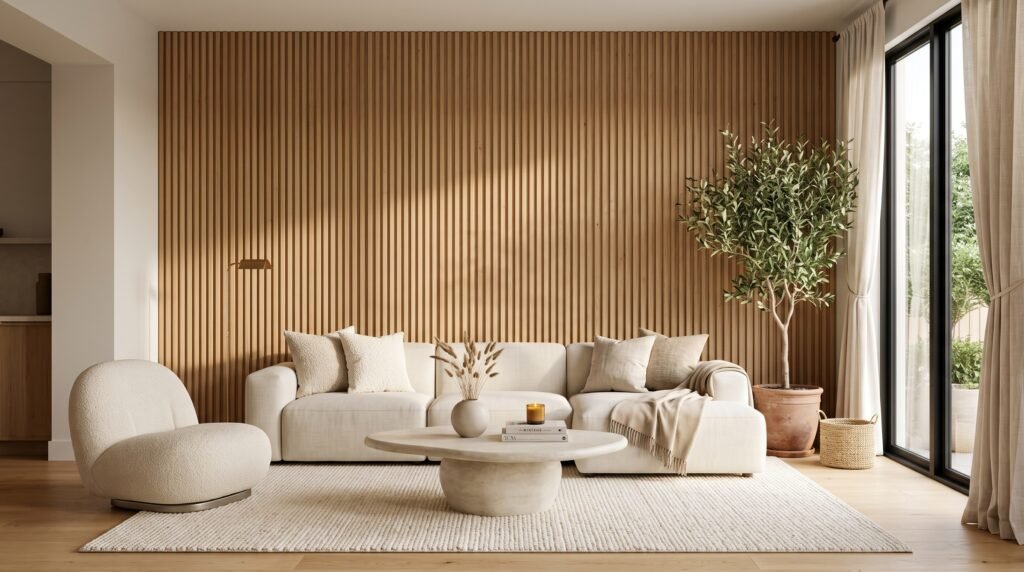
1. Create a Warm Oak Fluted Living Room Wall
Natural oak is one of the most timeless choices for fluted wall panels. Its warm coloring complements cream, beige, ivory, taupe, and other soft neutrals while giving a minimalist room more depth.
Consider installing vertical light-oak panels across the main feature wall of a living room. Pair them with a large cream sectional, a textured ivory rug, and a rounded stone coffee table. The repeated wooden lines create visual interest while the simple furniture prevents the room from feeling overly busy.
Keep accessories restrained. A ceramic vase, a few books, and a sculptural indoor tree may be enough.
Natural daylight is particularly beautiful against fluted wood because every groove produces a slightly different highlight and shadow. This subtle variation makes the wall look different throughout the day.
Light Oak Fluted Living Room Feature Wall
2. Use Fluted Panels Behind the TV
A television wall often becomes a difficult decorating area. Too little decoration makes the screen feel disconnected from the room, while too many shelves and accessories can make the wall look cluttered.
Fluted panels offer a clean alternative.
Create a wide panelled section behind a wall-mounted television and add a simple floating console underneath. Light oak works beautifully for relaxed contemporary interiors, while walnut or dark-stained wood creates a more dramatic appearance.
For an elevated finish, integrate warm LED lighting around selected edges or beneath the console. The lighting emphasizes the grooves without competing with the television.
If the entire wall feels too strong, cover only the central section. Leaving smooth plaster on either side creates contrast and gives the television area a more architectural composition.
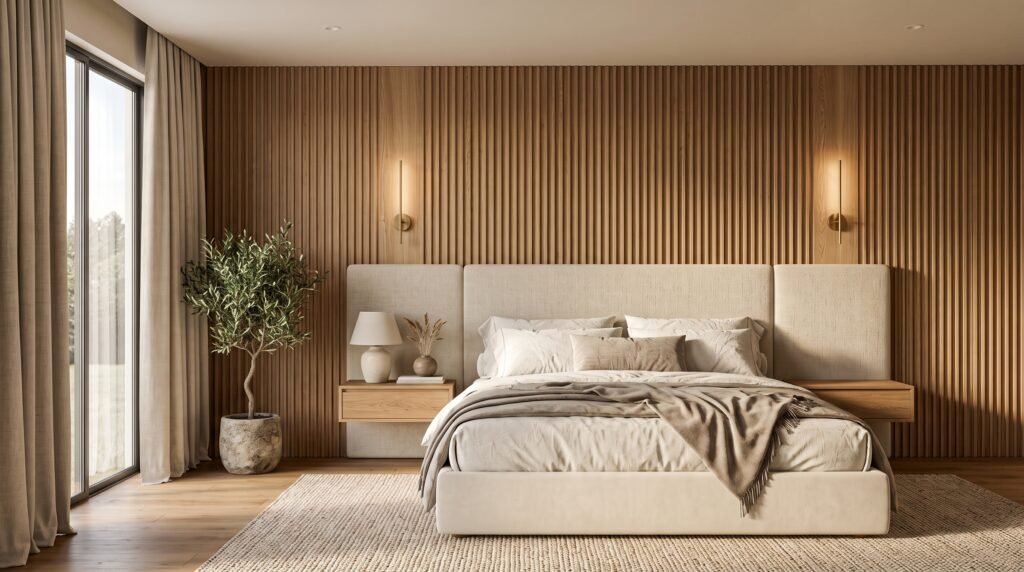
3. Design an Elegant Fluted Bedroom Headboard Wall
Fluted panels can replace a conventional headboard or create a dramatic backdrop behind one.
Extend the panel treatment from the floor toward the ceiling behind the bed. For a serene bedroom, choose pale oak, warm beige, or soft taupe. Layer the room with an upholstered bed, oatmeal linen bedding, neutral cushions, and soft curtains.
Instead of adding large artwork, allow the texture of the wall to become the decorative feature.
Wall-mounted bedside lights can be positioned directly against the panels, creating warm pools of light that accentuate the vertical grooves at night.
For an especially luxurious effect, combine a central upholstered headboard with fluted panels extending outward on both sides.
Luxury Fluted Bedroom Headboard Wall
4. Try Half-Height Fluted Wall Panels
Fluted panels do not always need to reach the ceiling. A half-height installation offers a lighter interpretation and can work especially well in bedrooms, hallways, dining areas, and home offices.
Install panels on the lower portion of the wall and finish the upper section with warm white, cream, or beige paint.
The division creates architectural structure similar to traditional wall paneling but with a more contemporary appearance.
A narrow ledge can also be incorporated along the top. Use it sparingly for small framed artwork or ceramics.
Half-height fluting is particularly useful when you want texture without allowing the feature to dominate a smaller room.
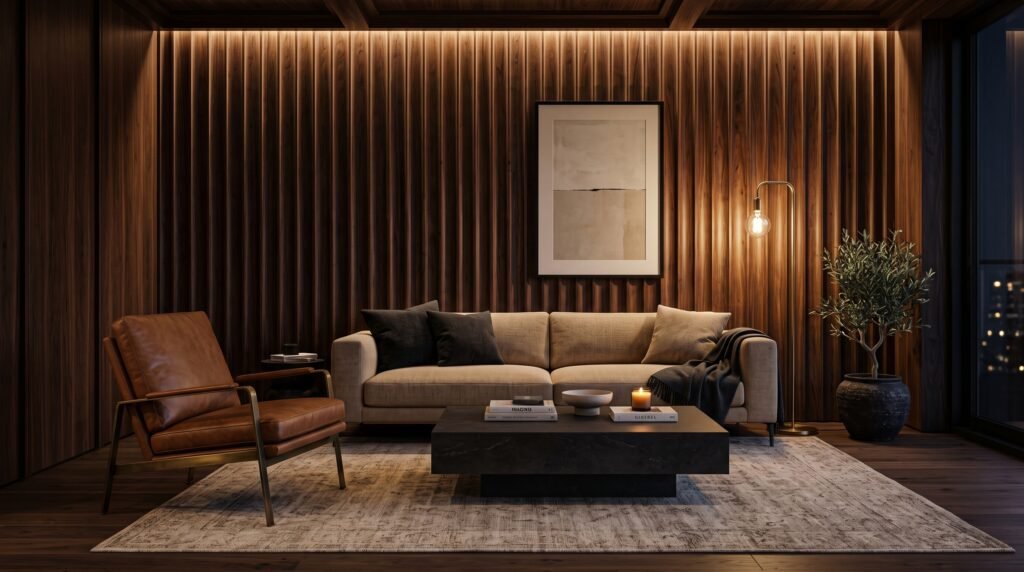
5. Add Dark Walnut Fluting for a Moody Interior
While pale oak creates an airy Scandinavian-inspired appearance, walnut offers a richer and more dramatic alternative.
Dark walnut fluted panels work beautifully in sophisticated living rooms, studies, dining rooms, and entertainment areas. Combine them with warm ambient lighting, brown leather, charcoal upholstery, aged brass, and natural stone.
Lighting is especially important with darker walls. Wall washers, concealed LED strips, or warm sconces can reveal the texture and prevent the surface from appearing flat.
You can also balance a dark feature wall with lighter flooring and furniture. For example, pair walnut panels with a cream boucle chair and a large ivory rug.
The resulting contrast feels luxurious without requiring excessive decoration.
Dark Walnut Fluted Wall with Warm Lighting
6. Combine Fluted Wood with Natural Stone
Mixing materials is an effective way to make a fluted feature wall feel more custom.
Try combining vertical oak fluting with a central section of travertine, limestone, or another softly textured stone. The wood contributes warmth, while the stone adds visual weight and sophistication.
This combination is particularly effective for television walls and fireplace surrounds.
Maintain a restrained palette so that the materials remain harmonious. Cream upholstery, beige rugs, pale wood, and warm stone tones create a calm organic-modern environment.
Avoid introducing too many additional textures nearby. When wood and stone already provide strong architectural interest, simple furnishings usually produce the most elegant result.
7. Frame a Fireplace with Fluted Panels
A fireplace naturally creates a focal point, and fluted wall panels can strengthen that focal point without making it overly decorative.
Place panels on either side of a simple plaster or stone fireplace. The vertical grooves help visually emphasize ceiling height and frame the fireplace like a piece of architecture.
For an organic-modern room, combine pale oak panels with a limestone fireplace surround. Add a low cream sofa, sculptural lounge chair, oversized rug, and minimal ceramics.
Another approach is to use darker panels around a contemporary black fireplace for a more dramatic mood.
Keep combustible materials and required clearances in mind when designing around an operating fireplace; the panel system and installation should be suitable for the fireplace type and local requirements.
Fluted Wood and Stone Fireplace Feature Wall
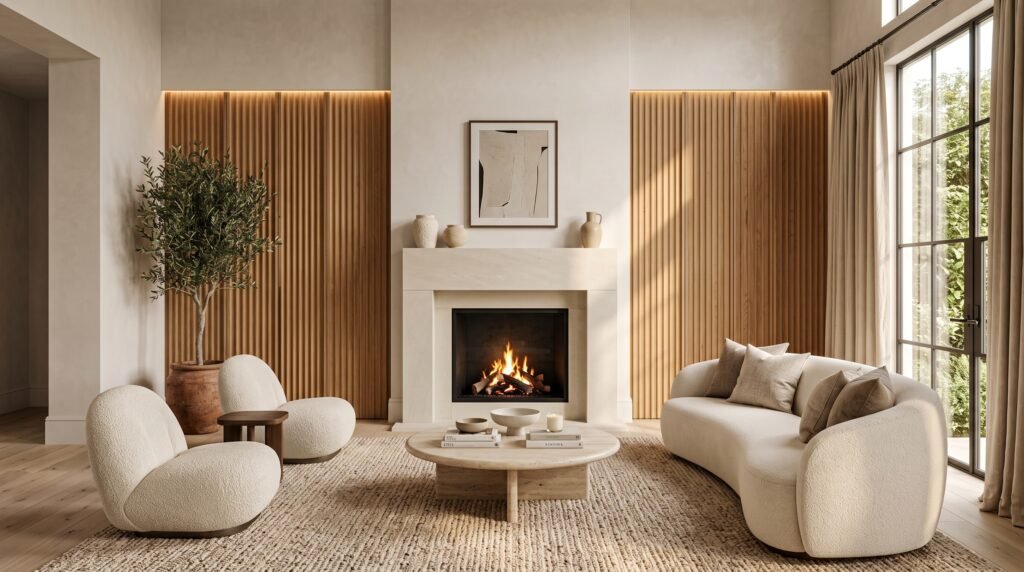
8. Introduce Painted Fluted Panels
Wood is not the only look available. Painted fluted panels can feel softer and more integrated with the architecture.
Painting the panels the same color as the surrounding walls creates a subtle monochromatic effect. Warm beige, greige, muted taupe, creamy white, and dusty sage can all work beautifully.
This approach is particularly useful if you want the texture without introducing another wood tone into a room that already contains wooden furniture or flooring.
A tone-on-tone design also allows shadows to become the main decorative element. As sunlight moves across the surface, the grooves appear more pronounced.
For a refined look, choose a finish that does not create excessive shine.
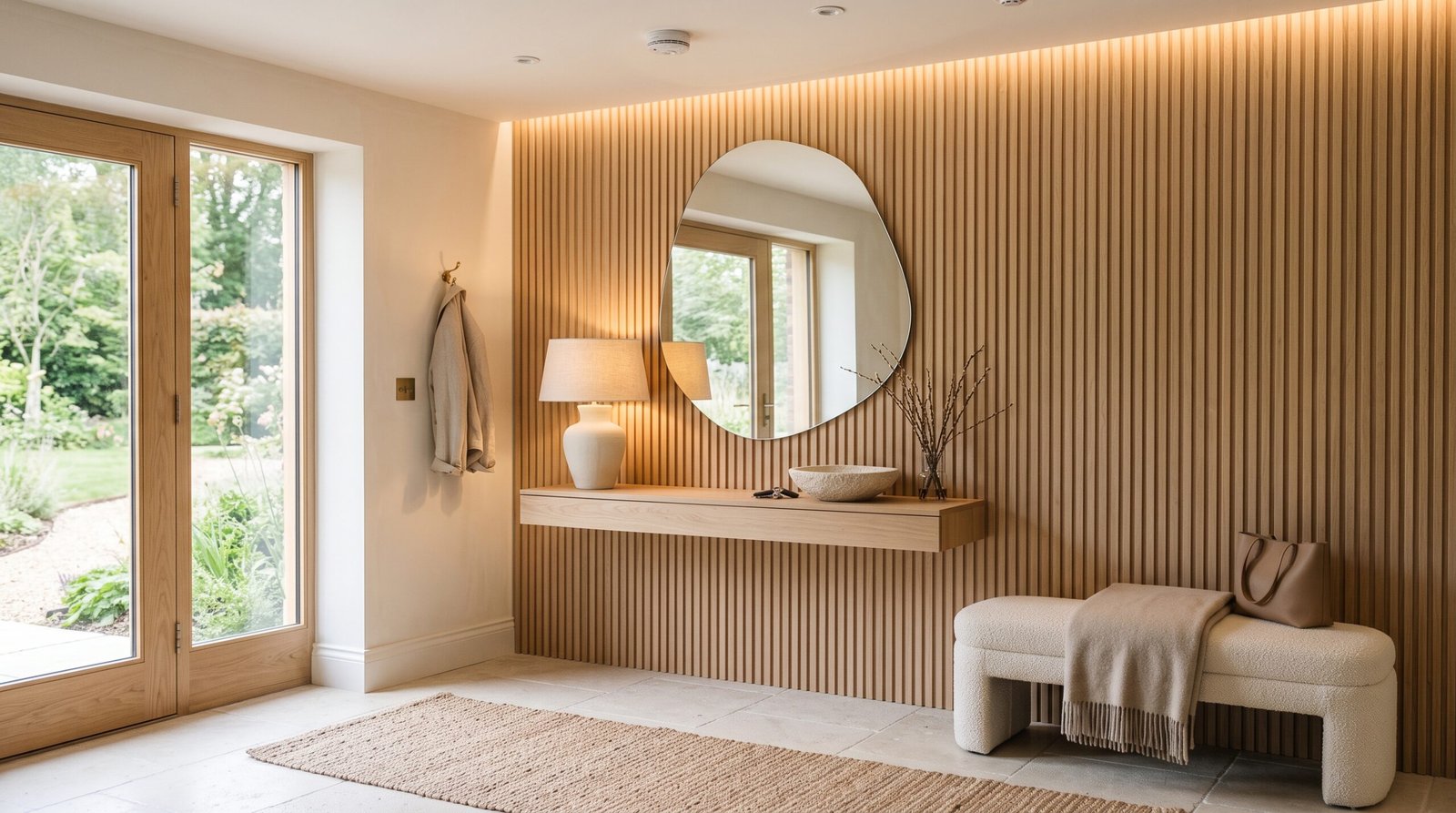
9. Make a Fluted Entryway Feature
Entryways are often narrow, which means there may not be enough space for large furniture or elaborate styling. Wall texture can provide personality without taking up floor space.
Install fluted panels behind a slim floating console or along one carefully selected entry wall.
Add a round or organically shaped mirror to contrast with the strong vertical lines. A small ceramic lamp, sculptural bowl, and simple branch arrangement can complete the vignette.
If the entry receives little natural light, integrate warm lighting into the design.
This treatment immediately gives visitors a sense of intentional design while maintaining a clean circulation path.
Minimalist Fluted Entryway with Floating Console
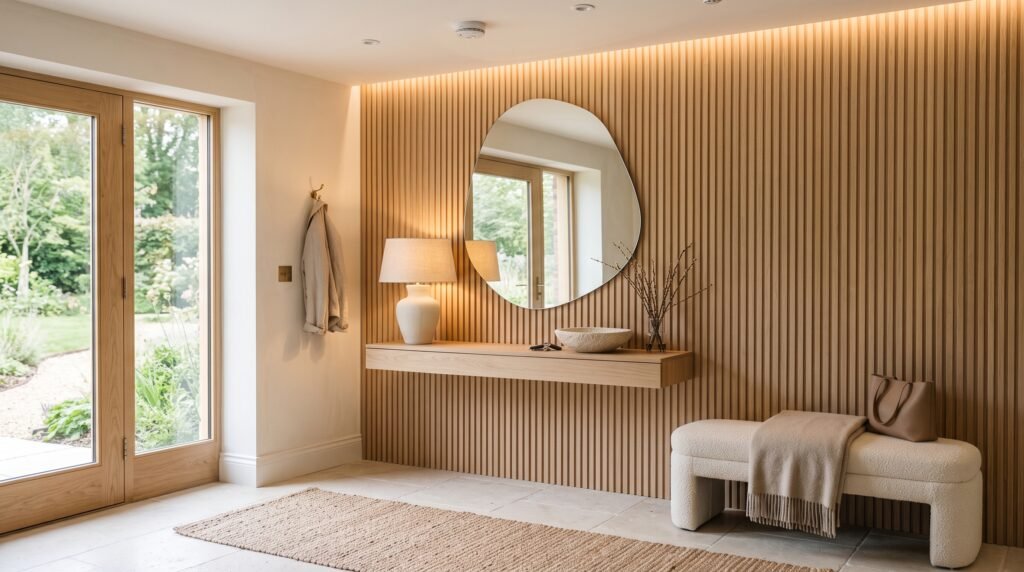
10. Wrap Fluting Around a Curved Wall
Fluting can look particularly striking on rounded architectural forms.
If a room includes a curved partition, column, island-like architectural feature, or rounded wall, narrow vertical flutes can follow the curve and emphasize its sculptural shape.
The combination of repeated linear grooves and a soft curved silhouette creates a beautiful contrast.
Choose flexible or purpose-designed panel systems suitable for curved applications rather than forcing rigid panels around a radius they cannot accommodate.
Keep the surrounding decor simple so the architecture becomes the main attraction. Smooth plaster walls, natural stone flooring, and minimal furniture allow the curved fluting to stand out.
11. Create a Fluted Dining Room Backdrop
Dining rooms benefit from a defined focal wall, especially in open-plan homes.
A fluted wall behind the dining table can visually establish the dining zone without needing a physical divider.
For a warm contemporary look, use medium-tone oak panels behind a substantial wooden dining table. Add cream upholstered chairs and a large sculptural pendant overhead.
If the wall is large, you can break up the fluting with artwork or a smooth central panel. However, one oversized piece usually looks more sophisticated than several small decorations.
Warm pendant lighting will cast soft shadows across the grooves during evening meals, creating an intimate atmosphere.
Sophisticated Fluted Dining Room Wall
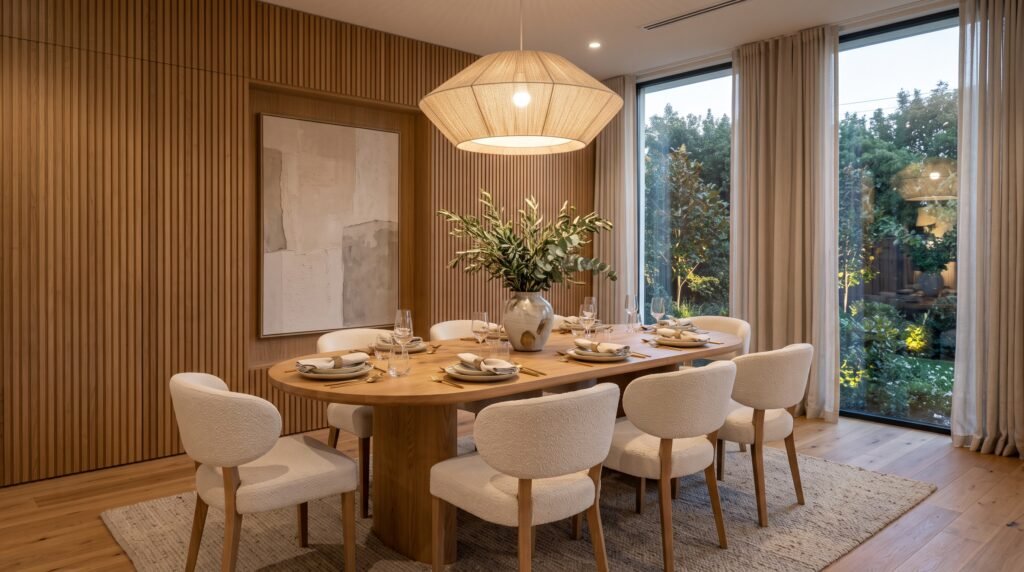
12. Use Narrow Fluting in Small Rooms
Small spaces can still benefit from architectural texture, but scale matters.
Narrow grooves often work beautifully because they create detail without making the surface feel excessively heavy. Instead of covering all four walls, select one focal area.
A small reading corner, compact home office, or apartment living room can gain considerable character from a single fluted section.
Light colors are usually easier to work with in tight rooms. Pale oak, cream, and warm white maintain brightness while still providing visible texture.
Mirrors can also help. Positioning a mirror beside or against the fluted surface reflects both daylight and the panel detail, making the space feel more dimensional.
13. Create a Hidden Door Within Fluted Paneling
One of the most sophisticated uses of fluted paneling is disguising a door within a continuous feature wall.
When the grooves run uninterrupted across both the wall and door, the doorway can visually disappear when closed.
This technique works particularly well for doors leading to closets, powder rooms, storage areas, or private corridors.
Precise installation is essential because the panel alignment determines whether the concealed effect succeeds. Minimal hardware or a carefully selected handle can preserve the clean appearance.
The result is ideal for modern interiors where uninterrupted architectural surfaces are preferred over visually prominent door frames.
Seamless Fluted Wall with Hidden Door
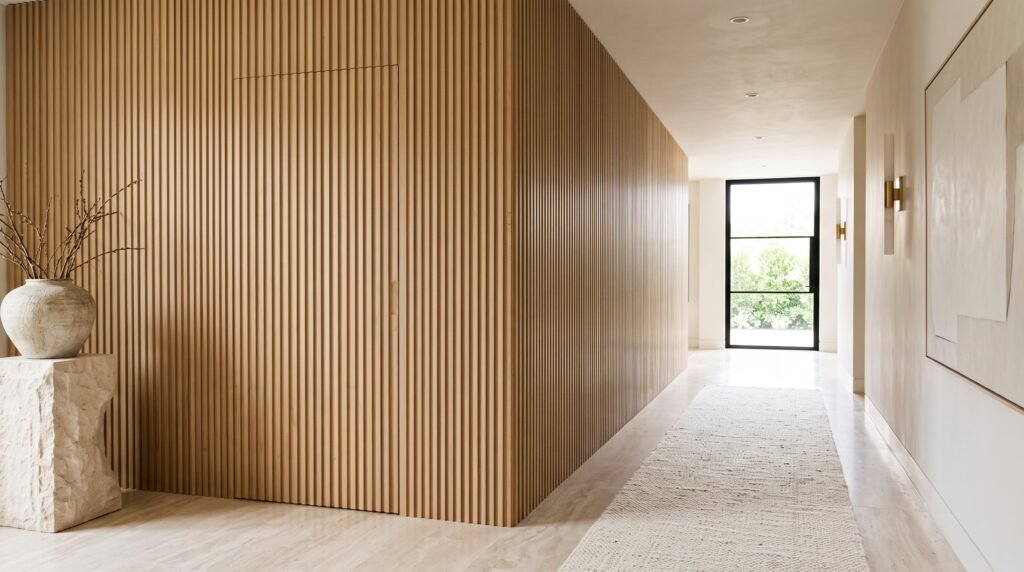
14. Highlight Fluted Panels with Integrated Lighting
Lighting can completely transform a textured wall.
Instead of relying solely on ceiling lights, consider incorporating concealed LEDs along one side, above the panel, or underneath an adjacent floating element.
Warm illumination travels across the grooves, creating alternating areas of light and shadow. This makes the texture more noticeable in the evening.
The key is subtlety. Extremely bright strips can make an otherwise luxurious wall feel commercial. Soft indirect lighting tends to create a more residential and sophisticated result.
For bedrooms and living spaces, warm lighting also complements natural wood tones particularly well.
15. Create a Fluted Home Office Backdrop
A home office does not have to feel purely functional. Fluted paneling can make the workspace feel polished while keeping decoration minimal.
Install light oak or warm walnut panels behind the desk. A simple floating shelf can cross part of the wall, providing space for books and a few sculptural objects.
Choose a desk in a complementary wood tone and add an upholstered chair for softness.
If the office is used for video calls, the fluted backdrop can also provide a clean, visually interesting background without looking cluttered.
Add a plant for a natural accent and use warm task lighting to enhance the cozy atmosphere.
16. Mix Fluted Panels with Smooth Plaster
Covering an entire wall is not always necessary. In fact, fluting can become more noticeable when contrasted with a completely smooth surface.
Divide a feature wall into sections, using fluted wood on one portion and warm plaster on another.
The transition between the two materials creates architectural interest even if both share similar colors.
This idea works particularly well in large living rooms where a fully fluted wall might feel overwhelming.
For example, a television could sit against smooth cream plaster while oak fluting occupies one side. A floating console running across both materials visually connects the composition.
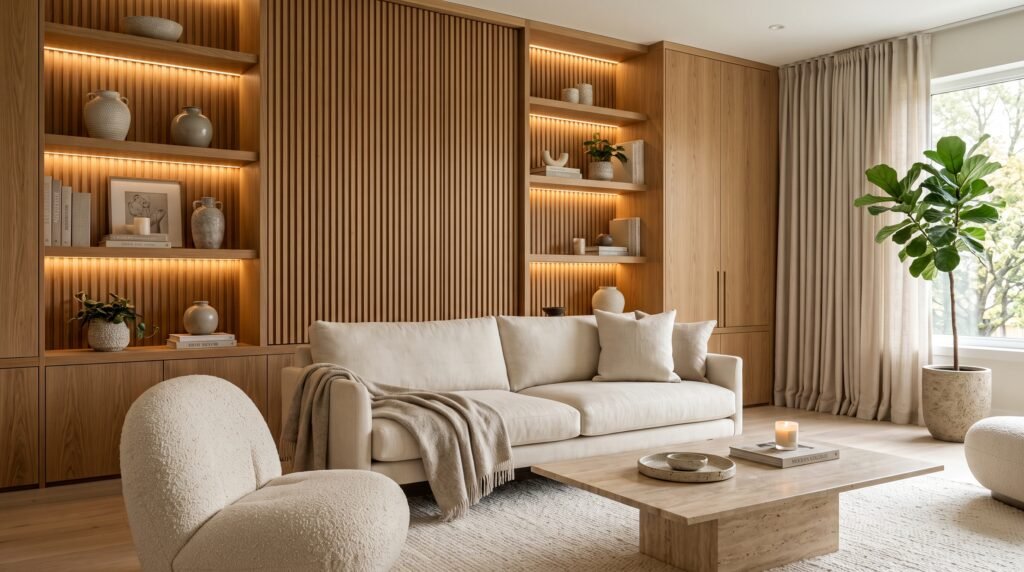
17. Build Fluted Panels into Shelving
Combining storage with wall texture makes the feature both decorative and functional.
Use fluted panels as the backdrop for open shelves, or place them between smooth built-in cabinets.
Integrated shelf lighting can emphasize the vertical grooves behind ceramics, books, and sculptural objects.
Avoid filling every shelf. Leaving generous negative space allows both the accessories and textured background to remain visible.
Choose a small number of objects in coordinating materials such as stone, ceramic, glass, and natural wood.
This creates the carefully curated appearance often seen in luxury interior photography.
Fluted Wall with Integrated Display Shelving
18. Use Floor-to-Ceiling Fluting for Maximum Impact
For a dramatic architectural statement, take the panels all the way from floor to ceiling.
This continuous vertical treatment draws the eye upward and can make ceilings appear taller.
It works especially well on large uninterrupted walls in living rooms, bedrooms, dining areas, and entrance halls.
Floor-to-ceiling fluting does not require elaborate furniture. In fact, the stronger the architectural wall, the simpler the surrounding styling can be.
Pair the panels with low-profile furniture so more of the vertical surface remains visible. A cream sofa, sculptural stone table, large neutral rug, and one indoor tree can be enough to complete the room.
For tall spaces, consider wider flutes or a slightly deeper profile so the texture remains visible from across the room.
How to Choose the Right Fluted Wall Panel Style
Before selecting panels, think about the overall mood you want to create.
Light oak works especially well in Scandinavian, Japandi, organic-modern, coastal-neutral, and relaxed contemporary spaces. It provides warmth without making a room feel dark.
Walnut and darker woods create a more sophisticated, intimate atmosphere. They are particularly effective in studies, dining rooms, media rooms, and luxury living spaces.
Painted fluting is ideal when you want architectural texture rather than obvious wood grain. Matching the panel color to the wall creates an elegant tone-on-tone result.
Also consider the width and depth of the grooves. Fine fluting creates a delicate texture, while wider or deeper grooves produce stronger shadows and a more architectural appearance.
Always view samples in the actual room if possible. Natural and artificial lighting can significantly change how the material, color, and shadows appear.
How Much Fluted Paneling Should You Use?
One of the biggest design decisions is deciding where to stop.
Although floor-to-ceiling paneling can be spectacular, covering too many surfaces may overwhelm a room. In most homes, fluting works best when it establishes a deliberate focal point.
A television wall, fireplace wall, headboard wall, dining backdrop, entryway, or office wall is usually enough.
If you want a subtler look, consider half-height panels or a narrow vertical section.
Another technique is to repeat the material in small amounts elsewhere. For example, an oak fluted feature wall might relate to an oak console or shelving unit on the opposite side of the room. This creates visual continuity without repeating the exact wall treatment.
Styling Fluted Walls Without Creating Clutter
Fluted paneling already provides pattern through its repeated lines, so it rarely needs excessive decoration.
Use fewer but larger accessories. One substantial piece of artwork often works better than a crowded gallery wall.
Curved furniture is especially effective because it contrasts beautifully with the vertical lines. Rounded coffee tables, boucle chairs, curved sofas, organic mirrors, and sculptural lamps can soften the geometry.
Textiles provide another layer of balance. Linen curtains, wool rugs, upholstered seating, and textured cushions introduce softness against the harder architectural surface.
Plants also work exceptionally well with fluted wood. An olive tree, ficus, or other sculptural indoor plant adds irregular organic shapes that break up the repeated vertical pattern.
Common Fluted Wall Panel Mistakes to Avoid
The first mistake is using too much. Fluting is visually active, even when the color is neutral. Covering every wall can reduce the impact of the feature.
Another mistake is ignoring transitions. Corners, outlets, switches, doorways, and skirting details should feel integrated rather than accidental.
Poor lighting can also weaken the effect. If a heavily textured wall receives completely flat illumination, much of its dimensional quality can disappear.
Material choice matters as well. Before buying, consider durability, moisture exposure, cleaning requirements, fire performance, and the manufacturer’s recommended installation method for the specific room.
Finally, avoid overcrowding the finished wall. If the fluting is the architectural statement, allow enough visible surface for it to be appreciated.
Final Thoughts
Fluted wall panels offer a beautiful middle ground between a plain painted wall and highly decorative traditional paneling. Their repeated grooves add depth and architectural rhythm while remaining clean enough for contemporary interiors.
A light oak fluted living room wall can introduce natural warmth, while dark walnut panels create an intimate luxury atmosphere. Fluting can frame a fireplace, define a dining area, transform a bedroom headboard wall, disguise a hidden door, or give a simple entryway much more character.
The most successful designs usually treat fluting as an architectural material rather than simply another decoration. Instead of covering every available surface, choose one location where texture will have the greatest effect.
Pair it with warm neutral colors, natural stone, soft textiles, restrained accessories, thoughtful lighting, and simple furniture. The result can feel sophisticated and current while remaining calm enough to live with long term.
Whether you choose subtle painted grooves, natural oak, dramatic walnut, or an elegant wood-and-stone combination, fluted wall panels can turn an overlooked wall into one of the most memorable features in the room.