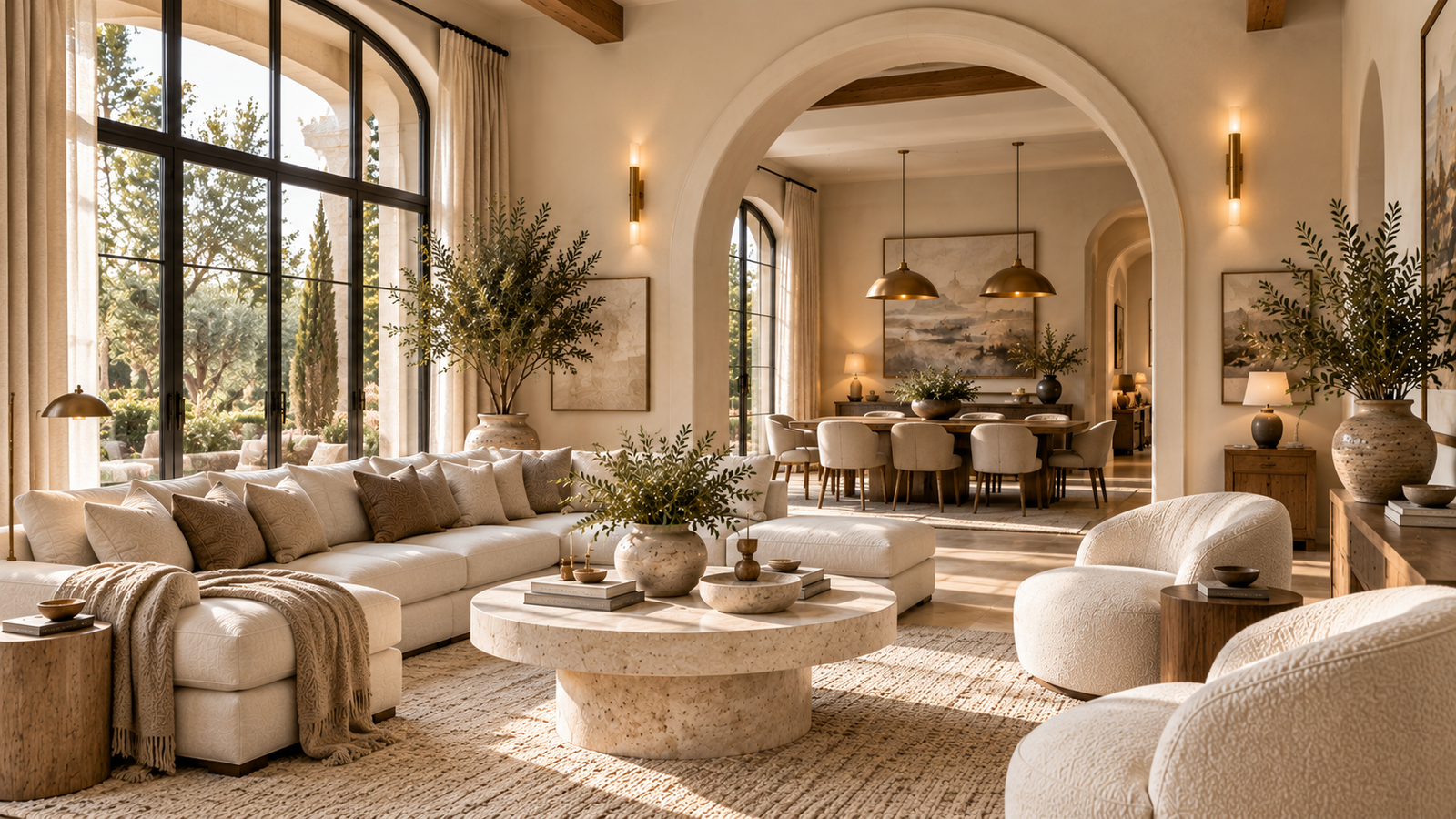
Indoor Archway Decor Ideas: 21 Beautiful Ways to Add Architectural Character to Your Home
Indoor archways have a way of making even simple interiors feel more intentional. Unlike a standard rectangular doorway, an arch introduces curves, softness, and architectural character while still allowing rooms to remain visually connected. Whether your home already has an arched opening or you are planning to incorporate one during a renovation, the right styling can turn it into one of the most memorable details in your interior.
An archway does not necessarily need elaborate decoration. In many contemporary homes, the most beautiful approach is surprisingly simple: smooth plaster, warm neutral paint, natural wood, subtle lighting, and carefully considered furniture placement.
Other interiors take the opposite approach and make the arch a statement. Decorative molding, contrasting paint, patterned tile, built-in shelving, stone surrounds, or dramatic lighting can emphasize its shape.
The best solution depends on your home’s architecture and decorating style.
From minimalist plaster arches and Mediterranean-inspired openings to dramatic dark archways and built-in bookshelf designs, these indoor archway decor ideas can help you transform an ordinary transition between rooms into a beautiful architectural feature.
1. Keep a Plaster Archway Simple and Minimal
Sometimes the shape of an arch is enough decoration on its own.
A smooth plaster archway painted the same color as the surrounding walls creates an understated architectural feature. This works particularly well in minimalist, organic-modern, Mediterranean, and Scandinavian-inspired interiors.
Warm white, cream, soft beige, and light greige are excellent choices because they emphasize subtle shadows along the curved opening.
Avoid placing too many decorative objects directly around the arch. Allow negative space to emphasize its silhouette.
If the arch connects a living room and dining area, coordinate the colors and materials visible on both sides. A warm wood dining table glimpsed through a cream plaster arch can create a beautiful layered composition.
The simplicity also makes this approach relatively timeless.
Minimalist Plaster Archway
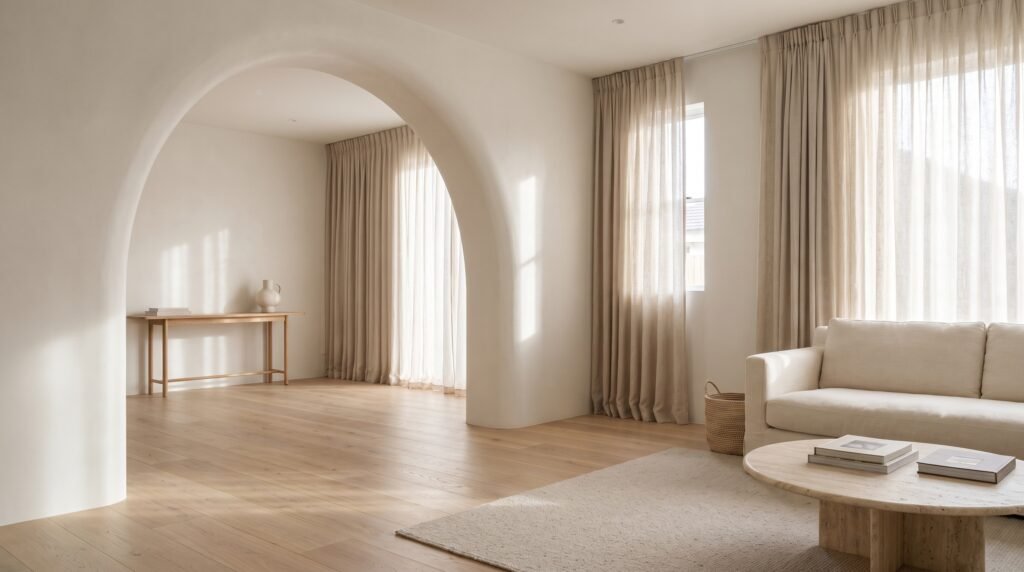
Smooth warm-white plaster arch connecting two neutral rooms with natural wood furniture and soft daylight.
2. Frame an Archway with Natural Wood
Natural wood can add warmth and definition to an indoor arch.
Instead of leaving the opening completely plastered, use a carefully crafted wood surround or wood-lined interior edge to emphasize the curve.
Light oak works beautifully in contemporary neutral homes, especially when paired with cream walls and pale stone flooring.
Darker walnut can create a more dramatic and sophisticated effect.
Repeat the wood tone elsewhere in the room through furniture, shelving, flooring, or small architectural details. This prevents the arch from looking disconnected from the rest of the interior.
A wood-trimmed arch can be especially attractive between an entryway and living area because it immediately introduces texture.
Wood-Trimmed Archway
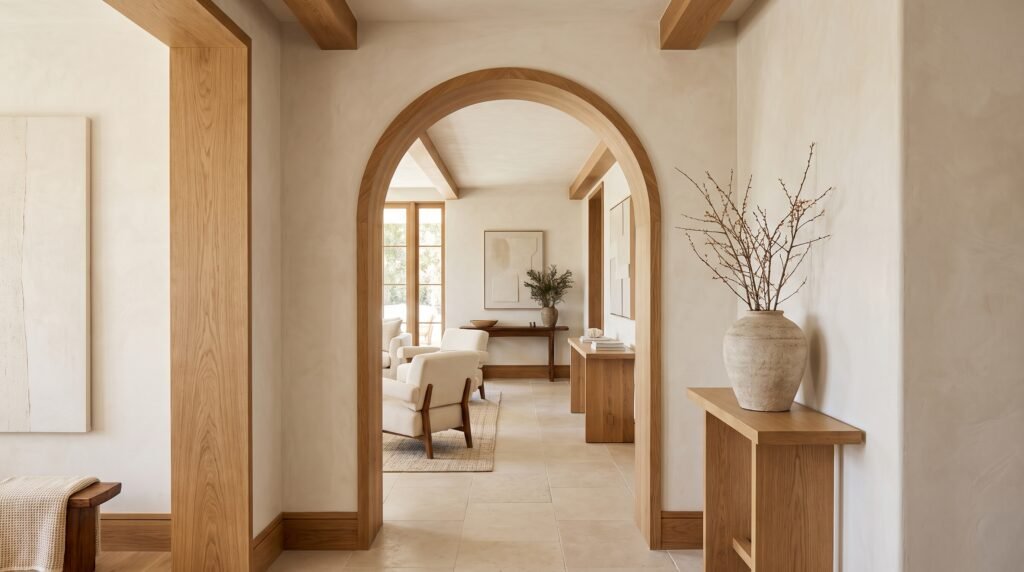
Elegant curved opening framed in warm natural oak between two sophisticated neutral interior spaces.
3. Use an Arch to Connect Living and Dining Areas
Open-plan interiors do not always need to be completely open.
A large archway can visually separate living and dining areas while preserving light, movement, and connection between them.
This is particularly useful when you want each room to have its own identity without installing a traditional door.
Consider a wide arch that frames the dining table when viewed from the living room.
The furniture arrangement can reinforce the transition. Position the sofa so it defines the living area while keeping a clear pathway toward the arch.
Use related colors in both rooms for continuity.
For example, a cream living room with warm oak furniture could open into a dining space featuring a similar wood tone and neutral upholstery.
The arch becomes a natural frame around the second room.
4. Create a Mediterranean-Inspired Arch
Arches are closely associated with Mediterranean architecture, making them ideal for interiors inspired by warm European and coastal homes.
Use softly textured plaster walls rather than perfectly glossy surfaces.
Cream, chalky white, sand, and muted beige can create an earthy foundation.
Pair the arch with terracotta pottery, rustic wood furniture, linen fabrics, and olive-green accents.
The key is restraint.
You do not need to fill the room with obvious Mediterranean motifs. The curved architecture, warm materials, and natural textures can communicate the style subtly.
A large ceramic vessel or olive tree positioned near the opening may be enough to complete the look.
Mediterranean Archway
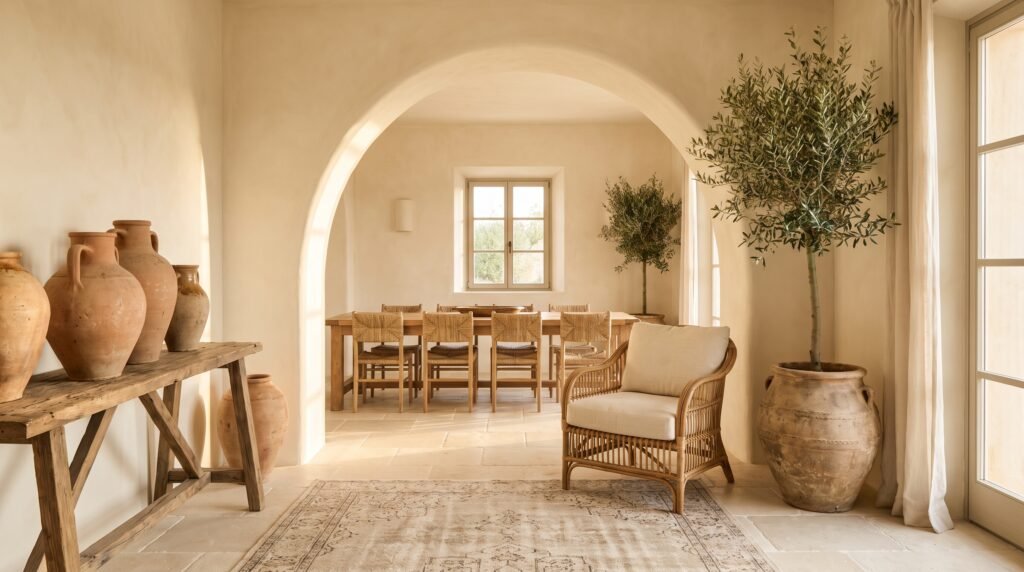
Soft textured plaster archway with creamy walls, rustic wood furniture, terracotta pottery, olive tree, and warm sunlight.
5. Highlight an Archway with Contrasting Paint
Painting an arch a different color from the surrounding wall can turn it into a focal point.
You might paint the inner surface of the opening a muted olive, taupe, terracotta, charcoal, or warm brown while keeping the surrounding walls neutral.
Another approach is to paint the entire wall containing the arch in a deeper shade.
The opening then becomes visually prominent because of the contrast between rooms.
Choose colors already present elsewhere in your home. This makes the treatment feel deliberate rather than random.
For a subtle effect, use two shades from the same color family.
For something more dramatic, contrast warm cream walls with deep olive or charcoal.
6. Add Decorative Molding Around the Arch
Decorative molding can give an archway a more traditional or European-inspired appearance.
Rather than using extremely ornate detailing, consider a simple raised border following the curve of the opening.
This provides definition while keeping the design sophisticated.
Paint the molding the same color as the wall for a subtle architectural effect.
Alternatively, use a slightly contrasting tone to emphasize the shape.
Molding works particularly well in rooms with other traditional details such as wall paneling, ceiling trim, or classic doors.
Repeat similar molding proportions throughout the interior so the arch feels integrated with the architecture.
7. Turn a Wide Arch into a Statement Feature
A large archway can become one of the strongest architectural elements in an open interior.
Instead of treating it as a doorway, think of it as a frame.
What can you see through the opening?
Perhaps the arch frames a beautiful dining table, sculptural pendant light, large artwork, or carefully arranged seating area.
This sightline matters.
Position furniture so the view through the arch feels balanced.
You can also place matching wall lights on either side of the opening to reinforce symmetry.
Keep the surrounding decor relatively restrained so the architectural shape remains dominant.
Wide Statement Archway
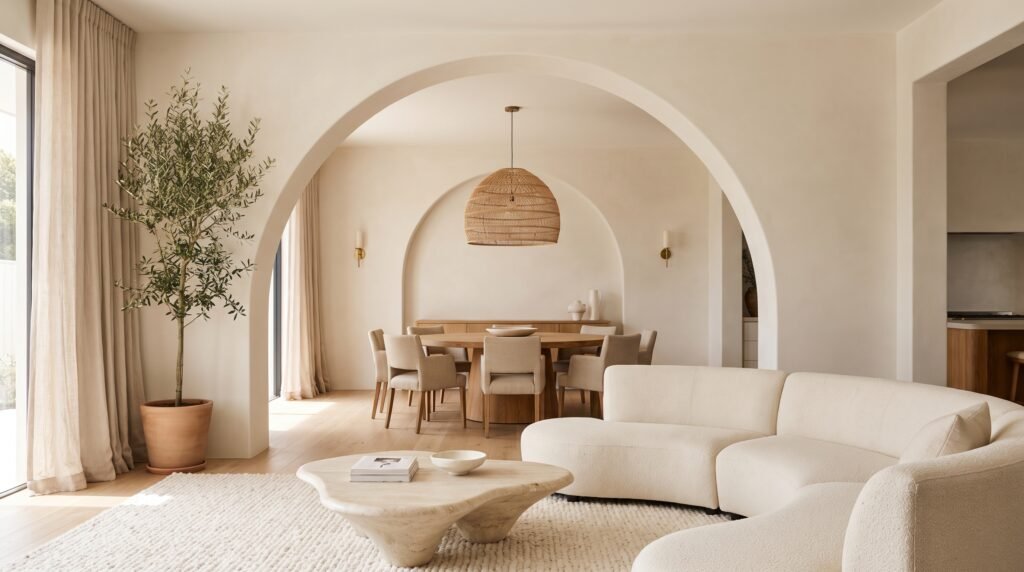
Large dramatic arch connecting an elegant living room and dining room, with balanced furniture and sophisticated neutral decor.
8. Add Built-In Shelves Around an Archway
If you need storage, combine an arch with built-in shelving.
Bookshelves positioned on either side of an arched opening can transform an ordinary wall into a custom architectural feature.
Keep shelf depth and proportions consistent so the composition looks intentional.
Paint the shelves the same color as the surrounding wall for a seamless built-in appearance.
Style them with a combination of books, ceramics, small artwork, sculptural objects, and a limited amount of greenery.
Avoid filling every shelf completely.
Negative space allows individual objects to stand out and keeps the arrangement from becoming visually heavy.
Integrated lighting inside the shelves can make the feature even more attractive in the evening.
9. Create an Arched Reading Nook
An arch does not always need to lead to another room.
A shallow arched recess can become a cozy reading nook.
Install a built-in bench inside the niche and add a comfortable seat cushion in a neutral fabric.
Layer two or three cushions for softness.
A wall-mounted reading light can provide functional illumination without occupying floor space.
If the recess is deep enough, small shelves can hold books.
This idea works beautifully in bedrooms, living rooms, hallways, or spaces beneath stairs where architecture creates an unused area.
The curved opening makes the nook feel intimate and separate without requiring a door.
Arched Reading Nook
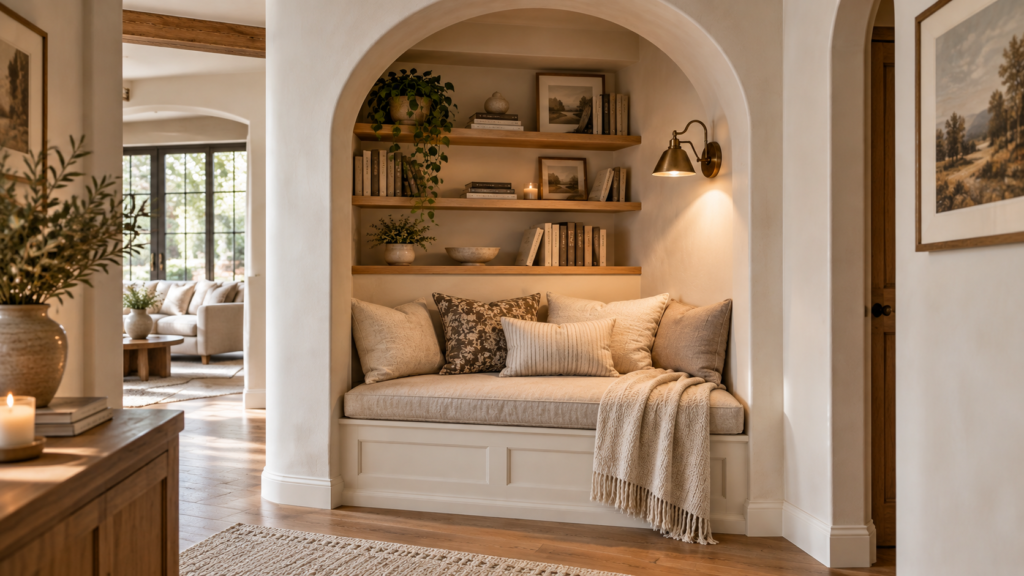
Cozy built-in arched reading niche with upholstered bench, neutral cushions, small shelves, books, and warm wall lighting.
10. Use Arched Openings in a Hallway
Hallways often receive less decorating attention than larger rooms, but arches can completely change their character.
A sequence of repeated arches creates rhythm and draws the eye through the space.
Keep the surrounding walls simple so the architecture remains visible.
A narrow runner rug can emphasize the length of the hallway, while subtle wall lights provide warm illumination.
If there is space at the end of the corridor, position a console, artwork, plant, or sculptural object where it can be framed by the arches.
This creates a strong focal point and makes the hallway feel intentionally designed.
11. Create a Double-Arch Feature
Two arches placed side by side can create a beautiful sense of symmetry.
This works particularly well between large living spaces or along a wall separating an entryway from a lounge.
A central column between the openings can become part of the architectural composition.
Keep the two arches identical in dimensions whenever possible for a balanced appearance.
Furniture placement should also respect the symmetry.
For example, two lounge chairs could sit in front of the openings, or a console could be centered on the wall opposite them.
Soft neutral plaster helps the repeated curves feel elegant rather than overly decorative.
12. Add Stone Around an Archway
Stone can give an arch substantial architectural presence.
Instead of covering an entire room, use stone selectively around the opening.
Light limestone-inspired finishes work beautifully with organic-modern interiors, while rougher stone can create a rustic or Mediterranean effect.
Keep adjacent walls simple so the stone remains the focal material.
Natural wood furniture and neutral fabrics complement stone particularly well.
Because real stone can add considerable weight and thickness, structural and installation requirements should be considered during renovation.
For a lighter decorative approach, stone-look finishes can sometimes provide a similar visual effect.
Stone Archway
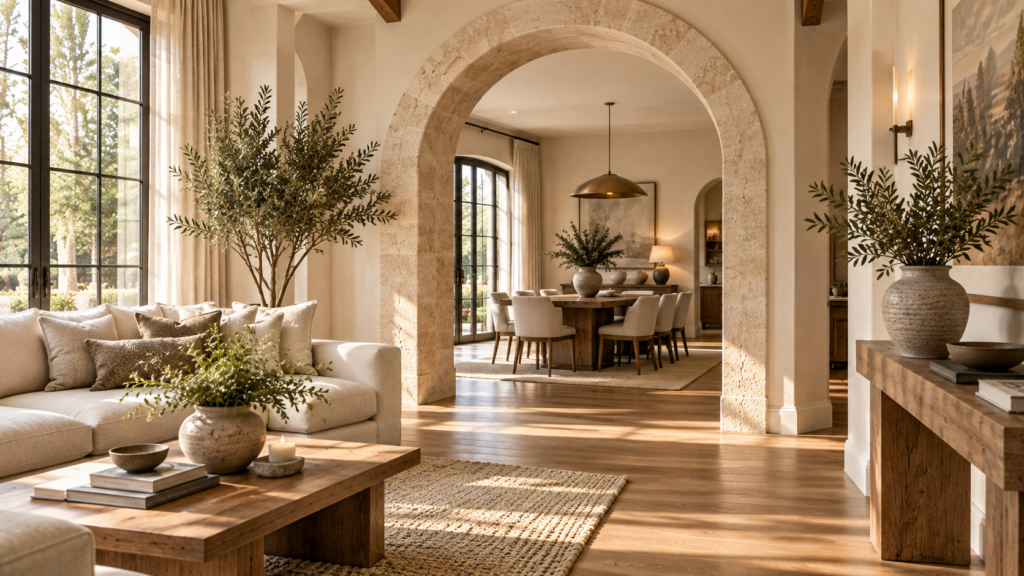
Sophisticated light-stone archway surrounded by cream walls, natural oak furniture, linen upholstery, and minimal organic decor.
13. Create a Dark Moody Archway
An arch does not have to be light and airy.
Dark paint can turn it into a dramatic architectural feature.
Deep forest green, charcoal, chocolate brown, and muted black can work particularly well in libraries, lounges, hallways, and intimate dining spaces.
You might paint the wall and arch in the same deep color for an immersive look.
Balance the darkness with warm lighting, wood furniture, and lighter textiles.
Brass or bronze accents can add subtle warmth.
If the room receives limited daylight, layered artificial lighting becomes particularly important.
A dark archway can create an elegant transition from a bright room into a moodier space.
14. Add Lighting Inside the Arch
Lighting can emphasize the curved form of an arch after sunset.
Small recessed lights positioned near an arched opening can wash the surface with light and create soft shadows.
In a deep archway, concealed lighting may highlight the inner curve.
For a more traditional approach, install wall sconces on either side.
Symmetrical sconces can make a large arch feel formal and balanced.
Choose lighting that complements the overall interior rather than overpowering the architecture.
Warm illumination generally works particularly well with plaster, wood, and stone.
15. Use an Archway to Frame Artwork
An arch can create a natural visual frame for something beautiful in the next room.
Consider placing a large piece of artwork directly within the sightline.
The artwork does not need to sit inside the arch itself. Instead, it can hang on the far wall so it becomes visible through the opening.
This creates depth and encourages the eye to travel from one space to another.
A console table, sculptural chair, or large ceramic vessel can serve the same purpose.
Think about what visitors see when approaching the arch from both directions.
A thoughtfully planned sightline can make even a relatively simple opening feel architectural.
16. Incorporate an Arch into Built-In Storage
Built-in cabinetry can be designed around an arched opening to maximize an entire wall.
This works well in living rooms where storage and architectural interest are both needed.
Cabinets at the bottom can conceal everyday objects, while open shelving above provides display space.
The central arch might lead to another room or contain a decorative niche.
Paint everything one color for a cohesive appearance.
Warm white and beige create a soft effect, while deep green or charcoal can turn the entire wall into a dramatic statement.
Archway with Built-In Shelving
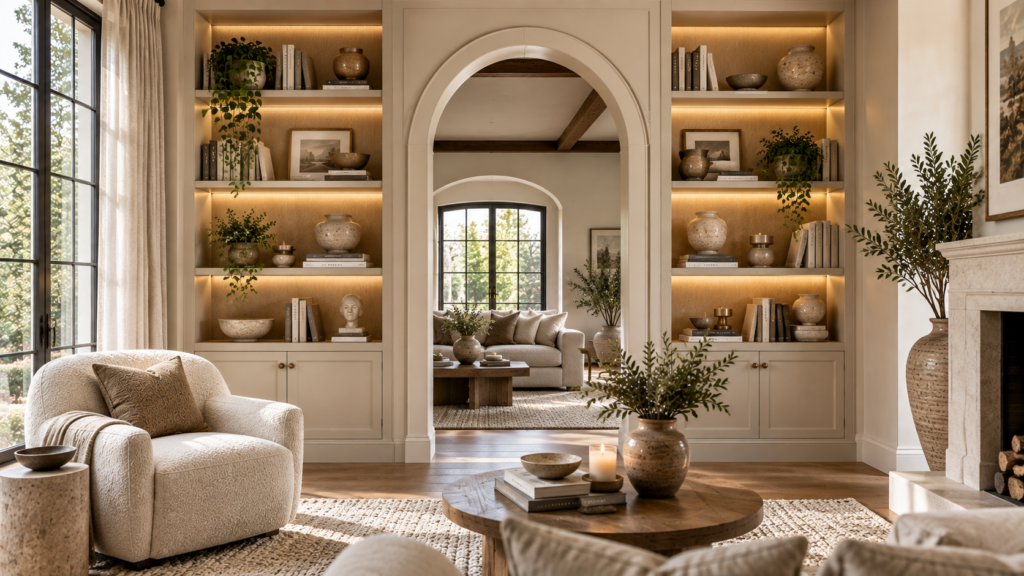
Custom floor-to-ceiling built-in shelves surrounding a central arch, styled with books, ceramics, art, and subtle integrated lighting.
17. Create an Organic-Modern Archway
Organic-modern interiors are particularly well suited to arches because both emphasize softness and natural forms.
Start with warm off-white or limewash-style walls.
Introduce pale oak furniture, linen upholstery, textured rugs, stone accessories, and subtle greenery.
Avoid sharp decorative contrasts around the opening.
Instead, allow materials to transition gently between spaces.
A curved sofa or rounded coffee table can repeat the arch shape without making the theme too obvious.
An olive tree positioned near the opening adds height and organic texture.
The result should feel relaxed, understated, and sophisticated.
18. Use Curtains with an Arched Opening
In some spaces, curtains can soften an arch and provide flexible separation.
A simple linen curtain can work particularly well in Mediterranean, rustic, or relaxed interiors.
Mount the curtain so it can be pulled completely away when you want the opening unobstructed.
Neutral linen in oatmeal, cream, or warm white keeps the appearance understated.
This can be useful for separating dressing areas, small studies, closets, or other semi-private zones where a permanent door is unnecessary.
The fabric also introduces movement and softness against solid plaster walls.
19. Style the Space Beside an Archway
Sometimes the area beside the arch deserves as much attention as the opening itself.
If you have a large blank wall next to the arch, add one carefully chosen element.
A tall olive tree in a ceramic planter can balance the height of the opening.
Alternatively, place a slim console table beneath artwork.
A sculptural floor lamp can also provide vertical interest.
Avoid placing large furniture too close to the opening, particularly if it interrupts circulation.
Leaving a small amount of negative space around the curve usually makes the architecture feel more impressive.
20. Create a Luxury Archway with Refined Materials
For a more luxurious interior, focus on material quality rather than excessive ornament.
A large plaster arch can be combined with limestone flooring, warm oak cabinetry, linen furniture, and subtle brass details.
You might use stone along the lower portion of the walls or install elegant wall lights around the opening.
Keep the palette cohesive.
Cream, beige, taupe, warm wood, and soft brown can create a sophisticated atmosphere without relying on bold color.
Use substantial furniture rather than many small decorative pieces.
Luxury interiors often feel impressive because they have strong proportions and plenty of visual breathing room.
Luxury Interior Archway
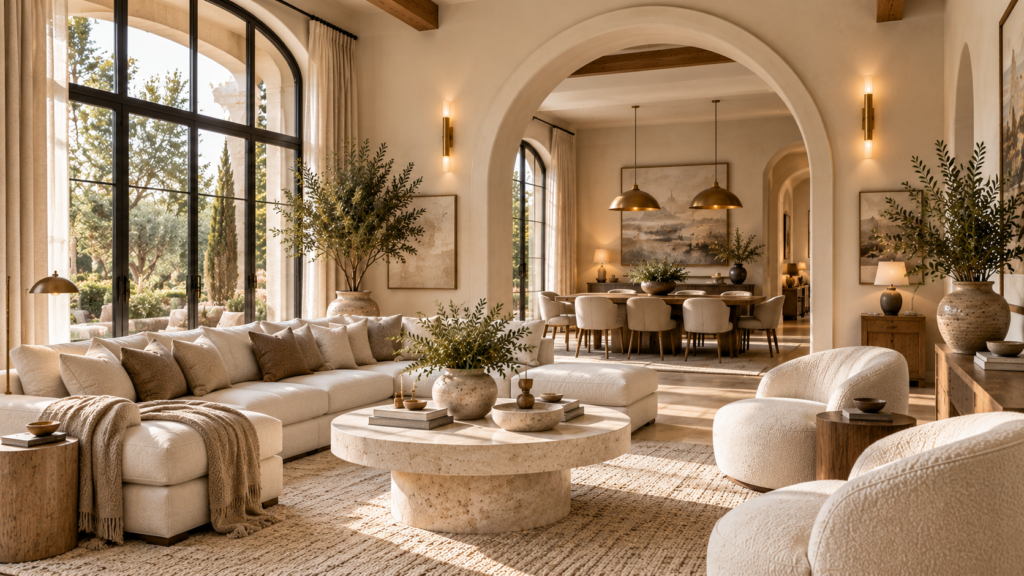
High-end interior featuring a grand curved arch, cream plaster walls, limestone flooring, sophisticated neutral furniture, warm oak details, and elegant architectural lighting.
21. Repeat Curves Throughout the Room
One of the best ways to make an arch feel integrated is to repeat its curved shape elsewhere.
You do not need to turn every object into an arch.
Instead, use subtle references.
A round coffee table, curved sofa, circular mirror, globe pendant, rounded chair, or softly shaped rug can echo the architecture.
Keep some straight lines in the room for balance.
Too many curves can make the design feel overly themed.
The goal is to create visual conversation between the architectural opening and the furniture.
How to Decorate Around an Indoor Archway
The area immediately surrounding an arch should usually remain relatively uncluttered.
Start by allowing enough negative space around the curved opening for its shape to be clearly visible.
If the wall is large, consider a pair of sconces, subtle molding, or a single piece of artwork.
Plants can also work beautifully beside arches.
A tall indoor tree positioned slightly away from the opening provides organic contrast against smooth plaster.
If the arch sits between two heavily used rooms, avoid placing furniture where it obstructs the natural pathway.
You should also consider symmetry.
Formal interiors often benefit from matching decorative elements on either side, while organic-modern spaces can look better with an intentionally asymmetrical arrangement.
Best Colors for Indoor Archways
Color can dramatically change the character of an arch.
For a soft and timeless appearance, use warm white, ivory, cream, beige, or light greige.
Painting the arch and surrounding wall the same color allows shadows to define the shape naturally.
For an earthy interior, consider muted terracotta, sage, olive, sand, or taupe.
Darker shades such as charcoal, forest green, deep brown, or navy can make an arch feel dramatic and intimate.
If you want the arch to stand out without introducing a completely different color, paint its inner surface one or two shades darker than the surrounding wall.
Whatever you choose, consider the rooms on both sides of the opening so the color transition feels intentional.
How to Make an Archway Look More Expensive
A sophisticated archway does not require elaborate decoration.
The quality of the curve itself is important. Smooth proportions and clean finishing will usually look better than excessive ornament.
Choose a restrained palette and repeat materials from nearby rooms.
Natural wood, stone, plaster, linen, and subtle metal accents can create a high-end appearance.
Lighting also matters.
A pair of elegant sconces or carefully positioned architectural lights can emphasize the curve after sunset.
Avoid covering every nearby surface with artwork and accessories.
A large arch often looks more luxurious when it has enough empty wall space around it.
Finally, consider what the arch frames. A beautifully arranged room visible through the opening can make the architecture significantly more impressive.
Small Archway Decorating Ideas
Small arches require restraint.
Avoid heavy trim or oversized decorative elements that make the opening feel narrower.
Instead, use light paint, simple molding, or a subtle contrasting interior color.
Keep furniture away from the opening so circulation remains comfortable.
If the arch leads into a small hallway, use consistent flooring across both spaces to create continuity.
A narrow runner, one wall light, and a small artwork may provide all the decoration needed.
Small architectural features often look best when they are allowed to remain simple.
Indoor Archway Decor Mistakes to Avoid
The first mistake is overdecorating.
An arch is already a strong shape, so surrounding it with too many frames, shelves, plants, lights, and decorative objects can weaken its impact.
Another common issue is ignoring proportions.
A very narrow arch with a low curve can feel awkward in a large room, while an oversized arch may reduce useful wall space.
During renovations, dimensions and structural considerations should be professionally evaluated where appropriate.
Avoid combining too many architectural styles around one opening. Ornate classical molding, rustic stone, minimalist furniture, and highly modern lighting may compete rather than complement each other.
Color should also connect logically with nearby rooms.
Finally, do not forget circulation. An attractive arch is unsuccessful if furniture placement makes walking through it inconvenient.
Why Indoor Archways Work So Well
One reason arches remain popular is that they provide separation without complete isolation.
A rectangular doorway primarily serves a functional purpose, but a curved opening can also become a visual feature.
The curve softens the straight lines created by walls, cabinetry, floors, and ceilings.
Arches can also frame views.
When you stand in one room, the opening naturally directs attention toward whatever is visible beyond it.
This makes furniture placement, artwork, lighting, and color in the next room part of the archway design.
They also adapt surprisingly well to different aesthetics.
Smooth plaster arches can feel minimalist. Stone arches can appear rustic or Mediterranean. Dark painted arches can look dramatic and contemporary. Decorative molding can create a more traditional character.
The underlying architectural idea remains the same while the materials completely change its personality.
Final Thoughts
Indoor archways are an excellent example of how architecture itself can become decoration.
You do not necessarily need elaborate molding, bright colors, or numerous accessories to make an arch beautiful. In many homes, a smooth cream plaster opening surrounded by thoughtful furniture and natural materials can create more impact than complicated decoration.
Start by considering the purpose of the opening.
If it connects two main rooms, use it to frame a beautiful view and create a natural transition between spaces.
If it sits in a hallway, emphasize repetition and perspective.
If you have a recessed arch, consider transforming it into a reading nook, shelving feature, or decorative niche.
Materials can then determine the mood.
Natural oak adds warmth, stone creates architectural weight, textured plaster introduces Mediterranean character, and dark paint creates drama.
Lighting can emphasize the curve in the evening, while built-in shelving can turn the surrounding wall into a functional feature.
Most importantly, give the arch room to breathe.
Leaving intentional negative space around the opening allows its proportions and curves to remain visible. Then repeat subtle rounded shapes elsewhere through furniture, mirrors, lighting, or accessories to connect the architecture with the overall room.
Whether your home is minimalist, organic modern, Mediterranean, traditional, or contemporary, an indoor archway can create a graceful transition while adding character that an ordinary rectangular doorway simply cannot provide.
With the right materials, proportions, colors, and styling, even a simple arch can become one of the defining features of your interior.