Study Room Decor Ideas: 18 Stylish Ways to Create a Beautiful and Productive Space
A study room should be more than a place where you put a desk and chair. Whether you use it for studying, reading, working from home, journaling, managing household tasks, or creative projects, the right decor can turn an ordinary room into a space where you genuinely enjoy spending time.
The best study room decor combines comfort, organization, functionality, and personal style. You want enough storage to prevent clutter, lighting that makes long study sessions comfortable, and decorative details that give the room warmth without creating visual distractions.
Modern study spaces are also becoming softer and more inviting. Instead of cold office furniture and completely bare walls, think warm wood, creamy neutrals, textured rugs, comfortable seating, beautiful shelving, artwork, plants, and layered lighting.
Whether you have an entire room available or only a small corner, these study room decor ideas will help you create a stylish and productive environment.
1. Start With a Warm Neutral Color Palette
A calm color palette creates a strong foundation for a study room.
Cream, warm white, beige, soft taupe, greige, muted brown, and pale earthy tones work particularly well because they keep the space feeling bright without making it visually overwhelming.
Instead of using one shade everywhere, introduce subtle variations.
For example, combine warm white walls with a natural oak desk, an ivory rug, beige curtains, and a light brown upholstered chair. Small black or bronze details can provide enough contrast to prevent the room from looking flat.
You can also introduce muted greens or dusty blues through artwork, books, cushions, or decorative accessories.
The goal isn’t necessarily to remove color. Instead, choose colors that allow the room to maintain a peaceful atmosphere.
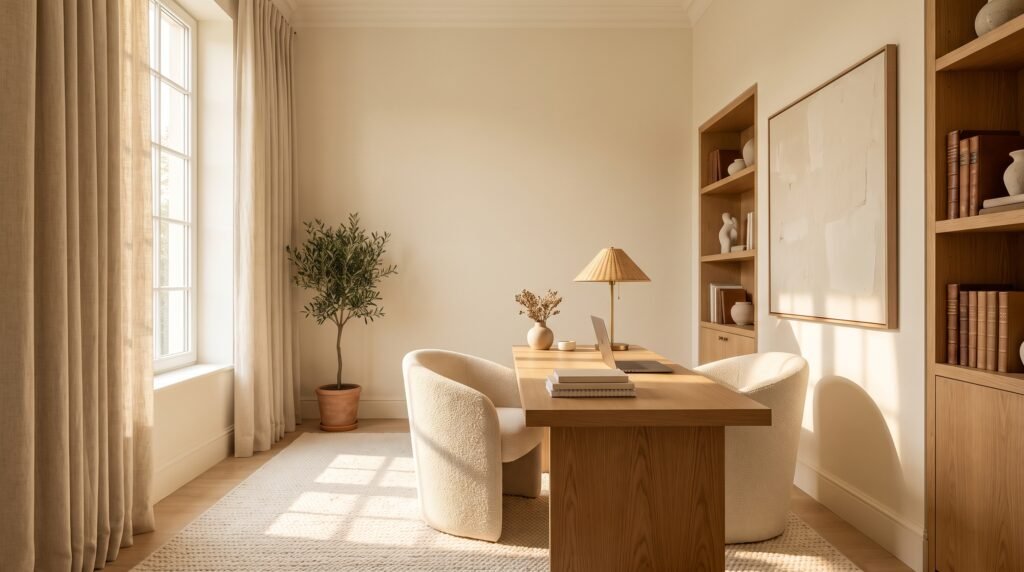
A warm neutral palette also makes it easier to update your study room later. Changing a few accessories can refresh the entire look without requiring new furniture or repainting the walls.
2. Make the Desk the Visual Anchor
The desk is naturally the most important piece of furniture in most study rooms, so allow it to become a focal point.
A beautiful wooden desk can immediately add warmth and character. Light oak works wonderfully in Scandinavian and organic-modern rooms, while walnut creates a slightly richer and more sophisticated appearance.
Avoid choosing an oversized desk simply because the room has space for one.
Instead, consider what actually needs to remain on the surface.
A laptop, notebook, small lamp, pen holder, and perhaps one decorative object may be all you need.
Keeping enough empty desk space is important because visual clutter can make a study room feel smaller and less relaxing.
Positioning also matters.
Whenever possible, place your desk where you can benefit from natural daylight without creating excessive glare on your computer screen.
3. Decorate the Wall Above Your Desk
The wall directly above a study desk provides an excellent opportunity for decoration.
Instead of leaving it completely empty, create a simple arrangement that gives the workspace personality.
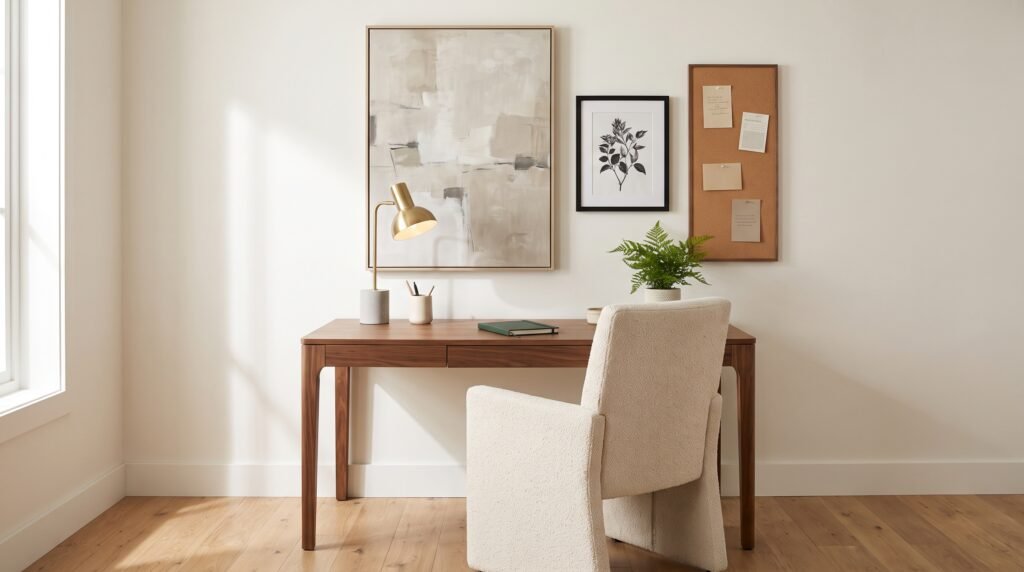
You could hang one oversized abstract print, a pair of coordinating framed artworks, a pinboard, floating shelves, or a combination of functional and decorative pieces.
For a minimalist room, one large framed artwork may be enough.
For a more personal study space, consider creating a small inspiration board featuring photographs, notes, postcards, motivational reminders, and beautiful images.
Try to avoid covering every inch of the wall.
Negative space is especially useful in a study room because it gives your eyes somewhere to rest.
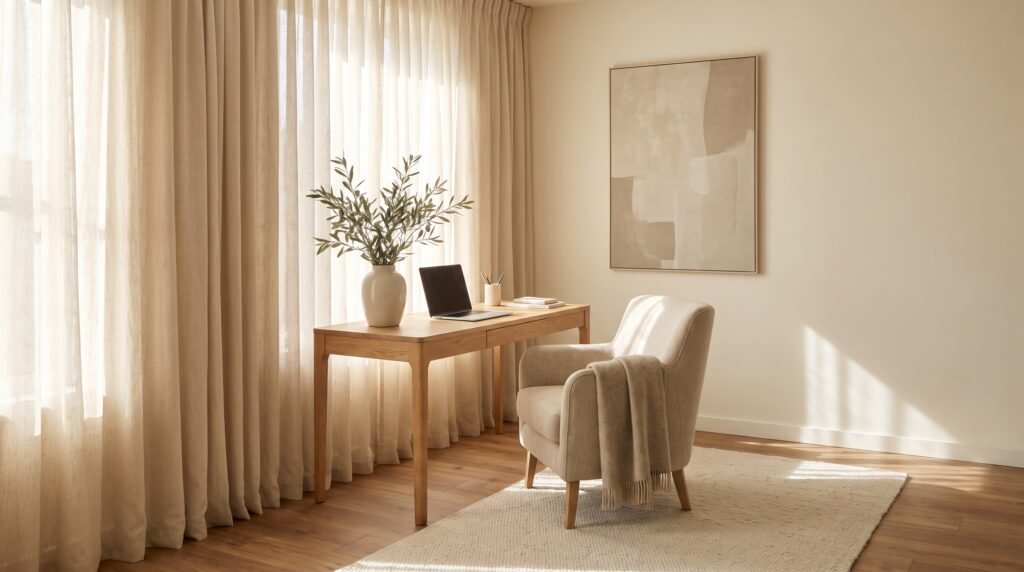
Choose wall decor that complements the room rather than competing with your workspace for attention.
4. Add Floating Shelves Above the Workspace
Floating shelves combine decoration and storage beautifully.
They are particularly useful in smaller study rooms because they take advantage of vertical space without occupying additional floor area.
Install one or two shelves above or beside your desk and style them thoughtfully.
Books are an obvious choice, but they don’t have to be the only objects.
Mix books with small ceramic vessels, framed artwork, storage boxes, candles, and a trailing plant.
Leave some breathing room between objects.
Shelves usually look more sophisticated when every available inch isn’t filled.
You can also organize books by size or use neutral book covers if you prefer a particularly cohesive aesthetic.
The result is practical storage that doubles as a decorative feature.
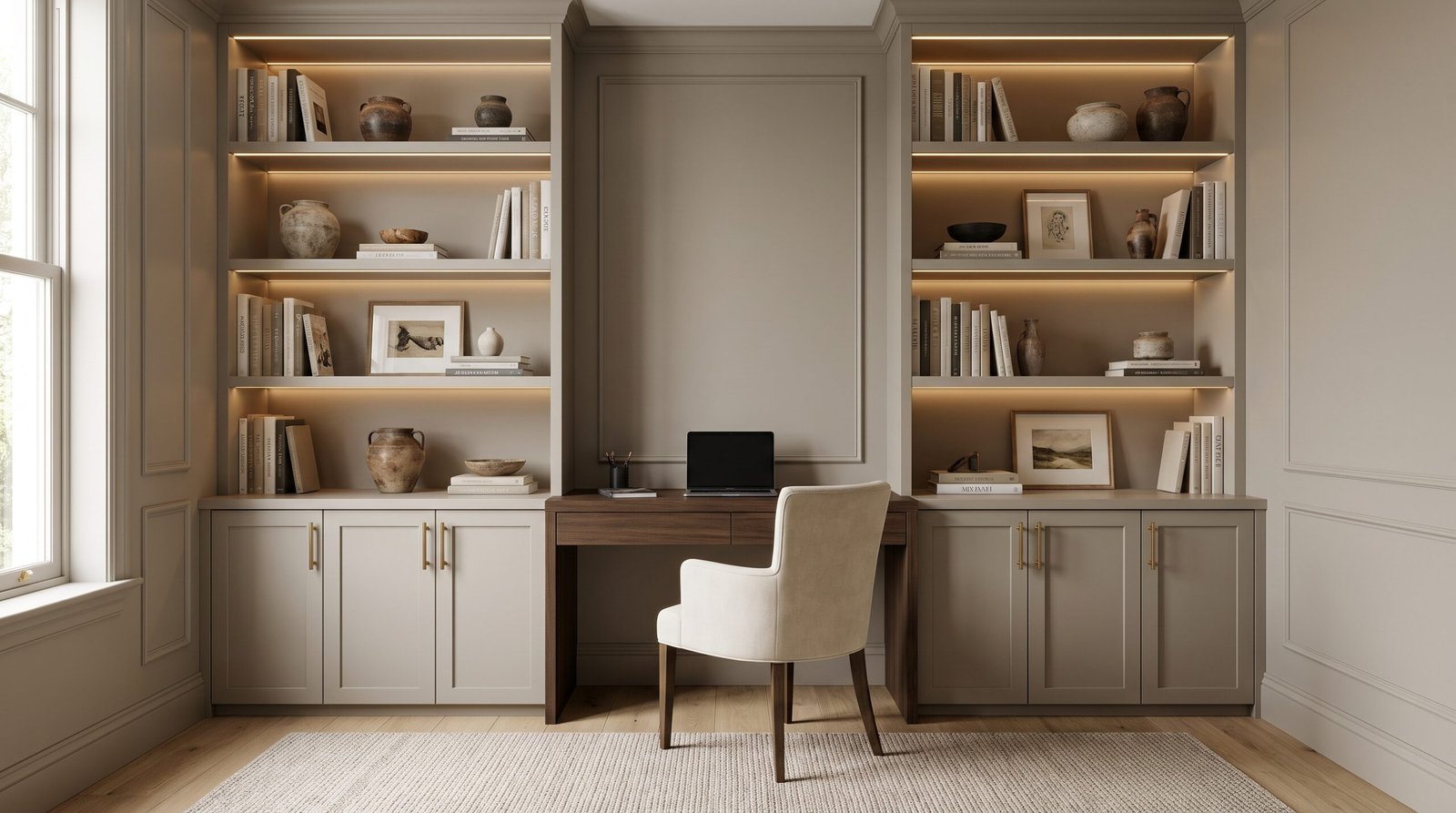
5. Create a Built-In Study Wall
If you have an entire room available, a built-in study wall can completely transform it.
Consider combining a central desk with cabinetry underneath and shelves or closed cupboards above.
This approach creates a polished, custom appearance while providing significant storage.
Closed cabinets are particularly valuable because they allow you to hide paperwork, cables, office supplies, and less attractive everyday items.
Open shelving can then be reserved for books and carefully selected decorative pieces.
For a premium look, paint the cabinetry in warm white, mushroom beige, muted olive, or soft greige.
Natural wood cabinetry is another beautiful option, particularly when paired with creamy walls and warm lighting.
Adding integrated lighting beneath upper shelves can make a built-in workspace feel even more refined.
6. Introduce a Comfortable Reading Chair
Not every activity needs to happen at the desk.
If space allows, create a small reading corner with a comfortable armchair.
A boucle chair, linen armchair, or compact upholstered lounge chair works beautifully in a modern study room.
Place it near a window or bookshelf and add a small side table.
A floor lamp makes the corner useful after sunset, while a soft throw or small cushion adds another layer of comfort.
This secondary seating area changes the character of the room.
Instead of feeling like a conventional office, your study becomes somewhere you can move between focused desk work and relaxed reading.
Even relatively small rooms can accommodate a compact accent chair if furniture is positioned carefully.
7. Layer Your Study Room Lighting
Lighting has a major influence on both the appearance and functionality of a study room.
Avoid relying entirely on a single ceiling fixture.
Instead, use multiple sources of light.
Start with general overhead lighting, then introduce task lighting at the desk. A directional desk lamp makes reading and writing much easier during evenings.
Ambient lighting can then create warmth.
Consider a floor lamp beside your reading chair, a small table lamp on shelving, or subtle LED lighting incorporated into built-ins.
Warm light temperatures generally create a more inviting residential atmosphere than extremely cool white lighting.
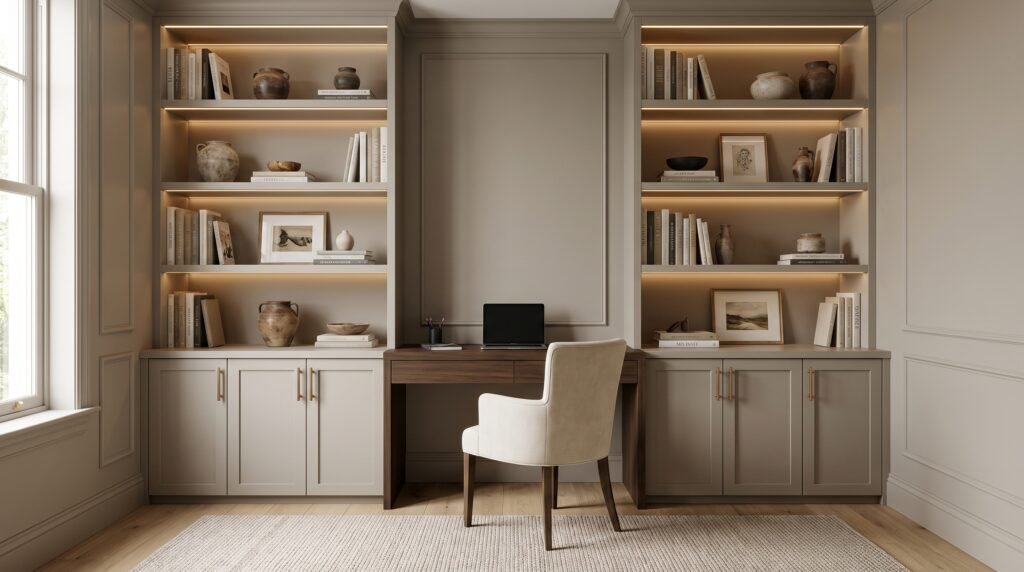
Decorative lighting can become part of the room’s design too. A sculptural lamp or elegant pendant adds visual interest even when it isn’t switched on.
8. Use a Large Rug to Soften the Room
Study rooms contain many hard surfaces—desks, cabinets, shelving, computers, and flooring.
A rug helps balance these elements by introducing softness and texture.
Choose a rug large enough to visually connect your furniture rather than placing a tiny rug directly underneath the chair.
An ivory textured rug, subtle geometric design, vintage-inspired neutral rug, or natural woven style can work beautifully.
If your desk chair has wheels, choose a flatter rug that allows it to move easily.
A rug also improves acoustics, particularly in rooms with hardwood or tile flooring.
This can make the room feel noticeably calmer during calls, studying, or concentrated work.
9. Bring Nature Into Your Study Room
Plants are one of the easiest ways to make a workspace feel more alive.
A small potted plant can sit on your desk or shelf, while a larger plant can fill an unused corner.
An olive tree, rubber plant, pothos, snake plant, or similar indoor greenery works particularly well with neutral interiors.
You don’t need to turn the room into an indoor garden.
One or two carefully positioned plants can provide enough natural color.
Pair greenery with other organic materials such as wood, linen, rattan, stone, or ceramic accessories.
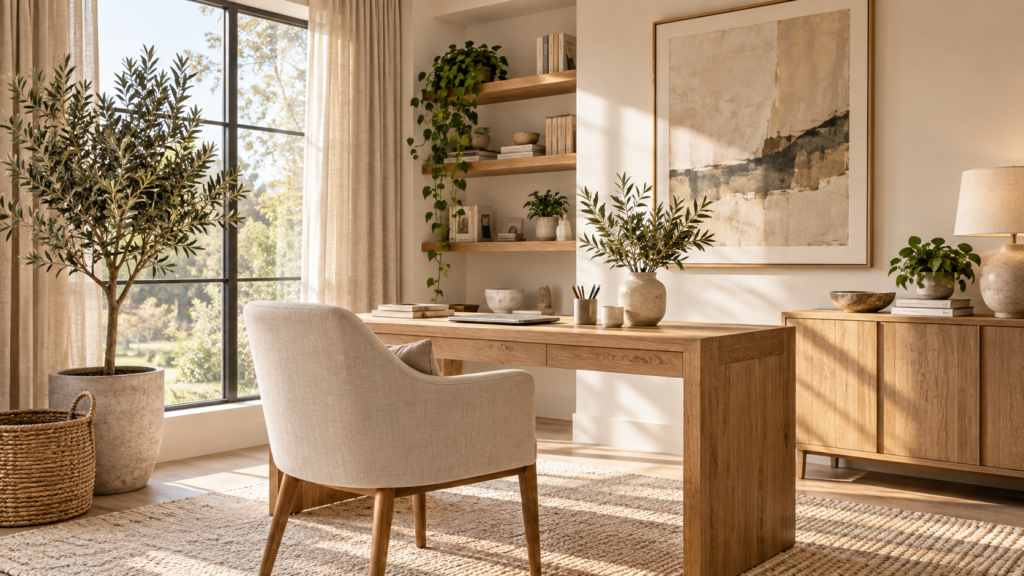
These natural textures help soften technology-heavy areas and make the room feel more connected to the rest of your home.
10. Create a Floor-to-Ceiling Book Wall
For book lovers, shelving can become the defining feature of a study room.
A floor-to-ceiling bookshelf creates dramatic visual impact while providing plenty of practical storage.
However, you don’t have to fill every shelf entirely with books.
Mix vertical and horizontal book stacks with small sculptures, framed photographs, ceramics, and decorative boxes.
Keep some empty areas visible.
This prevents a large bookcase from making the room feel excessively busy.
If you want a more traditional library atmosphere, choose dark wood shelving.
For a lighter modern aesthetic, consider oak, warm white, beige, or greige cabinetry.
A rolling ladder can add character in a larger room, although it should only be included when genuinely useful.
11. Hide Everyday Clutter in Attractive Storage
A productive study room needs storage for all the things that aren’t particularly attractive.
Chargers, printer paper, notebooks, stationery, documents, cables, and miscellaneous supplies can quickly create clutter.
Use a combination of drawers, cabinets, baskets, boxes, and organizers.
Choose storage pieces that match your overall decor.
Woven baskets add warmth, while linen-covered or neutral storage boxes create a clean appearance on open shelving.
Keep the items you use most frequently within easy reach.
Less frequently used supplies can be stored higher up or inside closed cabinetry.
A room doesn’t need to be completely empty to feel organized. It simply needs a clear place for everything.
12. Create a Small Study Room With Smart Furniture
Limited space doesn’t mean you need to sacrifice style.
For a small study room, choose furniture with a lighter visual footprint.
A slim desk, floating desk, wall-mounted shelves, and compact chair can provide everything you need without overwhelming the room.
Using the wall vertically is especially important.
Tall shelving provides much more storage than a short cabinet while occupying approximately the same amount of floor space.
Mirrors can also help reflect daylight and visually expand the room.
Keep the palette relatively consistent and avoid filling the room with too many small decorative objects.
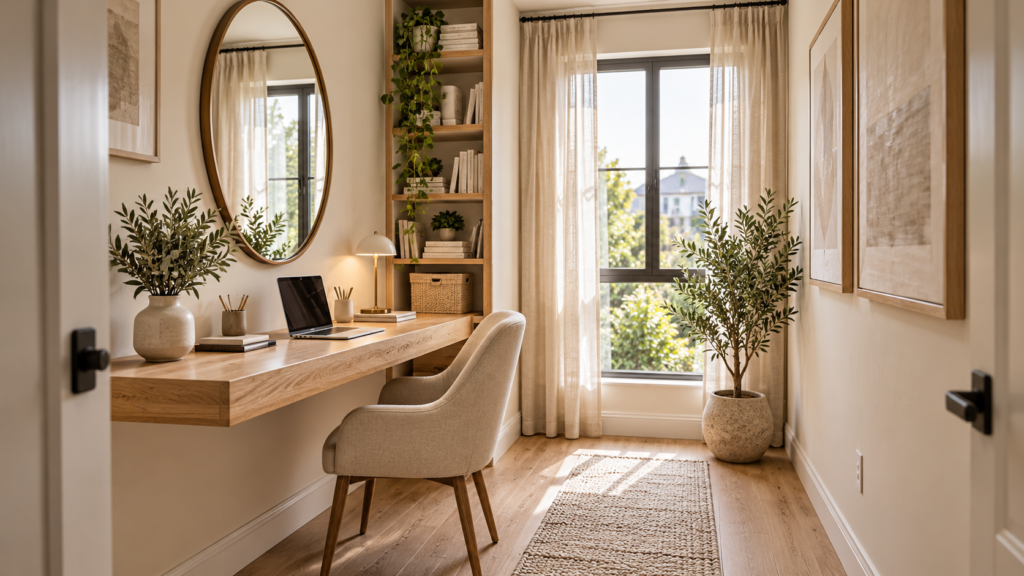
A small study room with carefully selected pieces can feel more intentional than a larger room filled with unnecessary furniture.
13. Add Curtains for Softness
Window treatments can completely change the atmosphere of a workspace.
Bare windows often make study rooms feel more like commercial offices.
Soft linen or linen-look curtains immediately create a warmer residential feel.
Choose cream, oatmeal, beige, soft gray, or another shade that coordinates with your walls.
Hanging curtains close to the ceiling and allowing them to reach the floor can also make windows appear taller.
If direct sunlight causes glare while you’re working, combine curtains with blinds or shades.
This gives you better control over daylight without sacrificing the softness created by fabric.
14. Incorporate Personal Decor Carefully
A study room should still feel like your space.
Personal objects can make it more enjoyable without turning the room into a collection of distractions.
Display a few meaningful photographs, favorite books, travel objects, handmade ceramics, artwork, or small keepsakes.
The key is editing.
Instead of displaying twenty small objects, select a handful that actually matter to you.
Grouping smaller items on a tray or shelf can make them look intentional rather than scattered.
You can rotate accessories occasionally as well.
This gives the room a fresh feeling without purchasing new furniture.
15. Try a Dark and Moody Study Room
Neutral light interiors aren’t the only option.
A darker study room can feel sophisticated, intimate, and incredibly cozy.
Consider deep charcoal, chocolate brown, forest green, navy, or muted black walls.
Balance these shades with warm wood furniture, brass accents, soft textiles, and warm lighting.
Built-in shelving painted the same color as the walls creates a particularly dramatic effect.
Dark study rooms work especially well when the space is primarily used during evenings.
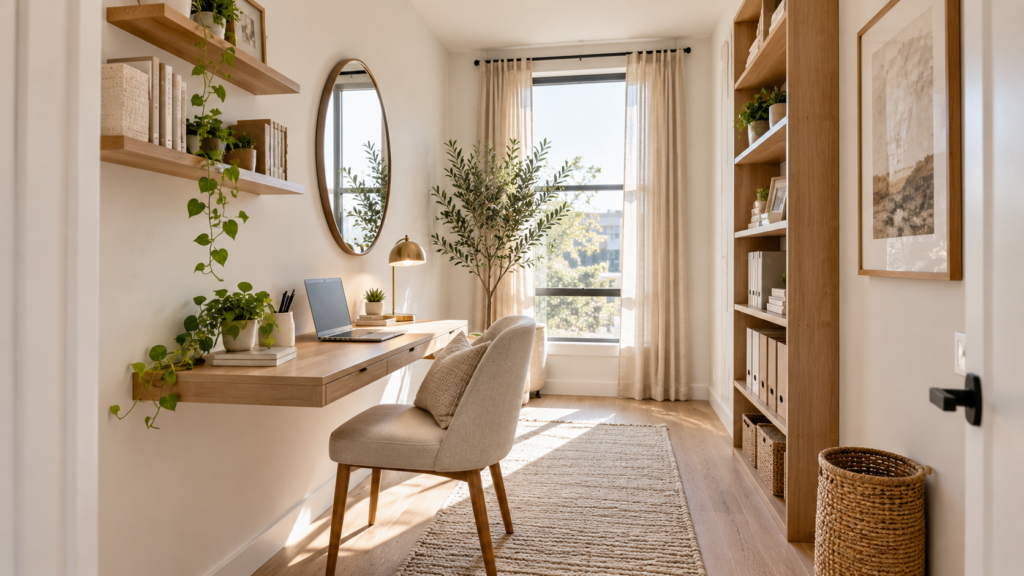
Instead of fighting limited natural light, a deeper palette can embrace it and turn the room into a cozy retreat.
16. Create a Two-Person Study Room
A shared study space can work beautifully for couples, siblings, or families.
The simplest arrangement is a long desk with two separate chairs and dedicated storage for each person.
Another option is positioning two desks opposite each other or along separate walls.
Try to give each user enough personal space.
Individual drawers, shelves, task lamps, and cable access make the arrangement much more functional.
Visually, keep the furniture coordinated so the room still feels cohesive.
Matching chairs aren’t mandatory, but using similar materials and colors helps tie everything together.
A large shared pinboard or shelving system can create a unified focal point above the desks.
17. Make Your Study Room Feel Cozy
Productivity doesn’t require a cold or overly minimalist environment.
Small comfortable details can make long periods of studying or working much more pleasant.
Add a textured rug beneath the desk, soft curtains at the windows, an upholstered chair, a small cushion, and warm lighting.
Wood tones are particularly effective for adding visual warmth.
You can also introduce subtle fragrance, provided it doesn’t become distracting.
A candle used when you’re not actively working around paperwork, or a diffuser positioned away from electronics, can add to the room’s atmosphere.
The objective is to create a place you naturally want to return to.
18. Create a Luxury Study Room With Simple Details
Luxury doesn’t necessarily mean filling the room with expensive furniture.
Often, a study room feels high-end because of consistency and attention to detail.
Choose fewer pieces, but make sure they relate to one another.
A substantial wood desk, comfortable upholstered chair, large rug, floor-to-ceiling curtains, beautiful desk lamp, and carefully styled shelving can be enough.
Hide cables whenever possible.
Use matching organizers instead of random containers.
Choose artwork at an appropriate scale.
Allow furniture enough breathing room.
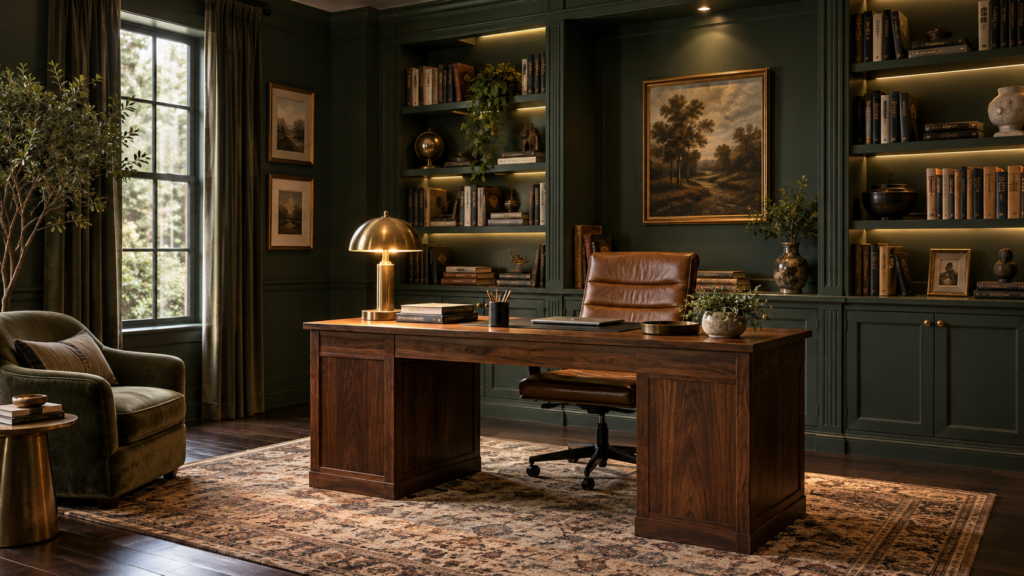
Details such as integrated shelving lights, subtle wall molding, high-quality hardware, and layered natural materials can elevate the space without making it look overly decorated.
How to Style a Study Desk Without Creating Clutter
Desk styling deserves particular attention because this is where functionality and decoration can easily conflict.
Start by placing only your essential equipment on the desk.
Then add one or two decorative pieces.
A small ceramic vase with greenery, attractive pen cup, framed photograph, candle, or sculptural object can provide enough personality.
Keep decorative objects toward the edges of the desk so the center remains available for actual work.
A desk tray is another useful tool because it visually groups smaller objects.
Cable management matters too.
Route computer and lamp cables behind the desk, use cable clips where necessary, and keep extension boards off the visible floor whenever safely possible.
A beautifully decorated study room can still look messy when cables are hanging everywhere.
Best Colors for a Study Room
There is no single perfect study room color because the right choice depends on the atmosphere you want.
Warm white creates a bright and flexible backdrop.
Beige and greige make the room feel softer and more residential.
Muted green introduces an earthy, calming quality.
Soft blue can create a fresh and peaceful environment.
Brown and taupe work particularly well with organic-modern interiors.
Charcoal and deep green are excellent options for a sophisticated, moody study.
Whatever palette you choose, consider how it looks throughout the day.
Natural light can dramatically change paint colors, so testing samples before painting the entire room is worthwhile.
Small Details That Make a Big Difference
Sometimes the smallest changes have the greatest visual impact.
Replace mismatched storage containers with coordinating boxes. Upgrade basic cabinet handles. Introduce one beautiful desk lamp. Frame inexpensive artwork properly. Add a larger rug. Move your curtains closer to the ceiling.
Even reorganizing your bookshelf can refresh the room without costing anything.
Another useful strategy is removing items before adding new ones.
If your study room doesn’t feel calm, decoration may not be the problem. There may simply be too many objects competing for attention.
Clear the desk, edit the shelves, organize paperwork, and then decide whether additional decor is actually needed.
Final Thoughts
A beautiful study room is ultimately about creating an environment that supports whatever you need to accomplish there.
Start with the practical elements: a comfortable desk and chair, sufficient lighting, accessible storage, and an arrangement that works with the size of your room.
Then build personality through color, artwork, rugs, curtains, plants, shelving, and carefully selected accessories.
You don’t need a huge home office or expensive custom furniture to create an inspiring study space. Even a small room can feel sophisticated when every element has a clear purpose.
For a modern look, combine warm neutrals, natural wood, soft textiles, layered lighting, simple artwork, and organized storage. If you prefer something more dramatic, experiment with dark walls, built-in bookshelves, and richer materials.
Most importantly, resist the temptation to decorate every available surface. Study rooms work best when there is a balance between beautiful details and visual breathing space.