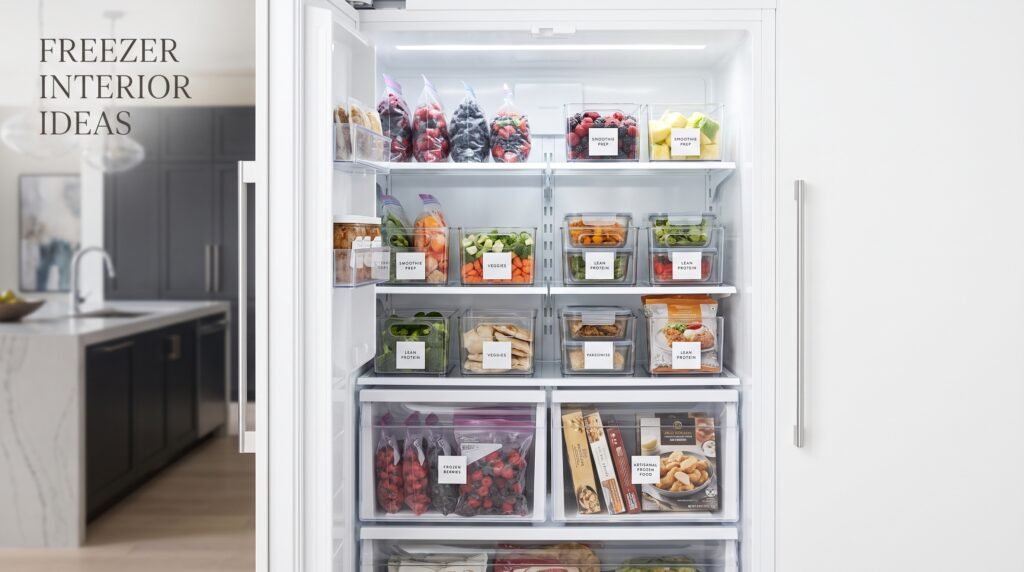
Freezer Interior Ideas: Smart and Stylish Ways to Organize Your Freezer
A freezer can easily become one of the most chaotic spaces in the home. Frozen vegetables disappear underneath boxes, leftovers get pushed toward the back, bags fall over whenever the door opens, and foods that were supposed to make meal preparation easier become almost impossible to find.
A thoughtfully designed freezer interior changes all of that.
The best freezer interior ideas aren’t simply about making frozen food look attractive. Good organization makes the available space easier to use, helps you see what you already have, and creates dedicated locations for different types of food.
Whether you have a large upright freezer, a refrigerator-freezer combination, a compact apartment freezer, or a freezer with multiple drawers, you can create an interior that feels much more intentional.
From clear containers and categorized zones to vertical storage and dedicated meal-prep sections, these freezer organization ideas will help you turn a cluttered interior into a clean and practical space.
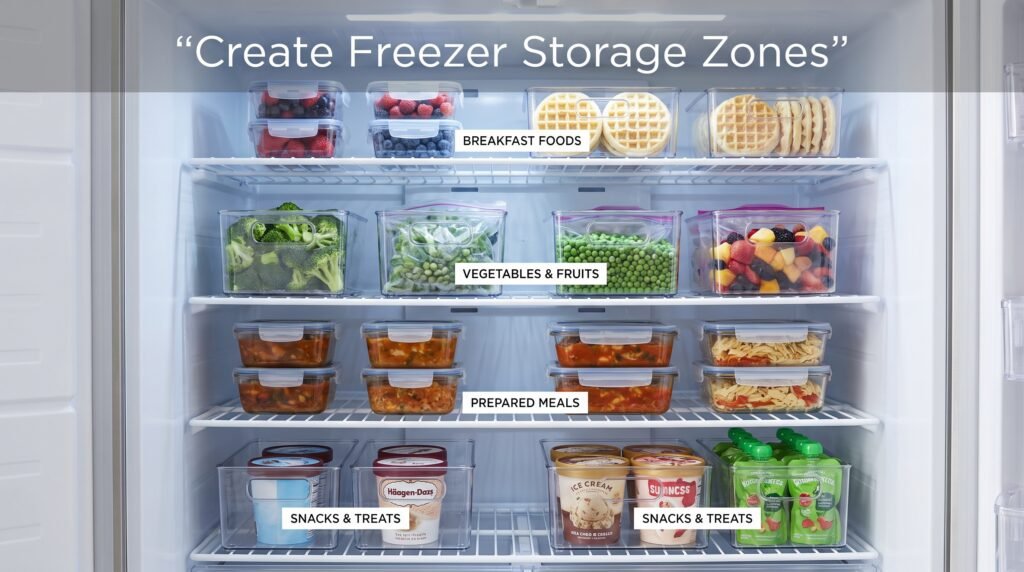
1. Create Clear Freezer Storage Zones
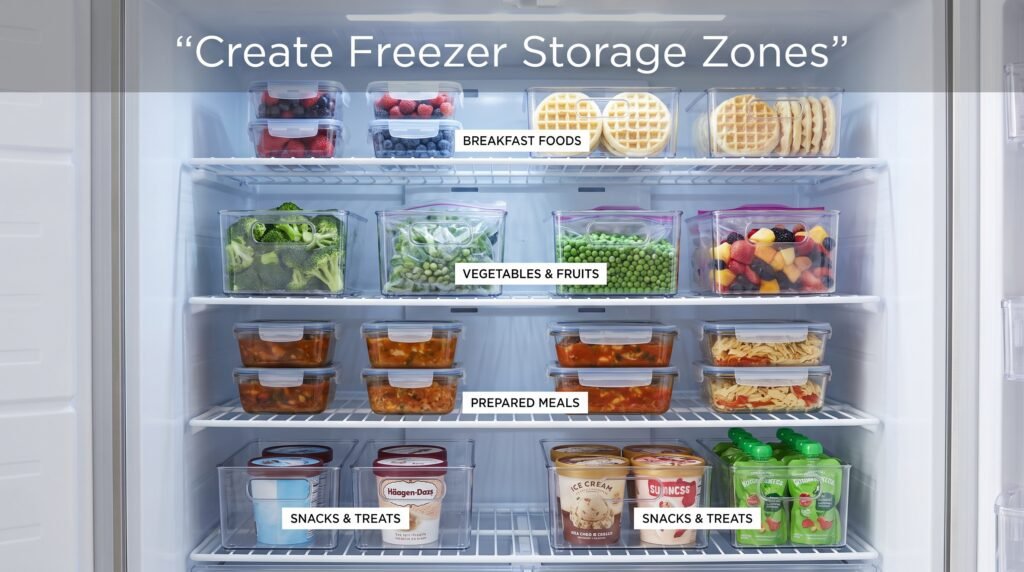
One of the easiest ways to improve a freezer interior is to divide it into clearly defined zones.
Instead of placing food wherever there happens to be room, assign particular shelves, drawers, or containers to specific categories. You might create separate areas for vegetables, fruit, meat, seafood, prepared meals, breakfast foods, snacks, and desserts.
This simple system makes the freezer considerably easier to navigate.
For example, dedicate one upper shelf to frequently used foods. Frozen berries, breakfast items, smoothie ingredients, and vegetables can stay here because they’re easy to reach.
A middle shelf can hold prepared meals and leftovers, while lower shelves or drawers can accommodate heavier packages of meat and larger frozen foods.
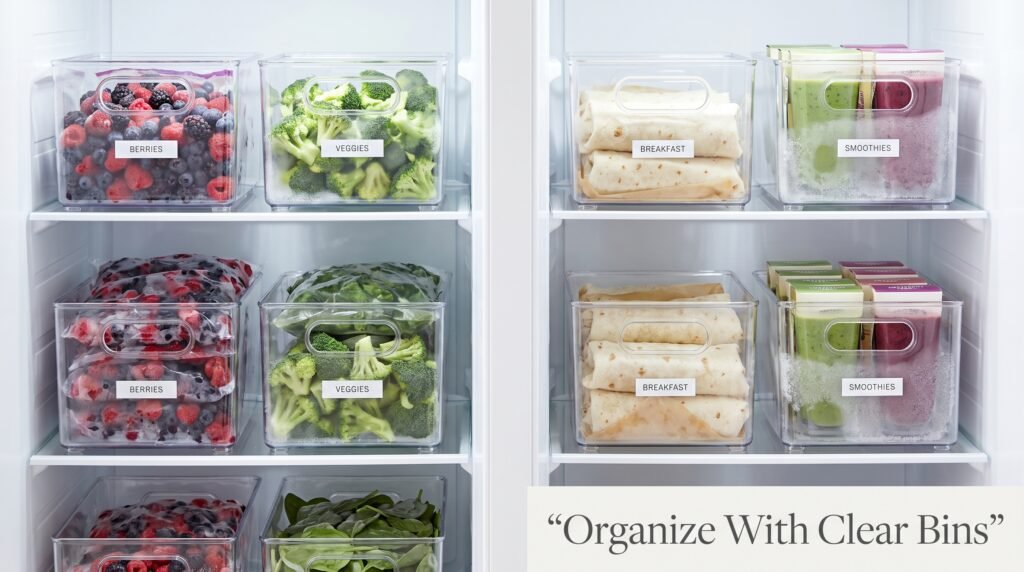
Clear containers are especially useful for establishing these zones. Choose freezer-safe bins that allow you to see their contents without removing everything.
Labels can make the organization even clearer.
Simple labels such as:
- Vegetables
- Fruit
- Breakfast
- Meat
- Seafood
- Meals
- Snacks
- Desserts
can eliminate the need to search through multiple containers.
Try not to make the categories overly specific. A freezer organization system works best when putting groceries away remains quick and uncomplicated.
Leaving a little open space within each zone is useful too. A perfectly packed freezer may look satisfying initially, but having nowhere to put new groceries can quickly destroy the organization.
The goal is a freezer interior that remains practical after everyday use.
2. Use Clear Freezer Bins for a Clean Interior
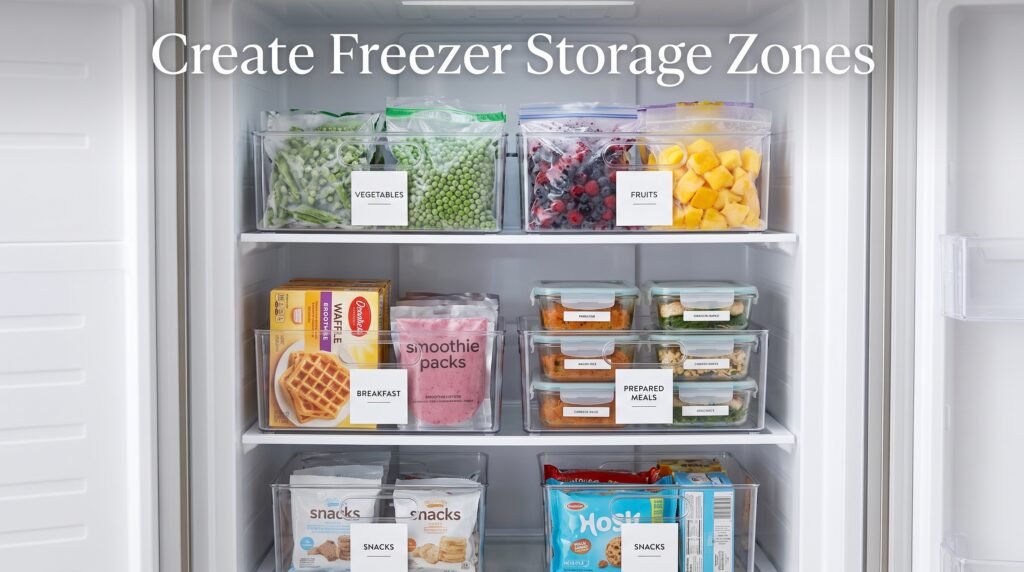
Clear bins are among the most effective freezer interior organization tools because they essentially create small drawers within open shelving.
Without containers, bags and packages tend to migrate around the freezer. A frozen vegetable bag that begins on the upper shelf might eventually end up underneath a pizza box several weeks later.
Bins keep similar foods together.
Use narrow containers for smaller packages and wider containers for larger categories. Frozen vegetables, fruit, individual snacks, breakfast foods, and meal-preparation ingredients are particularly suitable for this approach.
Clear storage also provides a visual advantage.
Because the freezer itself tends to be predominantly white, transparent containers maintain a bright, streamlined appearance. Instead of introducing lots of decorative colors, the food itself becomes the visual information.
Avoid buying containers before measuring your freezer.
Measure the width, depth, and height of every shelf. Pay attention to hinges, vents, ice makers, shelf supports, and other features that may reduce usable space.
Whenever possible, choose containers that leave a small amount of clearance around them. They should slide forward easily without scraping against neighboring bins.
Handles can also make deeper freezer shelves easier to use.
Rather than reaching into the back of the freezer, you can simply pull the entire container forward.
Another useful approach is to keep one flexible bin available for miscellaneous items. This gives temporary groceries somewhere to go without disturbing your main categories.
The result is an interior that feels clean while still being realistic for everyday family life.
3. Store Frozen Food Vertically
Vertical storage can completely change the usability of a freezer drawer.
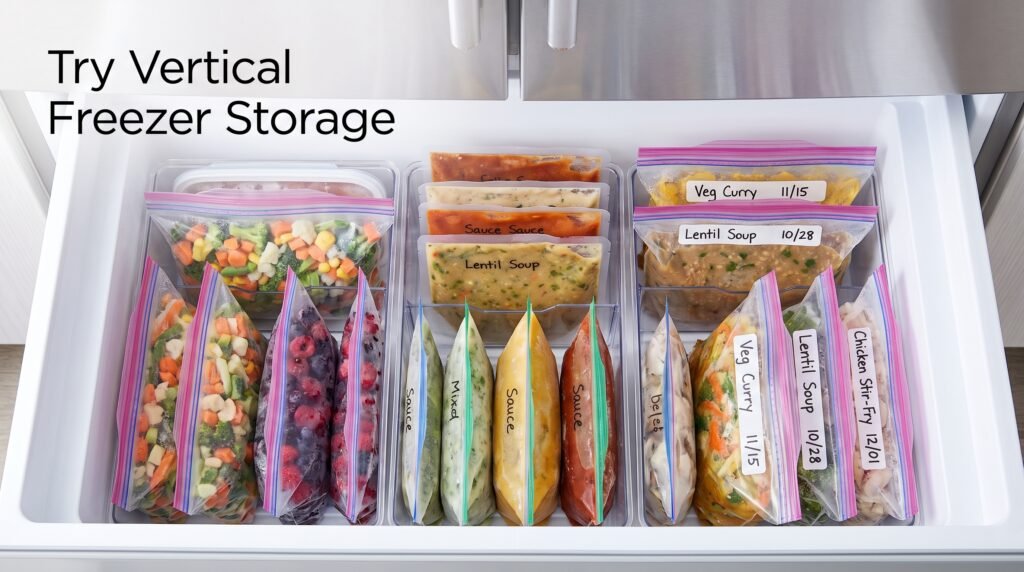
Instead of stacking bags horizontally, arrange them upright whenever their packaging allows. Frozen vegetables, fruit, meat packages, meal-preparation bags, tortillas, and flat containers can often be stored this way.
Think of the freezer like a filing cabinet.
When items are stacked horizontally, you can usually see only whatever is sitting on top. To reach something underneath, several other packages need to be removed.
Vertical storage allows you to see multiple packages simultaneously.
It is particularly effective in deep freezer drawers.
Start by flattening flexible freezer bags before freezing them. Place filled bags flat on a tray or shelf until completely frozen. Once solid, they can often be moved into an upright position.
This technique is excellent for soups, sauces, cooked beans, marinades, shredded meat, chopped vegetables, and prepared ingredients.
Flat freezing also helps food occupy less irregular space.
You can create dividers inside the drawer to prevent upright packages from falling over. Narrow freezer-safe bins work well, but adjustable drawer dividers can provide an even more customized arrangement.
Arrange items by category rather than size alone.
For instance, one section might contain vegetables, another prepared sauces, and another frozen meal components.
If you prepare food in advance, add labels with the food name and freezing date before placing bags inside.
Vertical organization transforms a deep drawer from a pile of packages into an accessible frozen-food library.
4. Design a Dedicated Frozen Meal Section
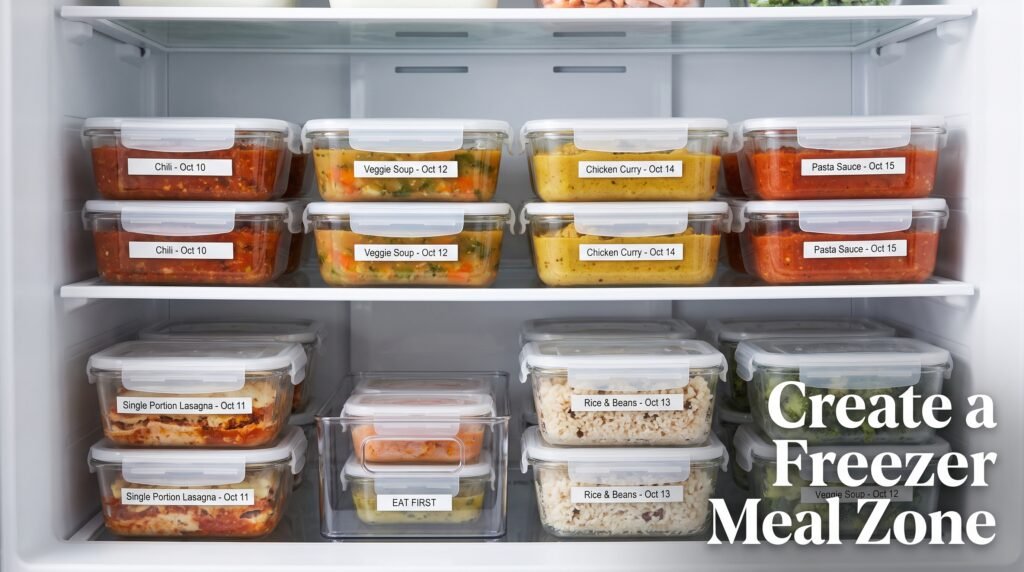
A dedicated meal section is one of the most practical freezer interior ideas for busy households.
Instead of allowing prepared foods and leftovers to become scattered throughout the freezer, give them one clearly defined location.
This section can contain homemade dinners, individual lunch portions, soups, casseroles, sauces, breakfast meals, and intentionally frozen leftovers.
Choose containers that stack efficiently.
Rectangular and square containers generally make better use of shelf space than round containers because they can sit closely together with fewer gaps.
Using containers from the same collection can make the interior feel particularly streamlined.
You don’t necessarily need identical containers throughout the entire freezer, however. Consistency within one section is often enough to create a visually organized appearance.
Label every prepared meal.
Include the name of the dish and the date it was frozen. If another family member might prepare the meal, brief reheating instructions can also be helpful.
Place older meals toward the front and newly prepared foods toward the back.
This simple rotation encourages older food to be used first.
Consider creating an “Eat First” section as well.
A small container on the most visible shelf can hold leftovers or foods that should be consumed soon. When someone wants a quick lunch or dinner, this becomes the first place to look.
A meal-prep freezer doesn’t have to resemble a perfectly staged pantry. Its value comes from making homemade food genuinely convenient.
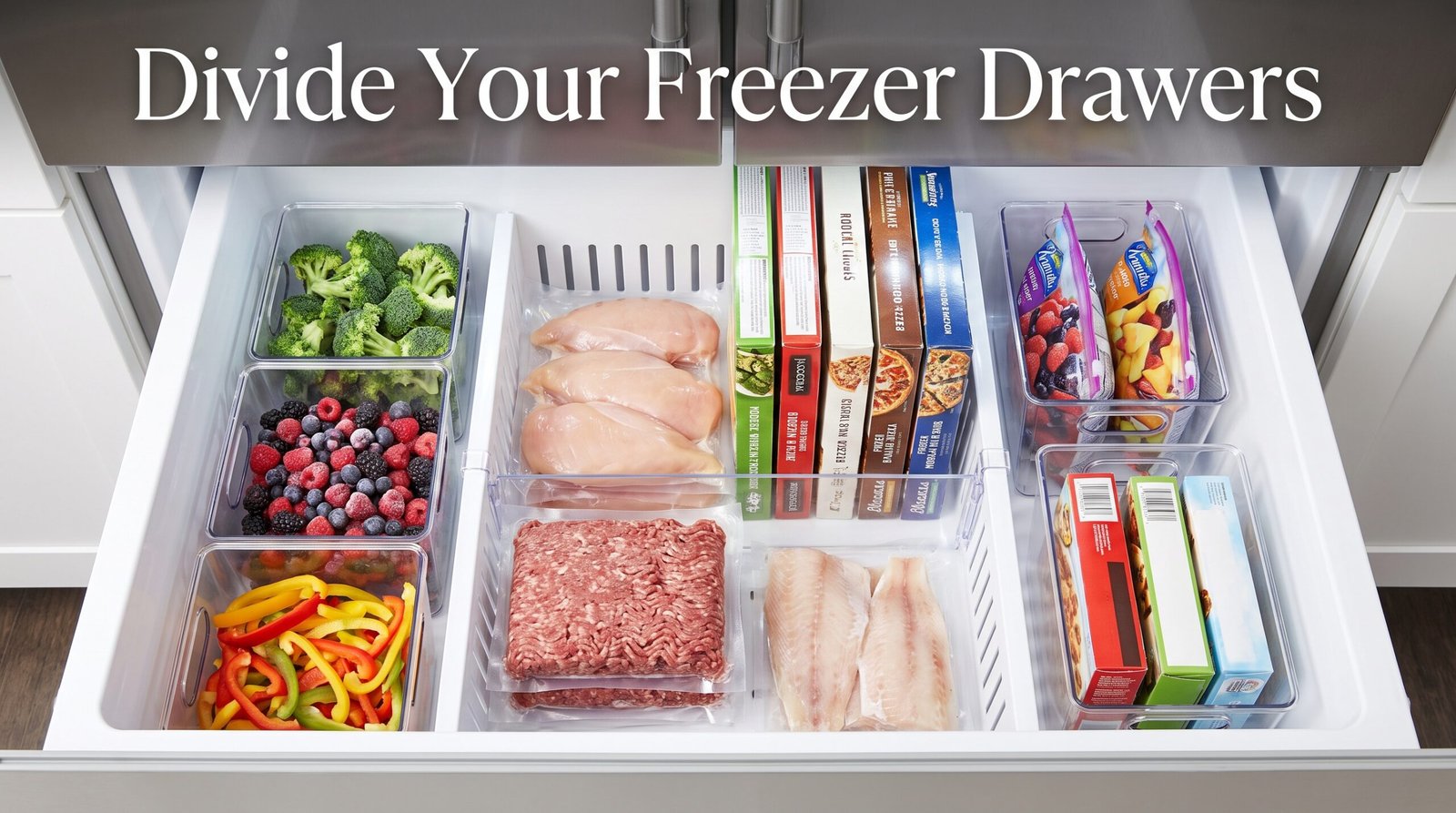
5. Organize Freezer Drawers With Dividers
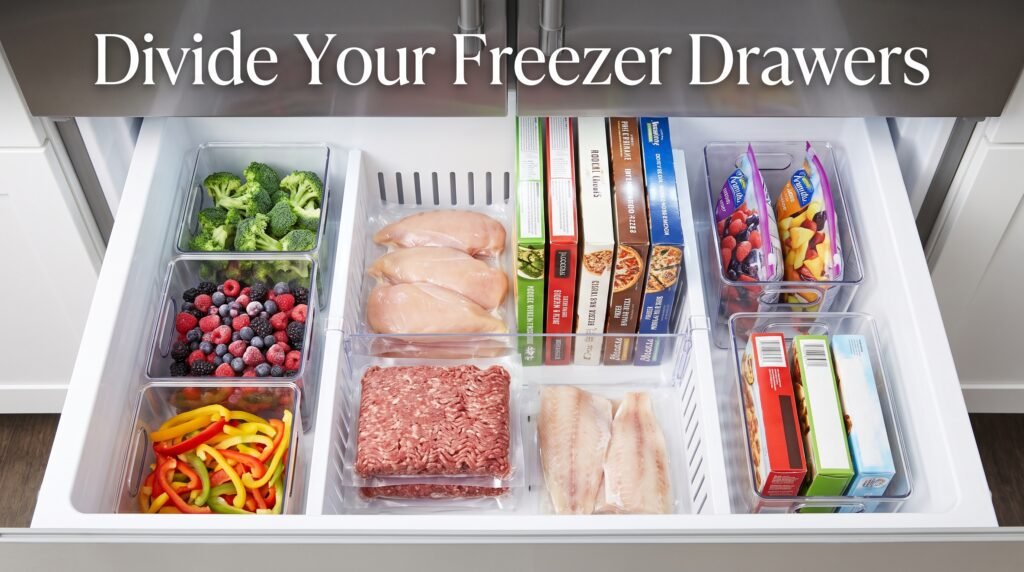
Large freezer drawers offer excellent capacity, but without internal divisions they can quickly become difficult to manage.
Drawer dividers solve this problem by creating smaller compartments.
One section can hold vegetables, another meat, another fruit, and another packaged foods. The exact categories should reflect what your household actually freezes.
Adjustable dividers are especially helpful because freezer inventories constantly change.
After a large grocery trip, you may need more room for meat. During another week, prepared meals might occupy most of the drawer.
A flexible layout allows the organization to evolve.
Containers can also act as dividers.
For example, position three narrow bins side by side inside a deep drawer. Each bin becomes an independent category that can be removed when necessary.
Try placing frequently used ingredients toward the front.
Foods used less often can occupy the back sections.
When organizing a drawer, avoid creating excessively deep stacks. Even with dividers, anything buried underneath multiple packages can easily be forgotten.
Instead, use upright storage whenever possible.
You can also dedicate one small compartment to opened packages. Half-used bags of frozen fruit or vegetables can stay together rather than being mixed with unopened packages.
This makes it easier to finish existing food before opening something new.
6. Create a Dedicated Meat and Seafood Zone
Meat and seafood packages often have different storage requirements from smaller frozen foods.
They can be heavy, irregularly shaped, and difficult to stack. Creating a dedicated freezer zone helps prevent these packages from taking over every shelf.
Lower shelves and drawers are usually convenient locations for heavier frozen foods.
Separate different types of protein using bins or drawer compartments.
For example, you might create sections for poultry, beef, seafood, and prepared proteins.
Labeling is particularly useful here because frozen packages can become difficult to identify once frost develops or original packaging is removed.
When transferring food into freezer-safe packaging, include both the item name and date.
Flatten packages whenever practical.
Ground meat, chopped chicken, and similar foods can sometimes be portioned into flatter packages before freezing. These shapes stack or file much more efficiently than bulky irregular packages.
Individual portions can also make meal preparation easier.
Rather than freezing everything together, divide larger purchases into quantities appropriate for one meal.
This prevents you from needing to defrost more food than necessary.
Avoid packing containers so tightly that they become difficult to remove. The best freezer interior has enough breathing room for items to move in and out without reorganizing the entire section.
7. Make Better Use of Freezer Door Storage
Freezer door shelves are valuable storage areas, but they’re often used without a clear strategy.
Because these shelves are usually narrow, they work best for smaller items that would otherwise disappear inside deeper sections.
Use them for frequently accessed foods and compact packages that fit securely.
Small frozen ingredients, reusable cold packs, certain breakfast items, small containers, and lightweight packaged foods can work well depending on the freezer’s design and manufacturer recommendations.
Group similar items together rather than filling every door compartment randomly.
For example, dedicate one shelf to breakfast foods and another to smaller meal ingredients.
Small freezer-safe bins can help prevent loose packages from falling when the door opens.
Don’t overload door compartments.
A visually organized freezer is easier to maintain when each shelf has a clear purpose and enough space for items to be removed comfortably.
Door storage can also function as a “use soon” zone for suitable foods. Items you want to remember can remain highly visible instead of disappearing at the back of a drawer.
Always follow your appliance manufacturer’s guidance regarding appropriate placement and temperature-sensitive foods, since freezer configurations differ.
8. Create a Minimalist Freezer Interior
Minimalism can be surprisingly practical inside a freezer.
A minimalist freezer isn’t about owning very little food. It’s about reducing unnecessary packaging, avoiding forgotten items, and making the contents immediately understandable.
Start with a complete freezer edit.
Remove everything and check what you actually have. Discard foods that are unsafe or no longer usable according to appropriate food-safety guidance, and identify items that should be prioritized.
Clean the freezer according to the appliance manufacturer’s instructions before reorganizing.
As you return items, create broad categories.
Avoid filling the interior with too many tiny containers or decorative labels. Freezer organization should make food easier to access rather than creating another complicated household system.
Choose a small number of container styles.
Clear rectangular bins, simple labels, and matching freezer-safe meal containers can create a cohesive look without becoming excessive.
Reduce bulky outer packaging when appropriate and when doing so doesn’t remove necessary food information or storage instructions. Keep essential labels and preparation details.
Most importantly, leave some visible empty space.
You don’t need to fill every centimeter.
A little open space makes new groceries easier to accommodate and prevents the freezer from immediately becoming overcrowded.
The result feels calm, clean, and intentionally organized.
How to Keep a Freezer Interior Organized
Creating a beautiful freezer interior is relatively easy. Keeping it organized is the more important challenge.
The best strategy is to design a system simple enough that everyone in the household can follow it.
Categories should be obvious.
If someone has to remember whether frozen berries belong in “Breakfast Ingredients,” “Smoothie Supplies,” or “Frozen Fruit,” the organization is probably too complicated.
Use broader categories instead.
Return groceries directly to their designated zones after shopping. Spending a few additional minutes organizing new food prevents clutter from accumulating.
Periodically check what has moved toward the back.
You can also keep a simple freezer inventory, particularly if you have a large standalone freezer. A list on your phone or another convenient system can help track prepared meals and frequently forgotten foods.
Most importantly, organize according to your actual habits.
A family that relies heavily on frozen vegetables needs a large vegetable zone. Someone who meal-preps every weekend may need considerably more space for prepared meals.
Your freezer should reflect how you cook.
Small Freezer Interior Ideas
A small freezer benefits even more from intentional organization because every bit of usable space matters.
Prioritize compact, stackable packaging.
Freeze liquids and prepared foods in flatter shapes when appropriate. Use narrow bins instead of oversized containers, and avoid keeping unnecessarily bulky packaging.
Vertical storage is particularly valuable.
Small freezers can also benefit from organizing by frequency of use.
Everyday foods should be immediately accessible, while occasional items can occupy less convenient areas.
Don’t purchase large organizing containers simply because they look attractive online. In compact freezers, even a few centimeters of wasted space can matter.
Measure first and choose storage specifically for your freezer.
Freezer Organization Mistakes to Avoid
Even an attractive freezer interior can become inconvenient when the organization system is too complicated.
One common mistake is using too many containers.
Bins are helpful, but every container occupies some physical space. Use them where they genuinely improve organization.
Another mistake is overfilling the freezer.
When every shelf is packed tightly, finding one item can require removing several others. Follow your appliance manufacturer’s instructions regarding loading and airflow.
Avoid unlabeled homemade foods as well.
Once a container freezes and develops condensation or frost, identifying its contents can become surprisingly difficult.
Finally, don’t create an organization system purely for appearance.
The most successful freezer interiors combine visual simplicity with genuine convenience.
Final Thoughts
Freezer organization doesn’t require a dramatic renovation or an expensive collection of accessories.
A few intentional changes can completely transform the space.
Begin with dedicated food zones. Add clear freezer-safe bins where they help contain smaller packages. Store flat foods vertically, divide large drawers, establish a prepared-meal section, and give meat and seafood their own organized area.
Then simplify.
A freezer interior works best when you can open the door and quickly understand where everything belongs.
With a thoughtful layout, your freezer can become one of the most organized and efficient storage spaces in your home.