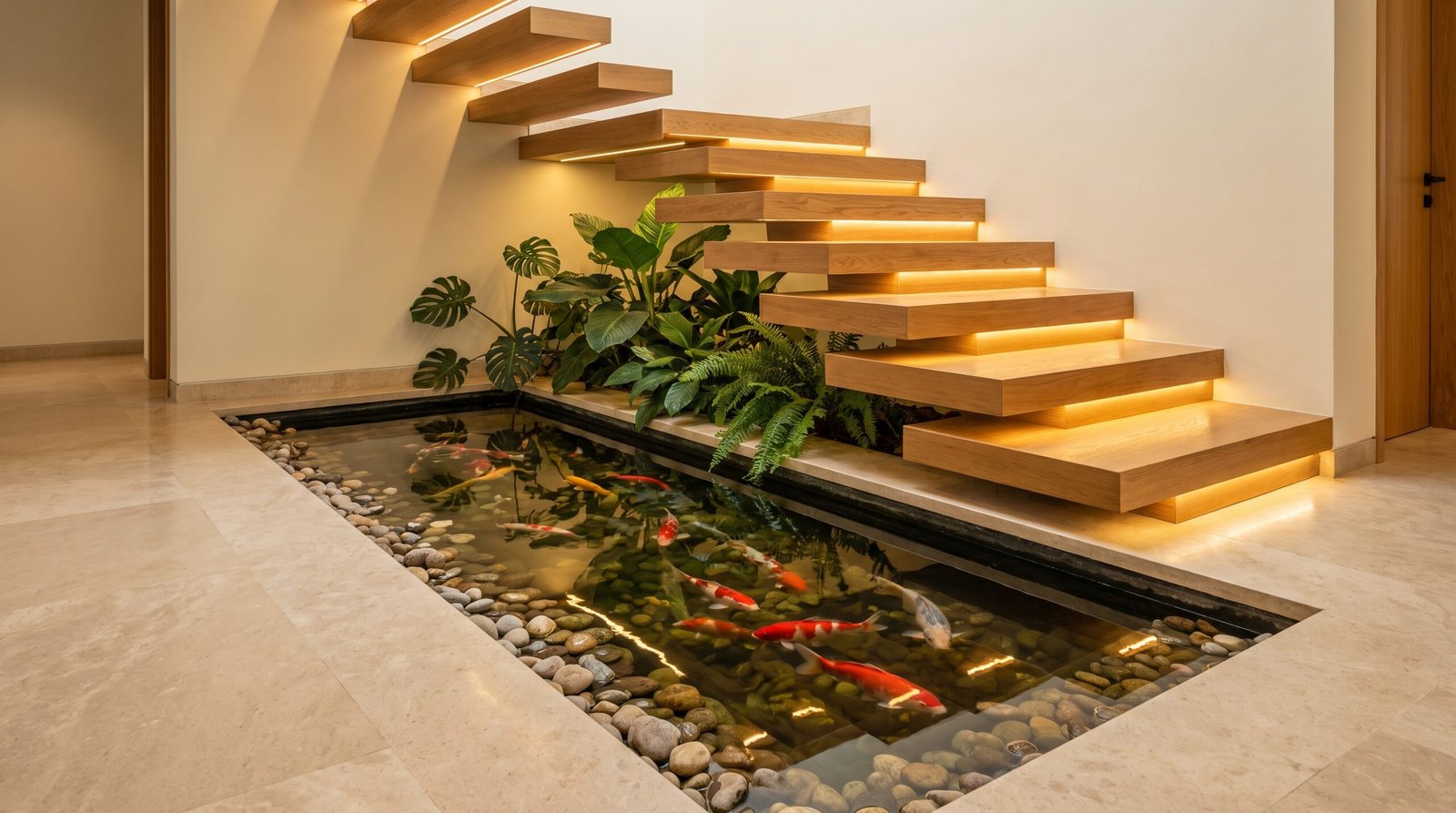
Indoor Fish Pond Ideas: 8 Beautiful Water Features for a Peaceful Home
Indoor fish ponds bring something extraordinary into a home. While houseplants, artwork, and decorative furniture can make an interior beautiful, water introduces movement, reflection, sound, and life. Add colorful fish and natural greenery, and an unused corner or open area can become one of the most memorable features of the entire house.
Modern indoor ponds do not necessarily need to look like miniature outdoor gardens. Today, they can be incorporated into contemporary interiors using clean stone edges, glass walls, recessed designs, subtle lighting, natural rock, warm wood, and carefully selected aquatic plants. From a compact pond tucked beneath a staircase to an impressive koi pond surrounded by greenery, there are possibilities for homes of many different styles.
The most successful design is one that feels connected to the architecture around it. Instead of simply placing a container of water in a room, think about how the pond interacts with flooring, lighting, furniture, plants, and circulation.
Below are eight indoor fish pond ideas that combine decorative impact with practical inspiration.
1. Modern Minimalist Indoor Fish Pond
Modern Minimalist Indoor Fish Pond
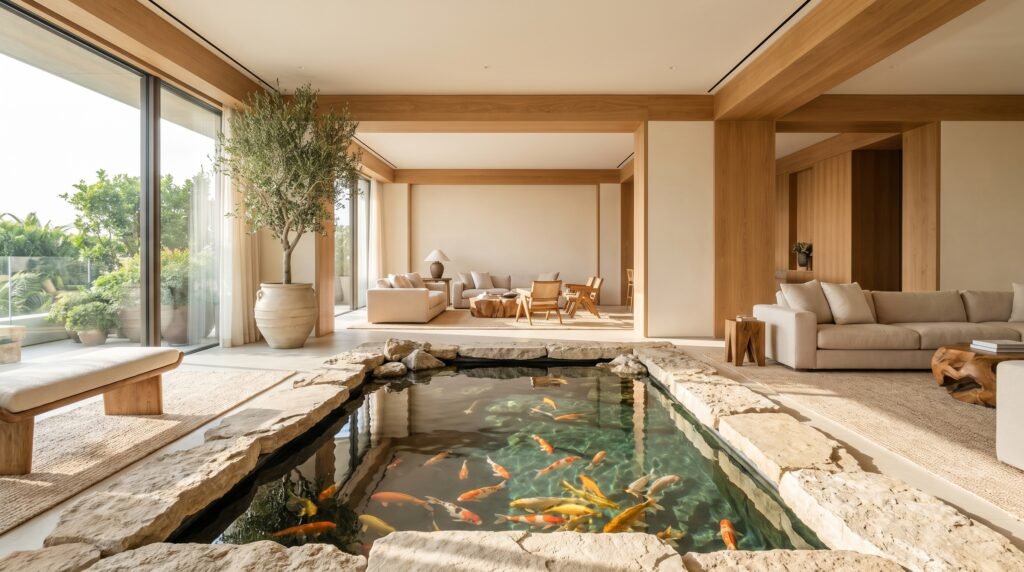
A minimalist indoor pond is perfect when you want water to become a feature without making the room feel busy.
Imagine a shallow rectangular pond surrounded by smooth pale stone. Clear water reflects the ceiling and nearby windows while a few elegant koi provide subtle movement. Rather than filling every edge with plants and ornaments, the surrounding area remains intentionally simple.
This restraint is what makes the design powerful.
Neutral finishes such as limestone, travertine, concrete, or light-toned stone work especially well. Their natural textures provide visual interest without competing with the fish.
Keep the shape architectural. Rectangles and long narrow ponds generally suit contemporary spaces because their clean lines relate naturally to modern furniture and architecture.
Lighting can completely change the appearance of the pond. During the day, natural sunlight creates reflections across the surface. In the evening, discreet underwater or perimeter lighting can give the water a soft glow.
Avoid excessive decorative accessories around a minimalist pond. One sculptural plant, a ceramic vessel, or a simple bench may be enough.
The pond itself should remain the focal point.
Styling Tip
Repeat one of the pond materials elsewhere in the room. For example, if the border is made from warm limestone, use a limestone side table or similarly toned flooring nearby. This creates visual continuity.
2. Indoor Koi Pond Surrounded by Greenery
Indoor Koi Pond with Lush Plants
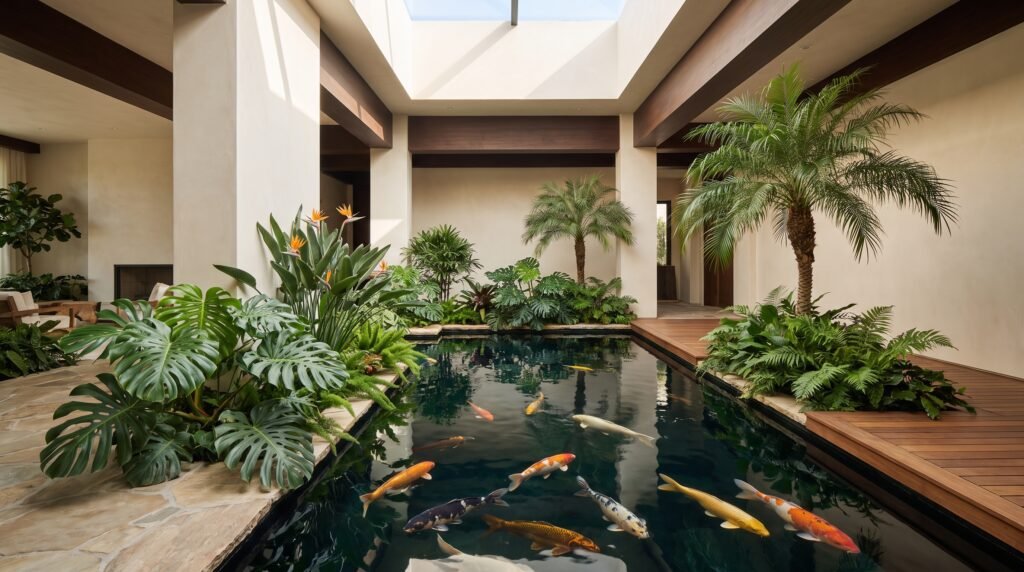
For homeowners who love biophilic interiors, an indoor koi pond surrounded by plants can create an incredible garden-like atmosphere.
Instead of decorating the pond with dozens of small accessories, allow greenery to create the visual richness.
Large-leaf plants can be positioned around the edges, while smaller plants soften the transition between the pond and surrounding floor.
A combination of different heights works beautifully.
Tall palms or indoor trees can form the background. Medium plants add volume around the pond, and low-growing greenery can soften the immediate border.
The water becomes even more striking against all those natural green tones.
Koi add another layer of color and movement. Their orange, white, black, and golden markings stand out beautifully against darker pond surfaces.
If you want the pond to feel sophisticated rather than overly tropical, keep the surrounding architecture simple. Warm white walls, natural stone flooring, wooden furniture, and restrained decor help balance the abundance of plants.
Natural daylight is particularly valuable for this type of interior.
A skylight, atrium, large window, or glass door can make the entire area feel like a small indoor courtyard.
Styling Tip
Use fewer plant varieties but repeat them around the pond. Repetition creates a more intentional landscape than using many unrelated species.
3. Under-Stair Indoor Fish Pond
Fish Pond Under a Modern Staircase
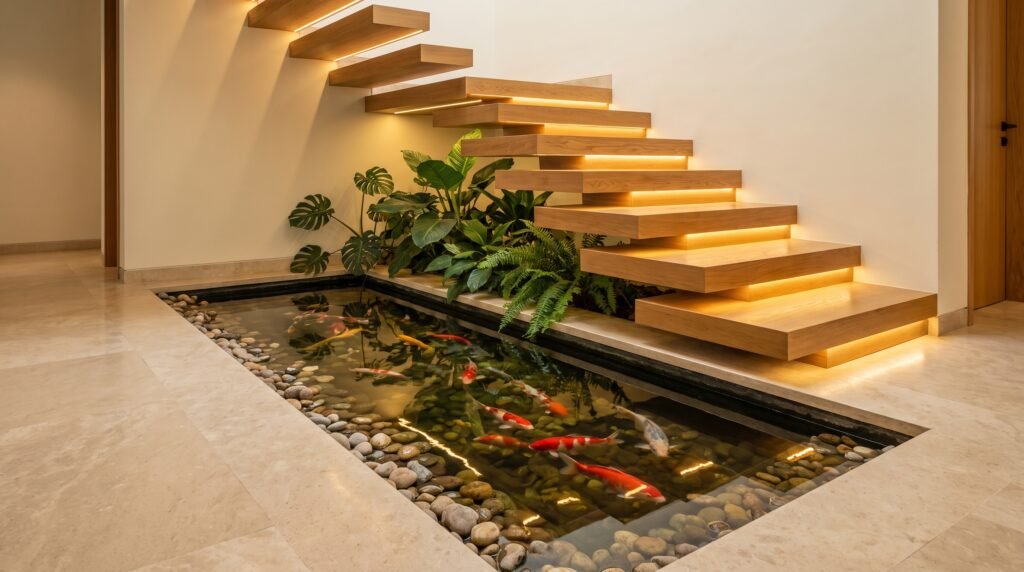
The area underneath a staircase is frequently one of the most difficult spaces to decorate.
A small indoor fish pond can transform it completely.
Instead of filling the area with another console table or leaving it empty, the staircase becomes the architectural frame for a peaceful water feature.
A long, shallow pond often works particularly well underneath floating or open-riser stairs. Its horizontal shape contrasts beautifully with the diagonal line created by the staircase.
Add smooth pebbles or natural stone around selected areas of the pond, but avoid covering every visible surface. Leaving portions clean keeps the feature modern.
A small cluster of plants can be placed where the staircase reaches its highest point. This takes advantage of the available vertical space.
Lighting is especially important because under-stair areas can be darker than the rest of the room.
Hidden LED lighting beneath stair treads or discreet lighting near the pond can produce beautiful reflections after sunset.
The result feels less like an awkward leftover space and more like a deliberately designed architectural feature.
Styling Tip
If your staircase uses warm oak, repeat that wood tone in a nearby bench, planter, or decorative detail. The pond will then feel integrated into the surrounding design.
4. Glass-Wall Indoor Fish Pond
Contemporary Glass-Sided Indoor Fish Pond
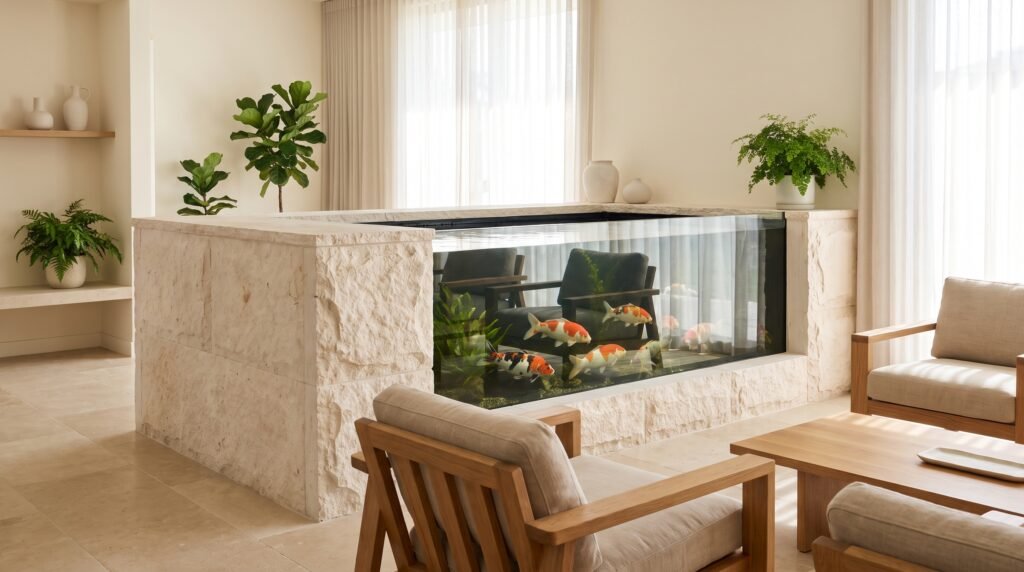
A glass-sided pond offers a fascinating combination of aquarium and traditional pond design.
Instead of seeing the fish only from above, transparent panels allow you to watch them moving through the water from the side.
This can make the feature especially impressive in a living room, entryway, hallway, or open-plan interior.
A raised rectangular pond is one of the simplest visual approaches. Use stone or another solid material for most of the structure while incorporating a large transparent viewing panel on one side.
The surrounding decor should remain relatively quiet because the moving fish already provide plenty of visual interest.
A warm neutral interior works particularly well.
Picture cream walls, pale stone flooring, natural wood furniture, linen upholstery, and a glass-front pond containing gently moving fish. The water introduces color without disrupting the calm palette.
This type of feature can also work as a subtle room divider in a large open space.
Instead of building a completely solid partition, a thoughtfully positioned pond can create separation while maintaining openness.
Styling Tip
Position seating where the glass viewing panel can easily be seen. This turns the pond into living artwork rather than something appreciated only while walking past.
5. Indoor Fish Pond with a Small Waterfall
Indoor Pond with Gentle Waterfall
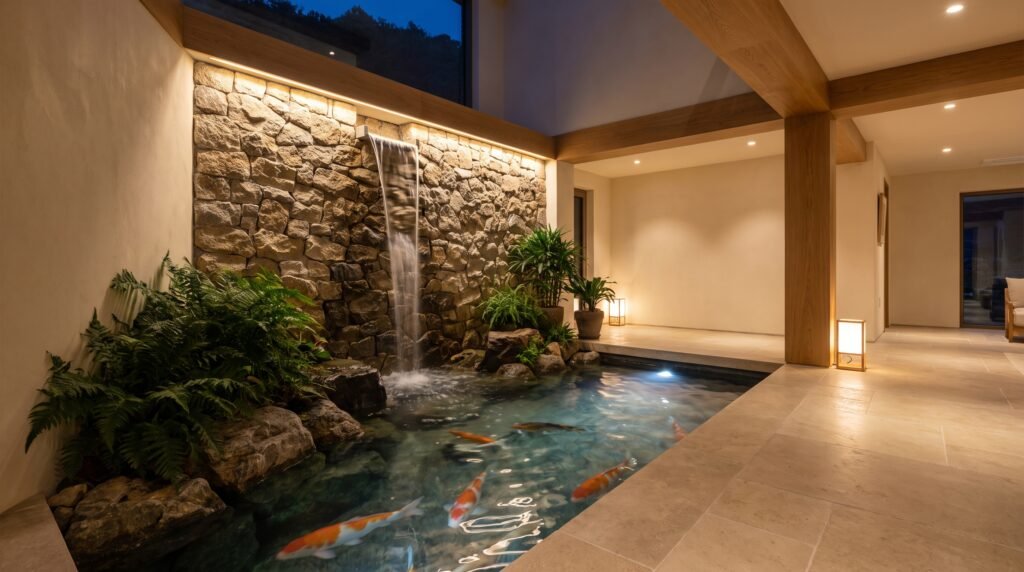
If you want an indoor pond to engage more than just the eyes, introduce moving water.
A small waterfall adds gentle sound and creates beautiful ripples across the pond surface.
The key word is small.
Inside a home, an enormous waterfall can quickly dominate the room. A narrow stream of water flowing over stone or from a simple architectural spout often creates a much calmer effect.
For an organic-modern interior, use textured natural stone for the waterfall wall. Surround it with warm neutral finishes, subtle greenery, and soft lighting.
For a more contemporary interpretation, water can emerge from a narrow opening in a smooth plaster or stone wall.
The continuous movement helps prevent the pond from appearing static.
It can also create a peaceful atmosphere in spaces designed for relaxation, such as an indoor courtyard, reading area, meditation corner, or spacious living room.
Consider acoustics carefully. You want a soothing trickle rather than a loud splash.
Water should fall gently and close to the pond surface whenever possible.
Styling Tip
Add warm indirect lighting behind nearby plants or along the waterfall wall. At night, the moving water will catch the light and produce subtle reflections.
6. Small Corner Indoor Fish Pond
Small Corner Fish Pond
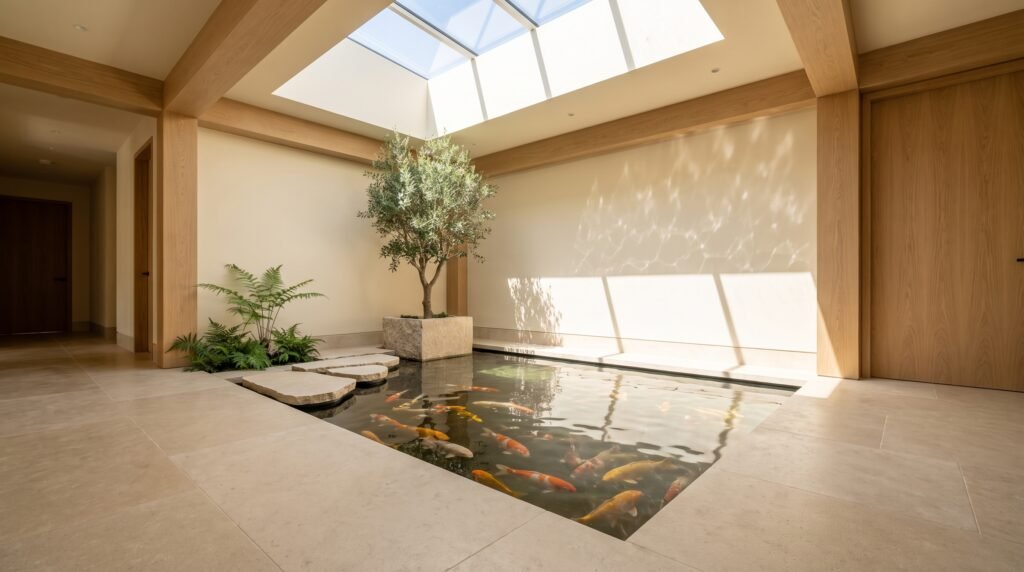
You do not need an enormous atrium to enjoy an indoor pond.
A compact corner can be enough.
Small ponds can be particularly attractive when their proportions match the room. Rather than trying to recreate a large garden pond indoors, design something intentionally compact.
A curved or softly angular pond can fit neatly into an unused corner.
Surround it with one or two larger plants rather than many small accessories. This keeps the space visually clean.
Wall-mounted lighting above the pond can highlight both the water and surrounding foliage without taking up floor space.
You could also create a simple stone backdrop behind the pond to visually define the feature.
If the room is already small, choose pale materials around the pond. Light stone, soft beige walls, and warm wood can help maintain an airy atmosphere.
Mirrors should be used carefully but can be effective nearby. A strategically positioned mirror can reflect plants and water, visually increasing the depth of the corner.
The goal is not to hide the pond.
Instead, make it look like the corner was designed specifically for it.
Styling Tip
Choose a pond edge that can occasionally function as informal seating, provided the structure is designed safely for that purpose. This can make a small installation feel more integrated with the room.
7. Sunken Indoor Fish Pond
Luxury Sunken Indoor Fish Pond
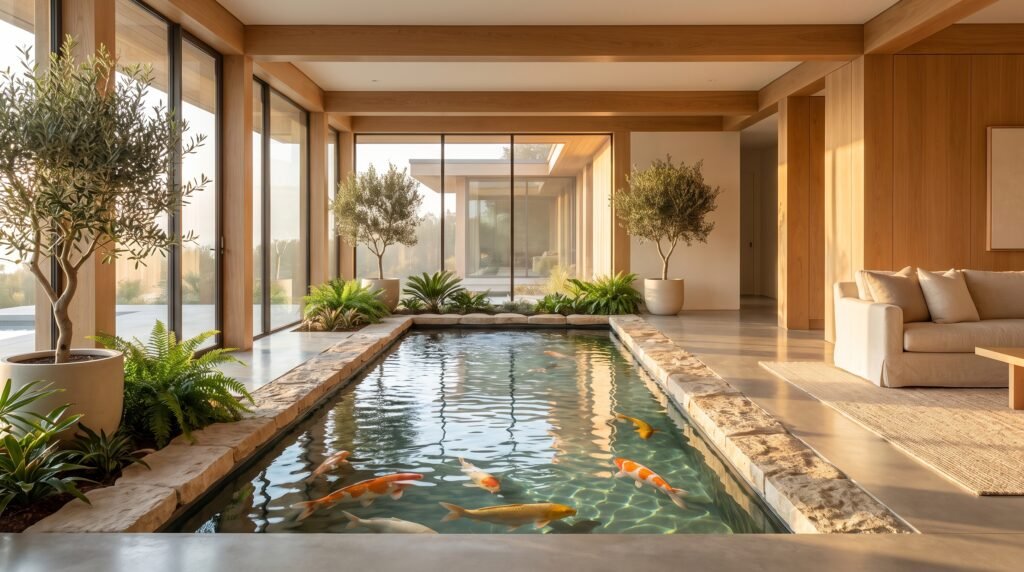
For a highly architectural look, consider a pond that sits almost level with the surrounding floor.
A sunken design creates an incredibly clean appearance because there is no bulky raised structure interrupting the room.
The water itself becomes part of the architecture.
This style works particularly well in indoor courtyards, spacious entryways, atriums, and luxury open-plan interiors.
Large stone floor tiles can continue directly toward the pond edge, making the transition feel seamless.
Because the water is positioned low, reflections become especially noticeable. Skylights, pendant lights, plants, and nearby architectural details may all appear across the surface.
A small bridge or stepping-stone-style crossing can add another dramatic element where appropriate.
However, safety must be a major consideration with floor-level water features. The pond should be positioned away from main circulation routes, and the surrounding surface needs to be suitable for areas where occasional splashing may occur.
Subtle barriers, changes in floor texture, or thoughtful furniture placement can help visually define the edge.
Styling Tip
Keep the surrounding flooring simple. Large-format stone or concrete-look surfaces allow the reflective water to provide most of the visual detail.
8. Indoor Courtyard Fish Pond
Indoor Courtyard Fish Pond
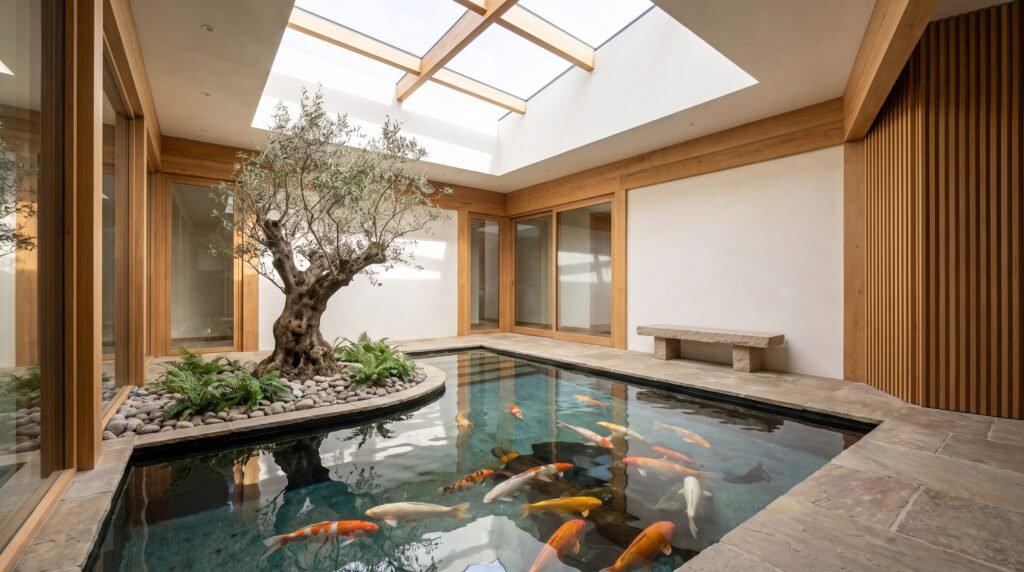
An indoor courtyard pond can become the centerpiece around which an entire home is organized.
This is the most immersive idea on the list.
Imagine a central pond beneath a skylight with a small indoor tree growing beside it. Natural stone surrounds the water, while large windows or glass partitions allow neighboring rooms to look into the courtyard.
The pond is visible from multiple parts of the house, creating a constant connection with nature.
This approach works beautifully with modern architecture because it contrasts clean structural lines with organic elements.
Water, stone, plants, wood, and daylight provide most of the decoration.
There is little need for additional accessories.
A courtyard pond can also change dramatically throughout the day. Morning sunlight may illuminate one side of the water, while afternoon light creates shadows from surrounding plants. At night, subtle architectural lighting transforms the courtyard into a glowing focal point.
A small bench or lounge chair positioned nearby creates a peaceful place to enjoy the feature.
Styling Tip
Choose one statement plant or indoor tree instead of filling the courtyard with many large plants. Giving individual elements more space creates a sophisticated, resort-inspired appearance.
Choosing the Right Location for an Indoor Fish Pond
Before thinking about decorative details, decide where the pond makes the most sense.
Look for a location that provides enough room for people to move comfortably around it. A beautiful pond becomes inconvenient if everyone constantly needs to walk around its edge.
Natural light can be desirable, but intense direct sunlight may affect water conditions and encourage unwanted algae growth. The needs of the fish and aquatic plants should therefore influence placement as much as aesthetics.
Easy maintenance access is equally important.
Filters, pumps, plumbing components, and other equipment should be accessible without requiring furniture or heavy stone panels to be removed every time maintenance is necessary.
Good locations can include:
- An indoor courtyard or atrium
- Beneath an open staircase
- A wide unused corner
- A spacious entrance area
- Beside an indoor garden
- Within a large open-plan living space
- Near a sunroom or enclosed patio
Think about how the pond will look from multiple angles rather than from only one viewpoint.
Best Materials for Indoor Pond Surrounds
Materials determine whether an indoor pond looks rustic, tropical, contemporary, or luxurious.
Natural stone is one of the easiest materials to integrate into sophisticated interiors.
Travertine creates a warm Mediterranean feel, while darker stone can make colorful fish more visible. Smooth concrete works beautifully in minimalist interiors, and textured rock can create a more natural garden appearance.
Wood can also introduce warmth, but materials positioned near water need to be chosen and installed appropriately for moisture exposure.
Glass is particularly useful when you want to turn the pond into a visual centerpiece.
For a cohesive interior, limit the number of finishes.
Using stone, wood, water, and greenery together is often enough.
How to Make an Indoor Pond Look Elegant
The difference between a beautiful indoor pond and one that looks overly decorative usually comes down to restraint.
Avoid adding every possible pond ornament.
Instead, select a few strong elements.
You might combine a rectangular stone pond with one tall plant and underwater lighting. Or pair a natural pond with a textured stone wall and a small waterfall.
Leave some empty space.
Negative space allows the movement of fish and reflections in the water to become part of the decoration.
The same principle applies to plants. A few healthy, substantial plants often look more luxurious than dozens of tiny pots positioned around the water.
Hide practical equipment whenever possible while keeping it accessible.
Visible cables, pumps, pipes, and maintenance tools can quickly reduce the polished appearance of an otherwise beautiful feature.
Lighting Ideas for Indoor Fish Ponds
Lighting can make an indoor pond just as impressive after sunset as it is during the day.
Underwater lighting can gently illuminate the fish, while concealed lighting around the perimeter emphasizes the shape of the pond.
Avoid making every part equally bright.
A combination of illuminated and shadowed areas creates depth.
Nearby plants can also be lit from below, producing dramatic leaf shadows across surrounding walls.
If there is a waterfall, position lighting so it highlights the moving water rather than shining directly into people’s eyes.
Warm architectural lighting usually creates a particularly inviting atmosphere around natural stone and wood.
Daylight remains one of the most beautiful sources of illumination.
If possible, position the pond where it can receive soft natural light from a window, skylight, or glass door without exposing the aquatic environment to unsuitable conditions.
Decorating Around an Indoor Fish Pond
The surrounding decor should support the pond rather than compete with it.
Natural materials are usually the easiest choice.
A textured rug positioned safely away from the water, a wooden bench, a sculptural lounge chair, ceramic planters, or linen upholstery can make the surrounding room feel warm and comfortable.
Plants provide the strongest connection.
Use them strategically around one or two sides of the pond while leaving other edges visually open.
This prevents the feature from becoming cluttered.
Wall decor should also remain relatively restrained.
If the pond already contains colorful fish, dramatic stone, greenery, and moving water, you may not need a large gallery wall nearby.
Allow nature to provide the artwork.
Practical Considerations Before Building an Indoor Fish Pond
An indoor fish pond is more complicated than a purely decorative water bowl, especially when living fish are involved.
The pond needs appropriate filtration, circulation, waterproofing, drainage planning, and electrical safety.
The volume and depth of the pond should also suit the fish species you intend to keep. Koi, for example, require considerably more space than their small size at purchase might suggest.
Ventilation and humidity should be considered as well.
Large indoor water surfaces can influence indoor moisture levels, so the surrounding room and building materials need to be appropriate for the installation.
Floor loading is another important factor because water is extremely heavy.
For substantial ponds, especially on anything other than a ground-level structural slab, professional structural advice may be necessary.
Slip-resistant flooring around the pond can improve safety.
Electrical components near water should be professionally installed and suitable for wet environments.
Finally, plan maintenance before construction.
A hidden but easily accessible filtration area will make long-term care significantly easier.
A beautiful pond should not only photograph well—it should remain healthy and manageable for years.
Final Thoughts
Indoor fish ponds can turn ordinary interior spaces into peaceful, nature-inspired environments.
A small corner pond can bring life to an unused area, while an under-stair design can transform awkward architecture into a feature. Glass-sided ponds offer a contemporary aquarium-like experience, waterfalls introduce gentle movement and sound, and large courtyard ponds can become breathtaking architectural centerpieces.
The most beautiful designs do not necessarily contain the most decoration.
Instead, they balance water, fish, stone, plants, light, and open space.
Start with the architecture of your home and select a pond style that feels naturally connected to it. Keep surrounding materials cohesive, conceal technical equipment thoughtfully, and prioritize the health and safety requirements of the fish from the beginning.
With careful planning, an indoor fish pond becomes much more than another decorative feature. It can create a living focal point that changes throughout the day as fish move, water reflects the light, and surrounding greenery casts shifting shadows.