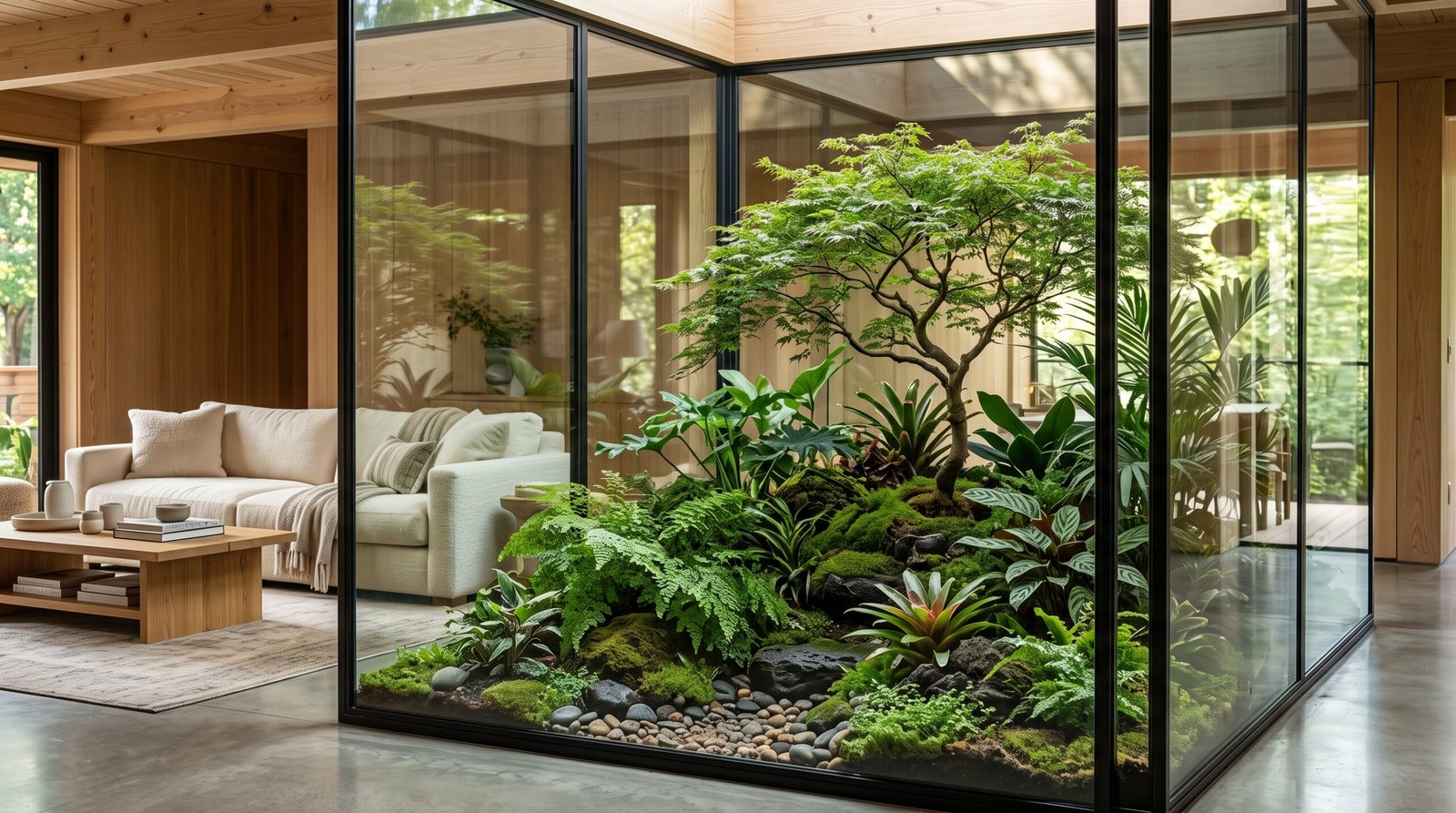
Indoor Glass Partition Ideas :10 Stylish Ways to Divide Your Space
Glass partitions create visual separation while allowing natural light to travel throughout the home. Unlike traditional walls, they can make spaces feel connected instead of closed off. From dramatic black-framed designs to soft fluted glass and elegant arched partitions, there are countless ways to introduce glass into an interior.
The best part is that glass partitions are not limited to ultra-modern homes. With the right frame, glass texture, and surrounding décor, they can complement organic modern, Scandinavian, industrial, minimalist, contemporary, and even traditional interiors.
Here are 10 stylish indoor glass partition ideas to inspire your next home transformation.
1. Black-Framed Glass Partition for a Modern Statement
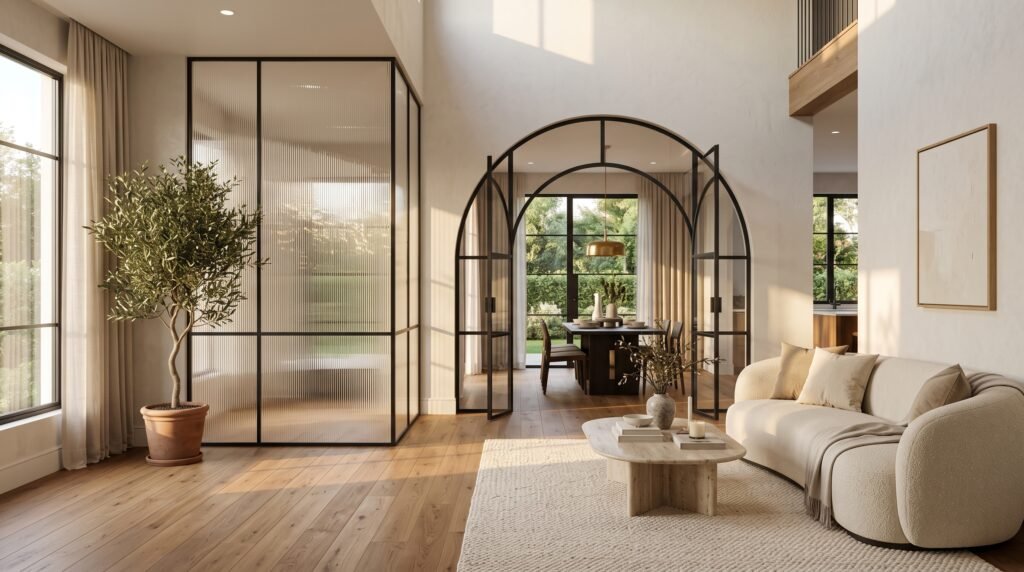
Few partition designs make as much of an impact as black-framed glass. Inspired by industrial-style windows and classic steel doors, this design combines large glass panels with slim dark frames.
The contrast immediately gives a room architectural character.
A black-framed partition works especially well between a living room and home office. Instead of hiding the workspace behind a solid wall, the transparent glass keeps the room visually connected while establishing a clear boundary.
For a softer interpretation of the industrial look, surround the partition with warm materials. An oak floor, cream sofa, textured rug, linen curtains, and natural wood furniture can prevent the black framework from feeling too harsh.
You can also repeat small amounts of black throughout the room. A slim floor lamp, picture frame, side table, or cabinet hardware can visually connect the partition with the rest of the interior.
Large panes generally create a cleaner contemporary look, while smaller grid-style sections give the partition stronger industrial character.
If privacy is occasionally required, install a linen curtain on one side. It can remain open most of the time and be drawn when the room needs to become more secluded.
2. Fluted Glass Partition for Soft Privacy
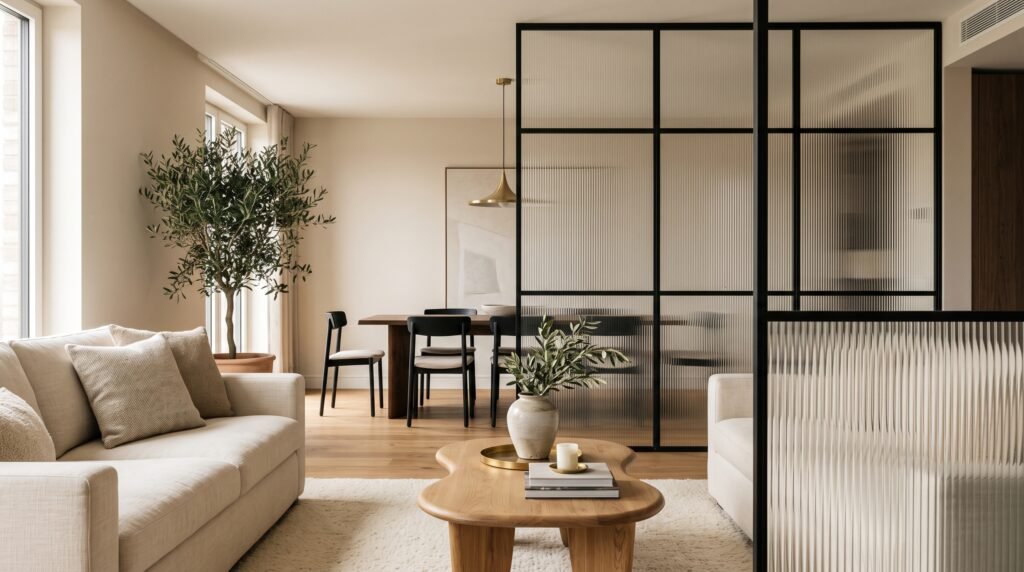
Transparent glass is beautiful, but it is not appropriate for every part of the home. When you want light without complete visibility, fluted glass is one of the most stylish alternatives.
Fluted glass features vertical grooves that distort whatever is behind the panel. Light can still pass through, but details become blurred.
This makes it particularly useful for bedroom dressing areas, hallways, workspaces, or other areas where a little privacy is desirable.
The vertical texture also adds a decorative quality. When sunlight hits the grooves, subtle shadows and reflections appear across the surface.
Pair fluted glass with warm oak or walnut framing for an inviting organic-modern look. A slim black frame creates a more contemporary appearance, while brass details can make the design feel refined and luxurious.
Because the glass itself already provides texture, the surrounding décor can remain relatively simple.
Think creamy walls, light wood flooring, understated furniture, woven textiles, and a few sculptural accessories.
The result is a partition that functions almost like an architectural piece of art.
3. Arched Glass Partition for Architectural Character
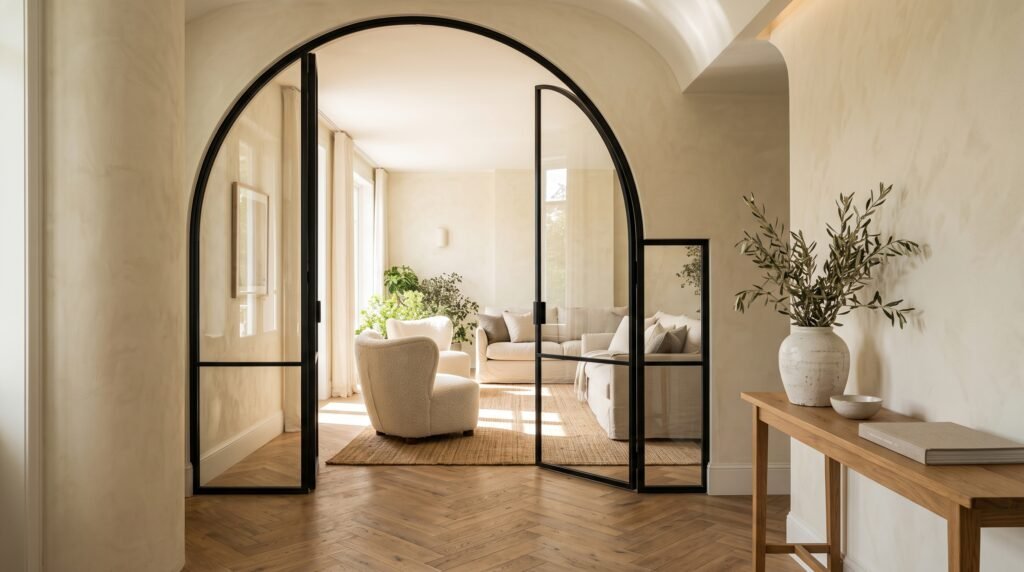
Straight lines dominate most interiors, which is why introducing an arch can immediately make a room feel special.
An arched glass partition combines the openness of glass with the elegance of curved architecture.
It can be used to define an entrance between two rooms, separate a bedroom from a sitting area, or create a distinctive transition from a hallway into a living space.
One particularly beautiful approach is a large central glass door with fixed glass panels on either side. The curved upper section softens the entire composition.
For a modern European-inspired interior, choose thin black framing. For something warmer, use wood around the arch and keep the glass relatively simple.
The surrounding furnishings should support the curved architecture rather than compete with it. Rounded coffee tables, curved sofas, globe lamps, circular mirrors, and sculptural ceramics can subtly repeat the shape.
Warm neutral colors such as ivory, sand, beige, muted brown, and soft taupe also work wonderfully with this design.
An arched partition is especially effective when you want a functional room divider that also becomes a memorable focal point.
4. Sliding Glass Partition for Flexible Spaces
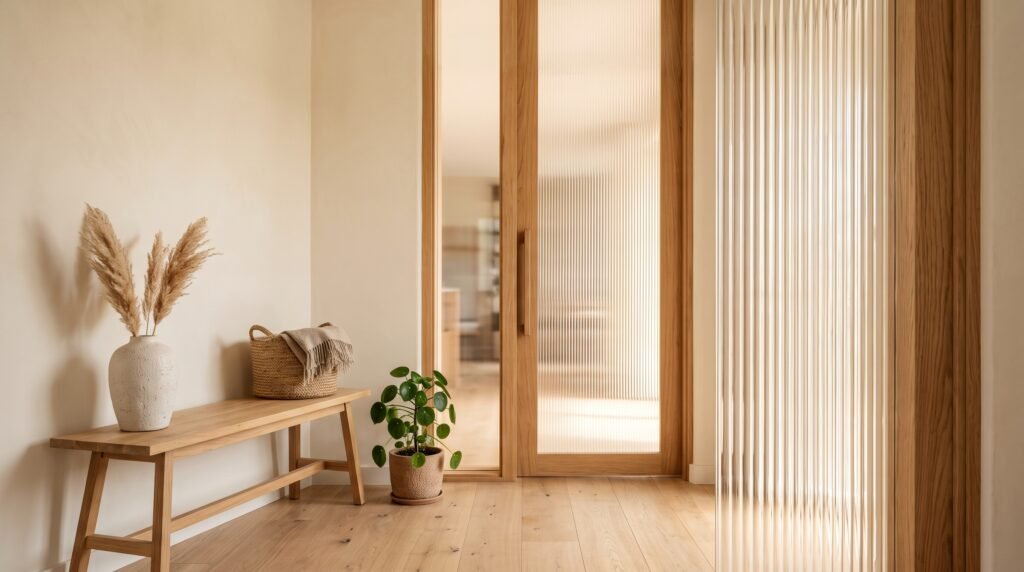
Not every room needs to stay permanently divided.
A sliding glass partition allows one space to function in multiple ways throughout the day. The panels can remain open when you want a spacious floor plan and slide closed when privacy or separation is needed.
This is especially practical for apartments and compact homes.
For example, a home office positioned beside a living room can remain open during casual hours. When work begins, sliding glass doors can close the office without cutting it off from natural light.
Sliding partitions are also useful between bedrooms and dressing areas or between living rooms and multipurpose spaces.
Choose minimal hardware whenever possible. Slim tracks and narrow frames help the glass feel like part of the architecture rather than bulky furniture.
Clear glass creates maximum openness, while ribbed or lightly frosted glass offers more privacy.
If your home has a warm minimalist aesthetic, consider wooden frames rather than black metal. Light oak paired with clear glass looks particularly beautiful against cream walls and pale flooring.
The flexibility of this design makes it one of the most practical glass partition ideas for contemporary homes.
5. Bedroom Glass Partition for a Boutique-Hotel Look
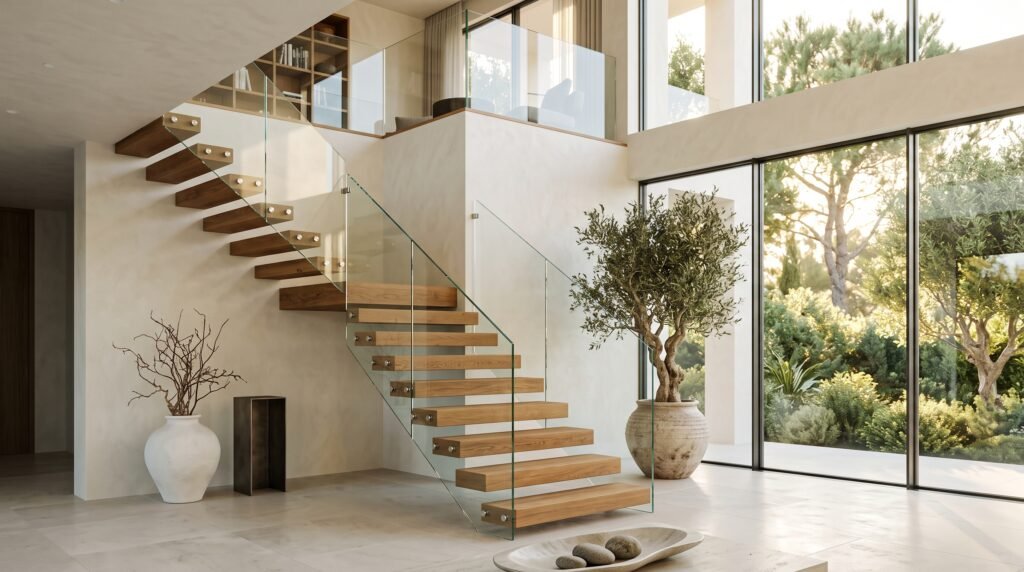
A bedroom can feel more luxurious when it contains clearly defined zones.
Instead of allowing the sleeping, dressing, and lounging areas to blend together, a glass partition can gently organize the room while preserving its spacious appearance.
For example, a floor-to-ceiling glass wall can separate the bed from a dressing room or small reading area.
The design creates a sophisticated boutique-hotel atmosphere without making either side feel cramped.
Privacy can be introduced with curtains. Soft ceiling-mounted linen curtains positioned alongside the glass allow the space to change throughout the day.
During daylight hours, the curtains can remain open so sunlight reaches the entire room. At night, they can close to create a warmer and more intimate environment.
Keep the bedroom palette calming. Upholstered neutral beds, warm wood nightstands, layered linen bedding, textured rugs, and soft indirect lighting pair beautifully with glass architecture.
If you use black-framed glass, balance it with soft fabrics and natural materials so the bedroom still feels restful.
6. Frosted Glass Partition for Extra Privacy
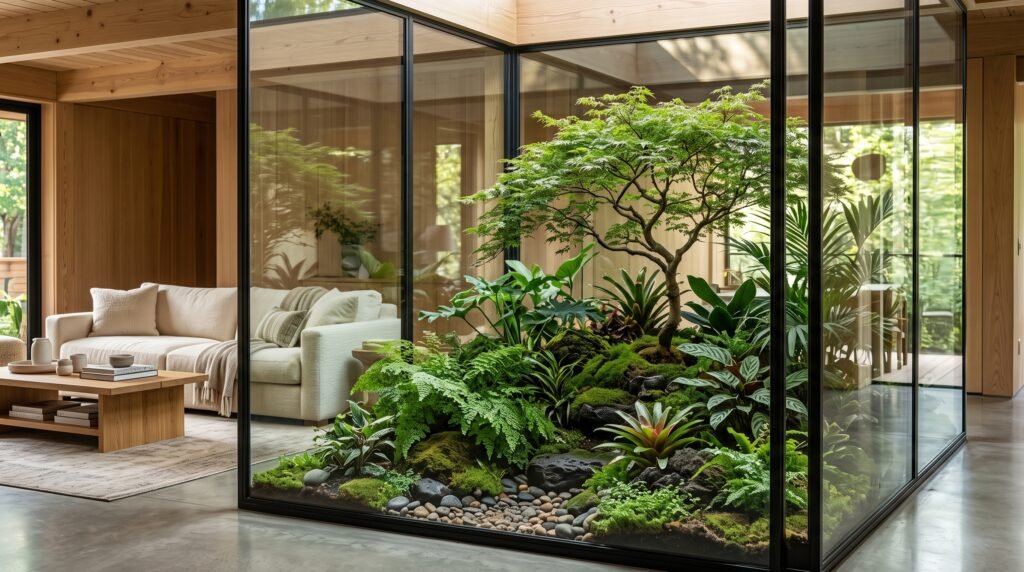
Sometimes the goal is not simply to divide a room but to create meaningful privacy.
In these situations, frosted glass partitions provide an excellent balance between openness and seclusion.
The translucent surface allows light to filter through while obscuring the view behind it. This can be useful for dressing spaces, small home offices, hallway transitions, or bedroom zones.
Instead of using fully frosted panels, you can also combine clear and frosted sections.
For example, the lower portion could provide privacy while a clear upper section keeps the room visually open. Another option is a subtle gradient where the glass becomes increasingly transparent toward the top.
Frosted glass works particularly well in minimalist interiors because its appearance is clean and understated.
Pair it with white, cream, pale gray, or natural wood surroundings.
Soft lighting can make the glass even more attractive in the evening. When a warm lamp glows behind the panel, the frosted surface diffuses the light and creates a calm atmosphere.
7. Floor-to-Ceiling Glass Wall for Maximum Light
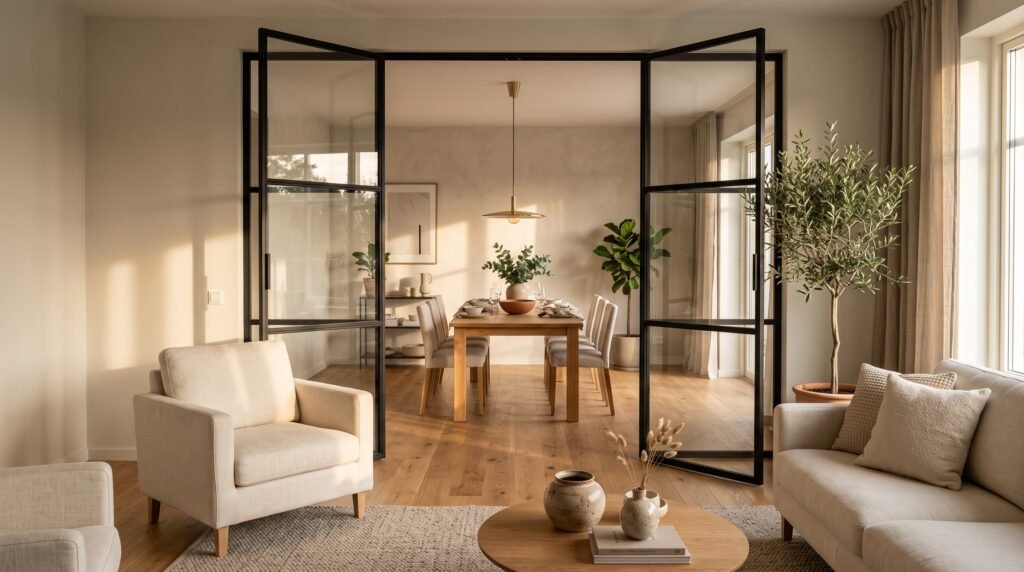
When natural light is one of your home’s best features, the last thing you want is to block it with unnecessary walls.
A floor-to-ceiling glass partition can divide large rooms while allowing daylight to continue traveling through the interior.
This works beautifully in open-plan homes where one side of the space has large windows.
Imagine a bright living room beside a home office. A conventional wall might leave the office dark, while a glass partition allows it to borrow daylight from the living room.
For the cleanest appearance, choose large panes with minimal framing.
Frameless glass creates an almost invisible boundary, while slim metal framing provides additional architectural definition.
Furniture placement becomes important with transparent partitions because both sides remain visible.
Use coordinated colors and materials across the two spaces. They do not need to match exactly, but repeating elements such as warm wood, cream upholstery, black accents, or similar textiles creates continuity.
A large indoor tree or sculptural plant placed near the glass can soften the architectural lines beautifully.
8. Wood-and-Glass Partition for a Warm Organic Look
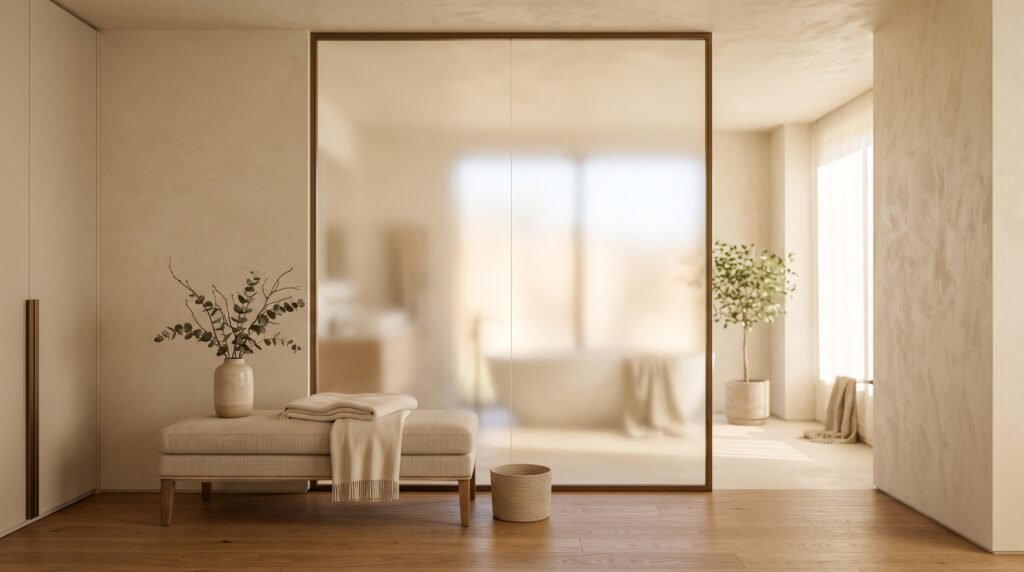
Metal is not the only material that works with glass.
A wood-and-glass partition offers a warmer interpretation that is particularly suitable for Scandinavian, Japandi, organic-modern, and contemporary interiors.
Light oak is an excellent choice for airy neutral homes. Walnut provides a richer and more dramatic appearance.
The wooden structure can be extremely simple, consisting of narrow vertical frames around clear panels. Alternatively, you can create a more decorative grid pattern.
Wooden frames are especially attractive when they coordinate with existing elements such as flooring, doors, cabinetry, or furniture.
Imagine an open living area with pale oak floors, an ivory sofa, linen curtains, and a light oak glass divider. The partition feels integrated rather than added later.
For additional privacy, use fluted glass instead of completely transparent panels.
Plants are another excellent companion to this design. Green foliage against warm timber and reflective glass introduces a beautiful connection with nature.
9. Frameless Glass Partition for Minimalist Interiors
[Image Nine – Frameless Glass Partition]
If you love interiors that feel simple, spacious, and uncluttered, a frameless glass partition may be the ideal solution.
Without prominent frames or grid lines, the glass nearly disappears into the architecture.
This allows the furniture, artwork, lighting, and materials of the room to remain the visual focus.
Frameless glass works particularly well in contemporary apartments and modern minimalist homes.
Use it to create a quiet office corner, separate a bedroom sitting area, or establish a subtle boundary between adjoining spaces.
Because the partition itself is understated, pay extra attention to the surrounding styling.
A beautifully textured rug, sculptural lounge chair, elegant floor lamp, natural stone side table, or large indoor tree can provide visual interest.
Neutral colors are especially effective because they reinforce the sense of calm.
One important consideration is visibility. Completely clear frameless glass can sometimes be difficult to notice, so subtle architectural details or appropriate safety markings may be necessary depending on the installation and local requirements.
10. Glass Partition with Built-In Shelving
[Image Ten – Glass Partition with Shelving]
A room divider can provide more than separation.
Combining glass panels with built-in shelving creates a multifunctional architectural feature that can display décor while defining different zones.
One approach is to create a central wooden shelving structure with glass panels extending from either side. Another is to integrate narrow display shelves directly into a framed partition.
Keep the shelving relatively open so the divider does not become visually heavy.
Style it with a carefully edited selection of objects such as ceramic vases, small plants, neutral books, sculptural pieces, and decorative bowls.
Avoid filling every shelf. Empty space is important because it allows light to continue passing through the structure.
This type of partition is especially useful between a living room and reading corner or between an entryway and main living space.
Warm integrated lighting can make the shelving particularly attractive in the evening.
The final result combines storage, display, architecture, and room division in one thoughtful feature.
How to Choose the Right Glass Partition
The best glass partition depends on what you need the divider to accomplish.
If your priority is maximum natural light, clear floor-to-ceiling or frameless glass may be the best choice. These options create boundaries without significantly changing the visual size of a room.
For areas that require moderate privacy, consider fluted, ribbed, textured, or frosted glass.
Sliding systems are useful when flexibility matters. They allow you to change between open-plan living and separate rooms without permanently committing to either arrangement.
The frame material is equally important.
Black metal creates strong contrast and architectural definition. Light wood feels warmer and more relaxed. Dark wood can bring sophistication, while minimal framing keeps the overall appearance contemporary.
Consider the rest of your home’s architecture before making a decision. A successful partition should look intentional rather than like an unrelated feature added afterward.
Styling Around an Indoor Glass Partition
Glass reflects its surroundings, so everything positioned nearby becomes part of the overall design.
Start with lighting.
Natural daylight makes glass partitions look their best, but artificial lighting is equally important after sunset. Floor lamps, wall sconces, table lamps, and concealed lighting can produce beautiful reflections without overwhelming the room.
Next, introduce texture.
Because glass is naturally smooth and sleek, materials such as linen, wool, boucle, wood, stone, woven baskets, and handmade ceramics provide balance.
Plants can also soften the structure. An olive tree, rubber plant, fiddle-leaf fig, or delicate trailing greenery creates an appealing contrast against straight architectural lines.
Curtains are worth considering even when they are not required for privacy. Floor-to-ceiling linen curtains beside a glass partition can soften the design and make the room feel more comfortable.
Finally, avoid overcrowding the area around the divider. Leaving some open floor space allows the glass structure to remain visually light.
Clear, Fluted, or Frosted Glass?
Choosing the glass itself can dramatically change the appearance and function of your partition.
Clear glass provides maximum visibility and natural light. It works best when you want two rooms to remain visually connected.
Fluted glass provides partial privacy while introducing decorative texture. It is particularly attractive in bedrooms, dressing spaces, hallways, and home offices.
Frosted glass provides greater privacy while still allowing diffused light to pass through.
You can also combine different types of glass within one partition.
For instance, clear upper panels could maintain openness while textured lower panels conceal visual clutter. This approach can create a more customized solution.
Making Glass Partitions Work in Small Homes
Glass partitions can be particularly valuable in compact homes because they provide separation without creating the visual heaviness of solid walls.
A studio apartment, for example, can use a glass divider to establish a recognizable sleeping area without turning it into a dark enclosed bedroom.
A small home office can also be created inside a larger living area with glass walls.
Keeping the flooring consistent on both sides of the partition helps maintain visual continuity. Using a similar color palette throughout the adjoining spaces can make the home feel larger as well.
Choose slim framing and avoid unnecessarily complicated grids when space is limited.
Sliding doors can also save floor space because they do not require the clearance of traditional hinged doors.
Practical Considerations Before Installation
Glass partitions are beautiful, but they should also be planned carefully.
Safety should always come first. Interior glass installations typically require appropriate safety glazing, such as tempered or laminated glass, depending on the application and local building requirements.
Professional measurement is also important, particularly for floor-to-ceiling installations.
Think about door placement and how people naturally move through the room. A beautiful divider can quickly become inconvenient if the opening interrupts a major walking route.
Privacy should be considered before selecting the glass. A completely transparent partition may look stunning in photographs but might not suit every everyday situation.
Cleaning is another consideration. Large clear panels can show fingerprints, dust, and streaks more easily than textured glass.
Finally, think about sound. Glass can create physical separation, but the acoustic performance depends heavily on the type of system, thickness, seals, framing, and installation.
Planning these practical details alongside aesthetics will help ensure the finished partition works as beautifully as it looks.
Final Thoughts
Indoor glass partitions prove that dividing a room does not have to mean closing it off.
A thoughtfully designed glass divider can preserve natural light, organize an open floor plan, introduce privacy, and add architectural character at the same time.
For bold contemporary spaces, black-framed glass provides striking contrast. For warmer interiors, wood-and-glass partitions feel natural and inviting. Fluted and frosted glass offer privacy, while frameless floor-to-ceiling panels create an exceptionally clean minimalist appearance.
Even an ordinary room can feel more intentional when different zones are clearly defined.
Whether you are separating a bedroom, creating a home office, organizing an open living area, or simply adding an architectural focal point, these indoor glass partition ideas offer plenty of inspiration for creating a home that feels bright, stylish, functional, and beautifully connected.