Indoor Decorative Column Ideas: 15 Stylish Ways to Transform Interior Pillars
Interior columns are often treated as awkward architectural features that homeowners simply have to work around. They may sit between a living and dining area, interrupt an open floor plan, appear beside a staircase, or stand unexpectedly in the middle of a spacious room. But instead of trying to hide them, you can turn these structural elements into some of the most attractive details in your home.
Modern indoor decorative column ideas go far beyond simply painting a pillar to match the walls. Columns can be wrapped in warm wood, covered with elegant fluting, finished with stone, surrounded by shelving, decorated with molding, or even transformed into dramatic statement features.
The best treatment depends on the style of your home and the location of the column. A minimalist interior may benefit from a simple plaster finish, while an organic modern room can look beautiful with warm oak slats. Traditional interiors can embrace decorative molding, while contemporary spaces may use marble, microcement, or dramatic dark finishes.
Below are 15 beautiful ways to transform indoor columns while keeping your home stylish, cohesive, and practical.
1. Wrap the Column in Warm Natural Wood
Wood is one of the easiest ways to make an ordinary structural column feel intentional.
Instead of seeing a plain painted pillar in the middle of your room, imagine the same column wrapped completely in warm oak or walnut. The natural grain instantly introduces texture and warmth, especially in rooms dominated by cream, white, beige, or soft gray.
Wood-wrapped columns work particularly well in organic modern, Scandinavian, Japandi, rustic contemporary, and mid-century-inspired interiors.
For a softer contemporary appearance, choose pale oak with a matte finish. Dark walnut creates a stronger architectural statement and pairs beautifully with creamy walls and warm ambient lighting.
The key is to coordinate the wood with another feature in the room. Your column could match the flooring, console table, cabinetry, ceiling beams, or shelving. Repeating the same wood tone makes the column feel like part of the overall design rather than a separate decorative addition.
Warm Wood-Wrapped Interior Column
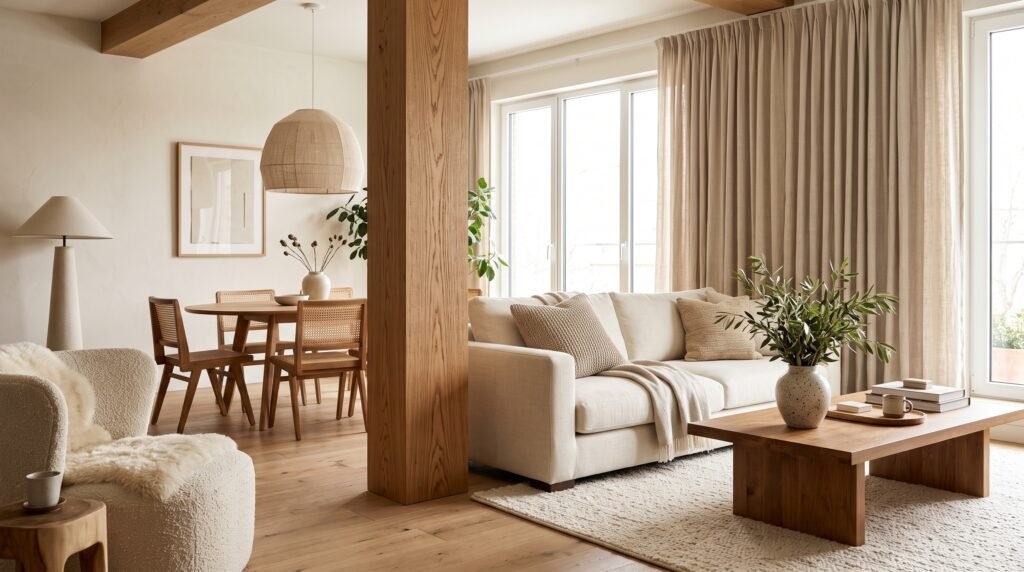
A wood-wrapped column can also visually connect different zones in an open-concept home. For example, matching the column with dining furniture and living room accents helps establish continuity between both areas.
Keep the surrounding decorations relatively simple so the natural wood grain remains the focal point.
2. Add Vertical Fluted Paneling
Fluted surfaces have become a popular way to introduce architectural texture without overwhelming a room.
Covering an indoor pillar with narrow vertical grooves creates depth and makes a basic structural column appear taller and more elegant.
You can achieve the effect using timber battens, MDF fluted panels, plaster detailing, or ready-made decorative wall panels.
Natural wood fluting works beautifully in warm contemporary interiors, while painted fluting offers a quieter appearance. A column covered in cream or beige fluted panels can blend into a neutral room while still adding subtle visual interest.
Vertical lines also draw the eye upward. This makes fluted treatments especially attractive in homes with high ceilings.
Consider pairing a fluted column with similarly textured cabinetry or an entertainment wall. Repeating the vertical detailing elsewhere prevents the pillar from looking isolated.
3. Create a Luxurious Marble Column
For a sophisticated statement, consider giving your column a marble-inspired finish.
Real marble creates an impressive architectural feature, but marble-look porcelain slabs and high-quality stone finishes can produce a similar appearance with less maintenance.
White marble with subtle gray or beige veining is ideal for light, luxurious interiors. For something warmer, travertine-inspired finishes complement cream upholstery, warm woods, and brass accents beautifully.
You could also choose dramatic dark marble for a bold contemporary space.
Because marble already has strong visual movement, avoid surrounding the column with too many competing patterns.
Elegant Marble Interior Pillar
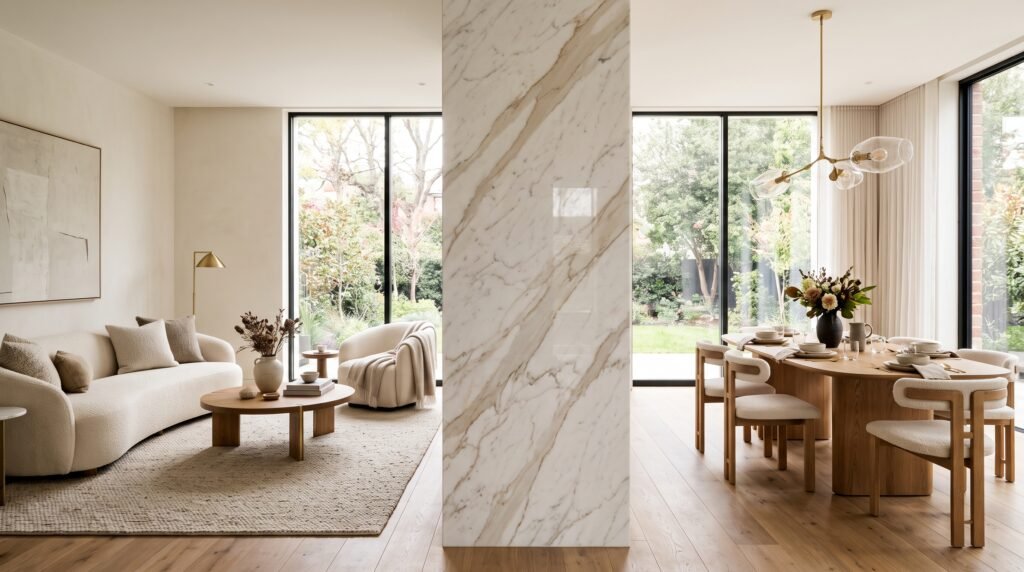
Let the stone itself become the decorative feature.
A marble column can look particularly striking between a living room and dining room, where it naturally becomes an architectural transition between the two spaces.
4. Turn the Column Into a Built-In Display Feature
Sometimes the best approach is not simply decorating the column but making it useful.
If there is enough space around your pillar, consider incorporating shallow display shelves.
Shelves can wrap around one or more sides of the column and provide space for books, ceramics, candles, framed photographs, small sculptures, or decorative objects.
This works especially well in living rooms, home libraries, hallways, and open-concept spaces.
Choose floating shelves for a contemporary appearance. Matching the shelves to the column finish creates a seamless built-in effect.
Keep the styling curated rather than filling every available shelf. A combination of empty space and carefully selected objects creates a much more premium look.
5. Use Decorative Wall Molding
Decorative molding can transform a plain square column into an elegant traditional architectural feature.
Panel molding, picture-frame trim, or simple rectangular molding details work particularly well in transitional, Parisian-inspired, classic, and modern traditional interiors.
Paint the molding and column the same color for a sophisticated monochromatic finish.
Soft white remains timeless, but warm beige, greige, muted taupe, and even deep charcoal can create beautiful results.
Interior Column with Elegant Molding
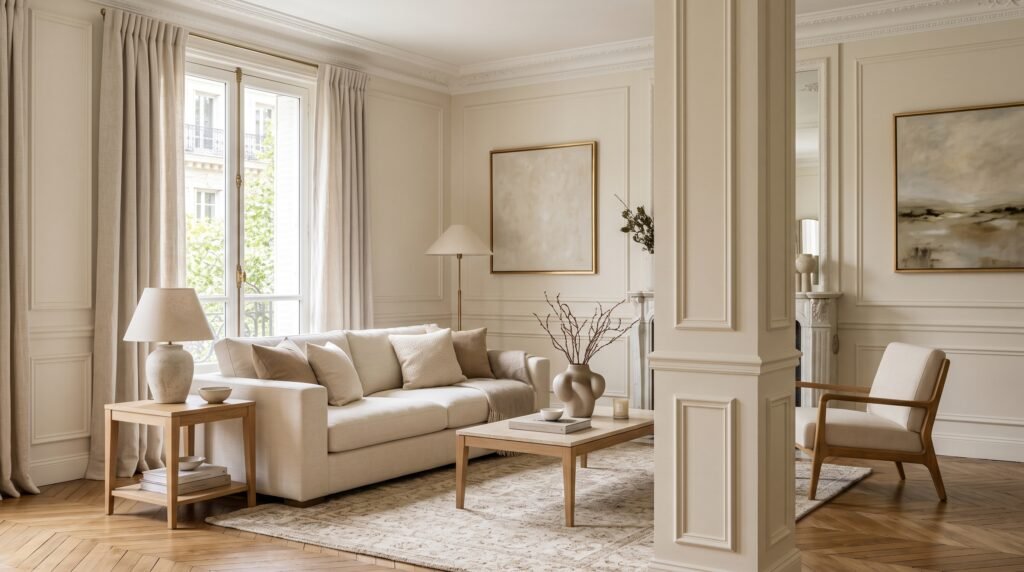
You don’t need highly ornate trim to make this idea work. Simple molding often feels more contemporary and allows the column to complement modern furniture.
If your walls already include decorative molding, repeat the same proportions on the column. This small detail makes the entire room feel more architecturally cohesive.
6. Cover the Column With Natural Stone
Natural stone can turn a structural pillar into a dramatic focal point.
Stacked stone, limestone, travertine, slate, and textured stone panels each create a different mood.
For today’s softer organic interiors, light limestone and travertine-inspired finishes are particularly attractive. Their warm beige coloring works beautifully alongside linen furniture, oak flooring, textured rugs, and indoor greenery.
Stone columns can also introduce a subtle indoor-outdoor connection.
This makes them especially effective in rooms with large windows overlooking gardens or patios.
Avoid adding excessive décor directly around a textured stone column. The irregular surface already provides plenty of visual interest.
7. Create a Minimalist Microcement Finish
Not every column needs elaborate decoration.
Sometimes a simple textural finish can make the strongest statement.
Microcement, limewash, and plaster-inspired finishes give columns a soft architectural appearance while maintaining a minimalist aesthetic.
Warm gray, sandy beige, ivory, and muted taupe work especially well.
The slight variation within these finishes prevents the pillar from looking completely flat while remaining subtle enough for a calm interior.
Minimalist Textured Plaster Column
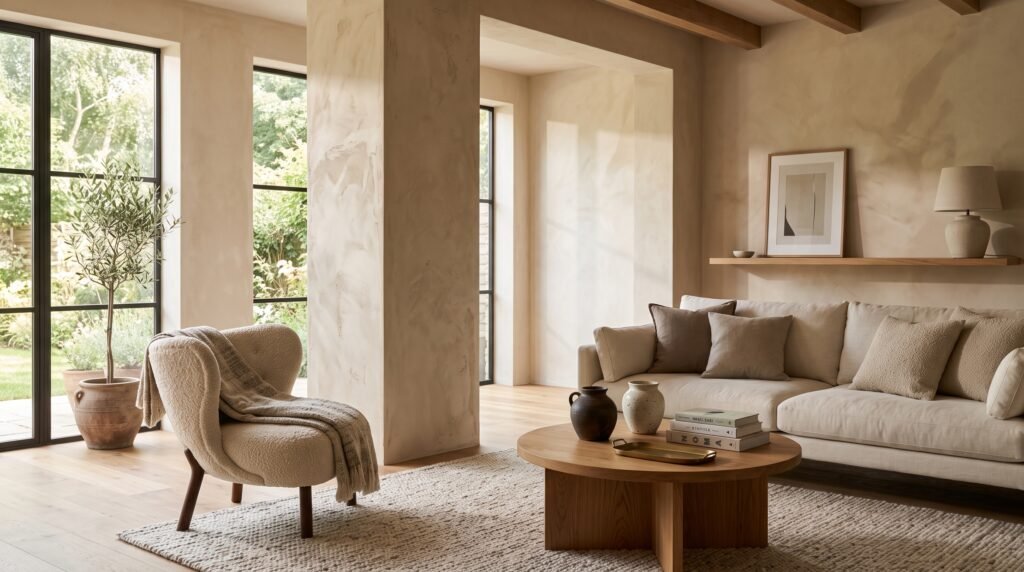
Pair a plaster column with natural materials such as linen, oak, stone, wool, and ceramics.
The combination creates an understated organic modern aesthetic that feels sophisticated without looking overly decorated.
8. Add a Full-Length Mirror
A mirrored treatment can be particularly useful when a column sits in a smaller room.
Adding mirror panels to one or more sides reflects light and visually reduces the heaviness of the structure.
Rather than covering every surface, you can install a large vertical mirror panel on the most visible side.
A slim metal or wooden frame gives the mirror a more finished appearance.
This idea works especially well near an entryway, dressing area, living room, or dining space.
Be mindful of what the mirror reflects. Ideally, position it so it captures something attractive such as a window, artwork, indoor plant, pendant light, or thoughtfully styled section of the room.
9. Transform the Column With Vertical Wood Slats
Wood slats provide a more dimensional alternative to a simple timber wrap.
Thin vertical battens can surround the pillar, producing shadows and texture throughout the day.
Oak slats against a dark backing create a bold contemporary effect, while pale wood against a matching neutral background feels lighter and more Scandinavian.
Modern Wood Slat Column
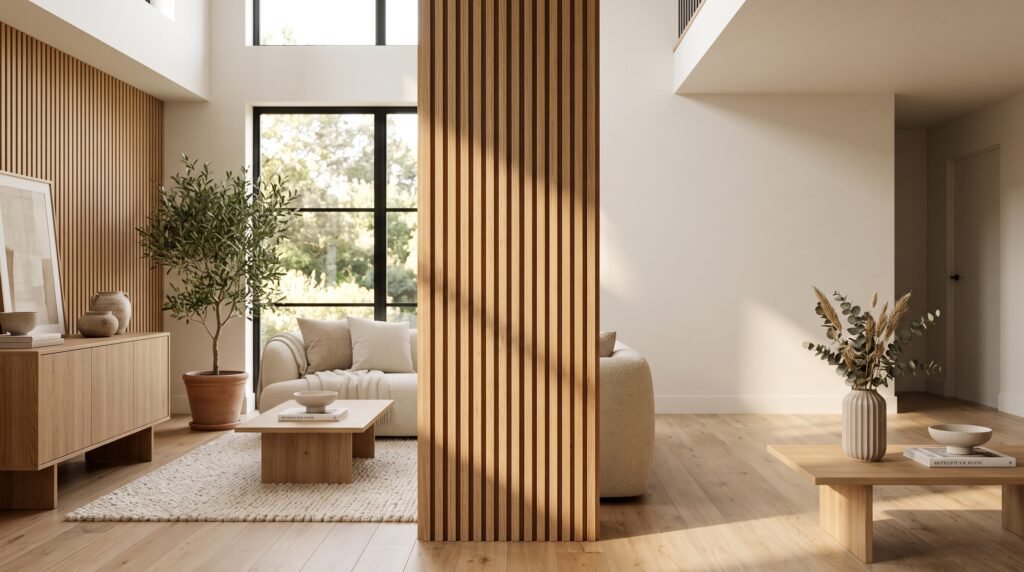
This treatment can also connect visually with a nearby slatted room divider or media wall.
In an open-plan room, repeating the same slatted finish in two or three carefully selected locations creates a strong sense of continuity.
Warm recessed or indirect lighting can further emphasize the grooves during the evening.
10. Paint the Column as an Accent Feature
Painting is one of the simplest and most affordable ways to transform an indoor pillar.
Instead of automatically matching the surrounding walls, consider using the column as a subtle accent.
For a neutral home, colors such as warm taupe, muted olive, clay, chocolate brown, charcoal, or deep beige can create enough contrast without becoming overpowering.
Dark columns can look especially impressive in large contemporary rooms.
However, consider the overall visual weight. A very dark pillar in a small bright room may dominate the space.
A softer tonal approach is often easier to live with. For example, pair warm white walls with a slightly deeper beige column.
The result is subtle but intentional.
11. Turn Two Columns Into a Design Transition
If you have two structural columns positioned relatively close together, use them together instead of treating each pillar separately.
Matching finishes can create a natural architectural gateway between spaces.
For example, two wood-clad columns can visually separate a living room from a dining area without constructing a solid wall.
Similarly, plaster or stone columns can create a subtle transition from an entryway into a main living space.
Matching Columns Between Living and Dining Areas
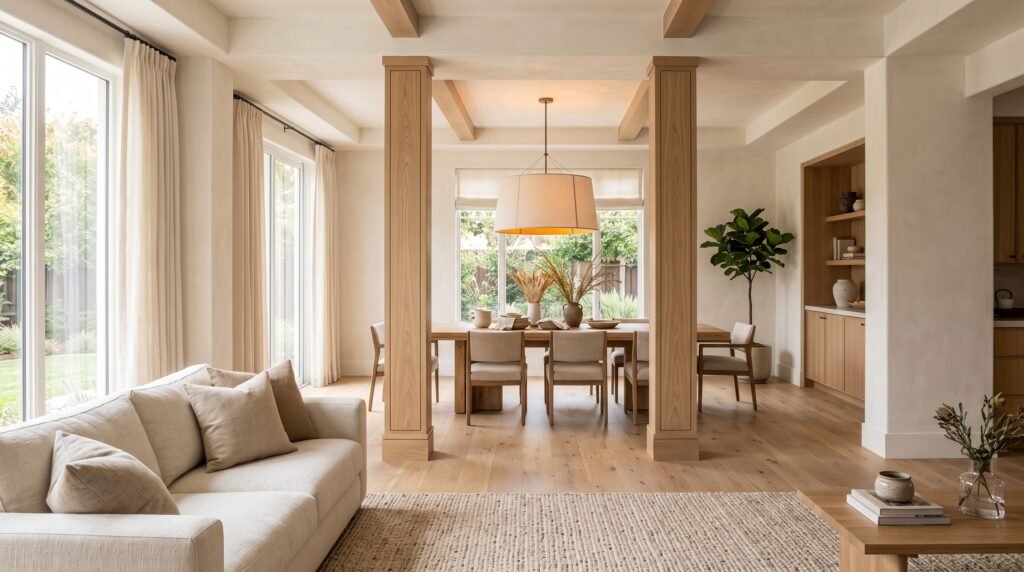
You can reinforce this transition with furniture placement.
Position a dining table beyond the columns and arrange the sofa on the opposite side. The columns then become natural boundaries while the overall floor plan remains open.
This is an excellent way to define zones without sacrificing light or spaciousness.
12. Incorporate Soft Architectural Lighting
Lighting can completely change how a column appears after sunset.
Instead of treating lighting and column decoration separately, design them together.
Narrow LED strips can be recessed vertically along the sides of a pillar. Small ceiling spotlights can wash light down the textured surface, while uplighting can emphasize stone or plaster finishes.
Warm lighting usually creates the most inviting effect in residential interiors.
If your column features fluting or wood slats, indirect light can emphasize the shadows between the grooves and make the texture much more visible.
Avoid excessively bright lighting. The goal should be a soft architectural glow rather than making the column look like a commercial display.
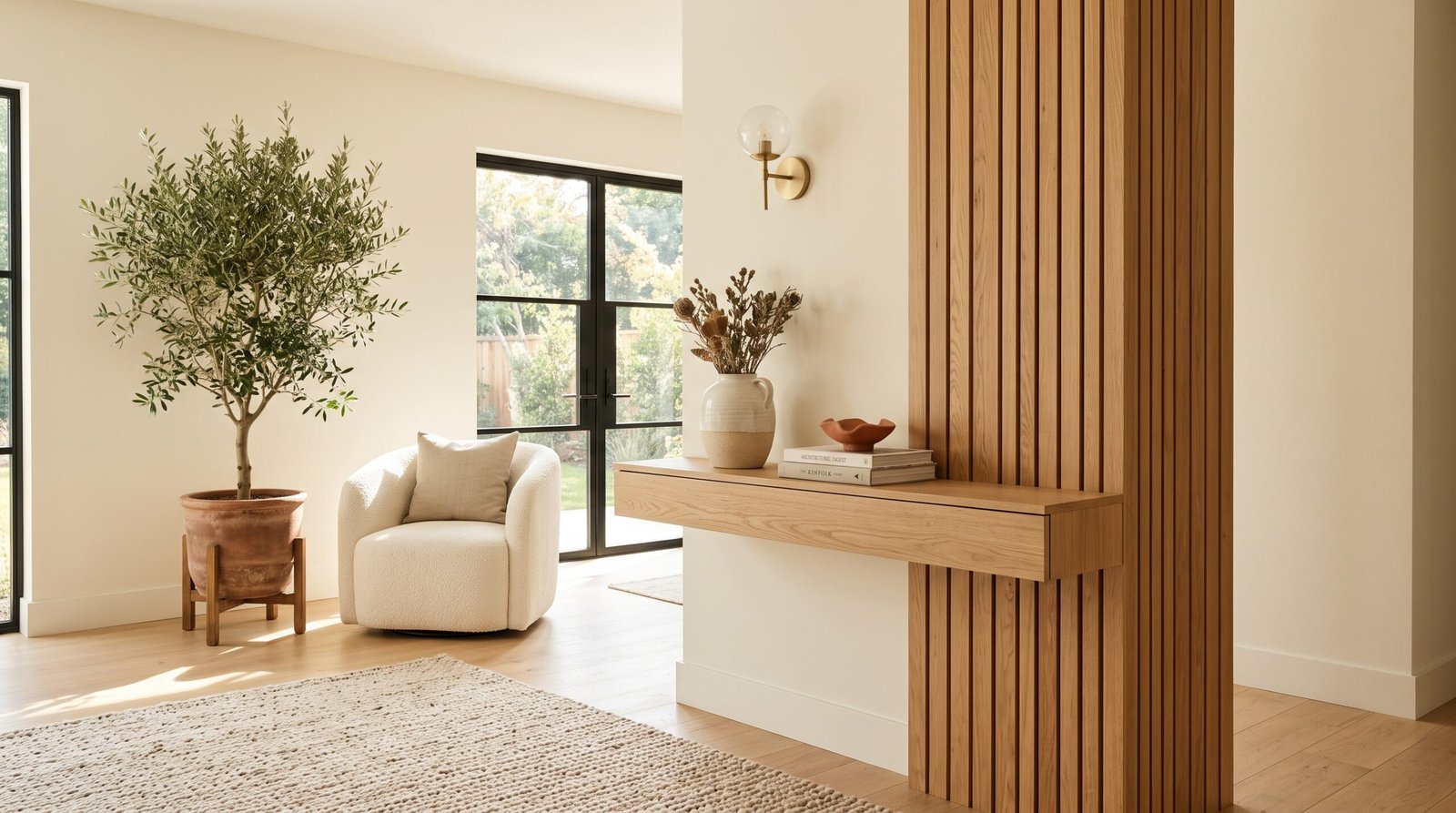
13. Create a Column With a Small Integrated Console
A column near an entryway or open living space can become much more practical with a small attached surface.
Consider adding a slim floating console extending from one side.
The console can provide a place for keys, a decorative bowl, a small lamp, books, or a ceramic vase.
Keep the depth relatively shallow so circulation around the pillar remains comfortable.
Interior Column With Floating Console
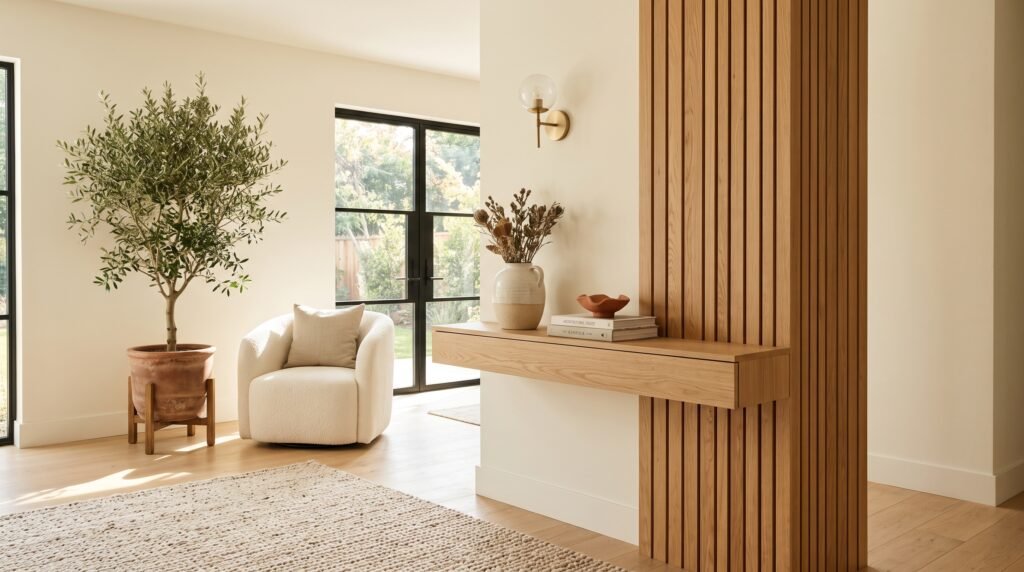
Matching the console material to the column can create a sophisticated custom-built appearance.
For example, a warm oak column paired with an oak floating shelf looks cohesive and intentional. A plaster column with a stone shelf creates a more sculptural effect.
Above the console, a small piece of artwork or wall light can complete the composition.
14. Decorate the Column With Sculptural Wall Art
If structural changes aren’t possible, decorate your pillar just as you would a narrow wall.
A sculptural wall piece can instantly make the surface feel purposeful.
Consider ceramic wall art, woven pieces, metal sculptures, carved wooden décor, or a small framed artwork collection.
Choose pieces with enough dimension to stand out without extending too far into walkways.
A single elongated piece usually works better than several tiny decorations because columns have naturally narrow proportions.
You can also pair the artwork with a small directional spotlight from above to create a gallery-inspired appearance.
15. Keep the Column Simple and Let It Blend In
Decorating a column doesn’t always mean making it noticeable.
In some rooms, the most elegant solution is allowing the pillar to disappear visually into the architecture.
Paint the column exactly the same color as the surrounding walls and ceiling.
Avoid contrasting trims and complicated details.
Then use furniture, rugs, artwork, lighting, and plants to draw attention elsewhere.
Minimal Neutral Column Blending Into Interior
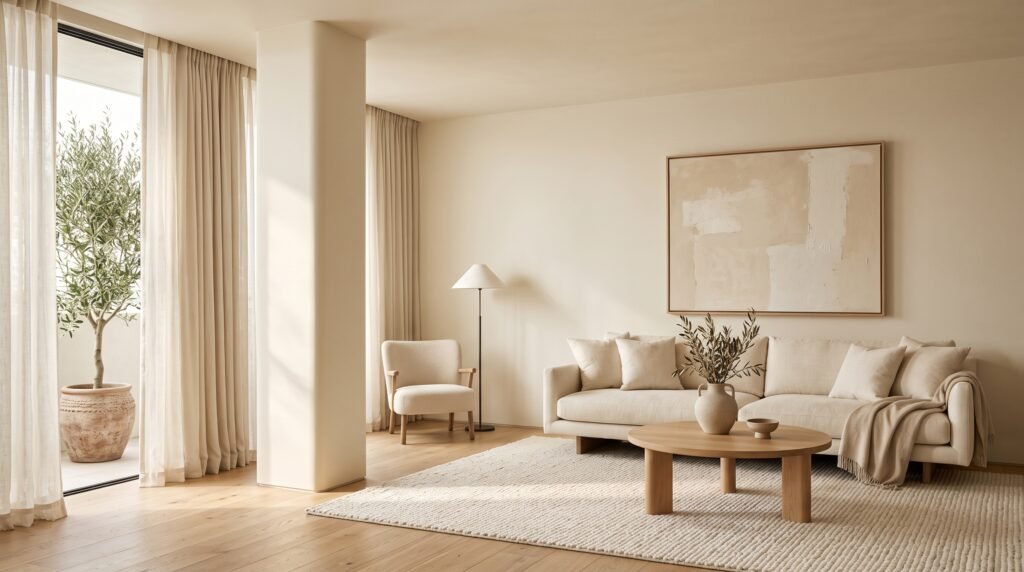
This approach is particularly effective in small homes where adding too many decorative finishes could make the room feel visually crowded.
Warm white, ivory, pale beige, and soft greige are excellent choices.
You can still create subtle depth by using a slightly different finish. For example, matte walls paired with a soft mineral-textured column maintain the same color palette while introducing barely noticeable variation.
How to Choose the Right Indoor Column Design
Before selecting a decorative finish, consider the overall architecture of your home.
A beautiful treatment can still look out of place if it doesn’t connect with anything else in the room.
Start by identifying your dominant materials.
If your room already features warm oak, repeating oak on the pillar may be the most natural choice. If stone appears on a fireplace or feature wall, introducing a related stone finish on the column can create continuity.
You should also consider how prominent you want the pillar to become.
There are essentially two approaches: blend or highlight.
Blending means matching the column to surrounding walls so it becomes visually quiet.
Highlighting means intentionally giving it a different material, texture, or color so it becomes part of the room’s architecture.
Neither approach is inherently better. The correct choice depends on the room.
Decorating Around an Interior Column
The space immediately surrounding a pillar is just as important as the finish itself.
Avoid pushing random furniture against the column simply because the space feels difficult to use.
Instead, think about circulation.
People should be able to move naturally around the pillar without squeezing between furniture.
Large indoor plants can soften the transition between columns and nearby furniture. An olive tree, ficus, or sculptural planter can work beautifully beside a simple plaster pillar.
Area rugs are another useful tool.
A large rug can visually connect furniture positioned around a column, preventing the structure from making the seating arrangement feel fragmented.
Lighting can help as well. A pendant light positioned nearby or an attractive floor lamp can balance the vertical form of the pillar.
Best Materials for Decorative Interior Columns
The ideal material depends on budget, maintenance requirements, and design style.
Wood creates warmth and works particularly well in organic modern and Scandinavian interiors.
Fluted MDF panels provide architectural texture while offering flexibility in terms of paint colors and finishes.
Natural stone produces a luxurious and highly tactile appearance but can require more complicated installation.
Porcelain slabs can recreate marble and stone appearances while often being easier to maintain.
Plaster and microcement are excellent choices for minimalist interiors because they introduce texture without strong patterns.
Paint and molding remain some of the most accessible options for homeowners who want a major visual improvement without completely rebuilding the pillar.
Common Indoor Column Decorating Mistakes
One common mistake is using too many materials on a single pillar.
For example, combining marble, wood, mirrors, molding, and lighting on one small column can quickly become overwhelming.
Choose one main finish and perhaps one supporting detail.
Another mistake is decorating the column without considering the rest of the room.
If there is no black anywhere else in your interior, a completely black column may feel disconnected. Similarly, a rustic stacked-stone pillar can appear out of place in a highly polished minimalist apartment.
Scale matters too.
Tiny artwork can look lost on a large pillar, while oversized shelves may interfere with circulation.
Finally, don’t forget that many interior columns are structural. Never remove, cut into, or significantly alter a structural column without appropriate professional guidance.
Creating a Cohesive Look
The most successful decorative columns don’t look like isolated DIY projects.
They feel like part of the original interior design.
One of the easiest ways to achieve this is through repetition.
If you choose fluted oak for your column, introduce the same oak tone elsewhere through a coffee table, shelving, cabinetry, or smaller accessories.
If you choose travertine, repeat similar warm stone through side tables or decorative objects.
You don’t need exact matches.
Repeating related colors and textures is enough to visually connect different parts of the room.
Final Thoughts
Indoor columns don’t have to remain awkward structural necessities. With the right treatment, they can become intentional architectural details that add character, texture, warmth, and even practical functionality to your home.
Wood wrapping can make a neutral interior feel warmer. Fluted panels introduce elegant vertical texture. Marble and natural stone can transform a pillar into a luxurious statement, while plaster and microcement provide a quieter organic look.
You can also take a functional approach by adding shelves, mirrors, lighting, or a slim floating console.
Most importantly, choose a treatment that connects naturally with the rest of your interior.
The goal isn’t simply to decorate the pillar. It’s to make the column feel like it belongs exactly where it is.
When materials, proportions, colors, and surrounding furniture work together, even an inconvenient structural column can become one of the most distinctive design features in the room.