8 Cooking Corner Decor Ideas to Create a Cozy and Stylish Space
Cooking corner decor has become especially appealing for people who want their kitchens to feel warmer and more personal. Instead of hiding everything behind cabinet doors, you can intentionally display a few everyday essentials and transform them into part of the decor. Wooden boards leaning against a backsplash, ceramic utensil holders, small herb pots, warm lighting, and neatly arranged spices can make even a simple countertop feel carefully styled.
The best cooking corners balance beauty with function. They should make everyday meal preparation easier while keeping visual clutter under control. Whether your style is modern, rustic, Scandinavian, farmhouse, minimalist, or organic modern, these eight cooking corner decor ideas can help you create a space that feels welcoming, organized, and uniquely yours.
1. Create a Warm Wooden Cooking Corner
Wood is one of the easiest materials to use when you want your cooking area to feel warm and inviting. Even in a modern kitchen with white cabinets, stone countertops, or stainless-steel appliances, natural wood can soften the overall appearance.
Start by introducing wooden cutting boards in different sizes. Instead of storing them inside a cabinet, lean two or three boards vertically against the backsplash near your cooking area. Combining rectangular, round, and organically shaped boards creates subtle visual variation.
Keep the arrangement intentional rather than overcrowded. A large wooden board can form the backdrop, while a smaller board sits slightly in front of it. Beside them, place a ceramic utensil crock filled with wooden spoons, spatulas, and cooking tools.
You can also introduce wood through a small tray. Use the tray to organize olive oil, salt, pepper, and one or two frequently used seasonings. Keeping these items together instantly makes the countertop look more organized.
For a modern organic look, pair warm oak or walnut tones with creamy ceramics and neutral stone surfaces. If your kitchen has darker cabinets, lighter woods such as ash or white oak can provide beautiful contrast.
A small herb plant adds another natural element without overwhelming the arrangement. Rosemary, basil, or thyme can work particularly well because these herbs are decorative and useful for cooking.
Lighting makes wooden accessories even more beautiful. Warm under-cabinet lighting highlights natural grain and creates a cozy glow during the evening.
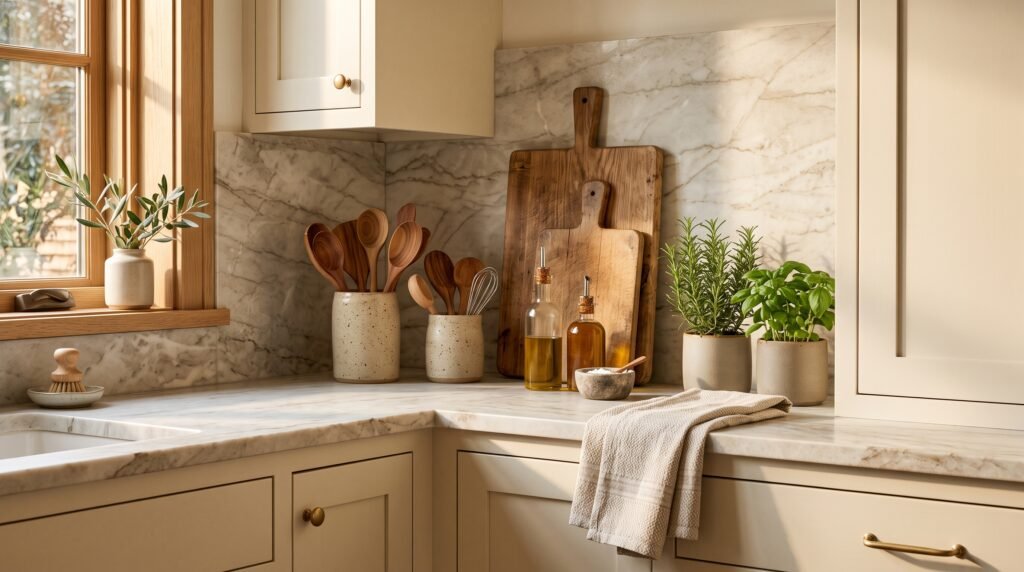
Image placement: Show a close-up cooking corner with layered wooden cutting boards, ceramic utensils, olive oil, herbs, and warm natural light.
The secret to this look is restraint. You do not need ten wooden accessories. A few carefully selected pieces will create more impact than a crowded collection.
2. Style an Elegant Spice Corner
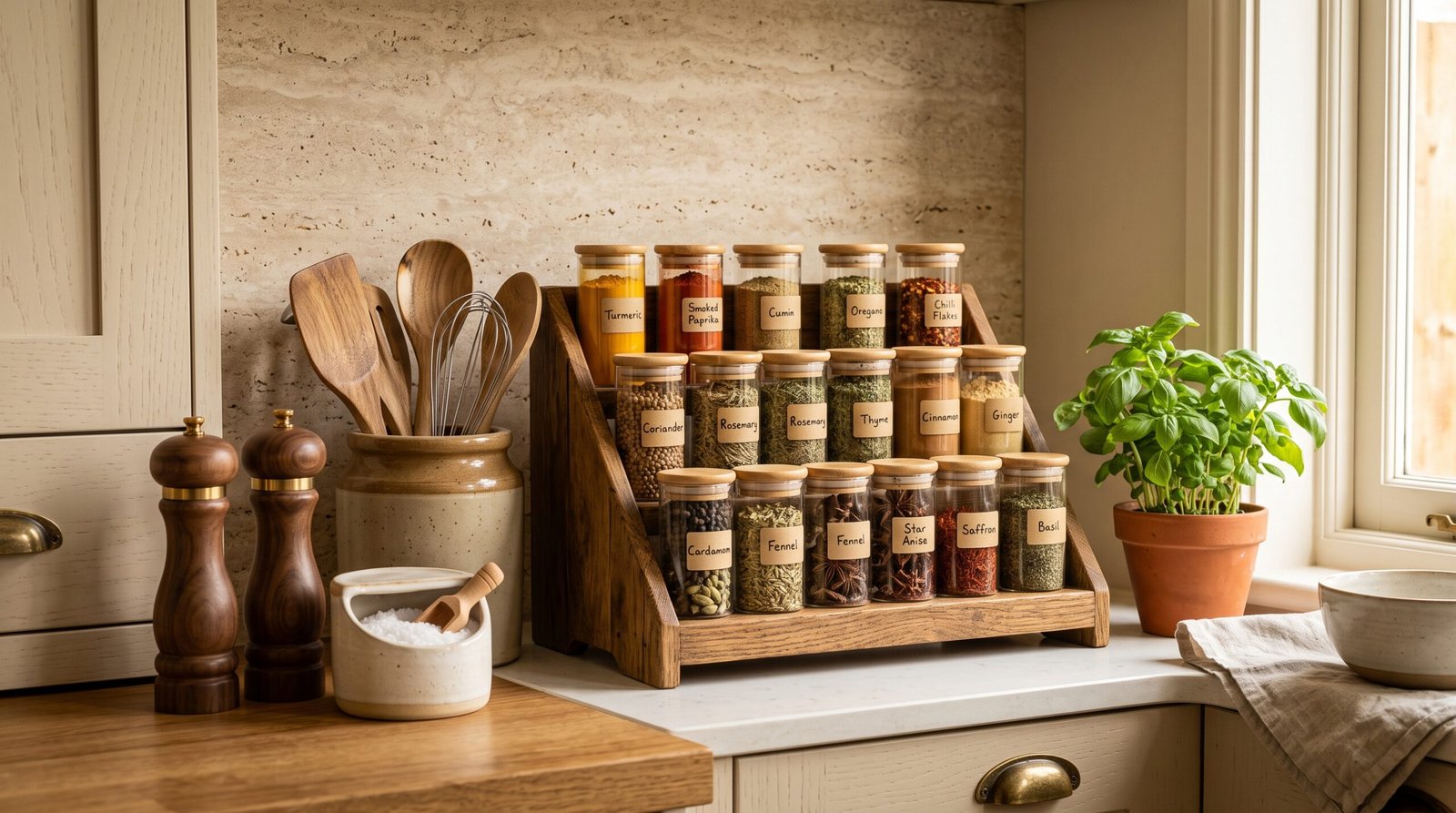
Spices are everyday necessities, but their packaging can easily create visual clutter. Turning them into a coordinated display gives you both convenient storage and attractive cooking corner decor.
Begin by choosing one area near your stove or food-preparation zone. A narrow section of countertop, small shelf, or shallow wall-mounted rack can work perfectly.
Transfer frequently used spices into matching glass jars. Clear containers allow you to see the different colors and textures of the spices, turning ingredients into decorative elements.
Simple labels make the arrangement easier to use. Choose labels with clean typography instead of overly decorative designs if you want a sophisticated appearance.
Arrange the spices according to how frequently you use them. Everyday essentials such as salt, black pepper, paprika, turmeric, cumin, or chili flakes should remain easy to reach. Less frequently used spices can sit behind them or on an upper shelf.
A tiered organizer is particularly useful when countertop space is limited. It allows jars in the back row to remain visible without requiring a large footprint.
To soften the practical arrangement, add one decorative element. A miniature ceramic vase, a small herb pot, or a beautiful wooden pepper mill is enough.
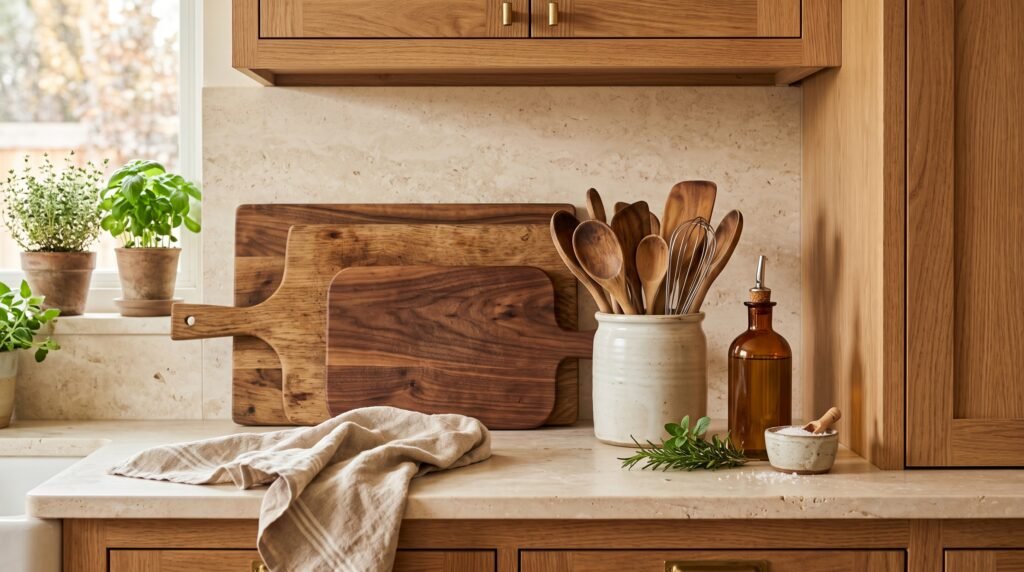
Image placement: Feature matching glass spice jars arranged neatly beside wooden cooking tools with a neutral backsplash.
For a high-end appearance, avoid filling every available inch. Leaving a little empty space around the spice collection helps it feel curated rather than crowded.
3. Design a Minimalist Cooking Corner
Minimalist cooking corners prove that you do not need many decorative accessories to make a kitchen feel beautiful. Instead, the focus is on clean surfaces, quality materials, and carefully chosen essentials.
Begin by clearing the countertop completely. Then return only the items that genuinely deserve permanent space.
A minimalist cooking corner might include a stone or ceramic utensil holder, one beautiful cutting board, an olive oil bottle, a small salt bowl, and perhaps one plant.
Keeping the palette consistent is important. Warm white, beige, soft gray, light wood, and natural stone work especially well. Instead of using multiple bright colors, let texture create interest.
For example, combine a matte ceramic crock with a smooth stone countertop and a lightly grained wooden board. Although the colors remain neutral, the materials prevent the space from looking flat.
Storage is equally important. Hide extra utensils, packaged ingredients, and rarely used appliances inside drawers or cabinets. The countertop should display only the most attractive and frequently used pieces.
Consider replacing brightly branded oil bottles with simple glass dispensers. Matching dispensers for olive oil and vinegar can instantly create a cleaner look.
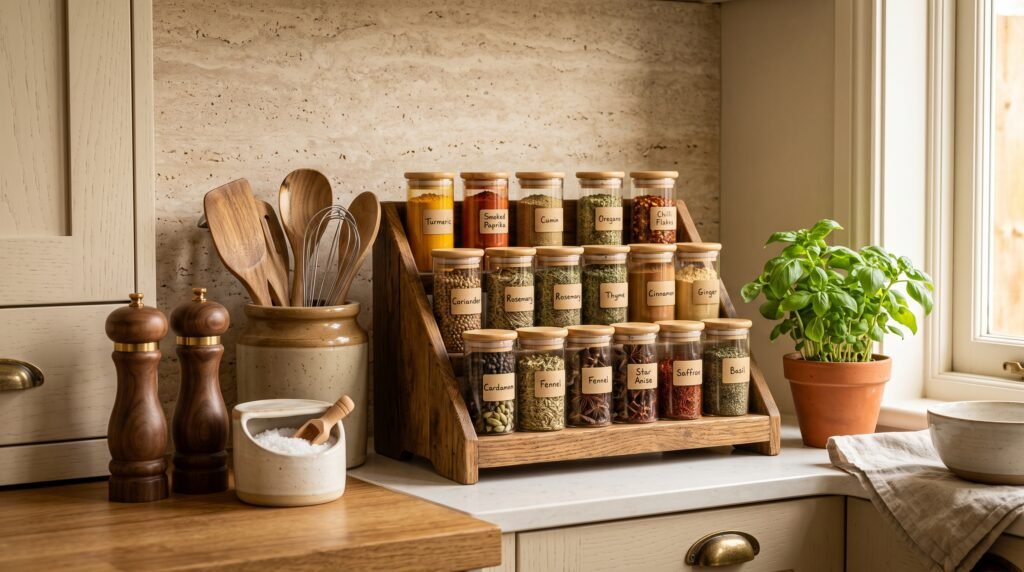
Image placement: Show a clean beige or cream cooking area with one wooden board, ceramic utensil holder, oil bottle, and subtle greenery.
Minimalism does not mean removing personality. A handmade ceramic container, vintage wooden spoon, or sculptural salt cellar can become the small detail that makes the corner distinctive.
4. Add Open Shelves Above the Cooking Corner
Open shelving can transform unused wall space into functional decor, especially in smaller kitchens where countertop space is valuable.
Install one or two floating shelves above or near your cooking preparation area. Wooden shelves create warmth, while white or stone shelves provide a more streamlined appearance.
The key is to avoid treating open shelving as general storage. Instead, display a carefully edited collection of practical and decorative pieces.
Place frequently used bowls, small plates, mugs, spice jars, or attractive containers on the lower shelf. The upper shelf can hold less frequently used items along with decorative pieces.
Ceramic bowls and handmade pottery look especially beautiful on open shelves because their shapes and textures provide visual interest without requiring bold colors.
Create variation in height. Place taller bottles or a vase beside shorter bowls and jars. Leaning a small framed food illustration or wooden board against the wall can create another layer.
Plants can also soften the straight lines of shelves. A small trailing plant positioned near one edge adds movement without taking up valuable worktop space.
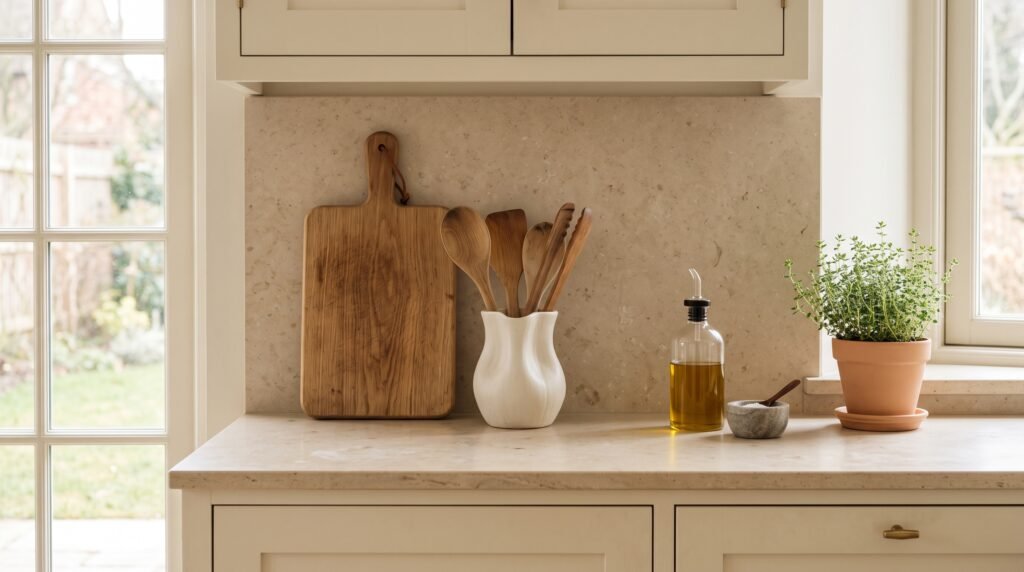
Image placement: Show floating wooden shelves above a stylish cooking area with ceramics, jars, bowls, herbs, and natural textures.
Keep approximately some visual breathing room between objects. Open shelves look most sophisticated when they are not packed from end to end.
Another benefit of this approach is flexibility. You can refresh the shelf throughout the year without redesigning the entire kitchen. Change the greenery, pottery, or artwork when you want a slightly different atmosphere.
5. Create a Cozy Herb-Filled Cooking Corner
Fresh greenery can make a kitchen feel alive, and a cooking corner is an ideal place for edible plants. Herbs provide color, fragrance, and ingredients you can actually use.
If your cooking area receives natural light, consider creating a miniature indoor herb garden.
Basil, rosemary, thyme, mint, parsley, and oregano are attractive options. However, choose herbs according to the amount of light available in your kitchen and their individual growing requirements.
Rather than using mismatched plastic containers, transfer herbs into coordinated pots. Terracotta creates an earthy Mediterranean feeling, while cream ceramic pots suit modern and Scandinavian interiors.
Arrange herbs at different heights if space allows. One plant can sit directly on the countertop while another rests on a small wooden stand or shelf.
Do not overcrowd the cooking surface. Three healthy plants often look better than eight tiny pots squeezed together.
Pair the greenery with natural materials. Wooden utensils, woven baskets, stone containers, and linen towels reinforce the organic feeling.
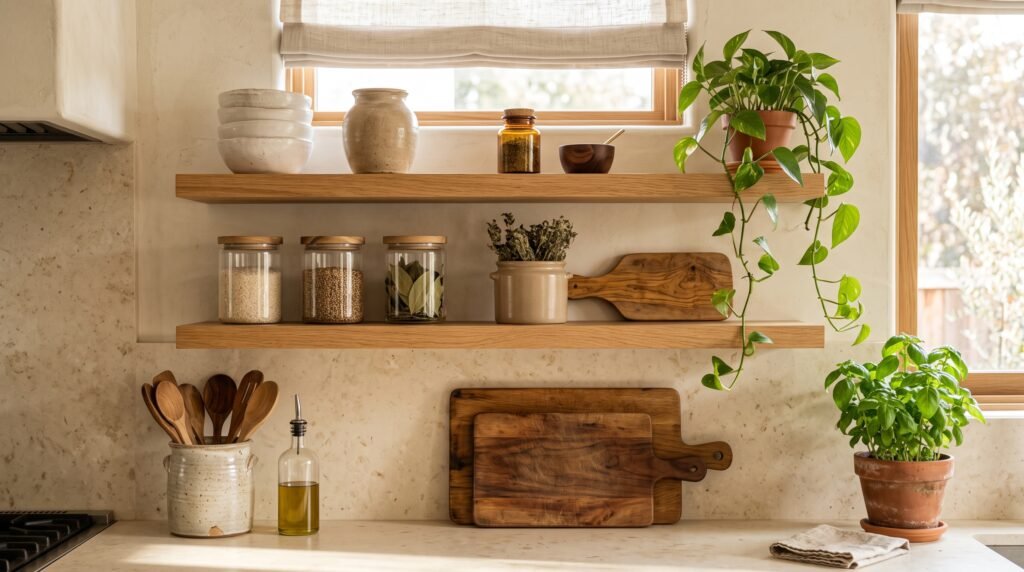
Image placement: Show a sunlit cooking corner with basil, rosemary, and thyme in neutral pots alongside wooden boards and cooking essentials.
Herbs also work beautifully near a window. If you have a small ledge beside your cooking area, use it as a dedicated herb display while keeping the main countertop free.
During the evening, warm lighting can make the green leaves look especially rich against neutral cabinetry.
This approach is perfect for anyone who wants a cooking corner that feels relaxed, natural, and connected to fresh ingredients.
6. Make a Stylish Oil and Seasoning Station
Olive oil, vinegar, salt, and pepper are among the most frequently reached-for items while cooking. Instead of leaving them scattered across the counter, group them into a small dedicated station.
Begin with a tray. A wooden, marble, stone, or ceramic tray visually defines the collection and keeps everything contained.
Choose containers that complement your kitchen. Amber glass bottles add warmth, clear glass looks light and modern, and ceramic bottles can create a Mediterranean-inspired aesthetic.
Place your most frequently used cooking oil at the center. Add vinegar, salt, pepper, and perhaps a small container for garlic or chili flakes.
Avoid turning the station into storage for every condiment you own. Keep only daily essentials here.
A small salt cellar is both functional and decorative. Ceramic, marble, or wooden versions can add another layer of texture.
You could also add a tiny bowl containing fresh garlic or a sprig of rosemary for styling.

Image placement: Feature elegant glass oil bottles, a salt cellar, pepper grinder, and small herb sprig arranged on a natural stone or wooden tray.
The tray should coordinate with the countertop rather than disappear completely into it. For example, a warm wooden tray looks beautiful against pale stone, while marble can provide contrast on a darker counter.
This small arrangement is one of the simplest cooking corner upgrades because it requires almost no renovation. Yet the visual difference can be significant.
7. Use Warm Lighting to Highlight the Cooking Corner
Lighting is often overlooked when decorating cooking spaces, but it can completely change the atmosphere.
Strong overhead lighting is useful when preparing meals, but softer lighting makes the kitchen feel more welcoming. Combining both creates a practical and comfortable environment.
Under-cabinet lighting is particularly effective. It illuminates the countertop directly while highlighting decorative objects such as cutting boards, ceramics, and glass bottles.
Choose a warm light temperature if you want a cozy atmosphere. Warm illumination pairs beautifully with wood, cream cabinetry, brass details, and natural stone.
If your cooking corner includes open shelving, subtle integrated lighting beneath a shelf can make the display look almost architectural.
Another option is a small wall sconce positioned near the cooking zone, provided its placement is safe and suitable for the space. A simple fixture can become a decorative feature while adding another layer of light.
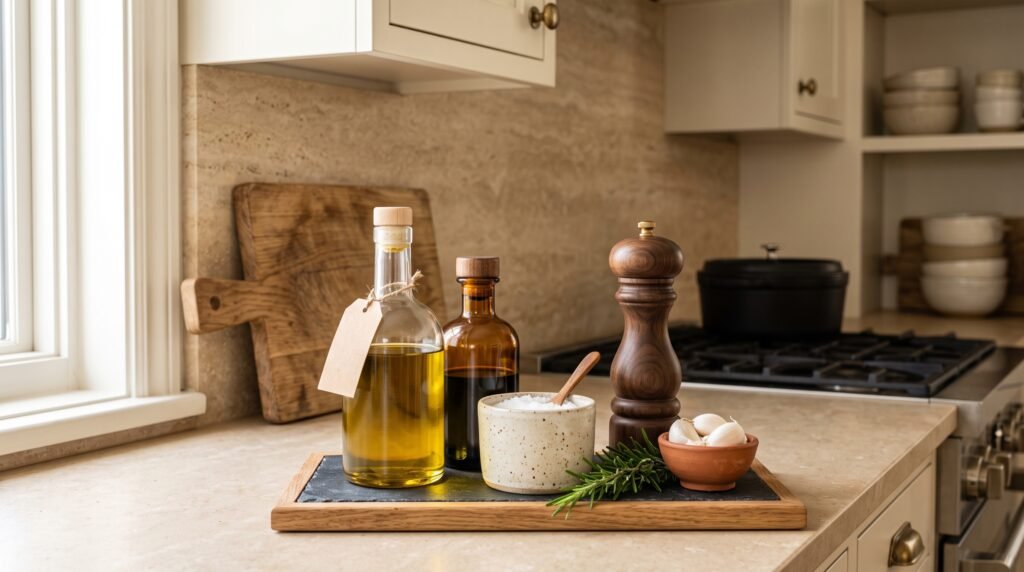
Image placement: Show an elegant evening kitchen corner illuminated by soft under-cabinet lighting, with wooden utensils, ceramics, and natural stone surfaces.
Consider how surfaces respond to lighting. Matte ceramics create gentle shadows, while glass bottles reflect small points of light. Natural wood appears richer and warmer.
Lighting also allows the cooking corner to remain attractive after the practical cooking work is finished. At night, switch off harsh ceiling lights and leave softer kitchen lighting on to create a relaxing mood.
This is especially effective in open-plan homes where the kitchen remains visible from the living or dining area.
8. Create an Organic Modern Cooking Corner
Organic modern design combines contemporary simplicity with natural textures. It is an ideal style for a cooking corner because it feels refined without becoming cold or overly formal.
Begin with a calm foundation. Cream, warm white, beige, taupe, and soft earthy tones create a timeless backdrop.
Introduce natural wood through cutting boards, utensils, trays, or shelving. Add stone through countertops, bowls, or small accessories.
Ceramics are another essential component. Instead of perfectly glossy pieces, choose pottery with slightly irregular shapes or handmade finishes. These imperfections create warmth and character.
A large ceramic utensil holder filled with wooden cooking tools can become the anchor of the arrangement. Beside it, lean one or two cutting boards against the backsplash.
Add an elegant oil dispenser and a small stone salt bowl. Finish the arrangement with a single branch, herb plant, or small olive-style plant.
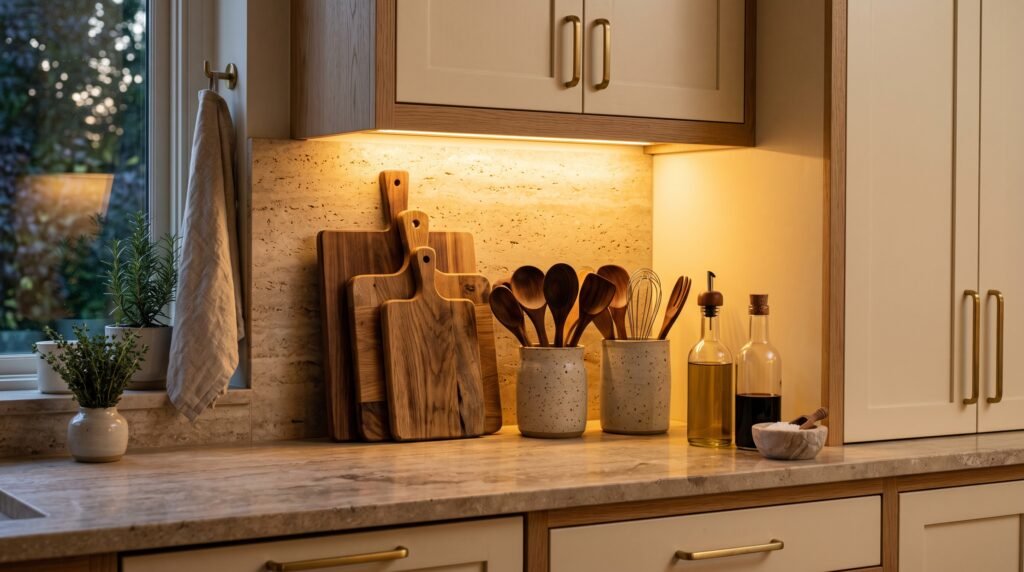
Image placement: Show a premium organic modern cooking area with cream cabinetry, warm oak accessories, handmade ceramics, natural stone, and subtle greenery.
Avoid unnecessary decoration. Organic modern interiors rely on beautiful materials rather than large numbers of accessories.
Texture becomes particularly important. Combine smooth stone with rough ceramics, visible wood grain, soft linen, and fresh greenery.
A folded linen kitchen towel can add softness without taking up much space. Choose muted shades such as oatmeal, cream, sage, or warm gray.
The result should feel effortless: not empty, but never cluttered.
How to Keep Your Cooking Corner Beautiful and Functional
Creating a beautiful cooking corner is only the first step. The space needs to remain practical during everyday use.
The easiest strategy is to follow a simple rule: keep frequently used and attractive items visible; hide everything else.
If you use a wooden spoon every day, displaying it makes sense. If you use a specialized appliance twice a year, it probably does not deserve permanent countertop space.
Group similar objects together. Oils and seasonings belong on one tray, utensils belong in one container, and cutting boards can form another small group. These visual zones prevent random objects from spreading across the countertop.
Cleaning should also influence your decorating decisions. Cooking areas naturally collect grease, steam, crumbs, and splashes. Avoid placing delicate textiles or difficult-to-clean decorative objects directly beside the stove.
Glass, ceramic, stone, and sealed wood are generally easier to maintain.
Leave enough empty countertop space for food preparation. A cooking corner should support cooking rather than become an obstacle.
Choosing the Right Color Palette
Your cooking corner should feel connected to the rest of your kitchen rather than appearing like a separate decorative display.
If your kitchen is mostly white, introduce warmth through wood, beige ceramics, woven textures, and greenery.
For dark cabinetry, lighter cutting boards and cream pottery can create contrast.
Warm beige kitchens look beautiful with walnut wood, aged brass details, olive green, and natural stone.
If your kitchen already contains multiple colors, keep countertop accessories relatively simple so the overall design does not become overwhelming.
Neutral palettes are particularly effective because cooking ingredients naturally introduce color. Fresh herbs, fruit, vegetables, spices, and food packaging will already add changing accents throughout the week.
Small Cooking Corner Ideas for Limited Spaces
You do not need a large countertop to create a dedicated cooking corner.
In a compact kitchen, think vertically.
Install a narrow shelf for spices or cooking oils. Use wall hooks for utensils that are suitable for hanging. Place cutting boards vertically instead of stacking them flat.
A small round tray can organize oil, salt, and pepper without consuming much counter space.
You can also use the side of a cabinet for a narrow rail or storage system where appropriate.
Another useful trick is choosing accessories that perform more than one function. A beautiful ceramic bowl can hold garlic while serving as decor. A cutting board can be both a practical tool and a visual backdrop. Herbs can decorate the space while providing ingredients.
Multipurpose styling keeps a small kitchen functional without making it feel overly decorated.
Common Cooking Corner Decorating Mistakes
One of the biggest mistakes is displaying too many objects. A cooking corner can quickly become cluttered when every utensil, spice, appliance, and decorative item is visible.
Another mistake is choosing decor that cannot tolerate a kitchen environment. Delicate artwork, unsealed materials, and difficult-to-clean accessories may not work well near heat or food preparation.
Avoid blocking electrical outlets, ventilation, or areas needed for appliances.
Scale also matters. An enormous utensil container can overwhelm a narrow countertop, while tiny accessories may look lost in a large kitchen.
Finally, do not sacrifice function for appearance. If you constantly need to move decorations before cooking, the arrangement is not working.
The best cooking corners look beautiful because they are functional, not despite being functional.
Affordable Ways to Upgrade a Cooking Corner
A stylish cooking corner does not require expensive renovations.
Start with what you already own. A beautiful cutting board can become wall-like decor when leaned against the backsplash. Transfer wooden utensils from a drawer into a simple ceramic container.
Group existing oil and seasoning bottles on a tray instead of leaving them scattered.
Add a small herb plant for natural color.
Replace only the accessories that create the most visual clutter. Matching spice containers or oil bottles can make a larger difference than purchasing numerous decorative objects.
Secondhand shops can also be excellent places to find wooden boards, pottery, baskets, stone bowls, and vintage kitchen accessories.
The goal is not to make everything perfectly matching. A slightly collected look often feels warmer and more authentic.
Final Thoughts
A thoughtfully decorated cooking corner can transform an ordinary countertop into one of the most charming areas of your home. The best designs combine attractive everyday essentials with natural materials, organized storage, and enough empty space to make cooking comfortable.
You might choose a warm wooden cooking corner filled with natural textures, an organized spice station with coordinated jars, or a minimalist arrangement built around just a few beautiful essentials. Open shelving can provide additional storage, while fresh herbs bring life and color into the room.
An organized oil and seasoning station makes everyday ingredients easier to reach. Warm lighting creates atmosphere, particularly during the evening, while organic modern styling provides a timeless combination of ceramics, stone, wood, linen, and greenery.
Most importantly, your cooking corner should reflect the way you actually use your kitchen. Keep everyday tools nearby, remove unnecessary clutter, and choose materials that can handle the realities of cooking.
You do not need a massive renovation to make your kitchen more inviting. Sometimes, a few wooden cutting boards, a handmade ceramic utensil holder, fresh herbs, organized spices, and warm lighting are enough to create a completely different feeling.
When functionality and thoughtful styling come together, even the smallest cooking corner can become a beautiful focal point—one that makes preparing everyday meals feel a little more enjoyable.